Tuesday, 23 January 2024

Best Supporting Actor 2023: Sterling K. Brown in American Fiction

Sterling K. Brown received his first Oscar nomination for portraying Clifford "Cliff" Ellison in American Fiction. 

The reliable Brown, plays the role of Cliff the brother of Jeffrey Wright's Thelonius "Monk" Ellison, who we are first introduced after the surprise death of their sister and we essentially cut into Brown at the ceremony of getting rid of her ashes, where Brown basically has to sum of the nature of his performance in short succession in a single scene. We first see the grief well portrayed by Brown as he listens to the eulogy by his brother, written by his sister, and then when disposing of the ashes a neighbor complains leaving both brothers to admonish the man. Admonish though in a very comedic way, where Brown instantly shifts to the state we'll see as the typical mode of Cliff with a quiet dismissive exasperation as he yells out his insults as though that is his natural state. We follow that as he and Monk talk things over after the funeral. Brown and Wright have strong chemistry because you do sense in their interactions both the distance and connection of brothers. The distance in their differing lives and the relationship with their father and family, where you see in Brown a callous indifference and a very blunt delivery towards it all. He's not hollow, not completely heartless, but in Brown's eyes is a man who wants to be past, well, the past. Where we see connection is actually when the two insult each other for different reasons, often petty, but it's played nicely as at the end of every insult and every reaction Brown shows a little smile and you are granted the sense of their history actually within the conflict.

Brown comes in and out of the film, mostly for quick scenes of comedy where he is often presented as the challenger of Monk's state of superiority by being a much more callous voice of maybe not reason, certainly cynicism but also sometimes reality. Brown mixes petulance with honesty in his performance that contains a definite comedic quality in the ease with which he broaches these moments but in his eyes there is an intensity speaking towards some sense of what's really going on inside him. And what that is that Cliff is a divorced plastic surgeon and in fact a gay man, who never came out to his father, and his mother with dementia also does not recall this. And we have a key moment of this when we see a greater warmth in Brown's work as he dances with his mother, before she brings up a dismissive remark towards his homosexuality, and Brown storms off. His portrayal of this is almost a falling into a base dismay as the state the man just is simply used to and almost expects it with an ire, but an ire he always couches in cynical humor. We get the heart of this in a key conversation with Monk where the two discuss where they are in their lives and both let their guards down a bit. And Brown is good in easing into a quiet vulnerability in his eyes when he notes the unfortunate fact that his father never knew or accepted the real him, and it is a moving moment of Brown naturally revealing the hurt son behind all the one liners. And that is much of what Brown does here is to provide contrast to Wright's Monk and more frequently criticism in a few scenes, that is comedic but with an emotional core. Brown delivers on both sides and is a good scene partner for Wright. I do wish though the writing behind some of his one liners was a little stronger and maybe there was a bit more meat in certain sections such as a minor subplot involving their family housekeeper where Cliff treats her as nothing but she treats him as family. An idea with potential but literally handled by two lines in the film. But to Brown's credit he's good at portraying sort of the blithe indifference of the first line and then the caught off guard emotional realization of the second. And on the comedic side I kind of wish Brown had gotten into the satire of Monk’s phony book for more than just one brief scene at the end of the film, where we get a quick mildly amusing back and forth between brothers, which does show progression as we know see no direct callousness and bit more just overt warmth between the two even if they're still insulting one another. But with all these wishes I might have, this is still a good performance, that truly is supporting, as we see Cliff support the main story of Monk/Wright effectively throughout thanks to Brown's performance. A performance that carries the humor and heartache of the character with relative ease, even if perhaps I wish there was a little more of the former and maybe just a little more depth to the latter.

Best Supporting Actor 2023

And the Nominees Are:

Ryan Gosling in Barbie

Mark Ruffalo in Poor Things

Robert Downey Jr. in Oppenheimer

Robert De Niro in Killers of the Flower Moon

Sterling K. Brown in American Fiction

Saturday, 20 January 2024

Best Actor Backlog Volume 5 Results

5. Paul Dano in Ruby Sparks - Dano gives a reasonably effective portrayal of a somewhat neurotic man in a strange romance, though his third act arc feels a bit rushed.

Best Scene: Discovering that Ruby exists. 
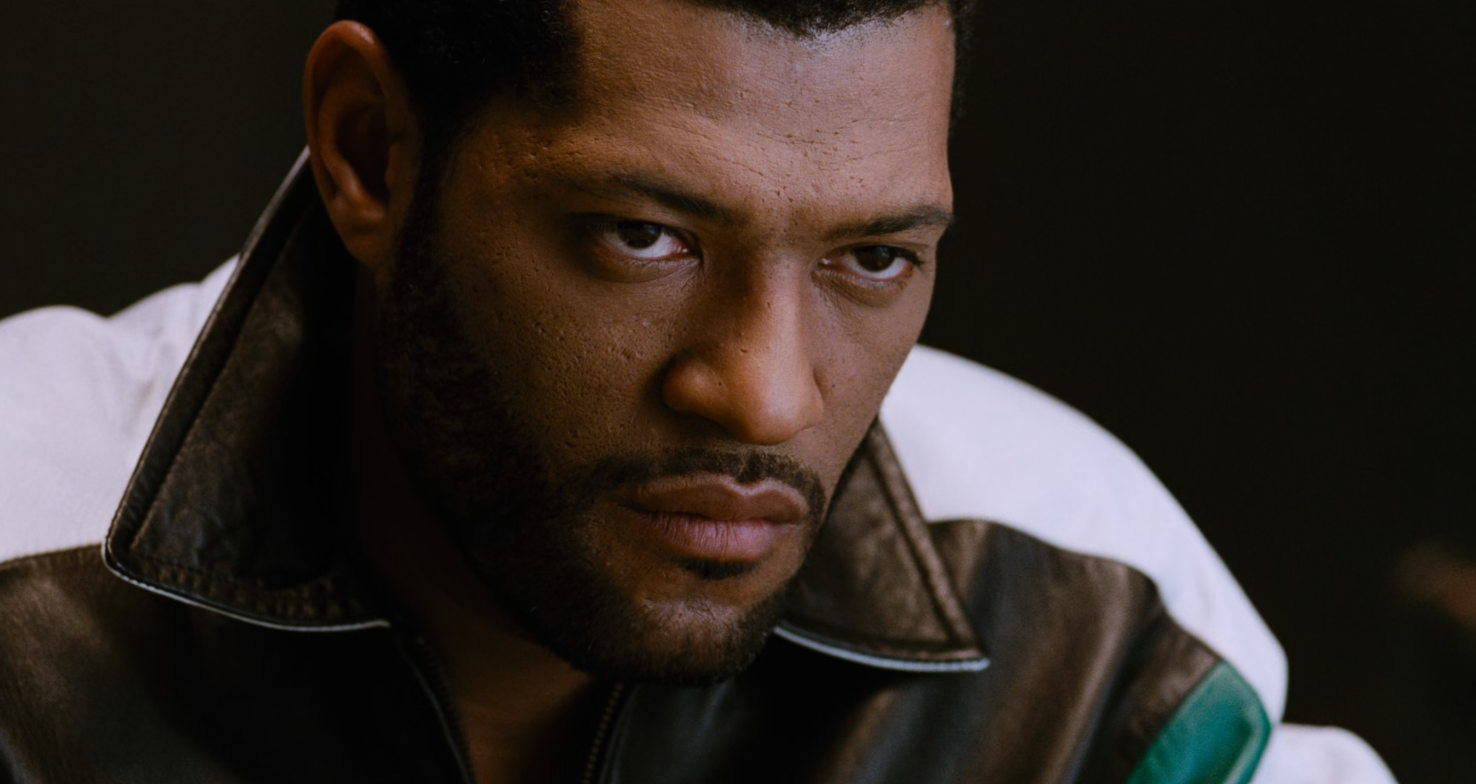
4. Laurence Fishburne in Deep Cover -  Fishburne gives a compelling portrayal of the duality of an undercover cop, and where the life takes him.

Best Scene: Killing the rival dealer. 
3. Leland Orser in Faults - Orser gives a captivating portrayal of a man completely on the edge and just barely keeping it together within a most unlikely task. 

Best Scene: His conditioning. 
2. Utpal Dutt in Agantuk - Dutt gives a wonderful performance that manages to bring such a warm familiarity while playing around with the character's unusual philosophy. 

Best Scene: Second interrogation.
1. Eric Bogosian in Talk Radio - Bogosian gives great portrayal of the shades of the man who is filled with all his desperation and ambition just below the shock jock personality, and he's downright amazing in every moment as the shock jock who both thrives and is disgusted by his world of nihilism. 

Best Scene: Final screed. 

Wednesday, 17 January 2024

Alternate Best Actor & Best Supporting Actor 1992: Laurence Fishburne & Jeff Goldblum in Deep Cover

Laurence Fishburne did not receive an Oscar nomination, despite being nominated for an Independent Spirit Award, for portraying Russell Stevens Jr. in Deep Cover.

Deep Cover follows a police officer as he tries to take down the drug trade from the inside.

Deep Cover is a film I'd describe as somewhat Samuel Fullerish, from Bill Duke (yes that Bill Duke), in that there's much to admire within its frequently daring approach to its story, while at the same time being a bit rough around the edges. One quality that isn't rough is its lead performance by Laurence Fishburne as the cop tasked with his superior officer (Charles Martin Smith) to infiltrate the drug trade. Fishburne's performance is the focal point of the film wherein we follow him from the officer who walks into the office and handles his superior officer's racist, purposefully prodding, question. Fishburne expresses the state of the man, who we are actually introduced first to as a kid where he sees his liquor store robber father brutally gunned down, as beyond straight laced. There's a control in Fishburne's performance and his manner of a man who has spent years doing exactly what he believes to be the right thing and is following the narrow expected path. We see this is a completely specific posture and his delivery that isn't quite robotic, however it is extremely measured in the aggressively exact nature of how he speaks the words. Fishburne successfully establishes a man rigid to the system of law, a man who has avoided drugs and alcohol his entire life, and who will pursue assignment with a calculated conviction.

We then follow Russell as he goes about trying to find his way into the drug world, by attempting to become a dealer and get entrenched into the world of the higher up dealers. Fishburne's performance is effective in finding a balance between the surface emotion, which just as it speaks to a man rigid in his approach to law enforcement, it is as convincing as a man going about his business of dealing drugs, and the sense of danger and even more so the sense of empathy of the genuine good man beneath the surface of the act. An act that is both one he is showing as a false drug dealer but also actually as a cop as well. There are moments where we see Russell take a moment to observe a child, much like himself, as the victim of a drug addicted parent, or having to face down the accusations of a genuinely passionate fellow cop who wants to keep drugs away from his community and children. Fishburne makes the most of these moments by playing the empathy quietly in his eyes, just as the rest of himself seems to insist upon the outward appearance of the "cool" of a man who seemingly doesn't care about anything other than the money he can make. Fishburne creates the innate conflict in the man apparently who is trying to pretend as though he cares about nothing whatsoever, while being emotionally attached to everything, even beyond the fact that he's a cop, and even more so because he genuinely cares about trying to prevent others from becoming victims of drugs.

Jeff Goldblum did not receive an Oscar nomination, despite being nominated for an Independent Spirit Award, for portraying David Jason in Deep Cover.

Eventually getting arrested, due to being sold out by another low level drug dealer, Russell is rescued in court by a man who had been around the drug scene, but also is a lawyer, played here by Jeff Goldblum. Jeff Goldblum is an actor that falls a bit into the sort of strange group along with John Malkovich, Christopher Walken and Samuel L. Jackson, where at a certain point the majority of his performances became less as different characters and more variations on an expected presence. Like those other performances, this change is typically marked by a singular performance that marks that change, in Goldblum's case that was his iconic work in Jurassic Park, one year after this film, which in a way Deep Cover is one of the last completely pure examples of Jeff Goldblum the actor, rather than the Goldblum. And as much as I can enjoy a "the Goldblum" performance, it is something else to see Goldblum when he's entirely trying to become a part without at all relying on the expectation of a Jeff Goldblum performance. Because Goldblum here isn't seeking to accentuate pauses, to smile seductively, or just be everything that defines Goldblum, here he's something else entirely in depicting a lawyer who decides to take a shortcut in life. And it is striking to see Goldblum, so far from doing his Goldblum, as he comes with his own combination of "cool" and something underneath. As Goldblum is projecting this certain attempted power as he's speaking to this lower drug dealer with a quiet sneer and the air of confidence in the innate swagger Goldblum brings. Like Fishburne, Goldblum's eyes too denote a withdrawn anxiety in presenting his David as filled with anxiety just beneath the surface, showing a man in over his head.

The two fully connect when Russell gets arrested and it is Goldblum's David who gets Russell quickly off his charges. In this scene Goldblum is the man seemingly fully in his powers and in control. Goldblum just exudes the swagger of the classic smarmy lawyer who charmingly chats up everyone and quickly makes a deal that makes everything go away in few while also making David and Russell partners in crime. Fishburne is effective as a balance between him and Goldblum, as we see Russell get deeper into life, it is as the quietly stoic drug dealer, against David who is the extremely ambitious man wanting to make a name for himself in this world. And here's where I think the film is good, though greatness seems in reach though I don't think it quite gets there. David's a fascinating character where he's a lawyer, with a straight-laced family, who spends his night dealing with the international drug trade. And the motivation for this seems to be this sort of fringe insanity behind the man, which Goldblum cultivates a bit behind the lines, such as his rambling about his love of sleeping with African American women with this rotten intensity. Goldblum exposing this mentally ill thrill the man is seeking above all else that pushes towards his seemingly bizarre and risky actions. And an idea, where I wish the film just gave a little more time to the idea, because what is there is captivating, I just wish there was a bit more of it, particularly because Goldblum is incredibly dynamic in alluding to what is there for him.

The film expands and what we get more of is David and Russell rising together, something I almost wish the film had spent time to connect them beyond just a business agreement, but regardless that is what we get and we get the parallel rise for each. A particularly notable one being when Russell is tasked with killing another drug dealer, which will prove himself for David. Fishburne is great in this scene of approaching the killing, which is of a horrible dealer  (also a bit too over the top but I digress) who he saw gun down a kid. Regardless Fishburne's approach to the scene delivers the weight of it as he's frozen in his face as he's broaching crossing the line to something else in terrible, and that sense of conflict, even over the death of horrible man is going on through him. To the point he only kills the man when the man begins to advance on him, and Fishburne in the moment almost seems lost in the killing, and portrays Russell almost in a kind of fugue state. And Fishburne shows this as part of the frustration we see quietly building when being the drug dealer, and effectively delivers the more direct outrage towards his superior when it seems like there is no genuine purpose to his task at times. The only respite seeming a romance with a high priced art dealer, which honestly I'll say is one of the weaker aspects of the film, in part because the film doesn't devote the appropriate time to developing the character. David on the other hand is also changing as the man more willfully getting deeper into the life, as a comes afoul with a more powerful drug broker. A great scene with Goldblum where his cockiness immediately turns to withdrawn worry as the man verbally and physically demeans David. Goldblum is amazing in the scene in showing all that bluster of David get lost and the anxiety in the man expand. Topping that only with the following scene with his wife, where Goldblum plays it almost as a kid bullied by people he thought were his friends, as he's so vulnerable and frustrated in his meek way of saying what he did wrong with so much personal shame.

Following the sequence is where everything goes out of control, where Russell ignores his superior to go through with saving David from a sting, in order to further his entrenchment to get a bigger fish, and David turns on the bigger broker. Fishburne is great in the scene again by providing grounding in showing the man just with conviction trying to get through but showing within that conviction tension of a man who is in a completely insane situation. Goldblum on the other hand is pure insanity, and portrays the whole sequence wonderfully as a man high as kite as he goes about getting his revenge on the other man. Goldblum is great in the way he slowly unravels throughout the sequence showing this greater determination, and insanity over every moment showing the man getting closer to breaking towards pure mania. Goldblum though shows instead of the genuine fear of crossing this line like we saw in Russell, in David Goldblum expresses a sadism in it, as man savouring the choice, loving the choice and getting more than anything a high of the act off the killing as he goes upon it with tremendous glee. And within that we see both men go beyond the pale, Russell because it is the only way to truly get something done and David because he's mad in ambition. Fishburne is terrific in his scene of completely unleashing the exhaustion and somber anger when he learns the highest dealers are politically protected leading to this change. However, I think the switch to the proudly sober David turning to drinking and drugs, is something that doesn't feel entirely explored or completely realized. Fishburne sells the individuals moments, they just don't truly go anywhere unfortunately. And in the last act, which unfortunately is a little rushed for David to as he and Russell are at this extreme, I wish we spent more time with them in this and again maybe explored a bit more in their relationship, even if both actors are delivering with what they do have. Though I will say to its credit the final sequence, where Russell is exposed due to his care for the honest cop who berated him earlier, against David who doesn't care about anything except his success comes clashing, is well played in the contrast. Fishburne being completely open in just the raw grief of trying to help the man and bringing a cathartic sincerity within the man who has had to hide away, comparing that to Goldblum who has become a purely callous psychopath who just casually guns the cop down in order to end the conflict. And this is case of two performances I find much to praise, and I would say contain the raw materials of outstanding work, if the film just gave them a little more room in just a few places. Regardless Fishburne and Goldblum give very strong performances here, the former a proper leading turn that carries us through this emotional journey of deceit, and the latter giving a wonderfully atypical turn that suggests there was perhaps even more for the actor to explore away from his more expected presence.

Wednesday, 10 January 2024

Alternate Best Actor 2015: Leland Orser in Faults

 Leland Orser did not receive an Oscar nomination for portraying Ansel Roth in Faults. 

Faults follows a down on his luck "expert" of cults being tasked to deprogram a young woman Claire (Mary Elizabeth Winstead) by her parents. 

Leland Orser is another reliable character actor, however a character actor who tends to fulfill a certain kind of role. Which is if you need someone who seems like they're on the furthest edges and have in fact already fallen off Orser is typically the man for the job. Faults then offers a unique opportunity for Orser to take a leading role, though technically a leading role within his wheelhouse. We open the film as such as we see Ansel Roth eating at a hotel restaurant, where he has twice used a voucher to get a free meal. Orser already is completely dialed into this certain state of the man as he insists upon his right to his meal. There's already that intensity within his work that denotes a man who certainly has been through much, and has this sort of shakiness in his voice that shows even as he's trying to confidently make his case, he is not particularly convincing as such. Orser's innately discombobulated presence takes this a bit further as he brings to life a distinct dark comedy in the manner of Ansel as he first attempts to argue about it with his breaking delivery, but there's really great low key physical comedy in his manner of quickly eating the last bit of his meal before it can be taken away, followed by attempting to continue his meal by eating ketchup. Orser's physical timing is ideal in just bringing such a severe petulance in the act, before he is ushered out. 

Ansel though is here slightly notably as an author of a famous book about the nature of cults and basically being an expert on cult deprogramming. But despite this Orser oozes with a pathetic state as his eyes are just filled with an exasperated anxiety as he struggles even to argue about getting his hotel room for another night and just tries to complain about his poster advertising his speaking engagement being knocked over with kind of a squeaking near whisper. Orser doesn't portray this as some new state that Ansel is in, rather Ansel has been in this state for a long desperate time. We see him in his speaking engagement where Orser brings just a hint more of confidence, not much more but rather enough of the sign of maybe some professional at some time presenting now the bare minimum effort. Although even that limited effort leads him to be attacked by the family member of a woman he deprogrammed that eventually committed suicide. Where Orser's delivery of the explanation is a wonderfully portrayed miserable deflection of explaining how it was still better that he did what he did even though she died. Orser's seething in this overflowing anxiety in trying to explain as basically a long prepared, yet still quite underwhelming, excuse for what he has done. 

The plot kicks in when the parents of a woman in a cult come to Ansel with a request for him to help them in this challenging task. Orser's performance is a magnificent ballet of inadequate awkwardness as he almost instantly tries to exploit any money from them. Including his requirement that they pay him for his new, unpopular book, where Orser does a juggling of words to find the price with just brilliant nervous energy that is funny, while also showing just how desperate the man is to make even just a little bit of money. When he discusses the case, mostly for the meal they promised him, Orser again presents just a little bit more confidence, not a lot but just a little as he runs down what he'll need, although his accentuation of a "lot of money" instantly shows how it is entirely all that Ansel is fixated on when it comes to the opportunity. That and again the free meal, where Orser again brings some dark comedy in the way he both slides the bill over to the parents, and speaks his thank you for the meal as the most weak willed of demands rather than of any genuine appreciation for what they've done to him. Orser sets up effortlessly this extreme state of the money who is insecure about everything, has some very specific background where he had some success, but now only in need for whatever will sustain him for a bit more time. 

And as he arranges for the kidnapping of Claire, Orser's performance does shift again naturally to the man in operation mode. He's again hardly some man exuding confidence, but what he does show is just that much more beyond even the speaking arrangement as he goes about something he has done before. Suddenly as he is giving out orders to his hired thugs, tasked with moving Claire into his deprogramming hotel room, there is finally a little more to him, not a lot but a little. Orser's particularly good in the moment where he's instructing Claire to follow his orders, lest the men "who aren't here friends" shall hurt her even though he won't. And in the moment you do get a glimpse of someone who has had some command of his methods, even if in a most limited amount. And such facades quickly fade as he begins with the actual start of the deprogramming where Orser is one man show of constantly switching between attempted forced upon confidence against the most extreme anxiety. Orser's is how the film thrives because of the way he approaches every moment there is a particular almost hard to specify energy in him making this act particularly unpredictable as he attempts, and frequently, fails to go through the steps with Claire in his so-called process. His moments of trying to put on this empathy and care in breaking her of her believes, while instantly shattering in his whole manner to be the man so filled with fear whenever she comes back with unexpected force, or when her father starts demanding strange orders like telling Claire that she looks pretty after she puts on tightly fitting clothes from when she was a teenager. 

Eventually this leads to the main reveal of the film which spoilers this in fact an elaborate ruse where Claire is in fact a cult leader, her parents are fake and just members of the cult, and the whole setup is to in fact indoctrinate Ansel into the cult. So what happens is a strange dance of control when Claire begins to turn the table on Ansel, first by the technique of confusing him in the beginning before becoming more overtly dominant after some time. This is the instance that may flop entirely if not for Orser because so much relies on his performance to convincingly show us a deprogrammer getting programmed.  And Orser is convincing as such by really building up the man defined by insecurities and that being exploited eventually. His performance portrays so effectively this desire for comfort within the nervousness, the insanity nearly things are spiraling out of control, so when Claire begins to comfort him, by basically offering specific controls for him, Orser earns it by showing the way Ansel as been looking for this for so much time. The particular moment of the transition is just outstanding work from Orser, because you see just how it is at this apex of the man approaching his nervous breakdown that is pulling him in every other direction. The emotional need was so incredibly severe and painful. The nervousness finally seems to find some genuine ease of his normally hectic state when she begins to manipulate him, and Orser being wholly convincing in portraying this fundamental shift. A shift that should be potentially ridiculous but one that Orser earns through how he builds to it, while also just in the moment the way he refocuses the intensity into his work, the way he looks at Winstead with this fascination and really sudden different kind of loving intensity. There's a bizarre kind of warmth in the moment that is great because it becomes extremely creepy, while also being convincing that the man is finding some sort of second life, in basically becoming a drone. And when she begins to order him, rather than the unfocused man without purpose, Orser is powerful in portraying this sudden eerie conviction in the man as he only follows orders and does exactly what she says. Orser's whole performance really is the key to the film, because so much is really focused on his carrying of the energy, in those moments of purposefully awkward dark comedy, the emotional desperation that leads us to believable see the de-converter become the converted. 

Wednesday, 3 January 2024

Alternate Best Actor 1988: Eric Bogosian in Talk Radio

Eric Bogosian did not receive an Oscar nomination for portraying Barry Champlain in Talk Radio.

Talk Radio tells the story of a shock jock radio host just before his show is about to go national.

The always reliable character actor Eric Bogosian actually crafted his own lead role as this is a reprise of his performance in a stage play that he also penned, and co-wrote the screenplay here. All of this makes sense as the role of a radio host seems ideal for Bogosian given his idiosyncratic voice with its timbre that is of a filling consistency, aka an ideal radio voice. Bogosian sounds like he should host a radio show, so playing a radio host already is perfect, but of course Talk Radio isn't about a DJ hosting any standard radio show. Instead what Bogosian Barry hosts is talk radio show designed to interact with the most fringe, and often hateful elements of society, as we see through the extended opening sequence that depicts a night of callers for Barry's show. It can only be said that Bogosian is stellar in every single moment of Barry as the radio performer. Because it is a performance, just as there are also elements of Barry the man, but he's going about attacking the program as this kind of almost weird song and dance. And while Bogosian isn't literally singing he almost might as well be in terms of the way the words flow out of his mouth in these sequences. He's on, with the radio voice, and when starting to speak there's no hesitation, no thinking seemingly, he's just ready to go. And it is easy to be convinced of the success of Barry's show immediately because Bogosian's work is immediately captivating, even often in a way of morbid fascination.

Bogosian's performance has a unique power to it, because what Barry's place within the radio show is both the man playing off of the fringe, as seemingly speaking some sensible aspect of society speaking against those insane callers he gets, while also being just as much right within the fringe with methods in which he uses in this strange format of combat. Every call Bogosian performs as both a battle and a dance, but what is behind it all is a strange kind of hatred being bounced around. There are the moments of the most hateful callers calling simply to state their hate, or to threaten Barry even, and Bogosian performs these early on with the same hostility though couched within the natural flow of a comedian who is savoring the hate as something he can play with. When it is one of the strange callers, where we never quite find out how many are hoaxers, exhibitionist, or genuine articles within their strangeness, Bogosian's performance is the one simply playing with them often with a bit of an sneer but just as much ease as he's allowing the nonsense to go on while also undercutting it. Then there are the callers who call in with a degree of support or love for Barry, and these perhaps speak most to the nature of Barry himself, as he responds to them with his own disgusted hatred towards any affection, that reveals Barry's own self-loathing, yet even when carelessly insulting those supporting him, Bogosian's performance still keeps that same slick edge of performance. And that is what is so captivating, is how convincing Bogosian makes this performance art, of the man who is juggling, he is dancing, he is singing, but the elements he's doing that with is for entertainment based around hatred, shock and morbidity.

The radio scenes are what make the film great, and it is easy to see why the stage version would've been successful, which were only based in the radio station, as that is where the film absolutely works. Outside of the scenes of performance, is where the film itself is less good, but where Bogosian still thrives within his performance, because he uses these scenes effectively to help inform us of what exactly is true and what isn't about his onscreen persona. As the first radio sequence, we see Barry checking in with his staff who are talking about his moment as he's about to go national. And what we see in Bogosian's work is in a way a less convincing performance in terms of what Barry is doing, but as convincing in terms of what Bogosian is doing. Because Barry still puts on the edge a bit with those at the station, as he seems to be dismissive, yet when speaking about the chance to go national Bogosian couches genuine nervousness and desperation within the persona. Bogosian lets moments slip showing the man who really does want to have his radio show be successful, even with the "suits" he still tries to the best of his ability to put on his sardonic manner even then. Bogosian artfully shows the sort of breaks even with a certain control within that. The one place where we see even less than that are the moments with his wife (Ellen Greene) which are two sides, those before his show and those after.

In terms of the writing the scenes involving Green are the weakest in the film, as they're just pretty rote and basic moments of a guy losing himself to fame against his loyal wife. Regardless, Bogosian does make the most out of using these scenes in terms of showing where Barry sort of crafted his radio personality from. The earliest scenes of Barry being that of the enthusiastic wannabe, where there are shades of the man, but a much more positive direction. Where his remarkable voice leads him to being invited to guest on another radio show where a trolling caller leads to Barry's first sort of dive into the Barry personality we know now. Bogosian's great in this moment because he shows it as less of an invention and more so an immediate inspiration, almost an insatiable urge to go into the combative sardonic style that we see so dominant in him in the future. However in the present, when with his wife, we seem to see the best Barry, where Bogosian pulls back the intensity of the personality, to show a quieter, more humble, even somewhat ashamed man, trying to reconcile with his wife. Where Bogosian hides the personality and seems to show Barry completely through, even if for a moment, and perhaps a better side. But what is notable, is Bogosian's choice to be so meek in these moments, showing that there is so much bluster behind the personality that is hiding the weak man.

The film does come together for the final act with Barry's final radio broadcast, where he takes on some particularly extreme callers including even bringing in a guest in a drugged out man (Michael Wincott). Bogosian's performance is outstanding in this sequence because again it is just captivating to see him run his show, but there's more here as it becomes the most challenging. We have a key moment where a man claiming to be a serial rapist calls, and Bogosian's performance is exceptional in the moment in showing just a bit of active deterioration that goes to show a hint of horror in Barry's eyes as he comes to believe the caller. Bogosian pulling back just enough being so powerful in indicating a bit of humanity. This though is purposefully undercut as when his wife calls him live to essentially ask about their relationship where Barry pours all the bile he can in response before going off on a tirade basically of all of humanity. Bogosian is magnetic but also so brilliantly wretched in basically this intense release of every bit of hatred, but also self-loathing pouring out in the sequence. Creating this moment of a controlled mania where it is unleashing every bit of ire he's held in, while also essentially giving fully to his trade of miring in the muck for the sake of entertainment.  It is a full mental breakdown in Bogosian's hands, but still all pointed as this weaponized insanity. Bogosian is flawless in the moment because he manages to merge the man with the personality, and it isn't beautiful rather deeply disturbing in seeing the man being simultaneously sickened by what he has become while also fully embracing it. And even while the film has weaker aspects to it, Bogosian is never one of them. His work is complete in creating a singular portrait of a man becoming one with his nightmarish creation.

Monday, 1 January 2024

Another Year and Another Official Lineup

 I may be overthinking this one, but Andrew Scott is my NGNG prediction for a last minute nomination. Although I should say this is dependent on a few things, and it could easily be Wright. But thinking in terms of last minute momentum All of Us Strangers could come off the strongest relatively, getting a last minute push at BAFTA, to not become a huge player but enough for Scott to get in. This also requires in part for Wright to snubbed at SAG in favor of Colman Domingo, the latter whose film is too weak I think to get him beyond SAG. But if Wright gets in SAG, that will probably be enough for it just to be the SAG five likely, though I still think Scott has a chance even then as long as Strangers performs to its apex at BAFTA...which I still think will be a 2 nominations probably Oscar time, but enough theoretically. Now at the moment it seems like we have a clear seven probably, in the pictured five, Wright and Domingo. Domingo being the weakest chance because Rustin's only other possible nomination is song, so I think Domingo can get SAG but that's probably it for him. American Fiction could be a big player or a minor player, so again the variation there allows for Scott to move in. Then there's the rest, who all seem safe-ish as long as their films don't under-perform massively. Could Giamatti get Sidewaysed again? Sure, but seems unlikely at this venture. DiCaprio doesn't miss unless he has internal competition (Waltz, Day-Lewis) if his film is in the top five, so for him to miss Killers would need to stop under-performing severely...like say Scorsese misses DGA which doesn't seem too likely. Then there's Cooper, there is a Maestro backlash brewing, but I don't think that will stop his nomination, it might play into the win, but not the nomination. Then Murphy is the lauded lead, who career wise has paid his dues, and is in the best picture front-runner, no reason to doubt him. 
I decided to not overthink supporting actor, as long as we see this five at SAG, there is no reason to second guess it. The broadly comic pair of Gosling and Ruffalo are both well liked by the academy in films that look like they should be big hits there. As the villainous pair of Roberts, Downey and De Niro both seem set to return as well. Downey as the potential winner (though I think this category is open until the SAG winner) in the best picture front-runner, then De Niro in a major player, with the DiCaprio supporting actor boon trend as well to help cement his position. With maybe the exception of De Niro, even if their films under-perform massively, it would be hard to see them missing the final five. Then there's Charles Melton, whose film's performance could go big or small. Even if it is the latter, I could see Melton as the sole nominee, even though currently his trajectory is very similar to the eventually snubbed Dennis Quaid for Far From Heaven (who also did great with the critics and he got a SAG nomination). What helps Melton perhaps avoid that fate, other than the much individual support he's gotten, is that there really isn't obvious alternatives without major shifts happening. If Poor Things, over-performs, then Dafoe can enter the conversation a bit more, if the Holdovers over-performs, maybe Dominic Sessa could make it (though I think being obviously co-lead hurts him), but if the race remains consistent this seems like an easy five to predict. Sterling K. Brown has also been bandied about a bit for American Fiction, though I think his role might be a bit too comparatively small to get in past any of these five, who have all substantial screentime, where his role is more so the type that gets in, in a thinner year. This year is stacked with these five, and I'll be pretty content with predicting them unless SAG and BAFTA do something really unexpected to shift momentum...however that doesn't seem overly likely. And yes Glenn Howerton has peaked with his critics nominations and Indie Spirit nomination...unless he wants to tell me when he'll peak.