Showing posts with label 2015. Show all posts

Tuesday, 26 January 2016

Best Actor 2015: Results

5. Eddie Redmayne in The Danish Girl - Redmayne gives a downright terrible performance simplifying the character into separate turns, one as a bland nothing and the other as a ridiculous caricature.
4. Bryan Cranston in Trumbo - Cranston hams it up just a bit in the early portion of the film, but eventually settles in to give a fairly effective portrayal of whatever the film needs Trumbo to be.

Best Scene: His speech.
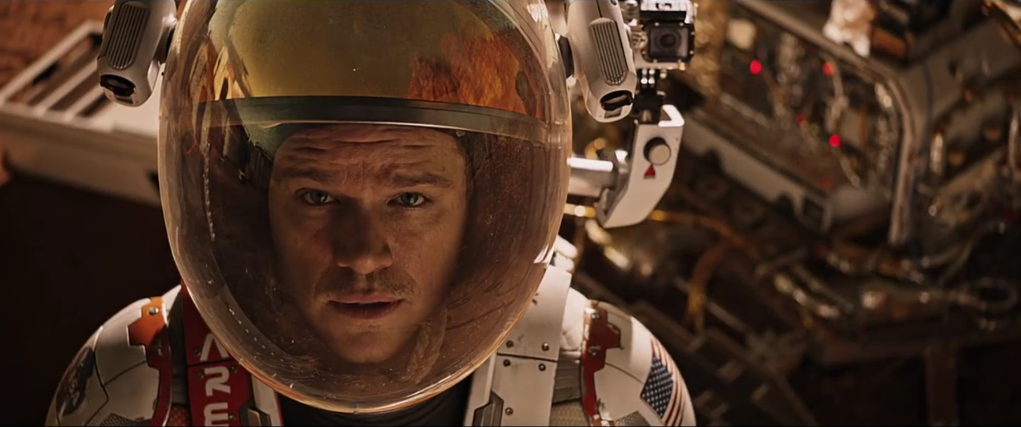
3. Matt Damon in The Martian - Damon effectively gives his character's situation the needed dramatic weight, and is decent in portraying his character's jokey optimism, though I did find his shtick to become grating after awhile.

Best Scene: The Launch
2. Michael Fassbender in Steve Jobs - Fassbender gives an engaging and intriguing performance as he builds his characterization around the variations within the facade of Jobs. 

Best Scene: His second talk with Sculley.
1. Leonardo DiCaprio in The Revenant - DiCaprio gives a great performance, finding nuance within his minimalist character, which works so well in tandem with the film's grand scope and vision.

Best Scene: Glass discovers his son.
Next Year: 2015 Supporting

Best Actor 2015: Leonardo DiCaprio in The Revenant

Leonardo DiCaprio won his Oscar from his fifth acting Oscar nomination for portraying Hugh Glass in The Revenant.

The Revenant is an impressive, though not flawless, film about a man fighting for his survival in order to seek his revenge against the man who wronged him.

Leonardo DiCaprio with his last two performance, Django Unchained and The Wolf of Wall Street, has been letting loose a bit, changing up from the style of his work which started in the previous decade, where his performances was often defined by extreme emotions. Though I suppose I have been more forgiving than some in regards to these roles, I do see where the criticism comes from as DiCaprio would often focus too intently on a single aspect of his character such as in J. Edgar where he focused on the character's emotional vulnerability, though there were times he'd find the needed variation such as in The Departed. Now The Revenant might seem like DiCaprio is going back to his old ways in the role of Hugh Glass in this film. After all Glass's wife is indeed dead just as was the case for DiCaprio's characters in Shutter Island and Inception, and there is another tragedy ready to befall him about a third of a way into this film. So it would seem time for DiCaprio to focus intensely on just the anguish of the man's life. Well, that's not quite the case, and that's not really the intent of this performance. This turn actually has much in common with his career best turn in The Wolf of Wall Street, though I must admit I have quite a bit of explaining to do on that point.

But before I get to all that let's just examine Hugh Glass as a character. He had an indigenous wife, with whom he had a son, and then she was killed which resulted in Glass killing man. After that he became a tracker for an ill fated hunting expedition along with his son. DiCaprio is good in providing an appropriate bond with his son in the few scenes we are given between them. In the first scene of the film DiCaprio offers the right warmth of a father giving words of comfort to his younger son. With his older son though DiCaprio changes this rather well by giving a colder edge to his relationship showing Glass as trying to keep his son in line, and out of danger. It is not as though the love has not vanished, but rather DiCaprio importantly suggests the sort of relationship that would develop given that Glass must protect his son, but also prepare him to survive. Now with that all out of the way, other than a pivotal event, that's about the sum of what we are given in terms of Glass's backstory. It is a minimalist character since even that history we are shown through images rather than through dialogue. Speaking of dialogue, Glass has very few lines throughout the film with the character being almost unable to speak for a good chunk of the story.

What is probably the most obviously impressive element of DiCaprio's performance comes in as Glass, scouting ahead for the party, accidentally comes afoul of a bear and is severely mauled. It needs to be said that DiCaprio is terrific in the scene as every moment of the attack feels real through his performance with every scream of agony being keenly felt throughout the ordeal. This goes for every instance in DiCaprio's work in terms of the depiction of the physical pain that Glass goes through. DiCaprio makes your skin crawl as every cut, every festering wound, even every measure to reduce the pain is realized in vivid detail by him. DiCaprio does not limit any facet of this portraying even Glass's haggard breaths from the damage to his lungs, and throat as well, through his course whimper that barely escape his mouth just after the bear attack. DiCaprio portrays this incredibly well as he only gradually even gives Glass his voice back, as even at the end of the film since his throat is still far from full recovery. DiCaprio is uncompromising in the realization of Glass's terrible state which is essential to the film, as in DiCaprio's performance one can see what Glass must endure in his attempt to survive his long journey. The weight of this is on DiCaprio's shoulders and he does not falter in this regard in the slightest.

Of course if Glass was not suffering enough, due to the frequent attacks by a hostile group of natives, and almost being eaten by a bear, he also has to deal with a selfish jerk by the name of Fitzgerald (Tom Hardy) who is one of the three men left behind to watch over Glass. Fitzgerald naturally wants to smother Glass, and I love this moment in DiCaprio's performance as his face is almost saying "are you kidding me?" as Fitzgerald makes it basically impossible to say no to his proposition. This unfortunately leads Glass's son to try to interfere with Fitzgerald's plan, which results in another tragedy for Glass. DiCaprio's reaction again terrific in properly expressing the disbelief and intense anger at seeing Fitzgerald's terrible action. DiCaprio portrays it well as though Glass is trying his best to make himself overcome his injuries but is forced into just witness the event in horror. Fitzgerald, to add to that all the more, leaves Glass for dead, though it does give Glass purpose to survive. Glass starts on his trek, which begins with him literally crawling for life, as he falls upon the corpse of his son. It's one of DiCaprio's strongest moments because he does not use the moment to once again reveal his hate for Fitzgerald, but rather takes the scene to somberly show his love to his son one last time.

Now comparing this to Wolf of Wall Street seems odd, but actually with that performance and this one he embraces his actual movie star presence, which he seemed almost to be actively avoiding at times with some of his earlier performances. Now this is not in terms of a larger than life personality that he presented in that earlier film, but rather finding the ability to standout within the frame. After all the film has a considerable scope and clear directorial vision, but DiCaprio succeeds in standing with it rather than being overwhelmed by it. He remains the human focus in the right fashion, though perhaps not in the way one might expect. DiCaprio does not keep Glass's journey focused solely on the idea of revenge, and does not give a performance as though Glass is obsessed with this. In fact this part of DiCaprio's performance is surprisingly, though effectively, rather subtle in his realization of Glass's intentions. He portrays less of a vicious anger, but more of a respective duty to his son, rather than an act of potential personal satisfaction. This is echoed well by one of the few scenes where Glass actually explains his personal feelings, when he states his earlier act of violence. Again DiCaprio does suggest this as Glass's actions being defined by hatred, but rather as an honest act to protect his son.

DiCaprio does not give a single focus to his portrayal of Glass during his attempt to survive the wilderness and find Fitzgerald. He captures the needed visceral qualities within the story whether it is physical torment from his trials, or the direct fear when he is trying to escape the group of natives that were trailing his party. DiCaprio keeps alive the emotional touches of the past, that again DiCaprio is rather affecting by showing Glass being burdened not by hatred but rather sadness as he remembers his loss. DiCaprio does not leave every scene though to either portray Glass's current physical state or the motivation for his survival. There some great "slight" moments in his performance that bring more nuance to Glass. One of my favorites in this regard is when Glass mimes shooting at an elk with a stick. There's wonderful appreciation for better times as he takes the moment to understand his hardship. One my favorite sequences in the film is when Glass comes across another survivor Hikuc(Arthur RedCloud) who has also lost his family. DiCaprio and RedCloud strike up endearing chemistry in their few scenes together, they're especially good in the moment where the two catch snowflakes as though both of them are taking a moment to enjoy life once again, if only for a brief moment. DiCaprio finds the needed variation within Glass's story, which is particularly important considering the potentially limited nature of his character. He does not dwell upon simply the revenge, he does not focus upon that until Glass is staring Fitzgerald right in the face. In that moment DiCaprio brings the necessary intensity as he releases his rage against Fitzgerald. After their showdown though DiCaprio does not create this as a portrait as a man's triumph over nature, or even over his enemy. DiCaprio instead reveals the end of the pursuit to be a hollow. He is haunting in his final reaction of the film as Glass looks to see what is left in his life, but nothing's there. Just as one should not give up after a bear mauling, one should never cave into peer pressure. DiCaprio gives a great performance as he works in tandem with the film to give a compelling portrait of survival. 

Sunday, 24 January 2016

Best Actor 2015: Matt Damon in The Martian

Matt Damon received his third acting Oscar nomination for portraying Mark Watney in The Martian.

The Martian is a good film about a lone astronaut being accidentally stranded on Mars who tries to survive by using the power of science.

The film opens with just a brief scene depicting the crew of the mars mission before a quick evacuation and an accident which leave that lone astronaut left on the barren planet. We pick up with Mark Watney waking up and having to perform an emergency operation on himself to treat his injury. Damon vividly realizes the pain in Watney as he goes through with the operation, and the moment of brief anguish as Watney finally has time to comprehend his predicament. After just a few moments of soberly pondering his fate, Watney decides to do whatever it takes to survive until he can be rescued. That basically is his most serious minded sequence for a great deal of the film, as Damon, as well as the film, decide to portray Watney as an optimistic go-getter who constantly makes light of his situation. To Damon's credit, he does not go overboard with Watney's enthusiasm, oh it's strong to be sure, but he holds back enough to keep an important idea alive behind it that keeps his work from becoming farcical. The idea being his humorous attitude is basically a coping mechanism to deal with his loneliness, and terrible situation. Damon allows this to be assumed, which is essential, but this does mean the humor element of Watney is flawlessly performed either.

Damon's frequent asides, and I mean frequent, old Mark Watney seems to have a bit of joke to go along with every single thing that he does, are delivered in an enjoyable enough way, at first. Damon, at least in this instance, does not prove himself to be a great comic actor as it does become a bit repetitive after awhile. He more or less delivers every one of Watney's cracks in the same way. It is not that he even had to give a outstanding comedic performance, but Damon does not quite have enough charm to make up for that either. That is his charm does not act as a bit of override so to speak, to make Watney wholly endearing no matter what he's doing. With Damon, Watney does become just a bit tiresome with his constant comments that do stop being funny after awhile. Luckily for the film Damon's performance actually is not a one man show in say the way it is for Tom Hanks in Castaway, or Sam Rockwell in Moon. Damon does not have to carry the entire film on his shoulders as the film very frequently breaks off to see what the large ensemble of characters are doing in back home to try to save Watney. This is a saving grace, since I don't think I personally would have been able to take an entire film devoted to Mark Watney and his long line of various science related jokes.

In fact as the film proceeds it jumps to Watney all the more infrequently, and spends more time in creating the larger scope of the world wide effort to save Watney. It still jumps back to him now and again, but it eventually has a cut off point when the film goes ahead one year just before Watney's rescue will be mounted. This limits Damon's performance somewhat since we suddenly see Watney after that one year. That is he's not given the chance to really show a gradual decay in Watney's physical or mental state, we just meet up with him after he's clearly been through a rough year. Damon though is good in quietly conveying the mental and physical degradation in Watney. His optimism, as well as his jokes, are still to be found, but Damon's good in reducing it as well by downright dropping it when he's not talking to a video log or to NASA. Eventually Watney must go through with the rescue, which is still extremely risky. In that it involves Watney taking off in a bare boned remote controlled rocket, and he will basically be flung into space in the hope that his old crew can somehow catch him.

Just as the launch begins, Damon has an outstanding moment as all the fear and pain of his experience as well as that of his present course comes out, but at the time he also creates the sense of a definite joy as it seems his ordeal may be over soon. It's a brilliantly performed moment by Damon as the emotions poor out in such a genuine mess revealing what's really been going on beneath the surface with Watney the whole time. After that point though Watney reverts to his old bag of tricks, even during the rescue itself since at one point he announces that his intentions to fly like iron man by depressurizing part of his suit. The film actually also only briefly touches upon his moment of rescue, as it quickly cuts away to Watney being back on earth quite comfortable with his place on earth once again. Though I must admit I don't love this performance, I can't when I do find it become just a bit grating after awhile, but this is still a good performance which carries his portion of the film well especially in providing the needed emotional weight to the story in some pivotal moments.

Saturday, 23 January 2016

Best Actor 2015: Michael Fassbender in Steve Jobs

Michael Fassbender received his second Oscar nomination for portraying the titular character of Steve Jobs.

Steve Jobs takes three different product launches for an insight into the life of tech giant Steve Jobs. The film builds up with first third being good, the second being rather great, but then falters with a problematic third act.

Michael Fassbender plays the man behind it all and has probably more screen time percentage wise than the so called "one man show" performances of his fellow nominees, Leonardo DiCaprio in The Revenant and Matt Damon in The Martian. He's in pretty much every scene as the film follows him as he deals with every person and problem in Steve Jobs's life. Fassbender actually looks nothing like the real Steve Jobs, but he goes about doing his best to make up for that. The first being his voice which Fassbender actually surprises with, despite liking Fassbender I'll admit his accents have never been his strong suit, but here he maintains his version of Steve Jobs's slightly whiny timbre. It is not an exact replica but Fassbender makes it his own to the point that it always seems a natural part of his character. In addition Fassbender takes upon Jobs's certain mannerisms, which are interesting, as with the real Jobs, in that they are sort of understated yet overt. That is Fassbender's performance is not so obviously mannered yet the distinct way he keeps a careful posture, and his particular use of his body language, especially in terms of his hand and arm movements, is that of Jobs. Now even all of this, except the voice, actually has a bit of hidden purpose which I'll get to later.

Now a pivotal line in the film is when Jobs's oldest friend and work partner Steve Wozniak (Seth Rogen) states that the Jobs we see in the majority of the film is something that he's invented, and there lies the key to Fassbender's performance. Fassbender most of the time plays the part in a very exact, seemingly too exact, fashion as though Jobs is on some other wavelength than all of humanity, as he sees the world in a way that no one else can even decipher. Fassbender carries himself in a grand fashion as though Steve Jobs's instructions are not just some obsessive man who is becoming hung up on the slightest detail, such as the perfect picture of a Shark or ensuring that when he does his demonstration that the fire exit lights have been turned off, but instead plays it as though he is indeed an artist who is making these specific demands in order to realize his precise vision. Though everyone else doesn't exactly share Jobs's own enthusiasm, Fassbender is very effective in conveying this personal passion in Jobs that drives him to treat minor details as though they're pivotal to the success of his project. It is almost slightly inhuman at times, as Fassbender very much projects these choices as though it is from a mind above it all.

Of course Jobs is not above it all as he has to deal with many things in his life, which all spring up at different moments during each presentation. This includes professional arguments, that sometimes become personal, with a computer designer Andy Hertzfeld (Michael Stuhlbarg) over various things starting with a glitch, John Schulley (Jeff Daniels) Apple's CEO mostly over Apple's board of directors which rarely approves of Jobs, and Wozniak due to Jobs's refusal recognize the importance of the Apple II. As well as completely personal problems involving his former girlfriend Chrisann (Katherine Waterston) and his daughter Lisa, who he tries to deny paternity to. Mixed between all of them is Joanna Hoffman (Kate Winslet) who tries to act as a mediator of sorts. Now a challenge arises due to the nature of Jobs's presentation within the film, in that he is this constant of sorts. Fassbender does maintain this as Steve Jobs never fully loses that certain control about himself, yet there still must be more to him to develop any sort complexity to the relationships within the film. Fassbender does this artfully actually by having these moments of variation in his personal wavelength though they are of a loop of sorts. That even with change it always in the end comes back to original center of his personality which is Steve Jobs as "the genius".

Fassbender utilizes this brilliantly in conveying Jobs's real relationship with each person. In his interactions with Andy, Fassbender adapts a considerable passive aggressive streak in Jobs as every spoken word towards the man seems to have a bit of venom beneath it, suggesting his complete lack of empathy for the man. On the other hand with John Sculley Fassbender fashions a more openly aggressive shade to Jobs, though less petty in nature, revealing a much more genuine passion within it as his arguments with Sculley far more directly impact his ability to create his visions. Underlying these moments though Fassbender is very good at establishing an understanding and certain respect.  He and Daniels craft important moments of rapport when the two seem to be working together in tandem. In his scenes with Wozniak, Fassbender is quite clever in the way he provides a contradiction in the relationship. Whenever Wozniak calls him out on something or demands any sort of recognition, Fassbender brings an ice cold intensity to Jobs reflecting an immediate defense to try silence any idea that he might be inconsiderate or even worse, wrong. On the other hand when they are not in a direct argument Fassbender's reveals an earnest warmth suggesting so well their original friendship, that has been covered up by the man that Jobs has become.

Now with his personal matters there is perhaps the biggest revelation of the truth behind Fassbender's performance which is to indeed make the whole idea of Jobs a facade. There are a few scenes set before any of the products that might seem a bit slight, but essential to Fassbender's characterization. Fassbender quite bluntly reveals a far more relaxed man who is a guy with a vision to be sure, but there is not that grandeur, his physical mannerisms for example are of an average man. There's a much more endearing enthusiasm as Fassbender shows the real man in these scenes before he became the Steve Jobs we see in the rest of the film. Now with that in mind his personal scenes with his daughter and the mother of that daughter, one can see the most substantial break in that facade as Jobs basically reveals his worst and best sides. In regards to his dealings with Chrisann Fassbender does not hide a general disdain to her, and in this case trying to keep his composure only softens his attitude. Fassbender does not shy away from actually carrying this coldness over to Jobs's relationship with his daughter, where there is an inherent harshness in his detached interactions with her that seem to reveal a especially pathetic part of Jobs as basically a man who won't own up to his own mistakes. Nevertheless there are a few moments where Lisa shows her unconditional love towards him, which Fassbender presents just a momentary break in Jobs that suggests him being actually affected by this. There's even a cruelty within this though as Fassbender makes it so brief showing that Jobs will not even lose his crafted image just to recognize his daughter.

The last relationship is between Jobs and Hoffman whose treated as basically his assistant in the film, this is technically least heated in that both actors portray their interactions as fully comfortable with one another leaving Jobs to leave his crafted image firmly place, with Hoffman gently acting as a moral conscience for him. Now of course the relationships all get into a bit a toss up for the film's act which does kinda fall apart in two ways. The first being many of the relationship fail to build to anything special, Sculley and Wozniak basically go over the exact same things. The other being theu go in the wrong direction, the relationship with Hertzfeld's takes a weird and ill conceived turn. Hoffman suddenly become an extremely loud moral conscience. His relationship with his daughter takes the hardest turn which wants an immediate feel good switch around evidenced most by its choice of song to end the film. This might leave Fassbender in a difficult spot, but I actually don't Fassbender's performance is harmed by the film's ending which is both lacking in change yet wants too much of it at the same time. Fassbender's whole take on the character up until the point has to keep Jobs's persona as a constant, and even the moments of change always revert back to that persona. Now that means he gets away with it, so to speak in, in terms of the lack of change but that still leaves the extreme change for his daughter. Well Fassbender does not succumb to the schmaltz the rest of the film seems striving for in terms of both the writing and direction. In his final scene with Lisa, Jobs finally states that he's "poorly made". This could have been a time to fail the character as he becomes this great guy who admits fault, but Fassbender does not do that. He instead shows it to be the same sort of momentary glitch of the facade that he portrayed beforehand in his interactions with Lisa. Fassbender reinforces this by returning to his usual self when basically tries to appease his daughter by boasting about some new ideas he has. Fassbender's performance contradicts the film, but its the right thing to do. Fassbender stays true to his portrait of Jobs, which is as a man fighting with himself, not to do the right thing, but rather to become the icon he wishes to be.

Thursday, 21 January 2016

Best Actor 2015: Bryan Cranston in Trumbo

Bryan Cranston received his first Oscar nomination for portraying Dalton Trumbo in Trumbo.

Trumbo is a watchable enough film about the trials and tribulations of a Hollywood screen writer during the blacklist.

Trumbo is a film that decides to give its story a certain style as though it is a film from the period in which the story takes place. Well this is somewhat misguided as it seems to believe that all films from the period were a bit overacted, which was not the case. Now we get a series of imitations throughout the film ones of very prominent actors including John Wayne, Kirk Douglas and Edward G. Robinson. Michael Stuhlbarg as Robinson does the best job out of those by actually not focusing stiffly on imitating the man's mannerisms and voice. The imitations extend to somewhat lesser known figures like Otto Preminger and Hedda Hopper. Hey, even Alan Tudyk portrays Ian McLellan Hunter as though he's giving a bad imitation, even though most people probably have no idea what the real Ian McLellean Hunter was like. This choice extends to Bryan Cranston's leading turn as the titular Trumbo, which to be fair it is unlikely that one could wholly shy away from if they tried given his mustache, cigarette holder, and an apparent affection for working while bathing. Cranston does indeed embrace this, going head first in bringing to life Trumbo's particular way of speaking and his physical idiosyncrasies. 

Now to Cranston's credit he actually does match Trumbo's real life ways fairly well, but dials them just a few notches past normalcy. I won't say he goes too far, since he very much goes for a comedic excess. This is understandable given that the film wishes to be a comedy some of the time. It's after all directed by Jay Roach who got his start in broad comedies, and you know when broad comedy directors...alright I won't go over again. Any who the film's tone tries to mix comedy with the drama of the situation, which does not work too well in about the first twenty minutes of the film. This extends to Cranston's performance where it seems a few slices of ham could be trimmed off of Trumbo as he flaunts his superiority of wit at his opponents, the problem is this also extends as he's just spending time with his family. Cranston's overt approach though does find its place when Trumbo is put in front of HUAC. His excess actually really works in the situation as he finds the right combination of humor and passion as Trumbo goes upon taking on the committee's questions by asking a few of his own. Thankfully after this scene Cranston also dials down his performance considerably, and seems to become far more comfortable in the role.

This is probably more likely a side effect of Cranston depicting Trumbo as his ego has been deflated somewhat due to legal defeats, and facing jail time, either way it's a good thing. It becomes far easier to accept Cranston in the role, and his performance grows far more effective. Cranston thankfully is not ruled by his mannerisms and is able to find what lies beneath it all to reveal actual human qualities in the man, not just being a caricature of him. After Trumbo is let out of prison the film basically jumps around, not necessarily in a bad way, as it follows Trumbo as he deals with the large number of different people in his personal and professional life. The film puts much upon Bryan Cranston as he basically must jump around the various hurdles placed in from him in order to match whatever tone is required for each character and situation. Cranston manages to balance it rather well in the lighter situation such as dealing with the schlock movie producers he goes to work for, where Cranston offers just enough of a sardonic touch while staying fairly dead pan in dealing with the men who are even more extreme than he is. He nicely plays it up just a bit more when Trumbo jokes about their situation with the other writer who have been blacklisted.

In turn when dealing with someone adamant about the blacklist, such as Hedda Hopper, Cranston brings the right quiet disdain and disgust as he almost tries to avoid a direct confrontation. Cranston is wise to contrast this in the scenes where he deals with people who have named names in order to avoid their own careers being ruined. Although Cranston still conveys a definite disgust, he carefully relays an undercurrent of sympathy in his condemnation that keeps his Trumbo from seeming overly self-righteous. Then there is Trumbo's most personal scenes with his family which are jumbled in a way, since we never are shown a natural flow from one scene to another. It's either Trumbo telling them a new plan of his, showing concern for them due to outside threats, or yelling at them for not doing exactly what he demands of them. Although we mostly get glimpses of each of these sides, Cranston performs each quite well. He brings the needed energy as he tries to almost boost the family's moral. When he sees the hardships of his family, as well as some of the other writers, Cranston is moving by earnestly depicting Trumbo's quiet empathy for others. Then in his most negative side Cranston is good in portraying a strong bluster, that he makes a bit thin, which actually effectively conveys the idea that it in part comes from the stress of his situation. Cranston's performance works in realizing the film's intent for Trumbo, which is as the triumph of an individual over some sort of establishment. It even ends with a speech to sum his whole journey up. But again to Cranston's credit he delivers it well by only ever bringing an emotional truth to his words. Though I do think he makes a few missteps in his performance, most of them being in the just the opening twenty minutes, Cranston delivers a fine leading turn that one would expect from this type of biopic.

Wednesday, 20 January 2016

Best Actor 2015: Eddie Redmayne in The Danish Girl

Eddie Redmayne received his second Oscar nomination for portraying Einar Wegener/Lili Elbe in The Danish Girl.

The Danish Girl is a downright terrible film due to many reasons really, but in part because of a seemingly very thin understanding of its subject matter. 

Eddie Redmayne having won the Oscar for portraying Stephen Hawking as a person going through difficult physical changes, once again does this in The Danish Girl though this time the most extreme physical changes are purposefully chosen by his character. Of course, like The Theory of Everything, everything starts out in an average enough fashion as Redmayne plays Einar Wegener as a painter who is happily married to his wife, also a painter, Gerda (Alicia Vikander). There is nothing notable about Einar in Redmayne's hands. He basically keeps to a coy smile or two and that pseudo Hugh Grant style of speaking in slight jumbled way while blinking quite a lot. The most notable thing about him is his relationship with his wife, which is not really atypical they just evidently love each other, and I'll grant that Redmayne and Vikander have enough chemistry to make that believable. Redmayne though almost seems to strive to have nothing of note about him as he mostly keeps to some particularly blank reactionary glances in his scenes with Vikander, and to her credit she seems to be striving to create some sort of dynamic in their relationship. For most of his early scenes Redmayne is content with keeping Einar a man without substance. He has no motivations, very few emotions, no history, he might as well be a lump of clay ready to be molded by the story I suppose.

Now there are a few indications suggesting that there's something up with Einar, and those are the scenes where he is looking at women's clothing, or there's the first time where he wears a dress. Redmayne is a bit atrocious in these scenes. In the moments where he is glaring at the clothes he gives this psychotic intensity as though he's planning on murdering them later, and then when he puts on the clothes he acts as though he's suddenly been entranced by a spell. Redmayne's performance, as well as the film, both seem to suggest that Einar's personal joruney is all started just because of a fascination with women's wear, since Redmayne offers no other indications anywhere else. If there's some dresses around there's something up with Einar, when there's not he's perfectly content to be well just kind of a boring. Redmayne by making these moments so detached and separate actually seems to imply as though Lili is not who Einar truly is, but rather that Einar suffers from Dissociative identity disorder with Lili being a different personality entirely. To be fair the film itself treats it such. When there is a possibility of some sort of connection to be made, Redmayne wastes it though by instead instantly becoming a teary eyed troubled soul, which he portrays in a most overwrought fashion.

After one extremely poorly thought out sequence of looking in the mirror, with music that sounds like its out of a horror thriller, Lili has taken control. I hate to describe it as such, but that's the way the film decides to approach the matter. Redmayne plays it as though he's being taken over with just a side effect of a sudden illness, which Redmayne plays up for all its worth, and it comes off just absurd. Eventually the film becomes tired of the looks of longing and the same pained expressions allowing Redmayne to purely be Lili. Now maybe that's where this thing could have gotten interesting I suppose, even if Redmayne leading up to it was rather ineffective. The problem is though Redmayne is also quite awful in his depiction of Lili. He decides to portray Lili specifically as some sort of delicate flower in human form. Redmayne goes all the way with this, with his constantly slightly tilted head, his frequent fluttering of his eyes as though he's actually doing a parody of what a woman acts like. Redmanye sort of attempts to make his voice pitched higher in some scenes but he's extremely inconsistency in this attempt that it is more distracting than anything else. Of course this is all surface, important to be sure, but perhaps there's something more when Redmayne looks deeper into the character.

Well there's a bit of problem because Lili has no character. This was a similair issue I had with his character in The Theory of Everything but compared to this, that film featured a complex portrait of Stephen Hawking. There is nothing to Lili which the film itself seems to admit with the line "I want to be woman not a painter", so guess that just means all there is to Lili is womanhood in the broadest of broad senses. That in itself is a bit of a problem due to Redmayne basically already going about making a stereotype of a woman with every over the top mannerism he gives to Lili. The more one sees of Lili the more ridiculous Redmayne's act becomes as every little twitch and slight smile are so poorly conceived. The idea of Lili just being this artificial delicate flower becomes all the more prominent at the end of the film when one of Lili's operations goes wrong. Redmayne can't even die in a way that seems natural. With every one of his coughs and damaged expressions he seems to specifically want to present Lili's death as though Lili was this pure thing just too good for this world. Lili does not die in any real pain, Redmayne makes this that special sort of pain that one usually only sees when Bugs Bunny is pretending to die. The scene is suppose to be heartbreaking but it ended up being laughable because of Redmayne's ludicrous approach. Almost everything about this depiction was poorly thought out. The whole notion of the split personality is already a very questionable simplification, but hey it does give Redmayne a chance to give two bad performances. One as Einar, a bland man who is content in his blandness, the other being Lili, a caricature of a woman content with being such.

Best Actor 2015

And the Nominees Are:

Eddie Redmayne in The Danish Girl

Michael Fassbender in Steve Jobs

Leonardo DiCaprio in The Revenant

Matt Damon in The Martian

Bryan Cranston in Trumbo