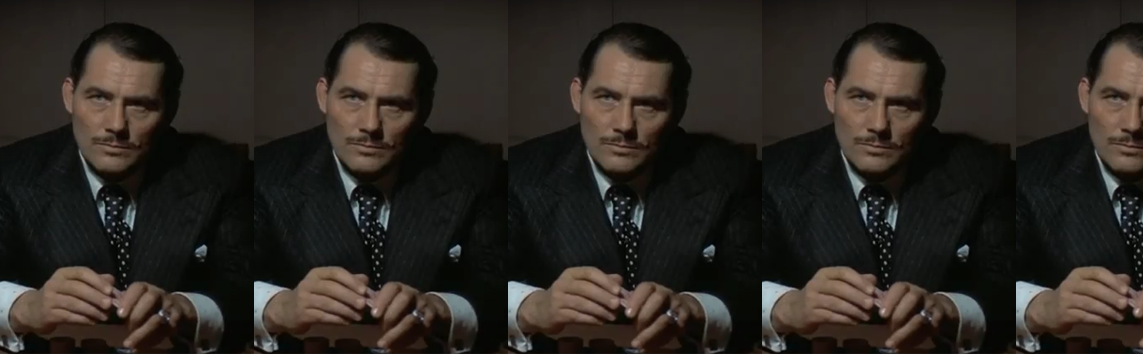
John Hurt did not receive an Oscar nomination for portraying Winston Smith in 1984.
1984 is not quite definitive, but certainly an effective adaptation of George Orwell's tale of a dystopian future, where thought itself is strictly regulated.
Returning again to the great John Hurt, in his banner year of 1984, where he made for a surprising, yet convincing, sporting lead in Champions, a notable against type turn as a cunning hit-man in The Hit, and here in the role Winston Smith, a character very much created with the intention to be our average man in this world. We follow Winston Smith as he enters into the world seemingly content to be part of it, as we open the film by watching him watch the government propaganda broadcast. This being part of a mass hysteria, albeit less intense one, supporting the violent causes of the their government against the apparent traitors. Hurt only showing a minor hesitation, a minor hesitation of any free will, and with that we have our man that is Winston Smith. The early scenes of the film are as we come to experience the existence through John Hurt's performance. This where he delivers in a way perhaps one of his most straight forward performances, this to the point that he even seems to ease back on his throat just a bit, that which typically carried a harsher tone even as relatively younger man. John Hurt emphasizing though effectively the average nature of Winston, he is not a man who is of some great note, and Hurt plays into this, however he does not use this as an excuse for a boring performance. Hurt rather excels in finding what is special within the observation of the average man in this society.
John Hurt manages to find what I would describe as a careful humanity in Winston. This as he looks upon his world so often just a man, but with a minor curiosity. A curiosity that alludes to where he eventually ends up, but also truly subdued in a man who initially only is simply part of the populace. This with much of a passive manner that Hurt brings with, though within that his eyes do conduct the minor element of discontent merely in that he isn't entirely a drone. This as we see him initially notice of Julia (Suzanna Hamilton), that is with this minor interest. This is alone though is major with the society of detachment, and in a way this alone spells doom for Winston. His initial tryst with her is portrayed curiously though quite effectively by Hurt, as this sort of breaking of a state. This as it begins almost as a game of sorts with the two following each other into a field for sex. Hurt's portrayal of Winston's wish for sex, presented through words of corruption against the words of purity as pushed by the state, are nearly stilted, though brilliantly shows of a man exhibiting this emotion, within such a deep seeded repression. This revealing the man's real lust within his delivery, though still controlled fitting to a man who is engaging in something entirely new within this type of rebellion. Their second rendezvous is quite a bit different, and less animalistic. This reflected in Hurt's reaction to seeing her in a dress, this with a simpler, more humane appreciation of her beyond simply a lust.
It is interesting as the two's chemistry actually becomes one less of an extreme passion and slowly more of sensitivity towards one another. Hurt's performance revealing just this modicum of more humanity within these interactions revealing more of a normal man in Winston, and in turn less content within the society. This though is not portrayed as a heroic journey, but rather one of a simple discovery of humanity. This even as he seems to discover outlawed texts, Hurt presents this as a greater appreciation seemingly for life in general. This with a greater attachment to the words that note the controlling society he lives in, but also just in his connection with Julia. Again a simple connection but a very tender one as found in the performances. They which create the sense of discovery within each other just the affection for one another. This as they begin to show as though they have a sense of happiness, as Hurt speaks with hope for the future as people, this of course being right before they are immediately arrested by the thought police. This leading to Winston to being "interrogated" separately by O'Brien (Richard Burton), a man he formerly believed to be a rebel. This involving much physical and mental torture. Hurt, as he previously showed quite memorably in Alien, is a master of depicting extreme physical pain. This in Hurt making these scenes extremely visceral alone on the sense of the torture of the man, being so brutal in Hurt's work that makes every moment of it feel almost unbearably real at times.
Hurt's performance is brilliant, though honestly quite hard to watch, throughout the torture sequence of the film. This as the collapse of the man's resolve is brought within his wilting delivery, and his eyes that are of a man slowly shattering before our eyes. The intensity of his work capturing the extreme nature of the situation but also showing essentially the act of exploiting the man's state. Hurt's work shows this not be a heroic man, but rather that of extreme suffering once again. The suffering granted an excruciating detail, given that Hurt somehow manages to show that there is a descent even from that extreme he begins at. This in his moment of confession Hurt's work is indeed heartbreaking by portraying this vulnerability of a man only able to bare himself at this point. The emotions of his love he did have true, but now wrapped in each moment with such agony. This as then the act becomes not Winston turning into the man he was at the beginning of the film, but almost a creature crafted by the state. This to be first wiped away to almost nothing, something crafted so terribly, in an incredible way, by Hurt's work as the decaying corpse he becomes, as few are able to do broken as well as Hurt. Hurt shows a man wholly broken in mind and spirit at the end of it, so gripped in pain that his delivery of the pain becomes internalized, as though he is so weakened he can barely speak.
This as Hurt shows the man turning into a hollow husk, his eyes representing a man gone to nearly unfeeling due to that suffering he has endured. This leaving seemingly at the end, yet there is one more test still, as O'Brien brings him to the dreaded Room 101, where he threatens to feed him to rabid rats. Hurt makes the scenario truly horrifying, as not only is the fear so gripping within his expression, and his voice just now this whisper of a man begging for his life. That being the end of the torture, where we find the "rehabilitated Winston" meeting the "rehabilitated" Julia. Hurt being wholly haunting, as now he is detached again, but now with this greater passive quality, and eerie contentment. A man seemingly without himself, as he callously ignores Julia, and speaks the party lines with conviction yet as robotic. Hurt showing a man alive but seemingly now without a soul. The film ends though, with a slight departure from the book, though even this is by leaving just a bit of ambiguity. This in itself is found in Hurt's performance, creating the most powerful moment in the end of the film, as we see Winston say "I love you" one more time. In the book this refers directly to the state represented by big brother. Hurt's performance though offers an alternate interpretation, though no less tragic, as his eyes bare emotion again, pathos and sorrow. This alluding to that he may still love Julia after all, as this is the only show of emotion. Of course, tragic still as in Hurt's expression it is that of a hopeless love that will never be experienced again.
Showing posts with label 1984 Alternate Best Actor. Show all posts
Monday, 24 February 2020
Wednesday, 12 April 2017
Alternate Best Actor 1984: Results
5. John Cassavetes in Love Streams - Cassavetes is convincing as the off-beat playboy, as well as the supportive brother, but the impact of his work always remains rather muted.
Best Scene: A naked man.
4. Jack Lemmon in Mass Appeal - Lemmon tries his best to salvage his material giving some honesty to his character even within such a problematic film.
Best Scene: Browning speech.
3. Tsutomu Yamazaki in Farewell to the Ark - Yamazaki manages to find balance within the film's strange tone giving a funny yet still honest portrayal of his character's intense frustrations.
Best Scene: He snaps.
2. Terence Stamp in The Hit - Stamp gives an amusing yet moving portrayal of a dead man walking who seemingly has come to terms with his fate.
Best Scene: "Death be not Proud"
1. John Hurt in The Hit - Good prediction Varun. The immensely talented Hurt proves himself more than capable at being the heavy this time around giving a properly chilling turn yet offers more depth in his vivid portrayal of a hit man who has been at his job for too many years.
Best Scene: The titular moment
Update Overall
Next Year: 1984 Supporting
Alternate Best Actor 1984: Jack Lemmon in Mass Appeal
Jack Lemmon did not receive an Oscar nomination for portraying Father Tim Farley in Mass Appeal.
Mass Appeal tells the story of an older catholic priest mentoring a young seminarian with perceived radical notions.
Mass Appeal focuses upon the old represented by Lemmon's Father Tim Farley against the new represented Mark Dolson played by Zeljko Ivanek, yes the Canadian that you heeet. With this dynamic the material, which originated on stage which feels obvious from the film's uninspired though not overly stagy direction, crams some things together. The first being the tones which seems to have rather serious intentions but hides it all within a constant levity. It then seems fitting enough to have Jack Lemmon in the lead role noted for his ability in both drama and comedy, though I confess that I tend to prefer him as a straight dramatic actor, not that he's a bad comedic actor by any margin. This film seeks a classic mix, which was quite disastrous in his Oscar nominated turn in Tribute just four years before.
Well that mix actually does work here in that Lemmon uses the comedic to actually realizes who Father Farley really is. In the early scenes of the film we see kind of Farley's normal routine which is to be the priest that everyone loves. Lemmon in turn brings that particularly affable style of his where he has kind of this spry attitude and upbeat delivery to everything he says. Lemmon tends to bring a smile to Farley's face along with this apparent easygoing indifference. The indifference though Lemmon succeeds in making rather appealing as he is indeed almost sort of a song and dance man as he goes about his homily. Lemmon brings absolutely no weight to his sermon to his flock, yet this is intentional since he still is engaging in the moment by providing this what would be described as goodnatured humor to the whole affair. This is but a set up though for Farley to meet his match in the young Mark.
A major problem with the film is the character of Mark is rather insufferable and it is hard to tell if that is Ivanek's performance or intentional as written. I would almost like to imagine it was intentional since Eric Roberts originated the role on Broadway and one can only imagine how that must have been like, but I doubt it. The character is so incredibly self-righteous, and though we hear all about his charitable works, we never see it or see him help anyone. We never see him really even care about anyone, only treating every who isn't him with such extreme disdain, making all his pontificating just an attempt to merely to stroke his ego. I mention all that because the film second thing it crams together is the two stories, and since one of the characters is intolerable it leaves Lemmon to pick up the slack at playing the pseudo-mentor to the young man.
That is a bit muddled though as the film seems to believe it is showing the two men improving each other through their company it doesn't quite achieve this by how one note Mark is. Again this just adds onto Lemmon's burden in his role. Lemmon though is game to try to make it all work. This includes even dealing with Mark, as Lemmon's easy going style is a constant antidote to his angry young man companion. Lemmon though does use this to reveal Farley's technique to help the man which is to attempt to get him to become less intense. Lemmon manages to do something pivotal which is that on one hand he does show the compromise in attempting to soften the harsher side of the man, but he importantly inflicts these few moments where he reveals this genuine sincerity in his attempt to help Mark actually connect with his congregation.
The third cramming comes as the film seems to wish to develop this story of a self-discovery for the Mark, in which it fails entirely, along with a The Browning Version style story of an older man attempting to realize and come to terms with his failings. The second aspect again does have some success through the able efforts of Jack Lemmon. As Farley attempts to teach Mark, and Mark fights back at every turn, Lemmon depicts Farley frustrated reactions to allude to his problem. The problem of being self-satisfied in an unsatisfactory place. Lemmon is effective in that essentially every come back of Farley becomes less jokey which Lemmon uses to reveal the frustrations Farley has for himself as much as at Mark. Although the writing is a bit hamfisted in this regard, such as in a scene where Farley tests Mark's abilities by offering a case of a boy beaten by his father, while obviously being his own story, Lemmon is able to find honesty within the problematic technique. Lemmon does this by calling about the happy go lucky side as his comfortable place, that Lemmon expresses as easier to be in yet always grants a hallow smile. This leads to eventually a speech that seems right out of The Browning Version, where Farley admits his failure in front of his whole congregation in an attempt to help Mark. Lemmon makes the most out of the scene offering both the passion and desperation in his delivery. It isn't quite a powerful moment due to the weaknesses of the film, but it is at no fault of Lemmon that's not. This is a good performance by him as he tries to salvage the material best he can. He doesn't quite make the film work, but he at least finds some truth within his character of Father Farley.
Friday, 7 April 2017
Alternate Best Actor 1984: Terence Stamp and John Hurt in The Hit
Terence Stamp did not receive an Oscar nomination for portraying Willie Parker and John Hurt did not receive an Oscar nomination for portraying Mitchell Braddock in The Hit.
The Hit is a terrific low key crime film about two hit men attempting to transport a police informant to face his former colleague.
The Hit features to begin with very interesting reverse casting for the accomplished actors in the two leads. Terence Stamp who often played the predator in films such as The Collector, Superman, and Far From the Madding Crowd plays the prey in the form of the police informant Willie while John Hurt who was often the unfortunate victim such as in Alien and 10 Rillington Place, is the would be assassin. The two very talented actors have no difficultly with this adjustment, as we first see Braddock in the film's stylized intro, but we first meet Stamp's Willie as he is successfully testifies against his old gang. Stamp technically plays his trick early on which is the basis for his characterization of Willie, but no reason to give away the trick quite yet. In terms of the sheer basic performance requirement it is a lot of fun seeing Stamp in this more passive sort of role especially in this opening scene as he testifies against his former colleagues. Stamp is curiously enjoyable as he portrays Willie almost a little too aloof in his testimony as though he's barely giving a second though, I particularly like his strangely passionless explanation that he's only testifying because he thinks it is the right thing to do.
The film then jumps ahead ten years to reveal Willie hiding in Spain where he gets caught up by some local thugs and is brought to the English hit men of Braddock and his young accomplice Myron (Tim Roth) who will take him the rest of the way. Once Willie sees the men, and figures where he's going he takes somewhat curious yet rather brilliant approach. In that he again makes Willie rather easygoing given his rather difficult situation. Stamp portrays this all the way in these scenes as his very physical manner is as though he is on a casual vacation, and speaks as though he's talking to some acquaintances. The trick is, though not specifically stated, is within Stamp's performance in that while rather aloof he's not entirely detached. Stamp instead suggests that Willie is playing a game, and is trying to work the men though without them noticing. Stamp's great as he actually gives a rather comedic performance at times by portraying Willie as trolling the two men in an attempt to mess up their plan. When early on Willie introduces himself to a stranger, Stamp's delivery is oh so pleasant yet there seems to be a distinct pleasure in the act that makes things a bit more complicated for Braddock and Myron.
Well that brings us to old Braddock played by the one and only John Hurt. Hurt's performance plays so perfectly against Stamp because he shows quite bluntly that Braddock is not playing a game, he's doing a job. Hurt's whole presence exudes this world weariness fitting to a man whose job is to kill people, and to a man who has doing it for quite some time. Hurt portrays no joy or eagerness when they initially catch Willie, he just gives him a straight stare as though he's confirming a work order. Hurt does not use this to suggest that Braddock is any way fed up with his job, but rather that he's so accustom to it that it has become rather routine. The two are a great balance, and only amplified more so by the overeager Myron. Braddock is the man of the least words leaving most of the speaking to Myron, except for the words that actually need to be said. Hurt's performance is almost the opposite of his turn in the Elephant, where his face was almost entirely covered, as so much of this turn relies on his facial reactions. Hurt, like Stamp, is often rather funny though with Hurt it is through exasperated reactions towards the stupidity of Myron or his attempt to figure out what exactly Willie is up to.
That is not to say Braddock is some hapless sap, in fact far from it. It is fascinating to see Hurt take on the role given that he is not the most physically imposing figure yet that does not matter. Hurt in a strange way makes use of his wiry frame to add to the personal style of Braddock which is this minimalist and specific action. Hurt is actually quite chilling in the role by so effectively realizing this method of Braddock, as he says so much even as he speaks so little. The menace that Hurt exudes is quite remarkable by how effortless he makes it. On one end this is in portraying the exactness of the man's action, as Hurt is excellent in his slight reaction conveying the way Braddock dissects then acts. For example there is a moment where Willie suggests that a third party probably will talk, and Hurt is rather chilling by managing to convey in his expression Braddock determining that the man must die. In the scenes where Braddock goes about killing someone Hurt is so quietly terrifying, as he does not show quite a true sadism as Braddock but does show just how simple the act has become for him.
I rather love how Hurt approaches this because it manages to do two things. On one hand he is the heavy he needs to be by making an act so vicious by being so unassuming while doing it, as he will just casually hold a gun or reveal it since he's done it for so many years. Hurt technically has the traits of the usual "cool" hit man, with his sunglasses, his way of smoking, his casual demeanor, but he uses for a more disturbing end. Hurt's work goes further than that as it also suggests the weight of the years of this life. Hurt though doesn't use this to garner Braddock a true sympathy but rather a troubling understanding. He can be so blase because he's killed so many people in his life, and there is something quite unnerving about such a situation. When Braddock gives sort of a stay of execution at times for Willie, as well as their unfortunate fourth passenger, Maggie who they take along as hostage, Hurt makes it less of the man feeling any sorrow for them rather just sort of saying "Hmm not quite the right time yet". In this way Hurt technically is on a similair wavelength to Stamp in that he's also playing a trick on his companions and the audience, the difference is it isn't quite as purposeful. You may think that Braddock might have a bit of mercy in him somewhere, but in reality we just don't know him well enough yet.
Now I seem to be wrongly ignoring Stamp who stays rather consistent through much of the film, which is not problem given what he shows his character's up to, and also the fact that he is also consistently entertaining in the role as Willie so jovially plants the seeds of doubt in his captors' minds. Stamp though does portray this gradual transition of sorts as though Willie is kind of slowly getting more and more into this character he's developed for himself to trick the men with. The character being a man who is frankly above it all, to the point that he even claims to be above dying. When he describes that death is but a natural process, Stamp grants it the sincerity of a true philosopher who maybe believes exactly what he says. Fittingly as always Hurt's equally good in the scene in portraying Braddock genuinely taken aback by someone who has come to terms with death, something he himself hasn't. The problem is all the tricks come to a head though and all is revealed. On one hand Stamp shows that this really is an act that old Willie has crafted, and over the day has almost begun believe his own acting. Stamp earns a change in this as when he is initially captured, as well as initially threatened by his old colleagues, he shows a man fearful of his life. This is revealed to be the real man when Braddock reveals he's decided to kill them all early. Stamp's actually rather heartbreaking as his act breaks with such a genuine moment of realization of the fear of death as Braddock tells him his time is up. Hurt on the other hand again was showing no trick, but rather a misinterpretation of his actions. Braddock reprieves were not out of any sympathy but just a man knowing he could finish the job later. As we are reminded of Braddock's violent moments which are all standout moments due to Hurt. There's a moment where Maggie attempts to get help, and Hurt's reaction is sheer perfection as it is less "oh no" and more "what you really think I haven't handled something like this before?". This everyday approach to the hit man is downright amazing especially in those small moments that seem so fitting to a man just going through the motions that make the character particularly menacing. Now Stamp gives a fantastic performance, but I absolutely loved Hurt's approach to his role. Although we never leave the confines of the job Hurt through these scenes gives such a vivid portrait of this hit man that in no way makes him any less intimidating.
(For Stamp)
(For Hurt)
Labels:
1984 Alternate Best Actor,
John Hurt,
Terence Stamp
Wednesday, 5 April 2017
Alternate Best Actor 1984: John Cassavetes in Love Streams
John Cassavetes did not receive an Oscar nomination for portraying Robert Harmon in Love Streams.
Love Streams may be the film I was warned A Woman Under the Influence was, in that I found that film very easy to get through. This one though it just about impenetrable most of the time. It has good scenes in there, yet seems to purposefully starve your patience through his long drawn out scenes of behavior, also on a side note John Cassavetes doesn't seem to be able to direct children very well.
Any way my focus though is on Cassavetes as the actor not the director, and though he's perhaps viewed as an acting director these days he technically is an actor turned director despite having few prominent roles before his transition. This is actually one of his final performances as a director the role of Robert who we are introduced to as a playboy writer. Cassavetes isn't not an excessively charismatic performer, and there is something rather odd about casting himself in the role. The reason being Robert is the brother of Sarah played by Gena Rowlands's the wife of John Cassavetes. Although perhaps this is to show the undisputed closeness of the siblings not even in a romantic way, though the initial kiss upon meeting might be a touch too comfortable for non-Lannister siblings. Still that isn't exactly the focus, and it is not where the film starts. The film begins with Robert living his life which is that of slight relationships with only the occasional more substantial one when it is thrust upon him.
Cassavetes is more than convincing as the pleasure seeker in Robert as a man who just goes around looking for something to enjoy whether it is a drink or a woman. Cassavetes's performance sort of conveys this idea of an attempt of joy. In that there is always this intention and energy of someone trying to have a good time, even though he is not exactly always wholly capable in this regard. Cassavetes is good though in that he plays the part as though Robert is either just slightly tipsy or just has a bit of a hangover. Cassavetes is effective in realizing this day to day state of Robert as never exactly becoming too associated with anything. The film though decides to actually ram through his story rather quickly by having Robert suddenly having to deal with his son who is brought over by his estranged wife. Again the pacing of this element seems rather rushed, given how slow paced the film is in general. Cassavetes impresses himself to make something out of this in very short time. Cassavetes sort of does in just playing it as general frustrations of dealing with something that leaves him a little uneasy.
The film wraps that facet up and moves mostly to focusing on dealing with the mentally unstable Sarah who just commits one strange behavior after another. Cassavetes in the interactions between Robert and Sarah though suggest a bit of a different side to Robert. In that Cassavetes is rather good in at least portraying basically a loving brother's understanding of his sister in that he never reveals too rash of reaction, spelling out years of knowing her madness. Cassavetes doesn't limit this still showing that Robert is taken aback but holds back these frustrations to lashing out against her. Cassavetes is able to convey the complexity of that relationship and his performance works in that regard.. I have to say though his and Rowlands's performances work they never added to anything more than fulfilling the base need of to be a "good performance". Unlike A Woman Under the Influence and Faces this film never had a real emotional resonance. It felt more like acting for the sake of acting, behavior for the sake of behavior, uncomfortable situations simply to be uncomfortable situations. Now that acting for the sake of acting doesn't mean bad acting. In Cassavetes and Rowlands are both good in their roles, but their work simply laid there at a distance. Admirable in technique, but not engaging in terms of either crafting a truly empathetic or compelling character.
Monday, 3 April 2017
Alternate Best Actor 1984
And the Nominees Were Not:
John Hurt in The Hit
Terence Stamp in The Hit
Jack Lemmon in Mass Appeal
Tsutomu Yamazaki in Farewell to the Ark
John Cassavetes in Love Streams
John Hurt in The Hit
Terence Stamp in The Hit
Jack Lemmon in Mass Appeal
Tsutomu Yamazaki in Farewell to the Ark
John Cassavetes in Love Streams
Thursday, 6 September 2012
Alternate Best Actor 1984: Results
5. Eddie Murphy in Beverly Hills Cop- Murphy is funny in his funny scene but quite lacking in his dramatic scenes.
Best Scene: Any one of his purely comic scenes.
4. Steve Martin in All of Me- Martin gives an enjoyable performance as at first a straight man, than later very entertainingly as a man with another person sharing his body.
Best Scene: Edwina tries to act like a man when Roger falls asleep in court.
3. Robert De Niro in Once Upon a Time in America- De Niro carries this epic by powerfully portraying both the violent youth, and the haunted age of a career criminal.
Best Scene: Noodles meets Secretary Bailey.
2. Philip Baker Hall in Secret Honor- Hall shows how one should portray
Nixon in his effective performance that makes for an outstanding one man
show.
Best Scene: The whole film since it is one long scene.
1. Harry Dean Stanton in Paris, Texas- Harry Dean Stanton gives a great subtle performance as a man trying to rebuild himself. It is a quiet but deeply moving performance that shows his abilities as an actor goes far beyond the usual small parts he is given.
Best Scene: Travis tells his story to his wife.
Overall Rank:
Best Scene: Any one of his purely comic scenes.
4. Steve Martin in All of Me- Martin gives an enjoyable performance as at first a straight man, than later very entertainingly as a man with another person sharing his body.
Best Scene: Edwina tries to act like a man when Roger falls asleep in court.
3. Robert De Niro in Once Upon a Time in America- De Niro carries this epic by powerfully portraying both the violent youth, and the haunted age of a career criminal.
Best Scene: Noodles meets Secretary Bailey.
Best Scene: The whole film since it is one long scene.
1. Harry Dean Stanton in Paris, Texas- Harry Dean Stanton gives a great subtle performance as a man trying to rebuild himself. It is a quiet but deeply moving performance that shows his abilities as an actor goes far beyond the usual small parts he is given.
Best Scene: Travis tells his story to his wife.
Overall Rank:
- F. Murray Abraham in Amadeus
- Harry Dean Stanton in Paris, Texas
- Haing S. Ngor in The Killing Fields
- Tom Hulce in Amadeus
- John Hurt in The Hit
- Philip Baker Hall in Secret Honor
- John Hurt in 1984
- Terence Stamp in The Hit
- Mickey Rourke in The Pope of Greenwich Village
- John Hurt in Champions
- Robert De Niro in Once Upon a Time in America
- John Lone in The Iceman
- Bill Murray in Ghostbusters
- Mel Gibson in Mrs. Soffel
- Steve Martin in All of Me
- Tsutomu Yamazaki in The Funeral
- Albert Finney in Under the Volcano
- Harrison Ford in Indiana Jones and The Temple of Doom
- Sam Waterston in The Killing Fields
- Matthew Modine in Birdy
- Clint Eastwood in Tightrope
- Keith Carradine in Choose Me
- John Lynch in Cal
- Michael Douglas in Romancing the Stone
- Christopher Guest in This is Spinal Tap
- Victor Banerjee in A Passage to India
- Anthony Hopkins in The Bounty
- Jack Lemmon in Mass Appeal
- Michael McKean in This is Spinal Tap
- Michael Palin in A Private Function
- Sam Shepard in Country
- Mel Gibson in The Bounty
- Ralph Macchio in The Karate Kid
- Francisco Rabal in Los Santos Innocentes
- Michael Biehn in The Terminator
- Woody Allen in Broadway Danny Rose
- Dudley Moore in Micki & Maude
- Matt Dillon in The Flamingo Kid
- Nicolas Cage in Birdy
- Craig Wasson in Body Double
- Ryan O'Neal in Irreconcilable Differences
- Michel Piccoli in Dangerous Moves
- John Lurie in Stranger Than Paradise
- John Cassavetes in Love Streams
- Alexandre Arbatt in Dangerous Moves
- Alfredo Landa in Los Santos Innocentes
- Arnold Schwarzenegger in The Terminator
- Emilio Estevez in Repo Man
- Patrick Swayze in Red Dawn
- Robert Redford in The Natural
- Gregory Hines in The Cotton Club
- Kevin Bacon in Footloose
- Eddie Murphy in Beverly Hills Cop
- Howard E. Rollins in A Soldier's Story
- Timothy Hutton in The Iceman
- Lance Guest in The Last Starfigher
- William Shatner in Star Trek III
- Mel Gibson in The River
- Christopher Lambert in Greystoke
- Zach Galligan in Gremlins
- Kyle MacLachlan in Dune
- Noah Hathaway in The Neverending Story
- Zeljko Ivanek in Mass Appeal
- Jeff Bridges in Star Man
- Eric Roberts in The Pope of Greenwich Village
- Christopher Reeve in The Bostonians
- Tom Hanks in Splash
- Richard Gere in The Cotton Club
- Barret Oliver in The Neverending Story
- Steven Guttenberg in Police Academy
- Anthony Perkins in Crimes of Passion
- John Laughlin in Crimes of Passion
Alternate Best Actor 1984: Robert De Niro in Once Upon a Time in America
Robert De Niro did not receive an Oscar nomination for portraying David "Noodles" Aaronson Once Upon a Time in America.
Once Upon a Time in America is a flawed yet still a very intriguing film about a the journey of a group of friends who go from young thugs, to bootlegging kingpins, and eventually meet their ends.
Robert De Niro portrays the lead of the small group of kids and later men who slowly rise the ranks in a bootlegging operation during Prohibition in New York City. De Niro was not nominated here even though he certainly is a very popular actor with the academy having won twice and being nominated many times before and after this performance. This film though was unable to get a single nomination. This is probably due to the fact that it was a box office flop, as well there was a bit of a controversy over the short version which apparently was very poorly edited into a mess of the film.
De Niro is no stranger to gangster roles, and as he did in The Godfather Part II and later in Goodfellas he shows prowess in this role as Noodles. De Niro in the scenes that take place after Noodles is released from prison and he joins his friends to rise not only in the organization but as well in the power structure of the city portrays the part of Noodles very much to the point most of the time. De Niro makes it clear that Noodles is very very ready to be a gangster to the fullest extent and does not have any qualms about pushing right forward with his friends to the top no matter what it takes.
De Niro as usual has a certain suaveness in the role. He does not overplay though as there are certain scenes which would contradict the rest of his characterization. De Niro though effectively shows that Noodles is a competent capable man right for his time and place. In these earlier scenes there is always a certainty within De Niro though expresses well the passion behind Noodles that pushes himself and his friends forward in the underworld without much hesitation. He presents Noodles as a skillful and capable gangster as he pushes through the film.
There is something that De Niro does not avoid in this performance though, which is muck of being the criminal. De Niro is very blunt in his performance in this regard. There is not any hesitation shown in Noodles whether he is killing a man, committing any sort of horrible violent, and to some degree even raping women. De Niro makes it clear that Noodles is very much into his amorality. It frankly would have been easy to try to gain more sympathy, but De Niro does this instead giving what is probably a far realistic portrait of a gangster. This does not mean that he portrays Noodles one dimensionally though.
There is some sort of conscious that De Niro puts in just the right glint that he brings into his performance. This never stops him from committing any of his acts of violence though, instead De Niro is able suggest only that Noodles does think about his actions at times, after the fact not before, particularly in the scene where he rapes his old sweetheart. De Niro is good becuase he does not go and just show Noodles to be guilt stricken, Noodles is still very much into his behavior as a career mobster, but he effectively does portray just the smallest speck of regret in his acts, only the smallest though, although this works well with another part of his performance.
This hint of his morality comes in a far deeper fashion in the scenes that take place after Noodles returns to town after having informer to the police on his friends, seeming like he needs to settle some of score although he is quite unaware of what that is. De Niro is very strong in these scenes showing a very changed man in Noodles. He is a different man, and De Niro effectively shows that that small bit of morality has grown on him turning him into a far more somber man than before. De Niro crates a moving portrait of this aged gangster who violent history is far behind him, and he is only left to reflect on the mistakes that he had once made.
These scenes later in Noodles life De Niro is very very quiet in them and reflect well the haunted feeling he has over his past actions. De Niro very best scene is when he confronts an old friend, and it is a particularly powerful moment. There would have been many ways to portray the scene as it could have been far more anger filled, or anguish filled. Instead De Niro leaves a much stronger impact by showing that any feelings like that are far past Noodles. It is a heartbreaking scene because De Niro only shows Noodles as really understanding what has happened more than anything else. He truly presents a grown and properly sorrowful poignant portrayal of this man.
I suppose I should mention that this film does not portray the three time section of Noodles's life in chronological order. It jumps around between the segments therefore De Niro is shown to be instantly in the two roles of the differently aged Noodles. There is not any sort of disconnect between the two. It is the same man in both places. De Niro though makes this memorable through the fact that he shows that this is the same Noodles, but even though it is not directly portrayed he vividly brings to life just how changed Noodles has been over his experiences. De Niro effectively carries this powerful epic with his great performance.
Tuesday, 4 September 2012
Alternate Best Actor 1984: Eddie Murphy in Beverly Hills Cop
Eddie Murphy did not receive an Oscar nomination for portraying Axel Foley in Beverly Hills Cop.
Beverly Hills Cop is a some what amusing but certainly not great comedy about a Detroit Cop who goes to Beverly Hills to investigate the death of his friend.
Eddie Murphy now is considered to bit of a wash up as he rarely has a successful comedy. Back in the 80's when this film came out though he was considered to be on top. This does not mean though Murphy was necessarily the greatest actor at this point though. In Beverly Hills Cop he portrays the Detroit cop who makes his way to Beverly Hills to avenge his friends, and there are really two sides of this character the serious side and the Eddie Murphy side.
Originally the film was going to star Sylvester Stallone, and it is pretty easy to see how the film would have been with Stallone in the lead, it is also easy to see the ways Murphy presence changed the film, but as well to a degree was forced to stay in line with the original idea for the film. There are basically two types of scenes for Murphy in this film which really do not overlap in the way they probably should which are the serious and the humorous ones, and yes there are far more serious scenes than one would expect from a Eddie Murphy comedy.
I might as well mention Bill Murray as a great example of an actor who is able to traverse through the serious and the comedic without a problem as he did in this year in Ghostbusters, as well as later on in fantastically in Groundhog's day. Murphy though pretty much separates them, trying maybe a little to put some comedy in the more dramatic moments, but mostly that just involves him doing his somewhat odd dry heave laugh which he always does in the more serious scenes of the film.
Murphy I can't say is all the convincing in any of the dramatic moments such as when Foley is hanging out with his friend or later reacting to his death. There is not any conviction in his performance, nor is there anything in his performance to make their relationship mean anything. Murphy though very well could have taken the route of always going for laughs, but he does not instead he actually tries to be convincing as the character and he is a bit awkward in these moments.
What made the film popular though I'm sure are all of the comedic scenes which apparently Murphy improvised for the most part. This actually seems quite obvious since Murphy is on a much better level during these moments. He has a high energy, and he really does try to make the most of riff he can come up with. To Murphy's credit as well he does make these seem as Foley's method rather than simply Murphy being Eddie Murphy.
It is hard to say that every one of the scenes that Murphy humorously goes through are downright hilarious, but most of them are quite amusing, and some of them are hilarious. It is probably rather safe to say that without Murphy this would have had very few if any redeeming features, since his full fledged comedy scenes are by far the best scenes in the film. Still I cannot forget that the serious scenes are certainly very lacking, something Murphy as well did better in films before and after this one.This is not a bad performance by Murphy becuase when he is funny he is funny, but that is really the best that can be said about this performance, which may be enough I suppose.
Alternate Best Actor 1984: Philip Baker Hall in Secret Honor
Philip Baker Hall did not receive an Oscar nomination for portraying President Richard M. Nixon in Secret Honor.
Secret Honor is an effective film that basically is just Nixon in a room rambling about the various troubles of his life while apparently contemplating suicide.
Philip Baker Hall did not get an Oscar nomination for his portrayal of Nixon even though Anthony Hopkins and Frank Langella both eventually received nominations for portraying the former American President. I was not particularly impressed by either of their turns which both relied far too much on mannerisms that were neither accurate to the man nor were they effective in creating a portrait of Nixon. As well their performances were both bizarre in making Nixon seem a little too strange with Hopkins seeming to be some odd constantly sweating creature. Hall takes a far better approach in his portrayal of Nixon.
Hall firstly is not all made up, his hair is like Nixon's and it stops there. On first look it does not seem Hall is trying to obviously portray Nixon as there are not obvious mannerisms like those who followed him. In truth though Hall does have the mannerisms, but he has them in the way the real Nixon had them. Hall is able to portray them so naturally, and really quietly that it never for a moment seems like acting. Hall even finds his way to bringing to life some of Nixon way of moving , and even pointing. it is truly astonishing, because Hall infuses them so well with his performance that they only add to his characterization never distract or over take it.
Philip Baker Hall is in a one man show here there are no other characters but Nixon. He stays in the same room for the entire film that is furnished with portraits of former Presidents as well as Henry Kissinger. There is a camera a microphone as well as monitors watching him throughout. Hall begins talking and does not stop. He slowly sets up the whole rambling on about his life and his troubles that he has faced through his political career while defending himself as well as attacking others. Hall is great as he starts very dignified setting up the whole thing as a statesman would, but quickly showing a lesser side as he snaps curse words in suddenly without warning.
Hall shows a violent personality in his portrayal of Nixon as he quickly but effectively escalates the monologue that he delivers. It is well handled by Hall showing well that everything that Nixon is speaking about he is deeply pained by his life. He can't help but become immediately emotional over thinking of his life. Hall though does not show Nixon to go all out instantly and he effectively is able to further his distress throughout the film. As Nixon brings up more and more of his life the worst and the worst Hall is able to powerfully bring about the degree these thoughts bear down on Nixon.
Nixon never does leave the room but I think Philip Baker Hall tells us more about Nixon's life than the films that show these moments. Hall brings us into the mind of this man brilliantly during every story that he tells. Hall is spectacular in that he never makes the story anything but a natural stream of consciousness. Hall is able to jump from moment to moment in Nixon's mind brilliantly. There is never a single delay in his performance he is absolutely convincing in that he always makes the way the subjects come in his mind, the way they drift from one moment to another they are absolutely natural.
Hall is amazing in this strongly emotional performance. Nixon is always a little upset here telling his life story but Hall is spectacular. Although he is always forceful and frankly loud Hall is never one note during his performance. He has with his moments of hatred, and pain he feels over what he perceives as portrayal. Hall though weaves these well with scenes of bringing about his intelligence of a man when he shows Nixon to be defending himself. Hall is quick and sharp in basically the comebacks Nixon has with his imagined enemies. Hall is able to portray the strengths Nixon would have to had to make his achievements he had, while showing all of the weakness in his character.
Hall delivers with a passion all of his stories he never loses a beat, he is simply incredible throughout. He fleshes out the whole of Nixon in his characterization. He never once takes a simple approach for the man. Even his pain is never one way. Hall shows a great deal of this Nixon simply through the pain. It is pain caused by his hatred of his enemies. Hall though movingly as much shows a pain from a shattered pride that comes from his background. It is a stunning portrayal by Hall here he brings us into through every one of these stories as his degradation to the final moment is truly powerful. He never portrays Nixon in a one note fashion as he so easily could have been. He gives a great performance that gives Nixon the complexity he deserves.
Friday, 31 August 2012
Alternate Best Actor 1984: Harry Dean Stanton in Paris, Texas
Harry Dean Stanton did not receive an Oscar nomination for portraying Travis Henderson in Paris, Texas.
Paris, Texas is an excellent film about a drifter who comes out of the desert to rediscover the life he left behind.
Harry Dean Stanton, the always reliable character actor, is certainly a recognizable face in films. He moves across smaller characters in a large variety of genres with an incredible ease, it is fascinating though to see Stanton given the chance to take on a lead role such as this. Stanton certainly does not have any hesitations in his performance, and he shows here that his always fine shorter performance given before this film can translate to a further reaching leading role.
At the beginning of the film, in fact for a little of twenty minutes Stanton does not say single word in his performance. In fact he seems to mostly just walking, literally trying to just drift from one place to another. Stanton though certainly is not underwhelming even though he may be silent here. Stanton with his very particular world weary face captivates our attention nevertheless. He of course does not say it, but Stanton effectively conveys the mystery of this man through the haunted expression that seems sewn into him.
There is a sadness Stanton portrays perfectly that this is a lost man here who just keeps walking unable or unwilling to talk to anyone, he just keeps moving over again. Eventually though his brother Walt (Dean Stockwell) shows up and tries to bring him home where Walt and his wife have been raising Travis's son. Stanton is very subtle and very effective as he portrays Travis's slow coming back from what ever the place his mind is. It certainly is not fast, but Stanton makes the moment in which Travis finally talks a powerful one even if a very quiet because he slowly earned Travis's return to the world.
Travis is brought to Walt's home, and Stanton is incredible in showing the shyness that is prevailing through him. He never forgets the fact that Travis had been in that walking trance for years, and seemed hard bent on staying that way. Once Travis can speak it is not an instance moment into finding himself. Instead Stanton beautifully portrays his returning senses. It is a tender performance by Stanton overwhelming in emotion as he so quietly has Travis start to finally recognize his past, portraying so well that difficulty that Travis clearly has to forget whatever it was in the past that had caused him to wander the desert.
Stanton is wonderful as he portrays Travis's hesitations in trying to bond with his son. Stanton delivers the pain in Travis over his past that keeps him from a certain distance from his son, and his son a certain distance from him. Stanton always stays effective though because he always stays absolutely realistic in his method of portraying Travis. He portrays an honest struggle for Travis to be able to overcome all of the restraints he feels in regard to connecting with his son. He though at the same time is able to convey the overwhelming feeling of love in Travis that does push him to actually confront his fears and bring himself to coming closer to his son.
What works so well in Stanton portrayal again though is the effort he consistently shows that Travis must do to try to retake his old life back. There is one scene in particular where he purposefully goes about dressing the part of a successful father to try and attempt to bring himself closer to his son. Stanton is absolutely amazing in this scene as he genuinely portrays a strange sense of discovery as Travis either is learning or relearning just very normal things. He really brings to life this slow but successful struggle against the almost comatose of a past that Travis once had, and Stanton's deliberate portrayal of Travis's transformation to becoming a once again lively man is stunning.
When Travis finally does start reconnecting with his son Stanton again makes it far more powerful but not rushing through this portrayal. It is not a sudden change to Travis becoming just a confidant competent father, rather Stanton successfully brings about the idea of Travis trying to become a great father even though he really is not. Stanton though because of the moments where he does show Travis being hesitate in his relationship with his son, he is able to make their journey together as they slowly come closer to one another far more resonate than it would have been otherwise.
Stanton very best scenes though may come when he goes to find his wife Jane (Nastassja Kinski). His scenes where he goes and finds her in a strip club where the customers can see the stripper but the strippers cannot see the customers in individual booths. Stanton is incredible in his subtle but very moving reaction to first seeing her alluding to his long complex history with her in a single outstanding reaction. It is one of love surely, but again there a deep seeded lack of assurance Stanton portrays in Travis over this relationship. The reason for this is told in a single scene that is the best of this great film. Travis tells her over the phone in the booth the story of the two revealing what lead him to the desert to begin with.
This pivotal scene is flawlessly portrayed by Stanton as well as Kinski. The two are absolutely stunning together as Kinski reacts to Stanton slow deliberate telling of the story. Again Stanton keeps it very much downplayed, but his quiet but firm voice is perfect in the scene. He does not show only to be a sort of an apology to his wife, but also he is able to convey that at this moment Travis finally understands himself. In his finally firm delivery of the story he brings about Travis as a man that is not longer the lost soul he was at the beginning. This is a spectacular performance by Harry Dean Stanton. Often a quiet one, but always a powerful. It is a truly stunning characterization that proves Stanton's abilities go far beyond what he is usually allowed.
Wednesday, 29 August 2012
Alternate Best Actor 1984: Steve Martin in All of Me
Steve Martin did not receive an Oscar nomination for portraying Roger Cobb in All of Me.
All of Me is an enjoyable comedy about a lawyer Roger Cobb who finds suddenly that he is sharing his body with the soul of a deceased heiress and former client Edwina Cutwater (Lily Tomlin).
I decided to review Steve Martin in his role here not only because Martin is an actor who has been consistently ignored by the Academy but as well because Martin actually won both the NSFC and the NYFCC for Best Actor. This means that he was given the award over F. Murray Abraham in Amadeus, which he means he must obviously have given a better performance than Abraham, well obviously not, but it is interesting that both critics groups awarded Martin for his almost entirely comedic performance with only really rather slight dramatic moments that are still comedic to a degree.
Steve Martin at the beginning of the film is very much a straight man at the beginning of his film. He is the lawyer Roger Cobb who acts a facilitator for Edwina's will to a young woman Terry Hoskins (Victoria Tennant) which she is making believing that after he impending death she will transfer her soul into Terry's body. Martin gives a very enjoyable performance here early on pretty much giving what would be any normal person's reaction to hearing the plans of these people. Technically speaking setting up the parts of the plot could have moved slowly, but it moves quiet quickly though through Martin's hilarious reactions to the absurdity of the situation.
Martin though gets into less of a straight man part when accidentally Edwina's soul goes into Cobb's body rather than the intended and must share his body with her. Cobb controlling one side Edwina controlling the other side. Martin antics with this body problem does make up most of the film, and most of his performance so it is a good thing that Martin makes the most of the idea. An important reason perhaps that Martin's portrayal of this works so well is that he does still play it straight technically speaking. Yes he is being controlled at times by a woman, but Martin still does always portray Cobb's reactions very much those of a down to earth person in this ridiculous situation.
Martin effectively portrays Cobb's bizarre situation both physically and really psychologically. His strange walk of the combination of the feminine side and the masculine side is both believably, as believably as it can be anyway, played as well as extremely amusing as well. All of the mannerisms he does to portray the tendencies half of his body develops from Edwina's control are all very funny becuase of Martin's portrayal. He has a wonderful combination here though of the more flamboyant moments in portraying her control, as well as straighter moments of Roger's frustrations of being in the situation. Always whatever aspect of Roger's predicament Martin turns into comedic gold here.
I suppose though what might of helped Martin secure those to prodigious critic awards though is the fact that Martin does manage to make the more dramatic aspects of his character come to life as well. These are mostly small moments mainly in portraying Roger standing up for his beliefs as well as slowly coming to like Edwina after awhile and wanting to help. Martin manages to portray this aspect naturally with the constant laughs that go along with the rest of his performance. He does actually make genuinely warm relationship develop with Tomlin's character which is pretty amazing considering most of the time he talks to her he is talking to himself.
This is a very good comedic performance by Martin as he never once fails to bring life to this odd role. Frankly this could have been a performance that could have easily been way too over the top, and frankly just obnoxious. Martin though is consistently strong in the role never going to far with character driven approach with his performance. He not only succeeds in bringing laughs from scene to scene through his portrayal, but as well is able to be as about a realities as one could be in this role while the film still being a comedy.
Sunday, 26 August 2012
Alternate Best Actor 1984
And The Nominees Were Not:
Steve Martin in All of Me
Eddie Murphy in Beverly Hills Cop
Harry Dean Stanton in Paris, Texas
Robert De Niro in Once Upon a Time in America
Philip Baker Hall in Secret Honor
Steve Martin in All of Me
Eddie Murphy in Beverly Hills Cop
Harry Dean Stanton in Paris, Texas
Robert De Niro in Once Upon a Time in America
Philip Baker Hall in Secret Honor
Subscribe to:
Posts (Atom)