Showing posts with label 2021. Show all posts

Thursday, 17 February 2022

Best Actor 2021: Results

5. Javier Bardem in Being the Ricardos - Bardem wholly fails to evoke Desi Arnaz just as he fails to seem anything but awkward in bringing the film's "witty" dialogue to screen.
4. Will Smith in King Richard - Smith delivers a charming, humorous and passionate performance here, even if he might be just a little too cautious when touching upon the negative aspects of his character.

Best Scene: Words of encouragement to Venus.
3. Andrew Garfield in Tick Tick...Boom - Garfield puts every ounce of himself into this role and that energy suits the role of Jonathan Larson extremely well.

Best Scene: "Why"
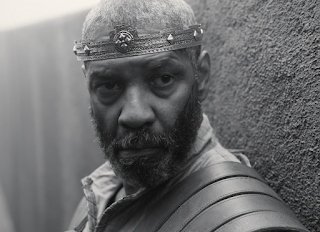
2. Denzel Washington - The Tragedy of Macbeth - See Cumberbatch thoughts.
 
Best Scene:  Is This A Dagger Which I See Before Me
1. Benedict Cumberbatch in The Power of the Dog - Good prediction Calvin, Robert and moviefilm. I love both performances. Both give amazing performances. Both match their unique challenges, are captivating to watch, and give such complex and layered turns. I can't fault either, I can only praise the brilliance of each. So even when I make my decision it won't be that I prefer one, it will be that I just settled on one. 

Best Scene: Rolling a cigarette
Next: 2021 Alternate Supporting

Best Actor 2021: Will Smith in King Richard

Will Smith won his Oscar from his third acting Oscar nomination for portraying Richard Williams in King Richard.

King Richard tells the story of the Williams sisters through the story of their father raising them to be tennis champions from a young age. A wholly fine film though definitely a bit drawn out for its simplistic approach to the material.

Will Smith is an actor who hasn't always been one of my favorites. Although he certainly has an overabundance of charm that suits him well for straightforward leading turns, he can struggle a bit when confronted with either tricky, or more complex characters. The role of Richard Williams is honestly a little bit of both, as it is in part the type of role that plays to Smith's strengths while also technically being a challenge by not being just a simple hero. Richard Williams by all accounts is a whole lot of a man, and idiosyncratic in more ways than one. Right down to his particular way of speaking and even acting in the particular way he pushed his daughters to be champions. Smith's performance is wholly effective in portraying the mannerisms of Williams. His very distinct way of talking, even his extremely hunched over posture Smith brings to the role here. Unlike his turn as Ali, I think Smith fashions this in a way that is convincing within the performance. It feels a little much at first, but ends up feeling true to the character. He most importantly makes it feel just a part of the character after awhile.

Where Smith succeeds in this role is just bringing his charm and charisma even within the fashioned personal style of Richard Williams. Smith has that star quality that comes off the screen well here, and makes for an endearing presence in portraying the character's various moments of essentially inspiration via pushing his daughters again and again. Smith does hit the right note of earnestness here and really prevents himself from overdoing it which would be very easy with the general tone of this film. Smith though is present in these scenes and brings the right tone for each of these scenes. His reactions capture the moments of frustration whenever there is a setback, or the joy whenever there is a triumph. He hits his marks consistently in this sense. When the film wants Smith to deliver a one liner, that particular Smith brings his comedic sensibilities along with the role. What I think is best here, is that Smith succeeds in hitting the comedic lines without resorting to going back to fully Will Smith. They are still Smithesque in the side eye casual cool but he still modulates the performance for it to be naturally as Richard Williams. 

So much of the film wants to push for how inspirational of a story this is, and the film does this one of two ways. This is either Richard disregarding doubters or potential exploiters with derision or by speaking warm support to both his daughters as they climb the ladder of tennis success. Smith effectively executes the moments of Richard presenting his particular way of wisdom as these blunt as possible deliveries of the man who will speak as he sees fit. He has this kind of clarity by in a way, as a man who so easily projects that kind of exact perspective of his. Smith on the other end of supporting his daughters Smith naturally exudes just this warmth and his eyes always seem to convey just the purest of belief in his daughters. Although the sort of inspirational intent of some of these scenes might be a little too obviously calibrated at times, Smith does hit his marks. Smith is an earnest performer, and that passion he brings comes across naturally here. Again though I must credit Smith in even performing these moments with just enough passivity to still be Richard Williams not Will Smith. 

Where the film shows its limitations is when it ever attempts to really exam any negativity around Richard. It seems like the filmmakers wanted to recognize that there are controversial elements of the man, but only just touch on them a bit. It never quite rectifies the idea where it touches upon that his at times he has dictatorial mandates, or kingly to put it nicer, which sometimes send mixed messages like making the girls lives about tennis then punishing them for celebrating too much. He wants their lives to be tennis but then demands very specific things from their coaches based on his personal thoughts of how things should be handled over their advice. This is a complex idea that isn't really given much complexity in this film. It more of touches upon them briefly noting that Richard can be frustrating, even hard to live with, but never goes much deeper than that. In turn Smith isn't challenged too much in this aspect though I guess to his credit the choice here makes it so basically Smith just needs to consistently portray Richard. Here as the film implies, even if it doesn't ring fully true, that any frustrations with Richard are the same as his successes, which is through his just being his eccentric self.

I'll admit I put Smith in the worst possible position by re-watching his film after The Power of the Dog and The Tragedy of Macbeth, and seeing the masterful and complex performances of Washington and Cumberbatch back to back. In comparison, although Richard Williams is clearly a complex figure in reality, here Smith just needs to be this inspirational figure who might be just a bit too eccentric for his own good at times. Richard doesn't really change, he remains just this consistent figure who is who he is and stays as he is throughout the film. This is as written however though and not on Smith I will grant. Instead Smith is good in repeating the old favorites of the one liners towards those questioning his choices or the passionate speeches. When Richard cuts down social welfare checking on his family, Smith speaks the fierce intensity of his belief that he's doing right with anger towards those he believes are doing wrong. He hits his humor in his bemusement as he ignores seemingly one good deal after another for his daughters knowing the better one is coming, or by just being his atypical self among the "posh" tennis crowd. Even when the film mentions some of the potentially ridiculous things Richard said, it is played off largely just for Richard to get the best of the reporter questioning him by just staying charming even when dismissing and technically insulting. This isn't through any change, but just through Richard maintaining that same eccentricity in Smith's performance. This after all is immediately followed by Richard's better self as he defends his daughter from the doubting reporter, which again Smith hits with the needed passion. 
 
Even when their coach (Jon Bernthal), who is shown to be a wholly positive figure in the story, questions Richard it is mainly played for laughs and Smith's performance is still of the same stubborn yet confident man with an air of righteousness. Probably the biggest variation we get is when his wife (Aunjanue Ellis) raises even bigger questions about his character, and the film hits a little bit of a false note as his wife's take down of his faults somehow ends with her propping him up, despite the fact that he never admits that he might be a little wrong. Again I hesitate to blame Smith, because Smith's reactions are fine in showing some sense of frustration but any real depth is more so conveyed by Ellis's performance than Smith's. Smith still shows the guy being himself just a little more frustrated. Although there is that minor variation, more could've been said by Smith's performance between the lines here even if Smith isn't technically at all bad in the scene. Almost to make sure we don't question him too much this is immediately followed by Richard talking up Venus and making sure he knows he believes in her, speaking about not wanting to let his girls runaway from the world the way he had to from racists as a younger man. As much as I think the positioning of the scene is devised to make us forget about Richard's flaws mentioned in the previous scene by showing him at his most sympathetic, I'd be lying if I didn't say Smith delivers with this scene. Again to Smith's credit he does deliver on a greater emotional turmoil even if still highlighting the inspirational overtones as he speaks of a trauma that helped to propel him to wanting more. I think one could argue that Smith might've mined more depth in certain moments, particularly in that fight with Ellis, but he doesn't. His performance instead remains perhaps too consistent and intent on maintaining Richard as a more simple heroic figure within the film. Smith succeeds in being that figure, and that is clearly a major intention of the film. Although even within that intention the potential for a bit more depth here or there seemed possible but instead we get basically get just a crowd pleasing performance for this crowd pleasing film. While that in itself is an achievement, the possibility of doing that while realizing a bit more complexity in Richard seemed possible, and the two ideas are not mutually exclusive from one another. What we instead see are the strengths and limitations of Smith as a performer. We get his humor, his charm and his earnestness, but we also get an apparent hesitation to ever seem less than affable onscreen. In turn Smith delivers a fine performance here, however a greater depth of character did seem possible even within the confines of this tale of inspiration.

Wednesday, 16 February 2022

Best Actor 2021: Denzel Washington in The Tragedy of Macbeth

Denzel Washington received his ninth acting Oscar nomination for portraying Lord Macbeth in The Tragedy of Macbeth. 

The Tragedy of Macbeth is a brilliant adaptation of Macbeth by Joel Coen, fashioning the old tale of ambition through the style of a German expressionistic nightmare. 

Although I haven't counted, Macbeth may be my most reviewed character, at the very least one of the most reviewed characters, therefore I have seen a great deal of variations upon this role. A role with a clear trajectory, but less clear in terms of the motivation and personality of the character, despite the fact that, aside from Toshiro Mifune, everyone is more or less saying the exact same words. What a performer, emphasizes, or doesn't, emphasize can speak towards so much of what becomes Macbeth, even if the facts always remain the same, he's a lord, who hears a prophecy that could be king, conspires with his wife to kill the king, becomes king, goes mad and is killed. That is every Macbeth no matter what, and he set to that fate. It is then the actor's task to not only make that fate compelling but to offer some unique perspective through their performance to craft a version of that tale worth watching.

Denzel Washington had only one previous role in which he performed Shakespeare onscreen, Kenneth Branagh's delightful Much Ado About Nothing, where Washington performed well with the Bard's words, however through the breezy role of the good prince in that film. This is more than a little bit of a step up in terms of the task at hand, no longer a supporting role, but rather one of Shakespeare's key tragic figures in Macbeth. Although it is nearly 30 years since Washington's last cinematic Shakespearean turn, Washington did not lose any of his ability with the text, in fact, Washington only reveals all the greater mastery of it. Washington honestly probably could read the complete works of Shakespeare and it would be worth listening to through the ease and really grace that Washington speaks the words. He finds that elegant balance where he can uncover the essential grandeur of each speech, while also delivering every element in a way that grants the right naturalism to the words as well.

Washington, therefore, steps into the role of Macbeth with a great deal of confidence. The question though is what is Washington's technical take on the role of Macbeth. Well in this instance Washington might play this part most closely to his role in The Equalizer, as basically this professional killer who is slowly aging. We see this in his first scene where comes across the three witches (Kathryn Hunter) after his successful battle that defeated a treacherous enemy of King Duncan (Brendan Gleeson). Washington's initial expression is this combination of a kind of curiosity, but also this sense of aged exasperation of the old warrior having performed yet another task. When seeing the witches it is with this sense that he might as well see something strange in his life at this point. When they say he will be named King, Washington's eyes denote this almost humorous kind of doubt among the statement. There is a sensibility about Macbeth that Washington suggests, and doesn't take the witches' words as anything more than an interesting peculiarity at first.

Washington portrays very much the loyal soldier who isn't bound by the idea of glory. His reactions towards the praise of the king is greater than hearing about his new lordship from his victory. Washington accentuates the idea of a man who has been here before and has experienced much as the soldier for the king. So much so that Washington's reaction to victory, is just the reaction towards not dying this time around. What Washington does through this is craft a differing motivation for Macbeth, as he's not defined by this kind of fiery ambition that is more typical in portrayals of the character. His motivation is defined by his relationship with Lady Macbeth (Frances McDormand) though not in the way of overt lust as per usual. I think Washington's portrayal of his first expression towards the Lady is so essential in creating this personal dynamic. This as his gentle smile not only shows that in this version Macbeth genuinely loves his wife, but that the love is kind of this old weathered kind of love. Love that to Macbeth isn't something he questions and is settled within him, unfortunately, the Lady might not quite agree.

What becomes the motivator for Macbeth is not sexual lust rather attempting to show her his love. Washington's portrayal of the scenes of contemplating whether or not to kill Duncan to become King is filled with a greater empathy towards Duncan in a way, and his reactions towards his wife is of a dutiful husband. Washington portrays the hesitation differently than many a Macbeth who are often more fearful of the task at hand. Washington instead presents the contemplation as a man perhaps overly familiar with death, and treating his wife's words as a course of action, though maybe a questionable course of action.Washington's weighing the act in soliloquy then is a fascinating examination of it. Washington performs less so as this grand ambition, rather as this potential only ambition he may have left in life. Washington presents it as the thoughts of truly an older man who believes that it may easily just live out the rest of his life as he is rather than the ambition to become king. When the lady prods him to do so, Washington brings this kind of perfection as his reaction as he both conveys the gravity of the situation, though with this kind of manner as though Macbeth is in way being chewed out by his wife, as though it is an argument that he has long heard for his lack of ambition and been reminded of as he is prodded to commit the murder. 

The scene of approach aka the famous "dagger" soliloquy is where I might as well reinforce the mention of one of the great joys of this performance, which is simply to watch Washington perform Shakespeare. Washington is spellbinding every time he takes center stage and brings you right within the presence of Macbeth. Washington has one of the all time great innate screen presences to begin with as there is just a natural force and charisma about him. And in turn it is mesmerizing to see him wield it through the Shakespearean monologue. I'll admit one can even forget  the intention for a moment, it is just such a treasure just to witness the performance completely detached from character in a certain sense. The performance though goes beyond that in the brilliance of Washington's turn as no word is simply left to be beautiful speech, as much as it is that. This in the speech Washington actually fashions the entirety of the arc of Macbeth's choice as he goes closer to the door. This as he initially sees the "dagger" there is the uncertainty in seeing the dagger that his expression slowly changes towards this kind of mania in seeing it as instead not a warning but a prophecy. This naturally seguing again in Washington as he becomes inspired by it until there is suddenly this strict uncompromising conviction as the "bell invites" him to kill Duncan. Washington shows how Shakespeare ought to be done and is absolutely stellar in this scene.

The murder itself performed as a cold assassin, befitting the old warrior undergoing the task, though this in stark contrast as he goes back to the Lady to inform of the completion of the task. Washington is outstanding in the scene in again finding this path, and I love the scene he plays it as almost a drunk having a moment of clarity. This as the guilt that Washington portrays in the moment is as this near childlike realization of a crime. His speaking of basically this curse upon him as Macbeth "will sleep no more" it is with this nearly detached sadness he speaks as though he can't quite reckon what he has done and is truly burdened by it. Washington fashioning the earliest state of the true madness that will come to inflict the mind of the man. Washington's eyes conveying the sense of the attachment to the deed, the attachment that drains and pains him, and will leave him unable to essentially reconquer himself as a man of virtue or a loyal lord ever again. As much as Washington attempts to portray the loyal lord again when the morning comes and men come to call on the king. Washington showing well the limitation of Macbeth. Putting on the face of innocence, but his exhaustion denoting a man who has not slept. Washington showing a man punished by guilt even as he attempts so hard to hide it. 

It must be noted that I do have a particular affection when filmmakers play with an expected presence, and one of the great joys of that is found here when Macbeth goes and kills the two guards "responsible" for Duncan's death after he is discovered. Joel Coen seems to purposefully evoke Washington's work as the Equalizer as the killing machine who disposes his foes with deliberate ease, something that will come again later in the film in an even more glorious depiction of such. Immediately following the scene where Washington explains Macbeth's reasoning for killing the men is an extraordinary rewriting of the moment by Washington's performance. This as Macbeth's explanation that it is hard to be rational when so emotional and so filled with love, Washington's performance successfully makes it as this pledge of love towards the Lady. Again not as this declaration of lust, but genuine love, though the Lady might take it as the former. Washington's portrayal is outstanding of this as every line he ensures such strict conviction to this and his eyes darting this specific passion. He speaks it as though it is almost these marital vows to remind her so potently that he loves his wife and has done this thing entirely for her love. Washington, McDormand and Coen so successfully making this old married couple almost kind of renewing their vows and finding the spark again, via murder of course. 

Washington's performance following is man essentially defined by his own act, as a man suspicious of all in order to maintain the kingdom since he knows the ease in which it can be taken away. Washington is amazing in the scene with the two assassins because he presents it as Macbeth attempting to play the king in a way and in a way failing to instruct the men to murder his old friend Banquo. Washington putting on the face of the king carefully ordering the two murderers to do his bidding as though he is granting them this task as though it comes down from high. Washington falling into a random mania briefly when speaking the most vile words to end Banquo's life, before attempting to return towards some normalcy. Washington showing his Macbeth as this act of a king attempting to be a king while burdened with the maddening paranoia of conspiracy around him which undercuts this. Washington brings such powerful meaning then as he speaks to Duncan's fate with this strange contemplation as death as being this kind of comfort from the difficulties of life. Washington creates this sense of this almost in the jesting  way he speaks of the "hollow crown" as nothing but a burden. Washington shows so well the curse that is Macbeth's state as he lives with the knowledge, and as such a more complicated thing then just guilt. In fact guilt may be the least of it. 

The ghost of Banquo in this version, as he haunts Macbeth's feast, takes upon a new kind of meaning here. This as Washington puts on the front of the good king as it begins before seeing the ghost pass by and the facade instantly crumbles in Washington's face. Instead all the madness that grips him pressing against him once more. Washington's yells at the ghost being this full fledged insanity of believing him to be cursed in this sense and his whole life to be this kind of joke against him. Washington's portrayal of Macbeth is essentially as a man who is more or less lost even by the mere act that he committed and very little has any real meaning in life other than awaiting his poor fate, becoming basically the fearful old man gripped by the terror of his upcoming demise. When hearing the second witch prophecy Washington's portrayal accentuates the man looking for some kind of safety in his state. Every question he asks with this urgency of need for the protection. His eyes peering for any grey area, any problem, hoping to find any kind of calm for his state of mind. Washington easing away some of this apparent suffering only as Macbeth hears the words that only seemingly impossible events could possibly lead to his death. 

Comfort is never found though and Washington continues to excel in creating this strange state of the man basically as the king trying to convince himself of his own strength. When hearing of the troops coming his way to destroy him, Washington's barking of Macbeth's orders are with the grand gestures of a wannabe king, ferocious yet weak. Washington wields even the loudness in a way of a man trying to quiet his own mind filled with only doubts. This only breaking when he sees the death of his Lady via suicide (or perhaps not in this version). Washington amazing in this moment because he so poignantly speaks to a genuine self again as he bemoans her fate. The real love that defined his initial act is there again an the realization that his gain is now wholly lost comes clear against Washington's harried face. The facade leaves again to show the humanity still left over in the now fiend, and so powerfully so. The particular brilliance is Washington from this point as the man essentially broken wholly now. When the first man comes to kill him, and we get our second equalizer scene, Washington is so perfectly dispassionate just as he so artfully physically performs the scene. He walks open to slaughter and his query of "thou was born a woman" is with this casual kind of "alright you can die then". 
 
Washington's manner treats it as all this game now, as the man who has no reason to live other than the kill in a game he believes he cannot lose. This instantly however is subverted as he comes across MacDuff (Corey Hawkins), whom the witches had warned him of. I love Washington's initial delivery which he speaks as this basic even casually issued caution as though asking "hey do you want to die to?". However when MacDuff reveals that his birth "being not born but ripped from a woman", Washington's expression makes this final confrontation pure classic Coens dark humor in a way. This as Washington's little shrug and and swallow is this reaction that speaks Macbeth's thoughts of "of course, that's exactly what would happen" as just another misfortune in a sea of them. Macbeth accepting his fate with almost this kind of gentle humor. It is probably obvious but worth restating, I adore everything about this performance and really every second of Washington;s outstanding work in this film. It is in part because Washington is just such a captivating performer of the Bard that it is hard not to treasure every line he speaks. It is in part because it is such incredible use of Washington's screen presence both in an expected and unexpected way. Most of all though he makes the challenge of the role seem nonexistent while also crafting his own uniquely powerful, poignant and even comical portrait of the Lord defeated by his own greed and hubris. 

Tuesday, 15 February 2022

Best Actor 2021: Benedict Cumberbatch in The Power of the Dog

Benedict Cumberbatch received his second Oscar nomination for portraying Phil Burbank in The Power of the Dog. 

The Power of the Dog tells of the conflict that develops when a rancher's brother brings home his new wife in early 20th century Montana. Watching the film for a third time, I remain fairly consistent in that I think it is a good film that gets occasionally a little stagnant essentially whenever the characters of Phil and Peter aren't onscreen. 

I have to say it is with great pleasure when I must admit that I am wrong about a performer. If a performer proves themselves at some point, Dev Patel and Robert Pattinson come to mind, I love to see that. Benedict Cumberbatch proved me wrong in less than a year's worth of time with this performance. After seeing his turn in the The Mauritanian I decried that Cumberbatch was simply incapable of playing an American, then came this film where he not only plays an American, he plays a western cowboy. Both aspects if they were only on paper I would've scoffed and thought "there is no chance that Cumberbatch can pull this off". Well I was wrong as Cumberbatch does what I thought was the impossible here, which is he is convincingly American in this film. Cumberbatch fashions a convincing accent of a man from Montana. For once while watching the film I actually forgot about Cumberbatch's rich English accent as he took on this harsher timbre here in crafting Phil's voice. A voice that becomes such an essential and natural part of this performance, and Cumberbatch delivers the strongest accent of any of his performances up until this point. Not only does he find a far greater consistency, it is also wholly effective in making you believe that this is a man of Montana from this period, and you just accept it. Cumberbatch forcefully cuts down my own criticism I long had for him, and proved the seemingly impossible possible, and that's established just from the first few minutes of his performance alone.  

It must be said at least one repeat viewing feels essential for this film to understand the film properly, but also to fully appreciate Cumberbatch's performance. This is notable though because Cumberbatch delivers a great performance upon initial viewing, but he almost seems to give another yet different great performance on watching the film again. I feel due to this it is best to look at this performance and as it plays both on my initial viewing on subsequent re watches. Cumberbatch on the initial viewing of course delivers on his accent, but he also delivers on his whole presence as this rough cowboy. Cumberbatch really is best known for his upper-crust English chaps, yet Cumberbatch cuts that image of him down with ease. It isn't the dirt, it is the way that Cumberbatch makes the dirt convincing on him. Cumberbatch's walk is deliberate as a man used to uneven ground and moving through the muck. Cumberbatch's eyes bear an innate intensity of a man who is as used to rocky ground as he is a soft bed. Cumberbatch's physical performance is perfection, as the years of this life exude from every inch of his Phil. The mastery in Cumberbatch's performance doesn't merely end with the way he carries himself, as impressive as that is on his own. 
 
There is so much more that he brings that speaks to his character as Cumberbatch fashions so much in just the way that Phil interacts in his space and with the other people around him. The most surface version of Phil we find is when he is with the rest of the cowboys from his ranch. Cumberbatch simply owns every scene where he basically portrays Phil as holding this kind of king's court among the men. Cumberbatch speaks with an unquestioned authority and just this simple sort of sense of power among the men. There is more to it than that though as he brings this kind of showman's quality to it as well. Every word he speaks has it with it this kind of grand statement as though Phil is speaking these blatant words of wisdom from the lord among men. Cumberbatch is magnetic as he so effortlessly articulates this sense of power that shows him both as the leader among these men but it seems to go even further as this man who just absolutely controls every second of his situation. Cumberbatch shows a man so innately in his element that there is just this force of will about him that is absolutely remarkable. What is most remarkable is that Cumberbatch does it in an entirely new way. Cumberbatch has controlled the screen before as the cold master like in Sherlock, but here he does so with this earthiness that is just as transfixing, but in an entirely new way. 

Cumberbatch in the early scene of the restaurant is brilliant work from the performer every moment he is onscreen. Whether he is standing up or leaning within his chair Cumberbatch demands attention, even kind of enforces it. Every ounce of him exudes the forcefulness of a man's man who is going to make sure you know he's that much of a man's man. Cumberbatch's delivery of the bawdy jokes is fascinating in itself as he delivers them in that aggressive way but with this sort of eyeing insurance that he's making sure he is hitting his marks almost. He's totally convincing but Cumberbatch also is performing as Phil is performing to his crowd of men that he's controlling in his way. Cumberbatch in this same scene shows both Phil's way through specific charisma with these particular men and especially the toxic ways this reveals itself. When commenting on some paper flowers in the restaurant Cumberbatch fashions this kind of almost pleasantry about it initially, playing up the cowboy who should be so happy to get a flower from a pretty lady. When he learns that it was in fact made by Peter Gordon (Kodi Smit-McPhee), their waiter and son of the restaurant owner Rose (Kirsten Dunst), that quickly changes to violent derision. This with the amount of venom Cumberbatch brings in mocking his way of saying "drips" with a lisp with this careful side eye that accentuates the way Phil is playing up to his "manly men" how unimpressed he is by this less traditionally masculine waiter. 

Upon initial viewing it seemed to me that a dominant aspect of Phil was his seeking dominance. And we get that early on with the men and his brother George (Jesse Plemons), with his casual put downs but even more so the ferocity that is shown when something is out of his control. When a player piano interrupts Phil's meal, it also disrupts his control of the situation. Cumberbatch immediate switch to such a powerful intensity is striking and truly menacing as he demands the piano stop playing. Cumberbatch in the moment shows that there is much to back up his swagger and the viciousness of the man is something he can call upon with such powerful ease. This becomes a central conflict when George decides to marry Rose despite Phil's protest to the idea. While Phil cannot dissuade George, we see what this results in as Phil loses control again. Bluntly as he attacks one of their horses noting it to be a female horse, where again Cumberbatch's portrayal captures the extent of the hate that fills Phil. It is incredible work from Cumberbatch as he is absolutely searing on screen in his portrayal of this. When Rose tries to reach out to him in any way, Cumberbatch's delivery couldn't be blunter or more impactful in showing just how little Phil thinks of Rose and sees her as an unwanted presence on the family ranch. Phil doing everything he can to mock and belittle her, and credit to Cumberbatch for simply through his sinister expression can he make banjo playing menacing, when Phil plays an articulate and extravagant tune against Rose's middling at attempt to play the piano. 

The eventual central relationship of the story realizes itself as Peter comes to the farm, and despite Phil initially terrorizing him as well, Phil eventually takes him under his wing to teach him how to ride a horse and work on the ranch. In my initial viewing I thought this relationship closer to something like Claggart and Billy Budd from Billy Budd. Where it speaks towards Phil's hidden homosexuality, but the relationship is built upon the idea of a dominant and submissive relationship. And I think one can be convinced of it in this sense as Cumberbatch certainly portrays this certain joy as he teaches Peter the ropes, and takes great satisfaction over essentially stealing Rose's son away from her. This to the point he's willing to unleash his own wrath against Rose when she sells away the ranch's hides, and Cumberbatch again shows the sheer extent of his hatred when any part of his authority is being questioned. Cumberbatch even still seemingly presenting the state as the proper man's man to Peter as they share a particularly intimate moment when Phil explains having been saved by his old mentor the deceased Bronco Henry and probable lover of Phil. There one could perhaps take it as Phil regaling the tale with whom he had been the submissive one to with George and speaking so with this kind of pride in the relationship as Phil believes he now has such a relationship with Peter. Unfortunately, or perhaps fortunately for everyone who's not Phil, Phil is poisoned by anthrax and quickly dies. That is the end of my first viewing, and I thought a stunning portrayal of a hectoring villain. 

I was wrong though and as much as that already would've been a great performance there is so much more to be found in this performance that as there alone. Take his relationship with George where I took it initially as just him belittling his brother. Cumberbatch, even when brutally questioning his decision to want to marry Rose by basically belittling the concept of treating women as anything but a sex object, or plainly calling George names that lack seeming endearment like "Fatso" and "Old man", Cumberbatch actually does quietly suggest that Phil does love his brother in a strange way. Even in the cruel nick names it is with a smile and this odd warmth in Phil's eyes. What's brilliant is Cumberbatch makes it both about power but also genuine human desperation that one can see in the more subtle moments of this performance. In the scenes of Phil alone at night, while George is spending time with Rose, I thought I only saw anger, but no. There is a sense of jealousy, but also this palatable sense of loneliness that Cumberbatch conveys. A desperation that Cumberbatch evokes of a man who seems to believe that he cannot ever have that kind of companionship so he's both angry that his brother has found it, but also saddened by the fact that his brother has left him alone in this way. It's striking by how startling human Cumberbatch is in this moment and reveals so much nuance in Phil. 

Even the scenes of Phil seemingly at his most braggadocios and real the purposeful performance has shadings to them that Cumberbatch so naturally, and brilliantly brings to the character. When Cumberbatch is with all of the other men he rarely glances a look at any of the men. They are essentially this group to be entertained in order for them to fawn over Phil, however there is no a moment in which Cumberbatch conveys genuine connection. They are always merely a crowd for his ego no more and perhaps a lot less. Even the scene of the paper flower misconception Cumberbatch delivers this glint of contemplation towards the beauty of the flower even after having denounced it with such intensity by insulting Peter. There is an appreciation that Cumberbatch suggests albeit so quietly speaking towards the truth of the man while still showing to everyone else the man who would be theoretically disgusted to have praised the pretty flower made by a man. The lack of connection, even with that odd warmth he does show, extends towards George partially from Rose but more so the class separation when George asks that Phil cleanup for a fancy dinner. Honestly a scene I didn't pay that much attention to on initial viewing, in fact thought it was due to Rose's attendance that Phil hated the idea, however it goes deeper than that. Cumberbatch speaks each response dismissively and aggressively as the man who likes "his stink". In that though it isn't just hate it is vulnerability that Cumberbatch conveys as the man who cannot be himself more ways than one. In turn only recapturing his pride in a way by forcefully unleashing his power as he steps in on the dinner. Even with the way Cumberbatch delivers Phil's purposeful mispronunciation of piano, is a man to purposefully play the role of the uncultured, however to do so as an attack in order to defend. 

The aspect of the film that most expanded for me in terms of Cumberbatch's performance was the relationship between Phil and Peter. Although the power dynamic still is there, and likely is motivation for part of Phil's decision to take Peter under his wing, it is not at all the truth of it. Cumberbatch's performance rather reveals that this connection with Peter does go deeper. There are moments even as Peter is initially failing to ride where there are this brief seconds of pride that come across Cumberbatch's face as Phil. Cumberbatch looks directly at Smit-McPhee in their scenes together, and shows the man who is ready and willing to connect in a way he has not been able to for some long. Cumberbatch successfully shows that Phil's intent might not even be wholly the desire for physical companionship rather for mental companionship as well. When Peter says he sees something in the distance as Phil claims to, Cumberbatch's reaction is one of revelation and hope, as though Phil sees the chance for something he thought might've been impossible. The scenes then are colored differently as Phil speaks with some real love, not just to hold dominance, but rather companionship as they work the grounds together. The scene where Peter tells Phil about his father's death is sheer dynamite. The moment where Peter says his father thought him too strong, Cumberbatch delivers the initial insult that Peter's father was "wrong" as he does for George as this reflective instinctual action, however subtly Cumberbatch's expression changes to suggest actual regret for the insult, and even more striking his eyes pierce of a man genuinely trying to listen to Peter in the moment. 
 
The scene of Phil's rage after Rose sold his hides takes on new meaning in particular, as both the motivation that Phil is genuinely upset that he will not be able to finish making a rope for Peter without the hides, but also the reaction to Peter offering him additional hides to finish the rope. Cumberbatch's speaks every word towards Peter, which are words of support and comfort, with absolute earnestness. In the moment he shows the companionship Phil feels is absolutely true and more than just a power play. Even his rage speaks both to his hatred for Rose and his desperation to finish this gift for Peter. The final scene between Peter and Phil then takes on new meaning. Phil telling his story of Bronco Henry and himself Cumberbatch colors with the man reaching out and speaking generously to the connection he once felt. When he shares the cigarette Cumberbatch subtly reveals the eagerness to fully realize this same type of connection with Peter as though Phil has finally found someone he can share life with again. As much as Phil is a horrible person, on re-watch I have to admit I found this moment kind of oddly heartbreaking as Cumberbatch revealed the real vulnerability in Phil, right down to the moment where Phil is dying from Anthrax and wants to give the finished rope (which Peter used to poison Phil) to Peter. Cumberbatch shows the man honestly wanting to give the gift to the man who ended up being his murderer not his companion. This is an extraordinary turn by Benedict Cumberbatch. As on the surface it is an effortlessly compelling and domineering portrayal of a man attempting to control all aspects of his life, but as you look closer Cumberbatch reveals an even more potent portrayal of a man wrestling with the loneliness of his idiosyncratic self. Cumberbatch realizes such complexity here and crafts an astonishing portrait of Phil Burbank where the more you peel away the more there is.

Monday, 14 February 2022

Best Actor 2021: Andrew Garfield in Tick Tick...Boom

Andrew Garfield received his second Oscar nomination for portraying Jonathan Larson in Tick Tick...Boom. 

Tick Tick...Boom follows Jonathan Larson as he's trying to complete his "magnum opus" musical and dealing with different personal stressors just before his thirtieth birthday. Watching the film for a second time, it continues to not work for me, in part because of Lin-Manuel Miranda first time over-directing, but also I just never quite care about Larson's particular situation. And to note, I can care about a film that has a theoretical "low stakes" situation, treated in a "high stakes" way, this one just doesn't come together for me. 

Andrew Garfield had a banner year for 2021 though it began with his miscast performance in The Eyes of Tammy Faye, that did not rely on his strengths as a performer, though it also contained his triumphant return to the role of Peter Parker in No Way Home. His second Oscar nomination though came here for what is a role that very much requires a "performing" performance in the role of Larson. This is quite literally as a good portion of the film is depicting Larson performing the musical of Tick Tick...Boom, while we are also watching the film of Tick Tick...Boom, as a musical autobiographical monologue. Unlike my previous review where the performer utterly failed to evoke the real person they were playing, Garfield honestly is kind of perfect when comparing his performance of the performance of Tick Tick...Boom to Jonathan Larson performing the monologue. The only real inaccuracy might be that Garfield's singing is actually better than Larson's. Garfield though so effectively embodies Larson's personal style of performance. This is within the intensity of the exuberance of performance that matches Larson's own. It goes further than that though as even his manner of playing the piano and singing out is just pitch perfect. What makes this special in Garfield's performance is as much as it is a technically accomplished imitation, it actually doesn't seem as such as Garfield just makes it naturally his own, and uses it to create the sense of this kind of energetic performer. 

Garfield in the performance scenes of playing the piano and singing, I think captures so well this particular musicians sort of mannerisms, particularly if said musician is performing their own material as Garfield is here in terms of Larson performing his own monologue. This kind of unleashing of self in this sort act of self-fulfillment within the performance. In the moment Larson is giving it all by being able to give everyone his music in the moment through his own performance, and Garfield captures quite potently that unique kind of energy. He simply has it and doesn't just perform the song well technically, he performs it well in conveying it so as Larson giving everything he can as this creative act of sheer will on his part. Each of the performance of the performance scenes Garfield throws himself into it full force in this particular way, as he is not only giving the performance of his work, but also as though it may be the only time he's going to be able to perform it for the public so he is giving it his all to put it lightly. Garfield performs these scenes very much as the man trying to sell it to the crowd as much as he can, with the logic of each song within that heightened performance. Whether that be the somber conviction of speaking towards his losses, the anxiety of trying to live up to his potential, or even the aggressive phony happiness that he tries to project as he commits to fake therapy. 

The performance scenes are in a strict separation from the rest of Garfield's performance that is considerably less aggressively outwardly projecting, and that is saying something because Larson is still definitely a guy who wears his emotions on his sleeve. Garfield's performance though wisely differentiates between the guy when performing his work from the guy who is performing what is shown to be his reality, albeit technically heightened given the film is still a musical even outside of those performance scenes. Garfield wisely differentiates between the two with his performance and shows the scenes of Larson as the man against Larson as the musical performer. Garfield does still deliver that Larson manner to an appropriate and natural extent, however again more subtle in this regard as we don't get the way he's putting forth himself for all to see, instead we see the Larson at home just being himself. Garfield even with this tempers himself well towards an innately energetic and emotional presence. Garfield moves a lot here, and really just has this kind of innate kinetic quality about this man who feels he isn't living up to his potential and desperately wants to. Garfield's portrayal physically has that kind of uncertainty about it. He's a man who never just stands in a way, there's always a certain stress about standing still even, fitting per a man who thinks he's failed as he's turning thirty (which I won't repeat too many times for those who might be reading this review and share the same anxiety).  

The film then really is Larson dealing with his artistic ambition as it clashes with any ideas of personal success and personal relationships. Larson isn't the most likable in his approach to dealing with these conflicts, which to be fair the film does call him on, but doesn't make him the man I care to spend the most time with. Having said that, Garfield is terrific here. The intention of a performance needs to successfully bring a whatever the story is trying to tell to screen, and while the story itself isn't the most engaging to me, I can't think of a way that Garfield could've done more than what he does here to  properly bring Larson to life here onscreen. I can't fault Garfield in any given scene because he is game to bring to life Larson's personal style and do it in a way that is cohesive and honest to the character. Larson is a passionate guy who puts his passions first, and perhaps maybe in front of others at times. In turn Garfield's portrayal carries that innate passion that is basically bursting at the seams of the man. Again as previously stated physically, but with just the way Garfield delivers his lines as Larson speaks about his hope and ambitions. Garfield speaks with a believable kind of mania as he speaks towards his work as needing to be a triumph and he is able to accentuate this potent need to make it great with this desperation that he's not sure he will be able to either. 

While Larson struggles to get his musical off the ground, he is also struggling with his overall direction both in terms of his relationship with his friend Michael (Robin De Jesus) and his girlfriend Susan (Alexandre Shipp). The former with whom they have a push and pull with Michael moving on from the life Larson is still trying to break into, and becoming successful in the corporate world instead. Garfield is dealing with tricky material because in both relationships Larson basically sacrificing his connection with both to a degree in order to focus more on his own ambitions. It is to the sterling credit of Garfield that he pulls it off in a way that doesn't absolve Larson, but he makes it work just by simply being wholly convincing in portraying this state of conflict. Garfield is able to convey in these moments the state of emotional frustration in Larson. Garfield's expression captures that there is genuine care in these moments of argument, honest concern for both people, but still this fixation on what he thinks he needs to do despite that ambition conflicting with both relationships. The relationship with Susan being one of challenge as essentially Larson's broken up with her, without quite committing to that step, and Garfield, as much as one might not like Larson for it, is exceptional in wholly creating a believable sense of that specific anxiety in their interactions. Garfield shows a genuine affection towards her, just as he shows that equally genuine frustration that while he loves her he's also moving on from her.

The former relationship with Michael is where we connect to Larson's eventual grand success, just before his untimely death, in the musical RENT. Larson while attempting to do his thing sees the spread of HIV among his friends, and eventually Michael. This speaks to the scattershot storytelling of the piece that could theoretically work, but I don't think really works here, but there will be moments interspersed where Jonathan comments on the situation or is reminded by it. In every instance it has to be said Garfield is in absolute command of bringing the genuine emotion of this. Larson's reactions towards seeing a friend so ill or to hear about Michael's diagnosis, instantly conveys the sense of immediate devastation in the man. Garfield properly attaches great meaning to this personal sorrow and shows the emotional connection that would eventually reveal itself artistically. Even the moments of reacting to the blithe attitude of some of society towards the crisis, Garfield is terrific in just some silent reactions of showing the bitter sadness of the man who believes more can be done. As much as this isn't even exactly resolved within the film itself, Garfield wholly conveys that idea burning within Larson's mind and creating the sense that it is something weighs upon him. Garfield's performance shows basically the creative inspiration incubating in his mind even if the conclusions is just told to us. 

While we are running through all these random elements of Larson's life we get a series of musical numbers that are within the present film, and aren't part of the separate performance scenes. It is again credit to the wisdom of Garfield's performance that he plays these musical numbers actually very differently from how he performs as Larson performing. These aren't Larson performing the music rather they are Larson experiencing the musical numbers since these ones are merely part of his life experience. Garfield throws himself head first into every number, and no matter how much one does or doesn't like the numbers themselves, I don't for the most part, one cannot fault Garfield in his attempt to sell them for all they're worth. Garfield though takes the next step with this because he not only sings them well, and throws so much energy into the performance of each one, he also very much acts according to their intention. In "Boho Days" he brings a more casual energy of someone just sort of fooling around during the song. In "Swimming" he delivers this greater intensity of someone trying to force himself through this hectic state of mind. In "No More" he brings this more lackadaisical and comedic manner as he plays around with the differences between he and Michael's old low rent apartment and Michael's new upper crust housing. In "Sunday" Garfield brings all the grandiose conviction if not reverence towards every moment of the number as this kind of Broadway show stopper, fittingly overflowing with Broadway royalty in cameo roles. Garfield is game for each and every song, modulating his performance in order for every song to deliver its tonal or thematic intention. This is representative of Garfield's whole performance, which in this scattershot story, is never lost. Garfield makes every element of Larson's life and his music tangible within his performance. While the film doesn't work for me, that isn't because of Garfield, and in fact it is very easy to imagine a far more intolerable film with a less capable lead. Garfield is ready for everything this role throws at him, and is consistently on point here bringing Larson to life, even when the film isn't successful in doing so.

Sunday, 13 February 2022

Best Actor 2021: Javier Bardem in Being the Ricardos

Javier Bardem received his fourth Oscar nomination for portraying Desi Arnaz in Being the Ricardos. 

Being the Ricardos tells the story of one week in the production of the hit show "I Love Lucy", where its star Lucille Ball (Nicole Kidman) must go through a series of personal and professional troubles in that short span of a week. The film is essentially why writer and now director Aaron Sorkin should never direct what he writes. Although he is talented, he also falls into easy excesses and eccentricities. Here there was some decent idea within it, however he over-stuffs it both in terms of all the different things he tries to cover in Ball's life, but also just through his dialogue that tries so hard to be clever that it all sounds pretty dumb. That's isn't even speaking of his direction that wants to be oddly serious and overly dramatic in depicting the life of the most famous of comediennes. The film desperately needed a second voice to temper Sorkin's excesses and to get him to hone in on something, as David Fincher did with The Social Network. 

Now the biggest controversy around the film was the casting of Nicole Kidman as Lucy, while Javier Bardem's casting was less focused upon, though where Kidman at least can be described in the general atmosphere of the same type, Bardem seems a stratosphere away from what I think of when I think of Desi Arnaz. Arnaz is a performer, both as a musician and a sitcom lead, was all about levity, not the first word I think of when I think of Bardem, known for his heavily dramatic or often rather malicious turns. Bardem can be charming and humorous, but it is not what is his innate presence. Unfortunately this makes for a weird choice for "Cuban Pete" himself. Where one thing Kidman does very successfully is is create a natural approximation of Lucille Ball's voice, Bardem fails miserably at this attempt. I write attempt because Bardem kind of sort of tries to do Arnaz's higher pitched voice and specific Cuban accent in some scenes, and forgets to do it altogether in most scenes. Frankly he would've been better off not attempting at all, instead he randomly "spices" some scenes up with that will only cause one to think "wait is he trying to imitate Arnaz's voice right now?". It doesn't work, and it is just step one of something that doesn't work in Bardem's performance sadly. 

Again Bardem can be charming, but Bardem is charming in what is best described often in a very sexual kind of way. This isn't Desi Arnaz who is supposed to be a far more family friendly kind of charming, that someone may find sexy, but he's not being sexual innately. Well Bardem correctly doesn't try to bring that quality when trying to be the charming Desi, however what is left over is a bit of vacuum. The flashback scenes where we see Bardem portraying Desi playing the bongos or performing a light number like "Cuban Pete" is genuinely extremely awkward to witness. There appears to be almost this active discomfort in Bardem as he tries to play it "Light" which sadly results in coming off anything but. Bardem's singing isn't good, but that's not really the problem. The problem is you don't believe him as this light entertainer. He seems so constricted, so uneasy in his manner that when Ball later claims Desi would be Cuban movie star if there was such a thing, you wonder what's she's talking about. Now Bardem is most certainly a movie star, and truly can pop off the screen, when he's playing into what makes Bardem a great performer. Here though he's playing against that quality, and in turn the compelling dramatic performer is woefully inadequate at playing the easygoing musician. 

The same is true in the scenes of Desi performing as Ricky in the reenactments and live recordings depicted. You'd think Desi was the worst performer in the world if you go by Bardem's portrayal, which again is absurdly out of place. He almost seems like he doesn't know how to stand in a given scene, and more than anything lacks the kind of grace that the real Desi did have when performing the show. He was an atypical sitcom lead for the time, but his presence was genuinely charming. Bardem though is kind of gangly when performing as Ricky, if not even oddly kind of creepy while trying to stand as Desi trying to be funny. There's nothing about him that suggests a guy with a comfort onscreen, and once again Bardem just seems entirely wrong for the part. He doesn't embody anything that you'd think of when thinking about Desi Arnaz. This could be okay theoretically, if he came up with some alternative presence that also worked even if in a different way. That's the case, he just seems like a guy who isn't quite sure why he's there, and is even more awkward when trying to perform as the type of entertainer that Bardem simply is not. Although to be fair, that is not the only task that is given to Bardem here, as really the focus of the sitcom scenes is more focused on everyone else, as he also needs to portray Desi as the husband and businessman. 

Unfortunately we hit another snag in the form of Bardem needing to deliver Sorkin's particular dialogue, which is some of the weakest he's written for the aforementioned attempt and failure at constant wit. Bardem though in particular struggles with finding the appropriate rhythm for it. Although the awkwardness is now different from his "performance" scenes, the awkwardness remains in trying to rattle off the various witty lines Sorkin gives him. Bardem's delivery is best described as low energy and he doesn't have the sort of verve needed for the material. Yes the material isn't the best here, but even if it were better, the same sort of timing and technique would be needed, and Bardem struggles with even the attempt to sell the material as good here. There's a dourness about his performance when Desi isn't performing onscreen and he struggles with finding any kind of appropriate tone. Sorkin himself does here too, but Bardem may be the worst offender in this struggle. Honestly Bardem is all over the place in the rapid dialogue scenes and there's a strange level of uncertainty in his performance that exudes from him, an uncertainty that seems ill-fitting for Desi who is written as the boss in more ways than one. Actors often speak of the struggle it is to get down Sorkin's dialogue, and I think you see a victim of that struggle here. 

I guess I'd be willing to forgive some of this if there is some aspect that Bardem finds his comfort and his place to excel with Desi. I mean we do have the film detailing the whole love affair between him and Lucy. And as much as it is shown to be this legendary thing, even if flawed, the chemistry we get between Kidman and Bardem is on the charts, near the bottom of it. They're...okay together. They aren't completely detached, but you also don't feel the needed spark between them. They're not complete strangers but you don't get the dynamic partnership the film is suggesting. So that doesn't save him for me. The last aspect he has are the dramatic scenes randomly thrown into the film where Desi refers to his early childhood when his father was arrested during a revolution and Desi obviously went through some trauma. These relatively brief scenes are where Bardem appears to be at his most comfortable. In fact it is the only time in the film where Bardem seems remotely in his element. Bardem finally calls upon his intensity in order to describe Desi's anger and despair regarding this element of his past. Of course these are so randomly implemented, and questionably written, that the only notable thing about them is that awkwardness is finally less present for Bardem albeit briefly. Far too little and far too disconnected to keep from the truth. The truth is that Javier Bardem was severely miscast here as Desi Arnaz, and throughout you see the struggle, and sadly the failure by Bardem to overcome it.

Saturday, 12 February 2022

Best Actor 2021

And the Nominees Are:

Andrew Garfield in Tick Tick...Boom
 
Benedict Cumberbatch in The Power of the Dog
 
Will Smith in King Richard

Denzel Washington in The Tragedy of Macbeth
 
Javier Bardem in Being the Ricardos