Showing posts with label 1989 Best Supporting Actor. Show all posts

Saturday, 10 September 2011

Best Supporting Actor 1989: Results


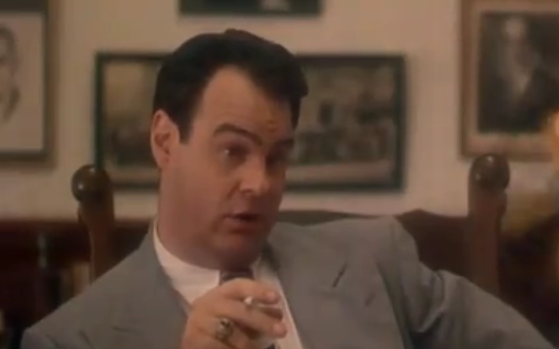
5. Dan Aykroyd in Driving Miss Daisy- Aykroyd is not given much to do, but he adds a nice charm, as well as a descent amount of humor to the part.
4. Marlon Brando in A Dry White Season- Marlon Brando is in basically two scenes, and he is good in them both, although not amazing.
3. Denzel Washington in Glory- Although he overacts a bit at the beginning of the film, after that he gives a consistently effective performance particularly in his quiet scenes where he shows the true beliefs of the character.
2. Danny Aiello in Do The Right Thing- Aiello's performance is great throughout the film and manages to make a fascinating character. Aiello always stays true to the part, and life as he gives a interesting characterization of a man who believes in what he has built more than anything else.
1. Martin Landau in Crimes and Misdemeanors- Although Landau is clearly the lead in the film I do not disqualify therefore Landau is my choice. Landau gives a powerful and haunting performance as a man who confronts his morals, and looks into his own soul when faced with his crimes.
Deserving Performances:
Hugh O'Connor in My Left Foot
Sean Connery in Indiana Jones and the Last Crusade

Best Supporting Actor 1989: Denzel Washington in Glory

Denzel Washington won his first Oscar from his second nomination for portraying Private Tripp in Glory.

Glory depicts the first all black regiment in the civil war.

Glory shows the regiment and focuses on four particular soldiers in the regiment. Washington depicts one of them Private Tripp who is a very angry former slave who seems to have joined the ranks of the regiment with the main purpose of being able to kill southerners. Tripp is an antagonistic fellow who purposely attacks the other black soldiers.

Washington's performance at the beginning wants to stand out, perhaps just a little to much. Tripp certainly should want to make his presence known, and should have a personality that simply makes the others have to notice him, but Washington overdoes it just a tad I think making it so he seems just slightly self aware of his performance.

Luckily I only felt this way about the first scene, and Washington pulls back his performance a bit and becomes far more natural as the film progresses. The first scene makes him a bit too cute almost in his treatment of the other black soldiers, but after that scene his treatment seems to come from a genuine anger at everyone due to his treatment as a slave.

Washington best moment though are in his various quieter scenes, rather than his various scenes of more obvious anger, which he does well enough sure, but his quieter scenes are much more impressive. In his quieter moments such as just his reaction after being whipped, which may be a bit too much of a Oscary scene really but Washington reaction is effective.

His best scene though I really think is his quiet scene where he tells the white commander of the troops. In this one scene Washington shows an honest passion, and pain that Tripp really feels about himself, and other black people even after the war is over. That scene he is very good, and Washington is fine basically after the first scene. I was never quite amazed by this performance, but I won't deny that this still is a good performance.

Best Supporting Actor 1989: Martin Landau in Crimes and Misdemeanors

Martin Landau received his second Oscar nomination for portraying Judah Rosenthal in Crimes and Misdemeanors.

Crimes and Misdemeanors tells the stories of two men's marital indiscretions one done in a very dark and serious fashion the other done in a light comic fashion.

Martin Landau is the man of the serious half of the film, and there really is nothing supporting about his performance. He is the absolute lead of his half of the film, which has just as much probably more importance than Woody Allen's personal section of the film. In Landau section Judah has already performed the adultery, rather than just attempting it. He is forced to face his crime against his family because the woman (Angelica Huston) he had the affair with is emotionally unstable and plains to tell Judah's wife everything.

Martin Landau performance is a very intriguing one as he portrays Judah's entire moral dilemma as he examines his entire moral philosophy, and some of his religious ideas he still holds in some way deep inside himself. His moral dilemma really does not come from the fact of the affair, but it mostly comes from the idea of doing away with his mistress in order to be able never to have to directly face his crimes in any sort of way.

Landau whole performance is a very subtle, and very powerful performance. What is so strong about his performance is the fact that he never has a false note in the entirety whether it is during Judah's moments of morality, or amorality Landau always give an entirely truthful performance through every aspect of his story Landau always presents the story of a really man in this situation this is what makes Judah's story all the more haunting.

In the short flashback moments of the affair Landau certianly shows a happy Judah, certianly not in the least minding his degree of amorality by partaking in his affair. At the end of the affair it is offset by Judah ending it before being face with responsibility of the crime. In these scenes again Landau is yet to show true guilt over his actions instead he merely shows that Judah's anxiety and anger over the idea of having to lose anything he has gained in life due to his faults.

It is only when he is about to face his decision to deal with the situation, and after that decision where he truly examines the morality of himself. Landau is absolutely brilliant in all of these scenes showing the eternal struggle within Judah. Landau combines a coldness, particularly when he decides to take action that has an incredibly chilling quality due to Landau showing the Judah's agreement with lack of immorality.

To counterpoint that after his decision he comes face to face with a tremendous guilt he feels over his crime finally coming face to face with his ideas of morality. This is something amazing about Landau entire scenes of guilt not only because of his incredible transition to finally feeling the fully, but also because of the depth of the soul Landau manages to bring out in these scenes particularly in his scene where he see his old family having dinner, and asks them about his dilemma. Landau face, and reaction in this scene is simply perfect.

In the end though Judah comes to grips with himself and his morality to determine that in fact he can live with himself despite the crimes that he has done. There is a dark quality to his performance here because Landau shows that Judah has a great comfort in himself. Landau though I do no think leaves it a closed case entirely, although he almost does. Landau carefully does such a little ambiguity in the end with Judah, an ambiguity that suggests that maybe his guilt still resides, but no longer as it was. Landau entire performance is a brilliant portrait of this man that is both intriguing, as well as haunting.

Best Supporting Actor 1989: Dan Aykroyd in Driving Miss Daisy

Dan Aykroyd received his only Oscar nomination so far for portraying Boolie Werthan in Driving Miss Daisy.

It is rather strange that Aykroyd was able to be nominated here, since the story is really all about Miss Daisy (Jessica Tandy) and her Chauffeur  Hoke (Morgan Freeman) not Daisy's son Boolie, but than again the academy does like to nominate comedians only when they are not playing non overtly comic characters. Boolie really is always just on the side of the proceeds, only more of commenting now and again on the relationship, never participating to any great extent.

I must say though despite the limitations of his part Aykroyd does give a pretty descent performance. He makes Boolie a rather likable character, and does have a certain charm in his part. Aykroyd makes Boolie a man who really wants what is best for his mother, and he fully does understand here. He also though does mind taking some gentle humor around her due to her stubbornness.

I certainly like what Aykroyd does with his part never overacting his reactions but keeping them rather simple but appropriately humorous. Also Aykroyd when possible shows that Boolie honestly cares for his mother through just a subtle warmness and ease he has in his scenes with Tandy. He never overplays it, but makes it wholly apparent.

After that Aykroyd just is not given a whole lot to do besides age, which I must say he does well, and really does not leave it only to the makeup. He carefully changes his mannerisms throughout to make a very natural progression as he ages. Otherwise than that Aykroyd gives a nice supporting performance, that really does support the two leads well. He is given few scenes to shine, but Aykroyd always stay good throughout the entire film.

Friday, 9 September 2011

Best Supporting Actor 1989: Danny Aiello in Do The Right Thing

Danny Aiello received his only Oscar nomination so far for portraying Salvatore "Sal" Frangione in Do The Right Thing.

Do The Right Thing depicts one hot day in Brooklyn when racial tensions slowly arise.

Danny Aiello portrays the Italian American owner of a Pizzeria in a mainly non white neighborhood in Brooklyn. Danny Aiello has a difficult character in Sal becuase I feel that Spike Lee as a writer generally puts his themes before his characters in some ways. This is true for Sal, who as character is perhaps a bit exploited by Lee, but maybe I only feel this way because of how well Aiello realizes Sal as character when not forced by Lee to fulfill the needs of the plot.

Danny Aiello is perfectly natural in the part never trying to be more than Sal is. Sal is really just an average Italian man who owns a pizzeria. Aiello never forcefully attempts to make Sal more colorful than he should be, but keeps his performance always based in realism. Aiello makes Sal a far more true to life character, because he never overacts in the part instead usually portraying the feelings of his character in more understated fashion.

What is interesting about Aiello's performance is how he shows that what Sal's main concern really throughout the whole film really is for his business. Aiello shows that Sal really does not care about the race of his customers, and is annoyed by his sons constant bickering over such problems.  The way Sal silences them is shown  to be just wanting to get along with his business nothing else really matters all that much to him.

The moments in which Sal really opens up about his feeling about his business are his best scenes in the film. A particularly strong moment is when he quietly talks about why he won't move his business to his racist son (John Turturro).  Aiello in this single scene is quite powerful showing that to him the Pizzeria is something more than just something he runs. For him it is something that is truly his something that he built and created allowing him some pride, which Aiello carefully suggests well that Sal has pride in few things.

Aiello even manages to be able to say consistent through the many scenes of overt anger required in the film. I think what makes these work, even if they can feel a little bit forced at times, becuase I think Aiello tries to show that Sal's anger really does not stem from racism, even though perhaps Lee wants some of it to, its hard to tell for sure. The way Aiello portrays Sal though he more effectively portrays it as anger coming because it threatens what took his whole life to build.

In his last scene Aiello manages to bring a great deal of power to his performance. It is an angry scene once again, but with a great deal of sadness penetrating throughout. He has an honest feeling of betrayal, that fixes with an enormous amount of sadness that comes from his the fact that he has lost the one thing he has built, the only thing he has really built his entire life. Aiello I think manages to give an even better character than as written leaving a very memorable impression.

Thursday, 8 September 2011

Best Supporting Actor 1989: Marlon Brando in A Dry White Season

Marlon Brando received his eighth and final Oscar nomination for portraying Ian McKenzie in A Dry White Season.

A Dry White Season details a white South African (Donald Sutherland) who begins to see the serious problems with his country due to Apartheid.

Marlon Brando is not an actor who is looked particularly fondly in his late career as most of his roles usually were either in bad films, and were clearly just pay check sort of roles. Many times even if the film may be regarded in at least a semi positive fashion Brando was usually criticized for clearly not trying at all in his roles. His role in A Dry White Season though seems a little different though in that film is not regarded poorly, and Brando was nominated for an Oscar for his role.

Brando appearance in the film is very short and really he is only in two scenes. He plays a human rights lawyer in South Africa who attempts to help Sutherland's character find a little justice, or maybe just a little truth in what happened to Sutherland's gardener. Brando in his first scene is appropriately cynical showing that the lawyer has seen far too many cases turn out the wrong way in South Africa, but with a small undercurrent of a passion that indicates he will still try.

In second scene Brando gets to do an actor's favorite thing which is to be the lawyer who tears into criminals, the criminals this time are South African Officials. Brando is good in this scene, although not amazing. He is fairly effective displaying the fact the McKenzie knows his ways about officials lies, and Brando manages this to make it an effective scene where he bluntly displays the crimes to the criminals. Than after this scene he goes away never to be seen again in the film. Brando is short but effective he not truly great short performance like say Montgomery Clift in Judgment At Nuremberg, or Jackie Gleason in The Hustler, but it certainly is decent. 

Best Supporting Actor 1989

And the Nominees Were:

Martin Landau in Crimes and Misdemeanors

Marlon Brando in A Dry White Season

Denzel Washington in Glory

Danny Aiello in Do The Right Thing

Dan Aykroyd in Driving Miss Daisy