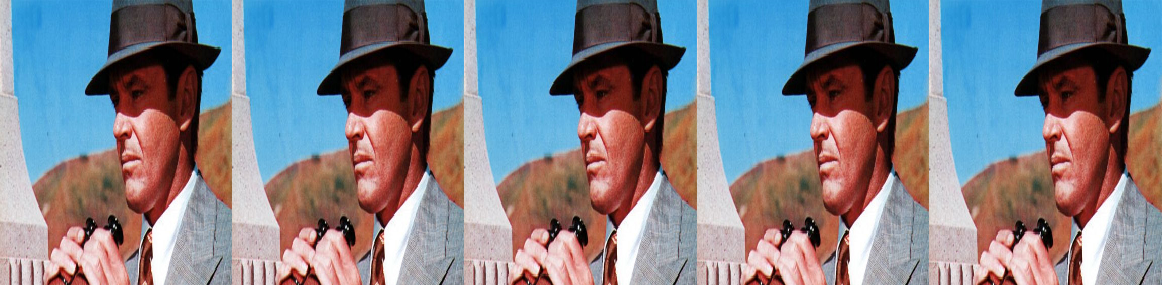
Claude Laydu did not receive an Oscar nomination, despite being nominated for a BAFTA, for portraying Priest of Ambricourt in Diary of a Country Priest.
Diary of a Country Priest follows a young priest attempting to deal with a parish, doubts and a physical ailment.
Claude Laydu, making his film debut, portrays the priest merely known as his title of the priest of Ambricourt, the town in which he has been assigned. Laydu, who was in his mid twenties when making the film, immediately evokes a curious dynamic within the film, as the man's manner is that of a older more burdened man even being so youthful in terms of his actual age. It is a fascinating place, though fitting to the character's state that is with trouble even before his trials have even begun. Laydu's initial scenes are the man going about his duties, while also habitually writing in the titular diary to relate his experiences and his internal monologue. Laydu's performance is an interesting one for a debut, in that so much of the film is a burdened upon his shoulders, that which is furthermore within an extremely subdued performance. Such thoughts though should be forgotten when witnessing the performance. This as Laydu's work immediately not only captures the spirit of the priest initial state, but simply seems within the man from the outset of the film. His work realizing this state of a quiet anxiety, that being the basic state of the man, this man who has a weight of the world, and perhaps even more upon his shoulders, yet still technically being such a young man. This even the idea of his physical ailment being ever present, though withdrawn and internalized in his work. This living pain being an innate train, just really within the glint of his eyes, when it is not manifesting more overtly to punish the man.
There is more to his performance that just that state of anxiety however though as Laydu portrays within his soft eyes this certain curiosity but also soulfulness. This being essential because as the man is suffering it is not that of a purely downtrodden individual. It is within this sense of interest that senses the man of the priest as someone whose burden is beyond the physical as he attempts to deal with affairs both the worldly and otherworldly within his mind. This reflected within his journal entries that Laydu performs with the sense of a solemn duty as though is respecting some sense of history and record, though that which he himself is confused for its exact purpose. The man's purpose though being paramount within this performance, and so much of the power of this work being within his reactionary work within the film. This as Laydu does deliver the expected empathetic sense within his presence, and compassionate eyes. The reactions though are not simplified by him, but rather particularly engaged within the film. This in creating in fact a greater sense of the pain of the man as no circumstance is merely just that in Laydu's work. There is rather this greater connection, or at least attempt of connection at congregation that creates that burden within the man. This as Laydu realizes a man who cares, however this is even with a difficult inadequacy in his conviction.
This in that his portrayal of doubt is a remarkable one, of his presentation of the man's state. This is not in a simple foundational doubt, but rather this striking sense of apprehension of this inability for comfort. Laydu's work is astonishing in the way he is able to lean towards an extreme emotional distress yet in this he never actually goes beyond it, yet never does it feel inadequate. He rather finds such an impact within the reserved nature of the man. When he hears of a death his performance is incredible in the way he creates the nature of the reaction. This in the onlooker could assume a certain detachment, however Laydu rather crafts a man who is too attuned towards humanity in a way. This as he borders immediately on falling apart entirely through any loss. This in the man whose examination cannot comfort him, as he too much feels for those he sees suffer, or even if he is not able to find quite the appropriate connection to it. Laydu's work finding the increasingly difficult state of the man who cannot exist without this connection yet the connection is in a way leading towards his death. Laydu creating this penetrating obsession of a unique sort of his eyes. An obsession of duty, as he speaks towards others so drawn within their world, which is so profoundly reflected in his eyes more befitting of an elderly man than a young priest.
The priest's connections do not reward him as he becomes strangely implicated within the death, and in a way as oddly ostracized more so than already existed the distance between the priest and his "flock". Laydu's own manner working in this near constant physical distance, though this too is fascinating in the intensity of it. This as the way he looks away is not a man who is truly alien, but rather forcing himself to be in this attempted state lest he suffer all the more or at least fail to fulfill his duties. Laydu's performance is one that even as he only listens in a scene, it is difficult not to watch him in a given scene. This as his performance has such a power within the man's terrible state. This as his words comforting, or critical others, along with his reactions to them, is that of a quiet ferocity in a certain sense. This as Laydu shows a man in a way who is both devout despite being a doubter. This as Laydu portrays the method as pure within the man, within that state of ever lasting spiritual anxiety, but also suffering through the lack of comfort that spirituality actually grants himself. Laydu's work is outstanding in the way he is able to create a certain, wholly sympathetic, hypocrisy in a certain sense. This in a man who is so fashioned by his beliefs, yet in the same way struggles to be a believer. Laydu's work then is this creation of an internalized chaos that is the man. This while being so reserved, yet never limited. This in showing the man's state of unwellness as ever present within the man attempting to live his calling, a calling he claims he cannot hear the voice of. It is a brilliant work as this strange quality is given sense, but also exudes so notably from his work. This as the man's journey is so tangible, while being so difficult. Laydu grants a real sense, understanding a poignancy within the man however. This in a portrait of essentially of the priest imploding within himself by being unable to reconcile his existence. The man dying from the inside, both mentally and physically. Laydu's work being a descent marked by that ethereal intensity, that always grants you a real sense of the character. This is never just an idea as Laydu's performance humanizes it in to such a truly stunning portrait of a most idiosyncratic self-destruction.
Showing posts with label 1951 Alternate Best Actor. Show all posts
Friday, 28 February 2020
Sunday, 18 December 2016
Alternate Best Actor 1951: Results
5. Raj Kapoor in Awaara - Despite the somewhat disjointed nature of what
is required of him, Kapoor actually matches well any tone or style is
requested of him by himself as director.
Best Scene: Raj catches the "thief".
4. Richard Basehart in Fourteen Hours - Basehart keeps most of his more theatrical tendencies under control to an effective portrayal of the intense state of mind on the edge both literally and metaphorically.
Best Scene: Robert speaks with Dunnigan about the good things in life.
3. Oskar Werner in Decision Before Dawn - Werner effectively elevates his film through his moving and nuanced portrayal of a righteous traitor.
Best Scene: Happy argues for the deserter.
2. Trevor Howard in Outcast of the Islands - Howard gives a downright brilliant portrayal of man who only becomes worse after being given a chance for redemption.
Best Scene: Madness in the rain.
1. Michael Redgrave in The Browning Version - Good prediction Tahmeed. I have to admit the choice for the final overall was relatively easy despite my love for the performances of Marlon Brando, Montgomery Clift, Alec Guinness, Robert Walker, Trevor Howard and Alistair Sim from 1951. I thought Redgrave was a good actor before watching this film, but his extraordinary work here put him in even greater light for me. It is such precise yet naturalistic, uncompromising yet heartfelt, complex and poignant depiction of a man who has slowly given up on life.
Best Scene: The speech.
Updated Overall Lead
Updated Overall Supporting
Next Year: 1993 Lead
Alternate Best Actor 1951: Raj Kapoor in Awaara
Raj Kapoor did not receive an Oscar nomination for portraying Raj Raghunath
in Awaara.
Awaara has a potentially interesting story through the trials of a young thief who is the disowned son of a wealthy judge. I'm here to give my opinion though so I have to admit the Bollywood musical scenes completely weighed the film down for me. It makes the pacing somewhat intolerable and every time they came in they completely broke the flow of the story.
Raj Kapoor, who also directed the film, plays our lead character, aptly named Raj as well, who we see through the phases of his life beginning in poverty. In order to support himself he turns to thievery. The film goes in phases essentially as Kapoor almost breaks down his performance into different acts of the film. The first phase being an almost comedic performance as he depicts Raj's attempts at thievery basically as a bit of buffoonery as he keeps get into unlikely situations because of it. As Raj runs into his old childhood friend Rita, who he keeps running into because he attempts to steal from her, accidentally. Again this is handled with more of a comedic effect than might be expected, but in a good way. Kapoor brings a real exuberance to his performance in these scenes in essentially crafting the likable thief who gets into more of hijinks than criminal activity. This includes Raj's efforts to cover his initially thievery of Rita's purse by pretending to have a fight with the "real" thief while out of sight. Kapoor is certainly entertaining as he throws himself into the scene quite literally at times, and manages to be rather charming in portraying this rather strange act.
Again his performance goes through phases, usually broken by one of the musical sequences to be honest, as it shifts to a more directly romantic turn with Nargis as Rita. Though perhaps the transition is a bit hidden by the songs, Kapoor nevertheless effectively becomes the next part of his performance as Raj. Kapoor changes to a more low key charm of sorts, something less active, in portraying a bit more of a humble quality within his interactions with Nargis. They certainly have the requisite chemistry between the two as the two convey well the underlying connection and warmth between the two. Unfortunately for old Raj and Rita this period of the film is short lived, although the underlying chemistry between the two is something that stays within Raj's changes. The next phase though comes as the film becomes a bit more serious minded in its portrayal of Raj's poverty, and that his past as a thief keeps from rising beyond his upbringing. Raj's mental state in this regard isn't exactly helped as he begins to discover the truth about his father, who happens to also be the benefactor of Rita.
This transitions to Kapoor's performance to more of his angry young man performance where he lashes out against society, which leads Raj eventually into criminal charges, and a trial which acts as a framing device for the story. Again Kapoor's performance actually works for what is required for him in this regard. It does not feel as jarring as it seem as it should, even though he loses the charm in favor of portraying the intense discontent in Raj that defines him. The switch is sudden yet given the story around him it manages to match it, and further Kapoor fulfills the need of the part. He is particularly good in this aspect as he portrays well the growing hatred in Raj, as his outrage continues to get the best of him. Within this portion of the film Kapoor makes the transition to an even more violent man natural. One more shift is left, which is the Raj we meet at the beginning of the film, which is more of a man who has given up on life ready to meet his apparently bleak fate despite the continued optimism of Rita who intends to save him. This is technically probably given the most neat of switches though as it feels like a believable enough end result of the angry young man. Kapoor though once again is good in portraying the simple depressed state of the man choking on his own misery, until his big dramatic speech at the end of the film. Kapoor delivers this with the right passion and he also carefully does not drop the state of Raj showing him still to be burdened by sadness. This whole performance is a rather interesting example of a director directing himself. The reason being Kapoor's performance certainly matches every tone the film happens to be going for at any given moment properly, though it is questionable whether all these varied tones are right for a naturally flowing film. I would say no, in that the film doesn't quite pull it off, despite Kapoor's best efforts as an actor. Now I also don't think in these various phases Kapoor is great in any of them, but he's good in all of them, which is worth something.
Wednesday, 14 December 2016
Alternate Best Actor 1951: Michael Redgrave in The Browning Version
Michael Redgrave did not receive an Oscar nomination, despite winning Cannes, for portraying Andrew Crocker-Harris in The Browning Version.
The Browning Version is a rather excellent film about the last days of a public school professor.
Michael Redgrave is an actor who I have appreciated his past work to be sure, though those were often in smaller roles, or as co-leads. Redgrave is the central figure to this film, and I won't attempt to obscure my feelings this is work is rather extraordinary. The film opens with his character, Crocker-Harris being introduced by the school headmaster as well as through the interactions of a few school students. It is far more common for films with a teacher at the focal point to be more broadly inspirational, not unlike Goodbye Mr. Chips which is referenced in this film. This film seems to purposefully subvert that trope. Both the head master and the students paint Crocker-Harris as an unlikable professor and almost view him as a dictatorial figure, with his first appearance sitting silently seemingly being the figure he is described as. This is a rather interesting character study from the outset as this sort of character is more often found as a side character, just a one note antagonist setup to be flustered when our free spirit protagonist wins the day. This film offers a fascinating alternative perspective to such a character, even though we are technically introduced to him a way in which we observe him through the limited lens that everyone else seems to.
Michael Redgrave's first speaking scene is found when we watch Crocker-Harris's replacement come to observe the man's methods in action. Although we are shown a loud uproarious classroom next door we are told such things do not occur in Crocker-Harris's classroom. Redgrave is downright brilliant as he reveals his crafting of this particular professor. It would not be good enough to simply be the posh stuck up gentleman, that wouldn't be correct, Redgrave instead creates something quite unique in his realization of the man. The vocal choice that Redgrave takes is a stroke of genius. He inflicts himself with a higher pitched voice. It is of course very proper yet dull, perfect for long recitations of foreign languages, also perfect for an imitation, as Crocker-Harris's students so often indulge. There is something particularly intelligent Redgrave does with this voice, which I will get to a bit more down below. Redgrave furthers his creation of Crocker-Harris as the perfect dusty old professor with his physical presence. There is an utter rigidity he brings to his performance as he takes his seat at the head of classroom, keeping this very particular gaze, and very specific tightness in place almost as a statue representing a teacher.
We are then allowed to see Crocker-Harris in action, and Redgrave is wholly convincing in being the master of his classroom. He does not do this by raising his voice, yet there is this cold incisiveness that has a strange power to it. There is an intensity within it which is absolutely believable in the way it controls the classroom. As he distributes his punishment in addition to stating the class's failures on their work it absolutely pierces through in the way Redgrave in such a matter of fact fashion carries the old crock. Redgrave shows us a man who does rule, not with an iron fist, rather an iron tongue and resolve of sorts which is unflinching. In this view you'd never second guess this man in his space of command, even if it appears to make the majority of his students so miserable. The whole idea of the image of the man, as stated by the students, is there in Redgrave's work. He is indeed a character though a character in terms of how the student's view of him. There is something even slightly comical about this, not that Crocker-Harris is being funny exactly, rather he's humorous in the way the student's see him. That is not all there is to Crocker-Harris as the film continues.
We are still given technically the limited view of him as one of the students, Taplow, comes for an additional lesson, much to his dismay, as does Crocker-Harris's fellow professor Frank Hunter under the pretense of a friendly visit, though in fact there to continue on his affair with Crocker-Harris's wife Millie. Redgrave shows Crocker-Harris ease up a bit, though not entirely, as he shows up for the additional lesson at first, suggesting just a hint of less prickly figure, though still rather prickly. Redgrave goes on as the tired old teacher until Taplow mentions translating "Agamemnon" from Greek properly, suggesting a real enthusiasm for the material. Redgrave is fantastic in this moment as he still portrays such reservation in the conversation, as though Crocker-Harris is carefully trying to understand whether or not Taplow is being genuine. Redgrave eventually reveals just a dim bit of passion that reveal itself from beneath his skin, quietly explaining his own interest in the work by mentioning his own attempt at translating it. After the lesson Taplow leaves though and we are left with Crocker-Harris and his personal life.
Now in terms of Redgrave's performance we also see a bit of loss in his vocal work in that his high pitched voice though retained, is now entirely natural sounding where in class it seemed just ever so slightly put on. Redgrave is also terrific in creating such anti-chemistry with Jean Kent as Millie, as they eat together in such complete detachment from one another. If there ever was love between them, it is absolutely gone. Redgrave's interactions though aren't those with a stranger though, but rather an enemy who has done him so much wrong he can barely spare her a look in the eye. They later on go to walk about the academy as a cricket game is going along, and we soon learn why this is the case. Crocker-Harris first goes to speak with the head master who informs Crocker-Harris that he not only will not receive his pension, but he is also asked that at his retirement ceremony that he speak before a younger teacher despite it being entirely against protocol. Redgrave's work is so remarkable in the way he internalizes Crocker-Harris is discontent so effectively in the moment, while just barely whispering out his protests that the head master easily waves away. Redgrave gives us a man so defeated by life, and makes the humanity within it so honest, that it is actually a bit painful to witness.
Of course his treatment by the head master is nothing compared to the way his wife brow beats him incessantly for his failures. Redgrave again makes you feel the pain, while maintaining the man's posture and stature as to what suits his position. The measure of suffering is deeply felt in Redgrave's performance, but it goes further in that you see the years of it in the man. He does not even speak against his wife treatment, though in his eyes he shows it hurts him no less, as he presents Crocker-Harris's terrible existence in such vivid detail. The idea of this is only grown as he explains his history as a professor to his successor, which is a tale defeat. In the scene though Crocker-Harris describes his intentional playing up of certain mannerisms to try to entertain the boys originally, which completely matches that somewhat heightened voice and physical performance we saw in his early scenes. The tale is more than just a revelation, and Redgrave instead expresses a confession. A striking confession of the anguish in a man who is admitting to his own loss of will to do what he believed to have been a noble cause.
There is just a bit of hope given to Crocker-Harris, to give his years some meaning when Taplow later returns to give him the titular Browning version of "Agamemnon". Redgrave give such poignancy to the moment as he allows a bit more of that old passion to reveal itself in the way he so beautifully breaks down in just a moment of joy from the gift. Unfortunately his wife refuses to grant any such happiness to Crocker-Harris as she proclaims that Taplow as merely mocking him with the gift, which is so hurtful that even the Hunter, the man having an affair with his wife, is horrified by it. Redgrave though is heart wrenching as he brings Crocker-Harris to almost the end, as you can feel the emotion all pent up and on the edge of the man with every tense word and irritated movement. Redgrave depicts the tremendous effort in Crocker-Harris as he's trying to keep himself proper, even while so clearly falling apart inside. He is especially heartbreaking when he reveals to Hunter that he's always known about the affair, since his wife told him. Redgrave makes the moment almost unbearable because he shows the man who has essentially accepted his pain as he reveals to Hunter, his wife's inability to love him. Redgrave is devastating since there is this sense of warmth he brings to the words, but a warmth lost long ago to the past. It isn't the end of Crocker-Harris though as Hunter tirelessly attempts to get him to stand up for himself, basically insisting he is not as useful as the way his wife treats him. Redgrave renders his understanding of this so eloquently and believable in his quiet reactions. Redgrave calls upon something within his work in the discontent to carefully and convincingly to create a change in Crocker-Harris. Redgrave does not compromise the character though, as when he dismisses his wife Redgrave's whole performance earns this suggesting it has been a long thing coming to begin with. Crocker-Harris's turn around does not end there though as in the farewell ceremony he insists on speaking second, as is his right to do so. Redgrave is downright amazing in the scene as he begins in Crocker-Harris's stilted professor manner at first, before breaking out to essentially giving an anti-inspirational speech. In that he admits his failures to all his students, and Redgrave finally wholly reveals the old passions of the man in this speech. It is a truly cathartic moment, and Redgrave manages to make inspiring in its own way. As now Redgrave, even when admitting defeat, he shows that Croker-Harris is no longer defeated as a man. I honestly could go on and on in discussing the greatness of this performance. I absolutely loved this performance not a second is wasted in Redgrave's outstanding work. He so effortlessly crafts this portrait of this distinct figure in such humanizing and powerful detail.
Sunday, 11 December 2016
Alternate Best Actor 1951: Trevor Howard in Outcast of the Islands
Trevor Howard did not receive an Oscar nomination for portraying Peter Willems in Outcast of the Islands.
Outcast of the Islands is a very intriguing character study about a rogue who is given a second chance on trading post/island.
Trevor Howard is an actor I've liked in the past in his roles as either the suave gentlemen, or the fierce gruff type, this is perhaps the most challenging role I've seen him undertake. It is also the first of his leading turns where he's actually the sole and central lead. The film opens with his character Peter Willems acting as a manger for a merchant at a trading post near Singapore. Howard is pretty marvelous to begin with in portraying a man about town. He brings such confidence in Willems as he goes about his life of luxury. Howard gives us a man without really a care in the world as he about his day of smoking, drinking and playing games while casually ignoring his wife and most things around him. Howard is quite a lout though in that he does manage to bring a genuine charm within this behavior and is rather suave. It suggests how Willems earned his position to begin with, as he really is rather smooth to be sure. There seems to be more to this though when an old mentor of sorts arrives, a trading ship Captain, Tom Lingard (Ralph Richardson) who took a liking to Willems when he was younger.
During the arrival of Lingard, Willems announces himself and Howard brings such a genuine pride in Willems as he shows off his finery and states his rather cushy position. Unfortunately this is a short lived joy when Willems is instantly fired when he is accused of having stolen from the very merchant he had been working for. Howard technically seems to pull off the impossible of sorts as he somehow prevents you from instantly condemning Willems, even though he really should be. Howard to be sure does not hold back in showing the immediate reaction in Willems that reveals the man's petty nature. Howard brims with this intense bitterness of the man, as for a moment any sense of that charm is lost as he closes down into seemingly a hatred for everyone. Howard is particularly despicable when Willems essentially dismisses his wife as only a burden to him, the venom in Howard is oh so pure, hinting early on the real nature of the man. Something funny happens though after this point, and as everyone seems to ignore his requests for help, Howard kind of wins you over once again.
It is not for becoming a better man truly, as Howard makes Willems a real sad sack, though earnestly so that you do feel sorry for him, even though you shouldn't. For some reason it helps that Howard carefully brings back that glint of a roguish charm that is hard to ignore. Howard is remarkable because as he for some reason gains sympathy from the audience once again, he makes it wholly believable that he'd convince Richardson's Lingard to give him a second chance, because hey why not. There is something truly special in this in that Howard's charisma makes it seem like he has the potential for change, even though Howard has not shown a single sign of real repentance in his performance. It's pretty great as Willems gains Lingard's sympathy by faking a suicide, because after all look at that sorrowful face it looks like he's learned his lesson. Of course though it might seem like sorrow on the outer surface, Howard is honest to his character as if you look any deeper you can see the man is only sorry that he got caught. Nevertheless he is given his chance as Lingard brings him to the more remote trading post, filled with local natives, in order to reform himself by working with Lingard's son-in-law Elmer Almeyer (Robert Morley).
Howard is clever as he does show a change in Willems in this new situation, but hardly for the better. Howard more than anything expresses a general discontent in the man, a tension in his physical manner of a man who simply is somewhere he does not want to be. Howard is careful though in that he still somehow hides just how despicable he truly is, and he tricks you into thinking this might be a story about a man's redemption, it isn't. Willems begins to interact with the natives and Elmer along with his wife (Wendy Hiller), and Howard portrays all of this in a very casual way. That is he never suggests much growth in Willems, finding instead that the man treats the island as an inconvenience most of the time, and essentially interacts mostly to remove his boredom. Willems eventually finds something he believes is worth his interest in the local chief's daughter Aissa (Kerima). A romance does develop though Howard again doesn't give it much depth, and no that's not a criticism. Howard instead stays true to the man Willems is instead by conveying such a distinct lust in Willems throughout the affair, which luckily for Willems Aissa shares the same lust for him.
Howard is fascinating to watch as he conveys a most unusual reaction once he become more acquainted with the island, which does not lead to good things. Above all Howard conveys a lack of understanding of it, rather always maintaining the sense that Willem's life is more defined with pleasure than anything else. Willems runs into trouble when the chief does not condone his relationship with his daughter, yet Howard shows it never phases Willems. He reunites with her again and again, and Howard still only shows the most surface of interaction even when he ends up critically injuring the chief after the chief attacks him with a knife. There is a frustration that Howard brings, but still never a true revelation. Howard is terrific in portraying the confusion that arrives from a man who never bothers to care to know what his actions truly amount to. After the attack Willems learns nothing, and even decides to stab Lingard in the back by joining up with a rival merchant after Almeyer refuses to give Willems any further help.
Willems though decides to misuse the new found position to get back at Almeyer. Howard is pretty amazing in the sequence where he essentially leads a native attack against Almeyer and his storehouse. Howard brings this pettiness about the whole affair, with a hint of madness, all just to get back at the man who had every right to ignore him. Howard shows a sloppiness as well though as he throws himself into the intensity of emotion as Willems once again goes about stealing what he wants without for a moment thinking of the ramifications. Afterwards we see Willems in a luxury of sorts and Howard brings that sense of a certain contentment as he reaps the awards of his misdeeds, yet he keeps that underlying lack of insight as he still interacts with the natives with almost a bizarre hesitation, the hesitation of a man who is unaware of his surroundings. This even includes the chief's daughter, and I love the awkwardness Howard brings whenever Willems is not lusting after her.
The death of the chief though leads Willems to be exiled to a remote location as well, though still with the chief's daughter, but Lingard returns to essentially name Willems his sins before leaving him to rot for his actions. Howard is outstanding in this final sequence as he portrays the madness of Willems broken by his actions, revealing the despicable lout he always had been. Howard not only earned that through the way he established the man but as well his curious descent while being adrift in this land. Howard gives us a man with nothing left but his pathetic self, and it is extremely visceral depiction of madness. Howard releases all the fear and paranoia of the man who fears his only companion, the chief's daughter, believing she'll seek revenge for his father as he still fails to understand her. Then he's so perfectly raw as he first begs then threatens Lingard for help. Howard is incredible depicting the rogue's end as just a mess. This is a downright brilliant performance by Howard. He makes this unlikable character absolutely captivating even while never compromising his arc that is of a man revealing himself to only be worse given the chance.
Friday, 9 December 2016
Alternate Best Actor 1951: Oskar Werner in Decision Before Dawn
Oskar Werner did not receive an Oscar nomination for portraying Corporal Karl Maurer aka Happy in Decision Before Dawn.
Decision Before Dawn about a German being made a spy for the allies takes a little too long on its setup but is a decent thriller once it focuses on that character.
Oskar Werner plays the eventual lead of the film as Happy, who we first see as a German medic and POW but later becomes a spy for the Allies. The film takes a bit of time as it illustrates the plot by spending time with the Americans, planning the mission and setting up another German spy, who has the most predictable character arc one could imagine. The film eventually finds its way to focusing on Happy, who happens to also be played by the best actor in the film. Werner even kind of steals the film before he even gains the stronger focus as he proves his ability onscreen, just through his eyes as he is able to express the quiet outrage in Happy as he decides to work against his home country, in part due to seeing his fellow soldiers despicable behavior even while detained. Thankfully the film restricts its focus upon Happy sooner than later, and we are given one of Werner's first English language performances. Now he might not be as assured as his work in The Spy Who Came in From the Cold, but that's a tall order to fulfill.
Werner once again has this real low key charm about him, and he immediately endearing in his portrayal of Happy. He importantly doesn't even need to try, there is just an innate honesty Werner brings to his performance, which is interesting given that he technically playing a traitor. Werner though brings basically home the message of the good traitor in his performance by bringing this effortless goodness that he exudes as Happy. This is also essential in that it makes it particularly easy to invest in Werner as Happy is sent back into his home country in order to discover an important bit of information. Werner actually has a particularly difficult challenge in that he really doesn't have anyone to work against in terms of portraying the man's on the mission, since Happy does not meet up with his liasons until near the film's ending. The rest of the time it is solely upon Werner to realize the struggle in Happy as he goes about his mission. Werner succeeds in this as he creates the sense of the underlying fear in Happy throughout the scenes, but does even more than that.
Werner gives further understanding of Happy through very nuanced indirect reactions within other interactions. For example there is great moment where Happy learns that his father is nearby, and Werner is able to express the concern in Happy for him while still keeping the shell of a soldier just going about his duty. There is so much dependent on Werner to capture so much of the emotional weight of the story. Werner never is lacking in this though and adds so much substance to the side relationships Happy strikes up while on his mission. This includes two "lowly" sorts one a woman few others care about and an affable fellow soldier. In both Werner presents such a palatable empathy in Happy and in turn makes those character more meaningful than they would have been otherwise. Werner is especially moving in a scene where he tries to passionate save someone from death. This all while Werner never loses the struggle of the mission in his very being. He keeps that pivotal central tension but finds the right amount of substance that benefits the film greatly. Eventually the film ends on a straight escape scene where technically some of that substance found earlier seems lost. Werner though proves his worth one last time though in the escape when Happy sacrifices himself for the sake of the mission. Werner has made Happy such a likable character that when this happens it is rather heartbreaking, even if the film itself still doesn't seem like it quite is appreciating what Werner is doing for it. It's performance which elevates the film, and though it might not be as assured as his later work, it is a strong early indication of Werner's talent.
Thursday, 8 December 2016
Alternate Best Actor 1951: Richard Basehart in Fourteen Hours
Richard Basehart did not receive an Oscar nomination, despite winning NBR, for portraying Robert Cosick in Fourteen Hours.
Fourteen Hours is rather compelling hidden gem, despite a few lets slowly explain the psychology of the situation it to the audience moments, about a man standing on a ledge of a tall building threatening to commit suicide.
Richard Basehart plays the man who we first meet as he's already on the ledge apparently waiting to jump off. The film's star I suppose is Henry Hathaway's direction which presents the sort of communal experience in related to the event with almost as much importance as the even itself. The film often wavers from the men though it always come back to him, and the one person he agrees to negotiate with. The man being a random beat cop Charlie Dunnigan (Paul Douglas), who just happens to be one of the first ones to speak to the man. Might as well get the negative out of the way first. Basehart is an actor I've found okay at best in the other films I've seen him in, as the fact that he got his start on stage is immediately apparent. He does have a tendency, in this film as well, to oversell even the most basic lines with the expression of someone making sure those seated in the back rows will hear. It is not that all his line deliveries are bad, but they tend to feel off because of this broad approach which is not necessary on film.
There is much dependent on Basehart's performance, even with the film's wavering focus, particularly in terms of keeping the central tension alive. It must be believed that the man on the ledge, Robert, could jump at any time. Basehart is convincing in this regard as he makes the man's distress absolutely palatable. Basehart importantly never lets up in this, as even in his calmer moments, he still keeps the tense manner in his physical manner, showing the way Robert is almost seized in the anguish that has brought him to this point. Basehart effectively utilizes this throughout the film to maintain the question of whether or not Robert will jump. Basehart, despite this underlying quality always, manages to find nuance with this, and it easy to see how the role could easily been overplayed the whole time. Basehart carefully defines Robert when he can through the moments we are given throughout the story depending on whoever Robert might be interacting with at any given point.
Basehart works very well with Paul Douglas, as the two gradually strike up the right sort of chemistry. There is always a certain gap between them, yet the slow warmth that is created, in moments where Basehart relaxes just over so much are rather affecting. In order to try to get Robert off though they allow others to see him including his parents. Basehart is excellent when his overbearing mother appears as he shows Robert only become even more constrictive and emotional, suggesting he is even more likely to jump than before. When he meets his father, who attempts to reconcile with his son, Basehart conveys the way the initial fierce reaction of fear slowly assuages to a certain understanding. Through these interactions though Basehart is able to allude to the confused state of the man, who is mentally unstable from his upbringing, and is creates the sense of his past that has lead him to this point. It is unfortunate that film decides to have a doctor explain this all this to us, a la Psycho, since Basehart's performance fulfills that need to begin with. Obviously the part is limited in a certain regard, Basehart only moves a few feet throughout the film, yet he makes use of this. I find again his physical performance to be the most remarkable aspect in not only revealing the man's anguish, but as well creating the pressure of certain sequences. Basehart keeps essentially this suspicion in his body language, making that even passing a glass of water a tense moment. Again the center of it are his scenes with Douglas, and through them Basehart believably shows the gradual shift in Robert as he slowly comes back from literally the edge. It's a strong performance by Basehart, even with his overly enthusiastic of line deliveries, that might not carry the film but instead offers its honest emotional center.
Monday, 5 December 2016
Alternate Best Actor 1951
And the Nominees Were Not:
Raj Kapoor in Awaara
Oskar Werner in Decision Before Dawn
Trevor Howard in Outcast of the Islands
Michael Redgrave in The Browning Version
Richard Basehart in Fourteen Hours
Raj Kapoor in Awaara
Oskar Werner in Decision Before Dawn
Trevor Howard in Outcast of the Islands
Michael Redgrave in The Browning Version
Richard Basehart in Fourteen Hours
Tuesday, 5 March 2013
Alternate Best Actor 1951: Results
5. Farley Granger in Strangers on a Train- Granger gives a good performance that is likable well never avoiding the weaker aspects of the character. The film belongs to his co-star though.
Best Scene: Guy meets Bruno.
4. James Mason in the Desert Fox: The Story of Rommel- Mason gives a strong assured performance despite being in a somewhat thankless role.
Best Scene: Rommel gives his final goodbye to his family.
3. Kirk Douglas in Ace in the Hole- Douglas gives a slick and sharp performance that succeeds in portraying both his character's immorality and the eventual conscience he gains.
Best Scene: Chuck finally gains morality.
2. Robert Walker in Strangers on a Train- Walker gives an amazing villianous turn in this film that is both chilling and a delight to watch.
Best Scene: Bruno stalks Guy's wife.
1. Alastair Sim in Scrooge- Good Prediction Koook160, and Michael Patison. Sim gives a great performance as the often played Ebenezer Scrooge. He succeeds in every aspect of the role from the cold business man through his transformation than finally an exuberant man who has found a new lease on life. This really is just a matter of having to put someone in first place at the moment. I am not one hundred percent sure of this decision, as each time I think of Walker's performance I feel like I should give him the win. Although this is hardly my final decision the win goes to Sim for the moment.
Best Scene: Scrooge takes up his Nephew's invitation after all.
Overall Rank:
- Michael Redgrave in The Browning Version
- Alastair Sim in Scrooge
- Robert Walker in Strangers on a Train
- Trevor Howard in Outcast of the Islands
- Claude Laydu in Diary of a Country Priest
- Montgomery Clift in A Place in The Sun
- Alec Guinness in The Lavender Hill Mob
- Marlon Brando in A Streetcar Named Desire
- Kirk Douglas in Ace in the Hole
- Robert Donat in The Magic Box
- Canada Lee in Cry, The Beloved Country
- James Mason in The Desert Fox: The Story of Rommel
- Van Heflin in The Prowler
- Alec Guinness in The Man in the White Suit
- Kirk Douglas in Detective Story
- James Mason in Pandora and the Flying Dutchman
- Arthur Kennedy in Bright Victory
- Masayuki Mori in The Idiot
- Robert Ryan in On Dangerous Ground
- Kirk Douglas in Along a Great Divide
- Oskar Werner in Decision Before Dawn
- Richard Basehart in Fourteen Hours
- Paul Douglas in Fourteen Hours
- Farley Granger in Strangers on a Train
- Raj Kapoor in Awaara
- Humphrey Bogart in The Enforcer
- James Cagney in Come Fill The Cup
- Gene Evans in The Steel Helmet
- Michael Rennie in The Day the Earth Stood Still
- Gregory Peck in Captain Horatio Hornblower
- Glenn Ford in The Secret of Convict Lake
- Charles Boyer in The First Legion
- Lee J. Cobb in Sirocco
- Cary Grant in People Will Talk
- Robert Mitchum in The Racket
- Richard Widmark in The Frogman
- Humphrey Bogart in The African Queen
- Robert Rounsenville in The Tales of Hoffmann
- Bing Crosby in Here Comes the Groom
- Gene Kelly in An American in Paris
- Robert Ryan in The Racket
- Humphrey Bogart in Sirocco
- John Lund in The Mating Season
- Lyle Bettger in The First Legion
- Fredric March in Death of a Salesman
- Robert Taylor in Quo Vadis
Monday, 4 March 2013
Alternate Best Actor 1951: Robert Walker and Farley Granger in Strangers on a Train
Robert Walker did not receive an Oscar nomination for portraying Bruno Anthony in Strangers on a Train.
Strangers on a Train is a very effective thriller about a psychopathic socialite who suggests to a tennis player the idea that two strangers without connections could trade murders and get away with them.
Robert Walker gives his last complete on screen performance, as well as an against type performance as the socialite Bruno who comes up with the fiendish idea to get away with murders. Walker normally played the "boy next door" sort of roles such as in Since You Went Away where he played a squeaky voiced soldier. Although Walker takes on a completely different role here as Bruno you would not have guessed from the way he sinks his teeth into the role. You would think he had played these sorts of roles his entire career from the ease he has in his performance. Walker is effortless from his first scene where he approaches Guy Haines about his idea.
Speaking of Guy Haines he is portrayed by Farley Granger who also did not receive an Oscar nomination for his role in this film.
Farley Granger actually played Hitchcock's weak willed co-killer in Rope. Granger this time plays the somewhat famous tennis player who is having trouble getting a divorce from his unfaithful wife so he can marry the true woman of his dreams. Originally William Holden was going to play Haines which would have been a rather poor choice. Holden is a good actor but Holden who just is far too naturally commanding in his performance to really work for Haines. One of the best parts of the film is the dynamic between the two strangers on the train, and Walker and Granger are just a perfect fit. Holden probably would have seemed a little too able to wring Walker's neck to have worked.
Anyway in the first scene Walker is amazing as he comes in with his most unusual performance as Bruno. This is definitely a performance with subtext as Walker definitely plays it that he is more interested in Guy than just for Tennis and just for his murder plot. The idea of this attraction is nicely handled by Walker adding a nice bit of subtle motivation for Bruno on top of everything else. Walker shows that in basically every way Bruno is far too into Guy and he brings out the unsettled desire brilliantly. Walker makes Bruno potentially just a little loopy in his way eccentric at first that would keep Guy at least seated next to him, but of course he just as efficiently portrays the psychopath burning underneath.
Granger in the first sets up the way Guy will be throughout the film which is a man in a very very awkward situation. He does well in portraying the part in a very unassuming fashion. He is able to sit and listen to Bruno because really Guy just isn't the type to really stand up and act rudely to someone. Granger is earnest in the somewhat meek quality to Guy. When Guy tries and eventually does run from Bruno Granger actually sets up the whole film beautifully by portraying the lack of distinction in Guy. He allows Bruno to believe the murder trade is on simply because he never shuts Bruno up in the way he probably should. Granger is absolutely genuine in playing up this weakness without overdoing though.
Walker at the end of the first scene is terrific in the way he sets up the plot. There is such a fiendish malice in Bruno that is always an underlying presence in him. Walker does well in downplaying this viciousness and actually far more effective because of it. When Bruno talks about his father it would be an easy time for one to overact putting the evil forefront, but Walker makes it far more unnerving through almsot conveying through that sight in his eyes that shows the pure murdering inside. Walker makes it abundantly clear that Bruno wants his father dead, therefore will even take Guy's lack of denial as a reason to enough to go out and murder Guy's wife.
Walker whole depiction of Bruno is just something special in itself. The way he sits too close to Guy to the way he is always leaning in a somewhat disjointed fashion, to just his distinct voice it all adds to Bruno as a memorable antagonist. This honestly is just one of those performances that is entertaining to watch all on his own. He is so odd as Bruno yet strangely fascinating in this behavior which Walker brings into his role as Bruno. What is outstanding about this performance is the fact that despite really "performing" a whole lot in his portrayal he never seems to obviously be acting in any moment within his portrayal. He brings Bruno to life in just an incredible fashion.
Granger on the other hand is not necessarily entertaining to watch all on his lonesome. He does lead the film well with his performance though by making Guy a fairly likable character by just playing him straight in his characterization. He actually very much adds to his performance by not avoiding the more negative aspects of his part. Importantly though when Granger portrays these scenes, such as when he says he could kill his wife, he is genuine in that Guy is far from perfect but he does have a good heart beneath. Granger makes it believable that Guy would say such a thing as just gut reaction sort of thing, but at the same time makes it abundantly obvious that Guy could never do such a thing.
I know some who put Walker in supporting something I cannot do as it tells both men's story and it follows Walker on his own very importantly through the amazing scene as Bruno stalks Guy's wife through a circus to find a chance to murder her. It is just a great scene from the images to the music, and of course Walker's portrayal of Bruno's method. The way he never seems to lose his stare or his precision is particularly eerie since we know exactly what his intention is the entire time. When he finally goes through with the muder the most chilling part of it is the way he greets Guy wife as "Mrs Haines" which Walker portrays so gently making it especially disturbing as Bruno goes right about killing her.
After the murder Guy and Bruno meet again as Bruno informs that he has done the deed. Walker and Granger work extremely well together. Granger portrays Guy's reaction correctly with a horrified surprise but with just ever so slight relief in their that he can't hide completely. Walker achieves a certain type of dominance in these scenes. He does not make it so Bruno commands Guy in a the traditional fashion, but instead Walker makes a different type of overwhelming pressure as he forces Guy to feel some sort of guilt in the situation. Walker does this through almost the pleasure and pleasantries he offers to Guy over the whole affair and is so quiet in the way he asks Guy to murder his father for him.
Granger is good in the way plays Guy's attempt to avoid Bruno in any way he can which he all plays as how one would expect someone like Guy to deal with it. He shows his disgust upfront to Bruno, but he does it well by the fact that Guy seems more trying to avoid Bruno than anything else. Granger makes this as bit of a personal struggle of Guy actually not trying to face Bruno factors in to him trying not to face his own feelings of guilt. He makes his side absolutely work in the way their relationship continues. The fact that Guy keeps it so much to himself is made believable by Granger because of his appropriate portrayal of the lack of internal strength to really confront Bruno directly.
The two play the game of the film perfectly as Granger makes Guy the very reluctant hero who is constantly pestered by Walker's Bruno who keeps showing up everywhere. The two play off each other well with Granger portraying Guy's increasing frustrations in a honest fashion showing him to be an average person in a terrible situation, and Walker keeping Bruno that ever so strange man who keeps asking Guy to complete his side of the murder bargain with the nicest yet grimmest of smiles. Walker is just terrific the way he will be so charming in a scene as he talks to everyone around Guy yet at a pin drop the true undeniable killer can come out of him this dynamic Walker so flawlessly portrays really makes Bruno the unpredictable villain he should be.
Farley Granger is just very good leading man here and he makes it easy for us to follow Guy through his ordeal. Although not overly complex Granger does succeed with the complexities that are offered to him and manages to make Guy likable even if a somewhat weak willed character. His journey which is both to stop Bruno and finally face up to him is well even if somewhat unassumingly portrayed. He makes Guy exactly as he should be which is the hero of the film, but a very specific hero. A hero that lets Bruno go as far as he does and for as long as he does, and is more of forced to face Bruno (through his soon to be wife finding out) than exactly propels himself. He makes Guy's whole path one that can honestly believed and this way was the best way to portray Guy.
(For Granger)
The film though does belong to Robert Walker. I really don't think this is anything against Granger as the film probably would not have worked as well if Bruno and Guy stood on equal ground. Walker does steal the film as he should through his turn as Bruno. Its a very original take on a villain through his particular style and fashion that he takes in the part. He plays Bruno absolutely his very own way that makes it just an enjoyable performance simply to watch, and as well a very effective antagonist for the film. It honestly could have been a very easy part to mess up through overacting or playing him on a single note, but Walker nails it so every moment he's onscreen is something special all in itself.
(For Walker)
Strangers on a Train is a very effective thriller about a psychopathic socialite who suggests to a tennis player the idea that two strangers without connections could trade murders and get away with them.
Robert Walker gives his last complete on screen performance, as well as an against type performance as the socialite Bruno who comes up with the fiendish idea to get away with murders. Walker normally played the "boy next door" sort of roles such as in Since You Went Away where he played a squeaky voiced soldier. Although Walker takes on a completely different role here as Bruno you would not have guessed from the way he sinks his teeth into the role. You would think he had played these sorts of roles his entire career from the ease he has in his performance. Walker is effortless from his first scene where he approaches Guy Haines about his idea.
Speaking of Guy Haines he is portrayed by Farley Granger who also did not receive an Oscar nomination for his role in this film.
Farley Granger actually played Hitchcock's weak willed co-killer in Rope. Granger this time plays the somewhat famous tennis player who is having trouble getting a divorce from his unfaithful wife so he can marry the true woman of his dreams. Originally William Holden was going to play Haines which would have been a rather poor choice. Holden is a good actor but Holden who just is far too naturally commanding in his performance to really work for Haines. One of the best parts of the film is the dynamic between the two strangers on the train, and Walker and Granger are just a perfect fit. Holden probably would have seemed a little too able to wring Walker's neck to have worked.
Anyway in the first scene Walker is amazing as he comes in with his most unusual performance as Bruno. This is definitely a performance with subtext as Walker definitely plays it that he is more interested in Guy than just for Tennis and just for his murder plot. The idea of this attraction is nicely handled by Walker adding a nice bit of subtle motivation for Bruno on top of everything else. Walker shows that in basically every way Bruno is far too into Guy and he brings out the unsettled desire brilliantly. Walker makes Bruno potentially just a little loopy in his way eccentric at first that would keep Guy at least seated next to him, but of course he just as efficiently portrays the psychopath burning underneath.
Granger in the first sets up the way Guy will be throughout the film which is a man in a very very awkward situation. He does well in portraying the part in a very unassuming fashion. He is able to sit and listen to Bruno because really Guy just isn't the type to really stand up and act rudely to someone. Granger is earnest in the somewhat meek quality to Guy. When Guy tries and eventually does run from Bruno Granger actually sets up the whole film beautifully by portraying the lack of distinction in Guy. He allows Bruno to believe the murder trade is on simply because he never shuts Bruno up in the way he probably should. Granger is absolutely genuine in playing up this weakness without overdoing though.
Walker at the end of the first scene is terrific in the way he sets up the plot. There is such a fiendish malice in Bruno that is always an underlying presence in him. Walker does well in downplaying this viciousness and actually far more effective because of it. When Bruno talks about his father it would be an easy time for one to overact putting the evil forefront, but Walker makes it far more unnerving through almsot conveying through that sight in his eyes that shows the pure murdering inside. Walker makes it abundantly clear that Bruno wants his father dead, therefore will even take Guy's lack of denial as a reason to enough to go out and murder Guy's wife.
Walker whole depiction of Bruno is just something special in itself. The way he sits too close to Guy to the way he is always leaning in a somewhat disjointed fashion, to just his distinct voice it all adds to Bruno as a memorable antagonist. This honestly is just one of those performances that is entertaining to watch all on his own. He is so odd as Bruno yet strangely fascinating in this behavior which Walker brings into his role as Bruno. What is outstanding about this performance is the fact that despite really "performing" a whole lot in his portrayal he never seems to obviously be acting in any moment within his portrayal. He brings Bruno to life in just an incredible fashion.
Granger on the other hand is not necessarily entertaining to watch all on his lonesome. He does lead the film well with his performance though by making Guy a fairly likable character by just playing him straight in his characterization. He actually very much adds to his performance by not avoiding the more negative aspects of his part. Importantly though when Granger portrays these scenes, such as when he says he could kill his wife, he is genuine in that Guy is far from perfect but he does have a good heart beneath. Granger makes it believable that Guy would say such a thing as just gut reaction sort of thing, but at the same time makes it abundantly obvious that Guy could never do such a thing.
I know some who put Walker in supporting something I cannot do as it tells both men's story and it follows Walker on his own very importantly through the amazing scene as Bruno stalks Guy's wife through a circus to find a chance to murder her. It is just a great scene from the images to the music, and of course Walker's portrayal of Bruno's method. The way he never seems to lose his stare or his precision is particularly eerie since we know exactly what his intention is the entire time. When he finally goes through with the muder the most chilling part of it is the way he greets Guy wife as "Mrs Haines" which Walker portrays so gently making it especially disturbing as Bruno goes right about killing her.
After the murder Guy and Bruno meet again as Bruno informs that he has done the deed. Walker and Granger work extremely well together. Granger portrays Guy's reaction correctly with a horrified surprise but with just ever so slight relief in their that he can't hide completely. Walker achieves a certain type of dominance in these scenes. He does not make it so Bruno commands Guy in a the traditional fashion, but instead Walker makes a different type of overwhelming pressure as he forces Guy to feel some sort of guilt in the situation. Walker does this through almost the pleasure and pleasantries he offers to Guy over the whole affair and is so quiet in the way he asks Guy to murder his father for him.
Granger is good in the way plays Guy's attempt to avoid Bruno in any way he can which he all plays as how one would expect someone like Guy to deal with it. He shows his disgust upfront to Bruno, but he does it well by the fact that Guy seems more trying to avoid Bruno than anything else. Granger makes this as bit of a personal struggle of Guy actually not trying to face Bruno factors in to him trying not to face his own feelings of guilt. He makes his side absolutely work in the way their relationship continues. The fact that Guy keeps it so much to himself is made believable by Granger because of his appropriate portrayal of the lack of internal strength to really confront Bruno directly.
The two play the game of the film perfectly as Granger makes Guy the very reluctant hero who is constantly pestered by Walker's Bruno who keeps showing up everywhere. The two play off each other well with Granger portraying Guy's increasing frustrations in a honest fashion showing him to be an average person in a terrible situation, and Walker keeping Bruno that ever so strange man who keeps asking Guy to complete his side of the murder bargain with the nicest yet grimmest of smiles. Walker is just terrific the way he will be so charming in a scene as he talks to everyone around Guy yet at a pin drop the true undeniable killer can come out of him this dynamic Walker so flawlessly portrays really makes Bruno the unpredictable villain he should be.
Farley Granger is just very good leading man here and he makes it easy for us to follow Guy through his ordeal. Although not overly complex Granger does succeed with the complexities that are offered to him and manages to make Guy likable even if a somewhat weak willed character. His journey which is both to stop Bruno and finally face up to him is well even if somewhat unassumingly portrayed. He makes Guy exactly as he should be which is the hero of the film, but a very specific hero. A hero that lets Bruno go as far as he does and for as long as he does, and is more of forced to face Bruno (through his soon to be wife finding out) than exactly propels himself. He makes Guy's whole path one that can honestly believed and this way was the best way to portray Guy.
The film though does belong to Robert Walker. I really don't think this is anything against Granger as the film probably would not have worked as well if Bruno and Guy stood on equal ground. Walker does steal the film as he should through his turn as Bruno. Its a very original take on a villain through his particular style and fashion that he takes in the part. He plays Bruno absolutely his very own way that makes it just an enjoyable performance simply to watch, and as well a very effective antagonist for the film. It honestly could have been a very easy part to mess up through overacting or playing him on a single note, but Walker nails it so every moment he's onscreen is something special all in itself.
(For Walker)
Saturday, 2 March 2013
Alternate Best Actor 1951: Alastair Sim in Scrooge
Alastair Sim did not receive an Oscar nomination for portraying Ebenezer Scrooge in Scrooge also known as A Christmas Carol.
The Christmas Carol is a story that has been adapted many times to various degrees of success. I find the best version is easily this one that makes use of a great score, an excellent screenplay that actually adds all new material to the story, and of course its lead performance which is essential to the success of every version.
Ebenezer Scrooge is a character who is that of three acts each which must be played convincingly to succeed in the part. In the beginning Scrooge starts out as a greedy miser who over works and underpays his employee Bob Cratchit. This is the point where some actors like Sim's predecessor Reginald Owen fail miserably in the part by making Scrooge a constantly angry, almost deranged in his attitude. It is hard to believe that Scrooge would have been able to build a business even as this angry old man, who just seems like he needs to relax more than anything else. Alastair Sim is far more effective by showing Scrooge as a man perfectly relaxed in his state.
Sim portrays the cold calculation in this business man there is a simple bluntness he brings to the part that reflects Scrooge's view of the world. Sim is calm in his depiction and it makes Scrooge's greed, and general hatred and disbelief in Christmas. Sim's method here is perfect in making Scrooge's reasoning on things like the poor far more believable. He is not an angry about other people cheerfulness instead he is somewhat bemused and disgusted by it. When the two men ask for money for the poor Sim plays it as Scrooge is almsot partially enjoying what he sees as foolishness, and only when pressed does he openly announce his distaste for their ideas which Sim still properly underplays.
Sim doesn't make Scrooge a man angry at everyone and everything for no reason, and almost some sort of otherworldly creature with his bizarre anger as some lesser Scrooges seem to make him. Sim instead makes this the most humane Scrooge in that Sim portrays him as a man who once perhaps had humanity but it has left him due to the events of his life. Sim's Scrooge is not disgusted by those who claim to be happy for no reason, but he honestly finds their feelings intolerable. Sim's demeanor could not be better because he is absolutely genuine in portraying these beliefs. His Scrooge doesn't believe in their happiness, and Scrooge here properly sets up the history we later learn about Scrooge.
Scrooge really is an odd man to have as the protagonist of a story as he is suppose to be unlikable. Some version certainly due take this approach a little too directly and are rather boring because of it. Sim on the other hand certainly plays up the nastiness to just the right degree, but he does it with a certain amount of humor in his portrayal. He never overplays it for a moment the offering it mainly in that bemusement shown in Scrooge's reactions to others, and Sim in a way almost urges us to laugh with Scrooge and most certainly not against him. He also is an all together charismatic performer who is just entertaining to watch all by himself making it easy for us to follow him through his journey.
Scrooge finds when he returns home this night that he there is something odd going on and his old business partner Jacob Marley comes as a ghost to tell him to change his ways. Sim is terrific in this scene because of the fact he plays Scrooge as a man with very real fears. Sim never loses this and is incredible in his portrayal of the scene where he talks to Marley. The reason is even when Scrooge claims to doubt his senses in an attempt to try to laugh it off Sim always shows the very real fear Ebenezer is feeling even while he tries his best to pretend the apparition is not real. Sim never loses this fear instead building until he does what most people would do in that situation, run and hide under some covers, making the scene far more believable than any other version of the story.
Scrooge is told by Marley that he will be visited by three ghosts starting with the Ghost of Christmas Past who shows Scrooge his past. Sim does very well by taking a realistic approach, and importantly reflects just how much seeing his past does affect him. One particularly powerful example of this is when he sees his deceased sister again, many other actors who have portray the scene far too matter of fact fashion, Sim though shows the full emotional impact that seeing his sister again really does have on him. He makes it a moving moment by portraying the sadness in reflecting on his past that he has since lost, but at the very same time the happiness of being able to live over the better moments of his life once again.
Sim depiction of the middle part of Scrooge is journey is excellent because he goes about the transformation in an effective fashion. Alastair Sim is quite good because he able to indicate that what Scrooge is seeing does make him lose that coldness of before rather quickly, but at the same time he eases into the full transformation properly. Sim does this throughout every scene through his moving reactions to the various events he witnesses from his past, and later the present and the future. Sim's portrayal has a great deal of self reflection in his performance that suggests his movement away from the Scrooge from the beginning.
One particular moment that Sim does well is when Scrooge is celebrating along with his younger self at the Christmas part of his former employee. Scrooge remarks about the joy his old boss brought to everyone so well, and Sim is terrific as he quietly shows Scrooge reflect on his own actions at the same time indicating his movement toward changing. Sim importantly earns the transition in Scrooge particularly well as there is some hesitation. He really does not make it hesitation to be the same as he was, but instead a sadness that causes this hesitation which leaves him believing he is just too old to change and makes any difference.
Sim is terrific in every scene of this film and through each of the observances Scrooge is forced to make gets the most out of each situation. In every moment of the story Sim adds a poignancy, and emotional strength to each through his sincere presence. He builds up the weight of each scene and makes the journey that Scrooge goes through a moving one that it should be. Honestly it would be easy to either leave their scenes on their own or allow Scrooge to be somewhat forgotten in face of them, but Sim never lets that happen. He always succeeds in bringing the power each scene deserves, and never forgets to show exactly how all of what he sees moves him toward being a changed man.
Sim's performance successfully brings Scrooge through the cold beginnings, through the transition period, but his best scenes come at the end of the film when Scrooge has finally fully changed. Sim is terrific in this scene because he doesn't show any hesitation here, he makes Scrooge a man who really has been given a second chance. He is incredibly enthusiastic in his performance, and he makes Scrooge a man who is genuinely happy to be allowed this chance to honestly redeem himself. Sim makes this the beautiful revelation in this man it should be. Sim makes it a truly joyous moment for Scrooge as he finally sees that he has been blind for so long.
This is a great performance by Alastair Sim that gets every part of his depiction right. He is the perfectly cold calculated greedy man, the man who is broken open by his past, present and future, and the entirely reformed good man at the end. Sim properly connects every part of this path and none of it seems rushed or ineffectual. He handles the transformation brilliantly to bring the proper power to the story of Scrooge. There are many adaptations of this story by this version is easily the best due to Alastair Sim's outstanding central performance that propels the story forward in a wonderful fashion. He makes the story one that can be believed through his portrayal of Ebenezer Scrooge who he makes into a complex compelling character.
Thursday, 28 February 2013
Alternate Best Actor 1951: James Mason in The Desert Fox: The Story of Rommel
James Mason did not receive an Oscar nomination for portraying Field Marshall Erwin Rommel in The Desert Fox: The Story of Rommel.
The Desert Fox: The Story of Rommel is a film with strong moment thanks mostly due to a certain performance in the film, but it probably would have benefited from a more personal approach to the subject matter at times as well as a more convincing actor in the role of Adolf Hitler.
James Mason gave another performance this year in Pandora and the Flying Dutchman as a man cursed to live forever. In that film Mason was quite good at being charming while still being haunting as well in the role. Just like Kirk Douglas Mason did not settle with one good performance, but as well appeared in this film as Nazi strategist Erwin Rommel. Mason does not do a German accent, no one does in this film which was the style at the time, and it hardly matters much to his performance. This obviously is not a one hundred percent accurate depiction of Rommel in any way, but that does not stop Mason from making Rommel a compelling character.
Although Mason doesn't do an accent he does adjust his presence that is fitting to Rommel. Where in many films Mason is able to be both informal, and formal at the same time he is very strict in his style. He makes Rommel a firm man accentuating this through his up right posture, and straight forward demeanor. Mason is really very different here as Rommel, but he still has that same strong presence although properly reworked to show the man's roots as a true soldier. Mason portrays Rommel as above all else a very firm man, who you would know is a soldier even when he is not in uniform. He makes Rommel the career soldier this man should be.
Early in the film Rommel is very much the loyal officer as he openly defends Hitler's military choices. Mason does this quite well in an entirely direct fashion. Mason makes Rommel first and foremost a man who must follow his orders. Mason handles this well by up front about it and showing it is something just right within his training as a professional soldier. Mason succeeds in pressing this professionalism in every aspect whether it is following an order by Hitler, or setting out his own strategy to fight. Mason makes Rommel an efficient man, and believable as the sort of adversary that would not only be feared by the Allies but would even respect him to a certain degree.
The process of most of the film is that Rommel slowly realizes that Hitler would rather all Germans die than ever surrender. Mason is excellent in this because he never rushes this aspect. Mason moves through the process well because he takes his time. He begins with his only questioning Hitler's insanity, and at first he is more of saddened by them than angry over them. Mason builds to a more hostile opposition well that he infuses properly with feelings of disbelief over the absurdity of the orders, as well as a great deal of sadness in seeing the way Hitler insists on going about the end of the war. Mason portrays this strongly by showing it as an honest collapse of the faith of a man who has always been loyal before.
Mason builds powerfully to the end of the film where Hitler decides that Rommel is a traitor and must either commit suicide or be killed. Mason is very moving in his last scenes as he brings out quietly the passionate determination in Rommel to refute these charges, and always supporitng that he loves his country. This film has quite a few short comings one being that Rommel deserved far more personal moments with a lesser actor than Mason this ending could have really fallen flat. Mason manages to bring the weight to the scene anyway, and great deal of poignancy which is a true testament to his talent as an actor. This role honestly does not do Mason a lot of favors, but he manages to give strong assured performance nevertheless.
Wednesday, 27 February 2013
Alternate Best Actor 1951: Kirk Douglas in Ace in the Hole
Kirk Douglas did not receive an Oscar nomination for portraying Chuck Tatum in Ace in the Hole.
Ace in the Hole is a brilliant film about a former big time journalist who tries to make it big again by exploiting a man who has found himself stuck in a cave.
Kirk Douglas is a great actor and delivered not one but two performances worth mentioning in 1951. He was probably closer to being Oscar nominated for his performance in Detective Story as a hardworking but perhaps over zealous detective who goes off the deep end. He portrays the part very well, and even manages to sell the somewhat melodramatic breakdown his character suffers at the end of the film. His even more remarkable performance though comes in Ace in a Hole as Chuck Tatum a news paper man who is rather unscrupulous in his efforts to get a big story.
Douglas early on the film knows how to make Chuck a reporter with a lot of intense ambition in him that probably does not have too many positive aspects to it. Douglas from the start shows Chuck to be a restless man, and clearly some sort of axe to grin and it is clear from the start he will not have too many scrupulous feelings when it comes to desire to make it big again. It would be easy for Chuck Tatum to be just far too unlikable in the way he seems to be so uncomfortable in fairly reasonable surroundings, but Douglas just has so much charisma and energy in the part that he pretty much overrides the inherit problems within Chuck's personality.
Chuck finds his story of a man named Leo who has accidentally gotten stuck in a cave. Chuck seizes this opportunity to its fullest making a literal circus of the tragic event in every way possible and along with Leo's wife tries to take every single profit he can possible take from Leo's poor predicament. Chuck even goes so far as to bribe the local sheriff, and force the rescue effort to take a slow approach to saving Leo to make it so the story lasts even longer. Douglas takes on this immorality with a big smile on his face, and absolutely sells this idea of his careless drive in Chuck that makes him think of only his own profit despite a man's life being in danger.
Douglas is perfectly unabashed in his delivery of Chuck's ambition, and he knows exactly how to do it that he throws himself so much into this that he even brings the audience along in his tireless escapade. Douglas makes just how far Chuck goes believable so far that he even forces Leo's flirtatious wife to play the part of the caring spouse. Douglas just has the right forceful intensity, and joy that shows just how much Chuck loves to build the story up that sets the course of going too far. Importantly Kirk Douglas in the scenes where Chuck talks to Leo has subtle moments of morality which Douglas brings to his performance to just the right degree to build to the conclusion of his performance properly.
Near the end of the film when appears Leo may die due to Chuck forcing the delayed rescue Chuck has a moral revelation. Douglas is quite powerful as Chuck quickly breaks down at seeing just what he has created, and sees how low he has fallen. He loses the joy but the intensity stays now in a hatred. A hatred not only of those others who have profited from it like Leo's wife, but as well a hatred of himself due to his behavior. He absolutely delivers in these pivotal scenes showing just how much Leo's fate really does weight on Chuck by the end. It would have been easy to make Chuck to sanctimonious here, or seem out of character. Douglas finds just the right way to play this end to Chuck by never forgetting the self loathing as well as brilliantly building to this point through his subtle moments beforehand. This a strong slick performance by Douglas which knows exactly how to bring the most out of Billy Wilder's script.
Monday, 25 February 2013
Alternate Best Actor 1951
And the Nominees Were Not:
Kirk Douglas in Ace in the Hole
James Mason in The Desert Fox: The Story of Rommel
Alastair Sim in Scrooge
Robert Walker in Strangers on a Train
Farley Granger in Strangers on a Train
Kirk Douglas in Ace in the Hole
James Mason in The Desert Fox: The Story of Rommel
Alastair Sim in Scrooge
Robert Walker in Strangers on a Train
Farley Granger in Strangers on a Train
Subscribe to:
Posts (Atom)