Showing posts with label 2022. Show all posts

Friday, 3 February 2023

Best Actor 2022: Results

5. Brendan Fraser in The Whale - Fraser is working within the confines of a bad film, however, within those confines, I was largely impressed by the genuine emotion he was able to pull out of the material, finding some empathy in his own work even while the film seemed to have none.

Best Scene: Health check-up.
4. Austin Butler in Elvis - Butler is working within a better film than Fraser, though still flawed in the limitations it puts upon Butler's work. Butler though is consistently impressive in portraying the onstage personas of Elvis through the year that goes beyond simple impersonation and becomes embodiment. Along with also granting humanity to the icon, even if these aspects are slightly limited by the script. 

Best Scene: Seeing Priscilla for the last time. 
3. Paul Mescal in Aftersun - Mescal's nomination made this the best-case scenario for this category, and I am overjoyed he managed to get the nomination over the other better-known actors vying for that fifth spot. Mescal gives an understated but extremely potent portrayal of a man trying to fulfill his role as a dad while going through so much personal turmoil.

Best Scene: Just before "Under Pressure"
2. Bill Nighy in Living - Nighy's performance doesn't quite reach the all-timer status of Takashi Shimura's original performance but the fact that it comes close is quite an achievement on its own. Nighy gives a deeply moving portrayal of a man going from idly wasting away, to finding meaning near his last moments. 

Best Scene: "The Rowan Tree" the second time.
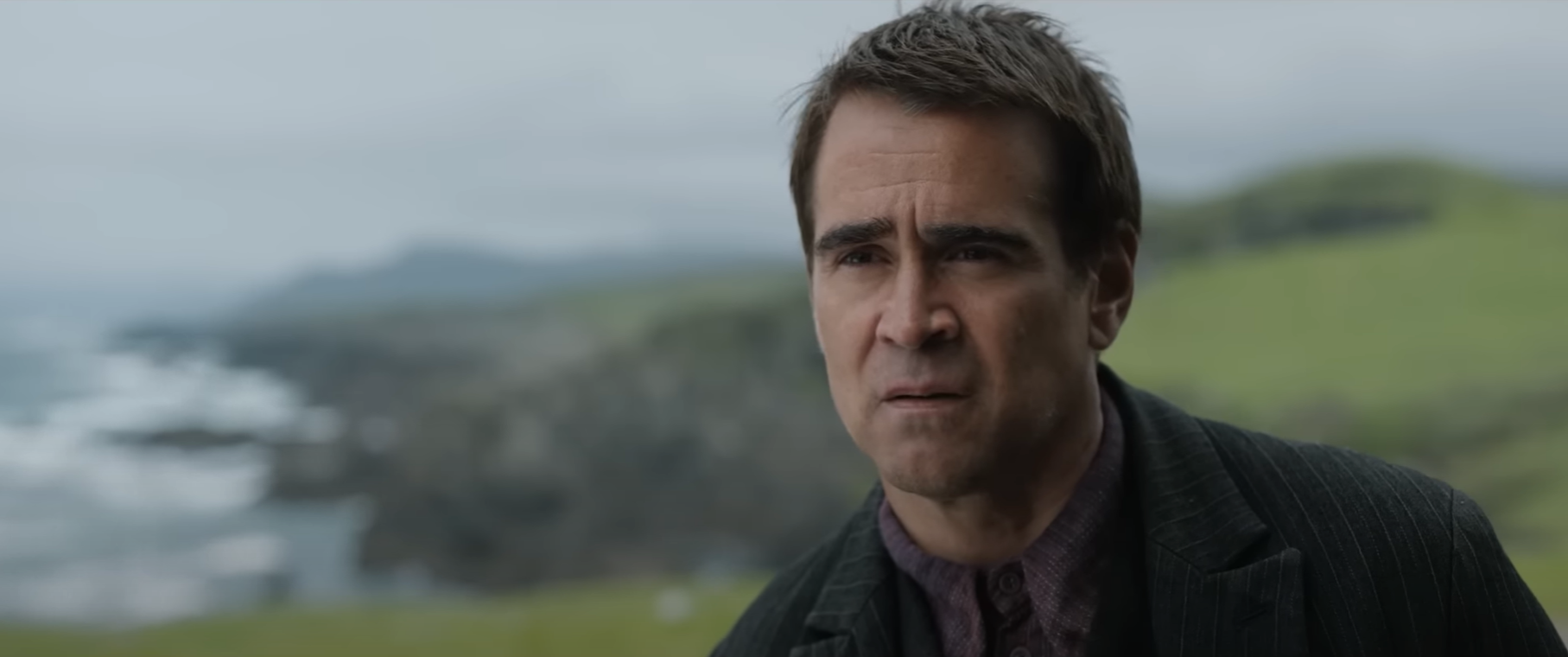
1. Colin Farrell in The Banshees of Inisherin Good predictions Tim, Calvin, Lucas & Aidan. I will first say even while this isn't the greatest lineup of all time, it is a great lineup, and particularly exciting lineup since the academy shirked potentially tired choices for five previously unrecognized actors. No performance was more deserving of this recognition in this five than Colin Farrell's for his pitch-perfect performance that manages to give a completely heartbreaking performance, a completely hilarious performance, and a completely dynamic portrayal of a "nice man's" whole world becoming shattered through one fundamental shift.

Best Scene: Niceness Argument. 

Next: 2022 alternate supporting.

Thursday, 2 February 2023

Best Actor 2022: Brendan Fraser in The Whale

Brendan Fraser won his Oscar from his first Oscar nomination for portraying Charlie in The Whale. 

The Whale is kind of a terrible film about a morbidly obese man trying to right the relationship with his daughter as he nears his death. 

As much as The Whale is a series of misguided ideas from a conceptual level, exacerbated by conflicting direction by the seemingly uncaring yet overwrought approach by Darren Aronofsky, I will say I'm glad the film exists if only to give Brendan Fraser a much-deserved return as a performer. A supremely likable performer on and off-screen, who seems like he has been in a bad patch for some time, and it is hard not to get some joy from his recognition just based on that. But forgetting the quality of the film, as far as I can, and forgetting the personal story of Fraser, let's actually look at the performance itself. The performance itself comes into specific makeup covered work, with a particularly extreme fat suit for the role. Although largely well done in terms of the makeup, the false body looks a touch artificial, it does obviously offer certain restraints within his performance. I will say from the outset what Fraser does well is acting within the fat suit and the makeup where there is no break within it. Although part of it may simply just be the weight of it, however, Fraser uses that to have the movements of a man who is constantly weighed down by himself and is a certain sense trapped within his body. Fraser's movements, but also just the way he carries himself innately bring this to life. His more labored breath and just difficulty of the natural task Fraser makes as just a part of Charlie's being. He does make the makeup just part of his performance and you do accept Fraser as Charlie the weight and all. You don't keep thinking about Fraser being someone surrounded by a fat suit, because Fraser does everything to support this physically within his work. He makes his physical ailments an innate part of his performance and they are connected as one. And that is a success on its own because it would've been very easy to just see a man covered with "stuff", but Fraser makes this all the man that is Charlie. This is to the point that the moment early on of Charlie thinking he is dying, and every ache or pain, is quite visceral and unpleasant in a way that is hard to watch, however in this instance intentional and reasonable for this purpose, because Fraser does embody this state. 

I guess the easiest way to speak of this performance is to examine it in its own terms, which is basically presenting Charlie's final relationships, as his weight has gotten to the point that he is likely to die soon. Should start with the worst first, and I mean THE WORST, of a missionary for some highly specific sect of Christianity (so specific that even as an overly didactic critique of religion, it holds little water since it is so specific), named Thomas (Ty Simpkins). A character who exists only in the mind of a playwright or a screenwriter, because the missionary exists solely exist as a missionary, and since there is no twist about him being a figment of Charlie's imagination, and has no relevance to any notion of reality nor does he work even as some overly symbolic idea. The character exists solely for the sake of revealing other plot/character points since nothing about him logically makes any sense. The character comes in essentially to convert Charlie, which initially starts with Thomas walking in on a masturbating Charlie, who goes into some intense pain asking Thomas to read "the essay" (more on this bit of contrivance later) before he believes he's going to die. This whole setup is more than a little ridiculous in itself, just the whole setup feels false that the missionary would storm in on this moment, in this way, with this result. Fraser though is impressive because he is almost acting his way through it, as difficult as it is. The pain of the attack is delivered honestly, as is his desperate need in the moment of needing to hear the essay, and best really is the rather unfussy delivery of his love for the essay and that he thought he was about to die. That whole notion, which only gets worse as the film goes on, doesn't convince me, but Fraser makes his emotion toward Charlie at the moment feel real, which is the purpose of the performance after all. It doesn't need to make the film work, to work in itself necessarily. I never believe anything about this relationship on either side in terms of the writing with Charlie leading the young man along, and the young man fixating upon Charlie. What I guess is impressive is I didn't think Fraser was ever false no matter how false it all felt on a conceptual level to me. As Fraser presents genuine curiosity in Charlie towards the young man, which is also filled clearly with some complication, as his old boyfriend took his life as related to this precise sect (contrived enough?), but also throws at him all his frustration in what is a contrived scene. However, does Fraser's delivery of this anger feel genuine as the man lashing out from his state finally, yes somehow? 

There is the seemingly minor relationship along the way, which is framed most consistently by Aronofsky's framing of everyone's extreme disgust at Charlie's appearance no matter what, as though they were all looking at the most disfigured thing you could imagine, which is frankly disgusting in the approach we see in the direction here. But having said that the moments of this of Fraser expressing self-loathing in just a singular look, does have some potency within itself and is convincing in itself. There's also the relationship with his class, also disgusted when they see him, but before that, we do get a brief glimpse of the man as the writing professor, which I do like Fraser's very formal delivery of the man's instructions that suggest a great passion for the art of writing, even at this most functional level. There's also his wife (portrayed atypically poorly by Samantha Morton), which I think is a failure of the film more so than of Fraser, though somewhat Morton. I don't sense any proper history really between their two interactions, again partly because Morton is on such an extreme note the whole time. And there's something missing even though Fraser is trying to suggest some kind of warmer history between the two, but it doesn't quite get there despite his best efforts. They seem more vague acquaintances, "but Louis that's IS their history" eh there should be something underlying there, something more, and there just really isn't. But hey I did kind of like his earnest delivery to the pizza guy who wants to know a random customer's name and then spies on him coming out of his house. Again garbage really with how all of it works, but I did think Fraser played the sense of shame of the man seeing him with real emotion, just as he did the reaching out in a bit of connection in the earlier scenes. Doesn't amount to much in my mind in terms of the film but it is something in terms of Fraser's own work. 

But forget all that again because we have his relationship with his daughter (Sadie Sink) which is the primary focus of the film, where he literally bribes her to visit him. The daughter is a terribly written character with the typically capable Sink stuck in a role that is so overly hostile that it comes off as more ridiculous than a convincing depiction of bitterness. Again though credit goes to Fraser for really trying to make it work. There is this complicated sincerity he brings in his offer as he is talking her through very much as the father. When she challenges him, the vulnerability on his face at the struggle in connection feels very much earned on Fraser's end, as you are granted the sense of regret for the years lost mixed in with the hope to try to make up for it. He brings a real warmth in every attempt mixed in with a believable shyness of the man trying as best he can to tiptoe around trying to connect with her, while she comes at him with the same note again and again. Fraser though makes such a guided effort that does very much reveal his side of the relationship at least, creating that juxtaposition between a sense of genuine love and also the pain of disconnect. His scenes of commenting on his daughter, the concern in his voice, and in his expression are of a truly loving father wishing the best, and whatever emotion I did feel in these moments were from Fraser's portrayal that felt very honest. Even within the nonsense. Speaking of nonsense all of this eventually leads to some truly contrived situation where the actions of his daughter lead the missionary kid to reunite with his family...I MEAN SERIOUSLY that is dumb, dumber is Charlie's interpretation that his daughter did it for good, proving the goodness of mankind to him in some way. Give me a break. Anyway, as cynical as I feel about the nonsense this film spouts, Fraser's delivery about the beauty of people in a microcosm is moving, if you attach some better scenario to it, but Fraser's mix of heartbreak yet hope in the line is moving in itself once again. Speaking of nonsense, the film ends with a super dramatic moment of Charlie standing for his daughter as she reads the "most beautiful thing" he has ever read. TWIST, is her old essay, which feels like the modern equivalent of the plastic bag from American Beauty in a filmmaker trying to attach beauty to some real nonsense. Now one can argue, though I think the filmmakers seem to think the essay really is great, that this shows a father's blindness based on just love for his daughter. And again Fraser's performance does sell it as such, his eyes fixed on this need for it, this need to believe and this need to care, that there is a certain localized power to even as I reject every notion the film is making. 

I purposefully saved two elements, the worst and the best of Fraser's performance, because I need to cover the first, to be honest, and I'll leave the latter last because again, I just like Brendan Fraser, seems always like a good dude and I would like him to have the biggest comeback of anyone ever. The former is the binge-eating scenes. Scenes where Fraser presents Charlie downing the food, backed by some despicable score, as though he is a monster feeding, a specimen, a whale not a man. And frankly, I think the whole depiction is disgusting, not because of it being a man struggling with eating but because it is depicted without a hint of empathy or even sympathy. Aronofsky treats Charlie like a creature mock and sadly Fraser plays into this. Now is this probably a bad direction given particularly the empathetic nature of Fraser's overall performance? 100% I'm sure. However all performances are a combination of performer and director, and if a performer gets the plaudits for a great directorial idea, they must also suffer for a poor decision, which is the case here. Leaving that unpleasantness behind, let's talk about the best part, which is Fraser's chemistry with Hong Chau as Liz, his unofficial nurse and the sister of his dead lover. They're great together as the two manage to levitate beyond what is in front of them to deliver something that feels real. They have a sense of history, there is a mutual sense of affection, even affection through connection and just an understanding between the two. To the point, the moment of anger between the two segueing to random humor, to just the deepest sense of warmth, just feels natural. The two speak to one another as long friends which are connected in hardship but also that appreciation for the past. Even when they fight, the two make it less melodramatic, because each has such a strong sense of the two as people and grants an honest sense of frustration in every delivery of the anger. Anger filled with care and frustration, not just anger. Fraser reveals his vulnerability, his shyness with her to his condition but also this understanding in his eyes and appreciation for her concern. He never simplifies that and we feel the palpable sense of the depth of their friendship. To the point, my favorite scene in the film is probably the two just lounging on the couch together and watching TV. Because the two together have such an endearing sense of camaraderie, of two real friends who have an unbreakable connection and in turn just have that casual sense of real care for one another. Going back to see good in people, part of the reason it does have some emotion is the connection in the reaction of Chau against Fraser's delivery. I don't believe that moment as written but I believe in the two at the moment. This might be one of the most frustrating experiences for me because there was potential in this idea, but the execution was so fundamentally flawed in multiple ways. However, even with all that, Fraser did at times move me, even when I was rolling my eyes at the film itself, there was a real truth, a pathos, and particularly a real heart within Fraser's work. It isn't perfect work, because he doesn't quite successfully avoid every failure of the film, but the fact that I just kept constantly thinking "Fraser is not the problem" in almost every scene does mean something. Fraser does find something in his portrait of Charlie, I did believe him, I was moved by him, even though I never believed The Whale. 

Wednesday, 1 February 2023

Best Actor 2022: Colin Farrell in The Banshees of Inisherin

Colin Farrell received his first Oscar nomination for portraying Pádraic Súilleabháin in The Banshees of Inisherin. 

The Banshees of Inisherin is a cinematic joy to me about a man on an isolated Irish island whose best friend unfriends him. 

Colin Farrell returns to leading a Martin McDonagh film, after sitting out his last film and having played largely thankless, though more than decently performed, role of the author's surrogate in Seven Psychopaths. Farrell with this film returns to a substantial leading role with McDonagh since their first and masterful collaboration of In Bruges. The two roles are substantially different, almost comically different, particularly as we open both films. His role of the first-time hitman Ray in that earlier film, really is, for the lack of a better word, a bit of prick angry at needing to stay over in Bruges, and in general, seemingly taking out his somewhat low ire towards the world around him. Contrast that to his portrayal of Pádraic in the opening scene of the film where he is walking around the Island of Inisherin, he might as well be walking through the sky with the ease of his step as he goes about the day. Farrell brimming with just the joy of life and the easiest smile comes upon his face. Farrell establishes Pádraic as a man who loves his life and is loving his life at this moment. Farrell knows establishing Pádraic must be distinctly understood for anything wonderful to come from this tale McDonagh is going to relate. 

I will say the very notion of the character of Pádraic is in many ways unusual for a lead, let alone a performer like Colin Farrell taking upon the part because he is a man of little importance and just initially has no real trouble to speak of. Farrell who earlier in his career often was known for being more confident if not presumed to be the "cool" type, with Pádraic being a far cry from that. Although it is fair to say that Farrell has made clear expansions of his range from his early work, to begin with, this is still a very unique character within his filmography. And you wouldn't think that from just embodying Pádraic from the moment he is onscreen and you just instantly sense a man whose existence is this island, lowkey, and happy to be lowkey in so many ways. When he drops off at his old friend's house Colm (Brendan Gleeson) it is with the most sincere of greetings and his hope for a meeting at the local pub is that of the strictest sincerity. In that little moment Farrell you are granted a sense of the history between the two as just good friends among each other. There's no complication there, just hoping to have a drink with his friend as they've probably done for so many years together up until this point. 

Colm seems to ignore Pádraic whereas Farrell's reaction again is wonderful as he reinforces two ideas one being the long friendship between Pádraic and Colm but also the nature of Pádraic to not take things to heart too quickly. Farrell is supremely likable though in an unusual way in creating this state of the character. He's not Farrell trying to do a more traditional leading man charm offensive, his is a goofy kind of charm he's playing with, and fully commits to this idea because bluntly Farrell simply is Pádraic every moment he's onscreen. That reaction to Colm not speaking through him to his window has such a wonderful purity in Farrell's reaction of confusion. It just barely computes the idea of their friendship. When Pádraic comes home confused about that situation mentioning it to his sister Siobhan (Kerry Condon), Farrell's pondering on whether or not they've been "rowing" is hilarious in the blunt confusion, but also feels so genuine in showing the simple way that Pádraic can't quite get it. Farrell's wonderful though in the way that even in just the simple confusion his body language and facial manner show this to shake the man beyond simple understanding. There's a bit more of a break here that is so perfectly alluded to in Farrell's performance. 

The moment I think is key to much of where this performance goes is where Pádraic sees Colm walking off without him, and Farrell brings a bit more intensity in it, a bit of anger as he remarks on wondering where Colm is going. Farrell plays it through with this vulnerability of betrayal. When he finally confronts Colm about the situation Farrell though is again hilarious in his manner of being so soft in his noting of his glass being near Colm's seat, then even his apology, just in case, is so aggressively sincere as Farrell presents Pádraic as just wanting to clear things up with his friend as soon as possible to get it back to things as they should be. Farrell's outstanding in the moment where Colm finally states his disagreement as simply "not liking" Pádraic no more. Farrell's reaction is fantastic as he honestly is quite heartbreaking because his reaction is that of a fundamental break in his reality and really his comfort as a man. His eyes show such great discomfort and sadness, but also just an inability to really understand how this could happen. His delivery of "You do like me" and "You liked me yesterday", is moving because Farrell speaks it with such disquieting anxiety of the man suddenly having a great loss in his mind that he would've never expected and his whole understanding of the world has been broken. 

Farrell's work here is an incredible bit of just really how much he can get out of the most minor of physical gestures and even just a slight tweak of his eyebrows. As the whole first day, just a bit of the squinting shows so well the constant contemplation and fixation he has on trying to understand Colm's sudden rejection of his friendship. This extends from talking with his sister or when he finds a secondary companion in the emotionally stunted Dominic (Barry Keoghan). Farrell plays their interactions properly as really as a bad kind of attempted friend. In that, he is with enough of a cordiality however not really a proper understanding between the two. Showing that he's still thinking about his best friend unless Dominic asks something inappropriate which only breaks to frustration. Still not really paying attention, leading Dominic rejects their conversation as Pádraic's stays stuck thinking about Colm. And I love the moment of the beginning of the next day of Pádraic seeing that it had been April fools potentially, and the reaction of relief on Farrell's face has such a beautiful simplicity within it, as again as he shows it in Pádraic as more than a return to the happiness of having his friend back, rather a rearrangement of his reality back to something that he is able to understand. 

Unfortunately, that isn't the case, and I'll say there's something quite special in just again that return of jubilation as Pádraic walks down the road to state his "discovery" to Colm, only for his old friend to again be dismissive. In their confrontation at the pub the second time, Farrell really is extraordinary because he really is being very funny, while also bringing so much vulnerability into the scene. That is delivering his semi-false anger as he confronts Colm about "wasting his time" and that he could be doing better things than trying to run after him, which Colm calls him out on. Farrell's reactions are comic gold as he is honestly a bit flustered but still gets out "reading" with the most halfhearted of statements. What is amazing though is Farrell's also very moving in showing that in that there is a very real realization that he wouldn't have had anything better to do, and there's a real sadness and anxiety within the same reaction. Farrell merges both tones within his performance which is simply amazing on his part. Farrell afterward, as Colm tries to explain things more clearly, presents someone who has been through some traumatic situation, because this break is traumatic. Farrell's defense of chatting brings a real blunt passion, which again is funny because he so seriously presents the argument of getting either "pony or donkey shite" right, yet he's also moving because he shows that for a man like Pádraic, it means so much. 

And in this way, what Farrell achieves, other than being very entertaining in the role, is to give meaning to why Pádraic is trying so hard to keep talking to Colm. It isn't just that he's his friend, he's his only real friend and an essential part of what makes his world whole as one. Farrell so clearly illustrates this motivation so effectively and brings us into his unique headspace in a way that is enjoyable, but also oddly relatable. Farrell stands his ground against Colm, which Colm describes bluntly that he will cut off his own fingers than speak to him, and in that there is so much fundamental passion about his work. Pádraic stands up for himself with this insistence of his truth as their friendship is worthwhile, however, with Colm calling him dull, Farrell's expression is that of a man truly pained. What only worsens the situation is as Pádraic hears from others that he's not a "thinker" like Colm and is rather just a "good guy". Farrell's reaction is filled with so much anguish that he manages to convey as though Pádraic is evaluating everything about himself. And in that, we see the way in each scene the man is only looking into his own thoughts and Farrell is marvelous in showing a man falling into this depression from this. I love the moment of Colm helping Pádraic after being beaten by the local bully policeman, Dominic's father because as much as he doesn't want to talk to him he doesn't hate him, Farrell is wholly heartbreaking in the sadness of holding in anything from his friend. The tears are of just not being able to reach out and there is so much pain in it. 

Naturally, after quite a few drinks with him, Pádraic breaks the request and confronts Colm one night in the pub. Again Farrell begins hilariously in his initial attempt to dismiss Colm, who is sitting with Dominic's father, with "three things he hates" and his stumbling failure to come up with the three as a proper joke is hypocritically hilarious. However again there's a real heart in this when Colm dismisses Pádraic to go away again, and Farrell's rage at the situation comes out so potently, and as someone who has been storing this away, unlocked by drink. Rage at Colm, however, more so rage at the entire idea of the situation and distress as he sees Colm as being no longer nice. It isn't all rage though and I love that Farrell shows the way Pádraic sticks to the idea of niceness as though it is something worthwhile. Even with his stumbling, drunken rambling way of speaking the words of recognizing the niceness of his sister and his parents, Farrell shows such real emotion there. There is such sincerity to it, so much passion, so much care, and in it you see how much Pádraic truly cares about his parents and his sister for their kindness. And Farrell is once again heartbreaking as he notes himself as a nice man and his regrets over Colm's potentially having been nice, the distress speaking to so much more than just a lost friendship, but basically, a loss of his whole system of morality and reality. 

And in that we see Farrell presenting a man struggling with himself as much as he's struggling with this friendship because the friendship had so defined his life as his comfort. And here's where I can thankfully finally mention Pádraic as a herder, who goes along down the road with his animals, and Farrell presents a man who truly loves his animals beyond just technically being his livelihood. Farrell though presenting that around his animals there is such sorrow in the man closed off from most though in his physical manner around the animals, particularly his favorite miniature donkey Jenny, which Farrell reveals as one of the purest relationships one has ever seen on screen. Everything Farrell does around her is that of just a direct and real love for his donkey and becomes more and more something that he seems to hold onto as any comfort within the discomfort that now exists within his life. And Farrell reveals a man who now without his life making sense, you see a man who is rather aimless in a certain sense, no longer sure of himself, in his joy, as we had seen in the opening of the film, and turn Pádraic begins to take somewhat drastic actions. 

A brilliant scene for Farrell is essentially Pádraic taking a purposeful change as he gives one of Colm's music students a ride only to lie to the man to get him to leave the island. Farrell's performance is amazing in a very unexpected way and shows the greatness of this performance and how Farrell succeeds in two major ways so naturally. One he is bluntly funny in the delivery of the scene where he speaks every lie of Pádraic in this rather hapless manner of someone who isn't exactly great at improvisation. Farrell delivers every word with ideal timing though in a sort of jumping from one idea to the next in creating a rather ridiculous scenario that tells the poor man that his father died from the same method that his mother had died. Farrell delivers the trickery brilliantly, by doing it so poorly that it is hilarious in his ways. That would be enough for it to be a great scene for Farrell however it is so much more. Farrell shows really the turning of the once nice man, by taking this action of lying for selfish reasons. Farrell though shows that even as Pádraic is not acting nice for once, this is a challenge, his expression is near heartache because as much as Pádraic is going through this action, every ounce of it is going against his being, Farrell shows that it does hurt him, even though he is going through with it. And important to this is the following scene with Dominic, where Farrell shows Pádraic being a bit more open with Dominic as an actual listening friend is still reserved. Farrell expresses so much contemplation of himself until Dominic notes him as stuck in his way, and Farrell shows Pádraic boasting about his "accomplishment" of the deception. Farrell is so haphazard and really pathetic in presenting the man attempting to be mean and fundamentally something he is not. 

And in that sense what we see Pádraic become is a man very mixed up with himself, which as we see as he goes to talk to Colm, after hearing that Colm had found his drunk speech interesting, and comes in to talk to him. Again a very awkward conversation it is, as there is this underlying tension about as much as Farrell brings the bright smile as though everything is back to normal, however even in his smile it isn't quite right and it seems like their relationship isn't at all what it should be, particularly as Colm seems to be mostly looking through Pádraic. We get some hints of their old conversations it would seem as they talk about Colm's name for his musical composition, which Farrell and Gleeson do reveal something a bit more genuine, however, that is surrounded by tensions. Farrell speaking Pádraic's attempt to put all aside, and have a drunk, after also noting about no longer needing to send the student away, all is very forced. Not from Farrell, but rather from Pádraic's failure to bridge the gap. And while that doesn't fix things, Pádraic's situation only is exacerbated as Siobhan announces she's also leaving. Where I did not mention the naturalistic sibling chemistry between the two, however now is the time for it. Condon and Farrell just have the right sort of ease that isn't perfect but it is properly pleasant even as they are different sorts. The weight of the relationship reveals itself when she says she's leaving and Farrell's sadness is of a man who didn't even consider that this would be an option, with their farewell being a painful indication of the man's only greater isolation. 

If that wasn't enough still the relationship with Colm isn't fixed as he removes all fingers from one of his hands as his non-violent method to get Pádraic to stop, which indirectly leads to one more grievance, the death of Jenny from having choked on Colm's finger. And Farrell's reaction to this, after you could so naturally see the comfort between him and the donkey in every other scene, is absolutely devastating. Could seem silly, but it's not silly at all. As Farrell's expression of grief is so potent, and you see only man truly has lost everything he loves so quickly and so painfully. Farrell's way of performing it is with outward pain but also is harrowing in the way he expresses the man internally just writhing in it all. Farrell from this point on is almost this husk of the former bright Pádraic we had seen as he looks over his dead animal companion. And Farrell not only makes you feel for Jenny, but he also makes it so it breaks your heart just as it did poor Pádraic. Farrell presents from there on the full break of the man's reality however he reconstructs by entirely rejecting his niceness. And it is a remarkable achievement as Farrell earns not only turns the joyful "good guy" of Pádraic into a vengeful man, he makes it quite the striking idea as suddenly this man so filled with anger and pathos is still the same man, which in a way is particularly unnerving.  Pádraic's threat to Colm is bone-chilling as we see the man now defined by hate, and he is now so stiff, so built from the ground up by his anguish that he's now gone to the darkness beyond it. And it would seem Pádraic is lost to it all as he sets Colm's house on fire as an act of revenge, leaving the two to meet in the final scene of the film upon a beach. And with that, you also get one more outstanding scene from Farrell with Gleeson, the latter who seems to give probably the purest glimpse of their old friendship while Pádraic is having none of it. It's different now from the literal and metaphorical heat of the moment, Farrell's notable brow is still furrowed, his manner tight with bitterness, his gloomy delivery still accentuating a man who wants to burn the world. But...it is no longer as pure as when he made the threat. Farrell is amazing in how he has these small moments of the old Pádraic throughout the scene. A glint across his face that shows the "niceness" that's still in there somewhere, the little smile he gives Colm's dog, and especially his "anytime" that is fully Pádraic, while also having a bit of a sense of hope as though Pádraic realizing their moment that they might have a chance to make amends after all. This brings me all the way back to Ray from In Bruges. As both films feature a man going through much, and Farrell makes every moment of each man's journey so very potent, so very emotional, so very tangible, and also often very very funny. Where Ray was a man who discovered perhaps some sense of good, Pádraic is the journey of man perhaps losing what good he had. And as idiosyncratic as each story is, Farrell makes both universal by making each moment of it feel so true. And the reason I bring it up is Ray and Pádraic are so different yet both show what Farrell can do when he's at the very top of his game. I could go on and cover every moment of Farrell's work here, and I'll admit I nearly have because I love every moment of this performance. There isn't a moment that fails to bring me a bit of cheer, a bit of pathos, or just a bit of that unique feeling of joy when you see an actor performing, and can't take your eyes off of them while watching, and can't forget it after having seen them. 

Tuesday, 31 January 2023

Best Actor 2022: Paul Mescal in Aftersun

Paul Mescal received his first Oscar nomination for portraying Calum Paterson in Aftersun. 

Aftersun is a collection of memories of a woman Sophie as she recounts a holiday with her father when she was a young girl (Frankie Corio).

Paul Mescal defied most odds in his nomination, receiving few precursors, being an extremely young nominee for the category (only 26), being fifth among first-time nominees, and being mostly unknown to US audiences. His performance further defied the odds because lowkey doesn't even quite put it right in terms of his work against any of the other nominated performances or against the types of performances that are typically Oscar-nominated in general. Aftersun takes that one step beyond however because this isn't even a low-key performance that we become close to in the way say Steven Yeun was in Minari, the film purposefully often frames Mescal in a very particular, unusual way, akin, though thankfully not to this extreme, to the way Tom Courtenay was presented in 45 Years. The character of Calum is often viewed through alternative perspectives of the little girl looking at her dad in various sorts of slightly obscured images akin to imperfect memory. Mescal's work in turn offers a very different sort of Oscar-nominated turn where he is so often far off the frame in his own film, and also presents him with quite a challenge as a performer, as he must be present while being so often obscured. 

Paul Mescal might seem in itself strange casting as the dad of a girl who is over ten, however, while the character is slightly older than Mescal, part of the alluded idea is a man who was probably far too young to be a father needing to take up such a role. Mescal's performance early on seems almost perfunctory, which isn't a criticism by the way, but rather the initial presentation of Calum as the dad as he joins his daughter on their vacation. The initial moment of seeing their tour guide stumble a bit through her presentation, which Calum impersonates in a lighthearted bit which Mescal delivers well as very functionally as his dad trying to urge his daughter along towards the theoretical perspective of their time together. The time goes off slightly wrong initially as their hotel is poorly staffed and the two end up with the wrong room. Mescal again is strictly naturalistic and I think in a way that does require a bit more that needs to be said. In a very vapid exploration of the film you may just see even the moment of Calum lounging around the room after he puts his daughter to bed, however, the key is what he explores even with so little at his disposal in terms of what he is to convey. His manner and his physical performance, his picking at his cast, and even his manner of smoking, there is a sense of more than a bit of frustration. Frustration that Mescal doesn't always directly portray, particularly early on, but to say that Calum is perfectly comfortable is bluntly false. 

Mescal's performance is most often between the lines. There is the basic line of the dad trying to be the dad, which Mescal delivers in a very subtle way in terms of not quite being what he says he is. We do just see him and Sophie in different circumstances, some playful such as literally playing around the pool, playing billard, or slightly educational as he struggles to get her to take a self-defense practice seriously. The chemistry between himself and Corio here is key in that there is warmth, but it is also imperfect. Mescal's manner is rather remarkable because he manages to be just not quite right in his performance. He shows a man very much putting on the role of the father, and while it isn't false, it isn't quite true either. There is just the slightest shade in the most basic scenes that Calum isn't fully comfortable being the dad, even as he's trying to be the dad. Mescal doesn't play him as a failure in this, but he also doesn't present him as a success. He rather grants an almost subconscious degree of weakness within the man's fathering. There is nothing that causes one to say "he's a bad dad" or "there's something wrong", however, there is something missing to it all that Mescal so naturally delivers in his performance in the most minute way possible. 

Mescal's moments between the lines let out just a little more to what there is in terms of what is going on with Calum below the immediate surface of trying to be a dad. In the earliest scenes these are flashes, yet rather brilliantly performed because they are potent in a moment even if that isn't the focus. That is again we see Calum very much trying to do his best with Sophie, however in for example a moment of waiting to go snorkeling, there is a moment of tremendous anxiety that flashes across Calum's face. There is something more terrible going on, and we see him essentially trying to hide from Sophie as the two are together. Another moment a bit later on reveals a bit more as Sophie asks Calum what he wished he could've been when he grew up. Although all Calum says is to put the camera away, Mescal's delivery is hiding so much personal anguish in those words. His face fitted with just the slight annoyance of a dad no longer playing around. Mescal has so much more though just deeper than that, Mescal implying what is within the man who is trying to hide it, yet clearly, a man who in no way is experiencing what he would've wanted at this point in his life. There's so much pain within him just beyond that surface that Mescal is able to convey without conveying it almost, but hinting at just enough that is there. 

Although the film isn't traditionally hitting moments beat per beat, what we see in the two's chemistry is a particularly pointed decay of a relationship. The two again do have enough of the father-daughter connection. Mescal shows the father trying to bring the joy he wants to bring to his daughter, Corio portraying how she is enjoying much of it, however, so much of it has those hints of something less than that. They're not completely connected and each shows this slight effort that is just enough to indicate the imperfection of their relationship even as at the moment they are trying to present to each other a kind of ideal. One of the big breaks is in this when Sophie sings karaoke, after Calum refused to attempt to sing with her, where Sophie does not particularly sing well either. Mescal's delivery of Calum suggesting that she could get singing lessons is with the overtures of the supportive dad, a bit of a smile, and everything else. There isn't quite a conviction in the statement and the sense of the critique can be felt even as it is technically well-intentioned. Sophie instead rejects the notion and calls it on him given it isn't something he could afford for her. A fantastic moment for Corio as showing sort of the sudden fall of the facade the daughter had been putting on. Mescal's reaction again is very very small, but enough in showing the break in his eyes in sort of sensing that anything he might be putting on isn't entirely working as much as he was trying. And from that, we see more of what is in the man, who is defined by frustration and sadness, that Mescal reveals basically as the truth of what's behind all of Calum. A deeply depressed man is likely considering suicide. That isn't bluntly said, however, Mescal powerfully embodies just this state in such a brilliantly performed fashion. As Mescal never exactly breaks beyond a certain barrier, he shows a man almost hiding all this in him most of the time, except for those relatively brief moments that have such an impact because they feel like such natural revelations. 

They feel like natural revelations though because Mescal's work manages to embody all of that within him, even as he is trying very hard to keep it all in. The moment we see Calum just weeping nearly controllably by himself, it doesn't feel like some sudden break, rather Mescal's painful depiction of that sorrow is just who the man is. Even when we see Calum returning to being the father, apologizing to Sophie for the earlier tension with a brighter more "dad" voice, and trying to talk to her as a dad again. Mescal's comforting words, as much as the attempt is more than decent, it isn't totally fake, but it also isn't entirely convincing either. Mescal is able to present a man suffering in broad daylight. It is always a lie when he's trying to engage with his daughter as the fun or caring dad, it isn't a lie, however, that being all there is to it, is a lie.  Take my choice in the screen capture, which is one of the few traditional close-ups that Mescal gets in the film, and it isn't one that he wastes. In just a single frame you can see the smile of a man that the smile is in genuine love with his daughter, but also in that smile, there are his eyes that are filled with a great deal of anguish that penetrates his living state at nearly all times. Nearly I write because the sort of emotional climax scene is a mix of the adult Sophie's remembrance and the past Sophie of watching Calum dance to "Under Pressure". Notable for Mescal because it is one scene where you can feel as though he is purely the dad for a few minutes in his goofy dad dance and just fully embracing the moment with his daughter and as this moment of joy, that eventually scars the adult Sophie because it is likely a final moment of joy between them that she can clearly remember. Paul Mescal delivers a heartbreaking portrait of really two faces of the man trying to be his best self for his daughter while suffering deeply inside from all his insecurities and personal desperation. It is a performance that largely exists in the margins, yet it is never lost in the margins, and I will this time credit the acting branch for once, for recognizing this modest yet oh so potent work. 

Monday, 30 January 2023

Best Actor 2022: Austin Butler in Elvis

Austin Butler received his first Oscar nomination for portraying Elvis Presley in Elvis. 

Elvis tells the story of the king of Rock and Roll through the eyes of Elvis's nefarious manager Blofeld...I mean Colonel Tom Parker (Tom Hanks). 

Austin Butler joins the long-running list of Oscar-nominated performers playing famous musicians, a list that is filled with many uninteresting biopics that often (often deservedly) are mocked as easy academy catnip yet rather perfunctory efforts for most viewers. This sometimes extends to the often lip-synching performances by the leads, which extends as far back as at least as far back as when Cornel Wilde played Frederic Chopin. This film on the former end is mostly that, though filled through the madness of director Baz Luhrmann's style (something I wish I could love, but mostly gives me a headache), which given how tired these films are, I might've disliked less than I usually do. The other bit of strangeness is through the perspective of the Colonel pleading his case to the audience that he didn't cause Elvis's downfall, something I might've liked more if Tom Hanks wasn't so obnoxiously hammy (he could've been hammy still given the film's heightened tone just not obnoxiously hammy). This perspective does make Elvis a strange leading character in the first act or so of the film, as he takes quite a long time to appear beyond just glimpses as the colonel attempts to chase him down, and even in his first appearances, Elvis is purposefully seen as a distant figure, with the emphasis more so on his impact than in offering a more internalized perspective. The up-and-coming Austin Butler initially appears just as the idea of Elvis, and his work is almost entirely based upon a few scant words and his physical movements. Of course in a larger-than-life figure such as Elvis, that is a task in itself. And I'll say Butler is bluntly up to the task, even with the at times very overdone makeup, even beyond intention I think. His vocal performance, which apparently permanently transformed Butler's voice to that of Elvis's, is downright impressive. Elvis's voice is something that is very often impersonated and is often that of an impression. It would be very easy to become a caricature, however, Butler's vocal work does go beyond that. Butler's voice feels like Elvis's voice and doesn't feel like a put-on, which with someone like Elvis isn't a small feat in itself. 

The physical movements of Elvis are of course as iconic as anything else about him, so again, Butler does have a challenge, because again while frequently impersonated in this regard, it is something else to embody this in a convincing sense. And Butler seeks to fully capture Elvis's stage persona, in almost every aspect. This includes the way he just holds his head, to every different dance move and gyration, his grander movements as really this king stage so often that plays to the crowd, emotes within the song and just sells the energy of every song far beyond what is expected from any performer. Butler again is absolutely convincing in every step of this, literal and otherwise. He does embody that presence so potently without again feeling the parody, he feels like we are seeing Elvis with the sheer power of his work here. It is remarkable and shouldn't be handwaved because of how much he makes it a given throughout the film. The one facet that Butler does not do is consistently sing as Elvis, though there is a bit of it, and Butler does a more than fine job if perhaps his vocals aren't as powerful as Elvis's (hence the dubbing), though seems like if they had just let him sing Butler would've been up to the task. As Butler really is everything he needs to be as this image of Elvis without question. He has that down, and I would say goes far beyond other similar performances that feel far more like impressions. Butler realizes the icon, as a icon, but he also is convincing just as a performer who came to be an icon. It is striking work that in no way seems ever less than he should be, and dances around any of the pitfalls that are so common with these sorts of performances. 

But all that stage persona stuff can only amount to so much, as good as it might be if it all falls apart when he's off-stage. In a way, despite not being documented in the same way, Butler has to deliver a greater truth, when the film finally settles down enough to give Elvis a more in-person focus. And here is where I will again praise Butler, and again his evocation of Elvis truly is notable because he is as convincing when he is Elvis off stage. His manner is similar but less performative. However less performative in the right way. He still sounds like Elvis, and still has the manner of the man, but he's not playing for anyone, he's just being himself. Butler is convincing as Elvis the man, who is presented with largely a positive depiction of the man, however, working even within that context though Butler grants humanity that has greater depth alluded to even if not always explored. Butler in many ways succeeds because he does two things. When we see Elvis emote, it feels like Elvis emoting, but it also feels like a person emoting. He makes the essential jump to allow us to just believe him as Elvis, which on its own is quite an achievement. And again the emotions of many of these scenes are relatively simple, disappointment with his career at times, heartbreak over the death of his mother, and eventual romance with Priscilla. Butler brings the passion of the man towards music as sincerity. He brings a simple boy's sadness in the death of his mother and with Priscilla (Olivia DeJonge) just a lower key charm that is the stage Elvis however more modest, more genuine. Again while I don't think this is exactly exploring the deepest truths of Elvis, Butler is absolutely convincing in realizing what the film lets him present. 

As per usual the biopic trudges along a bit as we see Elvis fall into personal anguish as the aimless artist, although we get this note twice over. And where Butler continues to excel even when the film gets a bit baggy in comparison. Butler's physical performance continues to be quite remarkable because he successfully transitions through each of Elvis's stages, which are all kind of iconic in their own way. That is he does become more restrained, though more passioned in some ways, with greater maturity in the man's voice, as Butler does really two impressions and both are convincing. Even the overweight Elvis late in the film, Butler modifies his work again to give that larger-than-life presence that has as much passion but is suffering far more from the literal and metaphorical weight of his life. We of course get some perfunctory biopic moments, such as the man pushing back his state of malaise to make a statement in his comeback special. Again while I don't think these scenes really are of too much note, Butler's performance combines a sense of frustration of standing still and the ferocity of finally releasing his passion more directly in his comeback song. Butler's portrayal of the slow demise of the man is well done. Just shows the man physically becoming so much less, everything including his charm and passion reducing in his eyes, with a greater frustration towards the duplicitous Colonel. Although the scenes are a little repetitive, Butler continues to thrive in bringing to life every phase of the man's life even the most painful, which the film treats with sort of a gentle pain in that it never gets as raw as it could in that regard. I suppose that is where my praise is limited in that the film never let's Butler go past a certain point, which is unfortunate, however still notable what Butler does even in the confines of the role. It is a challenge not to be a parody, it a challenge not to be underwhelming when portraying such a iconic pop culture figure, it is challenge not to seem too distant. Butler avoids all of that, he's convincing in bringing Elvis to life as the iconic star, but he's also convincing in bringing to Elvis to life as a man. Although I certainly think a greater film could've been made out of Elvis the man, I couldn't think of a better man to portray him than Butler based on his very strong performance here. 

Sunday, 29 January 2023

Best Actor 2022: Bill Nighy in Living

 Bill Nighy received his first Oscar nomination for portraying Mr. Williams in Living. 

Living, a remake of Ikiru, follows a bureaucrat as he discovers he has less than a year to live. 

To speak of this performance, of course, spoilers for the entirety of this and Ikiru, though both are films about the journey. I will say it is with a bit of excitement when a noted character actor gets a leading role, particularly a leading role of note, and the idea of the delightfully idiosyncratic Bill Nighy taking over the leading role of the terminally ill bureaucrat did create some anticipation for this film. Nighy being a character actor though I think grants a unique sort of approach within how we enter the story in this version, as if you were to come into the film blind, you might think the film is about the young bureaucrat Mr. Wakeling (Alex Sharp), entering into the world of bureaucracy with how the film opens with his meeting of the other more seasoned bureaucrats at the train station and joining them in conversation on their way to work. Nighy only appears when the men mention seeing their superior Mr. Williams also getting on the train, though never sitting with them, and Nighy's introduction is of note in presentation, however, Nighy's first scene isn't in a way of note. The man seems pre-emptively tired and just almost statuesque as he waits for his train with little interest, rather just procedure. In the county office itself, where we also meet the sprightly Miss Harris (Aimee Lou Wood), Nighy's performance continues as potentially not even the lead. He is off the side of the desk just attending to his duties as the bureaucrat. Nighy's whole demeanor may be of a bit player in a different film as he is hunched over his desk as though looking out from over it for long would be difficult. His eyes nearly always closed off looking just at what particular document as though he is constantly in the process of reading the most boring of novels. His speaking voice, much like in Takashi Shimura's original turn, is a masterful bit of instantly establishing character. In this case, Nighy willfully rids himself of his usual unmistakable and off-beat charisma as a performer in service of giving an immediate sense of who Mr. Williams is when he speaks. Nighy's initial delivery, of just pushing off a request for a children's park, is with nearly a whisper of a voice. A droning voice of a man who makes no bother of himself or anything else. It is hard to tell if there is much life in him at all, as Nighy puts as little energy as possible which so perfectly emphasizes Mr. Williams as a person who goes about his duties more so a barely responding corpse rather than a man. 

Nighy subverts the typical protagonist in that Mr. Williams could easily be a background character of no importance in most films, and in most films, we would just forget about this boring man behind the counter who puts little effort into his job or seemingly his life. That makes it all the more remarkable that Mr. Williams is indeed who we are following, and whom we process this story through. A major change in this version is in the original the Japanese bureaucrat is lied to about his prognosis and learns about his true diagnosis of terminal cancer through chance which despite its seeming humanity purposes seems crueler, here the man is told directly of his prognosis. Nighy barely gives a reaction, beyond the faintest glint in his eyes of the man taking it in, that to me in some way evoked the most minimalistic emotions as conveyed by Anthony Hopkins's work in The Remains of Day (which its source novel was written by this film's screenwriter Kazuo Ishiguro). A small reaction befitting a man who really has felt nothing for so long. The subtle brilliance of Nighy's work is especially shown in the following scene where Mr. Williams sits silently at home contemplating his life including the failures of his life including the loss of his wife and the imperfect relationship with his son. Like Ikiru, this is a moment that is painful to watch as Nighy essentially looks upon the memories with this particularly palatable sense of defeat to every moment. In isn't all that is there in these glances. There's a moment of attempted nostalgia, that turns to this despair, which makes this despair all the more torturous as Nighy presents a man who cannot even rely on what he has done for his life for any comfort. When his son and the son's wife return home, Mr. Williams tells them nothing, and Nighy earns this choice in his performance by bluntly presenting a man who has just had nothing. Nighy's work is vacant in this way in that he shows a man who cannot attach himself to anything that would provide a man who had lived a better life at this moment, Nighy shows the man reaching out yet failing. In turn, Nighy shows this troubled husk who is almost transparent even when contemplating death. 

Now if one were to go back and read my review of Shimura, it would appear to be that I am hitting some similar points, however, if I'm comparing Nighy favorably, that must only be seen as the highest compliment. However, this is a very different performance via the change in the setting and this is dealing with death as an English bureaucrat rather than a Japanese bureaucrat. Where we see this divergence particularly as Mr. Williams approaches a salacious Novelist (Tom Burke), for help to "live" before his death. What Nighy excels with here is bringing this proper English manner to what should be an extremely emotional situation. As Nighy delivers his initial request to speak to the man, mentions his upcoming demise, noting a potential thought of suicide, all with this proper reserve. This is not a critique, but rather a praise, as Nighy in this shows the strange sort of way Mr. Williams is maintaining himself as a proper gentleman even as his world has been shattered. Nighy's performances often have a comical nature to them in some regard, even Davy Jones, and we get that here in a way that feels wholly natural to the character and only amplifies the film. There as there is something funny in the way Nighy brings up all these traumatic thoughts with the same quiet calm, as per fitting a stiff upper lip, but shows it as a man almost struggling with a certain awareness of the act. When Mr. Williams continues to show his savings to "live" with, which the Novelist asks him politely to properly hide, Nighy presents a man attempting though kind of failing to make this request to get this man to show him how to live. Again it is a little silly, yet wholly convincing, while also being very sad as Nighy brings an awkwardness to the moment as he shows a visible effort in the man attempting to force himself to be more than what he has been in this moment. Nighy manages to be amusing in this unorthodox way, however, that only reveals more the desperation in Williams to try to break his reserve on life while also failing to do so. 

The novelist nonetheless attempts to show this man late in life a good time, at least in the way the novelist would see it, that is going to bars, gambling, and seeing a striptease. Nighy's performance in this scene is Mr. Williams attempting to do this but not quite being able to figure it out in a way. At each different place, Nighy brings a sense of discovery, however not as a man learning something new but rather kind of a child lost in a forest that is in some ways scary. There is a pressure within Nighy's expression of someone trying hard to figure this out, to find joy in it, but can't quite seem to grasp it in the right way. He shows Mr. Williams still very much who we have to see him be as his physical manner is still so internalized so tight in Nighy's performance and the man is trying to have fun, to live, yet isn't able to. This is most summarized within one bar where there is a piano and Mr. Williams a song of his youth "The Rowan Tree". Nighy's singing performance here is so essential to the character's entire journey, and this is a potent moment, a potent moment however defined by pain. Nighy begins with this force within the song and really a great deal of desperation. Nighy shows a man trying to recapture something, but not at all successfully doing so. Instead, he shows an attempt to do so in his delivery that isn't filled with joy, rather it is filled with pain, and his expression is of a man still suffering, still filled with so much anxiety. I love the final moment of the song here where Nighy shows the darkness that seems to fill Mr. Williams's mind until he just gives up at this point of just failure and seems to represent so much more than just not quite getting through this song here. We see this though as the failure of this entire endeavor, as Mr. Williams is fundamentally still trying to live and in no way doing so. 

Mr. Williams's second avenue comes unexpectedly as he runs into Miss Harris, who has left the office permanently, unlike Mr. Williams who just hasn't returned there since his diagnosis. Wood's performance as Miss Harris seemingly offers the proper antidote to Mr. Williams's state, as she is a ball of energy and excited to see her old boss. Nighy's pitch-perfect in his initial reaction which is with the intrigue of the young woman, not a hint of illicit lust, rather just a curiosity in her spirit. Every question Mr. Williams initially asks her Nighy brings within it genuine intrigue, and in it, brings just a hint more life to his voice and his whole manner, though just a hint. Over lunch, Miss Harris shares with Mr. Williams her nicknames, not particularly flattering, for each of the men at the office. Although Nighy expresses a naturally good-natured laugh there is something different when Miss Harris comes to Mr. Williams's nickname, which for her was "Mr. Zombie". Nighy's reaction to this information is exceptional. That is the way he conveys the moment of surprise, a bit of sadness, but also a sense of bemusement in about a second. With that though Nighy also expresses Williams finally coming to some terms with himself and breaking his reserve just a bit more. Nighy eking out this bit of joy in his interaction with the optimistic Miss Harris. Nighy looks at her continually with that keen sense of interest though, as though he is looking for something that is deeper than that something fundamental. Mr. Williams returns again to Miss Harris however, who is a little less inclined towards the appearance, though Nighy is so wonderful in being so disarming by implementing that Nighy charm at the perfect moment. In expressing Mr. Williams finding himself just a bit more which says so much with so little, but also convincing that Miss Harris would go join him to see a film because there is such an earnest sweetness in the request in the way that Nighy makes it. 

In the following sequence, we see a reversal though as Miss Harris becomes more hesitant while Nighy shows that Mr. Williams is finally enjoying life a bit more as he spends time with her. Nighy being quite moving by we the viewer can see the simple precious fun that Mr. Williams is having playing just a claw drop game with her, and reveals it as a break out from the "Mr. Zombie" he had been. When Miss Harris finally politely puts a stop to it, this is what forces Mr. Williams to bluntly state his situation. Nighy's articulation of this is even a bit different though as he grants a sense of perspective now in the examination of it and the attempt to find some meaning in life. When he asks Miss Harris her "secret" in being so joyful, which she has none, Nighy's asking of it is heartbreaking because of the intense sincerity of the request. His remark once wanting to be gentlemen as his old dream, Nighy speaks in a mix of hopelessness but also dream. It is painful but there is now a hint of a sense of the passion that once defined the man. Nighy in his eyes is that of a man looking for some kind of truth and just was attempting to find it in this young woman, just to show him the way. Although there isn't some clear explanation by Miss Harris to solve things for him, Nighy's reactions though convey the insight in a roundabout way. Nighy quietly creates this revelation within the man who comes into the next day to the office with purpose. Nighy is outstanding in this scene just by the way his physical manner has changed, to now walking with purpose, moving as someone outwardly who knows exactly where they are going, and really a man who is alive more than anything. What makes it so potent, even though it is a relatively short scene, is that Nighy has earned this transition we've seen every step of the way from the lonely husk just lost in the world, now as a man who knows where he is going, however, that is both in terms of his mortality, but also in his intention to live. 

This film maintains Kurosawa's masterstroke of the jump in time as we arrive at Mr. Willliams's funeral, having died, however in the reception we learned he successfully created the children's playground which had been petitioned and ignored previously. We are left with his former associates trying to figure out the changes in Mr. Williams as he attempted to make this one pivotal change. In each now flashback, Nighy continues the brief idea we had gotten of the man who no longer was dying at his desk, but now living in action by trying to make genuine change. We see in each instance a different setback that Mr. Williams now faces. Nighy's presence is perfect here, he doesn't go into fully confident Nighy, he goes into fully confident Mr. Williams. This is still a proper gentleman however now Nighy emphasizes that in a way where that means something, something good. Nighy speaks with a respectful but oh so now forceful manner as he states clearly his need for each department to do their job to make the park happen. When there is a setback, even a potentially vexing one, Nighy's expression is with this grace and kindness that defines him. I love a moment of reassuring the women who had made the petition, as Nighy is now the perfect gentleman in his quiet encouraging words that he infuses with such a natural passion and a sense of a man living his best life, even when dealing with frustration. When we see Mr. Williams admiring the park actually happening, even in ill health, the sense of pride is beaming from Nighy and the man who had seemed so little, now stands so big, even when forced to sit. Nighy shows that even when decaying in body, the man stands so tall in spirit and realizes the state so naturally, and so poignantly. All these scenes are brief, yet Nighy makes an impact with each to show Mr. Williams as a changed man, a change he has earned so remarkably. Of course, all this seems but a warm-up to Nighy's final scene in the film, which I'll admit put me right on the edge of tears (which as noted previously is always a great accomplishment by a performer for me). That is Mr. Williams near his final moment as he swings within his completed park, and sings "The Rowan Tree" once again. Nighy though now brimming with joy and a sense of satisfaction in his eyes. His singing is now a celebration of his living, and a man truly experiencing what it means to be alive in the purest of turns. I felt chills through every note of the song, as Nighy's work at the moment is absolutely devastating, however, it is also so beautifully inspiring. Nighy's work doesn't wallow in despair, nor is it a simple jaunt to happiness. He shows the struggle of a man searching for purpose, and the great satisfaction in being able to find it. This is a masterful turn by Bill Nighy as he expresses his pit of sorrow so viscerally however that in turn only makes his as tangible journey to jubilation all the more impactful. And a journey I shan't soon forget. 

Best Actor 2022

And the Nominees Are:

Austin Butler in Elvis

Brendan Fraser in The Whale

Colin Farrell in The Banshees of Inisherin

Bill Nighy in Living

Paul Mescal in Aftersun