Saturday, 5 June 2021
Alternate Best Actor 1980: Results
Alternate Best Actor 1980: Al Pacino in Cruising
Sunday, 23 May 2021
Alternate Best Actor 1980: John Savage in Inside Moves
Saturday, 8 May 2021
Alternate Best Actor 1980: Anthony Quinn in Lion of the Desert
Saturday, 1 May 2021
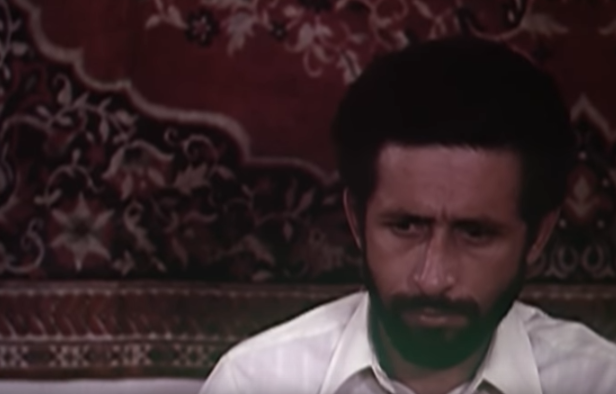
Alternate Best Actor 1980: Naseeruddin Shah in Sparsh
Naseeruddin Shah did not receive an Oscar nomination for portraying Aniruhd Parmar in Sparsh.
Sparsh is a moving understated film about the troubled romance between a blind principal and a social worker...except *insert standard Louis Bollywood musical number statement*.
Naseeruddin Shah takes on the role of a blind principal for a school for children who are also blind. We discover Shah’s initial performance that is defined initially by a quiet kind of grace. Shah’s work has a kind of ease and understated warmth about the man. This as we initially meet him essentially trying to recruit a social worker Kavita (Shabana Azmi) to his school. Shah’s delivery of his kind of “pitch” for his work and his school, is a potent combination of a kind of ease within the sentiment, but also a distinct passion for his work. There’s a type of richness in his expression of a man with this sincere appreciation for his career and his method of helping others with his own condition. What Shah’s performance does so well in these early scenes, other than establishing a likable protagonist, is also the experience of the man in this position and as a blind man. There is a comfort in his manner just in this speaking towards his profession and his thoughts. There is no unnatural emphasis, just a sincere delivery of a man speaking from an honest truth that defines the man’s personal passion.
We see the operations of the school, where Shah expresses the comfort of self in these interactions and experience. We see a man whose blindness does not define him, or at least it appears to not, even as he works specifically within the world of the blind. A crack within this, which I wouldn’t say as a facade more of a specific parameter of comfort, though is found in a moment where Kavita attempts to help Parmar pour his tea. Shah’s delivery of the quick snap at her sharply saying he can do the task himself before returning back to his more affable smile. Shah’s delivery of these moments is essential in revealing the character and crafting depth to the role. Shah’s portrayal of the moment is rather instinctual. It is quick and without hesitation. This isn't really out of character with the affable man we see otherwise. That affable man though has that comfort where Kavita treating him as a blind man changes that dynamic. Shah’s reactions suggest the years of wishing to be treated as any person and not specifically as a blind man in need of help. As harsh as the moment appears he shows a man who has strives for a kind of normalcy, and whenever that is questioned, it is returned to the man on an earlier path in that journey.
This rough patch though seems to be partially satiated as he and Kavita grow closer. Shah and Azmi have a wonderful rather unfussy kind of chemistry. This as there is just a sort of ease in their connection in these moments. There is a sense of care and just really love in these moments of speaking to one another. What strikes through these moments like a sharp whip though is whenever Parmar's abilities as a man are questioned, not by Kavita but anyone around them. These are again portrayed as severe snaps by Shah's delivery that slowly allude to a real desperation created from the man's main vulnerability that leaves him without the innate confidence and comfort he so seeks. This slowly becoming a kind of festering element within the relationship. Shah emphasizes effectively the sense of it as a kind of hanging cloud over the relationship. This as Shah naturally shows the real flaw within the man as he's not completely comfortable within himself, even as he presents so honestly the better qualities of the man when he does have that comfort. What we see though is a natural exploration of the way this relationship, where his blindness frequently comes up, sort of forces this vulnerability out of him that would likely have been more easily hidden under different circumstances.
There is some comfort just by the mere interactions which both actors realize with a natural grace. This as it is just a given of the feelings between the two even as the circumstances keep them away from it. This even though cannot last Parmar is constantly reminded of basically that vulnerability through every moment of their close relationship. Shah's portrayal than though is a man sort of balancing his priorities in a way in which the man is able to live with in order to be as his best self. This as even as he essentially forces himself away from Kavita romantically, we see this all the greater passion towards his task to teach the blind like himself. This passion that Shah expresses so beautifully with a clam yet precise manner. There is really an unexpected result in all of this, and so much in this is Shah's careful portrayal of this. This in presenting the man's festering vulnerability that is eased while also in a certain easing away from what it is that drew out that vulnerability. Shah's work creates the right sense of the conflicting emotions that suggest both growth and compromise in Parmar. It is a moving performance by Naseeruddin Shah as he never cheats his character's struggle. He rather potently shows it both in terms of the man at his most inspirational and in his greatest difficulties.
Monday, 26 April 2021
Alternate Best Actor 1980: Richard Dreyfuss in The Competition...A Best Actor Mystery
Sunday, 25 April 2021
Alternate Best Actor 1980
Monday, 17 June 2013
Alternate Best Actor 1980: Results
Best Scene: Treves first sees the Elephant Man.
4. Jack Thompson in Breaker Morant- Thompson has a simple but showy role bringing the emotional punch to his courtroom scenes.
Best Scene: Major J.F. Thomas's summation.
3. Donald Sutherland in Ordinary People- Sutherland gives an understated and moving turn showing the attempt of a man to hold his life as well as his family together after a terrible tragedy.
Best Scene: Calvin confronts Beth.
2. Edward Woodward in Breaker Morant- Woodward gives an excellent performance showing a courageous gentlemanly soldier, whose capable of horrible deeds.
Best Scene: Morant tells the court of rule 303.
1.Tatsuya Nakadai in Kagemusha- Nakadai gives an amazing performance playing two characters brilliantly one a cunning war lord, and the other an impersonator who has a difficult journey of pretending to be the other man. I am going to face all the wraith of meddling with the grand scheme of things and go my own way this year altogether. I have a confession to make which is watching Ordinary People again really made me lose a lot of my enthusiasm for Timothy Hutton's performance. I still think he is great, but actually watching it this time Donald Sutherland left the bigger impression on me. As for Robert De Niro I do believe his performance is tremendous but its never been a performance that I love. Therefore my very personal win goes to Tatsuya Nakadai.
Best Scene: The Lord and Kagemusha meet for the first time.
Overall Rank:
- John Hurt in The Elephant Man
- Tatsuya Nakadai in Kagemusha
- Robert De Niro in Raging Bull
- Edward Woodward in Breaker Morant
- Donald Sutherland in Ordinary People
- Timothy Hutton in Ordinary People
- Jack Thompson in Breaker Morant
- Lee Marvin in The Big Red One
- Anthony Hopkins in The Elephant Man
- Burt Lancaster in Atlantic City
- John Savage in Inside Moves
- Ken Takakura in A Distant Cry of Spring
- Anthony Quinn in Lion in the Desert
- Naseeruddin Shah in Sparsh
- George C. Scott in Changeling
- Kurt Russell in Used Cars
- Art Garfunkel in Bad Timing
- Tommy Lee Jones in Coal Miner's Daughter
- Kris Kristofferson in Heaven's Gate
- William Hurt in Altered States
- Hector Alterio in El Nido
- Peter Andorai in Confidence
- Hidetaka Yoshioka in A Distant Cry of Spring
- Gerard Depardieu in The Last Metro
- Paul Le Mat in Melvin and Howard
- Gerard Depardieu in Mon Oncle d'Amerique
- Mark Hamill in The Empire Strikes Back
- Brinsley Forde in Babylon
- John Travolta in Urban Cowboy
- Walter Matthau in Hopscotch
- Ray Sharkey in The Idolmaker
- Marcello Mastroianni in City of Women
- Robert Redford in Brubaker
- Stacy Keach in The Ninth Configuration
- Christopher Reeve in Superman II
- Gerard Depardieu in Loulou
- Nicola Zarbo in Palermo or Wolfsburg
- Andrzej Seweryn in The Orchestra Conductor
- Richard Gere in American Gigolo
- Richard Dreyfuss in The Competition
- John Belushi in The Blues Brothers
- Al Pacino in Cruising
- Christopher Reeve in Somewhere in Time
- Jack Nicholson in The Shining
- Woody Allen in Stardust Memories
- George C. Scott in The Formula
- Hans van Tongeren in Spetters
- Maarten Spanjer in Spetters
- Toon Agterberg in Spetters
- Dan Aykroyd in The Blues Brothers
- Steve Railsback in The Stunt Man
- Robert Hays in Airplane
- Omero Antonutti in Alexander the Great
- Robin Williams in Popeye
- Sam J. Jones in Flash Gordon
- Burt Reynolds in Smokey and the Bandit II
- Jack Lemmon in Tribute
- Michael O'Keefe in Caddyshack
- Tom Atkins in The Fog
- Leigh McCloskey in Inferno
- Neil Diamond in The Jazz Singer
- Christopher Atkins in The Blue Lagoon
Alternate Best Actor 1980: Anthony Hopkins in The Elephant Man
Anthony Hopkins plays a relatively simple role here as Frederick Treves the good doctor who tries to help "The Elephant Man" John Merrick (John Hurt) by giving him a play to stay where he will not be abused. Hopkins who is best known for the very much evil doctor in The Silence of the Lambs in this film though plays a doctor whose intentions are only that of a good man. The role of the good man trying to be good should not be something scoffed off as it can be a challenge to not let the character be dull in just being good as well as finding the complexity in a man whose morality is not filled with compromises.
Treves technically speaking does have to become the purely good doctor which is his arc in the film. It is not there is anything wrong with him, but rather he has a fairly fast realization that Merrick should be treated just like any other man without exception. Hopkins though is very good though in this rather short journey that starts out as Treves first happens upon Merrick who he technically uses for his own purposes as an academic. Hopkins is good though by positing how the sympathy works in Treves. Hopkins very much sells the emotional power of seeing a man like Merrick and how it affects Treves.
Hopkins early on though portrays the sympathy that Treves has as very much real but perhaps not fully thought out in terms of what sort of sympathy he has. It is not the sympathy of one many plight but almost for the plight of an animal instead. Hopkins importantly does not make this as something Treves is doing for any malice, but simply he portrays it as having not had the point of realization that Merrick is a man and should be treated as such. Treves quickly finds that Merrick should not be treated in such a way and Hopkins's performance does very much show a truly good man in Treves.
Hopkins is excellent in being a truly good man in Treves and there is a great deal of power in his reactions to Merrick throughout the film. When Merrick finally speaks John Hurt is very emotional as Merrick even in a modest fashion, Hopkins is left to react to what Merrick is experiencing as well as find how Treves feels about his whole relationship with Merrick. Hopkins is very good though in being the face of a man who genuinely cares about Merrick. It is a powerful empathy that Hopkins conveys and he only succeeds in adding emotional weight to the scenes as well as helps amplifies the power of Hurt's performance.
Hopkins does not just support Hurt though as he is lead as as well because the full extent of his Merrick on his life is reflected in his own personal scenes. Treves expresses sorrow for having used Merrick himself in his own way comparing himself to the freak show host. The idea that the already good Treves would accuse himself as being a terrible man himself is made entirely believable and more important understandable through Hopkins's performance. He shows the shame Treves feels in honest fashion and shows his personal struggle to deal with Merrick the right way in an unassuming yet poignant fashion.
Anthony Hopkins performance as doctor Treves is an excellent example of an actor making the most of what could easily be a fairly simplistic character. Hopkins does this by firstly finding what is great in the simplicity and always showing the goodness of his character in an earnest way that succeeds in bringing a warmth and tenderness to the film. He as well though takes the complexities that are in the role uses them to make an in depth view of this man. Treves could have easily been a completely bland or forgettable character but Hopkins makes him an essential facet to this film.
Alternate Best Actor 1980: Tatsuya Nakadai in Kagemusha
Kagemusha is an excellent film about a time in Japan in which various clans lead by war lords try to gain power.
This is the first Akira Kurosawa film that I am reviewing a performance from that does not feature Toshiro Mifune. Toshiro Mifune and Kurosawa unfortunately had a falling out in 1965 and their last collaboration was Red Beard. Although one does have to look at the later Kurosawa filmography and can see that not too many of the films would have really been a fit for Mifune except his two films in the 80's Kagemusha and Ran, although then again maybe Kurosawa would have made films with Mifune in mind if he was still with Mifune but that's another discussion I suppose. Ran and Kagemusha though definitely did have a lead part there ripe for Mifune that was instead taken by Tatsuya Nakadai who could have been seen a successor of sorts for Mifune as he the sorta secondary leading role in High and Low when Mifune had the primary lead.
I guess the first thing that needs to be said is that Nakadai is not Toshiro Mifune. He doesn't have that same type of overwhelming presence that Mifune had. That is not a problem when it comes to this role and Nakadai does still have a strong although not quite as individualistic screen presence. Nakadai is suppose to be both Shingen and his double and look rather very closely to his brother Nobukado (Tsutomu Yamazaki). Both Nakadai and Yamazaki look almost nothing like the way they looked in High and Low. This can of course can be attributed to makeup, the 16th century costumes, and that this film was made seventeen years later, but as well because they don't quite have that distinction Mifune had in his face. You can always see Mifune no matter the costume, the facial hair, or even his age as his piercing eyes alone are a dead give away. Nakadai was probably actually the better choice simply because it is easier to believe there could be more than one Nakadai where two Mifunes might have been a bit of a stretch.
Anyway I ought to forget Mifune as he was never going to play the part when he and Kurosawa would not even speak to each other at the time as well as because Nikadai handles the part his own way. This is a dual role of course and the film opens with a very eerie looking shot of three men who look almost identical one being Yamazaki as the Lord's brother, and the other two being Nakadai as the war Lord and the thief Kagemusha who was spared so he could act as the Lord's double. Nakadai is actually quite brilliant right from the start as he plays the two characters compeltely differently even though they look exactly the same. As Shingen Nakadai has a pronounced confidence in his performance. There is a slyness in him and simply through his manner and self satisfied grin gives us a war lord whose cunning is pronounced.
Nikadai in a few scenes gives us a glimpse of the war lord Shingen and suggests so much more to him in so little time. He has that certain power of personality in his portrayal that shows exactly why the men would follow him as they do. Nikadai is very low key in his portrayal of this yet he establishes very effectively through a certain underlying wisdom in the man along with the blindness of a ruler. Nikadai shows what makes a man of power because he has what is there that allows him to gain and keep that power which is an intelligence and a conviction, but as well what the power will do to any man as there always is an indulgent pompousness that Nakadai brings in Shingen's healthy scenes suggesting that Shingen very much believes he is smarter than everyone around him.
What is outstanding about this performance is the way Nikadai can seem like a completely different man in the same scene despite looking exactly the same. In the first scene we also see Kagemusha who Nikadai is very different because he does not have any of the oppressive qualities that are in the other man, and is a far more despondent and emotional sort. His body language is different as Nikadai plays him as a far less controlled man who is more open in his fears as well as his emotions, and even is clearly less intelligent than Shingen as well. Nakadai also has a certain openness in Kagemusha that cannot be found in Shingen. Nikadai makes Kagemusha a very average man who finds himself struggling in a strange situation, but as Shingen he controls the situation.
His role as Shingen and rather quickly but not without a send off scene for the lord which is very important. In his last scene he is gravely injured and soon will die but does not wish the cause of his clan to die along with him. The presumptive quality is gone and we see just what was always behind him which was a true passion for his cause. It is a very well handled scene because he does show there is something that was worthwhile in the man which is extremely important later on in the film in terms of Kagemusha's actions late in the film. Nakadai lets us see why the men would follow the man's wish through this passion as well as that same underlying power of personality that Nakadai gives to Shingen. After this point Nakadai exclusively plays Kagemusha and we get a very different performance from him.
Nakadai does not just change as the character he plays but even the type of performance he is going for as he is rather comic for quite awhile as Kagemusha first takes over for Shingen. The early scenes as he tries to grow accustom involve some brilliant comedic timing from Nakadai. This works particularly well because he has Kagemusha trying to be the big powerful commander even though he is not and there is a certain falseness to it all that works beautifully. He shows the effort that Kagemusha puts on to be Shingen as he always seems to be trying to be bigger than he is but never being completely believable as the man. There is one great moment in particular when the war lords grandson's questions Kagemusha's validity and Nakadai look of unease and worry is absolutely perfect.
Kagemusha though slowly starts to get the hang of the job and Nakadai has a great deal of fun showing the way Kagemusha starts to have a little bit of fun with the job as well. His portrayal of the ups and downs of the life as the performer are very well done by Nakadai. He always makes the impersonation something very complex though showing that this whole job affects Kagemusha in more than one fashion. There is the act of performance always there with the performance and he strikes the right chord of the man trying to do a good job of being another man who he looks just like without never quite being that man. It is a strange dynamic but one that Nakadai succeeds with incredibly well making Kagemusha's impersonation believable but never just repeating what he did earlier with Shingen.
There are changes in Kagemusha and Nakadai handles these each carefully and never rushes them in any respect. He shows the early mishaps with a great deal of humor but as well brings a very real fear of the whole idea of filling the shoes of the man. The fears is the only time I do have to quickly mention Mifune as these scenes almost seem like they were made for a classic Mifune freak out, as I said Nakadai is not Mifune but he commits himself admirably and still handles this his own way. He has that emotional intensity needed, it is not the same as it would have been from Mifune, but it does not have to be as part of what he does is that Kagemusha is almost petrified by the act of filling in for the dead man so Nakadai more downplayed approach works well in portraying the mental state of Kagemusha.
Kagemusha though due to being in battle is forced to almost become Shingen suddenly. It is a difficult scene but one that Nakadai nails in treading the two characters. He does not become Shingen fully still. An inner power come out of Kagemusha and true passion for what the clan is doing but it is different from that shown by Shingen. Nakadai has this one from that of the passion of a normal man not a master of man, and there is something truly special about the moment because Nakadai brings out of Kagemusha's own soul that is entirely different from Shingen's. This event is short lived as the false Shingen is found out and Kagemusha is sent away.
The last scenes of the film are very impressive for Nakadai as he leaves Kagemusha as nothing left anymore and can only attempt to believe in Shingen's values. Nakadai despondent portrayal is quite moving as Kagemusha has become so invested in the cause he was technically only ever used by, but now has become such an integral part of. Losing his place so suddenly Nakadai shows Kagemusha to be shattered by the event leaving him as an emotional husk. It is handled perfectly by Nakadai because he absolutely has earned through his transformation that showed the investment of Kagemusha that made him the man, and this result could have only come from being instantly thrown out of even the slightest connection with the man. The very sad moment at the end of the film where Kagemusha last desperate attempt to do something for "his" clan is heartbreaking because Nakadai shows it as not the most sensible thing he could have done but the only thing Kagemusha had left to do. I have to admit that I love this performance by Tatsuya Nakadai and it even made me not mind at all that Toshiro Mifune did not lead this Kurosawa film. Nakadai never feels like a replacement here which is very important and he succeeds with this part in an incredible fashion. Technically speaking the Kagemusha could have been very simply just been very simple. Nakadai creates a complex portrait of both a charismatic warlord showing what makes a man of power, and of the impersonators journey which is one of humor, passion, and tragedy.
Saturday, 15 June 2013
Alternate Best Actor 1980: Donald Sutherland in Ordinary People
Ordinary People won best picture as well as Best Supporting Actor for the clearly leading Timothy Hutton, and was also nominated for Best Actress for Mary Tyler Moore and it got yet another supporting actor nomination for Judd Hirsch as well. The only main player in the film unrecognized was the never nominated Donald Sutherland who was probably either knocked out by Robert Duvall's fine work in the Great Santini or Jack Lemmon's terribly overblown performance in Tribute. Sutherland though also may have missed because in terms of the type of acting noticed by the academy he gets the short end. Timothy Hutton gets the big emotional outbursts, Mary Tyler Moore gets to be the almost flamboyantly cold character, even Hirsch gets some fairly juicy lines in his scenes, but what does that leave poor Sutherland.
Well it actually leaves Sutherland as the heart of the film. After the death of one of the sons of the family it leaves the younger son Conrad (Hutton) suicidal and very much troubled, the mother Beth (Moore) who has only become colder and more distant to her son who was never her favorite as well tries to keep her social life just the same, Calvin the father though tries his best to deal with and keep his family together. Sutherland due to this has the most subtle work here in that much of his portrayal of Calvin's feelings are silent especially early on. Sutherland portrays Calvin as just trying to get on his life while still being clearly changed by the tragic event. We see him with his wife at various social events, and Sutherland shows him as man attempting to be there for his wife but his mind is always elsewhere.
Sutherland does two things really well here in that he shows that on one hand Calvin really just does not care much for the things they use to do, although that is all that his wife after seems to care about both through the boredom of his expression as well as his almost boyish enthusiasm when he suggest to his wife that they just defy expectations and do something else for a change. Sutherland is really good because it is not that Calvin is putting on any sort of facade, but rather he is trying but just can't feign enthusiasm for things that just are not on his mind. He as well does allow us to see what is on his mind which is not only the tragedy of the death of his son but the mental health of his living son. Whenever it comes to Conrad Sutherland only ever portrays such a genuine earnestness that establishes properly that Calvin desperately wants his son to get better.
Sutherland has Calvin put on a happy face again not as a facade even though it is not entirely true, but rather Sutherland presents it as Calvin trying to make things work. Sutherland has the right visible effort that he puts into Calvin as he tries to bring the three of them together as a happy family and his cheer is not false but Sutherland suggests is perhaps that Calvin is pushing it a little because he really wants to make the family come together after this awful experience. Of course Calvin himself is not over it, but he does indeed stay quiet about it at least for most of the film. The grief that Sutherland shows comes in a subtle but powerful fashion. It is not the overwhelming grief that Timothy Hutton portrays instead it is a withdrawn yet still palpable. A scene that always stays in my mind is a moment where Calvin thinks back when he stopped a fight between the boys and we see him thinking about it. Sutherland has such a simple expression yet one of man truly haunted by this tragedy.
Through most of the film Sutherland makes Calvin always the one just trying to make it work, and he is terrific in the way he portrays Calvin's methods of working with everyone. With his wife there is a distance but at times a really energy that Sutherland brings to the scenes like Calvin is trying just to get her warm up any way he can. With Conrad he is different but Sutherland once again shows Calvin trying to make it work as he portrays a genuine warmth with him. Sutherland always makes it clear that Calvin absolutely loves his son without exception and only wants the best. Sutherland even shares one scene with Judd Hirsch's psychiatrist Dr. Berger. It is a great scene as Sutherland brings that negotiator quality out of Calvin again as he tries his best to defend his wife's coldness as well as support his son as well. He also very effective allows an underlying uncertainty in this scene suggesting what becomes his path for the rest of his film which is questioning his wife's behavior.
The late scenes of Sutherland's performance is finally when he breaks the mold of Calvin just trying to make it work and starts to confront his wife. Sutherland plays these scenes out brilliantly starting so modestly just asking her in a somber tone why even at her sons funerals she was concerned with unimportant things. This escalates to a much more open fight and again Sutherland is excellent because he absolutely earns the frustrations in the scene because it is something he has been building to quietly from the beginning of the film. Their fight ends though as Calvin once again confronts her although not about Conrad so much and rather their own relationship. Sutherland is outstanding because how he forcefully presses her about her refusal to deal with the family's emotions, but as well beautifully shows how dealing with this conversation which is ending his relationship with the woman he has been with for year is tearing him apart inside.
Sutherland's work here may not have been the chosen Oscar nominated work from this film but he should have been especially over Lemmon. Sutherland gives such a low key yet so very heartbreaking in his underplaying by just getting down to the barest of emotions in a man who is only trying his best to try to get over them and later face them. Calvin attempts to be the glue of the family and Sutherland is the glue that holds the film together acting as a balancing act between the emotional extremes found in Timothy Hutton's and Mary Tyler Moore's performances. He finds that middle ground without ever being forgotten among the fire and the ice that surrounds him. He creates a complex portrait of Calvin Jarrett and fills every scene he is in with an earnest devotion and a true poignancy.
Wednesday, 12 June 2013
Alternate Best Actor 1980: Edward Woodward and Jack Thompson in Breaker Morant
Breaker Morant is an excellent film about three lieutenants court martialed for executing prisoners during the Boer war.
Now I did put Jack Thompson as the only nominee but after the film I feel it is best to review both leads of the film as Woodward's performance should not be forgotten. Woodward as Morant gives often a withdrawn but interesting enough a very emotional performance. The reason for this is that he plays a soldier in the British army. Although he is a special unit mostly composed of Australians to deal with the Boer guerilla fighters he still is a British soldier and still therefore has the manner of a British soldier. it is always something to watch an actor give a powerful performance while still being in the restrictions of their character.
Woodward is terrific in creating Breaker Morant as a character and the history of the man even though that is something we only ever receive glimpses of it. Woodward throughout the film keeps Morant as the perfect soldier in his posture and overall manner. There are breaches of this at times but he is always very firm in being the soldier he would have to be to be the career soldier he is. Woodward is uncompromising in this depiction is something quite special because in his portrayal he shows an emotionally volatile nature in Morant even while he stays in structures of being the ideal British soldier.
We see the killing of the men that Morant ordered to killed in flash back. Woodward is outstanding in these scenes as we see the workings of this man and the way that he came to kill the men. What really drives Morant more than anything was that his friend was killed by the Boer in a brutal fashion and what he is doing is taking revenge out on them any way he could. Woodward is especially chilling because he conveys this violent intensity in these scenes well staying well put together for the most part. When he orders someone to do die he does not yell it, rather Woodward delivers it in a very simple yet harsh fashion as he stays cold on the surface even as he burns inside.
Woodward is brilliant in the way that he makes Morant still such a refined fellow who you would not think would be capable of such horrible actions. Woodward does have a certain charm, and more than that there is always an underlying humanity in his performance. Although he does act professional it is never that of a heartless professional in anyway. When he orders the killings it is not of a passionless man but instead a man whose passions in fact overwhelm him to do such things. Woodward mostly does this through his eyes which are so piercing in the way they portray the emotions in this man so fervently while the rest of his body tries hard to suppress them.
Woodward does not necessarily make you sympathize with the man, but he importantly does make you understand the man. Whenever he explains why he has done such things in the court or in a more private moment with one of the men we can see that where the atrocities came from are quite clear. On one hand there is that sense of duty which Woodward is masterful in depicting. That pride in being a soldier is always something that he brings to Morant with such tremendous affirmation, he shows the soldier who would follow such orders as well as even how the man could keep stay so calm, cool and even witty during his own execution.
In the same man though he does bring out the very human qualities. Whenever he speaking of the killing it is clear that the pain of his friends death is never something he can forget, Woodward makes it something he cannot even ignore. It is something on him at all times. That is not all though and Woodward never leaves him as just a man with a vendetta either. His pain is past that as in the court room scenes there is also a bitterness in him over the refusal of his higher ups to recognize the fact that what he did was part of the duty a duty that he served proudly. Woodward makes the betrayal known in a powerful way in which he both underplays but forcefully establishes these feelings when he admonishes the court.
There is a little more than just the soldier though in the briefest of moments when it is mentioned he was engaged to the sister of his friend who was killed. These are done with the utmost subtly but Woodward makes this moment quite beautiful in his subtle facial reactions. There is an incredible poignancy that Woodward brings to his performance in these moments suggesting there could have been so much more for Woodward if he had not been part of this war. One particularly great moment is when a sympathetic soldier suggests escape to him but he refuses saying "He has been everywhere". It is heartbreaking because Woodward suggests that really what Morant means is he has in actually no where to go as he has no purpose outside the army, and nothing left to go to.
This is a great performance by Edward Woodward due to the complexities that he brings to the part. There is never moment where he just makes Breaker Morant a typical man in any way. He makes him a charming poet with qualities like loyalty and bravery in him, but in the same man there lies hatred and the ability to do some very terrible things. There is never a disconnection and credit must be given to Woodward is that he never demands empathy or sympathy with his performance he lets Morant be Morant. Woodward puts him as a man and lets you judge him any way you wish. Woodward gives a fully realizes portrayal of Morant as human being witt many good qualities but as well many flaws.
Jack Thompson did not receive an Oscar nomination, despite winning Cannes and an AFI award, for portraying Major J.F. Thomas in Breaker Morant.
Apparently the often repeated fact that Samuel L. Jackson won the only award ever for Best Supporting Actor in Cannes is no truer than that Columbus was trying to prove the world was round. Jack Thompson also won the limited Best Supporting Actor award at Cannes for his performance here although I would not put him in the supporting category. His role is technically much more limited and less complex than Edward Woodward's performance but he has the showiest role in the film receiving the most focus in the courtroom scenes as well has several scenes outside of the courtroom from his perspective.
The courtroom, as shown by films like Judgment at Nuremberg, The Verdict and Anatomy of a Murder, can often be a great showcase for acting. This is most certainly true in this film and most of this is brought by Thompson as the Australian Major who defends the three men and tries his best to help them even though the court very much wants to bring their conviction quickly to use them as scapegoats for all the atrocities committed during the war. Thomas though although is the man that the men choose he is not experienced in the military trial as well as not even as this sort of defense.
In the early trial scenes Thompson is rather good in showing Thomas work up to be able to defend them properly which Thompson does very well with his hesitations and nervousness expressed along with an attempt at being properly in charge of the situation. Once Thomas feels confidant though he comes out as the sense of righteous indignation of the film. Thompson has the right style of cross examination showing exactly how Thomas will try to get to his point during the trial which is that the men were following the orders that brought the atrocities rather than the men just going off on their own.
Thompson brings out the point that Thomas is trying to make marvelously through his performance because there actually is not the type of sympathy one might expect from the good defense attorney. Thompson creates a unique balance in that he portrays a certain understanding for the man, but as well a frustration that is very much away from the men and rather a frustration with the authority above them. This distaste in Thompson is effectively portrayed by by Thompson because he really brings it with a force but never making it seem heavy handed either.
The indignation is present throughout but Thompson smartly keeps it underneath his words building to the point in which he comes out with it fully in his dramatic summation speech that tears into the established military for not viewing the atrocities as their own. The speech is a classic courtroom speech and Thompson delivers it with all of the conviction and passion that it deserves. He is unyielding in his resolve and Thompson brings the message that Thomas has been trying to get across the whole trail in remarkable fashion which is one of the best moments in this great film.
We don't learn a lot about Thomas in the film other than he is willing to fight for the men, and hates what is going on around him. Thompson even with his more limited role makes the most out of it through every one of scenes especially in the courtroom. He has that punch that all great performances of this kind due and he really tears into every scene leaving an impression. He is not only great in the courtroom but as well still creates complexities in his character particularly in the moral view held by Thomas as well as his interactions with the men. Thompson never leaves anything just black white in his performance, while still creating the moral high ground within the film.
Tuesday, 11 June 2013
Alternate Best Actor 1980
Anthony Hopkins in The Elephant Man
Edward Woodward in Breaker Morant
Donald Sutherland in Ordinary People
Tatsuya Nakadai in Kagemusha
Jack Thompson in Breaker Morant