Showing posts with label 1947 Alternate Best Actor. Show all posts

Sunday, 24 January 2021

Alternate Best Actor 1947: James Mason in Odd Man Out

James Mason did not receive an Oscar nomination for portraying Johnny McQueen in Odd Man Out. 

Odd Man Out is Carol Reed's other masterpiece, that receives a bit less recognition in general, about an IRA operative on the run after a failed robbery.

Now that description in short doesn't speak the brilliance of the film. The brilliance being that it isn't *just* about the IRA soldier on the run, but rather the way this event seems to influence the entire city around him. Due to this complex perspective however James Mason here probably is one of the least leading leads around. By that alliteration I mean that James Mason doesn't have a great deal of screentime despite his Johnny McQueen most certainly being the core of the film. Now that is perhaps why I placed him originally too low in my original ranking for 47 (although it might've also been me taking less care to those past #1, since no one was every going to take Attenborough's place when he was in 47), but that is entirely unfair to Mason's performance. This as every minute Mason is onscreen, he makes it count. Now in the opening of the film we initially meet McQueen as he's hiding out in a home, preparing for the robbery with his men. McQueen having spent months within the home after having escape prison for previous IRA action. This seems a small scene, but it is essential for Mason's performance, and again he doesn't waste it. This as he creates the essentials of the man in a few ways. One as we see him initially prepping Mason delivers a calm and cool charisma to Johnny. Although Mason was better known for his cold villains at the time, Mason shows a definite range here in creating an innate likability within this moment. This as Johnny speaks to the man with a reserve, but also a sense of understanding as a once proper leader of the men. 

After prepping his men, he's left with his right hand man, and one of the women who had been hiding him, Kathleen (Kathleen Ryan), who clearly bares greater affection for Johnny. His talk with the right hand man, who asks for him to go on the job instead due to Johnny's time inside, Mason's reaction is effective in revealing less charisma and more exasperation in the moment. He speaks with a reserved false indifference to the statement, ensuring him he's fine just as Mason's face reflects the wear the man has received. Still Johnny chooses to go but before has a scene with Kathleen, who actually never state themselves as lovers or the like, but as they are together we are granted this sense. This speaks to the performances of both Ryan and Mason, this as there is just a strong sense of the attraction and warmth within the moment. They speak even not in a directly personal way, rather she just cautions Johnny on the plan, but within the interaction every still is said within their performances. There is a striking sense of the love between them. We won't see them again together until the end of the film, so this scene actually is more important than it might seem. Within it though you are granted in total a real sense of the connection between the two and it is through the natural strength of both Mason and Ryan's performances. Their eyes match and grant a sense of so much of a relationship constrained within circumstance, but still thriving within the two's hearts. 

The actual robbery we see as Johnny approaches and in that Mason's physical work, which is a primary virtue of this performance is even evident before his inevitable injury. This as they walk into the location, Mason carries himself with an uncertainty in his step and awkwardness in his manner as even go by bystanders seems a slightly odd thing to him. The robbery falling apart as Johnny tries to make his escape and becomes disoriented slowing him down enough for a clerk to attack him. This fight that leaves the other man dead, and Johnny shot, Mason portrays as just a broken moment of messy desperation near accident. This to the point when he is then making his escape in their getaway, Mason's distress is potent as he keeps asking if the man he shot is dead or not. This granting a sense of real concern and shame in Johnny, and really the beginning of the end for the man. This as Johnny falls from the car window in the escape, and runs off finding solace in some abandoned structure. While the city searches for him including cops, Johnny's men, Kathleen and some random opportunists, Johnny lays in the building just slowly suffering from his wound. Mason's performance of Johnny's physical decay is remarkable, as we see each step, here in the stinging pain as he lies alone. There is a wonderful moment as Johnny is barely conscious and imagines a local girl as a guard from his prison days. Mason's performance is amazing in his wistful delivery of the past day as some foggy dream. Mason's eyes expressing a man seemingly escaping, by returning to prison of all things, though crafting a state of brief contentment before finding reality again. 

Mason's performance then for a good chunk of the film is nearly silent, having brief moments of just trying to wave people from him or asking for help, however that doesn't at all dull the impact of his performance. This as Mason's face is so powerful in this film. Take a moment as Johnny is still stuck in the place as he watches two lovers hiding in his place seemingly for tryst though the woman relents. Mason's expression captures certainly the tension in Johnny as he expresses concern of being found out, but there is so much more. There is a sadness as he looks upon the couple that seems to suggest the man pitying his circumstances as his life and love is filled with so much more complication and anguish. As we see Johnny wandering around the city, finding random help here and there. Mason's performance captures such a potent growing desperation in every regard. This as his physical manner becomes all the more distressed and labored, and his eyes evoke a man going through more than just physical pain. This as he finds a brief solace in a bar, that doesn't want to come afoul of either the cops or the IRA, Johnny sees his life in beer stains. Mason's performance again finds such a potent sense of anxiety as he realizes the sense of the man seeing how everything has spiraled out for him, this before earning his visceral scream that is built out of more than the nearly festering wound within him. Mason showing a man burdened wholly through his life to this life, and creating this man who seemingly has never stopped being a prisoner despite having escaped from one kind of prison. 
 
Eventually a group of strange men, including a deranged artist and a quirky bird keeper, take him away to repair him slightly through the use of a doctor of sorts, however all the men aren't entirely motivated to help Johnny. Mason meanwhile shows Johnny barely conscious within the affair and nearly dying it seems as his performance becomes shows the life of the man growing ever fainter. This until he's spoken to about his old priest, who wants to see Johnny now to help him, and Johnny has a vision of the old pastor. Mason is downright amazing in this moment, and is one of the best of his illustrious career. This as we see in his eyes, despite staring at a hallucination, Johnny finding some clarity and sense rather than just pain. Mason's expression shows a man reaching some understanding suddenly of the moral betrayals in his life that have left him to this point. This culminating in Mason's awe inspiring delivery of Psalm 23 as recognition of the lessons of the priest he ignored. Mason's work here is outstanding as burdens each word with such potent emotion and meaning. Mason says it with such intensity of feeling and creates a moment of true revelation. Mason makes it this moment of true catharsis as the guilt and anxiety that seemed to weigh so heavily in the psalm, as almost this incredible act of repentance. Johnny is brought along supposedly to see the priest, as he is walked along by the bird keeper. Mason's physical work now is that of a basically a dead man walking. His expression like  a ghost somehow just barely maintaining a moral coil and his movements now of a man just forcing himself to move while his body is actively dying. This as he doesn't meet the priest, and instead finds Kathleen, who is adamant that Johnny not be taken in. We have an extraordinary moment, where we find that chemistry again, now so poignant as Mason shows with all the pain just the hint of true warmth and solace as Kathleen speaks of an escape that isn't far. This is a truly great performance by James Mason. He doesn't have a great deal screentime, however there isn't a moment where you forget his presence. He is a constant, in that he never wastes a moment, whether silent or speaking. This in granting us the sense of Johnny's journey both physically, mentally and emotionally. This in creating such a heartbreaking and tragic portrait of man slowly escaping his life.

Friday, 17 March 2017

Alternate Best Actor 1947: Results

5. Orson Welles in The Lady From Shanghai - Welles's accent is more than a little problematic but he's good when he's silent.

Best Scene: Hall of mirrors.
4. Claude Rains in The Unsuspected - Rains is an easy highlight of the film giving an effectively diabolical performance explaining his villain even as the film fails to do.

Best Scene: A final broadcast.
3. Isao Numasaki in One Wonderful Sunday - Numasaki gives a moving and very honest depiction of just a man going through the ups and downs of a normal day.

Best Scene: At home breakdown.
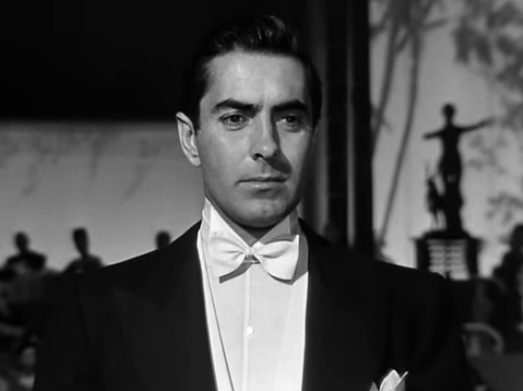
2. Tyrone Power in Nightmare Alley - Power proves himself quite the capable actor in a far more daring role than usual creating the right captivating presence as the performer then the right amoral hollowness as the man.

Best Scene: Cold reading a hobo. 
1. Pierre Fresnay in Monsieur Vincent - Fresnay gives a brilliant performance as he manages to humanize yet still embodies a saint.

Best Scene: Vincent thinks on his faults. 
Updated Overall

Next: Review of Louis Jouvet in Quai des Orfèvres which is when I'll update supporting as well.

Alternate Best Actor 1947: Orson Welles in The Lady From Shanghai

Orson Welles did not receive an Oscar nomination for portraying Michael O'Hara in The Lady From Shanghai.

The Lady From Shanghai is an effective and visually stunning film noir, though like Citizen Kane Welles could've told some of his actors to tone it down a bit, about an Irishman who falls into a strange web of corrupt people by taking a job from a rich lawyer due to his fascination with the man's wife.

After watching Welles's version of Macbeth and now this film I've come to conclusion that Welles and foreign accents aren't exactly chocolate and peanut butter. As with his Shakespearean adaptation he takes upon a thick brogue this time an Irish one. As was his Scottish accent in Macbeth, the accent itself is a bit much, but what is worse is the way it attempts to hide Welles's naturally impressive voice. It creates this odd squishy sound of sorts as he tries to plug his normal voice with his attempt at an Irish accent. You know I always write that I don't mind accent too much unless they are so bad that they are distracting. Well, here an example of that. It's is made worse that Welles also narrates the film with his Irish brogue and it doesn't sound good. The reason being Welles always sounds as though he is putting on this curiously broad accent and unfortunately it is a sour point that it is the first thing we experience from his performance.

This is not a terrible performance though despite his  accent. O'Hara, despite narrating the film, is often a reactionary character within it. We follow him as he enters into this dark world of corrupt men by taking the job on the rich lawyer Arthur Bannister (Everett Sloane)'s boat, due to having previously saved his wife Elsa (Rita Hayworth) from attackers. O'Hara most often observes the rich man, his wife, and the other strange people hanging around. Welles now non-verbally is very good in the role. Welles does well as he internalizes basically this strangeness in his performance through O'Hara as he watches these people. Welles speaks far more effectively when ,well, he does not speak. In this way Welles works well with himself as director in that he is careful to capture O'Hara's state within the pivotal moments which resonate far more than when he goes around speaking in his unnatural voice. Welles expresses the right unease as he interacts with or merely watches the very sleazy Bannister, but does equally well to convey the fascination O'Hara has with his enigmatic wife.

Welles does grant an understanding to O'Hara in mainly only his face and body language to the point that his narration perhaps was not even needed. Welles manages to create this sense of dismay towards basically the amorality presented by the situation, while giving  motivation to O'Hara staying where he is through the entrancement he reflects, rather understandably, to Hayworth's Elsa. Of course the creeps do not end at Bannister as he also meets the man's strange private detective George Grisby who comes to the man with a truly bizarre proposal to fake murder him. Again Welles's work, when he's not speaking, amplifies the atmosphere by offering O'Hara as possibly the only genuine person and portraying such honest confusion as he attempts to grasp the situation he is in. We are also given just a bit background where O'hara has killed before, in a war though, but Welles reflects the discomfort to being spoken of as a murderer when he felt the killing had been his duty. Everything eventually spins out of control when O'Hara finds himself caught in a plot he barely understands, and the final scenes are perhaps Welles's best work in the film. I suppose it helps that he doesn't say much, but he manages to make the ending resonate emotionally by powerfully revealing the sense of betrayal all within still a confused entrancement. Welles excels most in portraying the central "romance" since he realizes the complexity of the attraction to this woman who  This is a good performance, especially well used by Welles himself as the director, but with a less distracting accent I think it could have been a great one.

Thursday, 16 March 2017

Alternate Best Actor 1947: Pierre Fresnay in Monsieur Vincent

Pierre Fresnay did not receive an Oscar nomination for portraying Saint Vincent de Paul in Monsieur Vincent.

Monsieur Vincent tells the true story of a French Catholic priest who dedicated himself to helping the poor.

This is a rather different part than the other two performances I've seen from Pierre Fresnay such as Grand Illusion where he played an aristocratic soldier with a particularly strong connection with his captor, and The Murderer Lives At Number 21 where he played a somewhat carefree detective. Fresnay seems almost unrecognizable in this role compared to those earlier performances. I write almost though because there is the idea of the charisma he revealed in those earlier performances, but utilized in a different way. The film opens with Vincent coming into a village where some are being quarantined off and basically ignored by the rest of the populace. Vincent comes onto the scene almost like a shrewd hero though still to only administer proper priestly duties such as healing and prayer. Fresnay again has that charisma of his other performances but he alters it properly given the man Vincent is suppose to be. In that Fresnay is charming as usual, but in a most unusual way. Fresnay underplays it so elegantly in that he comes across just as well as those earlier performances, yet somehow still maintains the modesty essential to such a role.

Fresnay's work is rather fascinating here in that it is a brilliant example of an actor both internalizing and externalizing in their performance. In that Fresnay's work is often reactionary here, and so powerfully so are his reactions. In the early scene where he tries to save the people from the plague his eyes are so piercing as he watches the people shirking their duties as human beings. What is so incredible though is it is not disdain that Fresnay realizes rather he conveys more disappointment towards those not taking up the duties as they should. Fresnay is careful as this certain condemnation of their actions never feels sanctimonious, though of course Vincent is always very much in the right, but nevertheless Fresnay captures the purity of this intention. Fresnay never seems above it all though and with that is so remarkable. Fresnay is able illustrate so much more about Vincent in such slight reactions. Fresnay never simplifies though with this as even as there is a moment where he must glance into someone's souls, he is just as able to speak with another person just as one human being to another.

Fresnay actually brings a certain humor in Vincent in so many moments, but always in such a generous loving way. Fresnay grants these moments as though Vincent wishes to attempt to share any joy he may have with those around. Of course what Vincent specializes in is finding suffering and attempting to try to alleviate it in some way. After Vincent helps as he can with the contagion, Vincent receives praise and thanks while he only really reacts by informing the villagers that he prayed for their sake as well because of their selfishness, though not in so many words. Fresnay doesn't mock in his delivery nor does he make too ethereal. He makes it a grounded yet earnest declaration alluding the man who wishes for others to be the best individual they are able to be, yet is well aware that may be unlikely with those he speaks to. Throughout the film we witness Vincent as he goes through the years helping one person after, noble, poor, slave whoever needs while not asking for thanks in fact purposefully avoiding it.

Again with this it seems like we should expect an angel among men, and in terms of his accomplishments he kind of is. Fresnay though does not allow himself to be pigeonholed as such in this brilliant work of his. Again this is in terms of how he externalizes and internalizes all that Vincent is as a person which extends beyond his good works, even if that's mainly what the film focuses upon. Fresnay's work feels just as reality since he refuses to be merely an idea of Saint, he instead intends to reveal the man in the Saint, even if that man is quite saintly. Fresnay's work is far greater than the film itself because of this approach. I love the way Fresnay makes the passions in Vincent so very real and palatable. In any scene where he is helping others Fresnay presents such genuine concern in every moment as helps, and the moving quiet joy he expresses when helping those who truly need it. Furthermore though Fresnay also echoes the world Vincent does live in, which is ripe with corruption and contemptible individuals, by providing the right sense of dissatisfaction with those people. Fresnay though is terrific in that he is incredibly incisive in just a glance or a calm remark, such when he is offered a scent candle to avoid the scent of suffering slaves on ship, as he alludes to that disappointment without becoming defined by it. Now that is what I even mean by his humanizing of Vincent though. What is so outstanding about this work is how deeply unpretentious it is despite playing a figure worthy of such pretenses.

Fresnay though gives that humor even almost alluding to his flawless delivery of his various bard from Number 21 in a few scenes where Vincent avoids any direct praise from an old acquaintance. Fresnay always brings these little moments, and they don't even have to be comedic. Even in the grand chambers where Vincent tries to encourage the best out of the "elite" emphasizes an understanding and embracing warmth by his unaffected portrayal of Vincent. Now I did not even mention that this is a story set over decades as we see Vincent age to an old man. Fresnay excels in just another facet of his work as he so gradually ages the man with his performances taking on certain mannerisms fitting to an older man, a squint, a hunch, yet doing it in such a natural way that there is no disconnect from Vincent of one year to the next. The film again is one great deed after another, which Fresnay elevates greatly by his nuanced work, and the film ends actually on Vincent only sort of criticizing himself for still not doing enough to help others. This could be terribly self-indulgent, but it is not at all. Fresnay makes it such a beautiful moment as again it is expressed with only a humble grace. Fresnay's whole performance is an amazing piece of acting as he allows a saint to be man even if he is a flawless one.

Tuesday, 14 March 2017

Alternate Best Actor 1947: Claude Rains in The Unsuspected

Claude Rains did not receive an Oscar nomination for portraying Victor Grandison in The Unsuspected.

The Unsuspected, though fairly well directed by Michael Curtiz, is a very oddly written thriller about the murders surrounding a mystery radio host.

The Unsuspected is so strange as it opens with brutal murder of the radio host's secretary. The film than proceeds to introduce a set of characters all around the host, Rains's Victor Grandison. It seems like it's building a mystery with these introductions of the suspects and even with Rains's first scene where Victor delivers one of his shows. Rains's voice seems so fitting for such a broadcast with Rains emphasizing every word to give a real certain ominous quality and as he warns about the "unsuspected" is quite something. The thing is, despite this set up, there isn't a mystery. and I don't mean just because Claude Rains is in the film, he's actually not the initial killer in the film. It reveals quite early, rather nonchalantly, who the killer is, a handyman who works for Victor. It further reveals that Victor himself is complicit since he figures out who the killer is yet only blackmails the man to do his bidding. The film then proceeds to follow Victor as he seems to try to kill everyone within his extended family for a reason that is never quite specified past Rains's performance.

The film honestly probably wouldn't have worked at all with its main cast being, while not bad, rather forgettable for the most part, if it were not for old Claude Rains being in this role. Rains basically is there to carry the entirety of the film, and is the only thing that really comes across all that well past a few atmospheric shots crafted by Curtiz. This is kind of Rains unleashed in a way though. In his scenes where Victor is interacting with his family Rains brings such a suave command as you'd expect from him. There is just the right assurance and style to his work that is perfect for this type of patrician radio host. To be entirely truthful Rains frankly seemed like he should have hosted a mystery theater at some point given that he brings the right sort of dark elegance for "murder in a mansion" style stories. Rains, as the surface Victor is more than he should be, and by that I mean by his sheer charm he makes some fairly tepid material engaging. Rains offers a real energy to role that is much needed to the film, although he extends that to further than merely Claude Rains being his usual amazing self.

Rains extends that energy to actually make sense of his character, who really doesn't make any sense just by what is written in the film, and with a lesser actor in the role the character would have fallen wholly flat. The thing is Victor goes about wanting to murder everyone in ways in which he makes everyone else look like a suspect or makes their deaths look like suicides. Again this is never explained but Rains's explains it through his rather brilliant performance. Rains throughout these scenes very carefully portrays them to convey the motivation all wordlessly of course. Rains does not simply have Victor set up the murder, nor does he portrays the sort of psychotic behavior you may expect, although his behavior is obviously that as well. Rains in the murder scenes does not even show any malice instead he's quite chilling by portraying instead this fascination in Victor in the act itself. He does grant a creepy joy as he does this, with that energy he has in the role, but again Rains depicts very carefully as Victor getting a kick out of the whole process. Rains makes sense of the character by showing this host who has become with obsessed with doing what he has only ever spoken of, and also makes a rather entertaining villain while doing so. I won't say he quite saves the film, but it is relatively easy to get through due to his dutiful work as always.

Sunday, 12 March 2017

Alternate Best Actor 1947: Isao Numasaki in One Wonderful Sunday

Isao Numasaki did not receive an Oscar nomination for portraying Yuzo in One Wonderful Sunday.

One Wonderful Sunday, if you'll forgive the repetition, is a wonderful bittersweet film about a young couple attempting to spend the day together with very little money.

One Wonderful Sunday is Akira Kurosawa's last film before his first collaboration with the one and only Toshiro Mifune, and concerns a far more average sort of individual as played by Isao Numasaki, an actor with few credits to his name. The film follows very simply a day between the man, Yuzo and his fiancee Masako (Chieko Nakakita). One of the reasons I so enjoyed the film actually was how natural and simple of a film it is, aside from its questionable choice to break the fourth wall. A great deal of credit for this needs to go to Numasaki and Nakakita for this. We are introduced to the two of them as people who want to be together, this is not about a growing romance the romantic angle is suppose to be a given. It is given because of their chemistry with one another. This is very notable though because they do not create this sort of grand love for one another rather they establish the time the two have been together instead. There is the right comfort the two bring in their interactions that suggest simply the right understanding that they love each other to the point that they don't really even need to say it all that much, it is indeed a given.

Numasaki's performance actually made me a bit surprised he has so few credits to his name given just how genuine he is as a performer. He brings this innate likability to Yuzo because he comes across as such an honest sort. There is nothing in Numasaki's work that ever seems off in the least and it's with this that helps the film work as well as it does. Numasaki is able to create such sympathy by feeling so real in his performance. Numasaki has such a downright perfect sort of screen presence by having such an easy and unassuming performance style. Never does it feel like you're witnessing this sort of character, instead you're simply watching a man attempting to go on this date of sorts. Numasaki simply is Yuzo here as Nakakita simply is Masako, and together they are this young couple. Importantly though Numasaki though still is always engaging never becoming stale in his portrayal instead he finds what is so interesting in the understated man that Yuzo is. Now with this date of sorts we are given the tone of the film which gives us the bitter with the sweet.

Isao Numasaki's performance is incredibly effective in terms of capturing every situation with such intimate detail and nuance. In the early scenes he's incredibly moving by portraying the quiet shame in the man, an his loss of enthusiasm as he speaks about their lack of money that makes it so they not only can't live together but can barely do much on their date. Numasaki is very good in establishing the somewhat sorrowful state of Numasaki which he portrays in such a quiet yet affecting way. Numasaki carefully avoids any melodrama in this showing it more of Yuzo's predisposition to start thinking of his troubles. Numasaki shows this so authentically in the way he just sort of seizes up in his whole physical state and only speaks in these somber tones. Numasaki does not overwhelm yet presents this as the place Yuzo basically reverts to whenever he's reminded of just how little he has. There are times for distraction though as Yuzo decides to join a children's baseball game. Numasaki is incredibly endearing in the scene by bringing such enthusiasm in this moment of fun. This is quick transition when this happens yet Numasaki makes entirely work by just how genuine he is in the part. Numasaki so well realizes the way a distraction of joy can exist from time to time even when in a bad state overall.

Numasaki's performance finds the right wavelength of sorts as he creates a believable dynamic throughout the day/film. He so convincingly falls to his lowest point in a heartbreaking scene where Numasaki shows the sorrow overwhelm him for a moment, as he even lashes out a bit at Masako. Numasaki again does not overplay importantly instead playing the moment in a subtle fitting to a man being drowned in his sadness. He is pulled up from it but again Numasaki makes this so eloquent and gradual. It never seems like a requirement of the film, it feels like what should happen next and that is through Numasaki's convincing performance. Numasaki even manages to fulfill the other extreme near the end of the film where he becomes his most jubilant by faking conducting an orchestra to be entertained by. A very poignant scene as Numasaki though does not show a madness there, but rather just instead reflects a man gaining back just the right amount of hope in order to find some joy in life again. This is beautiful work from Numasaki as it represents the highs and lows of life with such grace, creating such powerful empathy for this story of two people simply trying to share a day together.

Friday, 10 March 2017

Alternate Best Actor 1947: Tyrone Power in Nightmare Alley

Tyrone Power did not receive an Oscar nomination for portraying Stanton "Stan" Carlisle in Nightmare Alley.

Nightmare Alley is a fairly effective film noir about an ambitious carnival barker, and is a film I'd actually love to see a remake of as I 'd feel there would be quite the potential with this material altered for a modern context.

Tyrone Power has not been a favorite actor of mine, in that I find him to be a very bland leading man almost every film I've seen him in, with the exception of his supporting role in Witness For the Prosecution. The question though was that fluke? Well with Nightmare Alley Tyrone Power might share a great deal with fellow onscreen Jesse James, Brad Pitt. In that perhaps he's a terrible romantic lead hiding quite the capable character actor. Well Power is lead here, but this is not his typical leading turn as the goodhearted pirate, the goodhearted war veteran, the goodhearted aristocrat or the goodhearted Zorro. Here we meet Stan who initially seems potentially like a more traditional Power role, but to be honest with a bit more zip than usual as we see him perform as the carnival barker by introducing a mind reading act. Any such idea though is soon broken as we see Stan attempting to find the secret code used by the "mind reader" and her drunkard partner, and here's where we see another side to Power, the side of Power I like to see quite honestly.

Power is rather interesting in that in those roles where he's a playing charming guy he's not that charming, but here he is yet in a very particular way. Stan goes around seducing two women of the circus and old Stan does it with ease. Power is convincing in this but what so special about is the way he plays the trick on the women really. There is something so nefarious about the way Power does it as he offers such words of warmth and love while his eyes seem as though they are looking for something entirely for his own selfish ends. This is only the warm up act for Stan though as it seems his powers (no pun intended) of persuasion are only are on the grow. This is indicated early on in a scene where he cold reads a local Sheriff to prevent him from shutting down the circus. Power is quite honestly incredible in the scene in a way that his distinct to Power, and that is what makes it so effective. As he goes about telling the Sheriff his inner most thoughts the oddly specific precision of Power's deliver gives it this otherworldly quality as though Stan really doing it all himself, though of course he's not.

Stan's ambition only grows though as he goes off to become a performer along with his sort of forced upon him wife, to act as a higher class "mind reader". Again Power is so good in these scenes by actually playing into what usually is a weakness in his performances which is that certain detachment. Power here though makes such a strong use of it as though Stan in these moments is above all mere mortals. Now this is not an accidental stroke of luck because, as with Witness For the Prosecution, Power off sets these moments with his scenes off stage so to speak. Power does not have anything ethereal about it as he rather bluntly portrays Stan for what he truly is, just a selfish man who wants more, only more. Power here brings the emotion, though of course this emotion is not the most pleasant to be seen. Power reveals a lust in Stan's eyes as he describes his intentions to only become an even greater sort of "showman" to the public, as he reveals a wholly amoral desire in Stan. Power makes no apologizes in this as he speaks of his potential dupes with a considerable disdain.

Something that I really like about this performance is that Power really doesn't grant any silver lining to Stan, other than he's not more evil than he already is. He stays with him even as Stan begins to act as though he can speak to the dead, even using it to try to dupe a skeptic. In the scene where Stan summons the man's dead sister, played by Stan's wife, Power is great as he only acts as the showman pressing for a greater reaction in the man while revealing no hesitations even as the man begins to breakdown mentally. Power even continues this after Stan has been found out for the fraud he is, and does not take use the final scenes of the film to show the "real nice guy beneath the surface". Instead Power shows just a bitter man who can still occasionally pull off a nice trick or two but only to impress his fellow hobos. There's one especially remarkable moment where Stan cold reads a fellow drunkard and Power still shows that Stan has it making it all the crueler as he stops the act while the man is still transfixed. Power brings a real viciousness to his hatred to his own plight, and reflects just how wretched of a state the man is in. This leads Stan to go back to the circus where he accepts the only job that is offered to him, the lowest one in the circus, the geek. Power is exceptional in the scene as he agrees with again his fake smile of a true showman, but this time he's laughing only at himself. The film ends with an unneeded last minute switch, and given the Hays code I'm surprised Stan got such a "happyish" ending even. Nevertheless before the last minute switch we get Stan at his worst as he breaks down in an alcoholic rage and well Power nails the scene. He goes all the way in being a complete wreck just lashing out, and Power is terrific mess. Of course Power also this entire role. This isn't an actor playing into his weaknesses, rather it's an actor apparently playing the type of role he always should have played.

Wednesday, 8 March 2017

Alternate Best Actor 1947

And the Nominees Were Not:

Tyrone Power in Nightmare Alley

Claude Rains in The Unsuspected

Orson Welles in The Lady From Shanghai

Isao Numasaki in One Wonderful Sunday

Pierre Fresnay in Monsieur Vincent

Thursday, 12 July 2012

Alternate Best Actor 1947: Results

5. Cary Grant in The Bishop's Wife- Grant never falters in his portrayal of a just about perfect character. He brings a great deal of charm, and wit to the role that makes it an absolutely winning performance.

Best Scene: Dudley first meets the Bishop.
4. Robert Mitchum in Out of the Past- Mitchum gives a strong commanding performance that perfectly fits his world weary on screen persona.

 Best Scene: Jeff finds out Kathie has come back to Whit.
3. Rex Harrison in The Ghost and Mrs. Muir- Harrison is terrific in his role bring both mysterious as well as quite humorous in the role of the titular entity.

Best Scene: The ghost complains about the cause of his death.
2. Charlie Chaplin in Monsieur Verdoux- Chaplin finds just the right tone to brings the life his cynical but also humorous serial killer who treats his murders as just a normal job.

Best Scene:  Verdoux defends his murders.
1. Richard Attenborough in Brighton Rock- There was no question here of who was the very best of year with Attenborough tremendous performance as a young thug. Attenborough gives a striking performance that never strives from the harsh truths of his character.

Best Scene: Pinky's hit goes wrong.
Overall Rank:
  1. James Mason in Odd Man Out 
  2. Pierre Fresnay in Monsieur Vincent
  3. Ronald Colman in A Double Life
  4. Tyrone Power in Nightmare Alley
  5. Charlie Chaplin in Monsieur Verdoux
  6. Takashi Shimura in Snow Trail
  7. Rex Harrison in The Ghost and Mrs. Muir
  8. Robert Mitchum in Out of the Past
  9. Isao Numasaki in One Wonderful Sunday
  10. Cary Grant in The Bishop's Wife
  11. Claude Rains in The Unsuspected 
  12. Bernard Blier in Quai des Orfèvres
  13. Robert Montgomery in Ride The Pink Horse 
  14. Cary Grant in The Bachelor and the Bobby Soxer
  15. James Cagney in 13 Rue Madeleine
  16. Robert Mitchum in Pursued
  17. Edward G. Robinson in The Red House
  18. Edmund Gwenn in Miracle on 34th Street
  19. David Niven in The Bishop's Wife
  20. William Powell in Life With Father
  21. Burt Lancaster in Brute Force
  22. John Garfield in Body and Soul
  23. Orson Welles in the Lady From Shanghai
  24. John Payne in Miracle on 34th Street
  25. Humphrey Bogart in Dark Passage 
  26. William Powell in The Song of the Thin Man
  27. Danny Kaye in The Secret Life of Walter Mitty
  28. Michael Redgrave in Mourning Becomes Electra  
  29. Joseph Cotten in The Farmer's Daughter 
  30. Lawrence Tierney in Born to Kill
  31. Dana Andrews in Boomerang! 
  32. Fred MacMurray in The Egg and I
  33. Victor Mature in Kiss of Death
  34. Dick Powell in Johnny O'Clock
  35. Robert Young in Crossfire 
  36. Robert Ryan in The Woman on the Beach
  37. Gregory Peck in The Paradine Case
  38. Lon McCallister in The Red House
  39. Gregory Peck in Gentleman's Agreement
Next Year: 1965

Alternate Best Actor 1947: Richard Attenborough in Brighton Rock

Richard Attenborough did not receive an Oscar nomination for portraying Pinkie Brown in Brighton Rock.

Brighton Rock is a very effective crime thriller about a young criminal who tries desperately to cover up his murder, which becomes far more complex than he bargained for.

Richard Attenborough despite having a very long career as an actor has been only ever nominated for producing and directing Gandhi. He never once was nominated for his acting efforts despite winning two golden globes. Attenborough though is another prolific actor whose efforts deserve to be noticed here, particularly his performance here that came early in his career. Of course it would be difficult for an actor to be noticed for this role, even though to be fair Ronald Colman murdered someone in A Double Life, but I suppose at least he did it by going completely insane. Attenborough's portrayal of Pinkie though is cold blooded from the start.

Attenborough creates a terrific portrait of this very young criminal in charge of a gang of men. When we first see him Pinkie actually is not the one standing ready to order the others around as their leader as they go to search for someone they have very ill intents for. In fact he is sitting in a bed, but his very first glimpse is unforgettable nevertheless. Attenborough makes it clear from the very beginning of the film who will be in charge of the story, making it obvious from the start that Pinkie always will do things his way. When he and his gang for approach the man they have targeted, Pinkie is in the corner almost looking away, yet Attenborough is easily the most magnetic presence in the scene.

Attenborough does something amazing in his portrayal of Pinkie which is both bringing the life the thug completely to life, but still enabling his character to be truly charismatic. As the thug Attenborough does not make a single excuse for his character, nor does he try ever to hide just who Pinkie is. In his eyes there is nothing but a psychotic. Some killers in film show that a man can be normal but can be brought about to violence, but Attenborough shows a man who seems to be constantly having to hold back his hidden murderous feelings. There is nothing good about Pinkie, Attenborough does not want the slightest bit of sympathy from the audience.

The amazing part though is Attenborough is absolutely watchable in the role, and as distasteful as his character is the charisma Attenborough has in the role voids this. As horrendous of a man as Pinkie is Attenborough has a presence here that absolutely controls the screen. You can't help but watch Attenborough here no matter how horrible of things that Pinkie does along the way. He has an incredible sway in his performance where he even makes it entirely convincing when he even tells someone to commit suicide for him. Obviously this is an unlikely thing to do, but Attenborough has such allure in the role it seem entirely possible.

An important aspect of the character of Pinkie is that he is a completely selfish character, but he asks almost everyone around him to do something for him. This is the most true in that Pinkie goes about seducing a young waitress Rose who has information that can send him to jail. I actually think that in this relationship might be a time in which many actors would try to make Pinkie likable in some way or hint that there may be more to him. Attenborough though never strives away from the truth of the character which is he is the lowest of the low any love he shows for her is just to get his end nothing else. Attenborough makes the center relationship painfully truthful in that behind any sentiment of love Pinkie might show to the girl, there is always disgust behind it.

As a villain Attenborough makes Pinkie coldly efficient as a killer. Attenborough though shows that all Pinkie is a psychopath he really does not ever push the idea that Pinkie is enjoying the killing, nor does he show that Pinkie is disliking it either. Rather Attenborough chillingly shows that it is simply just that is what Pinkie is doing simple as that, in the same way he would be doing anything else. There is no hesitation in Attenborough's performance even though both he and Pinkie are very young men. Attenborough most of the time does not factor in his age except for when something does not go according to plan for Pinkie.

These moments are made especially powerful by Attenborough because he really shows the true nature of Pinkie. The youth of Pinkie does appear along with the inexperience. Every time something goes terribly wrong for him Attenborough portrays it as utter surprise in Pinkie's mind, showing that Pinkie always believed he was on top of everything. When he really gets into trouble due to a failed plan Attenborough brings out just what a pathetic sort Pinkie is. The show of confidence and strength of before leave and Attenborough brings him into nothing more that a lowly brat who has gotten in over his head. This is absolutely compelling work from Attenborough that makes Pinkie into a very memorable creation because he never once cheats his own character portraying him that exact way he should be to the bitter end.

Wednesday, 11 July 2012

Alternate Best Actor 1947: Cary Grant in The Bishop's Wife

Cary Grant did not receive an Oscar nomination for portraying Dudley in The Bishop's Wife. 

The Bishop's wife is an enjoyable and heartwarming tale about an angle who helps a Bishop (David Niven) who has become distant from his wife (Loretta Young) while attempting to get a Cathedral built.

I must say one great joy of doing these alternates is getting to revisit performances by actors who were constantly snubbed by the academy. Cary Grant is the biggest who was nominated only twice, was not nominated for this performance despite this film received five nominations tied for the second most of the year, including picture and director. I suppose Grant just never was the Oscars cup of tea after all Grant was only nominated for an decidedly non Cary Grant role in None But the Lonely Heart, I suppose they figured they rewarded enough of Grant for his performance in the weepie Penny Serenade.

Cary Grant here portrays the angle who helps the titular character finds his way, and bring him back to properly appreciating what he has. In a way you could actually say that his role is an expanded version of Clarence from It's A Wonderful Life, although Dudley here is far more confidant of an angle. In fact he is quite sure of himself as he should be as he absolutely knows how to handle the situation. He knows exactly what to do at every point of time, never failing to fulfill what needs to be done for the good of the bishop or anyone else he happens to simply pass by.

Grant really does portray his character on basically one note. Now this is not in the negative of being a one note performance since Dudley would be portrayed incorrectly if he showed a very wide range of emotion he is practically a perfect character therefore he should be portrayed in a very much contained fashion.The funny thing was originally Niven was going to be Dudley and Grant the Bishop, well that in a way shows what works so well about Grant's performance, Niven would perhaps seemed a bit devious in the role, whereas Grant finds the perfect tone for his character.

Grant uses just the right degree of his unique and quite remarkable charm. It is in a low key style for Grant and does not use it to the almost controlling fashion, here though Grant uses his charisma to make Dudley properly otherworldly. There is something truly special in Grant's little smile, and twinkle in his eye that effectively conveys the wondrous quality of this angle. He does not overplay the perfection of Dudley too much, because he shows in such a quiet way. His performance never makes Dudley boastful or prideful but in a way appropriately meek and quite likable in his style of just being so helpful.

It is not the most complex of roles but Grant is absolutely spot on with his performance all the time making Dudley the likable presence he should be. Dudley never seems like a phony or saccharine character either, Grant always manages to make every one of his character appropriately heartwarming without every overplaying him or underplaying him. He fulfills his role all the way through. Now by the nature of the character he is not an especially complex character, even his later scenes where he shows that he may be in love with Young's character, Grant plays that as genuine but still part of Dudley plan to make the Bishop realize what he has been missing. Nevertheless Grant makes the absolute most of his role, and achieves something quite special with the role that could fallen quite short in lesser hands.

Tuesday, 10 July 2012

Alternate Best Actor 1947: Charlie Chaplin in Monsieur Verdoux

Charlie Chaplin did not receive an Oscar nomination for portraying the titular character of Monsieur Verdoux.

Monsieur Verdoux is a film about a man who marries than murders rich old women to support his own family.

In a strange way many histories of Chaplin it always seems that his filmography ends with his first sound film The Great Dictator. Chaplin though did make a few more films after that film including this one. This is a particular film for Chaplin where his character has absolutely no connection with his character of the Tramp, the barber in Dictator held many similarities to the tramp. Something else important is that there is not a great deal of slapstick humor which permeated through all of his older silent films, and even most of the Great Dictator there is not a great deal of it found here in this film though.

There quite a bit of it at the very beginning of the film when Chaplin's Verdoux first appears in the film. Chaplin almost seems to ease the viewers in to his role here by giving us some of the good old Chaplin here, which is certainly enjoyable as he does his usual physical work well as his excellent comedic reactions. Now as with his other two performances that I have reviewed I must say a great deal of what makes this work is Chaplin's direction of these scenes. Nevertheless this sort of comedy is reduced to a minimal form for a Chaplin film, and we are brought into the world of this very different character for Chaplin.

It is easy to see why Chaplin carefully brings us into this new character for him as Monsieur Verdoux is not just someone a little different from his lovable Tramp character but instead a unrepentant murderer. Although of course Chaplin's character can easily be described as a villain he is indeed the protagonist of the film, and the only character we ever really get to know. Every other character are pretty much just straw people impossible to really sympathize with, therefore making it rather difficult for us to truly hate Chaplin's Monsieur Verdoux. This is of course very clever writing and direction on Chaplin's part, but his performance as well does greatly contribute to this.

Chaplin does not portray his character as evil or as good. He is a murderer, but at the same time he is always caring about his family, Chaplin though never makes him to be a villain or a hero of the film. He instead wants to make a very particular creation that never apologizes for his crimes in any way, but nor does he particularly make his character ever obviously taking pleasure in it. Instead Chaplin portrays Verdoux in an entirely satirical fashion, portraying his serial killer as nothing more than a business man. I have referred to men carrying out crimes in this fashion before, it is not even in the cold calculated sense of the word, but  rather just as a pretty standard day to day casual business man.

It is in this approach where the satire comes from as when he is going to make a killing in the market Monsieur Verdoux literally makes his killing from killing. Chaplin is actually quite excellent in finding the right tone for his character. He actually does take his character seriously, but does not mind putting in bits of physical humor whenever he wishes as well. Chaplin handles it all in a very low key fashion, never overdoing the comedy but always making it a part of his character. It is a bizarre but very effective dynamic he creates within the strangeness of Monsieur Verdoux.

Chaplin is almost oddly compelling here as he shows Verdoux go about his business. Whether it is murdering one of his wives casually, or even just keeping another one in line he does it with the same peculiar style that brings to life this character. Chaplin makes what is a horrible murderer completely watchable with his unique portrayal that could only ever be brought about by Charlie Chaplin. He is particularly excellent late in the film as all of Verdoux's efforts have become pointless as he loses all his money to the depression and both his wife and child die. The degree of humor is completely lost, and there is only cynicism left toward the world. In the end is when Chaplin does become quite chilling in how pure and unforgiving he makes Verdoux's belief in the whole world leaving a very striking impression at the end. This is not the widest performance in turns of sides of the whole of this man, but more of finding an incredible note of fatalism that is very memorable especially coming from the tramp himself.

Monday, 9 July 2012

Alternate Best Actor 1947: Rex Harrison in The Ghost and Mrs. Muir

Rex Harrison did not receive an Oscar nomination for portraying Daniel Gregg in The Ghost of Mrs. Muir.

The Ghost and Mrs. Muir is a very enjoyable as well as later moving film about a widow Lucy Muir (Gene Tierney) who moves in a secluded home with her daughter (Natalie Wood) which seems like it might be haunted by its deceased owner who was a sea Captain.

Rex Harrison is the titular ghost of the film, and for the first twenty minutes we do not see him only rather are we alluded to his presence. At most we hear of him is a fierce haunting cackle of the apparition.This is until he finally confronts Mrs. Muir directly one night in full view, and we find out the true nature of the ghost. Well it turns out that the ghost is not nearly as scary as the haunting earlier might have suggested being in no way an evil spirit. In fact the ghost of the sea captain Daniel Gregg is quite down to earth for something of his sort anyway.

Rex Harrison is excellent here, and his style of acting is a perfect fit for this film and the role of Daniel Gregg the ghost. Although he is properly spooky and scary in his early laughs but the moment he finally starts talking he eases into the rather casual tone of the ghost well. Harrison is terrific here because he just does not simply stop being a ghost, he effectively conveys an otherworldly quality to his stares and manner particularly in the first time we see his face, but he always humanizes Gregg at the same time. Rex Harrison's casual fashion of acting is perfect in expressing just how human Gregg is.

When Harrison is telling about Gregg's whole haunt is just to keep people out of his home, and that he really did not commit suicide but rather just accidentally kicked over a kerosene later he does it all in a distinctly non ghostly manner. He is instead quite matter of fact so matter of fact that he is actually quite amusing. He does not show any real anguish over his death, the sort of man the Captain is he shouldn't, but Harrison amusing portrays it as a low key annoyance over more of the perception of him after his death more than the death itself.

Harrison portrays the part of Gregg as an old sea salt in his manner and accent, and I must say that he does it pretty well. Although his accent is not always especially consistent it does help in expresses just who Gregg was before his untimely demise. Harrison has just a great deal with the mannerisms and the sometimes crudeness of Gregg who inherited it from being a sailor in life. Harrison gives no apologizes for his character's behavior, and clearly shows that Gregg is perfectly happy with the sort of man he is. He was a man's man, and Harrison shows that the Captain is proud of it.

Most of the film though focuses on the Ghost's relationship with Mrs. Muir. Tierney and Harrison have a nice chemistry here, and their dynamic works well for the film. Her showing at first a great deal of amazement, but Harrison showing Gregg being slightly impressed by her, but mostly just bemused by her company. They play off each other well as they make various trades to allow her to live in his home, but in turn he will stop being a haunting nuisance. It is a most comedic dynamic at first and Harrison's playful performance plays off Tierney's straight one well.

Slowly though their relationship does grow as they come close in their schemes together. Harrison eases into a transition of Gregg being just a little bit amused by her, but than slowly falling in love with her. Harrison effectively shows a hesitation though in Gregg affections he gains slowly. This is not from the Captain not being sure of his love or anything similar, but Harrison bluntly shows that all Gregg is doing is being a bit angry that he cannot go any further because well he is a ghost after all.

After the seem to slowly drift apart due to their living and dead difference, Harrison carefully brings back the mysterious quality he had at the very beginning of his performance. He eases back into it sadly showing the realization of Gregg that his time with Mrs. Muir has passed. Harrison portray of the Captain's final goodbye is particularly moving as he honestly brings to life both the genuine affection the Captain feels for her, but as well he conveys the force that separates the two of them. It is a heartbreaking moment, and effectively makes the ending all the more joyous. This is a very strong performance by Harrison who finds perfect tone for his performance that easily could have been played too much for laughs, or taken the material too seriously. Harrison knows just how to play him in this very likable and entertaining portrayal.

Sunday, 8 July 2012

Alternate Best Actor 1947: Robert Mitchum in Out of the Past

Robert Mitchum did not receive an Oscar nomination for portraying Jeff Bailey in Out of the Past.

Out of the Past is a well made and interesting film noir about a gas station owner in a small town whose past comes to haunt him.

At the beginning of this film we meet Michum's Jeff who is just a gas station owner in an unassuming town who is going out with a local girl and just apparently content with this small town life. Mitchum is convincing enough at being just a man enjoying this life, but he also of course shows that there is much more to him found in history. Quickly though Jeff tells of his past in which he was a private detective working for a shady man named Whit Sterling (Kirk Douglas) who hires him to find his girlfriend Kathie Moffat (Jane Greer) who he claims shot him and stole 40,000 dollars from him.

Jeff quickly finds Kathie but finds that he is quickly drawn to her, and hesitates in informing his employer. Mitchum is good here in showing the Jeff of the past who seems happier and quite invested in this relationship. This is not some sort of big romance that seems larger than life by any means, but there is some connection there between them. Mitchum does not portray this as really Jeff love of his life, but something he can't help but fall into here as it just seems something so natural and easy to do. Mitchum makes it a bit more of circumstance than of unending passion.

When first confronted of this situation in this past scene Mitchum does not have a particular calm and cool here that works well in showing really that at this time Jeff has not learned to handle such situations. When he lies to Whit about Kathie there is an uncertainty in him that Mitchum portrays as Jeff not being entirely in his element here. Mitchum usually is an actor who cannot be messed with by anyone due to his remarkably strong presence, but early on he effectively makes Jeff not entirely capable of maneuvering within the twists and turns of the noir world.

Mitchum's usual presence though does come out as we see Jeff after has had his own problems due to a double cross and the results from that. When he gets back involved in the plot Mitchum shows Jeff quite differently as he becomes extremely cynical in his portrayal. Jeff does not seem to care about what is going on, and seems very embittered by the whole affair now, and Mitchum world weary face fits this attitude perfectly. Mitchum makes it clear that Jeff only really is now involved with the whole thing because he is in too deep from before.

Mitchum effectively conveys this sad state of Jeff for the rest of the film, but at the same he also bring about the change of Jeff's abilities within the world. He has learned from his experience and Mitchum commands most of the rest of the film. When Mitchum takes over he really takes over, and he does not leave a question to Jeff abilities to maneuver through the plot. Mitchum shows a great intelligence in his performance convincing that Jeff would be able to be the man in charge, even though all the while he still is in a rock and a hard place due to what happened in the past.

If I were to have a complaint, and I really don't, the film has moments where they proclaim that Jeff is in some way bad. There really is not anything that really would say that he is in any way a troublesome man, but this is just a minor flaw in the film that really with Mitchum's portrayal. Mitchum really is very strong in the role, and he is a great noir hero who is easy to follow through his sad journey. I won't say that this is Mitchum's greatest performance by any means, but it is an effective performance which spotlights his unique screen persona very well.

Saturday, 7 July 2012

Alternate Best Actor 1947

And the Nominees Were Not:

Cary Grant in The Bishop's Wife

Richard Attenborough in Brighton Rock

Robert Mitchum in Out Of The Past

Rex Harrison in The Ghost and Mrs. Muir

Charlie Chaplin in Monsieur Verdoux