Showing posts with label 1954. Show all posts

Tuesday, 18 January 2011

Best Actor 1954: Results

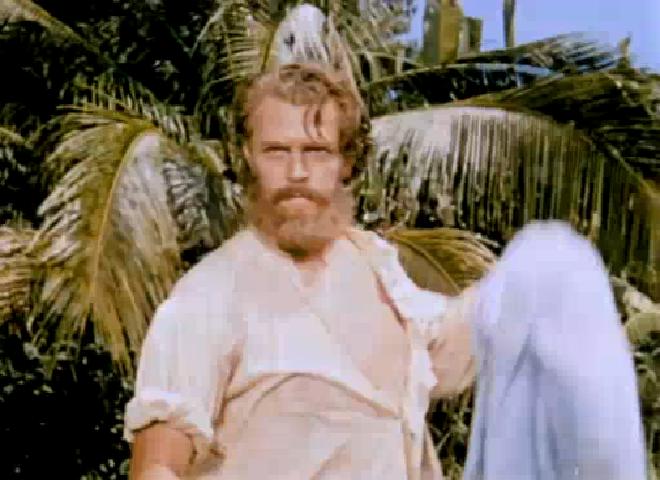
5. Dan O'Herlihy in Robinson Crusoe- O'Herlihy- is very good at his often one man show performance. He remains interesting even through the minimal tasks of survival, and shows the growth of the character very well.
4. Bing Crosby in The Country Girl- Crosby is incredibly strong in his performance as the beaten down has been actor. He shows a very powerful emotional strength, and creates an interesting portrait of a man broken down by his guilt, and his feeble attempts to not face up to the facts.
3. James Mason in A Star in Born- James Mason gives a very charming performance as Norman Maine, and he works perfectly along with Judy Garland. He makes Normain Maine a likable and memorable character, which makes his fall all the more heartbreaking.
2. Humphrey Bogart in The Caine Mutiny-Bogart gives a strong performance that creates the insecurities of the character but finds a certain sympathy within those flaws all the same.
1. Marlon Brando in On the Waterfront- Although I thought Mason was truly terrific, I never had a question who the best of this year was. Brando simply stands alone with his tremendous performance which is simply an extraordinary performance. A perfect performance that is completely honest, charming, and simply one of the most effective screen performances I have ever seen. (Good prediction Dinasztie)
Deserving Performances:
James Stewart in Rear Window
Ray Milland in Dial M for Murder
Toshiro Mifune in Seven Samurai

Best Actor 1954: Dan O'Herlihy in Robinson Crusoe

Dan O'Herlihy received his only Oscar nomination for portraying the titular character in Robinson Crusoe.

This is an just fine adaptation of the well known story of the ship wrecked Robinson Crusoe.

Dan O'Herlihy performance here is basically a one man show for a good amount of the picture. He portrays Crusoe quite well, because he stays interesting throughout his performance. He is able to stay interesting and is able to be easily followed through what he does to survive on the island. O'Herlihy importantly never becomes boring as Robinson Crusoe moves through his tasks to survive his ordeal. He importantly acts as perfect guide as he goes through the motions of survival.

Robinson Crusoe though is not a completely simple character who does not at all change through his ordeal. He indeed matures throughout his time alone. He moves from a man who is slightly lost almost in his survival but slowly grows to fully triumph in his ability to achieve survival alone. O'Herlihy shows the change well without over showing his changes. I think even more effective are when Robinson Crusoe examines his own life, and faith in key scenes that really show O'Herlihy skill well. His fever scene where he hallucinates of his father is incredibly effective due to O'Herlihy who manages to show a lot of the man Crusoe was before his predicament in this single scene. His scene of examining his faith, and facing it are again very well portrayed by O'Herlihy putting a lot of strength and power into these moments.

O'Herlihy always remains believable in his role, and adds the believability needed for the story, even in scenes that sort of stress this very hard such as his first encounter with Friday, or the scene where Friday puts on a dress, or in fact just about anything with Friday. Even in scenes like the ones with Friday being rather prominent O'Herlihy stays true to his character he has developed well, and since he stays steadfast in his portrayal he causes the film to be far more effective, and believable. I would never say O'Herlihy's performance is amazing but it always works well for the film, and completely serves its purpose.

Monday, 17 January 2011

Best Actor 1954: Bing Crosby in The Country Girl

Bing Crosby received his third and final Oscar nomination for portraying Frank Elgin in The Country Girl.

The Country Girl is a rather melodramatic film, and with a taked on love story, not between Grace Kelly and Bing Crosby but between William Holden, and Grace Kelly. It still has a good moment here and there though.

Bing Crosby is usually not touted for his acting talent, usually only for his singing. There are few that mention a great performance by Bing Crosby, since most of his performances seem to consist of a lot of smiling and singing such as his nomination performance in the Bells of St. Marys. In this film though he does not give his usual Crosby performance, even though he does still sing, he does not do all that much smiling.

This performance is rather interesting to see because it shows a different side of Crosby. The character of Frank Elgin as in the film is sort of a has been Bing Crosby, a Crosby that has lost most of his old charm. Crosby strangely excels with this character something I would not have at all expected from him before I first saw this performance. Crosby shows the simple desperation of character incredibly well, I think it is made even stronger because it does show the old Elgin in a Flashback in Bing's old charming self, which has a great effect showing the loss of the basically the whole of the character. 

Crosby's displays Frank's own inner hatred of himself, and regret quite well. I think he is brilliantly shows it through his properly subtle expressions incredibly well. He presents Frank's loss, exceptionally well showing that Frank's problems are truly internal problems that haunt Frank very deeply. I find something he does something rather interestingly because he does not make try to make Frank solely a heartbreaking guy we feel for, but he shows a rougher in many ways a devious side of Frank.

Crosby shows the devious side well without over doing it, because he does not really show as Frank being an evil guy or anything but rather that is a defense mechanism that he employs to cover his insecurities from other people. The change of behavior from his real anxiety in front of his wife (Grace Kelly) and his lies to hide his actual problems in front of his director (William Holden) is handled exceptionally well by Crosby. His honest emotions and his fake, positivism always with a small sense of the anxiety below it, are brilliantly shown against one another by Crosby.

As with the first time I was very much amazed by the honestly strong emotional power shown by Crosby, the only parts of the film that I really that were at all compelling. I found this especially since all the scenes with Kelly and Holden did not work because Holden's character is so incredibly underwritten. I think his best scene showing the vulnerability of Crosby is one his old charm comes back briefly in a bar briefly showing his old charm, but than disintegrating due to his guilt over the death of his son. Crosby disintegration in this scene is perfect, as his moments later when he is completely beaten down after a long drinking binge. His whole long moments revealing about the truth of himself is a real achievement from Crosby since the film itself I think doe not write the reveal particularly well, but Crosby performs it incredibly well. The Country Girl shows that Crosby was in fact a talent dramatic actor after all, but just simply rarely ever showed his talent in this capacity.

Saturday, 15 January 2011

Best Actor 1954: Marlon Brando in On the Waterfront

Marlon Brandon won his first Oscar from his fourth Oscar nomination for portraying Terry Malloy in On the Waterfront.

On the Waterfront is a terrific masterpiece in my opinion. It certainly is Elia Kazan's best work, which tells a truly powerful story with a tremendous sense of place and atmosphere.

Marlon Brando's Terry Malloy is a completely vivid person to me, and always seems that way with every viewing of the film. Terry's humble beginning at the film of doing a simple job for the local crime boss Johnny Friendly (Lee J. Cobb), which is to tell a friend of his Joey Doyle to meet him on the roof of Joey's building. This actually leads to Doyle being confronted by Friendly's thugs, and ends up with the death of Doyle. Terry is greatly shaken up being this because he thought they only wanted to talk to Joey. This action causes Terry to go slowly down the rode of examining his own life, and his involvement with Johnny Friendly.

Terry's struggle with his conscience, and dealing with life around the docks of New York City is fascinating to watch for yes the script is brilliant, but perhaps Brando as Terry is even more so. He makes Terry such a believable man, and one that for me anyways causes a great deal of empathy. I really instantly felt for and with Terry through his story. Now Brando never seems to be forcing this, but it comes with his completely natural performance.

The naturalism of Brando's performance is rather fascinating, because in a lot of ways this is not a self contained performance, that is all simple. Brando has a lot of certain movements, and does certain things with his performance which with a lesser performance may have seemed mannered, or obvious acting, but there is none of this with Brando's performance. All of what Brando does in terms of his movements as Malloy are seem completely along with the washed up beaten down ex-boxer. Every physical motion, only further suggests the nature of Malloy, furthers the performance, and every part of performance still seems to never have a single scene of noticeable acting, Brando is simply that good here. 

Brando is wonderful in every moment of this film, and always keeps Malloy an interesting character despite Malloy being in ways a simple guy. Brando makes the most of every moment of screen time he has always adding layers to his character which are expertly handled by Brando. He makes Malloy, a person I feel I really knew after the film was over, because Brando performance as I said was completely vivid, and absolutely realistic.

Brando is excels in every different type of scene he is in. One being his romantic scenes with Eva Marie Saint as Edie Doyle. Their moments are terrific together. One could say Brando overshadows Saint with his performance, and perhaps he does, but it does not stop their romance to feel completely truthful, and wonderful to watch. Brando excels in these moments because he is interestingly incredibly charming, even though Terry Malloy is not exactly an extremely charming guy. This may sound quite odd, but Brando simply brings out charm in a not wholly charming character which is another achievement of this performance. Brando balances well Terry attempt at finding love, along with dealing with his own guilt over the death of Edie's brother Joey. Brando manages the balance with the utmost care, to make both the romance, and the guilt resonate even more effectively.

Brando though also shines incredibly in scenes of simply non-stop emotional power which first begin with he famous car scene. The scene in the car I think is one of the best scenes ever, in any film ever made. Everything in this one scene comes together so well, from the whole small set up in the small back seat of the car leaving only the emotions to see, the haunting music of Leonard Bernstein, and the great performances from Rod Steiger as Charley Terry's brother and Marlon Brando. The actors together create a truly incredible moment. Their moments here are simply unforgettable, they make this scene incredibly emotional and effective. Brando perfectly displays the inner harm of Terry's so well, and really the delivery of the famous line could not be more honest, more truthful, or more powerful than the way Brando displays it through Terry.

After the great scene I feel the film never stops in its strength and power and a whole lot should be credited to Brando. He displays Malloy nonstop changes through these scenes amazingly, and he never loses any of the power of the performance, from his want for revenge, combined with sadness, and need of love. Brando combines all of the emotions of Terry's struggle, and I feel he makes the audience feel them with him. I really was with Terry all the way especially in his final confrontation with Johnny Friendly. His passion, and his final stand up against corrupt is resonates fully, because of Brando's greatness in this perfect performance.

Thursday, 13 January 2011

Best Actor 1954: James Mason in A Star is Born

James Mason received his first Oscar nomination for portraying Norman Maine in A Star is Born.

A Star is Born is the best type of remake in that it is better than the original in every way possible. It is an entertaining and very effective musical version, that works well despite being almost three hours, and having some sequences being stills with only sound.

James Mason is the second actor to be nominated for Norman Maine the first was Fredric March in the original. I thought he was good as Maine, but I also felt he basically treated the film better than the film treated him, since although his performance was good the film forced his character to make leaps, and did not give him as much time for development as needed. Luckily for Mason Norman Maine is given the proper time for proper character development, and luckily for the film Mason is more than up to the job of exploring the character of Norman Maine.

James Mason first of all gives an insanely charming performance in this film. Mason who actually really was not a Norman Maine type of star in terms of the romantic lead, Fredric March was, is instantly believable in the role as this type of star. I never at all doubted him as the original Norman Maine which is quite interesting because Mason could be as equally effective in slimy villainous roles. Here though Mason's charm simply is incredible. It is a simple very effective movie star charm that makes his performance completely wonderful to watch.

His chemistry with Judy Garland is equally wonderful. There relationship together is almost perfectly done, the way he first believes in her, than helps her succeed to become a star, than start a relationship, and get married is made completely natural throughout the whole relationship. There relationship just seems like real love between each other that is properly warm, and always feel authentic. I think one scene in particular shows the strength and honesty of their chemistry. That is the big musical number where Vicki (Garland) tells Norman about her new movie at home. This scene they have such a fun loving scene together that simply work wonderfully because Garland, and Mason are simply so natural together.

Norman Maine is a fading star though because of his alcoholism. Maine's alcoholism is something I thought was not given enough time actually in the first film, but it is in this one. Mason correctly shows Maine's alcoholism in the best way. He mostly subtle hints it as a disease, that adversely effects Maine, not all the time, but far too much of the time. He makes Maine descent into his alcoholism properly heartbreaking, because Mason shows Maine deterioration incredibly well.

I think two moments Mason particularly shines with this aspect of the character. The first being when he accidentally slaps Vicki at the Oscars, Mason reaction is  completely effective, because again it feels so authentic. Even more powerful though is his reaction in bed, to Vicki saying she will give up her career for him. Mason's reaction is completely heartbreaking because of how truthfully he shows Norman's pain. Mason's performance is excellent throughout giving a likable, heartfelt performance, that works perfectly along with Judy Garland's equally strong work.

Best Actor 1954: Humphrey Bogart in The Caine Mutiny

Humphrey Bogart received his third and final Oscar nomination for portraying Lt. Commander Philip Queeg in The Caine Mutiny.

The Caine Mutiny is an uneven yet mostly effective film when it focuses upon the central drama and away from its tacked on lame romantic subplot.
 
Humphrey Bogart really is more of a supporting player as the Captain of the World War II ship the Caine. He shows up and instantly everyone seems to be off put by him, and he himself seems very much upset by the his treatment upon arrival. Queeg is portrayed as a fairly incompetent Captain actually, and attempts to be a controlling although not cruel captain. Bogart brings a stern quality to the character that the freewheeling crew wasn't used to but not initially punitive. He tries to attempt to keep a regular order, which Bogart portrays as a struggle in confidence. He puts Queeg on the right border though and on the right kind of edge. He's trying to retain order of a man who might've had the strength at one point, but is now worn down. Bogart shows the nervousness of the Captain as something that grows the crew continue to undermine his basic orders, and Bogart effectively creates this weakness as growing with the frustrations in the character. There is a great moment, that is key to the thematic choices of the film, where Queeg pleads with his senior officers to help him out, but the Captain receives no words of help of comfort. Bogart is great in this scene as again he plays right on the edge of complete desperation. He shows the man at the turning point. This as he speaks with sincerity in asking the men to do their part to maintain order and rank. There is in Bogart's eyes the frustrations of being robbed of his confidence the same as he looks upon the men who basically ignore his requests and treat him as just a fool. 
 
Bogart excels throughout the rest of the film in portraying the slow deterioration of Queeg's psyche as the officers continue to disobey him as do all the crew. Bogart reveals only a growing desperation in the man as he tries to get any respect yet receives none and portrays the man falling off his tipping point. Although Bogart portrays him as unappealing in these responses he does not actually show them to be entirely uncalled for, as he reveals again the fervent attempt to try to hold things together. Bogart shows this growing anxiety just as he brings a greater intensity in his shortness in each scene. Bogart's unease is terrific because again he finds the humanity in Queeg as he grows as a "villain", however a villain he never truly as. As the story goes on though Bogart reveals the way this control becomes all the more unstable built up until he decides that there is a theft aboard the ship. In this scene there is a madness in Bogart but in that he shows really this almost fatal final attempt to try to regain any sort of order aboard the ship which he cannot find. This in the sequence of assuming a theft ring has conspired on his boat. Bogart is fantastic in presenting this mania specifically as this kind of last ditch attempt at confidence and control. The desperation itself is in this speech, and his eyes this yearning hope to get something from this. Bogart's delivery isn't of a man who wants this, but needs this to create some sense of control on what is supposed to be his ship. When this is yet any failure this leads to his freezing up moment which Bogart is fantastic in the moment. This as we see finally the man give into all his weakness and desperation. A man in his physical manner as he's closed in, almost infant like, as man more than anything isolate in the moment, and just simply scared aboard his ship which never gave him a hint of support. This eventually leads to the court martial scene where Bogart is actually quite outstanding in scene that would be quite influential down the road, where he is cross examined in order to reveal what really happened aboard the ship. Bogart is masterful in this scene in crafting really the entirety of his performance in a singular amazing scene built upon his acting. This as Bogart begins as the responsible officer giving clear and concise answers. When his mania is brought up regarding the theft ring though, the first crack appears. 
 
Bogart's physical manner becomes tighter and more erratic, and then speech instantly falls to begin to reveal some degree of that desperation, though Bogart shows Queeg just holding it together to revert to a calmer though still trouble presence. When Bogart shows Queeg desperately holding onto his line, and the defense speaks towards a testimony that would undermine him, Bogart's reaction is perfection as it's a quick glance of immediate anxiety, followed by a calming attempt to really look elsewhere from his problem and defer from thinking about it. When pressed though we get the one shot of genius of Bogart as he goes into his rant that is filled with such desperate paranoia and attempt at trying to fixate on some place of control. Bogart speaks so potently as a man filled with every anxiety in his mind and just trying to find some place to find control, in this instance his crazed conspiracy theory. What makes this so stunning though is the moment where Bogart naturally has this moment of Queeg finally reflecting for a moment and just shows the quietly sad man behind it all now realizing he sounds like a crazy man. What makes this so outstanding as while there is catharsis in Queeg revealing his mistake, there is genuine heartbreak in that moment as Bogart reveals just a broken man, who was not entirely broken by his own design. Bogart is great here succeeding in crafting a character who is easy to dislike yet within it all, he shows that Queeg by the end isn't some Bligh like villain, but in the end a victim of a far crueler mind than his. 

Wednesday, 12 January 2011

Best Actor 1954

And the Nominees Were:

Humphrey Bogart in The Caine Mutiny 

James Mason in A Star is Born

Marlon Brando in On the Waterfront

Bing Crosby in The Country Girl 

Dan O'Herlihy in Robinson Crusoe

So who will it be the broken down Ship Captain, the broken down screen actor, the broken down boxer, the broken down stage actor, or the guy who was on a broken down ship.