Showing posts with label 1975 Alternate Supporting. Show all posts

Sunday, 21 October 2018

Alternate Best Supporting Actor 1975: Results

5. Ugo Tognazzi in My Friends - Tognazzi gives a wonderful endearing turn that creates the right dynamic with the titular friends while also creating a undercurrent of pathos within the man.

Best Scene: Death bed of a friend.
4. Bruce Dern in Smile - Dern gives a hilarious yet also somehow moving portrayal of a man who has devised his own form of the American dream that he uses to live life by.

Best Scene: Talking to his friend in prison.
3. Alan Bates in In Celebration - Bates, along with all his co-stars, gives a terrific turn portraying so effectively the desperation in his portrait of a son struggling to find a way to reveal his discontent with his life and family at a reunion.

Best Scene: Can't sleep.
2. Nicol Williamson in The Wilby Conspiracy - Williamson steals his film wholesale through his dynamic and domineering portrayal of a cunning villainy fighting passionately for what he believes in.

Best Scene: Revealing the conspiracy.
1. Richard Dreyfuss in Jaws - Dreyfuss, as with his two main co-stars, gives a great performance that compliments them wonderfully through his off-beat energy while also effectively realizing his own place within the dramatic elements of the film.

Best Scene: Indianapolis reaction.
Updated Overall

Next Year: 1987 lead

Alternate Best Supporting Actor 1975: Ugo Tognazzi in My Friends

Ugo Tognazzi did not receive an Oscar nomination for portraying Count Lello Mascetti in My Friends.

My Friends follows a group of older friends in their strange and occasionally tragic misadventures. 

Ugo Tognazzi plays one of the titular friends, not quite the leader, but perhaps the most charismatic one of the friends. Tognazzi's performance instantly establishes Mascetti as such as he brings a considerable amount of swagger to this performance. Tognazzi's approach does a bit more than that suggesting the man's background before we even learn that he is a count. Tognazzi has a certain style in his manner of a man seemingly of privilege though an exact sort. Tognazzi's manner is that specifically of a European hotshot who carries his nobility less as something dignified, but rather as something to brandish. Tognazzi's demeanor is of a man who very much believes he is a bit of "boss" for the lack of a better word. This seems to play well to the group when they are running their various schemes of somewhat dubious legality. Tognazzi walks on the scene like he is in some way above it all, bringing the appropriate charisma as he helps persuade, and really to con along with friends in their dubious enterprises.

The film though is of the surface and the interiors though as much of it appears to be madcap fun with these friends and their various oddball behaviors. In this Tognazzi is a key ingredient. This is in terms of that aforementioned ability of persuasion, which Tognazzi brandishes through that confident attitude, and often direct yet rapid fire delivery he brings. The chemistry between each party though beyond those roles they fit within their "schemes" is more of how they function as a group than each individual interaction. Tognazzi is terrific though in being part of this sort of specific type of friendly chemistry. This is very much that of boys as much of men in their interactions. These carry always this undercurrent of that camaraderie and warmth that just exudes the history of the men as they interact. This history also comes in the certain sometimes insulting manner between them, though again all the actors handle this well always saying even the most brazen insult to one another with the most sincere of affection within it.

There is that other side of the film though reveals more about the men, and each of their lives which are considerably less joyous when they are all not together. For Mascetti, despite being a count, it is being broke and needing to depend on his friends for charity. Mascetti is unable to support his own family, despite trying to still live the life of the bon vivant. There are moments of desperation that are actually quite moving in Tognazzi's performance when he has to directly either deal with his wife, or ask his friends directly for help. Tognazzi finds this hidden vulnerability within the man that reveals this deep seeded unhappiness that slowly reveals his manner the rest of the time a bit of a facade in a sense. Tognazzi puts on no show in these most personal moments of the man, just portraying a man sadly scraping by with his title being something he clings to rather than lives by. When this is revealed this changes his dynamic with his friends, however not in the way one might expect. Tognazzi's genuine desperation in those scenes creates a certain meaning within his interactions with his friends as a group suggesting these interactions as his only time of comfort. Tognazzi successfully creates this weight than into their often seemingly superfluous interactions by so effectively showing the meaning they hold to Mascetti's whose existence is so troublesome otherwise. Tognazzi naturally coverts this towards the final minutes of the film where one of the friends is on the brink of death. Tognazzi's passionate speech for his friend to be recognized by his wife is a powerful moment. It is not only through that passion Tognazzi brings that reflects their long history, but is all the more potent by that extra shading provided what his friends truly mean for his life. Tognazzi's performance delivers both this needed endearing energy to his character, who could have been insufferable in the wrong hands, and a real depth that attaches more to the friends' hi-jinks than just a bit of fun.

Monday, 15 October 2018

Alternate Best Supporting Actor 1975: Richard Dreyfuss in Jaws

Richard Dreyfuss did not receive an Oscar nomination, despite being nominated for a BAFTA, for portraying Matt Hooper in Jaws.

As with any masterpiece there is not a single factor that makes Jaws one of the best films ever made. There are several elements working in tandem to realize this achievement. As much as Jaws is a technical and directorial achievement in its creation of the horror of a shark, it goes beyond any average monster film through the characters that ground it into reality. In Jaws we have the three men who eventually become the motley crew of the boat the Orca tasked to kill the titular Jaws. I have previously reviewed Roy Scheider for his understated yet dynamic leading turn as Chief Brody, and Robert Shaw for his turn as the old haunted shark hunter Quint, which I consider the greatest supporting turn ever given. I have been remiss though to forget the third part of this triangle in Dreyfuss's Matt Hooper. The then young hotshot performer makes his presence known as a visitor to the shark terrorized island as an expert in the field from the mainland. Although Hooper has the least personally invested in the hunt for the Shark he is an essential ingredient within story.

Before the three meet up though Hooper is initially introduced as the expert sent over from the mainland to offer some insight on the shark attacks. Although all three of the men are in some form a atypical on the island of Amity  with Brody hating the water as well as not being from the island originally, and Quint being Quint, Hooper is perhaps the most obvious in this regard. This is beautifully represented in his first scene as the not particularly tall man arrives at the port, where groups of amateur shark hunters dangerously make their way out the sea. Dreyfuss is great here by very much playing into being as much of a Richard Dreyfuss as he can be. Dreyfuss in doing so perfectly embodies sort of a proper city folk who just doesn't quite fit in a setting filled with plenty of yocal locals. This is not a problem for Hooper, as evidenced by Dreyfuss's wonderful approach to really just to embrace sort of that affluent upbringing in his sunny yet rather ego driven demeanor. It would be pretty easily to make Hooper quite unlikable quickly, but Dreyfuss takes such a pitch perfect approach from the start. As like Shaw and Scheider, he simply from his first frame is Hooper.

Dreyfuss's performance is primed with this certain insatiable energy which he fashions so well. In that he makes it honest to the man who is there to do a job, and so naturally infused in his general manner as he first arrives. Dreyfuss uses this brilliantly though in the way it creates a certain passion within the character, and a humor in his interactions with others. As immediately when he arrives and asks Brody about seeing the remains of the victim his desire to do so is delivered so well by Dreyfuss's determined delivery as a man who clearly cares. This is less evident as he tries to help the chief by telling a group of men not to overload a boat, Dreyfuss's smile as he murmurs to himself "They're all going to die" with more than little bit of derisive self-satisfaction in the sentiment. Dreyfuss treads this fine line here as he is always nearly insufferable as Hooper quickly combats the townspeople, but never quite goes over it. This is through both again that passion, the humor, but also the humanity he does bring to the character. There is a great moment early on where he is performing his own autopsy on the first victim where Dreyfuss's reaction of reserved horror at the sight of it is exceptionally performed revealing a man who cares rather than just an ego.

Dreyfuss's initial dynamic actually is specifically with Scheider as Brody. The two are wonderful together in creating just this natural warmth in their interactions as each look at each other with a great mutual respect. The way the two play together in a scene though is terrific though with Dreyfuss making Hooper a firebrand of sorts against the mostly reserved Brody. Dreyfuss brings such a great enthusiasm in moments as he discusses the sharks, and his experiences. I love one moment though where he discusses his family's wealth, and Dreyfuss brings just the right touch of nearly a bit of shame on the matter against Brody's genuine curiosity. This balances so well against the moments where the two try to convince the town's mayor (Murray Hamilton) about the dangers of the shark, and that they should close the beach. Where Scheider makes Brody's disagreements passionate yet cordial, Dreyfuss provides excellent contrast, as he delivers every frustration. Dreyfuss takes it a step further than anger though with this annoyed disbelief at the stupidity, with yes a bit of an ego again, but at this point rather earned in his "I'm smarter than you" attitude at this point.

Of course all that Dreyfuss does before the film's third act is just a warm up once he and Shaw finally share the screen. The two evidently did not get along on set, and this perfectly plays into their scenes together with the young upstart against the aging vet, both in terms of the characters and the actors.  Dreyfuss is so good with Shaw, though it is perhaps in a way playing at each other than directly with each other at times in the best of ways. This is from their first great moment where Quint grabs Hooper's arms to comment on his "city hands". Dreyfuss's flustered reaction is perfection setting up the right type of antagonism, as it isn't just annoyance, but also this certain defiant spark that will help to define their relationship. This all the while with Scheider providing the perfect mid-ground as Brody. They are marvelous together in every moment by how vibrant they make every interaction as we just get to know the three men as they try to kill the blasted shark. Dreyfuss is fantastic in his part using every moment to his advantage. This is in the alliance with Quint where Dreyfuss delivers this great petulance early on always showing his bits of defiance, and competition. One moment from this is where he just makes childlike gesture insults, without Quint seeing, after being given an order, which is very funny, yet also comes so naturally within Dreyfuss's performance making just seem like something Hooper would do. One of my favorite moments though is in their competition of sorts where Quint drinks down a beer then crushes a beer, causing Hooper to do the same with his beer, the difference is it is in a paper cup. Dreyfuss's reaction is what makes this so hilarious as he stares with determination presenting Hooper's conviction to match Quint at every point. Again though this is never overdone in irreverence, as their moments of clashing over expertise or how to kill the shark, Dreyfuss again brings such a genuine passion once again. His deliveries and manner create the right color to the character, who he makes humorous yet never a cartoon. This is also found through the process of the hunt which Dreyfuss's work helps to characterize in a way by easing up the humor the more dire the situation becomes. Now one of the best acted scenes of all time is the famed Indianapolis speech by Robert Shaw, that includes what Scheider and Dreyfuss are doing. Dreyfuss is great himself first in the moment pre-speech where he and Shaw capture the right camaraderie finally as the two compare scars with the right glee. Although this is a definite shift the two make this moment of friendship feel earned as the two similair spirits come out so naturally within their interactions. Dreyfuss's best moment in the scene though is where he comments on the scar that was formerly a naval tattoo that signified the Indianapolis. Dreyfuss's shift from laughing, as Hooper makes an innocent joke about what the tattoo might have been, to seriousness is brilliantly performed. He captures so well the understanding in Hooper once he realizes what Quint's experience had been in a seconds notice with barely saying a word. Throughout the scene Dreyfuss's reactions provide all the more weight and impact to the story in his reactions that signify Hooper's own horror at hearing the first hand account as well as the right empathy as he comes to fully understand the man. After that scene the petulance of Hooper is essentially gone in Dreyfuss's performance as he shifts to a more mature presence. He also shows a greater passion in the moments of action doing so well in suggesting the man's own growing need to kill the shark, after treating it more as a curiosity at first. Dreyfuss too is great in portraying the gradual growth in desperation as they run out of options. Dreyfuss is especially powerful in his harried delivery "You got any better suggestions?" before he is going to try to poison the shark as a last resort. I also love those final moments with Shaw, as the two in the end finally exude their own respect just in the way the performers interact. Their arc to this is never spelled out in dialogue yet both Shaw and Dreyfuss wholly earn this change away from antagonism. Although Dreyfuss has perhaps the least emotional role of the three, he too gives a great performance. His chemistry with Shaw and Scheider is perfection, though in very different ways, and as they do with their characters, Dreyfuss helps to make Hooper a compelling and vivid character in his own right that goes far beyond being one of the shark hunters.

Saturday, 6 October 2018

Alternate Best Supporting Actor 1975: Nicol Williamson in The Wilby Conspiracy

Nicol Williamson did not receive an Oscar nomination for portraying Major Horn in The Wilby Conspiracy.

The Wilby Conspiracy I guess you could say is a bit of a prototype for the Edward Zwick style message picture, where it takes populist style approach towards a rather serious minded subject matter. In this case it focuses on the then very real apartheid in South Africa, though through a spy/diamond hunting actioner featuring a South African Freedom Fighter (Sidney Poitier), and an English Engineer (Michael Caine) as the unlikely pair on the run together.

One of the benefits of my little endeavor here is to discover remarkable performers who have flown under the radar of a more generalized view of cinema. One such discovery is Nicol Williamson who though I had always thought was compelling as the mentor wizard in Spawn of all things, most of his work had been unseen by me. Well as I discover more of his work it is clear that besides having one of the most underrated voices of cinema, he is an especially dynamic performer. The Wilby Conspiracy, though pretty disposable overall, though does give an outlet for Williamson's talent in the form of Major Horn an operator in South African Bureau of State Security. The villain who will be chasing our fugitive heroes for the duration of the film. Not much in this really stands out past acceptable enough, with the exception of Major Horn due to Williamson. The sheer power of his presence alone makes an impact as we first meet him casually smoking in the office of superior. Williamson quickly steals the scene, and really the film, in just his perfect timing in his brush off of wishing as he could quit smoking as he dismisses his superior. Williamson simply has the force overpower in his precise yet also rather witty delivery that makes the Major instantly compelling.

Although it might be easy enough to just make the Major a devil in the flesh, given his intentions throughout the film, Williamson takes an alternate approach. He doesn't seek to grant sympathy for  the character, but what he does do is create a clear motivation within Horn. Williamson is amazing in the moment where he so sufficiently describes Horn's position which isn't as a drooling racist, but rather a man trying to lay claim to a land through his view of history, though with a strict racism within that idea. Williamson brings such conviction and strict passion in the moment showing such a forcefulness in the man's words. His delivery is particularly notable as he has it controlled the entire time, as a powerful man would, though has this fantastic way of realizing this certain pride combined with a fear mongering hate wrapped within as he speaks of his view of the fate of Afrikaners if he does not perform his perceived duty. Theoretically this could have been just a minor scene that gives us the villain, yet Williamson brings such substance to the words through his performance that both establishes the villain, but also establishes his danger by so honestly revealing the man's firm beliefs that will compel him throughout the narrative.

Williamson will give us what will be the hunter for the film as he begins to trail the two men. It is always fascinating to see performer so rise above his material, not that this is a terrible film, but Williamson makes merely scenes of exposition of things we technically already know for the most part the best scenes in the film. This again is within how strong his presence is, and how properly idiosyncratic of a performer. Williamson is brilliant as he brings attention to himself without ever for a moment seem like he's showing off. He does it with such ease as he holds such sway on screen to the point that there is something immensely fascinating about just the way he holds his cigarette. Williamson's striking ability as a performer cuts through every scene making every little threat from Horn carry such a remarkable menace. What's incredible though is that Williamson is so good, he even in way grants the character one liners just through his dynamite delivery of every one of his lines. A common line is given such gravitas, and good one given such impeccable timing that allows Williamson to become this oppressive yet charismatic force who terrorizes and interrogates with a cheerful smile.

Williamson is great as he realizes the man's technique as he switches from a false amiability with charm to a violent intensity on a dime's notice creating such a dangerous man through this. Williamson finds this confidence within the technique that makes Horn particularly imposing as again he makes every switch of intention so natural as he weaponizes his personality at every point of following the two men and their conspiracy they slowly unravel involving black revolutionaries, smuggling Indian dentists, and diamonds. Of course the man who unravels it all isn't one of our two heroes, but rather the villainous Major Horn, which is a good thing since Williamson is on call for the exposition. Williamson is amazing in the scene bringing such smug satisfaction as he mocks all of his victims, and brings such a distinct slimy joy in every venomous word as he notes how they all played right into his game. It is rather astonishing as Williamson even owns the scene when the tide turns against Major Horn. Williamson just is another level as even when Michael Caine is explaining why Horn should surrender rather than kill a rebel leader, Williamson takes the moment for himself as his reaction of Horn calculating his odds and taking in the information makes more of an impact than the information itself. This is the type of performance I love occasionally coming across as Williamson by the sheer will of his own work creates a great villain, in what is not a great film. It is a fantastic turn from an actor I look forward to uncovering more of.

Tuesday, 2 October 2018

Alternate Best Supporting Actor 1975: Bruce Dern in Smile

Bruce Dern did not receive an Oscar nomination for portraying Big Bob Freelander in Smile.

Smile is a fairly enjoyable satire following the ins and outs of a beauty pageant.

Bruce Dern is an actor who has had an especially long and successful career. His idiosyncratic personality has made him an indispensable part of cinema in general, as no one is quite like Bruce Dern, but Bruce Dern. Although it never has seemed like Dern suffered a true lull, unlike many actors, it is fair to say the high point of his career came in the seventies where rather atypical performers like Dern were embraced more so than usual. This allowed Dern frequently higher profiles roles, and larger parts in general. This also gave him the chance to express his rather remarkable range at an actor as even though there is only one Bruce Dern, there is not only one Bruce Dern performance. Smile from the outset an interesting role for Dern to play of Big Bob Freelander, car salesman entrepreneur, who is representative in the film of an all-American businessman, but it goes beyond that as perhaps the representation of the American dream personified.

This being a satire the nature of the American dream obviously isn't that of optimism, however I believe there is a specific choice that Dern takes with this performance. A very intelligence choice in that he chooses, with his own portrayal, to create sympathy for Big Bob, while still allowing for the satire to exist within his work. Now the satire comes from the man who is the car salesman seemingly in all of life. Dern makes use of that one of a kind grin of his as a man so brightly selling you whatever he can as a representative of so much more than just the automobile he happens to be selling. Now before we get to really know Big Bob Dern is is indeed rather amusing in presenting this ever optimistic front of the man. In the way he talks about the upcoming pageant, his business, or even the way he glides around his proper American homestead and family, is that of a walking on certain kind of air. At a cursory glance Dern presents a man just living the dream, and this becomes comical when the veneer of the "good life" is so easy to see through, however Dern keeps that titular smile of a man just so very happy in his existence it would seem.

Dern is a bit fascinating here as becomes a bit of a bright spot within the film, even though there is that level of mockery for Big Bob in the narrative. As through the film we see all the grime beneath the "glamor" of those in and around the pageant. Dern though is just trying to be the smiling face of it all, but Dern as the film progresses slowly reveals that this is more than just a surface comic turn. There's more to Big Bob, than just that smile, though that is an essential facet of who he is. A key in this is that Dern makes that smile genuine to the character, and that every moment he's smiling it's a true to who the man is. Dern doesn't wink around that, but rather shows a man who honestly wants to look at the better side of things. This becomes most evident within the relationship with his best friend Andy (Nicholas Pryor) who is unhappily married to one of the fellow heads of the pageant Brenda (Barbara Feldon). I love how much warmth Dern exudes as he tries to cheer up Andy each time. Dern does so with desperation, but not so much within himself. The desperation rather is towards Bob trying to get Andy on the same page, and he's so wonderfully earnestly desperate in this attempt.

Dern reinforces the idea consistently that Big Bob cares for his friend at every point, even as his methods to cheer him up are taking him to bizarre ritual celebration, or telling him that it is okay to be disappointed with life. In every delivery though Dern accentuates the positive, even when that is quite thin. This is even as Andy says the unthinkable with "Screw the pageant", where Dern's dejected reaction is absolutely hilarious, but also moving in a strange thing as he doesn't put a hint of venom in his retort "what am I suppose to say to that?". Although this is a man being the salesman to his own friend, Dern is terrific by reinforcing the idea at every point that the friendship is real, and his attempt to help authentic, even if problematic. What is maintained in Dern's work at every point is the devotion towards Big Bob's beliefs which includes his faith in the pageant. Again Dern is very funny, by "accident", by keeping this sincerity in the moments of judging where he brings this great seriousness actually in every question when Bob works as a judge. Dern reinforces again that Bob holds his ideals dear, and again this very funny, but also more than a little sad given the triviality of it all. The one element that Dern shows Bob completely shed his smile is after his son is caught attempt to take nude pictures of the pageant contestants. Dern is great in the moment of bringing his son to mandated therapy as he offers a strict severity in his voice reinforcing the disgust and disappointment that offers the right believable limits on Bob's hopeful attitude. Dern gives a delightful turn here as he delivers on realizing the satire at every point, however he doesn't use this to be a one note caricature. He is rather wholly convincing in making Big Bob Freelander worthy of perhaps few chuckles at his expense, but also sympathy for a man so firmly holding onto his view of the American dream.

Saturday, 29 September 2018

Alternate Best Supporting Actor 1975: Alan Bates, Brian Cox and Bill Owen in In Celebration

Alan Bates did not receive an Oscar nomination for portraying Andrew Shaw in In Celebration.

In Celebration is a more than fine entry into the ennui-filled-reunion genre this time about a group of brothers coming home to celebrate their parent's 40th wedding anniversary.

Alan Bates plays the character quite needed for any such film in this particular genre. The man who intends to prod and pry at the ceremony, needed to create the conflict. Bates's performance is interesting in that there is almost a self-awareness of this he brings within the character. His whole physical manner has this certain excessive ease of a man rejecting the formality of a reunion from the outset. This idea could seem forced however this approach is essential in creating the nature of Andrew as a character. Bates appears first in the film as he hitches a ride with the youngest living brother, Colin (James Bolam), and makes a statement of self-deprecation proclaiming "he is a tramp" to which Colin reacts with what is essentially a knowing bit of exasperation. This is as something Colin has seen before, and Bates embodies a man who definitely is not happy with life. Bates though doesn't make this an overt depression with his portrayal of Andrew but rather as this rejection of normalcy. Bates captures in the very behavior this purposeful, though also honest in its own way, manner of a man who just won't be quite proper. Bates finds this fine line within this as he establishes from the outset that Andrew isn't quite an exhibitionist with his behavior,  but he's not too far off.

Brian Cox did not receive an Oscar nomination for portraying Steven Shaw in In Celebration.

The very talented Brian Cox has had a long successful career, though he has a manged to do this, honestly to do this day, with a rather low profile. Why this is exactly, somewhat alludes me as his talent is ever present, however it perhaps caused by the way he is often in good films somehow forgotten by time. A much younger Cox has a rather challenging role here as that of almost what one might describe as the "other brother". His Steven is the brother who lives nearest to his parent's old home, and makes his career as a teacher, and as a not at all successful writer. Cox's Steven actually arrives first to the family home, and Cox's performance establishes a man who is nearly the polar opposite of Andrew. Cox keeps his externalized expressions particularly subdued, and speaks in rather unconfrontational tones. Cox establishes Steven as a man who in no way wishes to make a spectacle of himself, unlike Andrew, though this does not mean he isn't as well troubled. Cox's whole demeanor though stands in sharp and effective contrast as the passive brother who treats this reunion less as something that requires an "attack" but rather is an earnest responsibility of a dutiful son.

Bill Owen did not receive an Oscar nomination for portraying Mr. Shaw in In Celebration.

Bill Owen plays the role of the patriarch of the Shaw family, who is one half the titular celebration. The celebration being for his forty years of marriage while also nearing another milestone of nearly 50 years of being a coal miner with only one year left before his retirement. Owen's performance is wonderful in how he distinctly crafts it separately from the work of Cox and Bates. In that there is not a hint of dishonesty in his Mr. Shaw although technically speaking he too isn't quite as he seems. Owen though rather is wholly genuine in his presentation of the man as he greets each of his sons as he arrives at his home. This is with a most earnest smile, and true warmth as greets every one of them. Owen skewers a basic sentiment within the part at the same time though. It isn't though with a hidden motivation that defines the man, but rather presents a more straight forward nature of the man. A man who has worked quite literally within the earth, and this revealed in his way towards life and family. Mr. Shaw too isn't all that he seems from a first look, however in a very different way from how Bates and Cox present his two sons.

Each character does have more to say with every greeting as we hear the conversations before and after the celebration, we never witness the celebration itself. These conversations dig up the truths of the family's past, which sadly is not a simple one. Each actor is terrific though in realizing how each man broaches this material. Bates one might say is the simplest, though also requires the most bravado on his part. Bates again physically embodies the role playing nearly as a drunkard who just won't bare formalities fully. This naturally paints the man as we learn he went from being a lawyer to a wannabe artist, and Bates conveys this decision with this manner. This is opposed to Cox who is so wonderfully quiet in the part, and his role is largely reactionary. His reactions though are what reveal every truth of the character, and the reserve he finds in the role is marvelous. Owen though makes the most honest man of them all though, even with the secrets, of course these secrets are not something he hides, but rather something he wears. Owen bears them as just pains of life deep within his eyes, but never an overt constant, though certainly still a constant. Owen shows a man who has had a harder life than his sons who doesn't dwell, but also can't forget.

Each performer layers the men so well in part in the interaction with who they are playing against. Bates again is the most obvious in this approach, such as when he first greets his mother with a bright face, and eager hello. Bates finds this proper combination of a honesty in his warmth, but also something bent within it. There's a troubling thing of any moment of eagerness in Bates, as goes a bit big, though I write this with praise rather than criticism. Bates lays the act on thickly too thickly that it is less an act, but rather a desperate need in a way. Bates plays it with venom, but not entirely so. Not a single moment is that of a true callousness as in his eyes there is always a certain sense of the family dynamic, that isn't defined by hate. There is also rather just the intensity of the emotion, even as he so often jokes around, that portrays a man nearly made grotesque in his attempt to laugh through the past and his current predicament. Bates makes the dishonesty part of the act of a man who must put on the facade of a false excitement, but it is never that simple. Bates shows instead a man still struggling with all himself, and this "performance" of Andrew's is his coping method.

Cox may deliver the most poignant performance in the capturing something very unique onscreen, and something that feels painfully honest. This is of course in such a low key approach though of the man who watches, and observes. Cox's work though is never of just the observer though as he's still part of this family. Cox makes so real the man's way of dealing with such a reunion which is through his own distant way. Again distant in not a cold way, which is what I love what he does here. He looks, and he smiles at his mother and father. When he does this it is wholly with love that small little smirk of his. His also will often feature that warmth of a loving son. That is not all he conveys though as even dealing with the confrontational Andrew Cox delivers the quiet disappointed stare from Steven that say more than a hundred words of hatred could. Cox in his reactions brings the weight of the family and his own hardship. There is a sadness in them, a sadness that only fully reveals itself in moments of complete solemnity so naturally realizing Steven as a man who lives in his troubles only at the most private point, which also keeps him as such an understated figure within his own family.

Back to Owen though who plays a man who really wouldn't know how to create a facade or to only observe. Owen shows a man who made by his difficult experiences but of course never destroyed by them. Owen delivers a real exuberance in his attitude towards life in moments, and showing his love at the right moments. There are darts of darkness, his own secret depression, but the key is that Owen doesn't play this as something he is hiding deep within. It is rather just part of who he is but never does define Mr. Shaw. He wears as a texture more than anything in his performance that will in a moment just linger a little more, or turn a certain line in his delivery that paints some old anxieties or troubles. This troubles such as the death of one of his sons, and the nature of his wife that came from a higher class family than his own. Owen's work is great by making essentially this flow of emotion of a man who has no real wish to dwell on the past, but the past still dwells with in him. Owen in the moment brings the most profound moments of truth, and the most vulnerable moments. This as also the briefest moments though in his work, in just a quick flash of anger, or heartbreak, that never change the man, but are always part of him.

Of course the real drama comes in the mix of these personalities coming together, particularly when the main conflicts of the death of their brother, and the realization that their mother purposefully raised her sons with a certain shame for their father's way of life and a requirement to live within a certain tradition. It is a fantastic scene for all three when this comes to a head by just wholly each grasps their parts, and how the emotion so genuine in all three of them, as well as from Bolam as Colin the most straight forward brother in terms of the presentation of his emotions. Bates makes Andrew a proper mess of a man as any facade of the "showman" hiding his real nature comes out in a more direct hatred towards the ways of his mother. There is only the hints of his phony cheeriness now revealing a man practically writhing in pain. This is against Cox and Owen who are both heartbreaking as two men directly relating to what Andrew is saying. Owen and Cox's reaction is that of a quiet yet devastated resignation in Steven and Mr. Shaw to what life they've had, as Andrew pours salt in the wound. I especially love the power of Owen's work as his is of man fighting hard not to give into this pain, as his eye lids seem to nearly deflect Andrew bringing the worst out into the open. Each in the film's end though shows almost the healthier state of Steven and Mr. Shaw in their way of embracing their existence against Andrew's way of attacking it. As we see Owen and Cox create such tender exchange in their parting of a father and son finding a true comfort, against Andrew once again returning to his ugly "playacting" as the sons depart. Bates, Cox and Owen each deliver a wonderful performance that so vividly depicts each man both in terms of their current state, their past, and how that defines who they are.

Monday, 24 September 2018

Alternate Best Supporting Actor 1975

And the Nominees Were Not:

Alan Bates in In Celebration

Brian Cox in In Celebration

Bill Owen in In Celebration

Bruce Dern in Smile

Richard Dreyfuss in Jaws

Nicol Williamson in The Wilby Conspiracy

Ugo Tognazzi in My Friends

For Prediction Purposes:

Bates in In Celebration

Thursday, 9 May 2013

Alternate Best Supporting Actor 1975: Results

5. Leon Vitali in Barry Lyndon- Vitali gives a good performance being properly pompous but as well managing to be somewhat sympathetic by showing where his character is coming from.

Best Scene: Bullingdon duels Barry.
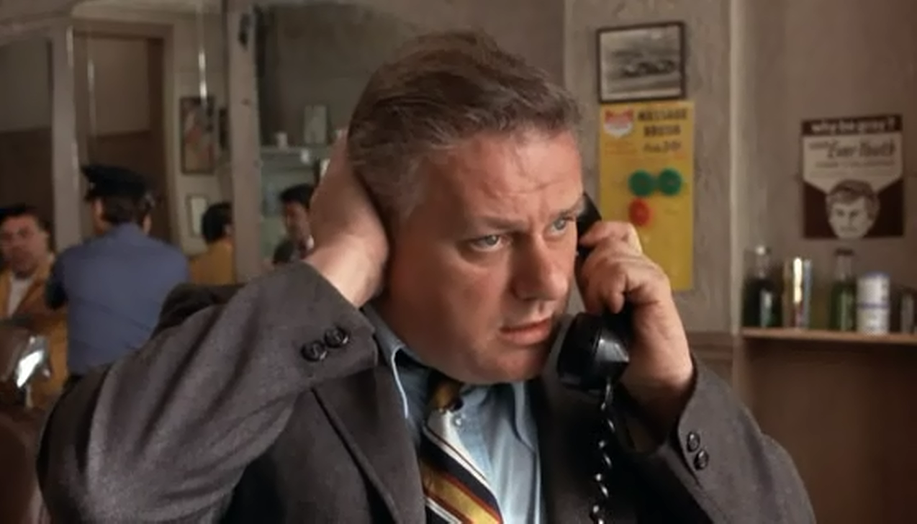
4. Charles Durning in A Dog Day Afternoon- Durning doesn't have much of a role, but he makes more than the most of it portraying the method of the police negotiator in a very compelling fashion.

Best Scene: Moretti tries to handle Sonny and the crowd. 
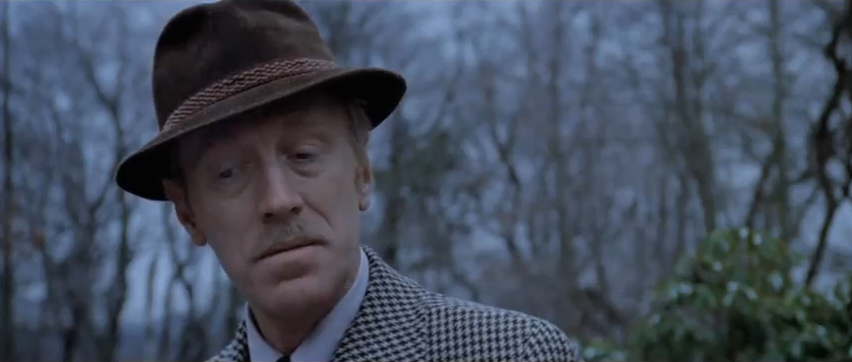
3. Max von Sydow in Three Days of the Condor- Max von Sydow is excellent in his portrayal of the cold calculated killer who we absolutely believe when he says his job is refreshing.

Best Scene: Joubert warns Condor about his possible fate.  
2. John Cazale in Dog Day Afternoon- Cazale once again gives a great tragic performance. He is terrific in creating both a danger in that violence bubbling underneath the man, but as well the sadness by earnestly showing just how lost his character is.

Best Scene: Sal asks Sonny if they will really kill the hostages. 
1. Robert Shaw in Jaws- Good Prediction RatedRStar, Michael Patison, and JamDenTel. Although I loved the performances of Max von Sydow, John Cazale, George Burns and Burgess Meredith I did not have to think twice about who would be my choice for the year overall. Robert Shaw is amazing in the role of the Ahab like shark hunter Quint. He is outstanding every moment he is on screen giving an equally entertaining and heartbreaking turn. His delivery of the Indianapolis speech alone should have guaranteed him both an Oscar nomination and an Oscar win.

Best Scene: The Indianapolis monologue. 
Overall Rank:
  1. Robert Shaw in Jaws
  2. John Cazale in Dog Day Afternoon
  3. Max von Sydow in Three Days of the Condor
  4. Richard Dreyfuss in Jaws
  5. Burgess Meredith in The Day of the Locust
  6. George Burns in The Sunshine Boys
  7. Nicol Williamson in The Wilby Conspiracy
  8. Brad Dourif in One Flew Over the Cuckoo's Nest
  9. Bill Owen in In Celebration
  10. Charles Durning in Dog Day Afternoon
  11. Alan Bates in In Celebration
  12. Chris Sarandon in Dog Day Afternoon
  13. Brian Cox in In Celebration
  14. Bruce Dern in Smile
  15. Ugo Tognazzi in My Friends
  16. Donald Sutherland in The Day of the Locust 
  17. Claude Dauphin in That Most Important Thing: Love
  18. Will Sampson in One Flew Over the Cuckoo's Nest
  19. Klaus Kinski in That Most Important Thing: Love
  20. Leon Vitali in Barry Lyndon
  21. Jacques Dutronc in That Most Important Thing: Love
  22. Oliver Reed in Tommy
  23. Cliff Robertson in Three Days of the Condor 
  24. Fernando Rey in Seven Beauties
  25. Dominic Guard in Picnic at Hanging Rock
  26. Michael Palin in Monty Python and the Holy Grail
  27. Keenan Wynn in Nashville
  28. Christopher Lloyd in One Flew Over the Cuckoo's Nest
  29. Murray Hamilton in Jaws
  30. Lance Henriksen in Dog Day Afternoon
  31. John Cleese in Monty Python and the Holy Grail
  32. Phillppe Noiret in My Friends
  33. Eric Idle in Monty Python and the Holy Grail
  34. Amjad Khan in Sholay
  35. Sydney Lassick in One Flew Over the Cuckoo's Nest
  36. Henry Gibson in Nashville
  37. William Redfield in One Flew Over the Cuckoo's Nest
  38. Richard Attenborough in Brannigan
  39. John Jarratt in Picnic at Hanging Rock
  40. Wojciech Pszoniak in The Promised Land
  41. Peter Eyre in Hedda
  42. John Houseman in Three Days of the Condor
  43. Christopher Plummer in The Man Who Would Be King
  44. Graham Chapman in Monty Python and the Holy Grail
  45. Jason Robards in A Boy and His Dog  
  46. Richard Benjamin in The Sunshine Boys
  47. Allen Garfield in Nashville
  48. John Houseman in Rollerball
  49. Patrick Stewart in Hedda
  50. Sully Boyer in Dog Day Afternoon
  51. Philippe Leotard in French Connection II
  52. Strother Martin in Hard Times
  53. James Coburn in Bite the Bullet
  54. Saeed Jeffrey in The Man Who Would Be King
  55. Bernard Blier in My Friends
  56. Robert Duvall in The Killer Elite
  57. Ned Beatty in Nashville
  58. Bob Hoskins in Inserts
  59. Ben Johnson in Bite the Bullet
  60. Scatman Crothers in One Flew Over the Cuckoo's Nest
  61. Sylvester Stallone in Death Race 2000
  62. James Woods in Night Moves
  63. Keith Carradine in Nashville
  64. William Duell in One Flew Over the Cuckoo's Nest
  65. Andrzej Seweryn in The Promised Land
  66. Saeed Jaffrey in The Wilby Conspiracy
  67. William Atherton in The Hindenburg
  68. Jack Warden in Shampoo
  69. Scott Glenn in Nashville
  70. Burt Young in The Killer Elite
  71. Harold Gould in Love and Death
  72. Bruce Robinson in The Story of Adele H.
  73. Jackie Earle Haley in The Day of the Locust
  74. Danny DeVito in One Flew Over The Cuckoo's Nest
  75. Ian Bannen in Bite the Bullet
  76. John Huston in The Wind and the Lion
  77. Hardy Kruger in Barry Lyndon
  78. Michael Murphy in Nashville
  79. Fernando Rey in French Connection II
  80. Luther Adler in The Man in the Glass Booth 
  81. Kenneth Mars in Night Moves
  82. Gene Sacks in The Prisoner of Second Avenue
  83. George Kennedy in The Eiger Sanction
  84. Lawrence Pressman in The Man in the Glass Booth 
  85. Patrick Magee in Barry Lyndon
  86. James Tolkan in Love and Death
  87. James Broderick in Dog Day Afternoon
  88. Charles Durning in The Hindenburg
  89. Edward Binns in Night Moves
  90. Sylvester Stallone in Farewell, My Lovely
  91. Harry Dean Stanton in Farewell, My Lovely
  92. Robert DoQui in Nashville
  93. John Ireland in Farewell, My Lovely
  94. Brian Keith in The Wind and the Lion
  95. Jack O'Halloran in Farewell, My Lovely
  96. Stephen Davies in Inserts
  97. Jan-Michel Vincent in Bite the Bullet
  98. George Hamilton in Once is Not Enough
Next Year: 1975 Lead

Alternate Best Supporting Actor 1975: Leon Vitali in Barry Lyndon

Leon Vitali did not receive an Oscar nomination for portraying Lord Bullingdon in Barry Lyndon.

Barry Lyndon tells the misadventures of a Irishman who attempts to move up the social latter during the 18th Century. It has plenty of great moments, but it is held back considerably by Ryan O'Neal's inadequate performance in the titular role.

Stanley Kubrick is known for his clinical nature as a director and is never afraid to make a detached film. This film certainly is one of his coldest and most of the performances in this film match that style. O'Neal perhaps was not suppose to match the style but being so bland he ends up doing so. Leon Vitali though gives the most emotional performance in the film at least in an extroverted fashion. He plays the son of the wealthy aristocrat whom Barry marries Lady Lyndon, and Lord Bullingdon as he is known does not care very much for his step father who he sees as a lowly opportunist and usurper.

Vitali actually does not appear until late in the film as the older version of the Lady's son. Vitali makes him someone who appears to always be off on the wrong foot, and he does make an impression despite his late appearance because his character marks a shift in style. It is not that Vitali's performance seems out of place, but it is very notable due to the intensity of his performance which differs greatly from the rest of the cast. He plays Bullingdon as immensely juvenile whose emotions certainly play first with him making it so he will not think twice about infuriating his step father, and is willing to make big scenes about his hatred for both his Barry and what his mother has done.

Vitali mixes rather well the pompousness that one would except from a spoiled brat as Bullingdon is, yet he does manages to elicit sympathy as well. On one hand he does play up his background and emphasizes well the stiff upper lip of the Lord. He expresses just the great bile the Lord feels of being put in such a place, and is rather effective in just the amount of hatred he espouses getting across just how much he can't stand what Barry has done to him. His performances works particularly well because he doesn't do it in a villainous fashion instead the hatred seems to be entirely an emotional response from being stripped of his place by Barry who he views as the lowest of the low.

Vitali although fully pompous in his performance does allow us to feel a little sorry for him as he is correct in his statements that Barry is an opportunist. Yes he shrill, but Vitali also plays him as entirely genuine in terms of where this comes from. Yes he may be a pompous twit but the harm that Barry has caused him is portrayed honestly, even if it becomes overblown due to his background.Vitali's much emotional approach is effective particularly in the scene where he and Barry duel. Vitali allows the scene to really work as he reflects realistic reactions to what occurs during the duel whether it be fear as he awaits Barry's shot, or the unbridled joy when he knows he managed to shoot Barry.

Leon Vitali performance here is a nice addition to the film as he succeeds in being quite different from the rest of the cast without seeming like he is in the wrong movie either. This is a good performance by Vitali although a little too limited for me to quite say it is a great one. Bullingdon is not given a great deal to do and his exit from the film is fairly brief leaving only a quick moment where he silently shows a more confidant Bullingdon which is handled well, but does not really give him that much of a chance to explore the character any further. Vitali does come in at the right moment though and infuses the right type of life into Barry Lyndon at the right time with his emotional portrayal of Lord Bullingdon.

Wednesday, 8 May 2013

Alternate Best Supporting Actor 1975: John Cazale in Dog Day Afternoon

John Cazale did not receive an Oscar nomination, despite being nominated for a Golden Globe, for portraying Salvatore "Sal" Naturile.

John Cazale did not find himself nominated for The Godfather Part II despite that the film was absolutely loved by the academy receiving many nominations including three best supporting actor. For that film Cazale not only should have been nominated but he also should have won. Cazale once again found himself not nominated despite receiving a Golden Globe nomination, his only award he ever was nominated for. The film once again received several nominations including one for best supporting actor which went to Chris Sarandon, but I do have to admit that was a deserving nomination as well.

Cazale plays Sal the man who goes along with Sonny (Al Pacion) with his bank robbing and than later hostage taking venture. I praised Durning for his performance which did a great deal with almost nothing, Cazale might seem like he given more, but I actually think that might just be part of what makes this such a good performance. Sal despite being in the bank the entire time with Sonny is actually frequently in the background and Cazale needs to make his impression sometimes quite quickly and in rather short spread out scenes. A great deal of what he does in his creation of Sal of a character which is something special considering and its no surprise that he was able to win over Sidney Lumet for the part despite the fact that Sal was only 18 in the real story.

Where Pacino's Sonny is all about his overwhelming expressive emotions that leads him to be a nervous flamboyant fellow, Cazale downplays Sal considerably creating a great dynamic with Pacino just as he done with Pacino in The Godfather Part II. This is a very unique performance and he portrays him as a man who, unlike Sonny, can keep his emotions in check although he may share many of the same emotions but instead bottles it up. Cazale is great though because of the fashion in which he shows Sal's emotions. Cazale has a great intensity in his performance that expresses the way Sal's difficultly in dealing with the stress of the situation in almost the opposite fashion that Sonny takes in dealing with it.

Cazale makes Sal like a volcano in that he is always simmering and you never know if he might burst. Where it is pretty clear pretty quickly Sonny has no actual intentions to kill anyone Cazale leaves the possibility in Sal. It is quite effective how he portrays the potential violence in Sal because he internalizes so much yet realizes it magnificently in that strained unpredictability in his face. Cazale is particularly great when he asks Sonny about the legitimacy of Sonny's threat to kill people, and then states that he is ready to massacre the hostages. The blunt fashion in which Cazale says this truly chilling and shows that Sal potentially burst out into violence in any second. Cazale is brilliant in creating just that right unnerving quality there making it so we never quite know what Sal is capable of.

Cazale doesn't leave Sal as just a possible killer though and suggests, even though we never learn anything about him directly, that Sal like Sonny also comes from a very disjointed and troubled life of his own. Cazale makes him into a lonely figure who is withdrawn and detached from everyone else to at least some degree, and he suggests perhaps Sal did have his own reason for going for Sonny, but it is just something he is going to keep to himself. Cazale, as with all of his performances, is just so genuine in his portrayal of his character. Sal is a man who clearly does not know where he is going, or really where he is and Cazale makes such a compelling character simply within playing this sort of character in as honest fashion.

Although Sal can be taken as the less sympathetic of the two, as he is the one willing to kill, Cazale still manages to create a great deal of sympathy for Sal. He allows the sympathy to come naturally by that honesty I mentioned before. He creates such a sad portrait of Sal who really is lost. One moment in particular stand out one being when Sal is asked by Sonny where he would like to fly out of the country and Sal responds "Wyoming" (an ad lib by Cazale). It would be quite funny if it were not so sad as Cazale so genuinely portrays Sal as a man out of his element. He just is so earnest that it is heartbreaking like Sal is upset that the news reported him as a homosexual, or the brilliant scene where he scolds the bank tellers for smoking. Sal line “the body's the temple of the Lord” is so tragic because Cazale shows that Sal absolutely does believe this. Although it might seem a contradiction with his willingness to kill Cazale makes all feel part of the lost soul that is Sal. 

Like Durning's Moretti, Cazale's Sal could have easily been someone you just forgot about especially in light of Pacino's tremendous performance. Cazale though never allows himself to be forgotten by creating such intricate and complex portrait despite the limitations of his character. He is believable in every aspect of the character and his intense internal style is perfectly done here. He is able to be both the man way over his head who has no idea what really to do with himself, as well as the chilling potential killer. He balances these aspects flawlessly making Sal the perfect variable in the film as we never know exactly how to feel about nor do we know exactly what way he is going to go. Cazale succeeds in making us feel sorry for him while we fear him adding just another layer of complexity to this film.

Tuesday, 7 May 2013

Alternate Best Supporting Actor 1975: Charles Durning in Dog Day Afternoon

Charles Durning did not receive an Oscar nomination, despite winning NBR and being nominated for a Golden Globe, for portraying detective Moretti in Dog Day Afternoon.

It is quite notable that Durning managed to receive a Golden Globe nomination and win the NBR for his performance in this film. The reason it is notable is that Moretti really isn't much of a part. He simply is the police negotiator who must deal with bank robber/hostage taker Sonny (Al Pacino). Clearly in the script Moretti was not meant to be much of anything since he does lose his importance completely from just one sentence from the FBI agent who replaces him. It is a testament to Durning's talent what he is able to do with role considering the film frankly could not care less about Moretti as a character.

We learn nothing about Moretti as a person. We don't know where he comes from we only know what it is that he is trying to do which is to keep the situation from escalating. This is a performance that is all about surface, this is not a criticism but rather the nature of the role. We never find out what Moretti really thinks about the situation we simply see that he is just going to do his best to reach a solution to it. Durning plays the negotiator in many ways, and is quite good in showing the methods of the negotiator. He plays Moretti in a variety of fashions, and effectively conveys the way that Moretti will try and get the hostages out.

The very time he talks to Sonny he is very firm and hostile as he tries to get him to immediately surrender, but after that clearly is not going to happen Moretti changes his tune considerably. Durning is excellent in establishing the way that the kind approach Moretti takes afterwards is just that an approach. It is not that Moretti is necessarily a nice guy, but rather the hostile approach clearly was not going to work so he has to change. Durning is very good in portraying how Moretti goes about talking to Sonny which is to keep him calm no matter what while trying to negotiate and push Sonny to release the hostages at the same time.

Durning makes Moretti both natural and artificial as he so gently speaks to Sonny. Although Durning makes Moretti genuine in that he genuinely wants to get the hostages out, but the artificiality comes in exactly how he speaks maybe too calmly and the way he always seems to be trying to make a certain eye contact and a physical closeness to Sonny. Durning gets across the way Moretti is just trying to play Sonny into seeing his way through almost a psychological conditioning as Moretti tries to seem like Sonny's best friend, even though he really is just trying to get the job done.

Durning is very effective throughout though and shows him realistically reacting to the situation and showing that Moretti can't keep up his method completely. He is very good in showing the frustrations he faces, and the believable reactions Moretti has throughout all the developments of the day. Durning is very compelling here in his own way creating an effective dynamic with Pacino and their back and forth throughout the day. It is a performance that adds a great deal to the whole of the film and makes the negotiation scenes properly come to life. Durning makes his own mark on the film despite this being such a limited role. His stamp is somewhat limited by the way his character exits with so little ceremony, but this a great example of an actor making something out of almost nothing.

Monday, 6 May 2013

Alternate Best Supporting Actor 1975: Robert Shaw in Jaws

Robert Shaw did not receive an Oscar nomination for portraying Quint in Jaws.

Jaws is one of the greatest thrillers ever made which is of course about a tourist filled island being terrorized by a shark.

Robert Shaw is one of my favorite actors and one of the reasons is the variety of ways he takes on parts. The last three times I have reviewed him he played Henry VIII in a properly flamboyant larger than life fashion, Lonnegan in The Sting where he portrayed an Irish gangster with substantial menace through the sense of the anger within the man, and Mr. Blue in The Taking of Pelham where he again played a villain but found new ground while bringing the menace still by emphasizing the proper English soldier background of his character. This time as Quint he plays a rather different character an old American sailor who has his own checkered past with the Sharks.

Shaw does not appear too much early on in the film but when we do see him he makes quite an impact. His accent is downright brilliant putting on the voice of an Old Sea Salt. Shaw doesn't overdo it never making it a parody instead it perfectly amplifies the characteristics of this man. We don't even need to hear about his past just from Shaw's manner and style we know this man has been out to sea most of his life, and as well certainly has had his experience with sharks and knows what he talking about. All that he does adds to his character from his particular scowl with the turn in his mouth, the way he hunches over, or even that particular way that he smiles.

I have to say once again that I just love watching Shaw perform here again. What is amazing about Shaw as an actor is that despite how magnetic he is in his performances he can still be entirely natural as well. Shaw simply becomes Quint as easily as became Mr. Blue or Lonnegan, there never feels like a performance here. He just becomes the part in the most wonderful fashion that he just makes every scene more than it would be otherwise. He is such an energetic performer while even playing a cold or in this case a curmudgeon type of character. Shaw is on here as he usually is, but possible even more so than usual. Even in his two brief scenes early on he livens the film with his presence and makes sure we will remember him.

One thing that is so great about Jaws as a film is how in the middle it transitions from a brilliant monster on the loose film to an adventure film flawlessly. This occurs when the town finally hires Quint to kill the Shark who goes along with Chief of police Brody (Roy Scheider) and Shark expert Hooper (Richard Dreyfuss). Shaw absolutely dominates the film once the transition occurs as Quint does not only take over the shark expedition but he also takes over the film. This is not to say even the slightest thing against Dreyfuss or Scheider, they both commit themselves splendidly, but it is Shaw's show. Quint technically might get a slow start in terms of his appearances early in the film, but once's he's in charge Shaw sinks his teeth right in (no pun intended). 

Shaw is so brilliantly abrasive here that he turns the jabs Quint gives Hooper into an art form. Shaw is such a delight as he ridicules Hooper in every way he can. Shaw mischievous smile and always firm delivery make every little thing he says not only very incisive but honestly quite enjoyable as well. The joy of performance is quite apparent here and boy does Shaw make it so we have just about as much fun as it appears he had making the film. He not only succeeds in doing that but also because of that he makes Quint even with all his crustiness endearing. He brings a great deal of humor even right along with it just through the enjoyment Quint clearly is having while giving everyone he can a hard time.

One of the reasons this performance is so good is due to Shaw's refusal to ever allow Quint to be just one type of man. Even while he gives Hooper all hell, he still adds some nice camaraderie between all three, and suggests that there is no true malice to Quint's mischief. Shaw is particularly effective in just the quick moments when Quint instructs Brody how to handle himself on the ship. Shaw is so nice in showing a bit of a gentler side to Quint as he deals with someone that he clearly has far greater respect for. Shaw puts in a little bit of warmth when Quint tells the chief just to ask him first when handling something on the ship. Shaw is fantastic how he inserts these moments adding greater complexity to the character while never compromising the rest of Quint.

Shaw just never fails to realize any part of the man and makes into all one wholly believable individual. He creates so many shades and never makes one overwhelm the other nor does he allow one facet to compromise another. For example the elements that make Quint into an Ahab figure are certainly well established through silent moments as he conveys the drive and conviction in Quint that will not allow him to give up on the mission or even allow him to ask for the further help. This is only part of him though and it only comes out in times of great stress. This something Shaw brings out so naturally and completely within all the rest. It will come in right after he is making a joke and Shaw still has it be something Quint would do. The Ahab element is in twined with the whole of Quint.

Now I have done plenty of praising I think of this performance as a whole. It is a outstanding performance that creates complexities in a character who could have easily been one note, but there is one scene that does stand out above the rest of his performance simply because I personally feel it is the best acted scene in all of cinema (yeah I just said that) that of course is the Indianapolis monologue. The speech details Quint's experience when he managed to survive after the ship he was on sunk during World War II even though he and his fellow crew mates had to survive in shark infested waters. Shaw delivery here is something to behold, truly behold there is nothing quite like how he tells the tale of Quint's horrific experience.

Shaw has almost a nostalgia at first as he describes the past of Quint's life, he keeps it that this was something in the past although not something he could ever forget. Despite this film being filled with many frightful moments, the most gut wrenching of them all is the morbid tale Shaw spins all through his words. He conveys the fear not as you might think, but there is so much power in the way Quint seems to be holding so much back not to be fazed by this. He is not emotional in the sense you usually think of the word in but there is an enormity of the emotions in the story even though he manages to keep his composure throughout the tale. Shaw brings the sadness, the anger, the pain, all of it with an unrelenting power.

The power of the speech is astonishing as Shaw takes you deep into Quint's mind and that traumatic event that Quint could never forget. Although you never see a shark in the scene Shaw never lets your mind escape the images he so vividly describes. Shaw never allows the attention to be wavered as the horror of it all unfolds and he allows the glimpses in the mind of Quint and what exactly drives the man. I really cannot do the scene or Shaw's performance justice in my review here. It is almost indescribable in its power, and Shaw's performance seems otherworldly at times in the way he seems to be everything stand still as he reflects on the terrible past of Quint the terrible past that has never stopped haunting him.

Shaw gives an incredible performance as Quint, it truly unforgettable work and the greatest from the great Shaw. This is a supporting performance that is captivating all on its own accord completely away from the film, even well it seamlessly mends with it. His portrayal of Quint is heartbreaking, humorous, entertaining, enjoyable, and all together excellent. There is never a wasted scene or even a wasted moment with Shaw. I honestly cannot praise this performance enough. Shaw gives my favorite supporting performance of all time, and this particularly amazing considering that Quint could have easily been an overacted one dimensional nothing. Shaw though turns him into one of the most compelling characters ever to grace the screen. 

Sunday, 5 May 2013

Alternate Best Supporting Actor 1975: Max von Sydow in Three Days of the Condor

Max von Sydow did not receive an Oscar nomination, despite winning KCFCC, for portraying Joubert in Three Days of the Condor.

Three Days of the Condor is an effective thriller about a low level CIA operative Joseph Turner with the codename the Condor (Robert Redford) who becomes entangled in a complex plot after all of his co-workers are murdered.

Max von Sydow plays a freelance assassin known only as Joubert who we first see leading the murders of Condor's co-workers. Sydow plays the assassin of a similar sort to say Anton Chigurh in No Country For Old Men, who goes about his task quickly and efficiently. Sydow though doesn't exactly take the approach one might expect from the assassin who is too good at his job. Usually they are played in some sort of detached psychopathic manner, Sydow does not take this approach instead gives a most unique portrayal of the strange man Joubert, that succeeds in being the killer he should be but does something else quite remarkably.

In being the killer Sydow is excellent in portraying the incisive manner that the man takes about his task. He is very quiet there such an eerie quality to Sydow's manner here. He is believable as being a man you might not notice at all in his modest style, yet Sydow is brilliant as when you do notice him there is that element to him that creates such menace. Sydow isn't cold exactly but nevertheless is quite chilling as he conveys the ruthlessness that is in Joulbert. Joubert doesn't yell, or even get angry he calmly moves and talks as he goes about killing. Sydow portrays it as simply as his nature and he doesn't require a second thought.

What especially stands out about Sydow though is the emotional quality he does have in the role. For example in the scene where he has leads the murders the last person says she won't scream Joubert responds with a simple "I know". There is a feeling in Sydow's performance that he almost can empathize not that it stops him from completing the murder in anyway. It makes these moments particularly striking though because Sydow shows Joubert who understands human emotions just fine, he does not portray him as a soulless monster, but a man with all the feelings within a man yet still fully capable of killing without hesitation.

Sydow through portrayal of Joubert in this fashion actually makes him all the more memorable of figure. Instead of being just a killer who does not know anything else or anything better Sydow's makes him a man who certainly knows of many things and can enjoy the little things of life yet he has chosen that his profession simply is what suits him the best. Sydow's final scene where he talks to the Condor in just a casual manner is an incredible scene for Sydow. Sydow in the scene presents both Joubert's considerable intelligence as well as his philosophy behind what exactly it is that he does.

The intelligence is best summed up by the vivid description of the Condor's possible future which is perfectly delivered by Sydow which emphasizes past knowledge of this man, as it is clear Condor's possible fate is something Joubert has seen before. In terms of philosophy Sydow has such an ease and grace in his delivery that he allows one to understand exactly why Joubert does what he does, and even why he is able to do it without blinking an eye. Joubert describes it as refreshing, and even though what he is speaking about is killing for money Sydow plays it so well showing the complete contentment within the killer.

 Sydow establishes Joubert as the man who seems the most comfortable not only with himself, but as well the whole world. It is quite strange as well as considering he is the cold blooded killer of the film, but it succeeds because it fits the nature of the film as well as due to Sydow's completely selling this character. He creates just a fascinating man in Joubert who can be a peace not needing to know why but rather simply needing to know how much. This is simply the best type of supporting performance in the film one that is wholly intriguing when he is on screen and always remembered when he is off. This is a great performance by Max von Sydow's as he left me only wanting to know more about this man.

Friday, 3 May 2013

Alternate Best Supporting Actor 1975

And the Nominees Were Not:

John Cazale in Dog Day Afternoon

Charles Durning in Dog Day Afternoon

Robert Shaw in Jaws

Max von Sydow in Three Days of the Condor

Leon Vitali in Barry Lyndon