Showing posts with label 1965 Alternate Best Actor. Show all posts

Thursday, 28 December 2017

Alternate Best Actor 1965: Results

5. Lou Castel in Fists in the Pocket - Castel fails to become a Brandonian sociopath instead just comes off a general creep that leaves his character a very repetitive figure.

Best Scene: Seizure
4. Zbigniew Cybulski in The Saragossa Manuscript - Cybulski, this time not going for a James Dean cool, is an entertaining enough straight man for the truly mad film around him properly processing both the comical and horrifying events he witnesses.

Best Scene: First meeting the princesses.
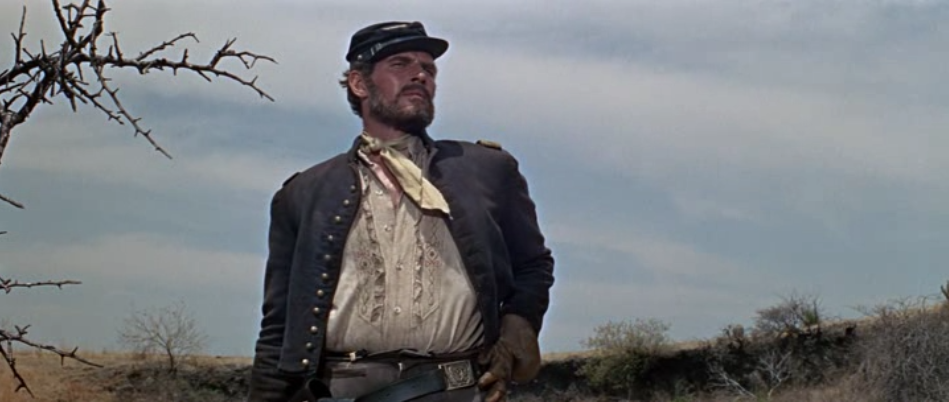
3. Charlton Heston in Major Dundee - Heston grants his usual bravado and commanding presence that he subverts somewhat here in portraying perhaps a certain weakness and desperation that slowly reveals itself within the ego.

Best Scene: Recovering from his wound.
2. Jozef Kroner in The Shop on Main Street - Kroner gives a powerful portrayal that slowly reveals an average man for all his faults, but also his qualities through his relationship with a deaf Jewish shop owner facing persecution.

Best Scene: Waiting inside during the deportation. 
1. Orson Welles in Chimes at Midnight - Welles gives one of the all time great Shakespearean performances through his complete embodiment of Sir John Falstaff in all his grandeur, and all his foolishness.

Best Scene: The battle.
Updated Overall

Next Year: 1965 Supporting

Alternate Best Actor 1965: Lou Castel in Fists in the Pocket

Lou Castel did not receive an Oscar nomination for portraying Alessandro in Fists in the Pocket.

Fists in the Pocket I found a mostly tiresome exercise about a brother of a family taking a most extreme measure to "cure" his family's dysfunction.

Now I write that it feels as a tiresome exercise because the whole plot setup feels a contrivance for a bit of dark storytelling about this family whom the majority of suffer from epilepsy with only the eldest brother capable of providing a living for his family. The youngest brother though decides to fix this that being Castel's Alessandro. That is the setup however this is not granted any true credence within the film. It is a motivation presented but not earned by what we actually witness within the film which seems built around just attempting to tell this story of a single son trying to destroy his family within. The film is more akin to say Chaplin's Monsieur Verdoux in its examination of these events with a certain callousness due to the focus being on Castel's Alessandro and his way of performing the part. The motivation, while granted as some false concern for his older brother, is left to be just the actions of a full blown sociopath however this is further emphasized by making this a stylized sociopath by Castel's portrayal. Castel seems to wish to evoke a young Marlon Brando with his work however he is more than few charisma points short for that coming closer to a precursor of sorts to Brad Dourif.

Castel's performance is quiet and intense as a proper Brandoian turn should be however he doesn't succeed in being that in any way. Castel fails to be charming being far more overtly creepy to the point that anyone should suspect him the moment anything goes wrong for anyone in his household. Castel grimaces around with a coldness that comes off as more off-putting than anything even before he starts to kill off his family members. His approach to stylize so much simplifies the part perhaps too much as even his claimed positive motivation seems a lie through his portrayal of Alessandro as so embracing of his life choices. Castel tries to be too cool for his own good even in this as he leaves the motivation to be thin finding no nuance in this. Instead Castel is content to depict Alessandro as this creeper throughout that I have to admit I found fairly tiresome fairly quickly given that give him scenes that seem to demand a more overt presence which Castel lacks. It seems as though the film would like Alessandro to be a more complicated figure to interpret however it is difficult to do so with his decidedly unpleasant work from the outset. There is no change within the character just this general petulant disdain that defines the man at all times, even his proclamations of love towards two of his siblings feel lacking given Castel's one note portrayal of the vile Alessandro. Although I would say Castel's performance could work within a different context it falters here given the greater importance given to his work. I will even grant him some credit for delivering in the epileptic seizure by throwing himself fully into the moment, but that is a minor point within the larger context of this performance. He needed to make Alessandro a far more dynamic force yet his "too cool for school" choices in developing the role leaves him a repetitious factor that simplifies the story to the point it becomes frankly boring despite its content.

Tuesday, 26 December 2017

Alternate Best Actor 1965: Orson Welles in Chimes at Midnight

Orson Welles did not receive an Oscar nomination for portraying Sir John Falstaff in Chimes at Midnight.

Chimes At Midnight is a brilliant Shakespearean adaptation that reworks several of his plays to build a narrative around the supporting character of Falstaff, and his relationship with the young prince Hal aka the future Henry V.

Orson Welles's history with Shakespeare, in and outside of film, seemed often to reinvent the work of the bard through his own vision. That was found in his adaptation of Othello, where he built the central suspicion of the lead around the concern of his lack of attractiveness compared to wife, on stage his Macbeth with an all African American cast, his anti-fascist examination of Julius Caesar, really his film version Macbeth was by far was his least impressive adaptation perhaps because of how straight forward it was, his most daring work though was perhaps here through his turning John Falstaff into a lead while dramatically reworking texts into an altered narrative. Whereas as with Othello and Macbeth Welles was a rather atypical choice for the roles, it must be said Falstaff is a role Welles seemed born to play. A man of excess, a man tempted for glory, a man not opposed to go on long philosophical pondering of one matter or another. This should be a role made for Welles, and well it very much is. This match of man and role does not disappoint as evident from his very first scene where the young Prince Hal (Keith Baxter), awakens the old Knight whose purse has been stolen by another member of their group.

In the very awakening of the man Welles reveals the wholly brilliant fashion he will approach the part of Falstaff, which is pivotal in a realization of the nature of this man. Physically here this is perhaps where Welles most accepted his weight in a role as there is no attempt to hide it, in fact there seems to be the attempt to embrace it fully. Welles walks in a most fascinating way actually in that he doesn't lumber but rather has this grace. A grace though that should not exist from a man of his size yet can only be within a man of his size. When he awakens from that slumber he gets up  in a way that is fitting of both a knight and a buffoon. There is that proper gait of a knight, however with the silliness of a fool that seems so natural to everything that Welles finds in this role. His whole manner is of a sheer perfection in the realization of the strange role that Falstaff fulfills in this world. It is widely evident from even a single glance that he is a fool, after all the first thing he does is fail to find what is stolen from him, however the foolishness is not in the way it would be for any man. Falstaff is of a different sort than all that and this is within the Welles carries himself with this grandeur that is worthy of a greatness, a greatness Falstaff though is not worthy of.

Falstaff's life is in a way an entirely of hypocrisy validated through his companion of the young Prince Hal, which is contrast to the rest of his entourage that is made up of thieves, whores, other lowly sorts who all congregate within a dank little tavern. The key though to Falstaff is the way the man presents himself. Welles's fantastic here, and perhaps gives his most overtly charming performance as Falstaff. Welles brings an inherent joviality within the man that exudes off of him in such a pleasant way. Welles even speaks the words themselves without distance, creating a real familiarity with the knight through every word. As the prince Hal does, it becomes very easy to love Falstaff as there seems only the most splendid of hearts within the man and through Welles's portrayal of it. There is an excessive abundance of warmth and a considerable playfulness in every moment. Welles in this way creates the greater appeal to the thievery and whoring that Falstaff encourages since it seems all but a game. A game with a most simple man to follow into every act given how disarming Falstaff is even when he charges group of men with his sword in order to rob them.

The truth of it is that Falstaff though is no ordinary buffoon but only because of only his own way of creating a certain delusion. Welles does not make this any simple creation of a delusion as it is part of Falstaff's very being. Again there is that grace which Welles captures so effectively and takes even further whenever he is called upon to for his particularly ramblings on the value of being an corpulent fool essentially. Welles in every word speaks with such unshakable pride. There is not a hint of shame but in a way that does not deter one from accepting the man's declarations. Falstaff as he even mocks Hal's father Henry IV (John Gielgud) grants only a most endearing quality to the forceful spirit of the man. It is a marvelous thing perhaps in the way Welles is wholly without a hint of malevolence for even a moment, even if his sentiment may construed as such in some way. Welles captures the firmness of Falstaff's beliefs without question. Welles speaks with the same passion, same assurance, as Henry would eventually do when leading his men into battle, it just happens that what Falstaff speaks of is the desire to continue a life of great unimportance.

Eventually the world of the outside is thrust upon Falstaff and Hal, when the young prince is needed to help his father quell an uprising within the borders of England. This is no problem it seems for Falstaff in fact Welles is something truly special in portraying the Falstaff brims with a remarkable majesty as he goes about preparing for the upcoming battle. In his full armor he suddenly seems a man who was born to battle, a warrior poet if there ever was one and Welles again is careful to hold not a whiff of loathing within a man presenting himself prepared to take on all comers. Of course when the battle itself comes the great knight hides behind bushes for the majority of the battle only coming out to claim victory for the death of the enemy leader, actually felled by Hal. Hal doesn't stop Falstaff from the credit, and only seems slightly taken aback by this act. The thing is neither did I feel the need for Falstaff to be punished. Again Welles's portrayal of the lack of shame, and the full embrace of even this cowardice someone endears one to the knight all the more. It would seem wrong for the knight to shed blood, or to not be a coward. Welles gives understanding to the man, as he finds his appeal so naturally, as every moment he is exactly who he has always been and should be.

The glory of Falstaff is a short one though when the death of Hal's father requires the young wayward boy to become a man and finally embrace his destiny as king. This though leads the Hal to directly denounce Falstaff when the old knight attempts to continue his place as his mentor even as king. Welles is indeed heartbreaking in his reaction of confusion as Falstaff is rejected, but all the same there was a devious, a charming, yet still devious grin as he spoke of claiming his new rights as friend to the king. It is with this there is this duality of the character, but only in terms of other's perspective of the man. This is both as the viewer and as Hal sees him. Welles in his own place understand that Falstaff simply is who he is, and doesn't change except towards that final depression. The duality instead comes what should one take of the man. Are his lessons worthless, is he a bad influence, or is he a charming man whose teachings were worthwhile in some way. Well all of it is true and all of it can be true through Welles's outstanding performance. Welles grants the appeal unquestionably the man, even the appeal of his hypocrisy and most problematic qualities. Welles makes Falstaff the grand yet pathetic, or perhaps pathetic yet grand man he is. He embodies that one of a kind spirit. What is perhaps the greatest achievement of this is how Welles, without changing the man at any point, allows this pathos within the often comical by showing tragedy in losing this spirit, even while showing why that spirit must be lost. This is a wonderful performance by Orson Welles, giving one of the greatest cinematic Shakespearean turns by finding the complexity within a certain simplicity and giving a real power to the story of a buffoon.

Monday, 18 December 2017

Alternate Best Actor 1965: Jozef Kroner in The Shop on Main Street

Jozef Kroner did not receive an Oscar nomination for portraying Anton "Tóno" Brtko in The Shop on Main Street.

The Shop on Main Street is a powerful film depicting a carpenter's relationship with an elderly Jewish shop owner after being appointed as an Aryan overseer in Nazi occupied Czechoslovakia. 

The Shop on Main Street has a somewhat interesting history with its U.S. release and the Academy Awards. The film was initially eligible for the 1965 Awards where it won best foreign language film due to the foreign submission rules. It later became a Oscar nominee the following year, due to different Oscar submission rules outside of the foreign language category, when Ida Kaminska was nominated for Best Actress. Jozef Kroner on the other hand was ignored despite the film being from his perspective to the point that Kaminska's role as the elderly Jewish button shop owner Rozalia Lautmannová really is a supporting one. The film follows the gentile in the situation who we see as a non too remarkable sort as the film opens. Kroner embodies a contentment in the discontentment. Kroner's eyes are almost glazed over as he watches soldier move through his town without a thought in his mind on the matter. He glances upon the sights of his occupied country without much interest. That contentment towards the severity of the situation facing his country Kroner portrays as coming from the discontent for his life. The discontent in his state as a poor carpenter which Kroner exudes so well with a grumbling lip, and a disposition that seems to be holding a bit of anger just in general towards his place in the world more than anything.

After a bit wallowing in himself it lashes out quite naturally towards his well to do brother-in-law, well to do by working as a collaborator with the Nazis. The lashing out scene is a great moment in Kroner's work because of how much petulance he brings to it very much emphasizing the state of the man who is more angry at his position, as well as jealous of his brother-in-law's position than anyone around him. Kroner makes  this a natural starting point and carefully doesn't go too far. He doesn't make Tóno a horrible person, but certainly not a good one. He though elicits the right sympathy just by portraying Tóno as an average man's whose behavior, while not pleasant, wouldn't be deemed too terrible if he was in a simpler situation. Despite the lashing though Tóno is given a position by his brother-in-law as the assigned Aryan to manage a shop owned by the elderly widow Rozalia Lautmannová. Kroner is great in his initial scene of arriving to the shop to "take over". In part he's good in just showing a now content Tóno who walks with such pride in the shop, then breaks this down though as he depicts such awkwardness as he attempts to explain the situation to Lautmannová who is hard of hearing.

Kroner brings actually quite a bit of very natural humor to the moment by bringing such a genuine sheepishness in his depiction of the unease of Tóno as he tries to deliver some horrible news. Now the interesting things is that Kroner shows so effectively the way the seemingly now content Tóno has this moment of realization. Kroner finds this just in these early interactions by creating a sense of the empathy in Tóno towards the old woman in the situation as he struggles to even say the words. Kroner properly makes every moment of this having this tension of the man who realizes he's doing something he can't quite completely accept as right, as reinforces every moment with the right shyness that reflects this understanding of what this really means. Tóno soon learns that the woman is essentially bankrupt and the Jewish community will support him to support her. Kroner again is so good in just reflecting with such honesty the man taking all this in somewhat baffled, somewhat confused, but within his eyes the right hint of sympathy given the situation. This even includes the widow not really being all that nice to him once he starts to assist her in the shop.

Kroner in these scenes is very good in the way he makes the arc of Tóno quietly such a poignant one. On the surface he's good in again actually being a bit funny actually in showing the strange way that he physically works around the woman, as well as attempts to portray both a confidence of pretending to run the shop while trying to basically mind his manners around her. Tóno realizes this dance so well, but goes much further than this in showing the change in Tóno as he finally begins to notice what is going on around. Kroner is marvelous in the subtle way he depicts this change in his often reactionary performance. Kroner's face says so much more than so many words would in every scene. This is in the quiet appreciation of the person in the old woman, despite her misgivings towards him, but also far more in his reactions towards seeing the increasing nature of the regime in front of him. A particularly powerful moment in this regard coming when a friend of his, and supporter of the local jews is beaten and displayed for the public to see. Kroner's expression is haunting as he realizes within certainly the fear for his own fate, concern for his friend, but his eyes also convey this sense of recognition of the plight around him in general including the old Jewish woman.

This brings me to the film's finale which is an extended sequence that is dependent on Kroner's performance. It is actually a largely silent sequence as the man drinks while watching the Jews being round up for deportation from the old Jewish woman's shop, while she remains unaware of what is going on around him. Although technically it is a sparse sequence I was absolutely transfixed for every second of it, and the greatest contributor to this is Kroner's performance. Kroner is absolutely outstanding as he depicts such a vivid portrayal of the inner workings of the man's mind on this fateful day. There is not a single second wasted, and even though he only has a couple of lines, often of little importance, there is nothing vague in this performance. Kroner brings to life this struggle which he never simplifies. In his eyes, his moments of turning from the danger, or thinking of the woman he says so much without verbalizing a word. There are times again of obvious fear but that is never all there is. Kroner even in that finds the struggle within the fear of the man both at times succumbing to it, and other times feeling a different fear for the woman. Kroner projects this weight of the situation upon this man. There are times where he is selfish, other he is selfless, but it is never anything to be taken lightly. It is incredible to watch as Kroner finds the complexity of this with such an emotional impact in every moment of the man dealing with his own demons and weaknesses, while still concerning himself with the fate of this old woman. It is fascinating how much Kroner finds with this painful silence of this single horrible moment. When something finally happens that directly affects him his reaction is wholly heartbreaking and completely earned as his work to that point has so effectively brought us within the mind of this man. This is a fantastic performance as it is not a portrayal of a bad man becoming a good man. Kroner rather gives us something perhaps far more human in a man struggling with his better self, with his worse self as he faced with being responsible for more that just himself for once in his life. 

Thursday, 14 December 2017

Alternate Best Actor 1965: Charlton Heston in Major Dundee

Charlton Heston did not receive an Oscar nomination for portraying Major Amos Dundee in Major Dundee.

Major Dundee, in its proper extended version, is a terrific western, despite a little bit of clashing between a traditionalist and modernist view of a western, about a Union cavalry officer calling upon the aid of Confederate prisoners in order to avenge an Apache massacre near the end of the civil war.

Charlton Heston, known for his roles as steadfast leads, seems well enough equipped for the role of the tough Union officer, however this is a bit atypical, particularly for the time for him, given it is a film by Sam Peckinpah, and his leads are never simple heroes. Heston's presence here makes for an interesting one in the film in the way it is used with the character of Major Dundee. Now on the surface Heston is in prime Heston form. He has all his stature, and the power of screen presence that is a consistent factor in all of his performances, even in lesser ones. Heston's innate confidence suits well Dundee as we first meet him in charge of a fort deep into west and out of the way of the main civil war, with the primary mission in housing a group of confederates lead by Captain Benjamin Tyreen (Richard Harris). Heston's blunt approach works effectively in establishing Dundee as this blunt force of will early on. Heston makes the character's determination convincing which is particularly important to the plot where he makes his mortal enemies work for him. Heston delivers in presenting Dundee as this unshakable force from the outset.

The point of Dundee is interesting though as watching it you initially believe the man as well given just how Heston brims with such a confidence. This is even as the film hints that the man is far more flawed than how he presents himself suggests. After all why would such a formidable soldier be practically a prison warden then, it is hinted at that his actions in the battle of Gettysburg were for his own glory than the overall success of the war. This actually can be taken as his motivation to avenge the massacre since Heston portrays this as somewhat dispassionate. In that he never portrays a direct anger or anguish towards those who died, rather his determination seems to only surround the idea of the daring of the task which involves catching such a sly prey, which even involves going into Mexico and risking coming afoul the French army posted there. Heston does not convey those humane ideas as settling at any point into Dundee's mind rather only seemingly the idea of the potential glory in the task through the strength of a man absolutely certain in this resolve. This choice is actually the proper one for the character, and again though watching the film it would seem this is because Heston is just making Dundee this type of unflappable hero, however that is not the case.

The truth is revealed as the film goes on but examining this performance it is two faced once you know this truth. During the beginning of the journey there are moments where Dundee is quiet honestly a jerk, and Heston doesn't hold back in these scenes. He's frankly cold in moments as he lobs insults at one of his men because he comes from the artillery, or questioning the loyalty of one of the Apache working with his battalion. At initial glance this may seem just a man who sufers no fools, but with the understanding of the whole of Dundee it is a palatable egotism that Heston reflects in his performance. Now to be sure this is not a case of Heston making this a pure negative rather he does find the complexity of this brashness of a soldier. On one point Heston does realize essentially the usefulness of this in any scene in which he initially comes to a battle of wills with Tyreen. The intensity of the man's daring that Heston provides shows effectively his ability to keep them inline. This is also seen in his moments of strategy against the enemy which Heston conveys the worthwhile nature of his passion for victory. There is a darkness within this though as Heston reveals such a lack of empathy as a man perhaps willing to risk everyone lives if it means a great victory.

Now I will say in part this is a performance that is aided greatly by his frequent scene partner in Richard Harris. As Stephen Boyd did in Ben-Hur, Harris provides the right type of foil against Heston's more direct work. What Harris does, which I will get more detailed on later, is essential in creating some of the complexity of the character of Dundee by the way he challenges the typical Heston presence. To be fair, unlike as Ben-Hur where he stays much more the hero, though here Heston challenges it a bit himself. This is mostly seen through a needed diversion where Dundee is wounded and must be taken to hospital in Mexico. In typical Peckinpah form this challenges the values of Dundee when he is without his army, without his pride, without even his physical power as a man. Heston does deliver in breaking down his presence to powerfully reveal a more vulnerable man as he struggles to stand and is even caught in caring for the results of his actions for a moment. Heston gives these scenes the impact they need, however I don't think he quite lets them influence the rest of his work enough. He tones the egotism a bit, but the last act should have brought a far more changed Dundee. We get a little change, but there was a greater potential there that perhaps a William Holden in the role could have brought out as he did in his own collaboration with Peckinpah. This stands as a good performance still from Heston which does subvert his work to an extent, but perhaps not enough.

Tuesday, 12 December 2017

Alternate Best Actor 1965: Zbigniew Cybulski in The Saragossa Manuscript

Zbigniew Cybulski did not receive an Oscar nomination for portraying Alfonso van Worden in The Saragossa Manuscript.

The Saragossa Manuscript is not a film that one can easily describe what it is about, it's no surprise to learn that David Lynch holds the film in high esteem, other than there are many stories, stories within stories, and the reality of each isn't always exactly the most understandable. I would say the film is fascinating, the first part of I suppose I could more easily say is quite great, I would probably recommend taking a break though before heading on to the second half which can become quite dizzying.

Well about seven years after his breakout role in Ashes and Diamonds, we find Zbigniew Cybulski once again. In that earlier film Zbigniew Cybulski's performance was fashioned over James Dean, which sadly came to be came prophetic with Cybulski's early death. Cybulski though didn't die as young as James Dean so he continued as an actor, and here we see him a very different role, as a closer to middle aged man. Cybulski in no way plays into that Dean idea here, which would likely be ill-fitting to a man living during the Spanish Inquisition. Cybulski, while not playing the role as James Dean, is actually a very modern presence given the time period still. This is not at all ill-fitting towards the film. In fact Cybulski's approach is very welcome towards the film and in a way help to ease some of the film's mind bending through his approach. Cybulski quite honestly gives a comedic performance here, even though his character goes through torture at the hands of the inquisition, seemingly demonic forces, and all sorts of far more serious subjects to be sure. There's quite a lot going on around the poor Captain of the guards Alfonso, and Cybulski's performance actually acts as a bit of balancing factor to keep it all from it all becoming perhaps too much.

Cybulski's performance, which is often to play Alfonso as the audience at any given point, has what one could call sort of a precursor to a Lynchian style of humor. In that Cybulski's performance often is within some horrifying scenes however these scenes will often become suddenly hilarious without distracting from the scene. This is from Cybulski's work which is notable in that he basically plays the part as a normal guy in this situation with no great ambitions other than for nothing bad to happen to him, and perhaps indulging with some "fair" maidens who claim he's the first man they've ever seen. Cybulski for example, in the scene of meeting these two strange princesses who live in a cavern, and want him to drink out of a skull, portrays a blend of curiosity with bit of a bashfulness of a man who believes he's hit an unexpected jackpot. The potential horror elements naturally being assuaged due to the most intriguing prospect at the center of it all. Cybulski brings the right lack of shame in this indulgence and he is rather amusing just to watch deal with this entanglement of sorts. Of course this entanglement never seems to end well when he always wakes up at the end of it among corpses.

Now one major similarity between his work here and the last time I reviewed him in Ashes and Diamonds, is the fact that despite being lead in both films, he's just barely lead in each. This film once again does devote the most time to his story however this is not saying a great deal in the scheme of the film which gets lost in its stories among stories among stories. Once it really gets going in the stories we are only granted a brief moment with him where he is just as confused as ever that is before the film's finale which seems answer a few of the questions though only with a few more questions. Cybulski's performance offers a bit stability in two ways. One being that he doesn't change within the story always portraying his role as a man just trying to figure what is going on the same way the audience really is, the other being by offer a bit respite in the humor that comes from such worldly approach within the surreal environment. This is a good performance by Zbigniew Cybulski however I must say once again that it is a limited one and the unquestionable takeaway from this film is of the vision from director Wojciech Jerzy Has. Cybulski's work though is still an important part of that vision though it is unquestionably overshadowed by it.

Sunday, 10 December 2017

Alternate Best Actor 1965

And the Nominees Were Not:

Lou Castel in Fists in the Pocket

Charlton Heston in Major Dundee

Orson Welles in Chimes at Midnight

Jozef Kroner in The Shop on Main Street

Zbigniew Cybulski in The Saragossa Manuscript

Wednesday, 18 July 2012

Alternate Best Actor 1965: Results

5. Michael Caine in The Ipcress File- Caine uses his unique screen presence here to make Harry Palmer a down to earth, and very likable hero.

Best Scene: Palmer is tortured. (The scenes are dated but Caine's performance is not.)
4. Omar Sharif in Doctor Zhivago-This really is not the usual performance for an epic, but Sharif makes the most of his character and successfully carries the film.

Best Scene: Zhivago meets with Strelnikov.
3. Lee Van Cleef in For A Few Dollars More-  It is a performance of quiet simplicity, and in this simplicity is where the incredible strength of this performance lies.

Best Scene: The final duel.
2. Sean Connery in The Hill- This is an excellent showcase of Connery's talent as he not only utilizes his more commonly found command of the screen, but as well effectively shows us that he is fully capable of creating an emotionally resonate performance.

Best Scene: Roberts confronts Major Wilson.
1. Terence Stamp in The Collector-This is a great performance by Stamp as both a humane portrait of a lonely man, but at the same time a convincing portrayal of a man who seems to prefer the dead over the living. This is again an incredible year, and again Stamp wins for now but Connery, Steiger, and Burton are not far behind.

Best Scene: Miranda tries to seduce Freddie.
Overall Rank:
  1. Terence Stamp in The Collector
  2. Richard Burton in The Spy Who Came in From The Cold
  3. Rod Steiger in The Pawnbroker
  4. Orson Welles in Chimes at Midnight
  5. Sean Connery in The Hill
  6. Jozef Kroner in The Shop on Main Street
  7. Lee Van Cleef in For A Few Dollars More
  8. Omar Sharif in Doctor Zhivago
  9. Oskar Werner in Ship of Fools 
  10. Toshiro Mifune in Samurai Assassin
  11. Sidney Poitier in A Patch of Blue
  12. James Stewart in Shenandoah
  13. Clint Eastwood in For A Few Dollars More  
  14. Michael Caine in The Ipcress File
  15. Frank Sinatra in Von Ryan's Express
  16. James Fox in King Rat 
  17. John Wayne in The Sons of Katie Elder
  18. Keith Baxter in Chimes at Midnight
  19. Lee Marvin in Cat Ballou  
  20. Walmar Chagas in São Paulo, Sociedade Anônima
  21. John Wayne in In Harm's Way
  22. James Stewart in The Flight of the Phoenix
  23. George Segal in King Rat 
  24. Richard Widmark in The Bedford Incident
  25. Jean Sorel in Sandra
  26. Rentarō Mikuni in A Fugitive From the Past
  27. Charlton Heston in Major Dundee 
  28. Laurence Olivier in Bunny Lake is Missing 
  29. Zbigniew Cybulski in The Saragossa Manuscript
  30. Laurence Olivier in Othello  
  31. Max von Sydow in The Greatest Story Ever Told 
  32. Sidney Poitier in The Bedford Incident
  33. Jack Lemmon in The Great Race 
  34. Claudio Brook in Simon of the Desert
  35. Christopher Plummer in The Sound of Music
  36. Yuzo Kayama in Red Beard 
  37. Peter O'Toole in What's New Pussycat?
  38. Sean Connery in Thunderball 
  39. Frank Finlay in Othello
  40. Marcello Mastroianni in The 10th Victim
  41. Charlton Heston in The War Lord
  42. Marcello Mastroianni in Casanova 70
  43. Michael Crawford in The Knack ...and How to Get It
  44. Eddie Constantine in Alphaville
  45. Charlton Heston in The Agony and The Ecstasy
  46. Rex Harrison in The Agony and The Ecstasy
  47. Tony Curtis in The Great Race  
  48. Jean-Claude Drouot in Le Bonheur
  49. Steve McQueen in The Cincinnati Kid 
  50. George Peppard in Operation Crossbow 
  51. Kirk Douglas in The Heroes of Telemark
  52. Stuart Whitman in Those Magnificent Men And Their Flying Machines 
  53. Jason Robards in A Thousand Clowns
  54. Lou Castel in Fists in the Pocket
  55. Peter O'Toole in Lord Jim
  56. Jean-Paul Belmondo in Pierrot Le Fou
  57. Keir Dullea in Bunny Lake is Missing 
  58. Richard Burton in The Sandpiper
  59. Ringo Starr in Help!
  60. Paul McCartney in Help!
  61. John Lennon in Help! 
  62. George Harrison in Help!
Next Year: 2011

Alternate Best Actor 1965: Terence Stamp in The Collector

Terence Stamp did not receive an Oscar nomination for portraying Freddie Clegg in The Collector.

The Collector is a brilliant film about a man who kidnaps a woman and brings her to his secluded and spacious home.

Terence Stamp did not receive an Oscar nomination despite the fact the film did receive a best director nomination as well as a nomination for Samantha Eggar as Miranda Grey the woman whom Stamp's character kidnaps. Stamp though found himself not nominated despite winning Cannes for Best actor. Stamp may have felled victim to the fact that he portrayed a villain although to be fair they were never completely opposed to all kinds of villains, but perhaps this was one of the kinds they did not feel like they could support. Also even though Stamp had been nominated before for Billy Budd he has been nominated in the supporting category for a lead performance, and the academy may have been reluctant to nominate the young Stamp for a leading performance.

Stamp portrays Freddie Clegg a young man who has won a great deal of money suddenly and chooses to use it to buy a secluded estate. He is a lonely man without friends who decided to use his estate that includes a underground living space to kidnap a woman. He decides to kidnap Miranda despite hesitations, but his intents are not the usual for a kidnapper. He has no desires for random, nor does he desire sexual favors, nor does he want to hurt her in anyway, all he wants her for really is company. Freddie is a very different sort of captor to be sure, as the holding her captive is the only thing Freddie does that is wrong. Stamp therefore does not portray Freddie as many may have portrayed him.

Firstly Stamp really never tries to be actively villainous in the role, and early on he tries to be likable. Stamp of course shows absolutely no real charm here, as Freddie has not idea how to be a charming man, but in his first scene with Eggar Stamp actually makes Freddie in a way sympathetic. It is a particularly difficult act of making such a man at all sympathetic but Stamp manages to meet the challenge. Freddie first tells Miranda of his purpose for bringing her to his place, and that he in fact loves her, and has loved her for quite some time. Stamp is amazing here because he shows that this obsession of Freddie's is entirely genuine, and that his claims of no ill will are entirely truthful.

Stamp actually is almost heart breaking in his portrayal of Freddie because he never tries to make him seem at all evil. He makes him a sad lonely person who is not a psychopath but rather he shows that his shyness has created this sort of mental disturbance in him that has brought him to kidnap this woman. Stamp is interesting because even in the presence of her he shows that Freddie's shyness is still overwhelming. His body language is always withdrawn, and he always conveys the difficultly that it takes just for Freddie to look at her in the eye and say something. When he says that he loves her, Stamp creates a struggle within Freddie just to get those words out.

Of course the most important aspect of the film is the relationship between the two and how their dynamic changes through time. While Eggar's Miranda at first shows excitement over Freddie's agreement to let her go after a limited amount of time in captivity, Stamp though portrays Freddie as very much reluctant to really try to connect with Miranda as his shyness really is overwhelming. Stamp shows that he desperately wants Miranda to be the one to connect with him, as he really is unable to connect with him. Stamp in fact makes Freddie so distant that at times he almost seems like a butler to her, even though he happens to be the hone holding her captive.

Now although Stamp does not portray Freddie ever in an obvious fashion, and because of that he is truly chilling when Freddie's refusal to let her leave does come out. There are moments early on in between when he is trying to be the most pleasant man he can be when he does show the mental disturbance of the man that is quite horrifying. Stamp does it so casually that it is especially disconcerting because it will come out right along with just a pleasantry. Stamp in these moments though is precise showing that Freddie has it all extremely well planned out, and as well shows a more frightening side to Freddie because Stamp makes Freddie's self assurance something to be feared.

Although certain in his abilities regarding keeping her in his home, what is equally off putting about him though is the uncertainty he portrays regarding his relationship with Eggar. Stamp is simply amazing in showing the jumble of emotions that Freddie feels in a completely coherent way, as he desperately attempts to connect with but he can't do so with more than words. Even when he asks her to marry her, Stamp portrays it as a desperate plea to find some sort of remedy for his loneliness. Stamp though is incredible because the statement of Freddie he actually ends with is that Freddie does not know what he wants.

In many scenes Miranda tries to persuade Freddie that he could get along with her even outside of this world that he has created for them, but he insists that he would never be able to. It is a sharp desperate self doubt that he holds as a constant, Stamp shows that Freddie himself is pained because he knows that he can never be normal. Freddie contradicts himself, but Stamp makes it work as Freddie never can interact with humans the way he really would like, and one scene in particular Stamp powerfully shows this strange dichotomy.

In one moment after rendering Miranda unconscious Freddie clutches Miranda in a joy of love, which Stamp portrays as Freddie at his happiest finally having what he wants. Soon afterward though Miranda in a desperate act to satiate Freddie offers herself to him. Stamp is chilling as he shows Freddie cruel rejection of her, as her living embrace can never meet the joy he felt in her unconscious one. Stamp is simply stunning in the role because of how perfectly he realizes the insanity behind Freddie's desires. He never has Freddie find what he is looking for leaving him in the state of an uncertain emotional need, but never an understanding. Miranda in the end is apparently not what he wanted after all, and Stamp leaves a exceedingly memorable impression with the simple revelation that Freddie learns nothing at all from his relationship with her. This is a great performance by Stamp as both a humane portrait of a lonely man, but at the same time a convincing portrayal of a man who seems to prefer the dead over the living.

Tuesday, 17 July 2012

Alternate Best Actor 1965: Lee Van Cleef in For A Few Dollars More

Lee Van Cleef did not receive an Oscar nomination for portraying Colonel Douglas Mortimer in For A Few Dollars More.

For A Few Dollars More is the second part to the excellent dollars trilogy by Sergio Leone. This one depicts Clint Eastwood this time called Manco who is a bounty hunter who teams up with another bounty hunter to take down the crazed bandit Indio (Gian Maria Volonté) and his gang after they have robbed a bank.

Lee Van Cleef portrays Colonel Mortimer the other bounty hunter who I consider lead with Eastwood as the film at first follows both their exploits separately but equally, and after they team up they both stay important to the story. Van Cleef's Mortimer perhaps is even more important due to the fact the film tells anything about the past of his character something that is left as a complete mystery in regards to Eastwood's Manco. Lee Van Cleef before appearing in this film was in a few westerns, notable ones even like High Noon and The Man Who Shot Liberty Valance, but in both of those films despite having a given name his characters were no more than thug number two. Here though Cleef honestly has a role, and is given the chance to shine as an actor.

Lee Van Cleef is actually the first of the two actors to appear, and for me makes an even greater impression than Eastwood does. Both are shown on a job as a bounty hunter basically just to show us how much of a badass each of the characters are. Lee Van Cleef is even better than Eastwood at being one here, and Eastwood might as well as the badass king. Van Cleef is cool and collected in the film, showing the ease of his character's ability to kill. In the first scene of him going after a man Van Cleef shows that Mortimer moves through to his job with an ease, and unquestionable confidence. It is an absolutely earned confidence by Van Cleef, there is not a moment where Mortimer seems pompous, Van Cleef makes it clear that Mortimer is just simply that good.

It simply is just enjoyable to watch Lee Van Cleef as Mortimer maneuver his way through eventually dealing with the group of bank robbers. Cleef makes a particular sort of hero here with his firm precise method of walking, his always squinting eyes that seems to see through anything, and ease he seems to show in any situation. Really when he is not talking to Manco Mortimer says very little, but Cleef again speaks only with precision and just the right degree of gentlemanly demeanor that suggests his past as a proper soldier. There is a bit humor, and always a quiet power in Van Cleef's portrayal that makes everything that the colonel does believable. Even when he does something that no sane man would do such as lighting a match on Klaus Kinski, I doubt even Werner Herzog would do that, is made convincing through Van Cleef's steadfast performance.

Now although Lee Van Cleef is very consistent with his performance as the strong willed Mortimer there are little indications throughout the film that show that Mortimer may be in the fight for more reasons that just the money. These are relatively small moments for most of the film, but Van Cleef portrays each of them marvelously. Lee Van Cleef of course does not really show that there is any sort of weakness in Mortimer, the strength and cunning of the character really are his primary trait. He does not show that there is more to the man that just being a professional killer. It is quite well hidden pain, but Van Cleef lets in just enough that there is something that haunts him over something that he has lost in his past.

The very best moment of his performance comes in the very best part of any Sergio Leone western which is the final duel which is in this film is between Mortimer and Indio. Before this moment Van Cleef subtly suggested through glances in Mortimer's earlier scenes with Indio that there was something more, but here it really comes out as a deadly want of vengeance. Van Cleef is amazing here because it is not just anger in his eyes as he looks at Indio as they prepare to kill one another, but there is a sadness in his eyes as well. This is not a sadness over the fact that he possibly could be killed, but rather Van Cleef effectively shows it to be the feelings over his past devastation over the death of his sister which Indio caused. He does not make it as a debilitating factor though, but instead makes it as the driving factor in his will to win the duel. Although this is not the type of performance usually associated with great acting, but it simply is nevertheless. It is a performance of quiet simplicity, and in this simplicity is where the incredible strength of this performance lies.

Monday, 16 July 2012

Alternate Best Actor 1965: Omar Sharif in Doctor Zhivago

Omar Sharif did not receive an Oscar nomination for portraying Dr. Yuri Andreyevich Zhivago the titular character of Doctor Zhivago.

Doctor Zhivago is the excellent follow up by David Lean to Lawrence of Arabia. This film certainly differs in many ways from that film the biggest being the lead character. In Lawrence of Arabia the main character of T.E. Lawrence absolutely controlled the film, and as made the world notice his extraordinary measures. Doctor Zhivago on the other hand though is not a particularly active individual being a man who is most acted upon. He does not change the course of Russia, he in fact can barely control his own existence and is forced to move along with the changes of Russia. Also I suppose I should note that unlike O'Toole Sharif was not nominated for his leading role despite winning the golden globe.

Omar Sharif has a difficult task which is to carry this over three hour long epic on his shoulders even with his character being only the most common man at times. Sharif really takes this fact in stride though, and does not try to be anything more than what Zhivago should be. Funny enough originally Peter O'Toole was the first choice to portray Zhivago, and the fact that O'Toole turned it down was certainly a good thing. One characteristic that seems clear in Zhivago is meekness, and if there is one thing that Peter O'Toole most certainly is not is meek. Sharif though never tries to be more than what Zhivago should be and makes the most of his character despite being such a meek man.

Omar Sharif gives a very understated performance in the lead role that stresses the fact that Zhivago is not an extraordinary man by any measure. Rather just a man trying to live his life particularly early on in the film as he goes through what is expected of him marrying the woman he was posed to marrying finding a properly supportive profession as a doctor, even though he desires to be remembered as a poet, and watching all the events around him only as an observer. Sharif is very good at being this average man because he so honestly portrays the part. He does not try to fancy up what does not need to be, there is a life in this man, but only really a life that desires to live not much more than that.

Sharif effectively reflects a successful, but in many ways, average man when it comes to viewing the changes in Russia that come from the revolution. Sharif shows his reactions, at least at first, to be mostly astonishment at what is going on around as Yuri's interest never really is the revolution at hand. He just is a bystander and he only reacts to the various occurrences taking place in Russia never once taking action to implement any sort of change. When he faced with losing most of his house to revolutionary changes he acts almost slight bemusement at the idea, Sharif showing that Yuri is quite good in taking it in stride at first. The changes do slowly wear on him such as when the state takes more and more of him.

Sharif is good in showing the way that even a man who tries to take things for the best even at the worst can't  deal with the suffering caused by all of the traumatic events in Russia. Sharif still does not show that Yuri changes his nature by any means he is still he same modest man, but there is a growing sadness is in performance. It is all very low key and mostly involves small quiet gestures by Sharif, but he is quite effective as showing the emotions of a sane man in an insane world. For example his scene with Tom Courtenay's Strelnikov, Courtenay of course is electrifying in the scene with his intense depiction of the dehumanization of a man, but Sharif is just as important in showing the completely human and heartbreaking reaction as he shows Yuri's sadness and disbelief over the change in the man.

Of course I should mention that a pivotal part of the film is the central love story between Yuri and Laura (Julie Christie). Now Sharif here is quite excellent as he builds up the love of Yuri, and again Sharif does not overplay this. Early in the film he is good as we see him notice her, and Sharif conveys an unshakable feeling for the woman who Yuri does not even know who she is. Of course they do meet, and Sharif is very good in showing the love that slowly grows with him. He never comes out with it obviously, and at first they do not act upon since they are both married. Even when they finally do have an affair Sharif still stays true to the character, and leaves much unsaid. Sharif and Christie make their relationship something special because both stay subtle and make it far more truthful than if they had conveyed the emotions in a broader fashion.

It would have been very easy for many actors to try and portray the character in a different more constantly active, and could frankly have been trying to steal scenes away from the likes of Rod Steiger and Tom Courtenay. That would have been the wrong approach though. In one scene in the film Zhivago states that he would rather just live life rather than try to be the surgeon for the world, and that is very much Sharif's portrayal. He does not try to control any scene of the film with his performance, but rather he stands firm in his realistic portrayal of an ordinary man in an extraordinary situation. This really is not the usual performance for an epic, but Sharif makes the most of his character and successfully carries the film.

Sunday, 15 July 2012

Alternate Best Actor 1965: Sean Connery in The Hill

Sean Connery did not receive an Oscar nomination for portraying Joe Roberts in The Hill.

The Hill is an excellent film about the inner workings of a British Army Prison in the middle of the desert which has many internal disruptions after one of the prisoners recently brought in has died due to punishment.

The fact that Sean Connery received no awards interest for this film is no surprise. He was James Bond at the time simple as that, and it would take a long time for him to be separated from the character, and even longer for the academy to bother recognize him. Also he was not helped by the fact that The Hill, although recognized other places, was completely ignored by the academy. This is completely absurd of course because this is a great film, infinitely better than A Thousand Clowns, and for the academy not even to recognize Harry Andrews who won The NBR for Supporting actor, shows the Hill to be one of the biggest oversights by the academy.

Sean Connery portrays one of the prisoners of the camp Joe Roberts who was a former Sergeant Major. He is very different than the rest of the prisoners who are there for theft, going awol, or some other petty military crime, Roberts there is for punching an officer after refusing to send his men into a surely fatal mission. Roberts also was a successful career soldier and his fall from grace was sudden. Connery is perfect for the role of the once completely loyal soldier. Connery shows early on that he is not the same as the rest of the men, and his stance, and look shows us Roberts's history before coming to the prison.

Connery is great here because he still does keep much of what a career soldier who have from his very proper posture to his ability to carry out the orders, but there is something very different about him that shows how he fell out of favor. Roberts is in rebellion of what he has once served so faithfully, but it is not from laziness or cowardice but from his own sense of right and wrong. Connery does not portray this anger as some random notion that has just suddenly come from nowhere, but rather it was a slow realization of the all of the problems with the military that he has suffered from for far too long.

Something very interesting that Connery does with the role is show that the same conviction that he would have had as a soldier carries right over to his attacks against the system he was once part of. This is a very different role for Connery in that he is always a captive in the film, and Roberts does not fight his way out the situation rather he thinks his way out of it. Connery same power of his presence that he used in his roles as a action hero like James Bond is also quite presence here as he has the same if not greater conviction in his performance here as the hero who has to use his wits instead of his fists to win the day.

Now I almost considered putting Connery in supporting since so much time is given to so many characters in this film, which is part of what makes it such a strong film, but I still do believe Connery is lead even though he might not even have the most screen time in the film. The reason for this is Roberts still is the driving part of the film, and is the one who moves the story forward. Although technically speaking the problems begin due to the death of one the prisoners Stephens (Alfred Lynch) caused by the brutal treatment of the sadistic Staff Sergeant Williams (Ian Hendry), it is Roberts who makes sure that Stephens's death will not mean nothing.

Before the death though Connery is excellent in showing exactly how Roberts will not stand for the cowardly Williams. He makes it clear that here Roberts only has hatred for the utterly horrendous human being that is Williams. The strength is within Connery's eyes here showing that Roberts will not suffer the fool of Williams no matter what, and there is always a quiet rebellion going on. Connery is excellent in portraying the intelligence of Roberts. Roberts has easily surmised exactly who Williams is and what his plan of attack on the prisoners is, and Connery never leaves any question to Roberts's strength that continues in the prison.

Connery is particularly superb though in the moment in which he describes the details of Roberts's cowardice charge and the reasoning behind his attack on his superior. What is notable here is that there is no passion in his portrayal, but rather a very sad cynicism. He does not infuse his action with any pride, not because he thinks he was wrong, but rather Connery instead shows that Roberts has made the heartbreaking discovery that despite his fervent attempts to save his men from a suicide mission, that it meant absolutely nothing in the long wrong as they still all died after someone else lead them in anyway.

Connery conveys though that his earlier experience is what sparks his passion to see that justice is done over the death of his fellow prisoner. Roberts finds his own punishment for speaking out, and in his scenes of pushing for justice most of it is speaking retching in pain over a beating he has been given. Connery is excellent here particularly in his scene where he confronts the Regimental Sergeant Major Wilson (Harry Andrews the head of the guards over the death. What is special here is Connery does not convey only anger here like he does in his scenes with Hendry, since Williams is a sadist and Wilson genuinely thinks his helping the men through his harsh treatment.

In his scene where he goes head to head with Wilson though is amazing as Connery shows Roberts basically fall apart in his frustrations over the failures of the code. This is a very different side to Connery here, but he is completely convincing as he shows that really Roberts feels that his whole life has been a falsehood because of the failure of the code he spent most of his life going by. It is an incredible scene because he combines not only his pain he is constantly feeling over his severe beating, but as well his despairing feelings toward the only thing that he has known for his entire life.

The late scenes though are possibly his best as Roberts lies wounded on the floor, but still uses his considerable will to prod the few good men of the prison to do the right thing. Connery through his very quiet portrayal here is superb as he brings to life the fierce determination of Roberts. There is nothing but power in his portrayal as he shows that no matter what Roberts will see justice done. He makes the sheer force of will of Roberts in this scene absolutely come to life, and makes his ability to bring the best out of the men completely believable. This is an excellent showcase of Connery's talent as he not only utilizes his more commonly found command of the screen, but as well effectively shows us that he is fully capable of creating an emotionally resonate character portrait.

Saturday, 14 July 2012

Alternate Best Actor 1965: Michael Caine in The Ipcress File

Michael Caine did not receive an Oscar nomination for portraying Harry Palmer for the first time in The Ipcress File.

The Ipcress File is an effective spy thriller about a spy trying to undercover a strange kidnapping and mind wiping plot.

The 60's was a popular time for spy films and 1965 had several of them three particularly notable ones though that show very different depiction of being a spy. There was of course the very romantic one found in Thunderball, and the extremely cynical and pessimistic depiction found in The Spy Who Came in From The Cold. The Ipcress File is somewhere in between the two. The Ipcress File stresses far less entertaining of spy life like routine surveillance as well as a mundane living, but there is still some humor found here unlike the insistent double crosses and dirty dealings found in The Spy Who Came in From Cold.

Caine portrayal of Palmer is also somewhere in between Sean Connery depiction of James Bond, and Richard Burton's depiction of Alec Leamas as well. Just like Connery's Bond there is an enthusiasm here that he puts into his job vigorously, and there are times where he does seem to enjoy his job. He though is not entirely different than Alex Leamas though either as Palmer still has many tedious duties to deal with lives a relatively humble life, and has a to deal with some of the back room conspiracy although it is not nearly as devious, and therefore does leave Palmer as nearly as much of a embittered man as Burton's Leamas.

Caine is quite good in the role by creating a balanced portrait of this spy. A key feature of Harry Palmer is his sense of humor which also factors into the fact that he tends to be insubordinate as well. Palmer is constantly cracking small jokes to his sometimes quite not amused superiors. Caine takes the right sort of low key approach here that realizes Palmer's sense of humor, but he does not over due it to become an overly comic performance either. Caine has just enough fun with his performance to lighten the mood a bit in the film, but still when more weight is needed for a scene Caine is completely up to the task.

In his performance as Palmer Caine effectively combines the excitement with the tedium that he encounters as a spy. Caine in the moments where Palmer is tracing someone or dealing with something very important he shows a clear conviction that shows Palmer's devotion to his work. Caine is appropriately keen in the role, conveying the intelligence of Palmer. Caine though does not make Harry completely domineering though. Palmer really is not an expert spy, just a good one, and really Caine does well in portraying his frustrations just well as skills. Of course a great deal of the time Palmer is not doing particularly interesting work, and Caine is good in showing that really Palmer uses his humor just to avoid boredom.

Caine stays consistent with his portrayal for most of the film until the very end when Palmer is captured by the enemy and put under mental torture. Naturally Caine loses that charm and poise he had earlier on as he suffers through the physical and psychological strain put upon him in captivity. Caine is strong here as well showing the extreme pain Palmer goes through in trying to resist the programming his captors are trying to embed in him. Although it is relatively fast in the film in showing the process Palmer undergoes, Caine is brings the horror of it to life. Caine is good here because although he shows a strong resolve in Palmer, he also makes it true that Palmer after all is only human.

This is a very good performance by Michael Caine and it is no surprise that this role helped him secure himself as a leading man. This is original and interesting depiction of this spy who is never derivative despite all of spies at the time. Caine uses his unique screen presence and on screen marvelously here to make Harry Palmer a down to earth, and very likable hero. He makes Palmer the relatively average spy who it is far likely we would be, than say James Bond who we would like to be. Although I would say this is not the greatest spy performance of the year, that still goes to Burton, it is an excellent one nevertheless.

Friday, 13 July 2012

Alternate Best Actor 1965

And the Nominees Were Not:

Omar Sharif in Doctor Zhivago

Lee Van Cleef in For A Few Dollars More

Terence Stamp in The Collector

Sean Connery in The Hill

Michael Caine in The Ipcress File