Showing posts with label 2018. Show all posts

Thursday, 31 January 2019

Best Actor 2018: Results

5. Viggo Mortensen in Green Book - Mortensen gives one of the least impressive turns of his career as he's stuck as a broad comedic caricature between two jarring tones of a buddy comedy, and a serious drama.

Best Scene: Writing the final letter.
4. Rami Malek in Bohemian Rhapsody - Malek does his best to enliven the film's surface depiction of Freddie Mercury, as he manages to realizes the power of the man's personality and stage presence, even though not his voice.

Best Scene: Telling the band about his diagnosis.
3. Christian Bale in Vice - Although he's in a terrible film, Bale manages to give a convincing realization of the personal style of Dick Cheney, and manages to find at least some depth to the character even though this is limited by the terrible script he's working with.

Best Scene: Comforting his daughter.
2. Bradley Cooper in A Star is Born - Cooper, despite a few missteps and missed opportunities, gives an effective realization of the rock star personality and presence of his character, while also powerfully expressing the inner demons that haunt him.

Best Scene: Telling his brother the truth.
1. Willem Dafoe in At Eternity's Gate - Good prediction Matt Mustin, Dafoe easily wins this lineup for me in his heartbreaking yet also in some ways inspiring portrayal of Vincent van Gogh as a man who experiences reality in a different form.

Best Scene: Confession about cutting his ear.
Next: 2018 Supporting

Best Actor 2018: Bradley Cooper in A Star is Born

Bradley Cooper received his fourth acting Oscar nomination for portraying Jackson Maine in A Star is Born.

This fourth version of the story about the relationship that develops between a fading star and a rising ingenue, as one reaches their pinnacle and the other drifts off to nothing.

Bradley Cooper in turn is the fourth actor to take on the Maine role, the third to be Oscar nominated for the performance, though only the first to direct the film as well as star in it. Cooper taking on the part this time as the country rock star Jackson, a change taken from the much critically derided 1976 version with real singer-songwriter Kris Kristofferson in the role. Cooper's work is the biggest transformation out of the actors, as Fredric March, and James Mason also played actors, though over the hill ones, where is Cooper seeks to realize a character quite different from himself. This is an essential facet from his performance as there is quite a lot on top of Cooper here, and I'm not just referring to his long hair, scruffy beard, frequent cowboy hats and beat red face. The most important part of this though is his voice he uses in the role that is essentially a Sam Elliott impersonation, to the point the film directly refers to it as such and given that Elliott plays Jackson's brother/manager Bobby here. His impression is occasionally a little thick, leaning at moments closer to a Jeff Bridges in Crazy Heart, sound, though it becomes more than enough of a lived in facet to his performance.

This approach is also a rather necessary part of his performance in order to be convincing as the successful country rocker that is Jackson here as Cooper does not naturally exude that sort of style typically. Cooper though is more than convincing in this regard, and like the film itself, Cooper's performance scenes are considerable highlights. This is not only just being believable when playing guitar and having a more than decent singing voice. He rather is able to exude that unique sort of star power on the stage, that isn't even exactly the same as a screen presence. Cooper though manages to find this effectively even while also conveying a certain exasperation within his solo numbers, reflecting the fading nature of his work in the early scenes of the film. Of course the film itself, and the character end up being as much defined by the star that is being born. Here in the order of Lady Gaga as Ally as an aspiring songwriter/performer whom Jackson meets randomly at a drag bar. Their romance that the film essentially devotes a good twenties minutes to just Gaga and Cooper interacting, as Jackson and Ally develop their love for one another.

Cooper and Gaga in this sequence find some great chemistry with one another. This in just the way the two are being engaged within essentially each other's presences, with Cooper being particularly effective in creating this sense of fascination with every part of Ally. They manage to develop an authentic rapport with one another in their moments of just honestly talking, with a bit of shop talking when it comes to developing a song. They find both the warmth of the moment with a real enthusiasm within their interaction. Cooper is most effective in terms of creating this almost as being an opening for Jackson in this "find", but manages to react to her with just only the utmost sincerity of interest, rather than some sort of one note lust. The most notable scene is essentially the climax of their romance in the performance of Ally's song onstage "The Shallows" which is started by Jackson, before Ally joins in to great acclaim. Both Cooper and Gaga are great in this scene as they capture such a joy and really exuberance in the moment, both in terms of living their dream as performers, but also the way the two of them build mutually off one another in the moment.

That is a great moment, unfortunately I actually think the film is mostly downhill from there for a variety of reasons. One of them being some of the repetition in the character of Jackson. This version of the character not only drinks, he takes drugs, has severe issues with his past, and is also losing his hearing. Cooper certainly captures the wear of these various elements in his physical performance essentially playing a nearly dying man at times, with Sam Elliott's drawl becoming all the more broken in his state of inebriation. The film falls into a series of scenes between another Ally performance, and Jackson expressing a combination of exhaustion, and a jealousy. This reduces their interactions as often Cooper as a director gets in the way a bit. For example the essential of their marriage, which is a highlight in the James Mason/Judy Garland version, is strangely dashed over with neither performance being really allowed to express what it means to the character beyond a swift cursory level. It nearly rushed as we just go back to the back and forth process between Jackson's being a mess and Ally's become the greater star, while also becoming more manufactured in a way. This eventually leading to a moment where he calls her ugly in combination of jealousy, and disdain for drifting from her own songs. I wish more had been devoted within their interactions, as Cooper certainly hits the messy cruelty of the moment, through his drifting delivery, though the impact overall is a touch limited.

Eventually though the film allows things to come to a head at Ally's crowning moment at the Grammy awards, meanwhile Jackson's nadir comes after he is taken off the headliner at Roy Orbison tribute, and performs drunk. This downfall is a touch shakier narrative speaking, as his actually loss of popularity isn't well realized, he seemed to have plenty of fans at his concerts for example. This is not a great moment for Jackson, but I have to say it's not really a great moment for Cooper's performance either. His whole early performance has a bit of a half drunk approach to begin with, however he goes a touch overboard in this sequence playing up every shaky physical movement and slurred bit of random speech to an excess. This too is the nadir of Cooper's performance unfortunately, though thankfully he makes up for it as we approach his attempt at recovery. Now throughout the film we have Jackson's little asides involving his father, that in part most directly relate to his contentious relationship with his brother, and Cooper's portrays these moments throughout. This being almost this attempt at remembering some greater importance and a better way of holding onto something, that any infraction of this is met with rage. His moments early on are strong with Cooper's bringing the certainty intensity as the younger brother tries to reinforce his perspective even as brother is essentially telling the truth. Although even in these moments, Cooper properly shows the subtle understanding that reveals their history that is founded on brotherly love, even if reduced due to Jackson's demons.

This is drawn out more in the moments of recovery, and Cooper is genuinely great in these scenes. He pulls away any of sense of posturing and in his somber delivery really shows the quiet anguish of the man who essentially has never recovered from his initial circumstances in life. What is perhaps Cooper's best moment comes as Jackson deals with this by admitting finally to his brother, that he looks up to him rather than their deadbeat father. Cooper's approach in this moment is fantastic in bringing a powerful moment of hesitation before meekly yet earnestly delivery the truth, showing it as something that was always true to him but struggled to admit it to himself. Cooper's work is most effective here in capturing the heartbreak of the man who is finally aware of his own demons, yet while he doesn't avoid them, is still swallowed by them. His final moment of essentially accepting this is a moving one, as Cooper's reaction captures this moment of a pure hopelessness. Of course I think in all of this there is something lost within attaching his to the idea of the central relationship being paramount, and it is unfortunate that the chemistry between the two initially is lost essentially because it isn't capitalized. The film would've benefited just really from more direct interactions between the two, instead we are left with just a final one, as a flashback where Jackson shares a final song with Ally. A choice I actually don't love direction wise, as just keeping in Ally's perspective in the moment would have been more powerful, however it is a good moment for Cooper's performance as he does once more capture the old tenderness and just a bit of the jubilation, though very subdued, as he sings to her. Although I think there are many imperfections with this performance, as well as limitations brought upon his own directorial choices, overall it is a strong turn.

Wednesday, 30 January 2019

Best Actor 2018: Willem Dafoe in At Eternity's Gate

Willem Dafoe received his fourth Oscar nomination for portraying Vincent van Gogh in At Eternity's Gate.

At Eternity's Gate fittingly attempts an impressionistic examination of the life the tortured artist. I will say any film about van Gogh already peaks my interest as I find him an endlessly fascinating subject. I particularly appreciate Julian Schnabel's daring in his approach in this film as he tries to experience essentially every facet of van Gogh's mental state. Although the film brushes (no pun intended) rather than achieves greatness, due to a few inconsistent elements, one them being the camerawork at times where you sometimes only get the sense of what Schnabel and cinematographer Beonoit Delhomme are going for rather than simply experiencing.

An interesting thing about this performance is one could argue there are two potential distractions from the outset. One is while Willem Dafoe would seem ideal casting for van Gogh about twenty to thirty years ago, where is now he's over twenty years older than how old the actual van Gogh was when he died. Although this could be seen as a detriment I will say it never even becomes a distraction, as in a way the age of Dafoe helps to create essentially the idea of the wear of the man's life. It creates an even greater inherent sympathy to the character, as this is not a young man yelling at the world, rather an aging man being withered away by it. The other potential one is Dafoe makes no attempt at an accent reflective of van Gogh's heritage, however Schnabel, wisely, doesn't emphasize accents in any cast member rather seeming to wish to achieve more naturalistic turns. Again this never results into distraction, and it is easy to simply accept Dafoe as van Gogh, in this version of his story. A very atypical one to be sure, which leaves a potentially another difficulty this being the idea of the director's film, but again this is not always a limitation not when you have the right actor working within this vision. Thankfully for this film we have the dynamic Dafoe, who typically doesn't just fade into the background even in minor supporting roles.

Many scenes of the film wish to bring us right within van Gogh's perspective, this is sometimes literally in POV shots, but also more figuratively, which are the more effective set ups I feel. One of the reasons being is with the figurative shots we are not only allowed to view the magnificent landscapes but also allowed to see the meaning of these spaces through Dafoe's performance. Dafoe does not just portray a man simply walking through a landscape, but rather realizes in these moments what they mean to Vincent. Dafoe's physical performance is an essential facet to the film as he manages to express the influence of these images essentially within Vincent. Of course this is at times in simply the reaction of joy at these sights, however it is never slight or simplistic in this regard. Dafoe makes these moments essentially these religious and spiritual experiences for the man. They are not only as such though as Dafoe's work conveys this intensity in his reactions in a way that evokes a certain mania nearly of a man overwhelmed within his senses. There is essentially a madness in this something that defines Dafoe's portrayal of Vincent. This is as Dafoe does not portray a man driven to madness due to being a tortured artist, but rather a mental illness that helps to define his art and his life.

Dafoe's approach to the character is brilliant, and very different from the more manic, though also brilliant, turn by Kirk Douglas. Douglas was a man seething in his pains, where Dafoe is fascinating in his alternative take. Dafoe presents a man in Vincent who fundamentally is unable to connect to the majority of other humans. Dafoe finds this very specific detachment, that is strange yet feels wholly natural in his performance. Dafoe's performance realizes this inability to connect in this most unusual way. In that he is not detached as this unemotional thing, but rather Dafoe expresses this difficulty in essentially the excessively emotional way the man exists, without being able to connect in the right way. I love the enthusiasm that Dafoe brings within Vincent's way of interacting with others yet within that makes it so awkward. Dafoe delivers this optimism within the eyes in these moments as he speaks to a random town person that is outstanding. In that he looks at them as though he is piercing through them towards some greater truth. There again is too much of an intensity within Vincent that Dafoe so effectively delivers, showing this way of alienating others essentially as his way of trying to connect to them is in this foreign method. This is not because Vincent desires it, but rather Dafoe portrays a man operating with a wholly different sense of reality.

Physically Dafoe also conveys this so effectively in his interactions with those around him. Again he's so good in bringing forth the way Vincent is so desperately trying to deliver some understanding yet fails to convey this in an appealing way. We see this in a moment where he is discussing his painting with a woman, but then turns to a man requesting to paint him. The eagerness, and randomness of this moment is so well expressed by Dafoe, as we see him turn off the woman in the moment, and not exactly endear himself to others in his way. The connection, and desire in his request is wholly honest in Dafoe's delivery, but distant through the desperation and apparent randomness of the request. This again is not a fixed understood desperation as played by Dafoe, rather it is the natural state of a man who is so far removed, and to him the request would have made perfect sense. Two of the people we do see him connect with are fellow painter Paul Gauguin (Oscar Isaac) and his brother Theo. This is only sort of, and Dafoe uses these moments to bring even more to life the struggle of existence for Vincent essentially due to his alternative perception of existence. With Gauguin, Dafoe shows Vincent as awkward and unstable, as he follows the far more sort of traditional rebel painter around, as their connection exists solely in Gauguin's respect for his work.

Dafoe, in his scenes with Isaac, portrays Vincent as this follower, who passionately expresses his ideas with him but with the same haphazard quality to this. The difference is Gauguin doesn't mind his eccentricities. In turn Dafoe depicts a bit of an attempt to essentially copy the man's manners to an extent, almost as though he think he can be normal by acting normal as the man does. This is of course as troublesome as being himself, as shown in is especially fantastic moment for Dafoe where the two artists use the same model. Gauguin doing so with a relaxed confidence, as well as through a prior agreement, meanwhile Vincent just joins in. Dafoe is great in the moment as he is exceptionally creepy from the perspective from the woman. As his eyes dart with interest and need, and even the movements are of this grotesque pantomime. Now Dafoe doesn't make Vincent this grotesque caricature in the moment, but rather his performance reveals the painful attempt towards normalcy that he is wholly incapable of. This is different than his moments with his brother. Now Dafoe does not suddenly show a normal man in these interactions, but rather reveals the ability to express himself without being rejected so easily given that his brother's love for him is unquestioned. Dafoe delivers a genuine poignancy in these moments as he portrays Vincent essentially releasing his emotions towards his brothers within all his vulnerabilities and sorrows seeking empathy from the one man he knows he will receive it from and not misinterpret his emotions. 

Dafoe's work is marvelous as this realization of man of being tormented by the very thing that gives him joy. In the painting scenes for example are essential in these moments as Dafoe manages to show the invigoration of the act, but so that it is equally unnerving as this urge of instinct even more so than a desire of will. The duality Dafoe funnels into a natural consistency of the madness of the act as it is for Vincent. He is as enlivened as he is tortured by it and Dafoe makes it all of one spirit in his portrayal of every brush stroke. The same is seen in his moments of dealing with either potential subjects, or those interfering with the act. Dafoe in these moments delivers this urgency that nearly becomes a psychosis as though he is gripped within the act, and is indeed beyond himself. This making the need for that human connection all the palatable in his performance as the only means of escape possible, though Vincent consistently fails in this, as painting is in his easiest form expression yet alienating all the same. That otherwise just leaves the lonely man who is mentally unwell, and trying to hold onto anything in front of him. His moment of being left by Gauguin, is heartbreaking as Dafoe manages to bring such conviction in the horrible anguish that he portrays as a man trying and failing horribly to comprehend being abandoned in this way. Although the most powerful moments for in his performance come in two scenes of confessions of sorts, one right after being left by Gauguin leading to his ear being cut off, then later being met with by a priest (Mads Mikkelsen) who is trying to determine his sanity. The timidness that Dafoe brings to Vincent in these scenes is absolutely remarkable, as he portrays man at such a truly vulnerable point carefully trying to explain himself. Dafoe still projects the sense of distance but in a different way as he reveals the calm of the man attempting to clarify himself, even in his most insane acts. In this there is this very specific, and even inspiring passion within his eyes as Dafoe reveals the man that is Vincent as someone who simply sees towards an alternate plane. Dafoe conveys that this both damages and enlightens the man. This is as he explains his view on the life of Jesus to the priest, and in his explanation there is a real power of a man discovering some alternate truth that only he can see that is also reflects itself within his art, even if this torments him all the same. Therein lies the brilliance, beauty and tragedy, that Dafoe captures in his work. In that he expresses the transcendence in Vincent's perspective of the world that reveals itself through the genius of Vincent's work, yet all the same still brings such suffering as it leaves him unable to bridge the gap between himself and the rest of humanity.

Tuesday, 29 January 2019

Best Actor 2018: Rami Malek in Bohemian Rhapsody

Rami Malek won his Oscar from his first Oscar nomination for portraying Freddie Mercury in Bohemian Rhapsody.

Bohemian Rhapsody is about singer Freddie Mercury who overcomes adversity to become a musical legend, it's also the feature length version of this: https://www.youtube.com/watch?v=W_XKpLrXdVQ

This film opens just before the monumental performance of Freddie Mercury's career, but first we must flashback, because as we all know Mercury recounted his entire life in his head before every show. We naturally find a long haired Freddie in his twenties with our performer Rami Malek, all decked out in extravagant, hair, digs, and a mouth piece to represent ole Freddie's proclined front teeth, ready to bring this legend to life. Of course with a little trouble set up by his father disapproving of Freddie, not for chopping his little brother in half like most musical legends, but for just being seemingly a near do well with a love of the night life. This isn't anything too substantial mind you as we get our glimpse of Malek's portrayal of Freddie. Malek, who was better known for more subdued characters up until this point, does turn in a transformative performance. He doesn't look like Freddie really, but he does seek to embody him. This with his heavy and rather idiosyncratic English accent, that Malek makes a lived in element to his performance. It is merely part of it, as it is consistent, and effective approximation of the real Mercury's accent. It honestly could've been quite the distraction but Malek honestly nails the impression, while avoiding becoming just a standard impersonation.

Of course Mercury was a rather flamboyant sort in and out of the stage. Malek's performance in turn is pretty big, but he thankfully does show reserve in the states of Freddie depending on his "audience" so to speak. As a more average bloke Malek presents more as the seeds of the extreme extroversion in his whole personality that is loud. Again he does this well by pulling it back in the early scenes showing the man fully trying to be something larger than life in his very physical being, as no movement is subdued, as Malek does capture a wild energy in the man. Of course he helps to form the band of Queen as the front man to which we see the performance side of Malek's performance. This can be argued as containing both the highlights and nadirs of his performance. In that on one hand his lip syncing is not particularly good. In fact it is often rather obvious. Malek does his best to make up for this in successfully capturing the stage personality of Freddie. Again this would be easy to fall into bad parody very quickly, given just how outrageous some of Freddie's costumes, and his moves were. Malek though manages to produce them while importantly capturing this certain charisma through them. It's a shame in fact that Malek wasn't capable of singing the part, since he succeeds in becoming the on stage front man in just about every other way.

Most unfortunate though is that the film is written by the guy who writes cliff notes versions of  Wikipedia articles and calls them a screenplay, named Anthony McCarten. This means we will not get any real insight into the man that was Freddie, but rather the broadest of broad strokes. In fact for much of the film we just get sort of some Queen antics, with Freddie leading the charge. Malek is more than decent though in these horribly repetitive scenes, where he nicely plays around with sort of the ego/personality of Freddie based on the situation. In that with sort of the public/record producers, he plays it up all the more, and Malek shows him as much of a showman as he is on stage, yet perhaps a bit more cruel in his attitude. This against his scenes with the band where the flamboyance is still present, yet Malek will downplay it more often bringing in the occasional subtle moment, even though the script never has anything interesting for him to say. Malek though offers at least a bit of consistency in his performance as he attempts to find any depth by not playing every moment the same, even though they are pretty much written as such. This is with a good chunk of the film essentially being boiled down to, this song gets written, then this song, then this song.

Any darker elements involving Freddie are entirely blamed upon his EVIL road manager/partner Paul. His use of drugs doesn't even have the requisite "You don't want none of this", scene, it is in fact completely bypassed, as just a generalized idea of rough living due to a toxic one note partner. He breaks up Queen here initially, not because of any serious things like not paying for drugs even one time, but because of the mechanization of his evil partner. That troublesome Paul even keeps his real friends away (the rest of the band, and his former girlfriend Mary (Lucy Boyton)), and tries to stop Freddie from performing Live Aid. This mean keeping him from caring about people having injustices done to them ("women and midgets and such") as though he is simply a villain. Of course it helps when the film itself says he was fired for villainy just in case you missed the lack of subtlety in the screenplay beforehand. This more than anything removes sort of the burden of any of this behavior from Freddie once again limiting the character to being just trapped in toxic relationship, though actually more of as though he is being evilly manipulated. It is pure nonsense that once again limits a real exploration of who Freddie is. It just has Malek needing to play as a bit bent out of shape, and slightly angry, almost like he's under the influence of some manipulator only. It doesn't at all add up to much of anything, though Malek once again isn't the one at fault.

Of course given that depiction of Paul against the loving relationship with his former girlfriend Mary, to which Malek has a nice unassuming chemistry with, one would almost think the film was anti-homosexuality propaganda. The film tries to fix that though by depicting Freddie's later partner Jim as this perfect good. In turn neither relationship is given any real substance just two different extremes. One for Malek to depicting in a confused sulky way and the other for him to portray as loving and warm as possible. Malek hits both notes with as much depth as the film allows for so kudos there, I guess. The only real thing McCarten decides upon Freddie is that he was lonely, and was desperately seeking comfort. A potentially interesting idea if it didn't go past that sentence I just wrote there. That's all there is to it. Having said that Malek is very good in portraying the intense unease in the moments of Freddie alone, and is able to internalize this unease to an extent. This is particularly well done as he shows Freddie at his least flamboyant, as a man just looking quietly for any type of friend. Again this idea of isolation is still thin, but Malek tries by bringing an honest sense of desperation to these moments. We also of course get his AIDS diagnosis, which too is rushed through to a few moments of staring somberly in the mirror. Well again Malek hits his marks, the anxiety of his fate expressed by through his eyes of a man looking to the void, is well portrayed. Not nearly as powerful as another Oscar nominated turn with a man suffering from AIDS, but more than decent.

Every beat though is just a short thin little detail essentially to move Freddie towards his Live Aid performance after he's done living through every year of his life. Now Live Aid here is treated less as a charity concert, and more as say a boxing match at the end of a proper Rocky sequel. In that we get the odds, Queen has performed together in so long, Freddie's voice appears weak, the stakes, Africa depends on it, and then meaning of it for Freddie. It's so important, it cures Freddie's relationship with his father, he finds his good partner in Paul, and Queen will finally merge their powers again to fight for the world. This is even shown as the call center for Live Aid being downtrodden until Queen performs changing the fortunes of the event, and they only stop short of showing a LED readout showing the increase in donations as Queen performs. It is the concert of a lifetime that will make all right in the world if only Freddie can perform to his fullest, before dying like Dewey Cox three minutes after his final performance. Although the writing behind the sequence couldn't be any more absurd, Malek once again delivers, outside of the lip syncing, in fully embodying every move he made in the performance. It doesn't come off as choreography, but rather a natural expression of the man's power on stage. So again kudos to Malek for delivering as he does as the representation of the man, even in a ludicrously written scenario. This is a good performance by Rami Malek, as he manages not to be overshadowed by the subject, other than his voice, and effectively realizes a paint by numbers portrait of him.

Monday, 28 January 2019

Best Actor 2018: Christian Bale in Vice

Christian Bale received his fourth Oscar nomination for portraying Dick Cheney in Vice.

Vice is a terrible film about the rise to power of Dick Cheney.

Vice being terrible is not from a single minor element, but from so many bad, or poorly executed ideas all smashed together like a jigsaw puzzle constructed by an infant. Sadly this is an infant who is constantly condescending to you how brilliant their jigsaw puzzle is and how stupid you are for not noticing how the pieces "should" fit together. Mind you this infant also claims that at the start of the puzzle making that he really was just guessing for the most part, but then at the end tells you all his choices are vetted facts. Of course when writing about this film I will need to digress now and again, as it is hard to not just constantly express my disdain for the overall film. I'm not strictly here for that, though this is going to come up a lot, as I'm here to discuss Christian Bale's performance in the film. This being Bale's second Oscar nominated turn directed by the infant...I mean Adam McKay, and the second where he plays largely a dramatic role despite being in the film that often leans towards the comic in tone, though very poorly mind you. There are a few performances though that are over the top and playing for the laughs, however Bale's isn't really the case, outside one minor detail that I will get to. Bale's here to give us the man that is Cheney, or at least the one allowed by McKay's film.

Cheney was previously portrayed, effectively, by Richard Dreyfuss in the more subtle examination of the Bush administration W. and you know when Oliver Stone is more subtle than you, you might  want to look at yourself carefully in the mirror. Any who, Dreyfuss is in an approximate type of Cheney as in if you hear the casting, you say " that makes sense". Bale on the other hand doesn't remotely look like Cheney or share any of the same mannerisms, so no matter what this was going to be an extreme transformation, which is essentially Bale's trademark at this point. This of course begins with the physical, which at this point it seems like he would amputate his fingers if a role called for, given the extent of weight he puts on here to be the right physical approximation of Cheney. There is more work though to done as Bale seeks to become a full embodiment of every little tic, from his way of tilting his head away from those he's speaking to, his grumbling from the side of his mouth, and just even his exact way of breathing. Bale hits each and every mark in this regard, and feels especially comfortable with these mannerisms, aided by some careful makeup, as the older Cheney. His younger Cheney is less clearly defined, but that has more to do with the script. I have no criticisms here as Bale successfully becomes Cheney physically more or less, and I do think it is beyond a parody impersonation.

I can certainly praise more about Bale's work in terms of his surface performance. Bale, as Dreyfuss did, captures this certain power of personality that is not related to charisma. Bale rather evokes this same sort of internalized determination in his delivery of Cheney's recommendations that seem so assured, that it makes it convincing he could persuade. His persuasion is not through charming those around him, it is rather being seemingly "right" in what he is telling them, and evoking this confidence in a very specific way. This being this quiet in many ways understated certainty. This in part comes from that delivery but also just physical confidence. In a way Bale successfully makes the less appealing physical marks of the character work towards this. In that many of his behaviors like not always looking people in the eye, and speaking out of the side of his mouth, that could be more of a more retiring sort. The power though is within that conviction that Bale realizes in this method, essentially as a man who doesn't need to face you constantly, as he knows, or at least believes he's above you, and doesn't need to speak loudly or directly at you, because he knows you will listen.

Now with Bale really all set to explore Cheney, having his surface qualities down, he just needs a good script to work with to make this an outstanding piece of acting, sadly he's got Vice's. I'll say the comedic tone attempted by the film isn't even the problem with this as Bale plays it straight, all except for the moments where Cheney is having a heart attack where he underplays his own concern. This is over the top by being so quiet as he shows so little worry at it, but I'll be perfectly honest, his delivery of these moments were the only things I found remotely funny in the film. Bale otherwise is consistent with the character as a mostly serious representation of the man, this is even with some terrible "bits" that McKay throws in there. The worst of them being having Cheney and his wife Lynne (Amy Adams), go into a bit of Shakespearean blank verse (not soliloquy as the film says, because it's not one person talking to him or herself) to dramatize his decision to take the vice presidency under George W. Bush (Sam Rockwell). This is frankly an embarrassing scene for both actors however Bale pushes himself through it with as much dignity as he can by just trying to deliver the words as naturally as he can. That is perhaps misguided on his part as it is still atrocious, and both actors look bad doing it.

Thankfully Bale doesn't have to deal with too many horrible bits along the way, but he does have to make sense of McKay's version of Cheney. McKay knows he's angry at Cheney, but just like an infant, his response comes off as more of tantrum than a well reasoned dismantlement of the man. A part of this is in the motivation of Cheney throughout the film. McKay decides to say Cheney's doing it solely for power to the point he shows Cheney becoming a Republican because he likes Donald Rumsfeld(Steve Carell)'s personal style. He goes so far to even have a moment where he asks Rumsfeld "what they believe". This is a ridiculous sentiment, and historically untrue, but above all it's just nonsensical to make this accusation. As a person who has firm beliefs can be just as horrible as someone who doesn't care, as you know this guy Adolf Hitler, had some very strong beliefs, yet still was a nadir of humanity. Anyway this leaves part of the film with Bale just doing this imposing force of "evil" act, and essentially every bad decision ever made, including the creation of ISIS, was done by Cheney's meddling according to McKay. Now that is a problematic in many ways, but one of the major ones is it basically makes the narrative, "Cheney did this, then this, then this, then this, then this, then this, then this" without any real insight into a single element of his political career. Bale in turn doesn't get enough of a chance to really do much past the surface other than portray the brutal force of will that is the man. Bale makes an impact with this to be sure, as his aforementioned realization of Cheney's personal style is effective. It sadly leaves thought the rise to power a rather bland one with Bale rarely getting to really sink his teeth into a scene to explore the character beyond a cursory point.

Of course McKay, I think accidentally, has another possible motivation or by way of only a single draft of the script I would imagine. This being the idea that he's doing it all for his family. This would at least explain the inexplicable, historically and otherwise, inclusion of a very thin conspiracy theory that Lynne Cheney's father killed her mother. I think this is in the film to show Cheney's protective spirit towards his family, though this is rather muddled if that was the case. I honestly don't think it quite as McKay seems timid to the idea of the scenes between Cheney and his family, since he doesn't know what to do with the idea of the loving father, going so far to fully support his lesbian daughter despite it not being politically viable for him. Having said that, while McKay doesn't know what to do with it, Bale does. In his scenes with his daughters, old or young, Bale brings a notable vulnerability and shows just the purest warmth of a father's love. I will especially give him credit in his scenes of comforting his daughter when she comes out to him, or his scene of near heart failure. Bale doesn't wink in the slightest just bringing the deepest tenderness in the moment, honestly depicting a father's love even if the man is questionable otherwise. McKay of course feels he has to lampshade that even with his laborious ending where he tries to argue a case for Cheney's betrayal of his daughter afterall, though this is an especially poorly written bit to which Bale has little involvement.

Anyway I think a far more compelling narrative could've been created stemming from Cheney seeking to protect and build his family no matter the cost if it had been better supported by the script. As Bale is most compelling in this regard, and this seems like a more believable motivation, than just a guy who wants power for the sake of it. This is as it fails to explain why he would be so specific in his endeavors involving the war on terror, McKay seems to suggest he abuses the power just to do so I guess, not for any personal reason, which is pretty dumb. The alternate motivation does work though, and again it genuinely seems like this Bale's take, despite McKay's efforts otherwise, when we arrive to Bale's last scene in the film, which was evidently Bale's idea. It's a legitimately great scene for Bale, from the outset when we see a reporter talking to him. This is the one scene we get to see Cheney fully in the public eye, and Bale's great in putting on the false bit of affability in his slight smile, trying to be a little less coldhearted. He of course then breaks the fourth wall, Bale's idea, but the speech, and Bale's approach plays into that more potent motivation for Cheney's actions. This idea that his "protection" of his family essentially goes to these extremes to destroy all enemies domestic and especially abroad. Bale reveals this quite effectively in his emotional break as this unrepentant, vicious, yet honestly passionate portrayal of the man's conviction to his beliefs. It has a real power through Bale's delivery, that offers a greater depth than he was allowed to reveal for the majority of the film. This brief scene makes me wish that Bale had been in a far better film about the subject. Bale is on point, and at times finds more than is on the page, and often independently rises above his material. Although the weaknesses of this film limit what Bale can do with the character, it is a good performance in an atrocious film.

Sunday, 27 January 2019

Best Actor 2018: Viggo Mortensen in Green Book

Viggo Mortensen received his third Oscar nomination for portraying Frank "Tony Lip" Vallelonga in Green Book.

Green Book tells the story of piano virtuoso Dr. Don Shirley (Mahershala Ali), and his new driver Tony Lip, as they undergo a tour in the deep south.

Viggo Mortensen is one of the very best working actors today. Even in small roles like Carlito's Way, Witness, and Crimson Tide, Mortensen manages to make an impression. His work in the LOTR films is of a proper leading man. Even when the film doesn't work, like A Dangerous Method, Mortensen is always on point with such a considerable range as a performer. His performance in The Road is all time great, his last Oscar nominated in Captain Fantastic turn was a brilliant nuanced depiction of a character that could've easily become one note in the wrong hands. Sadly that Mortensen I write of, is not all that evident in his turn here as Italian stereo...I mean Italian American Tony Lip. Now given Mortensen's prior work I'm willing to give him the benefit of the doubt in terms of being steered into the wrong direction by his director, Peter Farrelly, who is better known for his broad comedies than the prestige drama Green Book aspires to be. I say this because in many ways Mortensen's work here would be far more fitting to such a comedy than a serious realization of the man Tony Lip was.

This stems from a problem with the film, as I mentioned in Ali's review, which it really is broken into that attempt at prestige, with Farrelly falling unto his comfort zone in the world of the buddy comedy films. In fact one can argue it has as much in common with Dumb and Dumber, as it does with say Driving Miss Daisy, as perhaps a more accurate name, given the titular green book plays little into the overall narrative, would've been Dumb and Proper. Mortensen's performance is to mak em rilly Italian, you know, what'che I'm sayings here? His accent would be right at home as the overblown Italian character of a wacky comedy. I would say kind of like Peter Seller's accent as Inspector Clouseau in A Shot in the Dark, that ridiculous French accent, while Mortensen's really isn't far off from that. This isn't an instance though where I feel that Mortensen just decided to go rogue and troll the film. This is rather Farrelly's incompetence when it comes to controlling the tone of the film. This is as Mortensen's work in this way is attuned, by how Farrelly depicts nearly all the Italian material. Everybody's a loud talking, big eating goodfella, or proper workin class fella, whose also big eating. There's not a lot of subtlety given to anything in between, it's a big loud and brash, which in turn is Mortensen's performance, for the most part.

It is easy to see why Mortensen is on this path as a lot of his scenes, especially his early ones, emphasize Tony as this big broad caricature. As we see him punching out punks, eating the largest meals possible, usually comically large, and just espousing himself in a way one describe as lacking a great deal of dignity. Mortensen's work in turn tries to bring this to life I suppose, as I would ask how does one deliver the line "titsburg" when wondering about the size of women's breasts in Pittsburgh, in a particularly subtle way. The character of Tony Lip very much exists within the confines of the broad comedy roots that Farrelly does not shed. Mortensen's work really does just play along with that in his boisterous line delivers, and swaggering around like he's a leaning tower of pizza (wocka wocka). He is an extreme desired to be the extreme odd couple pairing with Ali's Shirley who is a proper, sophisticated individual, who prefers to speak softly. Mortensen plays it up as to be desired, to create the what one would be to assume is the "comedy" of the situation. As I mentioned in Ali's review, the best thing to come out of these scenes, though are just the most casual interactions due to Ali and Mortensen having chemistry with one another. They can carry a conversation even if it isn't always worth having. Again though their depiction of growing warmth between the two isn't half bad, and does depend on both actors.

Sadly though the film has much higher ambitions than its odd couple pairing, which is a problem for Mortensen when he's playing a broad character in what suddenly tries to be a serious drama. He's essentially stuck with the over the top mannerisms, and voice, throughout, though I guess I do have to give him credit for his consistency in his mannerisms. Of course this I suppose is the way to approach as the film just jumps back and forth in these moments with no real rhyme or reason in its tone. There are even some slight indications of a desire for a more dramatic narrative in a few of the Tony only scenes, though only hinted at. These being moments where he is offered jobs, that obviously are criminal in nature, that Tony turns down, and Mortensen, does covey the reservations of such a life. This isn't focused upon in the slightest, and it is a potentially interesting detail just left hanging there. The even worse example of this is the racism of the character that we see initially when he throws away two of his own glasses that black workers drank out of. This essentially never really even comes up. It frankly seems like something from an earlier draft of the script, since there is no point in which it is dealt with. I guess the film just wants you to assume his casual racism went away once he started working with Shirley, however the idea of it isn't really even touched upon in his interactions with Shirley.

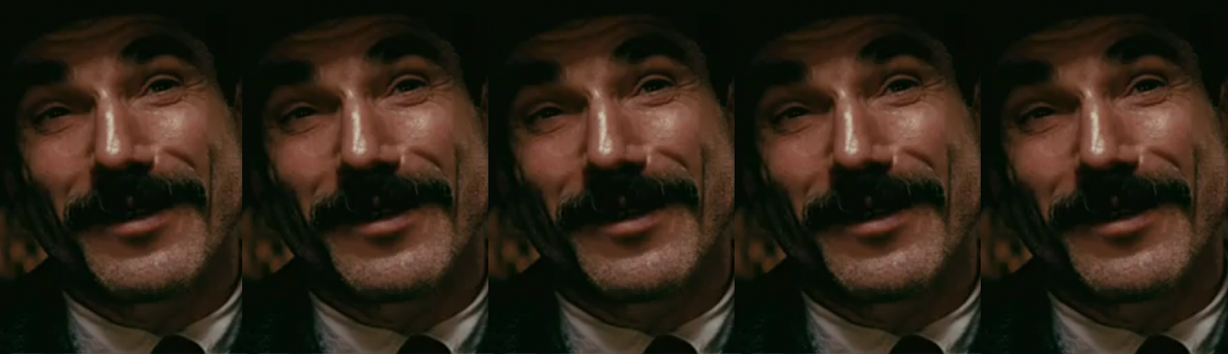
That whole component of the film is just a mess as written, therefore Mortensen can't do anything with it, because there's nothing there to work with. There's no transformation in Tony, because they wrote a point A (throwing the cups away) to point Z (telling a relative not to call Shirley by a derogatory term), and no stops in-between. As even the sort of distance between the two shown in their "buddy road movie" scenes, are written based upon their difference in personalities not their races. It is just a mind boggling moment to introduce than to barely even hand wave it away by the end of the film. The film clearly is far more comfortable with its personality based dynamic, which again there is a nice chemistry between Mortensen and Ali there. Now although his overarching performance is broad, the talent of Mortensen can be seen in fits and bits, sort of outside the stricture of the character. These in some purely reactionary moments, hey look at the chosen screen capture, that is a face of some nuance, as he looks upon Ali's dramatic in the rain speech. There are other moments of some nuance mainly in reaction, however they sadly don't add up within the character who from his first scene is a broad caricature, and remains as such to the very last scene. Mortensen almost seems to throw those into just remind us of the great actor he typically is. Mortensen's performance here is essentially sabotaged by a film that wants two completely incompatible elements of a broadly comic character at the center of film that is a self-serious story. Mortensen tries his best to try to do something that fulfills that impossible request, I don't hate it, nonetheless, from what I've seen in his typically very impressive oeuvre, this is the worst performance he's ever given.

Best Actor 2018

And the Nominees Are:

Viggo Mortensen in Green Book

Christian Bale in Vice


Rami Malek in Bohemian Rhapsody


Bradley Cooper in A Star is Born

Willem Dafoe in At Eternity's Gate

Tuesday, 1 January 2019

Another Year and Another Official Lineup

As usual my annual predictions for the official Oscar lineup for Lead and Supporting Actor.
For lead I've once again gone with the SAG five all whom seem they're in a pretty good position, as four of the five are "transformative" roles, that voters typically love, and four of the five are playing real people another bit of voter cap nip as well. Mortensen and Cooper, are both well loved by the academy and with their films apparently being big players they should coast to their nominations. Mortensen after all got in his last two times for films that were otherwise wholly snubbed, so it shouldn't be too difficult when he has other nominations for his film. Malek and Bale's films are not beloved, critically, however they have hit all the right places so far, and even negative reviews of their films typically painted them in a positive light. Malek's film in particular also has over performed so far with the televised awards, and I'm starting to get an Eddie Redmayne vibe from him (especially since the academy can award Cooper other places), though I won't rush to conclusions. The question mark then is John David Washington, the son of academy mainstay Denzel Washington, who despite a random misses in a few less important precursors, has gotten the most important ones when it comes to predictions. I do think he seems pretty set for a nomination. Voters will sometimes forget the younger lead of a film, however he's already been recognized multiple places so that doesn't seem to be the case. The only other hiccup might be a BAFTA snub, his old man has never been nominated there, which can open for another contender to gain ground. It needs to be a real contender there though, for example if critical darling Ethan Hawke shows up there then Hawke has a serious chance, however if say they go for say Steve Coogan in Stan and Ollie, it probably won't translate. Washington seems well protected given the love his film has received as opposed to his seemingly main opponents for the position in Hawke and Ryan Gosling whose films have under performed so far beyond the critics. If the film is doing as well as it has been so far Washington should be an easy inclusion. The other four seem pretty well protected barring a "buyers remorse" regarding Bale given the extreme shift between the twitter hype around Vice that broke down once the film was actually reviewed. This five though seems fairly likely, so I won't second guess it. Hawke would probably be my #6 in predictions, but critical darlings have been left off before. 
No, your eyes aren't fooling you that too is the SAG lineup. Driver and Grant seem quite safe as even when their films have under-performed they've still made it in. The same goes for Ali whose category fraud seems likely to be ignored, since you know he shows up like 10 minutes into the film before he becomes co-lead. Easy second nomination for him given the historical figure, love for the film, the size of his role, and afterglow love after his win two years ago. That leaves Sam Elliott who has been has been making strives in the last few years seemingly to be taken more seriously as an actor beyond just his Sam Elliott style presence. That could helps towards some recognition for A Star is Born. His role is fairly small though, and he was snubbed at the Globes. They obviously have no overlap with the Oscars however it shows that even if a group loves the film they can ignore Elliott. His nomination would be a pivotal part in terms of seeing if the Academy loves A Star is Born or simply really likes it. Now that leaves a certain part of the Internet's favorite, Timothée Chalamet. Well his film has not taken the world by storm in any quality. He's not the critical favorite or anything like that, but he's gotten in at Globes and SAG. He seems like the type that can miss given his film's reception however. The reason I'm predicting him though is the same reason I predicted Robert Duvall for The Judge, back for 2014. There is just such a small field to select from (in academy terms of course, it would be nice if they'd get a mind of their own since in reality there are plenty of worthy candidates to choose from, however the field "selected" for them by the precursors is small). So it might not matter. The few alternatives that have found more "important" recognition are Sam Rockwell, and Michael B. Jordan. Jordan, despite his film doing well with SAG, was ignored so he seems unlikely. Rockwell got in at Globes however they went gaga for Vice in a way that may not carry over given its lack of critical success. Rockwell's role is pretty small, to the point if the Academy just does love the film I could see them randomly go for his co-star Steve Carell who has a slightly larger role in the film. That's saying they even look elsewhere. There are few critical players, like Russell Hornsby in The Hate you Give and Steven Yeun in Burning, however those would both be huge surprises if that were to happen, given that between the two films they'd probably at most get a single nomination, that being Foreign Language film for Burning. It just seems unlikely so rather than becoming creative it seems far more likely for the academy to default what's come before them. There is a chance for a dark horse contender to be introduced through BAFTA, possibly Nicholas Hoult in The Favourite, or Daniel Kaluuya in Widows, through some homegrown support, but even the likelihood of this seems ever slimmer as they've been consistently ignored even when their films have been recognized. Of course with these two lineups, as well as Actress, lining up with SAG in my mind, that seems like a little too much solidarity between the groups. After all five nominees didn't repeat last year, 3 the year before that, and a full 7 the year before that. So there should be a few shake ups, however it isn't easy to foresee them outside of supporting actress at the moment.