Showing posts with label 1996 Alternate Best Actor. Show all posts

Saturday, 30 January 2021

Alternate Best Actor 1996: James Woods in Killer: A Journal of Murder

James Woods did not receive an Oscar nomination for portraying Carl Panzram in Killer: A Journal of Murder. 

"Killer", which tells the story of an unlikely friendship between a prison guard and a real life serial killer, is bad in a lot ways. It is centrally flawed as it wants to examine the inhumanity of the prison system, however doing so through the examination of a man whose real life record simply suggests pure evil probably isn't the best way to go. That is only part of it. This as the film has such a crummy look about it. Almost every scene is shot flatly. The narration sounds more like it should be attached to a fairy tale. The musical stings are often overtly comical. The editing is clunky, and the majority of the performances sound like they come from the first rehearsal that didn't go particularly well and led to a few guys getting fired. There's a lack of general film making competence that is real quite notable for a film with, at the time, relatively name actors. 

Anyways James Woods is also in the movie as the serial killer Panzram. Woods is the only guy who didn't seem to attend those bad rehearsals, in fact it seems like he wasn't quite aware of dumpster fire he was in. This as Woods treats the part and the film as though it is a worthy endeavor. Now it helps that Woods in his prime was one of the most naturally compelling actors around. This as within that time he delivers a particular form of a charged onscreen charisma. He isn't traditionally charming, certainly not here, but he is magnetic, and that is the case here. Woods's performance brings something to explain why the prison guard, Henry (Robert Sean Leonard), would take a fascination in him, though strictly in a fanboy kind of way which makes one question his supposed humanitarian leanings. Woods though brings something captivating in the early scenes in portraying the brutal discontent in the man as he attempts to avoid conforming to the system. Woods presents a basic ferocity that isn't really so much of a man, but rather carries this certain caged animal sensibility in these moments. It's not just hatred, rather there is something Woods delivers that is deep within the man that creates this constant source of a tension. Woods, I suppose contrary to the film however probably more truthful to the man he's playing, makes Panzram something of nature not of nurture. 

There is actually a brilliant scene....for Woods, where Henry comes in to check the bars in Panzram's cell turning his back on the killer. Now this is after Henry gave Panzram a gift, after seeing Panzram beaten to a pulp by another guard. Woods is rather amazing in his portrayal of the scene as in his eyes there's a killer's viciousness that comes out. Woods portrays the scene though not as a guy who is thinking about killing the man for reason rather he presents it as instinct. There is almost a lust in his eyes that Woods depicts along with him also at the same time showing the man gritting his teeth, trying to hold back that instinct for a moment. His breaths as he manages to not kill the man, has this pressure that Woods brings as though the man just forced himself not to give into a insatiable urge. Woods again creating a reality towards the sense of Panzram, something perhaps the film itself should've taken more notice of. This as Woods very carefully never shows that Panzram is any normal criminal, he's far from it. There isn't the sense of a desperate man within the man, rather he is a kind of beast. This right to the point when we hear about Panzram's story, narrated with a reality more befitting to the nature of the story by Woods than we hear in the main narration by Harold Gould as an older Henry. 

Woods's narration again almost seems strangely devoted, at least comparison to the film, this as even when Panzram recalls an older prison and a reformer warden's tenure, there is a palatable sense of nostalgia in Woods's voice. We then see Panzram story where he is given certain allowances, including going into a nearby town. Although Woods portrays a certain enjoyment of the freedom, he maintains the intensity within the man. This within his eyes still the intention towards whatever animal lust should take him. This taking him quickly enough when almost immediately Panzram rapes a librarian in the town. Woods delivering the horrifying brutality of the moment. Although within the film, you do ponder what exactly is the point of including this, as it basically says "see reforms don't work for certain prisoners", despite the film seeming to advocate for reforms based around Panzram. Anyways, enough we continue with Panzram's life story, where he tells about every one of his killings. In Woods's voice though is a lack of a repentance towards a single word. Woods's delivery keeps everything as just the reality of Panzram simply telling of what he did, almost with a slight pride at times. Of course Henry doesn't see this tale as a rabid beast, who was a violent creature long before his time in prison, but rather a indictment of the system. 

Although there is surely many stories, even of actual convicts, that would be a great example of the brutality and potential reductive nature of the US prison system, the story of Karl Panzram is not it, especially not as the film presents it. Again though Woods's performance really doesn't seek to be anything but an actual reality for the man that if you even read further about him beyond what the film tells you, only exacerbates one's sense of the man. Woods likely did his own research, as his own performance is something rather terrifying, though the film tries to diminish everything he can by throwing in violin riffs as though he is Michael Myers or something. Woods still in these moments, whether it is a moment just calmly smoking in his cell planning the murder of a guard, or the murder itself, Woods doesn't hold back. The moment of calm having this strange determined satisfaction on his face. The moment of attack Woods almost portrays as this sexual act in every step of it. This portraying a strict enjoyment in every moment of the attack, and once the man is bleeding profusely from his head, Woods's face glows with an orgasmic exhilaration. Woods's performance isn't as some misunderstood man driven to violence by a hard life, no Woods makes Penzram the blackhearted psychopath he was. 

I think one of Woods's best scenes is after the killing and he is boasting about it to Henry. Woods displays a jubilation from the event. This as his face conveys a sheer enjoyment not only of what he did but is also exhilarated with the idea of being hanged for it. Woods's makes the deranged state of the man wholly tangible in the moment. This as in every words he seeds a irrational perspective of a man, who so believes in dog eat dog, that he is happy to be the one on the menu at some point. Woods even grants a reality to a contrived scene, which I suppose just shows how full of it Henry is, where the two seemingly just talk as men. Woods never loses the idea of the man, and is honest to the character even in this moment. Although he feigns a decency Woods still has that raw intensity within him at all times. There the killer's edge is never lost. This particularly, in the most correct moment in the entirety of the film, is when Penzram accuses Henry of really just being in it for the visceral excitement of being near a killer. Woods speaks with a lurid persuasion, and in the moment suggests the most overt truth in the piece. There isn't a point where Woods excuses the man within his performance, as much as the film wants us so badly to feel sympathy for the character. Woods is consistent, even in the moment of Panzram hearing his death sentence, the relief on his face, isn't of a victim waiting to die, but rather a twisted mind taking in some strange success. Watching the film again, which is a complete failure of intention and technique, I still found this to be a searing and captivating performance by James Woods. As much as the film doesn't understand the man its dealing with, Woods does and delivers a befitting portrait of depravity.

Tuesday, 24 March 2020

Alternate Best Actor 1996: Results

5. Christopher Eccleston in Jude - I decided against a full review, and tried as a I might I couldn't quite find an obvious alternative, other than James Woods, but...I still didn't want to watch that film again. Eccleston to his part gives a fine performance here. It isn't anything too notable overall, as this sort wistful poetic type stuck, in his view, in a more provincial life. Eccleston gives a fine portrayal of sort of the romantic needs of the character, and his low key anguish regarding his inability to seemingly find quit the right life for himself. It doesn't amount to anything truly remarkable by any measure. His chemistry with Kate Winslet as the similarly minded woman is more than fine, though not especially notable. He is in fact a bit more interesting in his sort of anti-chemistry with Rachel Griffiths, as the woman he finds himself with, but is hardly of his dreams. Eccleston carries the film, and the character, well, but it doesn't leave too much of an impression in the end.

Best Scene: Finding what his son has done.
4. Phillippe Torreton in Captain Conan - Torreton gives a terrific performance in portraying a man who fashions himself as a true warrior, doing whatever it takes to win the battle and his carry his troops through even rather questionable circumstances.

Best Scene: Ending.
3. Timothy Spall in Secrets & Lies - Spall gives a great performance here in capturing such an honesty and powerful depiction of a strictly good person.

Best Scene: Final speech.
2. Jeffrey Wright in Basquiat - Wright gives a fascinating portrayal of an artist with a striking perspective however one that leaves him lost within the world.

Best Scene: Leaving the world.
1. Max von Sydow in Hamsun - Good predictions Shaggy, Michael McCarthy and Luke. The legendary Max von Sydow delivers one of his best performance in capturing such a unique and remarkable portraits of a "great man" living beyond his time while struggling with a deafness towards the world, even beyond his physical limitations.

Best Scene: The trial.
Updated Overall

Next: 1996 Supporting

Saturday, 21 March 2020

Alternate Best Actor 1996: Jeffrey Wright in Basquiat

Jeffrey Wright did not receive an Oscar nomination for portraying Jean-Michel Basquiat in Basquiat.

Basquiat is an interesting, if slightly disjointed film, about the short life street artist turned toast of the art scene of NY of the same name.

Jeffrey Wright has perhaps long been an actor on just the edge of a breakout for what must be said is his entire film career. This as his performance here was his first cinematic role of note, despite acclaim in reception for his work still led to Wright being more or less in this same place over 25 years later. This is once again a shame as Wright's unique talents are clearly on display right from the outset here in the role of Jean-Michel Basquiat which in itself is a considerable challenge, and something the extremely talented Wright is more than up for. Basquiat, despite being about a completely different art era, actually shares several similarities with director Julian Schnabel's latest film At Eternity's Gate. This as both films follow an artist, in almost a manner is to be representative of their style, and despite many different between Basquiat and Vincent Van Gogh, we find a very similar idea at the center of their stories, as presented by Schnabel. This idea being in crafting the way the artist's perspective is fundamental in this existence. As this was found in Willem Dafoe's portrayal of van Gogh in that later film, it is also within Jeffrey Wright's portrayal of Basquiat. This in that his performance too is built up from this idea, and this absolutely essential in terms of granting an understanding of the man, particularly how he exists in the film. This as if a lesser actor was in the role, I think it would be extremely easy to create an excessively grating or even cartoonish character out of Basquiat given his eccentricities, however Wright finds a real truth to him.

Wright's performance is from the ground up so to speak, in that everything that comes from his work is granted in the idea of creating that Basquiat is on a different wavelength from most people. In this portrayal of this though Wright does a few careful things, that really make this a remarkable portrayal. The first in the act of the eccentricity, particularly Basquiat habit of making graffiti out of anything, including the art of others, Wright portrays this as this state of id, rather than any mischief in him. Whether he is painting with maple syrup on a diner table, or technically vandalizing work by Andy Warhol (David Bowie), Wright physically makes it just as though he is infant interacting with his environment. It is just as a natural thing that he presents as just as he would breathing, and shows very much that there is not even a second thought in this, either in concern for what he is doing, nor in terms of doing anything malicious on purpose either. It is just the man being himself. In this is the greatness of Wright's work in that he makes such a tangible portrayal of what is in a way a ethereal figure often in his story. Wright in his unassuming demeanor, and rather timid voice in the role, just simply becomes this man, who is interacting within a world that almost isn't quite his own. This isn't because he's an alien, but rather like van Gogh in "Eternity" he is someone who sees the whole world in a way that simply no one else does, which is a different experience entirely.

Wright is pure in this sense, and there is something innately compelling to watch Wright work here, who seems decidedly unmannered despite technically being very much so. Wright manner as the retiring, and insular not only feels honest, but also even has this notable charm to it. Wright's way is that he never cheats the idea even for a moment, never plays up a scene, even in Basquiat's most flamboyant moment it is just this behavior of the man that still feels like how he interacts with the world, rather than any playacting. A reason for this though is that Wright does not use it as an excuse to close off his performance, and just seem detached or otherworldly. He rather finds a real humanity within the alternate perspective that gives this performance a real power. This as we see particularly in the moments of interacting less so in the art world and more so on the more interpersonal level. One main one being with his brief one with his mother, where Wright reveals what is at Basquiat's heart a real sensitivity, as he tries to speak to her in her ailing state. I love his delivering in this scene as we see Basquiat trying to connect so timidly and nothing but pure concern for his mother in his eyes in the moment. Wright is wonderful in this because within it he finds something genuine within both the flaws and virtues of the man, these that are not at all alien, even if brought on at times by his perspective of the world.

We see this in his scenes with his girlfriend, Gina (Claire Forlani), where he does capture a tenderness, in his modest manner of attempting to connect with her, even if even in this more intimate relationship Wright reveals a distance within the struggle. Wright is fascinating though in that throughout the film we get what is really a shorthand in his performance, in we come to know how Basquiat's reactions mean due to the consistency and vividness of Wright's performance. This as we later see Basquiat reacting to Gina finding out that he cheated on her, he doesn't say a word, but Wright's quietly damaged expression is just so perfect of displaying how the man falls into himself in a way when he is suffering. This is similar as well in just his eyes convey the discomfort when his father, and his wife, that is not Basquiat's mother, come to his art show. This is not delved into yet the wound of this is within Wright's expression so remarkably, however within the way that it is Basquiat. He doesn't yell about it, rather it is this internalization and unease as he seems to not be able to quite express this anxiety the same most would, yet you still understand it through Wright. This grants sense then the companionship we see between himself and Andy Warhol, where there is a real warmth in their technically strange interactions, however what Wright, and Bowie, show is two people on the same wavelength, that is different from all others, connecting in their own way, that is very much off the beaten path. In these moments we see the direct connection in Wright's work where the interactions are of men with almost understanding of this different sight. The man's suffering though then comes from others attempting to label him, and loss of anyone to understand him, which is only exacerbated by the death of Warhol. This where we see him coping with drug use, which Wright portrays as the moments of the most intense moments, of that internalization welling up within him, that is so potently shown within Wright's eyes in this moment. The use of the drugs to be this vain attempt a reprieve from the world that can't quite connect with him. I adore the moments where we see Basquiat directly face questions that pry towards his identity or situations that play upon, and Wright brings this discontent so meekly, yet pointedly as he expresses as the man expresses himself. This as just up front who he is, but in turn that is within his nearly passive state of just trying to be who he is. In the end of the film, as Basquiat is essentially lost in the world, Wright is heartbreaking in his final speech about leaving the city. This in his delivery is rather with this tragic resignation with the sense of leaving the earth entirely as this is this desperation that Wright conveys as a man who believes he will never find his place or understanding from another again. This is a beautiful performance by Jeffrey Wright because he depicts Basquiat as a one of a kind person, however never does so to idolize, simplify or to create a cloying ideal. He does so in creating a real person, unique in their state yet truly human within this idiosyncrasy.

Thursday, 19 March 2020

Alternate Best Actor 1996: Timothy Spall in Secrets & Lies

Timothy Spall did not receive an Oscar nomination, despite receiving a BAFTA nomination, for portraying Maurice "Morris" Purley in Secrets & Lies.

Secrets & Lies is showcase on how to do a drama of its type, as it so carefully maneuvers around the melodramatic or patronizing pitfalls within the genre, to craft something quite special in its story of a woman, Hortense, (Marianne Jean-Baptiste) attempting to connect with her biological mother, which is not at all a simple prospect.

Well finally we have arrived to Timothy Spall, who I've yet to come across in this endeavor, despite being such a memorable performer, in many notable films. Thankfully I can rectify that oversight here. Timothy Spall plays the brother of the mother, Cynthia, (Brenda Blethyn) of the woman, whose story is in a way adjacent to the main thrust of the drama, however he is essential to the film. This as we are introduced him seemingly as almost the yin to the yang ov his downtrodden sister, as Spall's Maurice we find at first as a successful photographer. We see him at his craft and I suppose in a way we are allowed to see the unique power of Spall, as these scenes seemingly should be perfunctory, however they are remarkable, with Spall being essential in this. This as he brings his unique presence here, that is more subdued than he sometimes is, as he is here portraying Morris strictly as a real person, who knows his trade. Spall in every one of the photography scenes, even when we so often just hear his voice attempting to get a smile or a movement out of his subjects, is oddly electric. Spall captures this curious charisma in these moments in that his voice inspires a comfort, in the strict compassion in his timbre, even as he is conducting his subjects in a way, it is with this gentleness, but also wry quality Spall finds. He delivers this wonderful quality in Morris's manner as something so genuine in the way he speaks to his subjects as just this gentle friend, trying to get the best out of them.

While Spall carries Morris with just a gentle honest bright smile at his work, we follow the man to his home life, where Spall still defines the man through his compassion however with a striking nuance. This as we see Morris interact with his wife who suffers from chronic pain. There is a difference in Spall's work in these moments in that we do see a great effect on his own self, as the degree of somberness in his work is found. Spall is remarkable in the way though he is able to show it as something that affects him, but doesn't ruin him. Spall rather in this is able to convey the empathy in these reactions towards his wife in this instance, even as some of her frustrations are quite intense. Spall though emphasizes his concern though in every gentle word, and even as his eyes gathers a sadness, it is for his wife rather than himself. We find the very same in the first scene we see him interact with his sister. This is prefaced in the moments where he remarks on Cynthia around his wife, who is somewhat hostile towards her. Spall though, even as he speaks on Cynthia's troubles, is with this quiet love. This even when speaking that a child picture was one of the last time she smiled, Spall words are spoken with a soulfulness who regrets the suffering she's had to undergo. The same we see when interacting with her directly, where Spall brings a modesty of concern, as his eyes look to offer support to his sister, quietly yet so assuredly, as Spall's work is so authentically caring.

It is often the mistaken view that a character must be deeply flawed to give an actor something to do, though while that is indeed mistaken, I think actually playing a purely good character is in itself a challenge. This as the performer must both avoid being dull within this goodness, but more importantly must be authentic and real within this nature. Spall gives a masterclass here on how to portray a good-natured person. This as he's anything but dull, because of how genuinely he brings to life Morris's empathetic manner. This is as we even see him speak on his mother, and reflect on his distant father through the lens of understanding that distance. Spall makes this so convincing though in his eyes portraying a man perceiving a proper self-analysis with a concept for the way of natural human behavior. Spall is pure, but not angelic. He's a man, but such a good man that he makes this powerful truth. This is especially well shown in a scene where the former owner of his photography shop stops by, clearly destitute and bitter. Spall is magnificent in this scene as he draws only sympathies as he speaks to the man, this bringing a gracious quality of a host, but pulls back from being a fool. This as when the man accuses Morris of ingratitude and taking his success in a way, Spall is perfection by not breaking a facade, but showing the same good man even when handling hostility. This as Spall's delivery is firm, not-sadistic, but also confident. Spall shows a man clearly putting his foot down when he is right, but doing everything in his power to help ease the situation. His face in particularly finding such a notable sense of patience of Morris, which even in bad moments holds firm.

Spall's work I think is essential to the film's greatness in that he offers a contrast to the more melancholic moments involving Blethyn's Cynthia particularly in the early scenes. He's not just a bright spot, but also to ensure a variety within the idea of the life of the family, rather than hammering in the misery with no respite like in the domestic dramas of Ken Loach for example. The film culminates as Cynthia and her two daughters, one not knowing the other, to Morris's home for a barbecue. This where we see Spall as the gracious home, which expectedly, Morris/Spall make for a low key charming host, as he speaks to anyone the interest is with an absolute genuine interest. This though with his eyes capturing a concern though still wondering the slight tensions he notices in his sister. Spall so earnestly portraying the way he's tuned into his sister, noticing something off, but just with a calm worry. This is as much as Morris remains calm, Cynthia does quite the opposite in revealing the secret of who her mystery guest is, as her daughter to all those gathered there, in basically the worst possible way. This leading her younger daughter, as high strung as Cynthia, to breakdown. I love Spall in this sequence as he reflects how torn up Morris is about it, even though it is hardly his fault, but rather in his eyes that show the heartbreak for his family's suffering. This as even as the rest of the family continue the conflict, Spall is fantastic in offering the steadfast nature of Morris as he takes in the pain of the situation. This is until he gives a final speech of the film, which other than speaking the titular line which feels slightly distracting, is just an outstanding scene. This is so well earned, and performed by Spall. This as he does deliver an explosion as Morris finally just speaks everything in the open to clear it up, and his anguished delivery offers a man not upset over the pain, but rather upset over the suffering caused his family not taking the moment to simply listen to one another. It is so beautifully cathartic as Spall unleashes this moment so authentically as Morris's nature in a way having enough, but trying to get everyone else to see things as he tries so hard to do. Although the film was much lauded, Spall missed out on recognition other than his hometown of the BAFTAs, which is not surprising given the quiet nature of the role. That is unfortunate though, as this is a great performance by Spall, as he creates such poignant and believable portrait of goodness, that isn't as some intangible saint, but just as a down to earth good man.

Tuesday, 17 March 2020

Alternate Best Actor 1996: Philippe Torreton in Captain Conan

Philippe Torreton did not receive an Oscar nomination for portraying the titular character in Captain Conan.

Captain Conan is an effective film following the exploits and fallout of an infantry group during World War I, and after.

Captain Conan is a mix of stories, though these actually do cohere, this as we follow Captain Conan, his friend the academically inclined Norbert, and his squad of soldiers, many who were in military prisons previously during World War I, and a bit after. We first witness the men as they are in their element, and this is best represented by Philippe Torreton as the titular Conan. Torreton delivers a wonderful physical performance here in that he creates this effortless combination of intensity with bravado. Torreton creates a man where war essentially is his personal playground in a way, this in the man who is not a soldier but a self-described warrior. This is found in Torreton's performance as Conan, where his name is quite befitting. Torreton's portrayal delivers that man who as he walks among the battlefield you are granted this sense of determination in his eyes, but his whole manner though is with this unique charisma. We see how his men would follow him without question as there is such a sense of certainty in his movements, and his whole manner has this force of personality that Torreton brings out with it. He finds a striking presence of a man who is a force onto himself, but even greater when amplified what he does for his troops. This as Torreton doesn't portray him even as the more typical somber, essentials sort, rather this is a man who wants to be on the battlefield as everything about him in these scenes is a man who is thriving in this environment.

In and around the battles, during the war, Torreton portrays a soldier who lives to be a soldier. This as even as he chats up local girls seeking quick dalliances, it isn't with a lustfulness, but rather that same certainty in his spirit that defines his ferocity in battles. Torreton delivering the charm of the conquering hero in a way, even though much of his work involves technical slaughter as his company has a no prisoners policy. Torreton though presents a man wholly comfortable, as he would be a warrior from any century rather than perhaps the more expected respectable man of the 20th century. Torreton delivers this natural state of the confidence that just exudes in his manner that is without that hesitation. This as he even orders the disobedience of commands, Torreton delivers these lines a mere fact of what will be done without question. This with a sense of a man who knows exactly what he is doing, and the assurance that whatever he says will be done, must be done. There is an ease, and even grace about it that you are granted how he could get away with it, because in this same way you see the efficiency of the man in this. What the man does do is make advancements, and is successful in war. His manner is supported by his success within the French cause. Naturally however though as this cause stops being useful so does the tactics, as when the war is almost won, this is as his men are faced with charges of war crimes.

Torreton is excellent in still portraying the ease of Conan even in this field of the political war of sense, as he delivers again this charisma as he makes his moments of advisement and frustration known to help his men avoid their charges. In each instance again Torreton properly owns the screen, as he delivers each word still with this strict confidence of a man who will see his justice done, and his eyes offer not a hint of hesitation at any point. This as Torreton makes it utterly natural as Conan goes behind the backs of a superior to help an individual soldier, as it is merely in his line to do what his "warrior's" sensibility tells him to do rather than whatever justice another has decided for him. Torreton always emphasizing with his work the strength of will in the man that seems to overcome any adversity when it relates to battle whether it be the battle itself or the fallout from it. Torreton shows us a man absolutely in his element in each scene, and makes such an impression every second he is on screen through the sense of purity of this approach. This however is brilliantly contrasted in the film's epilogue where we find his friend Norbert seeking him out years after the war. Torreton is amazing in this scene in portraying the opposite, this as the warrior now left to fester into nothingness. Torreton is heartbreaking in portraying just how that confidence is now gone in his somber delivery of the hopelessness of his life, and the sense of loss in his eyes as alcohol seems his only comfort in life. In the scene, which I wouldn't have minded if it had been a bit longer, Torreton poignantly shows the warrior without a battle to be fought, and in that just shows a lost soul slowly fading away. This given haunting detail through Torreton's work that offers this as an extreme, but believable shadow to the conqueror that had been Conan.

Saturday, 14 March 2020

Alternate Best Actor 1996: Max von Sydow in Hamsun

Max von Sydow did not receive an Oscar nomination for portraying Knut Hamsun in Hamsun.

Hamsun, as per usual it seems for Jan Troell, is an underrated film following the later life of a celebrated writer turned Nazi supporter.

It is of course with a heavy heart that one must learn of the departure of a true legend of an actor such as Max von Sydow, but within that we may all also appreciate the life, career and legacy that he left behind. Max von Sydow's career was remarkable in itself as his managed to traverse across directors, language barriers, genres, and decades of ever changing film. Unlike so many actors, there was never a truly "off" decade or period for von Sydow as he managed to find notable work from his humble beginnings in Sweden all the way to the very end of his career that included highest budgeted Hollywood films. One of the definite reasons for this was as von Sydow was a notable performer in that he not only broke out internationally but he never lost touch with his roots either. Perhaps an even greater reason for this was that no matter the film, the genre, the story, the size of the part, or even the quality of the film, it never seemed to matter for von Sydow. He's one of the very few actors I can name who I never saw truly phone in a performance. This is even in the cases where he was given a role that wasn't notable, where he was cast to try to make it so, like The Force Awakens. That part was frankly unworthy of his talent, however von Sydow still brought a gravitas to the role that would've been absent without him. I continue to speak towards von Sydow's successes, because honestly that was largely where he existed, and it seemed in his own philosophy, reflected by his work, that if wasn't a great role, he'd do his best to at least offer his commanding presence to it, but if it was a great role he'd attempt to make the most out of it.

Well I am overjoyed to return to von Sydow, and though this will not be the last time, in a great part. This in the role of the noted writer Knut Hamsun, who as we enter into the story is already seen as such, as we see the man earning his Noble prize, that is only part of his accomplishments as a man. This as we are invited into the world of Hamsun, already considered to be this "great man" of Norway, and with that von Sydow seems to take as his starting point. Of course von Sydow is already ideal for any authority figure. von Sydow simply exudes that force of personality so naturally, aided by his stature, that instantly establishes any character he plays with a degree of a type of might to them. This is evident here in von Sydow's work though utilized here in a way that helps us to infer a great deal of the man even before we really learn much about him. von Sydow's demeanor here though goes beyond creating that idea though as we are granted the age of the character, which as was so often the case for von Sydow, is considerably older than he was at the time. He also though goes beyond in his work manages to convey the specific age of the man as it relates to Hamsun, as a nearly deaf man, who seems to beyond his own expected years for life. This as von Sydow defines the somewhat doddering nature of the man, that crafts such a sense of the specific wear within the man, that is most certainly of performance, as his presentation of Hamsun's wavering physical manner is a far cry from his smooth power of his manner as Leland Gaunt in Needful Things, just a few years before.

von Sydow embodies the age so well, and that statue, in that he always walks with the gaunt of really that of the true intelligentsia, yet even in the way he parts his lips, it is that of an elderly somewhat detached old man. This in lines though an absolutely brilliant idea that von Sydow realizes in his work that is fundamental in so many of the actions of Hamsun throughout the film. This as the man is comfortable with dying, not that he is suicidal, but it is rather his time in his own view. von Sydow is amazing in the way he is able to exude this seemingly peculiar comfort and make it feel so natural within the idea of the man. This is as when he speaks of the idea is as though it is a long thought of his, something he's payed much mind to. His delivery of these words is as though it is a strict understanding of where he should be and that his time simply is at an end. von Sydow portrays this wholly without anguish, but rather at times, when specifically Hamsun is presented with the troubles of his current world, a great frustration. This frustration though not towards dying, but the fact that he has to still live when he feels he should be gone. von Sydow crafts in his eyes as this understanding, as we see in one scene where he appears as though he will die in the snow, it is not of fear, but of just a contentment that the bell has rung for him as he's expected. This is an essential idea that von Sydow realizes so vividly as von Sydow presents us with a man who basically has pulled up his personal stakes, making it so his actions in a way in the world shouldn't matter as much, in his own view.

Another key motivating factor for the life of Hamsun however is in his wife Marie (Ghita Nørby), where early on we have a outstanding scene between von Sydow and Nørby. This as they suffer a row between one another where direct hostilities come out with Nørby bringing a fiery emotion against von Sydow who is great in his way of playing as potent of emotions however fittingly internalized within the Hamsun. Their conversation is excellent as we are granted the sense of their relationship so quickly as we see all the frustrations in Marie come out in Nørby's work against von Sydow who plays it so well as Hamsun's way of attempting to be as though he is above such a fight. von Sydow's eyes though, and the edges of his deliveries though very much paint the same type of anguish within Hamsun towards their wife. Frustrations that allude to years of troubles, but honestly the intensity within both that could only exist in a long lasting relationship. This as even as they fight we instantly are granted a sense that there is a connection, and understanding in a way, though now broken towards a venomous bitterness between the two. We see the struggle of their relationship continue in his noble prize ceremony, which is a lower key scene yet is a just about perfect bit of acting from both, as we get some classic elderly married couple bickering as Hamsun admonishes his wife for not translating his words exactly to their German audience. The two manage to even be a bit comic in a sense, however more than anything grant the sense of the festering anger in the relationship that both actors draw out so naturally.

That seemingly minor interaction again though is part of the "case" that von Sydow is making in creating really the motivation we will find as Hamsun becomes a Nazi proponent. This being an idea far more enthusiastically found within his wife, as we see in that earlier scene where her added words where convenient towards the Nazi cause. Hamsun of course did not attempt a full correction that to made natural within von Sydow's work in showing the man, who has a certain allowance for such things since he believes he'll be leaving the world soon. This as the war begins we see von Sydow portray the man as this elder statesman of his country seemingly falling into what he believes will be the expected line of thinking based on his wife's sentiments, and honestly to a degree his lack of concern for the matter. This as we see in the scenes of speaking words that are support of the Nazi line, von Sydow depicts it as though he was giving an authorized commendation to just any colleague, this even in his praise of Hitler. von Sydow again emphasizing a man going through the motions in interacting with the world with often this sense of unawareness towards the rest of the world, initially. This begins to crack as one of his sons wishes to join the army to fight on the front lines, and we see the conflict between Hamsun and his wife, over her fanatical beliefs and his nearly perfunctory beliefs. von Sydow delivers beautifully this anxiety of the man within his expression as he fails to really fight for those beliefs in any way, and instead emphasizes the sense of confusion regarding the intensity shown by others to "push" it.

von Sydow then is incredible as we see so much of talent as an actor here by his way of crafting the image of the "great man" who has become so certain in the expectation of his life, that it will be his downfall. One early one, that would be hilarious if it were not for the gravity of the situation, is when Hamsun directly speaks to one of the party men quietly questioning Hitler's views and treatments towards Jews as though it was an academic exercise. This is even as when asked if he read Mein Kampf, von Sydow's delivery of Hamsun's having not got around to it, is simply marvelous as he brings almost a sense of disinterest again in emphasizing the man's detachment from that world that he is commenting on. This continues though as we see von Sydow's great emotional range here in particularly, though used so effectively here in a slightly alternative way, as he breaks down that expectation the man has set for himself, as he is truly looked at by others as a statesman. This includes those whose family members are being rounded up and killed by the puppet government set up by Hitler. When one such mother comes to him, von Sydow's reactions in the scenes show a man just trying to avoid the thought of it as he attempts to push through, however when she finally stops von Sydow's moment of thought before asking for the name to help, is performed so well as this moment of clarity and finally a bit of an attachment for Hamsun as he reflects finally a bit of genuine concern. This even though as von Sydow brings it out as this frustration at needing to be part of something he thought he was done with.

This continues as it becomes quite clear that the Nazis are not timid about committing atrocities, to which Hamsun attempts to do something about by being granted an audience with Hitler himself. von Sydow's portrayal of Hamsun preparations are terrific as he presents now a real nervousness and now an anxiety for the world he is in. His eyes fashion now a sense of real fear reflective as he must actually look into the world in a way he hasn't for some time. This found all the more in his harried way of speaking as Hamsun recites his practiced words for Hitler, which is a mix of praise and actual critique. von Sydow's performance in the scene where Hamsun finally speaks to Hitler, is spectacular. This as we see the man attempting the initial pleasantries for the leader he has deemed that he must respect, but this with a confused attempt to offer a real critique. This made all the more broken through translators, Hitler and his completely different intentions for the meeting and Hamsun's deafness. von Sydow captures this sort of madness though with a powerful heartfelt emotion though as in his words there is now a real strain within the idea of concern for the needless violence and brutality of the puppet regime in Norway. von Sydow gradually portraying this degradation into a true confusion as Hitler cannot brush his thoughts aside, though while Hamsun cannot hear his words brushing his concerns aside either. von Sydow doesn't make the scene a simple one of righteous passion, though there are signs of that, but this incredible mess of an attempt at of a once so articulate man attempting to speak in terms his chosen audience simply would never understand or care to understand.

This leaving Hamsun to look like a foolish old man, though what I love is that von Sydow shows in the moment the earnest attempt in the man to do the right thing, but unfortunately failing to make any real impact. After that failure we see Hamsun return to the contentment to die, until that Germany falls, and now Hamsun and his wife are arrested to be processed as potential collaborators. Hamsun being sent to a mental hospital to attempt to discredit any previous actions of his as that of a man with dementia. von Sydow's work is so well textured again, in the way we are given such a sense of Hamsun's state of mind, as though he is a mystery to the authorities von Sydow gives us the essential insight into the man. This is as I love the poignancy in a brief moment where he notices a bicycle, as he sits in a form of house arrest, and that moment of appreciation in von Sydow's hands grants such a sense of appreciation for youth and somberness regarding the loss of agency. When sent to the institution von Sydow is masterful in creating such a quiet yet potent sense of the man's confusion and distaste of the circumstances. This as dealing with the prodding questions his eyes evoke such an unpleasantness as this is such an alien experience for him, with the doctors questioning his mind rather than praising it.von Sydow shows so well the shattered state that results, as it is this state of contemplation towards his own self while being troubled by the questions he must endure. This eventually includes watching film of the holocaust, where von Sydow is outstanding in his reaction that manages to not only show the heartbreak of the image, along with the uneasiness of a slowly building guilt out of confusion as he comes to understand the nature of the images. This is almost immediately followed up with being betrayed by his wife, through a long confession that accuses Hamsun of being the fanatical one.

von Sydow is great in as we see Hamsum, if briefly, lose any attempt at his stature of the "great man" as he berates his wife and von Sydow puts bluntly the sense of betrayal. From these trials, an eventual real trial is led to based upon Hamsun's mental state more than anything. The trial scene is again one of von Sydow's great scenes of his career, though again bringing to life a difficult scene with an an unexpected result. This as again this is not a traditional defense, rather von Sydow manages to convey the complexity as there are sense of a sense of guilt in what his words had helped contributed to in his eyes, though his speaking of the words that have  some of that, but enough of a passion of man desperately attempting to clearly explain his position. This is as untenable of a position as it is, von Sydow manages to show a man both suffering in his state, but also in his element as a man who made his life through words. This is within the sense of partial excuse as he explains his deafness, where von Sydow shows a wavering resolve, that while his delivery is still earnest, we see the man's inability to wholly speak these words without a least a slight sense of shame. The film ends with Hamsun being left to fighting against a slight exile, while initially rejecting his wife, before slowly inviting her back into his life as he nears the end of his. The final scenes between himself and Nørby are particularly special as the two finally show some tenderness in the forgiveness, though what makes it so notable is that it feels as though it comes from that same connection we witnessed within their bitter fights. This as the warmth in the reconciliation found to be as complex as their fights were. This though is what we find throughout Max von Sydow's work here, that grants such a uniquely powerful and complex portrayal of essentially a difficult man of history. He is neither a hero nor a villain, he is a man with qualities and numerous faults. This which von Sydow details so profoundly. This is a great performance by Max von Sydow, that is part of the legacy that the man has gifted to all of us. This again in marking his work through intelligence, striking presence, and always  an absolute conviction to the material and character he was giving himself to. Although the loss of von Sydow is of course hard, may we all continued to appreciate Max von Sydow for all that he left us, including this incredible work.

Monday, 9 March 2020

Alternate Best Actor 1996

And the Nominees Were Not:

Philippe Torreton in Captain Conan

Jeffrey Wright in Basquait

Max von Sydow in Hamsun

Timothy Spall in Secrets & Lies

Christopher Eccleston in Jude

Wednesday, 12 March 2014

Alternate Best Actor 1996: Results

5. Leonard DiCaprio in Romeo and Juliet - DiCaprio does not have the language down but he does bring the right passion and enthusiasm although it is hard see through that direction.

Best Scene: Romeo's death monologue.
4. Chris Cooper in Lone Star- Cooper seems right as the quiet convicted Sheriff, but he's suppose to be uncomfortable with his job which isn't expressed very well.

Best Scene: Sam talks to his old flame.
3. Liam Neeson in Michael Collins- Collins is made to be an absolute hero here, and the film outright rejects any scenes to give a greater complexity to see him, but Neeson does bring the right power and passion to the part.

Best Scene: Collins attempts to defend the treaty.
2. Ewan McGregor in Trainspotting - McGregor gives a nicely charismatic portrayal, and meets any challenge in store for him.

Best Scene: Renton goes Cold Turkey
1. Kenneth Branagh in Hamlet - Although I was skeptical about Branagh approach to the prince of Denmark, he successfully won me over with his flamboyant portrayal of Hamlet. He creates an understanding in the insanity, but as well brings his performance down when needed and to great effect. For the overall win it came down to the men whose plan goes horribly wrong, I decided to go with the car salesman.

Best Scene: The duel.
Overall Rank:
  1. Max von Sydow in Hamsun
  2. William H. Macy in Fargo
  3. Jeffrey Wright in Basquiat
  4. Kenneth Branagh in Hamlet
  5. Timothy Spall in Secrets & Lies
  6. James Woods in Killer: A Journal of Murder 
  7. Daniel Day-Lewis in The Crucible  
  8. Phillippe Torreton in Captain Conan
  9. Robert Carlyle in Carla's Song
  10. Ewan McGregor in Trainspotting
  11. Christopher Walken in The Funeral 
  12. George Clooney in From Dusk Till Dawn 
  13. Liam Neeson in Michael Collins
  14. Matthew McConaughey in A Time to Kill
  15. Mel Gibson in Ransom
  16. Tom Cruise in Jerry Maguire
  17. Ralph Fiennes in The English Patient
  18. Noah Taylor in Shine  
  19. Stellan Skarsgard in Breaking The Waves
  20. Daniel Auteuil in The Eighth Day 
  21. Pascal Duquenne in The Eighth Day
  22. Luke Wilson in Bottle Rocket 
  23. Eddie Murphy in The Nutty Professor
  24. Jeff Daniels in Fly Away Home
  25. Patrick Stewart in Star Trek: First Contact
  26. Tom Hulce in The Hunchback of Notre Dame 
  27. Christopher Eccleston in Jude
  28. Richard Gere in Primal Fear
  29. Owen Wilson in Bottle Rocket
  30. Stanley Tucci in Big Night 
  31. Joe Pantoliano in Bound 
  32. Zdeněk Svěrák in Kolya
  33. Charles Berling in Ridicule
  34. Nathan Lane in The Birdcage 
  35. Tom Cruise in Mission: Impossible
  36. Tom Everett Scott in That Thing You Do 
  37. Jon Favreau in Swingers
  38. Tony Shalhoub in Big Night
  39. Denzel Washington in Courage Under Fire
  40. Jérémie Renier in La Promesse
  41. Leon Lai in Comrades: Almost a Love Story
  42. Nicolas Cage in The Rock
  43. Sener Sen in The Bandit 
  44. Geoffrey Rush in Shine
  45. Billy Bob Thornton in Sling Blade
  46. John Malkovich in The Portrait of a Lady
  47. James Spader in Crash 
  48. Daniel Giménez Cacho in Deep Crimson
  49. Kim Bodnia in Pusher
  50. Michael J. Fox in The Frighteners 
  51. John Travolta in Phenomenon
  52. Antonio Banderas in Evita 
  53. Jim Carrey in The Cable Guy 
  54. Ben Stiller in Flirting With Disaster
  55. Sean Connery in The Rock
  56. Woody Harrelson in Kingpin 
  57. Jeff Bridges in White Squall
  58. Sean Connery in Dragonheart 
  59. Albert Brooks in Mother
  60. Michael Keaton in Multiplicity
  61. Adam Sandler in Happy Gilmore
  62. Dennis Quiad in Dragonheart
  63. Arnold Schwarzenegger in The Eraser  
  64. Chris Cooper in Lone Star
  65. Bill Murray in Larger Than Life 
  66. Joseph Perrino in Sleepers
  67. Robin Williams in The Birdcage
  68. Leonardo DiCaprio in Romeo + Juliet 
  69. Bill Pullman in Independence Day
  70. Jason Patric in Sleepers
  71. Val Kilmer in The Ghost and the Darkness 
  72. Steve Martin in Sgt. Bilko
  73. Randy Quaid in Kingpin
  74. Vincent D'Onofrio in The Whole Wide World
  75. Blake Heron in Shiloh
  76. Sylvester Stallone in Daylight
  77. Will Smith in Independence Day
  78. Woody Harrelson in The People vs. Larry Flynt
  79. Vincent Gallo in The Funeral 
  80. Bill Paxton in Twister
  81. Chris Farley in Black Sheep
  82. Leslie Nielsen in Spy Hard 
  83. Kelsey Grammer in Down Periscope
  84. Jack Nicholson in Mars Attacks! 
  85. Jeff Bridges in The Mirror Has Two Faces
  86. Keanu Reeves in Chain Reaction
  87. Vincent Kartheiser in Alaska
  88. Alec Baldwin in Ghosts of Mississippi
  89. Jon Lovitz in High School High
  90. David Spade in Black Sheep
  91. Matthew Broderick in The Cable Guy
  92. Robin Williams in Jack
  93. Arnold Schwarzenegger in Jingle All The Way
  94. Tom Arnold in The Stupids
  95. Sinbad in First Kid
  96. Jeffrey Nording in D3
  97. Billy Zane in The Phantom
  98. Robert Sean Leonard in Killer: A Journal of Murder
  99. Joshua Jackson in D3
  100. Jason Alexander in Dunston Checks In 
  101. Brock Pierce in First Kid
  102. Francis Capra in Kazaam 
  103. Michael Jordan in Space Jam
  104. Shaquille O'Neal in Kazaam
  105. Eric Lloyd in Dunston Checks In
  106. Stephen Baldwin in Bio-Dome
  107. Pauly Shore in Bio-Dome
Next Year: 1996 Supporting

Alternate Best Actor 1996: Chris Cooper in Lone Star

Chris Cooper did not receive an Oscar nomination for portraying Sam Deeds in Lone Star.

Lone Star tells the story of the investigation of a murder of a corrupt Sheriff long ago that brings up old memories in a border town. Lone Star seems like it could have been a masterpiece but John Sayles writing is always a notch below being great. It focuses on several stories, but his writing never quite brings enough complexity to to these side characters to make them three dimensional. It is not helped by Sayles's very stale direction, and many of the poorly dated elements that scream 90's, particularly the often heard electric guitar riff in the score.

Chris Cooper plays the Sheriff who is investigating the death of the former Sheriff  Charlie Sheriff (Kris Kristofferson) who he starts to believe was killed by the other former Sheriff the late Buddy Deeds (Matthew McConaughey) who also happens to be his father, and treated with such reverence by the town people. Cooper plays the role of the rather tight lipped Sheriff, although unlike the usual quiet Sheriff it is more than a little heavily implied that Sam Deeds is not especially good at his job, nor is he an especially comfortable man in the job. Although that is the basis for most of his actions in the film Cooper still plays the Sheriff often in the quiet observer who takes his time, and takes it very quietly to find out exactly what had happened in the past.

Cooper really is only barely lead as the film does jump around from story to story, and Sam is merely one of those stories although the most important one in terms of the film's structure. On the surface Cooper seems right for the part as he carries a quiet conviction well, and does well to portray that simple morality of his character. He is as well good in basically abridging some of the flashback scenes as he goes from person to person trying to find out what exactly happened all those years ago. Cooper remains solid enough in bringing back every scene with that reflective expression but he never makes the emotion that palatable here. He is fine for the most part in being the Sheriff but problems arise though once it becomes evident that Sam is suppose not be cut out for the job.

There are more obvious moments to show his discontent such as the brief moments where Sam lashes out which Cooper handles well enough as they are outbursts fitting for the reserved man, but I don't know the film consistently says from the very beginning that Sam just is not cut out for the job. Cooper frankly fits the job too much, and that could have worked if there was a slow decline for him , but the films acts as if he's not good enough the whole time. Unfortunately the film just constantly says this rather than really showing it. The film would have greatly benefited if it actually had a scene where Sam had a handle a situation as Sheriff actually, something they did do for Nick Nolte's character in Affliction, but here they just keep saying and we never really see it why.

The idea of Sam's inadequacies is mostly Sayles's fault, but Cooper does not really sell the idea particularly well either. Cooper maybe should have played the part in a somewhat less introverted way to begin with because he only really seems competent enough with his manner as the Sheriff, in fact I would think he had been doing a fine job if the film did not say over and over again that he wasn't cut out for it. Chris Cooper's performance here is fine for the most part in that I would never say he was ever bad, but I do feel his work was a misstep at the point of conception. In fact the usually withdrawn Cooper may have been more suited for the legendary Buddy, and the more extroverted McConaughey should have played Sam(although he does more than just fine as Buddy).

Tuesday, 11 March 2014

Alternate Best Actor 1996: Ewan McGregor in Trainspotting

Ewan McGregor did not receive an Oscar nomination for portraying Renton in Trainspotting.

Trainspotting is about a group of friends in around the Edinburgh drug scene. Although I am not a huge fan of Danny Boyle I found his kinetic style worked here and found the film an entertaining ride.

The always reliable Ewan McGregor made his breakout with his role here as Renton a heroine addict who we follow through his lowly existence along with his group of friends who are addicts of one sort or another. Just like in the later adaptation of Irvine Welsh novel Filth, Trainspotting also employs frequent narration by its hero, and again with a very earthy tone to it. Renton though is a considerably less complex individual than Bruce Robertson, as Renton life at the beginning of the film consists very little more than getting high and spending some time with his friends doing nothing. Honestly Renton could be a disposable enough character really if it were not for the fact that McGregor is the one to play him.

McGregor has a natural magnetism in him, and he is able to create an investment in a character like Renton even if he may not be worthy of it. Although Renton lives an undeniably dour lifestyle it never feels that way because of McGregor's portrayal of him as well as the humorously cynical narration that he delivers during the course of the story. McGregor wit his performance never falls into the depression potential of his character always bringing a certain energy to any moment he may be in never allowing any scene to fall the wrong way. Even though he may not be deserving of it McGregor is able to make Renton considerably endearing through his own charisma as a performer.

Renton undergoes some changes throughout the film though most considerably when his parents force him to undergo cold turkey withdrawal, when earlier he took a very specific process to kick the habit. McGregor is terrific in the cold turkey scene and the intensity of his performance is absolutely fitting to the imagery that Boyle creates around him. The scene perhaps could have merely become an exercise in the style of the grotesque, but McGregor does not allow that to happen by showing the very real pain that Renton undergoes as he suffers every thing that the absence of the drug is doing to his body. It is brilliantly acted scene by McGregor, and he makes Renton's turn to make something out of himself wholly believable.

For the rest of the film Renton takes a reactionary role, although with the occasional slight relapse, as he tries to deal with friends who have not at all reformed. McGregor is effective in portrayal of the slowly growing exasperation at the increasingly troublesome behavior of his friends particularly from the alcoholic and violent Begbie (Robert Carlyle). Although McGregor by this point technically becomes the far less volatile presence in the film, and it would have been easy enough to be forgotten behind the nature of Carlyle's intense performance. McGregor performance always remains compelling, and his depiction of Renton's growing responsibility is honest and fitting to the character.

It is easy to see why this was McGregor break through as it is the indication of McGregor's abilities in limited roles, which he would again show later on in Moulin Rouge and The Ghost Writer. Renton is not a poorly written character by any means, he absolutely works for the story, but he is mostly of defined by what he does rather who he is exactly. McGregor proves his measure with that traditionally known star quality with his work here. His strong screen presence is always prevalent here, he strikes the right tone with his performance fitting to the material, and whenever there is a challenge like the the withdrawal scene McGregor is more than up to it.

Monday, 10 March 2014

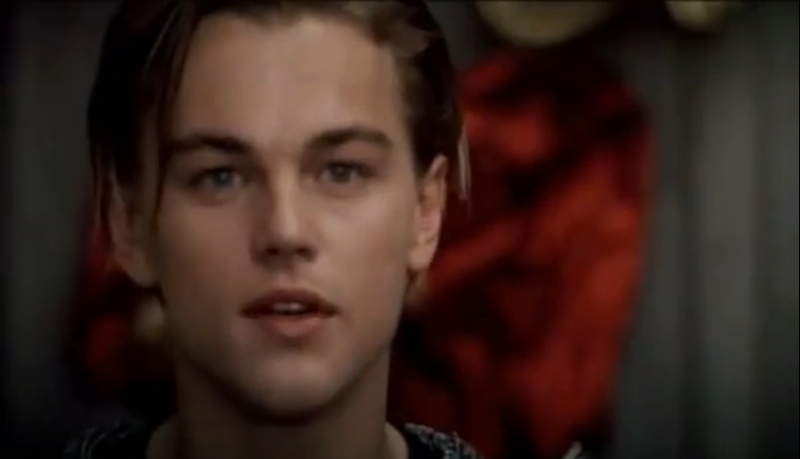
Alternate Best Actor 1996: Leonardo DiCaprio in Romeo and Juliet

Leonard DiCaprio did not receive an Oscar nomination for portraying Romeo in Romeo and Juliet.

Well making my rather hasty change from the disqualified Philip Baker Hall in Hard Eight to DiCaprio, I must now watch film, I mean what's the worst that could happen.....having watched it aaaaaaaaaaaaahhhhhhhhhhhhhhhhh why didn't I do Day-Lewis in the Crucible.....sob...sob. Anyway I did not like it. I did not like it one bit, you could say I hated it hated it a lot from that opening TV broadcast followed by Baz Luhrmann's choice to zoom in and then zoom out over and over again, because if you do it several times it makes it less annoying, no wait no it doesn't. Then I noticed that Luhrmann decided to shoot it like an over the top comedy, except it's not remotely funny, which is a bit of problem.

What about the acting though, well ...... Well the film chooses to keep with the Bard's original words for the most part. The words of Shakespeare here are often treated like taking a symphony by Beethoven and play through poorly tuned instruments, or maybe cooking a great recipe with stale foodstuffs. Well many of the actors are bordering on causing rapid ear bleeding with their butchering of the words, that would be ill fitting even in a thirty second comedy bit. There is some relief found in the Friar Laurence equivalent Father Lawrence played by one of the best character actors of the 90's Pete Postlethwaite who understands the words, but even modernizes his technique slightly yet smoothly. That is not the case for any other actor really, but luckily for DiCaprio though he is not one of the instruments that is completely out of tune.

DiCaprio really does not have the language down and it does undercut every scene he is in to at least some degree. The film is fundamentally wrong when the language cuts down any emotion rather than ever amplify it. That is not all that undercuts his performance though as there is consistently Luhrmann's obnoxious gimmicky direction in every scene such a turning Mercutio's death apparently into an upcoming apocalypse or putting a cheesy 90's love song in every love scene between Romeo and Juliet. No matter what even if DiCaprio were to do something right Luhrmann would not really make any use of it anyway. This basically is almost a pointless endeavor by Leonardo DiCaprio, but to be fair in terms of when you think of a Romeo DiCaprio definitely is someone who fits the bill.

DiCaprio isn't really bad here, his delivery of the monologues is rather rusty but not terrible. He is enthusiastic in his performance and his very emotional style of performance is not wrong for Romeo as I think a necessary to show the fact that Romeo does not really think things out to much. With all that is against him though it hardly is able to produce much of anything no matter how much passion he does put in it. DiCaprio throws himself into being Romeo for sure, and I appreciate that effort he obviously shows throughout but never has so much passion meant so little for me. Romeo as a character is no Hamlet to be sure, and all you really need is some charm and that passion for him to fulfill the need of the part. DiCaprio does perhaps do this, but I never saw it through Luhrmann's direction.

Sunday, 9 March 2014

Alternate Best Actor 1996: Kenneth Branagh in Hamlet

Kenneth Branagh did not receive an Oscar nomination for portraying the titular character of Hamlet.

This adaptation of Hamlet, which is basically complete, is a film that I rather loved actually. It rather interesting to see how the full version influences some of the characters, Claudius for example becomes a much stronger character and villain. There are also those all-star cameos which are a slightly mixed bag from the awesome (Charlton Heston, Brian Blessed, Richard Attenborough), to the somewhat distracting (Gerard Depardieu, Robin Williams), and to the bad (Jack Lemmon).

The best known film versions of Hamlet probably are Olivier's 1948 Oscar winning version, Franco Zeffirelli's 1990 version starring Mel Gibson, and this version. The way Zeffirelli's version, much like his Romeo and Juliet, feels the most like you would view a film version of the play in terms of direction, and its choices in regards to the story. Olivier and Branagh are two actors who obviously did not want to be taken as workmanlike directors since they both try to bring a lot of style to their adaptations of the Bard's work. In the case of Hamlet Olivier actually went a little overboard in his choice of style, and cutting of the play leaving it as the weakest of his three adaptations. Branagh on the other hand goes for an extremely epic approach in just about every way which pay off magnificently, and the fact that The English Patient beat this in Art Direction and Costumes is pretty unforgivable.

Now I must admit Branagh triumphs over Olivier as a director this time, but what about their individual performances as the prince of Denmark Hamlet. Well in these three adaptations the actors do take rather different approaches. Gibson takes a pretty extreme approach in showing the apparent bi-polar nature of Hamlet, which I may get into a little more later. Olivier's method was very mysterious in style he often kept Hamlet withdrawn making frequent use of voice over in his performance, and he seemed to give a certain grandeur to the character in this mystery. Branagh does not exactly try to reject Olivier here or discourage remembrance of him, I mean the color and look of his hair as well as many of his costumes seem to encourage the comparison, but Branagh does take a very different approach with the character nevertheless.

Branagh first off gives a far more extroverted performance than Olivier, and in most regards it indeed is considerably more theatrical performance than Olivier's work. It does not start that way in one of the earliest scenes of the film though where Hamlet is simply depressed over the death of his father and his mother's decision to marry his uncle so soon afterwards. Branagh does well to show it more than the usual depression with an appropriate intensity that the death of his father has most certainly has scarred him, and it won't be something he will let go. Hamlet of course is not allowed to let it go when his good friend Horatio and several guards witness the ghost of his father around the castle at night. Once Hamlet goes out one night to see what the ghost has to say exactly Branagh's performance opens up to reveal how he will play the prince.

Branagh's performance with the ghost reveals the rather extroverted approach he will take in playing Hamlet. Where the interaction with the ghost by Olivier was a rather grand yet mysterious event, Branagh keeps the event grand for sure particularly in the fashion in which he moves about the scene which always seems particularly fitting for a man of royal blood. Branagh though does not go for the mysterious though instead making a manic intensity to the scene where Hamlet is overwhelmed by the revelation to the point where he basically tries to match the extreme insanity of the situation with his reaction which is just as extreme. Branagh undoubtedly goes for it all in the flamboyant take which I think actually works incredibly well because he brings this with a true emotional intensity at the same time to make the revelation of the ghost a  striking scene.

It is rather funny take that Branagh takes with Hamlet in the proceeding scenes as Hamlet starts to conceive a plan against his Uncle to not only figure out if the ghost was truthful but then kill his Uncle. Branagh through many of the lighter scenes Branagh presents Hamlet's apparent as in part a put on to throw everything off what his real intentions might be. Branagh though takes a very particular choice in which to show that Hamlet is purposefully having some fun at his Uncle's expense while he comes up his plan. This may not make sense but Branagh skillfully attaches it to Hamlet's obvious love of the stories of the stage. Branagh in turn associates with this love of it to show that to at least some point that Hamlet is wanting to live through one of those stories he loves so dear himself, it may seem odd but it works quite remarkably well due to Branagh's performance.

In many of the scenes of the film where Hamlet is setting up his plan, especially when getting the players to set the mousetrap, Branagh has a never ending enthusiasm to the part with a certain madness yet Branagh does bring the right knowing touch to it. Branagh will occasionally throw in a completely comedic line reading or two at times and the way he moves around in many scenes is almost as if Hamlet is treating everyone as pieces of his chess board. Branagh technically makes the manipulations obvious yet he rather brilliantly plays that Hamlet is able to hide it through the fact that he always makes Hamlet seem a bit off his rocker. This could easily all go wrong though if Branagh went like this throughout every scene though, but what makes it work is that he only plays it this way when it is completely appropriate for Hamlet to be this way.

Branagh importantly ceases such behavior in pivotal moments including the most famous soliloquy of Hamlet which is of course "To Be Or Not To Be". Branagh takes a fascinating approach with the scene, as when Olivier did he very much enclosed Hamlet alone in the moment, here Branagh very specifically shows that others can see the soliloquy and even though Hamlet in his mind is in his own world he is not literally so. Branagh pulls it down to explore an actual insanity brewing in Hamlet. This insanity is not the same though as Branagh withdraws to a certain degree to portray it more as a narrow minded anger that makes him lose control of his own faculties. Branagh doing this even makes sense of Hamlet's treatment of Ophelia (Kate Winslet) in that Branagh actually shows that he loves her but he is so driven by hate that she sees her as either an obstacle or a distraction. 

Branagh's method with Hamlet is very effectively as he pulls up and down in the various moments that I find him actually very effective in this approach. Branagh like Olivier obviously has a clear understanding of the Shakespearean language and knows how to derive the beauty from it while making it understandable. Branagh utilizes this certainly for some of the big dramatic moments in his performance though such as his speech before the intermission. Branagh goes for the grand, and he makes it grand with the heart he puts into and fitting to the way he directs the film. When he needs to though Branagh brings a greater poignancy to the quieter moments of the film particularly when Hamlet fights with himself mentally over whether or not to kill his uncle or my favorite when he very honestly and somberly apologizes to Laertes for the wrong he has done him.

I have to admit before watching the film as I was ready to, well be a little less positive about Branagh, when I had watched only parts of the film I suspected Branagh of being perhaps over the top or far too theatrical in his style. When I finally saw the whole product, and what it was that he was going for in his interpretation I was surprised by just how much I liked him in the role. Branagh's approach of covering the many different states of Hamlet is the perfect approach for the length of this version. He never becomes stale by every staying one note with Hamlet, and as well he consistently brings such a strong energy to sustain the length of his work. Instead of just simply wishing to see Olivier's Hamlet instead, I felt that Branagh did just as well in making a Hamlet fitting for the film they directed. Branagh succeeded in also giving a great Shakespearean performance while doing it his own way.

Friday, 7 March 2014

Alternate Best Actor 1996: Liam Neeson in Michael Collins

Liam Neeson did not receive an Oscar nomination, despite being nominated for a Golden Globe, for portraying the titular character in Michael Collins.

Michael Collins goes for mainly the fairly simple hero based  approach of showing the efforts of the Irish to gain independence. It isn't anything great, and Julia Roberts is in it for some reason, but I found watchable it enough.

Liam Neeson probably has had one of the stranger career paths for an actor as in the early nineties he was probably best known for starring in prestige pictures like Schindler's List then he transferred to the go to man to play the doomed mentor like in Gangs of New York  for example although still with the occasional portrayal of a lead in a prestige picture still like Kinsey, but now he is a go to bad ass for any action movie. Although a strange course perhaps it should not be looked at too surprising because take a look at his performance as Michael Collins an Irish freedom fighter of the early Twentieth Century. After all Michael Collins is an Irishmen with a very particular set of skills, and if you're English you better let Ireland go or else he will look for you, he will find you and he will kill you.

Seriously though Collins for most of the film is a rabble rousing heroic figure who will do everything he can to fight for the cause, and bring others to fight for it as well. Neeson definitely brings what the part need which is a lot of passion and energy to every scene. He's very believable as the freedom fighter because he just throws himself into every moment of it as fiercely as he can. Most of what he does is just basically calling upon his men or doing things himself to further cause with just a moment or two that are a bit quieter to make a potential wisecrack or two. Neeson is able to dial up and dial it down with great efficiency and he does a very good job of being a true hero type which is very much fitting to the way the film chooses to present Michael Collins.

There were potentially some room for more to the character but the film tends to avoid it. It delves a little bit into a romantic relationship with a woman named Kitty but since she is played by Julia Roberts those scenes are just kind of distracting. Neeson is sweet and charming enough in them, but honestly it really does not matter whether he chemistry with Roberts or not as the film does not really care too much about that relationship when you get right down to it. Another area that would have been interesting to explore is when Collins is sent to be a negotiator to England to work through a treaty to free Ireland. This could have shown Collins in a different light as he speaks and negotiates with the English, but the film chooses to not show these scenes leaving Neeson still very much restricted in his portrayal of Collins.

The film does not stop there though as the finale of the film depicts a rift between Collins and some of the Irish over the treaty that leads to a civil war. Collins does not really have a change of heart towards violence or anything else rather it shows that Collins believes that they have gotten what they need so the violence simply should stop nothing more. The film's decision to present this view makes it so once again Collins just needs to stay in that hero mode, just instead of arguing against the English he instead must passionately argue against his brethren. Neeson keeps it consistent though and he stays effective in bringing the needed zeal through the proceedings. Neeson in fact makes it very easy to sympathize with Collins in these late scenes because he only continues to present Collins as man fighting for the same cause the whole time.

Although Michael Collins is not presented in a particularly complex way I really can't blame Liam Neeson for any of this. Whenever there is a chance to explore Collins in a fuller fashion the film seems to actively avoid it to keep him very bluntly as a hero. The film easily could have created a journey where Collins perhaps changes his views or something, or even just changes his views slightly, but the film chooses instead to present Collins as being right from the beginning to end. All of this has to do with Neil Jordan's writing and directing though and none of it really comes down to Neeson's performance since where Collins would have to be a little different the film refuses to show it. In the limited scope given to him though Neeson does give a strong performance by bringing such a righteous intensity, and unquestionably making Collins the hero the film desires.