Showing posts with label 1958 Alternate Supporting. Show all posts

Wednesday, 15 November 2023

Alternate Best Actor & Best Supporting Actor 1958: John Mills, Harry Andrews & Anthony Quayle in Ice Cold in Alex

John Mills did not receive an Oscar nomination for portraying Captain Anson, nor did Harry Andrews for portraying M.S.M. Pugh, or Anthony Quayle, despite receiving a BAFTA nomination, for portraying Captain van der Poel in Ice Cold in Alex. 

Ice Cold in Alex is an excellent survival film about a small group during WWII trying to get their ambulance back to British lines. 

The success of this film is built in part by its small but wonderful ensemble of our ambulance crew. We begin with our commanding officer in John Mills's Captain Anson, where Mills, who often played the proper British soldier, is very much not the proper British soldier in many ways in this film. Mills wears the war on his face, and as much as the man is still successfully acting as the commanding officer as preps for this next journey into the war, the man's filled with an unquestioned sense of stress with an underlying mental decay within the man. Balancing that out initially is Harry Andrews as his right hand man, Pugh. The last time I covered Andrews was as the personification of the rigid military system in The Hill, and while he's playing a military man, he's far flung from that later performance here. Andrews though is really far flung from any performance I've seen from him, as more often than not he's a hard if not cold man of some ilk. Here Andrews is honestly just wonderful in not just being the right hand man but the best friend of Mill's Anson. As in the prep scenes, Andrews's performance is absolutely pitch perfect in his reactions to the obvious ill state of Anson, and in every moment Andrews acts so much with his eyes in showing the sense of empathy. The man clearly sees the somewhat dire state of his friend, even while still putting on the proper show as his military subordinate by following orders, even with that very specific glance when Anson once again falls upon more alcohol for his chosen "medicine". 

The crew end up picking up two nurses, the ill-fated Denise and the far more proactive Diana (Sylvia Syms). And along the way they quickly see the constant dangers of their trip as they are driving around land mines, in addition to avoiding bombardment and of course just the fact that they're going through a desert. And each man we see takes separate roles in this situation. Mills is perhaps at his most effective as an actor here in presenting a man who is essentially a functional nervous wreck, as he still speaks as a commander, still does the job, but everything on the edge of his performance, whether it be his hectic physical manner or particularly the anxiety within his eyes, denotes a man who is about to collapse at any moment, despite still driving his way through one danger after another. Meanwhile Andrews is the comfort in the film and provides so much warmth here. His initial conversations with Diana are beautifully performed by Andrews as he quietly, but so gently full of heart describes Anson's increasing use of alcohol from the war particularly having been captured. Andrews so naturally expresses Pugh's care in every word, while still showing the man to be the professional soldier, but the professional soldier who absolutely cares for his CO. And more than that the way he informs Diana he speaks every line with this urging for understanding and an attempt to help. There's a modesty even in it, he is brandishing his charity, he just absolutely exudes it as the nature of Pugh. 

The film is given its genius wrinkle with the introduction of a Afrikkaner soldier they find in the desert, Captain van der Poel played by Anthony Quayle. Quayle is an actor I have liked, though this is the type of performance to completely adjust your perspective of his talents, because where other performances of his are often of the British of the stiff upper lip in one way or another, this is an extreme departure from that. The most obvious aspect being his South African accent he is using, but that's not the half of it, or even a quarter of it, though effective within itself. Quayle's whole demeanor here is of a different nature entirely as he's much more just thrusting himself across the screen and making his presence known here. Quayle instantly makes a statement with this boisterousness and even a bit of bawdy manners of the man, who seems almost too happy to be in the middle of this desert and ready to join this group. This group that almost immediately this Captain begins to hector more than a bit. Quayle brings this knowing smile but also speaks up most dominantly in his delivery that is more than a touch dismissive of his compatriots. And Quayle's approach here is so different from so many of his performances, as he transforms entirely as van der Poel, as not only is he not the stiff upper lip, rather he's the guy almost making fun of that whole notion with the way he goes about prodding Captain Anson, and smirks as though the man knows far more than he should at any given point. 

And this is where the film truly takes off to greatness because now we have a tight knit group of characters to bounce off of. And we have an interesting dynamic that develops between the group of Diana trying to figure out each man in her way, then the other three each taking on a different role. Mills successfully does the very difficult thing which is part of the defining quality of his performance is his character's inconsistencies. Being inconsistent is an easy way simply to seem inconsistent in one's performance, however Mills avoids such a pitfall by showing essentially it is a mix between the past of Anson and the present. His performance for example when showing the South African Captain the way around a mind field, there is a conviction in his manner even if there is also a hectic urgency about him. This is in contrast with Quayle's performance where he seems to have pure confidence in his manner towards Mills and basically shows the Captain who seemingly has it all together, even laughing off the British Captain's alcoholism regardless. Mills though earns the moment where the South African Captain makes his first brush with death where he thinks he's stepped on a mine, and there's suddenly the switch so naturally by both performers. As Quayle presents bluntly the intensity of fear on the man's face, meanwhile Mills becomes perhaps the confident man of old as he goes down and reveals the would be mine is nothing but a bean can. However that is all in contrast to when the group comes across a German patrol, where Mills's reaction is powerful in showing really all the PTSD within the man as he in all fear drives to drive away from the German and truly becomes a man petrified in his fear. With Mills being wholly convincing in revealing just what the man has been putting away with drink for this time. Of course this is contrasting suddenly when they stop Quayle showing his Captain taking charge with such ease and manner as he claims to speak German, even passively claiming that the Germans wouldn't have shot at them, which fatally wounded Denise, if Anson hadn't tried to run.

After two close calls with the Germans, where Quayle's character somehow talks them out of capture each time, the film becomes fully a survival tale as the remaining disparate four need to try to make their way through the desert. And again, these performers are great in crafting this dynamic between them. Mills portrays so effectively the arc of the man just barely hanging on at times, and we see the pouring of guilt when he believes he might've cost a life in his panicking as he confides in Diane. His vulnerability is so potent and powerful, while also showing what it is that the man needs to overcome to get his crew back home safely. Andrews is the safety factor of it all, and again I love just how different he is here. He's just this warm bath of sunshine in such a convincing way. You sense in every interaction the care of the man for others. His eyes denote the great emotional intelligence of the man, as empathy just exudes from every moment. I love that even in a scene where he goes to spy on Quayle's character to see what secret the man may be hiding from the others, Andrews even portrays this with more curiosity than complete suspicion. Andrews even delivering the words that accuse the man of being false, Andrews is able to capture it as concern, rather distaste still and always shows his Pugh to really be the best sort of man at every turn in such a convincing way. And then there's Quayle, who gives a performance that is in itself just fascinating to watch in everything he does. Quayle portrays sort of this ideal combination between the man with this disarming pseudo friendly manner that also cuts into the other's confidence at the same time. He seems calm, yet at other moments Quayle denotes a certain fear and suspicion in others as the Captain always insists on going off with his kit, and shovel on his own. 

Where the film is unquestionably a true ensemble within how each actor portrays the survival elements of the story. You feel the heat, you feel the drought, you feel the burden as each actor portrays the weight of the situation on them. And that the exasperation of every set back, but also the glee of every success is powerfully felt within each actor. However no actor more powerfully realizes these survival scenes than Quayle. In particular one scene where they are making repairs on the truck and the South African Captain is under the truck, eventually holding up the truck partially as they try to fix it. The whole sequence is frankly amazing, and really kind of a modern scene in terms of the use of editing and slow motion at times, but also the visceral greatness of Quayle's performance. You feel the tension, you feel his pain, you feel every moment of the danger in his performance. But if that wasn't enough, there's two scenes of the ilk that are specific physical scenes of performance. The second SPOILERS stems from the other trio figuring that he is likely a spy for the Germans, one being his ease of getting them away from the Germans, but also his tendency to go alone with his pack he doesn't let the others see, that is eventually revealed to be a radio where he has been checking in. The trio rather than expose him, instead lead him into a mud trap to force him to lose his radio, though then go about rescuing him from the pit. Quayle again is great in revealing the simple horror of being stuck in the mud pit as he's slowly sinking into it, and struggles to survive as the others do attempt to help him. Again Quayle makes the situation feel entirely real, and is essential to the sequence. As much as the character of the duplicitous Captain should be villainous, thanks to the excellent script and Quayle's performance he's so much more than that, as he becomes one of the people just trying to survive this ordeal. 

Eventually we find the group trying to find one seemingly insurmountable hill to overcome it. And each fills their roles, and each performer does the same. Quayle again is great because where the character's intentions seem often so mysterious where he is straightforward is when we see his conviction in going about helping the others. Andrews again is ever the reliable one as Pugh and even as others get tense, I love the modest affirming qualities of Andrews work. Even when he loses a bit of heart, Andrews projects the sadness more so for concern of the other's well being and so naturally makes Pugh this sincere force for good. Mills on the other hand is all over the place, but in the right way. As he shows kind of a breaking point, that is also the man at perhaps his best, as he shows the man pushing everyone to help getting up being the motivator, but doing it in a way that is near mania in the push. What Mills thought emphasizes though is the lack of fear now, even if definitely having moments of frustration, we see the passionate conviction of the man, the power even as he pushes all the men to keep going. And as a group, you honestly get caught up in every moment of defeat but also success, because of the strength of these performances and how they work off one another. The actors build towards and earn the ending of the film, which is building towards, well an, "ice cold" lager in Alex. And I think this is where most films I would object to the idea of the man who is taken to drink getting the reward of a drink by the end of the film. And I think maybe I would even as written if it were not for Mills's performance. Because Mills takes the moment of reaching the bar, and even before the drink, it is no longer with desperate need, but rather this calm specific satisfaction of a man, quenching his thirst rather than drowning his sorrows. He earns this transition. Speaking of transitions, we have one left bit of business as the three decide to expose Quayle's Captain as a Nazi, but not as a Nazi spy, to avoid a death sentence. And again, earned just in the chemistry you sense between the actors that you understand as a proper unit has been through hell, and in each interaction you sense the warmth between all of them. To the point that Quayle's manner is just as one of them loving the moment of victory together, before they all quietly let him know they're going to expose him, though in the safest way possible for him. Quayle's reaction to this dynamite as he instantly captures the immediate surprise and realization of the man, the calculation, before accepting their choice. Quayle now switched to a German accent, and a changed man, though one would like to think it was more the journey than just revealing his real accent. And Quayle's final moment of thanking the crew and accepting them as more than the enemy is beautifully done because he delivers it so modestly, accentuating the man having now lost his pompous disregard and learned from his experience. Every performance here is terrific in this film, all four, Andrews again being a constant as the always caring right hand man, Quayle being absolutely dynamic and showing off a range I wasn't fully aware of, and Mills giving his very best performance by vividly realizing both the weakness and strength of his character in every moment. 
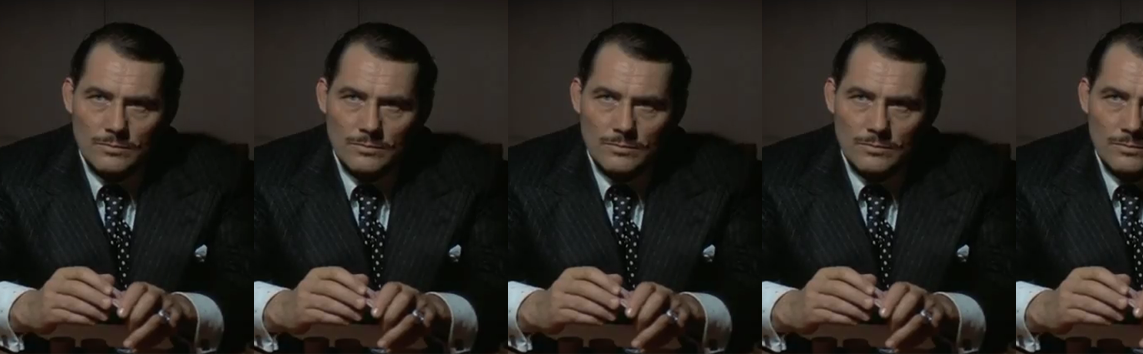
(Andrews)
(Quayle)
(Mills)

Sunday, 5 November 2023

Alternate Best Supporting Actor 1958: Gunnar Björnstrand in The Magician

Gunnar Björnstrand did not receive an Oscar nomination for portraying Dr. Vergerus in The Magician. 

Frequent Bergman collaborator Gunnar Björnstrand plays the pivotal role, essentially the plot driving role, of Dr. Vergerus who is the minister of health whose intention is to investigate a theater troupe who claim to have supernatural abilities. Björnstrand's performance cuts through the film in his first scene where he is part of the inquest into the troupe. Björnstrand is commanding through the confidence of his demeanor, Björnstrand wielding a certain power of his intention as a man who is quite clear in his disbelief of the group. Björnstrand brings this certain self-satisfied humorous bent in his delivery. Björnstrand bemuses himself a bit with every line showing just how little the doctor perceives the group to himself. He's exuding disrespect, however Björnstrand is careful to emphasize the intelligence of the character. His manner and delivery is that of insight and of attack. Björnstrand even looks over the titular magician Dr. Vogler (Max von Sydow) physically as a doctor would with specific intention, but then in an instance showing his casual dismissal when he found no medical reason for the magician's claims of muteness. Björnstrand is captivating in this scene crafting real drama over every question and forcing the troupe to open themselves up to his questioning. Björnstrand creates with ease the ideal "antagonist" of sorts, setting up the man who seemingly cannot be tricked by this group and sees them as unquestionably below him in their claims. 

Dr. Vergerus's methods go beyond merely uncovering the lies of the troupe but seemingly breaking apart their very foundation, as we see in a later scene where he goes about asking questions late at night to Vogler's wife Manda (Ingrid Thulin), who is typically dressed as a man, however in the night removes this facade. Björnstrand is terrific in the scene of asking her more questions by portraying the whole scene with the obvious intention in his eyes and baited breath that the Dr. is obviously more than a little intrigued by the woman physically at the very least. Björnstrand becomes a hectoring villain in the moment as making this clear but his delivery towards her is still with constant attacks towards her existence and particularly to the husband's existence. Björnstrand though takes this moment further releasing a bit more direct passion beyond his confident disregard where the doctor reveals his lack of belief in anything other than reality, which where we see a bit more of seething venom in his voice. And Björnstrand reveals that this is more than just to prove them false, it is personal, and he makes it personal as his overtures towards Vogler's wife are directed with more than just flirtation. Leading eventually to Vogler physically manhandling Vergerus, and Björnstrand's portrayal is pitch perfect in his reaction showing the put down fear hidden by his pompous glee at seeing how his methods have gotten the mute magician to resort to physical violence.

The conflict reaches its climax as the troupe gives their performance, seemingly ending with the death of Vogler, to which Vergerus will perform the autopsy alone in a dark room. And suddenly the film turns towards Vergerus's perspective as essentially the "mark" fully for Vogler, as he faces a series of seemingly the supernatural as he attempts to go about his duty. Björnstrand is excellent in this scene by showing the doctor losing his confidence suddenly and now just being a man who must face potential supernatural all alone. There is a real power just in the complete change in the man who is now alone and without any sense of command to the situation. Björnstrand being incredibly effective by playing the doctor now as very much human who can be scared of the immediately unexplainable as eerie things begin to happen around him. Björnstrand portrays each moment of the doctor as he begins to silently exhibit doubt as one bit of haunting after another occurs around him. Björnstrand powerfully, presenting this attempt at the man trying to hold it together yet with each new element of the haunting, reacts naturally as a man being gripped in fear as each event becomes more intense. Björnstrand along with Bergman, and a bit Sydow, building the tension magnificently, and Björnstrand wholly earning this transformation of the completely confident non-believer being terrified by seemingly a resurrected corpse in front of him. When the truth is revealed as it being an elaborate ruse, Björnstrand closes his performance effectively by crafting a balance between the aggressively confident man before, now with a bit of bitterness for the trick, but he brings just enough modesty to his work to show that as much as Vergerus wouldn't like to admit he did learn something from it all. For my measure, this is film is at its best whenever Björnstrand is onscreen, as it then when the film focuses on its most compelling element, of this battle of the mind between the charlatan and skeptic.

Sunday, 15 June 2014

Alternate Best Supporting Actor 1958: Results

5. Christopher Lee in Horror of Dracula - Lee is menacing with his vicious depiction of Dracula, but the film barely gives him anything to do. 

Best Scene: Dracula attacks.
4. Robert Donat in The Inn of the Sixth Happiness- The part is ripe for embarrassment but Donat avoids it by giving a likable and honest performance that avoids the pitfalls of such a part. 

Best Scene: The Mandarin's message to his people as the Japanese invade.
3. Richard Attenborough in Dunkirk- The film limits him too much but Attenborough still shines by giving humanity to the character of a man who profits from a war he does not support.

Best Scene: Holden helps his wife test out the infant gas mask.
2. Burl Ives in Cat on a Hot Tin Roof - Ives is fantastic as Big Daddy bringing the larger than life presence needed for such a character, but along with the genuine depth needed.

Best Scene: Big Daddy recounts the death of his own father.
1. Orson Welles in Touch of Evil - Good Predictions Kooo160, Mark, Michael Patison, RatedRStar, and Michael McCarthy. Technically I should give this to Ives if I was doing on who had the best year overall, and I also should do it if I rated it by Humphrey Bogart's measurement of acting which is rating two actors in the same role. Well Welles played a rip off of Big Daddy in a Long Hot Summer, and Ives wipes the floor with Welles if you compare those performances. I only go by the individual performances themselves though, and although it is close, the supporting performance that left the greatest impact on me was Welles's portrayal of Hank Quinlan. It's a great depiction of dirty cop, not just because he brings the menace and the decay of such a character, but also because he turns it into a tragic portrait of a potentially great man who has lost his way.

Best Scene: Quinlan visits Tanya
Overall Rank:
  1. Orson Welles in Touch of Evil
  2. Burl Ives in Cat on a Hot Tin Roof
  3. Burl Ives in The Big Country
  4. Anthony Quayle in Ice Cold in Alex
  5. Harry Andrews in Ice Cold in Alex
  6. Gunnar Björnstrand in The Magician 
  7. Richard Attenborough in Dunkirk
  8. Leslie French in Orders to Kill
  9. Lee J. Cobb in The Brothers Karamazov
  10. Gig Young in Teacher's Pet
  11. Richard Attenborough in The Man Upstairs
  12. Tulsi Lahiri in Jalsaghar
  13. Michel Simon in It Happened in Broad Daylight
  14. Philip Pine in Murder by Contract
  15. Herschel Bernardi in Murder By Contract
  16. Ganjirō Nakamura in Summer Clouds
  17. Trevor Howard in The Key
  18. Gérard Séty in Lovers of Montparnasse
  19. Tadeusz Fijewski in The Noose
  20. Myron McCormack in No Time For Sergeants
  21. Eddie Albert in Orders to Kill
  22. Lee Van Cleef in The Bravados
  23. Ernest Borgnine in The Vikings
  24. Stephen Boyd in The Bravados
  25. Lino Ventura in Lovers of Montparnasse
  26. Walter Matthau in King Creole
  27. Erich Maria Remarque in A Time to Love and A Time to Die
  28. Robert Donat in The Inn of the Sixth Happiness
  29. Christopher Lee in Horror of Dracula
  30. Klaus Kinski in A Time to Love and A Time To Die
  31. Ray Walston in Damn Yankees
  32. James Robertson Justice in Orders to Kill
  33. Joseph Calleia in Touch of Evil
  34. Lon Chaney Jr. in The Defiant Ones
  35. John Dehner in Man of the West
  36. Maximilian Schell in The Long Lions
  37. Murray Hamilton in No Time For Sergeants
  38. Robert Ryan in Lonelyhearts
  39. Dennis Weaver in Touch of Evil
  40. Leslie Nielsen in The Sheepman
  41. Thayer David in A Time to Love and a Time to Die
  42. Chishū Ryū in Equinox Flower
  43. Kieron Moore in The Key
  44. Richard Attenborough in Sea of Sand
  45. Gert Frobe in It Happened in Broad Daylight
  46. Robert Keith in The Lineup
  47. Harry Dean Stanton in The Proud Rebel
  48. Jean Desailly in Maigret Sets a Trap
  49. Paul Scofield in Carve Her Name With Pride
  50. Bengt Ekerot in The Magician
  51. Susumu Fujita in The Hidden Fortress
  52. Dean Jagger in The Proud Rebel
  53. Peter Sellers in Tom Thumb
  54. Terry Thomas in Tom Thumb
  55. Torin Thatcher in 7th Voyage of Sinbad
  56. Adam Pawlikowski in Ashes and Diamonds
  57. Ernest Thesiger in The Horse's Mouth
  58. Vic Morrow in King Creole
  59. Keenan Wynn in A Time to Love and a Time to Die
  60. Arthur O'Connell in Man of the West
  61. Ray Walston in South Pacific
  62. Akim Tamiroff in Touch of Evil
  63. Alan Young in Tom Thumb
  64. David Ladd in The Proud Rebel
  65. Richard Basehart in The Brothers Karamazov
  66. Akim Tamiroff in Me and the Colonel
  67. Kali Sarkar in Jalsagar
  68. Henry Silva in The Bravados
  69. Bernard Miles in Tom Thumb
  70. Jack Warner in Carve Her Name With Pride
  71. Jack Lord in Man of the West
  72. Albert Salmi in The Bravados
  73. Ernie Kovacs in Bell Book and Candle
  74. Valetin de Vargas in Touch of Evil
  75. Richard Jaeckel in The Lineup
  76. Jack Lemmon in Bell Book and Candle
  77. Royal Dano in Man of the West
  78. Tom Helmore in Vertigo
  79. Mike Morgan in The Horse's Mouth
  80. Robert Shafer in Damn Yankees
  81. Chuck Connors in The Big Country
  82. Takashi Shimura in The Hidden Fortress
  83. Lars Ekborg in The Magician
  84. Max von Sydow in The Brink of Life
  85. Vincent Price in The Fly
  86. Cecil Kellaway in The Proud Rebel
  87. Murray Hamilton in Houseboat
  88. Herbert Marshall in The Fly
  89. Nick Adams in No Time For Sergeants
  90. Dan O'Herilhy in Home Before Dark
  91. Lino Ventura in Elevator to the Gallows
  92. Theodore Bikel in The Defiant Ones
  93. Don Rickles in Run Silent Run Deep
  94. Efrem Zimbalist Jr. in Home Before Dark
  95. Rod Taylor in Separate Tables
  96. John Carradine in The Last Hurrah
  97. Jack Warden in Run Silent Run Deep
  98. James Donald in The Vikings
  99. Orson Welles in The Long, Hot Summer
  100. Albert Salmi in The Brothers Karamazov
  101. Michael Gough in The Horse's Mouth
  102. Charlton Heston in The Big Country
  103. Basil Rathbone in The Last Hurrah
  104. Michael Gough in Horror of Dracula
  105. Pat O'Brien in The Last Hurrah
  106. Stephen Chase in The Blob
  107. Brad Dexter in Run Silent Run Deep
  108. Robert Fields in The Blob
  109. Lee Van Cleef in The Long Lions
  110. Dean Martin in Some Came Running
  111. John Benson in The Blob
  112. Jack Carson in Cat on a Hot Tin Roof
  113. John Van Eyssen in Horror of Dracula
  114. Nick Adams in Teacher's Pet
  115. Ray Collins in Touch of Evil
  116. James Bonnet in The Blob
  117. Theodore Bikel in I Want to Live!
  118. Arthur Kennedy in Some Came Running 
  119. Earl Rowe in The Blob
  120. Maurice Chevalier in Gigi
  121. Jeffrey Hunter in The Last Hurrah
  122. Georges Poujouly in Elevators to the Gallows
  123. Charles McGraw in The Defiant Ones
  124. Harry Guardino in Houseboat
  125. Alfonso Bedoya in The Big Country
  126. Larry Gates in Some Came Running
  127. Curt Jurgens in The Inn of the Sixth Happiness
  128. Charles Bickford in The Big Country
  129. Audie Murphy in The Quiet American
  130. Felipe Pazos Jr. in The Old Man and the Sea
  131. Keith Almoney in The Blob
  132. Anthony Franciosa in The Long, Hot Summer
Next Year:1979 lead

Alternate Best Supporting Actor 1958: Richard Attenborough in Dunkirk

Richard Attenborough did not receive an Oscar nomination for portraying John Holden in Dunkirk.

Dunkirk is a well shot and solid, if perhaps slightly too by the books, depiction of two stories around the Dunkirk evacuation of British Soldiers during World War II.

Dunkirk is broken off into two stories one that depicts John Mills as a British soldier trying to get his small group of men safely home, and the other portraying Bernard Lee as a civilian who decides to do something to help the men stuck in France. Both those men are portrayed as perhaps having a few hesitations just in terms of self preservation and general worry but both are shown to be fairly admirable at the beginning and only become more admirable as the film continues. That is not the case for the character of John Holden played by Richard Attenborough. John Holden a businessman who makes money from the war through manufacturing belt buckles, but nevertheless treats the war with a certain ambivalence going so far as to proclaim it as a "phony war".

Richard Attenborough is terrific here in playing a somewhat standard character of the man's who does not seem to believe in anything. Attenborough's performance works though because he finds hidden depth within what seems like a shallow character. Attenborough even in the early scenes where Holden is basically complaining about a war that is making him money does not play as if Holden is just some jerk, even though he technically is. Attenborough instead creates Holden as a fearful and nervous man, and his portrayal suggests that more than anything Holden would prefer that the war was truly phony and offered no threat at all to his existence. When Holden voices his opinions on the uncaring side of things Attenborough makes them less despicable because Attenborough shows that it comes from a particularly honest fear through his performance.

As the story plays out though Holden is tasked to do something since he has a boat, and civilians are asked to contribute their boats to the Dunkirk evacuation. Attenborough makes the most out of what he is given and shows the growth in courage of Holden quite effectively. The reason is that Attenborough does not all of the sudden show Holden have some sort of revelatory moment that gives him strength, nor does he even show the fear completely leave Holden. Attenborough rather completely earns the transformation and makes it rather poignant by convincingly showing the strength to slowly emerge out of the fear. Attenborough stays particularly subtle in the transition yet never underwhelming in the power as Attenborough makes it a completely believable strength that comes from this rather meek man.

Overall the film Dunkirk would have benefited from more Richard Attenborough as most films tend to. The more that one gives Attenborough the more that he delivers, and this film does not quite give Attenborough enough to do. Every moment Attenborough does have is a remarkable as he humanizes Holden and his whole standpoint wonderfully well even when morally dubious in nature. The only problem is that Dunkirk does not care all that much about Holden's story especially near the end of the film where Attenborough is basically stuck getting a boat started, although his portrayal of Holden's reaction to hearing about the death one of his friends is quite affecting. The film particularly seems to give Attenborough the short straw in that it seems he's suppose to have one final scene that we never, which is a shame since I'm sure Attenborough would have been great as usual. Despite the limitations Attenborough still manages some fine work as usual, and is one of the best elements in the film.

Alternate Best Supporting Actor 1958: Robert Donat in The Inn of the Sixth Happiness

Robert Donat did not receive an Oscar nomination, despite being nominated for a Golden Globe, The Mandarin of Yang Cheng in The Inn of the Sixth Happiness.

The Inn of the Sixth Happiness tells the life of Gladys Aylward (Ingrid Bergman) who leaves England to aid at a mission in China. It's a decent enough film helped greatly by a particularly winning turn by Bergman.

Robert Donat technically is quite miscast here in his final role as a Chinese Mandarin, and obviously someone who was actually Chinese would have been more fitting for the role especially since there are actual Chinese actors in the film to begin with. Robert Donat thankfully does not play the role in some stereotypical fashion, and avoids putting on some over the top mannerisms that are often found in the portrayals of these types of character. Instead Donat tries to give a fairly dignified portrayal of the character, and avoids the pitfalls of playing such a character for the most part even if he still has to dress like a Mandarin as well as have the obligatory facial hair that is of course needed for a Mandarin.

Robert Donat is always a charming presence and that is certainly the case here. Donat contains his performance appropriately by keeping that manner of a reserved man who has some power at his disposal. The film portrays the Mandarin as a purely good man though who wants to help the various people in his community and even does not mind helping Gladys despite the fact that she is foreigner. Donat while still keeping the stature of the character intact exudes a nice degree of warmth along with it. Donat makes the character of the Mandarin quite likable in fact because Donat is the one playing him. It is often the case with these characters that they are so serious that they are stiff, Donat keeps the serious points of his character, btu brings a nice ease in his performance that avoids making the Mandarin a boring presence.

The only major problem for Donat is that the Mandarin ends up being a relatively simple part. He shows up from time to time offering some support or some sort of wisdom to Gladys, and that's really about it. Donat is good in these limitations though creating that sense of wisdom the Mandarin should convey, while doing it in a way that is not boring. It's not a great role all together and obviously it is very hard to ever forget that Donat was far from perfect for the role for the most obvious of reasons. Donat still manages to give a good performance though despite what ways against him in the part, and does a good job of bringing some energy and life to any scene that he appears. It's far from his best performance, but not a bad one to be his last.

Friday, 13 June 2014

Alternate Best Supporting Actor 1958: Orson Welles in Touch of Evil

Orson Welles did not receive an Oscar nomination for portraying Hank Quinlan in Touch of Evil.

Touch of Evil is an excellent thriller about a crime ridden area right on the border between the United States and Mexico.

Touch of Evil opens with a bomb exploding that kills two people in a car right on the border leading it to be investigated by a Mexican detective who happened to be crossing the border with his wife Vargas (Charlton Heston) and a group of Americans lead by detective Hank Quinlan played by the director of the film Orson Welles. Perhaps it is rather obvious that Welles directed, other than because it is a great film, with the extremely memorable entrance Quinlan gets in the film. The scene is being investigated by the other officials with a car driving up with a dramatic close up to reveal the larger than life Hank Quinlan as he emerges from the car instantly inquiring about the case. Welles instantly takes hold of the screen which he will for every other scene in the film as well pretty much every scene he is not in as well. Hank Quinlan is a great character and Welles obviously will not waste this opportunity.

Orson Welles's performance is great in making Quinlan extremely memorable in every regard starting with the physical portrayal. Welles is absolutely spent in the part, and it is something to behold to be sure. His makeup is terrific to being with but Welles goes far past that with the way he plays the part. Welles gives Quinlan a lumbering walk due to Quinlan's limp as well as his size. Welles truly wears the weight the weight in this performance as he shows that Quinlan really even has some trouble breathing due to his condition as a man. Quinlan been through a lot and you can see that right in Welles's face as he suggests that type of damage that Quinlan has taken through his life. Welles is terrific in giving us the history of the man without needing to say at all as we see that Quinlan has been through some bad things. Welles's whole creation is an amazing depiction of a man who is basically decaying.

Hank Quinlan is a very early example of the sort of character later played by the likes of Woody Harrelson, Denzel Washington, Ray Liotta an many others which is the lawman who perhaps has become too good at his job. Welles is terrific because the fact that Quinlan seems like a walking corpse at times is in no way reflected in his portrayal of Quinlan as he proceeds as a detective. Welles commands without question in these scenes as in his eyes and his way about the investigation scenes it is clear that Quinlan is quickly deciphering the clues of the case. The whole dynamic is a difficult one as Welles shows without question that Quinlan is a man of so many vices physically, but Welles brings such a honest and earned confidence in his portrayal of Quinlan as a detective. Welles makes what seems like an inconsistency in Quinlan completely believable as realizes both sides of the complicated man.

One of the most important aspects of Welles's performance is that he wears the past of Quinlan just as well as he wears the present state of the man. Welles's has a particularly wonderful scene when Quinlan goes and visits an old friend/fortune teller Tanya (Marlene Dietrich). Welles is great in this scene as there is such a sense of nostalgia in the joyous expression seen upon Quinlan face as he seems to remembering the good old times in the moment. Welles is great by suggesting in this moment the better man that Quinlan once was, and actually does try to remind himself of this. Welles makes Quinlan incredibly interesting as character because he honestly creates a sense of tragedy within the man. His Quinlan's is not just a standard corrupt cop by any means at all. No Welles makes Quinlan a far more fascinating character, by showing us a man who was once a good man capable of greatness but has lost his way.

Quinlan is forced to only become worse though after Vargas catches Quinlan planting evidence in the house of the man he believes has committed the bombing that opens the film. Welles's is very effective in the last act of the film by believably moving Quinlan to an even darker place once Vargas threatens basically his entire career as an officer of the law. Quinlan starts drinking again, one vice he had given up, and plots to try to frame Vargas's wife in a crime to escape Vargas's inquiries. Welles makes these scenes absolutely convincing by showing the way Quinlan's basically losing himself all the more as he slowly becomes more drunk, and gives in to his negative qualities all the more. Quinlan seemed spent physically from the beginning, but Welles moves on to make Quinlan spent mentally as well as he creates a sense of desperation and even despair that allows Quinlan to do some truly unforgivable things. 

Welles's gives such a fantastic performance here. Hank Quinlan in lesser hands may have just been a one note crummy villain, that we simply applauded at his demise at the end of the film. That is not the case through Welles's work here. Welles certainly brings the needed menace to the part, and as a villain his Quinlan is an extremely memorable one. He's not just a villain though because of how well Welles realizes a modicum of goodness in the man. The final scenes of the film actually are quite moving and Welles brings a certain poignancy to them despite Quinlan getting his comeuppance for his evil. The reason being that Welles is able to make the tale of Quinlan demise of a man who slowly wastes away all of his once great potential both physically, mentally and morally. Welles's performance is a brilliant and powerful piece of work that matches his equally exceptional direction of the film.

Wednesday, 11 June 2014

Alternate Best Supporting Actor 1958: Burl Ives in Cat on a Hot Tin Roof

Burl Ives did not receive an Oscar nomination for portraying Harvey "Big Daddy" Pollitt in Cat on a Hot Tin Roof.

Burl Ives actually already was determined the best supporting actor of 1958 by the academy for his performance in The Big Country. That's certainly a good and deserving performance that was easily the best of the nominees, but was it even Ives's best work from 1958? 1958 also saw the release of Cat on a Hot Tin Roof the adaptation of the stage play where Ives's showed his unexpected acting chops, and he went on to reprise his role of Big Daddy, which is probably his most remembered acting role, the film version.The oddest things about the Oscar choice actually is that they simply seemed to prefer Cat on A Hot Tin Roof in every other way since it found itself nominated in most of the major categories including picture, actor, and actress. The funny thing is that if Ives had been nominated for this film then it actually would have been its sole win as well.

Ives, like in The Big Country, plays a patriarch although this time in a modern setting opposed to the old west, and Big Daddy is certainly a different man from Rufus Hannassey. We first meet Big Daddy in the film as he arrives back to his large estate after an apparent health scare, and he believes himself now safe to live out his life for a while longer and deal with the problems in his family. Ives is magnificent in the part and certainly puts the big in the Big Daddy and that's not referring to his large frame. No Ives has an incredible presence as Big Daddy and he commands every scene that he is with such an ease. The way he stands in frame has even a certain magnetic quality to it, and simply through the way he carries himself Ives is able to instantly establish Big Daddy simply as the man capable of all the great accomplishments that everyone seems to describe him as.

Ives's has a terrific grasp on Big Daddy as a character and is particularly effective in portraying the rather cynical edge the man has. Big Daddy only respects a few things and a few people, and does not mind showing his disrespect in one way or another. Ives knows how to deliver every vicious line with a great proficiency and is rather tremendous in reinforcing the way Big Daddy takes over every situation he is in. Ives is just as great though when Big Daddy must listen to those he does not respect such as his wife or his older son and his wife who do not hide their desire for Big Daddy's estate. Ives is able to pack just as much of a punch just in his expression as Big Daddy chooses to ignore and attempt to avoid the interaction. He expresses this distaste in Big Daddy almost in a wholly silent fashion yet with just the same brutality as when he chooses to verbalize it himself.

Big Daddy though does see promise in his younger son Brick (Paul Newman) and his sultry wife Maggie (Elizabeth Taylor), although he also sees an obvious problem when somehow Brick fails to conceive with such a wife. Ives is excellent in his scenes with Newman because he never allows them to become just  a simple story of a cold father and a son wanting love. Ives brings so much more to these scenes than that. There is certainly the distance as Ives brings the fierce discipline of the father as Big Daddy basically forces the injured and alcoholic Brick to move with out a crutch and not drink as tries to find out the problem with Brick. Although there certainly is a certain coldness in Ives's performance there is behind it a hear though as well as deep within Big Daddy treatment of Brick Ives suggests that he is doing it honestly to try help his son. Ives makes it the imperfect combination it is but a completely genuine relationship he creates.

The last part of his performance though is a rather extreme change brought on by Big Daddy learning that he is in fact dying after all. Ives's portrayal of Big Daddy ailment is well handled, and he eases back properly on that dominance he exuded so well beforehand. Here in these scenes Big Daddy becomes far more reflective of his own past as well as his connection with his son. Ives is quite moving in these scenes by showing a greater urgency and earnestness in Big Daddy as he attempts to find some way to fix his house before he dies. Ives by subtly giving off that slight sense of warmth before very naturally changes Big Daddy making it so the better qualities of the man he suggested before grow stronger. His best scene though is when Big Daddy reflects on the death of his own father. Ives is very moving as he powerfully shows what his own father meant to him. In the way Ives looks in the moment you can see Big Daddy reliving the past as well seeing himself in his father.

Burl Ives's work is easily the highlight of the entire film. Any scene with Ives has such an energy that is sometimes somewhat missing in some of the other scenes in the film. Ives truly makes the film with his performance as he realizes Big Daddy with the needed complexity for such a part. In lesser hands Big Daddy could have been a one note character as perhaps just a boisterous old man or just a cruel father who fails to understand his son. Ives mediates exceptionally well giving a very interesting portrait of a man trying to maintain his well earned legacy any way that he possibly can. Ives completely controls the film and absolutely makes the part his won. Although The Big Country is definitely a very strong performance in its own right and was not at all a bad representation of Burl Ives's talent as an actor, the best representation of that talent in 1958 was found through his great performance in this film.

Tuesday, 10 June 2014

Alternate Best Supporting Actor 1958: Christopher Lee in Horror of Dracula

Christopher Lee did not receive an Oscar nomination for portraying Count Dracula in Horror of Dracula.

Horror of Dracula is a bit sloppy retelling of Bram Stoker's Dracula almost as if the writer had not read the novel in a long time and just retold it from memory as it has some of the moments of the story but in the most random of ways.

Christopher Lee of the amazing voice and has a magnificent presence, but I have to say his roles always seem to be more minor than one would hope. This is certainly the case for his premier portrayal of one of his most famous roles that being of course Count Dracula. Despite being one of the most noted depictions of the character Lee's initial appearance is quite sparse as the film basically portrays Dracula's actions as pretty random and the film really does not have a particularly natural flow about it. Dracula kinda just does things and he appears from place to place without much logic at all. This version of the story really undercuts Dracula as a character through its ridiculously rushed pace, but it is still interesting to take a look at Lee's performance especially when compared to the other actor who have played the vampire Count.

There was Max Schreck's portrayal as basically a monstrous personification of despair and decay. Then later there was also of course Bela Lugosi, who is perhaps the most iconic, take where he combined a certain allure along with a menace. Also of course there was Gary Oldman's rather tongue-in-cheek that took elements of the other portrayals and took them to an extreme. Lee's performance is more limited than those other three since the films uses him so sparsely. Lee only has a few lines of dialogue throughout the film, and even that is mostly to the point dialogue that does not really try to build the character. Lee mainly has to create his Dracula just through his physical portrayal and even in that case he has to do it very quickly since his screen time is so ridiculously sparse in the film.

Lee performance is relatively simplistic as there just is not enough material available to him. Lee though still does create his own take on Dracula even in these fairly ridiculous confines. When he is acting "normal" Lee carries himself with enough innate menace simply from his presence although I have to say he certainly moves far swifter than the usual portrayal of the Count. I suppose this factors into his portrayal of Dracula when the monster comes out in a more obvious fashion. Lee's plays Dracula in the monster mode in a very animal like fashion as the thirst for blood is quite clearly in his expression as he seeks his prey. Lee is very effective in this regard as he brings such an intensity in his portrayal of the vicious vampire, and it is an interesting take on the character. Unfortunately the film only let's him go so far with this, and that is not very far at all considering his sparse appearances in the film. It's a solid performance by Lee to be sure, but very much wasted by the film.

Monday, 9 June 2014

Alternate Best Supporting Actor 1958

And the Nominees Were Not:

Burl Ives in Cat on a Hot Tin Roof

Orson Welles in Touch of Evil

Richard Attenborough in Dunkirk

Christopher Lee in Horror of Dracula

Robert Donat in The Inn of the Sixth Happiness