Showing posts with label 1996 Alternate Supporting. Show all posts

Monday, 30 March 2020

Alternate Best Supporting Actor 1996: Results

5. Eric Tsang in Comrades: Almost a Love Story - Tsang delivers a moving portrayal of a gangster with more heart than you'd expected.

Best Scene: Many wives.
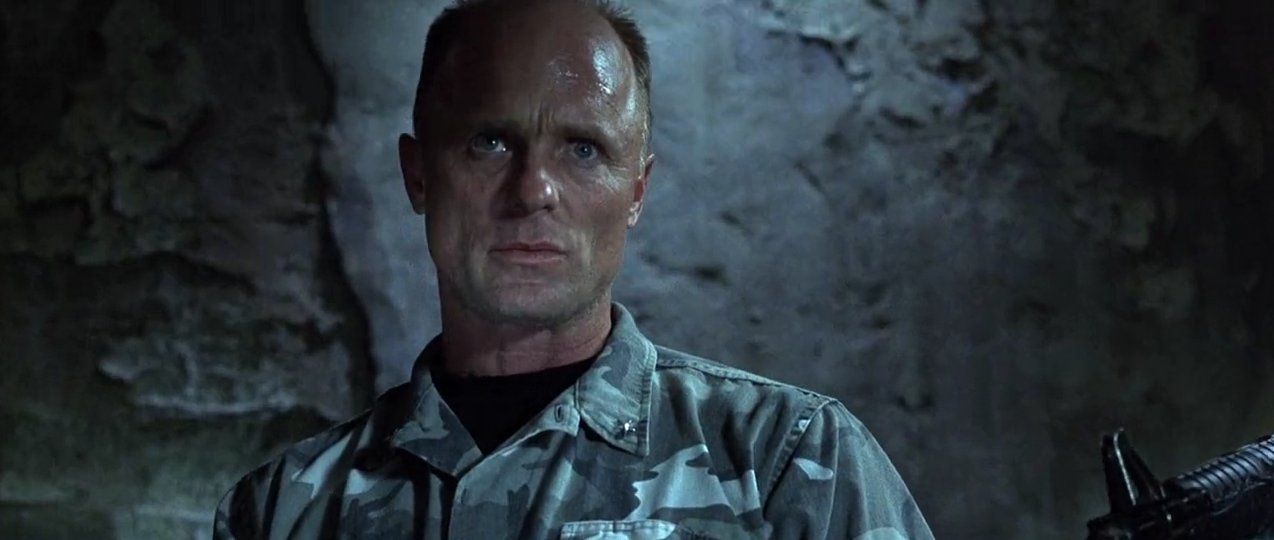
4. Ed Harris in The Rock - Harris, despite being in a dumb film, gives a complex portrayal of a soldier whose convictions slowly bring about his tragic downfall.

Best Scene: Breakdown of command.
3. Harry Belafonte in Kansas City - Belafonte gives a film stealing performance by subverting his typically affable presence, in his portrayal of almost demonic philosopher/gangster.

Best Scene: Racist joke.
2. Charlton Heston in Hamlet - Heston proves his measure with Shakespeare in making the words sing, but also offering such potent emotion within it.

Best Scene: Monologue
1. Peter Stormare in Fargo - Good predictions Razor and Bryan. Stormare offers the perfect other half along with Steve Buscemi, as two less than professional criminals, in his performance that works both as a hilarious deadpan comedic partner, and a chilling portrayal of a truly amoral killer.

Best Scene: Highway Massacre
Updated Overall

Next: Back to 1943 (will be brief)

Alternate Best Supporting Actor 1996: Eric Tsang in Comrades: Almost a Love Story

Eric Tsang did not receive an Oscar nomination for portraying Pao Au-Yeung in Comrades: Almost a Love Story.

Comrades: Almost a Love Story is a sweet, if a touch overlong, film about two mainlanders in Hong Kong, who can't quite seem to come together.

Eric Tsang plays one of the potential obstacles between the love story that seems always on some sort of on the brink between  Qiao Li (Maggie Cheung) and XiaoJun (Leon Lai). This as Tsang portrays a mob boss costumer of Qiao's, at a message parlor. Eric Tsang would later play notably a mob boss in Infernal Affairs, however Pao Au-Yeung here is a far cry from that more dramatic criminal he would later play. This as we really come in at first to the man, mostly head down, just receiving his massage and attempting to flirt with Qiao. Tsang delivers a bit of the expected "brunt" to the role when he demands force be used to handle some issue relayed by his men, but even this is just a perfunctory statement. We we get more passion is as he speaks to Qiao of his new tattoo adorning his back, along with his more expected tattoos, that of Mickey Mouse, her favorite character. It is then we see that Pao isn't your standard mob boss as we see the two begin an actual romance. Though this first seems likely to be short lived as Pao essentially tries to allow her to leave by speaking of all the wives he has in other countries, Tsang handling this moment as one of false bravado. This not as a boast, but as a man attempting to not only soften his own wound, but to most earnestly make Qiao feel better about herself. This in his face though a real sorrow of the loss, that Tsang strictly conveys the genuine sense of love in the moment. This showing the real heartbreak in the man in the moment, before Qiao decides to marry him. Although the scenes following this are brief, however Tsang uses them well. This in providing a real warmth in the interactions and a purity of the man's manner, as though this is Pao as his truest self. This in portraying just a to the point sweet man, who loves his wife, and wants to just live a good life with her. Tsang naturally delivers a potent affection this as he makes it natural from that of the former gangster, to just a caring husband in every sense. This making it so when he makes his untimely exit it is something that is felt, and not just an obstacle to get gotten over for the sake of the leads finally getting together. This in Tsang successfully creating a sympathetic portrait of both the typical "other guy" of the narrative and of a gangster. It's a relatively short performance but Tsang delivers still a memorable impression within that screentime.

Sunday, 29 March 2020

Alternate Best Supporting Actor 1996: Peter Stormare in Fargo

Peter Stormare did not receive an Oscar nomination for portraying Gaear Grimsrud in Fargo.

Now I previously reviewed Steve Buscemi's great work, as the largely incompetent Carl, the one half of two criminals hired by used car salesman Jerry Lundergaard (William H. Macy), to kidnap his own wife to extort money from his father-in-law, but I was remiss in forgetting Carl's, mostly, silent partner...in crime. Stormare's performance is an anti-thesis that I will get to, but it is also brilliant that I will preface, although since he was my runner-up even before this review, so that might be obvious. This is actually one of those interesting performances in that I've enjoyed Fargo multiple times, yet I forget that Stormare is only a few scenes, as he seems such an essential element of the film. This is as his impact is essential, and we must look to Stormare's work for leaving such an impression. This is as his work is almost a silent performance, though the few words he does make leave an incredible impact, Stormare, unlike the rest of the cast has a limited amount of that wonderful Coen dialogue to work with. In fact Stormare more of just has a few lines in total, and a great deal of silence, though this is all he needs to create two different achievements within the film. The first is this is a hilarious performance, oddly enough despite being the most terrifying character, as we find Carl and Gaear, in some ways have more in common with Laurel & Hardy than a Leopold & Loeb. This as we have Buscemi's Carl as the man who never stops talking against Gaear who rarely says a word, unless he deems it essential. The few words being each in themselves idiosyncratic, yet so fascinating of deliveries every time. This in "Where's pancakes house" with his face of sincere questioning then disbelief as Carl doesn't agree to get some proper pancakes at the pancakes house. Stormare's face is something special here, as in a scene like that it is to such great comedy in his nearly dead eyes towards Buscemi, before Carl relents to agree to pancakes after all. He is the fantastic deadpan straight man of sorts Buscemi, like in their later conversation where Carl attempts to get a few words to which Stormare delivers his "Nope" and "I just did" as a fountain of conversation with such beautiful bluntness. This though maintaining this indifference towards slight annoyance at his chattering partner. 

There is something just fascinating yet perfect about how Stormare approaches every scene in creating Gaear as a whole different kind of sort. And initially this seems to be fun and games, in ignoring his partner, berating Jerry briefly for the stupidity of his plan, but then they do kidnap Jerry's wife, and we get part of where Gaear may not be so much fun, though still hilarious. This as when Jerry's wife bites him first to escape him, we get another classic bit of oddness from Stormare in his "I need unguent" that is marvelous by how detached from the situation he is in the scene. This distance, that same detachment, brings upon a more eerie quality however when he finds that much need unguent along with Jerry's wife attempting to hide in a shower. This as he notices her, but with those hollow eyes now finding a more menacing quality within them in that distance Stormare brings. The same distance he brings as he follows Jerry's wife as she falls upon the floor knocking herself out, and Stormare pocks her not as a sadist, but as someone might interact with an object or insect. This strange nature of Gaear coming out more directly, as the two men, with their kidnapped in tow, are stopped on a remote road. Stormare's manner becomes most unnerving as we begin to feel a bit of what he can do. This coming up initial as Carl attempts to bribe the highway patrol officer, leading to Gaear instead to kill the officer without hesitation when that doesn't work. Stormare's way of speaking towards Carl's claim "You'll take care of it" is with a chilling blase quality to it. This as we see only spark of anger, when directly annoyed by Jerry's wife's screeching only as it seems to interfere with him directly in some way. Stormare is terrifying and strangely mesmerizing as the sequence continues, as while Carl is attempting to cover up the murder, two onlookers driving by leaving Gaear to finish the job. This as Stormare portrays Gaear in almost this zen state and quiet determination, where this business seemingly is nothing out of the strict ordinary for him. I especially love, though that might not be the right word, as he catches up with the onlookers who crashed their car. Stormare's is unnerving as his manner is relaxed, his state calm, but calmer than calm. This as we see him particularly look at one of the witnesses stuck within her car. Stormare doesn't smile or wince, he rather seems almost observant of not a man looking at a person, but rather how a man look like something that which he shares no connection. Now I could've sworn there was a great deal more of Stormare after this scene, I mean I could swear it right now, even though he only has 2 brief, 1 relatively brief, and one major scene, all with few words after this pivotal scene. The reason I could still swear it is the impact he leaves nonetheless, and even in these scenes, where we see this horrifying force of evil in Stormare's performance, that nonetheless is captivating. Whether that is as he looks on at, Jerry's wife failing to escape, or Carl's struggle to get a signal on the TV at their cabin hideout. In each moment the power of Stormare's work is evident, and all the greater the more we see him. Although I do have to take one moment to refer to his more comic work in the first half in his one major, albeit short, comic moment later on. This as we see Gaear waiting by watching a Soap Opera, and Stormare's genuine surprised look as Gaear hears the revelation, is pure comic gold. Now though, back to the more fundamental purpose of his work later in the film. Where we have two immediate scenes of Stormare's terror in a way, because of how at ease he is, whether it is mentioning the murder of Jerry's wife, as though he's explaining why he took out the trash, or his killing of Carl as though he's going out to shovel snow. This as we find him that antithesis to the chief investigator of Jerry's scheme, Marge Gunderson (Frances McDormand). Where she is a morally good character, to the point her greatest frustration in the film is shown towards Gaear for doing all his ill-deeds for money even on "such a beautiful day". Where Marge is defined by positivity and a love for life, we have instead Stormare as Gaear as a strictly amoral individual detached from life. This even compared to Jerry and Carl who are too human in how pathetic they are to be pure in their despicable nature. Stormare doesn't make Gaear just a bad man, but rather a fundamentally amoral force within the film. This right down to his "conversation" with Marge, where she questions his actions, and with Stormare there is no regret on his face, or even anger, rather he shows a man whose violent actions where in a way meaningless to him. This is a downright brilliant performance from Peter Stormare, as he is endlessly captivating through so many wordless moments, while being a proper comedic partner to Buscemi, while also wholly finding the needed menace and evil to create the purest villain in the piece.

Saturday, 28 March 2020

Alternate Best Supporting Actor 1996: Ed Harris in The Rock

Ed Harris did not receive an Oscar nomination for portraying Brigadier General Francis X. "Frank" Hummel in The Rock.

The Rock follows an improbably named chemist, Stanley Goodspeed (Nicolas Cage), and an imprisoned SAS soldier, Mason (Sean Connery), who must infiltrate Alcatraz to stop a group of rogue marines. Marines who have taken control of the island with hostages along with missiles carrying a deadly poison.

Michael Bay movies are stupid. This is known. This is the good Michael Bay movie, on the virtues that it is a successful action picture, though his unfunny juvenile humor often rears its head indicating his later features though thankfully more minimally here. It might also help is one thing that Michael Bay seems to take pretty damn seriously is the US military. This creating then at least the allowance for anything of even a remote substance, though I will still say in a limited fashion, in the character of General Hummel played by Ed Harris. Harris's performance here, honestly is in a different movie than Cage and Connery, but that's alright, since he barely shares any scenes with them, and we can essentially take in what he is doing separately from their antics which are of a more ridiculous, though definitely entertaining, action spectacle. Harris basically is there to take upon all serious intentions and gravity of the film on his shoulders. This is something he seems more than ready to perform from the opening scene of the film. This is right from the outset of the film as we see Hummel making his technically villainous decision, at the grave of his wife. Harris does not play the scene like a dumb action movie, what the Rock is, but rather reflect the grief within a conviction in his voice. This as Hummel offers almost an apology to his wife in explaining his soon to be actions. Harris offering the devotion of a drama in the moment by reflecting the sadness in the General as some sense of motivation for what it is that he is about to do.

What he is about to do is a lead a group of his solders, and a few extra wild cards (for the sake of a last act villain switch), to steal chemical weapons then take Alcatraz. Harris, as shown elsewhere, excels as the company man military role to begin with. His innately intense delivery, and rigid demeanor help to reflect a man who has lived life by a code of discipline. This even being shown as we see the man in his villainous enterprise,  as Harris doesn't portray Hummel as a lunatic, but rather a General prepping for a mission he deeply cares about. This as we see him running it as he would any mission, with Harris delivering each line with a careful measure, and even subtly in his eyes, showing a real sense of loss, when one of his men dies, though hiding it within the veneer of maintaining order as a leader. This is even in a brief, but important moment, when taking Alcatraz, where Hummel asks children to leave the island before he takes it. Harris doesn't make the moment a sociopath putting on an act, but an honestly caring guy asking the children to be out of harms way. This supports as we finally hear the General's demands, which is money, however money specifically for the sake of the families of soldiers killed in Black ops mission, disavowed by the government. Harris delivers on the idea in the initial threat in offering a controlled passion, showing the man absolute belief in his objective, while again still presenting himself as the controlled General feeling he is performing just yet another mission.

Harris makes for a good villain in that he manages to deliver on the idea of the menace within the controlled certainty of the character. Where his performance though goes beyond that is creating a definite tragedy within the role, that he manages to weave from that opening scene and throughout the film. This is that he doesn't just make him some military mad man, but a genuinely caring person. This is within the film as written, however Harris is essentially in not only giving it sense, but even a power to it. Take the scene where his men kill all the government's infiltration team, sans Mason and Goodspeed. The argument that prefaces the massacre, Harris makes more out of the scene, this as he begins with the strict intensity of the General asking for surrender, however as it continues his delivery offers a greater frustration. This not being a frustration at disobedience, but rather seeing the situation is about to go out of his control with innocent lives being taken. His yells of "cease fire" is with harried expression from Harris as man whose resolve has been shaken, and his moment of looking upon the dead soldiers, Harris grants an honest poignancy to as he subtly reflects the real regret in the General within the moment. The one scene where the two sides do collide is where Mason, briefly, turns himself into the marines, and he and Hummel have a brief battle of words. Even in this scene, that is primed as the testing the villain moment, Harris manages carry on the specific arc of the General. This as even reaction to Mason's words, it is with a greater internalized frustration that externalizes as violence.Those that Harris does not act as a beat down for sadism, but rather a gut reaction of a man who can't fully rationalize his choices in the moment. Harris is consistently compelling in granting a severity to the worsening situation, as the General is pushed by his men to launch his poisoned missiles. This as he continues to capture it as the idea of the man slowly getting in over his head on his idea, than a lunatic. This as when they launch one missile, where Harris portrays with a resignation. This not being a resignation to kill, but rather a resignation that his plan is a failure. This naturally comes to a head when his additional wild cards, question his actions and attempt to relieve him of his command. Harris is fantastic in this scene. This as he begins it first with the same conviction explaining his plan was a bluff, therefore it is over. This with the same determination in his voice in his threat as he does explain that he never had intention to kill innocents. I love the moment in which Harris attempts though to tell one of rogue men to stand down, first with his General's confidence, however as the man doesn't listen the second time Harris's voice cracks. This emphasizing the man not only losing his confidence, but also realizing he's lost his control of the situation. Harris finally fully realizing the real desperation of the General as loses that strict assurance of himself essentially. This in his very final moment, that Harris does not waste, in speaking with a genuine regret as he asks "What have I done". This is terrific work from Harris, as he finds a real tragedy within his villain. This even in an absurd action picture, Harris maintains a gravitas within his role, and even offers a semblance humanity into the plot, that is pretty ridiculous when you break it down.

Friday, 27 March 2020

Alternate Best Supporting Actor 1996: Harry Belafonte in Kansas City

Harry Belafonte did not receive an Oscar nomination, despite winning NYFCC, for portraying Seldom Seen in Kansas City.

Kansas City is a Robert Altman attempt that just doesn't come together (in part due to Jennifer Jason Leigh's Achilles heel being on display, that being hammy attempts at portraying the Golden Age Hollywood style), not that it's terrible or anything, about a woman kidnapping a politician wife attempting to save her criminal husband who has been kidnapped by a gangster.

Well that gangster is played by veteran performer Harry Belafonte, better known when it comes to entertainment for carrying more than a few charming tunes, plays entirely against that type, though oddly enough in type compared to his role in Uptown Saturday Night, where he also played a criminal. This however is one with a far darker intention. The part of the film that works is when Belafonte is onscreen as Seldom Seen, partially due to the sheer power of his work. This in using his scraping voice to great effect as we early on see the man's wrath just bubbling as ponders on the theft in one of his cabs, by a man pretending to be black. Belafonte has such an ease in menace here that is downright startling coming from him. This is evident from his first monologue, as he has captured the foolish thief. This is as Seldom states his distaste for the man's choices though with this certain disturbing manner, as though he almost reciting a poetry as he speaks of it, though ends with pondering what he'll to do the man directly. In just the final few words Belafonte shifts his delivery, and his eyes suddenly, and so effortlessly create a chilling quality as we see the real threat within Seldom. Where the rest of the film kind of meanders around, you just awhile just await the return to Seldom's jazz club, to get what else we have in store from Belafonte, who despite not having nearly enough screentime, steals the film entirely. Belafonte sinks his teeth into every time we come back to Seldom, and get a bit more of Seldom's philosophy. Belafonte is brilliant in that while the scenes are all these philosophizing, that he not only makes sing, he manages to make them less artificial than they're written largely through the virtue of his work. His second speech on losers, directed as basically telling the thief he will die one way or another, again Belafonte manages to combine this certain breezy style as though he might be ready to say something, yet again deteriorates it as his eyes just grant this sinister glint of man essentially playing with his prey. Belafonte carries himself as this almost demonic philosopher that is just incredible work from him. The greatest of these perhaps being his racist joke he tells as a man is being violently beaten. The manner in which Belafonte brings to the tale is disturbing by just how energetic and gleeful he is. Belafonte creating this sense of a man with what is a most nihilistic worldview, that he makes vivid, while also just doing so in being downright captivating in each word he speaks. Even in speaking on the nature of death, it is with an optimistic smile he says as he ponders when it's time, but again with an even greater devious joy when remarking that he gets to decide when the thief dies. My favorite moment of his might be a mostly reactionary one where the thief tries to bargain for his life, through some minor threats. This in Belafonte as he builds in small reactions of disinterest, then slowly bemusement as the man offers to be his slave. Belafonte switch from a bit of joy at the idea of owning the man, then change so slightly into a hellish grin as he notes that he's really just most interested in the man's "guts" being his, and in that moment we see the unnerving determination that gangster has made for his victim. Sadly, to support the pun, Seldom Seen is seldom seen in the film, and the sum total of his screentime is limited. Belafonte makes the most of it creating such a fascinating villain in so well realizing the man's sort of callous philosophy towards life. If only the whole film was about Seldom, as Belafonte's work is worthy of mention with the best of Altman, the rest of the film...not so much.

Thursday, 26 March 2020

Alternate Best Supporting Actor 1996: Charlton Heston in Hamlet

Charlton Heston did not receive an Oscar nomination for portraying The Player King in Hamlet.

Kenneth Branagh's epic, complete, Hamlet is a fascinating examination of just how much within Shakespeare's play, given the complexity of elements that are usually passed over in most adaptations. Branagh within his epic approach in every regard includes including all-star cameos per the most minor role. A choice to give essentially each character some impact, although the choice overall is imperfect given some of the more lackluster performances attempting Shakespeare, it also provides major dividends, none greater than Charlton Heston as the Player King. Heston throughout his career was known for a more specific roles, almost as the prototype towards the more modern action hero in many ways. Heston though technically came up through Shakespeare, which seems alien towards so many of his cinematic roles. This training, which was rarely called upon throughout his cinematic career, was finally given the chance to truly shine, though in an unlikely role. The Player King typically is not a part of note in Hamlet, he is there just to basically help reenact Claudius's, via a play, murder of his brother to get a visible reaction of guilt out of the treacherous king. This usually played by no one of note, but you know what "Do we have to put up with this? Can't we get a better actor. I know it's a small part, but I think we can do better than this?" Well no more requests to be said. Although the part is more substantial within the play therefore this version, as the entrance of the players to the kingdom, gets more than just excitement from Hamlet, giving him a chance to essential fanboy over the performance of tragedies he loves so much. It is here we get a proper introduction of the Player King, as he is called upon for a monologue on the tragedy of Priam and Hecuba, an even greater monologue than the one about that one perfect day on Gordon street. As much as a joke about another Heston cameo, this is downright brilliant work from Heston. This as he calls upon all his might as a performer to deliver the story of the dying king. Heston's considerable presence honestly has never been greater, as he commands the screen with an ease, even at his older age, the sheer force of his physical manner has never been more potent. Heston is mesmerizing in a way that quite honestly you may not have expected him to be. This as his sheer ferocity of his work here is incredible, only amplified by that so wonderfully worn yet still refined voice of his. This as he speaks the words so dynamically and so effectively, he grips you into each and every one of them. The extent of this though is remarkable as Heston shows a true effortlessness with Bard, but goes even further than just being well delivered speech. This in his work delivers within it this emotional vulnerability, that grants the speech an even greater impact, as he seethes with an initial rage in his face initially in creating the fury around the story, that slowly segues to tragedy. This in his eyes, that do indeed bare tears, captures so poignantly the loss within his monologue. This as he shows a man fully within the world of his words, and in turn brings us right into that same emotion. The degree of that range of emotion here, almost makes one ponder why Heston seemed to be holding out on us in his other roles. This as his work here is simply stunning. Heston's work actually also is fulfilling a plot point, within the play typically removed, of Hamlet seeing the ability of the actor to elicit such a great emotion, which he could use against Claudius. Heston earns that idea, and then performs it, as we see him in the more expected scene of performing the play that acts out Claudius's betrayal. Though in this scene is less as directly intense in its power, it is still a fantastic scene for Heston, as he delivers such a quiet warmth within the dialogue of the soon to be dead king with his wife. This creating seemingly a sentimental soul as he instead finds the power in the words through more tender emotions. This in offering the sense of an understanding of one's demise in his quiet sense of resignation along with that sense of a loving man. Heston's work here is simply incredible, in that he offers both the blunt force of personality you'd be more likely except from him, though never better, but with a vulnerability and emotional range, you'd never expect in his lesser roles. Heston earns the right of the non-truncated play, through showing the value of what is cut in this magnificent work. It is a true showcase of making the utmost of a minor role, and becoming a true highlight of the film.

Wednesday, 25 March 2020

Alternate Best Supporting Actor 1996

And the Nominees Were Not:

Charlton Heston in Hamlet

Ed Harris in The Rock

Peter Stormare in Fargo

Harry Belafonte in Kansas City


Eric Tsang in Comrades: Almost A Love Story

Friday, 3 January 2020

Best Voice Over: Tony Jay in The Hunchback of Notre Dame, Michael Graham Cox in Watership Down and John Hurt & Christopher Benjamin in The Plague Dogs

Tony Jay did not receive an Oscar nomination for portraying Judge Claude Frollo in The Hunchback of Notre Dame.

The nature of a vocal performance is perhaps an under discussed performance art form, with rare the credit given to the accomplishment. This as the vocal turn must do something quite unique in garnering the life and emotion to the images, at its best past even what the often vibrant images entail. The nature of a Disney villain performance may be another form in itself as it is often the source of entertainment for their films. This finding the right combination of a lively menace and just an enjoyable enthusiasm towards evil. Well with that we have Tony Jay as the greatest Disney villain, have no hesitations in that statement, as Judge Claude Frollo. Jay's booming baritone voice was previously used in a minor villainous role in Beauty and the Beast, as the corrupt head of an insane asylum. His work initially is an expansion on this as we see in his introductory scene. Jay quite powerfully carries a menace with such remarkable ease, and even a strange grace that suggests an unquestioned authority. Jay's work though has nuance, even before we are even given more in the introduction of the film where he murders a woman, and almost kills her malformed child if not called upon his faith to stop him. This as his pondering on the future of the "creature" as he puts it, with a manipulative intrigue at the idea of potential. This expanded upon as we see the later years as is teaching the "creature" grown up in the secluded bell tower to be Quasimodo. This as Jay brings a gentler tone, as nearly genuine one, that is rather remarkable in creating an honest sense of manipulation and even close to warmth in his explanations to his strange ward of how he should stay hidden. I particular affection for his introduction to "Out There" as the counterpart to Quasimodo's hopes of the outside world against the fierce condemnation of it by Frollo. This is something that Jay speaks not as a broad evil, but a fearful teaching with a false concern of manipulation.

Now we are given the broader evil, however even this Jay's work leaves a striking impact in specific intensity. This as a careful rage that seems to define the man's hate of the other. Frollo's evil though has far more to it than many a Disney villain, who are usually born evil, connected to the character of the novel, who is actually even more complex, however still notable to see that all complexity was not lost in this technically kid minded version. This is as even at his most evil, Jay delivers this proper conviction of a true zealot feeling his crusade has some divine purpose despite it obviously being to the contrary. This being the calm in his evil so often. This though he undercuts so effectively though as we see Frollo at his worst, with this more emotional venom, alluding to less a servant a God, and more a weak man defined by his own personal demons. The greatest depth though comes within his kept fascination with Esmeralda, and the lust that entails. Jay is outstanding in delivering this element most notably through he all time great song "Hellfire". Jay's singing is already terrific, but his performance of the song goes beyond technical skill. It is amazing the complexity Jay finds in the delivery of just one song. This as he opens with the solemn delivery of a faithful man of prayer. This slowly segues into this brilliant mix of genuine fear of the thoughts, with a desperate need related to them, along with a vindictive hate towards the temptation all the same. The detail and intensity of the emotion is simply incredible, as Jay manages to find, through his voice, a rawness within Frollo's mental state that goes beyond a generalized evil. Jay's work is not just an excellent villainous turn, as much as it is that, as he grants depth even oddly enough a distinctly flawed humanity to the hypocrite.
Michael Graham Cox did not receive an Oscar nomination for portraying Bigwig in Watership Down.

The vocal "responsibility" of the films of Martin Rosen is a little bit different in a way, as the animals, while still expressive to a degree, are a little more realistically depicted than a Disney expectation. This requires than vocal turns that some how both fit this specific tone of frankly a harsher animated film, along with breathing life within the character beyond the animation, which here is purposefully more limited. The films manage to capture this tone though and the cast of both is an essential element of each. Watership Down being a brilliant film that is part horror film, part adventure film in the context of a group of rabbits somehow trying to survive. Despite some valiant efforts of John Hurt here as the crafty leader of the group Hazel, my favorite of the cast and character is that of Bigwig. A larger rabbit, original burrow enforcer, who joins the group. What I love about Cox's performance is beyond granting the needed life to the character, through such devoted work, which is throughout the cast. This being just about every vocal turn delivers the conviction of a drama rather than the broader approach usually found in animated films. The standard here though is that of bringing a strict humanity to the animal characters because the performers treat the material as a seriously as they would any real dramatic piece. This is the same for...

John Hurt who did not receive an Oscar nomination or Christopher Benjamin for portraying Snitter and Rowf respectively in The Plague Dogs.

The Plague Dogs, is the, somehow, darker followup to "Watership", honing in an even more desperate tale of two dogs, who had been brutally experimented on, trying to find some place to live in the English countryside. This is all while the government is trying to kill them. I'll admit The Plague Dogs, does tear one's heart out then show it to you before you die, more so than any animated film that I've seen. An essential part of this being the performances of John Hurt and Christopher Benjamin together. This is again in both grant a given humanity to the dogs, who again have a purposefully limited emotional expression compared to many an animated film, however never seems as such. This partly due to just how careful the animation is but also what Benjamin and Hurt bring through their performances. Each give a complimentary performance to the other that is brilliant in creating the dynamic between Snitter and Rowf. Snitter being this strange optimist against the pessimistic Rowf. Hurt delivering, even within this sense of anguish buried within every line that reflects Snitter's horrible life, there is this hopeful wistfulness that Hurt garners to it. This is against Benjamin's performance that has a more grizzled quality to begin with, and a more immediately heartbreaking quality. This as the very wear of the dog, who was experimented on with forced drownings, is within his more overt anguish that speaks to the burden the life has had on Rowf.

But back to Michael Graham Cox again, who I love in his realization of Bigwig's arc. This as his initial performance carries the sort of inherent strength you'd expect. His voice creating just the since of a force of the rabbit with a tough stiffness. This though with a bit lacking in emotion other than anger towards some of Hazel's decision. Cox suggesting this potential bully even in the sort of force of his voice, but also a sense of confidence as well. Cox suggests Bigwig as a figure to be feared, even as he is on Hazel's side, and the sense of strength in every word he speaks as the larger rabbit. This suddenly changes however as Bigwig is trapped in a snare, a gut wrenching scene if there was ever one, that Cox also adds to in his harrowing haggard voice as he whispers out of his lines of the dying Bigwig. Bigwig manages to survive, and Cox is excellent in creating the sense of change in the rabbit in both in terms of respect for his company as well as general care for others. Cox is terrific in portraying this greater urgency and sense of warmth in his words. There is still this sense of strength, particularly as he takes lead later on in taking on the villainous Rabbit General Woundwort. The sense of determination that Cox delivers creates a sense of real passion that makes Bigwig stand out as this true hero. Cox brings this forcefulness that is remarkable in his voice though as it is underlined by a real care concern of that hero, rather than the seeming bully he might've been mistaken for early on. I in particular adore his vocal work in the final fight with Woundwort, where he brings such powerful sense of righetous distaste and intensity in every word he utters in the fight. This making quite honestly Bigwig was a proper, for the lack of a better word, badass, even as a rabbit. The moment of this that is the greatest in Cox's work is as he seems cornered but refuses to leave the smaller rabbits at the General's mercy. Cox is amazing in his voice manages to capture such desperation, still a striking defiance, and charity all with the same words. It is excellent work and with the best vocal turns it is that ability to create such a fluid and complex emotions, while never seeing the performer's face that is so notable. 

Speaking of, Hurt and Benjamin are particularly unique, and I'm not sure the circumstances of their recordings, but there is a such strong dynamic the two form with their voices. This is as Hurt is no stranger to exasperation, however his hardened voice only keeping that as an underlying factor makes it all the more moving in his portrayal of the consistently optimistic Snitter dreaming of an island paradise and a hope for the future. This is against Benjamin's work that offers an as moving portrayal of the bent nature of the dog, as his voice evokes the years of hardship and the waning belief in any chance at a real life. The two together though craft a warmth in between the two as their words to each other evoke a friendship and concern. A differing concern for each mind you, however Hurt haunting disjointed optimism along with Benjamin's broken resignation creates such a poignancy in each dog, but most importantly their friendship. Hurt's delivery is fascinating as in the optimism there is this bit of an intensity, a randomness at times, alluding to a mind that technically isn't quite right. In Benjamin there is a contrast in a bluntness of despair, but also still a passionate wish for survival with his friend. The ending scene is perhaps the best work from each as the two create a role reversal as they attempt to swim away from the authorities intending to kill them both. In Hurt you have that underlying exasperation brings itself to the surface in his voice that creates this heart wrenching hysteria as his certain madness is noted by despair rather than hope, however this is against Benjamin's work now of encouragement. His encouragement though is as blunt as his former despair, though now pushing his friend to push on. Their consistency though now with a different philosophy in the end, is brilliantly realized by each actor who creates this incredible moment. This of the two keeping part of their nature but changing this outlook. Both John Hurt and Christopher Benjamin's work makes the film as hard to watch as it is, though only because it is as affecting as it is, as they grant not only humanity and personality to the dogs, but a real sense of kinship and love.

Monday, 17 March 2014

Alternate Best Supporting Actor 1996: Results

5. Gene Hackman in The Birdcage- Hackman steals the film with his hilarious dead pan performance.

Best Scene: Senator Keeley talks about foliage.
4. Pete Postlethwaite in Brassed Off- For most of the film Postlethwaite gives a very enjoyable performance in bringing such a conviction and pride in something so seemingly small, and then he successfully transitions to a true emotional poignancy at the end of the film.

Best Scene: Final speech.
3. Robert Carlyle in Trainspotting- Carlyle gives a very entertaining and intense portrayal of man who gets his kicks out of kicking a certain something out of any unlucky fellow in his way.

Best Scene: Begbie's final bar breakdown.
2. Derek Jacobi in Hamlet- Claudius easily could have been a throwaway role but Jacobi gives an excellent portrayal of Claudius as both an imposing villain but as well an honest the portrayal of guilt.

Best Scene: Claudius asks for forgiveness.
1. Steve Buscemi in Fargo- Good Prediction koook160.  Steve Buscemi gives a great portrait of idiotic criminal and is terrific in every one of his scenes, and it's only better due to his perfect chemistry with his partner in crime played by Peter Stormare who is also my very close number two for this year.

Best Scene: Carl negotiates with Wade.
Overall Rank:
  1. Steve Buscemi in Fargo
  2. Peter Stormare in Fargo
  3. Edward Norton in Primal Fear
  4. Derek Jacobi in Hamlet
  5. Tony Jay in The Hunchback of Notre Dame 
  6. Robert Carlyle in Trainspotting
  7. Charlton Heston in Hamlet
  8. Harry Belafonte in Kansas City 
  9. Ed Harris in The Rock 
  10. Pete Postlethwaite in Brassed Off
  11. Gene Hackman in The Birdcage
  12. Paul Scofield in The Crucible
  13. Clifton James in Lone Star  
  14. Richard Jenkins in Flirting With Disaster
  15. Jean Rochefort in Ridicule 
  16. Andre Braugher in Get on the Bus
  17. Matthew McCounaughey in Lone Star 
  18. Edward Norton in The People vs. Larry Flynt  
  19. Eric Tsang in Comrades: Almost A love Story 
  20. David Bowie in Basquiat
  21. Jared Harris in I Shot Andy Warhol 
  22. Ossie Davis in Get on the Bus
  23. Bain Beohlke in Fargo 
  24. Michael Wincott in Basquiat 
  25. Bill Murray in Kingpin
  26. Kevin McKidd in Trainspotting
  27. Gary Sinise in Ransom
  28. Dwight Yoakam in Sling Blade
  29. Armin Mueller-Stahl in Shine
  30. Harve Presnell in Fargo 
  31. Mads Mikkelsen in Pusher
  32. Paul Kandel in The Hunchback of Notre Dame
  33. Robert Duvall in Phenomenon 
  34. Stephen Dorff in I Shot Andy Warhol
  35. Lucas Black in Sling Blade 
  36. Kiefer Sutherland in Freeway
  37. Kevin Pollak in That Thing You Do   
  38. Ernst Jacobi in Hamsun 
  39. Olivier Gourmet in La Promesse
  40. Pete Postlethwaite in Romeo + Juliet  
  41. Martin Donovan in The Portrait of a Lady
  42. Robert De Niro in Sleepers
  43. Samuel L. Jackson in A Time To Kill 
  44. Edgar Selge in Hamsun
  45. James Cromwell in Star Trek: First Contact  
  46. Matthew McCounaughey in Larger Than Life 
  47. Christopher McDonald in Happy Gilmore 
  48. Harvey Keitel in From Dusk Till Dawn 
  49. Zlatko Buric in Pusher
  50. Sverre Anker Ousdale in Hamsun 
  51. Charles S. Dutton in Get on the Bus
  52. Benicio Del Toro in Basquiat
  53. Stephen Rea in Michael Collins
  54. Robert Duvall in Sling Blade
  55. Brian Blessed in Hamlet
  56. Willem Dafoe in The English Patient
  57. Brent Spiner in Star Trek: First Contact 
  58. John Hawkes in From Dusk Till Dawn
  59. Kevin Spacey in A Time To Kill
  60. Dave Chapelle in The Nutty Professor
  61. Ian Holm in Big Night 
  62. Scott Glenn in Carla's Song
  63. Kevin Bacon in Sleepers 
  64. Stephen Tompkinson in Brassed Off
  65. Jonny Lee Miller in Trainspotting
  66. Steve Park in Fargo  
  67. Jeremy Northam in Emma
  68. Kurtwood Smith in Citizen Ruth
  69. Alan Rickman in Michael Collins 
  70. Tom Hanks in That Thing You Do
  71. Ewan McGregor in Emma
  72. Carl Weathers in Happy Gilmore
  73. Josh Brolin in Flirting With Disaster 
  74. Samuel Le Bihan in Captain Conan
  75. Nicholas Farrell in Hamlet
  76. Scott Wilson in Shiloh 
  77. Richard Attenborough in Hamlet
  78. Forest Whitaker in Phenomenon
  79. Chris Cooper in A Time to Kill
  80. Vince Vaughn in Swingers
  81. James Woods in Ghosts of Mississippi 
  82. Kris Kirstofferson in Lone Star
  83. J.T. Walsh in Sling Blade
  84. Steve Zahn in That Thing You Do
  85. Robert Musgrave in Bottle Rocket
  86. Peter Vaughan in The Crucible
  87. John Astin in The Frighteners
  88. James Caan in Eraser
  89. Ewan Bremner in Trainspotting
  90. Jon Voight in Mission: Impossible
  91. Larry Brandenberg in Fargo
  92. John Ritter in Sling Blade 
  93. Ron Canada in Lone Star 
  94. Johnathon Shaech in That Thing You Do 
  95. Wendell Pierce in Get on the Bus
  96. Vic Morrow in Mother
  97. Billy Crystal in Hamlet
  98. Jeff Goldblum in Independence Day 
  99. James Caan in Bottle Rocket 
  100. Roger Guenveur Smith in Get on the Bus
  101. Ewan McGregor in Brassed Off
  102. Kevin Kline in The Hunchback of Notre Dame
  103. Bruce Davison in The Crucible
  104. John Carroll Lynch in Fargo 
  105. Elias Koteas in Crash
  106. Larry Miller in The Nutty Professor
  107. Ving Rhames in Mission: Impossible
  108. Andre Braugher in Primal Fear
  109. Tony Denman in Fargo  
  110. Matt Damon in Courage Under Fire
  111. Pete Postlethwaite in Dragonheart
  112. Jim Carter in Brassed Off   
  113. Brad Renfro in Sleepers
  114. Timothy Spall in Hamlet 
  115. Gabriel Casseus in Get on the Bus
  116. John Ales in The Nutty Professor 
  117. George Segal in Flirting With Disaster 
  118. Bokeem Woodbine in Freeway
  119. John Gielgud in Shine 
  120. Michael Biehn in The Rock 
  121. Philip Seymour Hoffman in Twister
  122. Viggo Mortensen in The Portrait of a Lady
  123. John Ryan in Bound 
  124. David Patrick Kelly in Flirting With Disaster
  125. Richard Briers in Hamlet 
  126. Delroy Lindo in Ransom 
  127. Michael Parks in From Dusk Till Dawn 
  128. Christopher Meloni in Bound
  129. Aidan Quinn in Michael Collins
  130. Benicio Del Toro in The Funeral
  131. Philip Jackson in Brassed Off
  132. Robert De Niro in Marvin's Room 
  133. William Forsythe in The Rock 
  134. Thomas Jefferson Byrd in Get on the Bus
  135. Ron Livingston in Swingers 
  136. Chris Penn in The Funeral  
  137. Alan Cumming in Emma
  138. Gary Lewis in Carla's Song
  139. Brad Pitt in Sleepers 
  140. Treat Williams in The Phantom 
  141. Bill Murray in Space Jam
  142. Jonathan Pryce in Evita
  143. Phil Hartman in Sgt. Bilko
  144. Michael Moriarty in Shiloh
  145. Tom Savini in From Dusk Till Dawn
  146. Michael Douglas in The Ghost and the Darkness
  147. David Arquette in Scream 
  148. Alan Alda in Flirting With Disaster
  149. Ben Stiller in The Cable Guy 
  150. Dustin Hoffman in Sleepers   
  151. Alan Alda in Everyone Says I Love You
  152. Dan Hedaya in Marvin's Room
  153. Steve Buscemi in Kansas City
  154. Viggo Mortensen in Daylight
  155. James Cromwell in The People vs. Larry Flynt
  156. Donald Sutherland in A Time to Kill
  157. Danny DeVito in Matilda
  158. Rob Campbell in The Crucible
  159. Patrick McGoohan in The Phantom 
  160. Burt Reynolds in Citizen Ruth
  161. Paul Reubens in Dunston Checks In
  162. Dan Aykroyd in Sgt. Bilko
  163. Wayne Knight in Space Jam 
  164. Stan Shaw in Daylight 
  165. Leonardo DiCaprio in Marvin's Room
  166. James Coburn in The Nutty Professor
  167. Keith David in Larger Than Life
  168. Rufus Sewell in Hamlet
  169. Owen Wilson in The Cable Guy
  170. James Rebhorn in Independence Day 
  171. Hill Harper in Get on the Bus
  172. Hank Azaria in The Birdcage
  173. Richard Paul in The People vs. Larry Flynt 
  174. Dan Hedaya in The First Wives Club
  175. Gerard Depardieu in Hamlet  
  176. Gary Busey in Black Sheep 
  177. Harry Lennix in Get on the Bus
  178. Christopher Lee in The Stupids
  179. Matthew Lillard in Scream
  180. Phil Hartman in Jingle All The Way
  181. Jack Black in The Cable Guy 
  182. Dan Hedaya in Freeway
  183. Colin Firth in The English Patient
  184. Michael Murphy in Kansas City 
  185. Woody Allen in Everyone Says I Love You
  186. Robin Williams in Hamlet
  187. Joe Morton in Lone Star 
  188. Lou Diamond Phillips in Courage Under Fire 
  189. Richard Belzer in Get on the Bus
  190. John Spencer in The Rock 
  191. Tim Roth in Everyone Says I Love You
  192. David Thewlis in Dragonheart 
  193. William Atherton in Bio-Dome 
  194. Cary Elwes in Twister
  195. Skeet Ulrich in Scream
  196. Randy Quiad in Independence Day
  197. Harold Gould in Killer: A Journal of Murder
  198. Tim Matheson in Black Sheep
  199. Bob Odenkirk in Cable Guy
  200. Paul Sorvino in Romeo + Juliet
  201. Emilio Estevez in D3
  202. Peter Dobson in The Frighteners
  203. Brian Dennehey in Romeo + Juliet
  204. Cuba Gooding Jr. in Jerry Maguire 
  205. Fred Williamson in From Dusk Till Dawn
  206. Judd Hirsch in Independence Day
  207. James Belushi in Jingle All The Way
  208. Bill Cosby in Jack
  209. Ruper Everett in Dunston Checks In 
  210. Beau Bridges in Jerry Maguire
  211. Bronson Pinchot in The First Wives Club
  212. Robert John Burke in Killer: A Journal of Murder
  213. James Naughton in First Kid
  214. Eugene Levy in Multiplicity
  215. Glenn Shadix in Dunston Check In 
  216. Edward Norton in Everyone Says I Love You
  217. Jack Lemmon in Hamlet 
  218. Dash Mihok in Romeo + Juliet
  219. Brian Kerwin in Jack 
  220. Victor Garber in The First Wives Club
  221. Robert Guillaume in First Kid
  222. Stephen Collins in The First Wives Club
  223. James Acheson in Kazaam
  224. Harold Perrineau in Romeo + Juliet
  225. Jerry O'Connell in Jerry Maguire
  226. Dan Futterman in The Birdcage
  227. Sinbad in Jingle All The Way
  228. Crispin Glover in The People vs. Larry Flynt 
  229. Kiefer Sutherland in A Time to Kill 
  230. Quentin Tarantino in From Dusk Till Dawn
  231. Michael Maloney in Hamlet
  232. John Costelloe in Kazaam
  233. Bug Hall in The Stupids
  234. John Leguizamo in Romeo + Juliet
  235. Jake Lloyd in Jingle All The Way
Next Year: 1986 Lead

Alternate Best Supporting Actor 1996: Gene Hackman in The Birdcage

Gene Hackman did not receive an Oscar nomination for portraying Senator Ken Keeley in The Birdcage.

The Birdcage is an enjoyable enough comedy about a gay couple (Robin Williams, Nathan Lane) who try to play it straight to fool their son's fiancee family who are conservative.

Hackman and Dianne Wiest play the parents which are roles that often are rather boring in films like this and only there to look stupid in front of the lively flamboyant leads. Well thankfully that is not the case in this film because the writing actually gives them something to do, but also if you have Gene Hackman in one of the roles it will be far less likely that there will be a comedy deficiency with his role. I have reviewed Hackman before in mostly comic roles like The Royal Tenenbaums and Superman where he excelled without question, but in these were very extroverted roles. Senator Keeley is quite the opposite in that he is not even really required to be funny for the film to work actually.

In the more introverted role though Hackman still is quite hilarious from his first scene where his daughter tells him about her intent to marry going so far to tell him that she has been sleeping with the man for over a year. Hackman starts with hilarity through his perfectly delivered "blahh" and complete disgust at the information. Technically a lot of what Hackman does is just some fairly standard stuff, but Hackman tweaks his performance ever so slightly to make whatever he does very funny. It's hard to get down right to do what exactly Hackman does here as he still could easily transition this performance to a serious portrayal of Senator Ken Keeley. Hackman though knows just how to play every moment to be funny never appearing like he trying to be funny in anyway.

This only continues once the farce starts when they meet gay club owner Armand (Williams) and Albert(Lane), although Lane dresses up as a woman to hide the truth about who they are. Hackman again still keeps Keeley very much in the situation playing believably his positive reactions to Albert in particularly who as a woman espouses basically every view that coincides with Keeley's own. Hackman does not wink yet still is always very amusing because of that particularly in his long and slow monologue about the foliage in America and the purple mountain majesty and such. The whole point of the monologue is that it is suppose to be rather boring to say the least, he gets that point across, but makes the whole ting very funny because of his flawless delivery.

The last thing for Hackman really to do is play the whole revelation of everything which Hackman again plays to great comedic effect through his deadpan confusion at the matter. Hackman really made the movie for me as I easily found him to be the funniest performance even though his effort to be funny seemed the least apparent. Hackman as per usual simply knows how to play every scene just right. He is completely convincing as the senator as he should be fulfilling his whole point in the film incredibly well, but Hackman does not let that just be that. He goes the extra mile giving a very entertaining performance as well, proving himself capable on the more introverted side of comedy, and also stealing film right out from under the noses of the more flamboyant performances found in the ensemble.

Alternate Best Supporting Actor 1996: Pete Postlethwaite in Brassed Off

Pete Postlethwaite did not receive an Oscar nomination for portraying Danny in Brassed Off.

Brassed Off is a good enough film about a coal miner brass band that is threatened by mine closure. Although don't let the adds fool you it is far far more drama than comedy.

Postlethwaite was actually in six films in 1996 including his best of show performance in Romeo + Juliet, and his enjoyable if over the top portrayal of a monk who is a wannabe poet in Dragonheart. I actually have not seen all of the films, but Postlethwaite was one of the most consistent character actors of 90's and one of the best examples of his talent was in this film. Postlethwaite plays the conductor of the band who is the largest source of comedy for most of the film as his character Danny seems far more interested in the success of the band than the success of the mine. Although many of the men are pretty cynical of the whole thing that will not be found in Danny especially not in the way Postlethwaite plays the part.

Postlethwaite makes Danny a source of comedic gold through his completely no nonsense performance actually. In any of the band scenes Postlethwaite is absolutely hilarious because of just how dead serious he is as he conducts the band. This is not just some sort of mundane task or even an extra activity for fun this is the most important business of life in the way Postlethwaite performs the part. There is nothing but the utmost determination in his work that works in two ways. One he does make it genuine that Danny feels this way as the band is a matter of pride, but it is also very funny because he so believably shows a man who is so deadly serious about something that most don't really care too much about.

Postlethwaite's seriousness only continues to be effective though in some great moments earlier on the film where there are some double entendre  moments in the dialogue. Really these moments could have fallen ridiculously flat in just the pitch of them but the reason they work so well is because of Postlethwaite. In one moment the jealous wives of other band members question the inclusion of the only young female player. Everything the women imply about her is in a most sexual fashion, but Postlethewaite makes it funny because every response by Danny is slightly bewildered yet completely firm on the fact that she simply is very talented. Really there probably would not be many laughs at all if it were not for Postlethewaite's stone faced delivery.

Of course the laughs rather abruptly stop in the film once the mine actually closes and old Danny even collapses from a mine related illness. This quickly leads Danny into a change of heart as he finally values people more than the band. This is a fast transition but handled well by Postlethwaite in a scene of reflection as the band plays just for him, then his important final speech after the band successfully won a national competition. The film itself really does hammer in its message like ten too many times since it does just keep saying the things over and over again instead maybe doing a little more with the characters.

 The final time the film's message is given though, other than one more printed message, is in the speech by Danny. It's the best moment for it's message because Postlethwaite is the one delivering it. He just brings such a intense passion in his delivery that he gives the film a powerful bang at the end that has nothing to do with any brass instrument. This is a very good performance from Pete Postlethwaite as he brings such an abundance of humor to the first well about eighty percent of his performance, many actors may have not been able to bridge the transition. Postlethwaite, with the little time he has, manages to connect the two sides and give an emotionally poignant performance as well.

Saturday, 15 March 2014

Alternate Best Supporting Actor 1996: Steve Buscemi in Fargo

Steve Buscemi did not receive an Oscar nomination for portraying Carl Showalter in Fargo.

Steve Buscemi actually did manage to get himself a few citations on the awards season for 1996, but all chances for a nomination were probably squashed when the male lead of the film William H. Macy was put in the supporting category. Buscemi plays one of the two men that Jerry Lundegaard (Macy) hires to kidnap his own wife to allow him to extort money from his rich father-in-law. The last time I reviewed Buscemi was his portrayal of the criminal who put professionalism above all others in Reservoir Dogs as the unfortunately titled Mr. Pink. Carl Showalter is no Mr. Pink although he probably would like to be evidenced by his very first scene where Jerry comes to give them their advanced in the form of a stolen car from the used car dealership where Jerry works.

In his very first scene Buscemi is excellent as he plays Carl as coming on very strong against Jerry trying to be the tough criminal he is suppose to be as he inquire what the logic is behind Jerry's plan exactly. Buscemi in this scene shows Carl as a man very trying to put up the front that he is quite hardened and much more of a man than he actually is in his treatment of Jerry. Buscemi though nicely brings that underlying weakness to Carl from the first scene as you never feel a strong confidence here, nor any of the suggested intelligence that was in his earlier performance. One of my favorite moments in his first scene is how he ends the scene as Carl tries to keep on pushing Jerry but then suddenly stops and just suggest taking a look at the car. Buscemi transition is perfect in showing just how easily Carl loses his tough guy act.

After that point we get a series of scenes between Carl and his other criminal associate Gaear Grimsrud (Peter Stormare). Buscemi and Stormare's chemistry is one of the greatest aspects of the film with Stormare playing it ridiculously dead pan and Buscemi playing up Carl as more talkative and animated sort of guy. They are hilarious together with Buscemi playing up Carl trying basically to carry on as a man would on a business trip or something with Grimsrud who clearly is not the same type of man. Every bit of dialogue is handled perfectly by Buscemi because he handles it so casually even though the men are on track to commit crime. They're especially hilarious together though in the back and forth between the two. Buscemi is great in showing Carl trying to make some sort of conversation but always being taken aback by Grimsrud's stoic demeanor.

One of the best scenes in the film takes place after the kidnapping has taken place and the two men find themselves in an awkward situation when they are pulled over for a foolish mistake on Carl's part. Buscemi is extremely entertaining in the scene as it begins particularly in his threat to their victim where he tells her to be quiet or they'll have to shoot her. The reason that particularly moment is so funny is all in Buscemi's delivery. He does not make it like a psychotic or even a hardened crook even, but rather Buscemi has Carl say it like he's just some normal guy handling a situation he obviously does not have much sense for. This only continues for the men though as Carl bungles his attempt to speak to the police officer. Buscemi makes Carl's incompetence completely believable, but also so very amusing because of just how he handles every moment of it with his performance.  

As he showed in Reservoir Dogs, Buscemi is great in bringing a very visceral power in his reactions to intense situation. Well he apps that up to another level as Carl who must undergo many intense situations throughout his time in dealing with Jerry's foolish plan. Buscemi is absolutely on fire in every scene because he plays every scene with such expert precision which is always works as such an interesting portrayal of a man who is in way over his head but tries to act like he's not. Another terrific scene Buscemi comes in with the exchange of money which becomes problematic when Jerry's father-in-law handles it. Buscemi's actually makes it pretty easy to sympathize Carl a bit in the moment as his exasperation, and complete bewilderment of the moment is just so brilliantly played by him. Of course things only get worse for Carl as things proceed.

Carl of course takes a gunshot to the face, although he does manage to survive, his face obviously won't quite be the scene. Although the makeup in the scene is more than solid Buscemi's whole physical reaction in the moment really sells the moment in such a brutal way. The way he changes his speech from the wound, and every one of his cries of pain are handled so well that it becomes pretty hard to watch his performance. This is the case throughout the film for Buscemi and it is treat to watch him in any scene he is in because it is always true to his honest depiction of such a foolish criminal. Buscemi can even make a gem out of a scene where Carl argues about the cost of a parking ticket because every reaction every delivery on Buscemi's part just rather flawless. Buscemi gives a great performance in a role that in the wrong hands could have fallen pretty flat as the humor of the moment is often in the delivery, or maybe they might have tried to hard on the humor and undercut the criminal part. Buscemi has such a tight grasp on the character and the material that he makes Carl one of the best parts of this film.

Friday, 14 March 2014

Alternate Best Supporting Actor 1996: Derek Jacobi in Hamlet

Derek Jacobi did not receive an Oscar nomination for portraying Claudius in Hamlet.

This performance represents a change for two things that are not always that interesting. The first being the character of Claudius, Hamlet's Uncle who is also married Hamlet's mother that Hamlet presumes murdered his father the original King. In Olivier's version for example he really does not make much of an impression other than being a target. The other thing not always interesting is Jacobi who seems always cast as fairly uninteresting British guy in films like the King's Speech and My Week Marilyn. Now Jacobi is not bad so to speak in those, but he is never terribly interesting. Seeing him in those roles might give you the wrong impression that Jacobi is always a dull actor, the simple watching of one of his Shakespearean performances will fix that quite quickly though.

Derek Jacobi is actually one of the connective tissues between Laurence Olivier and Kenneth Branagh as before appearing in Branagh first directorial effort Henry V Jacobi starred along with Olivier in the filmed version of Othello. Anyway Jacobi is another master of the language in league with Olivier and Branagh. No doubt his mastery contributed to Branagh's casting of Jacobi as the chorus in Henry V. Branagh proceeded to cast him once again this time as Claudius. Jacobi's success with this role can be witnessed from one of the earliest scenes of the film where he is presenting his new wife to his people. Jacobi presents a different Claudius in this scene that is usually seen. Jacobi presents Claudius as a man truly enjoying his position power as well as marriage, but he actually suggests a real command of a King.

Throughout the film, with help from the complete version of the play, Jacobi is very effective by showing Claudius's own transformation as Hamlet's behavior becomes more suspicious. When Hamlet's madness seems to have no rhyme or reason to anyone other than Hamlet himself, Jacobi rather merely treating Hamlet like some sort of nuisance is far more effective by portraying an actual concern for his nephew. There certainly are most definitely traces of his concern for his own health, but Jacobi brings a greater depth of feeling with his work. There is the suggestion in his performance that he actually does to a certain extent care about his nephew's mental health. Jacobi never wastes his reactions in any of his scenes given a fuller portrait of Claudius mentally processing what Hamlet is doing.

Claudius changes his response to Hamlet one Hamlet organizes his mousetrap which is to use players to basically show a reenactment of the King's murder to get a response out of Claudius to show his guilt. Jacobi brilliantly handles Claudius's reaction making it a strong emotional response but he does not go too far. He makes it noticeable without a doubt, but it's far more powerful because Jacobi doesn't make it excessive. Jacobi even greater scene comes instantly afterwards when Claudius quickly goes to a confessional to try to plead forgiveness to God. Jacobi actually succeeds in stealing these scenes from Branagh, and that's not because Branagh is slouching in his role in anyway. Jacobi brings such a genuine poignancy as he shows the palatable guilt in Claudius, guilt worthy of a man who has murdered his own brother.

Claudius's reveal though also causes Hamlet to become rather sloppy in his plan, and it becomes obvious that Hamlet knows Claudius's crime. Jacobi adjusts his performance magnificently as Claudius becomes an active villain who is trying to plot the demise of his nephew. Unlike the other Claudius's who seem woefully inept, Jacobi manages to make the King an imposing figure. As I said earlier he actually carries a command with his performance to suggest his role as the King, and he transfers this command to Claudius as he tries to deal with the threat to his power, Hamlet. Jacobi is very effective by suggesting a greater intelligence in Claudius as he slowly tries to reason out what exactly to do with his problem. Jacobi brings a strong menace with his portrayal, particularly in the scenes where he believes he is organizing Hamlet's death, as he reveals the side of Claudius that slew his own brother.

Jacobi is terrific because he never allows himself to be forgotten behind Branagh's Hamlet, he always keeps Claudius as notable presence in every scene he is in, even the final duel which is one of the great highlights of Branagh's performance. Jacobi is great in the scene playing the deviousness of Claudius well behind his apparent jovial face who just wants to praise his nephew. Jacobi infuses the right deviousness in the scene as Claudius attempts to rid himself of his problem. Jacobi's best moment in the scene comes when his wife Gertrude decides to drink from the cup that Claudius purposefully poisoned for Hamlet. Jacobi is fantastic in the moment because it is not just an oh well moments, but Jacobi portrays Claudius as honestly heartbroken that his scheme has killed his wife who he did indeed love.

Derek Jacobi gives a great performance here as Claudius because he never let's the character fall into obscurity in the film, as Claudius very easily could have simply been forgotten behind the flamboyance of the titular character. He realizes the various facets of the role in a wonderful fashion as he never makes Claudius just the King, or just the villain, or just a guilt ridden man. Jacobi makes him all of those things into a believable whole, and by showing these different sides he makes Claudius a far more compelling character than he usually is. Jacobi makes a remarkable impact on the whole of the film refusing to ever be forgotten because he isn't the title character. Add to all that Jacobi incredible understanding and delivery of the language you have one of the best Shakespearean performances on film.

Thursday, 13 March 2014

Alternate Best Supporting Actor 1996: Robert Carlyle in Trainspotting

Robert Carlyle did not receive an Oscar nomination for portraying Francis "Franco" Begbie in Trainspotting.

Robert Carlyle plays Begbie the only member of the group of friends in the film who is never uses heroine throughout the course of the film. This hardly makes Begbie the most sympathetic or most intelligent of the friends though in fact it is quite the opposite. Although Begbie avoid heroine he instead enjoys a quite a lot of hard drinking, and all that seems to come from hard drinking. Carlyle performance early on is instantly striking in his portrayal of the one friend who never seems to retire from anything, certainly not from reality in at least the way the others do. Begbie is an extremely different man from the rest of them and Carlyle absolutely makes the makes the most of Begbie's uniqueness.

Carlyle plays Begbie as a constant time bomb of sorts who seems to be tightly wound even when he hanging out with the bloke. Carlyle is not even a particularly imposing man all by himself but in a very Joe Pesci sort of way there is always a volcano about the erupt. Carlyle makes Begbie unpredictable in his manner and frankly a slightly uncomfortable man to be around because the way he plays him you don't know exactly when he's going to snap as he always keeps the possibility open even when he seems to be calm. In his calm seems Carlyle is very good in being the big talker though and even the way he seems to look suggests an incredible self absorption on his part. Whenever Begbie is going on about something Carlyle makes it clear that no should ever interrupt Begbie as his mindset is set firmly in place.

Everyone one of Begbie barroom tantrums are a highlight of both Carlyle's performance as well as the film. Carlyle pretty much makes it his picture in every scene where he a very specific manner he takes as Begbie gets ready to beat down an unknowing bystander. Carlyle plays the scenes brilliantly as every part of it seems part of an exquisite plan that Begbie has in mind. This could seem overly mannered but it's not for two reasons one being that Begbie does definitely have a certain plan when he does this but as well Carlyle makes the whole process completely natural to the man he creates. Carlyle in these scenes fires on every cylinder in his performance. Firstly these scenes are extremely entertaining as Carlyle brings such a powerful flamboyance that is fun to watch, and it works because Begbie definitely wants everyone to notice him.

Within the intensity of his anger though Carlyle is careful, in the barroom brawls, to really bring the joy of Begbie's own performance into it as he has a strong sadistic streak. Carlyle is particularly good in those moments where Begbie handles his knife showing the great pride he has with what he does with it, or chooses not to do with it. Begbie's outbursts are his highs, and Carlyle brilliantly establishes this fact. Importantly when he just threatens one of his friends Carlyle rids himself of the joy though showing that towards his friends his anger is strictly basically his only emotional response he really knows. In his attacks though Carlyle also brings a constant command and pompousness in his manner showing that Begbie is as well trying to prove his dominance with his actions, and attempt to prove himself as something greater than he is.

Carlyle is given several of the big acting scenes of the film, and he does not waste his opportunities. Everyone of his scenes he takes to the fullest and gives a particularly striking performance. What is great about what he does is that he does not go over the top really, because Begbie is an over the top guy so technically speaking Carlyle is only being entirely natural to Begbie as himself. This might have not all worked or just have been enjoyable but unfitting moments but Carlyle brings it altogether in the way he plays Begbie in every scene. Due to Carlyle keeping that intensity always a factor these scenes are only ever the right transition for who Begbie is. Carlyle is excellent here because he sets himself clearly as one of the best parts of the film, and distinguishes himself clearly from the rest of the cast.