Showing posts with label Tom Courtenay. Show all posts

Saturday, 3 July 2021

Alternate Best Actor 2015: Tom Courtenay in 45 Years

Tom Courtenay did not receive an Oscar nomination, despite winning the Silver Bear, for portraying Geoff Mercer in 45 Years. 
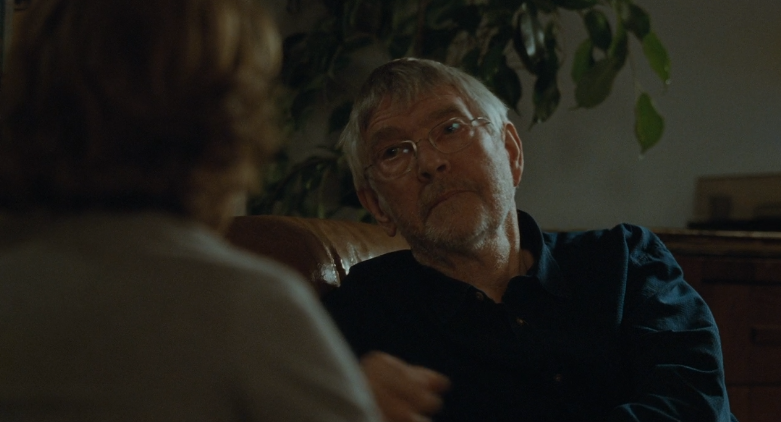
45 Years focuses on the upheaval, due to an unlikely discovery, that besets a long married couple just before their 45th wedding anniversary. 45 Years is a film actually where I believe its virtues illustrates its flaws. This as the film too often will shy away from the central relationship to focus upon repetitive scenes of supposed contemplation of our female lead, who despite the primary character is oddly simplistic at times. It is an often frustration with me with certain independent cinema where silence is not golden, silence is earned, and should not be overused. 45 Years is an example where quite frankly it often feels like filler. 
 
Although these flaws exist, they hardly weigh down Tom Courtenay, as he pretty much denotes when it is the film is working because it means we will be watching the couple share the screen. Courtenay's character though is intentionally the more distant of the two though it is his Geoff with the most immediate revelation, we witness the film through the perspective of his wife Kate (Charlotte Rampling), essentially trying to understand his reaction to the discovery. Courtenay therefore actually is presented with a difficult challenge in conveying Geoff's reaction to the discovery, while also not exactly being the focus of the film. Thankfully this is Tom Courtenay we are speaking of, an actor, despite his periods of absences from film, never seemed to lose any of his ability to work his magic on the screen. Courtenay honestly being perhaps the least talked about, but in my view the most talented of the British crop of the 60's, and it is a bit of a gift to see him in a substantial role, even if restricted in a certain sense. Courtenay though always has been an actor who actively pulls you into his performances, this as he isn't someone with a typical leading man style presence, rather Courtenay makes his characters so vibrant and real, he pulls you in nonetheless. 

That quality of Courtenay's is ideal for Geoff who the film treats sometimes almost as a pseudo mcguffin for Kate to reflect about. Courtenay though does so much with this from the outset. This as we first meet them as Kate is prepping for their 45th wedding anniversary with a degree of calm eagerness, while Courtenay portrays a man whose head is miles away. His eyes themselves speak towards contemplation not of the present but of the past this as he speaks of his Katya, his old girlfriend who died in an hiking accident that left her frozen in the ice. The new discovery being that her body has been found, preserved, within the ice. Courtenay's speaks of this news with a very quiet anxiety though mixed with certain nostalgia, particularly every time he says "My Katya" Courtenay emphasizes a kind of tenderness that is specific only to a love of his. Courtenay's eyes though portray a man focused on this idea with a fixation upon. This even in his little asides to his actual wife that are more doddering of just the old married couple, however when it comes to Katya, like insisting he go retrieve the body himself, there is this way Courtenay buries this kind of urgency in his delivery. This as he speaks with a technical duplicity of the man trying to act as though the news isn't overly meaningful, while it is clearly everything to him. 

Upon re-watching the film, there is a greatness within Courtenay's work in that he actually manages to be distant seemingly towards Rampling, while actually his performance more so subtly creates the sense of Geoff dealing with the relationship still. This as Geoff speaks more towards the incident, revealing that he and Katya claimed to be married to get around (with the possibility that they really were married), Courtenay again speaks as this news should be nothing. His body language speaks towards a greater concern, particularly as he reveals they had a wedding ring even, and a great touch is Courtenay rubbing the area where he likely wore it. Recounting the whole story, or seemingly the whole story, Courtenay balances his delivery again. This between accentuating the little asides as though he is sharing something as a concerned husband trying to connect with his wife, while Courtenay though still runs through the story in an interesting way. This as Courtenay suggests within his own work that Geoff himself is unsure how he wholly feels about what had happened. There is the point that it was not pleasant, but what exactly he lost within it is more so even a mystery within his own work due to what it is where his life went. Courtenay avoids being vague, as I think was very possible in the part, by finding the right nuance within Geoff's own reflection. 

I have a feeling the film actually wanted Geoff to be more of a mystery given the limitations of his dialogue, again to more so leave us within Kate's perspective of wondering about Geoff, a mean a good chunk of Rampling's screentime is devoted to pensive looks at Courtenay. This is even to the point that often times there are scenes where Courtenay is off to the side, or the other side of a rarely given reaction shot. Courtenay even when literally absent from the frame though stays present. This as he successfully does share the tender moments with Rampling that suggest their 45 year long marriage, even while that weight upon the man remains a constant. A notably great actor given that Courtenay can convey the moments of connection, and distance, even when it is just his voice, or mostly the back of his head. Courtenay though never wastes an ounce of himself really. This keeping the conflict alive within even in a dinner scene where it is mostly not Courtenay in frame. His positioning of self, and the way he hangs his head, tightens his shoulders still accentuates the man's uneasy state. Courtenay manages to convert this though of more a crisis of his age, this again in a scene where he's almost blurred in car ride as he speaks to a former commie friend now a money obsessed banker. Courtenay again is compelling in his frustrations aren't just of some reaction to a hypocrite, as there is the intensity of man painfully analyzing where it is that the years have taken him. 

Watching the film again I could only be impressed by the complexity in Courtenay's work despite again the writing leaving the potential for an entirely vague presence within the film. Courtenay's work though refuses to be a device and crafts instead his own man, and really his own scenario throughout the film. This as it isn't a man who suddenly is in love with his old love, rather Courtenay expresses the difficult state of a man contemplating his age, which is represented by the woman he lost so long ago, yet retains what she looked like at one time. This as when Courtenay blares "It's not about Katya" about him wanting to retrieve her body, it is true in Courtenay's work. This as the anger is against his wife who he suddenly doesn't care about, it is rather the frustration of where the time has gone. Now take this just as my theory, however I think this is in a way proven by the ending of the film, their actually anniversary dinner, which I've heard some as some point for interpretation. Courtenay's deft performance though I think properly denies this, as he expresses Geoff in the moment of loving life and company at the party. Courtenay does not perform this as put on, this as he plays every moment with a free expression of joy and without the weight of that earlier contemplation. His final speech is brilliantly performed by Courtenay is that he isn't creating a mystery, but rather complexity. This as his speech combines a sense of the man still living through his aging basically, but also genuine expressing his love for his wife. Courtenay shows that there is a lot going on his mind, but the moment of the breakdown is wholly honest in a man appreciating what he does have. The intention of the film by Andrew Haigh appears to be to make it this kind of a question, while Courtenay's performance seems to reject any such nonsense instead focusing on, what should've been the whole film, that being these two people in their twilight years. Courtenay gives a great performance, not as a gimmicky enigma, but a powerful portrait of a man bluntly coming to terms with the passing of time after it is so vividly forced upon him.

Wednesday, 23 June 2021

Alternate Best Actor 2015

And the Nominees Were Not:

Ulrik Munther in The Here After
 
Géza Röhrig in Son of Saul
 
Paul Dano in Love & Mercy
 
Jason Mitchell in Straight Outta Compton
 
Christopher Plummer in Remember 
And reviews of:
 
Tom Courtenay in 45 Years
 
Tom Hardy in Mad Max: Fury Road 
 
But who knows who might show up...

Wednesday, 14 June 2017

Alternate Best Supporting Actor 1968: Results

5. Trevor Howard in The Charge of the Light Brigade - Howard gives a properly strict and slightly ridiculous portrayal fitting to a man who cares more about his stature as an officer than for any of his men. 

Best Scene: Strange seduction.
4. Klaus Kinski in The Great Silence - Kinski gives an effective villainous performance interestingly by taking a rather low key approach showing his Loco as always taking a calm and easy approach to his killings.

Best Scene: Loco wins.
3. Ian Holm in The Bofors Gun - Holm makes an impact through his limited screentime by so effectively presenting the incisiveness of the one man willing to confront both his immediate superior and his out of control fellow soldier.

Best Scene: Flynn confronts O'Rourke.
2. Tom Courtenay in A Dandy in Aspic - Courtenay gives a brilliant performance that creates a complex portrait of a spy who purposefully hates everything and everyone as a means of defense, and rises far above the one note villain the film likely would have settled for.

Best Scene: Gatiss visits Eberline in the hotel. 
1. Tony Curtis in The Boston Strangler - Curtis gives a chilling and effective performance which never relishes in the idea of playing a serial killer, instead offering a haunting and vivid depiction of a psychotic.

Best Scene: DeSalvo's breakdown. 
Updated Overall

Next Year: 2003 Lead

Saturday, 10 June 2017

Alternate Best Supporting Actor 1968: Tom Courtenay in A Dandy in Aspic

Tom Courtenay did not receive an Oscar nomination for portraying Gatiss in A Dandy in Aspic.

A Dandy in Aspic is a spy thriller about a British agent, Eberlin (Laurence Harvey) being tasked to find a Russian spy among their ranks the problem is he is the Russian spy. The film suffers from what seems to be a central conceit to show a contrast between the inhuman loyal British agent against the supposedly sympathetic fake British agent, this is problematic when you cast the man best known for playing a robotized assassin as the "good" one, and an amazing actor as the "bad" one.

The role of Gatiss is an interesting change of pace for Tom Courtenay who usually played more sympathetic roles, even in Doctor Zhivago we learned how his Pasha became so cruel and bent. Gatiss's role is made clear from his first appearance where he is lurking in the shadows of a firing range. Gatiss is set up to be essentially the villain of the film, even though technically in most Cold war thrillers he's doing the hero's work. Courtenay is such a great actor though that he doesn't appear to have any intentions to simplify Gatiss at any point, even if perhaps the film would like him to at times. Courtenay knows though how to create such fascinating characters though, and use what is given to him and build upon that. There is something already intriguing about his shady operative, but they decide to go further in making him distinctive by giving him a strange looking cane he always has with him. The cane that does not help him walk, but rather is his secret weapon of choice. That idea that not even his walking stick can be trusted is within Courtenay's performance, though what Courtenay is doing is creating this man defined by the duplicitous world he lives in, but to be fair the end result of Gatiss's mission is noble.

Courtenay's performance, as usual particularly for his stellar 60's run, is incredibly gripping. Courtenay's physical manner has this certain tightness about him at all times, there is an exactness in any way he stands or even speaks to someone. Courtenay uses this to show the way Gatiss's lack of trust even in his body language. Courtenay portrays the man carefully never getting too close, and even when he does his cane seems always ready for its true purpose. Courtenay does not waste an ounce of himself though as in his eyes there is such an incisiveness as though is he constantly analyzing whoever or whatever is in front of him. There is no moment of rest that Courtenay portrays and reflects this in the restrictive nature of his manner which he reveals as the conditioned state of the man to always keep his distance. Courtenay actually approaches his work similair to the way Gary Oldman would later play spy master George Smiley in Tinker Tailor Soldier Spy. Courtenay though gives it a very specific inspiration in that instead of portraying the man as someone who hides his emotions, he instead depicts him as a man who covers it all up by instead always having such a negative view about all around him as a further defense mechanism needed for his line of work.

Courtenay is terrific as he oozes such palatable disdain for everyone and everything around him. Courtenay infuses such venom into every delivery as he shows the man who indeed seems to hate everyone, and everything. Courtenay never overplays this though and does not use this to just make Gatiss an obvious villain, which seems the film's intention. Now Courtenay acting as such a contemptible sort is compelling to watch in itself, but that is not all there is to his performance. Again Courtenay plays a certain game in this in suggesting that there is perhaps more to Gatiss than the hateful man he presents. This is partially in the way Courtenay always presents the hate with this certain control suggesting that Gatiss uses it for a purpose. He always keeps a certain obsession with his task always as part of his disdain for all things. There is an even more pivotal moment where we see Gatiss gather Eberlin from a hotel room with his love interest, a photographer Caroline (Mia Farrow). Courtenay is brilliant in the scene as in a brief reaction he reveals a certain pain in witnessing Caroline's affections for Eberlin, seeming to suggest Gatiss's frustrations in seeing something he does not allow himself to have. Gatiss does leave a final comment to Caroline that is at the expense of both her and Eberline, but the same venom is not in Courtenay's delivery. He eases it to convey just the slightest hint of empathy that the man usually destroys within himself. He steals the film completely and really the film should have just been from his perspective. Courtenay goes beyond the call of his duty to create a complex portrait of this spy, when it seems the film would have settled for a one note fiend.

Monday, 5 June 2017

Alternate Best Supporting Actor 1968

And the Nominees Were Not:

Ian Holm in Bofors Gun

Trevor Howard in The Charge of the Light Brigade

Tony Curtis in The Boston Strangler

Tom Courtenay in A Dandy In Aspic 

Klaus Kinski in The Great Silence

Saturday, 6 May 2017

Alternate Best Actor 2012: Results

5. Tom Courtenay in Quartet - Courtenay rises above his material and offers some dignity in his portrayal of an aging musician still holding a grudge.

Best Scene: The church.
4. Toby Jones in Berberian Sound Studio - Jones amplifies the best elements of his film through his unique and compelling portrayal of a man in a strange purgatory.

Best Scene: Calling the airline.
3. Mads Mikkelsen in A Royal Affair - In his second best leading turn of the year Mikkelsen gives a charismatic and moving portrayal of a decent man trying to play the game of the royal court for good.

Best Scene: The Execution.
2. Mathias Schoenaerts in Rust and Bone - Schoenaerts gives another great physical turn this time as a man who finds solace in connections yet fails to understand them.

Best Scene: Saving Sam.
1. Mads Mikkelsen in The Hunt - Good predictions Omar, Giuseppe, Luke, Robert, Charles, Anonymous, Jackiboyz, RatedRStar, Michael Patison, Tahmeed, Varun, moviefilm, and Alex. Well of course Mikkelsen was easily my favorite of these five, though good performances all. Mikkelsen though is on another level here and the only performance that can stand against his work here is Joaquin Phoenix's equally impressive work in The Master. Phoenix's work as the broken man trying to find some sort of path against Mikkelsen's work as the normal man going through a terrible situation. Each are compelling in their own way, and each have their own set of challenges which they both surpass at every turn. Both are two of the greatest performances I've ever seen, and since I am pained to choose right now....eh. I apologize in advance. 

Best Scene: The Church. 
Updated Overall

Next Year: 2012 Supporting

Friday, 5 May 2017

Alternate Best Actor 2012: Tom Courtenay in Quartet

Tom Courtenay did not receive an Oscar nomination for portraying Reginald "Reg" Paget in Quartet.

Quartet is a tad cornball film about an aging quartet of opera singers coming back together to sing in a concert to save their retirement home for musicians.

Tom Courtenay has fairly recently began reappearing in films after disappearing almost for the entirety of the seventies, purposefully apparently to focus on the stage, after his stellar run in sixties. Courtenay began some sparse appearances though but now is having regular appearances again. Well that is much appreciated to see Courtenay in films again particularly in this film. This film overall just lays on the cheese a little thickly through the unfortunately somewhat cloying performances of some of the cast, and the choices by director Dustin Hoffman to treat perhaps everything a little too lightly. Thankfully there is Courtenay to add a bit of grumpiness to the film, and actually what I mean by that is more realistic grumpiness not sort of that, sweet grumpiness that would be quite intolerable in this film. Courtenay actually bothers to try to infuse any pathos into the proceedings through his depiction of Reg's disposition from hearing that his former wife, Jean (Maggie Smith), is coming to live at the retirement home as well.

Courtenay is actually willing to take the further step as in his initial reactions to see her and in his repeated refusals to even speak to her for a more than a few words. Courtenay in these moments does not sweeten this by any mean offering some real anguish within his harsh turns away, and years of holding a grudge in his cold refusals. Reg's attitude comes from Jean having cheated on him many years ago and Courtenay actually conveys that sense of betrayal in these interactions. He grants them though, even in the initial reaction, more complexity than that. In that Courtenay is able to express the sort of particular sort of damage within Reg's view. As Courtenay expresses the past affection within the current bitterness. Courtenay attempts to actually convey the years of holding this in through these scenes something that is sorely lacking in the other problems depicted by most of the other cast members which are boiled down to basically a cutesy eccentricity.

The film though perhaps wish to get their leads in on the goofiness of the elements outside of them, Courtenay in a scene where Reg is trying to teach opera to hip teenagers. Courtenay though manages to keep his dignity intact with this scene, and even offer a bit of dignity to the film in the process. Courtenay does this by offering just the right quiet passion in his delivery as he speaks of the power of opera, and as well even makes the right mild curiosity not seem ridiculous when the conversation turns to rap. The same goes for a scene where Reg curses out one of the employees of the retirement home which is all set up to be overly cloying but Courtenay actually delivers the insults with enough venom to keep from being so. Courtenay strives to find some reality in the situation and develop a character with Reg not just a set of quirks of an older person. Courtenay succeeds in this even when the film battles him at every turn.

The most severe challenge in this regard is perhaps in Reg's forgiveness of Jean which feels sort of rushed. It isn't quite dealt with as one would imagine it should be either, they just kind of work through it. This is all done rather quickly with little to no major problems. Courtenay to his credit once again though does make it work though by in those cold scenes suggesting again that underlying affection and just slowly showing that comes out again. He makes it a natural progression mainly through his performance and through his chemistry with Smith which is endearing enough. The film though is in a rush to get to his disappointing ending, where obviously they shouldn't have made it about opera singers. Courtenay's performance here made me wish he had given a part with more depth because he does find depth in what is a paper thin role. He does his best to bring the best out of the material. I wish he was in a better film but I will say he made this a better film through his performance.

Monday, 24 April 2017

Alternate Best Actor 2012

And the Nominees Were Not:

Mads Mikkelsen in A Royal Affair

Mads Mikkelsen in The Hunt

Matthias Schoenaerts in Rust and Bone

Tom Courtenay in Quartet


Toby Jones in Berberian Sound Studio

Sunday, 10 January 2016

Alternate Best Actor 1962: Results

10. Oskar Werner in Jules and Jim - Werner's role is limited yet his unassuming charm manages to keep himself from being overshadowed despite the film's apparent desire otherwise.

Best Scene: Jules talks about Catherine's True Nature.
9. Montgomery Clift in Freud - Clift manages to create a compelling portrait of Freud not through mannerisms, but rather finding the emotional core within the man's motivations.

Best Scene: Freud finding the truth behind Cecily's mental trauma.
8. Laurence Harvey in The Manchurian Candidate - Harvey portrays well the cold calculated man turned into a cold killer, but also manages to be extremely moving in portraying the vulnerabilities of the man.

Best Scene: The Assassination
7. Patrick McGoohan in in All Night Long - McGoohan gives a fascinating portrayal of an Iago like drummer, whose greatest joy comes from the torment of others.

Best Scene: Johnnie "accidentally" spills secrets to Rex. 
6. Toshiro Mifune in Sanjuro - Mifune gives a great reprise of his role in Yojimbo, by slanting towards comedy and succeeding quite thoroughly in this regard.

Best Scene: The samurai observes the rescued women. 
5. Tom Courtenay in The Loneliness of the Long Distance Runner - I'll say right now that I had a great difficulty ranking these five, and found it even more impossible when having to include Peck, Wayne and Lemmon. These are all exceptional performances starting with Courtenay's intense yet heart wrenching depiction of young man lashing out due to his hatred of authority but also from his own fear.

Best Scene: The Beach.
4. James Stewart in The Man Who Shot Liberty Valance - Stewart gives one of his best performances as both a young man passionately fighting for what is right, as well as an older man forcing to live with the lie that made his life.

Best Scene: The Senator finishes the story.
3. Robert Mitchum in Cape Fear - Mitchum creates one of the all time great cinematic villains, not through the depiction of a mastermind, but rather a violent creep who's completely content with his actions.

Best Scene: Cady's mentions his wife.
2. Tatsuya Nakadai in Harakiri - Nakadai gives an outstanding performance as he realizes not only an otherworldly spirit of righteous vengeance, but also the man who became it.  

Best Scene: Hanshiro Tsugumo finishes his story. 
1. James Mason in Lolita - Good Predictions JackiBoyz, RatedRStar. Mason gives an outstanding performance as he manages to balance everything in the film. He's the perfect straight man for Sellers's comedy, he manages to make Humbert far more sympathetic than should be possible, while giving an absolutely mesmerizing depiction of man being destroyed mentally and physically by his unhealthy obsession.    

Best Scene: Humbert confronts Quilty.
Overall Rank:
  1. Peter O'Toole in Lawrence of Arabia
  2. James Mason in Lolita
  3. Tatsuya Nakadai in Harakiri
  4. Jack Lemmon in The Days of Wine and Roses
  5. Robert Mitchum in Cape Fear
  6. Gregory Peck in To Kill a Mockingbird
  7. James Stewart in The Man Who Shot Liberty Valance
  8. Tom Courtenay in The Loneliness of the Long Distance Runner
  9. John Wayne in The Man Who Shot Liberty Valance
  10. Terence Stamp in Billy Budd
  11. Toshiro Mifune in Sanjuro
  12. Patrick McGoohan in All Night Long
  13. Laurence Harvey in The Manchurian Candidate
  14. Frank Sinatra in The Manchurian Candidate 
  15. Trevor Howard in Mutiny on the Bounty
  16. Richard Attenborough in Trial and Error 
  17. Phillip Alford in To Kill a Mockingbird
  18. Montgomery Clift in Freud
  19. Sean Connery in Dr. No 
  20. Paul Newman in Sweet Bird of Youth 
  21. Peter Ustinov in Billy Budd
  22. Gregory Peck in Cape Fear
  23. Oskar Werner in Jules and Jim  
  24. Peter Sellers in Trial and Error
  25. Robert Preston in The Music Man
  26. Paul Harris in All Night Long
  27. Burt Lancaster in Birdman of Alcatraz
  28. Henri Serre in Jules and Jim
  29. Marlon Brando in Mutiny on the Bounty
Next: The Waiting Game. 

Monday, 7 December 2015

Alternate Best Actor 1962: Tom Courtenay in The Loneliness of the Long Distance Runner

Tom Courtenay did not receive an Oscar nomination for portraying Colin Smith in The Loneliness of the Long Distance Runner.

The Loneliness of Long Distance Runner is an intriguing enough kitchen sink drama about a young man being sent to a reformatory due to a robbery he committed.

I've already covered the always underrated Courtenay for his later foray in another film considered a kitchen sink drama, Billy Liar, though the leads of these films are often referred as the angry young man, that was less so the case for Billy Liar who would have been better referred to as the aimless young man, though technically speaking Colin Smith is also aimless. It's interesting to compare the two performances though as Courtenay crafts two distinct characters that differ in style as well. In the broad strokes, though it was not that simple in the least, as Billy Liar Courtenay gave most often a comic performance in his depiction of the young man who preferred fantasies over reality, though this did indeed hide a very troubled state of mind beneath it all. Here with The Loneliness of the Long Distance Runner Courtenay is given much more directly that angry young man type. One of the best scene in the opening scenes of the film as he's taken to the reformatory and is given the initial speech by the superintendent (Michael Redgrave). The sheer hatred Courtenay conveys as Colin stares down the warden sets up perfectly where Colin's state of mind is at the beginning of the film though technically it is more of the middle of the story.

As we proceed in these early scenes Courtenay is extremely effective in revealing the manner of Colin which is the epitome of a rebel without a cause, but unlike say James Dean there is nothing "cool" about Courtenay's portrayal. Courtenay instead does not hold back on the harshness of the nature of this anger showing it as something that is very much off-putting as there does not seem to be an exact purpose for it at first. Courtenay rather than having his character defines his defiance, it is simply the act of defiance that defines Colin. Courtenay does not show anything promising in Colin with his work though instead revealing a very definite problem with the man, as the intensity he brings to his anger suggests not a man waiting or wanting to do something right, rather a man who soon could do something quite wrong very soon. Courtenay is terrific because he establishes this being Colin at his absolute worst point that so well reflects what we later learn about Colin, but with all those other elements, in combination with imprisonment, Courtenay reveals the combination of all these pains into a truly troubled young man. Very naturally though Courtenay does not allow Colin to be defined by this note, as times passes, as well as when we see what came before, Courtenay presents us the greater whole of Colin.

This sort of begins with Colin's time with the prison psychiatrist who tries to discover his problems. Courtenay is great because he still has that sharpness, that fervor against the man representing authority currently, though now tempered a bit as he's simply has time to cool down in addition to the psychiatrist being a empathetic man. Courtenay brilliantly begins to peal away more at Colin for us though when the psychiatrist asks about his father and Colin reveals that he died. Courtenay is exceptional in this moment as he so subtly reveals a palatable grief over his father's death while still holding up that front that Colin keeps. This eventually leads us to the flashback sequences of the film where Colin is an aimless young man living with his family including his dying father that seems to concern his concern his mother very little. Courtenay once again is absolutely fantastic in how well he gets across what is going on beneath Colin. On the surface again there is always that hint of anger, that gets stronger at certain understandable moments, and often a sense of ambivalence towards life as though he's in some way above it. Courtenay though is so good though as there is such a striking undercurrent of sadness in Colin, who is heartbroken over his father made all the worse because of his mother's indifference.

Courtenay continues to excel in the way he furthers the character in the scenes away from his family or any potential authority figures where he puts on that tough guy act of sorts. Outside of those scenes, particularly when he and his friend attempt at romancing two young women, Courtenay brings out this more genuine youth in Colin. This is indeed in moments of just simple juvenile excitement in doing some occasional acts of thefts as well as simply trying to impresses the women, but Courtenay also is quite powerful as he brings out that vulnerability, that he certainly alluded to before, into the open when he is alone with just one of the women. Courtenay is marvelous as he shows the shy confused man that Colin is deep down inside, and actually presents a certain sweetness by removing any of those barriers that Colin usually keeps firmly in place. In these brief moments Courtenay is able to create the sense of what compels Colin otherwise though by granting this sensitivity in him, but also a certain considerable fear both in terms of avoiding what his father became as well as simply to face what he must face. Courtenay makes sense of Colin's confused state so well that the fact that his robberies only become riskier ends up feeling like an inevitability, since Courtenay shows that Colin really has no idea what he is doing or what he should do.

Now the film also depicts Colin continuing life in the detention center where Courtenay slowly eases away that hatred that was so strong at first, as Colin finds that he has a knack for long distance running, which makes superintendent happy for purely selfish reasons involving a competition between the center and a school. Colin begins to fall very much into line, which Courtenay also gives sense to not only through the fact that Colin's clearly had time to calm down, but also in the moments of the running. In these moments Courtenay expresses a considerable enthusiasm and joy as Courtenay shows Colin finally doing something seemingly on his own terms that also seems to have some purpose. This eventually leads to the climatic race which Colin easily could win, but just before the finish line stops to the fury of all. The rebellious streak reappears in Colin, and this could easily have been a meaningless moment if it were not for Courtenay's portrayal of it. It is not an anger that compels Colin this time. Courtenay instead shows Colin know far more aware of his own self, and instead presents a moment of a personal pride of sorts as Colin stops in defiance not in hatred, but rather to be his own man. Tom Courtenay gives a great performance here and one of the very best Kitchen Sink performances here because he never leaves Colin Smith as just an "angry young man", he finds what there is beneath that surface,  painting a most compelling portrait of a man lost trying to find some path which he can call his own.

Saturday, 21 November 2015

Alternate Best Actor 1962

And the Nominees Were Not:

James Mason in Lolita

Toshiro Mifune in Sanjuro


Montgomery Clift in Freud

Robert Mitchum in Cape Fear

Tom Courtenay in The Loneliness of the Long Distance Runner

Rank Those Five or These Five:

James Stewart in The Man Who Shot Liberty Valance

Tatsuya Nakadai in Harakiri

Laurence Harvey in The Manchurian Candidate

Oskar Werner in Jules and Jim

Patrick McGoohan in All Night Long 

Or both. 

Saturday, 7 December 2013

Alternate Best Actor 1964: Results

5. Michael Caine in Zulu- Caine makes a misstep with his characterization at the beginning of the film, but makes up for it through his more assured performance later in the film.

Best Scene: The volley.
4. Dirk Bogarde in King & Country- Bogarde gives a very solid and rather unique performance as a soldier who slowly grows more invested into his case even if that growing investment means a growing personal shame.

Best Scene: Captain Hargreaves questions his superior after the trial.
3. Clint Eastwood in A Fistful of Dollars- Eastwood is terrific in his creation of the Man with No Name who can be enjoyably deadpan but is as well can bring emotional poignancy when necessary.

Best Scene: The final duel.
2. Tom Courtenay in King & Country- Courtenay gives a heartbreaking portrait of the end result of an endless time in the trenches of World War I.

Best Scene: Private Hamp tells why he deserted.
1. Richard Attenborough in Guns at Batasi- Good Prediction RatedRStar. Attenborough gives two great performances this year with his moving portrayal of a weak man in Seance on a Wet Afternoon and his absurdly entertaining performance as Major Lauderdale a man with unshakable resolve.

Best Scene: The Major refuses to give up his arms.
Overall Rank:
  1. Richard Attenborough in Guns at Batasi
  2. Anthony Quinn in Zorba the Greek
  3. Peter Sellers in Dr. Strangelove
  4. Donald Pleasence in The Caretaker
  5. Innokenty Smoktunovsky in Hamlet
  6. Peter Ustinov in Topkapi 
  7. Tom Courtenay in King & Country
  8. Peter O'Toole in Becket
  9. Richard Attenborough in Seance on a Wet Afternoon
  10. Robert Shaw in The Caretaker
  11. Saro Urzì in Seduced and Abandoned
  12. Richard Burton in Becket
  13. Eiji Okada in Woman in the Dunes
  14. Clint Eastwood in A Fistful of Dollars
  15. Dirk Bogarde in King & Country
  16. Ivan Dixon in Nothing But a Man
  17. Ryō Ikebe in Pale Flower
  18. Burt Lancaster in The Train
  19. Sean Connery in Goldfinger 
  20. Peter Sellers in A Shot in the Dark
  21. Stanley Baker in Zulu
  22. Richard Burton in Night of the Iguana 
  23. Vincent Price in The Masque of the Red Death
  24. Yūzō Kayama in Yearning
  25. Jean Desailly in The Soft Skin
  26. Cary Grant in Father Goose
  27. Henry Fonda in Fail-Safe
  28. Alan Bates in Zorba the Greek 
  29. Soumitra Chatterjee in Charulata
  30. Cliff Robertson in The Best Man
  31. Kirk Douglas in Seven Days in May
  32. Sean Connery in Marnie
  33. Marcello Mastroianni in Marriage, Italian Style
  34. James Garner in The Americanization of Emily
  35. Stephen Boyd in The Third Secret
  36. Michael Caine in Zulu
  37. Vincent Price in The Last Man on Earth
  38. Maximilian Schell in Topkapi
  39. Henry Fonda in The Best Man
  40. Peter Finch in The Pumpkin Eater
  41. Rex Harrison in My Fair Lady
  42. Bernie Hamilton in One Potato, Two Potato
  43. Jean-Paul Belmondo in That Man From Rio
  44. Glenn Ford in Dear Heart 
  45. Stephen Boyd in The Fall of the Roman Empire
  46. Bendt Rothe in Gertrud
  47. Richard Widmark in Cheyenne Autumn
  48. Richard Boone in Rio Conchos
  49. Nino Castelnuovo in The Umbrellas of Cherbourg
  50. Richard Harris in Red Desert 
  51. Harve Presnell in The Unsinkable Molly Brown
  52. Tony Randall in 7 Faces of Dr. Lao
  53. Dick Van Dyke in Mary Poppins
  54. Fred MacMurray in Kisses for My President 
  55. Cameron Mitchell in Blood and Black Lace
  56. Don Knotts in The Incredible Mr. Limpet
  57. Tommy Kirk in The Misadventures of Merlin Jones
  58. Ringo Starr in A Hard Day's Night
  59. Paul McCartney in A Hard Day's Night
  60. John Lennon in A Hard Day's Night
  61. George Harrison in A Hard Day's Night
  62. John Call in Santa Clause Conquers the Martians
  63. Victor Stiles in Santa Clause Conquers the Martians
  64. Leonard Hicks in Santa Clause Conquers the Martians
Next Year: 1964 Supporting

Tuesday, 3 December 2013

Alternate Best Actor 1964: Tom Courtenay in King & Country

Tom Courtenay did not receive an Oscar nomination, despite being nominated for a BAFTA and winning the Volpi Cup, for portraying Pvt. Arthur Hamp in King & Country.

King & Country is effective although terribly bleak film, even for a film of its type, about court marshal of a man accused of desertion.

Tom Courtenay was quite the daring actor in his run in the 60's going from his great performance as a foolish immature aimless young man in Billy Liar to his performance here as World War I soldier whose life is on the line after he has been caught trying to escape the war. Unlike Dirk Bogarde who has a character arc, Courtenay's performance is technically all in his creation of the state of Private Hamp. Private Hamp is not a man who can go through any more changes at this point because he has already been through too many things during the war by this point in his life time. The lack of an arc does nothing to deter the power of Courtenay's performance.

Courtenay's performance is a rather difficult one to watch because of his uncompromising portrayal of Private Hamp's condition. Private Hamp is a very shell shocked and traumatized man who has not forgotten what he saw on the battlefield and what happened to him on there. Courtenay shows this experience as something right down into the depth of Hamp's bones, in a remarkably nontheatrical fashion. Courtenay's performance is that of a broken man in every sense of the word. Courtenay's physical portrayal is subtle and extremely effective. Courtenay plays Hamp's state as something he has lived with for quite some time, time that has nothing to cure of him this. He does not shake madly, but rather there is a constant discomfort of man who seems uncomfortable in his own skin.

Courtenay is astonishing in all of his scenes having a magnetic presence despite the meek nature of his role. Courtenay's voice is always weak and slight giving the sense that Hamp seems partially disconnected from everything around him. There is numbness that Courtenay conveys in his performance and we are able to see how Hamp is entirely telling the truth in his story of desertion. Courtenay is fascinating by having a great emotional intensity in his portrayal of Hamp while keeping the emotional detachment. This never is a contradiction because Courtenay makes it all a part of what Hamp has become through his service to King & Country. In his stare into the void of nothingness Courtenay, it is not simply nothing, but rather the nothing to contain his pain.

Along with the detachment there is another seemingly contradictory dynamic that Courtenay delivers flawlessly which is Hamp's personality. Courtenay makes Hamp a young man, and no not just because Courtenay is rather young here, in the nature he gives to Hamp. Hamp is not world weary in the way you'd expect a veteran to be, but this is instead a youthful experience which Courtenay portrays. There is a dulled enthusiasm in Courtenay rather than the exasperation one might expect. Courtenay shows that the war has not really sucked the life out of Hamp exactly, rather what has been sucked out is his soul. Courtenay gives us a man who once was young not long ago, but the nature of the war has made an unnatural man.

Hamp is interrogated about why he deserted and Courtenay is outstanding in his delivery of the scene. Courtenay makes the tale a painfully vivid one, as he explains basically what left Hamp the way he is. Courtenay is very haunting as he does not waver once as Hamp describes his time in the trenches and almost drowning in the mud. Courtenay never falters into theatrics, or even a slight hint of well acting in his depiction of what traumatized Hamp in this way. The audience is never shown of what Hamp speaks of, but the film does not have to because Courtenay allows us to see it through the horror that is behind his eyes as he explains his experience to the man who will defend him Captain Hargreaves (Bogarde).

Tom Courtenay gives a harrowing turn here and is convincing here as man who has faced too much in his life as he was as Billy Liar who was a man who faced far too little. Even though Hamp is technically a constant Courtenay is compelling every single moment that he is onscreen. This is an incredible example of an actor taking hold of his character, who must be a constant by nature, and overcoming even the slight risk of repetition bringing life to every detail of the man's current state. There is not a single moment where we do not feel the struggle of his character in Courtenay's truly heartbreaking portrait of a soldier who managed to survive his time on the battlefield in body but not in mind.

Monday, 2 December 2013

Alternate Best Actor 1964

And the Nominees Were Not:

Clint Eastwood in A Fistful of Dollars

Michael Caine in Zulu

Richard Attenborough in Guns At Batasi

Dirk Bogarde in King & Country

Tom Courtenay in King & Country

Monday, 3 June 2013

Alternate Best Actor 1963: Results

5. Marcello Mastroianni in 8 1/2-  Mastroianni gives a good performance but he is always overshadowed by the man he is suppose to be portraying. 

Best Scene: Guido speaks with his wife.
4. Steve McQueen in The Great Escape- McQueen as the Cooler King is all about the cool which he brings in his trademark fashion.

Best Scene: Hilts goes to retrieve his ball.
3. Tom Courtenay in Billy Liar- Courtenay gives a complex and entertaining performance as a man who lies to hide his insecurities.

Best Scene: Billy tries to speak with his mother after his grandmother's death.
2. Dirk Bogarde in The Servant- Bogarde gives a brilliant performance showing the layers come off of what seems to be just a normal unassuming butler.

Best Scene: The Sevant reveals his true nature to his employer.
1. Toshiro Mifune in High and Low- This year came down between Bogarde and Mifune for me. It comes very close for me as I do love Bogarde performance, but I will go with Mifune's work which I found the most moving of all the performances this year. Mifune gives a poignant performance as a man who chooses to do good no matter how much harm it will cause. His portrayal of the moral decision moral on fuels the entire film and Mifune made it so I remembered even during the second half of the film in which he only occasionally appears.

Best Scene: King Gondo makes his final decision on the ransom.
Overall Rank:
  1. Paul Newman in Hud
  2. Toshiro Mifune in High and Low
  3. Richard Harris in This Sporting Life
  4. Burt Lancaster in The Leopard
  5. Dirk Bogarde in The Servant
  6. Tom Courtenay in Billy Liar
  7. Patrick McGoohan in Dr. Syn, Alias the Scarecrow
  8. Sean Connery in From Russia With Love
  9. Gunnar Björnstrand in Winter Light
  10. Steve McQueen in The Great Escape
  11. Richard Attenborough in The Great Escape 
  12. Sidney Poitier in Lilies of the Field
  13. Albert Finney in Tom Jones
  14. Cary Grant in Charade 
  15. Kazuo Hasegawa in An Actor’s Revenge
  16. Laurence Olivier in Uncle Vanya
  17. Marcello Mastroianni in The Organizer 
  18. Michael Redgrave in Uncle Vanya
  19. Maurice Ronet in The Fire Within
  20. Patrick McGoohan in The Three Lives of Thomasina
  21. Marcello Mastroianni in Yesterday, Today and Tomorrow
  22. Alberto Sordi in Il Diavolo
  23. Marcello Mastroianni in 8 1/2 
  24. Raizo Ichikawa in The Third Shadow Warrior
  25. James Fox in The Servant 
  26. Charlton Heston in 55 Days At Peking
  27. Gregory Peck in Captain Newman M.D. 
  28. Steve McQueen in Love With a Proper Stranger
  29. John Wayne in Donovan's Reef 
  30. Rod Taylor in The Birds
  31. Jean-Paul Belmondo in Magnet of Doom
  32. Jackie Gleason in Soldier in the Rain
  33. Nino Manfredi in The Executioner
  34. Jerry Lewis in The Nutty Professor
  35. Burt Lancaster in A Child is Waiting
  36. Oliver Reed in Paranoiac 
  37. Dick Van Dyke in Bye Bye Birdie
  38. Jack Lemmon in Irma La Douce 
  39. Jean-Pierrie Kerien in Muriel
  40. John Wayne in McLintock!
  41. Alexander Davion in Paranoiac
  42. Jackie Gleason in Papa's Delicate Condition
  43. James Garner in Move Over Darling
  44. Michel Piccoli in Contempt
  45. Steve McQueen in Soldier in the Rain
  46. Stathis Giallelis in America America  
  47. James Aubrey in Lord of the Flies
  48. Fred MacMurray in Son of Flubber
  49. Todd Armstrong in Jason and the Argonauts
  50. Peter Breck in Shock Corridor
  51. Tom Tryon in The Cardinal 
  52. Richard Chamberlain in Twilight of Honor 
  53. Richard Burton in The V.I.P.s 
  54. Claude Mann in Bay of Angels
  55. David Niven in The Pink Panther 
  56. Channing Pollock in Judex
  57. Richard Burton in Cleopatra
  58. Rex Harrison in Cleopatra
Next Year: 1963 Supporting