Showing posts with label Tatsuya Nakadai. Show all posts

Tuesday, 20 January 2026

Backlog Results

5. Chhabi Biswas in Devi - Biswas gives a striking depiction of an idiosyncratic zealotry.

Best Scene: Final scene.  
4. John Gielgud in Prospero's Books - Within a director's film Gielgud remains present and elevates its style with his refined yet fluid performance. 

Best Scene: Constructing a romance.
3. Matthew Macfadyen in Pride & Prejudice - Macfadyen plays to the truth of a betrayed introvert in creating a more dynamic Mr. Darcy. 

Best Scene: First declaration. 
2. Tatsuya Nakadai in Kill! - Nakadai gives his own take on Yojimbo essentially and brilliantly finds his own alternative method of the clever badass.  

Best Scene: Final fight. 
1.  John Heard in Chilly Scenes of Winter - Heard gives a captivating but also unnerving depiction of a man's privileged view of a relationship crashing with reality.   

Best Scene: The breakup. 
Next: The very brief waiting game. 

Monday, 22 December 2025

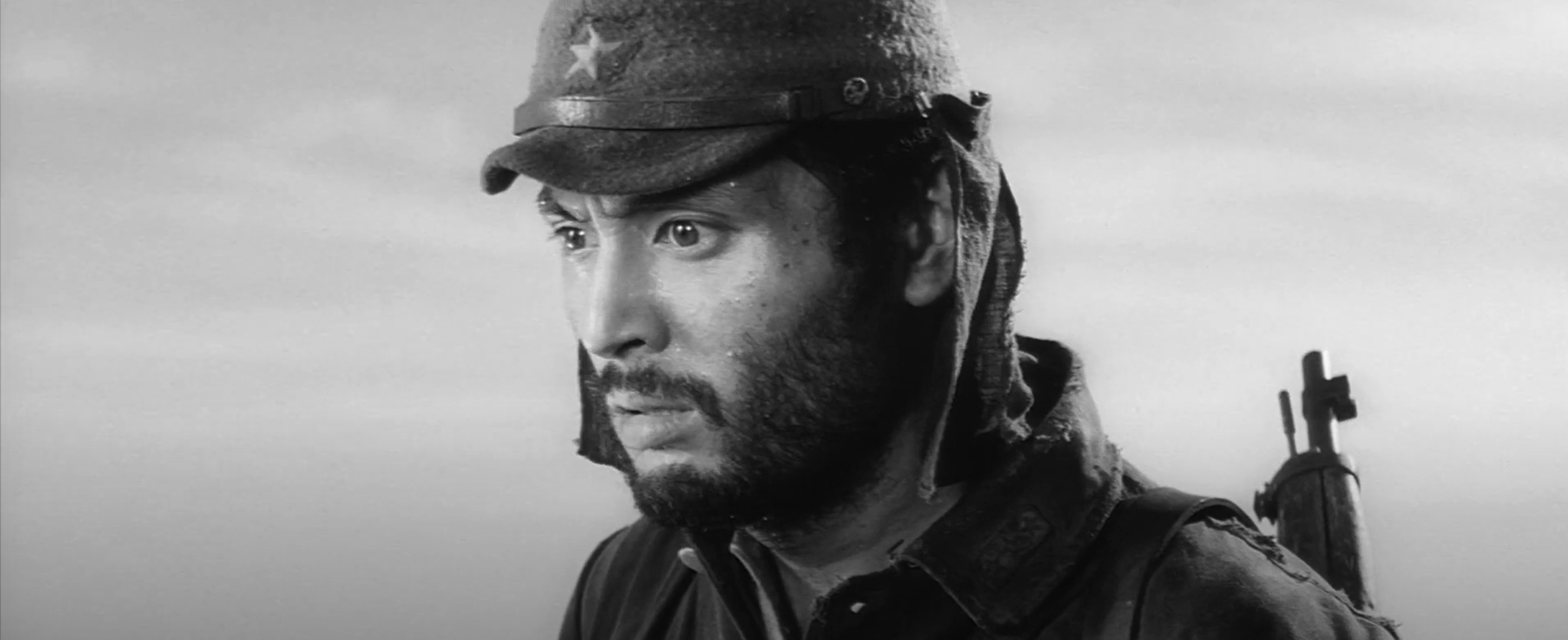
Alternate Best Actor 1968: Tatsuya Nakadai in Kill!

Tatsuya Nakadai did not receive an Oscar nomination for portraying Genta in Kill!

Kill! is essentially Kihachi Okamoto’s version of Sanjuro, though in this version two strangers get involved in a clan conflict over the corrupt and non-corrupt forces. 

We sadly finally lost the great Tatsuya Nakadai which is one of the great discoveries for me from this endeavor. Such a multi-fact talent, and here’s another one of his great talents as essentially Nakadai gets to take on the opposite of his parts against Toshiro Mifune in Yojimbo and Sanjuro, where he played the chief villain each time, here he plays the hero who happens upon the situation. What’s wonderful is Nakadai’s take on the hero is completely his own and not for a second do you see him trying to replicate Mifune’s specific energy. Rather Nakadai brilliantly comes at things his own way, even the presentation of Genta where Nakadai very much plays into the idea of why everyone he’s around would falsely believe his Genta to be just a drifter of no note. As Nakadai has this casual energy that is just amazing here as every look from him is wonderful in creating truly the sense of a man just going along with life seemingly at this point. Offering a particularly enjoyable contrast to Hanji (Etsushi Takahashi), a peasant who wants to become a samurai who is almost hyperactive in his endeavor, Nakadai brings this passive energy, that is so remarkable because he is wholly charismatic in this totally unexpected casual demeanor. 

Nakadai is able to accentuate this ease of his presence where he brings the audience specifically into his sense of the situation where even as we see far more dramatic people going around as they find a small group in a clan is trying to weed out the larger scale corruption but the odds are against them, Nakadai brings an innate intelligence where every glance from him speaks so much into Genta calculating so much even as everyone either dismisses him or considers him of dangerous only in the sense of being a potential spy. Nakadai’s way of delivering every line of Genta basically allows others to think whatever they want as a “why not” confidence of someone who knows he’s got more than a hand up on everyone however entirely in his own way. Nakadai’s performance is a combination between being the hero and being hilarious however by playing the hero in such a path of least resistance sort of fashion. Where Nakadai brings the brilliance of the man though as someone who doesn’t want to force, making it so he does everything his own, rather amusing fashion. Something shown in the earliest fight scene where he’s tied up and maneuvers around within the action, where just every glance and even his physical way of walking about manages to be very funny, while also emphasizing the intelligence of the character. Particularly his pitch perfect exasperation when he sees the good members of the clan make a bad decision. 

Nakadai’s Genta acts in his own way like the samurai of Sanjuro, but again his way of directives is quite different, because the expectations of others is that he is this vagrant. So what we get instead is Nakadai’s deliveries which are all wonderful where he convinces people to do the right thing not through demand, but this very specific charisma of someone who seems to know exactly what everyone needs to do, though not for any particular reason. Nakadai lets us in on the fun which is particularly special where we get the moments where he considers certain options such as knowing there is a woman the good men might come to blows over and finds out that she’s heading to the men. Nakadai’s great in the way he speaks first with certainty but then when he hears the bad news, his immediate switch to a growing concern as he unravels more of the situation makes it so we are also benefiting from this knowledge that comes so easy to him. So easy to him that even when he’s surviving attacks from a semi-apologetic Hanji, Nakadai movements are so great as he manages to make it all look easy while also weirdly stumbling, as he is able to convincingly be this “accidental” expert in every quality. I especially love how even when his semi-friend is trying to kill him, Nakadai doesn’t react at being upset, rather it is with this knowing manner of someone using it to teach a lesson, not as a punishment but as a way to genuinely help Hanji out with his much sloppier path. 

We eventually do have moments where Genta is pushed into a corner and is forced to show his hand a bit. In those moments, Nakadai essentially becomes the man just simply cutting cake when using his sword and shows how naturally that Genta is simply beyond everyone in his skill even pressed to show off. His manner showing that his heartbeat maybe raises from below average to just average in these moments, as again Nakadai’s energy level here is so great in just how atypical yet convincing it is as such an atypical hero. We do get a key moment where we find out Genta’s primary motivation, where Genta was tired of the samurai life and particularly his own failure to weed out corruption in his own clan. Nakadai’s great in the scene because of how little he puts on it. Instead every word is simply the truth from his mouth, where there is a quiet underlying emotion of the sense of loss and even more so the strict imperative to do the right thing from now albeit in his own particular way. A way that gets more complicated when he gets caught and beaten for his efforts at a certain point, though saved by Hanji. I love it though when the barely received Genta comes up with the plan with Hanji and the good members of the clan, which includes Genta casually stating he will take down the lead villain of the clan, who also just happens to be the best swordsman of the entire clan. Nakadai’s performance again shows strength in ease, as even as he’s not trying to sell it, there is a strange even more powerful confidence in the ease of his conviction, as the essentially physically beaten down man says he’ll be the strongest man with the ease of man saying what he’ll have for lunch. Leading to a most unorthodox final battle where Genta utilizes the smallness of a room to disable his opponents use of a sword and commandeers a candle stick. Nakadai even in performing this action scene is great because again he manages this weird yet ideal combination between sloppiness and precision. Where obviously Genta knows exactly what he’s doing yet does it in a way where only he knows this, and Nakadai makes this all so effortlessly convincing while being comedic while never being a joke. Honestly Nakadai’s work here is so particular in its success because he is a total badass while being quite silly and what a natural combination he makes it. It is however merely another grand entertaining testament to the vast talents of the man who could be the most insidious of villains, or just an absolute delight of a hero as he is here. 

Tuesday, 16 December 2025

Best Actor Backlog Volume 7

And the Overlooked Performances Are:

John Heard in Chilly Scenes of Winter

Matthew Macfadyen in Pride & Prejudice

Tatsuya Nakadai in Kill!

Chhabi Biswas in Devi

John Gielgud in Prospero's Books

Monday, 10 November 2025

R.I.P Tatsuya Nakadai

So we say goodbye to one of the great secrets of cinema to any non-Japanese domestic viewer only. One of the all time greats, with an incredible filmography few can parallel. I mean the man came into cinema in Seven Samurai, just as a bit part, but somehow as essentially the "eighth samurai" a legend was born. A legend that left such an impact defined by his astonishing collaborations with the greatest Japanese directors. With the lesser known Okamoto delivering an all time great turn as one of the most chilling psychopaths on screen, yet with the same director giving such a hilarious weird turn as an unexpected hero in Age of Assassins, then his work with the international legend of Kurosawa, where he brilliantly went toe to toe with Mifune, twice as a proper villain for such a hero as was in Yojimbo, but just as convincing as the good detective in High and Low. And if that was not enough he carried on Mifune's torch with his own unforgettable leading turns in Kurosawa's last two true epics of Kagemusha and of course Ran. But it is with Masaki Kobayashi where Nakadai perhaps made his greatest impact with one of the greatest cinematic trilogies with The Human Condition and of course his heartbreaking yet otherworldly turn in Harakiri. One of the greatest gifts my endeavor has brought me was finding out about this actor Tatsuya Nakadai, where I have marveled again and again at his talents, discovering one gem after another, and while I must say farewell, I will continue to seek the treasure this oh so talented man left behind. 

Saturday, 29 April 2023

Alternate Best Actor 1961: Results

5. Franco Citti in Accattone - A convincing performance as a rough pimp, though I never was fully brought into this performance or character however. 

Best Scene: The ending. 
4. Peter Finch in No Love For Johnnie - Finch gives a good performance even if he never quite made me care about Johnnie (sorry Johnnie me too). 

Best Scene: Visiting his lover at home. 
3. Alberto Sordi in A Difficult Life - Sordi gives a wonderful portrayal of the different sides of a man as he attempts to make through his way through life as he does. 

Best Scene: Final reuniting. 
2. Peter Cushing in Cash on Demand - Cushing gives a convincing portrayal of a man turning around his stubborn ways through unlikely means while also keeping a sense of danger throughout an odd heist. 

Best Scene: Getting "caught". 
1. Tatsuya Nakadai in The Human Condition III: A Soldier's Prayer - Good prediction Shaggy. Nakadai gives one of the most heartbreaking depictions ever given of a man desperately trying to survive while desperately trying to hold onto a modicum of humanity. 

Best Scene: The Prayer. 

Next: 1961 Supporting

Saturday, 15 April 2023

Alternate Best Actor 1961: Tatsuya Nakadai in The Human Condition III: A Soldier's Prayer

Tatsuya Nakadai did not receive an Oscar nomination for portraying Kaji in The Human Condition III: A Soldier's Prayer. 

A Soldier's Prayer is the final chapter in Masaki Kobayashi's outstanding trilogy about one man attempting to exist in the totalitarian society of Japan during World War II.

Each film of this incredible trilogy presents a different challenge to the notion of trying to remain decent, trying to keep one's humanity within a system, a country, a time, and a world where indecency and inhumanity rule. Tatsuya Nakadai's Kaji is the center of this terrible challenge that began in the first film as he attempted to humanely run a workcamp in China, a place where cruelty was the defining order, in the second film he attempted to be a "good" soldier in a horrible system where mistreating even their own recruits was a standing order, and in this final film, we open as Kaji is no longer within the confines of restraint of systematic cruelty, but rather in the fire of the chaos of a wartorn land. We open as Kaji a couple of other soldiers managed to survive the onslaught of the Soviet army and now are attempting to trek towards any kind of safety within what is believed to be Japanese-occupied China. And even in these earliest of scenes, the power of Nakadai's performance is relevant in giving one of the most accomplished transformations of a single performer through a series of films by showing us who Kaji is at the opening of this film compared to who he was at the opening of the trilogy.

His performance in the first film was that of the idealist despite everything that happened, and in the second film, there was more of the realist idealist, a man attempting to be good while dealing with the bad as honestly as he could. In the third film though so much of what he was is thrown out, while the brilliance of Nakadai's work is it feels so naturally honest to the experience of the character we had met at the start to who he is at the beginning of the end. Nakadai in fact is only 2 years older than when he starred in the first film but feels much older, and not due to his facial hair, but rather his expression that denotes the trauma of what he's gone through but more importantly what he is presently going through. This is a man who is no longer attempting to maintain this certain grace as the idealist living through this oppressive system, he is now a man trying to survive. Nakadai's performance internalizes this so powerfully early on in the film as the first act, to save himself and a few other soldiers, including the young Terada (Yusuke Kawazu) who looks up to him, is to kill a Russian soldier in order for them to get by. While formerly torn up in his murder, Nakadai now shows on the immediate surface the ability, really the function Kaji now has to kill, even if his eyes do denote still the pain deep within the man, mournful over what he has had to become. 

Nakadai gives what is truly a performance with the sense of survival as Kaji takes the lead among himself and a few other soldiers, despite not being the highest rank, as they attempt to find some kind of safety. And his performance is reflective of the condition of this state immediately. The sense of danger, the sense of death even is a constant in Nakadai's manner, he is someone who carries with him the caution within him, but also this striking persistence that seems a near constant within the man despite the severity of his situation. Nakadai accentuates every moment of this journey, along with Kobayashi's masterful direction, as the men try to push through. The sense of really an innate exhaustion is part of his performance and really just brilliantly performed in every regard as Nakadai simply is this. It is the state, although Kaji at this moment seems to be most able to survive, he is also very much within this situation at all times. He is being worn down, but he must persist. Nakadai's performance just so flawlessly realizes this specific dichotomy as he shows that Kaji is a man thriving, in as far as a man can thrive in such a wretched situation. The situation becomes all the more painful when the trio comes across a random group of Japanese civilians. 

This sequence, where the group is lost in a dense seemingly endless forest, is honestly one of the most harrowing put to film, as you see the group in such desperate straits that the civilians are just dropping like flies throughout the sequence in a way that is so matter of fact which makes it so painful. Nakadai throughout this scene shows how Kaji both has changed and stayed the same throughout this personal journey in the three films in his interactions with the civilians throughout. Because in part there is the blunt manner of a man who has to survive in this place, and when one group attempts to steal the parties food, Nakadai's intense dismissal against her pleas borders upon cruel, yet he delivers each word of thought as the truth of the situation, as a man who knows to allow such choices would lead to the death of all. Nakadai shows in some ways a distance in his eyes even when hearing about one of the deaths after another, his reactions are pitch perfect though because they aren't completely soulless, rather just adjusted to a difficult-to-penetrate shield of the man who must be callous in some ways to avoid dying, And there is still humanity in there, even if it is more intimate, more subtle than it is ever been, Nakadai still conveys it as within Kaji even if nearly dormant. A particularly affecting moment in this regard is when one of the women reminds him of his wife, and Nakadai's way of sort of drifting to the old Kaji in his expression is so heartbreaking because you see it but a momentary lapse into dreaming. 

Surviving the forest with few other than his soldiers, the men do appear to find some safety, albeit momentarily, however just as quickly find themselves right into the fire as the local Chinese have organized militias against Japanese soldiers, and still yet there are Japanese soldiers who firmly believe in their cause. Nakadai is amazing in these standoff scenes because he so naturally shows the growth of Kaji into a true leader as he faces off against one of the Japanese men, and throughout we see this different side of him which Nakadai flawlessly performs. That is in some ways Kaji is the leader of the people; Nakadai delivers this innate strength and conviction to every moment. His eyes become the man of action and Nakadai is wholly convincing in a way of portraying how these ordeals have at this moment strengthed Kaji as a man in some ways. There is a power to him as he manages to talk down to a pompous Japanese soldier and you see the man mixed with survival and idealism. The man who speaks his words as the truth, though now with a specific action to try to avoid the nonsensical continuation of the war and instead attempt to try to get home to his wife. There is a ferocity in Nakadai in these moments that creates a real sense of power even in a moment of seeming hopelessness. Hopelessness is persuasive as they quickly go right back into the fire facing off against the Chinese, who kill the last surviving peasant. Nakadai's great in showing in one moment the persistence in Kaji as he maneuvers around the war scape, bringing you into every moment of it through his moment, while also being devastating in his reaction to losing the woman he had some connection with. Nakadai in this instance shows the earliest Kaji in the pain in his reaction, but also where Kaji has gone in the violence in searing in his eyes as he considers revenge. 

And Nakadai's work is outstanding here in its ability to so reflexively interact with every situation, which manages to convey the heartbreak or horror of it, while often presenting the intensity and chaos. Nakadai never is lost, even if Kaji technically is, creating such a potent centerpiece that is this essential anchor to the film. Take a moment where Kaji, along with the other soldiers, escorts two refugees and Nakadai brings such a strict sincerity in his interactions with the young woman. His performance in the moment of respite brings again a beauty to humanity, albeit briefly however the gentleness is so powerful because you see this return to the man he was, and garners a real poignancy. Similar, though less poignant, is when he briefly talks politics with old friends as he questions a group of Japanese attempt to join the Americans in helping the non-communist Chinese forces, and for a moment you get a glimpse of the student, the socialist and pacifist in his pondering. Of course, such things are cut short when he learns that some of the escorting soldiers probably raped and maybe also murdered the young woman after he left. Nakadai's extraordinary because every time his performance shows you the pain in this unfortunate return back to the present horrors, and the intensity of his distaste is again the man hardened by war. Nakadai shows with so much power the outrage that conspires in Kaji as he goes about beating the man down. Nakadai in his performance alone creates the real tragedy of the story because within it is the human condition as we see that glimpse of the man perhaps finding hope again, only for it to be dashed again by the cruelty of the time and place that he exists in. 

This would maybe be enough for Nakadai to give a great performance, and he has, as we get to the end of seeming the journey as the man is the leader to the men as he goes to a refugee of Japanese women, and attempts to humanely figure out what to do next. Nakadai in this sequence brings a distinct stoic quality that defines the man by his determination to get home more than anything and maintain any decency he has left. Even as he frustrates others with his candor Nakadai exudes this with an honest conviction. There's a great moment where the Russians come calling and while Kaji is ready to battle, in his eyes it is the side of a man hardened by war, ready to kill, until one of the refugee women asks everyone to avoid violence, Nakadai's reaction is perfection in showing Kaji's conscience catching up with him and pulling back from that brink. Unfortunately, capture does not mean Kaji's troubles are over as he finds himself in the stay of the Soviets, who slide around in their compassion, meanwhile, Kaji tries to save the young Terada, which quickly gets him into hot water with the authorities, particularly because he isn't at all helped by the extremely corrupt Japanese "translator" who relays all his messages inaccurately often purposefully dishonestly. And while Nakadai's reaction initially is of the man still going along, still surviving, things only are exacerbated as he finds himself under the thumb again of the corrupt Japanese officers now used to police their own men though under Soviet watch, including the rapist that Kaji had beaten down earlier. 

We have a brilliant sequence for Nakadai as he attempts to negotiate and explain his actions, where he has been stealing minor things for survival, to the Soviets with the "help" of the bad translator. Nakadai's work in this scene is one of the greatest portrayals of frustration I've seen quite honestly as throughout the scene you see the man's passion for life, decency, and even politics waning away to his seemingly uncaring audience. His eyes slowly become more and more lost as it seems his words becoming meaningless, and his delivery goes from passionate, to frustrated to just becoming lost. His whole manner crumbled before the audience and just a man falling nearly into insanity, only getting a reprieve from a somewhat sympathetic Soviet officer who attempts to give him a lighter punishment. Unfortunately, the light punishment proves tragic as it takes him from being able to protect Terada. An important note to be their older/younger brother relationship throughout the film that is particularly striking in the prison scenes. Nakadai brings the last of Kaji's warmth and optimism as he encourages the younger man to survive and tries to help him see potential in the future. Terada though is essentially overworked and brutalized to death by the rapist, and with that, you have Kaji's breaking point. Nakadai now shows a man with conviction but without real hope in his eyes. His delivery is cold in a way that is disturbing as his intention to run from the camp to reunite with his wife no longer seems practical, rather it seems fatalistic. Before he attempts his escape though he first kills the rapist, and while it couldn't have happened to a worse person, Nakadai's performance though doesn't sell it as something easy to reckon with. Rather he delivers this fierce hatred of everything he's been outraging against, the humanity of the man nearly gone as he rages against the man for his lack of humanity. Nakadai is terrifying by showing any warmth left from Kaji as he cuts the man down, destroying him without mercy or pity. This leaves Kaji final march to attempt to get home and to describe Nakadai's work as stellar in this sequence seems an understatement. Nakadai is astonishing every step of the way, and in what is essentially a silent performance, other than his narration which is the repetition of this belief that he can get home. Nakadai's face becomes this state of ever-growing madness in his eyes and his manner as he slowly decays before us. In every frame, Nakadai loses some sense of self and some greater exhaustion. His performance shows in nearly real-time the decay of the man both in mind and body and it is an unforgettable sight as he loses himself. Nakadai is unbelievable as he brings us to the point of mutual breaking that couldn't be more heartbreaking, as his eyes seem to find this state of jubilation as he believes himself to be back home, while his whole physique is that of a dying man. His final moment of falling into his snowy grave is one of the most poignantly depicted losses of life ever onscreen. An extraordinary end to an already extraordinary performance, because Nakadai here he does show us the journey of this man, but potentially any man, attempting to be the best of humanity, while falling to the worst of it by the end. 

Sunday, 12 March 2023

Alternate Best Actor 1961

 And the Nominees Were Not:

Peter Finch in No Love For Johnnie

Alberto Sordi in A Difficult Life

Tatsuya Nakadai in The Human Condition III: A Soldier's Prayer

Franco Citti in Accattone 

Peter Cushing in Cash on Demand

Sunday, 18 August 2019

Alternate Best Supporting Actor 1963: Results

5. Tatsuya Nakadai in A Woman's Life - I guess I'll note that I decided against reviewing both he and Steiger, as I found neither were notable examples of their talents, though for different reasons. For Nakadai it is just far too limited of a role, reduced even more so by the film's strange structure. He only gets the chance really to be charming, which he of course delivers on, but as Nakadai roles go it wastes him more than a bit.

Best Scene: Years later.
4. Rod Steiger in Hands Over the City - I'd actually say Steiger had a good role here but he's sabotaged by really a bad dub job. Obviously it's not going to be his real voice anyways, but it's worse than that because it doesn't really ever seem to be coming out of him, even with that in mind. It sadly detracts from his work even as dubbing go. This is a shame as his role is pretty meaty, but Steiger just can't shine. I'll give him credit that he does still convey a certain ego and powerful manner of a manipulative businessman. Sadly the dubbing issues keep a certain detachment there. Steiger is obviously acting his heart out at every point, but given the amount of dialogue in particular, it's a shame we can't hear him.

Best Scene: Opening
3. Geoffrey Keen in Dr. Syn, Alias the Scarecrow - Keen makes for a properly despicable villain who brings the right sort of glee and venom to his role.

Best Scene: "Don't be a fool, they'd hang anyway."
2. Anil Chatterjee in Mahanagar - Chetterjee gives an effective turn in offering humor, somberness and a bit of poignancy in his depiction of a husband slowly rediscovering his place in his family and his wife. 

Best Scene: Reconciliation.
1. Alan Bates in The Caretaker - Bates fairly easily conquers this lineup for me, this even if he might reach the heights of his co-stars, gives a terrific performance between them offering the one typically "sane" man, as society would see him, who plays around with the "insane" man by acting a bit insane himself.

Best Scene: Final Scene. 
Updated Overall

Next Year: 2001 Lead

Saturday, 3 August 2019

Alternate Best Supporting Actor 1963

And the Nominees Were Not:

Tatsuya Nakadai in A Woman's Life

Anil Chatterjee in Mahanagar

Alan Bates in The Caretaker

Rod Steiger in Hands Over the City

Geoffrey Keen in Dr. Syn, Alias the Scarecrow

George Cole in Dr. Syn, Alias the Scarecrow 

Patrick Wymark in Dr. Syn, Alias the Scarecrow


For prediction purposes: Keen out of the Scarecrow men. 

Wednesday, 29 June 2016

Alternate Best Actor 1985: Results

5. James Mason in The Shooting Party - James Mason delivers an affecting portrayal of an elderly aristocrat watching time pass him by, worthy to be his final leading cinematic turn.

Best Scene: A final prayer.
4. Aleksei Kravchenko in Come and See - Kravchenko gives a powerful portrayal of the loss of innocence and devastation of a young boy through the horrors of war.

Best Scene: Witnessing the massacre.
3. Griffin Dunne in After Hours - Dunne gives an often hilarious and always effective portrayal of a sane man dealing with insanity of a single night.

Best Scene: Paul's breakdown.
2. Eric Stoltz in Mask - Stoltz manages to not be overshadowed by the appearance of character, giving a moving yet never simplistic portrayal of the honest person behind the mask.

Best Scene: Fighting with his mother. 
1. Tatsuya Nakadai in Ran - Tatsuya Nakadai gives a masterful portrayal of his version of a formerly strong ruler, so powerfully realizing the man's descent into madness as his world fall apart around him.

Best Scene: The siege of the third castle. 
Updated Overall

Next Year: 1985 Supporting

Tuesday, 28 June 2016

Alternate Best Actor 1985: Tatsuya Nakadai in Ran

Tatsuya Nakadai did not receive an Oscar nomination for portraying Hidetora Ichimonji in Ran.

Ran is a masterful loose adaptation of King Lear by Akira Kurosawa about the fallout from a warlord dividing his lands among his family.

Ran marks Tatsuya Nakadai's sixth collaboration with Akira Kurosawa, and his second in a leading role after Kagemusha. As with Kagemusha it is a role where it is easy to envision Kurosawa's former collaborator Toshiro Mifune in the part, Mifune supposedly was even the basis for the description of the character in the original script. Although it is easy to imagine Mifune in the film, which would have been a perfect sendoff for he and Kurosawa's samurai epics, the two apparently were not even on speaking terms at the time leaving us with Tatsuya Nakadai to take up the reigns once more. Luckily Tatsuya Nakadai is a rather talented chap himself. Nakadai was far younger than the character of the elderly Hidetora Ichimonji, leaving him to be heavily made up in the role, though judging by recent images of Nakadai that would still be necessary even if the film had been made to today in order to visualize a man worn away by time. The make up is there for more than to reflect the age of the character to begin with though, as it is reminiscent of the emotive masks of Japanese Noh theater, which makes the very image of Nakadai rather notable throughout the film.

Nakadai's own performance embraces the style of his appearance in the very exact movements of his character, that not only reflect the proper age of Hidetora, but also the Noh influence of his appearance.  There is a certain style within Nakadai's physical manner that carries the certain elegant movement as though it is a dance of sorts. Nakadai though utilizes this well as it feels natural within his performance yet it makes Ichimonji stand out at all times in the film. Nakadai through it creates just the right kind of detachment from his surroundings that he still seems fitting to them, yet is never engulfed by them, fitting for the man Hidetora who at the beginning of the film shaped the land around him. The early scenes are of course in "good times" as he hunts with his sons and two other warlords. Nakadai is effective in that he projects an innate warmth that seems to reflect a proper leader, but even in these early moments he reflects something just a bit off within this. This is not something overt but rather very subtle that Nakadai brings to his performance. This is pivotal to the development of the story and Hidetora as a character, as he leaves an early indication of where his mental state will go later in the film, but also that the man is not exactly the wise old loving father he projects to be.

Hidetora decides to break up his kingdom among his three sons, each granting them a castle, while he believes they will hold his realm together, and work as one. Nakadai delivers the speech with an affirm sentimental touch that shows Hidetora's narrow minded vision of the future, that could only be perfection given that he has envisioned it. His first two sons are more than accepting of the plan and their father's logic, but his third son, Saburo, defies his father by questioning this logic. Saburo reminds Hidetora that his own accomplishments have only come from personal brutality and mercilessness.  Hidetora's reaction is to exile Saburo and disown him, and Nakadai portrays the scene as an instinctual reaction from Hidetora. A moment Nakadai delivers as blunt anger as emotions rather than any sort of rational thought persuade him in his actions since his son not only questioned his wisdom, but also shattered his fantasy of what he's created with his life. Saburo though is sent off and Hidetora believes he will be fine in his retirement by dividing his time with his remaining two sons. Of course complications quickly develop from this as he stays with his elder son Taro.

The first complication stemming from Hidetora still believing him to be living in different world than he actually is. Nakadai is excellent by playing just a hint of insanity in Hidetora as he still behaves as the Lord supreme without a care in the world in what is now his son's castle, and does nothing to discourage his own men from mocking his son. The second complication comes from Taro's wife Lady Kaede (Mieko Harada) who seeks vengeance against Hidetora, since he destroyed and massacred her family. This leads to Taro attempting to inflict his own power over Hidetora and essentially set his father straight who now is in charge. Nakadai is once again brilliant in bringing out the intensity in Hidetora as his own view is once again broken, and all he is forced to do is lash out against it once more. Nakadai does not portray this as the same as against Saburo though, as Nakadai brings just a bit more vulnerability in this rage as he realizes that Taro never loved him. Hidetora is forced to leave and decides to go to his next son Jiro's castle. While Jiro's wife Lady Sue is forgiving for Hidetora's massacre of her family, which leaves a moving moment in Nakadai's performance as he eases out more weakness in the sadness he reveals as he sees her happiness despite what he has done, but Jiro is as ungrateful as Taro sending his father away once more.
,
This leaves Hidetora to go to his third and final castle, which had been intended for Saburo, but his stay is short lived as Taro and Jiro's forces attack to evict him. The attack which involves the deaths of almost all of Hidetora's men, and the suicides as well as murders of the castle's concubines, is one of the greatest scenes ever crafted by Kurosawa. Nakadai is essential to the power of the sequence remaining finding the human loss at the center of it all, as Hidetora can only witness the death and destruction that he has inadvertently caused by his poor decisions. Nakadai is devastating in the sequence as his face seems to absorb all of violence and the strength the man once possessed fades. Nakadai is haunting as he realizes the pain that overwhelms Hidetora to the point that he has now found a new detachment in madness due to reality being too hard to bare. For much of the rest of the film Nakadai's performance is set though it carries no less of an impact in his portrayal of the shell Hidetora has become as a man lost in his own mind. This is opposed by other portrayals of King Lear's madness, however Nakadai's approach is incredibly affecting as his depiction of Hidetora is that of man barely holding on to the bit of life he has left. Hidetora stays in this state until he is finally reunited with Saburo, and Nakadai bring such a somber beauty as the old man finally can appreciate what he had. This too is dashed in a matter of seconds and Nakadai's final reaction is heartbreaking as he shows a man's soul vanish in an instance. This is a masterful portrait by Nakadai as a man as his own domain. The strength in the beginning, with faults hidden by bluster, to being torn from within to a husk of its former self, to finally being quietly snuffed out like a candle rather than a great blaze. 

Friday, 27 May 2016

Alternate Best Actor 1985

And the Nominees Were Not:

Aleksei Kravchenko in Come and See

Eric Stoltz in Mask

James Mason in The Shooting Party


Tatsuya Nakadai in Ran

Griffin Dunne in After Hours

Wednesday, 2 March 2016

Alternate Best Supporting Actor 1962: Results

5. Robert Duvall in To Kill a Mockingbird - Duvall gives a flawless performance that fully realizes his his pivotal character in a matter of 3 minutes.

Best Scene: His only scene. 
4. Lee Marvin in The Man Who Shot Liberty Valance - Marvin gives a memorable villainous turn by being the absolute lout bully that Liberty Valance should be.

Best Scene: The duel. 
3. Tatsuya Nakadai in Sanjuro - Nakadai once again offers a worthy adversary for Toshiro Mifune's nameless samurai, but this time surprisingly strikes up a certain underlying connection between the foes.

Best Scene: The duel. 
2. Robert Ryan in Billy Budd - Ryan gives one of his best performances, giving a chilling portrayal of a sadist, but also manages to find the depth within what compels the man.

Best Scene: Billy tries to comfort Claggart. 
1. Peter Sellers in Lolita - Sellers gives an amazing performance as he's absolutely hilarious, but also manages to be surprisingly unnerving in the role at the same time.

Best Scene: Just a normal guy with a normal face.
7. Arthur Kennedy - Kennedy offers the needed two sides to his character the slightly shallow broadcaster, but as well the sardonic man who is well aware of what he is doing.

Best Scene: "I'll take your bloody picture"
6. Anthony Quayle - Quayle brings surprising depth to his role as he quietly portrays the affecting arc of his character, which is to fully understand who Lawrence really was.

Best Scene: The funeral. 
5. Anthony Quinn - Quinn gives an appropriately larger than life performance capturing the grandeur needed for the role, but importantly finds the right nuance when it is needed.

Best Scene: Tayi and Brighton.
4. Jack Hawkins - Hawkins naturally fulfills the role of the proper British General but goes further in his exploration of his character's relationship with Lawrence.

Best Scene: Allenby convinces Lawrence to take up the fight again.
3. Alec Guinness - As per usual Guinness gives strong work successfully disappearing into his role as well as giving a rather captivating portrait of a quiet yet powerful leader.

Best Scene: Faisal is interviewed.
2. Jose Ferrer - A brilliant one scene wonder as he completely realizes his character's disposition and finds the needed subtext of his scene through his performance.

Best Scene: His scene.
1. Claude Rains - Good predictions mcofra7, and Jackiboyz. Rains gives such an excellent performance as he does not waste a second in creating a fascinating depiction of a smooth political operator.

Best Scene: The ending.
Overall Rank:
  1. Peter Sellers in Lolita
  2. Robert Ryan in Billy Budd
  3. Omar Sharif in Lawrence of Arabia
  4. Claude Rains in Lawrence of Arabia
  5. Tatsuya Nakadai in Sanjuro 
  6. Lee Marvin in The Man Who Shot Liberty Valance
  7. Jose Ferrer in Lawrence of Arabia
  8. Brock Peters in To Kill a Mockingbird
  9. Alec Guinness in Lawrence of Arabia
  10. Robert Duvall in To Kill a Mockingbird
  11. Jack Hawkins in Lawrence of Arabia
  12. Charles Bickford in Days of Wine and Roses 
  13. Burgess Meredith in Advise & Consent
  14. Ed Begley in Sweet Bird of Youth 
  15. James Gregory in The Manchurian Candidate
  16. Anthony Quinn in Lawrence of Arabia
  17. Melvyn Douglas in Billy Budd
  18. Anthony Quayle in Lawrence of Arabia 
  19. Charles Laughton in Advise & Consent
  20. Karl Malden in Birdman of Alcatraz
  21. Lee Montague in Billy Budd
  22. Arthur Kennedy in Lawrence of Arabia
  23. Lew Ayres in Advise & Consent
  24. Frank Overton in To Kill a Mockingbird
  25. Joseph Wiseman in Dr. No 
  26. David McCallum in Freud
  27. Richard Harris in Mutiny on the Bounty  
  28. Woody Strode in The Man Who Shot Liberty Valance 
  29. Richard Attenborough in All Night Long 
  30. Henry Fonda in Advise & Consent
  31. John McGiver in The Manchurian Candidate
  32. Jack Klugman in Days of Wine and Roses
  33. Rentaro Mikuni in Harakiri
  34. David McCallum in Billy Budd
  35. Edmond O'Brien in The Man Who Shot Liberty Valance
  36. Michael Redgrave in The Loneliness of the Long Distance Runner
  37. Khigh Dheigh in The Manchurian Candidate
  38. Paul Rogers in Billy Budd
  39. Victor Buono in What Ever Happened to Baby Jane? 
  40. Akira Ishihama in Harakiri
  41. Walter Pidgeon in Advise & Consent
  42. Robert Brown in Billy Budd
  43. Gary Cockrell in Lolita
  44. John Carradine in The Man Who Shot Liberty Valance
  45. Yuzo Kayama in Sanjuro
  46. John Neville in Billy Budd
  47. Jack Kruschen in Cape Fear
  48. John Megna in To Kill a Mockingbird 
  49. Buddy Hackett in The Music Man 
  50. Telly Savalas in Cape Fear
  51. Andy Devine in The Man Who Liberty Valance 
  52. Martin Balsam in Cape Fear
  53. Rip Torn in Sweet Bird of Youth 
  54. Takashi Shimura in Sanjuro
  55. Hugh Griffith in Mutiny on the Bounty
  56. James Anderson in To Kill a Mockingbird
  57. Andrew Prine in The Miracle Worker
  58. Paul Fix in To Kill a Mockingbird
  59. Larry Parks in Freud
  60. Wesley Addy in What Ever Happened to Baby Jane? 
  61. Telly Savalas in Birdman of Alcatraz
  62. Don Murray in Advise & Consent
  63. Edmond O'Brien in Birdman of Alcatraz 
  64. Henry Silva in The Manchurian Candidate
  65. Victor Jory in The Miracle Worker
  66. Jack Lord in Dr. No
  67. Ron Howard in The Music Man
  68. Keith Mitchell in All Night Long
Next Year: 1939 Lead

Friday, 26 February 2016

Alternate Best Supporting Actor 1962: Tatsuya Nakadai in Sanjuro

Tatsuya Nakadai did not receive an Oscar nomination for portraying Hanbei Muroto in Sanjuro.

Sanjuro follows the further adventures of the nameless samurai (Toshiro Mifune) originally featured in Yojimbo as he goes about helping a group of men weed out the growing corruption in their clan. Tatsuya Nakadai also returns, though obviously not as the same character, but serves a similair purpose. That being again as the most worthy adversary for the samurai, though again not the official leader of the villains, but rather as their most competent enforcer. Hanbei is actually quite a bit different from Unosuke the gunslinger from Yojimbo in large part due to Nakadai's portrayal of each. Hanbei is introduced far sooner in the film as his first appearance is a pseudo confrontation with the samurai, though the samurai avoids a real fight as he's only hiding the group of men. Nakadai though one again proves himself a match for Mifune's considerable presence, as he did in Yojimbo as well though in almost a sneaky way. Nakadai here is much more upfront about going directly face to face against Mifune. Nakadai pulls it off as he carries that same considerable confidence that Mifune exudes so well.

Nakadai finds the same sort of presence as Mifune, and when the samurai later states the danger presented Hanbei, opposed to their other enemies, it is wholly earned by Nakadai's performance. Nakadai as usual excels in the villainous role as he is able to convey such malevolence in those eyes of his that seem to pierce the soul, and simply oozes menace with such ease. There is something rather remarkable in Nakadai's work as he goes beyond making Hanbei simply a worthy foe for the samurai. It's rather interesting in their first meeting, despite the samurai beating a few of his men, Nakadai does not portray an antagonism towards the warrior. Nakadai's reaction instead suggests Hanbei is only rather impressed by the samurai's skill, and is in fact more than happy to offer the samurai a job. This might seem just the set up for the samurai to find a into his enemy's good graces, but Nakadai and Mifune take it bit further than you might expect.When the samurai comes for the job, wanting to infiltrate the enemy from within for more information, Nakadai portrays only an honest warmth in Hanbei as he enthusiastically welcomes the samurai into his ranks.

Their initial conversation scene, as Hanbei fills the samurai in on the situation, is a great moment. Now Hanbei does not mind stating that he is just as corrupt as the men he works for, Nakadai brings such a glee in Hanbei when he makes this statement yet this is not as simple as it might seem. There is an underlying genuine understanding that Nakadai conveys as well as Mifune despite the fact that the samurai is tricking the man. The understanding though is not in regards to their moral codes, that is where they do differ as the samurai is a good man and Hanbei is not, but there is a connection still. Nakadai and Mifune both present men of a similair sort, though again of a different morality, as they not only are aware of each other's skill, but also share a mutual perspective on those around them. This is present through a definite cynicism in that they both know they are in fact much smarter than the men they are helping, the problem is they happen to be helping two different set of fools. It's a real camaraderie that Nakadai and Mifune develop for the moment, I especially like how much fun Nakadai shows Hanbei having when the samurai gives an example to him of how he will impress Hanbei's boss.

I love that Nakadai and Mifune briefly make the two a good team as they share the same sort of grace as the take down four men together. Unfortunately the pseudo friendship of the two cannot continue when the samurai must release the men, since they were those he was trying to help, while Hanbei is away. Nakadai's actually pretty hilarious in his depiction of Hanbei's surprise at his men all being dead, and his disappointment at seeing the the samurai hog tied as the soul survivor. Nakadai rightly suggests Hanbei is much less convinced by the next story the samurai comes to him with, as he keeps an observant stare upon him as though he's trying to see if he can find the truth of the man. Hanbei actually technically outsmarts the samurai catching him in the middle of sending a signal, and technically would win the day if it were not for the incompetence of his bosses. Nakadai though is fascinating as he depicts a very real sense of betrayal in Hanbei as he lashes out at the samurai, before needing to ride off as a messenger. The samurai of course wins the day for his allies, but that still leaves one final duel, a natural occurrence for any Nakadai/Mifune collaboration, with Hanbei due to that earlier betrayal. Again what's so special about this is that's not just a good guy facing down the bad guy. They instead find that same connection before, and Nakadai is actually even rather moving, despite being the main villain, by revealing a genuine despair in Hanbei due to the samurai manipulating him. Nakadai gives a great performance as he not only fulfills the duties of being a menacing foe for the samurai, but also subtly offers more substance by for once given truth to that often said villain cliche of "we're not so different you and I".