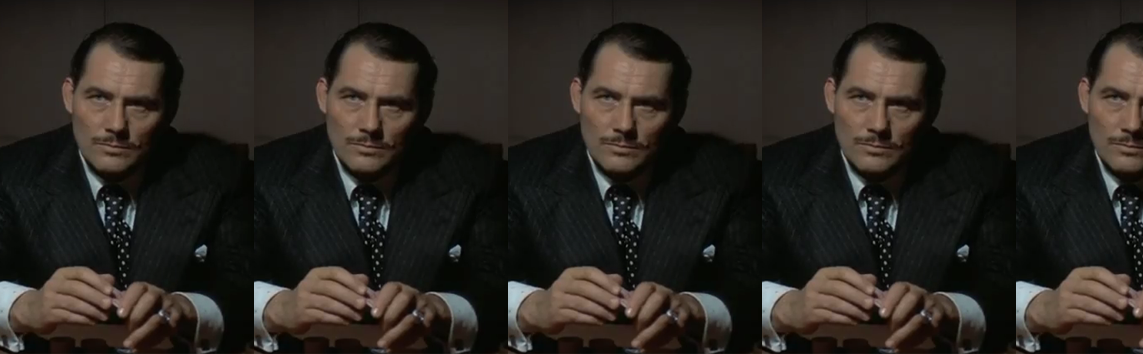
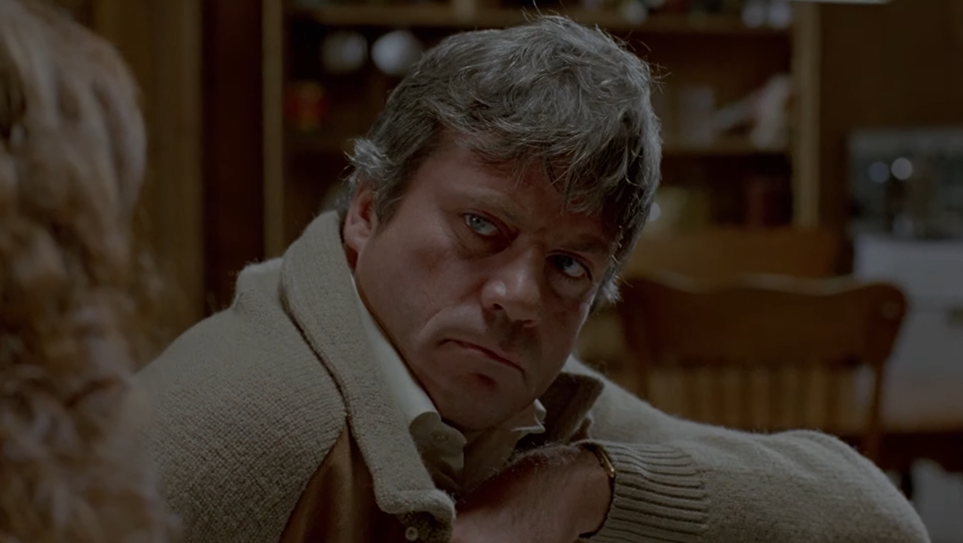
Oliver Reed did not receive an Oscar nomination for portraying Father Urbain Grandier in The Devils.
The Devils is at the very least an interesting film about an anti-establishment priest being accused of witchcraft by a deranged nun.
Oliver Reed begins the film serving a very specific purpose, utilizing his apparent status as a heartthrob as he is ogled by the women in the convent due to his physical appearance. Although this will play an important part in terms of the development of the story, that thankfully is not Reed's only purpose within the film. The last two times I covered Oliver Reed it was in supporting roles as characters both shaped by violence. His leading turn here is in contrast to that as a most unusual priest. Now when we first see him he is just going about his duties as you'd expect any decent priest would, that being Reed brings the right solemn qualities as Grandier simply leads his flock so to speak. That is in a moment where he directly attached to being a servant of God though, and we quickly find Grandier is rather extraordinary priest to say this least. This comes to be seen the moment he mounts a different pulpit that being a political one to speak against the injustices attempted by the power hungry Cardinal Richelieu who wishes to persecute the protestants of France. Reed is outstanding in bringing the needed grand passion in Grandier's words as he denounces the Cardinal, and Reed realizes the righteous force which lies within him. Of course his less than ordinary ways as priest continue past the public sphere.
That refers to Grandier having various sexual liaisons with women which are not very well hidden, but again he does not try to either. Now this is an important aspect to the character which Reed develops very well. It is initially shown with Grandier certainly enjoying himself, which Reed does not shy away from suggesting a certain indulgence on the side of Grandier given an obvious lack of respect for one of the women he chooses to break his vows with. However Reed is quite good by providing the right honesty to Grandier's words as he states his lack of belief in the celibacy requirement. Now Reed does say this well, but it could still be seen earlier on as Grandier covering for himself. It goes beyond that when Grandier receives a confession from another woman Madeleine (Gemma Jones) who admits having sexual thoughts, and accidentally admits that they are about Grandier himself. Reed is excellent in this scene though as he calms her concerns by revealing Grandier's own approval of a lack of sexual repression. What's so wonderful about this is the way Reed brings such a tenderness in his words that never seem that of a lusty priest, but rather a benevolent man who believes this to be the intention of God.
Grandier soon take the woman Madeleine to be his wife by marrying her to himself. Reed in the ceremony scene again brings a powerful conviction to the words as Grandier fulfills his duty as a priest and as a husband at the same time. Reed in the moment reveals such a palatable devotion and belief in the ceremony. Reed is excellent in the scene as he seems to eliminate even the very idea that Grandier may at all be a hypocrite in the moment. Instead of seeming a man of going against what he believes, Reed is able to find the genuine fervor in Grandier's words, showing him to be a man of true faith whose actions are always directly connected with this faith. Reed's work is striking as he finds the perfect balance between a man of the world, and a religious priest. Reed is able to show it as one and the same, and in turn is able to develop Grandier as a rather special sort. It is not just a strong willed firebrand for justice, though he is indeed that, but also a true reformer. Reed's work is marvelous as he does not hide the elements of the man that one might normally consider saintly, yet allows you to understand everything that Grandier does that makes him seem to earn a certain degree of sainthood.
Now Oliver Reed essentially plays the one sane man in a mad country it seems, and in turn the one sane actor in a mad film. Now based on the evidence of this film and his later science fiction film Altered States it is obvious that director Ken Russell likely wholly encouraged an actor to go to for the extremes to match his equally flamboyant directorial style. Here the performances range from slightly off to full blown schizophrenia, but I don't mean that necessarily in a bad way. In this instance it works given the material which involves mass hysteria, but I would also say in part due to Oliver Reed. Reed is not in a different film, but he is importantly on a very different wavelength in terms of his approach for Grandier. Reed, much like Grandier himself, avoids the insanity imagined by Russell, just as Grandier avoids the insanity imagined by the nuns. Reed makes his performance very much stand out, in a very good way, by keeping Grandier very much a different person than the world around, by being so different from the film, as he goes about giving a realistic portrayal of this man. Reed acts as a necessary balancing factor in the film as he is steadfast in keeping Grandier as well as his performance wholly detached from the madness around them.
Of course despite Grandier himself not being part of the mass hysteria, he unfortunately becomes the target of it due to the obsession of one nun in particular as well as because the power that be want him out of the way anyways. Grandier ends up being put in front of kangaroo court where he is accused of his crimes of witchcraft. Reed is excellent again playing so close to the chest which acts in such notable contrast to everyone else who is decidedly not doing so. Reed is very careful in this regard because it is never as though Grandier a meek man to begin, he does not mind speaking his mind, particularly not in the face of such madness. Once again Reed brings such conviction in the words as he tears into those persecuting him, while still connecting such affecting manner by always keeping close the humanity behind Grandier's passion. There is one particularly moving moment in his outrage, as Reed reveals such honest concern in Grandier when he learns that they are trying to use his wife against him as well. Now even Grandier's passion cannot change their minds, and the trial goes as one would expected with Grandier being tortured and sentenced to hang. Reed is devastating to watch in these scenes as he keeps the horror, which could seem absurd, so brutally grounded by making Grandier's physical degradation so painfully straight forward. Reed is most heartbreaking in his portrayal of Grandier losing his resolve to the point that Reed plays his final moments in a resigned disbelief that he has come to such an end. This is a great performance by Oliver Reed by not only anchoring a film, which could have completely fallen of the rails without him, but also by creating an understanding of this man through his effective depiction of this complex man.