Showing posts with label Anthony Hopkins. Show all posts

Thursday, 19 January 2023

Best Actor Backlog Volume 4 Results

5. Anthony Hopkins in A Doll's House - Hopkins gives an effectively dismissive portrayal of a man blithely miscuing his wife and privilege.

Best Scene: Torvald freaks out. 
4. Alan Bates in Butley - The whole film is just Bates acting up a storm, and act he does quite well. 

Best Scene: Butley enters his office. 
3. James Cagney in The Public Enemy - Cagney gives a compelling star making turn that presents this instinctual and broken qualities of a boy playing at gangster. 

Best Scene: Rain Storm. 
2. Ray Milland in Alias Nick Beal - Ray Milland gives an effortlessly captivating portrayal of a man who inflicts evil through slick seduction. 

Best Scene: Nick recruiting. 
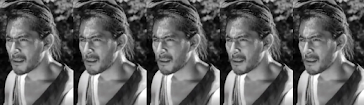
1. Toshiro Mifune in The Bad Sleep Well - Good predictions Anonymous, Oliver and Razor Mifune gives a brilliant portrayal of an atypical protagonist, who holds so much of himself in and puts on many faces to hide his true self and intentions. 

Best Scene: His wife visits him. 
Next: The Waiting Game. 

Wednesday, 28 December 2022

Alternate Best Actor 1973: Anthony Hopkins in A Doll's House

Anthony Hopkins did not receive an Oscar nomination for portraying Torvald in A Doll's House.

A Doll's House follows a wife Nora (Claire Bloom) reexamining her relationship with her husband as outside forces grant a new perspective on her situation. 

Anthony Hopkins plays the role of Torvald which you could argue is all how it leads to the climactic moments, and whatever the performer does to lead towards that moment. Torvald isn't necessarily immediately distressing and Hopkins grants the allowance for the view Nora of her relationship with Torvald initially. Hopkins plays the role initially with a seeming levity while doing his famed Olivier impression throughout his performance which becomes particularly noticeable late in the film. Although I wouldn't say this is either a masterstroke or a distraction, just a choice that works as well for Torvald as would've been the case if Hopkins had chosen to maintain his typically already regal voice. Hopkins presents a potentially loving state as he welcomes Nora into his embrace, and while certain lines speak towards this controlling attitude of the man, treating her more so as a doll than a woman that is his equal, however, the way Hopkins delivers these lines is pivotal. He doesn't subvert them but he does present them with a bit of jovial quality as though one may be fooled to interpret that this is just Torvald's way of being playful. Hopkins doesn't immediately raise an alarm, he indicates what is really going in within Torvald's manner as the aggressively forceful and controlling man, but doesn't enforce the idea. Hopkins's performance manages to naturally articulate both sides with quite an ease of expression within his performance. Hopkins never directly converses with her in a way much as he's talking to her. He blithely speaks with just accentuation on the random joy he seems to get out of her, without more than a careless simplicity within the process. He doesn't connect with her as much as he admires her. The admiration of taking in the joys with the simplicity of it that isn't anything more than that with Hopkins's presentation. 

The reality of this is broken by Nora having to deal with an earlier indiscretion that may destroy their entire situation, which could be avoided if Nora could convince Torvald to not fire a man who has evidence of the indiscretion. Hopkins reveals some of Torvald's behavior more openly by the level of dismissiveness as Nora pleads to avoid the trouble by not firing the man, and Hopkins presents not a moment of hesitation in ignoring the request. It isn't even something that dances in his mind for a moment he simply moves on. We see this dismissiveness all the greater even when the two ready for a party by Nora practicing her dancing while Torvald plays the piano. Hopkins's directing of her initially presented with that initial joviality yet this quickly segues towards frustration with her inability to do exactly what he says. Hopkins presents this frustration in a decidedly thin way, and effective as such, reinforcing again treating Nora as a mere doll, and when she's not doing as he says, he reacts not as a loving husband rather just a boy who doesn't like that his toy is not working as it should. Eventually this leads to Torvald discovery the indiscretion which Hopkins's performance is big, however big in a way I find gets to the heart of it, which is as the true brat just seeing his plaything doing something he doesn't like. Hopkins lashing out against her with the fury not of an intelligent man, but a fully petulant child. Hopkins conveying someone fully taking his wife for granted in every word and treating her without a second thought. Showing a man who views her with less than any but a source of joy, and when not that, as nothing. When Nora pushes back against him, Hopkins is terrific in his way of deconstructing the state of Torvald. Hopkins eases back towards calm, however even in calm the distress Hopkins shows in this disbelief and confusion is still with a brittle quality of not a loving man but a using man. There is so little love in it of a person just in a way a weak affection. Hopkins manages to deliver well a worthless sort of humanity. Hopkins shows that Torvald is hurt by the revelation but even in that emotional harm, it is without true depth of feeling towards him. It is with a worthless selfishness all the same. Hopkins is great throughout this final sequence against Bloom, falling into this submission that he presents as the man trying to find some truth of emotion however still failing to deliver anything but self-pity. Hopkins is moving in the sense he does make the emotion so real, while maintaining the fundamental flaw of the man. Hopkins gives a striking performance as he makes Torvald dynamic within his work, yet while doing so shows the little depth within the man all the same. 

Monday, 19 December 2022

Best Actor Backlog Volume 4

And the Overlooked Performances Are:

James Cagney in The Public Enemy

Toshiro Mifune in The Bad Sleep Well

Anthony Hopkins in A Doll's House

Alan Bates in Butley

Ray Milland in Alias Nick Beal

Wednesday, 24 March 2021

Best Actor 2020: Results

5. Gary Oldman in Mank - Oldman gives a great performance where he manages to deliver on a role that asks of him qualities rarely asked of him, which is charm and wit. Oldman carries the film wonderfully and makes up for many of its weaknesses. 

Best Scene: Final talk with Marion.
4. Steven Yeun in Minari - You know this is an amazing lineup when this performance is 4th.Yeun delivers a great understated turn. This in finding the emotional complications but also simple joys of a man trying to achieve the American dream.

Best Scene: Final argument.
3. Chadwick Boseman in Ma Rainey's Black Bottom - Boseman will be a deserving winner, in this amazing swan song of a performance. Boseman steals the film entirely, in his charismatic, but also deeply emotional and tragic portrait of a man burdened by hate, ambition and sadness.

Best Scene: Story of his father.
2. Riz Ahmed in Sound of Metal - Ahmed gives a great performance here. This finding so much history and honesty in depicting an entirely convincing journey of a man quickly losing his hearing but slowly discovering himself.

Best Scene: Final talk with Joe.
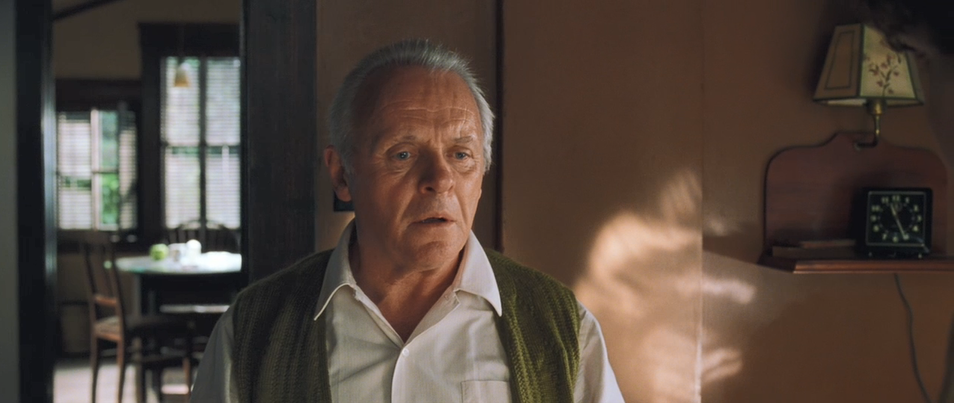
1. Anthony Hopkins in The Father - Good Predictions Anonymous, Michael McCarthy, Razor, Emi Grant, Tahmeed, Luke, Glenn, Omar, David Jones, Shaggy, and Michael Patison. As much as I adore this lineup, this was an easy choice. This as Hopkins delivers his greatest performance that contains all that makes him great and more, in his complex, captivating and altogether devestating portrait of a man slowly losing his mind. 

Best Scene: "Mommy"
Next: 2020 Alternate Lead

Tuesday, 23 March 2021

Best Actor 2020: Anthony Hopkins in The Father

Anthony Hopkins won his second Oscar from his sixth nomination for portraying Anthony in The Father. 

The Father is a brilliant film depicting a man going through Alzheimer's while his daughter Anne (Olivia Colman) tries to take care of him. That description by the way doesn't at all serve this film which is so much more than that basic plot outline. That alone might make one simply describe as a "fine film", if you have not seen it, but if you have, it is a stunning and surprisingly visceral experience. 

Anthony Hopkins, who has now become the oldest actor nominated for this award, has hit the point in his career where his greatness is merely considered a facet of who he is as an actor. In a way this is a shame, as it can cause some to take for granted what he is doing, when something he might be doing might be substantial for most actors however seems easy for him. Well that is a disservice to Hopkins's craft, which should not be judge any differently simply because it is known that he is great. This here from the outset, without watching the film again, it might be easy to take Hopkins for granted as he's playing this older man, named Anthony, one might assume, this is just another good performance for him, that is quite wrong. We open in the film and Hopkins is wonderful in establishing Anthony seemingly in his early state. This as there is an affable charm that Hopkins initially brings to Anthony as he denies needing any help from his daughter. Hopkins though here is a choice, a magnificent choice, in as he approaches the role of Anthony. This as a man who will do everything he can essentially to not be where he is in terms of his own mind. That affability, an attempt to be normal within his existence, something that is not easy. Hopkins, who does doddering perhaps better than anyone, puts forth someone trying to brush off any concern by acting as still very much at peace with himself.

When he is questioned about why he dismissed his most recent caretaker to his daughter. Hopkins is already amazing in the scene of explaining that he believes she stole his watch leading to the dismissal. Hopkins's delivery initially is brushing off any questions as though he is just capable and able to ignore the mistakes he might've made. When pressed more though Hopkins is amazing just in the way he does so much in even a moment of Anthony trying to gather his thoughts. He becomes lost for a moment, but in becoming lost you see a bit of anger as he tries to basically push himself to remember something. Hopkins then speaking to the watch he claims the caretaker stole with some confidence and suddenly a greater comfort. In that briefest of moments conveying the conflict in the man's mind, a conflict Anthony wants to try to deny more than anything else. Hopkins is so good though in his delivery eventually even becoming playful in just trying to dismiss the situation, trying to avoid one thing by focusing on another. There is something immediately heartbreaking though as he does respond to his daughter's concern. There is a genuine care in his voice if only for a moment, Hopkins showing the true father in the moment. When Anne though implies a knowledge of his hidden watch, and Hopkins again switches again so naturally to a bit annoyance that he plays with both a hint of rage, but also just a sense of fun. When he finds the watch, again Hopkins's face is no longer with any issue, and he speaks to his daughter with glow, reassuring himself. When the conversation turns that she's leaving to some other city, possibly Paris, Hopkins has such a potent internalized fear that he shows a man holding back such fear while also trying to hold strong. When she reveals a new man in her life. Hopkins wavers between so much. A vicious attack on his daughter, as though for her to give up this new phase in her life, again almost a joke to act like it is nothing as he notes that in Paris they don't speak English, but then genuine heartbreak in seeming to think directly of being this lonely man without a family. This is a masterclass of acting...and it is only his first scene. 

In many ways we get every bit of greatness that there can be to an Anthony Hopkins performance all in this performance, that as he so naturally creates this state of Anthony that slowly seems to reveal itself. This just even in the kind of charm that Hopkins can find in his own manner. The way even as he prepares a few things around the house, Hopkins manages to find a nice certain lightness to it, granting a bit character and humanity even within this seemingly minor moment. The film though begins to reveal itself, which is almost as much a horror film as a drama in a way. Hopkins takes us within this certain sense of discovery within his performance as he wanders around seemingly his own flat discovering a man he does not know. Hopkins's reaction creates this sense of curiosity at first in asking about it. This attempt at trying to almost convince himself of something that makes sense. This as his eyes show a man trying to analyze the situation. When the man does not immediately answer, a sudden burst of anger again speaks more so to his own frustration at trying to understand more so than does come from trying to demand anything from the man. I love the way Hopkins expresses this pained attempt to accept any immediate solution. This as the man claims to be Anne's husband, Hopkins accepts it with this rambling delivery. This that shows the man almost trying to speak himself into sense. Hopkins presenting effectively even within this moment where he seems to be getting along, there is a desperation within the playfulness. This suggesting that Anthony is trying to comfort himself while trying to accept this answer, showing the man actively fighting against his own state that seems to fighting against himself. Hopkins speaking on his daughter's attempts to save him is amazing. This as Hopkins is captivating in itself, but what is so much more is how much he makes this difficult state so natural and fluid within his performance. 

I think there even could have been a danger to making this just some showcase, but that's never the case here. Hopkins always expresses the very human qualities in creating the very potent anxieties of his Anthony's situation. When Anne arrives to the flat, which Anthony now has been told is not his, as a woman who is not his daughter, Hopkins's performance is absolutely heartbreaking. This as he speaks "Where's Anne" the break in his voice on the name is heart-wrenching. This as Hopkins in that moment creates Anthony having a realization that there is something desperately wrong with him for a moment before seguing so naturally again to him doddering off on something and trying to forget what it was that so pained him. He speaks to his daughter, who does not look like his daughter, with a lack of eye contact. This almost as he's not trying to notice that she is breaking his sense of his own reality. This speaking with an attempted distance against to feign some confidence in his own faculties, while just within this Hopkins carries such a sense of desperation just beneath his skin. There is such a quiet moment, another one that I love, as he asks if the place he is in is indeed his flat. Hopkins asks so genuinely searching for some answer but more so looking for some comfort. Hopkins depicting this difficult state as he shows Anthony trying, and really wanting so badly to be able to understand where he is or who he is speaking to. 

Every scene by Hopkins is tremendous in terms of both creating such a uniquely captivating portrait of a man in this state, but also so viscerally crafting the experience from this perspective. A moment where Anthony meets his new potential caregiver, who looks suspiciously like his other daughter, Hopkins is extraordinary again. This as he puts on the full charisma the man is capable of, and in turn we get Hopkins at his most charismatic. This as he introduces himself with such a spry manner of Anthony in a potential moment of clarity, or at least trying to present himself as such. Hopkins is having the right kind of fun in the moment, and actually is quite fun. This in bringing so much energy suddenly as he invites the new girl for a drink. Hopkins is beaming with life in this moment just ready to introduce himself as the best version of himself. Even this though as he comments on the sobriety of his wife, and his other daughter his drifting off Hopkins suggests blanks he's not quite sure of yet is trying to dismiss in his ramblings. Absolutely love the moment of him claiming to be a dancer to the caregiver, Hopkins is so charming in explaining this and his little tap dance is a kind perfection as delivered by Hopkins. This as Hopkins could not be more endearing in a singular moment. This though when suddenly comparing to his daughter though, you see Hopkins other side of the performer as easily. This swapping to strict intensity and even terror as he notes the girl laughs inanely like his daughter. Even as claiming like a joke, that intensity Hopkins summons in a notice is incredible. Of course what is most incredible though is how Hopkins makes it this kind of natural wavelength of reaction of the man trying to navigate the situation, trying to control it in his own way, which in the moment is both to seem so likable, while also so hate able at a seconds notice. 

As the situation becomes more isolating, and our perspective more isolated to Hopkins, Hopkins's performance gradually presents this state of mental degradation. What is so devastating in this is Hopkins actually doesn't just present this as a one note sorrowful note. This as he does have a certain mischievous quality at times when Anthony is trying to construct things a certain way for himself. Hopkins is the best kind of cheeky even in his physical manner of poking his head to look at another male stranger's wrist. Hopkins asking about it with this certain cagey questioning. Hopkins is even actually amusing in this moment at first in the questions, just as you see also a painful fixation on trying to construct his world by insisting his missing watch is due to someone else's theft, not due to him losing a grasp on his memory. Hopkins conveying so effectively this idea of the man attempting to navigate the world as he knows it, and it is astonishing how vividly he is able to express this. This in attempting to assure some thought. When visiting the doctor, his insists on telling the story he thinks he knows is with this repeated syncopation in his delivery. This in trying to keep consistent within his mind, and a certain satisfaction when it seems like he is able to convince others of his version of the story. It is so powerfully done as Hopkins finds this combination between this false confidence that is betrayed by a desperation that is constantly needling at that attempted confidence. 

Hopkins's performance here is masterful in multiple ways though. This as great as he is with the louder moments, he is as great in the quieter ones. This as just the observing man trying to decipher what is going on. Just the way he observes in this attempt to sometimes ignore the strangeness of his situation, but others in where a sense of fear begins to take him. Hopkins's expressions are worthy of a classic Ingmar Bergman performance in expressing so much complexity in this distress. Hopkins blending between a man truly enfeebled by his situation as he is just trying to decipher it, but also trying to fight against it. This in trying to figure out through his confusion where Hopkins expresses this unpleasant emotional hostility to his very existence. There is a weight within Hopkins work of the pressure of the world that seems to slowly become all the more sinister and hostile towards him. The more confusing it all becomes the greater the constriction within Hopkins's portrayal of the man wanting so badly to stave off what it is that seems to be destroying him. Hopkins leaves no reaction to be just that. This even in a moment of seeing a boy playing with a bag, the simplicity of the moment adding some genuine calm in his life with such a poignancy found in Hopkins's expression of this minor bit of happiness and respite. This opposed to when the first male stranger returns and pesters him and physically abuses him. Hopkins shows the man fighting against this and is all the more devastating for it. This by showing him failing by falling into misery, is a terrible sight and quite frankly horrifying to watch in the moment. Hopkins falling into such dismay and revealing the scared man behind every else. Hopkins is amazing by so quietly just internalizing the distress, and showing the man just shrinking in himself to avoid this sorrow.

Now this would already be an outstanding performance. All on its own. This as Hopkins just embodies all the role demands, which is a great deal, but he really does all the more. This as every tricky emotion, he captures. Every difficult situation of the ever changing mind of the man, Hopkins embodies while never losing a singular truth at its core. This in not only playing with honestly everything we've come to expect from Hopkins, that being a great actor, but also some things we might've never quite seen from him. This is perhaps the performance Anthony Hopkins has been waiting to play his whole life. This as it has everything in it that makes him great, yet there's still more he gives us.acting in terms of the depth of character and vividness of the scenario he expresses here. I honestly believe you could take any moment Hopkins has here, and find brilliant  That though, is still without mentioning his final scene. This as Anthony finds himself no longer living in his own flat, or his daughter's flat, he finds himself just in a nursing home, visited by a sympathetic female nurse, while also briefly interacting with a quietly sinister male nurse. The former though goes to comfort him and explain his situation now, being only occasionally visited by his daughter, and left alone in the care of the nursing home workers. Hopkins's performance now depicts a vulnerability, I frankly didn't know he had in him, and I've always felt Hopkins to be immensely talented. Hopkins expressing first the confusion that is all the more penetrative. This in a moment first trying every trick he still has in his mind to fight it. Hopkins now delivery these in rapid succession, though all the more desperate of an act than ever before as Anthony is trying anything to change the situation he is in one last time. Hopkins still speaking as a man trying to negotiate the situation yet in his delivery it is even more of struggle to try to speak these alterations he wants to his reality. This overwhelming fear though that Hopkins begins to seed within his expression as the truth begins to dawn as he draws closer to a kind of acceptance. His question as this sporadic attempt to just try to hold on for just a second longer. Hopkins showing this progression of the breakdown in this astonishing realization. His mind slipping and the anxiety gripping him. Hopkins showing the man losing all hold and falling into that acceptance. This as Hopkins reverts to a physical near a fetal manner, in his eyes falling into such sorrow, and his crying for his "mommy" being one of the most heartbreaking moments I've ever seen honestly. Hopkins losing his mind is terrifying to watch as he is so convincing in showing the man regressing to the state of a child. A moment that in the wrong hands could've fallen flat, yet is distressing through Hopkins's masterful work. This in seemingly losing himself entirely within the role, finding this man so lost that he's just grasping on all that he has left, and that only being the memory of his childhood. Hopkins's expresses this as a truth, and frankly it is hard to witness, because of how real Hopkins is in this breakdown. Hopkins is phenomenal, beyond belief really, as his performance shows all that there is to this man, and all that there is left. His cries growing fainter, as these final gasps of a dying man trying to find the only solace he has left. This portrait of man mind's draining from him, which he finds all the nuance, all the complexity, and all the heart-wrenching humanity within it. This is transcendent work by Anthony Hopkins, and the greatest work I have seen from the great actor.

Saturday, 20 March 2021

Best Actor 2020

And the Nominees Are:

Riz Ahmed in Sound of Metal

Steven Yeun in Minari
 
Chadwick Boseman in Ma Rainey's Black Bottom

Gary Oldman in Mank
 
Anthony Hopkins in The Father

Friday, 17 January 2020

Best Supporting Actor 2019: Results

5. Brad Pitt in Once Upon a Time in Hollywood - Pitt delivers an entertaining turn here as he manages to deliver on sort of the promise of the proper leading man he was always intended to be, with his relaxed yet always engaging performance.

Best Scene: Tripping and killing.
4. Anthony Hopkins in The Two Popes - Hopkins goes beyond perhaps the call of his material, in creating an intimate, complex and moving portrayal of a man compromised by his beliefs and his failure to live up to them.

Best Scene: Confession.
3. Tom Hanks in A Beautiful Day in the Neighborhood - Hanks gives a wonderful performance here as he manages to not only convincingly evoke the presence of Mr. Rogers, but more importantly makes his essential philosophy tangible.

Best Scene: Speaking of his family.
2. Al Pacino in The Irishman - Pacino returns to cinematic greatness in his brilliant portrayal of Jimmy Hoffa, that creates the sense of the man's presence, as a politician, a schemer, a father and a friend, while also creating the heartbreaking descent through the realization of that unshakable pride that gets the best of him.

Best Scene: Final conversation with Frank at the gala. 
1. Joe Pesci in The Irishman - Good predictions Luke, Mitchell Murray, moviefilm and Psifonian. Despite my love for the other top performances here, and really this is a fantastic lineup overall, I'll admit I didn't have a second thought on declaring the winner. Pesci returns to film, and doesn't lose a second in giving yet another masterful turn for Martin Scorsese, every time he's been Oscar nominated. This time completely subverting his usual depiction of gangsters, to give such an unforgettable and vivid portrait of a most powerful man, who wields it with but a whisper or, at times, even less.

Best Scene: "He's going, either way"

Monday, 13 January 2020

Best Supporting Actor 2019: Anthony Hopkins in The Two Popes

Anthony Hopkins received his fifth Oscar nomination for portraying Pope Benedict XVI in The Two Popes.

Anthony Hopkins returns from his long Oscar nomination drought to return in the role of the retiring conservative Pope Benedict in this film built around conversations between himself and the next Pope Francis, a progressive reformer. Hopkins's role is secondary throughout the film though the film is built around both characters making him inherently lead. It does detour enough away from Benedict to focus on more personal scenes for Francis to say that this isn't the most egregious category placement, though I would say Hopkins is co-lead here if pressed. Hopkins while less well cast as Jonathan Pryce as Francis, though that would be hard to compare to, seems the right fit the elder statesman type. Hopkins also helping out the appearance difference himself, by personally offering the furrowed left brow himself rather than threw makeup. The real question though isn't any fun tricks Hopkins can perform, like a little bit of Latin, German, playing Clair Du Lune (once again after Westworld, which I get it Sir Anthony, I also love playing that song on the piano)  what have you, but rather what does he deliver on the role. Well not a German accent for one, but nor does he attempt, nor do I really care, as Hopkins instead seems to seek to deliver on the man's presence, particularly in the way that it differs towards Pryce's portrayal of Francis.

His initial appearance in the film is just before he becomes Pope, in turn technically becoming Benedict, and here though is a scene that Hopkins does make use of in portraying Benedict seemingly in his element as the politician attempting to secure votes. This Hopkins portrays not as this overt charisma but rather this consistent priestly command of a man of faith in his repeated statement. Hopkins delivers on this sort of sly conviction, and while the scene is brief, Hopkins does use it well to suggest a different side of the man, very much seeking the position for the moment as the elder statesman fulfilling this expectation. The film then jumps to the end of his "reign" as he has a conference with the soon to be Francis. A conversation with Benedict's intention being to talk Francis from resigning from his position, though this seemingly positive point in fact becoming more of this confrontation of the two men's conflicting ideals. Hopkins's performance is in contrast to his initial scene as he effectively portrays the change in years from the burden of his power. This in part physically as Hopkins very much emphasizes the personal fragility that realizes itself with this certain cold demeanor, of a withdrawn man, who of course only chooses the most careful of movements. The greater truths of the man come out within his words though as Francis and he begin to speak to one another about their differences in view.

When Hopkins and Pryce are together, just talking, the film is at its best, and actually works quite well at times. Although I'd love the conversations to go deeper, more than anything it allows chances for the two seasoned actors just to work together. This begins with the most confrontational scene where the two are very much standing for their separated ideas about how the catholic church should exist within the modern world. One should not take Hopkins's work for granted, because he is terrific here, even if to be expected in delivering in this conversation. Where Francis is purposefully more straight forward, Benedict has a greater complexity that Hopkins is able to realize in this conversation. This as when speaking strictly on his views Hopkins delivers his words with a critical conviction, not based on his own passion towards them, but rather how he lies against Francis's ideas. He balances this in a fascinating way though in the attempts at cordiality, as he tips into moments of venom as Hopkins speaks lines, and pulls back, showing a man attempting the grace of his position though struggling to maintain it. He also captures in his reactions to Francis this physical anxiety and internalized frustration at every critical word towards his views. This that Hopkins's depicts in this weight of this responsibility of position that he conveys in these moments. This as Hopkins shows a man struggling to maintain what is the expectation of his position now, in the face of scrutiny. A reaction Hopkins never simplifies, showing as much frustration, as exasperation of a man attempting to maintain the convictions expected of him as Pope.

These scenes of ideology though are typically separated by one of two scenes, either flashbacks that degrade the pacing of the film as the film does work when it is left to Hopkins and Pryce, or more interpersonal scenes of the two popes just being two men. Hopkins thrives within these scenes as well by presenting a different struggle in the man, who by nature isn't overly personable. Hopkins brings this certain shortness initially in his casual conversations with Francis, of a man unsure how to share other's passions naturally. Hopkins doesn't portray this as an overt coldness but rather effectively portrays this as an introversion. This is shown in Hopkins as when he describes his own interests, whether it be playing piano or talking about a Austrian cop dog show, Hopkins brings a quiet warmth and a greater energy. This as even in his early scene of playing the piano to Francis, we do not just see a cold authoritarian within Hopkins in the moment. This showing a genuine passion within the man that does exist, it is just harder for him to share it with others, and share the passion of others right away. Hopkins plays these moments of a calm revealing of his more affable qualities, that are true but hidden within the self-imposed constrictions of the man. These conversations also give the chance for Pryce and Hopkins just to play around a bit together, and the two do have a wonderful bit of chemistry that makes these scenes work to a degree, even if what they speak isn't of always some great importance. This is though as the two begin to naturally weave the conversation tones together as the men speak between, ideals, hobbies and faith in their confrontation of sorts.

There are essential moments for Hopkins when Benedict speaks not on the Pope's faith but his personal faith. These words that Hopkins delivers very quietly, and withdraws himself. This portraying another burden, though not frustration towards others but this quiet shame towards one self. He finds a poignancy of the man not living to the expectation of this faith, this burden. These frustrations revealing itself naturally to the man who wishes to retire from his position. Hopkins finds the complexity of this and does so without even being the central focus within the story. The interaction climaxes as both men essentially act as a priest to listen to a confession for the other. This is as Francis reveals what to be his own great sin, Hopkins's reveals the care of a priest in his words and eyes of the man attempting to comfort Francis over his perceived fault. Hopkins's own confession is the best scene of the film by virtue of Hopkins's performance. This as he begins the scene with almost a comic attitude of going through the motions of explaining away his venial sins. This is as he continues Hopkins reveals this weight within his face of the greater sins the man has let slip by him and allowed himself to commit. He delivers a quiet sorrow within the man, and pain of this failure to do his duties therefore live up to his faith. When Francis insists he face it more specifically on a human level, Hopkins is exceptional in revealing the growing anger of the man not at Francis, but towards himself as a faithful man no longer experiencing a divine presence he always had in his youth. Although this film may seem the most obvious form of Oscar, perhaps it is, this is a genuinely strong performance from Anthony Hopkins. Yes it seems easy from him, that only speaks to his talent, in finding the complexity of his character, even beyond his somewhat simplistic script.

Best Supporting Actor 2019

 And the Nominees Are:

Al Pacino in The Irishman

Joe Pesci in The Irishman


Brad Pitt in Once Upon a Time in Hollywood

Anthony Hopkins in The Two Popes

Tom Hanks in A Beautiful Day in the Neighborhood

Thursday, 28 November 2019

Alternate Best Actor 1999: Results

5. Tom Cruise in Eyes Wide Shut - Cruise fulfills the general needs of his performance however never seems ideal for the general needs of his character. 

Best Scene: His confession.
4. Nicolas Cage in Bringing Out the Dead - Cage delivers the more expected extremes of his insomniac paramedic, however it his more subdued moments that perhaps leave the strongest impression.

Best Scene: Saving the dealer.
3. Anthony Hopkins in Titus - Hopkins delivers both the needed gravity for any Shakespearean performance, but with a sense of fun needed for the work that is Titus Andronicus.

Best Scene: Some nice pies.
2. Heath Ledger in Two Hands - Ledger delivers a terrific early star turn that manages to effortlessly balance the romantic, dramatic and comedic elements of his film.

Best Scene: Confronting Pando.
1. Jim Broadbent in Topsy-Turvy - Broadbent gives an absolutely winning turn in his approach as a humorous man who takes himself very seriously.

Best Scene: His inspiration.
Updated Overall

Next Year: 1999 Supporting

Wednesday, 6 November 2019

Alternate Best Actor 1999: Anthony Hopkins in Titus

Anthony Hopkins did not receive an Oscar nomination for portraying Titus Andronicus in Titus.

Titus joins the ranks of other 90's Shakespeare adaptations in their attempts to "modernize" the bard through one method or another. Although most it doesn't tackle what is regarded as one of Shakespeare's great tragedies, but rather one of his more forgotten works about a violent roman general reaping that which he sows.

Although the film may not have what is considered one of the best Shakespearean texts, it does feature one of the great British actors, who always seem as though they best deliver at least one Shakespearean turn of note on film. Now the film itself is pretty messy in perhaps an admirable attempt to capture the camp insanity of the text that many have argued was Shakespeare writing a purposeful parody of violent tragedies. Director Julie Taymor seems to throw everything at the wall regarding the film's visual aesthetic which is quite frankly ridiculous. She's similarly less concise in the direction of the actors who are little inconsistent between the wrong and the right way of handling Shakespeare. The wrong way is trying to sound "hip"...I guess, by doing the Baz Lurhmann style of yelling every line or inflecting it with absolutely no emotion. I do say wrong way, because unless you grant meaning to the words you fail them, and really the best way to modernize them is to bring forth the emotion in a way that is universal, rather than treating it like a foreign language you failing to pantomime quite brutally. Thankfully the majority do take the later approach including, one actor with unquestionably the right approach is the seasoned Hopkins, who unsurprisingly has a great command of the bard's words.

Hopkins's work in a way is an interesting anchor within the madness of the film, in that he seems the most tangible, even as the rather unwieldy tragic "hero". This is as his initially appearance is befitting to the great actor's presence as he appears as the war hero, making a recent conquer while dispensing a bit of "justice" among those he has conquered. Hopkins wields his presence in his establishment of Titus surely as this force of not only war but of will. A man who commands more than respect in the way Hopkins brandishes himself. Hopkins in a way properly establishes himself as the poor Shakespearean hero to be destroyed as he presents this idea of power with ease and once again the grace of the general. This with that calm command that creates the force of will that is his Titus, even as the man defers any ambition to the chosen emperor of the foppish Saturninus (Alan Cumming). Hopkins, after this grand introduction, is fairly quiet initially as he initially attempts to fall in line as the new emperor requests his daughter be his bride. Hopkins only presenting a loyal man to a fault. This as Titus kills his own son after that son attempts to prevent this union favoring Bassianus's younger son.

Hopkins even in that act presents a man who distributes violence more of a form of what he perceives as a swift justice than an emotional act, even against his own kin. This as Hopkins effectively emphasizes the man living to his code as a servant of Rome, unfortunately this code favors Titus not, as Saturninus instead marries the vengeful Goth Tamora (Jessica Lange), who along with her lover and surviving son intend to reek havoc upon Titus who had defeated them all in war. This leading to a progression of transgressions upon Titus. First the rape and mutilation of his daughter, the framing and eventual death of two of his sons, and even the removal of one of Titus's hands in a faulty attempt by him to save those sons. These acts likely would destroy the mind of any man, and Hopkins delivers the sheer brunt of the emotion one would expect in a proper decay of the mind type of Shakespearean monologue. This in finally flowing the emotions of the man in a pit of despair at the news, and the sheer pain, both physical regarding the limb loss and mental, in the loss of his family members, as the man is worn down. Hopkins creating the most compelling imagery in the film is his the grief stricken face of a father and betrayed soldier.

Hopkins's work though still seems like we are waiting for something more, as it is up until this point certainly a striking turn, but we might expect more from Hopkins. Of course more we are indeed granted. and the last act is the highlight of Hopkins's work. This as he initially falls upon this daffy quality that Hopkins wonderfully plays as he seems to lose that power of presence, and becomes seemingly an assuming man gripped in madness. Hopkins presenting as a delicate insanity of a man just lost in his grief and lost in his thoughts as though he cannot face reality. Hopkins's right turn though is of course magnificent as once the sons of Tamora let's their guard down, Titus reveals himself as does Hopkins in just a moment of brilliant physical acting. This as when the seemingly harmless mad man Hopkins is a touched hunched over of a man too lost in himself to stand, then when he calls upon for the capture of the man he immediately straightens his posture to once again reveal the dynamic commander. This is taken further though as Titus sees fit to inflict his vengeance upon the two men. Hopkins wearing a striking and vicious intensity showing a man seething in disgust as he flawlessly delivers his Shakespearean monologue with great aplomb. A most worthy note is Hopkins's delivery of Titus's description of his plan to turn the men to "paste" with a calm, Hannibalesque, sophistication that slowly boils towards a quite literal animalistic hate as he makes his intentions well known.

Evidently Hopkins and Taymor disagreed on the exact interpretation of Titus, with both believing in the feigning of initial madness however with Hopkins believing him sane and Taymor still insane, though in different manner. Honestly either interpretation can be accepted as Titus's actions are quite reasoned in their intent, of a sane man, but also so extreme befitting an insane man. The important thing is Hopkins seems to know exactly what he's doing in the climatic feast scene that is easily the best scene of the film, where Titus plays chef serving a delicious meal of meat pies to the Emperor and Tamora. Hopkins is amazing in showing the affable defeated fool seemingly as he delivers the pies to his guests, however with this diabolical glee of a man whose plans are going exactly to plan. This as his meat pies filled with the meat of Tamora's sons. My single favorite moment perhaps being Hopkins's "yummy" reaction towards Tamora as she bites down, that is both hilarious and right in line with presentation of Titus admiring his craft. Obviously not the first time Hopkins has played a literal chef for men, and fittingly Hopkins is right at home in this sequence. The actual reveal of the trick though is a rather difficult scene to play, though exists as it does right in the original text, as we see Titus kill his daughter due to her condition, based on the "advice" of the emperor, before proceedings to reveal the sins of Tamora and dispatching her himself. Hopkins makes it work by certainly embracing the scene, but also in a way both being quite "reasonable" and completely mad. This as in the act of killing the daughter he plays the moment with the strictest gravitas as though it were a religious ceremony as a most carefully planned act by Titus. This is against his act of killing Tamora, where Hopkins portrays as a purely sweeping emotional gesture of someone truly caught up in the moment. This as a combination of abounding joy along with searing anger as delivers the coup d'grace as a man truly living this final act of his life to its fullest. Although I wouldn't call the film a mess, it is certainly messy, however Hopkins's performance manages maneuver itself through both the scattershot ideas of the direction and the madness of the source material itself, through his work that seems to understand both the substance and lunacy of it. His performance both furnishing the needed gravity for any Shakespearean performance, but with a sense of fun needed for the work that is Titus Andronicus.

Sunday, 3 November 2019

Alternate Best Actor 1999

 And the Nominees Were Not:

Anthony Hopkins in Titus

Heath Ledger in Two Hands

Nicolas Cage in Bringing Out the Dead

Tom Cruise in Eyes Wide Shut

Jim Broadbent in Topsy-Turvy

And a review Of:

Ralph Fiennes in Sunshine 

Friday, 18 October 2019

Alternate Best Supporting Actor 2001: Results

5. Justin Theroux in Mulholland Drive - Theroux gives an enjoyable turn by providing a reality of sorts within the film's mad dream as his hapless director.

Best Scene: Meeting the cowboy.
4. Ian Holm in Lord of the Rings: The Fellowship of the Ring - Holm manages to give a terrific balance between the warm father-figure and the pained man weighed down by a peculiar burden.

Best Scene: Letting go of the ring.
3. James Gandolfini in The Mexican - Gandolfini steals his film wholesale through his humorous, moving and surprisingly nuanced portrayal of an atypical hit man.

Best Scene: Reacting to the suicide. 
2. Paul Bettany in A Knight's Tale - Bettany gives a terrific turn that manages to find a proper mix between a classic orator and a barker cutting a wrestling promo.

Best Scene: *Scenes deleted*
1. Anthony Hopkins in Hearts in Atlantis - Hopkins delivers an especially moving turn showing his remarkable range in creating such a quietly warm character while also showing his great ability with child actors through his chemistry with Anton Yelchin. 

Best Scene: Helping Carol. 
Updated Overall

Next Year: 1952 Lead/Supporting (Not sure I'm going to do a lineup)

Monday, 14 October 2019

Alternate Best Supporting Actor 2001: Anthony Hopkins in Hearts in Atlantis

Anthony Hopkins did not receive an Oscar nomination for portraying Ted Brautigan in Hearts in Atlantis. 

The very same year Hopkins returned to his best known role, to the general public, as the sinister cannibal Hannibal Lecter, in a somewhat absurd reprise (Note: I've seen parts of that film, enough to know that there's no reason to return to it), he played a complete 180 of that part both perhaps in terms of quality and of course the nature of the role here. Hopkins portrays Ted Brautigan the newly arrived border to the home of widowed mother Liz Garfield (Hope Davis) and her young son Bobby (Anton Yelchin). There's something fascinating about Hopkins, and a testament to his range, as just as much he set one so easily on edge with his performance, he can as easily set one at ease. The idea of the older man interacting with the young boy, must be carefully realized, and any second thoughts are immediately assuaged by Hopkins's performance. There is a wonderful lack of concern as the somewhat shabby Ted arrives as the new border, just introducing himself with the impeccable demeanor of a kindly old man. This isn't the terrifying serial killer so many had come to know him for, but rather there is that grace about him that creates a wholly different presence. Hopkins finding this seemingly with such ease and sets up immediately that Ted will be a welcome guest for the rest of the film. 

The essential element of the film though, and what really is unquestionably the strongest element of the film, is the relationship between Bobby and Ted. Again this being something already so naturally realized by how Hopkins approaches this part. This will a welcoming manner, a quietly assuring voice, even almost a slight shyness though a shyness that creates a sense of honest humanity to Ted. His first scene major scene with Yelchin is just about perfect, and like in Shadowlands, it shows that Hopkins is natural when it comes to working with as well as helping to bring out the best of child actors. Hopkins exudes just this incredible warmth that is just part of his being as Ted that is something so very remarkable. Everything Hopkins does assures this real interest Ted has in the young boy, just as a friend, while offering a bit of mentoring in his own way. This as Ted encourages Bobby to enjoy his library card, a technically cheap gift from his mother, through his own knowledge of literature. Hopkins manages to be inspiring without becoming sentimental in his honest yet eloquent delivery. This as he accentuates but never overplays it. It is of course helped as Ted throws in a fart joke Bobby is sure to enjoy. That moment even though is so sincerely performed by Hopkins, as this natural bit of jest and true affability, which realizes the beginning of the relationship so effectively. 

Given that this is a Stephen King adaptation, not named The Shawshank Redemption, there ought to be a bit of the supernatural. That is found within Ted who seems to have a bit more natural of a foresight than even a well educated elderly man should have. This something he initially passes off as just a bit of insight, however early on Ted notes to Bobby he will have increasing moments of distance that seems connected with his unique abilities. These moments of being lost are especially well performed as Hopkins portrays just as possibly being lost to dementia as being lost to a supernatural power. Hopkins grounds that aspect, as he does the entirety of the power, which I love that Hopkins doesn't overplay his hand in this regard. Hopkins, instead, rather brilliantly, wielding his known intensity in a rather unique way. Obviously we've seen Hopkins brandish this most overtly in roles like Hannibal or as Richard the Lionhearted, but here Hopkins adjusts it naturally within the part of Ted. Hopkins has the intensity however he internalizes within himself and through very quiet, yet oh so incisive delivery. This most notably when confronting a bully of Bobby, where Hopkins calmly commands the moment. Again he does so with a stare that pierces right through the boy, similar to Lecter, but not quite as the righteous disgust defines Hopkins's modest method here. 

As good as Hopkins is in those moments of the supernatural, it is the down to earth relationship between Bobby and Ted that is so special. This is honestly that even as the film struggles itself to create something overall, each scene between Hopkins and Yelchin stand on their own. This largely dependent on the performances. Hopkins so carefully approaching every scene, even the moment of telling Bobby about his eventual proper first kiss, he avoids making remotely creepy in the abundance of warmth and understanding in his eyes. Hopkins accentuates a man who above else cares to help and encourage. This in part showing this careful joy in his face that grants the sense of an appreciation for the moment of just human interaction that Ted enjoys so greatly. Honestly quite a few of the lines given to Hopkins could've gone very wrong with the scenario however Hopkins finds his way around each of them. He  gives a masterclass on line delivery really, as he knows exactly when to adds a bit of comical edge, a little silliness, a bit of inspiration or the most direct honesty to each scene. Although I do wish there was a little bit more of a film around Yelchin and Hopkins overall, what they do together elevates the threadbare narrative. This as I found myself caring very much for their relationship and specifically for the quite old man that is Hopkins's Ted. This leading to the more dramatic moments rather powerfully. One being Ted consistently asking Bobby to watch out for "low men" looking for him, which finally realizes itself when the men appear while the two are visiting the city together. I love how Hopkins approaches this moment, as he manages to show how scared Ted is of being caught in the moment, while still being reassuring to Bobby as he helps him think "away" the men. The same is true for when Ted helps treat Bobby's friend Carol, after she is attacked by the bully Ted and they earlier had the confrontation with. Hopkins is fantastic in the scene by being so reassuring in his tone, and manner. This is showing a man unquestionably of goodwill trying to help an innocent abused, as he talks her through and Bobby through the difficult situation. Anthony Hopkins succeeds in creating such vibrant portrait of the kindly old man, that avoids the cliche of the supernatural mentor by bringing just that earnest humanity in every aspect of the character. This is probably one of Hopkins's most low key performances, but with that I think he shows his considerable range by making it is also one of his best.

Sunday, 22 September 2019

Alternate Best Supporting Actor 2001

And the Nominees Were Not:

Paul Bettany in A Knight's Tale

Mark Addy in A Knight's Tale

Ian Holm in Lord of the Rings: The Fellowship of the Ring


Justin Theroux in Mulholland Drive

Anthony Hopkins in Hearts in Atlantis

James Gandolfini in The Mexican 

Bettany for prediction purposes.

And a review of:
 

Hayden Christensen in Life As A House

Tuesday, 17 January 2017

Alternate Best Actor 1993: Results

5. Anthony Wong in The Untold Story - Wong manages to stay just above the terrible film he's in by having just enough fun with the material while still managing to create a cohesive character. 

Best Scene: His confession.
4. Jesse Bradford in The King of the Hill - Bradford gives an unassuming yet moving performance, realizing a young boy's perspective through a tumultuous time.

Best Scene: At the party. 
3. Leslie Cheung in Farewell My Concubine - Cheung's silent work is a powerful portrait of internalized turmoil within a graceful performer.

Best Scene: Cheng recovers from his opium addiction. 
2. Daniel Day-Lewis in The Age Of Innocence - Daniel Day-Lewis gives his second brilliant performance from 93, this one being a heartbreaking portrayal of a deeply emotional man repressed by society.

Best Scene: The Ending.
1. Anthony Hopkins in Shadowlands - Good predictions Luke, Maciej, mcofra7, and Varun. Anthony Hopkins gives one of his best performances in his harrowing yet heart warming portrayal of not only of the creative spirit, but also a unique journey of a man coming to terms with both love and death. 

Best Scene: Lewis finally pledges his real love for Joy. 
Updated Overall

Next Year: Hmmm I might just wait, but I would also like to hear the suggestions for 1993 supporting, in order to see whether or not there is really a five to begin with.