Showing posts with label David Warner. Show all posts

Tuesday, 11 October 2022

Alternate Best Supporting Actor 1981: Results


5. James Woods in Eyewitness - The most interesting part of his film as he manages to find some character in really what isn't much of a role. 

Best Scene: Confronting Daryll
4. David Warner in Time Bandits - Warner gives a wonderfully over the top turn that brings just the right heightened villainy to his film. 

Best Scene: "A Reasonable Man"
3. Dennis Hopper in Out of the Blue - Hopper gives a quietly disturbing turn where he slowly reveals the vile nature of his man. 

Best Scene: Deciding to rape his daughter.
2. Griffin Dunne in An American Werewolf in London - Dunne balances comedy and horror as his demonic messenger. 

Best Scene: Second visit.
1. Nicol Williamson in Excalibur - Good predictions Luke, 8000's, Tahmeed, Ytrewq and Mitchell. Williamson delivers a downright brilliant turn that both gives the material the absolute gravitas it needs, while also constantly subverting it with his wily turn. 

Best Scene: Tricking Morgana

Next Year: 2016 Lead

Alternate Best Supporting Actor 1981: David Warner in Time Bandits

David Warner did not receive an Oscar nomination for portraying Evil in Time Bandits. 

Watching Time Bandits again it is basically a hodgepodge of moments, that don't exactly have a natural flow and one's enjoyment of it really comes down to how much joy one gets from Terry Gilliam's aesthetic creativity and the various semi-Monty Pythonesque bits. Interestingly the funniest bit actually is from David Warner, although I shouldn't say that since I give him a win for a largely comedic performance, who among the cast certainly skews more towards the dramatic side of things. But what does make it interesting anyways is that Warner is playing literally the villain of the piece as he's simply known as Evil because you know, he's evil. Warner's performance is the funniest in the film actually because he basically plays it aggressively and overly intensely in a certain sense. Warner obviously is well known for his villainous takes, as I recently covered in Time After Time, and is always great at cold cunning. That's not what Warner is doing as Evil, he's just having a blast really as he bellows with heightened intensity with Evil. One of his earliest moments is killing his own man for daring to be said to have been created by the Supreme Being, to which Warner hits the right heightened pitch of being fierce in his anger, yet so over the top with it that is funny in giving Evil a bit of almost bratty quality in this. Warner's wonderful by randomly switching in his manner in a moment suddenly apologizing quite sincerely just as he goes on about his evilness. Warner's simply having the right type of fun with it in being properly the evil villainous type, but a fitting evil villainous type for the farcical fantasy that this film is. Warner's scenes really as written are of the man is just evil, setting up one of the few major plot points of wanting the map our titular time bandits have stolen, and really it would be easy to imagine a very dull version of these scenes had Evil been played straight, or actually if he hadn't managed to go big in the right way. Well almost seems consistent if one knows how to go really small, which Warner can do, one can go quite big, which Warner does so here. Warner is the menace you'd want because his voice alone can sell it without really trying and he makes every overture of Evil properly oppressive. Warner though does that with so much fun, and in turn, is very entertaining in his performance. His bright brimming smiles and dramatic speeches are delivered with all pomposity of a proper villain, who is just a bit too much in the right way. Warner is wonderful in the final confrontation with his evil stares as he blows up his men before switching to a bit of a forced kind face as he notes "He's a reasonable man". Warner basically gives a performance that is as it should be as a man called Evil shouldn't be subtle, and he's not. He's not though in a way that is supremely enjoyable as he manages to bring his typical gravitas but skewed nicely for the ridiculous content. 

Sunday, 25 September 2022

Alternate Best Supporting Actor 1981

And the Nominees Were Not:

Griffin Dunne in An American Werewolf in London

David Warner in Time Bandits

Nicol Williamson in Excalibur

James Woods in Eyewitness

Dennis Hopper in Out of the Blue

Tuesday, 9 August 2022

Alternate Best Supporting Actor 1979: Results


5. David Warner in Time After Time - Warner as expected gives a properly calm and menacing portrayal of Jack the Ripper. 

Best Scene: Hotel room.
4. Frederic Forrest - Forrest gives yet another striking portrayal within his film, giving such a potent portrayal of a man struggling to maintain his sanity in an insane world. 

Best Scene: Civilian boat.
3. Art Carney in Going in Style - Carney gives a funny but also moving portrayal of a man attempting to live out a fantasy of sorts. 

Best Scene: Listening to Willie's story. 
2. Oliver Reed in The Brood - Reed gives a striking portrayal of a strange form of therapy while also so carefully walking a rope of ambiguity within his character. 

Best Scene: Opening. 
1. Yaphet Kotto in Alien - Kotto gives a great performance, often between the lines, in just creating such an endearing energy that shifts naturally to a fierce intensity as the situation becomes dire. 

Best Scene: Destroying Ash. 

Next: 1981 Lead

Tuesday, 26 July 2022

Alternate Best Supporting Actor 1979: David Warner in Time After Time

David Warner did not receive an Oscar nomination for portraying Dr. John Leslie Stevenson aka Jack the Ripper in Time After Time. 

Although it is always with sadness to learn of the death of a great actor, such as was the case with David Warner, I will say it makes me appreciate being able to look back at all his work, including his more obscure fair that maybe I would've never discovered if I had decided to stick to this endeavor, that revealed a truly talented individual with a tremendous range of tone, character, and emotion. An example of a somewhat more obscure fair is Time After Time, again a wonderful time adventure film as we follow H.G. Wells (Malcolm McDowell) tracking down Jack the Ripper. A character who opens the film, as we enter his POV, though hear his voice, a certain someone's a very elegant and regal voice that of course being David Warner. Warner's voice probably has one of the greatest of eases when it comes to crafting menace. Here you can see just the way he accentuates "there" at his soon-to-be victim can suddenly denote ill intention, though a different ill intention that the poor prostitute would think of. Warner though voices the killing with the expected distinct edge before we even see the man. 

We see the man in flesh as one of the guests of H.G. Wells who wishes to show off his newly invented time machine. We see Ripper representing himself as the respectable doctor with a less innately chilling quality within his voice. Warner though still finds this certain lower-key sinister quality as he speaks towards humans as just predator and prey, and there certain weight upon his brow alluding to his secret even as it appears he's perfectly safe within the presence of the other men. The police appearing leaves Jack to make his escape via Wells's time machine, leaving Wells himself to pursue the ripper alone best that he can. Jack reappears as Wells tracks him to a hotel room where we see the ripper much more comfortable than Wells in the 20th century, seeming a man of the 20th century almost entirely. His seeing of Wells with a certain annoyance that Warner reflects even as he speaks almost as slightly admiring if critical friend towards Wells. When Wells walks past him, loves a little bit as Warner grits his teeth revealing the greatest psychotic edge of the character when Wells is not looking. When Wells attempts basically just to kindly ask him to return, Warner brings this bemusement at the suggestion with a disregarding smile towards Wells's innate goodness and Victorian demeanor. Jack states his refusal by showing the violence within the 20th century, where John tells Wells about essentially being at home where Warner delivers this sort of savoring fervor to the moment. Warner portrays this sort of joy in the sense that he's found a new hunting ground that will be most welcoming to him. Warner brings great relish as John states he's gone from a freak to an amateur through time. After this scene, Warner's character moves more towards the background as the film shifts closer to the romantic connection between Wells and a modern bank teller Amy (Mary Steenburgen). There Warner is fantastic in his glimpses of just showing the peering psychotic drive of the ripper. The glimpses of his performance exudes such vile sort of lustful taste for his killings that he depicts as basically this near sexual drive. This building until he takes Amy hostage as he faces off with Wells. And Warner makes for a good straightforward villain in these scenes by just accentuating the fiendishness of his villainy. Warner cuts deep by being so straightforward in the ease of the character's evil as he pesters and plays with Wells to his own satisfaction. The only major flaw I'd say in the film is the ending climax is a bit simple with Wells simply pulling one key too many while the Ripper is in the time machine, sending him off, in not really all that thrilling of climax. Having said that Warner still is terrific in the moment before this as he and Wells have a moment, and Warner's reaction is great in showing that Ripper understands what is about to happen and essentially accepting finally being defeating in this game of "chess". Warner doesn't require that I really write this terrific work, because that really was the expectation of Warner as a performer. He would always come in, and always deliver, in roles big and small, funny and deadly serious, deeply emotional or cold cunning. A performer one could always depend on and it is a shame that we won't get to appreciate any new performances from him. Thankfully his body of work will never fade, and we will always be able to appreciate the man's great talent. 

Monday, 25 July 2022

Alternate Best Supporting Actor 1979

 And the Nominees Were Not:

Art Carney in Going in Style

Oliver Reed in The Brood

David Warner in Time After Time

Yaphet Kotto in Alien

Frederic Forrest in Apocalypse Now

Sunday, 10 January 2021

Alternate Best Supporting Actor 1970: Results

5. Klaus Kinski in Count Dracula - Kinski's in an uninspired adaptation, but gives an inspired portrayal of a vampire victim of a different sort.

Best Scene: Going to the window.
4. Christopher Plummer in Waterloo - Plummer gives the right degree of levity and grace to leave a strong impression as Napoleon's opponent, even if his co-star doesn't meet him halfway.

Best Scene: After the battle.
3. Bernard Cribbins in The Railway Children - Cribbins gives a wonderfully charming and funny portrayal that finds just the right tone for the material.

Best Scene: Surprise party.
2. David Warner in The Ballad of Cable Hogue - Warner, easily the best truly supporting turn of this lineup, that wonderfully plays with his usual dignified presence with great comedy as a shameless preacher.

Best Scene: "Consoling" the "widow"
1. Warren Oates in Barquero - Oates gives a great performance here delivering a surprising command in his presence, before slowly peeling that away to show the mad desperate man beneath it all.

Best Scene: Shooting the river.
 
Next: Unfinished business....(though recommendation period also starts, so please feel free to recommend a film from a year that I've already done, a film from 2020  or a documentary/animated film from any year).

Monday, 4 January 2021

Alternate Best Supporting Actor 1970: David Warner in The Ballad of Cable Hogue

David Warner did not receive an Oscar nomination for portraying Joshua in The Ballad of Cable Hogue. 

The particularly consistent David Warner has seemed game for most anything in his career from more serious dramas towards genre affairs, like his multiple Star Trek appearances, and even comedies. This film being squarely in that final column with Warner perhaps the most comic element of the film, which he is most game for. This as Joshua, a preacher, that we meet as he runs across the titular Cable Hogue (Jason Robards)'s watering hole. Warner who more often played more dignified sorts, even as villains, gets to play around with that presence wonderfully here. This as his magnificent voice and manner certainly conducts the proper facade of a preacher, however his sloppy way of running off to the drinking hole, and his unabashed way of attempting to speak of his own basically con man ideas, Warner undercuts this wonderfully. Warner though finds rather the balance in his moments with Robards in his eagerness and interest in the water has the shades of a palatable greed, however in a way Warner makes this strange endearing by being so falsely coy about it. Warner is so much fun here as he just throws himself into the part, making Joshua strangely likable in this initial scene even as he makes one ask more than a few questions about his claims of being spiritually enlightened, or just really his general moral state as a man. It is as a strange but oh so wonderful sidekick to Robards that Warner makes Joshua, having just the right bit of tempered ridiculousness that finds the proper tone for the film. He's never too much but always just enough. 

Warner initially just showing a similarly minded man who can find the great monetary success in the well placed watery hole, and his reactions, of success by proximity are great bit of unashamed greed. Warner though gets to go further as he goes about "plying" his trade by consoling a "widow" with this religious sense. Warner is hilarious in this scene in portraying with such divine zealotry his speaking of every word to her, that is far more seduction than consoling of a widow. Warner's portrayal bringing just the right disregard for decency by bringing such a striking emphasis in each word through that regal voice of his while also still showing just the utmost earthly lust within his expression. All the better though is the comedy that ensues when the woman's very alive husband returns, with her more than willing to hope that Joshua can "help" her husband. Warner's reaction to that is pure gold of disgust just in his classical farce fear of being caught with his hand more than just in the cookie jar to say the least. His physical work again being just magnificent as he becomes more weasel than man of God, in attempting to run from the room bumping into a locked door. Warner again though being great in switching from a hilarious expression of abject fear, towards that of clear refinement, and a zen like ease as he attempts to "console" both husband and wife now as his way out of the house. Keeping this overt dignity as he leads the prayer, well except Warner's perfectly executed eye movement as Joshua carefully readjusts the wife's garment, he had helped adjust. 

Warner is quite simply a delight, making the most out of every second of his screentime as a proper scoundrel, you can't help but enjoy which is quite a trick on its own. This as even as he hides out with Cable, having successfully fully "consoled" the wife this time, Warner is a grand fool once again. This again in his oh so artful combination of a phony lordliness with his true nature as basically a lusty idiot. This in pleading his case with a pathetic desperation though Warner still comically funneling this through the demeanor of attempt's at grace at every turn. Warner excelling within realizing this duality of the character that is a singularity within his entertaining work. This in wholly revealing what is really a fiendish charlatan as just as he is, but doing it in such a particularly enjoyable and always oddly likable way. Warner again executing every single moment of comedy so well, and I would say no one better in the film seems to understand how to make the film's idiosyncratic tone work. Warner does so as he is always walking a fine line on possibly being too broad, but never falling off into it. This approach rather he uses it to enliven every moment that he does appear. The highlight of this however being however his final scene where he comes in last second to find a dying Cable, wounded fatally by an out of control automobile. Warner's amazing in this scene as Cable calls on Joshua to give his eulogy while Cable still lives. Warner's reactions are key though in sensing in each one, every little admiring glint, just showing a natural honest friendship between he and Cable over their mutual misadventures, that doesn't need to be stated however instead is so naturally exuded by Warner's performance. Warner though then goes into with a marvelous showman's manner of speaking towards Cable with great affection but also a nearly over the top grandeur. Warner selling the man almost as one would speak of a legend of old rather than a living man in front of us. This before the film cuts to Cable's actual funeral, and Warner is outstanding as he changes his delivery from that of the showman, that still undercut Joshua's virtuousness, and instead now finally speaks as an actual preacher for the Lord. This as Warner delivers with a somber and understated conviction of a man genuinely remembering his friend, and offering his case up to the heavens. This is a great performance by David Warner, that makes proper comical use of a more wild off-beat energy for, while also still offering that specific power of his presence, however here brilliantly subverted to give just give a truly memorable portrait of a rouge preacher.

Friday, 1 January 2021

Alternate Best Supporting Actor 1970

And the Nominees Were Not:

Bernard Cribbins in The Railway Children
 
Klaus Kinski in Count Dracula 
 
Christopher Plummer in Waterloo
 
Warren Oates in Barquero
 
David Warner in The Ballad of Cable Hogue

Monday, 20 July 2020

Alternate Best Actor 1966: Results

5. Eddie Axberg in Here Is Your Life - Axberg gives a largely reactionary turn, however it works in creating the right naturalism within his character for his film.

Best Scene: Date.
4. Anatoly Solonitsyn in Andrei Rublev - Although very low key Solonitsyn's often observant turn effectively still realizes his character's quietly striking arc throughout his film.

Best Scene: After the bell rings. 
3. David Warner in Morgan - A Suitable Case for Treatment - Warner effectively gives a wild comic yet intense turn, even if his film doesn't use him all that well.

Best Scene: Trying to assassinate someone.
2. Donald Pleasence in Cul-De-Sac - Pleasence brilliantly captures the suffocating neurosis of his character and its degradation throughout the story.

Best Scene: Final breakdown.
1. Per Oscarsson in Hunger - Oscarsson performance naturally captures the tragic state of his character while doing so with a remarkable levity.

Best Scene: Hunger.
Updated Overall

Next: 1966 Supporting

Alternate Best Actor 1966: David Warner in Morgan - A Suitable Case For Treatment

David Warner did not receive an Oscar nomination, despite being nominated for a BAFTA, for portraying the Morgan Delt in Morgan - A Suitable Case For Treatment.

Morgan - A Suitable Case for treatment fits within the English comedies of the time which typically were particularly chaotic, often to a fault, satires. Here we have a less than okay one about a failed artist dealing with his wife (Vanessa Redgrave)'s affair, sorta

David Warner takes on his first leading role here as the titular character. This being a different performance for him in many ways, as Warner is typically best known for his rather controlled individuals, even when playing evil men, they are more often of the calm and collected sort. David Warner though plays a man who is a suitable case for treatment after all, so it is fair to say that mentally he isn't all there. Warner's performance is pure madness here, that isn't helped by Morgan's situation where his wife is sleeping with his former best friend. What doesn't help matters though is she seems as bonkers as he is, just a little more low key about it, but in turn entirely encourages the madness of Morgan as he attempts to win her back. This is not some traditional endeavor though because Morgan isn't a normal man. Warner's performance is remarkable just in the overall setup of this as he has a ferocity in his energy, as he brings his typical intensity here but externalizes it more. This as he succeeds in creating a less controlled individual where there is a manic quality in his manner, particularly that of the physical. At the same time though he does have that Warner sort of power within his performance that does create the best moments in the film. This being in the manner in which he tries to kill his former best friend, and in these moments Warner is hilarious. This with what is best described as casual intensity Warner brings as he threatens the man while also maintaining a certain courtesy about it.

There are some enjoyable bits just through Warner's off-beat delivering that combines his typical presence though in a more unwieldy sense. Warner though also does offer a touch of depth within his moments with Redgrave. This as much as he still makes Morgan a raving lunatic who seems both pent up with lust and range, there is a minor sense within his expressions a more earnest need or concern for his wife.  This though is randomly interspersed with the eccentricities of the character, that frankly feels a bit over written and under written in the same measure. This as we get that he has some strange ideas of communism, not as a believer of the views but just that he holds himself attached to the figures therein. This really doesn't add up to much other than acting as a fodder for in which Morgan can rave about. Enjoyable ravings in Warner's performance, but not much more than that. We also have his animal obsession than naturally, or maybe not so naturally, eventually leads Morgan to wear a gorilla suit while trying to foil his wife's remarriage. Again Warner is more than up to the task in terms of granting the idea something in his own performance. His physical manner, which often takes upon a simian like  manner, is well drawn, and again creates the madness of Morgan in at least an entertaining way through his own work. Here is the problem with this film, which I guess I probably had a bit less patience for after watching a similarly styled Lord Love a Duck, as it like that film it introduces general ideas but really lets itself be just a chaotic mess with thinking that the mere introduction of an idea is enough. It isn't enough this as the film gets repetitive quickly because it doesn't grow or examine its ideas as bits, and the bits themselves end up losing their oomph after awhile because they don't change. We really don't get to explore Morgan beyond a comic idea, those eccentricities really don't have any real depth to them, and seem almost created as an illusion of depth. This as the film seems to suggest one can satirizes a communist radical by merely having the words, but it doesn't do anything with it of note. This leaves the talented David Warner to effectively create the setup for the character, and even thrive enough within the repetitious nature of the film. It sadly though loses its momentum by never reinventing itself and only getting more indulgent as the film proceeds. I wish the film really let Warner do anything with the part, but it is content in thinking a generalized off-beat weirdness will carry itself. This leaving a film that isn't funny enough to be so surface thin in its satire. Warner is good in showing a different side of his talent as a performer. Although even this is troubled as the film doesn't even filter his performance properly, as Redgrave is in a way underused, and the film fails to create a proper straight man dynamic against Warner. He's just kind of there to try to make scenes work, notable then that he doesn't entirely fail. I just wish the film had either given him better comic setups throughout or actually progressed its story in some insightful way.

Thursday, 2 July 2020

Alternate Best Actor 1966

And the Nominees Were Not:

David Warner in Morgan - A Suitable Case For Treatment

Per Oscarsson in Hunger
 

Eddie Axberg in Here is your Life
 

Donald Pleasence in Cul-de-sac
 

Anatoly Solonitsyn in Andrei Rublev

And a review of:
Paul Newman in Harper

Sunday, 18 August 2019

Alternate Best Supporting Actor 1963: David Warner in Tom Jones

David Warner did not receive an Oscar nomination for portraying Blifil in Tom Jones.

Well due to reasons I'll get to soon, in addition to always accepting a chance to write a bit about the ever underrated David Warner, I've decided to grant an alternate review here. This being in fact his introduction to the screen as Blifil the nephew, and heir, of the good squire Allworthy, and the chief rival of our hero the bastard Tom Jones (Albert Finney) for the hand of the beautiful Sophie Western (Susannah York). Blifil isn't the meatiest of roles, however I think it then deserves mention as something to note of David Warner's talent that he manages to still make a more than decent impression with it. This in taking very much the approach of being essentially the anti-Tom. This is against Finney's outgoing, boisterous, charming, lusty Tom, is Warner's introverted, calm, repulsive, and demure Blifil. Warner so often making himself known in a scene by not so much stealing, but rather than raising a bit of stink to say the least. This as we see Finney doing each and everything, Warner is so often standing still with the stiffest posture, and a most predisposed to despise as Blifil looks on.

Warner conducts himself in the role as a right proper stick in the mud. This by the way deserves better mention as these types of roles can often times lead to boring moments in romance films, and comedies. This so often with the other man, when just an evil jerk, being just tired moments of either bland or over the top acting. Warner though makes quite the go of it to be quite the best nasty man one could ask for. This as Warner so effectively accentuates the difference between he and Tom in every instance in creating this wonderful pit of charisma in a way. This furthermore making no hiding the fact that no one would prefer Blifil with Warner creating such proper nasty grimaces, with his almost wilted delivery of his towards those around him. I especially love Warner's wooing of Sophie scene, where he is such a fantastic bit of awkwardness in each stiff maneuver towards the Sophie, and his state of care being almost more towards a business proposition than any sense of affection for her. Of course the extension of his difference from Tom, in a way, also is in his favor, as where Tom does everything pretty much in the moment, Blifil does have a bit more cunning in him. This in his methods to attempt to destroy Tom. This where Warner infuses a bit of delighted, if internalized glee in his tilted smile, and incisiveness in each of his maneuvers to destroy Tom. This as again he conducts himself as a proper villain really, in this state of vicious determination that goes as far as to try to have poor Tom hanged. Blifil's a nasty piece of work, but it is a joy to watch each of his moments thanks to Warner's performance. He accentuates the nastiness beautifully by providing this contrast to Finney's work. A contrast showing by playing up, without becoming over the top, the despicable nature of his character. Warner manages to make his impact swiftly. Most importantly though Warner makes the most with this character, who again can easily go so wrong, yet Warner importantly gets in on the fun of the film, by being the right type of horrible.

Thursday, 19 October 2017

Alternate Best Supporting Actor 1974: Results

5. Christopher Lee in The Man With the Golden Gun - Lee as expected makes for a proper Bond villain both charismatic and menacing even if perhaps he's too much of a match for his Bond.

Best Scene: Proposing the duel.
4. Roberts Blossom in The Great Gatsby - Roberts Blossom gives the most resonate performance in his film and even manages to offer a bit of tragedy left lacking by the film's underwhelming film.

Best Scene: Mr. Gatz in Gatsby's room.
3. David Warner in Little Malcolm - The underrated Warner gives a terrific performance as usual giving an amusing and even moving portrayal of a wannabe philosopher whose positive outlook stands in a striking contrast to the titular wannabe philosopher.

Best Scene: Sentenced to death.
2. Ken Takakura in The Yakuza -Takakura gives a brilliant performance that sets up an enigma which he slowly reveals in a deeply poignant portrait of a man defined by the sacrifices he makes for the sake of his honor.

Best Scene: Revelation of his real relationship.
1. Richard Harris in Juggernaut - Good Predictions Tahmeed, Omar, Luke, RatedRStar, and Michael McCarthy. Richard Harris seems to be in a role just right for him as he gives an incredibly charming performance, that is so effortlessly compelling in his portrayal of a bomb disposal expert with his own personal style and philosophy towards his job.

Best Scene: "Fallon is the champion"
Updated Overall

Next Year: 1988 Lead

Saturday, 14 October 2017

Alternate Best Supporting Actor 1974: David Warner in Little Malcolm and His Struggle Against the Eunuchs

David Warner did not receive an Oscar nomination for portraying Dennis Charles Nipple in Little Malcolm and His Struggle Against the Eunuchs.

Ah old David Warner the actor always giving such compelling work in the margins of any film he may appear, shining so well if he's ever allowed the center of a film. Thankfully we are granted some undiluted Warner here in about three or four scenes as one of the friends of the titular Malcolm (John Hurt), the recently kicked out of college pseudo thinker trying to create a phallic based political party. We are introduced to Warner's Dennis Charles Nipple last out of the principal players as he engages in a philosophical, and somewhat practical conversation on the quality of a jacket. As I mentioned in my review of John Hurt's performance in this film the script still feels very much of the stage. Like Hurt, Warner is such a great performer though that he manages to elevate the script and alleviate this problem to the certain extent through his performances. The monologues are perhaps too long, but they aren't too shabby when delivered by an actor of Warner's caliber. Warner is engaging simply to watch and speak in this role to begin with, however Warner takes this further through his successful approach to the role of Mr. Nipple.

Although before that I must commend the film for the costuming on Warner here which is something special in itself. Warner does not waste that useful starting point from the first scene on. Now his performance works best in terms of specifically how it relates to John Hurt's not only in terms of their chemistry but also how he makes Dennis differ from Malcolm. Now on one end you see how these two are friends as they meet each other in terms of their love of philosophical argument, although each seem to get something different out of this. The argument itself that opens their first scene together is quite useless about knowing "proper corduroy" though the two great actors make the most of it in certain terms in that is rather amusing to see both men bring such a misplaced intensity in this conversation. The nature of the intensity is a bit different though in that Hurt portrays a real frustration in not being able to convince Dennis on his belief, whereas Warner portrays a different dynamic. Warner portrays always a certain thrill, a real pleasure of just having the conversation itself, he brings just a little bit of frustration towards Malcolm, but Warner captures that natural friendly frustration when trying to get a point across, something I experienced myself quite recently in a discussion over whether Mother! is a masterpiece or a piece of trash, but I digress.

Past their direct arguments over their own specific viewpoints there is also a difference in the nature of the stance and frankly the use of their philosophy. Warner makes the passion in Dennis far more genuine and shows that the man doesn't use his personal views to build any facade for himself. Warner depicts a real comfort in his views and even when they may be ridiculous in his own way Warner makes Dennis rather endearing by making his passion so honest. When describing his own dreamlike experience from not eating Warner delivers this was such a sincerity, as a man trying to share his own wonderment, and potential illumination rather than force upon them like Malcolm. When Warner speaks Dennis's words there is the spirit of a man truly of this nature as Warner portrays Dennis wholly at comfort with himself. This is in stark contrast to Malcolm, but also Malcolm's other two friends Wick and Irwin whose connection isn't as fellow amateur philosophers, but rather are there for Malcolm's guidance. Warner's terrific when they enter as he shows very specifically that Dennis is only there for the discussions with his friend, through his reactions where he establishes just how unimpressed he is with Malcolm's followers.

Dennis sticks around for the beginnings of Malcolm's political movement, however the way Warner's maneuvers these scenes are key. Warner takes on an endearing curiosity and even playfulness suggesting Dennis sees it just as a game, and mostly there to just spend time with his friend. Warner keeps the right distance as just a man really playing around, which is in an effective sharp contrast to the bluster of Malcolm, and the blind devotion of Wick and Irwin. The one moment Dennis really does speak up early on is to offer a different more respectful view of women through one of his stories, which Warner again brings a gentle passion that stands against the viciousness of Malcolm's party. Dennis not really being into the phallic party is what leads to Warner's final scene where he is put on trial for his "crimes" by Malcolm and the other two. In this scene Warner once again begins with Dennis not taking too seriously as he protests the claims against him with the concern of playing game, however this changes when Malcolm sentences Dennis to ostracization and "death". Warner in this moment importantly captures the man outside the game in a way by so well expressing his eyes the growing sense in Dennis that there may be something seriously wrong with Malcolm. Warner is rather heartbreaking even in capturing a realization of the severity of the game, and the simple betrayal of friendship Dennis assumed they shared. Warner gives wonderful work here as he is not only one of the watchable aspects of the film, he alleviates some of its problems, and is pivotal in creating a wholly sympathetic, though still atypical, man to provide almost the antidote to the venom of our central character.

Thursday, 12 October 2017

Alternate Best Supporting Actor 1974

And the Nominees Were Not:

Ken Takakura in The Yakuza


Richard Harris in Juggernaut

David Warner in Little Malcolm and His Struggle Against the Eunuchs

Christopher Lee in The Man With The Golden Gun

Roberts Blossom in The Great Gatsby

Wednesday, 5 November 2014

Alternate Best Supporting Actor 1977: James Mason and David Warner in Cross of Iron

James Mason did not receive an Oscar nomination for portraying Colonel Brandt and David Warner did not receive an Oscar nomination for portraying Captain Kiesel in Cross of Iron.

Cross of Iron is a rather effective war film about a German unit on the Russian front during World War II.

One of the ways Cross of Iron stands out is the ample time it devotes to the characters played by James Mason and David Warner. Technically they only have very little to do with the ongoing battle of personalities between Sgt. Rolf Steiner (James Coburn) and Captain Stransky (Maximillian Schell), and technically they could have been fairly easily written out of the film. I am glad they weren't though as their scenes are some of the best moments in the film. Mason plays the highest ranking German officer in the vicinity. Mason is no stranger to playing disillusioned Nazi officers and his role is a bit like Rommel, if Rommel had far less power, and was made even worse for wear by the war. His level of disillusionment is no match for the Colonel second Captain Kiesel played by David Warner.

Captain Kiesel's nature is made abundantly known when he basically introduced himself to the passionate Stransky by telling Strantsky that he has diarrhea. Warner instantly establishes his character as the hard drinking and hard smoking officer who spends most of his time in a daze while awaiting their inevitable defeat. Warner is terrific in the way he makes Kiesel out to be absolutely spent by this time of the war. Warner's so good in showing the physical degradation of Kiesel that it seem like you can almost smell him. Warner brings has such a lack of regard for any ceremony with his performance as there is nothing soldierly about his performance in the least. Most often Warner portrays Kiesel as a man who seems to be viewing himself at the end of his own personal world so there's no reason for any pretensions.

In almost every one of his scenes Warner's performance is a terrific personification of a true cynicism. What is so great about Warner's portrayal though is that there is not even a tremendous passion for the pessimism toward the war. Warner instead shows Kiesel as a man who barely seems to care so his cynical nature is merely part of that rather than some thing that propels him. Warner does not portray Captain Kiesel as trying to convince anyone else of his view at any moment, but rather reflects a man whose views are merely a forced part of his existence. Warner is able to tear through in each scene he is in the nonchalant despair, of sorts, that he espouses. Warner whole portrait of the officer who's basically given up on most things is just great fun to watch especially against Maximilian Schell's character who is still fervently into the war in hopes that he will earn his very own cross of iron.

Mason's performance is an interesting contrast in that Colonel Brandt probably has just as little regard for the war, but Brandt has more responsibilities than Kiesel does so he does not need to meet a few more demands. Mason is also great in portraying the state of his character who has lost all bluster, if he ever had it, by witnessing the slow demise of their already rotten "cause". Mason's also portrays a definite cynicism but he's a bit more quiet about it. Instead of letting it rule him as it does for Kiesel Mason shows Brandt to still completely do his best as an officer, but refuses to put on a false act. His reaction to hearing Stransky's desire for the cross is particularly enjoyable as Mason is so forthright in the Colonel complete disregard for the medal as he rather calmly states that the Captain can have one of his if he wants them so badly. Mason is so effective by being so natural in showing how the war has worn the passion out of Brandt.

Mason and Warner have a certain humorous quality in their scene with Schell as they both successful at giving two somehow completely different expressions of "You've got to be kidding me" with Warner more about his disregard and Mason portraying more like he's seen men like Stransky before so there's no reason to get to energetic about his dismay. Their performances go past just being an entertaining bit of two men who are done with foolish patriotism. What is so strong about both their performances is the emotionality that is still pervasive with their performances. Warner is very good in that he portrays that perhaps Kiesel is a step away from a breakdown as there is a intensity under the surface as though his disregard is his last defense mechanism against it. Mason is equally moving though in portraying just an honest sadness of a man who cares about his men deeply, but unfortunately can do little but wait for some sanity to arrive.

They both importantly show a more active side to both men in one scene where Stransky has made a claim for the Iron Cross by trying to take credit for a heroic act of a man who died in combat. To try to trap Stransky they ask Steiner for his testimony. Warner and Mason both bring a quite passion in these scenes as they show the two men finally getting a chance to do something worthwhile which is to oust the despicable Stransky. When Steiner refuses simply because he hates basically everything about the Nazis and does not care to oust Stransky using Nazi laws. Mason reaction is absolutely perfect as he basically shows a very subtle yet complete agreement in Brandt while he asks Steiner just to leave. Warner also excels in the moment in an emotional fidget of sorts as though Steiner's blunt statement has caused Kiesel a bit more pain since it directly forced him to recognize something he knows quite well himself, but tries to hide in his own way.
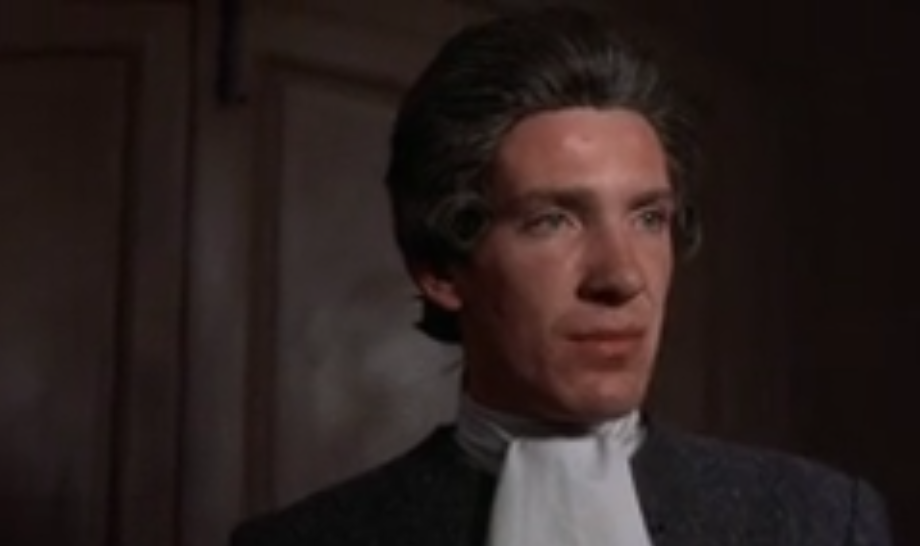
In their last scene Brandt recognizes that their nearing the end and decides to send Kiesel away despite his protests. Warner expresses the sudden devotion of Kiesel almost as a confusion to himself which fits his character so well. Mason carries himself with such genuine warmth though as Brandt tells Kiesel that he's one German worth saving after all. Mason keeps Brandt as a commander but suggests a underlying tenderness in the Colonel's words. In turn Warner's reaction is perfect as he shows Kiesel to be surprised but so touched by Brandt's words. It is a surprisingly heartfelt scene but Mason and Warner completely earn the moment. Both Mason and Warner make a strong impact throughout the film despite appearing in only few scenes as they realize both men in such vivid detail. As I wrote in the beginning, Kiesel and Brandt can easily be seen as superfluous characters, but that is never the case due to the incredible work from these two great actors.