Showing posts with label Max von Sydow. Show all posts

Monday, 30 October 2023

Alternate Best Actor 1958: Results

5. Youssef Chahine in Cairo Station - A reasonably fine performance that is a bit repetitive but shows a bit more depth later on. 

Best Scene: Nearly caught. 
4. Max von Sydow in The Magician - A purposefully limited performance however he does grant a strong presence as to be expected while also successfully subverting that as well. 

Best Scene: The performance. 
3. Gustaw Holoubek in The Noose - A striking portrayal of just a man being stuck in an emotional hole that he fails to crawl out of again and again. 

Best Scene: Making the decision. 
2. Gary Cooper in Man of the West - Cooper's best performance, that delivers a gravitas, but also a real genuine intensity in portraying a man not of the west, but essentially fed up with the west. 

Best Scene: Ghost town.  
1. Chhabi Biswas in Jalsaghar - Biswas gives a powerful and complex portrayal of a man who gradually gives more and more into his delusions. 

Best Scene: Admiring the portraits. 

Next:  Reviews of Anthony Quayle & Gunnar Björnstrand

Thursday, 21 September 2023

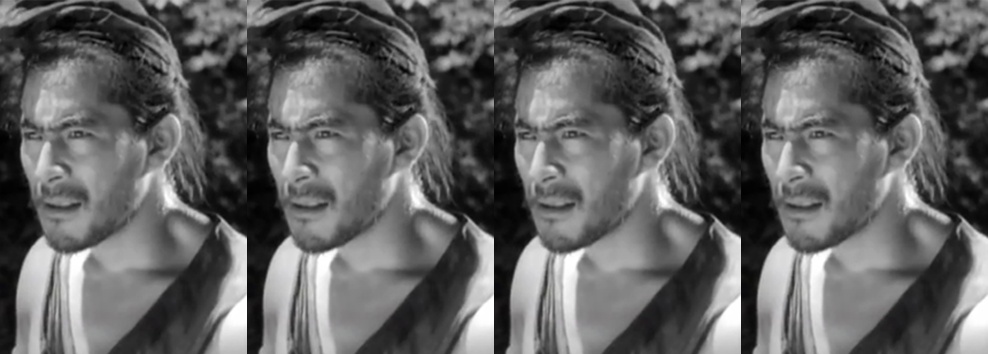
Alternate Best Actor 1958: Max von Sydow in The Magician

Max von Sydow did not receive an Oscar nomination for portraying Albert Emanuel Vogler in The Magician. 

The Magician tells the story of a wandering troupe of performers coming under scrutiny under local government as they "perform" for them. 

As with the previous year, Bergman made two very different films, though similar in terms of examining the human condition in 58. Although in Brink of Life where it was modern, intimate and more acting driven, this film is period, plot driven and more expansive in terms of all the side business. I'll say unlike something in the case of Seventh Seal where the side stories eleven the main story, this time I honestly just mostly cared about the central magician and the doctor/minister set to expose him. Von Sydow plays the former in another starring role for Bergman, and for much of the film is a mute representation of the "dark arts", emphasized all the more by a black hair and wig. Von Sydow of course has a great presence which works particularly well when playing a mute role. And there is something to be had in the manner of his performance in the early scenes where he is very arch. He plays up this manner in which he walks, he stares, he looks with a purposeful style, a presentation that is in a way a mix between Boris Karloff's monster and Bela Lugosi's Dracula. His separated fingers are of the master of mesmerism while he stalks around in this strange way as though he is somehow less than the normal human and is a creature of some kind. There is something within this performance that is innately fascinating and Von Sydow plays into that effectively. 

And while I'd never say this film is bad, because it is good as even the stuff I found less compelling certainly wasn't truly dull or poorly written, is that any tension between the central conflict isn't really maintained or built particularly if you say compare the face off between the minister and the magician against the Knight and death. And part of that is perhaps Bergman limits the magician, while also exposing him in a weird way. At first it is all about the mystique, where von Sydow stares his way throughout the performance, being everything some subject wants him to be, and darting some kind of strange hate mixed with anxiety at the minister who never stops prodding him for some kind of truth. But at a certain point we see the magician drop any mystique, when the minister goes after his wife, taking off all his wig and bear, looking like the von Sydow we know, and speaking. And the weird thing is, that it is all done very casually within the narrative, it isn't treated as a big moment, perhaps purposefully, but I'm unsure if it was the best choice to make the audience more than a step ahead. And I do like the shift in von Sydow as he suddenly is very much of a man of it all, his manner straight forward in its emotion, his delivery excessively to the point. Suddenly he becomes a man on a mission but doing it as a professional rather than a mystique. And from that we get an absolutely brilliant scene, where the magician fully goes to "perform" for the doctor, and von Sydow becomes the horror monster again, although now even more intensely. A lot of it is direction, but von Sydow pours intensity and menace into the sequence. Before again segueing to the relaxed notion and showing it all but an act, however a very purposeful act. I like this performance and I like this film, however both I think are limited by the overall approach of the film. A film where the key moments are there, yet everything seems like it should be greater than it is. Regardless it is a good performance by von Sydow, even if like much of his early work with Bergman, seems like he's warming up for the greater work later in his career.  

Sunday, 10 September 2023

Alternate Best Actor 1958

 And the Nominees Were Not:

Max von Sydow in The Magician

Chhabi Biswas in The Music Room

Gustav Holoubek in The Noose

Youssef Chahine in Cairo Station

Gary Cooper in Man of the West

Tuesday, 24 March 2020

Alternate Best Actor 1996: Results

5. Christopher Eccleston in Jude - I decided against a full review, and tried as a I might I couldn't quite find an obvious alternative, other than James Woods, but...I still didn't want to watch that film again. Eccleston to his part gives a fine performance here. It isn't anything too notable overall, as this sort wistful poetic type stuck, in his view, in a more provincial life. Eccleston gives a fine portrayal of sort of the romantic needs of the character, and his low key anguish regarding his inability to seemingly find quit the right life for himself. It doesn't amount to anything truly remarkable by any measure. His chemistry with Kate Winslet as the similarly minded woman is more than fine, though not especially notable. He is in fact a bit more interesting in his sort of anti-chemistry with Rachel Griffiths, as the woman he finds himself with, but is hardly of his dreams. Eccleston carries the film, and the character, well, but it doesn't leave too much of an impression in the end.

Best Scene: Finding what his son has done.
4. Phillippe Torreton in Captain Conan - Torreton gives a terrific performance in portraying a man who fashions himself as a true warrior, doing whatever it takes to win the battle and his carry his troops through even rather questionable circumstances.

Best Scene: Ending.
3. Timothy Spall in Secrets & Lies - Spall gives a great performance here in capturing such an honesty and powerful depiction of a strictly good person.

Best Scene: Final speech.
2. Jeffrey Wright in Basquiat - Wright gives a fascinating portrayal of an artist with a striking perspective however one that leaves him lost within the world.

Best Scene: Leaving the world.
1. Max von Sydow in Hamsun - Good predictions Shaggy, Michael McCarthy and Luke. The legendary Max von Sydow delivers one of his best performance in capturing such a unique and remarkable portraits of a "great man" living beyond his time while struggling with a deafness towards the world, even beyond his physical limitations.

Best Scene: The trial.
Updated Overall

Next: 1996 Supporting

Saturday, 14 March 2020

Alternate Best Actor 1996: Max von Sydow in Hamsun

Max von Sydow did not receive an Oscar nomination for portraying Knut Hamsun in Hamsun.

Hamsun, as per usual it seems for Jan Troell, is an underrated film following the later life of a celebrated writer turned Nazi supporter.

It is of course with a heavy heart that one must learn of the departure of a true legend of an actor such as Max von Sydow, but within that we may all also appreciate the life, career and legacy that he left behind. Max von Sydow's career was remarkable in itself as his managed to traverse across directors, language barriers, genres, and decades of ever changing film. Unlike so many actors, there was never a truly "off" decade or period for von Sydow as he managed to find notable work from his humble beginnings in Sweden all the way to the very end of his career that included highest budgeted Hollywood films. One of the definite reasons for this was as von Sydow was a notable performer in that he not only broke out internationally but he never lost touch with his roots either. Perhaps an even greater reason for this was that no matter the film, the genre, the story, the size of the part, or even the quality of the film, it never seemed to matter for von Sydow. He's one of the very few actors I can name who I never saw truly phone in a performance. This is even in the cases where he was given a role that wasn't notable, where he was cast to try to make it so, like The Force Awakens. That part was frankly unworthy of his talent, however von Sydow still brought a gravitas to the role that would've been absent without him. I continue to speak towards von Sydow's successes, because honestly that was largely where he existed, and it seemed in his own philosophy, reflected by his work, that if wasn't a great role, he'd do his best to at least offer his commanding presence to it, but if it was a great role he'd attempt to make the most out of it.

Well I am overjoyed to return to von Sydow, and though this will not be the last time, in a great part. This in the role of the noted writer Knut Hamsun, who as we enter into the story is already seen as such, as we see the man earning his Noble prize, that is only part of his accomplishments as a man. This as we are invited into the world of Hamsun, already considered to be this "great man" of Norway, and with that von Sydow seems to take as his starting point. Of course von Sydow is already ideal for any authority figure. von Sydow simply exudes that force of personality so naturally, aided by his stature, that instantly establishes any character he plays with a degree of a type of might to them. This is evident here in von Sydow's work though utilized here in a way that helps us to infer a great deal of the man even before we really learn much about him. von Sydow's demeanor here though goes beyond creating that idea though as we are granted the age of the character, which as was so often the case for von Sydow, is considerably older than he was at the time. He also though goes beyond in his work manages to convey the specific age of the man as it relates to Hamsun, as a nearly deaf man, who seems to beyond his own expected years for life. This as von Sydow defines the somewhat doddering nature of the man, that crafts such a sense of the specific wear within the man, that is most certainly of performance, as his presentation of Hamsun's wavering physical manner is a far cry from his smooth power of his manner as Leland Gaunt in Needful Things, just a few years before.

von Sydow embodies the age so well, and that statue, in that he always walks with the gaunt of really that of the true intelligentsia, yet even in the way he parts his lips, it is that of an elderly somewhat detached old man. This in lines though an absolutely brilliant idea that von Sydow realizes in his work that is fundamental in so many of the actions of Hamsun throughout the film. This as the man is comfortable with dying, not that he is suicidal, but it is rather his time in his own view. von Sydow is amazing in the way he is able to exude this seemingly peculiar comfort and make it feel so natural within the idea of the man. This is as when he speaks of the idea is as though it is a long thought of his, something he's payed much mind to. His delivery of these words is as though it is a strict understanding of where he should be and that his time simply is at an end. von Sydow portrays this wholly without anguish, but rather at times, when specifically Hamsun is presented with the troubles of his current world, a great frustration. This frustration though not towards dying, but the fact that he has to still live when he feels he should be gone. von Sydow crafts in his eyes as this understanding, as we see in one scene where he appears as though he will die in the snow, it is not of fear, but of just a contentment that the bell has rung for him as he's expected. This is an essential idea that von Sydow realizes so vividly as von Sydow presents us with a man who basically has pulled up his personal stakes, making it so his actions in a way in the world shouldn't matter as much, in his own view.

Another key motivating factor for the life of Hamsun however is in his wife Marie (Ghita Nørby), where early on we have a outstanding scene between von Sydow and Nørby. This as they suffer a row between one another where direct hostilities come out with Nørby bringing a fiery emotion against von Sydow who is great in his way of playing as potent of emotions however fittingly internalized within the Hamsun. Their conversation is excellent as we are granted the sense of their relationship so quickly as we see all the frustrations in Marie come out in Nørby's work against von Sydow who plays it so well as Hamsun's way of attempting to be as though he is above such a fight. von Sydow's eyes though, and the edges of his deliveries though very much paint the same type of anguish within Hamsun towards their wife. Frustrations that allude to years of troubles, but honestly the intensity within both that could only exist in a long lasting relationship. This as even as they fight we instantly are granted a sense that there is a connection, and understanding in a way, though now broken towards a venomous bitterness between the two. We see the struggle of their relationship continue in his noble prize ceremony, which is a lower key scene yet is a just about perfect bit of acting from both, as we get some classic elderly married couple bickering as Hamsun admonishes his wife for not translating his words exactly to their German audience. The two manage to even be a bit comic in a sense, however more than anything grant the sense of the festering anger in the relationship that both actors draw out so naturally.

That seemingly minor interaction again though is part of the "case" that von Sydow is making in creating really the motivation we will find as Hamsun becomes a Nazi proponent. This being an idea far more enthusiastically found within his wife, as we see in that earlier scene where her added words where convenient towards the Nazi cause. Hamsun of course did not attempt a full correction that to made natural within von Sydow's work in showing the man, who has a certain allowance for such things since he believes he'll be leaving the world soon. This as the war begins we see von Sydow portray the man as this elder statesman of his country seemingly falling into what he believes will be the expected line of thinking based on his wife's sentiments, and honestly to a degree his lack of concern for the matter. This as we see in the scenes of speaking words that are support of the Nazi line, von Sydow depicts it as though he was giving an authorized commendation to just any colleague, this even in his praise of Hitler. von Sydow again emphasizing a man going through the motions in interacting with the world with often this sense of unawareness towards the rest of the world, initially. This begins to crack as one of his sons wishes to join the army to fight on the front lines, and we see the conflict between Hamsun and his wife, over her fanatical beliefs and his nearly perfunctory beliefs. von Sydow delivers beautifully this anxiety of the man within his expression as he fails to really fight for those beliefs in any way, and instead emphasizes the sense of confusion regarding the intensity shown by others to "push" it.

von Sydow then is incredible as we see so much of talent as an actor here by his way of crafting the image of the "great man" who has become so certain in the expectation of his life, that it will be his downfall. One early one, that would be hilarious if it were not for the gravity of the situation, is when Hamsun directly speaks to one of the party men quietly questioning Hitler's views and treatments towards Jews as though it was an academic exercise. This is even as when asked if he read Mein Kampf, von Sydow's delivery of Hamsun's having not got around to it, is simply marvelous as he brings almost a sense of disinterest again in emphasizing the man's detachment from that world that he is commenting on. This continues though as we see von Sydow's great emotional range here in particularly, though used so effectively here in a slightly alternative way, as he breaks down that expectation the man has set for himself, as he is truly looked at by others as a statesman. This includes those whose family members are being rounded up and killed by the puppet government set up by Hitler. When one such mother comes to him, von Sydow's reactions in the scenes show a man just trying to avoid the thought of it as he attempts to push through, however when she finally stops von Sydow's moment of thought before asking for the name to help, is performed so well as this moment of clarity and finally a bit of an attachment for Hamsun as he reflects finally a bit of genuine concern. This even though as von Sydow brings it out as this frustration at needing to be part of something he thought he was done with.

This continues as it becomes quite clear that the Nazis are not timid about committing atrocities, to which Hamsun attempts to do something about by being granted an audience with Hitler himself. von Sydow's portrayal of Hamsun preparations are terrific as he presents now a real nervousness and now an anxiety for the world he is in. His eyes fashion now a sense of real fear reflective as he must actually look into the world in a way he hasn't for some time. This found all the more in his harried way of speaking as Hamsun recites his practiced words for Hitler, which is a mix of praise and actual critique. von Sydow's performance in the scene where Hamsun finally speaks to Hitler, is spectacular. This as we see the man attempting the initial pleasantries for the leader he has deemed that he must respect, but this with a confused attempt to offer a real critique. This made all the more broken through translators, Hitler and his completely different intentions for the meeting and Hamsun's deafness. von Sydow captures this sort of madness though with a powerful heartfelt emotion though as in his words there is now a real strain within the idea of concern for the needless violence and brutality of the puppet regime in Norway. von Sydow gradually portraying this degradation into a true confusion as Hitler cannot brush his thoughts aside, though while Hamsun cannot hear his words brushing his concerns aside either. von Sydow doesn't make the scene a simple one of righteous passion, though there are signs of that, but this incredible mess of an attempt at of a once so articulate man attempting to speak in terms his chosen audience simply would never understand or care to understand.

This leaving Hamsun to look like a foolish old man, though what I love is that von Sydow shows in the moment the earnest attempt in the man to do the right thing, but unfortunately failing to make any real impact. After that failure we see Hamsun return to the contentment to die, until that Germany falls, and now Hamsun and his wife are arrested to be processed as potential collaborators. Hamsun being sent to a mental hospital to attempt to discredit any previous actions of his as that of a man with dementia. von Sydow's work is so well textured again, in the way we are given such a sense of Hamsun's state of mind, as though he is a mystery to the authorities von Sydow gives us the essential insight into the man. This is as I love the poignancy in a brief moment where he notices a bicycle, as he sits in a form of house arrest, and that moment of appreciation in von Sydow's hands grants such a sense of appreciation for youth and somberness regarding the loss of agency. When sent to the institution von Sydow is masterful in creating such a quiet yet potent sense of the man's confusion and distaste of the circumstances. This as dealing with the prodding questions his eyes evoke such an unpleasantness as this is such an alien experience for him, with the doctors questioning his mind rather than praising it.von Sydow shows so well the shattered state that results, as it is this state of contemplation towards his own self while being troubled by the questions he must endure. This eventually includes watching film of the holocaust, where von Sydow is outstanding in his reaction that manages to not only show the heartbreak of the image, along with the uneasiness of a slowly building guilt out of confusion as he comes to understand the nature of the images. This is almost immediately followed up with being betrayed by his wife, through a long confession that accuses Hamsun of being the fanatical one.

von Sydow is great in as we see Hamsum, if briefly, lose any attempt at his stature of the "great man" as he berates his wife and von Sydow puts bluntly the sense of betrayal. From these trials, an eventual real trial is led to based upon Hamsun's mental state more than anything. The trial scene is again one of von Sydow's great scenes of his career, though again bringing to life a difficult scene with an an unexpected result. This as again this is not a traditional defense, rather von Sydow manages to convey the complexity as there are sense of a sense of guilt in what his words had helped contributed to in his eyes, though his speaking of the words that have  some of that, but enough of a passion of man desperately attempting to clearly explain his position. This is as untenable of a position as it is, von Sydow manages to show a man both suffering in his state, but also in his element as a man who made his life through words. This is within the sense of partial excuse as he explains his deafness, where von Sydow shows a wavering resolve, that while his delivery is still earnest, we see the man's inability to wholly speak these words without a least a slight sense of shame. The film ends with Hamsun being left to fighting against a slight exile, while initially rejecting his wife, before slowly inviting her back into his life as he nears the end of his. The final scenes between himself and Nørby are particularly special as the two finally show some tenderness in the forgiveness, though what makes it so notable is that it feels as though it comes from that same connection we witnessed within their bitter fights. This as the warmth in the reconciliation found to be as complex as their fights were. This though is what we find throughout Max von Sydow's work here, that grants such a uniquely powerful and complex portrayal of essentially a difficult man of history. He is neither a hero nor a villain, he is a man with qualities and numerous faults. This which von Sydow details so profoundly. This is a great performance by Max von Sydow, that is part of the legacy that the man has gifted to all of us. This again in marking his work through intelligence, striking presence, and always  an absolute conviction to the material and character he was giving himself to. Although the loss of von Sydow is of course hard, may we all continued to appreciate Max von Sydow for all that he left us, including this incredible work.

Monday, 9 March 2020

Alternate Best Actor 1996

And the Nominees Were Not:

Philippe Torreton in Captain Conan

Jeffrey Wright in Basquait

Max von Sydow in Hamsun

Timothy Spall in Secrets & Lies

Christopher Eccleston in Jude

Sunday, 4 June 2017

Alternate Best Actor 1968: Results

10. Vincent Price - Witchfinder General - Price gives an interesting performance attempting to bring complexity to his morally compromised inquisitor, unfortunately the film decides to use him just as a one note villain.

Best Scene: Being convinced to give a reprieve.
9. Jean-Louis Trintignant in The Great Silence - Trintignant gives a good performance as he brings the steely gaze needed for his swift killer, along with a bit of pathos within his silence alluding to his motivations though he is a tad overshadowed by his more maniacal co-star.

 Best Scene: Silence remembers.
8. Malcolm McDowell in If.... in McDowell gives a good performance as he portrays the gradual breakdown of a student into essentially a psychopath even though if it might feel like a warm up to his more renowned turn as a juvenile killer.  

Best Scene: Killing spree
7. Burt Lancaster in The Scalphunters - Lancaster gives an enjoyable turn portraying the right comical frustrations within his more typical western hero, along with striking the right endearing chemistry with his co-star.

Best Scene: The final fight.
6. Lee Marvin in Hell in the Pacific - Marvin gives a memorable one man show as a man slowly losing his mind as well as a memorable two man show in realizing a most unique yet believable chemistry with Toshiro Mifune.

Best Scene: The curious showdown. 
5. Ossie Davis in The Scalphunters - Davis gives a very entertaining portrayal of his outgoing yet quietly cunning character, and again has great chemistry with his co-star Lancaster.

Best Scene: The final fight. 
4. Toshiro Mifune in Hell in the Pacific - Shares his scenes so well with Marvin, as well as stands out well with his own one man show as the refined soldier struggling through his ordeal.

Best Scene: Finding the magazine.
3. Max von Sydow in Shame - von Sydow as per usual creates such a convincing relationship with Liv Ullmann which is especially pivotal here as the two together offer such a natural and harrowing depiction of a married couple dealing with and being changed by war.

Best Scene: Killing a man.
2. Charles Bronson in Once Upon a Time in the West - Bronson more than fulfills the role of the badass gunslinger, he goes further though creating such an endearing and humorous chemistry with his co-star Jason Robards, then goes even further in offering such an underlying emotional poignancy to the film through his performance. 

Best Scene: The final duel.
1. Burt Lancaster in The Swimmer - This one for the overall came down two rather different performances though by both masterful in their separate intentions. Bronson being such a brilliant minimalist performance, and Lancaster being such a brilliant expressive tour de force. Both have their unique challenges and match every one of them. Lancaster's task is different. Bronson is an essential part to an amazing film. Lancaster though is the factor that makes his film work at all offering a reality and heartbreaking humanity to such a surreal concept. Once Upon a Time in the West would have probably still have been great with a lesser lead, but not as great. The Swimmer would probably have been a failure without what Lancaster does. Even with that somewhat flimsy reasoning though this is still sort of a toss up as I love both performances, but I have to choose one.

Best Scene: "This is my wagon"
Updated Overall

Next Year: 1968 Supporting

Friday, 2 June 2017

Alternate Best Actor 1968: Max von Sydow in Shame

Max von Sydow did not receive an Oscar nomination for portraying Jan Rosenberg in Shame.

Shame is an excellent film that follows a couple through a war torn country.

The film follows Max von Sydow as Jan with his wife Eva naturally played by Liv Ullmann. The two seemed as though they specialized in playing married couples in a few years also doing so in Ingmar Bergman's other film from 1968 Hour of the Wolf, and later on in The Emigrants and its sequel The New Land. The reason for this seems rather obvious when watching the two together as they have such an authentic chemistry with one another. A chemistry that quite honestly covers whatever part of a married relationship they may need to be in. This is particularly essential in Shame since the two almost share all their scenes together and their relationship is rather symbiotic here. The film actually begins in an unassuming enough fashion as the two just go about what seems a normal day though in the normal day we do see what makes them who they are as a married couple. von Sydow and Ullmann have that ease in each other presence that offers the years together. The two though are equally effective though in sort of portraying the same ease in conflict as when they fight over their past difficulties that too feels so natural and so a part of what they've done to each other over the years such as Jan's infidelities in the past. The two though so elegantly create that rich history as they never define the relationship only on a single facet of their lives.

Their convincing portrayal of the married couple is essential to the film as the two together lead us through their experience through the war, which is depicted here in a unique fashion. The war never exactly happens, we see the military uniforms, the trucks, but it seems almost in the background until the other army begins to show up. This happens without warning with Jan and Eva finding themselves in the middle of it all. The two of them are excellent together in portraying the needed visceral intensity of the moments really as the film takes such a barrage of them which von Sydow and Ullmann have to stay with. Both actors capture the rapid fire confusion in the moment as they reveal the struggle just to keep up what is happening, portraying actually the fear with the lack of comprehension reinforcing the dire nature of the situation. One particularly effective moment in this is when they are suddenly approached by a propaganda crew for a interview and von Sydow and Ullman convey the complete loss of sense in their eyes and delivery as the barely know what is going on. Both are terrific in how natural they in revealing how unnatural the situation is. They are both just two normal people there not soldiers.

I love their physical performances in these scenes as the two of them show so well the two grip one another attempting to hold onto to each other for any source of solace and in the most harrowing moments reveal a particular striking connection than was not nearly evident during peacetime, hidden usually by their various squabbles. The two do not cheat the idea or show that this in anyway truly improves their relationship by any measure. What they instead show is the way the two basically come closer together the more dire the situation given that in their embrace the two show them searching for any comfort in the arms of each other. The two though reveal the desperation in this in that they do not always reveal any success in this act, only the attempt for it and to hold onto something throughout their trials. Again what is so remarkable about this is just how natural the two are together and make every scene have all the greater impact due to that. They pull the viewer right into their struggle as there never feels a hint of acting within either of their performances that offers such a strict authenticity in every scene. The create the needed focal point within every new purposefully random thing that comes from the war.

Now where their performances separate most strongly is within the portrayal of how each of them are changed as individuals through their experiences. von Sydow so effectively keeps Jan an average man in his situation, an average man who isn't quite a coward but also just wants to survive. There is nothing early on duplicitous in this whatsoever through the  genuine fear and confusion he portrays that almost overwhelms the man. This changes though when they are offered some reprieve by an official of one of their armies unfortunately the official requires sexual favors in return. von Sydow is heartbreaking in his depiction of the moment where the implications of this seem to finally dawn on him. The object grief he reveals is palatable as he so quietly just brings to life such earnest devastation in the man. A devastation that is not alleviated by Eva's cold reaction to his sorrow. This soon leads to the other army gaining favor again where they encourage Jan to execute the official. von Sydow is brilliant in the scene as his performances captures such an awkwardness in the moment of a sort of vengeance. He shows the anger within it but also the hesitations of a man who is not a killer. There is something so broken in his performance that fits so well to the average man doing something he should never had to do. The change to the harder man is not a simple transition but rather von Sydow makes it a horrible mess as it should be for a man like Jan. It seems he kills again and von Sydow makes sense of that because of this approach. von Sydow reveals a man on a edge that he barely even understands revealing just this impulsive reactions from moment to moment presenting someone trying to find a way past his breaking point. When Jan in finding his "escape" even suggests Eva need not come, von Sydow makes the brutality in the statement honest by showing it to come from the detached state for survival Jan has fallen into. von Sydow shows the narrow view of the man just looking for any way to depart from his troubles. Their return as a couple at the end is muted and haunting moment as Ullmann and von Sydow leave on the two with each other but lost in the turmoil of their experiences.

Sunday, 14 May 2017

Alternate Best Actor 1968

And the Nominees Were Not:

Lee Marvin in Hell in the Pacific

Burt Lancaster in The Scalphunters

Charles Bronson in Once Upon a Time in the West

Malcolm McDowell in If....

Vincent Price in Witchfinder General

Predict Those Five or These Five.

Toshiro Mifune in Hell in the Pacific

Ossie Davis in The Scalphunters

Jean-Louis Trintignant in The Great Silence

Max von Sydow in Shame 

Burt Lancaster in The Swimmer

Or Both. 

Monday, 2 May 2016

Alternate Best Actor 1971: Results

5. Jon Finch in Macbeth - The film purposefully restricts his ability to explore the character, but Finch still manages to give an effective portrayal of the transformation of Macbeth particularly in the way he suggests his misdeeds age him.

Best Scene: Learning about the Lady
4. Al Pacino in The Panic in Needle Park - Pacino, unlike the film itself, creates an understanding in his character's disjointed nature effectively showing the different sides of such a man whether he's revealing an abundance of charm, or simply wasting away.

Best Scene: Bobby asks Helen to score for him.
3. Max von Sydow in The Emigrants -I apologize as I did not mean to shortchange this great actor, but I chose not to review the performance only because I felt I could not add anything to what I wrote about his work in the sequel where I felt he had a more dynamic character arc to realize since everything that's great in this performance can be seen there as well he only gets to explore the character further. This is also a very strong performance though that once again works through the sheer simple honesty he brings to the role, along with his marvelous chemistry with Liv Ullmann(who once again is perfection by the way) that works so in tandem with the wonderful vision realized by the film.

Best Scene: Watching over his sick wife.
2. Oliver Reed in The Devils - Reed gives a great performance as he stands as a needed straight man for the film, but also creates an affecting portrait of a priest devoted to his specific ideals.

Best Scene: Defending himself in court.
1. Paul Scofield in King Lear - Good Predictions RatedRStar, Michael Patison and Luke. Scofield more than proves his ability with the words of the bard, through his daring and truly powerful portrayal of the tragic king.

Best Scene: The storm.
Updated Overall (with a few extras):

Next Year: 1971 Supporting

Monday, 28 March 2016

Alternate Best Actor 1971

And the Nominees Were Not:

Oliver Reed in The Devils

Jon Finch in Macbeth

Paul Scofield in King Lear

Al Pacino in The Panic in Needle Park

Max von Sydow in The Emigrants

Saturday, 14 March 2015

Alternate Best Actor 1972: Results

5. Burt Reynolds in Deliverance - Reynolds gives an interesting portrayal that matches yet quietly subverts his character's view of masculinity.

Best Scene: Lewis rescues Bobby and Ed.
4. Jon Voight in Deliverance - Voight gives a sympathetic and moving portrayal of a man who is both physically and mentally damaged by his journey.

Best Scene: Ed shoots the Hillbilly.
3. Robert Redford in The Candidate - Redford gives a strong performance where he transforms from a somewhat acerbic though passionate man to a charismatic though vapid politician.

Best Scene: McKay's laughing fit.
2. Max von Sydow in The New Land - Max von Sydow gives a great performance of beautiful simplicity through a honest depiction of a man's life in a new land.

Best Scene: Karl-Oskar's final moments with his wife.
1. Klaus Kinski in Aguirre, The Wrath of God - Good Predictions Michael McCarthy, Kevin, Luke, GetDonaldSutherlandAnOscar, RatedRStar, and GM. Kinski gives a mesmerizing portrayal of a man's descent into madness. 1972 was filled with some great performances but I went with the one I simply loved watching the most out of all them.

Best Scene: Alone on the raft. 
Overall Rank:
  1. Al Pacino in The Godfather 
  2. Laurence Olivier in Sleuth
  3. Klaus Kinski in Aguirre, The Wrath of God
  4. Max von Sydow in The New Land
  5. Bruce Dern in Silent Running
  6. Stacy Keach in Fat City
  7. Robert Redford in The Candidate
  8. Jon Voight in Deliverance
  9. Michael Caine in Sleuth
  10. Marlon Brando in The Godfather
  11. Burt Reynolds in Deliverance
  12. Marlon Brando in Last Tango in Paris
  13. John Wayne in The Cowboys
  14. Paul Newman in The Life And Times Of Judge Roy Bean
  15. Gene Hackman in The Poseidon Adventure
  16. Peter O'Toole in The Ruling Class
  17. Michael York in Cabaret 
  18. Charles Grodin in The Heartbreak Kid
  19. Jeff Bridges in Fat City
  20. Clint Eastwood in Joe Kidd
  21. Lee Marvin in Prime Cut
  22. Jack Lemmon in Avanti!
  23. Woody Allen in Play it Again, Sam
  24. Steve McQueen in The Getaway
  25. Cliff Robertson in The Great Northfield Minnesota Raid
  26. William Daniels in 1776
  27. Kevin Hooks in Sounder
  28. Ryan O'Neal in What's Up Doc?
  29. Jon Finch in Frenzy
  30. Simon Ward in Young Winston
Next Year: 1972 Supporting

Tuesday, 10 March 2015

Alternate Best Actor 1972: Max von Sydow in The New Land

Max von Sydow did not receive an Oscar nomination for portraying Karl-Oskar Nilsson in The New Land.

The New Land is a very eloquently straight forward film depicting the lives of Swedish Immigrants settlers in America.

Max von Sydow leaves his roots of the existential angst filled world of Bergman for a much simpler world, although certainly no less grim technically speaking. Max von Sydow's performance is quite unassuming in nature as Karl-Oskar is a very unassuming man. The film opens as he and his family move into the new land that he purchased out in American west. von Sydow's performance early on is that of an uncontrollable enthusiasm. There is such a genuine joy in von Sydow's expression as he sees the place that he will call home. In every one of these moments as he looks over every piece of this life of his von Sydow's creates such a palatable optimism in the man as he boasts what he will make out of the untamed land. von Sydow shows a man who has the thrill of a man who is genuinely beginning the living of his dream, and in these early scenes von Sydow kinda personifies the American dream through his depiction of Karl-Oskar's view of what the New Land means to him. Of course a dream can only be so long before reality must set in.

The reality setting in is not necessarily a bad thing, well at least not at first. von Sydow though does well to just naturally portray the enthusiasm in Karl-Oskar slowly diminishes over time. It is not as though Karl-Oskar even has to suffer serious hardship at first rather von Sydow nicely shows just falling into a basic comfort with the land therefore technically speaking making the experience less special. von Sydow's performance becomes no less special though because of how consistently authentic his performance feels as he begins to just simply show Karl-Oskar relax in his surroundings. The film then proceeds to mostly depict just the day to day lives of Karl-Oskar and his immediate family. von Sydow thrives well within in the relatively simplistic story he lies in for awhile. There is something wonderful in the way von Sydow depicts Karl-Oskar manner in life. He is quietly compelling here as he always keeps Karl-Oskar alive as a man, he's not simply just there to be viewed doing various takes. There is always a personality and a life being lived because of von Sydow's very effective performance of Karl-Oskar as an average man though not a forgettable one.

von Sydow is particularly good in realizing the relationships of Karl-Oskar in a humble though very honest feeling fashion. There are just the well handled slight moments such as the certain awkwardness in Karl-Oskar when he deals with the local shopkeeper and has to deal with the language barrier, or just the moments where he basically just shoots the breeze with the other Swedish settlers, von Sydow just beautifully depicts another facet of Karl-Oskar lives. A more substantial relationship though is found between Karl-Oskar and his younger brother Robert (Eddie Axberg). von Sydow's is quite good as he establishes the difficult dynamic between the two. He shows Karl-Oskar as almost trying to lord over his brother constantly as though he is his father and that Robert should just listen to everything he says. von Sydow does well to not really bring any warmth in this respect needed to be a father figure which he's not because he's his brother not his father. von Sydow finds a certain harshness in his manner towards him finding that Karl-Oskar is almost too quick to judgment since he trying to be a father than really being one.

Then of course there is his most important relationship which is with his wife Kristina (Liv Ullmann). It's an interesting relationship between the two because they really don't have many overtly romantic moments between one another. Technically their relationship is one of few words, but that does not mean it is a cold one. von Sydow and Ullmann have any absolutely flawless chemistry with one another. They manage to create the love between the two so it is always felt even though it is not truly often stated. Their interactions with one another though suggests a certain comfort in one another and the question of whether they love one another never must be asked, it is simply the truth from the performances from both of the actors. There is a sweetness and warmth that is so delicately earned that it is something to behold all on its own. von Sydow is outstanding in creating that underlying sense of tenderness that Karl-Oskar quietly exudes towards in his interactions to her particularly whenever she may be in distress. They find the relationship of two people who have loved each other for so long that it seems as though it will always be that way.

As the film progresses von Sydow is especially effective in depicting the continuing aging in Karl-Oskar and how he changes with his changing life as well as the changing landscape around him. von Sydow's transition is a marvel to behold as such a subtle and so honest feeling portrayal of a man going through life. von Sydow articulates every moment of the life in such a wonderful way whether it be one of considerable happiness, or sadness or all that lies between von Sydow makes it genuine. This makes Karl-Oskar's perhaps worst moment particularly powerful. That being when his wife is slowly dying because of internal problems brought upon by too many pregnancies, and despite warnings that another will be her death she indeed becomes pregnant once more. The final scene between von Sydow and Ullmann is absolutely heartbreaking as the two still keep within the nature of their characters yet find such poignancy in the final moment they share together. von Sydow is incredibly moving as he realizes just how devastating the loss is Karl-Oskar, as even in the few scenes afterwards he portrays Karl-Oskar as a man who will no longer be the same without his devoted wife by his side. I loved every face of Max von Sydow's work as he achieves greatness within what seems like such simplicity.

Saturday, 7 March 2015

Alternate Best Actor 1972

And the Nominees Were Not:

Burt Reynolds in Deliverance

Jon Voight in Deliverance

Robert Redford in The Candidate

Klaus Kinski in Aguirre, The Wrath of God

Max von Sydow in The New Land

Thursday, 9 May 2013

Alternate Best Supporting Actor 1975: Results

5. Leon Vitali in Barry Lyndon- Vitali gives a good performance being properly pompous but as well managing to be somewhat sympathetic by showing where his character is coming from.

Best Scene: Bullingdon duels Barry.
4. Charles Durning in A Dog Day Afternoon- Durning doesn't have much of a role, but he makes more than the most of it portraying the method of the police negotiator in a very compelling fashion.

Best Scene: Moretti tries to handle Sonny and the crowd. 
3. Max von Sydow in Three Days of the Condor- Max von Sydow is excellent in his portrayal of the cold calculated killer who we absolutely believe when he says his job is refreshing.

Best Scene: Joubert warns Condor about his possible fate.  
2. John Cazale in Dog Day Afternoon- Cazale once again gives a great tragic performance. He is terrific in creating both a danger in that violence bubbling underneath the man, but as well the sadness by earnestly showing just how lost his character is.

Best Scene: Sal asks Sonny if they will really kill the hostages. 
1. Robert Shaw in Jaws- Good Prediction RatedRStar, Michael Patison, and JamDenTel. Although I loved the performances of Max von Sydow, John Cazale, George Burns and Burgess Meredith I did not have to think twice about who would be my choice for the year overall. Robert Shaw is amazing in the role of the Ahab like shark hunter Quint. He is outstanding every moment he is on screen giving an equally entertaining and heartbreaking turn. His delivery of the Indianapolis speech alone should have guaranteed him both an Oscar nomination and an Oscar win.

Best Scene: The Indianapolis monologue. 
Overall Rank:
  1. Robert Shaw in Jaws
  2. John Cazale in Dog Day Afternoon
  3. Max von Sydow in Three Days of the Condor
  4. Richard Dreyfuss in Jaws
  5. Burgess Meredith in The Day of the Locust
  6. George Burns in The Sunshine Boys
  7. Nicol Williamson in The Wilby Conspiracy
  8. Brad Dourif in One Flew Over the Cuckoo's Nest
  9. Bill Owen in In Celebration
  10. Charles Durning in Dog Day Afternoon
  11. Alan Bates in In Celebration
  12. Chris Sarandon in Dog Day Afternoon
  13. Brian Cox in In Celebration
  14. Bruce Dern in Smile
  15. Ugo Tognazzi in My Friends
  16. Donald Sutherland in The Day of the Locust 
  17. Claude Dauphin in That Most Important Thing: Love
  18. Will Sampson in One Flew Over the Cuckoo's Nest
  19. Klaus Kinski in That Most Important Thing: Love
  20. Leon Vitali in Barry Lyndon
  21. Jacques Dutronc in That Most Important Thing: Love
  22. Oliver Reed in Tommy
  23. Cliff Robertson in Three Days of the Condor 
  24. Fernando Rey in Seven Beauties
  25. Dominic Guard in Picnic at Hanging Rock
  26. Michael Palin in Monty Python and the Holy Grail
  27. Keenan Wynn in Nashville
  28. Christopher Lloyd in One Flew Over the Cuckoo's Nest
  29. Murray Hamilton in Jaws
  30. Lance Henriksen in Dog Day Afternoon
  31. John Cleese in Monty Python and the Holy Grail
  32. Phillppe Noiret in My Friends
  33. Eric Idle in Monty Python and the Holy Grail
  34. Amjad Khan in Sholay
  35. Sydney Lassick in One Flew Over the Cuckoo's Nest
  36. Henry Gibson in Nashville
  37. William Redfield in One Flew Over the Cuckoo's Nest
  38. Richard Attenborough in Brannigan
  39. John Jarratt in Picnic at Hanging Rock
  40. Wojciech Pszoniak in The Promised Land
  41. Peter Eyre in Hedda
  42. John Houseman in Three Days of the Condor
  43. Christopher Plummer in The Man Who Would Be King
  44. Graham Chapman in Monty Python and the Holy Grail
  45. Jason Robards in A Boy and His Dog  
  46. Richard Benjamin in The Sunshine Boys
  47. Allen Garfield in Nashville
  48. John Houseman in Rollerball
  49. Patrick Stewart in Hedda
  50. Sully Boyer in Dog Day Afternoon
  51. Philippe Leotard in French Connection II
  52. Strother Martin in Hard Times
  53. James Coburn in Bite the Bullet
  54. Saeed Jeffrey in The Man Who Would Be King
  55. Bernard Blier in My Friends
  56. Robert Duvall in The Killer Elite
  57. Ned Beatty in Nashville
  58. Bob Hoskins in Inserts
  59. Ben Johnson in Bite the Bullet
  60. Scatman Crothers in One Flew Over the Cuckoo's Nest
  61. Sylvester Stallone in Death Race 2000
  62. James Woods in Night Moves
  63. Keith Carradine in Nashville
  64. William Duell in One Flew Over the Cuckoo's Nest
  65. Andrzej Seweryn in The Promised Land
  66. Saeed Jaffrey in The Wilby Conspiracy
  67. William Atherton in The Hindenburg
  68. Jack Warden in Shampoo
  69. Scott Glenn in Nashville
  70. Burt Young in The Killer Elite
  71. Harold Gould in Love and Death
  72. Bruce Robinson in The Story of Adele H.
  73. Jackie Earle Haley in The Day of the Locust
  74. Danny DeVito in One Flew Over The Cuckoo's Nest
  75. Ian Bannen in Bite the Bullet
  76. John Huston in The Wind and the Lion
  77. Hardy Kruger in Barry Lyndon
  78. Michael Murphy in Nashville
  79. Fernando Rey in French Connection II
  80. Luther Adler in The Man in the Glass Booth 
  81. Kenneth Mars in Night Moves
  82. Gene Sacks in The Prisoner of Second Avenue
  83. George Kennedy in The Eiger Sanction
  84. Lawrence Pressman in The Man in the Glass Booth 
  85. Patrick Magee in Barry Lyndon
  86. James Tolkan in Love and Death
  87. James Broderick in Dog Day Afternoon
  88. Charles Durning in The Hindenburg
  89. Edward Binns in Night Moves
  90. Sylvester Stallone in Farewell, My Lovely
  91. Harry Dean Stanton in Farewell, My Lovely
  92. Robert DoQui in Nashville
  93. John Ireland in Farewell, My Lovely
  94. Brian Keith in The Wind and the Lion
  95. Jack O'Halloran in Farewell, My Lovely
  96. Stephen Davies in Inserts
  97. Jan-Michel Vincent in Bite the Bullet
  98. George Hamilton in Once is Not Enough
Next Year: 1975 Lead