And They Are:
Nicolas Cage in Deadfall
Nicolas Cage in The Wicker Man
John Travolta in Battlefield Earth
Jon Voight in Anaconda
Eddie Redmayne in Hick
Now for prediction purposes they should be ranked from most Wiseaus worthy to least Wiseaus worthy.
Showing posts with label Jon Voight. Show all posts
Friday, 25 March 2016
Saturday, 14 March 2015
Alternate Best Actor 1972: Results
5. Burt Reynolds in Deliverance - Reynolds gives an interesting portrayal that matches yet quietly subverts his character's view of masculinity.
Best Scene: Lewis rescues Bobby and Ed.
4. Jon Voight in Deliverance - Voight gives a sympathetic and moving portrayal of a man who is both physically and mentally damaged by his journey.
Best Scene: Ed shoots the Hillbilly.
3. Robert Redford in The Candidate - Redford gives a strong performance where he transforms from a somewhat acerbic though passionate man to a charismatic though vapid politician.
Best Scene: McKay's laughing fit.
2. Max von Sydow in The New Land - Max von Sydow gives a great performance of beautiful simplicity through a honest depiction of a man's life in a new land.
Best Scene: Karl-Oskar's final moments with his wife.
1. Klaus Kinski in Aguirre, The Wrath of God - Good Predictions Michael McCarthy, Kevin, Luke, GetDonaldSutherlandAnOscar, RatedRStar, and GM. Kinski gives a mesmerizing portrayal of a man's descent into madness. 1972 was filled with some great performances but I went with the one I simply loved watching the most out of all them.
Best Scene: Alone on the raft.
Overall Rank:
Best Scene: Lewis rescues Bobby and Ed.
4. Jon Voight in Deliverance - Voight gives a sympathetic and moving portrayal of a man who is both physically and mentally damaged by his journey.
Best Scene: Ed shoots the Hillbilly.
3. Robert Redford in The Candidate - Redford gives a strong performance where he transforms from a somewhat acerbic though passionate man to a charismatic though vapid politician.
Best Scene: McKay's laughing fit.
2. Max von Sydow in The New Land - Max von Sydow gives a great performance of beautiful simplicity through a honest depiction of a man's life in a new land.
Best Scene: Karl-Oskar's final moments with his wife.
1. Klaus Kinski in Aguirre, The Wrath of God - Good Predictions Michael McCarthy, Kevin, Luke, GetDonaldSutherlandAnOscar, RatedRStar, and GM. Kinski gives a mesmerizing portrayal of a man's descent into madness. 1972 was filled with some great performances but I went with the one I simply loved watching the most out of all them.
Best Scene: Alone on the raft.
Overall Rank:
- Al Pacino in The Godfather
- Laurence Olivier in Sleuth
- Klaus Kinski in Aguirre, The Wrath of God
- Max von Sydow in The New Land
- Bruce Dern in Silent Running
- Stacy Keach in Fat City
- Robert Redford in The Candidate
- Jon Voight in Deliverance
- Michael Caine in Sleuth
- Marlon Brando in The Godfather
- Burt Reynolds in Deliverance
- Marlon Brando in Last Tango in Paris
- John Wayne in The Cowboys
- Paul Newman in The Life And Times Of Judge Roy Bean
- Gene Hackman in The Poseidon Adventure
- Peter O'Toole in The Ruling Class
- Michael York in Cabaret
- Charles Grodin in The Heartbreak Kid
- Jeff Bridges in Fat City
- Clint Eastwood in Joe Kidd
- Lee Marvin in Prime Cut
- Jack Lemmon in Avanti!
- Woody Allen in Play it Again, Sam
- Steve McQueen in The Getaway
- Cliff Robertson in The Great Northfield Minnesota Raid
- William Daniels in 1776
- Kevin Hooks in Sounder
- Ryan O'Neal in What's Up Doc?
- Jon Finch in Frenzy
- Simon Ward in Young Winston
Wednesday, 11 March 2015
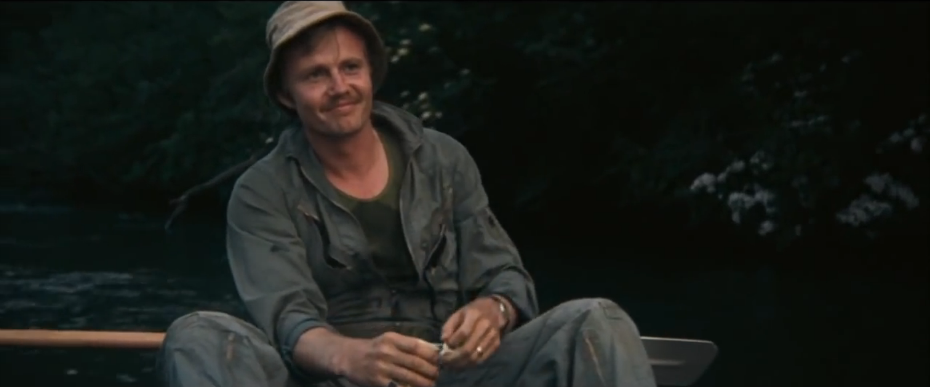
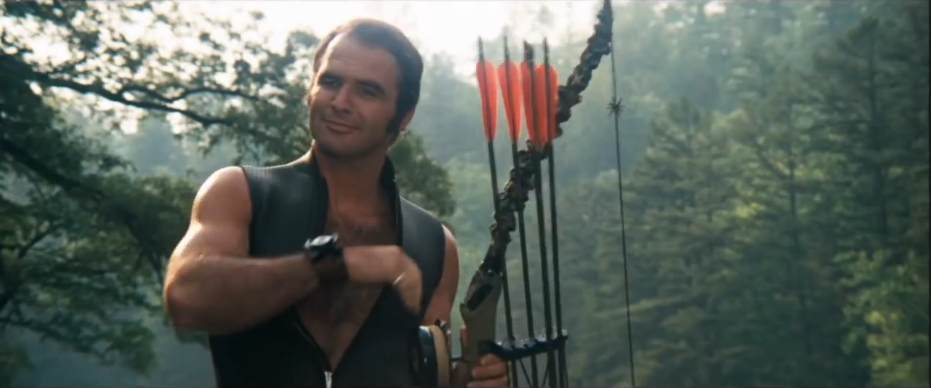
Alternate Best Actor 1972: Jon Voight and Burt Reynolds in Deliverance
Jon Voight did not receive an Oscar nomination, despite being nominated for a Golden Globe, for portraying Ed Gentry, and Burt Reynolds did not receive an Oscar nomination for portraying Lewis Medlock in Deliverance.
Deliverance is a very effective thriller about a group of four men who venture into dangerous backwoods to go on a river-rafting trip.
Jon Voight plays Ed one of the four "city-folk" who go off into the backwoods for the rafting trip on a secluded river. Voight portrays Ed at the beginning of the film as just a fairly easy going sort of guy. Voight is likable enough in portraying Ed as basically just wanting to go and enjoy his vacation with his friends. Voight nicely plays Ed as just a normal guy looking for a good time. The same can't quite be said about Burt Reynolds's Lewis. Reynolds plays the part with a country twang that almost sounds exactly like the sort of accent Paul Newman used in Hud. Burt Reynolds plays Lewis in a somewhat larger than life fashion, although with a clever twist about it. Reynolds does not plays Lewis as though he is truly some sort action hero, or great adventurer, but rather positions him as a man who believes himself to be. Reynold has a considerable swagger in the way Lewis walks and talks. Everything he does Reynolds plays as possibly a bit much, although this seems to be intentionally so as he shows Lewis to be man who wants to be this adventurer, which works particularly well against Voight who keeps Ed as such a unpretentious sort of man.
The opening scenes of the film show the four men as they make the preparations for their trip which includes some awkward interactions with the locals. Voight and Reynolds both are good in portraying the different ways in which they interact with the people they don't exactly fit in with in the least. Reynolds conveys a certain disdain in Lewis's whole manner towards the people. There is perhaps something even more than just the disdain that Reynolds suggests. There is a bit of sly grin and just the way he looks at them that alludes to something even more problematic from Lewis. Reynolds shows that Lewis is attempting to egg em on a bit as though he wants trouble merely to perhaps prove himself a bit. Voight on the other hand expresses Ed once again as just a man trying to be as pleasant as the situation deems possible. He effectively portrays some unease in the interactions though in no way intentional, or even offensive just instead suggesting the disconnect between his life and the lives of those people. Voight is especially good in his scenes with Reynolds as he does well to react quite honestly showing both a disbelief and a bit annoyance as fails to understand why his friend seems to be purposefully looking for trouble.
The beginning of the trip goes well enough even though it is obvious that the other two men Bobby (Ned Beatty) and Drew (Ronny Cox) have a bit of a learning curve to go through. A good scene early on is when Ed is shooting the breeze with Lewis at a resting spot while Lewis is showing off his archery skills by shooting fish in the river. While doing this they have a bit of a philosophical discussion in regards to survival. Reynolds is quite good by showing the honestly slightly demented view of Lewis as he speaks about survival in a most peculiar way. Reynolds does well because he presents such a pride in Lewis as he shoots his arrows and boasts about his survival skills while being so very cheerful at the idea of some sort of social collapse. Reynolds believable creates this odd view as he shows that Lewis more than anything relishes the chance to basically prove that he's as awesome as he thinks he is. Voight again does fine work in being the understated counterpoint that provides a balance for Reynolds's work. Voight portrays just the very genuine reactions of one friend to another kinda shaking his head at his friend, who he knows is kinda serious but does not exactly know what he means either. Voight is good in exuding the contentment in Ed as he clearly just enjoys the trip and does not see it as the proving ground Lewis views it to be.
The turn takes a sudden dark turn when the separated Ed and Bobby on a break are approached by two armed mountain men. Although Ed and Bobby try to be pleasant enough things quickly become dangerous as the men begin to threaten them with their weapons before they tie Ed to a tree and force Bobby to strip at gunpoint. Voight's performance here is excellent as he amplifies the horror of the scene through his particularly honest portrayal of Ed's terror as the situation only becomes worse as one of the men begins to rape Bobby. Voight brings the needed fear into Ed as it becomes clear that they very well might not come out of the situation alive. Their savior comes in the form of Lewis who sneaks up on the situation, and Voight's terrified reaction is perfect as he nods for Lewis to take the killing shot against the mountain man who violated Bobby. Voight is terrific in the moment because he expresses no malice but rather just the desire of survival in Ed. Reynolds perhaps has his best scene as the four discuss what they should do next. Reynolds is fantastic in the moment as he shows Lewis looking over the dead man as though it's an achievement of his although with that Reynold artfully brings a glint of sadness as the weight of what he has done seems to slowly dwell him. He never lets the others see exactly, but Reynolds does show that the killing was not just a game for Lewis.
After they leave something happens which causes one of the men to fall into the river to his death and in the ensuing accident Lewis suffers a serious wound. This kinda puts Reynolds out of commission for the rest of the film although he does create the pain of the wound rather effectively and has two good moments, one were he eggs on Ed to take action the other when he later purposefully act oblivious to what exactly happened on the river towards the authorities. This leaves Voight to wholly take over as the lead starting with the point where the men decide one of them has to take down the other mountain man who they believe shot at them from the hills above. Voight is excellent in the scene of climbing the mountain especially in a brief moving moment where Ed glances at a photo of his family on his way up. After resting the night morning comes and Ed is awoken to apparently the man at a distance. Voight is outstanding in this scene as Ed readies his bow. Voight brings the intensity of the moment as he expresses the gravity of the situation as he suggests in his nervousness as Ed is well aware he is about to take a life. When the moment happens Voight is equally excellent in creating the aftermath first the immediate physical pain from falling his own arrow, then the powerful sorrow as Ed examines the dead man. Voight's final scenes are quite striking as he very much earns the transformation in Ed. This is not a transformation to a hard man so to speak, but rather a somewhat broken man haunted by his experience which will never leave him the same. The ease in his manner disappears and Voight is rather affecting in silently conveying what the events of the trip have done to him. Voight and Reynolds, who I do feel is lead due to his importance for the first two thirds, both give strong performances that vividly create the two intriguing personalities of Ed and Lewis and give rather remarkable depictions of how their "adventure" changes each man.
Jon Voight plays Ed one of the four "city-folk" who go off into the backwoods for the rafting trip on a secluded river. Voight portrays Ed at the beginning of the film as just a fairly easy going sort of guy. Voight is likable enough in portraying Ed as basically just wanting to go and enjoy his vacation with his friends. Voight nicely plays Ed as just a normal guy looking for a good time. The same can't quite be said about Burt Reynolds's Lewis. Reynolds plays the part with a country twang that almost sounds exactly like the sort of accent Paul Newman used in Hud. Burt Reynolds plays Lewis in a somewhat larger than life fashion, although with a clever twist about it. Reynolds does not plays Lewis as though he is truly some sort action hero, or great adventurer, but rather positions him as a man who believes himself to be. Reynold has a considerable swagger in the way Lewis walks and talks. Everything he does Reynolds plays as possibly a bit much, although this seems to be intentionally so as he shows Lewis to be man who wants to be this adventurer, which works particularly well against Voight who keeps Ed as such a unpretentious sort of man.
The opening scenes of the film show the four men as they make the preparations for their trip which includes some awkward interactions with the locals. Voight and Reynolds both are good in portraying the different ways in which they interact with the people they don't exactly fit in with in the least. Reynolds conveys a certain disdain in Lewis's whole manner towards the people. There is perhaps something even more than just the disdain that Reynolds suggests. There is a bit of sly grin and just the way he looks at them that alludes to something even more problematic from Lewis. Reynolds shows that Lewis is attempting to egg em on a bit as though he wants trouble merely to perhaps prove himself a bit. Voight on the other hand expresses Ed once again as just a man trying to be as pleasant as the situation deems possible. He effectively portrays some unease in the interactions though in no way intentional, or even offensive just instead suggesting the disconnect between his life and the lives of those people. Voight is especially good in his scenes with Reynolds as he does well to react quite honestly showing both a disbelief and a bit annoyance as fails to understand why his friend seems to be purposefully looking for trouble.
The beginning of the trip goes well enough even though it is obvious that the other two men Bobby (Ned Beatty) and Drew (Ronny Cox) have a bit of a learning curve to go through. A good scene early on is when Ed is shooting the breeze with Lewis at a resting spot while Lewis is showing off his archery skills by shooting fish in the river. While doing this they have a bit of a philosophical discussion in regards to survival. Reynolds is quite good by showing the honestly slightly demented view of Lewis as he speaks about survival in a most peculiar way. Reynolds does well because he presents such a pride in Lewis as he shoots his arrows and boasts about his survival skills while being so very cheerful at the idea of some sort of social collapse. Reynolds believable creates this odd view as he shows that Lewis more than anything relishes the chance to basically prove that he's as awesome as he thinks he is. Voight again does fine work in being the understated counterpoint that provides a balance for Reynolds's work. Voight portrays just the very genuine reactions of one friend to another kinda shaking his head at his friend, who he knows is kinda serious but does not exactly know what he means either. Voight is good in exuding the contentment in Ed as he clearly just enjoys the trip and does not see it as the proving ground Lewis views it to be.
The turn takes a sudden dark turn when the separated Ed and Bobby on a break are approached by two armed mountain men. Although Ed and Bobby try to be pleasant enough things quickly become dangerous as the men begin to threaten them with their weapons before they tie Ed to a tree and force Bobby to strip at gunpoint. Voight's performance here is excellent as he amplifies the horror of the scene through his particularly honest portrayal of Ed's terror as the situation only becomes worse as one of the men begins to rape Bobby. Voight brings the needed fear into Ed as it becomes clear that they very well might not come out of the situation alive. Their savior comes in the form of Lewis who sneaks up on the situation, and Voight's terrified reaction is perfect as he nods for Lewis to take the killing shot against the mountain man who violated Bobby. Voight is terrific in the moment because he expresses no malice but rather just the desire of survival in Ed. Reynolds perhaps has his best scene as the four discuss what they should do next. Reynolds is fantastic in the moment as he shows Lewis looking over the dead man as though it's an achievement of his although with that Reynold artfully brings a glint of sadness as the weight of what he has done seems to slowly dwell him. He never lets the others see exactly, but Reynolds does show that the killing was not just a game for Lewis.
After they leave something happens which causes one of the men to fall into the river to his death and in the ensuing accident Lewis suffers a serious wound. This kinda puts Reynolds out of commission for the rest of the film although he does create the pain of the wound rather effectively and has two good moments, one were he eggs on Ed to take action the other when he later purposefully act oblivious to what exactly happened on the river towards the authorities. This leaves Voight to wholly take over as the lead starting with the point where the men decide one of them has to take down the other mountain man who they believe shot at them from the hills above. Voight is excellent in the scene of climbing the mountain especially in a brief moving moment where Ed glances at a photo of his family on his way up. After resting the night morning comes and Ed is awoken to apparently the man at a distance. Voight is outstanding in this scene as Ed readies his bow. Voight brings the intensity of the moment as he expresses the gravity of the situation as he suggests in his nervousness as Ed is well aware he is about to take a life. When the moment happens Voight is equally excellent in creating the aftermath first the immediate physical pain from falling his own arrow, then the powerful sorrow as Ed examines the dead man. Voight's final scenes are quite striking as he very much earns the transformation in Ed. This is not a transformation to a hard man so to speak, but rather a somewhat broken man haunted by his experience which will never leave him the same. The ease in his manner disappears and Voight is rather affecting in silently conveying what the events of the trip have done to him. Voight and Reynolds, who I do feel is lead due to his importance for the first two thirds, both give strong performances that vividly create the two intriguing personalities of Ed and Lewis and give rather remarkable depictions of how their "adventure" changes each man.
Labels:
1972 Alternate Best Actor,
Burt Reynolds,
Jon Voight
Saturday, 7 March 2015
Alternate Best Actor 1972
And the Nominees Were Not:
Burt Reynolds in Deliverance
Jon Voight in Deliverance
Robert Redford in The Candidate
Klaus Kinski in Aguirre, The Wrath of God
Max von Sydow in The New Land
Burt Reynolds in Deliverance
Jon Voight in Deliverance
Robert Redford in The Candidate
Klaus Kinski in Aguirre, The Wrath of God
Max von Sydow in The New Land
Tuesday, 13 September 2011
Best Supporting Actor 2001: Results
5. Jon Voight in Ali- This performance simply should never have been nominated. He gives a lackluster impersonation that's it.
4. Jim Broadbent in Iris- Broadbent's performance is a good and quiet performance that fully realizes the struggle of his character to come to grips with the illness of his wife.
3. Ben Kingsley in Sexy Beast- Kingsley gives a fairly entertaining villainous turn.
2. Ethan Hawke in Training Day- Hawke gives a consistently effective reactionary performance. It is an easy performance to empathize with, and creates an interesting character development.
1. Ian Mckellen in The Fellowship of the Ring- Mckellen gives a strong performance that fully brings his character life. Mckellen manages to bring the wisdom, the heart, and the power all fully to life in his performance.
4. Jim Broadbent in Iris- Broadbent's performance is a good and quiet performance that fully realizes the struggle of his character to come to grips with the illness of his wife.
3. Ben Kingsley in Sexy Beast- Kingsley gives a fairly entertaining villainous turn.
Sunday, 11 September 2011
Best Supporting Actor 2001: Jon Voight in Ali
Jon Voight received his fourth nomination so far for portraying Howard Cossell in Ali.
This is a bizarre nomination that can only be explained by the academy wanting to see Jon Voight again I guess, or the academy was really taken with two far from perfect impersonations if you can call them that from this film. Voight is barely in the film really, and he does not even have a single scene to stand out he mainly is just there with a great deal of his performance being a voice over of a boxing match. Voight is bizarre looking with his Cossell makeup that frankly has an odd ghoulish quality to it, because Voight's eyes do not fit with the makeup.
The main question with this performance is how the impersonation is becuase frankly that is all the performance is. Well it is not very good. He sounds stiff as Cossell, and his impersonation never sounds really like the real Cossell, but just a comic imitation that really is not suppose to be funny. There simply is no reason this lackluster impersonation should have been nominated for any sort of acting award.
This is a bizarre nomination that can only be explained by the academy wanting to see Jon Voight again I guess, or the academy was really taken with two far from perfect impersonations if you can call them that from this film. Voight is barely in the film really, and he does not even have a single scene to stand out he mainly is just there with a great deal of his performance being a voice over of a boxing match. Voight is bizarre looking with his Cossell makeup that frankly has an odd ghoulish quality to it, because Voight's eyes do not fit with the makeup.
The main question with this performance is how the impersonation is becuase frankly that is all the performance is. Well it is not very good. He sounds stiff as Cossell, and his impersonation never sounds really like the real Cossell, but just a comic imitation that really is not suppose to be funny. There simply is no reason this lackluster impersonation should have been nominated for any sort of acting award.
Best Supporting Actor 2001
And the Nominees Were:
Jon Voight in Ali
Ben Kingsley in Sexy Beast
Jim Broadbent in Iris
Ian Mckellen in The Fellowship of the Ring
Ethan Hawke in Training Day
Jon Voight in Ali
Ben Kingsley in Sexy Beast
Jim Broadbent in Iris
Ian Mckellen in The Fellowship of the Ring
Ethan Hawke in Training Day
Friday, 26 August 2011
Best Actor 1978: Results
5. Warren Beatty in Heaven Can Wait- Beatty does not give the most complicated performance in this film, but it is a properly charming, romantic, and sometimes funny performance.
4. Laurence Olivier in The Boys From Brazil- Olivier is in an odd film, and in some ways follow suit with his performance, but still he gives a entertaining performance as well as one with some power when it is required for the part.
3. Gary Busey in The Buddy Holly Story- Gary Busey gives an effective performance as Buddy Holly. He brings the appropriate life to his character, without ever forcing a needless impersonation, instead appropriately personifying the character particularly in his scenes where he is performing Holly's songs.
2. Jon Voight in Coming Home- Voight's performance is a strong one throughout the film showing a slow change over time of his character who slowly finds ways to deal with the pain he has suffered. It is in many ways a low key performance, that realistically portrays the troubles of his character.
1. Robert De Niro in The Deer Hunter- Although I think Voight's work is quite strong, for me De Niro stands out as the best of the year with the incredible challenge he in portraying the rather withdrawn character he must portray. De Niro realistically portrays this introverted characterization in subtle fashion, that never fails to bring out the power of any scene in the film that requires it. De Niro simply is great throughout and is absolutely amazing in so many moments such as the Russian Roulette scenes.
4. Laurence Olivier in The Boys From Brazil- Olivier is in an odd film, and in some ways follow suit with his performance, but still he gives a entertaining performance as well as one with some power when it is required for the part.
3. Gary Busey in The Buddy Holly Story- Gary Busey gives an effective performance as Buddy Holly. He brings the appropriate life to his character, without ever forcing a needless impersonation, instead appropriately personifying the character particularly in his scenes where he is performing Holly's songs.
2. Jon Voight in Coming Home- Voight's performance is a strong one throughout the film showing a slow change over time of his character who slowly finds ways to deal with the pain he has suffered. It is in many ways a low key performance, that realistically portrays the troubles of his character.
1. Robert De Niro in The Deer Hunter- Although I think Voight's work is quite strong, for me De Niro stands out as the best of the year with the incredible challenge he in portraying the rather withdrawn character he must portray. De Niro realistically portrays this introverted characterization in subtle fashion, that never fails to bring out the power of any scene in the film that requires it. De Niro simply is great throughout and is absolutely amazing in so many moments such as the Russian Roulette scenes.
Labels:
1978,
Best Actor,
Gary Busey,
Jon Voight,
Laurence Olivier,
Robert De Niro,
Warren Beatty
Sunday, 21 August 2011
Best Actor 1978: Jon Voight in Coming Home
Jon Voight won his Oscar from his second nomination for portraying handicapped war veteran Luke Martin in Coming Home.
Coming Home depicts the various effects the Vietnam war has on people's lives after they have returned home.
Jon Voight portrays the either bed bound or wheel chair bound Vietnam veteran Luke Martin.Voight initially portrays Luke in rather despondent fashion. He at first shows Luke as a man filled with a lot of anger, and sadness because of his conditions, and his feelings about the war as well. Although in these early moments Voight easily could have been a one note angry man as the troubled Luke but he never is.
In these scenes Voight appropriately stresses the pained history Luke has, even though it does not precisely show it here other wise than the fact that he clearly is handicapped. Voight though perfectly establishes Luke's troubled history through his performance. Voight stresses Luke's really violent anger over his situation that it is not at all precise, but random which perfectly shows how Luke has yet to come fully to grips with what has happened to him.
Voight is careful though never to overdo the anger this is still a person as Voight shows that has had a life before the war and other than the war. He tries to have moments of calmer interactions nice little moments where Voight naturally reacts without being angry, although always permeating underneath is his anger and pain that he cannot fully rid from himself no matter what.
Voight though does not stay angry throughout as Luke as he changes slowly due to his relationship with a volunteer at the veterans hospital Sally Bender (Jane Fonda) who was his former classmate back in high school. There relationship is at the center of the film, and exceedingly important in the way Voight develops Luke over the course of the film.
Fonda and Voight are good together, I would not quite put their chemistry together as amazing but they are indeed effective together. Voight is interesting as at first they have very conflicting moments with one another early on but slowly they come together. Voight is natural both when they conflict and when they have the more tender moments.
Voight weaves both tender and pain especially well, and shows how the two are balanced as well as overwhelm one another, the angry and pain at first overwhelms their nice moments with one another, but through her persistence Voight slowly shows the tender outweighs the anger, he slowly grows, and soon is able to use his pain and anger into more constructive ways.
Voight does this transition simply but effectively. Voight never overacts a moment of his performance. He in fact underplays each to great effect showing Luke as a man who wants to stop others form going through the same troubles as his not through big outbursts but instead through a quieter but completely honest passion that he refuses to let go of.
There is not an aspect of this performance that Voight does not portray in a honest and natural fashion. The romance is portrayed with ease by Voight and he brings it in brilliantly into his creation of Luke' anti war efforts, slowly making Luke into a man more fully aware of himself, and what he believes in a slow and but deeply powerful fashion. This is an incredibly strong performance by Voight that does not have a single misused moment.
Coming Home depicts the various effects the Vietnam war has on people's lives after they have returned home.
Jon Voight portrays the either bed bound or wheel chair bound Vietnam veteran Luke Martin.Voight initially portrays Luke in rather despondent fashion. He at first shows Luke as a man filled with a lot of anger, and sadness because of his conditions, and his feelings about the war as well. Although in these early moments Voight easily could have been a one note angry man as the troubled Luke but he never is.
In these scenes Voight appropriately stresses the pained history Luke has, even though it does not precisely show it here other wise than the fact that he clearly is handicapped. Voight though perfectly establishes Luke's troubled history through his performance. Voight stresses Luke's really violent anger over his situation that it is not at all precise, but random which perfectly shows how Luke has yet to come fully to grips with what has happened to him.
Voight is careful though never to overdo the anger this is still a person as Voight shows that has had a life before the war and other than the war. He tries to have moments of calmer interactions nice little moments where Voight naturally reacts without being angry, although always permeating underneath is his anger and pain that he cannot fully rid from himself no matter what.
Voight though does not stay angry throughout as Luke as he changes slowly due to his relationship with a volunteer at the veterans hospital Sally Bender (Jane Fonda) who was his former classmate back in high school. There relationship is at the center of the film, and exceedingly important in the way Voight develops Luke over the course of the film.
Fonda and Voight are good together, I would not quite put their chemistry together as amazing but they are indeed effective together. Voight is interesting as at first they have very conflicting moments with one another early on but slowly they come together. Voight is natural both when they conflict and when they have the more tender moments.
Voight weaves both tender and pain especially well, and shows how the two are balanced as well as overwhelm one another, the angry and pain at first overwhelms their nice moments with one another, but through her persistence Voight slowly shows the tender outweighs the anger, he slowly grows, and soon is able to use his pain and anger into more constructive ways.
Voight does this transition simply but effectively. Voight never overacts a moment of his performance. He in fact underplays each to great effect showing Luke as a man who wants to stop others form going through the same troubles as his not through big outbursts but instead through a quieter but completely honest passion that he refuses to let go of.
There is not an aspect of this performance that Voight does not portray in a honest and natural fashion. The romance is portrayed with ease by Voight and he brings it in brilliantly into his creation of Luke' anti war efforts, slowly making Luke into a man more fully aware of himself, and what he believes in a slow and but deeply powerful fashion. This is an incredibly strong performance by Voight that does not have a single misused moment.
Friday, 19 August 2011
Best Actor 1978
And the Nominees Were:
Gary Busey in The Buddy Holly Story
Warren Beatty in Heaven Can Wait
Jon Voight in Coming Home
Laurence Olivier in The Boys from Brazil
Robert De Niro in The Deer Hunter
Gary Busey in The Buddy Holly Story
Warren Beatty in Heaven Can Wait
Jon Voight in Coming Home
Laurence Olivier in The Boys from Brazil
Robert De Niro in The Deer Hunter
Labels:
1978,
Best Actor,
Gary Busey,
Jon Voight,
Laurence Olivier,
Robert De Niro,
Warren Beatty
Wednesday, 13 July 2011
Best Actor 1969: Results
5. John Wayne in True Grit- Wayne's performance is an odd one with his strange choice to play the part as if he was Wallace Beery, which does not work particularly well for the role. This was certainly a career award since Wayne gave better performances before and after this one.
4. Peter O'Toole in Goodbye, Mr. Chips- O'Toole plays Chips rather differently than Robert Donat did, and a lot less effectively. Chips undergoes far fewer changes, and stays rather stiff throughout. I did think O'Toole was properly stiff, without being excessively boring, as well as has a few fairly effective moments such as his big speech.
3. Richard Burton in Anne of the Thousand Days- An interesting year where three nominated characters were again or before portrayed in Oscar nominated performances. Burton's performance is extremely over the top making every emotion known as much as possible. I can't say this is the wrong approach for King Henry entirely as some moments do work, but his overall effect is lacking.
2. Jon Voight in Midnight Cowboy- There was no question who was going to be in the top two slots this year the only way Wayne, O'Toole and Burton could have competed with these two is if their best performances were nominated this year, but all three of those performances were far, far from their best, the only real question was in what order the top two would be. Voight stands second, why, it is hard for me to say, because Voight is amazing in his performance of Joe Buck. His performance is a raw amazing performance, that could not be more effective if he tried. He gets every single moment of this challenging performance correct, I could not ask for more.
1. Dustin Hoffman in Midnight Cowboy- This was really hard to choose, and I will admit a tie seemed reasonable because the two of their performances depend on each other so well, and they achieve so much together. I finally went with Hoffman, why, well again it is hard for me to say, but Hoffman is incredible he takes a enormous amount of risks from his voice to his physical characterization but they all feel entirely natural, and only add to Enrico "Ratso" Rizzo as a character. Every moment he is on screen he is amazing, and his performance is simply one the most heartbreaking performances ever given.
Deserving Performances:
William Holden in The Wild Bunch
4. Peter O'Toole in Goodbye, Mr. Chips- O'Toole plays Chips rather differently than Robert Donat did, and a lot less effectively. Chips undergoes far fewer changes, and stays rather stiff throughout. I did think O'Toole was properly stiff, without being excessively boring, as well as has a few fairly effective moments such as his big speech.
1. Dustin Hoffman in Midnight Cowboy- This was really hard to choose, and I will admit a tie seemed reasonable because the two of their performances depend on each other so well, and they achieve so much together. I finally went with Hoffman, why, well again it is hard for me to say, but Hoffman is incredible he takes a enormous amount of risks from his voice to his physical characterization but they all feel entirely natural, and only add to Enrico "Ratso" Rizzo as a character. Every moment he is on screen he is amazing, and his performance is simply one the most heartbreaking performances ever given.
Deserving Performances:
William Holden in The Wild Bunch
Labels:
1969,
Best Actor,
Dustin Hoffman,
John Wayne,
Jon Voight,
Peter O'Toole,
Richard Burton
Monday, 11 July 2011
Best Actor 1969: Jon Voight in Midnight Cowboy
Jon Voight received his first Oscar nomination for portraying Joe Buck in Midnight Cowboy.
Midnight Cowboy tells of the story of naive Texan who dreams of being a hustler in New York City and fins it far harder than he expected, and befriends a street dweller in the city.
Jon Voight plays the hustler Joe Buck who wants to make it big in New York. Voight whole creation of Joe is absolutely brilliant. His accent, and his whole native way about himself just fits the part perfectly. New York really is way over his head, and Voight portrays this perfectly through a realistic naivety and a little pompousness that sets up Joe's fall in New York without fault. Joe is a fish out of water in New York and Voight is again excellent because he shows this incredible boyish earnestness that prevails through Joe as he goes around the city thinking women will just jump to the chance to use his services. Voight is great because he is not afraid to show that Joe has no idea what he is doing whatsoever, there is not a hidden intelligence about Joe, rather Voight correctly portrays all of these ideas coming from his very skewed sense of masculinity.
Throughout the film there are many instances of flashbacks that show Joe's life in Texas, and Voight basically without words indicates how the events in his life, as well as the way he was raised created Joe into the way he was. In both his naivety, and optimism of sorts that Voight suggests in a subtle fashion that does mask the pain of his life that came before he came to New York. Voight also as well carefully establishes how Joe developed his particular masculine beliefs, being in basically being an old western cowboy like basically John Wayne in True Grit really. Voight and the film portrays these concepts as a folly of sort on Joe's part, and that also it is not who Joe is completely. It is not a facade that Voight portrays but rather just that became embedded into him due to his long time in Texas.
Joe's handling of his who transition of his beliefs is carefully, and expertly handled by Voight. It is interesting because Voight really just does not show that he simply lose his ideas, no instead Voight shows how he adjusts his ideas and finds he really cannot use them with women, but interestingly near the end of the film, he almost is the cowboy he wants to be in the scene with the elderly businessman. That entire scene is a masterful moment for Voight, because the hero of his cowboy ideal comes out in the scene, still hardly the real deal considering the twisted nature of the scene as well as the fact that he practices being the hero in the mirror before he confronts the man. It is a fascinating performance by Voight as he portrays Joe finally attempting to act the way he thinks he can and he must to save his friend, even it leads to a dark place and a dark end.
Voight is amazing because after that scene he does eventually lose the cowboy act, but it does not come from the realization of just that it does not really work with the women. It is better handled by Voight as he portrays these ideas deeper than that to Joe, and it takes the disturbing scene with the old man to finally cause him to shed his view of masculinity. Voight properly shows that this ideal which Joe has gained throughout his life did not take one denial of it for him to be able to shed it but rather something far dramatic was required. Voight individual performance as Joe is amazing, but the best moments of the film and his performance do come from his interactions with Hoffman's Ratso Rizzo. It incredible how heartfelt of a friendship that the two actors develop together, despite it most certainly being a harsh one, after all it starts out with Ratso conning Joe out of money.
Their scenes together are outstanding because of they together create a real authentic friendship between two very lonely men. Their friendship is not repeatedly stated by the film, and it frankly seems harsh at time, but because of the understated way both actors portray the friendship it is one of the most deeply moving friendships ever in all of cinema. Jon Voight's performance is a tremendous piece of acting. He never overdoes a single aspect of his performance, and Joe could have been easily played all wrong. Jon Voight though instead gets ever aspect of the performance completely on the mark. Everything works about the performance, not a single scene or moment is off. His entire performance is an incredible portrayal of an unforgettable character.
Midnight Cowboy tells of the story of naive Texan who dreams of being a hustler in New York City and fins it far harder than he expected, and befriends a street dweller in the city.
Jon Voight plays the hustler Joe Buck who wants to make it big in New York. Voight whole creation of Joe is absolutely brilliant. His accent, and his whole native way about himself just fits the part perfectly. New York really is way over his head, and Voight portrays this perfectly through a realistic naivety and a little pompousness that sets up Joe's fall in New York without fault. Joe is a fish out of water in New York and Voight is again excellent because he shows this incredible boyish earnestness that prevails through Joe as he goes around the city thinking women will just jump to the chance to use his services. Voight is great because he is not afraid to show that Joe has no idea what he is doing whatsoever, there is not a hidden intelligence about Joe, rather Voight correctly portrays all of these ideas coming from his very skewed sense of masculinity.
Throughout the film there are many instances of flashbacks that show Joe's life in Texas, and Voight basically without words indicates how the events in his life, as well as the way he was raised created Joe into the way he was. In both his naivety, and optimism of sorts that Voight suggests in a subtle fashion that does mask the pain of his life that came before he came to New York. Voight also as well carefully establishes how Joe developed his particular masculine beliefs, being in basically being an old western cowboy like basically John Wayne in True Grit really. Voight and the film portrays these concepts as a folly of sort on Joe's part, and that also it is not who Joe is completely. It is not a facade that Voight portrays but rather just that became embedded into him due to his long time in Texas.
Joe's handling of his who transition of his beliefs is carefully, and expertly handled by Voight. It is interesting because Voight really just does not show that he simply lose his ideas, no instead Voight shows how he adjusts his ideas and finds he really cannot use them with women, but interestingly near the end of the film, he almost is the cowboy he wants to be in the scene with the elderly businessman. That entire scene is a masterful moment for Voight, because the hero of his cowboy ideal comes out in the scene, still hardly the real deal considering the twisted nature of the scene as well as the fact that he practices being the hero in the mirror before he confronts the man. It is a fascinating performance by Voight as he portrays Joe finally attempting to act the way he thinks he can and he must to save his friend, even it leads to a dark place and a dark end.
Voight is amazing because after that scene he does eventually lose the cowboy act, but it does not come from the realization of just that it does not really work with the women. It is better handled by Voight as he portrays these ideas deeper than that to Joe, and it takes the disturbing scene with the old man to finally cause him to shed his view of masculinity. Voight properly shows that this ideal which Joe has gained throughout his life did not take one denial of it for him to be able to shed it but rather something far dramatic was required. Voight individual performance as Joe is amazing, but the best moments of the film and his performance do come from his interactions with Hoffman's Ratso Rizzo. It incredible how heartfelt of a friendship that the two actors develop together, despite it most certainly being a harsh one, after all it starts out with Ratso conning Joe out of money.
Their scenes together are outstanding because of they together create a real authentic friendship between two very lonely men. Their friendship is not repeatedly stated by the film, and it frankly seems harsh at time, but because of the understated way both actors portray the friendship it is one of the most deeply moving friendships ever in all of cinema. Jon Voight's performance is a tremendous piece of acting. He never overdoes a single aspect of his performance, and Joe could have been easily played all wrong. Jon Voight though instead gets ever aspect of the performance completely on the mark. Everything works about the performance, not a single scene or moment is off. His entire performance is an incredible portrayal of an unforgettable character.
Saturday, 9 July 2011
Best Actor 1969
And the Nominees Were:
Dustin Hoffman in Midnight Cowboy
Jon Voight in Midnight Cowboy
John Wayne in True Grit
Richard Burton in Anne of the Thousand Days
Peter O'Toole in Goodbye, Mr. Chips
Dustin Hoffman in Midnight Cowboy
Jon Voight in Midnight Cowboy
John Wayne in True Grit
Richard Burton in Anne of the Thousand Days
Peter O'Toole in Goodbye, Mr. Chips
Labels:
1969,
Best Actor,
Dustin Hoffman,
John Wayne,
Jon Voight,
Peter O'Toole,
Richard Burton
Saturday, 5 June 2010
Best Actor 1985: Results
5. Jack Nicholson in Prizzi's Honor- Nicholson gives one of his worst performances here probably his worst performance nominated. He over does everything and does a lot of things that just fall flat.
4. Jon Voight in Runaway Train- Voight is good in moments of the film but he is also too over the top at other times. He is never really able to create a single character. He may have been better if the film was not so bad.
3. James Garner in Murphy's Romance- I do not have a single problem with this performance really, it just is nothing very special.
2. Harrison Ford in Witness- Harrison Ford does not do anything amazing with this performance but he is always good. He is always effective and carries the film very well.
1. William Hurt in Kiss of the Spider Woman- William Hurt really easily won this one for me because his competition was basically nothing compared to his performance. Hurt takes on a difficult character and gives a fantastic performance. This year was incredibly weak and was probably my easiest to choice yet.
Deserving Performances:Raul Julia in Kiss of the Spider Woman
Micheal J. Fox in Back to the Future
4. Jon Voight in Runaway Train- Voight is good in moments of the film but he is also too over the top at other times. He is never really able to create a single character. He may have been better if the film was not so bad.
3. James Garner in Murphy's Romance- I do not have a single problem with this performance really, it just is nothing very special.
2. Harrison Ford in Witness- Harrison Ford does not do anything amazing with this performance but he is always good. He is always effective and carries the film very well.
Deserving Performances:Raul Julia in Kiss of the Spider Woman
Micheal J. Fox in Back to the Future
Labels:
1985,
Best Actor,
Harrison Ford,
Jack Nicholson,
James Garner,
Jon Voight,
oscar,
William Hurt
Tuesday, 1 June 2010
Best Actor 1985: Jon Voight in Runaway Train
Jon Voight received his third Oscar nomination for playing Oscar "Manny" Manheim a convict in a Alaskan Prison in Runaway Train.

Runaway Train is a rather odd and not that effective of thriller involving two convicts who try to get away from a prison by taking a train which becomes a runaway train. It efforts at being thrilling are weak, and its attempts at philosophy are strange and odd at best.
Jon Voight plays the basically the head of the prisoners in an Alaskan Maximum security prison. Voight plays his character as a tough no nonsense guy who is always in command of his situation. Voight uses a accent which works most of the time, although in parts it seems a little odd. Voight does do a good job at showing the way his character is in charge at all times. He has the proper command and strength in the role.His scenes where he yells at the warden and tells other people what to do, are very well done.
Voight's performance is hindered quite a bit by the other actors and the script though. Voight basically has no equal here, and he not that good even, so he cannot create any scenes that work well with the other actors, since Eric Roberts gives one of the worst nominated performances ever, it was like he was doing Jim Varney's Ernest character. He and Roberts create nothing together since Roberts is so bad in this performance.
Problems though arise also from the script since the script really does not decide who the character of Manny really is. Is he an evil criminal, just a normal guy who has lost his mind, or in some way a good guy. The script though changes the way his character is suppose to be over and over. In one scene it seems like he is concerned for the other prisoners than in another he is being very evil and selfish wanting the prisoner to die for him. The scripts just is not very good, but Voight does try his best to accommodate the current nature of his character made by the script. When he needs to be concerned and good he is just that, when he is suppose to be insane he really seems insane, and when he seems evil he seems evil. He is unable to connect these differing aspects of the character even though he tries. Such as when he kind of looks upon himself as evil but even that is not perfectly done. Also at a few times he goes a little over the top such as when he is yelling at the end. He does try his hardest it seems and he does succeed at times despite how bad the script is. But still he never creates that good of a performance due to these set backs.

Runaway Train is a rather odd and not that effective of thriller involving two convicts who try to get away from a prison by taking a train which becomes a runaway train. It efforts at being thrilling are weak, and its attempts at philosophy are strange and odd at best.
Jon Voight plays the basically the head of the prisoners in an Alaskan Maximum security prison. Voight plays his character as a tough no nonsense guy who is always in command of his situation. Voight uses a accent which works most of the time, although in parts it seems a little odd. Voight does do a good job at showing the way his character is in charge at all times. He has the proper command and strength in the role.His scenes where he yells at the warden and tells other people what to do, are very well done.
Voight's performance is hindered quite a bit by the other actors and the script though. Voight basically has no equal here, and he not that good even, so he cannot create any scenes that work well with the other actors, since Eric Roberts gives one of the worst nominated performances ever, it was like he was doing Jim Varney's Ernest character. He and Roberts create nothing together since Roberts is so bad in this performance.
Problems though arise also from the script since the script really does not decide who the character of Manny really is. Is he an evil criminal, just a normal guy who has lost his mind, or in some way a good guy. The script though changes the way his character is suppose to be over and over. In one scene it seems like he is concerned for the other prisoners than in another he is being very evil and selfish wanting the prisoner to die for him. The scripts just is not very good, but Voight does try his best to accommodate the current nature of his character made by the script. When he needs to be concerned and good he is just that, when he is suppose to be insane he really seems insane, and when he seems evil he seems evil. He is unable to connect these differing aspects of the character even though he tries. Such as when he kind of looks upon himself as evil but even that is not perfectly done. Also at a few times he goes a little over the top such as when he is yelling at the end. He does try his hardest it seems and he does succeed at times despite how bad the script is. But still he never creates that good of a performance due to these set backs.
Friday, 28 May 2010
Best Actor 1985
And The Nominees Were:
Harrison Ford in Witness
William Hurt in Kiss of the Spider Woman
Jon Voight in Runaway Train
James Garner in Murphy's Romance
Jack Nicholson in Prizzi's Honor
Who Do you Pick? Who Do You Predict?
Harrison Ford in Witness
William Hurt in Kiss of the Spider Woman
Jon Voight in Runaway Train
James Garner in Murphy's Romance
Jack Nicholson in Prizzi's Honor
Who Do you Pick? Who Do You Predict?
Labels:
1985,
Best Actor,
Harrison Ford,
Jack Nicholson,
James Garner,
Jon Voight,
oscar,
William Hurt
Subscribe to:
Posts (Atom)