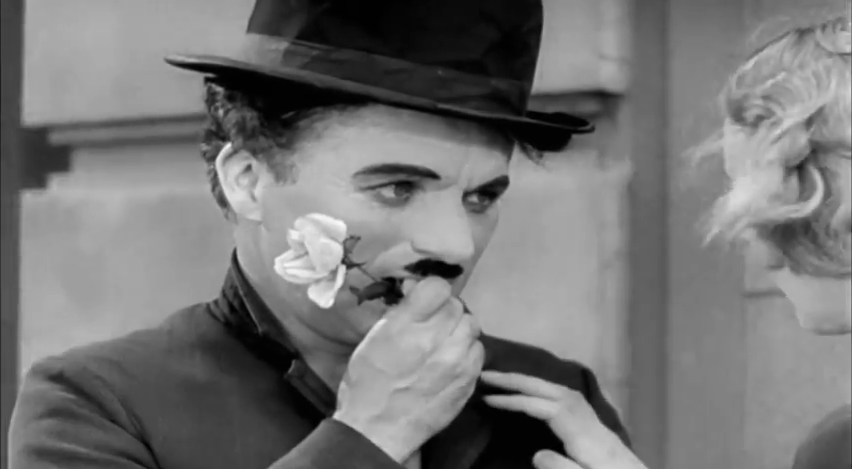
Showing posts with label Charlie Chaplin. Show all posts

Sunday, 10 May 2015

Alternate Best Actor 1936: Results

5. Spencer Tracy in Fury - Tracy is charming and moving in his depiction of a man wrongly facing death, but he plays the second half too much like a villain.

Best Scene: Embracing Rainbow.
4. Jean Gabin in The Lower Depths - Gabin gives an enjoyable portrayal of a charismatic thief which effectively matches the tone of this version of the story.

Best Scene: His first meeting with the Baron.
3. Charlie Chaplin in Modern Times - Chaplin gives a very entertaining and rather wonderful sendoff to his most famous creation.

Best Scene: The Ending.
2. Charles Laughton in Rembrandt - Even with the film's rather swift pace Laughton gives a remarkable portrayal of the famous painter throughout his life's journey. 

Best Scene: Rembrandt attempts to paint his wife one last time.
1. Edward Arnold in Come And Get It - Good Predictions RatedRStar, Michael McCarthy and Luke. The underrated Edward Arnold is given the chance to depict the origins of one of his rich and powerful men, and does not waste that chance. He gives a heartbreaking performance that realizes what such a man might sacrifice to earn that power.

Best Scene:  The Ending.
Overall Rank:
  1. Edward Arnold in Come And Get It 
  2. Charles Laughton in Rembrandt
  3. Charlie Chaplin in Modern Times
  4. Walter Huston in Dodsworth 
  5. William Powell in After The Thin Man
  6. Jean Gabin in The Lower Depths 
  7. William Powell in My Man Godfrey
  8. William Powell in The Great Ziegfeld
  9. Leslie Howard in The Petrified Forest
  10. Clark Gable in San Francisco
  11. Warner Baxter in The Prisoner of Shark Island
  12. Errol Flynn in The Charge of the Light Brigade
  13. Gary Cooper in Mr. Deeds Goes to Town
  14. James Cagney in Great Guy
  15. Boris Karloff in The Invisible Ray
  16. C. Aubrey Smith in Little Lord Fauntleroy
  17. Oskar Homolka in Sabotage
  18. Fred Astaire in Swing Time
  19. Freddie Bartholomew in Little Lord Fauntleroy
  20. Fred Astaire in Follow the Fleet
  21. Paul Muni in The Story of Louis Pasteur 
  22. John Gielgud in Secret Agent
  23. Roland Young in The Man Who Could Work Miracles
  24. Gary Cooper in The General Died At Dawn
  25. Fred MacMurray in The Trail of the Lonesome Pine
  26. Spencer Tracy in Fury
  27. Jack Hayley in Pigskin Parade
  28. Henry Fonda in The Trail of the Lonesome Pine
  29. Fredric March in Anthony Adverse
  30. Robert Taylor in Camille 
  31. John Loder in Sabotage
  32. Leslie Howard in Romeo and Juliet
  33. Kenneth Craig in Reefer Madness
Next Year: 1936 Supporting

Friday, 8 May 2015

Alternate Best Actor 1936: Charlie Chaplin in Modern Times

Charlie Chaplin did not receive an Oscar nomination for portraying a factory worker in Modern Times.

Modern Times is a delightful semi-silent comedy about the struggle to live in an industrial society.

The way Modern Times is set up it can almost be looked upon as an origin for his tramp character since at the beginning of the film he is an employed factory worker. Well it's safe to say much hijinks will ensue, as it does from the first scene where the worker fails to maintain the assembly line as it simply becomes faster and faster. Chaplin's comic approach here is rather simple in that he plays every scene with a certain naivety with the worker. There is an enthusiasm about him in that he seems to want to try his best, but that probably means he's just going to screw up anyways. Chaplin's enthusiasm he brings in the improbable task is particularly enjoyable to watch. Chaplin adds a bit of extra comedy in this case though in that he gives a bit of "realism" in his worker as he has to deal with the line, as well as a torturous feeding machine, since he portrays the life wearing down the working to the point that he breakdown mentally. Of course this is all in good fun and most importantly quite funny.

The worker continues his transition to the tramp really by first endings up in the hospital after losing his job, then immediately finding himself in prison. What Modern Times is technically made up of is the worker failing at one thing from another. Whether it is failing not to get arrested by accidentally being mistaken for a communist organizer, or even failing at prison by thwarting a prison escape due to having mistakenly ingesting some cocaine.  To be honest this whole setup seems like something that could become repetitive considering it is basically the same thing over and over again. Well Chaplin as a director and actor keeps it ever feeling as such. Chaplin no matter what brings such energy to every single one of the situation and never does it feel as though he will ever let a setup go half-baked. He's there to sell every bit to its fullest and here is quite good in bringing a certain variation to his reactions to the setups even though the idea behind each is basically the same.

Chaplin here also does rather quietly formulate into the Tramp character in that he bridges the worker of the first scenes who goes through the hardships of mental breakdowns and prisons to eventually become the bum he was always meant to be. Although of course that bum still tries his hand a various jobs always managing to goof them up in one way or another, and usually in ways that are quite humorous to be sure. Again the whole set up, since many of the mistakes made by the Tramp that either get him fired or in jail or both are usually his own fault. This could make the character become annoying but it never does because of how endearing Chaplin really makes the worker who has become the tramp. I suppose it should also be noted that the Tramp does actually speak here, although only in a musical number that is pure gibberish. Like pretty much everything that Chaplin does in the film it is a very entertaining moment, and kinda sums up the Tramp character since you still can't hear what it is that he saying yet you completely understand what he means.

With Chaplin it never is purely about the laughs, even if those are in abundance as they are here, but the comedy is never without a heart. That element is particularly strong in Modern Times well founded through the Tramp's relationship with a girl in similar circumstances only known as a Gamin played by Paulette Goddard. Chaplin and Goddard are wonderful together as there is such a strong warmth that comes out of even the tiniest interaction they share. One could not ask for a sweeter couple to follow in the film with Chaplin's shy little smile, and Goddard brightly shining grin that might be one of the cutest imaginable. Their relationship though is not simply about the joy they share together but as well as the hardship, which is what perhaps makes Modern Times just so special. They are incredibly moving together in their moments of failing as everything seems to go wrong for them, even after it seems like things go right, and the sadness of each defeat is palatable despite being funny when it happened initially. There is always resilience in the pair with that final unforgettable moment where Chaplin presents still such a beautiful tenderness as the Tramp encourages her to keep going on even when things look at their worst. This is a marvelous performance that is a worthy sendoff for perhaps the most iconic character in cinematic history.

Monday, 4 May 2015

Alternate Best Actor 1936

And the Nominees Were Not:

Edward Arnold in Come and Get It

Charles Laughton in Rembrandt

Charlie Chaplin in Modern Times

Spencer Tracy in Fury

Jean Gabin in The Lower Depths

Monday, 14 October 2013

Alternate Best Actor 1931 and Supporting Results

5. Boris Karloff in Frankenstein- Boris Karloff gives a remarkable performance by showing the tragedy behind the creation of the monster. 

Best Scene: The monster plays with Little Maria.
4. Bela Lugosi in Dracula- Bela Lugosi creates the iconic Dracula with menace but as well with a captivating allure.

Best Scene: "I Bid You Welcome"
3. Charlie Chaplin in City Lights- Chaplin is in top form as the tramp being both quite funny and very sweet in this winning performance.

Best Scene: The blind girl finally sees the tramp.
2. Edward G. Robinson in Little Caesar- Edward G. Robinson makes another iconic character for 1931 in his brilliant tour de force that depicts the rise and fall of a little Caesar.

Best Scene: "Mother of Mercy, Is this the end of Rico?"
1. Peter Lorre in M- Good Prediction Psifonian, Anonymous, and koook160 feel free to name a year with a requested performance. This was actually a fairly strong year with great work from two of the all time snubbed. Although I do love Robinson in Little Caesar my vote easily goes to Peter Lorre's absolutely chilling and oddly sympathetic work in M.

Best Scene:Hans Beckert stands trail.
Overall Rank:
  1. Peter Lorre in M
  2. Edward G. Robinson in Little Caesar
  3. James Cagney in The Public Enemy
  4. Charlie Chaplin in City Lights
  5. Bela Lugosi in Dracula
  6. Boris Karloff in Frankenstein
  7. Fredric March in Dr. Jekyll and Mr. Hyde
  8. Michel Simon in La Chienne
  9. Raimu in Marius
  10. Edward G. Robinson in Five Star Final
  11. Tokihiko Okada in Tokyo Chorus
  12. Harry Baur in David Golder 
  13. Henri Marchand in À Nous La Liberté
  14. Pierre Fresnay in Marius 
  15. Edward G. Robinson in Smart Money
  16. Jackie Cooper in Skippy
  17. Raymond Cordy in À Nous La Liberté
  18. Ronald Colman in Arrowsmith
  19. Oliver Hardy in Chickens Come Home
  20. Stan Laurel in Chicken Come Home
  21. Groucho Marx in Monkey Business 
  22. Maurice Chevalier in The Smiling Lieutenant
  23. Colin Clive in Frankenstein 
  24. Adolphe Menjou in The Front Page
  25. Pat O'Brien in The Front Page
  26. John Barrymore in Svengali 
  27. Raul Schnoor in Limite
  28. Matahi in Tabu
  29. Harry Carey in Trader Horn 
  30. Clark Gable in Possessed
  31. Victor McLaglen in Dishounered
  32. Jackie Cooper in The Champ
  33. James Dunn in Bad Girl
  34. Wallace Beery in The Champ
  35. Richard Cortez in The Maltese Falcon
  36. Alfred Lunt in The Guardsman 
  37. Ramon Novarro in Mata Hari
  38. Hal Skelly in The Struggle
  39. Phillips Holmes in The Criminal Code
  40. Charles Farrell in Delicious
  41. Raul Roulien in Delicious
  42. Richard Dix in Cimarron
Supporting Top Ten:
  1. Boris Karloff in The Criminal Code
  2. Lionel Barrymore in A Free Soul
  3. Clark Gable in A Free Soul
  4. Harry Myers in City Lights
  5. Zeppo Marx in Monkey Business 
  6. Clark Gable in Night Nurse 
  7. Tatsuo Saitō in Tokyo Chorus
  8. Gustaf Grundgens in M
  9. James Finlayson in Chickens Come Home
  10. Boris Karloff in Five Star Final 
Next Year: 1944 lead

Alternate Best Actor 1931: Charlie Chaplin in City Lights

Charlie Chaplin did not receive an Oscar nomination for portraying The Tramp in City Lights.

City Lights is an entertaining mostly silent comedy about the tramp trying to help a blind flower girl.

I have already reviewed Chaplin in one of his many many times playing the Tramp in The Circus for his sorta Oscar nomination. I was not overly thrilled by that performance, to say the least, although I thought he was fine The Circus was not the greatest showcase for Chaplin. Honestly the Circus was mostly about Chaplin work as a director and he honestly shafted himself a bit of an actor in that film. For the most part he ignored really doing too much with the Tramp's story and mostly it was a showcase for various set pieces made up by Chaplin the director. Chaplin mostly just put himself in the set pieces and just sort of was part of it, and did not try to stand out at all with in terms of his acting.

City Lights is a far better film as well as a far better example of Chaplin as The Tramp who shines equally with his performance here as he does with his direction of the film. This is Chaplin in top form as the tramp as every aspect of his performance truly shines right across the screen. There is of course the physical comedy that Chaplin was a master of and in City Lights he is at his very best. His timing in the film just flows beautifully with every single bit that comes throughout the film. Chaplin is always entertaining with his excellent timing as the Tramp who can be the greatest havoc yet always keeps such a gentle presence that works exceedingly well.

Something that was present in The Circus but always given the short end was the love story for The Tramp. In City Lights it is the primary focus of the film actually and the film benefits greatly from doing so. It is a simple story of the love the Tramp feels for a blind flower girl, although she thinks that he is rich. These scenes are some of the best moments in the film as they give a chance for Chaplin to bring such a great deal of charm to his role. He makes the Tramp incredibly endearing through the simplicity of the Tramp's love for the flower girl. It is not anything complex but it is wonderful to see just how genuine it is through Chaplin's unassuming smile.

Chaplin in City Lights is one of the best examples of his work as The Tramp as he excels in every facet from the story. Whether it is making every gag land just right in the full on comedy scenes, or bringing just the right amount of poignancy to the more somber moments, Chaplin makes every moment of this film glow all the brighter. Chaplin's work in City Lights is not just a gag machine even though this certainly is a humorous performance. Chaplin as well allows this film to be a movie story about The Tramp doing his best for true love, and Chaplin makes the final image of the film, when the blind girl can finally see The Tramp for who he is, such a sweet and heartwarming finale.

Tuesday, 8 October 2013

Alternate Best Actor 1931

And the Nominees Were Not:

Bela Lugosi in Dracula

Boris Karloff in Frankenstein

Peter Lorre in M

Edward G. Robinson in Little Caesar

Charlie Chaplin in City Lights

Thursday, 12 July 2012

Alternate Best Actor 1947: Results

5. Cary Grant in The Bishop's Wife- Grant never falters in his portrayal of a just about perfect character. He brings a great deal of charm, and wit to the role that makes it an absolutely winning performance.

Best Scene: Dudley first meets the Bishop.
4. Robert Mitchum in Out of the Past- Mitchum gives a strong commanding performance that perfectly fits his world weary on screen persona.

 Best Scene: Jeff finds out Kathie has come back to Whit.
3. Rex Harrison in The Ghost and Mrs. Muir- Harrison is terrific in his role bring both mysterious as well as quite humorous in the role of the titular entity.

Best Scene: The ghost complains about the cause of his death.
2. Charlie Chaplin in Monsieur Verdoux- Chaplin finds just the right tone to brings the life his cynical but also humorous serial killer who treats his murders as just a normal job.

Best Scene:  Verdoux defends his murders.
1. Richard Attenborough in Brighton Rock- There was no question here of who was the very best of year with Attenborough tremendous performance as a young thug. Attenborough gives a striking performance that never strives from the harsh truths of his character.

Best Scene: Pinky's hit goes wrong.
Overall Rank:
  1. James Mason in Odd Man Out 
  2. Pierre Fresnay in Monsieur Vincent
  3. Ronald Colman in A Double Life
  4. Tyrone Power in Nightmare Alley
  5. Charlie Chaplin in Monsieur Verdoux
  6. Takashi Shimura in Snow Trail
  7. Rex Harrison in The Ghost and Mrs. Muir
  8. Robert Mitchum in Out of the Past
  9. Isao Numasaki in One Wonderful Sunday
  10. Cary Grant in The Bishop's Wife
  11. Claude Rains in The Unsuspected 
  12. Bernard Blier in Quai des Orfèvres
  13. Robert Montgomery in Ride The Pink Horse 
  14. Cary Grant in The Bachelor and the Bobby Soxer
  15. James Cagney in 13 Rue Madeleine
  16. Robert Mitchum in Pursued
  17. Edward G. Robinson in The Red House
  18. Edmund Gwenn in Miracle on 34th Street
  19. David Niven in The Bishop's Wife
  20. William Powell in Life With Father
  21. Burt Lancaster in Brute Force
  22. John Garfield in Body and Soul
  23. Orson Welles in the Lady From Shanghai
  24. John Payne in Miracle on 34th Street
  25. Humphrey Bogart in Dark Passage 
  26. William Powell in The Song of the Thin Man
  27. Danny Kaye in The Secret Life of Walter Mitty
  28. Michael Redgrave in Mourning Becomes Electra  
  29. Joseph Cotten in The Farmer's Daughter 
  30. Lawrence Tierney in Born to Kill
  31. Dana Andrews in Boomerang! 
  32. Fred MacMurray in The Egg and I
  33. Victor Mature in Kiss of Death
  34. Dick Powell in Johnny O'Clock
  35. Robert Young in Crossfire 
  36. Robert Ryan in The Woman on the Beach
  37. Gregory Peck in The Paradine Case
  38. Lon McCallister in The Red House
  39. Gregory Peck in Gentleman's Agreement
Next Year: 1965

Tuesday, 10 July 2012

Alternate Best Actor 1947: Charlie Chaplin in Monsieur Verdoux

Charlie Chaplin did not receive an Oscar nomination for portraying the titular character of Monsieur Verdoux.

Monsieur Verdoux is a film about a man who marries than murders rich old women to support his own family.

In a strange way many histories of Chaplin it always seems that his filmography ends with his first sound film The Great Dictator. Chaplin though did make a few more films after that film including this one. This is a particular film for Chaplin where his character has absolutely no connection with his character of the Tramp, the barber in Dictator held many similarities to the tramp. Something else important is that there is not a great deal of slapstick humor which permeated through all of his older silent films, and even most of the Great Dictator there is not a great deal of it found here in this film though.

There quite a bit of it at the very beginning of the film when Chaplin's Verdoux first appears in the film. Chaplin almost seems to ease the viewers in to his role here by giving us some of the good old Chaplin here, which is certainly enjoyable as he does his usual physical work well as his excellent comedic reactions. Now as with his other two performances that I have reviewed I must say a great deal of what makes this work is Chaplin's direction of these scenes. Nevertheless this sort of comedy is reduced to a minimal form for a Chaplin film, and we are brought into the world of this very different character for Chaplin.

It is easy to see why Chaplin carefully brings us into this new character for him as Monsieur Verdoux is not just someone a little different from his lovable Tramp character but instead a unrepentant murderer. Although of course Chaplin's character can easily be described as a villain he is indeed the protagonist of the film, and the only character we ever really get to know. Every other character are pretty much just straw people impossible to really sympathize with, therefore making it rather difficult for us to truly hate Chaplin's Monsieur Verdoux. This is of course very clever writing and direction on Chaplin's part, but his performance as well does greatly contribute to this.

Chaplin does not portray his character as evil or as good. He is a murderer, but at the same time he is always caring about his family, Chaplin though never makes him to be a villain or a hero of the film. He instead wants to make a very particular creation that never apologizes for his crimes in any way, but nor does he particularly make his character ever obviously taking pleasure in it. Instead Chaplin portrays Verdoux in an entirely satirical fashion, portraying his serial killer as nothing more than a business man. I have referred to men carrying out crimes in this fashion before, it is not even in the cold calculated sense of the word, but  rather just as a pretty standard day to day casual business man.

It is in this approach where the satire comes from as when he is going to make a killing in the market Monsieur Verdoux literally makes his killing from killing. Chaplin is actually quite excellent in finding the right tone for his character. He actually does take his character seriously, but does not mind putting in bits of physical humor whenever he wishes as well. Chaplin handles it all in a very low key fashion, never overdoing the comedy but always making it a part of his character. It is a bizarre but very effective dynamic he creates within the strangeness of Monsieur Verdoux.

Chaplin is almost oddly compelling here as he shows Verdoux go about his business. Whether it is murdering one of his wives casually, or even just keeping another one in line he does it with the same peculiar style that brings to life this character. Chaplin makes what is a horrible murderer completely watchable with his unique portrayal that could only ever be brought about by Charlie Chaplin. He is particularly excellent late in the film as all of Verdoux's efforts have become pointless as he loses all his money to the depression and both his wife and child die. The degree of humor is completely lost, and there is only cynicism left toward the world. In the end is when Chaplin does become quite chilling in how pure and unforgiving he makes Verdoux's belief in the whole world leaving a very striking impression at the end. This is not the widest performance in turns of sides of the whole of this man, but more of finding an incredible note of fatalism that is very memorable especially coming from the tramp himself.

Saturday, 7 July 2012

Alternate Best Actor 1947

And the Nominees Were Not:

Cary Grant in The Bishop's Wife

Richard Attenborough in Brighton Rock

Robert Mitchum in Out Of The Past

Rex Harrison in The Ghost and Mrs. Muir

Charlie Chaplin in Monsieur Verdoux

Saturday, 23 April 2011

Best Actor 1940: Results

5. James Stewart in The Philadelphia Story- Although I usually like Stewart a whole lot, here his performance always seemed to lack the right comfort and joy to work for this romantic comedy.
4. Raymond Massey in Abe Lincoln in Illinois- Massey is not always completely believable as Abe Lincoln such as in his early scenes, but he always gives a nice charming, and passionate performance as Lincoln.
3. Henry Fonda in The Grapes of Wrath- Fonda gives a very strong performance showing Tom Joad as a normal man, who slowly grows a strong passion and realization to fight against the injustices brought against his family and other struggling people.
2. Charlie Chaplin in The Great Dictator- I will not say Chaplin is entirely consistent, but almost always enjoyable. His comedic timing as both the Barber, and the Dictator are spot on with his direction. Also his final speech although out of character, has tremendous power due to his passionate delivery.
1. Laurence Olivier in Rebecca- Olivier once again was an easy choice for me. Olivier simply does wonders with his role as Maxim de Winter. In the somewhat sparse time he is given early in the film, he creates a wonderful interesting character, with the mysterious haunted quality, and when he finally can reveal the whole truth of his character it simply leads to an outstanding performance by Olivier.
Deserving Performances:
Cary Grant in His Girl Friday

Wednesday, 20 April 2011

Best Actor 1940: Charlie Chaplin in The Great Dictator

Charlie Chaplin received his second, or only acting nomination (depending how one looks at his nomination of sorts for the Circus) for portraying the dictator Adenoid Hynkel, and a Jewish barber in  The Great Dictator.

The Great Dictator is a comedy  which satirizes Adolf Hitler,  and was made back when Adolf Hitler was still around.

Charlie Chaplin portrays a dual role of course so it is best to examine the two performances separately. Firstly Adenoid Hynkel clearly a parody of Adolf Hitler, especially since Chaplin's on screen persona strongly resembled Hitler. He plays this half his performance entirely for laughs. I would say he does succeed in doing this, although the question is how much of the humor comes from his direction and how much does it come from his actual performance.

For example his Hynkel speech that opens his scenes as Hynkel is certainly enjoyable. He is certainly good at being satirical in his over the top speeches that do satirize Hitler's speeches quite well. I will say though that the funniest part of this scene though is the translators quiet responses to Hynkel's overly emotional statements, which certianly are not part of Chaplin's performance but rather his script and direction.

I will say his performance does go back and forth to the matter of the comedy of Hynkel. It is always in part with many of the crazy things Hynkel does, but I will give Chaplin most certianly credit for his physical movements, and comedic timing which are both strong. I will say also though that Hynkel is not a particularly consistent character since after all shouldn't he have the Hitler voice all the time, and not revert to Chaplin's voice, but hey its a comedy so it really is fine anyways.

Now how about his performance as the Jewish Barber. Well I will say he does contrast the two characters well, showing Hynkel to be forceful but the Barber to be very restrained and quiet. The Barber is made certianly a nice little character by Chaplin. He is a charming nice man who really wants nothing more than to have a quiet life.

With the Jewish Barber I would again say the comedy that comes from his performance does come from both from his direction, but also most certainly his comedic reactions. I would say this is shown best with the scene where the five men are going to be chose for a suicidal mission by which one finds a coin in their pudding, but the problem is there is a coin in each of their puddings. The set up is funny, the music Chaplin uses is funny, as well is the reaction of the other men, but Chaplin's reactions are great as well, so his performance does compliment, or complete much of the comedy from Chaplin's direction.

The Barber is not a particularly complicated character though, he is just a nice little man with a nice little barbershop and a nice little lover interest. Chaplin though is good at being nice though. He is only really required to do more than be funny and nice, in his final scene. The final scene being a big dramatic speech not only to end the film, but also gives a message to the viewing audience basically to fight against the way of the Nazis. Chaplin's performance of the speech is intense, passionate, and powerful. I must say it really is technically out of character, but hey it does work, and he was doing it for a good cause so I really cannot fault him too much.

Overall this is a performance I admire very much, as well as enjoy. The only question is how much great acting does Chaplin technically do. Well that it hard to say, but being funny should not be overlooked I think, and I felt he was funny here. He did not make too really complex characters, but rather two effective ones still. He is not always consistent with either characters, but I feel these inconsistencies do work in his favor. I will say I am not completely sure of this rating but I will stay with it nonetheless, because although I might not let other actors get away with some of what he does, I also do not think any other actor really could have given a performance as effective as him in either part.

Saturday, 16 April 2011

Best Actor 1940

And the Nominees Were

Henry Fonda in The Grapes of Wrath

Charlie Chaplin in The Great Dictator

James Stewart in The Philadelphia Story

Laurence Olivier in Rebecca

Raymond Massey in Abe Lincoln in Illinois

Thursday, 19 August 2010

Best Actor 1928: Results

3. Charlie Chaplin in The Circus- Chaplin does his usual routine which consist this time of the typical silent overacting, but his physical movements are well done enough to a least be admired even if they did not make me laugh.
2. Richard Barthelmess in The Paten Leather Kid - Although his film isn't compelling but Barthelmess delivers a performance that meets the emotional needs of the part.

1. Emil Jannings in The Last Command- Emil Jannings gives a great performance which relies on subtlety and expert physical command to create an incredibly powerful performance.


Ranking of films
1. The Circus
2. The last Command

Best Actor 1928: Charlie Chaplin in The Circus

Charlie Chaplin sort of received his first Oscar nomination for portraying once again The Tramp in The Circus.

The Circus is not the funniest silent comedy ever for me, or even that funny at all. I really did not really smile or laugh very much while watching it, I more of found some of scenes sort of neat and intriguing but really for historical reasons.

Chaplin plays the same character here he played in most of his films, The Tramp. Now in terms of acting in the normal prescribed fashion it is mostly typical silent fare. There is the obvious gestures and faces but Chaplin does not over do them too much, but rather as much as a good silent actor would. He makes his sad faces sad, his scared faces scared, his happy faces happy, all the right way even if it is the obvious way. There is nothing wrong with what he does and he certainly does this well enough. They never seem completely over acted, yes they certainly are a little just to be noticed but not as much as they could be. There are no moments where his faces seem wrong, but they are never that good. There are a few reactions were he shows a little more subtlety like his final face in the film, but there are not enough in the overall performance.

The rest of his performance though resides in his physical comedic performance. Chaplin is clearly experienced here with always making the right moves and doing his trade mark waddle in the right way. He clearly is always perfectly in step and in line making the Tramp's movements completely natural despite being completely absurd. Now I did not find what he did all that funny, but it was nice enough to watch. Most of the comedy attempts come from the direction of what happens to The Tramp than from Chaplin's precise acting. The things I liked more in the film were the set pieces more than his physical movements in this particular film. 

Tuesday, 17 August 2010

Best Actor 1928

And the first nominees were:

Emil Jannings in The Last Command

Emil Jannings in The Way of All Flesh

Richard Barthelmess in The Noose

Richard Barthelmess in The Patent Leather Kid


And Sort of Charlie Chaplin in The Circus


The Way of all Flesh is lost, and both of Barthelmess's films seem to be obscure archive only. Chaplin was nominated apparently but they took him out of the competition and gave him an honorary award instead. I myself will include him since he was sort of nominated and also so there will be an actual competition. I will come back to this year if I ever happen to come across one of those archives or if a copy of The Way of All Flesh is miraculously found but I doubt either of these things will occur anytime soon, so I will do this year as is anyways.  

Therefore it is between Jannings in The Last Command or Chaplin in The Circus. Who do you Pick? Who do you predict?