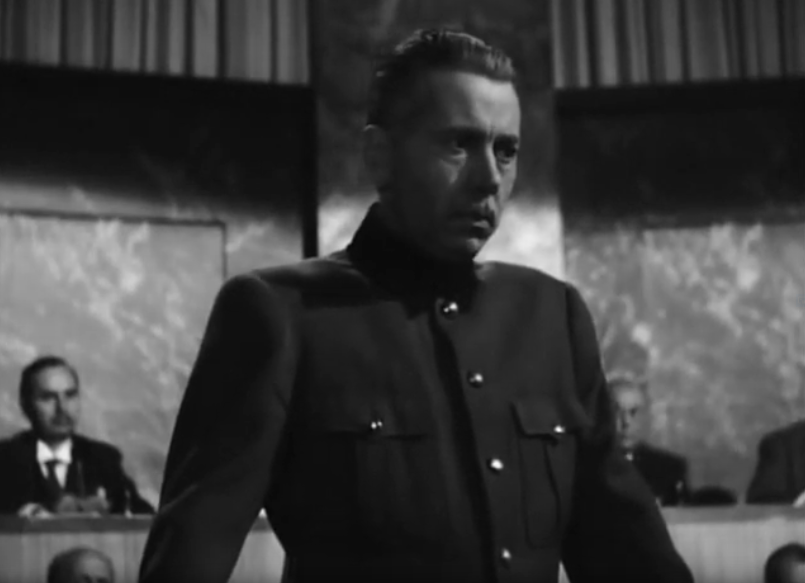
Saturday, 24 October 2020

Alternate Best Actor 1994: Ben Kingsley in Death and the Maiden

Ben Kingsley did not receive an Oscar nomination for portraying Dr. Roberto Miranda in Death and the Maiden. 

Death and the Maiden follows a woman kidnapping a man she believes had raped her while she was the captive of a brutal regime. While I do think the film on the whole is effective, it suffers from an uncharacteristically bad performance from Sigourney Weaver as the woman and a mostly bland performance by Stuart Wilson as the woman's husband, also an attorney for the new ministry of justice. 

Well this film only has really three characters, with two of them being not particularly well performed, it leaves Ben Kingsley to pick up the slack. Ben Kingsley initially appears as a man who just gives the husband a ride back to the couples secluded seaside home. As seemingly meaningless as this scene is, Kingsley's performance does begin within this first scene, this when he hears the name of the man that indicates the husband will be one of the men prosecuting the criminals of the previous regime. Kingsley's expression at hearing the news glints a change in the man's thoughts. On initial viewing this may seem rather meaningless, however re-watching with the knowledge Kingsley's performance is one saying the truth of the man, just as it is hidden. This is as his expression changes to a man thinking on the matter before leaving. The man eventually turning, claiming to bring back a left behind wheel to the man, but also supposedly to state his agreement with the attorney's job to find justice for the previous regime. Kingsley's delivery being slightly a little much, purposefully, as a man putting a bit of air of support. This almost too formal in certain respect of the man showing an earnest respect. Again the degree of formality though that Kingsley places on it is perhaps just a man putting it on too thickly, or maybe is a man purposefully trying to hide who he is by agreeing with something that would easily lead to his eventual downfall. Now importantly though when not strictly speaking of politics, Kingsley's performance delivers a more naturalistic bent within the man just casually speaking to the man regarding car breakage or offering some strange counsel to the attorney about his obviously rather emotional wife. These moments importantly suggesting that the doctor may in fact just be some any man with no great secret to hide.

The turn happens though as the wife first steals the doctor's car in order to supposedly find some kind of evidence as she feels she has recognized his voice as the man who tortured and raped her. This leading her to immediately bound and gag him as she prepares to find a kind of revenge for herself, though without actually knowing whether he is in fact the man or not, having only heard him in her time of torture. Where Weaver is bizarrely terrible in her immediate sort of interrogation, hard to call it that as the doctor is initially gagged, Kingsley on the other hand is terrific by playing the scene entirely close to the bone in his reactions. This in presenting a man just absolutely terrified by the place he's in in his reactions, and in many ways having exactly no idea how to react to what is going on beyond him. Kingsley doing so much with his eyes in the moment of the man exhibiting the right sense of confusion within the moment, just as he conveys a sense of the man attempting to figure out what this inquiry is. Even in his eyes though Kingsley conveys an essential nuance as again there is a sense that the confusion could be of a man just sincerely confused at what is going on however there is also the potential for a man perhaps calculating whether he has in fact been caught in his crime. Kingsley grants the right visceral intensity to the moment, though a bit lost by just how hammy Weaver is, however Kingsley strictly finds a reality of the situation. When immediately released from his gag, Kingsley's great through his delivery of capturing the immediate trauma and terror fitting to a man having been tortured and threatened. 
 
Kingsley's performance then becomes basically the central tension of the film, again maybe this would be less the focus if his co-stars were a bit better, but nonetheless Kingsley is prepared for this. Kingsley's excellent in his scene where the attorney begins to sorta believe and interrogates the man himself. Kingsley is able to effectively tip toeing around the truth within his performance. This as he creates the right anger within his doctor that again can be that of a man who is trying to hector those interrogating him away from the truth, or that of a man righteously ticked off over the accusation. Kingsley importantly though even within these moments convey switching his eyes still that palatable sense of fear and desperation of the situation. Again though Kingsley's portrayal of the fear could be that of an innocent for his life or a guilty man for his life. Kingsley is incisive in his portrayal as again there is that duality of his work. This as he could be that of a master manipulator prodding in the insecurities of his captors or that incisiveness of who is in fact an innocent victim pleading for his life best he can. Kingsley's work is compelling in both on initial viewing crafting the question of the man's innocence or guilt, and on repeat viewing seeing the man playing the sides of the situation. When we see first a false confession, pushed by the husband to avoid a killing and the wife for satisfaction, Kingsley is great at being phony. Kingsley giving a stilted delivery of the man going through the motion of a confession in the most matter of fact way. The confession of an innocent man.

As strong as I do think Kingsley's performance is in balancing the sense of potential guilt or not while also making up for his less than compelling co-stars, what makes this a great performance to me is in his final speaking scene. This as the two literally push the doctor to the brink by threatening to kill him by pushing him into the sea. A specific one shot monologue solely on Kingsley. Kingsley is amazing in this scene as it isn't simply just a confession of what occurred by a man confessing the entirety of himself in the moment. This is as he opens with speaking towards a claimed innocence of losing himself to the temptation of the situation. A sadness but also some strange attempted pride as he speaks as a man trying to explain himself. As it continues though this twists itself towards some pride in his deeds instead as he reveals a chilling quality as he speaks of the man. Kingsley speaking with a vile rage at his own pathetic state in dealing with women in reality, and creating in his expression a since of power within the man as he speaks. A violent hatred suddenly, and even a casual quality in speaking of his "experiments" in the situation. The longer Kingsley speaks the more the man reveals himself enjoying the corruption of the state seemingly at the pinnacle of his evil. The ending of the speech is Kingsley at his most brilliant as he creates a juxtaposition. This as he is both unashamed and shameless at the same time. This as when noting "I was sorry it ended" there is a sorrow that Kingsley portrays not of his actions exactly but rather a man who thought himself as a good having fallen so far. The hesitation in his voice hinting at the humanity destroyed while his words showing a man who willingly allowed it to happen. Kingsley is outstanding in the speech as he is indeed chilling, but more so he reveals the entirety of the man's experience of the past in this single speech.

Wednesday, 21 October 2020

Alternate Best Actor 1994: Robert De Niro in Mary Shelley's Frankenstein

Robert De Niro did not receive an Oscar nomination for portraying Frankenstein's monster in Mary Shelley's Frankenstein. 

Mary Shelley's Frankenstein I imagine was propositioned as a spiritual successor to Bram Stoker's Dracula, given the title, the faithfulness of certain aspects of the adaptation (including the strange seemingly extraneous bits) and the fact that it was produced by Francis Ford Coppola, who originally intended to direct. The difference is though the aforementioned film is some operatic kitsch that is brilliant somehow...this film is not. 

Anyway naturally much of the film follows not De Niro as the monster, but director/star Kenneth Branagh in the leading role as Dr. Frankenstein hell bent on reversing death. De Niro shows up first as a man with pox who becomes violent before being quickly executed. I will spay just watching this scene it is easy to forget the time in which De Niro was a typically a devoted actor, as that certainly is the case here. For one thing he is not phoning it in. This is the fact that De Niro doesn't instantly stand out in his first scene is notable, as his accent isn't unconvincing, and it is easy to believe him as this simplistic thug if just for a few moments of screentime. I must grant that it is more than decent work from De Niro who in this scene seems to desire some kind of reality unlike his director. His director who again I think suffers from attempting to realize that tone Coppola found for Dracula, unsurprisingly, again I'm not entirely sure how Coppola even managed to make that tone work. De Niro appears again when the doctor succeeds in creating the monster a more ragged creature than the unforgettable Karloff rendition. In this aspect though I will commend the attempt and say it is not entirely a failure. De Niro's first appearance one could say is underplayed, though with conviction, in portraying just the scared almost senseless creature as he immediately runs from the mob.  De Niro moving just as a ill-formed human and a terrified one only defending itself within its escape. 

Honestly I'd say De Niro's greatest hindrance is his makeup always has a certain artificial quality to it, yes he's supposed to be made up however it looks like literally that he is makeup. I think this limits really accepting him as the monster in say the way one instantly did for Karloff in the role. It's shame as I do think there is an innate poignancy as we follow the creature learning to be more human, such as befriending a blind man and learning how to speak from a family. An actor of De Niro's note frankly could be very silly, but De Niro actually stay devoted to the concept. This in speaking with a muted tone of a man trying to break free some bound to speak again. This in portraying simple but earnest emotions of fear and happiness at the bit of tenderness he finds. His conversation with the blind man is actually quite remarkably performed by De Niro in the purposefully stilted delivery of the creature still learning, but his eyes filled with a simple hope for some joy. Equally earnest is his break down at being as quickly banished form the circumstances by those who can see him. Sadly, unaided by Branagh's over the top way of shooting it, his cry of "Frankenstein, revenge" becomes more silly than anything, although again the way he's framed in the shot is mostly what makes it that way. 

The creature becomes more so the villain in the second half as the film becomes more so a mess. De Niro's performance is actually interesting though as we see the more developed creature confront Frankenstein directly. This as De Niro speaks with a quiet menace and a degree of contemplation. There even as he threatens there's a sadness within his work that reflects the strange state of the creature. Although Branagh seems largely interested in bombast, again perhaps mistakenly going for that Dracula tone again, whereas De Niro seems to seek something closer to a more intimate idea of crafting a man out of many and just leaving him to his own devices without guidance. Sadly that is all thrown out it in favor of a series of progressively sillier scenes of the monster killing Frankenstein's loved ones while the doctor kind of just runs about. It doesn't go anywhere terribly interesting. Even the big "Bride of Frankenstein" scene carries little emotional weight, though I'll credit De Niro in trying to make something of it, even in brief glimpses. Sadly the latter portion of that performance is that. Branagh's direction doesn't really spend any time with the two men as characters, rather just kind of rams through the conflict in a sloppy and wholly detached way. This sadly leaving De Niro, much like his character, left in the middle of a ocean without really anywhere to go. De Niro I do think has something to say within the role, sadly it gets muted by some truly sloppy direction. 

Sunday, 18 October 2020

Alternate Best Actor 1994

And the Nominees Were Not:

Ben Kingsley in Death and the Maiden
 
Ge You in To Live
 
Temuera Morrison in Once Were Warriors
 
Shah Rukh Khan in Kabhi Ha Kabhi Na
 
Woody Harrelson in Natural Born Killers

Predict These Five, Those Five or Both:

Robert De Niro in Mary Shelley's Frankenstein
 
Kevin Bacon in The River Wild
 
Tom Cruise in Interview With The Vampire
 
Brandon Lee in The Crow 
 
Xia Yu in In the Heat of the Sun

Alternate Best Actor 1944: Results

 
5. Nikolai Cherkasov in Ivan the Terrible Part I - I decided against a full review, as like with Sergei Eisenstein's Alexander Nevsky, his Ivan The Terrible takes the approach, effectively I will say, of almost a documentarian's distance instead focusing on more so the visual spectacle of the historical events than to dive deeply within the nature of the historical figures past a certain point. Nikolia Cherkasov, who previously played the largely symbolic role of Alexander Nevsky, once again takes upon a part that is more so the idea of Ivan The Terrible, than an in-depth careful examination of his personal motivations. His performance largely being used to again symbolize Ivan as this fierce but also potentially troublesome ruler, often with a closer emphasis on how other's react to the man. There are individual moments for Cherkasov within the film, such as his quiet menace he underlines every word as Ivan makes his demands immediately following his coronation, or the made bravado he brings as he throws down a foreign diplomat in order to declare war. In both moments Cherkasov suggests he might've been able to explore more of the character if given the leave. Although then again even when just being the presence of Ivan, which works well enough, he maybe a little to frequently falls upon just the most extreme bug eyes to sell the nature of Ivan's madness. Largely still it is a fine performance, but again one that more so stands as an image of Ivan rather than bearing the actual soul of the man.

Best Scene: Coronation.
4. Dick Powell in Murder, My Sweet - Powell gives a fine turn in the premiere version of Philip Marlowe, finding his own path through a certain sardonic almost carefree quality for the private detective. 

Best Scene: Dealing with everything.
3. Errol Flynn in Uncertain Glory - Flynn gives perhaps his best performance excelling in crafting a far more cynical character than usual and slowly earning the transformation of the role to a more noble sort. 

Best Scene: Fake change of heart.
2. Alexander Knox in None Shall Escape - Knox gives an effectively chilling turn in showing a man go from a pathetic bitter man who slowly finds his terrible path through the Nazi regime. 

Best Scene: Final speech.
1. Laird Cregar in The Lodger - Good prediction Anonymous, Tahmeed, Luke, and Michael McCarthy. Cregar delivers a brilliant sinister turn as he grants a certain almost romantic quality of the man who both lusts after his victims and despises them.

Best Scene: Scene with Kitty in his room.

Next: 1994 Lead

Wednesday, 14 October 2020

Alternate Best Actor 1944: Alexander Knox in None Shall Escape

Alexander Knox did not receive an Oscar nomination for portraying Wilhelm Grimm in None Shall Escape. 
 
None Shall Escape is an intriguing rarity of the time which examines the then still ongoing World War II through the atrocities in the mainland by showing the rise of a Nazi officer.

At the center of the film is an unlikely lead played by the underrated and very talented Alexander Knox. Knox was nominated in 44 for his effective turn in the extremely positively skewed depiction of Woodrow Wilson in Wilson. I'll say it is no surprise that voters chose that performance, which again is a good one even within the limits of that role, give the old rule, that still stands to a degree, of voters sometimes going for "favorite person" rather than best performance. Where Knox managed to be compelling in the purposefully fluffy portrayal of Wilson, here he is equally compelling though in a far darker role in the depiction of the central character Wilhelm Grimm. A man we first see, once we enter flashbacks, into that of a German school teacher working in Poland. Knox does not immediately raise alarms in his calm dignified demeanor as Grimm returns speaking with a slight bitterness in his tone however seemingly not fundamental at first. This as we do get a brief scene between Grimm and his Polish fiancee Marja (Marsha Hunt). Knox uses the scene well to portray genuine affection towards her showing an important hint in Grimm, though quickly returning to a greater bitterness as he shrugs everyone else in Poland as lowly. 

The humanity quickly wipes itself away in terms of the writing of the piece however Knox is more gradual in his depiction of this. This as Grimm, after breaking the one human relationship we see initially, quickly goes to rape one of his pupils. In the moment of persecution, that leaves Grimm exiled and missing an eye though living, Knox is excellent by portraying  very honest sense of desperation. This in granting a seemingly humanity within it just by showing that this is a man doing all this in Knox's performance. He doesn't show any confidence rather a weak fear of the man as he begs local religious leaders to help him in his escape. Grimm returns home to his brother,an anti-Nazi, where Knox balances well the changes in Grimm. This as the bitterness is stronger than ever in his manner as each line delivery is lined with a venom. Knox though portrays it with an overt desperation of a man barely having escaped with his life now speaking passionately for the Nazi cause as though it is the only thing he can hold onto for himself anymore. This as even speaking to his brother, who is sympathetic by virtue of familial connection, Knox depicts a man defined by his wounds content with becoming truly evil man. This as he rises right along with the Nazi regime. 

Knox graduates this in his performance to a truly chilling point as he becomes a full fledged Nazi officer who condemns his own brother to imprisonment and prepares to return to Poland to reek havoc. Knox now shows a chilling confidence that now defines the bitterness of the man. This with a sense of a killer instinct within himself and a man comfortable in being a monster. Knox being terribly effective by showing the natural transformation of a quietly pathetic man to a thriving terror by the virtue of the power that supports his cruelty. Knox making for a wholly despicable villain by presenting with such an ease in the man's manner, and a distinct sense of satisfaction in speaking every order of his. This as he portrays a man whose become comfortable to abuse his power as he sees fit and almost a sense of jubilation in his new ability to kill without hesitation. Knox doesn't hold back in presenting the evil of the character but also doesn't use it as an excuse to go broad. Knox's calm in the role is remarkable and makes the character all the more vile. This in showing a man who isn't just mad, but rather is calmly and carefully implementing his planned atrocities. Knox's greatest work within the film though comes in the framing device where we see Grimm on trial for his crimes. There Knox again portrays a progression, the bitterness now worn overtly rather hidden by confidence, but no longer that same desperation of the younger Grimm. He rather presents a man whose become one with the hatefulness. This in his stellar final scene where Knox speaks every word with an incisive viciousness fitting per his cruel fiend. Knox excelling in crafting a most unique arc for the time, a man slowly becoming more acquainted with the very worst of himself. His final speech is short but one that Knox makes the most of to mark the end of this journey. This with Knox ending as a man becoming a kind of hatred incarnate.

Friday, 9 October 2020

Alternate Best Actor 1944: Dick Powell in Murder, My Sweet

Dick Powell did not receive an Oscar nomination for portraying Phillip Marlowe in Murder, My Sweet. 

Murder, My Sweet is a rather effective adaptation of private detective Phillip Marlowe naturally trying to uncover some criminal plot. 

The character of Philip Marlowe is one of the original hard-boiled P.I.'s from novels that were well suited for the 40's period of the film noirs. The first time the character received an adaptation, where he remained named as Philip Marlowe, was this film featuring a less well known Dick Powell, at least compared to Humphrey Bogart who played the part a couple years later or Robert Mitchum who eventually would be cast in the role despite being far too old for the part. I'll admit going into the film, as much as tried not to, a preconceived notion about an early often forgotten performer of a famous role itched at my mind. Perhaps a side of effect of seeing the pre-Bogart Sam Spade Ricardo Cortez's thoroughly underwhelming performance. I'll say those notions thankfully were unearned when finally seeing the film. Although that isn't to say that Powell is a precursor to Bogart or Mitchum's work, in fact I'd say his performance is closer to Elliott Gould's downright brilliant portrayal of the anachronistic Marlowe in The Long Goodbye. Although he's naturally not as off-beat as that performance, Powell's work really isn't to craft a glamorous, even in a downtrodden sort of way PI, but rather someone who probably would more likely be one. Powell's performance not trying to make Marlowe's the end all be all PI, but rather just a PI whose going try to solve things best he can no matter how many hits to the head it takes. 

Powell's performance emphasizes kind of a "why not" approach to Marlowe's as in many ways it is all a game, in turn a day in the life to the PI. This as he brings a nice sort of blithe manner particularly in his narration. A narration that he offers an edge of a comical quality as he almost seems bemused by his own existence. Powell's actually rather wonderful here in his delivery of so many of the hard-boiled lines that he makes sing through the right degree of showing Marlowe deriding those around him while also still being within the moment. Powell's portrayal being quite compelling in the way he brings you into really a tangible sense of Marlowe's world right down to the way he explains his being knocked out as going "head first into a black pool". Powell's work manages to give a strong sense of the man's personality as someone who knows what he's doing, but also kind of knows how much of a joke all of it is in his series of bad luck. Powell in some way playing more so into a later type of protagonist in that he doesn't present Marlowe as having a perfect cool, but rather what makes him so remarkable is how he's flying by the seat of his pants to a degree. Powell making for that professional, but also the professional who is a man after all, with more than a few parts of imperfections. 

Powell quite honestly is fun to watch here in just finding ways to enliven the proceedings to make the mystery both easier to follow and more digestible. One of my favorite moments, that seems like Gould might have ran with, is this brief moment where Marlowe going to a not particularly interesting meeting with some potential leads does a little skip dance on his way. It's just an exceptional moment that so well conveys the spirit of his performance and in turn how his Marlowe works. This as Powell lets the viewer in on the mystery very much so every step of the way. I particularly love how he handles even the romantic moments that we the femme fatale (Claire Trevor) and the less step-daughter fatal (Ann Shirley). In Powell's work both he shows that even when obviously knowing the fatale's game Powell shows Marlowe's almost not minding the fringe benefits he can get from it. This against the step-daughter where Powell finds a sweetness within suspicion. Again as someone who always seems to find his way around a situation no matter how odd or potentially fatal. Unfortunately my only complaint comes into the sequence where Marlowe's is drugged and has to escape from an asylum of sorts. This just as Powell goes a bit too broad in portraying the off his rocker Marlowe. Although it is fitting that this would be one part where he isn't in control even in his off-beat way, but even then it just more feels it is the one part Powell doesn't seem fully comfortable with in his portrayal. This is unfortunate essentially because I actually really enjoy the rest of his performance here. This as though obviously his take would be original, being the first after all, his take and approach is absolutely worthwhile and worth mentioning right along with his successors in the role. 

Saturday, 3 October 2020

Alternate Best Actor 1944: Laird Cregar in The Lodger

Laird Cregar did not receive an Oscar nomination for portraying Mr. Slade the titular character in The Lodger.

The Lodger is one of the many adaptations of the Jack the Ripper inspired story of a mysterious man taking residence in the upstairs of a London home.
 
Laird Cregar is one of the great "could've been actors" having only a six year run in films before his untimely death at the age of 31. One must note though then the remarkable thing it is to discover the man, and to see what he was able to accomplish within that tragically brief tenure. Cregar naturally was cast within the classic "heavies" however again notable how Cragar in that time was able to create different types of characters within that role. Whether it was the sniveling weasel henchmen in This Gun For Hire, a particularly affable devil in Heaven Can Wait, or of his creepy yet tragic inspector in I Wake Up Screaming. Cregar found a different approach and even a different tone for each. We find that again here, where honestly one might be able to quickly presume that Cregar is in fact playing Jack the Ripper as the Lodger known as Slade, a nearby street name to his hopeful residence. Cregar's performance then is what must create the intrigue far beyond the "is he?" the defines the story. He's obviously him, so really it comes down to how intriguing he is in revealing the strange state of the man. This from his opening scene where the man investigates the upper floor of the residence. Cregar's higher pitched voice granting both a elegance and an off-beat peculiar quality to the man. His eyes filled with something that isn't so easily described as he looks upon the quarters, and his almost lustful way of speaking that the home will provide the "intense heat" for his "medical experiments". 

Where the part would be later played by Jack Palance with a steely calm, there is something far more dynamic within Cregar's performance that seeks to grant a certain odd sympathy for Slade even as he also reveals the nature of the man. This in his first scene as the man remarks the place shall be a refuge for him after be spoken to of the Jack the ripper murders. Cregar's monetary gaze up into though shows the man's need for some kind of solace within his mind, befitting a man technically being constantly hunted. Cregar's performance creating an intrigue within itself through his manner as he tips towards the stylized yet never goes too far in granting an nearly intangible quality about the man. This again remarkable as Cregar suggests a man almost another plane of thought that alludes towards what is that Slade is doing when he is not "lodging". Cregar's performance, which the cinematographer particularly seems to love in the way his face essentially glows here, is captivating within itself in creating Slade not as a, is he, isn't he, question but rather an examination of what a man who does such would be. We are granted to explore more of this as Slade's introduced to the idea of his landlady's niece Kitty (Merle Oberon) is a showgirl. First explaining his distinct fascination with showgirls. This as Cregar is impeccably creepy in speaking the fear nearly in the man's voice as he explains the way he oddly seems to think he's oppressed by them in some way. This though at the same when distinctly speaking of one Cregar's glare is of a precise transfixing thought. 

His first meeting with her is a brilliant scene for Cregar this is as he's both creepy but in a strange way an almost romantic quality he brings. This when explaining river in the night to her. This as Cregar speaks the words with a poet's grace but just with an intensity that is more than that. There is something pressing with the man, a madness that he so eloquently realizes as a state that makes Slade's psychopathy on that different state of mind. Again though Cregar is chilling with a nearly ethereal quality in creating the deranged state so uniquely. Cregar's performance in a way know that the material has been tried many times before in a way, as though his performance in some way subvert the material, he glides through in a way to grace each note with some marvelous eccentricity. This just in the way he watches others, including an inspector, discuss the case. Cregar's look craft the man suspicious of well...the suspicions, but there's more. His little glares grant a critical quality in the man almost annoyed at the others attempting to pigeonhole himself as some kind of particular maniac. Although I wouldn't quite say Cregar makes the character of Slade fun, there is something quiet entertaining in his portrayal that is playful in a way without being dismissive of the material. This most often in playing the "monster" of the lodger, just in his particular gait, and especially his way of looking upon the others with the manner of a predator minding his prey. That so often with the look of dead eyes of Slade. This though still with the complication in his work of showing Slade is in some way conflicted between disgust and lust in his crimes. This in his interactions with Kitty where Cregar is so many things at once. That looking as both in love with her and with a hate. This speaking though with some critical venom and some hope of seduction. Cregar's always elegant delivery making the most of the hypocrisy of Slade. Cregar apparently attempted to grant the part a "romantic veneer" and successful he is in this. This in making his performance fascinating kind of a mad man. This in even his final scene with Oberon where he reveals his murderous intent that Cregar plays both as a horror scene and a love scene. This in going back and forth between the seduction and the kill as this terrible sort of dance. Although the film is just fine otherwise, if only just fine, Cregar achieves greatness here by both fulfilling and subverting expectations of the part of Slade. A part that was played before and would be played again, but Cregar makes it his own. This as a magnetic hypocrite that exists in his own realm that clashes violently when he attempts to confront reality.