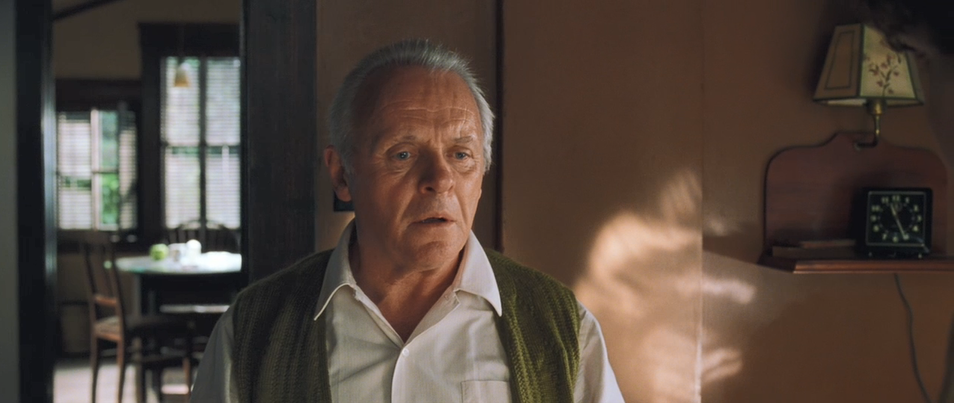
Sunday, 3 November 2019

Alternate Best Actor 1999

 And the Nominees Were Not:

Anthony Hopkins in Titus

Heath Ledger in Two Hands

Nicolas Cage in Bringing Out the Dead

Tom Cruise in Eyes Wide Shut

Jim Broadbent in Topsy-Turvy

And a review Of:

Ralph Fiennes in Sunshine 

Saturday, 2 November 2019

Alternate Best Actor and Best Supporting Actor 1952: Update

Well here are some supporting turns I rather enjoyed. 

James Mason in The Prisoner of Zenda - Well as to be expected Mason takes on the role of the villainous Rupert with great relish. In the 37 version we had Douglas Fairbanks Jr. out of his typical element stealing the show, here we get Mason very much in his element. Although this performance is less of a surprise to be sure, he steals the entirety of the film wholesale with his turn where he very much emphasizes just how much fun the man is having as tries to find a way to rule a kingdom he has no right to, or at least benefit in its power plays in some way. Mason is cheerfully evil here, in a classic Mason way, and you can really get the sense of the joy of performance in Mason's work here. It is very much Mason in his most well known element, and in turn he of course does not disappoint. This as he shows a man who loves the games he gets to play for his schemes, perhaps more than the prizes he may gain from it. I especially love his work in two elements in particular. This being his relationship with his co-villain, the attempted usurper Michael's mistress. Mason does his lusty sleaze with such a devious style by playing the whole moment into how Rupert just finds any way to enjoy himself quite frankly. This of course even with Mason pulling off a bit of that charm of his, though funneled through some expertly performed creepiness. The other element are the action scenes where Mason isn't content to just be in them, but owes them with granting such a sense of sheer joy in every moment of Rupert's attempts at murder.
Ralph Richardson in The Sound Barrier and The Holly and The Ivy - Speaking of actors I suppose in his element here Richardson in two roles that share a great similarity yet are very different. In each film, for much of the film, Richardson's character is assumed to be something by the other characters in the film. In David Lean's The Sound Barrier, he's a research scientist whom his daughter views as heartless as he takes part in experiments that lead to the death of one test pilot after another, many of whom are very close to both of them. Richardson here has a purposefully limited role for much of the film, though that isn't to say he isn't still remarkable in the role throughout. Richardson projects this cold conviction rather effectively and in his eyes delivers that determination of a man intent on changing the world. His performance though is this time bomb of a way, as it builds up until the daughter confronts her father for what she perceives as uncaring and unconcerned. This is until she actually sees him as he listens to an ongoing test and a potential pilot death. Richardson in this moment is fantastic in portraying the sheer distress within the man eyes, powerfully showing the very real weight of the sacrifice within the man who is well aware of what is being lost. This only be amplified by his subtle yet striking silent relief in his expression as he hears one of his pilots survive. Richardson showing the good man within the cold conviction in a particularly believable way, because he portrays the moment not as a different man but rather this honest reflection of how this type of man who reveal his empathy.

This is essentially the same structure, though a very different character in The Holly and the Ivy, an early, and effective, example of the ennui filled family reunion genre. Richardson though here played a white haired parson, who for much of the film is man who is seen, but mostly spoken of by others. Richardson serves the role well actually by just portraying his part as a man who appears contented in the presence of quite simply his life. This with the occasional interested, curious if not perhaps concerned interest in his children as they visit, though they speak too little to him for him to be able to speak more. Of course as his family visits for Christmas, all with their own personal problems, they all assume that their pastor father will not understand their problems. This is until he directly confronts his son and daughter who both went drinking the night before Christmas. This as each first assume he will not know anything based upon two separate issue. The first with his son assuming he cannot understand troubles as a pastor. Richardson is downright amazing in the scene by playing such genuine befuddlement at the claim, which is followed by such outwardly moving portrayal of empathy. This being a far more open empathy than seen in his aforementioned performance, fitting to the pastor who is nothing by a loving caring father. I love Richardson's delivery of the pastor's response to his son, where his delivery finds this eloquent combination of disbelief but also the utmost sincerity as the man only speaks words of care and support towards every problem his son reveals to him. This soon followed by a similar conversation with his daughter, who believes him unable to understand her feelings of doubt towards her faith, because again of his place as a pastor. Richardson again is fantastic in the moment in now showing even more this sense of disbelief. Again within this Richardson wraps in this loving warmth in this though of a man hurt, though only hurt only towards his own apparent inability to prevent his family from misconstruing his personality and the nature of his faith. Richardson again excels though in only depicting a fundamentally good man, even as he speaks of his religion not in boisterous piousness, but rather through quiet reasoned words of a man whose own struggles helped cement his beliefs. Richardson is terrific as he once again makes this considerable impression, as this impeccably placed performance, by delivering the essential brunt of his film's emotional impact in one major revelation. In each, Richardson earns the build up, and doesn't waste the surprise in granting two powerful portrayals of two rather different men poignantly revealing their true natures.
Updated Lead Overall
Updated Supporting Overall

Next Year: 1999 Lead

Friday, 18 October 2019

Alternate Best Supporting Actor 2001: Results

5. Justin Theroux in Mulholland Drive - Theroux gives an enjoyable turn by providing a reality of sorts within the film's mad dream as his hapless director.

Best Scene: Meeting the cowboy.
4. Ian Holm in Lord of the Rings: The Fellowship of the Ring - Holm manages to give a terrific balance between the warm father-figure and the pained man weighed down by a peculiar burden.

Best Scene: Letting go of the ring.
3. James Gandolfini in The Mexican - Gandolfini steals his film wholesale through his humorous, moving and surprisingly nuanced portrayal of an atypical hit man.

Best Scene: Reacting to the suicide. 
2. Paul Bettany in A Knight's Tale - Bettany gives a terrific turn that manages to find a proper mix between a classic orator and a barker cutting a wrestling promo.

Best Scene: *Scenes deleted*
1. Anthony Hopkins in Hearts in Atlantis - Hopkins delivers an especially moving turn showing his remarkable range in creating such a quietly warm character while also showing his great ability with child actors through his chemistry with Anton Yelchin. 

Best Scene: Helping Carol. 
Updated Overall

Next Year: 1952 Lead/Supporting (Not sure I'm going to do a lineup)

Thursday, 17 October 2019

Alternate Best Supporting Actor 2001: James Gandolfini in The Mexican

James Gandolfini did not receive an Oscar nomination for portraying Winston Baldry in The Mexican.

The Mexican follows a low level criminal, Jerry (Brad Pitt), as he tracks down an ancient gun meanwhile he is being tracked by a hitman who has Jerry's girlfriend Samantha (Julia Roberts) in tow. The film actually is almost good and probably would've been far more successful if it embraced its more screwball leanings rather than its more serious ambitions, then again it could've approached the latter too however it would've required a far more assured hand. Its tonal imbalance is already found in the script but exacerbated by Gore Verbinski's equally awkward direction.

James Gandolfini plays Winston the hitman tracking Jerry via kidnapping his girlfriend. On the immediate surface this sounds like an expected role for Gandolfini best known for his portrayal of Italian American gangster Tony Soprano, and is also reminiscent of his underrated two scene wonder in True Romance, where he also shared the screen with Brad Pitt incidentally. This is as Gandolfini excels in this type carrying a striking menace with such ease. This finding this intensity he brandishes with the ease of a true career killer as he kidnaps Samantha while disposing of another potential killer. Gandolfini quickly and easily makes an impression as this killer, though the true nature of his character isn't as such. This is quickly found once Winston starts chatting with Samantha a bit about her difficult relationship with Jerry. Gandolfini's comedic chops quickly come out in his effortlessly incisive banter as he offers a bit of analysis. Gandolfini bringing the needed lack of shame in this finding the humor in it, but also managing to bring a certain honesty in the words. This is as even as he's listening Gandolfini's reactions show that Winston really is thinking about it before also delivering his own words of wisdom towards Samantha regarding his own opinion on their relationship woes.

There's quickly more than meets the eye to Winston as Samantha soon notices that he's checking out another man at a diner, figuring him successfully to be a homosexual hitman. That setup, especially in 2001, being prime for some serious overacting however Gandolfini wisely doesn't suddenly bring in any mannerisms, though he does successfully convey Winston's interest in the man in an honest way. This along with his certain shyness in admitting to the fact that he delivers with such a naturalistic mix of messy eagerness to be himself and hesitation to admit that all the same. Quite frankly I think the scene could've been terrible given exactly how the exchange is written, which skews towards the broad, however Gandolfini makes it work through his nuanced portrayal. Gandolfini doesn't trivialize the character at any point which is impressive, as the film quite frankly probably wouldn't have minded if that were the case. Gandolfini insists though on delivering a real honesty to the part worthier of a far better script. This as even as we see Winston engage with the mail man he and Samantha pick up, Gandolfini doesn't make it some camp relationship, as simplistic as it is written. Gandolfini offers a real emotional conviction within it portraying even the way Winston is swept up with this man to have this strict sincerity that grants a real tenderness and depth to the role. This is even as the script immediately says Winston found the love of his life, off screen, however the quiet joy in Ganodolfini's face does more than that as Winston explains a potential future for himself. The writing remains as thin when the mail man is soon murdered, however Gandolfini's heartbreak and anger is so real and quite frankly powerful he almost makes up for the weakness of the scenario as written. Gandolfini gives such a captivating turn as every little part of the character that feels like a lazy screenwriters short cut to creating a colorful character given to his part, he grants a real depth and vibrancy to. Sadly the truth of Gandolfini wholly stealing the film, without anyone else being aware apparently, becomes far too apparent as his character unceremoniously exits the film. I quite honestly sat there in disbelief as the film barely gave his character a second thought, and had the gall to go on without him. Thinking I suppose, that a random Gene Hackman cameo will save the day, I mean Hackman can do I lot, and is good as always, but the ending of the film feels so empty without Gandolfini. This is terrific work from him, even as the film fails to appreciate it, and makes me rather angry that this wasn't a film by say a Martin McDonagh or a Quentin Tarantino. This is as Gandolfini's work is deserving of a far greater film, but unfortunately he's stuck in The Mexican.

Monday, 14 October 2019

Alternate Best Supporting Actor 2001: Anthony Hopkins in Hearts in Atlantis

Anthony Hopkins did not receive an Oscar nomination for portraying Ted Brautigan in Hearts in Atlantis. 

The very same year Hopkins returned to his best known role, to the general public, as the sinister cannibal Hannibal Lecter, in a somewhat absurd reprise (Note: I've seen parts of that film, enough to know that there's no reason to return to it), he played a complete 180 of that part both perhaps in terms of quality and of course the nature of the role here. Hopkins portrays Ted Brautigan the newly arrived border to the home of widowed mother Liz Garfield (Hope Davis) and her young son Bobby (Anton Yelchin). There's something fascinating about Hopkins, and a testament to his range, as just as much he set one so easily on edge with his performance, he can as easily set one at ease. The idea of the older man interacting with the young boy, must be carefully realized, and any second thoughts are immediately assuaged by Hopkins's performance. There is a wonderful lack of concern as the somewhat shabby Ted arrives as the new border, just introducing himself with the impeccable demeanor of a kindly old man. This isn't the terrifying serial killer so many had come to know him for, but rather there is that grace about him that creates a wholly different presence. Hopkins finding this seemingly with such ease and sets up immediately that Ted will be a welcome guest for the rest of the film. 

The essential element of the film though, and what really is unquestionably the strongest element of the film, is the relationship between Bobby and Ted. Again this being something already so naturally realized by how Hopkins approaches this part. This will a welcoming manner, a quietly assuring voice, even almost a slight shyness though a shyness that creates a sense of honest humanity to Ted. His first scene major scene with Yelchin is just about perfect, and like in Shadowlands, it shows that Hopkins is natural when it comes to working with as well as helping to bring out the best of child actors. Hopkins exudes just this incredible warmth that is just part of his being as Ted that is something so very remarkable. Everything Hopkins does assures this real interest Ted has in the young boy, just as a friend, while offering a bit of mentoring in his own way. This as Ted encourages Bobby to enjoy his library card, a technically cheap gift from his mother, through his own knowledge of literature. Hopkins manages to be inspiring without becoming sentimental in his honest yet eloquent delivery. This as he accentuates but never overplays it. It is of course helped as Ted throws in a fart joke Bobby is sure to enjoy. That moment even though is so sincerely performed by Hopkins, as this natural bit of jest and true affability, which realizes the beginning of the relationship so effectively. 

Given that this is a Stephen King adaptation, not named The Shawshank Redemption, there ought to be a bit of the supernatural. That is found within Ted who seems to have a bit more natural of a foresight than even a well educated elderly man should have. This something he initially passes off as just a bit of insight, however early on Ted notes to Bobby he will have increasing moments of distance that seems connected with his unique abilities. These moments of being lost are especially well performed as Hopkins portrays just as possibly being lost to dementia as being lost to a supernatural power. Hopkins grounds that aspect, as he does the entirety of the power, which I love that Hopkins doesn't overplay his hand in this regard. Hopkins, instead, rather brilliantly, wielding his known intensity in a rather unique way. Obviously we've seen Hopkins brandish this most overtly in roles like Hannibal or as Richard the Lionhearted, but here Hopkins adjusts it naturally within the part of Ted. Hopkins has the intensity however he internalizes within himself and through very quiet, yet oh so incisive delivery. This most notably when confronting a bully of Bobby, where Hopkins calmly commands the moment. Again he does so with a stare that pierces right through the boy, similar to Lecter, but not quite as the righteous disgust defines Hopkins's modest method here. 

As good as Hopkins is in those moments of the supernatural, it is the down to earth relationship between Bobby and Ted that is so special. This is honestly that even as the film struggles itself to create something overall, each scene between Hopkins and Yelchin stand on their own. This largely dependent on the performances. Hopkins so carefully approaching every scene, even the moment of telling Bobby about his eventual proper first kiss, he avoids making remotely creepy in the abundance of warmth and understanding in his eyes. Hopkins accentuates a man who above else cares to help and encourage. This in part showing this careful joy in his face that grants the sense of an appreciation for the moment of just human interaction that Ted enjoys so greatly. Honestly quite a few of the lines given to Hopkins could've gone very wrong with the scenario however Hopkins finds his way around each of them. He  gives a masterclass on line delivery really, as he knows exactly when to adds a bit of comical edge, a little silliness, a bit of inspiration or the most direct honesty to each scene. Although I do wish there was a little bit more of a film around Yelchin and Hopkins overall, what they do together elevates the threadbare narrative. This as I found myself caring very much for their relationship and specifically for the quite old man that is Hopkins's Ted. This leading to the more dramatic moments rather powerfully. One being Ted consistently asking Bobby to watch out for "low men" looking for him, which finally realizes itself when the men appear while the two are visiting the city together. I love how Hopkins approaches this moment, as he manages to show how scared Ted is of being caught in the moment, while still being reassuring to Bobby as he helps him think "away" the men. The same is true for when Ted helps treat Bobby's friend Carol, after she is attacked by the bully Ted and they earlier had the confrontation with. Hopkins is fantastic in the scene by being so reassuring in his tone, and manner. This is showing a man unquestionably of goodwill trying to help an innocent abused, as he talks her through and Bobby through the difficult situation. Anthony Hopkins succeeds in creating such vibrant portrait of the kindly old man, that avoids the cliche of the supernatural mentor by bringing just that earnest humanity in every aspect of the character. This is probably one of Hopkins's most low key performances, but with that I think he shows his considerable range by making it is also one of his best.

Wednesday, 9 October 2019

Alternate Best Supporting Actor 2001: Ian Holm in Lord of the Rings: The Fellowship of the Ring

Ian Holm did not receive an Oscar nomination for portraying Bilbo Baggins in Lord of the Rings: The Fellowship of the Ring.

Ian Holm's role in the original LOTR trilogy is technically an essential, though in a way minor role as technically the hero of the previous book to the trilogy. That of The Hobbit where Bilbo was front and center the whole time, despite what overblown adaptations will tell you. Ian Holm then has an interesting role here in that he really must tell you a story you haven't seen within his own work as Bilbo, at least when the film originally came out, well really we still didn't see it. Ian Holm was the protagonist of the previous story, in fact it seems just the right for the role of any lead hobbit, and it is no surprise that he had in fact played Frodo (here played by Elijah Wood) in the 1981 radio adaptation. Holm's casting in itself was something that was just right from the very outset. Of course even the best casting can occasionally disappoint, however that is most certainly not the case here. The richness of Holm's work really is evident from his early narration explaining the nature of hobbits in general. Holm delivers the words with real texture of appreciation and warmth in explaining the quaint life of the denizens of the Shire. This sentimentality though nicely balanced with an equally sincere irascibility as initially mistakes Gandalf (Ian McKellen) for another "well wisher" for Biblo's birthday party that essentially opens the film, as brushes off Gandalf befitting an elder man who doesn't like to suffer fools. Holm's initial work has this sort of wonderful balance between the bitter and the sweet.

This is as we see a rather endearing sense of joy in his greetings and interactions to the old friend of Gandalf. This giving a sense of their old adventure even though we don't see it beyond glimpse. This being even more evident as he regales the children with his conflict with some trolls that Holm illuminates with a proper zest of living the dreams of the youth. In this though Holm effectively realizes shades of darkness, and not just a slight grumpiness to unwelcome "friends". This in the moment of reflecting upon his age, even though he doesn't look it, Holm evokes both a melancholy of age but also a painful weight upon his existence. That weight of course being the one ring of power he has been using on and off since his journey in The Hobbit. This becoming more evident when Bilbo decides to leave the Shire to "retire", thought not before one final confrontation as Gandalf insists Bilbo leave the ring behind. Holm is fantastic in the scene and very much indicates towards the eventually much praised work of Andy Serkis as Gollum, the previous twisted owner of the ring by the ring. Holm is terrific in portraying this fixation, that is obviously weaker than it what we eventually see in Gollum, yet conveys well the obsession as an addiction. This in portraying his accusations towards Gandalf as a vicious irrational reaction of the moment. When snapped from this by Gandalf, Holm delivers such an honest moment of clarity in his poignant delivery of Bilbo plea for forgiveness. His greatest moment in the introductory section of the film though is actually a silent one, as he manages to leave the ring on the ground and walk out the door away from it. Holm brings for a moment this fierce frustration and angry in his face, before this moment of purging it himself to almost looking to his future. Holm makes it such natural moment, and essentially creates this humanity to this fantastical concept of the lure of the one ring. Holm makes a proper impression helping to establish the world of the film, but through textured character. His Bilbo not only grants sight of what the ring means, but we also get sense of who he is and really the nature of hobbits. There is also Bilbo's return later in the film, when Frodo and his group find refuge in the Elvish valley of Rivendell. There Bilbo finally seems his age, and there is a brief but special moment between he and Elijah Wood. There in just a brief reaction from Holm you see both a sense of acceptance, though not without a twinge of somberness in Holm's eyes, of his old age. We are also granted just the utmost tenderness in his reunion with Frodo evoking if for a few seconds the sense of the relationship of a surrogate father to his adopted son. Holm's final scene in the film coming shortly there after as he prepares Frodo for his adventure. A similar scene to his confrontation with Gandalf, though technically the most extreme moment of temptation is handled by a puppet, nonetheless Holm's expression of regret towards Frodo is heartbreaking as he conveys the intensity of this burden he's place upon his beloved nephew. Holm's character here is but a minor role in the scheme of the epic, yet alluding the strength of the film, he still leaves a striking impression.

Saturday, 5 October 2019

Alternate Best Supporting Actor 2001: Justin Theroux in Mulholland Drive

Justin Theroux did not receive an Oscar nomination for portraying Adam Kesher in Mulholland Drive.

Mulholland Drive is a masterful film seemingly about a Hollywood hopeful trying to solve a mystery surrounding a woman with amnesia she befriends.

Justin Theroux runs parallel to that story, as a director also living in Hollywood, though certainly not the dream. Theroux is an actor I haven't covered before, however mentions in the past haven't been particularly favorable. Theroux however is in the hands of David Lynch, who knows his way around finding the right actor for a given part, and Theroux seems onto the right part here. Although I should for a moment drift the eventual reality of the film, where we see Theroux in the traditional role of a Hollywood director. He's fine, he's confident with an expected undercurrent of smugness. That's all there really is to him, in that nightmare, or truth, but it is the dream that is more fun, or more remarkable as Theroux is concerned. Although Theroux must meet the requisite need to be within the moment of Lynch's world. Although Laura Elena Harring and Naomi Watts in particular do more of the heavy lifting in this regard, Theroux does do his part in offering sort of the reality in the surreal. This in two pivotal moments, one meeting the very mysterious and seemingly otherworldly "the cowboy" and spotting Watts's Betty as he tests actresses out for the central role in his film. Theroux's work in each is effectively straight forward in granting the very real anxiety and fear to the strange man, and the needed awe to the greatness that seems to be Betty. As always with Lynch, this grounding is essential to the effectiveness of these moments and Theroux more than delivers in these scenes.

The main crux though of his work involves Theroux obviously breaking reality himself a bit for predicting, or perhaps inspiring the existence of J.J. Abrams, who at the time this film was mostly unknown having not yet adopting his existence as Adam Kesher. Perhaps call me illogical myself for presenting this theory, however it is the truth, and I think Abrams himself is trying to tell us all that with his consistent mention of his "mystery box" storytelling ways. What film also features a mystery box, well Mulholland Drive of course, coincidence, I'll let you, and any local municipal psychiatric workers decide that. I believe my theory though holds true within Theroux's portrayal of the director that is Adam within the "dream", where he's not exactly having the best of days. This is obviously reflective of J.J. Abrams own lauded career of doing often hollow recreations of other better films, in that we see Adam experiencing of well weathered scenes though as a person, though also a bit more twisted than usual. We have the director having his dreams of control of his project rejected by coffee snob gangsters, not unlike a visionary director who in fact simply lives within the whims of a preconceived vision of other true visionaries and corporate overloads. Theroux's performance though works in capturing this weak willed disobedience in the moment with his flustered delivery of his objections. This is even as he physically wrecks the car of the men, via stealing a technique from Jack Nicholson, Theroux's way of running away from his vandalism isn't of some passionate artist, but of a child trying to get away with his pettiness. Theroux's performance works as this hilarious, near parody, of this sort of false artistry. This is continued as he lives through another tired scene, given vibrant life through the Lynch madness, of the director coming home to find himself cuckolded by a mulleted dude bro. Again Theroux's performance works in how underwhelming he is in his attempted act of defiance as he tries to ruin his wife's jewelry. There's no confidence, no strength, just this pathetic and very comical manner of a very weak man. Theroux's performance working as proper overwhelmed fool, who in the end falls in line delivering the expected despite claims to the contrary.