Thursday, 19 August 2010

Best Actor 1928: Charlie Chaplin in The Circus

Charlie Chaplin sort of received his first Oscar nomination for portraying once again The Tramp in The Circus.

The Circus is not the funniest silent comedy ever for me, or even that funny at all. I really did not really smile or laugh very much while watching it, I more of found some of scenes sort of neat and intriguing but really for historical reasons.

Chaplin plays the same character here he played in most of his films, The Tramp. Now in terms of acting in the normal prescribed fashion it is mostly typical silent fare. There is the obvious gestures and faces but Chaplin does not over do them too much, but rather as much as a good silent actor would. He makes his sad faces sad, his scared faces scared, his happy faces happy, all the right way even if it is the obvious way. There is nothing wrong with what he does and he certainly does this well enough. They never seem completely over acted, yes they certainly are a little just to be noticed but not as much as they could be. There are no moments where his faces seem wrong, but they are never that good. There are a few reactions were he shows a little more subtlety like his final face in the film, but there are not enough in the overall performance.

The rest of his performance though resides in his physical comedic performance. Chaplin is clearly experienced here with always making the right moves and doing his trade mark waddle in the right way. He clearly is always perfectly in step and in line making the Tramp's movements completely natural despite being completely absurd. Now I did not find what he did all that funny, but it was nice enough to watch. Most of the comedy attempts come from the direction of what happens to The Tramp than from Chaplin's precise acting. The things I liked more in the film were the set pieces more than his physical movements in this particular film. 

Tuesday, 17 August 2010

Best Actor 1928

And the first nominees were:

Emil Jannings in The Last Command

Emil Jannings in The Way of All Flesh

Richard Barthelmess in The Noose

Richard Barthelmess in The Patent Leather Kid


And Sort of Charlie Chaplin in The Circus


The Way of all Flesh is lost, and both of Barthelmess's films seem to be obscure archive only. Chaplin was nominated apparently but they took him out of the competition and gave him an honorary award instead. I myself will include him since he was sort of nominated and also so there will be an actual competition. I will come back to this year if I ever happen to come across one of those archives or if a copy of The Way of All Flesh is miraculously found but I doubt either of these things will occur anytime soon, so I will do this year as is anyways.  

Therefore it is between Jannings in The Last Command or Chaplin in The Circus. Who do you Pick? Who do you predict?

Best Supporting Actor 1997: Results

5. Robin Williams in Good Will Hunting- Williams although struggles a bit to be wholly believable in terms of the "history" of the character, does fantastic in articulating the character's wisdom through difficult experience.
4. Greg Kinnear in As Good As It Gets- Greg Kinnear is very good in all his scenes and shows the changes of his character well, even in amidst of bad writing.
3. Anthony Hopkins in Amistad- Hopkins is very good as John Quincy Adams, playing the part as it should be played, with a very good final speech.

2. Burt Reynolds in Boogie Nights- Burt Reynolds is very good in Boogie Nights making Jack Horner into such a loving and caring father figure.
1. Robert Forster in Jackie Brown- Forster plays his role pitch perfectly sharing marvelous chemistry with Pam Grier.
Deserving Performances:
Kevin Spacey in L.A. Confidential

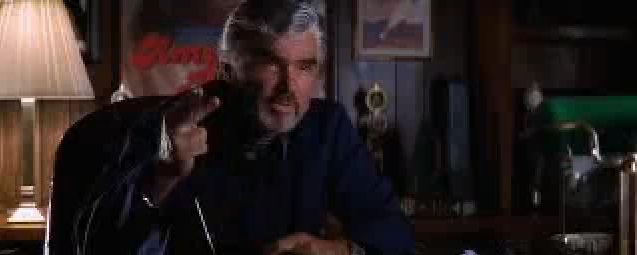
Best Supporting Actor 1997: Burt Reynolds in Boogie Nights

Burt Reynolds received his first Oscar nomination for portraying pornographic film director Jack Horner in Boogie Nights.

Boogie Nights is a great film about the porn industry from the 70's to the 80's.

Burt Reynolds plays the famous Porn director Jack Horner in a rather interesting way. As Horner he surprisingly never plays it exactly as you would expect. He could have easily played him as some extremely slimy type of character that would have been easy and incredibly obvious, but instead Reynolds gives a far more interesting performance. He begins in control of the film pulling in Eddie Adams (Mark Wahlberg) into the industry. I like how Reynolds shows Horner's complete control of the situation, and is cool, calm manipulation of others to make his films. It is interesting because Reynolds carefully shows that Horner is not really manipulating anyone to be vindictive or really to control but he just really wants his films made. Reynolds creates a palatable sense of warmth about it even when he's asking people to have sex in front of them. This is fascinating because Jack has all the actions of the creep, yet that is never the quality that is exuded from him. His presence instead has this stable sincerity about it in a weird way that you see him as genuinely someone trying to encourage these young people, even if it is to have sex for the amusement of others.

What I found most interesting about his performance is showing that Horner actually believes he is an artist. Reynolds excels in every scene in which he must show this and makes Horner's belief that he really is a filmmaker both fascinating and somehow realistic. I like the enthusiasm Reynolds into the film making scenes and his enthusiasm to the ideas that his "actors" tell him. Every scene is fascinating involving Horner's obsession and love of film is brilliantly played by Reynolds. Especially strong scenes are when he determinedly defends the film over the use of video tape pushed by a Porn producer. Reynolds emphasizes the passion of Jack as wholly genuine in this regard and his delivery throughout the debate is with guarded precision. He  infuses the right passion in this scene and all his scenes to the utmost effectiveness. His performance interestingly is not that loud, or obvious but just always on the mark. He is always right in this performance never false despite the inherit oddness of Jack Horner. Important to note the moments of Jack out of his typically warm state, though they still speak to Jack trying to help his "actors" as much as he can. The scene of his financier being arrested for child pornography, Reynolds is excellent in portraying the reactions of frustration and creates the sense of the moment of the conflict playing out in his head. Reynolds showing the exasperation in it as Horner finally having had it with the vices of the man who was putting up the money for him. We also see similar frustrations as the perceived quality of his product goes down. When Dirk picks his egotistical fight with Jack, Reynolds is great in the scene as he shows initially real warmth in trying to temper Dirk in his usual loving way. When Dirk doesn't stop, Reynolds plays the break so well by showing it as something that really has to force itself out as he tries to contain that anger as much as he can before he fully explodes as basically the father who has had enough with his wayward son. Jack of course follows this by his own low point of a cheap gimmick to film porn with a stranger in a limo, where the "stranger"'s insults against the qualities of the film lead to Jack attacking the man. Reynolds in the moment doesn't project it as anger at one person but every frustration over his current state of being in this moment. Contrasting that is his reconciliation with Dirk where Reynolds again brings the warmth so naturally as he too apologizes for his anger, and they find a real sincerity in the love between the pornographer and his "Star". 

Monday, 16 August 2010

Best Supporting Actor 1997: Anthony Hopkins in Amistad

Anthony Hopkins received his fourth Oscar nomination for portraying the elderly John Quincy Adams in Amistad.

As much as I always am interested in history, and historical films this film bored me most of the time. It was too slow and stale and left most of the character underdeveloped. It does feel too much like a history lesson, but it does not even have all of its facts right. Re-watching the film again, I'd say I preferred it slightly over my viewing from the time of this review. The film though is one of the inconsistencies and suggests the greatest fault that developed with Spielberg, which was a lack of a grip on tone. The film goes from extreme horrors to extreme sentimentalism, with a particular overuse of John Williams with the latter, that do not cohere effectively. There are good moments in the film but Spielberg's hand is not assured here.

Anthony Hopkins plays Quincy Adams who in this film is an old man but still involved in politics enough to help the slaves who revolted on the Amistad ship. As Adams, Hopkins drifts in and out of the film showing slight interest in the case early on and then eventually defending enslaved people in front of the supreme court. Hopkins is just fine in all of his scenes.  I like the voices he uses for Adams and he certainly looks a lot like Adams in this film. He does his best possible job at being Adams without ever really seeming to force any mannerisms or anything like that.  He does just a good job of being the historical person who he is portraying. His character is not overly complex and is a part that is more functionary. Still though Hopkins fully fulfills the function as well as possible. He sells Adams's age well and never does not seem as he should be. He mostly just has short little conversations that Hopkins does a fine job with, that is until the his final big speech in front of the supreme court. Hopkins does a very good job with the speech making it pretty effective abut still it is not one of the greatest ever, just a good end speech. Overall he is just fine throughout and I wish a little more of the movie had been about him because Hopkins does quite well even without really that complex of a character.

Speaking on Anthony Hopkins, my views actually haven't changed considerably though my original thoughts are a bit boilerplate, and actually a bit inconsistent with my rating, as my original thoughts as given are clearly of more than a 3 anyways. There is more credit to be given though to Hopkins's performance, which is that of a few key scenes throughout the film as the elderly Adams. That element alone deserves more praise as while Hopkins was in no way a young man at the time of this film, he wasn't nearly as old as the character he portrays. Hopkins though naturally eases into the more labored movements of the man nearing the end of his life, though with this inherent dignity of a man who never allows his age to be a disadvantage. Hopkins's accent work here was also underrated in fashioning an antiquated Massachusetts accent that feels lived in and appropriate to the man of aged respect and intelligence. Perhaps the most remarkable aspect, and really a rare thing altogether, is Hopkins's physical facial performance, something that honestly took me by surprise with its quiet brilliance of it. Where modern historical figures have footage to be imitated or evoked from, Hopkins appears to have used the actual portraits and daguerreotypes of Adams. Hopkins's distinct expressions, the way he molds his eyebrows, the way he hardens his eyes, even the tighter jaw are not innate to Hopkins, they rather appear to be fitting to Adams in those visual records of the man. It is a fascinating realization, that not only works, was so natural within his performance that I failed to pick up on Hopkins's immaculate crafting of this manner. His performance though is used as a heavy hitter within the film, really to spice a few things up, and is easily a highlight within the film. Hopkins plays the older statesmen with ease bringing that ease and grace about him, but also with a noted warmth, particularly in his big meeting with Djimon Hounsou as the African on trial for taking the slave ship by force. Hopkins segues towards a natural warmth just as easily as he has that slightly dismissive tone towards others who are not at his intellectual level. Whether it is a quick barb or just a general statement of curiosity, Hopkins makes Adams the consummate scene-stealer in the right way. That all leads toward his final big speech, which is handled with a confident and low-key passion. An earned moment of inspiration thanks to Hopkins's quietly devoted performance. He does not oversell the sentiment he earns it. Special mention I think should be given to the moment of commenting on his father as the importance of what was written before, where he does suggest that familial bond if only in his reaction to looking at the bust of his father. Where other aspects of the film fall into moments of inconsistency with Spielberg's less than sure hand here, Hopkins is pitch-perfect every step of the way. Powerfully portraying the eccentric old president who still has some purpose left.

Best Supporting Actor 1997: Greg Kinnear in As Good As It Gets

Greg Kinnear received his first Oscar nomination for portraying Simon Bishop a homosexual artist in As Good As It Gets.

Greg Kinnear in this film plays a homosexual character which usually leads to mannerisms sometimes they work, sometimes they do not. Kinnear does do a few very slight, barely noticeable ones that actually work pretty well, rather than seeming forced or actory. Kinnear does a fine job as Bishop who is constantly yelled at by his neighbor Melvin Udall (Jack Nicholson).  Kinnear does a good job reacting toward Nicholson's constant berating. He shows well that Bishop really is hurt by everything said by him carefully showing through his facial expression. He's convincing in creating the artistic type without overplaying the idea too much into caricature as this role very easily could've fallen into as written.


After being brutally beaten by thieves Bishop's life changes and he begins to have financial problems. Kinnear is very good here showing a good contrast as Bishop quickly changes before and after the beating. At first being pretty upbeat and enthusiastic for his life and his art, than afterward a far more depressed man. He has two strong scenes which show a very real pain one where he first looks at his face after his beating and secondly after his dog who he loves does not come when he calls. Kinnear conveys effectively the state of the pained depression within the man in these moments, and creates the right sense of his trauma. Kinnear is able to play this note above the sitcom state of the film, even with moments like imitating Nicholson. Kinnear bothers to find some emotional truth in them and overcomes the limitations within them. He delivers on some sense of an actual reality within his character even through some of the silly moments granted to him even within these moments of a theoretical serious situation.

He also has a good scene where he tells Udall to go easy on him, he does this very well showing the characters restrained anger and depression very well. After this is goes into the background a little bit but still is very good at showing the character's loss of depression well. Kinnear manages to tell his story of his personal trauma with the right sort of understated emotional distress. He doesn't overplay it finding in his reaction the moment of the pain of recall, but also the distance of it. His eventual call to his distant parents is handled well showing a clear history without telling everything. He tries his best in two scenes that I do not feel are particularly well written. One the scene where he draws again, he does a good job showing interest and enthusiasm again even if the scene is poorly written. The other where he tells Udall he is a good guy after all. The scene I find is completely off in terms of writing but Kinnear is tries his best to help the bad scene along. This character had plenty of pitfalls as offered by the writing which in many ways borders towards caricature more often than truth. Having said that Kinnear artfully avoids many of these to given an earnest depiction of the man and going against the "type" to find something a bit more authentic.

Sunday, 15 August 2010

Best Supporting Actor 1997: Robert Forster in Jackie Brown

Robert Forster received his first Oscar nomination for playing Max Cherry in Jackie Brown.

Jackie Brown deserves to be mentioned with Tarantino's very best, in his tale of a flight attendant trying to manage both cops and criminals in order for her to survive.
 
Forster made his return to "A" cinema via Tarantino giving him the second chance of a lifetime in the role of Max Cherry, to the point that Tarantino turned down Robert De Niro for the role (who was still cast as burnout/Criminal Louis) in order to enable Forster to play this part. And it is hard not see why Forster is really just perfect for this role in every respect. We get that right away as he enters into the picture as a Bail Bondsman who becomes in contact with cunning career arms dealer Ordell (Samuel L. Jackson), after one of his mules gets arrested. The chemistry, or really anti-chemistry, he has with Jackson is pretty pitch perfect this as Ordell comes in as aggressive and more than anything dismissive of Forster's Max Cherry. On the other hand Forster is fantastic in portraying not a hint of intimidation or discouragement from Ordell. His reactions are that of a guy who has seen too many criminals to name, knows all their different tactics, and in turn is just dealing with another guy as he would the rest. What I love is Forster's voice that might as well be a character all on its own, as it is so distinct, and just so perfect for this part. The evidence of this is immediate with all of Ordell's "talk", Forster's delivery is that of straight business. Anything that Ordell throws at him is countered with Forster just telling him like it is, not aggressively, not dismissively, just as it is. He does it straight easy, and with such a palatable sense of a guy who has been there and done this, and it is just another go with him. 
 
Although where it seems like a guy just here to perform a function, though doing so in a way that with such history, this shifts to much more when he is tasked again by Ordell to bailout another mule of his, after Ordell killed his previous mule, this being the titular Jackie Brown (Pam Grier). This which shakes Max's world which we get as he watches the slow walkout of Jackie from the prison, and I love Forster's reaction. He puts just enough on it, not too much that wouldn't be right for a man like Max, it is rather you get the sense that he's seeing someone very special to him, but he still is just about keeping it to himself. Then when giving Jackie the ride home technically Max is quite forward by asking her out for a drink before doing so, despite the circumstances. Forster's delivery I think is something special because he is so straight forward with it again as he's Max not hesitating but also not going overboard with the request. He reveals us someone who has learned and if he's interested he says it without overtures, he just says it. Although their first meeting is less than romantic as Jackie is understandably more concerned with her pending criminal penalties and possibly worse her pending meeting with Ordell. Forster is great in the scene by showing a slightly different side, he's again giving very good advice however the advice is rendered with slight modification of his delivery of just a bit warmth, and his eyes showing someone who definitely hopes he can help Jackie. 
 
After a tense night of narrow escape, while also setting up a more permanent escape, from Ordell using a gun she temporarily pilfered from Max, we have what is just a scene that is both what takes the film to another level, but also what makes both Grier and Forster's performances so special. This as the two of them talk about her situation, but also just talk to one another. The chemistry with Grier and Forster is really one of the very best you might see in a film honestly, even though it is but an aspect of the film. The two are just so natural with one another in conveying the mutual attraction to one another without really even verbalizing it. In this scene they hit the plot points, but what are more important is the way they are both able to exude this sort of connection the two of them both having started to definitely age and live through a lot of things in their life, not necessarily coming up to exactly where they would've expected to be. It isn't with this great anguish, though a bit more sadness in Jackie than Max, but there is such a warmth both exude in this moment that create such a natural affection that is just so incredibly endearing. My favorite moment being, a moment suggested by Forster himself, talking about aging related to his hairline which he openly says he had changed. I love Forster's manner in the admittance isn't with shame or ego, it is rather with this kind of self-actualization. He says he understands it was to make himself feel better, which it did, and in turn Forster discusses all of this with the relaxed ease of a man who is comfortable with making decisions and admitting to the nature of the decisions. 

Forster is wonderful as he makes Max this kind sage character, that importantly is so believable, and so very human despite seeming just like a great guy. What makes him this way though is the way Forster is able to articulate someone who understands faults and flaws, yet knows how to handle them. This in his scene of describing to Jackie his intention of getting out of the bail and bond business after spending a futile smelly night in a potential runaway's apartment. Forster's performance is so great because he doesn't deliver this with this sorrow or anger, it rather with this blunt maturity that he brings to the part so beautifully. The guy is just talking about thinking about this life and thinking if he wants to keep doing or not. He puts just the right touch of emotion on it, that he does care, but it is as someone who has learned life lessons throughout his life and putting them into use. In turn he does his best to help and advise Jackie in her plan to cheat Ordell and the cops in the same switcheroo of money scheme. Again I love Forster's approach because in these moments he isn't a conspirator, though he is technically that, but rather just a friend listening to Jackie and giving feedback best he can. When he watches aspect of her plan being implemented he's wonderful in portraying so much in granting both a sense of curiosity and admiration as he sees Jackie attempting to implement her plan. The final scene is sheer perfection between both Grier and Forster, where everything has gone to Jackie's plan. The scene is incredible so romantic, yet so romantic in such a low key way. Forster's first easing of Jackie's concerns stating that at his age he has to be making his own decision at that she didn't manipulate him, is again with this beautiful blunt reality of a guy who just knows who he is and knows the score. When Jackie prods him a bit more to actually come with her, Forster's little smile carries so much in it, and he shows so much love for her in just that moment. They're moment of finally kissing is one of the most earned depicted in a film, because it is just so natural of the two who have never said they loved each other, but always said it in their interactions. Their chemistry just being that good, and again based so powerfully on the two understanding each other. The final moment of Forster's being a marvelous sendoff as he really becomes his most expressive in his reactions and in that moment shows every second thought about going with Jackie, a sense of how much love he does feel for he, but still the sense of a man who knows who he is, and what choice he has to make. This is an absolutely brilliant performance by Robert Forster as he takes a great role and makes the most of it. I think actually there were probably a lot of pitfalls in making Max to overt, or too modest, yet Forster finds just the right path to make such a perfectly tangible mature character here. A character who seems so natural in this world. Most importantly though Forster creates such a moving and endearing romance via his great chemistry with Grier, and doing it with such unfussy ease that just feels right for the memorable man that is Max Cherry.