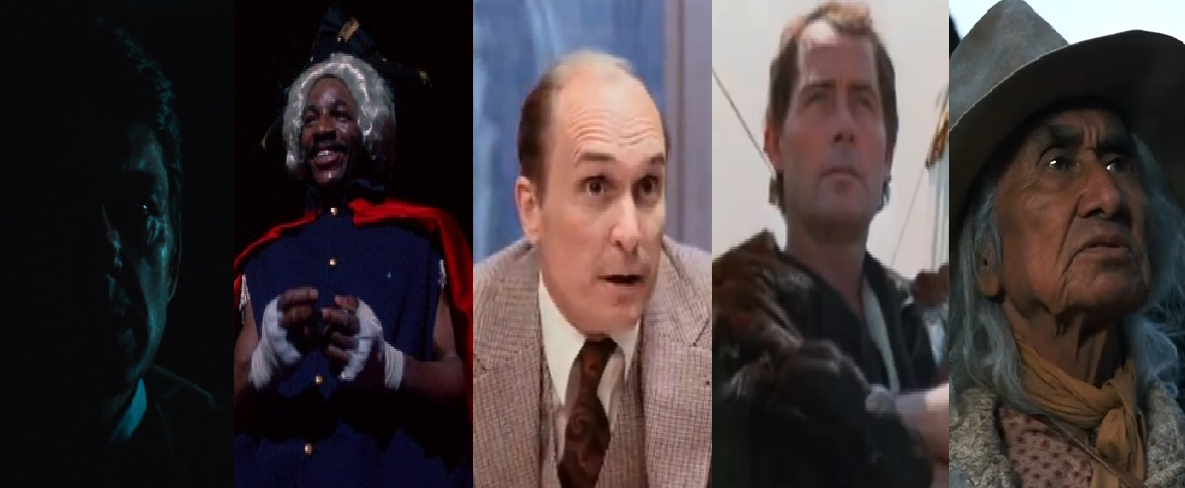
10. Peter Breck in Shock Corridor - Breck gives a rather underwhelming performance that fails to grant the needed detail to his character's mental transition and his relationship to the other mental patients.
Best Scene: Asking about the murder.
9. Steve McQueen in Love With a Proper Stranger - McQueen gives an effective alternative performance from him that realizes his hapless failure as romantic, which is a far cry than his typical cool characters.
Best Scene: Seeing the abortionist.
8. Alberto Sordi in Il Diavolo - Sordi gives an effective sort of observational turn that offers both comedy and a bit of poignancy in his portrayal of a tourist not quite getting what he expects from his travels.
Best Scene: Confession.
7. Maurice Ronet in The Fire Within - Ronet gives a rather effective portrayal of a festering depression that manifests itself in different forms over the course of a day.
Best Scene: Final party.
6. Michael Redgrave in Uncle Vanya - Redgrave manages to find comedy and the right degree of pathos in his portrayal of a man who hates his existence to the point he can't help but laugh.
Best Scene: Finally breaking.
5. Marcello Mastroianni in The Organizer - Mastroianni gives an effective atypical turn from him in his off-beat portrayal of a passionate activist.
Best Scene: Final speech.
4. Gunnar Björnstrand in Winter Light - Björnstrand gives a distant though striking turn as a man whose crafted an existence through rejection of emotion and thought that would otherwise pain him.
Best Scene: Telling his truth.
3. Robert Shaw in The Caretaker - Shaw gives a powerful internalized
portrayal of a man psychologically broken however still attempting to
make a human connection.
Best Scene: His story.
2. Patrick McGoohan in Dr. Syn, Alias the Scarecrow - McGoohan gives a
great turn as every facet of his masked hero, from the menacing
"villain" that is the scarecrow, to the affable, if seemingly harmless,
parson, and the cunning man beneath each ruse.
Best Scene: The official trial.
1. Burt Lancaster in The Leopard - Good predictions Robert, Luke, BRAZINTERMA, Charles, Tahmeed, Michael McCarthy, RatedRStar, and Bryan. Lancaster reveals his greater versatility once again in his convincing portrayal of his cunning and charismatic prince's method but also a powerful portrayal of his final melancholy.
Best Scene: Alone during the party.
Updated Overall
Next Year: 1963 Supporting
Showing posts with label Robert Shaw. Show all posts
Friday, 2 August 2019
Sunday, 21 July 2019
Alternate Best Actor 1963: Robert Shaw & Donald Pleasence in The Caretaker
Robert Shaw did not receive an Oscar nomination for portraying Aston nor did Donald Pleasence for portraying Mac Davies in The Caretaker.
The Caretaker is the most effective cinematic adaptation of the three Harold Pinter play's I've seen. This still, as with the other films, being largely a direct translation, though here with some careful cinematic additions within the film, most noticeably the film's eerie sound design.
Obviously, performances are essential with any play adaptation, however they seem to take on an even greater purpose within the ambiguous writing of Harold Pinter. His writing rarely spells things out, more of granting subtle shades of ideas, and alluding to things while rarely ever flatly telling you the direct truth of a matter. In this in mind we are introduced to two men walking down the streets as this film opens, observed by a third man. The first man appears to be a basic hobo played by Donald Pleasence. An actor who is best known today for his genre turns as Dr. Loomis in Halloween or perhaps as one take on James Bond's arch nemesis Blofeld. Although even as those turns show the evidence of the man's talent, they barely even skim the surface of his great ability as a performer. If one were to witness his turn here, one will immediately see all the greater dynamic of a performer, who already seemed rather remarkable. Pleasence is a far cry from the troubled yet clearly affluent Doctor Loomis, this as a lower class man, that Pleasence immediately embodies in a wholly transformative turn. Pleasence's whole physical manner is of this retiring behavior, a manner clearly defined by a hardship of some sort, a messy existence of a man living in the cracks of society. There's a particularly brilliant way with one hand Pleasence keeps warm essentially, as the other, reaching for expressions, keeping the man protecting himself, while seeming to attempting a conversation of some kind with the other man.
The other man is Aston, played of course by Robert Shaw, an actor who thankfully is best known for his greatest performance, however the greatness of his ability is perhaps still under looked. Shaw here though seems perhaps this is within a certain element of his wheelhouse. This being the cold man. This as there is such a stark contrast between Pleasence and Shaw, as Shaw walks barely with a glance to Pleasence, with a careful step, every movement along their pathway. The idea of interaction even seems almost alien, as Shaw makes Aston appear ever so distance. This curious state continues as Aston shows the elder man into an apartment, which he claims is a place he'll be able to stay for at least the night. Shaw's performance in this film actually is one of the result, and a most fascinating one. Because again, this appears as Shaw is working within the idea of the refined English gentleman, who is so austere in his manner, that there appears a contradiction as Aston makes this invitation to Pleasence's Davies. Shaw seems most peculiar, almost as though he is perhaps a calm collected murderer, as he just quietly delivers each line, while keeping this rather consistent eye contact with him. This as Aston remains always so observant yet so detached within Shaw's portrayal, that seems contradictory, at first.
Speaking of contradictions, of the more obvious sort, is the man that is Davies, who gives the name of Bernard Jenkins, along with a variety of different claims, depending on the slightest hint of an idea from Aston. Pleasence is downright amazing in realizing the rather tricky dialogue, of sorts, at hand in Davies who when in conversation imparts a constant stream of various thoughts, typically half-thought. Pleasence thrives with this, with an entirely different accent from his typically posher sort, that is not only crasser but also a natural lisp fitting to a man whose teeth are familiar with the street than a dentist's chair. Pleasence's accent, along with aforementioned physicality is not only so naturally realized, but immediately grants you a sense of this man as any presumed notions of a Pleasence performance are wiped away. Pleasence's ability with that the tricky dialogue is part of this, as he manages to make it sing, in the properly disjointed way it should be. He grants this perfect rambling tempo, when no one gets in the way of Davies's speech, that evokes so effectively a man who has basically made a good portion of his life just blathering to whoever is in ear shot. A man you may believe seems is eager for conversation, establishing why it is perhaps that Aston is walking with him as the film opens.
As great as the transformation already is by Pleasence, it theoretically could be easy enough to stop it there and leave him just this flat kook of a strange sort. Pleasence though takes this performance far beyond that, and in many ways, makes the film through how dynamic his portrayal is in terms of creating the nature of Davies. This is especially within portraying the shades of the man depending on his audience and depending on his circumstance. In that opening Pleasence has a false affability, in that it is very much egotistical in the grand standing way he speaks every word as this accomplishment, however brought to life in this outgoing fashion that one might believe is friendly, if one is poorly experienced in such things. This changes rather subtly in Pleasence's work as Aston offers Davies a place to stay. Pleasence so cleverly begins to subvert the initial impression a bit as he starts to eye the place with both a curiosity and suspicion. This as he conveys so effectively that Davies isn't quite sure what to make of Aston's offer, yet given his current circumstances is more than willing to utilize it. As he continues with this process Davies quiets just a bit, only a bit, and Pleasence is fantastic in a moment of scoffing at the lack of a usable gas stove. This with a directness, that Pleasence emphasizes within his delivery, that establishes sort of the essential "secret" of his character.
There is more to Davies as he comes into interactions with our third character, the observing man from the opening, Mick (Alan Bates) who is Aston's brother. He initially comes in though hectoring Davies by trying to scare him. Pleasence capturing an initial vicious reaction to attempt to push off any real threat, fitting to a man of the street as though he would be attempting to scare off any mob of men harassing him. When Mick reveals himself, and plays verbal games as well, Pleasence is great in portraying Davies finding his gear of dealing with this brother as well. This initial with these more hostile ramblings, when it appears Mick himself might be hostile, ramblings that build himself up. Pleasence is excellent in each bit of banter as though it is this exact, slightly mad, yet still skilled attack to attempt to settle his place. This almost drowning out any attacks on him through the sheer amount of lies he can espouse in single conversation. Pleasence realizes this beautiful mess in his work, as he manages to create the right degree of mania, with also a certain astuteness. Pleasence doesn't exactly portray this as wholly a lie in the man, but rather the man's method of defense, and as we will also see, attack.
Meanwhile we have Shaw's Aston who continues to seemingly be rather friendly in terms of his offerings to Davies. This is as he gives the man a place to stay and recommends that he have a job as well as the caretaker. This while also consistently mentioning his need to build a shed, a exceptionally performed and especially important line for him. This as he delivers it with this certain fixation on the idea, which matches this fixation we see in his eyes upon Davies. This as Shaw speaks as though he constantly looking for something from the man, something that Shaw doesn't portray as intense outwardly, but rather this internalized intensity towards an interest. This is the key to Shaw's performance though as we find in Shaw's major moment within the film, and the most concrete bit of information within the story. Once again proving the master of the monologue, Shaw's delivery of Aston's story is spellbinding. This is as he finally really speaks and Shaw pulls you into every word. This being another harrowing story of the past, but with a different tilt to the one he would become legendary for. This is as Shaw reveals a man essentially broken mentally, relating the story of the electroshock given to him. Shaw is haunting in every word by finding this most unique emotionalism, within just his eyes, and even the sharp distance of his story. This as he fashions this searing pain of the past within his words, that ends up being reflected into the present. This as he grants sense to the entirety of his performance, as explaining a man who has been stunted and detached emotionally. Shaw realizes this as man though, with still emotion, that still exists within him, but hidden within his hide damaged by perhaps illness, perhaps this trauma. Shaw's quiet intention to harm the man who had done this act to, he brings as this moment of remarkable clarity, as he conveys it as a bit of something Aston can hold onto in his difficult state. This is especially well realized as Shaw then segues back to Aston's statement of shed building, again as fixation he also uses as his base attempt at communication.
Shaw manages to convey the real purpose of Aston's long stares, and kindly actions as he seeks for human interaction yet struggles to find it. This making Davies seem the ideal candidate from his boisterous words, that again could seem affable enough, particularly for someone as socially stunted as Aston. Pleasence excels as he slowly portrays Davies not so much as changing, but revealing himself. This as he begins to slowly find friendlier terms with Mick, at the same time Aston attempted to reveal more of himself. With the former brother Pleasence fashions this almost good old boy attitude, as he revels in joy with the back and forth with almost this maniacal glee. This turns even more so to this as Pleasence speaks with quiet venom these little words of antagonism towards Aston to Mick, and reveals a subtle manipulation within the man. This is against his scene with Aston, as even when Aston really reveals his deepest vulnerability to him, Pleasence is terrific actually by making Davies's reaction so limited. This as this almost confusion of why the man would share such information, almost a disinterest as Pleasence reveals the secret of Davies, which that he's an entirely self-serving freeloader. I especially love the moment in which Davies's ramblings, which are usually false pleasantries, fake bake stories and general odd ego stroking, fall into threats. Pleasence rambles these off as he would any other, making them particularly cruel as Davies mentions he could have Aston returned to the electroshock, as though it is just a casual idea to him, and revealing just how little Aston's moment of vulnerability meant to him. This however making Davies's game becoming a bit more obvious as the manipulator, as he attempts to pit the brothers against one another for his benefit. There's a particularly simple scene in this regard where in the night Davies makes random noises while Aston is trying to sleep, again to be another manipulation. Pleasence is an amazing weasel as again he brings just such a casual earnestness in the self-serving suggestions, claiming an alternative job offer from Mick, even with the act having this fiendish intelligence revealed within his eyes as he makes his seemingly noises. Shaw is also great in this scene in portraying Aston's distaste finally with Davies's behavior, again through so little, that Shaw excels with in still conveying this disappointment in his eyes, rather than the eyes of interest and a hope for connection that we had seen before.
This eventually leading to the final confrontation of sorts as Davies duplicity perhaps gives a chance for connection for the brothers as Aston decides to evict Davies. Shaw does so much with so little in this scene as we are granted the one major interaction between the brothers, where Shaw finds a real poignancy in just the smallest sense of familiarity and affection he grants in the tiny glance between the brothers. This showing that perhaps Aston finally has found his connection with another person. This against his moment with Pleasence, where Shaw speaks volumes through his retiring manner, that distance himself as much as possible. This without uncaring deliveries, that are so notable, and make actually the sense of his earlier ones all the more. This now showing there's a truly detached Aston, from a sense of uncaring, rather than that early detachment in Aston due to his damaged mind, the two sides that Shaw flawlessly brings to life. Shaw says very little, but shows that Aston has no interest or purpose for Davies who abused his kindness. Pleasence offers one more magnificent scene, which is almost not necessary to say I suppose as Pleasence is outstanding every second he's onscreen here. I love what Pleasence does though as we have him again riffing through different terrible self-serving ideas, that are particularly obvious at this point, towards Aston to allow him to stay. As much as Pleasence does allow one to see just how despicable he is, he manages to find just the modicum of humanity in conveying a very real fear between each suggestion, of man with a very uncertain future. Both actors give downright brilliant performances. This is as each realizes a very tricky character, but grants a real sense to them and power to their existence. Shaw through a rather minimalist yet impactful turn of slowly revealing the truth of a broken, and Pleasence through a grand, yet nuanced and oh so complex portrayal of a broken man of an entirely different sort.
The Caretaker is the most effective cinematic adaptation of the three Harold Pinter play's I've seen. This still, as with the other films, being largely a direct translation, though here with some careful cinematic additions within the film, most noticeably the film's eerie sound design.
Obviously, performances are essential with any play adaptation, however they seem to take on an even greater purpose within the ambiguous writing of Harold Pinter. His writing rarely spells things out, more of granting subtle shades of ideas, and alluding to things while rarely ever flatly telling you the direct truth of a matter. In this in mind we are introduced to two men walking down the streets as this film opens, observed by a third man. The first man appears to be a basic hobo played by Donald Pleasence. An actor who is best known today for his genre turns as Dr. Loomis in Halloween or perhaps as one take on James Bond's arch nemesis Blofeld. Although even as those turns show the evidence of the man's talent, they barely even skim the surface of his great ability as a performer. If one were to witness his turn here, one will immediately see all the greater dynamic of a performer, who already seemed rather remarkable. Pleasence is a far cry from the troubled yet clearly affluent Doctor Loomis, this as a lower class man, that Pleasence immediately embodies in a wholly transformative turn. Pleasence's whole physical manner is of this retiring behavior, a manner clearly defined by a hardship of some sort, a messy existence of a man living in the cracks of society. There's a particularly brilliant way with one hand Pleasence keeps warm essentially, as the other, reaching for expressions, keeping the man protecting himself, while seeming to attempting a conversation of some kind with the other man.
The other man is Aston, played of course by Robert Shaw, an actor who thankfully is best known for his greatest performance, however the greatness of his ability is perhaps still under looked. Shaw here though seems perhaps this is within a certain element of his wheelhouse. This being the cold man. This as there is such a stark contrast between Pleasence and Shaw, as Shaw walks barely with a glance to Pleasence, with a careful step, every movement along their pathway. The idea of interaction even seems almost alien, as Shaw makes Aston appear ever so distance. This curious state continues as Aston shows the elder man into an apartment, which he claims is a place he'll be able to stay for at least the night. Shaw's performance in this film actually is one of the result, and a most fascinating one. Because again, this appears as Shaw is working within the idea of the refined English gentleman, who is so austere in his manner, that there appears a contradiction as Aston makes this invitation to Pleasence's Davies. Shaw seems most peculiar, almost as though he is perhaps a calm collected murderer, as he just quietly delivers each line, while keeping this rather consistent eye contact with him. This as Aston remains always so observant yet so detached within Shaw's portrayal, that seems contradictory, at first.
Speaking of contradictions, of the more obvious sort, is the man that is Davies, who gives the name of Bernard Jenkins, along with a variety of different claims, depending on the slightest hint of an idea from Aston. Pleasence is downright amazing in realizing the rather tricky dialogue, of sorts, at hand in Davies who when in conversation imparts a constant stream of various thoughts, typically half-thought. Pleasence thrives with this, with an entirely different accent from his typically posher sort, that is not only crasser but also a natural lisp fitting to a man whose teeth are familiar with the street than a dentist's chair. Pleasence's accent, along with aforementioned physicality is not only so naturally realized, but immediately grants you a sense of this man as any presumed notions of a Pleasence performance are wiped away. Pleasence's ability with that the tricky dialogue is part of this, as he manages to make it sing, in the properly disjointed way it should be. He grants this perfect rambling tempo, when no one gets in the way of Davies's speech, that evokes so effectively a man who has basically made a good portion of his life just blathering to whoever is in ear shot. A man you may believe seems is eager for conversation, establishing why it is perhaps that Aston is walking with him as the film opens.
As great as the transformation already is by Pleasence, it theoretically could be easy enough to stop it there and leave him just this flat kook of a strange sort. Pleasence though takes this performance far beyond that, and in many ways, makes the film through how dynamic his portrayal is in terms of creating the nature of Davies. This is especially within portraying the shades of the man depending on his audience and depending on his circumstance. In that opening Pleasence has a false affability, in that it is very much egotistical in the grand standing way he speaks every word as this accomplishment, however brought to life in this outgoing fashion that one might believe is friendly, if one is poorly experienced in such things. This changes rather subtly in Pleasence's work as Aston offers Davies a place to stay. Pleasence so cleverly begins to subvert the initial impression a bit as he starts to eye the place with both a curiosity and suspicion. This as he conveys so effectively that Davies isn't quite sure what to make of Aston's offer, yet given his current circumstances is more than willing to utilize it. As he continues with this process Davies quiets just a bit, only a bit, and Pleasence is fantastic in a moment of scoffing at the lack of a usable gas stove. This with a directness, that Pleasence emphasizes within his delivery, that establishes sort of the essential "secret" of his character.
There is more to Davies as he comes into interactions with our third character, the observing man from the opening, Mick (Alan Bates) who is Aston's brother. He initially comes in though hectoring Davies by trying to scare him. Pleasence capturing an initial vicious reaction to attempt to push off any real threat, fitting to a man of the street as though he would be attempting to scare off any mob of men harassing him. When Mick reveals himself, and plays verbal games as well, Pleasence is great in portraying Davies finding his gear of dealing with this brother as well. This initial with these more hostile ramblings, when it appears Mick himself might be hostile, ramblings that build himself up. Pleasence is excellent in each bit of banter as though it is this exact, slightly mad, yet still skilled attack to attempt to settle his place. This almost drowning out any attacks on him through the sheer amount of lies he can espouse in single conversation. Pleasence realizes this beautiful mess in his work, as he manages to create the right degree of mania, with also a certain astuteness. Pleasence doesn't exactly portray this as wholly a lie in the man, but rather the man's method of defense, and as we will also see, attack.
Meanwhile we have Shaw's Aston who continues to seemingly be rather friendly in terms of his offerings to Davies. This is as he gives the man a place to stay and recommends that he have a job as well as the caretaker. This while also consistently mentioning his need to build a shed, a exceptionally performed and especially important line for him. This as he delivers it with this certain fixation on the idea, which matches this fixation we see in his eyes upon Davies. This as Shaw speaks as though he constantly looking for something from the man, something that Shaw doesn't portray as intense outwardly, but rather this internalized intensity towards an interest. This is the key to Shaw's performance though as we find in Shaw's major moment within the film, and the most concrete bit of information within the story. Once again proving the master of the monologue, Shaw's delivery of Aston's story is spellbinding. This is as he finally really speaks and Shaw pulls you into every word. This being another harrowing story of the past, but with a different tilt to the one he would become legendary for. This is as Shaw reveals a man essentially broken mentally, relating the story of the electroshock given to him. Shaw is haunting in every word by finding this most unique emotionalism, within just his eyes, and even the sharp distance of his story. This as he fashions this searing pain of the past within his words, that ends up being reflected into the present. This as he grants sense to the entirety of his performance, as explaining a man who has been stunted and detached emotionally. Shaw realizes this as man though, with still emotion, that still exists within him, but hidden within his hide damaged by perhaps illness, perhaps this trauma. Shaw's quiet intention to harm the man who had done this act to, he brings as this moment of remarkable clarity, as he conveys it as a bit of something Aston can hold onto in his difficult state. This is especially well realized as Shaw then segues back to Aston's statement of shed building, again as fixation he also uses as his base attempt at communication.
Shaw manages to convey the real purpose of Aston's long stares, and kindly actions as he seeks for human interaction yet struggles to find it. This making Davies seem the ideal candidate from his boisterous words, that again could seem affable enough, particularly for someone as socially stunted as Aston. Pleasence excels as he slowly portrays Davies not so much as changing, but revealing himself. This as he begins to slowly find friendlier terms with Mick, at the same time Aston attempted to reveal more of himself. With the former brother Pleasence fashions this almost good old boy attitude, as he revels in joy with the back and forth with almost this maniacal glee. This turns even more so to this as Pleasence speaks with quiet venom these little words of antagonism towards Aston to Mick, and reveals a subtle manipulation within the man. This is against his scene with Aston, as even when Aston really reveals his deepest vulnerability to him, Pleasence is terrific actually by making Davies's reaction so limited. This as this almost confusion of why the man would share such information, almost a disinterest as Pleasence reveals the secret of Davies, which that he's an entirely self-serving freeloader. I especially love the moment in which Davies's ramblings, which are usually false pleasantries, fake bake stories and general odd ego stroking, fall into threats. Pleasence rambles these off as he would any other, making them particularly cruel as Davies mentions he could have Aston returned to the electroshock, as though it is just a casual idea to him, and revealing just how little Aston's moment of vulnerability meant to him. This however making Davies's game becoming a bit more obvious as the manipulator, as he attempts to pit the brothers against one another for his benefit. There's a particularly simple scene in this regard where in the night Davies makes random noises while Aston is trying to sleep, again to be another manipulation. Pleasence is an amazing weasel as again he brings just such a casual earnestness in the self-serving suggestions, claiming an alternative job offer from Mick, even with the act having this fiendish intelligence revealed within his eyes as he makes his seemingly noises. Shaw is also great in this scene in portraying Aston's distaste finally with Davies's behavior, again through so little, that Shaw excels with in still conveying this disappointment in his eyes, rather than the eyes of interest and a hope for connection that we had seen before.
This eventually leading to the final confrontation of sorts as Davies duplicity perhaps gives a chance for connection for the brothers as Aston decides to evict Davies. Shaw does so much with so little in this scene as we are granted the one major interaction between the brothers, where Shaw finds a real poignancy in just the smallest sense of familiarity and affection he grants in the tiny glance between the brothers. This showing that perhaps Aston finally has found his connection with another person. This against his moment with Pleasence, where Shaw speaks volumes through his retiring manner, that distance himself as much as possible. This without uncaring deliveries, that are so notable, and make actually the sense of his earlier ones all the more. This now showing there's a truly detached Aston, from a sense of uncaring, rather than that early detachment in Aston due to his damaged mind, the two sides that Shaw flawlessly brings to life. Shaw says very little, but shows that Aston has no interest or purpose for Davies who abused his kindness. Pleasence offers one more magnificent scene, which is almost not necessary to say I suppose as Pleasence is outstanding every second he's onscreen here. I love what Pleasence does though as we have him again riffing through different terrible self-serving ideas, that are particularly obvious at this point, towards Aston to allow him to stay. As much as Pleasence does allow one to see just how despicable he is, he manages to find just the modicum of humanity in conveying a very real fear between each suggestion, of man with a very uncertain future. Both actors give downright brilliant performances. This is as each realizes a very tricky character, but grants a real sense to them and power to their existence. Shaw through a rather minimalist yet impactful turn of slowly revealing the truth of a broken, and Pleasence through a grand, yet nuanced and oh so complex portrayal of a broken man of an entirely different sort.
Monday, 10 June 2019
Alternate Best Actor 1963
And the Nominees Were Not:
Michael Redgrave in Uncle Vanya
Laurence Olivier in Uncle Vanya
Patrick McGoohan in Dr. Syn, Alias The Scarecrow
Gunnar Björnstrand in Winter Light
Peter Breck in Shock Corridor
Alberto Sordi in Il Diavolo
Predict those five (Redgrave from Vanya for prediction purpose), these five (Shaw from The Caretake for Prediction Purposes) or both
Robert Shaw in The Caretaker
Donald Pleasence in The Caretaker
Steve McQueen in Love With a Proper Stranger
Burt Lancaster in The Leopard
Maurice Ronet in The Fire Within
Marcello Mastroianni in The Organizer
Michael Redgrave in Uncle Vanya
Laurence Olivier in Uncle Vanya
Patrick McGoohan in Dr. Syn, Alias The Scarecrow
Gunnar Björnstrand in Winter Light
Peter Breck in Shock Corridor
Alberto Sordi in Il Diavolo
Predict those five (Redgrave from Vanya for prediction purpose), these five (Shaw from The Caretake for Prediction Purposes) or both
Robert Shaw in The Caretaker
Donald Pleasence in The Caretaker
Steve McQueen in Love With a Proper Stranger
Burt Lancaster in The Leopard
Maurice Ronet in The Fire Within
Marcello Mastroianni in The Organizer
Sunday, 7 January 2018
Alternate Best Supporting Actor 1965: Results
5. Donald Pleasence in The Greatest Story Ever Told - Pleasence makes a large impact in a few brief moments by granting such an unnerving gentleness to his otherworldly evil.
Best Scene: In the cave.
4. Claude Rains in The Greatest Story Ever Told - Rains gives a worthy swansong for his career through one last go with a performance that realizes a properly entertaining and oh so devious villain.
Best Scene: Fear then a smile.
3. Charlton Heston in The Greatest Story Ever Told - Heston gives his best biblical epic turn in a supporting role, by so effectively depicting the overwhelming even if somewhat mad strength of his John the Baptist's conviction.
Best Scene: Confrontation with Herod.
2. Richard Harris in Major Dundee - Harris gives a marvelous turn that while being actively entertaining also realizes the more complex themes of the film through his vivid portrayal that gives understanding to this gentlemanly yet violent soldier and his specific code of honor.
Best Scene: The deserter.
1. Robert Shaw in Battle of the Bulge - In a year of incredible supporting turns Shaw offers yet another one. Shaw once again creates a truly menacing villain yet he goes further in capturing the complexity of the role by giving understanding, though not sympathy, to his pragmatic Nazi.
Best Scene: The battlefield is home.
Updated Overall
Next: I think I'll take a break before the Official Oscar nominations. However if everyone would like to recommend one film for me to watch from 2017, or a year I've covered in the bonus rounds already, or an animated, documentary or television film from any year. I'll watch them during the interim.
Best Scene: In the cave.
4. Claude Rains in The Greatest Story Ever Told - Rains gives a worthy swansong for his career through one last go with a performance that realizes a properly entertaining and oh so devious villain.
Best Scene: Fear then a smile.
3. Charlton Heston in The Greatest Story Ever Told - Heston gives his best biblical epic turn in a supporting role, by so effectively depicting the overwhelming even if somewhat mad strength of his John the Baptist's conviction.
Best Scene: Confrontation with Herod.
2. Richard Harris in Major Dundee - Harris gives a marvelous turn that while being actively entertaining also realizes the more complex themes of the film through his vivid portrayal that gives understanding to this gentlemanly yet violent soldier and his specific code of honor.
Best Scene: The deserter.
1. Robert Shaw in Battle of the Bulge - In a year of incredible supporting turns Shaw offers yet another one. Shaw once again creates a truly menacing villain yet he goes further in capturing the complexity of the role by giving understanding, though not sympathy, to his pragmatic Nazi.
Best Scene: The battlefield is home.
Updated Overall
Next: I think I'll take a break before the Official Oscar nominations. However if everyone would like to recommend one film for me to watch from 2017, or a year I've covered in the bonus rounds already, or an animated, documentary or television film from any year. I'll watch them during the interim.
Saturday, 6 January 2018
Alternate Best Supporting Actor 1965: Robert Shaw in Battle of the Bulge
Robert Shaw did not receive an Oscar nomination for portraying Col. Martin Hessler in Battle of the Bulge.
Battle of the Bulge actually is rather entertaining and works quite well as a war film if one looks at it as more of a Where Eagles Dare, than a Battleground.
The film despite wearing the name of the real battle is a heavily fictionalized version that follows a somewhat general sense of the real battle but that's about it. It crafts its narrative within original characters within this scheme of utilizing its large cast the most interesting of the characters being Robert Shaw's Martin Hessler. Hessler acts as the chief villain for the film leading the Nazis vanguard of tanks in an attempt to push the allied forces back. Now Shaw in even a basic villain roles is already something special, look no further than The Sting for proof of that, however this is not a basic role particularly as Nazis in war films are often depicted. Shaw makes the most of this as evidenced from his first scene where Hessler's chauffeur dodges an allied plane in order to run for cover while driving towards the German command. Hessler does not move from the car, in part that he knows it is only a reconnaissance plane, but the chauffeur states that wouldn't matter to Hessler if it was a fighter plane. Now Shaw in the moment is commanding, as usual, with his particularly refined voice all the more in his strict accent in the role. Shaw oozes menace as expected however that is not all there is. Hessler explains though he did not "lose a war" to die sitting in the car. Shaw in this suggests more to the colonel as he speaks with a certain underlying pathos in these words showing a soldier recognizing his soon defeat, though still with that confidence of a soldier prepared to do his duty.
The film follows Hessler as he reaches the German command in the area and Shaw carries this certain indifference as Hessler is shown around the compound. Shaw depiction of this though is not of a tired, or pathetic soldier, but rather that of a consternation of his position. Shaw's reaction to the other more ridiculous plans of the command, and more delusional statement effectively reveal Hessler as sensible in his awareness of his situation with such a subtle yet palatable disdain towards his comrades who suffer from this delusion. Shaw's terrific in his blunt delivery of explaining the situation to his commanding officer placing how the allies have them defeated. Shaw's terrific with every word so effectively portraying Hessler's clear view of the war. Shaw carefully shows that Hessler's tone does not change until he sees the sea of Tiger tanks at his disposal. Shaw is brilliant in this scene as his whole demeanor changes to perhaps the Hessler at the start of the war, as he walks now with a dominant passion, and his delivery of "it can be done" are the words of a man firmly in his convictions once more. Hessler is granted an explanation when his chauffeur questions his renewed belief, and Shaw is once again outstanding in reaffirming the man's belief not as false zealousness rather clear understanding of warfare. His monologue on "non-illusions" which include his past victories as well as his current resources, is classic Shaw as he so fiercely reaffirms Hessler's belief with that dynamic emphasis Shaw's a master of.
It has to be said that the character of Hessler is particularly well written within this film, and is actually notable precursor to other pragmatic villains, I can't help but feel he had some influence on A Song of Ice and Fire's Tywin Lannister. Robert Shaw though is essential to bringing out the strength of the writing. Shaw reinforces the idea of the character not as a Nazi who is evil for the sake of being evil, but rather a soldier who intends on doing his duty to the extent he beliefs he can, to the best of his abilities. I love the certain detachment Shaw brings in this that is quite fascinating. Shortly after being granted the Tigers, he is granted a unit of men who attempt to prove their loyalty and devotion to the cause through the singing of a German battle hymn. Shaw in this scene encourages the singing even demanding his chauffeur to do the same before joining in himself. Shaw does not depict this scene as simply as a commander being impressed by his men's devotion or being inspired by them. Shaw is exceptional in as he watches them his eyes reflect a greater intelligence of a man seeing an opportunity and chance in the song. The song less used for himself, but rather he handles the scene as though Hessler is using this very specifically as this tool to prepare his men for the battle ahead. Shaw, even as Hessler joins in, keeps his eyes seemingly fixed on the future objective and this bit of showmanship only is a means to that end.
Often times in these early war films, or later war films for that matter, scenes of the Nazis are little more than exposition scenes to proceed to the next point of the story. That is not the case here where the scenes from the enemy perspective are actually the most engaging in the film because of Shaw's portrayal of Hessler. In the battle scenes Shaw is a properly menacing villain as is to be expected to him, as he brings such a powerful sense of determination and cunning in every scene. Shaw's presence is remarkable as he personifies the strength of the enemy so well, and ensures the enemy attack is particularly intimidating through his portrayal of essentially the Nazi's best soldier. Once the battle begins though there are moments of pause in the advance where we are given the best scenes in the film as Shaw continues to depicts this complex figure Hessler. This is not to say at any point he becomes a truly sympathetic figure, though Shaw ensures you always do understand the man. One chilling scene comes as a French civilian, a teenager, takes a pot shot at Hessler, but the boy's father pleads for his son's life. Hessler spares the boy but orders the death of the father. Shaw is especially unnerving in this scene because he still shows the man working out the best, most pragmatic way to deal with the situation, which to him is to offer mercy though only through an alternative sacrifice. When he orders the death of the father it isn't without sadism, but rather Shaw grants it this professionalism of man doing what he believes he must do.
There are two scenes I absolutely love from Shaw as they directly challenge Hessler, and Shaw wholly illustrates the nature of the character in such a natural and compelling fashion. The first scene is one where an American G.I. confronts him over a massacre of American prisoners, which Hessler had nothing to do with. It is a fantastic scene, it helps that Charles Bronson plays the G.I., however Shaw is pitch perfect in the way he flows through the scene in playing in Hessler's mind while presenting Hessler's direct responses. Shaw expresses within his eyes genuine surprise at the news, while also providing a direct threat in his words as he responds in turn to the G.I.'s threat to start a riot if they are not protected. The two spar so well as Shaw and Bronson both present the direct passion of these men in the armies the represent however there is more within this. In the final agreement for no riot, but also no massacre, both keep an aggressive overt tone however with an underlying understanding. I especially love the little glint of joy Shaw brings to his face showing Hessler's appreciation for a mutually competent soldier. Shaw is terrific in taking that initial underlying surprise and bringing to an overt anger as Hessler calls into the central command to express his distaste for the massacre. Shaw again brings such a power in every word, though again precise in a way that shows his disgust is at his most severe as the massacre has ruined his battle plan which was to destroy the enemy's moral. Shaw is incredible here in that he makes you perhaps even like Hessler a bit due to the way he always portrays him as a sensible man even if he is on the wrong side, that is until he explains his long term plan to his chauffeur which is not win the war rather to extend it indefinitely. It is unsettling as it reveals where Hessler's pragmatism takes him, and Shaw emphasizes the blunt reality of this by speaking every word as simply what must be. Shaw again shows that Hessler still doesn't suffer from a single delusion, rather portrays the same clarity as the rest of his work as the man explains that he knows they've already lost the war, but as a soldier he can now postpone their defeat indefinitely. This is an outstanding performance as that moment, nor any moment, is not of a madman lost in delusion, but rather a true tactician carefully examining his only path as a loyal officer. This is yet another amazing performance by Robert Shaw as he amplifies every intriguing facet of the character making Hessler not only a marvelous villain, but also simply great character.
The film despite wearing the name of the real battle is a heavily fictionalized version that follows a somewhat general sense of the real battle but that's about it. It crafts its narrative within original characters within this scheme of utilizing its large cast the most interesting of the characters being Robert Shaw's Martin Hessler. Hessler acts as the chief villain for the film leading the Nazis vanguard of tanks in an attempt to push the allied forces back. Now Shaw in even a basic villain roles is already something special, look no further than The Sting for proof of that, however this is not a basic role particularly as Nazis in war films are often depicted. Shaw makes the most of this as evidenced from his first scene where Hessler's chauffeur dodges an allied plane in order to run for cover while driving towards the German command. Hessler does not move from the car, in part that he knows it is only a reconnaissance plane, but the chauffeur states that wouldn't matter to Hessler if it was a fighter plane. Now Shaw in the moment is commanding, as usual, with his particularly refined voice all the more in his strict accent in the role. Shaw oozes menace as expected however that is not all there is. Hessler explains though he did not "lose a war" to die sitting in the car. Shaw in this suggests more to the colonel as he speaks with a certain underlying pathos in these words showing a soldier recognizing his soon defeat, though still with that confidence of a soldier prepared to do his duty.
The film follows Hessler as he reaches the German command in the area and Shaw carries this certain indifference as Hessler is shown around the compound. Shaw depiction of this though is not of a tired, or pathetic soldier, but rather that of a consternation of his position. Shaw's reaction to the other more ridiculous plans of the command, and more delusional statement effectively reveal Hessler as sensible in his awareness of his situation with such a subtle yet palatable disdain towards his comrades who suffer from this delusion. Shaw's terrific in his blunt delivery of explaining the situation to his commanding officer placing how the allies have them defeated. Shaw's terrific with every word so effectively portraying Hessler's clear view of the war. Shaw carefully shows that Hessler's tone does not change until he sees the sea of Tiger tanks at his disposal. Shaw is brilliant in this scene as his whole demeanor changes to perhaps the Hessler at the start of the war, as he walks now with a dominant passion, and his delivery of "it can be done" are the words of a man firmly in his convictions once more. Hessler is granted an explanation when his chauffeur questions his renewed belief, and Shaw is once again outstanding in reaffirming the man's belief not as false zealousness rather clear understanding of warfare. His monologue on "non-illusions" which include his past victories as well as his current resources, is classic Shaw as he so fiercely reaffirms Hessler's belief with that dynamic emphasis Shaw's a master of.
It has to be said that the character of Hessler is particularly well written within this film, and is actually notable precursor to other pragmatic villains, I can't help but feel he had some influence on A Song of Ice and Fire's Tywin Lannister. Robert Shaw though is essential to bringing out the strength of the writing. Shaw reinforces the idea of the character not as a Nazi who is evil for the sake of being evil, but rather a soldier who intends on doing his duty to the extent he beliefs he can, to the best of his abilities. I love the certain detachment Shaw brings in this that is quite fascinating. Shortly after being granted the Tigers, he is granted a unit of men who attempt to prove their loyalty and devotion to the cause through the singing of a German battle hymn. Shaw in this scene encourages the singing even demanding his chauffeur to do the same before joining in himself. Shaw does not depict this scene as simply as a commander being impressed by his men's devotion or being inspired by them. Shaw is exceptional in as he watches them his eyes reflect a greater intelligence of a man seeing an opportunity and chance in the song. The song less used for himself, but rather he handles the scene as though Hessler is using this very specifically as this tool to prepare his men for the battle ahead. Shaw, even as Hessler joins in, keeps his eyes seemingly fixed on the future objective and this bit of showmanship only is a means to that end.
Often times in these early war films, or later war films for that matter, scenes of the Nazis are little more than exposition scenes to proceed to the next point of the story. That is not the case here where the scenes from the enemy perspective are actually the most engaging in the film because of Shaw's portrayal of Hessler. In the battle scenes Shaw is a properly menacing villain as is to be expected to him, as he brings such a powerful sense of determination and cunning in every scene. Shaw's presence is remarkable as he personifies the strength of the enemy so well, and ensures the enemy attack is particularly intimidating through his portrayal of essentially the Nazi's best soldier. Once the battle begins though there are moments of pause in the advance where we are given the best scenes in the film as Shaw continues to depicts this complex figure Hessler. This is not to say at any point he becomes a truly sympathetic figure, though Shaw ensures you always do understand the man. One chilling scene comes as a French civilian, a teenager, takes a pot shot at Hessler, but the boy's father pleads for his son's life. Hessler spares the boy but orders the death of the father. Shaw is especially unnerving in this scene because he still shows the man working out the best, most pragmatic way to deal with the situation, which to him is to offer mercy though only through an alternative sacrifice. When he orders the death of the father it isn't without sadism, but rather Shaw grants it this professionalism of man doing what he believes he must do.
There are two scenes I absolutely love from Shaw as they directly challenge Hessler, and Shaw wholly illustrates the nature of the character in such a natural and compelling fashion. The first scene is one where an American G.I. confronts him over a massacre of American prisoners, which Hessler had nothing to do with. It is a fantastic scene, it helps that Charles Bronson plays the G.I., however Shaw is pitch perfect in the way he flows through the scene in playing in Hessler's mind while presenting Hessler's direct responses. Shaw expresses within his eyes genuine surprise at the news, while also providing a direct threat in his words as he responds in turn to the G.I.'s threat to start a riot if they are not protected. The two spar so well as Shaw and Bronson both present the direct passion of these men in the armies the represent however there is more within this. In the final agreement for no riot, but also no massacre, both keep an aggressive overt tone however with an underlying understanding. I especially love the little glint of joy Shaw brings to his face showing Hessler's appreciation for a mutually competent soldier. Shaw is terrific in taking that initial underlying surprise and bringing to an overt anger as Hessler calls into the central command to express his distaste for the massacre. Shaw again brings such a power in every word, though again precise in a way that shows his disgust is at his most severe as the massacre has ruined his battle plan which was to destroy the enemy's moral. Shaw is incredible here in that he makes you perhaps even like Hessler a bit due to the way he always portrays him as a sensible man even if he is on the wrong side, that is until he explains his long term plan to his chauffeur which is not win the war rather to extend it indefinitely. It is unsettling as it reveals where Hessler's pragmatism takes him, and Shaw emphasizes the blunt reality of this by speaking every word as simply what must be. Shaw again shows that Hessler still doesn't suffer from a single delusion, rather portrays the same clarity as the rest of his work as the man explains that he knows they've already lost the war, but as a soldier he can now postpone their defeat indefinitely. This is an outstanding performance as that moment, nor any moment, is not of a madman lost in delusion, but rather a true tactician carefully examining his only path as a loyal officer. This is yet another amazing performance by Robert Shaw as he amplifies every intriguing facet of the character making Hessler not only a marvelous villain, but also simply great character.
Friday, 29 December 2017
Alternate Best Supporting Actor 1965
And the Nominees Were Not:
Robert Shaw in Battle of the Bulge
Richard Harris in Major Dundee
Claude Rains in The Greatest Story Ever Told
Charlton Heston in The Greatest Story Ever Told
Donald Pleasence in The Greatest Story Ever Told
Robert Shaw in Battle of the Bulge
Richard Harris in Major Dundee
Claude Rains in The Greatest Story Ever Told
Charlton Heston in The Greatest Story Ever Told
Donald Pleasence in The Greatest Story Ever Told
Tuesday, 28 March 2017
Alternate Best Actor 1973: Results
5. Robert Mitchum in The Friends of Eddie Coyle - Well this is unpleasant. I hate putting
any of these performances "last" because they're all great, but I have
to choose one. Anyway Mitchum gives a great performance giving this quietly devastating portrait of a man who essentially wasted his life.
Best Scene: "what a future he’s got, huh"
4. Robert Shaw in The Hireling- Shaw gives a heartbreaking performance here showing a different shade of his talent in his powerful realization of a lonely man seeking love.
Best Scene: Declaration of Love.
3. Donald Sutherland in Don't Look Now - Sutherland's performance is both an unforgettable depiction of man struggling with his grief and also so effectively helps to realize the spine chilling horror of the film.
Best Scene: Seeing the Inspector.
2. Elliott Gould in The Long Goodbye - Gould gives a brilliantly funny and always compelling performance in his rather contradictory yet most effective take on Phillip Marlowe.
Best Scene: "I even lost my cat"
1. Edward Woodward in The Wicker Man - Edward Woodward gives a masterful performance that works as normalcy against the unknown, as a portrait of zealous if foolish conviction, and harrowing depiction of facing unspeakable horrors. This year frankly deserves multiple winners by the sheer quality of so many of the leading turns.
Best Scene: Seeing the titular man.
Updated Overall
Next: 1973 Supporting
Best Scene: "what a future he’s got, huh"
4. Robert Shaw in The Hireling- Shaw gives a heartbreaking performance here showing a different shade of his talent in his powerful realization of a lonely man seeking love.
Best Scene: Declaration of Love.
3. Donald Sutherland in Don't Look Now - Sutherland's performance is both an unforgettable depiction of man struggling with his grief and also so effectively helps to realize the spine chilling horror of the film.
Best Scene: Seeing the Inspector.
2. Elliott Gould in The Long Goodbye - Gould gives a brilliantly funny and always compelling performance in his rather contradictory yet most effective take on Phillip Marlowe.
Best Scene: "I even lost my cat"
1. Edward Woodward in The Wicker Man - Edward Woodward gives a masterful performance that works as normalcy against the unknown, as a portrait of zealous if foolish conviction, and harrowing depiction of facing unspeakable horrors. This year frankly deserves multiple winners by the sheer quality of so many of the leading turns.
Best Scene: Seeing the titular man.
Updated Overall
Next: 1973 Supporting
Alternate Best Actor 1973: Robert Shaw in The Hireling
Robert Shaw did not receive an Oscar nomination for portraying Steven Ledbetter in The Hireling.
The Hireling, though at times curiously directed, is an effective film about the relationship between a recently widowed Lady and her chauffeur.
Although I've been an enthusiastic supporter of all of Robert Shaw's many memorable supporting turns until this performance I have never reviewed any of his leading turns. This is the first and a rather different side of Shaw given we are usually left a bit more of distance given he's not the lead. This is also Shaw in a very different role, far from his say his villainous turn in The Sting also in 73, or even the other leading turns I've seen him in which have been "men on a mission" films. We are introduced to Shaw's Ledbetter as the hireling, used to drive the Lady Franklin (Sarah Miles) who has recently been released from a mental clinic for her crippling depression after the death of her husband. Shaw actually rather quiet in the early scenes of the film as Ledbetter fulfills his duties with a proper "yes, my lady" at the end of every confirmation. I will say it took just a bit of getting used to this Shaw as this driver, though no fault of his own, as Shaw just has that certain look about him as though he's planning on killing someone even though he's not, though I should note this quality in Shaw actually ends up being an asset to his characterization in the end.
Before all that though we get this other side to Shaw as Ledbetter drives around the Lady Franklin. Shaw isn't surprising, it's Robert Shaw we're talking about here to begin with, but it rather remarkable to see Shaw in this more unassuming role. Shaw's approach though is atypical even in a part like this, that being the working class "friend" helping a wealthy person become a better person in some way. The reason being Shaw actually keeps the idea of class in mind in his work. In that Shaw, rather than making Ledbetter some free spirit from the get go, still shows the certain stilted quality in the interactions particularly through the unnatural delivery of "My Lady" at the end of every response. What makes this so effective in developing the relationship is the way Shaw is able to convey essentially the concern in Ledbetter, in just his slight glance Shaw is able to reveal a bit of empathy towards her suggesting the way Ledbetter comes to understand that the Lady needs support.
Shaw is excellent as he carefully works in this warmth in Ledbetter's words towards the lady, and begins to try to get to help her recover from her losses in some way. He even offers his own support by comparing the Lady to his wife and naming his children. There is such a strong affection as he speaks these words though it is towards the Lady not towards his wife and children. This is just the subtle touch though in Shaw's work though as there is such a genuine charm that Shaw brings in Ledbetter's general encouraging spirit towards the Lady. As the Lady slowly becomes more outgoing and seems to be recovering from her depression, Shaw mirrors this interestingly by offering Ledbetter as becoming all the more outgoing towards the Lady. He still keeps some of the structure of class requirement but Shaw reveals all the more of generosity in Ledbetter. This sort of culminates as he takes the Lady to a boxing matches, by students he teach, and Shaw reveals such endearing joy from Ledbetter as he not only sees her happy as well but is able to spend time with her.
Unfortunately Ledbetter is not all that he seems, though this is not to reveal some truly duplicitous sort. We are shown Ledbetter's real life where he works at his dirty garage and is alone besides the occasion liaison with local waitress, having made up his wife and family. Shaw here reveals not the real man or the false man, but rather what Ledbetter is without the Lady by his side. An underlying theme within the film is the trauma of World War I though that is not often brought up. Shaw's brilliant though because he shows that those experiences are merely a part of Ledbetter's existence. Shaw uses that through his usual intensity but this time adjusting it to reveal this internalized pain that is almost a constant. Shaw is careful in that he shows that Ledbetter is not constantly in anguish, rather though there is this discomfort of mind and soul that alludes to the horrors that the man had to experience. Shaw shows that this leaves him unable to find solace with the exception of when he is with the Lady Franklin, and that is where Shaw so effectively reveals a true happiness.
Ledbetter though finds his services less and less required, to the growing health of the Lady, and her finding a companion in an unfaithful upper class sort. Ledbetter in turn attempts to find any way back to the Lady, which includes faking a car breakdown and random service calls. This is no romantic comedy though where this behavior will turn out well for all. Shaw is horrible to watch in these scenes, and no that is not a criticism. Shaw makes it more than a little painful to watch at times as he exudes this burden in these moments. This tension of a man basically waiting to hear the woman he loves to say the words. That sense of waiting is there and Shaw places these moments of hesitation as though Ledbetter is leaving gaps hoping she will say the words within them. There's one particularly powerful scene where Ledbetter says nothing but names his false ill-fortunes. This scene is a little curious in some of the director, Alan Bridges, choices but Shaw is on point. Shaw speaks the words that are meaningless to Ledbetter, yet in his face there is such a terrible longing as he wants to say more yet cannot bring himself to do so. The most moving moment though of that scene actually is when the Lady asks Ledbetter's first name, and Shaw expresses such agonizing realization as Ledbetter the distance between them since she does not even know his full name.
Unfortunately again the film is not done ripping one's heart out as Ledbetter finally does decide to express his love to the Lady Franklin. The scene is incredible for Shaw as he portrays such a desperation and is absolutely heartbreaking by being such miserable mess. Shaw though makes the emotion absolutely raw and honest in his declaration of love though making it all the more painful as she rejects him. Shaw in that scene showed a man basically at his end, though still with love in his heart, but this changes in his final scene where he crashes a date between the Lady and her rich unfaithful suitor. Shaw's a different kind of mess here, and it's fascinating scene as he depicts another breakdown though this time defined by hate rather than affection. Shaw is outstanding though as he presents a man lower than rock bottom flailing around drunk on alcohol, but also through his intense sorrows at seeing that his chance for happiness was a lie. This is an amazing performance by Robert Shaw giving such tragic yet tender depiction of this lonely man, that is another angle of his immense talent.
The Hireling, though at times curiously directed, is an effective film about the relationship between a recently widowed Lady and her chauffeur.
Although I've been an enthusiastic supporter of all of Robert Shaw's many memorable supporting turns until this performance I have never reviewed any of his leading turns. This is the first and a rather different side of Shaw given we are usually left a bit more of distance given he's not the lead. This is also Shaw in a very different role, far from his say his villainous turn in The Sting also in 73, or even the other leading turns I've seen him in which have been "men on a mission" films. We are introduced to Shaw's Ledbetter as the hireling, used to drive the Lady Franklin (Sarah Miles) who has recently been released from a mental clinic for her crippling depression after the death of her husband. Shaw actually rather quiet in the early scenes of the film as Ledbetter fulfills his duties with a proper "yes, my lady" at the end of every confirmation. I will say it took just a bit of getting used to this Shaw as this driver, though no fault of his own, as Shaw just has that certain look about him as though he's planning on killing someone even though he's not, though I should note this quality in Shaw actually ends up being an asset to his characterization in the end.
Before all that though we get this other side to Shaw as Ledbetter drives around the Lady Franklin. Shaw isn't surprising, it's Robert Shaw we're talking about here to begin with, but it rather remarkable to see Shaw in this more unassuming role. Shaw's approach though is atypical even in a part like this, that being the working class "friend" helping a wealthy person become a better person in some way. The reason being Shaw actually keeps the idea of class in mind in his work. In that Shaw, rather than making Ledbetter some free spirit from the get go, still shows the certain stilted quality in the interactions particularly through the unnatural delivery of "My Lady" at the end of every response. What makes this so effective in developing the relationship is the way Shaw is able to convey essentially the concern in Ledbetter, in just his slight glance Shaw is able to reveal a bit of empathy towards her suggesting the way Ledbetter comes to understand that the Lady needs support.
Shaw is excellent as he carefully works in this warmth in Ledbetter's words towards the lady, and begins to try to get to help her recover from her losses in some way. He even offers his own support by comparing the Lady to his wife and naming his children. There is such a strong affection as he speaks these words though it is towards the Lady not towards his wife and children. This is just the subtle touch though in Shaw's work though as there is such a genuine charm that Shaw brings in Ledbetter's general encouraging spirit towards the Lady. As the Lady slowly becomes more outgoing and seems to be recovering from her depression, Shaw mirrors this interestingly by offering Ledbetter as becoming all the more outgoing towards the Lady. He still keeps some of the structure of class requirement but Shaw reveals all the more of generosity in Ledbetter. This sort of culminates as he takes the Lady to a boxing matches, by students he teach, and Shaw reveals such endearing joy from Ledbetter as he not only sees her happy as well but is able to spend time with her.
Unfortunately Ledbetter is not all that he seems, though this is not to reveal some truly duplicitous sort. We are shown Ledbetter's real life where he works at his dirty garage and is alone besides the occasion liaison with local waitress, having made up his wife and family. Shaw here reveals not the real man or the false man, but rather what Ledbetter is without the Lady by his side. An underlying theme within the film is the trauma of World War I though that is not often brought up. Shaw's brilliant though because he shows that those experiences are merely a part of Ledbetter's existence. Shaw uses that through his usual intensity but this time adjusting it to reveal this internalized pain that is almost a constant. Shaw is careful in that he shows that Ledbetter is not constantly in anguish, rather though there is this discomfort of mind and soul that alludes to the horrors that the man had to experience. Shaw shows that this leaves him unable to find solace with the exception of when he is with the Lady Franklin, and that is where Shaw so effectively reveals a true happiness.
Ledbetter though finds his services less and less required, to the growing health of the Lady, and her finding a companion in an unfaithful upper class sort. Ledbetter in turn attempts to find any way back to the Lady, which includes faking a car breakdown and random service calls. This is no romantic comedy though where this behavior will turn out well for all. Shaw is horrible to watch in these scenes, and no that is not a criticism. Shaw makes it more than a little painful to watch at times as he exudes this burden in these moments. This tension of a man basically waiting to hear the woman he loves to say the words. That sense of waiting is there and Shaw places these moments of hesitation as though Ledbetter is leaving gaps hoping she will say the words within them. There's one particularly powerful scene where Ledbetter says nothing but names his false ill-fortunes. This scene is a little curious in some of the director, Alan Bridges, choices but Shaw is on point. Shaw speaks the words that are meaningless to Ledbetter, yet in his face there is such a terrible longing as he wants to say more yet cannot bring himself to do so. The most moving moment though of that scene actually is when the Lady asks Ledbetter's first name, and Shaw expresses such agonizing realization as Ledbetter the distance between them since she does not even know his full name.
Unfortunately again the film is not done ripping one's heart out as Ledbetter finally does decide to express his love to the Lady Franklin. The scene is incredible for Shaw as he portrays such a desperation and is absolutely heartbreaking by being such miserable mess. Shaw though makes the emotion absolutely raw and honest in his declaration of love though making it all the more painful as she rejects him. Shaw in that scene showed a man basically at his end, though still with love in his heart, but this changes in his final scene where he crashes a date between the Lady and her rich unfaithful suitor. Shaw's a different kind of mess here, and it's fascinating scene as he depicts another breakdown though this time defined by hate rather than affection. Shaw is outstanding though as he presents a man lower than rock bottom flailing around drunk on alcohol, but also through his intense sorrows at seeing that his chance for happiness was a lie. This is an amazing performance by Robert Shaw giving such tragic yet tender depiction of this lonely man, that is another angle of his immense talent.
Monday, 20 March 2017
Alternate Best Actor 1973
And the Nominees Were Not:
Donald Sutherland in Don't Look Now
Robert Shaw in The Hireling
Robert Mitchum in The Friends of Eddie Coyle
Elliott Gould in The Long Goodbye
Edward Woodward in The Wicker Man
Donald Sutherland in Don't Look Now
Robert Shaw in The Hireling
Robert Mitchum in The Friends of Eddie Coyle
Elliott Gould in The Long Goodbye
Edward Woodward in The Wicker Man
Sunday, 13 September 2015
Alternate Best Supporting Actor 1976: Results
5. Robert Duvall in Network - Duvall absolutely fulfills the role of the corporate hatchet men, and smartly differs himself from his other co-stars by showing that only money and power motivate the man.
Best Scene: Firing Max.
4. Carl Weathers in Rocky - Weathers gives a very entertaining yet nuanced depiction of a champion boxer.
Best Scene: Deciding on the Italian Stallion.
3. Chief Dan George in The Outlaw Josey Wales - Dan George gives a moving, funny, and very unique depiction of the "wise Indian".
Best Scene: His first monologue.
2. Hal Holbrook in All The President's Men - Holbrook gives a brilliant performance that creates such an enigmatic and fascinating character.
Best Scene: Deep Throat's introduction.
1. Robert Shaw in Robin and Marian - Good Prediction RatedRStar. Robert Shaw gives a great performance. He brings his usual menace that you'd expect from him, but also offers a humorous and surprisingly moving depiction of a tired man forced to relive the past.
Best Scene: The duel.
Overall Rank:
Best Scene: Firing Max.
4. Carl Weathers in Rocky - Weathers gives a very entertaining yet nuanced depiction of a champion boxer.
Best Scene: Deciding on the Italian Stallion.
Best Scene: His first monologue.
2. Hal Holbrook in All The President's Men - Holbrook gives a brilliant performance that creates such an enigmatic and fascinating character.
Best Scene: Deep Throat's introduction.
1. Robert Shaw in Robin and Marian - Good Prediction RatedRStar. Robert Shaw gives a great performance. He brings his usual menace that you'd expect from him, but also offers a humorous and surprisingly moving depiction of a tired man forced to relive the past.
Best Scene: The duel.
Overall Rank:
- Laurence Olivier in Marathon Man
- Robert Shaw in Robin and Marian
- Hal Holbrook in All The President's Men
- Chief Dan George in The Outlaw Josey Wales
- Carl Weathers in Rocky
- Burgess Meredith in Rocky
- Robert Duvall in Network
- Jason Robards in All The President's Men
- Nicol Williamson in Robin and Marian
- David Warner in The Omen
- Roy Scheider in Marathon Man
- James Stewart in The Shootist
- Harry Dean Stanton in Missouri Breaks
- Jeff Goldblum in Next Stop, Greenwich Village
- Richard Harris in Robin and Marian
- Zero Mostel in The Front
- Donald Sutherland in The Eagle Has Landed
- Martin Scorsese in Taxi Driver
- Robert Duvall in The Eagle Has Landed
- Harvey Keitel in Taxi Driver
- Joe Spinell in Rocky
- Peter Falk in Murder By Death
- John Vernon in The Outlaw Josey Wales
- Ned Beatty in Silver Streak
- Peter Sellers in Murder By Death
- Christopher Walken in Next Stop, Greenwich Village
- William Devane in Marathon Man
- Richard Boone in The Shootist
- Richard Pryor in Silver Streak
- Marty Feldman in Silent Movie
- Jackie Earle Haley in The Bad News Bears
- James Coco in Murder By Death
- Donald Pleasence in The Eagle Has Landed
- Patrick McGoohan in Silver Streak
- Dom DeLuise in Silent Movie
- Erland Josephson in Face to Face
- Herbert Lom in The Pink Panther Strikes Again
- Vic Morrow in The Bad News Bears
- Alec Guinness in Murder By Death
- Ron Howard in The Shootist
- Melvyn Douglas in The Tenant
- Jack Warden in All The President's Men
- Burt Reynolds in Silent Movie
- Ian Holm in Robin and Marian
- Randy Quaid in Missouri Breaks
- Tony Burton in Rocky
- Richard Narita in Murder By Death
- Ronny Cox in Bound For Glory
- Gunnar Bjornstrand in Face to Face
- Patrick Troughton in The Omen
- Stephen Collins in All The President's Men
- James Caan in Silent Movie
- James Cromwell in Murder By Death
- William Katt in Carrie
- Treat Williams in The Eagle Has Landed
- Dick Crockett in The Pink Panthers Strikes Again
- Sid Caesar in Silent Movie
- Martin Balsam in All The President's Men
- Leo McKern in The Omen
- Paul Newman in Silent Movie
- Albert Brooks in Taxi Driver
- Harvey Spencer Stephens in The Omen
- Michael Murphy in The Front
- Will Sampson in The Outlaw Josey Wales
- Scatman Crothers in Silver Streak
- Truman Capote in Murder By Death
- John Travolta in Carrie
- Robert Walden in All The President's Men
- Ned Beatty in Network
- Fredric Forrest in Missouri Breaks
- Anthony Quayle in The Eagle Has Landed
- Denholm Elliot in Robin and Marian
- John Carradine in The Shootist
- Albert Popwell in The Enforcer
- Peter Boyle in Taxi Driver
- David Niven in Murder By Death
- Wesley Addy in Network
- Burt Young in Rocky
- Harold Gould in Silent Movie
- Antonio Fargas in Next Stop Greenwich Village
- Clifton James in Silver Streak
- Thayer David in Rocky
- Charles Grodin in King Kong
- Larry Hagman in The Eagle Has Landed
- Kenneth Haigh in Robin and Marian
- Ed Lauter in Family Plot
- John Lithgow in Obsession
- Arthur Burghardt in Network
- Sydney Lassick in Carrie
- Hugh O'Brian in The Shootist
- John McLiam in Missouri Breaks
- Bill McKinney in The Shootist
- Bill McKinney in The Outlaw Josey Wales
- Harry Morgan in The Shootist
- DeVeren Bookwalter in The Enforcer
Saturday, 12 September 2015
Alternate Best Supporting Actor 1976: Robert Shaw in Robin and Marian
Robert Shaw did not receive an Oscar nomination for portraying the Sheriff of Nottingham in Robin and Marian.
Robin and Marian is an intriguing film about an aged Robin Hood (Sean Connery) attempting one last fight against King John and his men while attempting to win over Lady Marian (Audrey Hepburn) once again.
Robert Shaw once again plays the adversary of Sean Connery. Last time was in From Russia With Love as two spies both at the top of their game. Once again they're adversaries but this time as two men who are well past their primes. Shaw plays the former rival of Robin Hood The Sheriff of Nottingham, but like so many things after Robin's long return home from the crusades things are not quite how they use to be. Shaw seems perfect for the role of the villain for the film at least in how you might expect things if this were a more traditional Robin Hood film. After all Shaw may exude menace more effortlessly than any other actor. It is just an innate part of him, and Shaw utilizes this well. The Sheriff has a general menace about himself though Shaw does not make this an active part of him by any means. Shaw instead suggests the fierce some qualities of the man in part as something very much of the past. There is no question that he was once truly a menacing villain worthy to be the opponent of the Robin Hood of the songs, but the Robin Hood he faces now is not that man of songs, fortunately for Robin is that the Sheriff is not the same man either.
Shaw nicely does differentiates his work from Connery who depicts Robin as a man who is trying to gain back the glory of the past. Shaw portrays the Sheriff as a man who is far more understanding of his own reality. His opening scene is a marvelous moment for Shaw as we see the Sheriff at his castle where some men are training. Shaw depicts such a quiet though malaise as he he just looks upon the sight with the eyes of a man who has seen it again and again. The Sheriff though takes a moment to take on two of the men himself before he defeats them quite easily. In this brief instance there is just a glint off a more vibrant life in the Sheriff. Shaw manages to make all quite a somber moment though because he so naturally returns to his normal state once the brief fight is over, since it is obvious the Sheriff has no real purpose since even that fight had no real purpose. The Sheriff goes out to fulfill his duty which is to round up Marian, now the head of an Abbey, by King John's orders. Shaw shows the Sheriff proceed with this task as simple unremarkable business. Shaw depicts it with not even an hint of evil, or desire for harm, rather he presents a man just being the Sheriff since he will never be anything else.
When the Sheriff and his men come to arrest her he finds Robin there ready to save the day, even though Marian does not even desire to show any resistance in particular. Shaw's nuanced reaction in the moment where the Sheriff sees Robin is just perfect. It's not that of a man seeing an old enemy, but rather there's just a tad of nostalgic joy in the moment as though its an old acquaintance that was associated with some positive moments of the past. Shaw does not even leave this at this though as he quickly shifts it away from that as though in the moment the Sheriff realizes that it is likely Robin is going to make things difficult. Naturally this is what Robin does as he basically launches a war against King John and his men something the Sheriff unfortunately happens to be technically speaking. Shaw's terrific in the later action scenes of Robin attacking as he brings just that slight smile of remembrance to the old days, but Shaw always keeps it that Sheriff has no delusions about the past. Instead he's well aware of the mistakes of the past, and Shaw is rather hilarious in his dead pan reactions to Robin's various success as well as the failures of his own men, since he's seen it all before.
I particularly love his interactions with the unknowing and eager Sir Ranulf, as Shaw conveys such an intelligence of experience as he disregards Ranulf's confidence, as well as his incredible knowing reaction when he hears King John's ultimatum in regards to the Sheriff and Robin. This eventually leads to Robin and Sheriff finally having a showdown. Instead of having their armies go at the two settle on that the battle will be decided by champions, the champions being naturally being Robin and the Sheriff. The duel is not quite what you'd expect from a Robin Hood legend, and that's what makes it so good. It is absolutely brilliantly played by both Shaw and Connery. They wear the age wholly in their physical performances as both men clearly just do not have the grace or the ease in their sword fighting manner any more. Rather than being some sort of beautiful display of swordsmanship it illustrates the desperation in the men at this point of their lives, and you see the effort put into every swing. In addition the pain from every injury is especially vibrant due to the two actors. They each take it further though in that each man approaches it differently. Connery, though his body is fighting against him the whole way, portrays Robin Hood as still looking to the glory, and failing to see what he's fallen into. Shaw though is surprisingly moving by showing that the Sheriff has now just had enough the fantasy. He can't even call back to the past any more as Shaw depicts him as knowing the truth of the matter. Near the end of the fight when Sheriff is telling Robin to yield, it does not feel like that of a man trying to get his foe to surrender, but almost that of a friend asking his friend to finally give up his delusion. When the Sheriff falls in the battle it is rather heartbreaking since Shaw showed that the Sheriff was the one trying to bring some sense to the situation. What's outstanding about this work is that Shaw's screen time is limited yet he makes such an impact with every glimpse of his character. There is not a wasted moment as Shaw realizes such depth in the role through his great performance.
Robin and Marian is an intriguing film about an aged Robin Hood (Sean Connery) attempting one last fight against King John and his men while attempting to win over Lady Marian (Audrey Hepburn) once again.
Robert Shaw once again plays the adversary of Sean Connery. Last time was in From Russia With Love as two spies both at the top of their game. Once again they're adversaries but this time as two men who are well past their primes. Shaw plays the former rival of Robin Hood The Sheriff of Nottingham, but like so many things after Robin's long return home from the crusades things are not quite how they use to be. Shaw seems perfect for the role of the villain for the film at least in how you might expect things if this were a more traditional Robin Hood film. After all Shaw may exude menace more effortlessly than any other actor. It is just an innate part of him, and Shaw utilizes this well. The Sheriff has a general menace about himself though Shaw does not make this an active part of him by any means. Shaw instead suggests the fierce some qualities of the man in part as something very much of the past. There is no question that he was once truly a menacing villain worthy to be the opponent of the Robin Hood of the songs, but the Robin Hood he faces now is not that man of songs, fortunately for Robin is that the Sheriff is not the same man either.
Shaw nicely does differentiates his work from Connery who depicts Robin as a man who is trying to gain back the glory of the past. Shaw portrays the Sheriff as a man who is far more understanding of his own reality. His opening scene is a marvelous moment for Shaw as we see the Sheriff at his castle where some men are training. Shaw depicts such a quiet though malaise as he he just looks upon the sight with the eyes of a man who has seen it again and again. The Sheriff though takes a moment to take on two of the men himself before he defeats them quite easily. In this brief instance there is just a glint off a more vibrant life in the Sheriff. Shaw manages to make all quite a somber moment though because he so naturally returns to his normal state once the brief fight is over, since it is obvious the Sheriff has no real purpose since even that fight had no real purpose. The Sheriff goes out to fulfill his duty which is to round up Marian, now the head of an Abbey, by King John's orders. Shaw shows the Sheriff proceed with this task as simple unremarkable business. Shaw depicts it with not even an hint of evil, or desire for harm, rather he presents a man just being the Sheriff since he will never be anything else.
When the Sheriff and his men come to arrest her he finds Robin there ready to save the day, even though Marian does not even desire to show any resistance in particular. Shaw's nuanced reaction in the moment where the Sheriff sees Robin is just perfect. It's not that of a man seeing an old enemy, but rather there's just a tad of nostalgic joy in the moment as though its an old acquaintance that was associated with some positive moments of the past. Shaw does not even leave this at this though as he quickly shifts it away from that as though in the moment the Sheriff realizes that it is likely Robin is going to make things difficult. Naturally this is what Robin does as he basically launches a war against King John and his men something the Sheriff unfortunately happens to be technically speaking. Shaw's terrific in the later action scenes of Robin attacking as he brings just that slight smile of remembrance to the old days, but Shaw always keeps it that Sheriff has no delusions about the past. Instead he's well aware of the mistakes of the past, and Shaw is rather hilarious in his dead pan reactions to Robin's various success as well as the failures of his own men, since he's seen it all before.
I particularly love his interactions with the unknowing and eager Sir Ranulf, as Shaw conveys such an intelligence of experience as he disregards Ranulf's confidence, as well as his incredible knowing reaction when he hears King John's ultimatum in regards to the Sheriff and Robin. This eventually leads to Robin and Sheriff finally having a showdown. Instead of having their armies go at the two settle on that the battle will be decided by champions, the champions being naturally being Robin and the Sheriff. The duel is not quite what you'd expect from a Robin Hood legend, and that's what makes it so good. It is absolutely brilliantly played by both Shaw and Connery. They wear the age wholly in their physical performances as both men clearly just do not have the grace or the ease in their sword fighting manner any more. Rather than being some sort of beautiful display of swordsmanship it illustrates the desperation in the men at this point of their lives, and you see the effort put into every swing. In addition the pain from every injury is especially vibrant due to the two actors. They each take it further though in that each man approaches it differently. Connery, though his body is fighting against him the whole way, portrays Robin Hood as still looking to the glory, and failing to see what he's fallen into. Shaw though is surprisingly moving by showing that the Sheriff has now just had enough the fantasy. He can't even call back to the past any more as Shaw depicts him as knowing the truth of the matter. Near the end of the fight when Sheriff is telling Robin to yield, it does not feel like that of a man trying to get his foe to surrender, but almost that of a friend asking his friend to finally give up his delusion. When the Sheriff falls in the battle it is rather heartbreaking since Shaw showed that the Sheriff was the one trying to bring some sense to the situation. What's outstanding about this work is that Shaw's screen time is limited yet he makes such an impact with every glimpse of his character. There is not a wasted moment as Shaw realizes such depth in the role through his great performance.
Saturday, 29 August 2015
Alternate Best Supporting Actor 1976
And the Nominees Were Not:
Hal Holbrook in All The President's Men
Carl Weathers in Rocky
Robert Duvall in Network
Robert Shaw in Robin and Marian
Chief Dan George in The Outlaw Josey Wales
As Well As:

Ron Howard in The Shootist
Marty Feldman in Silent Movie
Hal Holbrook in All The President's Men
Carl Weathers in Rocky
Robert Duvall in Network
Robert Shaw in Robin and Marian
Chief Dan George in The Outlaw Josey Wales
As Well As:

Ron Howard in The Shootist
Marty Feldman in Silent Movie
Thursday, 19 March 2015
Alternate Best Supporting Actor 1972: Results
5. Ian Bannen in The Offence - Bannen gives an effective portrayal of the character's damaged state even if he can't fully realize what the writing demands from the character.
Best Scene: The beginning of the interrogation.
4. Ned Beatty in Deliverance - Beatty has a particularly thankless role that could have easily been a caricature, but realizes a genuine victim through his performance.
Best Scene: Squeal like a Pig
3. Robert Shaw in Young Winston - Shaw, as usual, gives a striking performance first in realizing the quiet command of his character then later his tragic decay.
Best Scene: Lord Randolph fails to deliver his speech in parliament.
2. Eddie Axberg in The New Land - Axberg matches the naturalism of his co-stars and gives a moving depiction of his character's doomed journey.
Best Scene: Robert goes to the brothel.
1. Bruce Dern in The Cowboys - Dern actually gives a my favorite supporting of 1972 as he creates such a memorable pathetic scoundrel as the man who shot the man who shot Liberty Valance.
Best Scene: Asa Watts does the unthinkable.
Overall Rank:
Best Scene: The beginning of the interrogation.
4. Ned Beatty in Deliverance - Beatty has a particularly thankless role that could have easily been a caricature, but realizes a genuine victim through his performance.
Best Scene: Squeal like a Pig
3. Robert Shaw in Young Winston - Shaw, as usual, gives a striking performance first in realizing the quiet command of his character then later his tragic decay.
Best Scene: Lord Randolph fails to deliver his speech in parliament.
2. Eddie Axberg in The New Land - Axberg matches the naturalism of his co-stars and gives a moving depiction of his character's doomed journey.
Best Scene: Robert goes to the brothel.
1. Bruce Dern in The Cowboys - Dern actually gives a my favorite supporting of 1972 as he creates such a memorable pathetic scoundrel as the man who shot the man who shot Liberty Valance.
Best Scene: Asa Watts does the unthinkable.
Overall Rank:
- Bruce Dern in The Cowboys
- Joel Grey in Cabaret
- James Caan in The Godfather
- Eddie Axberg in The New Land
- Robert Shaw in Young Winston
- Robert Duvall in The Godfather
- Ned Beatty in Deliverance
- John Cazale in The Godfather
- Richard S. Castellano in The Godfather
- Gene Hackman in Prime Cut
- Ronny Cox in Deliverance
- Alistar Sim in The Ruling Class
- Clive Revill in Avanti!
- Nigel Green in The Ruling Class
- Barry Foster in Frenzy
- Eddie Albert in The Heartbreak Kid
- Alec McCowen in Frenzy
- Arthur Lowe in The Ruling Class
- Stacy Keach in The Life and Times of Judge Roy Bean
- Abe Vigoda in The Godfather
- Roscoe Lee Browne in The Cowboys
- Peter Boyle in The Candidate
- Sterling Hayden in The Godfather
- Nicholas Colasanto in Fat City
- Robert Duvall in The Great Northfield Minnesota Raid
- Howard da Silva in 1776
- Fernando Rey in The Discreet Charm of the Bourgeoisie
- Tony Roberts in Play It Again, Sam
- Julien Bertheau in The Discreet Charm of the Bourgeoisie
- Ned Beatty in The Life and Times of Judge Roy Bean
- Edward Andrews in Avanti!
- Robert Duvall in Joe Kidd
- Helmut Griem in Cabaret
- Alex Rocco in The Godfather
- Kenneth Mars in What's Up, Doc?
- Donald Madden in 1776
- Paul Winfield in Sounder
- Jack Albertson in The Poseidon Adventure
- Melvyn Douglas in The Candidate
- Gianni Russo in The Godfather
- Roddy McDowall in The Life and Times of Judge Roy Bean
- John Marley in The Godfather
- Anthony Hopkins in Young Winston
- Fritz Wepper in Cabaret
- Anthony Perkins in The Life and Times of Judge Roy Bean
- Slim Pickens in The Getaway
- Bill McKinney in Deliverance
- Red Buttons in The Poseidon Adventure
- Jerry Lacy in Play It Again, Sam
- Ben Johnson in The Getaway
- Ron Holgate in 1776
- Arthur O'Connell in The Poseidon Adventure
- Herbert 'Cowboy' Coward in Deliverance
- Gregory Walcott in Prime Cut
- Michael Bryant in The Ruling Class
- Micheal Murphy in What's Up, Doc?
- Bernard Bribbins in Frenzy
- Roddy McDowall in The Poseidon Adventure
- Ian Holm in Young Winston
- A Martinez in The Cowboys
- Harry Andrews in The Ruling Class
- Al Martino in The Godfather
- Ruy Guerra in Aguirre, the Wrath of God
- Ernest Borgnine in The Poseidon Adventure
- Del Negro in Aguirre, the Wrath of God
- Don Stroud in Joe Kidd
- Donald Moffat in The Great Northfield Minnesota Raid
- Paul Frankeur in The Discreet Charm of the Bourgeoisie
- Jean-Pierre Leaud in Last Tango in Paris
- William Mervyn in The Ruling Class
- Roy Poole in 1776
- James Best in Sounder
- Ron Rifkin in Silent Running
- Ken Howard in 1776
- Cliff Potts in Silent Running
- John Saxon in Joe Kidd
- Don Porter in The Candidate
Wednesday, 18 March 2015
Alternate Best Supporting Actor 1972: Robert Shaw in Young Winston
Robert Shaw did not receive an Oscar nomination, despite being nominated for a BAFTA, for portraying Lord Randolph Churchill in Young Winston.
Young Winston is a decent enough film depicting the early life of Winston Churchill.
Robert Shaw plays Winston's father Randolph Churchill which the film focuses on fairly closely in its first half, although not closely enough that I would consider him lead as the film still keeps a distance from him. Randolph though stands as the role model for Winston in terms of his political career. Shaw is the perfect man to play a man of such stature as Lord Churchill as Shaw has such a commanding presence even when he is not overly trying to. Shaw does not even say anything in his initial appearances yet Shaw still makes Randolph known simply through the strength projected through the way he conducts himself. Shaw exemplifies that English reserve so well, and basically establishes Randolph as almost a legend of sorts in just a few short moments. Although Randolph is clearly as a proper of a man as one can be he is not at all a man who just goes by the official sentiment as shown by his career in parliament as he always does what he believes is right not matter how detrimental it may be to his own career.
Robert Shaw in his early scenes acts in role which he excels in quite well, which is that of the incisive critic. This is seen as Randolph criticizes other men in parliament or even outside of it when they attempt to ridicule him due to Randolph having Jewish friends. Shaw is terrific in portraying the sly retorts of Randolph which are as biting as they should be. Shaw does this in an interesting way as he always keeps the reserve of the proper English gentlemen but in that reserve reveals the fairly vicious distaste Randolph has for fools. Randolph's views force him to take on many opponents even his own part and prime minister as he refuses to compromise. There is one scene where Randolph explains this route and there is such a powerful internal passion that Shaw is able to realize with such ease that it is rather remarkable. Shaw commands every one of his early scenes with such effortlessness as he should as Randolph needs to be a somewhat almost larger than life figure. Shaw meets this demand extremely making Randolph a politician for Winston to truly look up to.
Of course the film also presents the fairly cold and distant relationship Randolph has with his sons. There is one great moment when Randolph is being interviewed about various political issues but the reporter finishes the conversation by asking about Randolph's sons. Shaw is brilliant in portraying Randolph's reaction as he stops for a moment almost having to recall his sons. It is not that Shaw presents him as a father who is no aware of his sons though, as Randolph actually corrects the reporter that he has two sons not just one. What Shaw does so well though instead is convey the certain way Randolph views his role as a father which is that he almost is unable to comprehend the idea that his sons should even look up to him. Shaw does well to present as a cold fact of sorts from Randolph own upbringing perhaps, rather than a direct coldness from the man. It's a difficult dynamic to configure though Shaw manages it quite well. Randolph does eventually go closer to his son but this is only after Randolph attempts to influence the political system through his resignation which worked once before though probably will not this time.
When it is obvious that Randolph has failed this time Shaw is again excellent as he internalizes the pain so well in Randolph. He does not lose his reserve though he does lose the command, and Shaw realizes the defeat in Randolph in such an eloquent fashion. Eventually everything becomes worse when Randolph is diagnosed with a fatal and degenerative illness. In the proceeding scene Shaw is quite moving in portraying Randolph quietly falling apart both mentally and physically. Shaw reveals a greater intensity in him, not of a righteous passion though, but rather from a pained madness as he realizes the irrational way he lashes out at everyone. This actually causes a greater interaction with his son as he has random outbursts towards him, though after one he does try to talk to his son man to man for once. Shaw presents the distance of Randolph as he attempts to advise Winston though he very nicely does bring a certain undercurrent of warmth suggesting even with his pain and the social barriers that Randolph did care for his son. Over some time his illness only becomes worse as he becomes unable even to do his job as a politician. Shaw is very moving in his final scenes as he brings Randolph believably to this point as the former great orator is barely able to conduct himself in a simple speech. It's is sad fall that Shaw creates as he so well realized the strength of the man earlier that it is heartbreaking to see him lose it all in the end.
Young Winston is a decent enough film depicting the early life of Winston Churchill.
Robert Shaw plays Winston's father Randolph Churchill which the film focuses on fairly closely in its first half, although not closely enough that I would consider him lead as the film still keeps a distance from him. Randolph though stands as the role model for Winston in terms of his political career. Shaw is the perfect man to play a man of such stature as Lord Churchill as Shaw has such a commanding presence even when he is not overly trying to. Shaw does not even say anything in his initial appearances yet Shaw still makes Randolph known simply through the strength projected through the way he conducts himself. Shaw exemplifies that English reserve so well, and basically establishes Randolph as almost a legend of sorts in just a few short moments. Although Randolph is clearly as a proper of a man as one can be he is not at all a man who just goes by the official sentiment as shown by his career in parliament as he always does what he believes is right not matter how detrimental it may be to his own career.
Robert Shaw in his early scenes acts in role which he excels in quite well, which is that of the incisive critic. This is seen as Randolph criticizes other men in parliament or even outside of it when they attempt to ridicule him due to Randolph having Jewish friends. Shaw is terrific in portraying the sly retorts of Randolph which are as biting as they should be. Shaw does this in an interesting way as he always keeps the reserve of the proper English gentlemen but in that reserve reveals the fairly vicious distaste Randolph has for fools. Randolph's views force him to take on many opponents even his own part and prime minister as he refuses to compromise. There is one scene where Randolph explains this route and there is such a powerful internal passion that Shaw is able to realize with such ease that it is rather remarkable. Shaw commands every one of his early scenes with such effortlessness as he should as Randolph needs to be a somewhat almost larger than life figure. Shaw meets this demand extremely making Randolph a politician for Winston to truly look up to.
Of course the film also presents the fairly cold and distant relationship Randolph has with his sons. There is one great moment when Randolph is being interviewed about various political issues but the reporter finishes the conversation by asking about Randolph's sons. Shaw is brilliant in portraying Randolph's reaction as he stops for a moment almost having to recall his sons. It is not that Shaw presents him as a father who is no aware of his sons though, as Randolph actually corrects the reporter that he has two sons not just one. What Shaw does so well though instead is convey the certain way Randolph views his role as a father which is that he almost is unable to comprehend the idea that his sons should even look up to him. Shaw does well to present as a cold fact of sorts from Randolph own upbringing perhaps, rather than a direct coldness from the man. It's a difficult dynamic to configure though Shaw manages it quite well. Randolph does eventually go closer to his son but this is only after Randolph attempts to influence the political system through his resignation which worked once before though probably will not this time.
When it is obvious that Randolph has failed this time Shaw is again excellent as he internalizes the pain so well in Randolph. He does not lose his reserve though he does lose the command, and Shaw realizes the defeat in Randolph in such an eloquent fashion. Eventually everything becomes worse when Randolph is diagnosed with a fatal and degenerative illness. In the proceeding scene Shaw is quite moving in portraying Randolph quietly falling apart both mentally and physically. Shaw reveals a greater intensity in him, not of a righteous passion though, but rather from a pained madness as he realizes the irrational way he lashes out at everyone. This actually causes a greater interaction with his son as he has random outbursts towards him, though after one he does try to talk to his son man to man for once. Shaw presents the distance of Randolph as he attempts to advise Winston though he very nicely does bring a certain undercurrent of warmth suggesting even with his pain and the social barriers that Randolph did care for his son. Over some time his illness only becomes worse as he becomes unable even to do his job as a politician. Shaw is very moving in his final scenes as he brings Randolph believably to this point as the former great orator is barely able to conduct himself in a simple speech. It's is sad fall that Shaw creates as he so well realized the strength of the man earlier that it is heartbreaking to see him lose it all in the end.
Subscribe to:
Posts (Atom)