Showing posts with label Frederic Forrest. Show all posts

Tuesday, 9 August 2022

Alternate Best Supporting Actor 1979: Results


5. David Warner in Time After Time - Warner as expected gives a properly calm and menacing portrayal of Jack the Ripper. 

Best Scene: Hotel room.
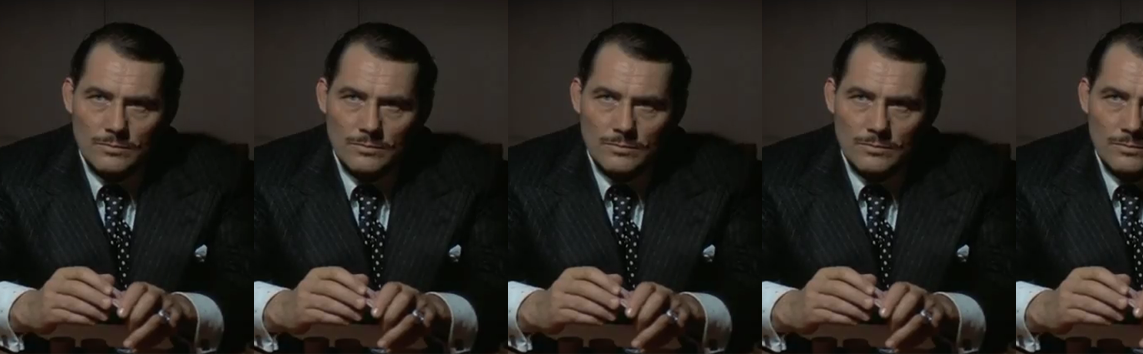
4. Frederic Forrest - Forrest gives yet another striking portrayal within his film, giving such a potent portrayal of a man struggling to maintain his sanity in an insane world. 

Best Scene: Civilian boat.
3. Art Carney in Going in Style - Carney gives a funny but also moving portrayal of a man attempting to live out a fantasy of sorts. 

Best Scene: Listening to Willie's story. 
2. Oliver Reed in The Brood - Reed gives a striking portrayal of a strange form of therapy while also so carefully walking a rope of ambiguity within his character. 

Best Scene: Opening. 
1. Yaphet Kotto in Alien - Kotto gives a great performance, often between the lines, in just creating such an endearing energy that shifts naturally to a fierce intensity as the situation becomes dire. 

Best Scene: Destroying Ash. 

Next: 1981 Lead

Tuesday, 2 August 2022

Alternate Best Supporting Actor 1979: G.D. Spradlin, Albert Hall, Laurence Fishburne, Herb Rice & Frederic Forrest in Apocalypse Now

G.D. Spradlin, Albert Hall, Laurence Fishburne, Herb Rice & Frederic Forrest did not receive Oscar nominations for portraying General Corman, Chief, Clean, Roach and Chef respectively in Apocalypse Now.

Apocalypse Now, as much as it is seen as a grand epic directorial achievement by Francis Ford Coppola, and it is, what seems to often make a true masterpiece is no singular element merely is, and almost every element seems to contribute to that greatness, the grand ensemble of this film included. Take for example one of the earliest scenes where Willard (Martin Sheen) is given his mission by three officials. Technically an exposition scene, but nothing about it do you think of exposition as it is filled with such mood and atmosphere, with the performances being an essential part of this. I could even have spoken of Harrison Ford, playing very much not his expected type, as the nervous junior Officer giving Willard the lowdown on his mission to assassinate Colonel Kurtz (Marlon Brando) clearing his throat denoting his discomfort of the situation or I could mention Jerry Ziesmer's nearly silent but wholly enigmatic portrayal of the man in civilian clothes who seems to be peering into Willard's soul as he has this overt comfort in the conversation. I decided though to focus on G.D. Spradlin, who previously worked with Coppola by playing a sleazy politician with great aplomb in The Godfather Part II, here has a small role, but one where you can see how much a performance can add. Technically all that the character of General Corman is saying is that Kurtz has gone off the deep end. Spradlin's performance though brings so much more subtext to each statement. His eyes almost drifting off as he speaks to Willard as though he has a fixation on some potent memory. His delivery on Kurtz believing himself to be God has this empathetic quality, not at all just informative, and his eyes almost seem to suggest some understanding of Kurtz if not even a direct personal connection to the man. Spradlin speaks with a strict empathy for the Colonel as he is technically ordering his demise, and in just the single scene presents a strange struggle the man is having in making this decision to execute. We never learn anything more about Corman, or his connection to Kurtz, however, within that there is such a greater depth by making the exposition far from it.

The Do Long Bridge scene I may be coming around to believing to be the greatest scene in a film filled with brilliant scenes, where Willard and his crew come across the last US outpost in Vietnam where it is a chaotic mess of men fighting or just existing while being attacked by an unseen Vietcong. Willard comes across one machine gun nest that fails to kill a pestering Vietcong, leading them to call on one Roach, which leads to the appearance of Herb Rice's Roach. This is one of those performances, as brief as it is, that I have never forgotten despite its brevity. Technically speaking Roach just shows up shoots a grenade launcher to kill the soldier then disappears into the darkness, yet in that short span leaves an unforgettable impression. Rice's whole manner is so strange yet so perfect in the not quite human manner in which he seems almost above the idea of the warzone. It isn't quite stoic I would say, but there is something where he seems beyond the state of his existence where his intention is so clear so and precise. His mentioning that the soldier "is close" with this sort of primeval almost understanding of the battle that isn't of some soldier of any modern-day, but something twisted beyond that. The reason I had to write about this performance though is his final moment where Willard, who has repeatedly been asking this question to no avail, "do you know who's in charge here". Rice's delivery of "Yeah" is genius in its ambiguity yet also in the sheer conviction of it. Roach most certainly knows something and has achieved some higher disturbing plain of existence in this state. The yeah alluding to whatever you want, but wholly chilling as Rice makes it a statement of absolute certainty in Roach's mind yet would be the opposite of anyone determining what that is. 

The most substantial supporting cast in terms of screen time is the crew of the boat that Willard is using to reach Kurtz, this includes the very young Laurence Fishburne as Clean, Frederic Forrest delivering his other notable turn from 1979, after his more subdued work as a man in a very complicated relationship in The Rose, as Chef and Albert Hall as the very similarly named Chief. I did not mention Sam Bottoms as the surfer Lance who I think actually is the weak link of the cast as the whole, though not bad, however, he apparently was on drugs while filming which is befitting his drugged-out surfer, however, it isn't quite as pointed as say Dennis Hopper who also was extremely high, though maybe that just speaks to Hopper's talent. Anyway, each man offers a different kind of soldier, and are fascinating in realizing the different men as they are. Fishburne actually is almost a performance defined by a kind of id that is rather fascinating to behold. This as his youth is quite obvious however the energy that Fishburne runs around the boat is very particular and exudes a man who has no idea quite that he's even in a warzone. There's this sense of a young boy playing a war throughout his performance and his almost mischievous quality as he moves around the boat often pestering others while never quite seeming to understand the severity of his situation. Opposed to that is Albert Hall's chief who gives a performance that I think I appreciate a bit more with every subsequent viewing. He gives one of the most low-key performances in the film basically making Chief as much of a straight man as there can be in the film. His portrayal actually would be equal to really what one would expect is the John Wayne character in a war film, in that he's a man who is going to do his duty and try to stay as calm as he can be. Hall is terrific in finding the right sense of this sort of professionalism for the lack of a better word as the soldier that puts him in stark contrast to everyone else on his ship. This is especially when compared to Frederic Forrest, who though it might sound like a joke, is maybe the sanest man in the whole film and that is entirely the problem. Forrest finds this very specific and really brilliant basic tone in his performance. This being actually quite the intense extreme that he presents Chef as basically a man who knows he is going insane and therefore is either falling into moments of that or is this attempt at some kind of Zen. The key here in Forrest's performance though is that Chef doesn't ever achieve that instead there is so much bottled-uped intensity in Forrest's eyes that you see someone almost always ready to explode. 

In the earliest scenes of the boat, we get some great small moments from each of the actors with Fishburne dancing around as though Clean hasn't a care in the world. Forrest has a great comic moment when questioning why some soldiers sit on their helmets and his pitch-perfect humorous mimic of the technique. Again though even while funny Forrest is great in portraying the sense in his eyes as he laughs about it, thinks about it, and then technically like the sanest man decides to use his helmet to guard his testicles as the soldiers had suggested. Hall is great in his subtle work that always supports Chief trying to maintain order best he can, with his delivery always supporting the idea of trying to keep things together. I love the bit of underlying suspicion he presents when asking Willard questions about the mission as though Chief is trying to sense if Willard is going to potentially kill his men or not, men that Hall always quietly alludes to the very genuine care he does have for his men despite the situations he technically follows putting them into. There is nothing blithe in Hall's performance, particularly compared to some other authority figures in the film, he seems to actually have a reasonable degree of concern in his duty. Back to Forrest who I think has little gems throughout the film in realizing the tightly wound man who is just right to burst. Everything about his physical presence is built within Forrest's performance from the way his posture is almost in a slight fetal position at times to just his often clenched teeth. Again though that is of this man holding onto sanity that often pops off. The first full instance we see of this is when he and Willard take a brief expedition into the jungle where they encounter a tiger and Forrest's full-bodied freakout of Chef's, as he says to never leave the boat, is a masterful portrayal of complete hysteria and this natural movement from the tightly wound to the full explosion of mania. Now going back to the Chef as the sanest man in the film, which my prior description would contradict. Forrest emphasizes throughout his performance a man who knows he's in a war zone, in mortal dangers at all times, he understands it so well, that he's properly tightly wound if not made wholly insane by that sane understanding of his situation. 

The highlight scene for the boat crew is when they all come across a boat of locals that Chief wants to check for weapons, despite Willard's protests. Hall again is great by really playing the discontent with Willard in just a glance and moment, and this sense of a man being fed up with the danger of the orders as well as the seeming shirking of his duties. Chief ordering the inspection with the manner of the proper ship Captain, trying to maintain a routine, even if he's in a place and world where routine is madness. Fishburne portrays Mr. Clean as basically a boy with a raygun as he's aiming it at the civilians, meanwhile, Chef has the thankless duty of searching the boat. Forrest again is great in portraying the hesitating awkwardness as he rather haphazardly searches. Forrest just exuding such anxiety in every moment as Chef clearly wants to be anywhere but there, checking every search point in a rushed chaotic hurry trying just to get it over with. When one of the people makes a sudden move Clean literally jumps the gun leading to a massacre of all the people right next to Chef. Fishburne portrayed in Clean still just rush of adrenaline with little meaning in the deaths, Chief frustrated but holding it together to try to lead still, meanwhile again as in many ways the sanest man, Forrest is amazing in portraying the quick mental breakdown. His delivery of every random yell that goes from extreme empathy to extreme callousness creates the sense of a man's mind breaking in two trying to create a sense of the horror he just saw. Forrest completely being so powerful in showing the man just cracking in two at the moment while just barely holding it together. He grants it a mania in his eyes, but carefully it is always with this particular sense of extreme sadness and disbelief at what he's seeing. Now in short order, Clean himself is killed, and it needs to be noted the important reactions of both Chief and Chef. Both Hall and Forrest show that the men are genuinely heartbroken at the death, and show that as much as one man is barely holding onto his sanity and the other is so controlled that it seems insane, they did deeply care for their shipmate. Sadly this is followed even sooner by Chief's death via spear which is an outstanding bit of acting from Hall. This first his kind of ironic bemusement at the act, as he kind of laughs at the joke being played on him by the universe, while also wholly conveying the sudden pain and surprise of it. Followed right by finally seeing all the hate he had for Willard realized in his eyes as he tries to kill Willard in his literal final breath. It is a great moment, particularly because we see the truth of Chief that he was holding together all along that without the pretense of duty he had plenty of festering humanity. Speaking of festering humanity, Forrest's final major scene with Willard, where both discuss how to handle the Kurtz situation, is great acting from Forrest again. This is Forrest conducts just the right sense of focus with confusion, conviction with exasperation, and madness with sanity. His delivery of Chef's strange articulation of the darkness of the place, as a place he'd rather die in than stay any longer, should make no sense, and it doesn't per se, but it does in Forrest's pitch-perfect articulation of it. It all makes sense in Chef's rattled mind, a rattled mind that Forrest made so powerfully tangible. Although none of these performances typically get the press with this film, it shows the greatness of the film with just how much vibrancy and depth they bring nonetheless. Although in some cases small parts, yet substantial in crafting the tapestry of this masterpiece. 
(Spradlin, Rice & Fishburne)
(Forrest and Hall)

Monday, 25 July 2022

Alternate Best Supporting Actor 1979

 And the Nominees Were Not:

Art Carney in Going in Style

Oliver Reed in The Brood

David Warner in Time After Time

Yaphet Kotto in Alien

Frederic Forrest in Apocalypse Now

Sunday, 8 August 2010

Best Supporting Actor 1979: Results

5. Melvyn Douglas in Being There- Melvyn Douglas is not bad ever in Being There but he never really does anything in the film. He has some nice talks and he plays the part as it should be but his character really requires nothing of him.
4. Mickey Rooney in The Black Stallion- Mickey Rooney is a very nice presence in this film. He plays a standard mentor/teacher role much better actually than he needed to. I like how he stayed quiet and just was a good part of the film.

3. Frederic Forrest in The Rose- Forrest is very good here and adds a lot to the film. I like how he underplays his role and shows a realistic portrait of a man who has gotten in a relationship with a women he cannot fully understand.

2. Justin Henry in Kramer Vs. Kramer-  He is always real and seems really like a kid in this situation not some false movie kid. It's an important role for the film and Henry is completely up to his task.
1. Robert Duvall in Apocalypse Now- Robert Duvall takes a risky approach to an odd ball of a character and his risk completely pays off. Duvall is perfect as Col. Killgore. He some how never seems false in a role of pure insanity. He is excellent because he makes Kilgore the most fascinating part of Apocalypse Now despite the shortness of his part. Robert Duvall therefore joins Laurence Olivier, Rod Stieger and Walter Huston as actors with two wins from me.

Best Supporting Actor 1979: Frederic Forrest in The Rose

Frederic Forrest received his only Oscar nomination for portraying Huston Dyer in The Rose.

The Rose is a film about a fictional rock singer the Rose (Bette Midler) clearly based on Janis Joplin. I found it to be interesting at times and did get better as it continued. Although at the beginning I found it was trying far too hard  to be abrasive.

Frederic Forrest received a nomination for this film and he could have easily received one for his work in Apocalypse Now too. It is interesting to see him in too rather different roles, although both characters were soldiers at least at one time. Huston Dyer is a chauffeur who becomes the lover of The Rose. Forrest seems essential to this film since when he shows up I felt the film greatly improved since he was more relaxed  natural presence than anyone up until that point.  He seemed to improve the tone of the film and he seemed to make Midler act better really. She became far more natural and less over the top when he arrived in the film.

I like Forrest here as a normal guy who tries to help the Rose but sees that he really cannot really understand or relate to her life style. He starts out perfectly as very interested in her and tries to help her, but slowly becomes less interested and more offended by her lifestyle. Forrest is perfect at showing Dyer's slow change from loving the Rose to being frustrated by her again and again. I liked Forrest because he never over did anything in his performance. He kept it understated and internalized very well. He never overacts and keep his performance realistic and natural. His performance is essential to the film because his leaving of the Rose causing Rose's extreme decay, although his leaving was in part do to her inability to stop her slow descent anyways. Forrest is a good presence throughout the film and adds a normal man's view to the film perfectly. He never overacts and creates a very needed realistic performance for this film. He really could have been nothing but he makes his performance and character stand out as well as possible.

Wednesday, 4 August 2010

Best Supporting Actor 1979

 And the Nominees Were:

Robert Duvall in Apocalypse Now

Frederic Forrest in The Rose

Melvyn Douglas in Being There

Justin Henry in Kramer Vs. Kramer

Mickey Rooney in The Black Stallion

 Who do you Pick? What do you predict my ranking will be?