Showing posts with label David Bowie. Show all posts

Friday, 18 April 2025

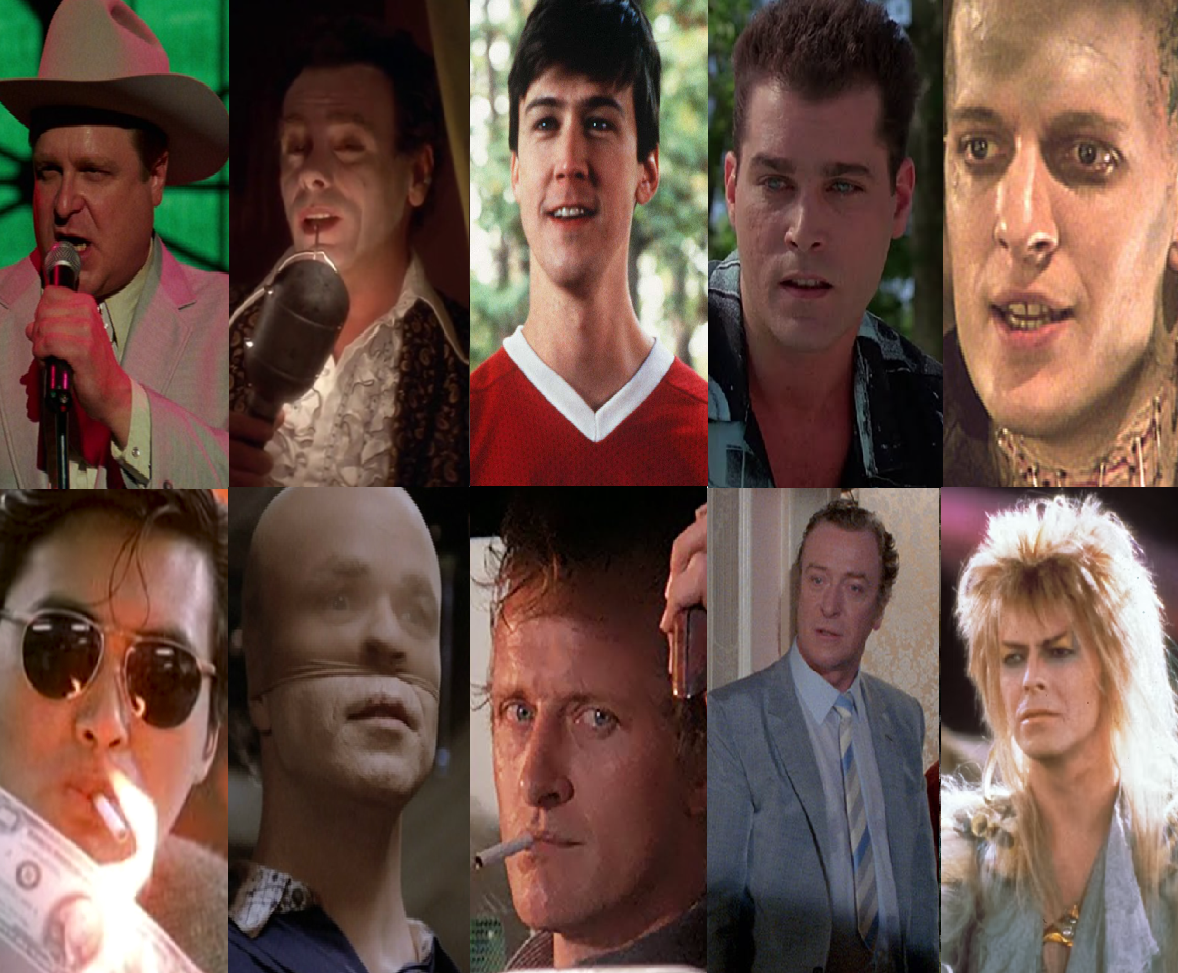
Alternate Best Supporting Actor 1986: Results

10. David Bowie in Labyrinth - Bowie delivers a perfectly serviceable performance which coasts heavily on his presence, a little too heavily as he's strangely just sort of there much of the time. Playing very much with a lack seriousness without being funny, a lack of menace without being fun and even is musical performances don't really have that much flair to them despite his costuming. 

Best Scene: Dance magic dance.  
9. Rutger Hauer in The Hitcher - Hauer is effective at being menacing in his charismatic way even if it asks far too little of him. 

Best Scene: Opening. 
8. Clancy Brown in Highlander - Brown basically gives two performances, one as a brute, one more so as a crazed villain. He's good at both even if there is a lack of cohesion. 

Best Scene: Church
7. Chow Yun-Fat in A Better Tomorrow - Chow is charismatic and brings the only real emotional impact within the overall scheme of his film. It's only a shame he's not the lead. 

Best Scene: Shoot out. 
6. Michael Caine in Mona Lisa - Caine gives a properly menacing and sleazy performance. 

Best Scene: Final confrontation. 
5. Tom Noonan in Manhunter - Noonan gives a quietly creepy performance that gets under your skin by his calm. 

Best Scene: Do you see?
4. Ray Liotta in Something Wild - Liotta takes over is film with ease giving a charismatic but properly threatening performance of a man going out of control in pursuit of his wife. 

Best Scene: Home invasion. 
3. Dean Stockwell in Blue Velvet - Stockwell gives a brilliantly idiosyncratic work that is so wonderfully one of a kind in its Lynchian goodness. 

Best Scene: His scene. 
2. John Goodman in True Stories - Goodman delivers the most compelling vignettes consistently in is first funny though later moving portrayal of a man searching for love. 

Best Scene: "People like us" first try. 
1. Alan Ruck in Ferris Bueller's Day Off - Good predictions Luke, A, Tahmeed, 8000's Ytrewq, Lucas, Harris & Bryan. Though within overall a light comedy Ruck gives a genuinely emotionally nuanced and in the end quite powerful portrayal of an depressed teenager finding is strength. 

Best Scene: Killing the car. 

Next: 2017 Lead

Sunday, 2 March 2025

Alternate Best Supporting Actor 1986

And the Nominees Were Not:

John Goodman in True Stories

Dean Stockwell in Blue Velvet

Alan Ruck in Ferris Bueller's Day Off

Ray Liotta in Something Wild

Clancy Brown in Highlander

Chow Yun-Fat in A Better Tomorrow

Tom Noonan in Manhunter

Rutger Hauer in The Hitcher

Michael Caine in Mona Lisa

David Bowie in Labyrinth

Monday, 11 May 2020

Alternate Best Supporting Actor 1983: Results

5. Michael Palin in The Meaning of Life - Although in a mixed bag of a film, Palin delivers on the best parts of that mixed bag in his various absurd comic turns.

Best Scene: "Every sperm is sacred"
4. Ian McDiarmid in Return of the Jedi- McDiarmid manages to create an instantly iconic villain that is playing on a known riff but in a different way.

Best Scene: Crossed sabres.
3. David Bowie in The Hunger - Bowie delivers again that fascinating enigmatic charisma of his, though also grants a haunting depiction of a man swiftly consumed by the ravages of age.

Best Scene: Old man seeing the pupil.
2. Jonathan Pryce in Something Wicked This Way Comes - Pryce gives an appropriately devious portrayal of a calm yet sinister omnipotent evil. 

Best Scene: The library.
1. Takeshi Kitano in Merry Christmas, Mr. Lawrence - Kitano gives a brilliant performance that depicts both the cruelty of a man designed by a terrible code, but also the compromised humanity still within that.

Best Scene: Final merry Christmas. 
Updated Overall

Next: 2014 Lead (though taking a brief hiatus to catch up on some 2020 releases, feel free to make any 2020 recommendations).

Friday, 8 May 2020

Alternate Best Supporting Actor 1983: David Bowie in The Hunger

David Bowie did not receive an Oscar nomination for portraying John Blaylock in The Hunger.

The Hunger stands as the directorial debut of Tony Scott but also an outlier in his career. This as the film seems more akin to one of his brother's films, though the sort of extremes of the style are definitely that of the younger Scott, than the director who largely became known for his action pictures.

The film itself is a stylish vampire picture, even if lacking a bit in the screenplay particularly the ending which throws character motivation out the window in order for a bit of phony irony. This style though is almost purposefully trying to make it a particularly erotic, and you might say even glamorous approach to the vampire film. I suppose then who better to cast as one of the vampires than David Bowie, a man whose personal style seemed to so often defy convention, yet always seemed to capture one's imagination with such ease. Bowie is ideal for the almost sort "celebrity" vampire of the film, this as we see the couple, this being John and his wife Miriam (Catherine Deneuve), in two extremes immediately the film. The first the nightclub of a leather bar, where both actors not only have extremely idiosyncratic presences, but also are so powerful in this. Each as their eyes piercing as the two decide on their prey, perhaps you'd assume sexually, however we quickly learn this to be a different sort of lust, blood lust. Each really thriving within Scott's extreme aesthetic, as they just glow and amplify it in they do make the standard "vampire murder scene" something rather unique by the mere virtue of their fascinating performances. We see an alternative side though quickly enough outside of the "night life", this as the two teach music with John as a cellist. These two delivering a different kind of glamor, more traditionally so, and as effectively so. I will say the casting did half the job alone in making a uniquely fascinating vampire pair, by the fact that there just isn't anyone quite like Bowie or Deneuve for that matter, so the combination of the two is rather special in itself.

This "high life" though is short lived within the film though as John starts to aging, despite Miriam's earlier insistence that they would be together forever. Bowie and Deneuve, as briefly as we see them interact, do have that striking chemistry particularly in the brief scene of John turning a century ago. This is important though I find in that their performances though grant that sharply lustful qualities, though there is a more striking genuine emotional sentiment than I had expected coming into the film. This then Bowie portrays well initially an internalized concern, at the beginning of his degradation, as he speaks of how long does he have. Bowie instantly throwing any genre expectations out the window by portraying a man, even an un-dead one, in general need of help. This as he seeks help from an apparent aging expert Sarah (Susan Sarandon), who ignores his request. Bowie's whole performance is rather remarkable in portraying the physical decay, that he does not just leave to the makeup. This movement become more labored, and his eyes slowly grant a more haunted quality of a man seeing the death before him. This as he is particularly notable as we see him phases of this aging so quickly, yet so vividly in Bowie's performance. This right down to his voice becoming coarser towards that of an old man about to push out his final breath. Bowie finding the right horror of this within his expression that goes beyond just the rather impressive makeup effects along with his performance. His delivering becoming more desperate in each phase of a man in an agony and gripped within fear of his state. This in Bowie most remarkable scene where he goes about murdering Miriam's replacement for him in a vain attempt to save himself. Bowie's performance manages to convey the act in this state of exhaustion and despair. This failure only then followed by Bowie's near nothing of a voice as he speaks his final words towards Miriam, these as basically a walking corpse, that Bowie grants a surprising weight to as his performance grants the sheer agony of John in closer to a more literal living death. I will say well I wish the film had spent more time with the couple and developed them beyond the confines of the simplistic plot, what the performers do with the characters even within this confine is captivating. Bowie delivering his expected charisma to the role of the immortal, but then a surprisingly honest tragedy to what that truly means in the end.

Sunday, 3 May 2020

Alternate Best Supporting Actor 1983

And the Nominees Were Not:

Ian McDiarmid in Return of the Jedi

David Bowie in The Hunger


Jonathan Pryce in Something Wicked This Way Comes

Jason Robards in Something Wicked This Way Comes

Michael Palin in The Meaning of Life

Takeshi Kitano in Merry Christmas, Mr. Lawrence 


For prediction purposes:

Pryce

Saturday, 2 May 2020

Alternate Best Actor 1983: Results

5. Oleg Yankovsky in Nostalgia - Although Yankovsky gives a fine performance with what it is that he has, his character is overshadowed by the approach surrounding his character. He is lost within the margins though he is fine within those margins.

Best Scene: The scene where he speaks.
4. Keith Gordon in Christine - Gordon gives an effective portrayal of a unique type of obsession that builds confidence yet slowly destroys himself.

Best Scene: Describing Christine.
3. Om Puri in Ardh Satya - Puri delivers an effective contrasting portrayal of the brutal cop he is in his professional life and the sensitive romantic he is in his personal.

Best Scene: Describing his past.
2. David Bowie in Merry Christmas, Mr. Lawrence - David Bowie delivers a great performance as only he could. This in granting an honest depiction of a defiant soldier, but also this enigmatic quality that is essential to the focal point relationship in the film.

Best Scene: The kiss.
1. Gerard Depardieu in Danton - Good predictions Luke, Tahmeed, Anonymous, Calvin GM and Omar. Depardieu delivers an outstanding performance in his portrayal of a charismatic and approachable leader, and in the end a passionate martyr for his beliefs.

Best Scene: Being brought to trial. 
Updated Overall

Next: 1983 Supporting

Friday, 1 May 2020

Alternate Best Actor 1983: David Bowie & Tom Conti in Merry Christmas, Mr. Lawrence

David Bowie did not receive an Oscar nomination for portraying Maj. Jack "Strafer" Celliers nor did Tom Conti for portraying the titular Lt. Col. John Lawrence in Merry Christmas, Mr. Lawrence.

Merry Christmas, Mr. Lawrence is a more than decent film, though I think it struggles to find a proper denouement, about a WWII POW camp, controlled by a difficult camp commandant, though a damn fine composer.

The film is particularly off-beat in its approach to the POW story-line, as even the central character is shattered. The man you'd assume is the central character is Tom Conti's Lawrence, after-all he is in the title. His role though isn't that of personal discovery but rather personal examination. We have him rather in this way as the facilitator for the camp, due to his speaking Japanese. This largely seen through his interactions with Japanese Sgt. Gengo Hara (Takeshi Kitano). Conti's performance though is striking in portraying basically the part with an earthly understanding of the situation. This as Conti's work exudes the wear of the situation to be sure. This in his whole face just is that of a man who has been in this camp for a lengthy time and more importantly dealing with the sheer insanity of trying to maintain some sort of peace and safety for the British. Conti's work is interesting in the way he is this reactionary lead in a certain sense. Although he takes action, it is deferred based on trying to stay pace within the insanity of his captors. Conti wearing particularly well this careful face of the man, this as his eyes say so much in the man attempting to analyze a given situation careful and gauge each man to attempt to interfere best he can. The opening scene we see this as he tries to negotiate for even the life of a Japanese, who sodomized a prisoner. Conti's expression so well grating the humanity of the concern, but also the wagering of the man in deciphering the violence that may take place from the situation.

This differs greatly from Major Celliers portrayed by David Bowie. Although a musician turned actor is sometimes a dangerous prospective, that was not the case for David Bowie. This as not only did he almost immediately display a knack for it, he also manages to deliver that unique stage charisma and realize onscreen. That transference perhaps only otherwise has been seen in Tom Waits, in terms of offering something particularly idiosyncratic by the mere virtue of the actor's presence. Well that is the case for Bowie, whose casting does not only pay off but quite honestly is essential. This as Bowie delivers that enigmatic quality that quite honestly only Bowie could deliver in this way. This being particularly important given that Celliers's role, is more than just that of an individualistic soldier who shakes up the order of the camp a bit. This as we are introduced as that camp commandant Captain Yonoi (Ryuichi Sakamoto), attends a trial for Celliers who they are attempting to find charges to execute him on. Now in a way on one end Bowie simply delivers the expected swagger of a proper soldier as he stares down his captors in the trial, and speaks of his endeavors as a soldier with a calm reserve. Bowie showing a man in a way in control of himself at least within a situation where he technically is not. There is something more there, as Yonoi seems more than just intrigued by Celliers. This is very much where very much that Bowie in the performance is very much essential. This as Bowie has that sort of magnetism that draws in more than just a vague interest, and the Captain's near entrancement at him, does not seems some out of nowhere idea, why? because it's David Bowie, that's why.

David Bowie manages to find a careful ground within his performance that is rather notable. In that he's not quite ethereal however he is close. This as we take a moment where Celliers fake smokes waiting for his judgment, and Bowie does portray it as just a moment of sort self-joy eccentricity in the man, though such a gesture is all the more fascinating because of that Bowie presence. He however does not portray Celliers as whole detached. When the trial decide to do a fake firing squad as a bit of torture for Celliers, Bowie portrays effectively both the sense of determination not to show fear, while also conveying the sense of fear within the man still as a bit of internalization. He skillfully reveals both and in turn shows Celliers as a man very much of the moment, but there is something about him that makes him seem as though he isn't quite as tangible as the rest of the men. This continues as he is brought within the camp, even though he is responsive to the rest of the men including Conti's Lawrence. Lawrence of course though remains this peculiar figure of negotiator even in this regard. Conti is interesting in the way he plays his own sort of resilience oddly enough even in his haggard expression and exhausted manner. This even when he himself is frequently hit, this as the consistency in Conti's performance, effectively so, is the sense of calm of the man trying to keep the Japanese from killing anyone, but also keeping his own men, particularly the CO Hicksley (Jack Thompson), from spurring more wrath from their captors.

The two men do find some common bond then in their mutual endeavor of a kind of survival. There is a particularly terrific moment where Sgt. Hara comes to visit in the middle of the night to chat with Lawrence and to look upon Celliers. Conti is first wonderful in his scene with Kitano as they strike up an engaging chemistry. This in that Conti plays a certain bemusement at the soldier's belittling of the British army, even as he calmly states the reasons for surrender, but in this state Conti reflects in his eyes just a certain sense of genuine camaraderie. This just as he portrays an earnest sense of humanity in the conversation even if within the conversation they are still at odds. This is a bit different to when Sgt. Hara takes a look at Celliers, to which Celliers comments on Hara's face. Bowie again striking this unique balance in this certain near otherworldly quality of an idiosyncratic appreciation, however speaks the words with this convincing grace. A grace that again I'm not sure many actors could've mustered the way Bowie is able to do through his own idiosyncrasies. We see this interesting dynamic continue between these two men who becomes de-facto leaders of dealing with the Japanese. This includes Celliers having a funeral for a dead soldier, however defiantly saying the flowers for that were in fact for the sake of food. The moment of Bowie eating the food is something special in itself, as he carries again this particularly fascinating sense of defiance, where again we see in his eyes the sense of being above the man he's staring down, but again with that certain intangible quality that makes all the greater impact.

When we see the first confrontation between Celliers and Yonoi, Bowie is terrific in the way we see him brandish his charisma in a way. His eye darting that both creating the sense of reflection that Celliers is aware of the certain hold he has on the captain, but also portray his purposeful brandishing of that sense in an attempt to help the men. These actions though leave both Lawrence and Celliers in prison, in which both actors are excellent in portraying the differing natures of the men even as they reflect on similar thoughts. Conti being wonderful as he grants that sense of regret of what was not taken by him which fits right along within the man defined by basically a dogged exhaustion. This is again Bowie's portrayal of also a regret, however his performance is more internalized in this regard, his eye instead evoking a sense of the man piecing together his own regret. This regret being his betrayal of his hunchbacked brother in primary school where he did nothing to protect him from a mob a ridicule. Bowie's performance wears within that sense of basically a betrayal of duty, as he speaks with what is more refined regret, that positions as almost something that fuels Celliers's determination now. Although both men seem to have created a respite for a moment through their combined actions of negotiation and defiance, it is immediately shattered Hicksley forces Yonoi's hand by questioning the captain decision to make Celliers the CO of the POWs. I love the brief moment of Conti's delivery of disdain and terror as he berates Hicksley, showing the man who sees all his efforts lost in a second notice. This leading the climactic moment of the film, where Yonoi is about to execute Hicksley and Celliers takes action. Bowie is amazing in this scene, as even the way he moves across the field has this power to it, as we again see the man field a force of himself, as he saves the CO, by directly kissing Yonoi, essentially sacrificing himself and destroying the captain in  the same act. In this moment we get Bowie again using that presence of his honestly as a weapon, that makes this such a powerful moment, but he also grants the needed sense of the man acting with that conviction to attempt to deal with his former failure. The film then quickly wraps up, however we are left with a final epilogue where Lawrence visits an about to be executed Hara after the war is over. Although I think the scene itself in its thematic message isn't quite earned, the sentiment of it is all well created by the actors. Conti delivers on the sense of that former camaraderie to the man, now more openly shown, and so powerfully grants the sense of sympathy in Lawrence for his former captor. It is a poignant moment, as the performances create such a beautiful sense of the human connection between the two men formerly at war with one another. Although I again have reservations within the film, these two performances exemplify the best qualities of the film. Conti in his honest depiction of a man just trying to help everyone survive, and Bowie making the most of his onscreen abilities, to craft a wholly unique presence essential for the idiosyncratic dynamic at the center of the film.

Monday, 20 April 2020

Alternate Best Actor 1983

And the Nominees Were Not:

Gerard Depardieu in Danton

Wojciech Pszoniak in Danton

Om Puri in Ardh Satya

Keith Gordon in Christine

Oleg Yankovsky in Nostalgia

David Bowie in Merry Christmas, Mr. Lawrence

Tom Conti in Merry Christmas, Mr. Lawrence

For Prediction Purposes:

Depardieu from Danton

Bowie from Lawrence

Tuesday, 5 September 2017

Alternate Best Supporting Actor 1992: Results

5. Tony Todd in Candyman - Todd begins his performance in creating a unique approach to a cinematic boogeyman unfortunately the film finds its way into making it a standard one.

Best Scene: The Candyman appears.
4. Graham Greene in Thunderheart - Greene manages to find the right humor while still making an emotional impact as his cop who acts as more than one type of guide.

Best Scene: Finding the murder victims.
3. David Bowie in Twin Peaks: Fire Walk With Me -  Bowie in literally a couple of minutes creates a fascinating enigma that leaves quite the impression.

Best Scene: "We're not gonna talk about Judy"
2. Wesley Snipes in The Waterdance -  Snipes gives a terrific performance here creating the right charismatic bluster that hides the sad man beneath it all.

Best Scene: Raymond wins the bet.
1. Ray Wise in Twin Peaks: Fire Walk With Me - Wise gives an outstanding reprise of his all-time great television turn, this time effectively realizing the extremes of the man and granting insight into Leland Palmer's mind.

Best Scene: Leland apologizes. 
Updated Overall

Next Year: 1935, Won't necessarily do a lineup. 

Friday, 1 September 2017

Alternate Best Supporting Actor 1992: David Bowie, Harry Dean Stanton, Ray Wise and Frank Silva in Twin Peaks: Fire Walk With Me

David Bowie did not receive an Oscar nomination for portraying Phillip Jeffries in Twin Peaks: Fire Walk With Me.

Twin Peaks: Fire Walk With Me acts a prequel to the original Twin Peaks series but also really a bridge, 25 years before, for the third season of the show. In serving that purpose it is extremely effective as an episode in the series, though an outsider may be a bit lost if they are viewing it all on its own.

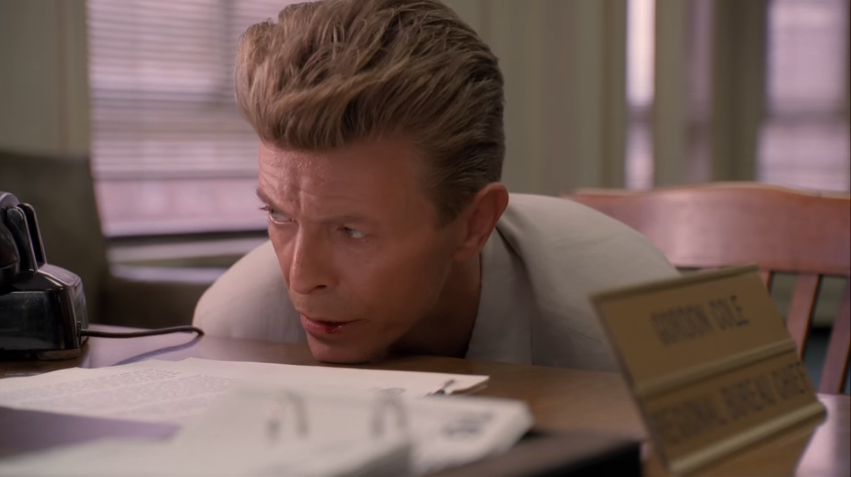
David Bowie is actually only in about two minutes of the film, if even that, in his role as missing F.B.I agent Phillip Jeffries. He appears mysteriously out of an elevator in F.B.I headquarters, rambles seemingly incoherently then disappears without trace, yet leaves an ever lasting memory in this time. Of course credit must go to David Lynch's brilliant set up of the scene, but this scene would not be what it is without David Bowie. Bowie is of course known best as his work as a musician however onscreen he has a singular screen presence, an almost otherworldly quality. This is most useful in this role as one sits up and takes notice the moment Bowie ever enters the frame, Bowie's mere existence amplifies the already enigmatic nature of scene. It is not merely about Bowie being so fascinating in it of itself, but as his performance as agent Jeffries. The beginning of which is Bowie portrayal of the state of Jeffries which seems to be a of a man who sees far beyond one's normal existential crisis. The very particular emotional distress Bowie exudes isn't of just a time traveler, but of a man who has been through hell learned terrible secrets behind his whole universe and is here to tell the story. There is a painful urgency yet confusion that Bowie brings in every bit of that strange anguish he delivers in the role. As he makes Jeffries this man barely in his place with only this minor grip on reality trying to explain his story before disappearing while we witness a blood curdling scream by Bowie. To make everything all the more fascinating though Bowie uses a southern American accent in the role, which is some strange masterstroke. This only makes the already effortlessly intriguing Bowie all the more captivating. Bowie in just a couple of minutes, again if that, leaves an undeniable impression, creating one of the most enthralling figures in the grand Twin Peaks universe.
Harry Dean Stanton did not receive an Oscar nomination for portraying Carl Rodd in Twin Peaks: Fire Walk With Me.

Speaking of effortlessly compelling actors look no further than Harry Dean Stanton, who can do more in a couple seconds than some actors can do in 3 hours. Stanton though is rather different than Bowie in terms of their exact presence, in fact sort of the opposite in that Harry Dean Stanton certainly always feels like a man of our world, which is part of his great appeal. Stanton appears as the trailer park owner that housed a murder victim whose death F.B.I agents Chester Desmond (Chris Isaak) and Sam Stanley (Kiefer Sutherland) are investigating. Stanton initially appears as a seemingly more ill-tempered sort when the agents knock on his trailer door before his normal wake time. Stanton is hilarious in his initial grumpiness though this does aside as he reveals Rodd to be a nice enough guy who just doesn't like being woken up early. Stanton is very entertaining though particularly in contrast to the straight laced F.B.I. agents. Stanton just has a way with any line quite honestly and couldn't be a better fit for David Lynch's unique style of comedy. Stanton finds the appropriate tone for sort of Americana humor found with Lynch, as Stanton makes it quite funny in that particular style, yet he also makes it quite earnest. Stanton finds the humor in just his every little moment, such as commenting on his coffee, or his straight forward confusion at what the F.B.I are doing exactly. Now Stanton just being this friendly trailer park owner, would be enough. There is more though as the seriousness of the situation does arrive, and in an instance Stanton naturally reveals another side to Rodd as the investigate the murder victim's trailer. Stanton in his single line of "See, I've already gone places... I just wanna stay where I am" alludes so haunting to the man's own history in his unknown but there is also something poignant in the second half of a man just wanting the stability in his quiet life. As usual Stanton makes quite an impression in just a few minutes as Carl Rodd giving a great introduction to a character, which he thankfully was allowed to reprise in the show's third season.
Ray Wise did not receive an Oscar nomination for portraying Leland Palmer in Twin Peaks: Fire Walk With Me.

It is also worth noting that Ray Wise was not Emmy nominated for his work in the series leaving one of the all time great television performances unrecognized. Ray Wise's work actually there shows perhaps the wide gap there was between film/television, something that Twin Peaks, very much ahead of its time, was trying to reduce. I mention that as it is likely if someone gave that same performance today they likely would break out across the board, or least for a little while. Of course this is also trying to understand Wise's baffling low key career in general as I've found him to be an incredibly dynamic performer no matter where he turns up. Anyway Wise's reprise begins when he appears after the elongated prologue featuring Bowie, Stanton and the F.B.I. agents, as the film jumps to the titular town to focus on the final days of murder victim Laura Palmer (Sheryl Lee). Wise obviously playing her father Leland, who in the series we eventually discovered, spoilers, that he was her murderer. Of course it's not so simple and where in the series we saw the phases of the man from a certain distance, here we are given the intimate detail of Leland's broken self. The first side we see of him Wise is terrifying as Leland demands Laura wash her fingernails before dinner. Wise in the moment is of this horribly abusive father. Wise persecutes her though in this horribly controlling way as he does it as though he is teaching her lesson, with his "father knows best" delivery that makes the moment all the more chilling.

A moment later though Wise instantly switches to a heartbreaking tone in the purity of the despondence that he shows in Leland as he profusely apologizes to his daughter for his earlier demands. Wise in this moment is completely earnest and sympathetic in his portrayal of such a tender sorrow as Leland attempts to explain himself. This is extremely inconsistent from the previous scene yet this is not a flaw in Wise's performance but rather the truth of it. Wise in that moment shows that being absolutely the purest form of the true Leland Palmer, which is as this loving father. A loving father that Wise does bring such a terrible shattered warmth, as he shows a man attempting to genuinely care for his daughter. Wise though makes every moment of it seem as though he on this horrible edge, as he suggests Leland is always a second from a complete emotional breakdown. Wise is harrowing to watch though as he does not make this in any way false, despite what we have previously seen, as he presents something being deeply wrong in this yet there is an absolute truth in his guilt. Wise in doing this though realizes the grave predicament that Leland Palmer exists in.

The predicament is not that Leland is struggling with his worst impulses but rather that he is literally possessed by an evil spirit that thrives on the suffering of humans. Although the idea of the demon inside can be taken as a metaphor, but in this case it's not. Now the literal in itself is potentially a ridiculous concept but it never feels as such due to the brilliance of how Wise portrays it, as well as another reason which I will get to soon. Wise though creates this state of the man which he does not show as a Jekyll and Hyde but rather something much worse. Wise depicts it as a man essentially being torn from within as his own self is constantly corrupted, which he is occasionally released from yet he can do nothing about it. A genius element in Wise's work in that, even though it's not even required, he actually in many ways allows for both the literal and metaphorical interpretation of Leland's mind. Wise's work is outstanding as he manages to find all that makes of the man without losing control of it. He realizes so effectively this confusion in himself in every moment as in his physical manner there is always this horrid pressure to this as a man who seems never at ease whether he is giving into his shame, to the monster within, or if even he's not directly either. Wise portrays a man who is simply wrong from the inside out yet makes sense of this insane idea. Wise is downright amazing in every scene as he brings the warmth in portraying Leland's love for his daughter, but he is also terrifying as he brings about her own corruption and death. Wise's work in the television series was great, and this performance is an incredible companion of that work as he reveals the internalized horror of the man.
Frank Silva did not receive an Oscar nomination for portraying Bob in Twin Peaks: Fire Walk With Me.

The true source of the evil in the story though is in the spirit Bob played by Frank Silva. Silva's original appearance coming from a sudden bit of inspiration by David Lynch leading Silva, originally a set dresser, becoming one of the most iconic characters from the series. It's a fascinating thing as the image of Silva taken out of context perhaps shouldn't be terrifying, he's just a guy with long hair in denim, yet he's one of the most horrifying figures in any fictional work. Silva's performance is essentially a silent one except for some grunts, which should not be hand waved as his delivery of them as human animal are truly disturbing. Silva embodies this concept of this evil spirit, which is that of seemingly man's worse inclination and desires personified. Silva does not need to speak in order to strike fear. Silva's performance is almost entirely physical and as that it is something unforgettable. Silva's very being is of an urge, a terrible urge, to do whatever creates suffering. There is this lust, yet this hate, there is even a strange sorrow, yet joy all in Silva's performance that is pure unadulterated emotion. A single part of what Silva's doing could be even empathetic in someway yet his combination of all of it, all at once, in this way creates this figure that is one of the most unnerving as Silva is otherworldly yet entirely human all at once. He is a boogeyman that strikes that particular almost existential fear yet with a grounding that carries a most visceral sting. Although of David Lynch's work amplifies all of this, yet there is a reason that the mere sight of Bob behind a dresser is one of the frightening scenes in any film, as Silva gives the boogeyman a face, a most terrifying one.

Thursday, 24 August 2017

Alternate Best Supporting Actor 1992

And the Nominees Were Not:

Tony Todd in Candyman

Wesley Snipes in The Waterdance

Graham Greene in Thunderheart 

David Bowie in Twin Peaks: Fire Walk With Me 

Harry Dean Stanton in Twin Peaks: Fire Walk With Me

Ray Wise in Twin Peaks: Fire Walk With Me 

Frank Silva in Twin Peaks: Fire Walk With Me 


For Prediction Purposes:

Bowie (For the fascinating couple of minutes duo)

Wise (Let the host represent)