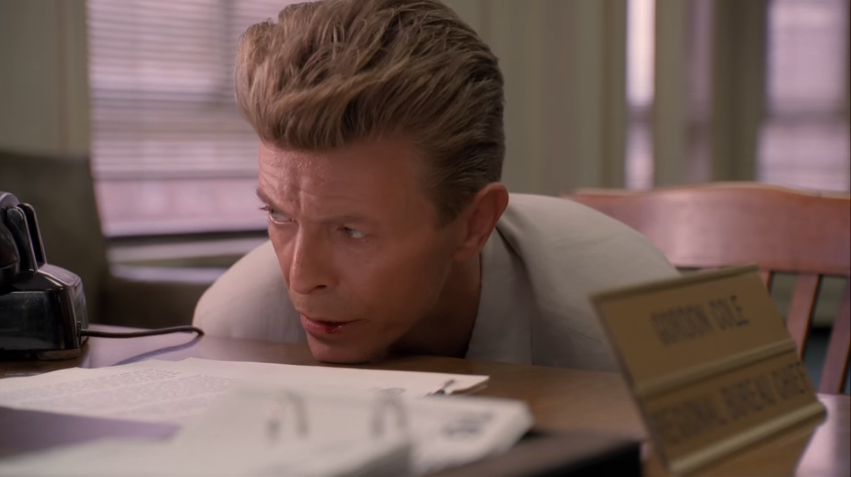
Laurence Fishburne did not receive an Oscar nomination, despite being nominated for an Independent Spirit Award, for portraying Russell Stevens Jr. in Deep Cover.
 Deep Cover follows a police officer as he tries to take down the drug trade from the inside.
Deep Cover is a film I'd describe as somewhat Samuel Fullerish, from Bill Duke (yes that Bill Duke), in that there's much to admire within its frequently daring approach to its story, while at the same time being a bit rough around the edges. One quality that isn't rough is its lead performance by Laurence Fishburne as the cop tasked with his superior officer (Charles Martin Smith) to infiltrate the drug trade. Fishburne's performance is the focal point of the film wherein we follow him from the officer who walks into the office and handles his superior officer's racist, purposefully prodding, question. Fishburne expresses the state of the man, who we are actually introduced first to as a kid where he sees his liquor store robber father brutally gunned down, as beyond straight laced. There's a control in Fishburne's performance and his manner of a man who has spent years doing exactly what he believes to be the right thing and is following the narrow expected path. We see this is a completely specific posture and his delivery that isn't quite robotic, however it is extremely measured in the aggressively exact nature of how he speaks the words. Fishburne successfully establishes a man rigid to the system of law, a man who has avoided drugs and alcohol his entire life, and who will pursue assignment with a calculated conviction.
We then follow Russell as he goes about trying to find his way into the drug world, by attempting to become a dealer and get entrenched into the world of the higher up dealers. Fishburne's performance is effective in finding a balance between the surface emotion, which just as it speaks to a man rigid in his approach to law enforcement, it is as convincing as a man going about his business of dealing drugs, and the sense of danger and even more so the sense of empathy of the genuine good man beneath the surface of the act. An act that is both one he is showing as a false drug dealer but also actually as a cop as well. There are moments where we see Russell take a moment to observe a child, much like himself, as the victim of a drug addicted parent, or having to face down the accusations of a genuinely passionate fellow cop who wants to keep drugs away from his community and children. Fishburne makes the most of these moments by playing the empathy quietly in his eyes, just as the rest of himself seems to insist upon the outward appearance of the "cool" of a man who seemingly doesn't care about anything other than the money he can make. Fishburne creates the innate conflict in the man apparently who is trying to pretend as though he cares about nothing whatsoever, while being emotionally attached to everything, even beyond the fact that he's a cop, and even more so because he genuinely cares about trying to prevent others from becoming victims of drugs.
Jeff Goldblum did not receive an Oscar nomination, despite being nominated for an Independent Spirit Award, for portraying David Jason in Deep Cover.
 Eventually getting arrested, due to being sold out by another low level drug dealer, Russell is rescued in court by a man who had been around the drug scene, but also is a lawyer, played here by Jeff Goldblum. Jeff Goldblum is an actor that falls a bit into the sort of strange group along with John Malkovich, Christopher Walken and Samuel L. Jackson, where at a certain point the majority of his performances became less as different characters and more variations on an expected presence. Like those other performances, this change is typically marked by a singular performance that marks that change, in Goldblum's case that was his iconic work in Jurassic Park, one year after this film, which in a way Deep Cover is one of the last completely pure examples of Jeff Goldblum the actor, rather than the Goldblum. And as much as I can enjoy a "the Goldblum" performance, it is something else to see Goldblum when he's entirely trying to become a part without at all relying on the expectation of a Jeff Goldblum performance. Because Goldblum here isn't seeking to accentuate pauses, to smile seductively, or just be everything that defines Goldblum, here he's something else entirely in depicting a lawyer who decides to take a shortcut in life. And it is striking to see Goldblum, so far from doing his Goldblum, as he comes with his own combination of "cool" and something underneath. As Goldblum is projecting this certain attempted power as he's speaking to this lower drug dealer with a quiet sneer and the air of confidence in the innate swagger Goldblum brings. Like Fishburne, Goldblum's eyes too denote a withdrawn anxiety in presenting his David as filled with anxiety just beneath the surface, showing a man in over his head.
The two fully connect when Russell gets arrested and it is Goldblum's David who gets Russell quickly off his charges. In this scene Goldblum is the man seemingly fully in his powers and in control. Goldblum just exudes the swagger of the classic smarmy lawyer who charmingly chats up everyone and quickly makes a deal that makes everything go away in few while also making David and Russell partners in crime. Fishburne is effective as a balance between him and Goldblum, as we see Russell get deeper into life, it is as the quietly stoic drug dealer, against David who is the extremely ambitious man wanting to make a name for himself in this world. And here's where I think the film is good, though greatness seems in reach though I don't think it quite gets there. David's a fascinating character where he's a lawyer, with a straight-laced family, who spends his night dealing with the international drug trade. And the motivation for this seems to be this sort of fringe insanity behind the man, which Goldblum cultivates a bit behind the lines, such as his rambling about his love of sleeping with African American women with this rotten intensity. Goldblum exposing this mentally ill thrill the man is seeking above all else that pushes towards his seemingly bizarre and risky actions. And an idea, where I wish the film just gave a little more time to the idea, because what is there is captivating, I just wish there was a bit more of it, particularly because Goldblum is incredibly dynamic in alluding to what is there for him.
The film expands and what we get more of is David and Russell rising together, something I almost wish the film had spent time to connect them beyond just a business agreement, but regardless that is what we get and we get the parallel rise for each. A particularly notable one being when Russell is tasked with killing another drug dealer, which will prove himself for David. Fishburne is great in this scene of approaching the killing, which is of a horrible dealer (also a bit too over the top but I digress) who he saw gun down a kid. Regardless Fishburne's approach to the scene delivers the weight of it as he's frozen in his face as he's broaching crossing the line to something else in terrible, and that sense of conflict, even over the death of horrible man is going on through him. To the point he only kills the man when the man begins to advance on him, and Fishburne in the moment almost seems lost in the killing, and portrays Russell almost in a kind of fugue state. And Fishburne shows this as part of the frustration we see quietly building when being the drug dealer, and effectively delivers the more direct outrage towards his superior when it seems like there is no genuine purpose to his task at times. The only respite seeming a romance with a high priced art dealer, which honestly I'll say is one of the weaker aspects of the film, in part because the film doesn't devote the appropriate time to developing the character. David on the other hand is also changing as the man more willfully getting deeper into the life, as a comes afoul with a more powerful drug broker. A great scene with Goldblum where his cockiness immediately turns to withdrawn worry as the man verbally and physically demeans David. Goldblum is amazing in the scene in showing all that bluster of David get lost and the anxiety in the man expand. Topping that only with the following scene with his wife, where Goldblum plays it almost as a kid bullied by people he thought were his friends, as he's so vulnerable and frustrated in his meek way of saying what he did wrong with so much personal shame.
Following the sequence is where everything goes out of control, where Russell ignores his superior to go through with saving David from a sting, in order to further his entrenchment to get a bigger fish, and David turns on the bigger broker. Fishburne is great in the scene again by providing grounding in showing the man just with conviction trying to get through but showing within that conviction tension of a man who is in a completely insane situation. Goldblum on the other hand is pure insanity, and portrays the whole sequence wonderfully as a man high as kite as he goes about getting his revenge on the other man. Goldblum is great in the way he slowly unravels throughout the sequence showing this greater determination, and insanity over every moment showing the man getting closer to breaking towards pure mania. Goldblum though shows instead of the genuine fear of crossing this line like we saw in Russell, in David Goldblum expresses a sadism in it, as man savouring the choice, loving the choice and getting more than anything a high of the act off the killing as he goes upon it with tremendous glee. And within that we see both men go beyond the pale, Russell because it is the only way to truly get something done and David because he's mad in ambition. Fishburne is terrific in his scene of completely unleashing the exhaustion and somber anger when he learns the highest dealers are politically protected leading to this change. However, I think the switch to the proudly sober David turning to drinking and drugs, is something that doesn't feel entirely explored or completely realized. Fishburne sells the individuals moments, they just don't truly go anywhere unfortunately. And in the last act, which unfortunately is a little rushed for David to as he and Russell are at this extreme, I wish we spent more time with them in this and again maybe explored a bit more in their relationship, even if both actors are delivering with what they do have. Though I will say to its credit the final sequence, where Russell is exposed due to his care for the honest cop who berated him earlier, against David who doesn't care about anything except his success comes clashing, is well played in the contrast. Fishburne being completely open in just the raw grief of trying to help the man and bringing a cathartic sincerity within the man who has had to hide away, comparing that to Goldblum who has become a purely callous psychopath who just casually guns the cop down in order to end the conflict. And this is case of two performances I find much to praise, and I would say contain the raw materials of outstanding work, if the film just gave them a little more room in just a few places. Regardless Fishburne and Goldblum give very strong performances here, the former a proper leading turn that carries us through this emotional journey of deceit, and the latter giving a wonderfully atypical turn that suggests there was perhaps even more for the actor to explore away from his more expected presence.
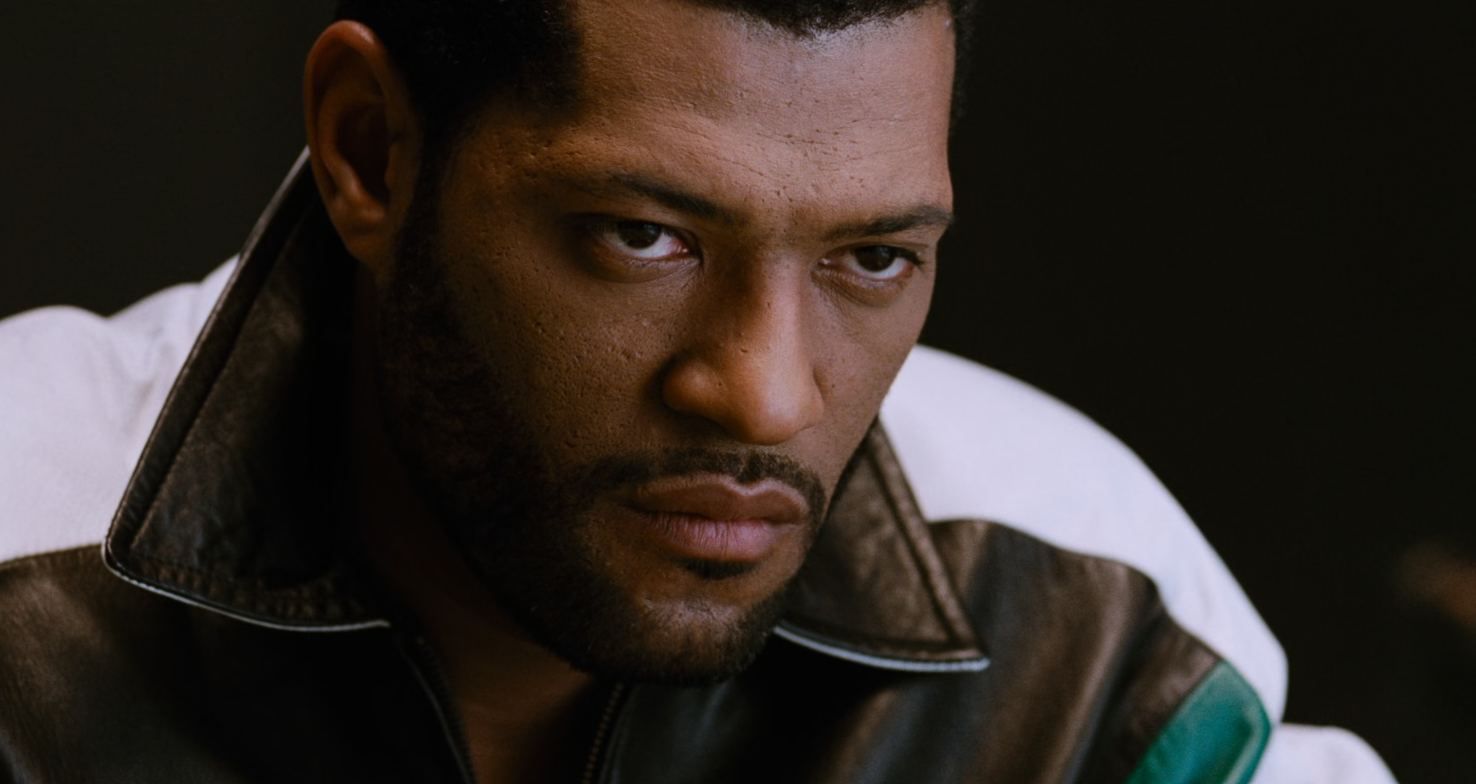
Deep Cover is a film I'd describe as somewhat Samuel Fullerish, from Bill Duke (yes that Bill Duke), in that there's much to admire within its frequently daring approach to its story, while at the same time being a bit rough around the edges. One quality that isn't rough is its lead performance by Laurence Fishburne as the cop tasked with his superior officer (Charles Martin Smith) to infiltrate the drug trade. Fishburne's performance is the focal point of the film wherein we follow him from the officer who walks into the office and handles his superior officer's racist, purposefully prodding, question. Fishburne expresses the state of the man, who we are actually introduced first to as a kid where he sees his liquor store robber father brutally gunned down, as beyond straight laced. There's a control in Fishburne's performance and his manner of a man who has spent years doing exactly what he believes to be the right thing and is following the narrow expected path. We see this is a completely specific posture and his delivery that isn't quite robotic, however it is extremely measured in the aggressively exact nature of how he speaks the words. Fishburne successfully establishes a man rigid to the system of law, a man who has avoided drugs and alcohol his entire life, and who will pursue assignment with a calculated conviction.
We then follow Russell as he goes about trying to find his way into the drug world, by attempting to become a dealer and get entrenched into the world of the higher up dealers. Fishburne's performance is effective in finding a balance between the surface emotion, which just as it speaks to a man rigid in his approach to law enforcement, it is as convincing as a man going about his business of dealing drugs, and the sense of danger and even more so the sense of empathy of the genuine good man beneath the surface of the act. An act that is both one he is showing as a false drug dealer but also actually as a cop as well. There are moments where we see Russell take a moment to observe a child, much like himself, as the victim of a drug addicted parent, or having to face down the accusations of a genuinely passionate fellow cop who wants to keep drugs away from his community and children. Fishburne makes the most of these moments by playing the empathy quietly in his eyes, just as the rest of himself seems to insist upon the outward appearance of the "cool" of a man who seemingly doesn't care about anything other than the money he can make. Fishburne creates the innate conflict in the man apparently who is trying to pretend as though he cares about nothing whatsoever, while being emotionally attached to everything, even beyond the fact that he's a cop, and even more so because he genuinely cares about trying to prevent others from becoming victims of drugs.
Jeff Goldblum did not receive an Oscar nomination, despite being nominated for an Independent Spirit Award, for portraying David Jason in Deep Cover.

The two fully connect when Russell gets arrested and it is Goldblum's David who gets Russell quickly off his charges. In this scene Goldblum is the man seemingly fully in his powers and in control. Goldblum just exudes the swagger of the classic smarmy lawyer who charmingly chats up everyone and quickly makes a deal that makes everything go away in few while also making David and Russell partners in crime. Fishburne is effective as a balance between him and Goldblum, as we see Russell get deeper into life, it is as the quietly stoic drug dealer, against David who is the extremely ambitious man wanting to make a name for himself in this world. And here's where I think the film is good, though greatness seems in reach though I don't think it quite gets there. David's a fascinating character where he's a lawyer, with a straight-laced family, who spends his night dealing with the international drug trade. And the motivation for this seems to be this sort of fringe insanity behind the man, which Goldblum cultivates a bit behind the lines, such as his rambling about his love of sleeping with African American women with this rotten intensity. Goldblum exposing this mentally ill thrill the man is seeking above all else that pushes towards his seemingly bizarre and risky actions. And an idea, where I wish the film just gave a little more time to the idea, because what is there is captivating, I just wish there was a bit more of it, particularly because Goldblum is incredibly dynamic in alluding to what is there for him.
The film expands and what we get more of is David and Russell rising together, something I almost wish the film had spent time to connect them beyond just a business agreement, but regardless that is what we get and we get the parallel rise for each. A particularly notable one being when Russell is tasked with killing another drug dealer, which will prove himself for David. Fishburne is great in this scene of approaching the killing, which is of a horrible dealer (also a bit too over the top but I digress) who he saw gun down a kid. Regardless Fishburne's approach to the scene delivers the weight of it as he's frozen in his face as he's broaching crossing the line to something else in terrible, and that sense of conflict, even over the death of horrible man is going on through him. To the point he only kills the man when the man begins to advance on him, and Fishburne in the moment almost seems lost in the killing, and portrays Russell almost in a kind of fugue state. And Fishburne shows this as part of the frustration we see quietly building when being the drug dealer, and effectively delivers the more direct outrage towards his superior when it seems like there is no genuine purpose to his task at times. The only respite seeming a romance with a high priced art dealer, which honestly I'll say is one of the weaker aspects of the film, in part because the film doesn't devote the appropriate time to developing the character. David on the other hand is also changing as the man more willfully getting deeper into the life, as a comes afoul with a more powerful drug broker. A great scene with Goldblum where his cockiness immediately turns to withdrawn worry as the man verbally and physically demeans David. Goldblum is amazing in the scene in showing all that bluster of David get lost and the anxiety in the man expand. Topping that only with the following scene with his wife, where Goldblum plays it almost as a kid bullied by people he thought were his friends, as he's so vulnerable and frustrated in his meek way of saying what he did wrong with so much personal shame.
Following the sequence is where everything goes out of control, where Russell ignores his superior to go through with saving David from a sting, in order to further his entrenchment to get a bigger fish, and David turns on the bigger broker. Fishburne is great in the scene again by providing grounding in showing the man just with conviction trying to get through but showing within that conviction tension of a man who is in a completely insane situation. Goldblum on the other hand is pure insanity, and portrays the whole sequence wonderfully as a man high as kite as he goes about getting his revenge on the other man. Goldblum is great in the way he slowly unravels throughout the sequence showing this greater determination, and insanity over every moment showing the man getting closer to breaking towards pure mania. Goldblum though shows instead of the genuine fear of crossing this line like we saw in Russell, in David Goldblum expresses a sadism in it, as man savouring the choice, loving the choice and getting more than anything a high of the act off the killing as he goes upon it with tremendous glee. And within that we see both men go beyond the pale, Russell because it is the only way to truly get something done and David because he's mad in ambition. Fishburne is terrific in his scene of completely unleashing the exhaustion and somber anger when he learns the highest dealers are politically protected leading to this change. However, I think the switch to the proudly sober David turning to drinking and drugs, is something that doesn't feel entirely explored or completely realized. Fishburne sells the individuals moments, they just don't truly go anywhere unfortunately. And in the last act, which unfortunately is a little rushed for David to as he and Russell are at this extreme, I wish we spent more time with them in this and again maybe explored a bit more in their relationship, even if both actors are delivering with what they do have. Though I will say to its credit the final sequence, where Russell is exposed due to his care for the honest cop who berated him earlier, against David who doesn't care about anything except his success comes clashing, is well played in the contrast. Fishburne being completely open in just the raw grief of trying to help the man and bringing a cathartic sincerity within the man who has had to hide away, comparing that to Goldblum who has become a purely callous psychopath who just casually guns the cop down in order to end the conflict. And this is case of two performances I find much to praise, and I would say contain the raw materials of outstanding work, if the film just gave them a little more room in just a few places. Regardless Fishburne and Goldblum give very strong performances here, the former a proper leading turn that carries us through this emotional journey of deceit, and the latter giving a wonderfully atypical turn that suggests there was perhaps even more for the actor to explore away from his more expected presence.