Claude Rains did not receive an Oscar nomination for portraying Herod the Great in The Greatest Story Ever Told.

The Greatest Story Ever Told takes a grand scale approach to telling the life of Jesus although perhaps too grand as there is something lost in terms of finding the power directly within the personal story of Jesus.
There is perhaps something gained though in the grand scale as it gives time to character who might not be granted as such with a more intimate portrait of Jesus. The film has an all-star cast that surrounds Max von Sydow, then unknown to American audiences, as Christ. This approach in the casting is actually largely effective in giving life to minor character except a few instances that a bit problematic, well mainly John Wayne as a Roman centurion is more than bit distracting. Thankfully though this also had the film include Claude Rains in his final cinematic turn. Rains in his final turn obviously never lost a step as previously shown in his shrewd work as the political operative in
Lawrence of Arabia, this though hearkens back to Rains's earlier roles as a more maniacal character. Rains in his first, of only a few scenes, greets the three magi looking for Jesus at his birth. Rains is terrific in this scene in his eyes conveys such an inherent madness in the man though he does not allow this to overwhelm his portrayal. As Rains in his delivery effectively uses his refined manner to hide Herod's intentions quite artfully. Rains even this though suggests a certain ego even when speaking in a way to hid what his real actions will be, as he states his own piousness as a rules. Rains brilliantly both reveals and attempts to hide the evil man in the same scene. Rains in his following scene though is incredibly entertaining though genuinely menacing as well as he shows Herod no longer hiding his intentions. Rains is a master of this combination of sort of being both overt and very subtle at the same time. There is grandness in his gestures, and again those fantastic mad eyes in the role, yet in his delivery brings such a cold incisiveness in every word. He's quite chilling in fact as he describes his order for the deaths of children with such certainty of man who believes he can avoid fate. Rains only has a brief final scene yet it is perfection as Herod is delivered news of the massacre. Rains bringing only a fear in his face before his soldier delivers his news to which Rains grants the most diabolical grin fitting to man of Herod's corruption. This is a brief performance to be sure yet makes such an impact in just his three scenes. It is one final reminder and a worthy swansong by the great Claude Rains of his unique talent as the invisible man provides one final cinematic sinner.

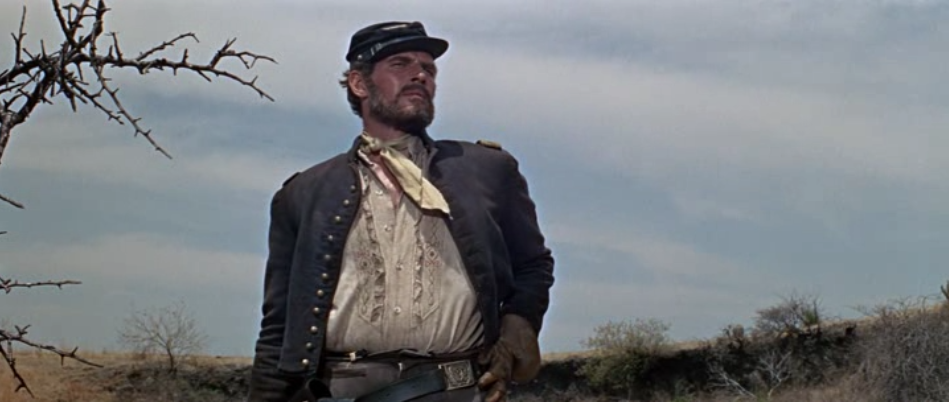
Charlton Heston did not receive an Oscar nomination for portraying John the Baptist in The Greatest Story Ever Told.
Charlton Heston obviously never the stranger to the biblical epic having played the lead as Moses in
The Ten Commandments, and the titular character of
Ben-Hur, who crossed paths with Christ on a few occasions. This is a change for Heston in biblical epics, but also in general as he gives supporting performance when usually playing the lead. Although it is true there are many cameos from other leading men from the period this is not a cameo by Heston. John the Baptist is a substantial role within the film, and Heston offers a particularly interesting contrast to von Sydow's portrayal of Jesus in the film. Where von Sydow is very quiet and subdued, Heston is the opposite though this is fitting to John the Baptist seen by as a crazy man in the desert. Heston as expected brings his everything to his delivery here though, and particularly powerfully here. As he would late show in
Hamlet there can be something very special when Heston evokes a greater emotion in his so confident delivery. His often repeated words of "repent" is that of a truly zealous prophet who intends on others to know his truth through force rather than gentle encouragement. The only thing that silences him is the appearance of Christ which is fantastic moment for Heston. Heston quiets in this moment in his reaction that creates such a sense of this recognition of the one who would come to succeed him. Heston is wonderful in the moment as he embodies both a sense of familiarity of a cousin but also the awe of the devoted servant. After that initial sequence though Heston continues as this dramatic warrior almost of Christ's message putting every ounce of himself it seems into speaking it. John's story does not end there as he comes afoul with Herod's son Herod Antipas (Jose Ferrer), where it must be said Heston makes John sort of what is best described as the badass prophet. This entirely works though for the role as he so successfully shows a man absolutely aware of his personal beliefs. I especially love his two scenes of directly facing down Ferrer. Heston brings such a tremendous intensity in every line, and absolutely brings such a potency to every single one of his comebacks to Herod's various threats. Heston makes every word pierce as it should and this actually leads to these two scenes being among the best in the film. This is a very strong performance by Heston as it plays into his strengths as a performer, and suggests perhaps he should have taken on a few more supporting roles throughout this career as usually makes such an impact with them.

Donald Pleasence did not receive an Oscar nomination for portraying the hermit in The Greatest Story Ever Told.

Pleasence first appears as Jesus fasts in the desert running into the hermit waiting in a cave, of course he is no ordinary hermit. It must be said Pleasence is one of the all time great cinematic creepers to begin with. He's particularly unnerving in his approach though in how quietly he approaches this initial scene. Pleasence utilizes his naturally off-putting physical manner so well engaging those haunting eyes of his and devious grin from the start to allude to an otherworldly demonic spirit. Pleasence though employs such a soft delivery though in the temptation, showing the allure of the temptation. When commenting that Jesus's climb was hard there is a genuine concern Pleasence brings to this even if his intentions are not noble. As he doesn't try to demand Christ takes from his food or drink, he rather so nicely suggests the act. When he prods him to behave contrary to his quest Pleasence brings such a sinister tenderness as he so earnestly encourages Jesus to fall to his wishes. As with Rains, Pleasence makes an impression in his first scene but he appears occasionally throughout the rest of the film. Every one of Pleasence's later appearances are particularly dynamic moments throughout the film particularly as the hermit watches over as Jesus is being marched towards his death. Pleasence stands out as this figure of darkness in these moments so well especially in his venomous delivery of the hermit's request for
crucifixion that leads the crowd to wish the same. Pleasence brings such a certain joy in the call among the crowd. Pleasence embodies a certain kind of evil here as the hermit is never a despicable man but this unnatural shadow that chases Jesus wherever he goes either to tempt or to destroy him. Pleasence offers another terrific supporting turn within the film, though while I wouldn't say that this quite makes this film a true success it makes it whole lot more interesting than it otherwise would be.


 The Greatest Story Ever Told takes a grand scale approach to telling the life of Jesus although perhaps too grand as there is something lost in terms of finding the power directly within the personal story of Jesus.