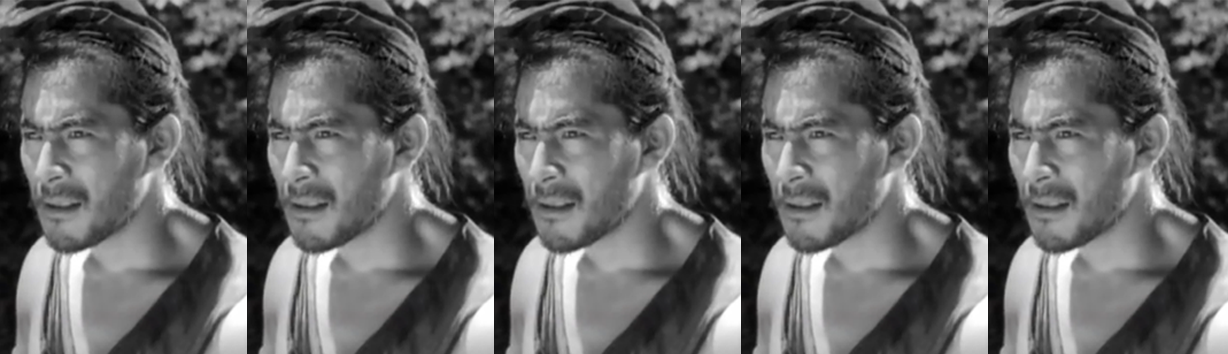
4. Charles Bronson in Hard Times - Bronson fulfills the tough guy needs of the role, yet once again reveals his greater talent to exhibit a more powerful emotional side subtly within his portrayal of a man in desperate circumstances.
Best Scene: Before the first fight.
3. Robert Mitchum in Farewell, My Lovely - Mitchum elevates his entire film, despite being too old for the part, he captures the style of the genre so effectively through his earnest yet intelligent approach towards the material.
Best Scene: Waking up next to a corpse.
2. Maxim Munzuk in Dersu Uzala - Munzuk gives a wonderfully idiosyncratic turn that captures both the history of hardship as a man of the wilderness, but also an optimistic spirit that defines the man's success within it.
Best Scene: Death of a tiger.
1. Richard Dreyfuss in Inserts - Richard Dreyfuss gives one of his best performances that uses his unique presence well to create a very particular state of a man completely spent by life at such a young age.
Best Scene: Boy wonder directs the first time.
Updated Overall
Next Year: 1975 Supporting, Note: I decided to move Ugo Tognazzi's review over to supporting. I have also seen In Celebration and Smile, and consider both to be ensemble films.
Showing posts with label Charles Bronson. Show all posts
Sunday, 23 September 2018
Tuesday, 4 September 2018
Alternate Best Actor 1975: Charles Bronson in Hard Times
Charles Bronson did not receive an Oscar nomination for portraying Chaney in Hard Times.
Hard Times is an entertaining enough film about a street brawler and gambler during the great depression.
In the primary lead role you have Charles Bronson in a role that was written with a younger man in mind, as this drifter who goes around just scraping by through fights. This is an interesting casting choice, but really an essential element in granting the film a bit more of an emotional impact than it might have had otherwise. On the surface Bronson certainly proves worthy of the role as he is wholly convincing as a fighter even at his age at the time of filming. In addition to that he is quite simply one of the great stoic badasses from the period. This is to the point that he makes a fellow stoic badass James Coburn look properly weak as the gambler, Speed, who bankrolls Bronson's Chaney. Bronson simply commands the screen as to be expected both in terms of offering that sort of physical intimidation needed for the character, but also just the power of the spirits embodied within that. Bronson is this force of a man that the film needs, of a man driven within the fight, which Bronson realizes so effectively without even raising his voice. He rather creates that calm cool that makes Chaney both appealing and intimidating.
Of course the film as written by Walter Hill is pretty bare bones, however that isn't not explicitly a negative value in film, or this film. It is rather an approach and what matters is what is within this approach. The script is already elevated to be sure by Hill's own direction which creates a vibrancy in the period through the aesthetic he realizes. According to Hill's own design for the film though there is not suppose to be a moral to this story. It is rather just a story that is engaging. Now if one inflicts just that much style one can overcome the lack of a thematic weight, however it is still a bit of a challenge. Bronson helps to alleviate this problem through his performance that creates within itself a certain substance that likely would've been completely absent with a bland performer in the role. Bronson can be stoic, however he is not bland as there is more than a shallow fighter within his eyes. It is in those eyes that define his best work, this performance included. It is interesting in that the tough Bronson, when relying on this quality becomes a deeply emotional performer.
We see this in his first scene where he approaches Speed and the fighting den. In Bronson's eyes we see the weight of a life of hardship in his eyes, and in this conveys that with his age has come much experience. An experience that is never illustrated in dialogue however is sensed through Bronson's performance which carries this weight. A weight that makes the fight as much of a life line for the man, well beyond the monetary compensation within it. Although Chaney is never a vulnerable character, Bronson creates a certain vulnerability surrounded by the defense of his might as fighter. A vulnerability that alludes to a desperation again within his eyes that create such a potency in terms of a life he seems to try to avoid. This is also shown in his scenes with local woman, that don't wholly work only because Jill Ireland in the role, despite being Bronson's real life wife, is a bit stiff in the part. Bronson does not falter in his side though by bringing out a definite charm but with this certain emotional distance. A distance he portrays as a reluctance though, as again he shows the honest fear at what the relationship would brings out of him in the most expressive part of his face, yet still overall maintain a near facade of a man who simply toughens everything out. Although Chaney in the end does not change, Bronson's performance does take the character and the film further by hinting at the potential to do so, while also creating a stronger sense of the man's motivation throughout the film.
Hard Times is an entertaining enough film about a street brawler and gambler during the great depression.
In the primary lead role you have Charles Bronson in a role that was written with a younger man in mind, as this drifter who goes around just scraping by through fights. This is an interesting casting choice, but really an essential element in granting the film a bit more of an emotional impact than it might have had otherwise. On the surface Bronson certainly proves worthy of the role as he is wholly convincing as a fighter even at his age at the time of filming. In addition to that he is quite simply one of the great stoic badasses from the period. This is to the point that he makes a fellow stoic badass James Coburn look properly weak as the gambler, Speed, who bankrolls Bronson's Chaney. Bronson simply commands the screen as to be expected both in terms of offering that sort of physical intimidation needed for the character, but also just the power of the spirits embodied within that. Bronson is this force of a man that the film needs, of a man driven within the fight, which Bronson realizes so effectively without even raising his voice. He rather creates that calm cool that makes Chaney both appealing and intimidating.
Of course the film as written by Walter Hill is pretty bare bones, however that isn't not explicitly a negative value in film, or this film. It is rather an approach and what matters is what is within this approach. The script is already elevated to be sure by Hill's own direction which creates a vibrancy in the period through the aesthetic he realizes. According to Hill's own design for the film though there is not suppose to be a moral to this story. It is rather just a story that is engaging. Now if one inflicts just that much style one can overcome the lack of a thematic weight, however it is still a bit of a challenge. Bronson helps to alleviate this problem through his performance that creates within itself a certain substance that likely would've been completely absent with a bland performer in the role. Bronson can be stoic, however he is not bland as there is more than a shallow fighter within his eyes. It is in those eyes that define his best work, this performance included. It is interesting in that the tough Bronson, when relying on this quality becomes a deeply emotional performer.
We see this in his first scene where he approaches Speed and the fighting den. In Bronson's eyes we see the weight of a life of hardship in his eyes, and in this conveys that with his age has come much experience. An experience that is never illustrated in dialogue however is sensed through Bronson's performance which carries this weight. A weight that makes the fight as much of a life line for the man, well beyond the monetary compensation within it. Although Chaney is never a vulnerable character, Bronson creates a certain vulnerability surrounded by the defense of his might as fighter. A vulnerability that alludes to a desperation again within his eyes that create such a potency in terms of a life he seems to try to avoid. This is also shown in his scenes with local woman, that don't wholly work only because Jill Ireland in the role, despite being Bronson's real life wife, is a bit stiff in the part. Bronson does not falter in his side though by bringing out a definite charm but with this certain emotional distance. A distance he portrays as a reluctance though, as again he shows the honest fear at what the relationship would brings out of him in the most expressive part of his face, yet still overall maintain a near facade of a man who simply toughens everything out. Although Chaney in the end does not change, Bronson's performance does take the character and the film further by hinting at the potential to do so, while also creating a stronger sense of the man's motivation throughout the film.
Thursday, 30 August 2018
Alternate Best Actor 1975
And the Nominees Were Not:
Maxim Munzuk in Dersu Uzala
Richard Dreyfuss in Inserts
Charles Bronson in Hard Times
Robert Mitchum in Farewell, My Lovely
Ugo Tognazzi in My Friends
Maxim Munzuk in Dersu Uzala
Richard Dreyfuss in Inserts
Charles Bronson in Hard Times
Robert Mitchum in Farewell, My Lovely
Ugo Tognazzi in My Friends
Sunday, 4 June 2017
Alternate Best Actor 1968: Results
10. Vincent Price - Witchfinder General - Price gives an interesting performance attempting to bring complexity to his morally compromised inquisitor, unfortunately the film decides to use him just as a one note villain.
Best Scene: Being convinced to give a reprieve.
9. Jean-Louis Trintignant in The Great Silence - Trintignant gives a good performance as he brings the steely gaze needed for his swift killer, along with a bit of pathos within his silence alluding to his motivations though he is a tad overshadowed by his more maniacal co-star.
Best Scene: Silence remembers.
8. Malcolm McDowell in If.... in McDowell gives a good performance as he portrays the gradual breakdown of a student into essentially a psychopath even though if it might feel like a warm up to his more renowned turn as a juvenile killer.
Best Scene: Killing spree
7. Burt Lancaster in The Scalphunters - Lancaster gives an enjoyable turn portraying the right comical frustrations within his more typical western hero, along with striking the right endearing chemistry with his co-star.
Best Scene: The final fight.
6. Lee Marvin in Hell in the Pacific - Marvin gives a memorable one man show as a man slowly losing his mind as well as a memorable two man show in realizing a most unique yet believable chemistry with Toshiro Mifune.
Best Scene: The curious showdown.
5. Ossie Davis in The Scalphunters - Davis gives a very entertaining portrayal of his outgoing yet quietly cunning character, and again has great chemistry with his co-star Lancaster.
Best Scene: The final fight.
4. Toshiro Mifune in Hell in the Pacific - Shares his scenes so well with Marvin, as well as stands out well with his own one man show as the refined soldier struggling through his ordeal.
Best Scene: Finding the magazine.
3. Max von Sydow in Shame - von Sydow as per usual creates such a convincing relationship with Liv Ullmann which is especially pivotal here as the two together offer such a natural and harrowing depiction of a married couple dealing with and being changed by war.
Best Scene: Killing a man.
2. Charles Bronson in Once Upon a Time in the West - Bronson more than fulfills the role of the badass gunslinger, he goes further though creating such an endearing and humorous chemistry with his co-star Jason Robards, then goes even further in offering such an underlying emotional poignancy to the film through his performance.
Best Scene: The final duel.
1. Burt Lancaster in The Swimmer - This one for the overall came down two rather different performances though by both masterful in their separate intentions. Bronson being such a brilliant minimalist performance, and Lancaster being such a brilliant expressive tour de force. Both have their unique challenges and match every one of them. Lancaster's task is different. Bronson is an essential part to an amazing film. Lancaster though is the factor that makes his film work at all offering a reality and heartbreaking humanity to such a surreal concept. Once Upon a Time in the West would have probably still have been great with a lesser lead, but not as great. The Swimmer would probably have been a failure without what Lancaster does. Even with that somewhat flimsy reasoning though this is still sort of a toss up as I love both performances, but I have to choose one.
Best Scene: "This is my wagon"
Updated Overall
Next Year: 1968 Supporting
Best Scene: Being convinced to give a reprieve.
9. Jean-Louis Trintignant in The Great Silence - Trintignant gives a good performance as he brings the steely gaze needed for his swift killer, along with a bit of pathos within his silence alluding to his motivations though he is a tad overshadowed by his more maniacal co-star.
Best Scene: Silence remembers.
8. Malcolm McDowell in If.... in McDowell gives a good performance as he portrays the gradual breakdown of a student into essentially a psychopath even though if it might feel like a warm up to his more renowned turn as a juvenile killer.
Best Scene: Killing spree
7. Burt Lancaster in The Scalphunters - Lancaster gives an enjoyable turn portraying the right comical frustrations within his more typical western hero, along with striking the right endearing chemistry with his co-star.
Best Scene: The final fight.
6. Lee Marvin in Hell in the Pacific - Marvin gives a memorable one man show as a man slowly losing his mind as well as a memorable two man show in realizing a most unique yet believable chemistry with Toshiro Mifune.
Best Scene: The curious showdown.
5. Ossie Davis in The Scalphunters - Davis gives a very entertaining portrayal of his outgoing yet quietly cunning character, and again has great chemistry with his co-star Lancaster.
Best Scene: The final fight.
4. Toshiro Mifune in Hell in the Pacific - Shares his scenes so well with Marvin, as well as stands out well with his own one man show as the refined soldier struggling through his ordeal.
Best Scene: Finding the magazine.
3. Max von Sydow in Shame - von Sydow as per usual creates such a convincing relationship with Liv Ullmann which is especially pivotal here as the two together offer such a natural and harrowing depiction of a married couple dealing with and being changed by war.
Best Scene: Killing a man.
2. Charles Bronson in Once Upon a Time in the West - Bronson more than fulfills the role of the badass gunslinger, he goes further though creating such an endearing and humorous chemistry with his co-star Jason Robards, then goes even further in offering such an underlying emotional poignancy to the film through his performance.
Best Scene: The final duel.
1. Burt Lancaster in The Swimmer - This one for the overall came down two rather different performances though by both masterful in their separate intentions. Bronson being such a brilliant minimalist performance, and Lancaster being such a brilliant expressive tour de force. Both have their unique challenges and match every one of them. Lancaster's task is different. Bronson is an essential part to an amazing film. Lancaster though is the factor that makes his film work at all offering a reality and heartbreaking humanity to such a surreal concept. Once Upon a Time in the West would have probably still have been great with a lesser lead, but not as great. The Swimmer would probably have been a failure without what Lancaster does. Even with that somewhat flimsy reasoning though this is still sort of a toss up as I love both performances, but I have to choose one.
Best Scene: "This is my wagon"
Updated Overall
Next Year: 1968 Supporting
Wednesday, 31 May 2017
Alternate Best Actor 1968: Charles Bronson in Once Upon a Time in The West
Charles Bronson did not receive an Oscar nomination for portraying Harmonica in Once Upon a Time in the West.
I must admit Charles Bronson's work in this film, which is one of my all time favorites, is something I've perhaps taken too much for granted given what he offers to the film. Bronson to begin with had some large shoes to fill in the form of Clint Eastwood as the man with no name in the dollars trilogy. Eastwood was the original choice for Harmonica in this film but turned it down leaving Bronson to fill the role of the man with no name only one given by someone else. Now in terms of the most straight forward sense Bronson proves himself capable of taking over from Eastwood from the very first scene of the film. That first scene being the greatest opener in any film where three thugs await Harmonica's arrival to the town at an almost deserted train station. Bronson appears in one the greatest character entrances of all time, though the film has three of those anyways, as the man with no name is announced through the playing of the instrument that becomes his moniker. Bronson makes himself known as well through his steely gaze that commands such a powerful presence. This leads to a truly unforgettable exchange where every moment of Bronson's performance may as well be of legend, as the man inquires about the amount of horses the thugs have who reply that they seem to be one short for the man. This leads to Bronson's head shake that may as well be a visual definition of badass followed by the verbal definition of it through his flawlessly, well for a lack of a better word, cool delivery of "You brought two too many" leading to a shoot out where the man is victorious.
From that opener alone Bronson proves that he will be as much if not more of the commanding hero than Eastwood. Bronson meets and surpasses the quota in that regard, but that's not all there is to a good man with no name. The man with no name is notable here as he's the only one of the principal characters to interact with the other four those being the newly arrived widow of a murdered family with important land holding Jill (Claudia Cardinale), the bandit Cheyenne (Jason Robards), the black hat killer Frank (Henry Fonda) and the underrated railroad baron Morton (Gabriele Ferzetti). As he stands in the middle, making the most pivotal moves perhaps, Harmonica though does not stand as this stoic uninterested hero and goes further with the role by doing so. The relationship that perhaps gets the most screentime is between Harmonica and Cheyenne the bandit, who actually names Harmonica in their first meeting at a trading post after Cheyenne has just escaped, violently, from his captors. Robards and Bronson together is one of the highlights of the film, which has many of those, as they make such strong use out of every single second they have together.
In that initial meeting scene there is an underlying intensity there due to Cheyenne's situation but Bronson and Robards make it a humorous meeting of two similar spirits who just are not aware of their similarity yet. Robards is great by playing with Cheyenne as calm and collected yet quietly frustrated by Harmonica which Bronson is brilliant at with his perfect smirks as he plays Harmonica slightly trolling the bandit while uncovering a bit information he needs. Their relationships grows so naturally in each successive scene, as the two help each help Jill, and a reason that this is convincing is the chemistry between Bronson and Robards. I love the way the two are when they meet again striking up just this understanding that is given this striking warmth, that is never stated even once, the two exude it in again expressing this mutual spirits. The two from then on, every scene they share, have this sort of rhythm to their performances that is such a delight to watch while establishing such genuine camaraderie between the two. They are fun simply to be around such as in the scene where Harmonica essentially explains the land plot in large bit of exposition which never feels dull through their flawless timing with one another.
My favorite moment in that scene being Bronson's encouraging delivery of Harmonica's addition of "They call them millions" as Cheyenne ponders on the money that could be made from the land deal. I could go on and on with those and two, and you know I will a little more. The two just have such an ease that makes their moments so enjoyable such as the little smile Bronson gives towards Robards when Cheyenne is rescuing Harmonica in a most curious fashion, or one of the best moments in the film when the two save Jill's home from a fixed auction by Harmonica turning in Cheyenne for the reward money. Again the two are just pitch perfect with Bronson offering the right smug satisfaction playing purposefully the jerk as he offers Cheyenne up. I have particular affection for Bronson's sardonic delivery of "They didn't have dollars in dem days" when Cheyenne mentions that Judas betrayed Jesus for a lot less money. Everything with those two is pure gold and those scenes belong to both Bronson and Robards. Neither overshadows the other the two just work in such beautiful harmony with one another as they make Harmonica and Cheyenne such an engaging and endearing pair.
Now having great chemistry with his scene partner was actually found in Eastwood's latter two collaborations with Leone as well, but there is more as the character expands beyond even what we saw from Bill, Manco and Blondie. Although Harmonica is a man with no name he is not a man without a purpose or a past. The purpose is found in helping Jill but also found in thwarting Frank's and technically Morton's plans. The pivotal factor in this is Frank which is very interesting. In much of Harmonica's interactions with these three Bronson brings effectively, very effectively, that badass cool but with a humorous bent as though Harmonica doesn't mind having a bit of fun while also saving the day. Bronson pulls that off with such ease but goes further with actually. In that he has that clever smile so often portraying this way Harmonica seems to get under the skin of his opponent Frank by seeming some how beyond the man in that way he seems to laugh whenever he messes with their plans. That is the front that Bronson often shows Harmonica has, which makes him an incredibly appealing hero, but again Bronson offers even more depth to Harmonica by going even further with the role.
Bronson's performance though is incredibly subtle in this regard yet so remarkable. Watching the film again Bronson proves to be so able in such minimalist circumstances given that Harmonica doesn't say too much. When Harmonica first meets Frank face to face again there is a moment, just a moment, before he attains his usual cool where Harmonica's face express a haunted man, an emotional pain that has laid there for some time. This is an idea that he keeps within his work that grants a greater poignancy to Harmonica's quest, that doesn't even quite seem the simple revenge it could be. That is found in a few later instances where Frank asks Harmonica who he is and Harmonica gives a different name every time, the connection between the names being that they are all men Frank has killed. When he says these names there is certain incisive sadness in Bronson's eyes as though Harmonica starring to Frank soul as he says the name as though his path for vengeance extends far past himself. What I love about what Bronson does with this is that he adds a honest vulnerability even while still being a proper badass.
He alludes to that deeper trauma within his intention for Frank right until the final duel where he reveals it fully though silently. Bronson is brilliant in this scene though in his portrayal of this as just before the duel begins completely he has that smirk again with Harmonica happy in getting Frank just where he wants him, but when it is finally time for the act Bronson reveals a change. The scene depicts the flashback of when Frank killed Harmonica's brother, but Bronson also reflects this memory in his performance. The smile is gone as he looks into the void of the past, and Bronson expresses without a word the hole that loss left in Harmonica. This is a great performance by Charles Bronson because he manages to reveal this more emotional undercurrent throughout his work which never for a moment compromises his character. It only amplifies the hero and makes such a stronger impact through it which amplifies the power of the film. There is such poignancy he finds in smallest glance such as in his final scene with Robards. Harmonica doesn't say much in the scene, he doesn't have to Bronson's eyes as he sees Cheyenne's wound says it all and it is heartbreaking. This is outstanding work from Bronson as he manages to take what Eastwood did in those earlier films, which was impressive in itself, and takes it to even greater heights.
I must admit Charles Bronson's work in this film, which is one of my all time favorites, is something I've perhaps taken too much for granted given what he offers to the film. Bronson to begin with had some large shoes to fill in the form of Clint Eastwood as the man with no name in the dollars trilogy. Eastwood was the original choice for Harmonica in this film but turned it down leaving Bronson to fill the role of the man with no name only one given by someone else. Now in terms of the most straight forward sense Bronson proves himself capable of taking over from Eastwood from the very first scene of the film. That first scene being the greatest opener in any film where three thugs await Harmonica's arrival to the town at an almost deserted train station. Bronson appears in one the greatest character entrances of all time, though the film has three of those anyways, as the man with no name is announced through the playing of the instrument that becomes his moniker. Bronson makes himself known as well through his steely gaze that commands such a powerful presence. This leads to a truly unforgettable exchange where every moment of Bronson's performance may as well be of legend, as the man inquires about the amount of horses the thugs have who reply that they seem to be one short for the man. This leads to Bronson's head shake that may as well be a visual definition of badass followed by the verbal definition of it through his flawlessly, well for a lack of a better word, cool delivery of "You brought two too many" leading to a shoot out where the man is victorious.
From that opener alone Bronson proves that he will be as much if not more of the commanding hero than Eastwood. Bronson meets and surpasses the quota in that regard, but that's not all there is to a good man with no name. The man with no name is notable here as he's the only one of the principal characters to interact with the other four those being the newly arrived widow of a murdered family with important land holding Jill (Claudia Cardinale), the bandit Cheyenne (Jason Robards), the black hat killer Frank (Henry Fonda) and the underrated railroad baron Morton (Gabriele Ferzetti). As he stands in the middle, making the most pivotal moves perhaps, Harmonica though does not stand as this stoic uninterested hero and goes further with the role by doing so. The relationship that perhaps gets the most screentime is between Harmonica and Cheyenne the bandit, who actually names Harmonica in their first meeting at a trading post after Cheyenne has just escaped, violently, from his captors. Robards and Bronson together is one of the highlights of the film, which has many of those, as they make such strong use out of every single second they have together.
In that initial meeting scene there is an underlying intensity there due to Cheyenne's situation but Bronson and Robards make it a humorous meeting of two similar spirits who just are not aware of their similarity yet. Robards is great by playing with Cheyenne as calm and collected yet quietly frustrated by Harmonica which Bronson is brilliant at with his perfect smirks as he plays Harmonica slightly trolling the bandit while uncovering a bit information he needs. Their relationships grows so naturally in each successive scene, as the two help each help Jill, and a reason that this is convincing is the chemistry between Bronson and Robards. I love the way the two are when they meet again striking up just this understanding that is given this striking warmth, that is never stated even once, the two exude it in again expressing this mutual spirits. The two from then on, every scene they share, have this sort of rhythm to their performances that is such a delight to watch while establishing such genuine camaraderie between the two. They are fun simply to be around such as in the scene where Harmonica essentially explains the land plot in large bit of exposition which never feels dull through their flawless timing with one another.
My favorite moment in that scene being Bronson's encouraging delivery of Harmonica's addition of "They call them millions" as Cheyenne ponders on the money that could be made from the land deal. I could go on and on with those and two, and you know I will a little more. The two just have such an ease that makes their moments so enjoyable such as the little smile Bronson gives towards Robards when Cheyenne is rescuing Harmonica in a most curious fashion, or one of the best moments in the film when the two save Jill's home from a fixed auction by Harmonica turning in Cheyenne for the reward money. Again the two are just pitch perfect with Bronson offering the right smug satisfaction playing purposefully the jerk as he offers Cheyenne up. I have particular affection for Bronson's sardonic delivery of "They didn't have dollars in dem days" when Cheyenne mentions that Judas betrayed Jesus for a lot less money. Everything with those two is pure gold and those scenes belong to both Bronson and Robards. Neither overshadows the other the two just work in such beautiful harmony with one another as they make Harmonica and Cheyenne such an engaging and endearing pair.
Now having great chemistry with his scene partner was actually found in Eastwood's latter two collaborations with Leone as well, but there is more as the character expands beyond even what we saw from Bill, Manco and Blondie. Although Harmonica is a man with no name he is not a man without a purpose or a past. The purpose is found in helping Jill but also found in thwarting Frank's and technically Morton's plans. The pivotal factor in this is Frank which is very interesting. In much of Harmonica's interactions with these three Bronson brings effectively, very effectively, that badass cool but with a humorous bent as though Harmonica doesn't mind having a bit of fun while also saving the day. Bronson pulls that off with such ease but goes further with actually. In that he has that clever smile so often portraying this way Harmonica seems to get under the skin of his opponent Frank by seeming some how beyond the man in that way he seems to laugh whenever he messes with their plans. That is the front that Bronson often shows Harmonica has, which makes him an incredibly appealing hero, but again Bronson offers even more depth to Harmonica by going even further with the role.
Bronson's performance though is incredibly subtle in this regard yet so remarkable. Watching the film again Bronson proves to be so able in such minimalist circumstances given that Harmonica doesn't say too much. When Harmonica first meets Frank face to face again there is a moment, just a moment, before he attains his usual cool where Harmonica's face express a haunted man, an emotional pain that has laid there for some time. This is an idea that he keeps within his work that grants a greater poignancy to Harmonica's quest, that doesn't even quite seem the simple revenge it could be. That is found in a few later instances where Frank asks Harmonica who he is and Harmonica gives a different name every time, the connection between the names being that they are all men Frank has killed. When he says these names there is certain incisive sadness in Bronson's eyes as though Harmonica starring to Frank soul as he says the name as though his path for vengeance extends far past himself. What I love about what Bronson does with this is that he adds a honest vulnerability even while still being a proper badass.
He alludes to that deeper trauma within his intention for Frank right until the final duel where he reveals it fully though silently. Bronson is brilliant in this scene though in his portrayal of this as just before the duel begins completely he has that smirk again with Harmonica happy in getting Frank just where he wants him, but when it is finally time for the act Bronson reveals a change. The scene depicts the flashback of when Frank killed Harmonica's brother, but Bronson also reflects this memory in his performance. The smile is gone as he looks into the void of the past, and Bronson expresses without a word the hole that loss left in Harmonica. This is a great performance by Charles Bronson because he manages to reveal this more emotional undercurrent throughout his work which never for a moment compromises his character. It only amplifies the hero and makes such a stronger impact through it which amplifies the power of the film. There is such poignancy he finds in smallest glance such as in his final scene with Robards. Harmonica doesn't say much in the scene, he doesn't have to Bronson's eyes as he sees Cheyenne's wound says it all and it is heartbreaking. This is outstanding work from Bronson as he manages to take what Eastwood did in those earlier films, which was impressive in itself, and takes it to even greater heights.
Sunday, 14 May 2017
Alternate Best Actor 1968
And the Nominees Were Not:
Lee Marvin in Hell in the Pacific
Burt Lancaster in The Scalphunters
Charles Bronson in Once Upon a Time in the West
Malcolm McDowell in If....
Vincent Price in Witchfinder General
Predict Those Five or These Five.
Toshiro Mifune in Hell in the Pacific
Ossie Davis in The Scalphunters
Jean-Louis Trintignant in The Great Silence
Max von Sydow in Shame
Burt Lancaster in The Swimmer
Or Both.
Lee Marvin in Hell in the Pacific
Burt Lancaster in The Scalphunters
Charles Bronson in Once Upon a Time in the West
Malcolm McDowell in If....
Vincent Price in Witchfinder General
Predict Those Five or These Five.
Toshiro Mifune in Hell in the Pacific
Ossie Davis in The Scalphunters
Jean-Louis Trintignant in The Great Silence
Max von Sydow in Shame
Burt Lancaster in The Swimmer
Or Both.
Thursday, 16 August 2012
Alternate Best Actor 1974: Results
5. Charles Bronson in Death Wish- Although the role probably could have been far more complex, Bronson still is consistently effective in his portrayal of one man's revenge even if it is in a relatively simple fashion.
Best Scene: Paul's final "duel" with the criminals.
4. Peter Falk in A Woman Under the Influence- Falk is good in his role always giving effective reactions throughout the film, that appropriately supports Gene Rowlands's great performance.
Best Scene: Nick fails as a father.
3. Gene Wilder in Young Frankenstein- Wilder is always very funny in his role, but really makes it work is his conviction in his portrayal of the insanity of his character.
Best Scene: Frankenstein tries to make his monster live.
2. Walter Matthau in The Taking of Pelham One, Two, Three- Matthau is terrific here easily bringing a great deal of humor to his role without ever compromising any of his more dramatic moments.
Best Scene: The final shot of the film.
1. Gene Hackman in The Conversation- Hackman stands easily as my choice in his incredible performance in this film. He is simply outstanding in his complex portrayal of this man's paranoia and guilt. There is not a single moment wasted in Hackman's unique and always fascinating characterization.
Best Scene: Harry snoops in on the hotel room next to his.
Overall Rank:
Best Scene: Paul's final "duel" with the criminals.
4. Peter Falk in A Woman Under the Influence- Falk is good in his role always giving effective reactions throughout the film, that appropriately supports Gene Rowlands's great performance.
Best Scene: Nick fails as a father.
3. Gene Wilder in Young Frankenstein- Wilder is always very funny in his role, but really makes it work is his conviction in his portrayal of the insanity of his character.
Best Scene: Frankenstein tries to make his monster live.
2. Walter Matthau in The Taking of Pelham One, Two, Three- Matthau is terrific here easily bringing a great deal of humor to his role without ever compromising any of his more dramatic moments.
Best Scene: The final shot of the film.
1. Gene Hackman in The Conversation- Hackman stands easily as my choice in his incredible performance in this film. He is simply outstanding in his complex portrayal of this man's paranoia and guilt. There is not a single moment wasted in Hackman's unique and always fascinating characterization.
Best Scene: Harry snoops in on the hotel room next to his.
Overall Rank:
- Gene Hackman in The Conversation
- Warren Oates in Bring Me the Head of Alfredo Garcia
- Art Carney in Harry and Tonto
- Jack Nicholson in Chinatown
- Al Pacino in The Godfather Part II
- Martin Sheen in Badlands
- John Hurt in Little Malcolm
- Alan Bates in Butley
- Walter Matthau in The Taking of Pelham One, Two, Three
- Gene Wilder in Young Frankenstein
- Jeff Bridges in Thunderbolt and Lightfoot
- Robert Mitchum in The Yakuza
- James Caan in The Gambler
- Clint Eastwood in Thunderbolt and Lightfoot
- Peter Falk in A Woman Under The Influence
- Dustin Hoffman in Lenny
- Burt Reynolds in The Longest Yard
- Charles Bronson in Death Wish
- Bruno S. in The Enigma of Kaspar Hauser
- Keith Carradine in Thieves Like Us
- Elliott Gould in California Split
- Giancarlo Giannini in Swept Away
- James Earl Jones in Claudine
- Walter Matthau in The Front Page
- Elliott Gould in Busting
- Anthony Perkins in Lovin' Molly
- Warren Beatty in The Parallax View
- Peter Boyle in Young Frankenstein
- Jack Lemmon in The Front Page
- George Segal in California Split
- Beau Bridges in Lovin' Molly
- Dirk Bogarde in The Night Porter
- Paul Newman in The Towering Inferno
- Steve McQueen in The Towering Inferno
- William Atherton in The Sugarland Express
- Cleavon Little in Blazing Saddles
- Sam Waterston in The Great Gatsby
- Pierre Blaise in Lacombe, Lucien
- Robert Blake in Busting
- Albert Finney in Murder on The Orient Express
- Bill Cosby in Uptown Saturday Night
- Michael Sacks in The Sugarland Express
- William Finley in Phantom of the Paradise
- Charlton Heston in Earthquake
- Richard Dreyfus in The Apprenticeship of Duddy Kravitz
- Sidney Poitier in Uptown Saturday Night
- El Hedi ben Salem in Ali: Fear Eats the Soul
- Robert Redford in The Great Gatsby
- James Caan in Freebie and the Bean
- Roger Moore in The Man With the Golden Gun
- Dan O'Bannon in Dark Star
- Alan Arkin in Freebie and the Bean
Sunday, 12 August 2012
Alternate Best Actor 1974: Charles Bronson in Death Wish
Charles Bronson did not receive an Oscar nomination for portraying Paul Kersey in Death Wish.
Death Wish is a somewhat effective film about a man who becomes a vigilante after his wife is brutally murdered, and his daughter is raped by street thugs.
It is interesting that apparently Sidney Lumet was going adapt the novel Death Wish with Jack Lemmon in the lead. I must say I think Lemmon possibly could have given a great performance and he certainly would have been much more of an everyman since vigilante is not something that quickly comes to your mind with Lemmon. Charles Bronson on the other hand it might be one of the first things you might think of. I will admit that is probably helped greatly by the film series of Death Wish, but Bronson even before this film was usually an on screen tough guy.
Due to Bronson's previous screen credits his eventually becoming a vigilante does not seem like much of stretch, in fact Bronson seeming the happy family man seems more unnatural than being the killer. This is not against Bronson's performance as he believable enough in his family scenes. He has a strong enough warmth and what not, but rather it has to do with Bronson's type which always comes across as tough guy, not a former conscientious objector. Bronson is really an actor who showed mostly this very specific range in his performances.
This is not say that Bronson might or might not have been able to tackle a more complex form of this character, but it seems that the director really cast him more on his reputation as a badass than an actor. In fact there are many scenes where the direction in the film takes an approach for us to feel what Paul is going through by the the film rather than specifically by Bronson's performance. Two scenes in particular express this one being Paul's grief over his wife it cuts away from Bronson so fast you barely even know he is going through his heartbreak.
That first scene I write of more of shows all the aftermath such as her funeral, and we only see a small glimpse of Paul's reaction. Bronson is fine in his quick expression of Paul's disbelief and sadness but it is too short to be particularly powerful. His other scene is when Paul goes home after killing a man. Again we briefly get a glance at Bronson's expression but only for a second as he quickly goes and vomits. The film shows us the emotional consequence through the noise far more than with Bronson's performance, although again the brief moment is handled well enough by Bronson.
Bronson more fully comes into his own in his scenes what were the reasons why he was probably cast. The scenes being where Paul kills every mugger he happens to run into. Bronson in these scenes shows his particular skills as a performer well in these fast but intense moments. Bronson make Paul an incisive killer and he has a strong control over the moments. He makes Paul's killing something that is very much to the point. He shows that Paul does not intend to play around only kill those who he believes deserve to die for their criminal actions.
Of course the whole vigilantism aspect seems like a bit of a missed opportunity since being Charles Bronson there is not a learning curve. He instantly becomes a completely confidant killer, and is instantly imposing. He also instantly shows Paul to think himself quite cool in a way from the idolization the mysterious vigilante receives from some people. An actor like Jack Lemmon might have been able to bring about a slower, but more powerful portrait of an average man transforming into a far less ordinary killer. With Bronson it is less of a transition and more of just a realization.
I should say I never do feel that Bronson is bad in the role. He is consistently confidant, and when required he shows the appropriate emotions. My only problem comes in that the character of Paul Kersey could have been so much more, and could have been a fascinating delve into the psyche behind a vigilante. Instead Bronson settles with just making Paul into a watchable action hero who went on to appear in a total of four more films after this one. I really could give Bronson less but really this is an entirely effective performance that does use the strengths of Bronson's onscreen persona well, even though I can't help but wonder if Paul could have lead to a truly amazing performance in another set of hands.
Death Wish is a somewhat effective film about a man who becomes a vigilante after his wife is brutally murdered, and his daughter is raped by street thugs.
It is interesting that apparently Sidney Lumet was going adapt the novel Death Wish with Jack Lemmon in the lead. I must say I think Lemmon possibly could have given a great performance and he certainly would have been much more of an everyman since vigilante is not something that quickly comes to your mind with Lemmon. Charles Bronson on the other hand it might be one of the first things you might think of. I will admit that is probably helped greatly by the film series of Death Wish, but Bronson even before this film was usually an on screen tough guy.
Due to Bronson's previous screen credits his eventually becoming a vigilante does not seem like much of stretch, in fact Bronson seeming the happy family man seems more unnatural than being the killer. This is not against Bronson's performance as he believable enough in his family scenes. He has a strong enough warmth and what not, but rather it has to do with Bronson's type which always comes across as tough guy, not a former conscientious objector. Bronson is really an actor who showed mostly this very specific range in his performances.
This is not say that Bronson might or might not have been able to tackle a more complex form of this character, but it seems that the director really cast him more on his reputation as a badass than an actor. In fact there are many scenes where the direction in the film takes an approach for us to feel what Paul is going through by the the film rather than specifically by Bronson's performance. Two scenes in particular express this one being Paul's grief over his wife it cuts away from Bronson so fast you barely even know he is going through his heartbreak.
That first scene I write of more of shows all the aftermath such as her funeral, and we only see a small glimpse of Paul's reaction. Bronson is fine in his quick expression of Paul's disbelief and sadness but it is too short to be particularly powerful. His other scene is when Paul goes home after killing a man. Again we briefly get a glance at Bronson's expression but only for a second as he quickly goes and vomits. The film shows us the emotional consequence through the noise far more than with Bronson's performance, although again the brief moment is handled well enough by Bronson.
Bronson more fully comes into his own in his scenes what were the reasons why he was probably cast. The scenes being where Paul kills every mugger he happens to run into. Bronson in these scenes shows his particular skills as a performer well in these fast but intense moments. Bronson make Paul an incisive killer and he has a strong control over the moments. He makes Paul's killing something that is very much to the point. He shows that Paul does not intend to play around only kill those who he believes deserve to die for their criminal actions.
Of course the whole vigilantism aspect seems like a bit of a missed opportunity since being Charles Bronson there is not a learning curve. He instantly becomes a completely confidant killer, and is instantly imposing. He also instantly shows Paul to think himself quite cool in a way from the idolization the mysterious vigilante receives from some people. An actor like Jack Lemmon might have been able to bring about a slower, but more powerful portrait of an average man transforming into a far less ordinary killer. With Bronson it is less of a transition and more of just a realization.
I should say I never do feel that Bronson is bad in the role. He is consistently confidant, and when required he shows the appropriate emotions. My only problem comes in that the character of Paul Kersey could have been so much more, and could have been a fascinating delve into the psyche behind a vigilante. Instead Bronson settles with just making Paul into a watchable action hero who went on to appear in a total of four more films after this one. I really could give Bronson less but really this is an entirely effective performance that does use the strengths of Bronson's onscreen persona well, even though I can't help but wonder if Paul could have lead to a truly amazing performance in another set of hands.
Wednesday, 8 August 2012
Alternate Best Actor 1974
And the Nominees Were Not:
Peter Falk in A Woman Under The Influence
Charles Bronson in Death Wish
Gene Hackman in The Conversation
Walter Matthau in The Taking of Pelham One, Two, Three
Gene Wilder in Young Frankenstein
Peter Falk in A Woman Under The Influence
Charles Bronson in Death Wish
Gene Hackman in The Conversation
Walter Matthau in The Taking of Pelham One, Two, Three
Gene Wilder in Young Frankenstein
Subscribe to:
Posts (Atom)