Showing posts with label Jean Louis Trintignant. Show all posts

Monday, 7 December 2020

Alternate Best Supporting Actor 1994: Results

5. Daniel Auteuil in La Reine Margot - Auteuil gives a good performance in portraying the consistent good nature of his character well conveying also his dire state. 

Best Scene: Being saved by Margot.
4. Michael Wincott in The Crow - Wincott makes the most out of his role by bringing a style and menace with ease, even if it is a limited part. 
 
Best Scene: Gangster meeting. 
3. Bokeem Woodbine in Jason's Lyric - Although I don't think he can entirely overcome the weaknesses of his film, Woodbine still is the best element of the film in his passionate and desperate portrayal of a "bad brother". 

Best Scene: Rejected gift.
2. Delroy Lindo in Crooklyn - Lindo gives a natural and moving portrayal of a goofy, if somewhat under-qualified, dad and passionate, if not stubborn, musician. 

Best Scene: Telling the kids about their mom.
1. Jean-Louis Trintignant in Three Colours: Red - Good prediction RatedRStar. Trintignant gives a brilliant portrayal of curmudgeon slowly finding a way to returning to the loving romantic he once was.
 
Best Scene: In the theater. 


Next: 1970 Lead

Monday, 30 November 2020

Alternate Best Supporting Actor 1994: Jean-Louis Trintignant in Three Colours: Red

Jean-Louis Trintignant did not receive an Oscar nomination for portraying Joseph Kern in Three Colours: Red. 

Three Colours: Red is an amazing film about a model, Valentine (Irene Jacob), finding a near hermit retired judge after accidentally injuring his dog.

That synopsis barely covers even the smallest surface of the film, which is so much within the execution. This of course visually, as every frame of this film is gorgeous in one way or another, but amplifying this greatness are the central performances. This though is unusual within the film as our lead character Valentine, while not passive, is a character who is supportive and often reactionary. A notable achievement of the film is how dynamic Valentine is even with that quality, of course greatly helped by Jacob's wonderful luminous performance. This is in stark contrast to Trintignant's work, who we first see when Valentine informs him of his dog's injury. Trintignant instantly establishes the reality of his character, and so powerfully realizes his state particularly against Jacob's work. This as Trintignant does two things in this opening scene. The first is actually in his reaction to seeing Jacob, which he doesn't portray as surprise that someone has invaded his house, rather he presents this sort of look upon another human trying to interact with him as some foreign thing. Trintignant presenting a man who has long closed himself from others and even seeing someone want to directly interact with him seems strange in a way. The second is showing the depressive state. A depressive state that Trintignant portrays so effectively not as something recent that wears heavily, but rather wears lightly. By this Trintignant's delivery as he asks her to leave with a calm disregard, and his eyes are just with a disinterested exasperation, it is of a man who has become content within this state, as wounding of a state as it likely was when his Joseph Kern originally entered it.
 
The greatness of Trintignant's work is from the outset as his second scene he subtly suggests the change of Joseph even as it seems like his current sate seems all the intense. This as when Joseph greets Valentine who has come to visit Kern and his dog, Trintignant is very sharp in his delivery of Joseph's callous remarks. This as he speaks about his dog without feeling, is actually very much with feeling. The feeling though of incisive divisiveness in his voice. Trintignant almost portraying a pride within this aggressive seeming apathy. At the same time Trintignant suggests the possibility for change through this greater energy within the man. Although that energy is being used for such negative thoughts, Trintignant shows that the interaction has changed the man. This as Trintignant brings an eagerness to the interaction, even though the eagerness is to be misanthropic. This which is revealed all the more when Valentine discovers that Joseph listens in on his neighbor's conversations. Although initially Trintignant's reaction of one is of a natural ashamed quality for the voyeurism. When he begins to speak though again Trintignant brilliantly segues within the explanation. The explanation that he speaks with this fascinating combination in his work. This as his face carries with a venomous disgust, while his voice is spirited in describing his use of the phone calls that support his pessimism. This as Trintignant suggests a man who finding support for his cynical views gives him a strange sort of life. 

Trintignant finds this remarkable balance in his work particularly in the way he interacts with Jacob. This as again he speaks to her with a growing interest, almost every line there is a greater sense of the man in fact connecting. This even in reacting towards her with a genuine sense of interest in his eyes. This while though speaking towards that striking bitterness within the man. The greatness within Trintignant's work is his ability to realize Joseph not as a man who has come to hate the world because he's a true misanthrope, but rather a man who has come to hate the world because he's a true romantic. Trintignant presenting the man as the witness of people's failures with certainty in his voice and directness of his eyes as though it is a success for him to see those failures. What I love is the soulfulness that Trintignant delivers within this approach. This as he even questions Valentine's reasons for saving his dog, it is with intensity in his delivery, yet there is a sense of heartbreak in his eyes. This man trying to push his nihilism as a way to soothe himself in some way. This as Trintignant speaks with such confidence in his distaste for people, yet is on the verge of tears all the same. This makes it wholly believable then as we do see a slow turn from Joseph in each subsequent visits by Valentine, and all the more poignant. Trintignant artfully reveals the man slowly opening up to another human. It isn't all at once, rather this gradual release of the venom and portrayal of the warmth. The slow change is so moving because of how honestly Trintignant's work expresses this. This making the sense of affection in Joseph feel all the more genuine and tangible. This as Trintignant stops speaking with the push for cynicism, even as there remain a sense of bitterness, however slowly it is changed appeal for understanding rather than a sale for that cynicism. 
 
Trintignant never skips a step in moving Joseph away from a curmudgeon in his own kind of despair. The sense of life in just his expressions is outstanding. This as Trintignant solely within his performance, seems to almost eliminate years from his brow from his first scene to his final scene. I adore his highlight scene at the end of the film when he finally leaves his property to attend Valentine's fashion show, upon her invitation, and we meet the romantic fully. Trintignant is amazing in this scene as his whole manner is so open and loving as he speaks to Valentine. The warmth earlier suggested now so naturally flowing in every gesture and every word he speaks. This even as he lets her know of what caused his earlier state, a broken heart, Trintignant now presents it as a direction reflection of the past, rather than some bitter attack on it. Trintignant still reveals the raw wound of the betrayal by the love of his life, however it is now open rather than defensive. Trintignant so deftly revealing a man now accepting the past with an actual hope for the future. Trintignant's essential final scene is a wholly silent one, this just as Joseph awaits to hear news of survivors of a ship disaster that Valentine was on. Trintignant though says it all in the absolute concern as he stares at the news broadcast, and the utter relief he expresses when he sees she's alright. Trintignant making this such a powerful and heartwarming ending, because of how nuanced and detailed his portrait is of this man's difficult journey to finding empathy once again.

Sunday, 22 November 2020

Alternate Best Supporting Actor 1994


And the Nominees Were Not:

Daniel Auteuil in La Reine Margot
 
Bokeem Woodbine in Jason's Lyric
 
Michael Wincott in The Crow
 
Jean Louis Trintignant in Three Colours: Red
 
Delroy Lindo in Crooklyn

Sunday, 4 June 2017

Alternate Best Actor 1968: Results

10. Vincent Price - Witchfinder General - Price gives an interesting performance attempting to bring complexity to his morally compromised inquisitor, unfortunately the film decides to use him just as a one note villain.

Best Scene: Being convinced to give a reprieve.
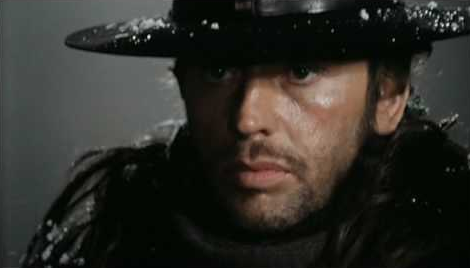
9. Jean-Louis Trintignant in The Great Silence - Trintignant gives a good performance as he brings the steely gaze needed for his swift killer, along with a bit of pathos within his silence alluding to his motivations though he is a tad overshadowed by his more maniacal co-star.

 Best Scene: Silence remembers.
8. Malcolm McDowell in If.... in McDowell gives a good performance as he portrays the gradual breakdown of a student into essentially a psychopath even though if it might feel like a warm up to his more renowned turn as a juvenile killer.  

Best Scene: Killing spree
7. Burt Lancaster in The Scalphunters - Lancaster gives an enjoyable turn portraying the right comical frustrations within his more typical western hero, along with striking the right endearing chemistry with his co-star.

Best Scene: The final fight.
6. Lee Marvin in Hell in the Pacific - Marvin gives a memorable one man show as a man slowly losing his mind as well as a memorable two man show in realizing a most unique yet believable chemistry with Toshiro Mifune.

Best Scene: The curious showdown. 
5. Ossie Davis in The Scalphunters - Davis gives a very entertaining portrayal of his outgoing yet quietly cunning character, and again has great chemistry with his co-star Lancaster.

Best Scene: The final fight. 
4. Toshiro Mifune in Hell in the Pacific - Shares his scenes so well with Marvin, as well as stands out well with his own one man show as the refined soldier struggling through his ordeal.

Best Scene: Finding the magazine.
3. Max von Sydow in Shame - von Sydow as per usual creates such a convincing relationship with Liv Ullmann which is especially pivotal here as the two together offer such a natural and harrowing depiction of a married couple dealing with and being changed by war.

Best Scene: Killing a man.
2. Charles Bronson in Once Upon a Time in the West - Bronson more than fulfills the role of the badass gunslinger, he goes further though creating such an endearing and humorous chemistry with his co-star Jason Robards, then goes even further in offering such an underlying emotional poignancy to the film through his performance. 

Best Scene: The final duel.
1. Burt Lancaster in The Swimmer - This one for the overall came down two rather different performances though by both masterful in their separate intentions. Bronson being such a brilliant minimalist performance, and Lancaster being such a brilliant expressive tour de force. Both have their unique challenges and match every one of them. Lancaster's task is different. Bronson is an essential part to an amazing film. Lancaster though is the factor that makes his film work at all offering a reality and heartbreaking humanity to such a surreal concept. Once Upon a Time in the West would have probably still have been great with a lesser lead, but not as great. The Swimmer would probably have been a failure without what Lancaster does. Even with that somewhat flimsy reasoning though this is still sort of a toss up as I love both performances, but I have to choose one.

Best Scene: "This is my wagon"
Updated Overall

Next Year: 1968 Supporting

Monday, 22 May 2017

Alternate Best Actor 1968: Jean-Louis Trintignant in The Great Silence

Jean-Louis Trintignant did not receive an Oscar nomination for portraying Gordon aka "Silence" in The Great Silence.

The Great Silence is a fairly effective spaghetti western, though its ending is more than a little questionable, about a bounty hunter who will only ever shoot in self-defense.

A common factor in any spaghetti western is the issue of dubbing and the various languages of those involved particularly the star who often was of a different nationality than the majority of the supporting cast. The Great Silence found a way away from any complications of this by having the lead character played by Jean-Louis Trintignant a mute. This is an interesting choice and makes the man named Silence a rather stoic hero even as stoic western heroes go. This forces many characters around Silence to describe Silence leaving himself mostly there for the most intense action. This actually goes to such a degree that one could argue that Klaus Kinski as the chief villain Loco, also a bounty hunter but without a code, is even co-lead with Trintignant since the film focuses almost as much on him as it does Silence. The casting itself also does seem to be an odd thing though with Trintignant certainly not the first man you'd expect to see in any type of western.

Trintignant though certainly offers quite the unique face for a western which obviously comes in handy for this part and it works in creating a certain atypical skew for the character. In that Trintignant carries a steely stare but not quite in the intense way you may expect. There is instead a certain detachment in his stare that actually does work effectively in creating both a menace in regards to the character but also suggests the state of Silence. This is as Trintignant does convey a certain damage right in the man as he portrays almost an underlying pain in Silence not as a man who is fine with his Silence but is rather pained by it. Trintignant handles this sort of detachment rather well as there is something innately broken within his performance while this also never seems to compromise his stance as sort of the hero to the western. In fact Trintignant makes something seem all the deadlier by that detachment as he guns down, not that he is wholly unfeeling, yet rather a no voice to speak any possible distress.

Although for much of the film Silence has the upper hand since he easily kills all who oppose him but this ends when he comes in contact with Kinski's Loco, who rather ironically is just a little too cool headed to get set off by Silence's attempt to pester him into a fight. This finally puts Silence off his course and Trintignant does successfully explore past the strictures of the type as the tides turn against Silence. Trintignant in these moments captures the more emotional rawness of his state through his eyes particularly in the scene where Silence thinks back to when his family was massacred. The film though again messes with its perspective a bit too much perhaps as it almost seems to become Loco's story and it is only in that view where the film's excessively bleak ending makes any sense. An ending where its silver lining is a bluntly stated message that reveals how the villains actions eventually led to good reforms down the road, which offers little solace. This does reduce Tritntignant's performance's impact a bit by the end of the film. He's still good particularly in revealing the final anguish in Silence in the final duel, yet rather strangely in the end Silence ends up being overshadowed in his own film by his rival Loco, and Tritnignant ends up being a bit overshadowed by Kinski.

Sunday, 14 May 2017

Alternate Best Actor 1968

And the Nominees Were Not:

Lee Marvin in Hell in the Pacific

Burt Lancaster in The Scalphunters

Charles Bronson in Once Upon a Time in the West

Malcolm McDowell in If....

Vincent Price in Witchfinder General

Predict Those Five or These Five.

Toshiro Mifune in Hell in the Pacific

Ossie Davis in The Scalphunters

Jean-Louis Trintignant in The Great Silence

Max von Sydow in Shame 

Burt Lancaster in The Swimmer

Or Both. 

Friday, 27 March 2015

Alternate Best Actor 1969: Results

5. Michael Caine in The Italian Job - Caine gives an appropriately charming performance and that's all there really is to it.

Best Scene: Croker is confronted by Mr.Bridger's men.
4. Lino Ventura in Army of Shadows - Ventura gives an effective withdrawn portrayal of a man who's learned to live in the darkness involved in the methods of the French resistance.

Best Scene: The death run. 
3. Dennis Hopper in Easy Rider - Hopper makes the most out of a rather thin role, and benefits from particularly strong chemistry with his co-stars.

Best Scene: The second campfire with George. 
2. Jean Louis Trintignant in Z - Trintignant gives an effective performance by making a very precise impact in his rather strict role.

Best Scene: The magistrate interrogates the main conspirator.
1. William Holden in The Wild Bunch - Well Holden very easily stood out for me as the best of these nominees and the only person I had to think twice about against the top two from the actual nominees. Holden gives a great performance by being uncompromising in his intense depiction of a violent man while managing to find some poignancy within the man's moral code.

Best Scene: The remainder of the bunch celebrating after their "victory".
Overall Rank:
  1. Dustin Hoffman in Midnight Cowboy
  2. Jon Voight in Midnight Cowboy 
  3. William Holden in The Wild Bunch
  4. Paul Newman in Butch Cassidy and the Sundance Kid 
  5. Jean Louis Trintignant in Z
  6. Robert Redford in Butch Cassidy and the Sundance Kid 
  7. Dennis Hopper in Easy Rider
  8. Peter Fonda in Easy Rider
  9. Oliver Reed in The Assassination Bureau
  10. Peter Finch in The Red Tent
  11. Lino Ventura in Army of Shadows
  12. Richard Widmark in Death of a Gunfighter
  13. Elliot Gould in Bob & Carol & Ted & Alice
  14. Dirk Bogarde in The Damned
  15. James Garner in Support Your Local Sheriff!
  16. Michael Caine in The Italian Job
  17. Walter Matthau in Cactus Flower
  18. Robert Redford in Downhill Racer
  19. Michael Sarrazin in They Shoot Horses, Don't They? 
  20. Robert Culp in Bob & Carol & Ted & Alice
  21. Woody Allen in Take The Money And Run
  22. Steve McQueen in The Reivers
  23. Clint Eastwood in Paint Your Wagon
  24. James Mason in Age of Consent
  25. Richard Burton in Anne of the Thousand Days
  26. Mitch Vogel in The Reivers 
  27. Peter O'Toole in Goodbye, Mr. Chips
  28. Kurt Russell in The Computer Wore Tennis Shoes
  29. John Wayne in True Grit
  30. George Lazenby in On Her Majesty's Secret Service
  31. Lee Marvin in Paint Your Wagon 
  32. Richard Thomas in Last Summer
  33. Bruce Davison in Last Summer
  34. Wendell Burton in The Sterile Cuckoo
  35. Arnold Schwarzenegger in Hercules in New York
Next Year: 1969 Supporting

Sunday, 22 March 2015

Alternate Best Actor 1969: Jean Louis Trintignant in Z

Jean Louis Trintignant did not receive an Oscar nomination, despite winning Cannes, for portraying the examining magistrate Christos Sartzetakis.

Z is an excellent political thriller depicting the assassination and investigation into said assassination of a popular leftist.

Jean Louis Trintignant could easily be argued as supporting in the film, and I would not argue that point long considering her only has a brief appearance for about the first third of the film where he is very awkwardly introduced to the entourage of the politician. I'll argue for his placement though simply for the second half where the investigation takes place as it fairly closely stays with the magistrate as he attempts to decipher the facts. Trintignant's role is unique in the film in that he is in no way politically charged unlike the doomed politician and his supporters who are constantly charged with their outrage and philosophy, or the men setting up the assassination who are consistently charged by their passionate hate for what the politician stands for. The magistrate on the other hand has different concerns. This shown early on in the awkward meeting which Trintignant plays as well as he no way expresses support to their anguish, nor does he suggest any malice towards. Trintignant actually does well by showing that the magistrate hardly feels anything towards them.

The magistrate does not pop back in until after the assassination and he is called upon to investigate what the authorities want at first to be deemed an accident. I must say I cared very little for Trintignant's turn as basically the quite observant lead in The Conformist just one year later, although here Trintigant is far more effective in this understated sort of role. Trintignant manages to make himself compelling by conveying the magistrate as someone taking in the information to decipher what exactly happened. Trintignant does well with a strong incisive glare towards everyone who speaks as it is clear the magistrate is not there to take sides but find truths. Trintignant is technically the one character who has an arc in the film although not in the usual manner still. This is not a personal emotional arc that Trintignant presents rather a strictly professional one. Trintignant never shows the magistrate lose his reserve exactly. He keeps himself consistent as a professional above else as the magistrate wants to find out what happened because it is the right thing to do as well as his job, nothing else is needed for him.

The magistrate even begins taking it as an accident, and adjusting statements that claim it otherwise since there is on hard evidence of the assassination at first. Trintignant does well to keep a certain reserve as he expresses both the magistrate particular method of deriving information as well as his personal distance from the case. Trintignant carefully portrays the actual arc of the magistrate because it is technically a somewhat detached transition. What Trintignant does well is create the calculation within the magistrate and is convincing in the gradual way he realizes the magistrate figuring out what happened. When the magistrate starts allowing to be called a murder Trintignant earns it through his subtle though quite honest reactions to every bit of information that is known. Of course it is not merely about deciphering information but also about deriving it himself through his interrogation of some of the culprits. Trintignant is very effective in these scenes as he plays the magistrate always quietly in control of the situation watching for any misstep, and delivers his more incisive remarks with the utmost precision.

Although Tritignant never wholly loses his reserve in the parts he does have a few great moments where he shows what the magistrate is feeling. Of course again Trintignant does not play these again as a political thing, but rather just wholly involving what is right. In fact that is the way the character must be since it is alluded to that the magistrate's personal political views technically skew closer to the villains, and that is what leaves him protected from scrutiny by the officials. One of my favorite moments in his performance is when he gets the brains behind the operation to say the exact same line that all the conspirators say when describing part of the assassination. His slight smile is just perfect as the magistrate does take some satisfaction in knowing he's gotten the one responsible. Trintignant technically had quite a challenge with this part because the magistrate is technically on a whole different wavelength from every other character in the film. Trintignant uses that to his advantage as his work stands out through his intriguing depiction of a man whose sole motivation is justice.

Friday, 20 March 2015

Alternate Best Actor 1969

And the Nominees Were Not:

Dennis Hopper in Easy Rider

Lino Ventura in Army of Shadows

William Holden in The Wild Bunch

Michael Caine in The Italian Job

Jean Louis Trintignant in Z

Wednesday, 8 January 2014

Alternate Best Actor 1970: Results

5. Jean Louis Trintignant in The Conformist- Trintignant fails to find consistency in his performance, and simply gives an uninteresting portrayal of a character with potential.

Best Scene: Marcello watches the assassination.
4. Alejandro Jodorowsky in El Topo- Jodorowsky gives an effective performance as a cool headed gunfighter then a repentant monk, but he never stands out past his own direction.

Best Scene: El Topo creates a new exit out of the cave.
3. Peter Boyle in Joe- Boyle gives a good performance as working class loud mouth by showing the man behind the bluster, but the film's shortcomings keep him from giving a great performance.

Best Scene: Joe's introduction.
2. Albert Finney in Scrooge- Finney overplays a moment here and there, but his alternate take on Ebenezer Scrooge does manage to work for the most part.

Best Scene: The redemption medley.
1. Gian Maria Volontè in Investigation of a Citizen Above Suspicion- The only alternate that really brought much excitement for me is Volontè's work. Volontè gives an interesting and entertaining performance that cleverly manages to make sense of his character's seemingly random behavior.

Best Scene: The inspector openly confesses to his crime.
Overall Rank:
  1. George C. Scott in Patton
  2. Jack Nicholson in Five Easy Pieces
  3. Nicol Williamson in The Reckoning 
  4. Warren Oates in Barquero
  5. Jason Robards in The Ballad of Cable Hogue
  6. Gene Hackman in I Never Sang For My Father 
  7. Peter Sellers in Hoffman
  8. Gian Maria Volontè in Investigation of a Citizen Above Suspicion
  9. Alec Guinness in Cromwell
  10. Melvyn Douglas in I Never Sang For My Father
  11. Richard Harris in The Molly Maguires
  12. James Fox in Performance 
  13. Sergei Bondarchuk in Uncle Vanya
  14. Jüri Järvet in King Lear
  15. Yves Montand in The Confession
  16. Tom Courtenay in One Day in the Life of Ivan Denisovich
  17. Innokenty Smoktunovsky in Uncle Vanya
  18. Lee Marvin in Monte Walsh 
  19. Alain Delon in Le Cercle Rouge
  20. Jean-Pierre Cassel in La Rupture
  21. Albert Finney in Scrooge
  22. Ron Moody in Twelve Chairs
  23. Peter Boyle in Joe  
  24. Marcello Mastroianni in Sunflower
  25. Robert Mitchum in Ryan's Daughter 
  26. David Bradley in Kes
  27. Donald Sutherland in MASH 
  28. Richard Harris in A Man Called Horse 
  29. Sean Connery in The Molly Maguires
  30. Dustin Hoffman in Little Big Man  
  31. Dhritiman Chatterjee in Pratidwandi
  32. Richard Harris in Cromwell 
  33. Fernando Rey in Tristana 
  34. Michel Piccoli in Les Choses de la Vie
  35. Jean-Pierre Leaud in Bed and Board
  36. Marcello Mastroianni in The Pizza Triangle
  37. Telly Savalas in Kelly's Heroes
  38. Paul Newman in Sometimes A Great Notion
  39. James Earl Jones in The Great White Hope
  40. Alejandro Jodorowsky in El Topo 
  41. Jean Yanne in Le Boucher
  42. Clint Eastwood in Kelly's Heroes
  43. Elliot Gould in MASH
  44. Frank Langella in Twelve Chairs 
  45. Robert Stephens in The Private Life of Sherlock Holmes
  46. Tony Lo Bianco in The Honeymoon Killers
  47. François Truffaut in The Wild Child
  48. John Moulder-Brown in First Love
  49. Ryan O'Neal in Love Story 
  50. Lee Van Cleef in Barquero
  51. Kenneth Nelson in The Boys in the Band 
  52. Jean-Pierre Cargol in The Wild Child
  53. Alan Arkin in Catch-22
  54. Ben Gazzara in Husbands
  55. Peter Falk in Husbands 
  56. John Cassavetes in Husbands 
  57. Jean-Claude Brialy in Claire's Knee
  58. Michael Sarrazin in Sometimes a Great Notion 
  59. Dennis Patrick in Joe 
  60. Christopher Lee in Count Dracula
  61. Rock Hudson in Darling Lili
  62. Jean Louis Trintignant in The Conformist
  63. Beau Bridges in Landlord
  64. Frank Langella in Diary of a Mad Housewife 
  65. Rod Steiger in Waterloo
  66. Christopher Jones in Ryan's Daughter 
  67. Richard Benjamin in Diary of a Mad Housewife 
  68. Frederick Williams in Count Dracula
  69. Jason Robards in Julius Caesar
Next Year: 1970 Supporting

Alternate Best Actor 1970: Jean Louis Trintignant in The Conformist

Jean Louis Trintignant did not receive an Oscar nomination for portraying Marcello Clerici in The Conformist.

The Conformist is about a man who works for the Italian fascist country, and goes to arrange the assassination of an old friend. The film is visually striking, but I failed to find it particularly gripping, although that is mostly because of the factor I will be discussing here.

This is the second performance as a government lackey I have seen and unfortunately this is the distant second from Gian Maria Volontè in Investigation of a Citizen Above Suspicion. Trintignant does seem to randomly try to play the part in different ways, but unlike Volontè's work there is not an underlying purpose to this. Trintignant does not seem to know how to play the part, and does not even know how exactly to play the different approaches he decides to take. Trintignant often plays the part as the silent killer sort, sometimes just a non-entity, sometimes just a man who is pushed around by others, and sometimes an emotionally sensitive man. This would be fine if he went from one to another in a character arc but that is simply not the case.

Trintignant often is the non-entity who sits in rooms and listens to other speak. I will admit it is a difficult trick to make such a character interesting but it can be done, Gary Oldman in Tinker Tailor Soldier Spy is one example. Trintignant seem thoroughly out of his element here as he is a non-entity as the character of Marcello, but he is also a non-entity when it comes to the film itself. He never has the right magnetism to draw you in to his performance, even though he does not seem t be doing something. There is not anything that Trintignant conveys in these scenes, he just seems to sit there and allows for Bernardo Bertolucci's direction to be the only star of the show.

Marcello is often a protagonist pushed around by the actions of others, not unlike the titular character in Bertolucci's later film The Last Emperor. Trintignant does nothing in terms of showing how this treatment affects Marcello in anyway, something John Lone did so brilliantly in that later film. Marcello changes for sure but not in the proper way as he just seems to go from one way to another, then another without the proper connection. One of the great aspects of John Lone's performance was that he portrayed the effort in his character that showed the way his character was changed by the way he was oppressed around him. There is none of that with Trintignant making every change in Marcello seem random in nature.

Of course there is the silent killer that shows up, and this probably Trintignant excels the most as Marcello but it still does not really work. For one thing Trintignant comes to it so haphazardly as he will sometime become an emotional fellow for no foreseeable reason, and Trintignant plays this version of Marcello as most just a whiner. This without a doubt takes away considerably from the cold Marcello, but as well there is nothing compelling in his performance. Trintignant is cold, but nothing more in his portrayal of Marcello and even his coldness is too simple. It is nothing like Edward Fox in The Day of Jackal where there was a striking soullessness in performance, there simply is nothing notable Trintignant brings to this killer.

Trintignant's performance in this film is almost entirely a failure in finding the right tone to set for his character. He never knows how to play the character of Marcello in the film, which is a shame as the character in the right hands could have easily been a great one. Trintignant never seems to find a grip on this character, instead trying many different ways to play him without the right rhyme or reason to it. It is only made worse by Trintignant inability to make any of the different attempts at a character particularly interesting either. His boring man who gets pushed around is too boring, his emotional man is too whiny, and his cold man just is not cold enough.

Sunday, 29 December 2013

Alternate Best Actor 1970

And the Nominees Were Not:

Albert Finney in Scrooge

Alejandro Jodorowsky in El Topo

Gian Maria Volontè in Investigation of a Citizen Above Suspicion

Jean Louis Trintignant in The Conformist

Peter Boyle in Joe

Wednesday, 13 February 2013

Alternate Best Actor 2012: Results

5. Jack Black in Bernie- Black gives a very different performance here going head first into creating a unique character who is believable as both the nicest man but also a murderer.
4. Liam Neeson in The Grey- Neeson gives a strong performance capitalizing well on his physical, but as well giving a powerful emotional portrayal as well.
3. Matthew McConaughey in Killer Joe- McConaughey proves himself more than capable as an actor through his oddly charming and at the same time freighting performance as a cop who does not mind killing for money on the side.
2. Denis Lavant in Holy Motors- Lavant gives a very different type of performance switching breathlessly from one character never stopping for a moment. It is a striking performance that is absolutely fascinating to watch.
1. Jean Louis Trintignant in Amour-Trintignant gives a quiet very restrained performance that is very moving and poignant while having a perfect chemistry with his co-star Emmanuelle Riva. A strong year for leading performances, and the academy did a pretty good job of selecting them too they nominated six deserving leading performances even if two were in the supporting category.
Overall Rank:
  1. Joaquin Phoenix in The Master
  2. Mads Mikkelsen in The Hunt 
  3. Daniel Day-Lewis in Lincoln
  4. Philip Seymour Hoffman in The Master
  5. Jean Louis Trintignant in Amour
  6. Denis Lavant in Holy Motors
  7. Christoph Waltz in Django Unchained
  8. Matthias Schoenaerts in Rust and Bone
  9. Matthew McConaughey in Killer Joe
  10. Liam Neeson in The Grey
  11. Mads Mikkelsen in A Royal Affair
  12. Choi Min-sik in Nameless Gangster   
  13. Toby Jones in Berberian Sound Studio
  14. Jack Black in Bernie
  15. John Hawkes in The Sessions
  16. Tom Holland in The Impossible
  17. Suraj Sharma in Life of Pi  
  18. Martin Freeman in The Hobbit  
  19. Mel Gibson in Get the Gringo 
  20. Bradley Cooper in Silver Linings Playbook 
  21. Jake Gyllenhaal in End of Watch
  22. Michael Pena in End of Watch
  23. Richard Gere in Arbitrage
  24. Frank Langella in Robot and Frank 
  25. Mikkel Følsgaard in A Royal Affair
  26. Daniel Craig in Skyfall 
  27. Hugh Jackman in Les Miserables   
  28. Paul Dano in Ruby Sparks
  29. Tom Courtenay in Quartet 
  30. Ranibir Kapoor in Barfi!
  31. Jack Reynor in What Richard Did
  32. Channing Tatum in 21 Jump Street 
  33. Jonah Hill in 21 Jump Street 
  34. Charlie Creed-Miles in Wild Bill 
  35. Dane DeHaan in Chronicle
  36. Colin Farrell in Seven Psychopaths
  37. Brad Pitt in Killing Them Softly
  38. Hugh Grant in The Pirates! In an Adventure with Scientists!
  39. Christian Bale in The Dark Knight Rises
  40. Tom Hardy in Lawless
  41. Karl Urban in Dredd  
  42. Gael Garcia Bernal in NO
  43. Lambert Wilson in Ernest & Celestine
  44. Robert Downey Jr. in The Avengers
  45. Mark Ruffalo in The Avengers 
  46. Seann William Scott in Goon
  47. Ben Affleck in Argo
  48. Joseph Gordon-Levitt in Looper 
  49. Iko Uwais in The Raid 
  50. Clarke Peters in Red Hook Summer
  51. Chris Evans in The Avengers 
  52. Jared Gilman in Moonrise Kingdom
  53. Christopher Walken in Stand Up Guys 
  54. Logan Lerman in The Perks of Being a Wallflower   
  55. Will Poulter in Wild Bill
  56. Emile Hirsch in Killer Joe
  57. Chris Hemsworth in The Avengers 
  58. Clive Owen in Shadow Dancer
  59. Zach Galifianakis in The Campaign
  60. Will Farrell in The Campaign  
  61. Paul Brannigan in The Angels' Share
  62. Tom Cruise in Jack Reacher
  63. Denzel Washington in Flight
  64. Anthony Hopkins in Hitchcock
  65. Al Pacino in Stand Up Guys
  66. Jamie Foxx in Django Unchained
  67. Joseph Gordon-Levitt in Premium Rush
  68. Robert Pattison in Cosmopolis 
  69. Sacha Baron Cohen in The Dictator 
  70. Steve Oram in The Sightseers
  71. Alex Russell in Chronicle
  72. Mark Duplass in Safety Not Guaranteed
  73. Bill Murray in Hyde Park On Hudson
  74. Shia LaBeouf in Lawless
  75. Sylvester Stallone in The Expendables 2
  76. Will Smith in Men in Black 
  77. Jules Brown in Red Hook Summer
  78. Chapman To in Vulgaria
  79. Zac Efron in The Paper Boy
Next Year: 1968 lead

Sunday, 10 February 2013

Alternate Best Actor 2012: Jean Louis Trintignant in Amour

Jean Louis Trintignant did not receive an Oscar nomination for portraying Georges Laurent in Amour.

Amour is a compelling film about the emotional problems that an elderly couple face when the wife's health quickly deteriorates.

It is always a little strange when one co-star of a film that depends heavily on both leads is almost entirely forgotten not only by the academy but almost every other awards body. Despite his film being nominated for best picture, and his co-star Emmanuel Riva being nominated for Best Actress Trintignant was close to being entirely forgotten during awards season despite the fact that he actually has much more screen time than Riva, and a large part of the film is Georges's reaction to dealing with his wife Anne slowly dying from her ailments.

In the scheme of things there have been many performances this year trying for different results from the efforts of Daniel Day-Lewis's recreation of a historical icon to Joaquin Phoenix's unique no holds barred performance as a troubled veteran, to Jean Louis Trintignant. Where Day-Lewis was trying to give life to history, and Phoenix was trying something entirely off the wall Trintignant tries to be just a normal man as Georges in this film. There is not anything special, so to speak, about George. He is just a normal elderly man in a normal relationship with his wife.

Out of all the performances said to be great this year in a way Trintignant is probably giving the simplest, but this does not mean the least challenging. Amour is a film with words certainly, but just as important as the words are the silences which depend a great deal on the actors. Trintignant takes the right approach as Georges which is not try and be anything more than just a normal man in this situation as many men at his age would be. Amour after all is really not trying to be this very specific relationship between these two people, but rather it is more universal depiction of two people who believe very much in the wedding vow of in sickness and in health.

Trintignant and Riva really could not be more low key together as their words of love, despite being the title of the film, are commonly espoused. In fact the closest it probably comes to doing this is when Georges tells Anne that she looked beautiful. This is not to say the love is not stated quite clearly for us to see, it is and that is where the beauty of the performances comes from. Trintignant and Riva such a natural incredible underlying chemistry here. It isn't something that pops off the screen exactly, but the way they interact, and talk to one another suggests so perfectly that these two have been together for a great long while.

This is not something where the love is espoused loudly in a way, but instead so quietly. Riva and Trintignant therefore are quite put to task so to speak to honestly make these two to be entirely believed as a loving couple for decades. They absolutely do, and the most amazing part of it is the effortlessness that comes from both of their performances. They simply are Georges, and Anne the married husband and wife in their eighties who are still very much in love. It is astonishing how well they are able to do this, to the point that they don't seem to even need to establish it, it simply is there which is exactly how it should be between the two characters in the film.

With the two establishing so well the relationship between the two it allows for the proper emotional state to ensue when Anne begins taking a turn for the worse. Trintignant very much internalizes most of the feelings of Georges while dealing with Anne's health as he never really on really big emotions with his performance. He is quite powerful though by doing it this way, and in a way showing the way the decay on Anne really bares down on him. The film does not show her deterioration as something that is quick, but a slow process. Both actors reflect this Riva physically, and Trintignant emotionally.

Trintignant goes entirely for realism with this performance, an uncompromising realism that is quite striking. Triningnant shows very much the long haul of grief here as Georges. For him it is not something that comes and goes as his wife is not dead she is dying, it something he has to live with and Triningnant powerfully reflects as a fact with his performance. He shows us the anguish, the sorrow, the dread, even the anger of Georges as he must deal with, but importantly he shows the restraint in the man. This is the man dealing with these things over time, not a moment, it is not something he can escape from it is always there.

Triningnant plays this role with not a hint of flamboyance and stays intensely subtle in his portrayal through the film. He goes to the point that there character arc that there is in Georges is about as unassuming as possible really with this man's journey. Georges mostly stays very much in place just handling what comes to a certain point where he finally does something else other than just trying to keep his wife alive, or watching others trying to do the same. When he does this it does not feel like something out of the blue, but honestly something that has been building to through this.

The pivotal moment comes in and shows the greatness of this performance by Jean Louis Trinignant. This performance is entirely about genuine emotions. When Georges commits this act it seems one of honest love for his wife, and he absolutely earns the moment by playing it so quietly yet resounding in the heart he puts in the moment. He does this for his entire performance, and it is a special performance by Trinignant. It works so beautifully with his co-star and the two could not be more in tune with one another.

This is a performance is more about what he does not say than what he does say. He never breaks the understated nature of his role, and stays true to his character. It is a powerful work that brings out the complex emotions of this man in an always believable compelling fashion. Triningnant simply becomes this man, and brings to life this man's situation to life in such a vivid fashion it is incredible. There is not a single false moment, there never is an ounce of acting to notice in this performance. It is a great performance that brings to life the central idea of this certain sort of love in such an uncompromising unique fashion with a resonance that is absolutely tremendous.

Saturday, 9 February 2013

Alternate Best Actor 2012

And the Nominees Were Not:

Jean Louis Trintignant in Amour

Jack Black in Bernie

Liam Neeson in The Grey

Matthew McConaughey in Killer Joe

Denis Lavant in Holy Motors