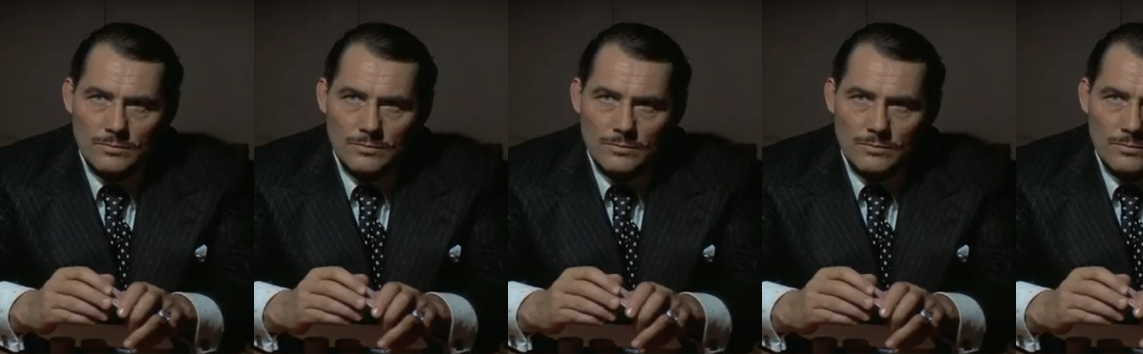
Showing posts with label Terence Stamp. Show all posts

Saturday, 11 May 2019

Alternate Best Actor 2013: Results

10. Alden Ehrenreich in Beautiful Creatures - Ehrenreich brings such a genuine charm and sincerity in his work that he manages to make up for a mostly bland part. 

Best Scene: The course of his life.
9. Domhnall Gleeson in About Time - Gleeson gives an appropriately charming and endearing turn that manages to balance the film's tone nicely.

Best Scene: Final talk with dad.
8. Toni Servillo in The Great Beauty - Although I had no great affection for his film, Servillo managed to carry me through it in his charming and reflective portrayal of a man trying to find meaning in hollow extravagance.

Best Scene: Finding a great beauty.
7. Sol Kyung-gu in Hope - Although somewhat underused by the film he's in, Sol does deliver in granting the appropriate heartbreak and anger in a father's reaction to a true horror being inflicted upon his family.

Best Scene: Shifting his daughter to another room. 
6. Terence Stamp in Song For Marion - Stamp delivers, even when his film gets a bit corny, offering a genuine portrayal of grief that rises above his material.

Best Scene: "Goodnight My Angel"
5. Ethan Hawke in Before Midnight - Hawke gives an excellent turn continuing naturally in his "maturation"  of Jesse especially in how that is reflected with his chemistry with Julie Delpy as Celine.

Best Scene: Hotel room fight.
4. Simon Pegg in The World's End - Pegg delivers an overtly hilarious performance as a man still living as a high school rebel, though is equally heartbreaking in revealing the sad truth of such a state.

Best Scene: Nothing got better.
3. Christian Bale in Out of the Furnace - Bale gives perhaps his quietest turn and one of his most powerful as a man defined by hardship essentially fulfilling a personal duty through revenge. 

Best Scene: Listening to the tape.
2. Christoph Waltz in The Zero Theorem - Waltz gives a turn completely unlike his Oscar winning ones, through his moving depiction of  of the struggle of an extreme introvert while maintaining the humanity needed for the film's surreal journey.

Best Scene: Turning Down Bainsley's Offer.
1. Masaharu Fukuyama in Like Father. Like Son - Good predictions Michael Patison, Charles H., Luke and Tahmeed. Fukuyama gives a great naturalistic turn that manages to give such a restrained yet truly poignant portrayal of a father coming to term with his faults through some very unlikely circumstances.

Best Scene: Reuniting with his son.
Updated Overall

Next: Supporting 2013

Sunday, 10 March 2019

Alternate Best Actor 2013: Terence Stamp in Song For Marion

Terence Stamp did not receive an Oscar nomination for portraying Arthur in Song For Marion. 

A Song For Marion is a tad too cornball as a film about a widower trying to cope with the death of his wife by joining her choir group.

The film itself isn't especially good as it falls too often into scene after scene of "aren't old people wacky" in several scenes of geriantics. The saving virtue of the film is in its lead of Terence Stamp, who you might say is almost in the wrong film as he intends to deliver something that the writer of the film might struggle to comprehend. This is as the film itself isn't too assured in its methods of portraying the struggle of Terence Stamp's Arthur, who as the film opens is dealing with his wife Marion (Vanessa Redgrave) who is dying from cancer, and is outgoing, while Arthur decidedly is not. This film honestly seems to what to treat this almost as something precious as well in the way a lot of scenes are framed, however Stamp's performance intends something far more dramatic in his portrayal of Arthur's general grumpiness. Stamp doesn't hold back in this regard putting a real intensity within the character's bitterness especially as it connects to the decaying state of his wife's health. Stamp doesn't brush it off as nothing, bringing something far deeper in creating the sense of anger in the man, and presents a harsh man in Arthur, who seems frankly not at all at ease with the general excessive goofy portrayal of most of the characters.

The film lacks a proper detail most points, take for example we get only some snippets of Arthur's relationship with his son James (Christopher Eccleston), which we're told is just generally tense, mainly illustrated through a scene where Arthur yells at him for being late, due actually due to Arthur's own confusion. Although the scene is lacking as written, Stamp manages to give it a bit more than is there through his work that offers the blunt disregard and particularly direct forcefulness of a father far too prone to discipline towards his son. Stamp finds just the right approach within this as he gives enough a reality even towards the rather thin material. He does not hold back, even when the film seems to. This is often what Stamp's work amounts to throughout the film, as he tries to consistently grant an honesty to the material that is rather lacking within it. When Marion does die, Stamp is able to find the real heartbreak in the loss, and the immediate hollowness of his state as he initially withdraws to nearly a nothingness at the point. This setting up of course Arthur finding his way towards life again through his wife's old singing group, and especially through their choir leader Elizabeth (Gemma Arterton).

The scenes become pretty obvious where they are going to go, as Arthur is going to become less of grump as he becomes part of the choir and becomes friends with Elizabeth. Again though Stamp is terrific as he does not fall into easy sentiment, in fact outright refuses it. Stamp, even in the somewhat overt humorous moments intended for him, stays true to his honest approach to the character by making his eases away from bitterness gradual. Stamp is so successful in this approach, as he only lightens his delivery a bit, his hard eyes, only a bit, granting appropriate ease in the transformation. He never jumps fully to a man he's not. Now the reason though I'm talking about this film, are the two main songs in the film, the one sung by Marion and then the one for Marion. These scenes are the obvious highlights of the film, and the reason being Terence Stamp's performance in each. The first being Marion's song to Arthur essentially of "True Colors", which takes place obviously before his transformation, however Stamp uses it brilliantly to suggest that possibility. Stamp is quite outstanding in the scene, as it is just the silent reaction to Marion singing. Stamp takes a subtle, so poignant, approach as he shows as the song goes on his look of callousness fades to this quiet affection that so strongly shows his love. What is most powerful though is as the words prod him, Stamp is fantastic in being able to just exude enough of that emotion on the edge, while still showing Arthur trying to hold it in. It's a marvelous moment, only bested by Arthur's solo performance of "Lullaby (Goodnight, My Angel)", at the climactic performance of the choir group. Stamp delivers one of the finest moments of his career in his performance of the song. This is in every second of it as he depicts the initial hesitation of the introverted curmudgeon, before a prompting from his granddaughter, that gets him to sing the song. The actual performance delivered with such a refined passion by Stamp with such heart given to every word. The most heartbreaking touch being Stamp's way of keeping his eyes closed during the song, and with this quiet anguish across his face as though he is indeed singing directly to his deceased wife. Stamp offers only a real emotion in the moment that skirts any cheap manipulation, to grant something so much more potent. That is the highlight of his work, and if you took only the songs, you'd think this was a far greater film, given they focus so directly on Stamp. Although the bridge between these songs is shaky within the film, Stamp still never is, and even though the songs are far away his best moments, this stands nonetheless as a touching portrait of grief by Stamp that rises far above its material.

Tuesday, 26 February 2019

Alternate Best Actor 2013

And the Nominees Were Not:

Toni Servillo in The Great Beauty

Domhnall Gleeson in About Time

Christoph Waltz in The Zero Theorem

Simon Pegg in The World's End (feat. Shaun of the Dead/Hot Fuzz)  

Sol Kyung-gu in Hope

Predict these five or those five, or both:

Alden Ehrenreich in Beautiful Creatures

Ethan Hawke in Before Midnight

Christian Bale in Out of the Furnace 

Terence Stamp in Song for Marion

Masaharu Fukuyama in Like Father, Like Son

Wednesday, 12 April 2017

Alternate Best Actor 1984: Results

5. John Cassavetes in Love Streams - Cassavetes is convincing as the off-beat playboy, as well as the supportive brother, but the impact of his work always remains rather muted. 

Best Scene: A naked man. 
4. Jack Lemmon in Mass Appeal - Lemmon tries his best to salvage his material giving some honesty to his character even within such a problematic film.

Best Scene: Browning speech.
3. Tsutomu Yamazaki in Farewell to the Ark - Yamazaki manages to find balance within the film's strange tone giving a funny yet still honest portrayal of his character's intense frustrations.

Best Scene: He snaps. 
2. Terence Stamp in The Hit - Stamp gives an amusing yet moving portrayal of a dead man walking who seemingly has come to terms with his fate.

Best Scene: "Death be not Proud"
1. John Hurt in The Hit - Good prediction Varun. The immensely talented Hurt proves himself more than capable at being the heavy this time around giving a properly chilling turn yet offers more depth in his vivid portrayal of a hit man who has been at his job for too many years.

Best Scene: The titular moment
Update Overall

Next Year: 1984 Supporting

Friday, 7 April 2017

Alternate Best Actor 1984: Terence Stamp and John Hurt in The Hit

Terence Stamp did not receive an Oscar nomination for portraying Willie Parker and John Hurt did not receive an Oscar nomination for portraying Mitchell Braddock in The Hit.

The Hit is a terrific low key crime film about two hit men attempting to transport a police informant to face his former colleague.

The Hit features to begin with very interesting reverse casting for the accomplished actors in the two leads. Terence Stamp who often played the predator in films such as The Collector, Superman, and Far From the Madding Crowd plays the prey in the form of the police informant Willie while John Hurt who was often the unfortunate victim such as in Alien and 10  Rillington Place, is the would be assassin. The two very talented actors have no difficultly with this adjustment, as we first see Braddock in the film's stylized intro, but we first meet Stamp's Willie as he is successfully testifies against his old gang. Stamp technically plays his trick early on which is the basis for his characterization of Willie, but no reason to give away the trick quite yet. In terms of the sheer basic performance requirement it is a lot of fun seeing Stamp in this more passive sort of role especially in this opening scene as he testifies against his former colleagues. Stamp is curiously enjoyable as he portrays Willie almost a little too aloof in his testimony as though he's barely giving a second though, I particularly like his strangely passionless explanation that he's only testifying because he thinks it is the right thing to do.

The film then jumps ahead ten years to reveal Willie hiding in Spain where he gets caught up by some local thugs and is brought to the English hit men of Braddock and his young accomplice Myron (Tim Roth) who will take him the rest of the way. Once Willie sees the men, and figures where he's going he takes somewhat curious yet rather brilliant approach. In that he again makes Willie rather easygoing given his rather difficult situation. Stamp portrays this all the way in these scenes as his very physical manner is as though he is on a casual vacation, and speaks as though he's talking to some acquaintances. The trick is, though not specifically stated, is within Stamp's performance in that while rather aloof he's not entirely detached. Stamp instead suggests that Willie is playing a game, and is trying to work the men though without them noticing. Stamp's great as he actually gives a rather comedic performance at times by portraying Willie as trolling the two men in an attempt to mess up their plan. When early on Willie introduces himself to a stranger, Stamp's delivery is oh so pleasant yet there seems to be a distinct pleasure in the act that makes things a bit more complicated for Braddock and Myron.

Well that brings us to old Braddock played by the one and only John Hurt. Hurt's performance plays so perfectly against Stamp because he shows quite bluntly that Braddock is not playing a game, he's doing a job. Hurt's whole presence exudes this world weariness fitting to a man whose job is to kill people, and to a man who has doing it for quite some time. Hurt portrays no joy or eagerness when they initially catch Willie, he just gives him a straight stare as though he's confirming a work order. Hurt does not use this to suggest that Braddock is any way fed up with his job, but rather that he's so accustom to it that it has become rather routine. The two are a great balance, and only amplified more so by the overeager Myron. Braddock is the man of the least words leaving most of the speaking to Myron, except for the words that actually need to be said. Hurt's performance is almost the opposite of his turn in the Elephant, where his face was almost entirely covered, as so much of this turn relies on his facial reactions. Hurt, like Stamp, is often rather funny though with Hurt it is through exasperated reactions towards the stupidity of Myron or his attempt to figure out what exactly Willie is up to.

That is not to say Braddock is some hapless sap, in fact far from it. It is fascinating to see Hurt take on the role given that he is not the most physically imposing figure yet that does not matter. Hurt in a strange way makes use of his wiry frame to add to the personal style of Braddock which is this minimalist and specific action. Hurt is actually quite chilling in the role by so effectively realizing this method of Braddock, as he says so much even as he speaks so little. The menace that Hurt exudes is quite remarkable by how effortless he makes it. On one end this is in portraying the exactness of the man's action, as Hurt is excellent in his slight reaction conveying the way Braddock dissects then acts. For example there is a moment where Willie suggests that a third party probably will talk, and Hurt is rather chilling by managing to convey in his expression Braddock determining that the man must die. In the scenes where Braddock goes about killing someone Hurt is so quietly terrifying, as he does not show quite a true sadism as Braddock but does show just how simple the act has become for him.

I rather love how Hurt approaches this because it manages to do two things. On one hand he is the heavy he needs to be by making an act so vicious by being so unassuming while doing it, as he will just casually hold a gun or reveal it since he's done it for so many years. Hurt technically has the traits of the usual "cool" hit man, with his sunglasses, his way of smoking, his casual demeanor, but he uses for a more disturbing end. Hurt's work goes further than that as it also suggests the weight of the years of this life. Hurt though doesn't use this to garner Braddock a true sympathy but rather a troubling understanding. He can be so blase because he's killed so many people in his life, and there is something quite unnerving about such a situation. When Braddock gives sort of a stay of execution at times for Willie, as well as their unfortunate fourth passenger, Maggie who they take along as hostage, Hurt makes it less of the man feeling any sorrow for them rather just sort of saying "Hmm not quite the right time yet". In this way Hurt technically is on a similair wavelength to Stamp in that he's also playing a trick on his companions and the audience, the difference is it isn't quite as purposeful. You may think that Braddock might have a bit of mercy in him somewhere, but in reality we just don't know him well enough yet.

Now I seem to be wrongly ignoring Stamp who stays rather consistent through much of the film, which is not problem given what he shows his character's up to, and also the fact that he is also consistently entertaining in the role as Willie so jovially plants the seeds of doubt in his captors' minds. Stamp though does portray this gradual transition of sorts as though Willie is kind of slowly getting more and more into this character he's developed for himself to trick the men with. The character being a man who is frankly above it all, to the point that he even claims to be above dying. When he describes that death is but a natural process, Stamp grants it the sincerity of a true philosopher who maybe believes exactly what he says. Fittingly as always Hurt's equally good in the scene in portraying Braddock genuinely taken aback by someone who has come to terms with death, something he himself hasn't. The problem is all the tricks come to a head though and all is revealed. On one hand Stamp shows that this really is an act that old Willie has crafted, and over the day has almost begun believe his own acting. Stamp earns a change in this as when he is initially captured, as well as initially threatened by his old colleagues, he shows a man fearful of his life. This is revealed to be the real man when Braddock reveals he's decided to kill them all early. Stamp's actually rather heartbreaking as his act breaks with such a genuine moment of realization of the fear of death as Braddock tells him his time is up. Hurt on the other hand again was showing no trick, but rather a misinterpretation of his actions. Braddock reprieves were not out of any sympathy but just a man knowing he could finish the job later. As we are reminded of Braddock's violent moments which are all standout moments due to Hurt. There's a moment where Maggie attempts to get help, and Hurt's reaction is sheer perfection as it is less "oh no" and more "what you really think I haven't handled something like this before?". This everyday approach to the hit man is downright amazing especially in those small moments that seem so fitting to a man just going through the motions that make the character particularly menacing. Now Stamp gives a fantastic performance, but I absolutely loved Hurt's approach to his role. Although we never leave the confines of the job Hurt through these scenes gives such a vivid portrait of this hit man that in no way makes him any less intimidating.
(For Stamp)
(For Hurt)

Monday, 3 April 2017

Alternate Best Actor 1984

And the Nominees Were Not:

John Hurt in The Hit

Terence Stamp in The Hit

Jack Lemmon in Mass Appeal


Tsutomu Yamazaki in Farewell to the Ark 

John Cassavetes in Love Streams

Sunday, 26 October 2014

Alternate Best Supporting Actor 1967: Results

5. Peter Finch in Far From the Madding Crowd - Finch gives a striking portrayal of a reserved man whose emotions slowly get the better of him.

Best Scene: Boldwood finally snaps.
4. Alan Bates in Far From the Madding Crowd - Bates gives a quietly charming and most of all honest portrayal of the most genuine character in the story.

Best Scene: Gabriel just before he is about to leave.
3. Terence Stamp in Far From the Madding Crowd - Stamp is exceedingly good at making Frank Troy both a scoundrel and someone its hard not to like.

Best Scene: Troy shows off his swordsmanship.
2. Richard Attenborough in Doctor Dolittle - He's a one scene wonder but what a one scene wonder he is. Although the rest of the film is quite dull Attenborough makes it absolutely delightful for the few minutes he's onscreen.

Best Scene: "I've Never Seen Anything Like It"
1. Alan Arkin in Wait Until Dark - Arkin gives an entertaining as well as appropriately chilling performance that contributes to one memorable finale for his film.

Best Scene: Roat requests the doll.
 Overall Rank:
  1. Alan Arkin in Wait Until Dark
  2. Donald Pleasence in Will Penny
  3. Terence Stamp in Far From the Madding Crowd
  4. Dick Shawn in The Producers
  5. Richard Attenborough in Doctor Dolittle
  6. Gene Hackman in Bonnie and Clyde
  7. Kenneth Mars in The Producers
  8. Alan Bates in Far From the Madding Crowd
  9. Peter Finch in Far From the Madding Crowd
  10. Tom Courtenay in The Night of the Generals
  11. Scott Wilson in In The Heat of the Night
  12. Martin Sheen in The Incident
  13. Tatsuya Nakadai in Samurai Rebellion
  14. George Kennedy in Cool Hand Luke
  15. Gene Wilder in Bonnie and Clyde 
  16. Patrick Magee in Marat/Sade
  17. Maximilian Schell in The Deadly Affair
  18. Chishū Ryū in Japan's Longest Day
  19. Richard Crenna in Wait Until Dark
  20. Harry Andrews in The Deadly Affair
  21. Alec Guinness in The Comedians
  22. Richard Boone in Hombre
  23. Anthony Zerbe in Will Penny
  24. Hideyo Amamoto in Age of Assassins
  25. George Sanders in The Jungle Book
  26. Strother Martin in Cool Hand Luke
  27. Warren Oates in In The Heat of the Night 
  28. James Earl Jones in The Comedians  
  29. Jason Robards in Hour of the Gun
  30. Martin Balsam in Hombre
  31. Nigel Green in Tobruk
  32. Jeff Corey in In Cold Blood
  33. Phil Harris in The Jungle Book
  34. Eric Portman in The Whisperers
  35. Stanley Baker in Accident
  36. Roy Glenn in Guess Who's Coming to Dinner
  37. Charles Boyer in Barefoot in the Park
  38. J. Pat O'Malley in The Jungle Book
  39. Louis Sheldon William in In Our Mother's House
  40. Michael J. Pollard in Bonnie and Clyde
  41. Sebastian Cabot in The Jungle Book
  42. Go Kato in Samurai Rebellion
  43. George Peppard in Tobruk
  44. Francois Perier in Le Samourai 
  45. Donald Pleasence in You Only Live Twice 
  46. Charles McGraw in In Cold Blood
  47. Jason Robards in Divorce American Style
  48. Telly Savalas in The Dirty Dozen 
  49. Jack Weston in Wait Until Dark
  50. Ben Johnson in Will Penny
  51. Fredric March in Hombre
  52. Ernest Borgnine in The Dirty Dozen 
  53. Lee Majors in Will Penny
  54. Keenan Wynn in Point Blank
  55. Donald Sutherland in The Dirty Dozen  
  56. Brock Peters in The Incident
  57. Sterling Holloway in The Jungle Book
  58. Bruce Dern in Will Penny
  59. Peter Lazer in Hombre
  60. Mark Lester in In Our Mother's House
  61. Takashi Shimura in Japan's Longest Day
  62. Christian Roberts in To Sir, With Love
  63. Rudy Vallee in How To Succeed in Business Without Really Trying
  64. Murray Hamilton in The Graduate 
  65. Harry Morgan in The Flim-flam Man
  66. Larry Gates in In The Heat of the Night
  67. Beau Bridges in The Incident
  68. Donald Pleasence in The Night of the Generals
  69. Anthony James in In The Heat of the Night
  70. Buck Henry in The Graduate 
  71. Tony Musante in The Incident
  72. Roy Kinnear in The Deadly Affair
  73. David Hemmings in Camelot
  74. Robert Ryan in Hour of the Gun
  75. Jon Gries in Will Penny
  76. Christopher Hewett in The Producers
  77. Jack Albertson in The Flim-flam Man
  78. Charles Gray in The Night of the Generals
  79. Charles Bronson in The Dirty Dozen
  80. Jack Gilford in The Incident
  81. John Cassavetes in The Dirty Dozen 
  82. Michael Hordern in The Taming of the Shrew
  83. John Vernon in Point Blank
  84. Robert Ryan in The Dirty Dozen
  85. Peter Ustinov in The Comedians
  86. Van Johnson in Divorce American Style
  87. Desmond Llewelyn in You Only Live Twice
  88. Gary Merrill in The Incident
  89. Efrem Zimbalist in Wait Until Dark
  90. Michael York in The Taming of the Shrew 
  91. Carroll O'Connor in Point Blank
  92. Barry Humphries in Bedazzled
  93. Jim Brown in The Dirty Dozen
  94. William Daniels in Two for the Road
  95. Charles Gray in You Only Live Twice
  96. Richard Jaeckel in The Dirty Dozen
  97. Anthony Teague in How To Succeed in Business Without Really Trying
  98. Keenan Wynn in The War Wagon
  99. Keir Dullea in The Fox
  100. Cecil Kellaway in Guess Who's Coming to Dinner
  101. William Daniels in The Graduate
  102. Peter Bull in Doctor Dolittle 
  103. John Forsythe in In Cold Blood
  104. Phillipe Noiret in The Night of the Generals
  105. Howard Keel in The War Wagon
  106. Herb Edelman in Barefoot in the Park
  107. Geoffrey Holder in Doctor Dolittle
  108. Robert Walker in The War Wagon
  109. Tim Matheson in Divorce American Style
  110. Albert Salmi in Hour of the Gun
  111. Anthony Newley in Doctor Dolittle
  112. Laurence Naismith in Camelot
  113. William Dix in Doctor Dolittle
  114. Sammy Jackson in The Fastest Guitar Alive
  115. Denver Pyle in Bonnie and Clyde
  116. Franco Nero in Camelot
Next Year: 1977 Lead

Alternate Best Supporting Actor 1967: Alan Bates, Peter Finch and Terence Stamp in Far From the Madding Crowd

Alan Bates did not receive an Oscar nomination, despite being nominated for a Golden Globe, for portraying Gabriel Oak, Peter Finch did not receive an Oscar nomination, despite winning NBR, for portraying William Boldwood, and Terence Stamp did not receive an Oscar nomination for portraying Frank Troy in Far From the Madding Crowd.

Far From the Madding Crowd is an effective epic about Bathsheba Everdine (Julie Christie) a woman who has inherited a large farm, and three very different men vying for her affections.

Well this is one where it is easy to see why all three of the actors were ignored for the film since not only would they have suffered from category confusion they also would have had severe internal competition. Although they are all on the border, with Bates being the closest, of being lead but their stories are always secondary to Bathsheba's and each man will disappear for extended periods of time. Bates is the closest and the first man that we meet as he begins the film as a shepherd with his own land. At this time Gabriel makes his affection known to Bathsheba but she rejects him, and soon afterwards he loses his land after his dog chases all his sheep off a cliff. After this this leads Gabriel looking for employment elsewhere and ends up working at Bathsheba's farm. Honestly it's easy enough to feel sorry Gabriel based on all that happens to him so quickly, and Bates has the most sympathetic role of the three.

Alan Bates is really quite good in the role as he doesn't try to make Gabriel that much of a character so to speak. Gabriel is the average Joe of the lot and Bates takes the right approach by giving a rather unassuming performance. Bates instead gives just a very honest performance in every sense of the word as he does not give Gabriel any usual tics or tendencies. He's just a normal guy who is trying to make the best of a bad situation. Bates's has a nice underlying charm about himself and he makes Gabriel a likable figure in the film. He's also very good in the scenes where his rejection is sorta rubbed in his face in one way or another. Bates is particularly believable because he does not really hide his feelings about it, he strikes the right balance as a reasonable man who would never continue to object to his treatment, yet still silently allows it to be known through his reactions to these moments.

Now for someone who is a less open and about look no further than William Boldwood played by Peter Finch. Boldwood plays a neighboring wealthy farmer who Bathsheba accidentally lead on more than she intended when she sent him a valentine. Finch has the most thankless role perhaps simply because Boldwood is the "stiff" out of three. He's the upper crust sort and Finch shows this through his performance. Finch has the right rigidness in his portrayal as he most often keeps Boldwood very refined in his posture and attitude. Finch on the surface keeps Boldwood very quiet most of the time, and as a man who purposefully tries to stay unemotional. Finch though is quite effective though in playing the stiffness of Boldwood. Finch does not make him truly a stiff though. The first scenes where Boldwood makes his affections known Finch makes it all proper, but below the surface Finch exudes an actual emotional need for this relationship.

The third man comes in the form of a soldier named Frank Troy played by Terence Stamp. In the earliest scenes we actually are just given brief glances of Troy who is in no way associated with Bathsheba at first. He's actually involved with a different woman Fanny who he plans to marry but calls it off after she shows up to the wrong church on their wedding day. Stamp's work is brief in these scenes but he sets up his character well. He does not have the openness of Bates nor is he nearly as controlled as Finch. Stamp is good though as seems to suggest a genuine simple love of sorts to the woman in their earliest scenes together. Stamp is appropriately jarring when he turns that on its head to such a coldness as Troy rejects her for making him look like a fool. After that it is quite a bit of time before Frank suddenly appears one night and just happens upon Bathsheba.

Well I'm glad I named Terence Stamp as the man who should have played Barry Lyndon because Frank Troy isn't far off, it's a shame Stamp didn't have the box office clout. Stamp has the charisma of a great con man, who happens to be a soldier as well, when he goes about wooing Bathsheba. Stamp is extraordinary in how charming he is in the scene where he shows off his swordsmanship to her. Stamp simply is wonderful and there is not a moment where you doubt his ability to win her over in such a way. What especially stands out about Stamp's performance is the way that it contrasts from Bates. Bates does have a charm as Gabriel but it is in a very down to earth sorta a way. Stamp on the other hand makes Frank Troy appropriately larger than life to the point that Stamp makes unfortunately an inevitability that he would be able to win Bathsheba over Boldwood and Gabriel. 

Troy, because he is known to be a man of ill repute, leads Boldwood to come back into the game as he tries to buy Troy off. Finch is quite good in this scene as he portrays Boldwood as a man who constantly tries to keep himself reserved no matter what the situation. Finch suggests though such rage just below that Boldwood is constantly holding in check keeping him in a state of distress. At the moment when he does briefly attack Troy Finch presents it as just a momentary lapse in control as he hurriedly tries to bring back that same reserve. Stamp is also great in this scene as he makes Troy such a scoundrel. What makes Stamp's performance so striking is that he's still extremely charismatic even when he's being so despicable. Stamp gives Troy that larger than life personality which manages to even expand to have a larger ability when comes to be so unusually cruel and egotistical.

Meanwhile you have Gabriel who just keeps working away at the farm, even after it technically becomes Troy's farm since he gets Bathesheba to marry him. Although Bates is often forced to be reactionary, since Gabriel does basically stop trying to get Bathesheba to reconsider him as a possible suitor, he still keeps Gabriel as a presence in the film. Bates is good by continuing to be the man without an pretense in the situation and always as the moral center of the situation. Where Finch portrays Boldwood as slowly bottling up his frustrations, and Stamp portrays Troy as obviously uncaring, Bates portrays Gabriel as that of the honest man who is honest with himself as well as the world. Bates does not show Gabriel openly hostile toward Bathesheba or Troy, but rather is quite good in exuding a certain wisdom of Gabriel as he instead non-verbally voices his disappointment. 

Of course Troy is not without a heart actually and when his old lover turns up again we see this. Stamp is brilliant in these scenes because he finally does convey some regret in Troy for his previous actions yet he does still as a scoundrel would. Stamp makes his sadness over the fate of his true love completely genuine yet he uses it to bring an even greater brutality to his coldness as Troy makes it quite clear to Bathesheba that she means nothing to him. Troy dissapears, bringing back Boldwood to the fold once more as he tries to make Bathesheba his wife. Finch is very moving by keeping Boldwood so contained yet so effectively bringing those sudden bursts of happiness seep out whenever it seems Bathesheba will return his affections. At the same time she never does him right and continues to somewhat unintentionally toy with him. Finch does a fantastic job of realizing how Bathesheba's behavior just compounds his frustrations associated with her. This allows the moment where he finally bursts to be an inevitability.

 Bates is terrific at being the constant of the film. He's not one note but rather always consistent in his portrayal of Gabriel who holds no secrets or vendettas. He allows the happy ending to work as it does, because frankly Bates earns it. Stamp is a great villain because you can't help but hate him, but at the same time he kinda forces you to love him too. Finch, as I stated before, does have the thankless role of three. Boldwood is a purposefully restrained character, but Finch does this exceptionally well. He always is restrained as he should be but still manages to always convey the inner turmoil of the man. Alan Bates, Peter Finch and Terence Stamp all give strong performances that each realize well the specifics of their characters. I will grant that Stamp stands out the most out of the three, but part of the reason for that is Frank Troy needs to stand out the most. All three suit their individual roles splendidly, and their work as a whole contributes greatly to the film's success.
(Bates & Finch)
(Stamp)

Thursday, 23 October 2014

Alternate Best Supporting Actor 1967

And the Nominees Were Not:

Alan Arkin in Wait Until Dark

Richard Attenborough in Doctor Dolittle

Alan Bates in Far From the Madding Crowd

Peter Finch in Far From the Madding Crowd 

Terence Stamp in Far From the Madding Crowd

Wednesday, 18 July 2012

Alternate Best Actor 1965: Results

5. Michael Caine in The Ipcress File- Caine uses his unique screen presence here to make Harry Palmer a down to earth, and very likable hero.

Best Scene: Palmer is tortured. (The scenes are dated but Caine's performance is not.)
4. Omar Sharif in Doctor Zhivago-This really is not the usual performance for an epic, but Sharif makes the most of his character and successfully carries the film.

Best Scene: Zhivago meets with Strelnikov.
3. Lee Van Cleef in For A Few Dollars More-  It is a performance of quiet simplicity, and in this simplicity is where the incredible strength of this performance lies.

Best Scene: The final duel.
2. Sean Connery in The Hill- This is an excellent showcase of Connery's talent as he not only utilizes his more commonly found command of the screen, but as well effectively shows us that he is fully capable of creating an emotionally resonate performance.

Best Scene: Roberts confronts Major Wilson.
1. Terence Stamp in The Collector-This is a great performance by Stamp as both a humane portrait of a lonely man, but at the same time a convincing portrayal of a man who seems to prefer the dead over the living. This is again an incredible year, and again Stamp wins for now but Connery, Steiger, and Burton are not far behind.

Best Scene: Miranda tries to seduce Freddie.
Overall Rank:
  1. Terence Stamp in The Collector
  2. Richard Burton in The Spy Who Came in From The Cold
  3. Rod Steiger in The Pawnbroker
  4. Orson Welles in Chimes at Midnight
  5. Sean Connery in The Hill
  6. Jozef Kroner in The Shop on Main Street
  7. Lee Van Cleef in For A Few Dollars More
  8. Omar Sharif in Doctor Zhivago
  9. Oskar Werner in Ship of Fools 
  10. Toshiro Mifune in Samurai Assassin
  11. Sidney Poitier in A Patch of Blue
  12. James Stewart in Shenandoah
  13. Clint Eastwood in For A Few Dollars More  
  14. Michael Caine in The Ipcress File
  15. Frank Sinatra in Von Ryan's Express
  16. James Fox in King Rat 
  17. John Wayne in The Sons of Katie Elder
  18. Keith Baxter in Chimes at Midnight
  19. Lee Marvin in Cat Ballou  
  20. Walmar Chagas in São Paulo, Sociedade Anônima
  21. John Wayne in In Harm's Way
  22. James Stewart in The Flight of the Phoenix
  23. George Segal in King Rat 
  24. Richard Widmark in The Bedford Incident
  25. Jean Sorel in Sandra
  26. Rentarō Mikuni in A Fugitive From the Past
  27. Charlton Heston in Major Dundee 
  28. Laurence Olivier in Bunny Lake is Missing 
  29. Zbigniew Cybulski in The Saragossa Manuscript
  30. Laurence Olivier in Othello  
  31. Max von Sydow in The Greatest Story Ever Told 
  32. Sidney Poitier in The Bedford Incident
  33. Jack Lemmon in The Great Race 
  34. Claudio Brook in Simon of the Desert
  35. Christopher Plummer in The Sound of Music
  36. Yuzo Kayama in Red Beard 
  37. Peter O'Toole in What's New Pussycat?
  38. Sean Connery in Thunderball 
  39. Frank Finlay in Othello
  40. Marcello Mastroianni in The 10th Victim
  41. Charlton Heston in The War Lord
  42. Marcello Mastroianni in Casanova 70
  43. Michael Crawford in The Knack ...and How to Get It
  44. Eddie Constantine in Alphaville
  45. Charlton Heston in The Agony and The Ecstasy
  46. Rex Harrison in The Agony and The Ecstasy
  47. Tony Curtis in The Great Race  
  48. Jean-Claude Drouot in Le Bonheur
  49. Steve McQueen in The Cincinnati Kid 
  50. George Peppard in Operation Crossbow 
  51. Kirk Douglas in The Heroes of Telemark
  52. Stuart Whitman in Those Magnificent Men And Their Flying Machines 
  53. Jason Robards in A Thousand Clowns
  54. Lou Castel in Fists in the Pocket
  55. Peter O'Toole in Lord Jim
  56. Jean-Paul Belmondo in Pierrot Le Fou
  57. Keir Dullea in Bunny Lake is Missing 
  58. Richard Burton in The Sandpiper
  59. Ringo Starr in Help!
  60. Paul McCartney in Help!
  61. John Lennon in Help! 
  62. George Harrison in Help!
Next Year: 2011

Alternate Best Actor 1965: Terence Stamp in The Collector

Terence Stamp did not receive an Oscar nomination for portraying Freddie Clegg in The Collector.

The Collector is a brilliant film about a man who kidnaps a woman and brings her to his secluded and spacious home.

Terence Stamp did not receive an Oscar nomination despite the fact the film did receive a best director nomination as well as a nomination for Samantha Eggar as Miranda Grey the woman whom Stamp's character kidnaps. Stamp though found himself not nominated despite winning Cannes for Best actor. Stamp may have felled victim to the fact that he portrayed a villain although to be fair they were never completely opposed to all kinds of villains, but perhaps this was one of the kinds they did not feel like they could support. Also even though Stamp had been nominated before for Billy Budd he has been nominated in the supporting category for a lead performance, and the academy may have been reluctant to nominate the young Stamp for a leading performance.

Stamp portrays Freddie Clegg a young man who has won a great deal of money suddenly and chooses to use it to buy a secluded estate. He is a lonely man without friends who decided to use his estate that includes a underground living space to kidnap a woman. He decides to kidnap Miranda despite hesitations, but his intents are not the usual for a kidnapper. He has no desires for random, nor does he desire sexual favors, nor does he want to hurt her in anyway, all he wants her for really is company. Freddie is a very different sort of captor to be sure, as the holding her captive is the only thing Freddie does that is wrong. Stamp therefore does not portray Freddie as many may have portrayed him.

Firstly Stamp really never tries to be actively villainous in the role, and early on he tries to be likable. Stamp of course shows absolutely no real charm here, as Freddie has not idea how to be a charming man, but in his first scene with Eggar Stamp actually makes Freddie in a way sympathetic. It is a particularly difficult act of making such a man at all sympathetic but Stamp manages to meet the challenge. Freddie first tells Miranda of his purpose for bringing her to his place, and that he in fact loves her, and has loved her for quite some time. Stamp is amazing here because he shows that this obsession of Freddie's is entirely genuine, and that his claims of no ill will are entirely truthful.

Stamp actually is almost heart breaking in his portrayal of Freddie because he never tries to make him seem at all evil. He makes him a sad lonely person who is not a psychopath but rather he shows that his shyness has created this sort of mental disturbance in him that has brought him to kidnap this woman. Stamp is interesting because even in the presence of her he shows that Freddie's shyness is still overwhelming. His body language is always withdrawn, and he always conveys the difficultly that it takes just for Freddie to look at her in the eye and say something. When he says that he loves her, Stamp creates a struggle within Freddie just to get those words out.

Of course the most important aspect of the film is the relationship between the two and how their dynamic changes through time. While Eggar's Miranda at first shows excitement over Freddie's agreement to let her go after a limited amount of time in captivity, Stamp though portrays Freddie as very much reluctant to really try to connect with Miranda as his shyness really is overwhelming. Stamp shows that he desperately wants Miranda to be the one to connect with him, as he really is unable to connect with him. Stamp in fact makes Freddie so distant that at times he almost seems like a butler to her, even though he happens to be the hone holding her captive.

Now although Stamp does not portray Freddie ever in an obvious fashion, and because of that he is truly chilling when Freddie's refusal to let her leave does come out. There are moments early on in between when he is trying to be the most pleasant man he can be when he does show the mental disturbance of the man that is quite horrifying. Stamp does it so casually that it is especially disconcerting because it will come out right along with just a pleasantry. Stamp in these moments though is precise showing that Freddie has it all extremely well planned out, and as well shows a more frightening side to Freddie because Stamp makes Freddie's self assurance something to be feared.

Although certain in his abilities regarding keeping her in his home, what is equally off putting about him though is the uncertainty he portrays regarding his relationship with Eggar. Stamp is simply amazing in showing the jumble of emotions that Freddie feels in a completely coherent way, as he desperately attempts to connect with but he can't do so with more than words. Even when he asks her to marry her, Stamp portrays it as a desperate plea to find some sort of remedy for his loneliness. Stamp though is incredible because the statement of Freddie he actually ends with is that Freddie does not know what he wants.

In many scenes Miranda tries to persuade Freddie that he could get along with her even outside of this world that he has created for them, but he insists that he would never be able to. It is a sharp desperate self doubt that he holds as a constant, Stamp shows that Freddie himself is pained because he knows that he can never be normal. Freddie contradicts himself, but Stamp makes it work as Freddie never can interact with humans the way he really would like, and one scene in particular Stamp powerfully shows this strange dichotomy.

In one moment after rendering Miranda unconscious Freddie clutches Miranda in a joy of love, which Stamp portrays as Freddie at his happiest finally having what he wants. Soon afterward though Miranda in a desperate act to satiate Freddie offers herself to him. Stamp is chilling as he shows Freddie cruel rejection of her, as her living embrace can never meet the joy he felt in her unconscious one. Stamp is simply stunning in the role because of how perfectly he realizes the insanity behind Freddie's desires. He never has Freddie find what he is looking for leaving him in the state of an uncertain emotional need, but never an understanding. Miranda in the end is apparently not what he wanted after all, and Stamp leaves a exceedingly memorable impression with the simple revelation that Freddie learns nothing at all from his relationship with her. This is a great performance by Stamp as both a humane portrait of a lonely man, but at the same time a convincing portrayal of a man who seems to prefer the dead over the living.

Friday, 13 July 2012

Alternate Best Actor 1965

And the Nominees Were Not:

Omar Sharif in Doctor Zhivago

Lee Van Cleef in For A Few Dollars More

Terence Stamp in The Collector

Sean Connery in The Hill

Michael Caine in The Ipcress File

Tuesday, 25 October 2011

Best Supporting Actor 1962: Results

5. Telly Savalas in Birdman of Alcatraz- This performance is nothing because his character is nothing.
4. Victor Buono in What Ever Happened to Baby Jane?- Buono gives an effectively humorous performance that is not a whole lot but creates some nice little moments when on screen.
3. Ed Begley in Sweet Bird of Youth- Although the Southern Political Boss is an old role, and Begley does not reinvent anything about it he everything the boss should be from the charisma to the cruelty. 
2. Terence Stamp in Billy Budd- Stamp gives an effective performance that is filled with charm and an incredible ease that fully realizes the purity of his character.
1. Omar Sharif in Lawrence of Arabia- Good Prediction Dinasztie and Moviefilm. Sharif gives a strong supporting performance that works in great harmony with Peter O'Toole amazing work as the lead. Sharif perfectly contrast his characters transition to sanity and understanding, as O'Toole shows Lawrence's transition into insanity and sadism.
Deserving Performances:
Peter Sellers in Lolita
Jose Ferrer in Lawrence of Arabia
Claude Rains in Lawrence of Arabia