Showing posts with label James Cagney. Show all posts

Thursday, 19 January 2023

Best Actor Backlog Volume 4 Results

5. Anthony Hopkins in A Doll's House - Hopkins gives an effectively dismissive portrayal of a man blithely miscuing his wife and privilege.

Best Scene: Torvald freaks out. 
4. Alan Bates in Butley - The whole film is just Bates acting up a storm, and act he does quite well. 

Best Scene: Butley enters his office. 
3. James Cagney in The Public Enemy - Cagney gives a compelling star making turn that presents this instinctual and broken qualities of a boy playing at gangster. 

Best Scene: Rain Storm. 
2. Ray Milland in Alias Nick Beal - Ray Milland gives an effortlessly captivating portrayal of a man who inflicts evil through slick seduction. 

Best Scene: Nick recruiting. 
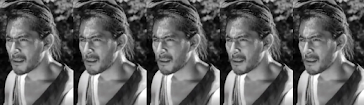
1. Toshiro Mifune in The Bad Sleep Well - Good predictions Anonymous, Oliver and Razor Mifune gives a brilliant portrayal of an atypical protagonist, who holds so much of himself in and puts on many faces to hide his true self and intentions. 

Best Scene: His wife visits him. 
Next: The Waiting Game. 

Wednesday, 11 January 2023

Alternate Best Actor 1931: James Cagney in The Public Enemy

James Cagney did not receive an Oscar nomination for portraying Tom Powers in The Public Enemy. 

The Public Enemy is a largely compelling gangster film if a bit episodic, about the rise of a street thug. 

Although James Cagney had been in other films prior to this one, The Public Enemy marked his breakout as a performer and established him as a star until his retirement. Cagney was one of the most talented performers of his era and much like another performer I'm going to write about soon, he shows a certain side of what can show real talent as a performer. Although often talent is most revealed by showing how one can play a number of different roles, which Cagney was also capable of, there is another talent in successfully finding variation in theoretically similar roles. Cagney was known as a gangster performer, but what is so remarkable is how well he differentiated his gangster turns. You have the sympathetic man falling into the wrong line of work in The Roaring Twenties, you have the hard-bitten but also heartbreaking depiction in Angels With Dirty Faces, and of course, you have the vile psychopathic, yet somehow still sympathetic, turn as Cody Jarrett in White Heat. All very different in their own ways, yet the consistent factor is they are all compelling in the hands of Cagney. Tom Powers of course is the original and I think a defining feature is the youth of Cagney's work here. Cagney looks young and was young. And with that, as much as Cagney was always an energetic performer, even in Ragtime, his manner here is different. It is less refined in a way, but in a way that wholly crafts its own charisma, that is all it is own even if a bit different from the more specific one Cagney ended up cultivating. There's a greater sort of pointed intensity that is just innately within his manner and just a potency about him that very much sets Tom apart. We meet Tom as a young man, and Cagney feels absolutely young. Almost a boy more than a man, particularly in the earliest scenes, and this sets up a most fascinating start for his portrayal of the character. 

An early scene that realizes Cagney's approach is when Tom's straight-laced brother confronts him about his early illicit activities, which Tom scoffs at. Cagney's delivery though has an innate viciousness, before Tom is punched down for his threats. The moment afterward is what I love so much with Cagney's just the way he looks with his hair up his eye blaring with hate, he looks more like an angry dog in some ways, and his kick of the door his brother exited it from is with this animalistic instinct in his manner. Tom interestingly is somehow even the most actively rotten gangster, as you even argue Cody was mentally ill, to begin with, and was raised by someone worse than himself, as Tom chooses this life more so than any of the other famous Cagney gangsters. His advancement is very different as Cagney only makes Tom more rotten as we go along. Summarized early on perhaps, and iconically so, as Tom treats his girlfriend with a grapefruit to the face for questioning. What makes the scene so brilliant is Cagney's performance of it. It is comical in a strange way, it is juvenile in the way Cagney bites down his tongue like a schoolyard kid doing a prank, yet still twisted in the intensity and sadism in his eyes. It's a one-of-a-kind moment of psychopathy because in all reality, as Cagney makes it entirely Tom as this man playing with his amorality as a kid would, having fun with it, in a decidedly evil way, even while still in a decidedly childish way. Cagney shows a man who loves it, even as he's filled with so much hate at the same time. There is something in his face here that often offers a demonic glint to it, as Tom is someone who's lost his way, rather it is a man who has found his way, unfortunately. 

The notion of childishness is pervasive within Cagney's overall approach which when you get to the heart of his Tom Powers, he's essentially a child playing the crook. Cagney's approach makes sense for the character, particularly when Tom goes and kills a horse that "killed" a benefactor in an accident. That moment of revenge has a petty manner, there isn't overt hate but rather a petulant urge that defines the moment. His later interactions with other women further this idea behind the real nature of Tom. Cagney portrays such shyness in the moments he shares with the more assertive gun moll Gwen (Jean Harlow). Cagney basically looks down in these scenes showing a little boy really trying to bring up the courage to ask the attractive girl, rather than any kind of gangster establishing any sort of dominance. This point is made all the more clear when another associate's girlfriend goes so far as to essentially date rape Tom. Cagney throughout the sequence presents essentially a meek nothingness within Tom when someone else takes control of him, particularly a woman. Cagney exudes nervousness and accentuates a boy without confidence towards the opposite sex, without any innate ability. He's not the gangster in charge of it, he's just a boy playing a game, a game that gets rather complicated when dealing with a woman, as he fails to understand women in any particular way. 

The gangster life itself reveals itself as a gang as Tom finds himself ill-suited to actually establishing himself as a man of power, as his friend is quickly killed in an attack leading Tom to attempt to deal with things himself. This leads to the second most iconic scene of the film as Tom decides to take on the other gang alone in the rain, walking to them through a city street. Cagney's performance is a major facet of what makes the moment memorable. Cagney's physical work is incredible because basically the way he even sort of puffs out his chest, the way he stares with a menacing glare, even his marching tough walk, it is all an act. The act of being more than he is and Tom isn't being a gangster, Cagney's playing Tom as Tom playing the part of the gangster. The reality of this becomes abundantly clear when Tom is somewhat successful but seriously wounded from the gunfight. Cagney's physical work is as impressive as he wanders around wounded and even his delivery about their shooting skills is again like a kid who's just been beaten at a game. In the final moment of this approach, we see his family visit Tom in the hospital, all showing concern for their son despite his previous actions. Although Cagney's physicality here is limited, being confined to the hospital bed, his delivery is fantastic in creating just this subdued even shy manner as he asks for forgiveness. Not as a man with a sense of needing redemption, but rather again the apology of a child asking for forgiveness. Although I think one could argue that Cagney shows some signs of working out his presence fully as a performer here, and while I think such a criticism would be legitimate, for me even that I think adds to the overall portrayal of his Tom Powers as a boy playing at the gangster. Cagney creates such a powerful presence on screen that is defined by physicality, however, there is so much more within his work in crafting a portrait of a different kind of lost youth essentially. It isn't the same dominating force he would later become as his more confident gangster in White Heat and "Angels", yet Cagney is wholly successful, and it is not surprising he established himself with this turn, in creating a captivating one of kind presence onscreen.  

Monday, 19 December 2022

Best Actor Backlog Volume 4

And the Overlooked Performances Are:

James Cagney in The Public Enemy

Toshiro Mifune in The Bad Sleep Well

Anthony Hopkins in A Doll's House

Alan Bates in Butley

Ray Milland in Alias Nick Beal

Tuesday, 8 May 2018

Alternate Best Actor 1957: Results

5. Ben Gazzara in The Strange One - I decided against granting this performance a full review as there is just not much to it. In one part it is a shaky film debut by Gazzara, something he thankfully shook off rather quickly in just a few years, that I would probably ascribe to weak direction. His performance though makes little use of really the cinematic perspective only garnering actions or reactions when absolutely needed for the character. His performance is oddly indifferent for what is as described to be by the other characters this near dictatorial character. There is no sense of charismatic persuasion, nor even a weasel trick in his work. He's mostly just there with the same dour expression until the very end where he gives a fairly standard melodramatic breakdown. This is part the fault of perhaps the adaptation which leaves too much merely stated about the character as the film fails to create a real sense of the cadet's toxic influence within the barracks. Gazzara though doesn't create this in the few instances he has a chance with either, and this is rather underwhelming work from an actor who thankfully quickly improved after this film.

Best Scene: The opening....I guess.
4. Rod Steiger in Across the Bridge - Despite some initial concerns, Steiger gives a rather effective depiction of a cold amorality, that slowly segues to a pained desperation as he naturally discovers the character's morality.

Best Scene: The dog across the bridge.
3. James Cagney - Man of the Thousand Faces - Cagney proves himself once again to be one of the very best actors of his period giving a moving, and more emotionally complex than you might except given the period, portrayal of Lon Chaney's personal struggles, but also a rather remarkable recreations of the man's legendary work that made him an early screen legend.

Best Scene: The handicapped man.
2. Victor Sjöström in Wild Strawberries - Sjöström's performance suggests an understanding of the film's nature giving a moving despite being a largely reactionary turn that grants an even greater power to the imagery and themes presented by the film's notable direction.

Best Scene: The dream of failure.
1. Robert Mitchum in Heaven Knows, Mr. Allison - Good prediction John Smith. Robert Mitchum gives one of his most charming performances that makes for a truly endearing action hero of sorts, but he goes even further in his rather effective realization of the changes of his character through his particularly potent and complex chemistry with his co-star.

Best Scene: Allison's apology.
Updated Overall

Updated Supporting Overall

Next Year: 1991 Lead

Sunday, 29 April 2018

Alternate Best Actor 1957: James Cagney in Man of a Thousand Faces

James Cagney did not receive an Oscar nomination for portraying Lon Chaney in Man of a Thousand Faces.

Man of a Thousand Faces, I suppose rather fittingly, is rather like Richard Attenborough's Chaplin, except a bit more era appropriate in terms of delving into the "dirt" so to speak, following a famed silent actor/director through his success on stage/screen, and the struggles in his personal relationships.

James Cagney was obviously no stranger to the biopic having most famously played George M. Cohan in his Oscar winning role in Yankee Doodle Dandy. Although this film is certainly still a biopic of its time, it does differ from that earlier film in delving into some darker material fitting to the famed horror actor. What may seem less fitting is perhaps the casting of Cagney who was about ten years older than when Chaney died when this film was made. Cagney overcomes any such second thoughts though just by being what he is, which is a great actor. Cagney though is particularly tailored made for the role as in some ways Cagney was a silent leading man, even in his great success in sound. Cagney though missed the silent era basically by just a year or so, however the sort of physicality needed for a silent actor was often one of his greatest assets as an actor. Cagney very much has what are the tools to play Chaney even if from the outset he doesn't seem like the first choice for the role, Cagney makes himself the first choice, just as quite honestly what he did with Cohan as a well. In that Cagney's way of specifically performing a "performance" is particularly important for this role as Chaney, as it was for Cohan.

Now part of this performance is just fulfilling the elements of a more typical biopic, although with some unique elements at least for the time. This gives Cagney very much the chance simply to deliver an, as per usual, terrific charismatic leading turn. The personal side of the story mostly involves his relationships with his two wives which also extend towards the relationship with his parents and later his son. His first relationship being problematic with his shallow first wife Cleva (Dorothy Malone) who is troubled by Chaney's parents who are both deaf. Cagney is fantastic in these interactions in portraying effectively an understood infatuation with his wife in the early scenes though that quickly develops to this growing frustration. He properly makes this more overt in the moments where she directly questions his "biology" essentially due to his parents, which Cagney's reaction realizes the sense of harm this does to Chaney. This further realized through the moments between Chaney and his parents alone which are brilliantly played by Cagney. He brings such a direct and pure sense of love for both parents. Obviously these are purely silent moments of sign language, and in each instance Cagney conveys the earnest care Chaney has for both of his parents.

That creates the problematic relationship with his wife, who can't get over Chaney's parents, which Cagney illustrates so well in each successive scene by slowly realizing this underlying distress towards her behavior. He creates the right inherent tension, and this sense of betrayal in every interaction to essentially realize the divorce in Chaney's mind even before it is realized. This is in stark contrast to the relationship between Chaney and his second wife Hazel (Judy Greer). In their scenes Cagney strikes up just a far unassuming yet much more genuine in a way sense of love between the two that both actors establish well as this simple given through their quiet yet potent interactions. This is similarly found in Chaney relationship to his son Creighton. Obviously there are many stages of this however Cagney is terrific in portraying actually more depth towards this than to even be expected from this type of biopic. In that in part he is very good in bringing such a sense of tenderness in the interactions with his son early on, bringing so much warmth in his eyes that he manages to make rather moving when Chaney briefly loses guardianship of him. That is not simplified though as Cagney later just as firmly portrays a real distaste, and anger, that he portrays as a reflection of his old frustrations when Creighton decides to see his biological mother against Chaney's wishes. Cagney doesn't hold back in these moments offering a proper intensity that is fitting towards the earlier troubled relationship, that in turn makes the later unconditional reconciliation with his son all the more moving.

As good as Cagney is in the more traditional narrative elements of the film, what makes this performance standout though is his recreation of what made Lon Chaney the titular man. Obviously Cagney is aided by some proper recreations of Chaney's old makeup but this performance goes far beyond that. Cagney's immense physicality as an actor heavily plays into this as he has that certain energy of his very being that essential to bringing Chaney's creations to life. Although I think the film itself would have benefited with a deeper delving into Chaney's career, nonetheless Cagney is brilliant in recreating the every specific scene depicted within his career. Cagney's physical work is outstanding as he never simplifies any of the creations we see. This includes his moments as this vaudeville clown, which is not a simple thing, but a fully bodied performance. He is both entertaining as seen, but also so good in creating this distinct style of performance so naturally. The same becomes true for Cagney in creating some of Chaney's famous roles including the Phantom of the opera and the Hunchback of Notre Dame. Cagney brings to life, albeit briefly, these characters so effectively to the point one could have imagined Cagney perhaps should have done more of such overly mannered physical turns in his own career. In each he creates the "creature" as a character more than just an image. My favorite single moment of this is Cagney's depiction of Chaney's portrayal of a handicapped man walking again. It is just a brilliantly performed piece of physical acting by Cagney as he creates the whole scene just within his own work, and is compelling just to see him perform this act. Although I obviously would have loved to have seen the film delve deeper into the man's life and career than the film does, Cagney is more than up to the task of the man even in this somewhat limited perspective. He is gives a striking turn that not only is a moving portrayal of the man, but a convincing depiction of what made him famous.

Thursday, 19 April 2018

Alternate Best Actor 1957

And the Nominees Were Not:

Ben Gazzara in The Strange One

Rod Steiger in Across the Bridge

Victor Sjöström in Wild Strawberries

Robert Mitchum in Heaven Knows, Mr. Allison 

James Cagney in Man of a Thousand Faces

Thursday, 10 March 2016

Alternate Best Actor 1939: Results

5. Henry Fonda in Young Mr. Lincoln - Fonda gives an atypical performance as Lincoln, but an effective one finding the right charisma within an unassuming personality.

Best Scene: Lincoln stops a Lynching.
4. Conrad Veidt in The Spy in Black - Veidt effectively humanizes his character making his German spy far more than just a villain who needs to be stopped.

Best Scene: The ending. 
3. Basil Rathbone in The Hound of Baskervilles - Rathbone earns his place as the most iconic Sherlock Holmes by giving a well rounded portrayal of the character. As he delivers the right command in the role, but also finds a certain humor which never undercuts the gravity of the situation.

Best Scene: Holmes's introduction
2. James Cagney in The Roaring Twenties - As per usual Cagney gives a strong portrait of an intimidating gangster, but also as per usual he ends up being surprisingly moving as well.

Best Scene: Eddie's final confrontation with George. 
1. Charles Laughton in The Hunchback of Notre Dame - Laughton gives a downright brilliant performance capturing the physicality needed for Quasimodo, and the emotional core of the character in heartbreaking detail.

Best Scene: "why was i not made of stone like thee"
Overall Ranking:
  1. Charles Laughton in The Hunchback of Notre Dame
  2. Clark Gable in Gone With The Wind
  3. James Stewart in Mr. Smith Goes to Washington
  4. Laurence Olivier in Wuthering Heights
  5. Robert Donat in Goodbye, Mr. Chips
  6. James Cagney in The Roaring Twenties
  7. Basil Rathbone in The Hound of Baskervilles
  8. Conrad Veidt in The Spy in Black
  9. William Powell in Another Thin Man 
  10. John Wayne in Stagecoach
  11. Cary Grant in Only Angels Have Wings 
  12. Basil Rathbone in The Adventures of Sherlock Holmes
  13. Henry Fonda in Young Mr. Lincoln
  14. Edmond O'Brien in The Hunchback of Notre Dame 
  15. William Holden in Golden Boy
  16. Stan Laurel in The Flying Deuces
  17. Oliver Hardy in The Flying Deuces
  18. Brian Aherne in Juarez
  19. Gary Cooper in Beau Geste
  20. Ray Milland in Beau Geste 
  21. John Clements in The Four Feathers
  22. Melvyn Douglas in Ninotchka
  23. Victor McLaglen in Gunga Din
  24. Nigel Bruce in The Hound of Baskervilles 
  25. Paul Muni in Juarez 
  26. Cary Grant in Gunga Din
  27. George Brent in Dark Victory
  28. Charles Boyer in Love Affair
  29. Henry Fonda in Drums Along the Mohawk
  30. Mickey Rooney in Babes in Arms
  31. Tyrone Power in Jesse James
  32. Robert Kent in Convict's Code
Next Year: 1939 Supporting

Saturday, 5 March 2016

Alternate Best Actor 1939: James Cagney in The Roaring Twenties

James Cagney did not receive an Oscar nomination for portraying Eddie Bartlett in The Roaring Twenties.

The Roaring Twenties is a pretty good gangster film about a man trying to make it to top through selling liquor during prohibition.

James Cagney obviously is no stranger to playing gangster roles, but this one's variation comes through the way Eddie Bartlett gets into the rackets to begin with. In The Public Enemy he was already an ambitious hood, in Angels with Dirty Faces he was literally the kid on the wrong side of the rail road track, and later on in White Heat he was already a psychopath. Here Eddie Bartlett starts out as a soldier in World War I, and only comes across crime as a way to make up for the time he lost while in a fox hole. In the early scenes of the film Cagney is good at just playing Eddie a pretty average guy who just is trying to survive in the war, and then later on attempts to find his place back in society which is harder than he expects. Cagney's very good in that he actually makes Eddie's path to crime a rather sympathetic one, by showing the path to be as almost something which he stumbles upon it. There is not an obvious ambition that Cagney portrays as Eddie begins to get involved in the business instead he shows it to be a very honest reaction of a man finding something he can do, no more than that.

Cagney does not compromise the unassuming beginning for Eddie even as he goes about becoming a gangster by setting up his own club, and furthering the illegal operations. Cagney plays Eddie from the start as a charming enough guy who seems conducive to friendship as long as you don't give him a reason to dislike you. There is definite likability that Cagney captures well with Eddie and I particularly like the chemistry he seems to strike up with anyone in his group particularly Eddie's old buddy Danny played by Frank McHugh and Eddie's bootlegging business partner Panama played by Gladys George. Cagney keeps Eddie, even when he is becoming a criminal, still  a rather endearing sort as he keeps the central idea behind the cheat of an unpopular law rather than Eddie being a full time villain in the least. As Cagney did in many of his gangster roles, Cagney does not condemn his character for having some moral corruption, despite him being condemned by the codes and standards of the time. Cagney never makes Eddie just a thug and instead presents him as someone one can easily identify with given the situation he is in.

Now this is not to say Cagney keeps Eddie a constant throughout the film by any means. As the film progresses and Eddie becomes more powerful as a gangster Cagney effectively suggests the way Eddie does slowly grow a bit of an ego through a willingness to embrace all elements of the life. Again Cagney does this in a gradual fashion as it never feels as though suddenly Eddie has betrayed himself and instead manages to show the way the lure of the criminal life harms him. Cagney's good as he begins to show that sort of gangster confidence that narrows his personality as a man to the point that he fails to notice a few things the first being that his girlfriend Jean (Priscilla Lane) does not really care for him and perhaps more pressing that his later business partner George (Humphrey Bogart) is a bit of psychopath. Cagney still brings the needed nuance to to Eddie importantly an importantly conveys the revulsion in Eddie as he sees just how cruel George is. However with Eddie's time in the life becomes a capable gangster himself, when dealing with his rivals in the industry. Now these scenes of course are always great for Cagney as he's absolutely in his comfort zone. No one quite threatens and stares down as well as Cagney, but he also earned this transition from the less intense Eddie we knew from the beginning of the film.

There is a bit of a change up for Eddie's story as a gangster as he actually is forced to drop out of the life from the end of prohibition and losing his money due to the stock market crash. To make it all worse Jean leaves him as well. Eddie is left with being a taxi driver as his only means of support. Cagney is terrific in showing just the worn out husk of a man that Eddie has becomes after losing everything that he believed made himself great. Cagney's very moving though by alluding within his sorrow there remains a better man than when he was the king of world. Now here is when the marvel of Cagney's work comes in this film but really all of his best gangster turns, White Heat included despite playing a psychopath. That being he allows Eddie to be more than just a series of gangster mannerisms and a tough exterior. Cagney as per usual reveals really the man within the story. He avoids just being just a two dimensional caricature for the sake of a morality lesson. Cagney finds something more and that's the case here too as he so brilliantly rips your heart right out and you did not even see it coming. By the end of the film Cagney has carried us through Eddie's story and really made him a man to care about despite his shortcomings. When Eddie must meet his fate as a gangster it is made surprisingly poignant because Cagney showed that he was always more than that.

Thursday, 3 March 2016

Alternate Best Actor 1939

And the Nominees Were Not:

Charles Laughton in The Hunchback of Notre Dame

Conrad Veidt in The Spy in Black

Henry Fonda in Young Mr. Lincoln

James Cagney in The Roaring Twenties

Basil Rathbone in The Hound of Baskervilles

Friday, 23 May 2014

Alternate Best Actor 1961: Results

5. Sidney Poitier in A Raisin in the Sun- Poitier tends go a little more theatrical at times than he needs to but for the most part Poitier gives an effective performance as a character that is far from the heroic roles he usually played.

Best Scene: The opening scene.
4. Clark Gable in The Misfits- Gable gives a moving portrayal of a individualistic cowboy past his prime that is worthy of being his swan song.

Best Scene: Gay goes to recapture the horses.
3. Dirk Bogarde in Victim- Although I do wish the film let Borgarde explore his character a little more, Bogarde still gives a powerful portrayal of a repressed homosexual.

Best Scene: Melville Farr reveals the truth to his wife.
2. James Cagney in One, Two, Three- James Cagney gives a very entertaining and incredibly energetic performance that could not be a better fit for the screwball comedy he leads.

Best Scene: MacNamara tries to solve all his problems in a few hours.
1. Toshiro Mifune in Yojimbo - Well I did not even need to have a second to think of my favorite performance by a leading actor from 1961. This is one of the very best performances from Toshiro Mifune creating one of the most memorable heroes in cinema.

Best Scene: The Final Duel.
Overall Rank:
  1. Tatsuya Nakadai - The Human Condition III: A Soldier's Prayer
  2. Toshiro Mifune in Yojimbo
  3. Stuart Whitman in The Mark
  4. Paul Newman in The Hustler
  5. Marcello Mastroianni in Divorce, Italian Style 
  6. James Cagney in One, Two, Three
  7. Dirk Bogarde in Victim
  8. Clark Gable in The Misfits
  9. Peter Cushing in Cash on Demand
  10. Alberto Sordi in A Difficult Life
  11. Vincent Price in The Pit and Pendulum
  12. Jean-Paul Belmondo in Leon Morin, Priest
  13. Anthony Quinn in Barabbas
  14. Marcello Mastroianni in La Notte
  15. Andre Morell in Cash on Demand
  16. Keiju Kobayashi Happiness of Us Alone
  17. Kirk Douglas in Town Without Pity
  18. Sidney Poitier in A Raisin in the Sun
  19. Spencer Tracy in Judgment At Nuremberg
  20. Alberto Sordi in The Best of Enemies
  21. David Niven in The Best of Enemies
  22. Masayuki Mori in The Other Woman
  23. Rock Hudson in Lover Come Back
  24. Tatsuya Nakadai in Immortal Love
  25. Peter Finch in No Love For Johnnie
  26. Franco Citti in Accattone
  27. Gregory Peck in The Guns of Navarone
  28. Anthony Perkins in Goodbye Again
  29. Toshiro Mifune in The Important Man
  30. Ebbe Rode in Harry and the Butler
  31. Marc Michel in Lola
  32. Loredana Detto in Il Posto
  33. Osvald Helmuth in Harry and the Butler
  34. Edward Judd in The Day the Earth Caught Fire
  35. Giorgio Albertazzi in Last Year in Marienbad
  36. Warren Beatty in Splendor in the Grass
  37. Yves Montand in Goodbye Again
  38. Marlon Brando in One Eyed Jacks
  39. Rod Taylor in 101 Dalmatians
  40. Burt Lancaster in The Young Savages
  41. Richard Widmark in Two Rode Together
  42. Alec Guinness in A Majority of One
  43. Cliff Robertson in Underworld USA
  44. Fred MacMurray in The Absent Minded Professor
  45. Charlton Heston in El Cid
  46. James Stewart in Two Rode Together
  47. Jerry Lewis in The Ladies Man
  48. Jeffrey Hunter in King of Kings
  49. George Peppard in Breakfast At Tiffany's
  50. Richard Beymer in West Side Story
  51. John Kerr in The Pit and Pendulum
  52. Hiroyuki Nagato in Pigs & Battleships
  53. Glenn Ford in Pocketful of Miracles
  54. Horst Buchholz in Fanny
  55. Warren Beatty in The Roman Spring of Mrs. Stone
Next Year: 1961 Supporting

Thursday, 22 May 2014

Alternate Best Actor 1961: James Cagney in One, Two, Three

James Cagney did not receive an Oscar nomination for portraying C.R. MacNamara in One, Two, Three.

One, Two, Three is an entertaining screwball comedy about a Coca-Cola executive in East Berlin whose life is turned upside down when he must entertain his bosses daughter who goes off and gets married to a communist from West Berlin.

James Cagney gives his final lead performance in this film as he retired from acting due to his bad experiences while making this film and he did not come back to film until 20 years later for his supporting role in Ragtime. Although Cagney evidently did not have not have a very good time making the film, apparently especially due to the behavior of chronic over actor Horst Buchholz, that really can't be noticed in Cagney's performance. The part of C.R. MacNamara is one of the prototypical screwball comedy lead which tends to be a business man of some sort who has to orchestra some crazy scheme while craziness occurs all around him because of this plan. That is certainly the case with MacNamara who has to deal with his bosses flighty daughter, her sudden communist husband, the Russians, his oddball German staff, and his own family.

This may be an aging Cagney technically speaking but he has much energy that he had back when he was doing Yankee Doodle Dandy. Cagney really is one of the perfect actors for a screwball comedy as he just is always on in his scenes. The film never stops in its comic absurdity and neither does Cagney. There is plenty of dialogue for Cagney to get through the film and Cagney is a master of it. He does lose a single beat as he develops the right rhythm for the dialogue. It is not stop and Cagney is more than up to the task to keep it going with that constant fluidity needed for this kind of film. A good screwball comedy really needs to never stop its motions and Cagney makes more than sure of that. Cagney knows exactly how to deliver every line with expert timing and precision really getting the most possible out of the comedic potential in the script.

Cagney is always a physical performer as he rarely ever seems restrained in his movements. There is of course all his dancing in Yankee Doodle Dandy, but even when he's a gangster there is certain something extra he brings to the way he beats someone or even the way he shoots his gun. Technically here Cagney is just playing a relatively normal guy who technically does not have to do too many physical actions throughout the course of the film. That does not matter though because Cagney still has this way of accentuating every gesture even the way he walks has something very special to it. This absolutely works brilliantly for the part and the film itself as it makes it as though MacNamara is moving just as quickly as everything that is going around him. Cagney in doing so makes sure that he is never overshadowed by anyone or anything in the film leading it all the way through.

This technically speaking is probably not the deepest character he ever played as MacNamara's objectives are clear from the beginning, and even his problems with his wife over his affairs with his secretaries is basically just played for laughs. That is not a problem though as Cagney's whole performance is played for laughs and Cagney certainly derives plenty of those out of the material. He acts like a torpedo and delivers the screwball comedy right through its course and doing his best to avoid any faults. Cagney almost makes Buchholz tolerable because just how much he runs circles around him in every scene they share together so he at least makes the scenes still enjoyable. Cagney here pretty much utilizes almost everything that makes him stand out so well as a performer and that works incredibly well into making this one very entertaining performance to watch.

Wednesday, 14 May 2014

Alternate Best Actor 1961

And the Nominees Were Not:

Clark Gable in The Misfits

Dirk Bogarde in Victim

Sidney Poitier in A Raisin in The Sun

Toshiro Mifune in Yojimbo

James Cagney in One, Two, Three

Wednesday, 27 March 2013

Best Supporting Actor 1935

Again 1935 is not a year where there are a clear five or even a clear four that stand clearly out as most films really focused heavily only on the leads such as in 39 Steps where the main villain gets only a very brief scene. Still I will cover a few performances quickly.

James Cagney in A Midsummer's Night Dream- James Cagney plays a self absorbed player Nick Bottom who eventually get a donkey head in place of his own. Where some of the actors fail to make the Shakespearean material come to life like Dick Powell or Mickey Rooney who is just terrible as Puck, Cagney though knows how to bring it to life quite brilliantly even though he is not the first actor that would come to mind as Shakespearean. Cagney though is a whole lot of fun in the role and the film really comes to life when he is on screen. He is very funny in his portrayal of Bottom as he fails to act out the part in his play doing it instead in a properly hammy fashion. Cagney surprisingly is not overshadowed by the scene with the Donkey head and actually manages to be very amusing through simply his voice and his physical reactions to dealing with the donkey head. It is Cagney who really makes the story come to life with a great deal of humor. This is a different type of role by Cagney and very well handled one actually. 4/5.

W.C. Fields in David Copperfield- W.C. Fields was usually known for his role as W.C. Fields the likable drunkard a comic star in the vein of Laurel and Hardy. Here in David Copperfield he plays a more traditional type of character as Mr. Micawber a kingly if somewhat incompetent business man who takes David under his wings. Fields nicely moves into the character actually and gives a nice performance as Mr. Micawber. He stresses above everything else the warmth of his character which Fields makes genuine, and he stands well as a wonderful character while outside of his presence David consistently suffers. This is not incredible work by any means but Fields stays in the character and brings out the tenderness that Mr. Micawber should have. 3.5/5

Charles Laughton in Les Miserables- Charles Laughton portrays Javert the inspector who stop at nothing to catch Jean Valjean. Laughton is pretty good in portraying the strictness of Javert's belief in the law system and is actually quite moving when he subtly suggests that without the law there is nothing to Javert. He is quite strong in both of his most pivotal scenes when Valjean lets him go and his last scene. He expresses the conflicting emotions of hate, disbelief and distress over Valjean's actions quite powerfully. He is not the very best Javert I have seen, that would be Philip Quast in the musical concert. I did feel that he could have been a little more imposing on the whole, and he is somewhat limited by the fact that the conflic between he and Valjean could have been done better in term of the film's direction. Nevertheless he is a strong Javert that meets the complexities of the character that some unfortunately ignore. 4/5.

Edward Arnold in Crime and Punishment- This version of Crime and Punishment is told very dispassionately in terms of direction but the performances by Peter Lorre as the man who believes in the right of murder to the superior sort, and Edward Arnold as the police inspector who becomes suspicious of him offers the film some life. This is not a great role, but Arnold shows his skills as an actor well here offering the right sort of presence in the role and being properly incisive that would make it believable that Peter Lorre's character would become as nervous as he does by the inspector's increasingly suspicious nature.  3/5

Ernest Thesiger in Bride of Frankenstein-Thesiger plays the evil mad scientist Doctor Pretorius who convinces doctor Frankenstein (Colin Clive) to make a bride for the monster. Thesiger takes the opposite of Clive's manic approach to the mad scientist instead he emphasizes the madness in his mind through his face. Thesiger plays his role with a certain flamboyancy all his own that has just a creepiness that oozes from him without effort. He makes the derangement of Pretorious quite unique, and is pretty effective in the part. He does not leave the biggest impression on the film, that would be Karloff, but he is quite good in the role. 3.5/5.

Overall Rank:
  1. James Cagney in A Midsummer's Night Dream
  2. Charles Laughton in Les Miserables
  3. Ernest Thesiger in Bride of Frankenstein
  4. Lionel Barrymore in Public Hero No. 1
  5. W.C. Fields in David Copperfield
  6. Herbert Marshall in The Dark Angel
  7. Edward Arnold in Crime and Punishment
  8. Frank McHugh in A Midsummer's Night Dream 
  9. Charles Ruggles in Ruggles of Red Gap
  10. Wallace Ford  in The Informer
  11. Joe E. Brown in A Midsummer's Night Dream
  12. Edward Everett Horton in Top Hat 
  13. Basil Rathbone in Anna Karenina
  14. Roland Young in Ruggles of Red Gap
  15. O.P. Heggie in Bride of Frankenstein 
  16. Donald Meek in The Whole Town's Talking 
  17. Joseph Schildkraut in The Crusades
  18. Eugene Pallette in The Ghost Goes West 
  19. Ted Healy in Mad Love 
  20. Joseph Calleia in Public Hero No. 1
  21. Godfrey Tearle in 39 Steps
  22. Reginald Owen in A Tale of Two Cities 
  23. Edward Brophy in Mad Love 
  24. Cedric Hardwicke in Becky Sharp
  25. William Harrigan in G Men
  26. Freddie Bartholomew in Anna Karenina
  27. Franchot Tone in Mutiny on the Bounty  
  28. Cedric Hardwicke in Les Miserables
  29. Lionel Barrymore in David Copperfield
  30. Guinn Williams in Private Worlds
  31. Edward Brophy in The Whole Town's Talking 
  32. Barton MacLane in G Men
  33. Colin Clive in Bride of Frankenstein
  34. David Manners in The Mystery of Edwin Drood
  35. Basil Rathbone in David Copperfield
  36. Donald Woods in A Tale of Two Cities  
  37. Nigel Bruce in Becky Sharp 
  38. Chico Marx in A Night at the Opera  
  39. Joel McCrea in Private Worlds
  40. C. Aubrey Smith in The Lives of the Bengal Lancers
  41. Gavin Gordon in Bride of Frankenstein
  42. Henry B. Walthall in A Tale of Two Cities
  43. Hay Petrie in The Ghost Goes West 
  44. Basil Rathbone in A Tale of Two Cities 
  45. Donald Calthrop in Scrooge 
  46. Charles Grapewin in Alice Adams
  47. Roland Young in David Copperfield
  48. Henry Stephenson in Captain Blood
  49. Harpo Marx in A Night at the Opera
  50. Basil Rathbone in Captain Blood
  51. Robert Armstrong in G Men
  52. Thurston Howell in The Black Room 
  53. Fred Stone in Alice Adams
  54. Victory Jory in A Midsummer's Night Dream
  55. Lionel Atwill in Captain Blood
  56. Oscar Asche in Scrooge
  57. Gyles Isham in Anna Karenina
  58. Hugh Sinclair in Escape Me Never
  59. Robert Allen in The Black Room
  60. Griffith Jones in Escape Me Never
  61. John Beal in Les Miserables
  62. Richard Cromwell in The Lives of the Bengal Lancers
  63. Dick Powell in A Midsummer's Night Dream
  64. Mickey Rooney in A Midsummer's Night Dream
Next Year: 1991 Lead

Tuesday, 12 March 2013

Alternate Best Actor 1949: Results

5. Trevor Howard in The Passionate Friends- Howard has a limited role, and is overshadowed by a co-star, but he does handle his own role well through his charming performance.

Best Scene: Steven tries to defend his affair.
4. Takashi Shimura in Stray Dog- Shimura creates an effective portrait of a veteran detective effortlessly portraying his character's substantial wisdom, and ability.

Best Scene: Detective Sato manages a baseball game. 
3. Dennis Price in Kind Hearts and Coronets- Price meets the difficult challenge of finding the right tone for his film through his dry and thoroughly witty performance.

Best Scene: Louis defends himself in court. 
2. James Cagney in White Heat- Cagney plays his most evil role with a great deal of energy and he especially stands out when his character goes over the edge.

Best Scene: Cody finds out that his mother is dead.

1. Toshiro Mifune in The Quiet Duel- Good Prediction Mark. Toshiro Mifune gives an excellent performance as man who sacrifices his happiness to do the right thing. It is a powerful poignant performance that shows Mifune's ability to excel in both quiet and flamboyant roles.

Best Scene: The doctor finally breaks down. 
Overall Rank:
  1. Toshiro Mifune in Stray Dog
  2. Toshiro Mifune in The Quiet Duel
  3. David Farrar in The Small Back Room 
  4. Chishū Ryū in Late Spring
  5. James Cagney in White Heat
  6. Kirk Douglas in Champion
  7. Ray Milland in Alias Nick Beal 
  8. Dennis Price in Kind Hearts and Coronets
  9. Takashi Shimura in Stray Dog
  10. Van Heflin in Act of Violence
  11. Joseph Cotton in The Third Man 
  12. John Wayne in She Wore a Yellow Ribbon
  13. Robert Ryan in The Set-up 
  14. Burt Lancaster in Criss Cross
  15. Montgomery Clift in The Heiress 
  16. James Mason in Caught 
  17. Jean Gabin in The Walls of Malapaga
  18. Spencer Tracy in Adam's Rib
  19. Howard Vernon in Le Silence de la Mer
  20. Anton Walbrook in The Queen of Hearts 
  21. Cary Grant in I Was A Male War Bride 
  22. James Stewart in The Stratton Story
  23. Wendell Corey in Holiday Affair
  24. Robert Ryan in Caught
  25. Edward G. Robinson in House of Strangers
  26. Robert Mitchum in The Big Steal
  27. Trevor Howard in The Passionate Friends
  28. Van Johnson in Battleground
  29. Broderick Crawford in All The King's Men
  30. Robert Mitchum in Holiday Affair
  31. Thomas Mitchell in Alias Nick Beal
  32. Dana Andrews in My Foolish Heart
  33. Basil Radford in Whiskey Galore! 
  34. Richard Conte in House of Strangers
  35. Ronald Reagan in The Hasty Heart
  36. John Wayne in Sands of Iwo Jima
  37. Gregory Peck in Twelve O'Clock High
  38. Joseph Cotten in Under Capricorn
  39. Richard Todd in The Hasty Heart
  40. Gene Kelly in On the Town
  41. Frank Sinatra in On the Town
  42. Claude Jarman Jr. in Intruder in the Dust
  43. John Ireland in All the King's Men
  44. Michael Wilding in Under Capricorn
  45. Budd Abbott in Africa Screams
  46. Lou Costello in Africa Screams
  47. Victor Mature in Samson and Delilah
  48. David Brian in Intruder in the Dust
Next Year: 1949 Supporting

Saturday, 9 March 2013

Alternate Best Actor 1949: James Cagney in White Heat

James Cagney did not receive an Oscar nomination for portraying Arthur "Cody" Jarrett in White Heat.

White Heat is a pretty effective crime thriller about an undercover cop (Edmond O'Brien) who attempts to bring down a psychotic criminal and his gang.

James Cagney is obviously no stranger to the gangster genre. He played a whole slew of criminals throughout his career. There is a difference here than compared to many other of his criminals and that is with the nature of Jarrett. Where in Angles With Dirty Faces he played a bad guy who had a soft spot somewhere down there. In White Heat Jarrett is someone rotten down to the core. Even something that could seem like a soft spot such as the closeness to his mother seems more disturbing that anything else. This is probably the evilest character Cagney ever played despite having played so many violent characters in his career. 

In Angles With Dirty Faces Cagney would go from a somewhat charming fellow but fall into the role of the menacing criminal when necessary. Cagney as Jarrett though never has the vicious criminal go away. He makes Cody as a constantly violent man, and his variation is that of becoming worse. He is on the edge to begin with, and Cagney plays it that the only place Cody can go is off the edge. Cagney takes this specific way of portraying of Cody and goes all the way with it. He never lets up on the menace with Cody here and that works. In the scenes where Cody is with his wife Cagney stays true to the character never letting up on the idea that Cody could just snap from the slightest thing.

This was that Cagney takes with Cody absolutely works in making him an effective, and importantly unpredictable villain. It is quite interesting to see Cagney to play a character of this all the way, and not hold back at all. Cagney is always good at being the villain because he always manages to be quite energetic in his evil, and here he has the same sort of appropriate fun in his portrayal. He puts a great deal of glee in his evil as Cody. He makes this portrayal memorable and it stands aside from his other performances of his somewhat similar characters by just how far he goes with his intensity and insanity here that really works in making Cody a memorable villain.

The highlights of Cagney's performance comes in the moments where the already psychotic Cody snaps. The first time it occurs when he is told that his mother is dead. Cagney is great in the scene as he shows Cody break down mentally, and physically in a fit of anger and heartbreak. It is a very powerful moment, and Cagney successfully shows the only place Cody really has left to go. The other time this occurs is at the very end of the film and this almost animal side of Cody comes out again when he is backed into a corner. Again Cagney is excellent showing the insanity of Cody fully that leaves without any sort restrains left leaving him truly deranged. It is incredible end to his performance that expresses his character's lunacy in one final extreme burst.

This is a very strong performance by Cagney particularly because the most expressive moments are actually his best. The reason these scenes work so well, besides the fact that Cagney just is fascinating to watch in them, is that he builds to them properly through his tense performance as Cody the rest of the film. Cagney really succeeds well with his performance here as Cody Jarrett. It is particularly remarkable the way Cagney makes Cody such a unique memorable character all in his own right despite playing so many similar characters. Cagney manages to do this so well by finding what makes Cody different from those other characters, and expressing theses differences brilliantly. Cagney honestly makes this film with his terrific villainous turn.

Wednesday, 6 March 2013

Alternate Best Actor 1949

And The Nominees Were Not:

Takashi Shimura in Stray Dog

Toshiro Mifune in The Quiet Duel

James Cagney in White Heat

Dennis Price in Kind Hearts and Coronets

Trevor Howard in The Passionate Friends