5. Steve McQueen in An Enemy of the People - McQueen doesn't fail entirely in his against type performance, but at the same time it isn't a complete success.
Best Scene: Speech.
4. Elliott Gould in The Silent Partner - Gould delivers a terrific atypical turn as the lead to a thriller who is a bit more calculating than the average "wrong man".
Best Scene: Needing a new key.
3. Harvey Keitel in Fingers - Keitel delivers a fantastic turn of a man defined by a strange pull between a world of art and a world of violence.
Best Scene: Visiting his mother.
2. Alan Bates in The Shout - Bates delivers a wholly a captivating portrayal of a man seemingly empowered by a life of mistakes, and a man broken by them.
Best Scene: The shout.
1. Richard Pryor in Blue Collar - Good predictions Michael McCarthy and GM. Pryor proves his abilities are far greater than he was given credit for, in his dynamic, intense, and downright powerful portrayal of a man fed-up by the system he is stuck in.
Best Scene: Explaining his compromise.
Updated Overall:
Next Year: 1978 Supporting (found a lineup)
Showing posts with label Elliott Gould. Show all posts
Monday, 13 April 2020
Sunday, 12 April 2020
Alternate Best Actor 1978: Elliott Gould in The Silent Partner
Elliott Gould did not receive an Oscar nomination for portraying Miles Cullen in The Silent Partner.
The Silent Partner is a very underrated rather good thriller about a bank teller secretly stealing money from the bank/a bank robber Harry Reikle (Christopher Plummer looking his most Michael Fassbenderesque) during a heist.
One of the features that makes this film standout within its genre is one Elliott Gould in the central role. Gould being one of the atypical leading men that helped define the seventies. Here in the role the "wrong man" more traditionally although the twist here, provided well by screenwriter Curtis Hanson, is here he is the right man in a way. We open though in the film with the more expected point of our Hitchcockian style hero, seemingly just minding his business as usual. Although this unusual hero, is indeed that, as we have Gould providing a bit of an off-beat presence, not quite as off-beat as his brilliant Philip Marlowe from The Long Goodbye, however similar in terms of the way Gould takes an atypical approach. This time again an effective approach in this sense, as he doesn't overdo the idiosyncrasy, however creates a proper sense of Miles as this bookworm type, most interested in a new fish than anything else. Gould is fantastic early on though is as much as he is effective as seeming a man of no importance on the cursory surface, we are immediately granted his greater intelligence and ability early on. This is almost entirely played in his eyes, and brilliantly so. Whether this be his quick calculating glance at an unused robbery note to the bank, or his examination of his attractive co-worker Julie (Susannah York) who he is acting as a false date for so his boss can attempt an affair with her, Gould grants a greater sense into the mind of Miles, even as he stays the slightly affable dullard for most.
The film doesn't stop to take a moment where Miles goes, okay I'm going to steal the bank money by tricking a robber, but we wholly granted a sense of why through Gould's nuanced performance. This in just fantastic moments of examining the man he knows is the robber as he shows the man breaking the idea down, and then conducting this certainty in his manner of a man who is deciding to take something for himself for once. This is where we get some really terrific work from Gould as he provides a different type of hero for a Hitchcockian style thriller, in that Miles isn't the tricked every-man, but rather the manipulative genius usually left to the villain. Gould though manages to create something notable in crafting the calculating method of Miles, largely through a lot internalized moments in his performance. This in he presents a man who rarely shuts off, with this careful examination of things, and does so much in his work in just reactionary moments that gives a different flavor to this thriller. This as even when we see him interact with the bank robber Reikel, and attempt to draw him away from his trail, there is this wonderful lively sense in Gould's work. This in showing a guy very much working on sort of outside his typical bounds with a bit of energy within that idea, but also very much the sense of assurance in the man in trying to make things go according to plan for himself. I love the way that Miles in a way would basically always have the upper hand if it weren't for the fact that Reikel, unlike Miles, is more than willing to use violence to get what he wants.
Now within this idea Gould also finds well the way Miles grows from the experience, as his success with the plot seems to grow this even greater confidence with a bit more willingness to step forward. Gould doesn't show a completely changed man, but rather a man who is more willing to put forth the qualities he already had properly. This is perhaps best shown in what was for me the true hidden gem within the film, that of the character of Elaine played by Celine Lomez. A woman who initially lies about being a worker at the rest home for Miles's ailing father, but Miles soon deciphers is working for Reikel. Miles though romances her anyways while revealing his cards to her and they genuinely fall in love. Gould has great chemistry with Lomez, and most importantly shows so well the sort of ability of Miles to be both charming while conducting himself with this specific calculation. Their chemistry goes beyond their romance though as the two end up scheming to help secure the money Miles stole again, in a scene that is a highlight of the film. This in the playful chemistry they have that is so terrific, with Gould playing back but also being careful, while Lomez puts on the part of a harmless bank costumer while trying to hide her greed. It's a marvelous scene that honestly makes their relationship work so well, that I do wish things had gone differently for the rest of the film. Not in a way that hurts the film, rather the two really strike up an essential endearing connection that wished the two could've ridden off into the sunset together. This is, that while he did find good chemistry with York, which is more compromised naturally as Gould shows Miles to be always a bit compromised in their scenes together, it just doesn't have that spark he has with Lomez. Not a criticism of the film, or Gould's performance however. Now as terrific as Gould is finding this sort of new approach for the thriller hero, he is also great in the more expected material. This in just pulling us into Miles, as the great "heroic" performances should, and most importantly developing each stage of the plot. This in creating the real human connection in reflecting the fear and tension of dealing with Reikel at times, as well as the heartbreak and anger in reaction towards the man's more heinous actions. Gould draws us into Miles's experience like the best Hitchcockian style heroes, and pulls us right into this plot in the best of ways. This is a very strong performance from Elliott Gould as he does offer a bit of a nice variation on this type of character, while also fulfilling the needed expectations of such a role.
The Silent Partner is a very underrated rather good thriller about a bank teller secretly stealing money from the bank/a bank robber Harry Reikle (Christopher Plummer looking his most Michael Fassbenderesque) during a heist.
One of the features that makes this film standout within its genre is one Elliott Gould in the central role. Gould being one of the atypical leading men that helped define the seventies. Here in the role the "wrong man" more traditionally although the twist here, provided well by screenwriter Curtis Hanson, is here he is the right man in a way. We open though in the film with the more expected point of our Hitchcockian style hero, seemingly just minding his business as usual. Although this unusual hero, is indeed that, as we have Gould providing a bit of an off-beat presence, not quite as off-beat as his brilliant Philip Marlowe from The Long Goodbye, however similar in terms of the way Gould takes an atypical approach. This time again an effective approach in this sense, as he doesn't overdo the idiosyncrasy, however creates a proper sense of Miles as this bookworm type, most interested in a new fish than anything else. Gould is fantastic early on though is as much as he is effective as seeming a man of no importance on the cursory surface, we are immediately granted his greater intelligence and ability early on. This is almost entirely played in his eyes, and brilliantly so. Whether this be his quick calculating glance at an unused robbery note to the bank, or his examination of his attractive co-worker Julie (Susannah York) who he is acting as a false date for so his boss can attempt an affair with her, Gould grants a greater sense into the mind of Miles, even as he stays the slightly affable dullard for most.
The film doesn't stop to take a moment where Miles goes, okay I'm going to steal the bank money by tricking a robber, but we wholly granted a sense of why through Gould's nuanced performance. This in just fantastic moments of examining the man he knows is the robber as he shows the man breaking the idea down, and then conducting this certainty in his manner of a man who is deciding to take something for himself for once. This is where we get some really terrific work from Gould as he provides a different type of hero for a Hitchcockian style thriller, in that Miles isn't the tricked every-man, but rather the manipulative genius usually left to the villain. Gould though manages to create something notable in crafting the calculating method of Miles, largely through a lot internalized moments in his performance. This in he presents a man who rarely shuts off, with this careful examination of things, and does so much in his work in just reactionary moments that gives a different flavor to this thriller. This as even when we see him interact with the bank robber Reikel, and attempt to draw him away from his trail, there is this wonderful lively sense in Gould's work. This in showing a guy very much working on sort of outside his typical bounds with a bit of energy within that idea, but also very much the sense of assurance in the man in trying to make things go according to plan for himself. I love the way that Miles in a way would basically always have the upper hand if it weren't for the fact that Reikel, unlike Miles, is more than willing to use violence to get what he wants.
Now within this idea Gould also finds well the way Miles grows from the experience, as his success with the plot seems to grow this even greater confidence with a bit more willingness to step forward. Gould doesn't show a completely changed man, but rather a man who is more willing to put forth the qualities he already had properly. This is perhaps best shown in what was for me the true hidden gem within the film, that of the character of Elaine played by Celine Lomez. A woman who initially lies about being a worker at the rest home for Miles's ailing father, but Miles soon deciphers is working for Reikel. Miles though romances her anyways while revealing his cards to her and they genuinely fall in love. Gould has great chemistry with Lomez, and most importantly shows so well the sort of ability of Miles to be both charming while conducting himself with this specific calculation. Their chemistry goes beyond their romance though as the two end up scheming to help secure the money Miles stole again, in a scene that is a highlight of the film. This in the playful chemistry they have that is so terrific, with Gould playing back but also being careful, while Lomez puts on the part of a harmless bank costumer while trying to hide her greed. It's a marvelous scene that honestly makes their relationship work so well, that I do wish things had gone differently for the rest of the film. Not in a way that hurts the film, rather the two really strike up an essential endearing connection that wished the two could've ridden off into the sunset together. This is, that while he did find good chemistry with York, which is more compromised naturally as Gould shows Miles to be always a bit compromised in their scenes together, it just doesn't have that spark he has with Lomez. Not a criticism of the film, or Gould's performance however. Now as terrific as Gould is finding this sort of new approach for the thriller hero, he is also great in the more expected material. This in just pulling us into Miles, as the great "heroic" performances should, and most importantly developing each stage of the plot. This in creating the real human connection in reflecting the fear and tension of dealing with Reikel at times, as well as the heartbreak and anger in reaction towards the man's more heinous actions. Gould draws us into Miles's experience like the best Hitchcockian style heroes, and pulls us right into this plot in the best of ways. This is a very strong performance from Elliott Gould as he does offer a bit of a nice variation on this type of character, while also fulfilling the needed expectations of such a role.
Thursday, 2 April 2020
Alternate Best Actor 1978
And the Nominees Were Not:
Harvey Keitel in Fingers
Richard Pryor in Blue Collar
Alan Bates in The Shout
Elliott Gould in The Silent Partner
Steve McQueen in An Enemy of the People
Harvey Keitel in Fingers
Richard Pryor in Blue Collar
Alan Bates in The Shout
Elliott Gould in The Silent Partner
Steve McQueen in An Enemy of the People
Tuesday, 28 March 2017
Alternate Best Actor 1973: Results
5. Robert Mitchum in The Friends of Eddie Coyle - Well this is unpleasant. I hate putting
any of these performances "last" because they're all great, but I have
to choose one. Anyway Mitchum gives a great performance giving this quietly devastating portrait of a man who essentially wasted his life.
Best Scene: "what a future he’s got, huh"
4. Robert Shaw in The Hireling- Shaw gives a heartbreaking performance here showing a different shade of his talent in his powerful realization of a lonely man seeking love.
Best Scene: Declaration of Love.
3. Donald Sutherland in Don't Look Now - Sutherland's performance is both an unforgettable depiction of man struggling with his grief and also so effectively helps to realize the spine chilling horror of the film.
Best Scene: Seeing the Inspector.
2. Elliott Gould in The Long Goodbye - Gould gives a brilliantly funny and always compelling performance in his rather contradictory yet most effective take on Phillip Marlowe.
Best Scene: "I even lost my cat"
1. Edward Woodward in The Wicker Man - Edward Woodward gives a masterful performance that works as normalcy against the unknown, as a portrait of zealous if foolish conviction, and harrowing depiction of facing unspeakable horrors. This year frankly deserves multiple winners by the sheer quality of so many of the leading turns.
Best Scene: Seeing the titular man.
Updated Overall
Next: 1973 Supporting
Best Scene: "what a future he’s got, huh"
4. Robert Shaw in The Hireling- Shaw gives a heartbreaking performance here showing a different shade of his talent in his powerful realization of a lonely man seeking love.
Best Scene: Declaration of Love.
3. Donald Sutherland in Don't Look Now - Sutherland's performance is both an unforgettable depiction of man struggling with his grief and also so effectively helps to realize the spine chilling horror of the film.
Best Scene: Seeing the Inspector.
2. Elliott Gould in The Long Goodbye - Gould gives a brilliantly funny and always compelling performance in his rather contradictory yet most effective take on Phillip Marlowe.
Best Scene: "I even lost my cat"
1. Edward Woodward in The Wicker Man - Edward Woodward gives a masterful performance that works as normalcy against the unknown, as a portrait of zealous if foolish conviction, and harrowing depiction of facing unspeakable horrors. This year frankly deserves multiple winners by the sheer quality of so many of the leading turns.
Best Scene: Seeing the titular man.
Updated Overall
Next: 1973 Supporting
Tuesday, 21 March 2017
Alternate Best Actor 1973: Elliott Gould in The Long Goodbye
Elliott Gould did not receive an Oscar nomination for portraying Philip Marlowe in The Long Goodbye.
The Long Goodbye is a terrific neo noir by Robert Altman that modernizes private detective Philip Marlowe.
Elliot Gould after his breakout in the late 60's found himself in a career slump due to his behavior on the set of the film that eventually became What's Up Doc, and I would imagine his performance in Ingmar Bergman's The Touch did not help matters. Robert Altman though cast him here as Philip Marlowe which seems like a rather curious casting choice on paper. The role of Philip Malowe is usually reserved for tough guy actors like Humphrey Bogart, James Garner, James Caan, and even later on in the seventies Robert Mitchum. This is not a traditional representation of the role though, and not simply because it was given a contemporary setting. The film opens not with Marlowe taking care of a case but rather dealing with his cat who has gotten hungry in the middle of the night. This Marlowe lives in a lonely apartment but with a group of frequently nude hippie women live across the way from him. Don't take that as a glamorous setting because it's really not.
Marlowe, after attempting and failing to find the right cat food, still doesn't get a case just request to drive his friend Terry, who claims to have fought with his wife, to Tijuana. Gould casting suddenly starts to make sense as this is not the Marlowe of Bogart, and I'd say may have influenced Doc Sportello of Inherent Vice. Gould does not seem like a fit for a tough guy, and his performance isn't as a tough guy. The thing is he isn't separate entirely from the character either, he is Philip Marlowe but entirely Elliott Gould's Philip Marlowe. To explain, Gould's performance is not without the traits of Marlowe, and what is set up around the character. As required of a P.I. in the forties he smokes in basically every scene, and he always wears a suit. Again those features of Marlowe though not exactly Gould's performance per se. Gould's performance feels as though he is a Marlowe though is perhaps more of as an actual private detective rather than the hero of a detective novel.
That is not to say that this what one would charge as a "realistic" performance, not that it is fantastical though. Gould gives us perhaps the Marlowe of being in the life as he is and would be in as a private detective. Gould's delivery often is curious yet intriguing to the character in as he drifts out of conversations with those who really are not interested in him all that much. It's something brilliant though in this and the way Gould plays it. In that maybe the tough guy Marlowe might say similair things and seem "cool", the way Gould suggests perhaps a certain loneliness in this act as thought he man's life is made of these cursory interactions. Of course Marlowe has his time when he does get a bit more attention, where he fits in the role as the protagonist of a film noir. That begins as the cops come by the question Marlowe about the disappearance of his friend who asked for the ride, and the brutal death of that man's wife.
As Marlowe is arrested, on a trumped up charge, we are given a Marlowe perhaps more in his element as he deals with the police. Gould is rather hilarious in this scene as he kind of talks around the cops and makes fun of them for their severe attitude. Again though there something genius in how Gould approaches this in again he is the film noir hero, but he's also not at all. This is also apparent in his scenes where he deals with a strange vicious criminal Augustine (Mark Rydell) and his gang who wants money that was being kept by Terry which Augustine thinks was given to Marlowe. Gould seems to fulfill kind of the typical way of acting above those interrogating him and trying to menace him. As typical he's pretty calm and collected, kind of above it all while showing a certain disdain towards them. Gould even fulfills the requirement in that he's indeed rather enjoyable to watch in these scenes, but all of it is not truly in the normal way. Instead of being the master of the room, Gould plays it somewhat adrift as someone really would come across as who is not taking such a situation seriously. It is so different yet it still absolutely works.
That also is again not how Gould plays every scene as the detective, he carefully only plays scenes that way when technically the situation is a waste of time for Marlowe. We are also given scenes where we actually see him in action such as when he is hired to find a writer, Roger Wade (Sterling Hayden), by the man's wife Eileen Wade. Marlowe quickly finds the husband at a shady detox center, and even sneaks in to help the man escape. These scenes are actually a brilliant bit of directing by Altman, though Gould is important within them. Altman though directs them in this purposefully kind of low key way while Gould portrays more of that assertiveness of behavior that would be more fitting to more of closeups with some more pronounced edits. Marlowe saves the man and it soon becomes as though there is no mystery to anyone besides Marlowe. Here's kind of a part of the key of Gould's whole performance that makes it take a step further than it might have been as this approach could've been parody but it's not. It's something truly fascinating.
Gould again is adrift in those meaningless, to him, interrogation scenes but he's not that way towards the mystery that involves people that Marlowe does care about. Gould does bring this palatable undercurrent of an emotional connection there. When he quizzes Wade's wife on knowing more than she acts as though she does, there is a severity in his voice, and Gould makes Marlowe as someone who cares. There is something even more to this as again he's being the film noir hero, but this takes on yet another purpose that is surprisingly poignant. In that Gould again shows that Marlowe does care and the way he does, while no one else seems to, is made rather moving even. The performance in a way I found to be covert in its emotional impact. Now it was already an entertaining engaging work, but it's more. There's an incredible scene that closes the film where Marlowe finally "solves his problem". It is very cathartic moment as Gould attaches the emotion within that goes beyond just getting the villain so to speak. Gould reflects a further attachment of the personal betrayal involved but also the satisfaction of essentially being truly "Philip Marlowe". What Gould does here is this remarkable contradiction of a characterization. In that Gould has the features of that noir detective, Philip Marlowe. He's in the seventies though, and he's not exactly as everyone else should be yet he feels entirely natural to himself because of Gould's work. Gould never falls into caricature, but makes sense of this contradiction of character. This is such daring work that absolutely succeeds in terms of creating something completely new out of something old. I loved this performance.
The Long Goodbye is a terrific neo noir by Robert Altman that modernizes private detective Philip Marlowe.
Elliot Gould after his breakout in the late 60's found himself in a career slump due to his behavior on the set of the film that eventually became What's Up Doc, and I would imagine his performance in Ingmar Bergman's The Touch did not help matters. Robert Altman though cast him here as Philip Marlowe which seems like a rather curious casting choice on paper. The role of Philip Malowe is usually reserved for tough guy actors like Humphrey Bogart, James Garner, James Caan, and even later on in the seventies Robert Mitchum. This is not a traditional representation of the role though, and not simply because it was given a contemporary setting. The film opens not with Marlowe taking care of a case but rather dealing with his cat who has gotten hungry in the middle of the night. This Marlowe lives in a lonely apartment but with a group of frequently nude hippie women live across the way from him. Don't take that as a glamorous setting because it's really not.
Marlowe, after attempting and failing to find the right cat food, still doesn't get a case just request to drive his friend Terry, who claims to have fought with his wife, to Tijuana. Gould casting suddenly starts to make sense as this is not the Marlowe of Bogart, and I'd say may have influenced Doc Sportello of Inherent Vice. Gould does not seem like a fit for a tough guy, and his performance isn't as a tough guy. The thing is he isn't separate entirely from the character either, he is Philip Marlowe but entirely Elliott Gould's Philip Marlowe. To explain, Gould's performance is not without the traits of Marlowe, and what is set up around the character. As required of a P.I. in the forties he smokes in basically every scene, and he always wears a suit. Again those features of Marlowe though not exactly Gould's performance per se. Gould's performance feels as though he is a Marlowe though is perhaps more of as an actual private detective rather than the hero of a detective novel.
That is not to say that this what one would charge as a "realistic" performance, not that it is fantastical though. Gould gives us perhaps the Marlowe of being in the life as he is and would be in as a private detective. Gould's delivery often is curious yet intriguing to the character in as he drifts out of conversations with those who really are not interested in him all that much. It's something brilliant though in this and the way Gould plays it. In that maybe the tough guy Marlowe might say similair things and seem "cool", the way Gould suggests perhaps a certain loneliness in this act as thought he man's life is made of these cursory interactions. Of course Marlowe has his time when he does get a bit more attention, where he fits in the role as the protagonist of a film noir. That begins as the cops come by the question Marlowe about the disappearance of his friend who asked for the ride, and the brutal death of that man's wife.
As Marlowe is arrested, on a trumped up charge, we are given a Marlowe perhaps more in his element as he deals with the police. Gould is rather hilarious in this scene as he kind of talks around the cops and makes fun of them for their severe attitude. Again though there something genius in how Gould approaches this in again he is the film noir hero, but he's also not at all. This is also apparent in his scenes where he deals with a strange vicious criminal Augustine (Mark Rydell) and his gang who wants money that was being kept by Terry which Augustine thinks was given to Marlowe. Gould seems to fulfill kind of the typical way of acting above those interrogating him and trying to menace him. As typical he's pretty calm and collected, kind of above it all while showing a certain disdain towards them. Gould even fulfills the requirement in that he's indeed rather enjoyable to watch in these scenes, but all of it is not truly in the normal way. Instead of being the master of the room, Gould plays it somewhat adrift as someone really would come across as who is not taking such a situation seriously. It is so different yet it still absolutely works.
That also is again not how Gould plays every scene as the detective, he carefully only plays scenes that way when technically the situation is a waste of time for Marlowe. We are also given scenes where we actually see him in action such as when he is hired to find a writer, Roger Wade (Sterling Hayden), by the man's wife Eileen Wade. Marlowe quickly finds the husband at a shady detox center, and even sneaks in to help the man escape. These scenes are actually a brilliant bit of directing by Altman, though Gould is important within them. Altman though directs them in this purposefully kind of low key way while Gould portrays more of that assertiveness of behavior that would be more fitting to more of closeups with some more pronounced edits. Marlowe saves the man and it soon becomes as though there is no mystery to anyone besides Marlowe. Here's kind of a part of the key of Gould's whole performance that makes it take a step further than it might have been as this approach could've been parody but it's not. It's something truly fascinating.
Gould again is adrift in those meaningless, to him, interrogation scenes but he's not that way towards the mystery that involves people that Marlowe does care about. Gould does bring this palatable undercurrent of an emotional connection there. When he quizzes Wade's wife on knowing more than she acts as though she does, there is a severity in his voice, and Gould makes Marlowe as someone who cares. There is something even more to this as again he's being the film noir hero, but this takes on yet another purpose that is surprisingly poignant. In that Gould again shows that Marlowe does care and the way he does, while no one else seems to, is made rather moving even. The performance in a way I found to be covert in its emotional impact. Now it was already an entertaining engaging work, but it's more. There's an incredible scene that closes the film where Marlowe finally "solves his problem". It is very cathartic moment as Gould attaches the emotion within that goes beyond just getting the villain so to speak. Gould reflects a further attachment of the personal betrayal involved but also the satisfaction of essentially being truly "Philip Marlowe". What Gould does here is this remarkable contradiction of a characterization. In that Gould has the features of that noir detective, Philip Marlowe. He's in the seventies though, and he's not exactly as everyone else should be yet he feels entirely natural to himself because of Gould's work. Gould never falls into caricature, but makes sense of this contradiction of character. This is such daring work that absolutely succeeds in terms of creating something completely new out of something old. I loved this performance.
Monday, 20 March 2017
Alternate Best Actor 1973
And the Nominees Were Not:
Donald Sutherland in Don't Look Now
Robert Shaw in The Hireling
Robert Mitchum in The Friends of Eddie Coyle
Elliott Gould in The Long Goodbye
Edward Woodward in The Wicker Man
Donald Sutherland in Don't Look Now
Robert Shaw in The Hireling
Robert Mitchum in The Friends of Eddie Coyle
Elliott Gould in The Long Goodbye
Edward Woodward in The Wicker Man
Thursday, 26 May 2016
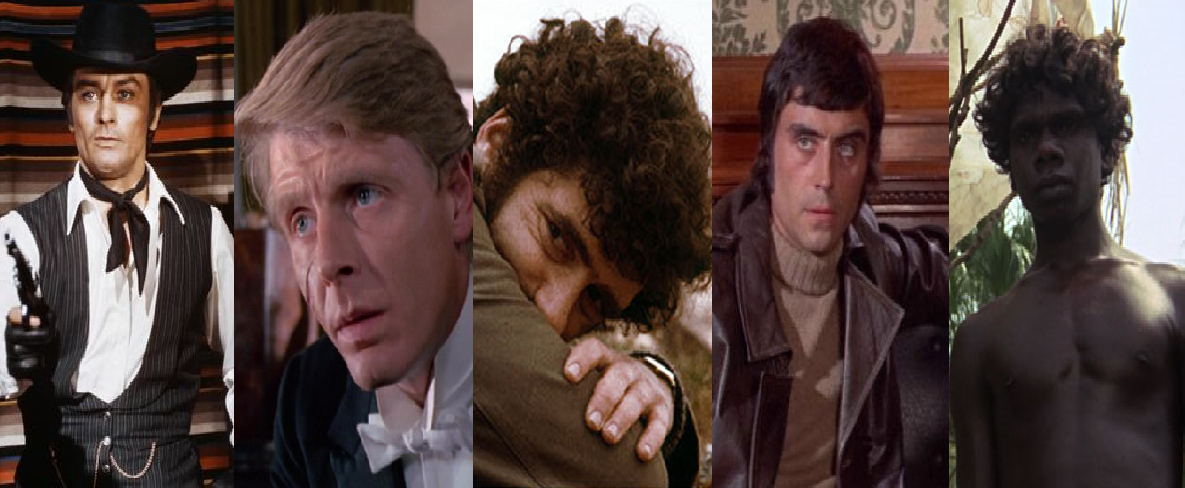
Alternate Best Supporting Actor 1971: Results
5. Elliot Gould in The Touch - A downright atrocious performance that fails on every level, and is quite bizarre to witness in a Ingmar Bergman film.
Best Scene: When he's off-screen.
4. David Gulpilil in Walkabout - Gulpilil does not have a great deal to work with, but gives an honest portrayal of his character.
Best Scene: The failed mating ritual.
3. Edward Fox in The Go-Between - Fox manages to be more than background largely in a single scene where he brilliantly realizes exactly what his character is going through.
Best Scene: Leo asks Hugh about Ted.
2. Ian McShane in Villain - McShane, despite dealing with a terrible co-star, gives an engaging and complex portrait of a gangster's closest associate.
Best Scene: Vic goes to Wolfe after his mother dies.
1. Alain Delon in Red Sun - Delon creates a memorable and appropriately smooth villain who acts as worthy foe for the all-star pairing at the center of the film, which is quite an achievement.
Best Scene: Catching Kuroda and Link off guard.
Updated Overall Rank
Next Year: 1985 Lead
Best Scene: When he's off-screen.
4. David Gulpilil in Walkabout - Gulpilil does not have a great deal to work with, but gives an honest portrayal of his character.
Best Scene: The failed mating ritual.
3. Edward Fox in The Go-Between - Fox manages to be more than background largely in a single scene where he brilliantly realizes exactly what his character is going through.
Best Scene: Leo asks Hugh about Ted.
2. Ian McShane in Villain - McShane, despite dealing with a terrible co-star, gives an engaging and complex portrait of a gangster's closest associate.
Best Scene: Vic goes to Wolfe after his mother dies.
1. Alain Delon in Red Sun - Delon creates a memorable and appropriately smooth villain who acts as worthy foe for the all-star pairing at the center of the film, which is quite an achievement.
Best Scene: Catching Kuroda and Link off guard.
Updated Overall Rank
Next Year: 1985 Lead
Wednesday, 4 May 2016
Alternate Best Supporting Actor 1971
And the Nominees Were Not:
Alain Delon in Red Sun
Edward Fox in The Go-Between
Elliott Gould in The Touch
Ian McShane in Villain
David Gulpilil in Walkabout
Alain Delon in Red Sun
Edward Fox in The Go-Between
Elliott Gould in The Touch
Ian McShane in Villain
David Gulpilil in Walkabout
Tuesday, 13 March 2012
Best Supporting Actor 1969: Results
5. Anthony Quayle in Anne of the Thousand Days- Quayle gives a functional performance that turns Cardinal Wolsey into a basically a yes man.
4. Rupert Crosse in The Reivers- Crosse gives a charmingly wacky performance as well as combined with a more serious performance well by never overdoing either aspect of his character.
3. Elliot Gould in Bob & Carol & Ted & Alice- Gould gives an enjoyable and effective performance as he realizes the many facets of his character's confusion.
2. Jack Nicholson in Easy Rider- Nicholson as usual for this period gives a very strong performance that has that unique magnetic quality that is distinctly Nicholson. It never quite reaches the heights of his later work in the seventies but it is an excellent precursor to them.
1. Gig Young in They Shoot Horses, Don't They?- Gig Young easily gives the strongest performance this year. Gig Young's performance is terrific flawless work that realizes the master manipulator aspects of his character as well as the energetic emcee. He effective brings all the facets of his character into one brilliant characterization that never has a simple moment, and creates a fascinating memorable man in the role of Rocky.
4. Rupert Crosse in The Reivers- Crosse gives a charmingly wacky performance as well as combined with a more serious performance well by never overdoing either aspect of his character.
3. Elliot Gould in Bob & Carol & Ted & Alice- Gould gives an enjoyable and effective performance as he realizes the many facets of his character's confusion.
2. Jack Nicholson in Easy Rider- Nicholson as usual for this period gives a very strong performance that has that unique magnetic quality that is distinctly Nicholson. It never quite reaches the heights of his later work in the seventies but it is an excellent precursor to them.
1. Gig Young in They Shoot Horses, Don't They?- Gig Young easily gives the strongest performance this year. Gig Young's performance is terrific flawless work that realizes the master manipulator aspects of his character as well as the energetic emcee. He effective brings all the facets of his character into one brilliant characterization that never has a simple moment, and creates a fascinating memorable man in the role of Rocky.
Best Supporting Actor 1969: Elliot Gould in Bob & Carol & Ted & Alice
Elliot Gould received his only Oscar nomination so far for portraying the titular Ted Henderson in Bob & Carol & Ted & Alice.
Bob & Carol & Ted & Alice is about Bob and Carol who discover and wish to practice free love even though they find difficulties in it, and their married friends Ted and Alice who have very mixed feelings over Bob and Carol's actions.
Dyan Cannon as Alice and Elliot Gould as Ted were both nominated in the supporting category in the film but they are just as much of leads as Natalie Wood and Robert Culp are as Carol and Bob since it is as much about the free love sharing couple as the one reacting to it. It certainly makes since though that the two were nominated for their roles since the academy most likely did indeed prefer the greater degree of emotions presented by the two in their performances, since for a great deal of the time Wood and Culp are just rather sure of themselves.
Elliot Gould's performance is mostly on one note of many notes really. One is not really a problem with this performance though as the one note Gould keeps with for most of his performance is confusion, and the many facets that come with this confusion. Ted reacts to Carol and Bob actions with a great deal of mixed emotions that do not leave him as a particularly clear thinking individual. Gould shows Ted reactions to Carol and Bob quite well showing a mix of bemusement, as well as intrigue that only really causes confusion within himself as well as his feelings to his relationship with his wife Alice.
Gould goes for a semi comic approach with his performance as Ted that actually does work effectively for his character. It is never that he goes over the top or even obviously for a laugh even, but Gould never makes Ted confusion overbearing, but rather something a bit more lighthearted. Gould never makes Ted really sure of himself in anyway and derives from the natural humor that comes from that. Gould never makes Ted into someone who knows what he is doing or what is going on even for much of a moment, even when he does have some confidence it comes from a confused effort.
Gould stays consistently inconsistent with his performance effectively throughout. Ted does undergo changes throughout slowly becoming more impressed by the ideas of free love, but Gould performance works even as he moves closer to the idea of having an affair for example he is never assured of the idea or if fully understands why exactly he desires to even do that exactly. Gould gives a pretty good performance actually in his way despite the challenge of his character's confusion, but Gould realizes the confusion very well. Although he never achieves the heights of Dyan Cannon's performance as Alice, who is by far the best of the far, he does give humorously effective portrayal.
Bob & Carol & Ted & Alice is about Bob and Carol who discover and wish to practice free love even though they find difficulties in it, and their married friends Ted and Alice who have very mixed feelings over Bob and Carol's actions.
Dyan Cannon as Alice and Elliot Gould as Ted were both nominated in the supporting category in the film but they are just as much of leads as Natalie Wood and Robert Culp are as Carol and Bob since it is as much about the free love sharing couple as the one reacting to it. It certainly makes since though that the two were nominated for their roles since the academy most likely did indeed prefer the greater degree of emotions presented by the two in their performances, since for a great deal of the time Wood and Culp are just rather sure of themselves.
Elliot Gould's performance is mostly on one note of many notes really. One is not really a problem with this performance though as the one note Gould keeps with for most of his performance is confusion, and the many facets that come with this confusion. Ted reacts to Carol and Bob actions with a great deal of mixed emotions that do not leave him as a particularly clear thinking individual. Gould shows Ted reactions to Carol and Bob quite well showing a mix of bemusement, as well as intrigue that only really causes confusion within himself as well as his feelings to his relationship with his wife Alice.
Gould goes for a semi comic approach with his performance as Ted that actually does work effectively for his character. It is never that he goes over the top or even obviously for a laugh even, but Gould never makes Ted confusion overbearing, but rather something a bit more lighthearted. Gould never makes Ted really sure of himself in anyway and derives from the natural humor that comes from that. Gould never makes Ted into someone who knows what he is doing or what is going on even for much of a moment, even when he does have some confidence it comes from a confused effort.
Gould stays consistently inconsistent with his performance effectively throughout. Ted does undergo changes throughout slowly becoming more impressed by the ideas of free love, but Gould performance works even as he moves closer to the idea of having an affair for example he is never assured of the idea or if fully understands why exactly he desires to even do that exactly. Gould gives a pretty good performance actually in his way despite the challenge of his character's confusion, but Gould realizes the confusion very well. Although he never achieves the heights of Dyan Cannon's performance as Alice, who is by far the best of the far, he does give humorously effective portrayal.
Wednesday, 7 March 2012
Best Supporting Actor 1969
And the Nominees Were:
Anthony Quayle in Anne of the Thousand Days
Elliott Gould in Bob & Carol & Ted & Alice
Gig Young in They Shoot Horses, Don't They?
Jack Nicholson in Easy Rider
Rupert Crosse in The Reivers
Anthony Quayle in Anne of the Thousand Days
Elliott Gould in Bob & Carol & Ted & Alice
Gig Young in They Shoot Horses, Don't They?
Jack Nicholson in Easy Rider
Rupert Crosse in The Reivers
Subscribe to:
Posts (Atom)