Showing posts with label 1963 Alternate Supporting. Show all posts

Sunday, 18 August 2019

Alternate Best Supporting Actor 1963: Results

5. Tatsuya Nakadai in A Woman's Life - I guess I'll note that I decided against reviewing both he and Steiger, as I found neither were notable examples of their talents, though for different reasons. For Nakadai it is just far too limited of a role, reduced even more so by the film's strange structure. He only gets the chance really to be charming, which he of course delivers on, but as Nakadai roles go it wastes him more than a bit.

Best Scene: Years later.
4. Rod Steiger in Hands Over the City - I'd actually say Steiger had a good role here but he's sabotaged by really a bad dub job. Obviously it's not going to be his real voice anyways, but it's worse than that because it doesn't really ever seem to be coming out of him, even with that in mind. It sadly detracts from his work even as dubbing go. This is a shame as his role is pretty meaty, but Steiger just can't shine. I'll give him credit that he does still convey a certain ego and powerful manner of a manipulative businessman. Sadly the dubbing issues keep a certain detachment there. Steiger is obviously acting his heart out at every point, but given the amount of dialogue in particular, it's a shame we can't hear him.

Best Scene: Opening
3. Geoffrey Keen in Dr. Syn, Alias the Scarecrow - Keen makes for a properly despicable villain who brings the right sort of glee and venom to his role.

Best Scene: "Don't be a fool, they'd hang anyway."
2. Anil Chatterjee in Mahanagar - Chetterjee gives an effective turn in offering humor, somberness and a bit of poignancy in his depiction of a husband slowly rediscovering his place in his family and his wife. 

Best Scene: Reconciliation.
1. Alan Bates in The Caretaker - Bates fairly easily conquers this lineup for me, this even if he might reach the heights of his co-stars, gives a terrific performance between them offering the one typically "sane" man, as society would see him, who plays around with the "insane" man by acting a bit insane himself.

Best Scene: Final Scene. 
Updated Overall

Next Year: 2001 Lead

Alternate Best Supporting Actor 1963: David Warner in Tom Jones

David Warner did not receive an Oscar nomination for portraying Blifil in Tom Jones.

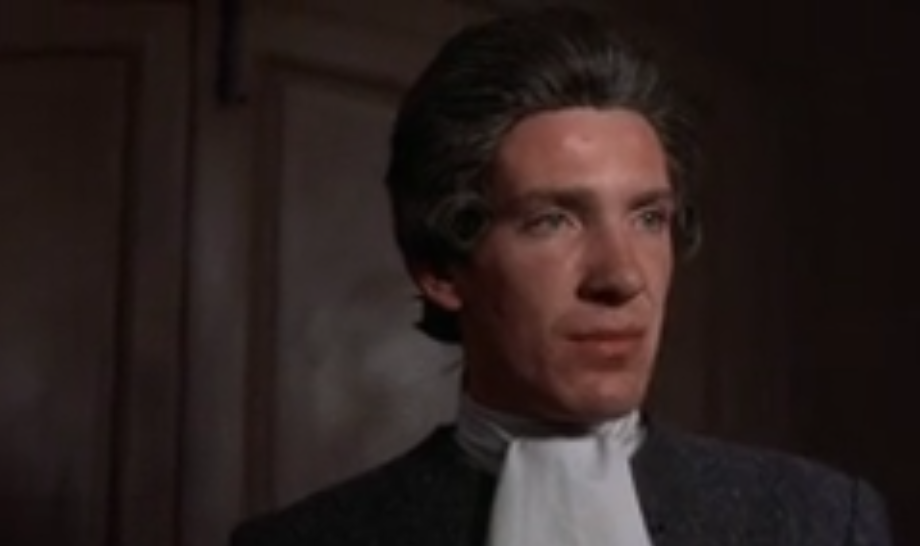
Well due to reasons I'll get to soon, in addition to always accepting a chance to write a bit about the ever underrated David Warner, I've decided to grant an alternate review here. This being in fact his introduction to the screen as Blifil the nephew, and heir, of the good squire Allworthy, and the chief rival of our hero the bastard Tom Jones (Albert Finney) for the hand of the beautiful Sophie Western (Susannah York). Blifil isn't the meatiest of roles, however I think it then deserves mention as something to note of David Warner's talent that he manages to still make a more than decent impression with it. This in taking very much the approach of being essentially the anti-Tom. This is against Finney's outgoing, boisterous, charming, lusty Tom, is Warner's introverted, calm, repulsive, and demure Blifil. Warner so often making himself known in a scene by not so much stealing, but rather than raising a bit of stink to say the least. This as we see Finney doing each and everything, Warner is so often standing still with the stiffest posture, and a most predisposed to despise as Blifil looks on.

Warner conducts himself in the role as a right proper stick in the mud. This by the way deserves better mention as these types of roles can often times lead to boring moments in romance films, and comedies. This so often with the other man, when just an evil jerk, being just tired moments of either bland or over the top acting. Warner though makes quite the go of it to be quite the best nasty man one could ask for. This as Warner so effectively accentuates the difference between he and Tom in every instance in creating this wonderful pit of charisma in a way. This furthermore making no hiding the fact that no one would prefer Blifil with Warner creating such proper nasty grimaces, with his almost wilted delivery of his towards those around him. I especially love Warner's wooing of Sophie scene, where he is such a fantastic bit of awkwardness in each stiff maneuver towards the Sophie, and his state of care being almost more towards a business proposition than any sense of affection for her. Of course the extension of his difference from Tom, in a way, also is in his favor, as where Tom does everything pretty much in the moment, Blifil does have a bit more cunning in him. This in his methods to attempt to destroy Tom. This where Warner infuses a bit of delighted, if internalized glee in his tilted smile, and incisiveness in each of his maneuvers to destroy Tom. This as again he conducts himself as a proper villain really, in this state of vicious determination that goes as far as to try to have poor Tom hanged. Blifil's a nasty piece of work, but it is a joy to watch each of his moments thanks to Warner's performance. He accentuates the nastiness beautifully by providing this contrast to Finney's work. A contrast showing by playing up, without becoming over the top, the despicable nature of his character. Warner manages to make his impact swiftly. Most importantly though Warner makes the most with this character, who again can easily go so wrong, yet Warner importantly gets in on the fun of the film, by being the right type of horrible.

Wednesday, 14 August 2019

Alternate Best Supporting Actor 1963: Anil Chatterjee in Mahanagar

Anil Chatterjee did not receive an Oscar nomination for portraying Subrata Mazumdar in Mahanagar.

Mahanagar is a terrific film that follows the "fallout" when the housewife of a traditional home in Calcutta gets a job.

Anil Chatterjee's performance is an instrumental part of this film as in a way how he features as a performer also relates to the power exchange at the center of the story. This is as the film opens Chatterjee appears to be our lead as a smalltime banker. This is as he gives a quietly charming turn as we see him live his life and interact with his house including his in-laws, his son, his father, his sister and his, at the beginning of the film, housewife Arati (Madhabi Mukherjee). Chatterjee carries himself with this underlying confidence in all things as he glides through his life, even in his romantic circumstances with his wife where he presents an outpouring of warmth towards her. This going to the point that he supports the idea of his wife also getting a job to support the household. Chatterjee portrays this moment with a rather slick assurance of himself to the point he presents a sincere urging towards his rather hesitant wife, though with also perhaps a lack of severe thought on the process. This leaving the man only to be initially slightly taken aback by his father's extreme rejection of refusing to speak with his son after this decision. In turn Chatterjee portraying a moment of unsure disbelief that shows the first little crack in that leading man we initially saw. Chatterjee portraying suddenly a man whose whole life isn't that of some dream. This also featuring  a break in his performance where he is no longer that leading man in charge of it all, suddenly he's no longer the center of the world or the film.

As Arati begins her job, and slowly gets better at it, we have a regression of sort of Subrata so well realized in Chatterjee's performance. His work initially just shows those cracks as he loses that initial certainty towards initially and confusion towards the situation, particularly the extreme reactions like that of his father's. The initial reaction to this is to make the calm suggestion that she quit the job, based largely on his father's reaction. Chatterjee's delivery of this is essential as the suggestion he portrays with just a hint of that old confidence, while painting more largely within the realm of concern for his relationship with his father. This though immediately changes when he loses his own job due to his bank collapsing, and Subrata even being attacked by an angry mob due to that fact. His call to his wife, to tell her to absolutely keep her job due to him no longer having one, Chatterjee realizes the shattered state of the man in the moment by creating this real sense of fear for his family's livelihood. This in his meek delivery as he pleads to ensure that his wife keeps her job. This act not only make Arati the one keeping the family financially afloat, but also in turn pushes Chatterjee more often than not into the background. This isn't to say however Chatterjee becomes unimportant in fact this change perhaps leads to the most remarkable moments of Chatterjee's performance.

Chatterjee manages this notable tone within his portrayal of Subrata as he becomes basically an observer in his own family, as he just watches his wife accomplish much, while he accomplishes very little. What is so notable in this is that Chatterjee manages to create this sense of a sort of emasculation with both humor and pathos. There is something very funny in certain moments where Chatterjee shows Subrata so meekly looking over his shoulder as he finds a thing of lipstick in his wife's purse, or looks on as his wife makes up stories about his own success as a husband. Chatterjee's unease is genuinely amusing in this as we see the man in this state of extreme modesty. This never becomes cartoonish, even if one can get a good chuckle from it, as he does find something very sad in this sense of disconnection to his wife that also comes from this. This as he saunters off to do a basic chore, when she states it is not as though he is doing anything else, and Chatterjee reflects an earnest somberness and embarrassment of a man seemingly without purpose. What is key within this is though Chatterjee doesn't portray any direct maliciousness towards his wife's success, rather instead conveys this confusion in the man that stems from him being pushed out of his place of comfort in more ways than one. This is as he is no longer able to be the breadwinner for his family and he isn't sure what to take from the changes in his wife. Chatterjee manages to find such a real nuance in these moments of a man both unsure of himself and his own world in a way. Chatterjee emphasizing though this state of confusion that keeps him at this certain distance, uncertainty and insecurity of his situation. This comes to a head in the final scene of the film where Arati quits her job, though in a moment of advocating for a friend and fully confident in herself. Arati finally truly confides in Subrata, and Chatterjee is fantastic, in still a largely reactionary moment, of essentially showing the confusion lifting in this scene. It is quite moving as he manages to finally return to that direct sense of love and warmth to his wife, though now deeper in a sense as Chatterjee's eyes reflect a man seeing his wife in a different light, and of equal value to himself. This is a terrific performance by Anil Chatterjee, as he slowly essentially loses his leading man status within the film itself, however within this gives a captivating depiction of a man coming to a better comprehension of just who his wife truly is and what she means to him.

Thursday, 8 August 2019

Alternate Best Supporting Actor 1963: Geoffrey Keen, George Cole and Patrick Wymark in Dr. Syn, Alias the Scarecrow

Geoffrey Keen did not receive an Oscar nomination for portraying General Pugh in Dr. Syn, Alias the Scarecrow.

Well I will once again take this opportunity to sing the praises of the wonderful and underrated adventure film/mini-series the Scarecrow of Romney Marsh. The film features the previously reviewed work of the underrated Patrick McGoohan in the title role of both the smuggling rouge the Scarecrow, and the seemingly innocent parson Dr. Syn. It also features some turns from some rather underrated British character actors of the period. One of these actors being Geoffrey Keen, who is now perhaps best remembered as his side role in the Bond series, if that even, but whose talents did go beyond delivering a bit of setup exposition. Keen gets the chance to show that off in the role of General Pugh who is the main antagonist specifically sent by King George III to destroy the Scarecrow and his smuggling ring. Keen's performance here is to make Pugh a proper villain for the story. Keen's a rather delightful villain by very much playing up the ego the character. This with a smugly assured smile on his face as he announces the purpose of his arrival to smash the smuggling gang. Keen's most effective by making this Pugh's defining trait but not his only trait. In the same scene of his announcement Keen finds a bit more nuance within an incisive stare as speaks of the people's lawlessness that supports the smuggling. Keen is a great deal of fun in the role, even though he has sort of a presumed general seriousness through playing into the character's superior manner. This in particular in his frequent berating of his underlings who he always views as inferiors. Keen brings such a deliciously pompous demeanor with such venom in every "you fool" he throws out towards those he views as failing him. This also with the sense of the man's power, as there is such an ease in his threats to others, knowing he can easily have most men hanged. Keen's performance captures a certain enjoyable bit of villainy, in the way Pugh doesn't really hide his satisfaction with his own position. This in particularly Keen's smile of pure joy at the burning of random houses, or his manner of nearly breaking out laughing when it is suggested he might keep a promise to condemned men. Keen provides a particularly effective contrast to McGoohan as Syn, this as the equally assured man internalized, where Keen offers a man broad and overly open in his certainties. I'll cheat as I did with McGoohan, by bringing up one of my favorite, mini-series, moments where Pugh believe he has the Scarecrow dead to rights, and Keen asks him to surrender in the "King's Name" with such devilish glee in the moment. The impeccable smugness of Keen makes for Pugh's numerous defeats all the more satisfying, but also all the more enjoyable in Keen's performance. It is with this that I do think Keen takes his performance further than just a villain you like to see lose, in that he finds enough nuance in the moments outside of the direct antagonist. This in just interacting with the local squire, where Keen tones down it nicely to show a slightly social man, if he still carries an inherent intensity even in these moments. The best though being with Pugh out of his element, or forced to be. This when his losses goes beyond the possibility of blaming others, namely when he directly answers to the king himself. Keen is great in his one scene with George, as he delivers the false face of the loyal general, which he beautifully offsets once he turns around to reveal the same bitter frustrations he would at any other man he hates. Keen makes a properly entertaining villain for this entertaining story, who he sets up as just the proper man you just love to see fail again and again.
George Cole did not receive an Oscar nomination for portraying Mr. Mipps/Hellspite in Dr. Syn, Alias the Scarecrow.

Moving onto another underrated chap and mainstay of mid-century British cinema in George Cole. A charming performer who gets a nice role here as Dr. Syn's number two, both as the sexton for his church, but also as a fellow masked crusader. His work at the latter is fairly limited in that you can't even see his eyes in the costume and he only has about two lines with the mask on. I do like though his gruffer vocal work that complements McGoohan's own, even if it is only briefly heard. Cole's performance is interesting though in that it only really functions really in the plans of the duplicity for the scarecrow, being Syn's primary confidant and agent. Cole's effective by bringing sort of an alternative perspective in these moments as essentially the more cynical man of the group. This in even in a minor debate where Cole accentuates a lack of earnestness regarding the crusade as this great measure of hope as a man more mindful of the present reality. This is effectively shown in Cole's own portrayal of Mipps's manner in the plans, that Cole plays with a certain degree of self-satisfaction. This in that he brings a certain joy of performance in the act of Mipps going about his methods of manipulation for the sake of their cause. A highlight scene for Cole being when he tricks a prosecutor into a bit of a trap by pretending to be a concerned citizen. Cole manages to do two things at once in the scene as he provides a convincing false sincerity in his assured eyes towards the prosecutor, and bogus sympathy as he speaks of injustices being done. This is while in moments away there is this wonderful glint his eyes of a man just loving his ability to deceive the man. Cole's performance consistently delivers moments of just a bit of character thrown in there for portraying the method of the operator but also the joy he takes in performing his job. Cole doesn't just leave a scene be, but nicely brings in a bit of who Mipps in, as limited as that may be. This is even in just his moments of observing things where he creates the right tensions of the spy, or simply mutual concern as something may go wrong in a plan. Cole delivers a proper sidekick, of sorts, that is a proper companion performance to McGoohan's.
Patrick Wymark did not receive an Oscar nomination for portraying Joseph Ransley in Dr. Syn, Alias Scarecrow.

Finally in this trio of it I end on the type of performance I always love to highlight, that being the performance that makes the most out of a potential throwaway role. This in Patrick Wymark as Joseph Ransley who works as one of Scarecrow's men, before he threatened by General Pugh to betray him or face arrest. What makes Wymark's performance notable is the amount of sympathy he does create for Ransley throughout the ordeal. This is that the writing more of pegs him for basically a lout, who hates his step-mother, and will selfishly trade everyone in for his own preservation. He is a proper lout but Wymark doesn't make it his only trait. Wymark though is terrific sad sack, right from his opening scene where Pugh interrogates him over his sudden change in fortunes, that Pugh believes is from being a smuggler. Wymark delivers a very real fear of the situation, and genuine unease at the sense of being found out. He's not one note from this as he very much conveys both the sense of being found out but potentially something purer about giving up the whole ring he's part of. Wymark's effective in placing an emphasis in the moment of Ransley seemingly in power, as he initially tries to steal from the Scarecrow and run away with his sons. This in a moment of confidence, as we see the potential smuggler, who believes he knows a few things. This idea though is squashed as he is caught in the act of smuggling and arrested before being put on trial. This is as he and his sons face a potential death penalty, Wymark is honestly rather moving in creating the real desperation in the man as he pleads his inability to anyway help the crown and in turn help himself or his sons. He is left off as a technicality engineered by Dr. Syn but not without being threatened directly by General Pugh and more covertly by Dr. Syn. Again Wymark does more than possibly is demanded by being so earnestly scared with each threat, and by showing just how much of a wreck he becomes as he attempts to drink his troubles away. Unfortunately for him, the king's prosecutor comes to threaten him as well. Wymark is a terrific mess as he delivers with a real anguish as he decries his maddening situation where really everyone is out to get him. Although Wymark doesn't make you side with Ransley, he does grant a real humanity in the act of the traitor. These acts that lead him straight to another trial, unfortunately for him, this time run by the Scarecrow. Wymark's fantastic in the scene though as he manages to play more than one note. In that again you have a very real plea of passion in his voice as he tries to make them understand his situation, this in his earnest delivery as he speaks of trying to save he and his sons lives at the other trial. Of course this is also with a genuine disdain towards the Scarecrow, a logical anger at the man who thwarted his attempted acts of self-preservation, that Wymark leads with anger of a man fed up within his circumstances. This naturally falls away in his portrayal though when the results of the trial are given, and Wymark's expression of a nearly petrified fear again is remarkable as he faces perhaps his final fate. Ransley could've just been some bum traitor, nothing more, but Wymark realizes a real tragedy within his subplot, that takes the part towards something more substantial.

Tuesday, 6 August 2019

Alternate Best Supporting Actor 1963: Alan Bates in The Caretaker

Alan Bates did not receive an Oscar nomination for portraying Mick in The Caretaker.

Alan Bates has on the cursory viewpoint perhaps the least challenging role of the three, and only three, characters of the film. This is that he isn't Donald Pleasence who is transformative as the somewhat enigmatic tramp, and chatterbox Davies, nor is he the seemingly enigmatic and cold Aston played by Robert Shaw. Mick seems to be just, a more or less, average young man and doesn't seem to be as much of a riddle. This role is essential though in that Mick offers perhaps the least alien perspective to most viewers. Bates's performance seems to suggest this idea from the first instance he appears onscreen, as we can seemingly understand him as Bates evokes a curiosity and even concern in Mick, as he watches his brother, Aston, walk home with the rather grungy looking Davies one night. Bates instantly establishes a certain unease within the situation as he watches the mismatched pair come closer to the house. Some time later, after Davies has been given a room to stay in by Aston, Mick comes to surprise Davies. The way Bates approaches the scene is interesting in that he too puts on a strange character. This in bringing a certain menace, yet also mischievous glee as he presses Davies with random questions, delivering them with this hostile humor. The key though here is that Bates plays this scene with a particular flow, creating random confusing asides with that sinister humor, but with sudden moments of incisiveness in his eyes between them, this in Bates creating the sense that Mick is very much playing a part.

This part as a man that is a creation with sort of smug confidence with also this comic degradation towards Davies. Bates does wonderfully with the randomness of his lines by very much granting a  purpose of them within this act. This is that he very much plays them with two purposes in mind. One being that Mick in one part is having a bit of a laugh at the situation, and as the more technically sane man here, plays the part of the insane man basically to have fun. Bates is careful to convey the act so effectively in his quiet moments in between Mick's purposefully sometimes inane rambling. This is also within his brief interactions with his brother. This where Bates removes that hostile "character" as he asks his questions towards his brother. These moments are so carefully realized though as Bates portrays a different curiosity in the interaction. This in the curiosity, similar to how he interacts with Davies, though with more of a weight in his eyes that are less of a hostile concern, and more of a attempt at a sympathetic understanding. In the early moments of their interactions this is shown as a failure with some great moments in Bates's performance being the silent ones. This as he shows a man befuddled by both of his fellow "tenets" with a lack of certainty towards how to handle situation.

Bates creates an effective juxtaposition within his performance by making Mick the least ambiguous, even if technically the writing within the role could allow for as enigmatic of a man. Bates's approach though is to play the man as basically playing around with the mentally unsound men he interacts with. This as Bates portrays very much a purpose, quite effectively so, in Mick's interactions with Davies, even as he plays seemingly cruel tricks. There is a goal within Bates's own performance as in each strange act, there is this moment of observance within his performance as though Mick is figuring out this Davies by engaging in these hostilities. At a certain point Bates's quite effective by creating the moment where he seems to decipher Davies. This as he naturally segues to Mick keeping with the act towards Davies, yet is less hostile in this creating this more affable energy with the man. This as his random quick hectoring having this more positive manner within Bates's performance, portraying a joy of the performance, and the same in interacting with the easier to interact with Davies than his difficult to decipher brother.

Bates manages to grant the sense, without having a scene of explaining things, the existence of Mick. This as a difficult one, for really just an average man, who has had difficulty in engaging in any conversation with his distant brother, who appears to be a responsibility of sorts of his, then enjoying that conversation with Davies due to the lack of that same type of distance. Bates's work is essential in granting meaning to Mick's many words, so carefully within his work. There is the moment of describing his hope for a home for example, Bates is fantastic by dropping the joking pretense to reveal a somber little dream of his for something more. In that though, again almost indirectly pondering about his brother, Bates evokes a more genuine concern, again as this attempted empathy for him, even if confused and in the end failed attempt. It is in this that Bates makes sense of the developments as Davies's words become hateful towards Aston, Bates portrays an unease suddenly in their banter. In turn, Bates delivers again the hostility towards Davies with his questions and posturing. This before perhaps Bates's greatest moment when he drops the act entirely with Davies to admonish him for calling his brother "nutty". Bates is fantastic by delivering just the full venom towards the man's lies, but within this certain passion in his eyes as this defense of his brother. An idea only more fully realized in a brief glance between the brothers, where Bates effectively shows some final direct understanding in a slight but warm smile. This as the brothers create a sense of an agreement, here in the eviction of the troublesome liar Davies, but also finally with the sense of Mick getting a better idea of who his brother is. Alan Bates delivers a terrific performance here, as that change in Mick is so heavily reliant on the nuances of his performance. The changes in the man are barely spoken, yet Bates wholly conveys the ideas behind the character. His performance offering essentially the needed insight to the other men, by offering a man who is far easier to decipher, though too loves a bit of duplicity.

Saturday, 3 August 2019

Alternate Best Supporting Actor 1963

And the Nominees Were Not:

Tatsuya Nakadai in A Woman's Life

Anil Chatterjee in Mahanagar

Alan Bates in The Caretaker

Rod Steiger in Hands Over the City

Geoffrey Keen in Dr. Syn, Alias the Scarecrow

George Cole in Dr. Syn, Alias the Scarecrow 

Patrick Wymark in Dr. Syn, Alias the Scarecrow


For prediction purposes: Keen out of the Scarecrow men. 

Monday, 10 June 2013

Alternate Best Supporting Actor 1963: Results

5. Peter Sellers in The Pink Panther- Sellers is by far the best part of his film giving a hilarious turn that steals every scene he is in.

Best Scene: Clouseau takes the witness stand. 
4. Donald Pleasence in The Great Escape- Pleasence adds a lot in his little turn giving one poignant portrait of a man who wants to escape a prison escape even when his eye sight begins to fade.

Best Scene: Blythe thanks Hendley. 
3. Robert Shaw in From Russia With Love- Shaw is a great Bond villain. He is great as the silent menace, but he is something really special when he finally opens his mouth.

Best Scene: Colonel Nash reveals himself to be Red Grant. 
2. Brandon De Wilde in Hud- De Wilde is essential to his film being the man in the middle and creates a powerful reactionary performance by showing both how he deals with the men around him and as well how they change him.

Best Scene: Lon reacts to Hud and Homer's fight. 
1. Tsutomu Yamazaki in High and Low- My win for the supporting this year also goes to the great film High and Low. Yamazaki's performance as a kidnapper is one that only gets better the more I think about it. Despite the limitations for most of his film he creates a great complex villain, but as well in his last scene somehow manages to be heartbreaking in his portrayal of a desperate man.

Best Scene: King Gondo meets with Ginjirô Takeuchi.
Overall Rank:
  1. Tsutomu Yamazaki in High and Low
  2. Melvyn Douglas in Hud
  3. Brandon De Wilde in Hud
  4. Robert Shaw in From Russia With Love
  5. Donald Pleasence in The Great Escape
  6. Peter Sellers in The Pink Panther
  7. Anil Chatterjee in Mahanagar
  8. James Garner in The Great Escape
  9. David Warner in Tom Jones  
  10. Tatsuya Nakadai in High and Low 
  11. Claude Rains in Twilight Of Honor
  12. Kenjiro Ishiyama in High and Low
  13. Phil Silvers in It's a Mad Mad Mad Mad World
  14. Walter Matthau in Charade 
  15. Patrick Wymark in Dr. Syn, Alias the Scarecrow
  16. Dick Shawn in It's a Mad Mad Mad Mad World
  17. James Donald in The Great Escape
  18. Geoffrey Keen in Dr. Syn, Alias the Scarecrow
  19. Isao Kimura in High and Low
  20. Spencer Tracy in It's a Mad Mad Mad Mad World
  21. Bobby Darin in Captain Newman M.D.
  22. Pedro Armendáriz in From Russia With Love
  23. Terry-Thomas in It's a Mad Mad Mad Mad World
  24. Stanley Adams in Lilies of the Field 
  25. Max von Sydow in Winter Light
  26. Johnathan Winters in It's a Mad Mad Mad Mad World 
  27. Romolo Valli in The Leopard
  28. Hugh Griffith in Tom Jones
  29. Tsutomu Yamazaki in A Woman's Life
  30. George Cole in Dr. Syn, Alias the Scarecrow
  31. John Huston in The Cardinal  
  32. Nigel Green in Jason and the Argonauts 
  33. Roddy McDowall in Cleopatra 
  34. Richard Johnson in The Haunting
  35. Jacques Jouanneau in Judex
  36. Paul Lynde in Bye Bye Birdie
  37. Robert Duvall in Captain Newman M.D. 
  38. Larry Tucker in Shock Corridor 
  39. Buddy Hackett in It's a Mad Mad Mad Mad World 
  40. Mickey Rooney in It's a Mad Mad Mad Mad World
  41. Charles Bronson in The Great Escape
  42. John Leyton in The Great Escape 
  43. Eric Flynn in Dr. Syn, Alias the Scarecrow
  44. George Devine in Tom Jones  
  45. Haradhan Banerjee in Mahanagar 
  46. Michael Hordern in Dr. Syn, Alias the Scarecrow
  47. Lee Marvin in Donovan's Reef 
  48. Allan Edwall in Winter Light
  49. Boris Karloff in Black Sabbath
  50. Paolo Stoppa in The Leopard
  51. Rod Steiger in Hands Over the City
  52. James Coburn in Charade 
  53. Jesse Pearson in Bye Bye Birdie  
  54. Russ Tamblyn in The Haunting
  55. Peter Falk in It's a Mad Mad Mad Mad World 
  56. Eddie Anderson in It's a Mad Mad Mad Mad World    
  57. Tatsuya Mihasi in High and Low  
  58. Jim Backus in  It's a Mad Mad Mad Mad World 
  59. Tom Bosley in Love With a Proper Stranger
  60. Angus Lennie in The Great Escape
  61. Tony Curtis in Captain Newman M.D. 
  62. Haren Chatterjee in Mahanagar 
  63. Tony Britton in Dr. Syn, Alias the Scarecrow
  64. Jimmy Durante in It's a Mad Mad Mad Mad World  
  65. Sid Caesar in It's a Mad Mad Mad Mad World 
  66. Bruce Ritchey in A Child is Waiting
  67. Gordon Jackson in The Great Escape 
  68. Tatsuya Nakadai in A Woman's Life 
  69. Charles Vanel in Magnet of Doom
  70. Hari Rhodes in Shock Corridor  
  71. John Astin in Move Over Darling
  72. George Kennedy in Charade
  73. Milton Berle in It's a Mad Mad Mad Mad World  
  74. David Niven in 55 Days At Peking
  75. Jose Isbert in The Executioner
  76. Ned Glass in Charade 
  77. Robert Brown in Dr. Syn, Alias the Scarecrow
  78. Nick Adams in Twilight of Honor
  79. Ossie Davis in The Cardinal
  80. Dan Frazer in Lilies of the Field
  81. Heinz Weiss in The Great Escape 
  82. Peter Bull in Tom Jones
  83. Jacques Marin in Charade 
  84. Ralph Nelson in Lilies of the Field 
  85. Jerry van Dyke in  McLintock!
  86. James Coburn in The Great Escape
  87. James Best in Shock Corridor
  88. Cecil Kellaway in The Cardinal
  89. Eddie Albert in Captain Newman, M.D.
  90. Jack Warden in Donovan's Reef 
  91. Alain Delon in The Leopard
  92. Bobby Rydell in Bye Bye Birdie
  93. Juzo Itami in 55 Days At Peking
  94. Jean-Baptiste Thierrée in Muriel
  95. Theo Sarapo in Judex 
  96. Cesar Romero in Donovan's Reef
  97. Chuck Conners in Move Over Darling 
  98. Patrick Wayne in McLintock!
  99. Martin Landau Cleopatra
  100. Hume Cronyn in Cleopatra
  101. George Cole Cleopatra
  102. Tom Gaman in Lord of the Flies
  103. Hugh Edwards in Lord of the Flies
  104. Tom Chapin in Lord of the Flies
  105. Jack Palance in Contempt
  106. Fritz Lang in Contempt
  107. Robert Wagner in The Pink Panther  
  108. Richard O'Sullivan in Cleopatra
Next Year: 1980 lead

Alternate Best Supporting Actor 1963: Brandon De Wilde in Hud

Brandon De Wilde did not receive an Oscar nomination for portraying Lon "Lonnie" Bannon in Hud.

Brandon De Wilde is an actor I last wrote about in his Oscar nominated performance in Shane. De Wilde, unlike many child actors, De Wilde continued his career after his start until it was tragically cut short by an automobile accident. De Wilde as with his work in Shane stars in a western although this one is set in the modern day opposed to the more romantic period piece of Shane. De Wilde though once again plays an impressionable character although this time as a young man, and this time with far more complications then were found when he worshiped the titular hero in that very different western.

Brandon De Wilde has a very difficult role in this film as he is the in between. There is the two sides of the film found in the noble man of the old west Homer Bannon (Melvyn Douglas) and the modern cowboy who cares about no one other than himself Hud Bannon (Paul Newman). They are the two generations above Lon with Homer being Lon's grandfather, and Hud being his uncle, Lon's own father having died some time ago. De Wilde has to stand in the middle as the reactionary party to the struggle as well as represent what exactly will become of the third generation who is influenced by both the first and the second generations above him.

De Wilde has quite a challenge because Lon does not have the convictions of his elders, and therefore he also lacks their passion when it comes into their scenes together. De Wilde has to make Lon several things and nothing exact. This begins with his relationships with his elders and De Wilde is very good in creating a certain chemistry with both Newman and Douglas. With Douglas there is a great deal of respect that De Wilde creates. He always shows him to be looking up to him in the most respectful fashion, there is always a certain tenderness De Wilde portrays. De Wilde always has his head turned and focused with earnestness toward Douglas that properly suggests that Lon's always listens to his grandfather.

With Newman though De Wilde is very different, but still portrays a reverence for Hud as well although of a different sort. De Wilde portrays a greater enthusiasm when Lon is with Hud, not that he is bored with Homer, but he shows a certain energy that comes to life when Lon becomes engrossed into Hud's sort of life. There is a shyness he properly infuses here to in the life in that Lon would rather be an observer of the life at times rather than be right with it. De Wilde shows that Lon looks up to Hud in a different way. He does not have that respect that he has for Homer, but there is a great interest he portrays and he suggests that there is a strong part of him who likes the ideas of the thrills that Hud gets in life.

The way Lon does look up to both men leaves him in awkward position when the two fight over their differing values. Although Douglas and Newman have the speeches in these scenes De Wilde still manages to stand with them in his meeker role. There is a great power in the close up of his face in these scenes and he conveys the conflicting emotions that occur in him. It is not just sadness to see the men he admires in different ways, but as well a certain confusion of what exactly he should. There is a support in his eyes for Homer, yet at the same time there still is that connection with Hud at the same time.  De Wilde lends sympathy to both parties and suggests a longing to try to understand the conflict even though he can't quite do it. De Wilde creates a very effective dynamic in his performance showing the way both men influence him.

An interesting thing about this performance though is it does not end the way one would think. One would think he would either go the way of Homer or Hud, but in the end he really does not choose either path. A series of tragic circumstances instead changes Lon and De Wilde portrays this in a very powerful fashion. In the end Lon rejects Hud's ways, but as well does not seem to suggest any of the optimism Homer had either. Instead he is left as a jaded man who is hardened by the experience. It is a striking development particularly because of how well De Wilde earns this change through the way his earnestness slowly devolves as everything thing in his life seems to take a turn for the worse. The last scenes are made truly sad by De Wilde because how honestly he expresses that the final lesson Lon has learned is only to simply face the world with a distaste for what lies in it.

Brandon De Wilde performance stands as the underrated facet of this film as it was the only of the four main characters not to be remembered by the academy. De Wilde though is an essential part of the film as his performance as Lon is in a way what holds the whole film together as well as leads the film to its conclusion in terms of the fight between the old and the new. De Wilde is terrific in every aspect of his performance, because he does not flub up a single relationship. Whether it is the unique fashion that Lon looks up to each of the other men, or his boyish attempted flirtations with their housekeeper Alma (Patricia Neal) he adds an extra layer to the film through the complexities he brings to these relationships. He never lets Lon be the simple bland man in the middle instead he finds what is fascinating in being the man between the two worlds, and creates something quite remarkable in showing where this leads Lon in the end.

Sunday, 9 June 2013

Alternate Best Supporting Actor 1963: Peter Sellers in The Pink Panther

Peter Sellers did not receive an Oscar nomination for portraying Inspector Clouseau in The Pink Panther.

The Pink Panther is a mostly uninteresting film about a thief Sir Charles Lytton (David Niven) who tries stealing the Pink Panther diamond from a foreign Princess.

The reason I saw mostly uninteresting because on the surface it is a standard caper comedy of sorts. David Niven is pretty dull in the lead role, the female characters are quite boring, and I'll be getting to Robert Wagner in a bit. If you were to record my reactions to this film as it preceded you would notice a quite bit of boredom but semi frequent bits of me bursting out in laughter. Now these bits were not a coincidence but rather it indicated whenever the only saving grace of this film was on screen which of course is Peter Sellers. Peter Sellers is this movie and the film's biggest problem is that he is a supporting character here because the only time the film comes to life is when Sellers shows up as the hapless Inspector Clouseau.

It is rather interesting to note that Clouseau was only a side character in this film when the series that came out about it became excursively about Clouseau. Sellers's turn here is a bit different in that he does not do that (purposefully) over the top French accent in this film which he adopted for his later performances. His accent is much more muted this time and is almost the type of accent he might use if he was trying to portray the Inspector in a serious fashion. Perhaps though his somewhat more serious demeanor this time actually makes his slap stick all the funnier like for his first scene where he seriously talks about catching the thief but then falls in a rather amusing fashion from pushing a big globe too hard.

Sellers is comedic gold here and his timing is flawless here always trying to get the most out of any scene no matter what. His performance is almost somewhat curious in that he does kind of play it straight in a way well going completely absurd at the same time. He never seems like he is trying to be funny, but perhaps that is why he is so funny. I think perhaps comedic timing is too often overlooked as this film is a great example of its importance. Robert Wagner as the Lytton's nephew actually has slap stick moments as well, but he does not illicit a single laugh because his performance of it is well rather forced. He never flows with the material the way Sellers does, and whenever he was clearly trying for laughs all I thought was "Wagner stop trying to be funny, you’re not funny, Sellers is funny".

Sellers probably does not get enough screen time here but he always does pick up the film with his antics throughout. He is just always on trying to bring something funny in every scene that would otherwise be dull. It is pretty fascinating the way Sellers will do this in either a big way like his reaction to  lighting a Roman candle instead of regular one as well as his line delivery of "What kind of candle is zis?", or even in a small way like when he accidentally kisses a man's hand instead of a the Princesses. He's consistently energetic and fun during the picture and I would say the only problem with this might be I actually only cared about him so when the other characters mocked him all I could think was "Shut up at least he's funny".

This is probably one of the most incredible examples of an actor stealing a show. David Niven meant this to be his film as well as his franchise, but Peter Sellers not only stole the film from right under him but the series as well. It is no wonder he did this not only because Niven doesn't do much with his role, but as well because Sellers is the movie. The biggest problem with the film is that there is not enough Sellers to go around and that does diminish just how much he can do for the film as a whole. Whenever he is on screen he is a delight and the film actually is the comedy it is meant to be. This is a true comedic gem even though it is in the rough, nevertheless this performance shows exactly why Sellers went on to play the role as many times as he did.

Thursday, 6 June 2013

Alternate Best Supporting Actor 1963: Robert Shaw in From Russia With Love

Robert Shaw did not receive an Oscar nomination for portraying Donald "Red" Grant in From Russia With Love.

I have to admit the first time I watched From Russia With Love it took me quite some time to recognize Robert Shaw as the villain who is always on Bond(Sean Connery)'s trail despite having seen several of his films before this one. This can in part be attributed to his very short and very blond hair that he sports here that is quite the contrast from his dark hair in his 70's work. The even bigger reason though is that Shaw does not speak until late into the film despite having a great deal of screen time throughout the film. For over an hour Shaw plays Red Grant who stalks Bond for the agency SPECTRE to make sure that Bond inadvertently gets SPECTRE important spy equipment which he does by killing anyone who might interfere as well as preparing to set up Bond's own demise in the worst possible fashion.

I suppose it is easy enough to disregard the silent killer performance, but one should still give credit where it is due. Throughout the Bond films (and I have seen most of them) there often is the silent killer character. Usually they are quite forgettable and there actually is not all that much menace to their performances as they usually are not exactly the greatest actors. This is Robert Shaw though and he no doubt would not allow himself to be forgettable ever. Although he is indeed silent Shaw is very good in creating that menace in every moment he is making sure we never forget him. Shaw as well perhaps just a little extra through his demeanor that suggests through his expression, that do suggest emotion, that Grant finds killing all the low level henchman just a bit tiresome and there is a bit of hint that he is waiting for the bigger game which is Bond.

Shaw does make for the best silent villain in Bond history but he suddenly breaks the silence after he kills an MI6 agent and then impersonates the man claiming he was sent there to help Bond escape enemy territory. Shaw breaking his silence has to be for me one of the best parts of the film, and on my original watch it was quite a revelation as Shaw reveals himself  through his always ear catching voice. It isn't exactly the usual Shaw though and Shaw quite brilliantly does a posh upper class type accent that has a certain affected manner to. It is a great accent that Shaw does as he is playing Grant who is playing the role of the desk jockey agent who would have been sent to help Bond. He is quite enjoyable with the slight parody he does yet he has a certain incisive quality still there. Although his menace is in part hidden he inserts a passive aggression in his performance through his sly smile and the way he seems to take so much joy in calling Bond "old man".

Due to Bond catching on a bit Grant takes action leaving Bond standing in front of the wrong end of the gun. Grant drops the act and so does Shaw giving us the full villain. Shaw loses the fake accent shifting to Shaw's far more vicious voice. This is a terrific moment for the film as a whole because the moment his voice changes we can see that Bond's danger is real. Shaw now does not hold back and it is Shaw doing what he does best which being awesome. Shaw's intensity is incredible as he announces his plans to kill Bond and make him beg to die. Shaw even manages to make the talking villain work because of how much sadistic joy that Red Grant is getting as he mocks Bond with the fact that they have been playing him all along. Shaw doesn't even leave it there going the extra mile and even suggesting a little bit extra about Red Grant, which technically speaking was not at all required.

For example when Bond asks what mad house they got him out of Shaw actually portrays Grant as taking a little offense from that than he possible should otherwise from this suggesting actually a bit of Red Grant's past which was mentioned earlier. Also when Bond offers him money Shaw plays it showing a honest bit of interest but his better judgment turns him from the offer. Shaw gives a bit of motivation there with him and shows that half of him cares only about the money enough to give him a second thought, but he as well shows that his other half would rather just enjoy the fact that he gets to make Bond suffer as well as not disappoint his employer. These might not be substantial moments, but usually these types of roles are never given any shading so its nice to see that Shaw puts in the extra effort here.

Shaw is like an in the hole for the film. He waits and stays hidden until its time to make his impact. He's a great villain all together being the right physical threat for Bond, and later even a proper mental opponent as well. Shaw's portrayal of Red Grant makes the entire film better because his presence and his relatively brief set of scenes where he can finally talk. Shaw, I think, perhaps made Connery up his game too as his best work in the film is his confrontation scene with Shaw. They are great together and Shaw makes more than a worthy foe for James Bond. As with most of Shaw's work I just loved watching Shaw here and the wait for him to strike only makes his performance seem all the more remarkable here. Many Bond villains are forgotten as soon as they are dispatched. The incomparable Robert Shaw would never let that be and instead, with his relatively limited role, made Red Grant the greatest Bond villain for over five decades.

Wednesday, 5 June 2013

Alternate Best Supporting Actor 1963: Donald Pleasence in The Great Escape

Donald Pleasence did not receive an Oscar nomination for portraying Flight Lieutenant Colin Blythe RAF "The Forger" in The Great Escape.

The Great Escape as a large ensemble with so many characters getting their own little spotlights throughout. Most of the cast is quite solid even if the accents used by Charles Bronson and especially James Coburn are a little questionable. The most poignant personal story belongs to Pleasence who plays Colin Blythe who is rather different than every other man int he camp in that he is much more of the bookish type who worked a desk job and only happened to be in the camp because he went for a joy ride in a plane that happened to be shot down. He does serve a very important part in terms of the escape as he is the one who makes the fake documents to help all the escapees.

Donald Pleasence takes great care in his creation of Blythe as a rather sensitive tea drinking fellow who has found himself in the wrong place. Pleasence is very good because he avoids any parody in his portrayal of his manner. Characters like this quite often are used for comic purpose. He gives instead an earnest depiction of this man who would rather be watching birds, and comes off as always rather sweet in his depiction of Blythe that as well suggests the man's past. He doesn't overplay this sweetness either making it a natural part of his character. He also though does show the usefulness of Blythe within the camp portraying a certain cunning that always exists in the same man who wishes he could have milk with his tea. Pleasence, along with pretty much the entire cast, creates a nice sense of camaraderie in his performance. There is always the sense that there is no selfishness in his work and there is a certain devotion in Pleasence performance that suggests properly that Blythe honestly wishes to help all the men escape.

The main conflict of his story though comes in that Blythe is losing his eyesight and it seems he will be unable to attempt escape. Pleasence is very good in these scenes not only in his portrayal of the physical nature of his poor eyesight which he portrays as Blythe always attempting to focus though he can't, but as well the quiet disappointment in Blythe that he portrays so unassumingly that he makes it all the sadder. Blythe is allowed to go because a fellow pow Hendley (James Garner) volunteers to take him along. Pleasence and Garner are an unlikely pair to be sure but they actually have a certain chemistry that really works well in their scenes together. They create a great deal of sympathy for their plight and makes their story possibly the most powerful. Although they are very low key in their portrayal of it their little friendship ends being quite moving particularly their last scene together. Pleasence exit is short but appropriately heartbreaking in that he still portrays Blythe as his pleasant optimistic self even as he faces death. Blythe's story could have easily been a throwaway one but Pleasence gives such an emotionally genuine performance that he makes Blythe one of the best parts of the film.

Tuesday, 4 June 2013

Alternate Best Supporting Actor 1963: Tsutomu Yamazaki in High and Low

Tsutomu Yamazaki did not receive an Oscar nomination for portraying Ginjirô Takeuchi in High and Low.

I just gave High and Low my leading win for 1963 for Toshiro Mifune's great lead performance, but the film also has a terrific ensemble. The group of policemen distinguish themselves particularly well and each of their performances brings something to the film even though they very easily could have all faded together given the limited nature of their roles. The supporting player that I am focusing on though is not even seen until an hour into the film although he is heard. Tsutomu Yamazaki portrays the kidnapper who tries to extort 30 million yen from Mifune's King Gondo, and in the first hour we only hear his voice as he makes his threats as well as his demands.

Although it may seem slight Yamazaki does handle his voice work well setting up the right tone for who this kidnapper is even though we can't see him. He delivers the threats with a certain sly attitude that suggests that there is something personal to the man's attack on Gondo. Something interesting though is that after he is done making the phoned threats Yamazaki's performance goes from vocal only to a silent performance when we finally see him. Yamazaki's role is limited but he is still quite effective in these scenes. Above all he shows a very human villain his reactions as he looks over a paper about his work. Yamazaki expresses silently pride and sinister joy of his successful scheme, but as well an intense disappointment and hatred as he sees the public praising Gondo.

Yamazaki is extremely good in making Yamazaki three dimensional even though he is not saying a single thing. He gives the emotions of him in just these reactions the complexity they deserve. He makes apparent that there is a lot going on in this man and this kidnapping means something far deeper to him than a monetary gain. He is always very realistic in his portrayal and his Yamazaki always expresses what is going on in the man's mind in a compelling fashion. His silent performance though continues into a long and brilliant set of scenes that involves the cops trailing him as he goes about tying up the loose end of his two drug addict accomplishes. They trail him and we watch Takeuchi's moves as goes about preparing to cause an overdose in the two people.

Yamazaki is easily identified in every scene through a pair of dark black sunglasses and he makes for the perfect adversary in these scenes. As through his whole performance Yamazaki does suggests through subtle hints of perhaps some fear in the man, but most of it is overridden by his confidence. Yamazaki has a perfect cocky stride in these scenes as he goes from place to place suggesting perhaps that Takeuchi thinks this is just the end of his perfect plan. He very effective in showing the full extent of the smugness particularly in the scene where he by chance comes across Gondo and asks for a light. Yamazaki shows a distinct pleasure in the man as he seems to tease fate due to his perceived knowledge that he merely is completing the last step of his task.

Yamazaki is a very effective in being the villain in a very low key fashion in these scenes. He is quite chilling for example in the scene where he tests his drugs on an addict and kills her without a second thought. Yamazaki is cold and brutal in that scene by showing in Takeuchi's face that this is merely just a step in his plan. He is careful not to show pleasure in this very scene as why should Takeuchi get any in fact there may be the smallest pity suggested, but he perhaps is all the harsher in showing that Takeuchi commits this evil in such a base manner. This leads Takeuchi though to finally bring the drugs and finish the plan and it is brilliant scene for Yamazaki. He starts out with quiet happiness seeing that he has gotten to the end of his plan, then that shifts to a more serious but casual showing knowing he will need to get down to business with his accomplishments who he clearly has no respect for, but then it finishes as he finds himself in the police trap. Yamazaki is amazing as his shifts to a full on disbelief and fear knowing that all his planning has meant nothing.

As much as I love that scene it seems like nothing compared to his final scene where Takeuchi is soon going to be hanged and comes face to face with King Gondo. We have only had glimpses of the man before this point and Yamazaki has had to certainly take minimalistic approach, this is his first and only traditional sort of acting scene and Yamazaki does not waste it. He and Gondo meet in a small room alone separated by glass and as he first comes in Yamazaki plays him as the villain. Yamazaki gives him that smug face ready to stare down his enemy, waiting to see some hatred against him, but Gondo has no hatred in his face. Yamazaki portrays actually that it pains Takeuchi in seeing that Gondo does not hate him.

Takeuchi's motivation though is revealed to be that Gondo's house on the hill always seemed mocking him in his small shack below. Yamazaki is outstanding because he realizes this motivation honestly, as something that comes right from anger in his soul not anger for Gondo but an anger toward his lot in life. Yamazaki shows Takeuchi try to keep it all together as the cunning villain he wants to be but portrays that the fact that he is about to executed is always on his mind. Yamazaki actually manages to make this a heartbreaking moment as he realizes the fear in Takeuchi so powerfully, and creates a truly impressive dynamic though as he shows that Takeuchi still tries to stay the villain through his indignant tone he attempts to keep up up until the point when the fear overwhelms him completely. It is an incredible scene as Yamazaki makes us feel sorry for a villain who wanted to brought to justice throughout the rest of the film. It is no wonder that Kurosawa decided to scrap a single scene after this one because of the strength of Yamazaki's performance. The more I think about Yamazaki's work the better it gets. This is a great performance and despite the limitations put upon Yamazaki, he creates a complex character that ends up being so much even while having so little.

Alternate Best Supporting Actor 1963

And the Nominees Were Not:

Tsutomu Yamazaki in High and Low

Brandon De Wilde in Hud

Robert Shaw in From Russia With Love

Donald Pleasence in The Great Escape

Peter Sellers in The Pink Panther