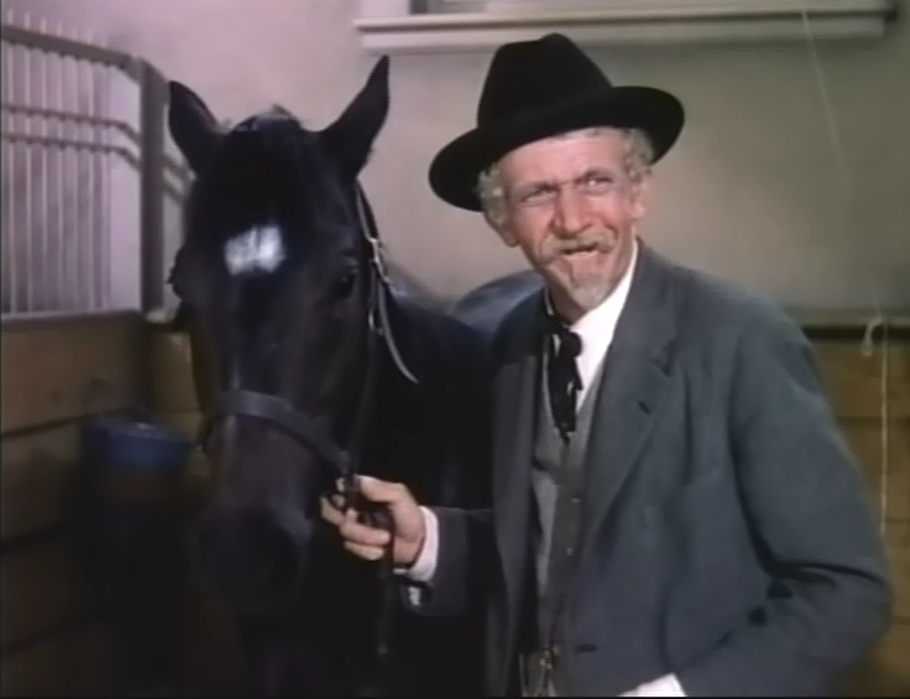
Ian Bannen received his only Oscar nomination for portraying "Rat Bags" Crow in The Flight of the Phoenix.
The Flight of the Phoenix tells the story of a group of passengers attempt to create a new plane to fly after their old one crashed making them stranded in the middle of the desert.
This simply is one of the oddest nominations ever in this category. I have no idea how the academy managed to single Bannen out in this film, and nominate him. First of all there were many many actors more deserving than Bannen in this film in many other films this year, secondly they could have nominated almost anyone else in the cast of this film and that person would have been more deserving, thirdly if they had to nominate Ian Bannen why would they nominate him for this rather than his far far far (all three are required) superior performance in The Hill as one of the few good men running a military prison.
I say all this because the very first time I watched the film solely to watch the film I did not even notice him. When I read he was nominated for an Oscar for his performance, I could barely remember that he was in it much less recall what he really did in the film. Now that I watch it again, and purposefully watched it only to see him in the film, and I still had trouble noticing even when I was especially watching just for him. When I did notice him though all I saw him do was mugging to the camera as well as attempting to be comedy relief I guess by saying every line in an over the top fashion, never anything. This is just a bad, unmemorable performance that did not deserve to be recognized.
Friday, 23 September 2011
Best Supporting Actor 1965
And the Nominees Were:
Ian Bannen in The Flight of the Phoenix
Tom Courtenay in Doctor Zhivago
Martin Balsam in A Thousand Clowns
Michael Dunn in Ship of Fools
Frank Finlay in Othello
Ian Bannen in The Flight of the Phoenix
Tom Courtenay in Doctor Zhivago
Martin Balsam in A Thousand Clowns
Michael Dunn in Ship of Fools
Frank Finlay in Othello
Thursday, 22 September 2011
Best Supporting Actor 1938: Results
5. Basil Rathbone in If I Were King-Rathbone sometimes just gives a rather dull villainous performance, but other times he gives a needlessly strange performance as if the King was a crazy old man.
4. John Garfield in Four Daughters- Yes it is true Garfield has an intense on screen presence, but unfortunately in this case he does not serve it to really create a character. Instead he only ever scratches the surface with his performance, and unfortuantely at the end of his performance he overacts a great deal.
3. Gene Lockhart in Algiers- Lockhart is able to be pathetic enough as Regis the informer, but unfortuantely he always seems miscast in the role. This is because he never seems like a truly convincing slimy rat he should be.
2. Robert Morley in Marie Antoinette- Morley gives a good humorous performance in his first half, and than an effectively sad performance in his second half. It never is quite a great performance, and he is forgotten for a good deal of the picture, but it remains a good one.
1. Walter Brennan in Kentucky- Yes Walter Brennan is one actor the academy got absolutely right, every time he won, he deserved to win. Brennan gives an effective performance as an old man with a grudge, as well as love. Brennan who transforms himself to almost double his age seamlessly also manages to show the grudge as something the old man simply cannot shake since it has been something with him for so long, as well as his love for horses as something just as deep as the hatred, even deeper, since Brennan carefully shows it overcome his feelings of hatred.
Deserving Performances:
Pat O'Brien in Angels With Dirty Faces
Edward Arnold in You Can't Take it With You
4. John Garfield in Four Daughters- Yes it is true Garfield has an intense on screen presence, but unfortunately in this case he does not serve it to really create a character. Instead he only ever scratches the surface with his performance, and unfortuantely at the end of his performance he overacts a great deal.
3. Gene Lockhart in Algiers- Lockhart is able to be pathetic enough as Regis the informer, but unfortuantely he always seems miscast in the role. This is because he never seems like a truly convincing slimy rat he should be.
2. Robert Morley in Marie Antoinette- Morley gives a good humorous performance in his first half, and than an effectively sad performance in his second half. It never is quite a great performance, and he is forgotten for a good deal of the picture, but it remains a good one.
1. Walter Brennan in Kentucky- Yes Walter Brennan is one actor the academy got absolutely right, every time he won, he deserved to win. Brennan gives an effective performance as an old man with a grudge, as well as love. Brennan who transforms himself to almost double his age seamlessly also manages to show the grudge as something the old man simply cannot shake since it has been something with him for so long, as well as his love for horses as something just as deep as the hatred, even deeper, since Brennan carefully shows it overcome his feelings of hatred.
Deserving Performances:
Pat O'Brien in Angels With Dirty Faces
Edward Arnold in You Can't Take it With You
Best Supporting Actor 1938: Robert Morley in Marie Antoinette
Robert Morley received his only Oscar nomination for portraying King Louis XVI in Marie Antoinette.
Marie Antoinette tells of the rather troubled life of the Queen of France.
Robert Morley plays the rather pathetic King Louis XVI who is in over his head from the very moment he appears on screen to make his speech to Marie Antoinette, and barely even being able to do that well. In these moments Morley brings out the right humor from just how pathetic, and incompetent Louis is, something Basil Rathbone was not able to do nearly as well as another Louis. Morley makes Louis the right kind of overgrown child, particularly in his first private talk with Marie (Norma Shearer) where he talks about caring far more about being a lock smith than a King or a husband.
Unfortunately for Morley, Louis is forgotten about for a good long time, and when he does show up he just is not humorous as he was before, since the routine eventually does get a little old. He mostly is just there for a great deal of the film, and it is very easy to ignore him. His big scene where he finally speaks up against his grandfather the King, is done well enough by Morley, but I think it could have been a great moment either in terms of comedy, or character development, but it just never reaches that height.
Later on the film when he becomes King his incompetence no longer is funny and just really is very sad. Morley actually handles this transition very well, and does fairly effectively create a portrait of a little boy who simply never should have been King. He has the right degree of sadness, in all of these moments as he finally must face his people, a particularly standout scene is when he completely fails to rally his troops behind him, Morley excels in simply the failure of Louis. Morley gives a good performance that manages to avoid the stuffy feeling of much of the rest of the film, although it could perhaps been an even better performance it stands as a good one.
Marie Antoinette tells of the rather troubled life of the Queen of France.
Robert Morley plays the rather pathetic King Louis XVI who is in over his head from the very moment he appears on screen to make his speech to Marie Antoinette, and barely even being able to do that well. In these moments Morley brings out the right humor from just how pathetic, and incompetent Louis is, something Basil Rathbone was not able to do nearly as well as another Louis. Morley makes Louis the right kind of overgrown child, particularly in his first private talk with Marie (Norma Shearer) where he talks about caring far more about being a lock smith than a King or a husband.
Unfortunately for Morley, Louis is forgotten about for a good long time, and when he does show up he just is not humorous as he was before, since the routine eventually does get a little old. He mostly is just there for a great deal of the film, and it is very easy to ignore him. His big scene where he finally speaks up against his grandfather the King, is done well enough by Morley, but I think it could have been a great moment either in terms of comedy, or character development, but it just never reaches that height.
Later on the film when he becomes King his incompetence no longer is funny and just really is very sad. Morley actually handles this transition very well, and does fairly effectively create a portrait of a little boy who simply never should have been King. He has the right degree of sadness, in all of these moments as he finally must face his people, a particularly standout scene is when he completely fails to rally his troops behind him, Morley excels in simply the failure of Louis. Morley gives a good performance that manages to avoid the stuffy feeling of much of the rest of the film, although it could perhaps been an even better performance it stands as a good one.
Best Supporting Actor 1938: Walter Brennan in Kentucky
Walter Brennan won his second Oscar from his second nomination for portraying Peter Goodwin in Kentucky.
Kentucky tells the story of two families of horse breeders the Goodwin's and the Dillon's who have an old feud from the civil war, the youngest members of the two families though begin a romance.
Walter Brennan plays the one who truly holds the feud over the years for Peter Goodwin saw his father killed by one of the Dillon's. One thing Walter Brenna with absolute ease in this film is play a man much older than himself. Brennan who was only around forty-four at the time of the film plays a man who is suppose to be around eighty. Brennan is entirely believable as someone almost twice his age, his voice most certainly aids this, but Brennan makes his age entirely natural through simple but effective mannerisms in the part.
Walter Brennan actually plays a rather angry character, very angry over what happened to his father a long time ago. Brennan does not act angry all the time, instead he only shows a great deal, of anger when the Dillon's are mentioned in front of him. Brennan is actually pretty intense in these scenes where Peter shows just how much he hates the Dillons. His degree of intensity actually works for the role, as well as makes sense, since it shows not only how long Peter has held this hatred, but as well how deep it really is in him.
Brennan as usual shows why he is one of the better, if not one of the best character actors of the period because there is a great deal of charm in his performance. Brennan being in the film only adds to it, but really it does even more than that in this case, since he really manages to create the most interesting character in the film. This is not saying a great deal alone, since there others are not particularly special, but Peter could have been the same but Brennan manages to get the most out of him.
The most effective part of Brennan performance is showing Peter's knowledge, as well as love for horses. Brennan again portrays it well because he is able to to show his knowledge, as well as his love is something that has grown well with Peter's age showing that it is really the most important part of him. Brennan brings out the right honest joy that Peter gets out of proving his knowledge right about horses, as well as by seeing one of his own horses succeed.
This might not be the best performance by Walter Brennan, but it is a good one that manages to be able to easily stand out past the rest of the film, since Brennan is the only actor who managed to make a more rounded character, as well as the only character I honestly cared about in the film.
Kentucky tells the story of two families of horse breeders the Goodwin's and the Dillon's who have an old feud from the civil war, the youngest members of the two families though begin a romance.
Walter Brennan plays the one who truly holds the feud over the years for Peter Goodwin saw his father killed by one of the Dillon's. One thing Walter Brenna with absolute ease in this film is play a man much older than himself. Brennan who was only around forty-four at the time of the film plays a man who is suppose to be around eighty. Brennan is entirely believable as someone almost twice his age, his voice most certainly aids this, but Brennan makes his age entirely natural through simple but effective mannerisms in the part.
Walter Brennan actually plays a rather angry character, very angry over what happened to his father a long time ago. Brennan does not act angry all the time, instead he only shows a great deal, of anger when the Dillon's are mentioned in front of him. Brennan is actually pretty intense in these scenes where Peter shows just how much he hates the Dillons. His degree of intensity actually works for the role, as well as makes sense, since it shows not only how long Peter has held this hatred, but as well how deep it really is in him.
Brennan as usual shows why he is one of the better, if not one of the best character actors of the period because there is a great deal of charm in his performance. Brennan being in the film only adds to it, but really it does even more than that in this case, since he really manages to create the most interesting character in the film. This is not saying a great deal alone, since there others are not particularly special, but Peter could have been the same but Brennan manages to get the most out of him.
The most effective part of Brennan performance is showing Peter's knowledge, as well as love for horses. Brennan again portrays it well because he is able to to show his knowledge, as well as his love is something that has grown well with Peter's age showing that it is really the most important part of him. Brennan brings out the right honest joy that Peter gets out of proving his knowledge right about horses, as well as by seeing one of his own horses succeed.
This might not be the best performance by Walter Brennan, but it is a good one that manages to be able to easily stand out past the rest of the film, since Brennan is the only actor who managed to make a more rounded character, as well as the only character I honestly cared about in the film.
Best Supporting Actor 1938: John Garfield in Four Daughters
John Garfield received his first Oscar nomination for portraying Mickey Borden in Four Daughters.
Four Daughters starts as a light comedy about the relationships of four daughters of a musician (Claude Rains), and in the middle abruptly turns to melodrama.
The cause of the abrupt change to melodrama is the character of Mickey Borden a cynical song writer played by John Garfield. He comes in and with his low grade charm quickly sweeps one of the four Daughters Ann off her feet so much that she dumps the person she was about to marry and runs away with Mickey. The only problem is John Garfield does not really make this turn of events all that believable. Garfield is simply not that charming in the role even in a low grade fashion, and lacks any real chemistry with Priscilla Lane as Ann.
John Garfield most certainly has screen presence there is no doubt about that, he does stand out in the cast above everyone else, Claude Rains might have but he is given too little to do. Garfield standing out though is not a great accomplishment in this lackluster film. The more performances I actually see of Garfield the more I find problems with his acting actually. Although Garfield acts well enough to be believed, his acting never seems to pierce down deeper into his characters, which is most certainly true about Mickey.
He plays cynical well enough with Mickey, but that is about it. There is never enough more to his characterization of Mickey to show why he was able to lure one of the Daughters away so easily and abruptly. Than all of the sudden he feels guilt for his action later, this transition is not earned by Garfield, and feels especially lacking. After that he has an insanely overacted scene where he goes crazy, or at least that is the way Garfield plays it with an over the top face and everything. Garfield's whole performance is lacking. Yes he does stick out among this cast, but that was very easy to do among this cast. There is never a single moment that really breaks into the core of the character, instead he always stays very much on the surface.
Four Daughters starts as a light comedy about the relationships of four daughters of a musician (Claude Rains), and in the middle abruptly turns to melodrama.
The cause of the abrupt change to melodrama is the character of Mickey Borden a cynical song writer played by John Garfield. He comes in and with his low grade charm quickly sweeps one of the four Daughters Ann off her feet so much that she dumps the person she was about to marry and runs away with Mickey. The only problem is John Garfield does not really make this turn of events all that believable. Garfield is simply not that charming in the role even in a low grade fashion, and lacks any real chemistry with Priscilla Lane as Ann.
John Garfield most certainly has screen presence there is no doubt about that, he does stand out in the cast above everyone else, Claude Rains might have but he is given too little to do. Garfield standing out though is not a great accomplishment in this lackluster film. The more performances I actually see of Garfield the more I find problems with his acting actually. Although Garfield acts well enough to be believed, his acting never seems to pierce down deeper into his characters, which is most certainly true about Mickey.
He plays cynical well enough with Mickey, but that is about it. There is never enough more to his characterization of Mickey to show why he was able to lure one of the Daughters away so easily and abruptly. Than all of the sudden he feels guilt for his action later, this transition is not earned by Garfield, and feels especially lacking. After that he has an insanely overacted scene where he goes crazy, or at least that is the way Garfield plays it with an over the top face and everything. Garfield's whole performance is lacking. Yes he does stick out among this cast, but that was very easy to do among this cast. There is never a single moment that really breaks into the core of the character, instead he always stays very much on the surface.
Wednesday, 21 September 2011
Best Supporting Actor 1938: Gene Lockhart in Algiers
Gene Lockhart received his only Oscar nomination for portraying Regis in Algiers.
Gene Lockhart in Algiers plays Regis who acts as a police informer inside of the criminal infested native quarter known as the Casbah in Algiers. Gene Lockhart is a recognizable character actor who was really best at playing either softhearted or spineless fellow. As Regis Lockhart really is miscast as the street smart, slimy informer Regis, who tries to trick Pepe Le Moko (Charles Boyer) into a trap.
I simply never believed Lockhart as this sort of street rat individual, he simply does not fit the bill. Now someone like say Peter Lorre would have been perfect for this role, but Lockhart never for a moment seems right for the part. The only piece of the part he really gets right at all is just the pathetic qualities of Regis, but never the real sneaky or conniving qualities really needed for the part, something that someone like Peter Lorre could easily have brought to part. Lockhart is not awful or anything, but always missing the qualities the part requires even though he most certainly does try.
Gene Lockhart in Algiers plays Regis who acts as a police informer inside of the criminal infested native quarter known as the Casbah in Algiers. Gene Lockhart is a recognizable character actor who was really best at playing either softhearted or spineless fellow. As Regis Lockhart really is miscast as the street smart, slimy informer Regis, who tries to trick Pepe Le Moko (Charles Boyer) into a trap.
I simply never believed Lockhart as this sort of street rat individual, he simply does not fit the bill. Now someone like say Peter Lorre would have been perfect for this role, but Lockhart never for a moment seems right for the part. The only piece of the part he really gets right at all is just the pathetic qualities of Regis, but never the real sneaky or conniving qualities really needed for the part, something that someone like Peter Lorre could easily have brought to part. Lockhart is not awful or anything, but always missing the qualities the part requires even though he most certainly does try.
Subscribe to:
Posts (Atom)