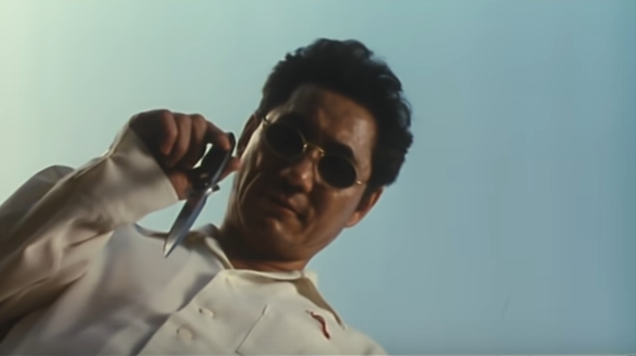
Showing posts with label Takeshi Kitano. Show all posts

Friday, 29 April 2022

Alternate Best Actor 1997: Results

5. Sam Lee in Made in Hong Kong - Lee gives an off-beat yet often poignant portrayal of a wannabe gangster.

Best Scene: Failing to be a gangster.
4. Takeshi Kitano in Hana-bi - Kitano gives a very specific yet potent performance that artful stoicism mixed in with punctuations of violence, sadness and love.

Best Scene: In the car with his wife.
3. John Cusack in Grosse Pointe Blank - Cusack gives a terrific subversion and execution of his typical rom com lead by being charming yet psychopathic all the same.

Best Scene: Breakfast.
2. Stellan Skarsgård in Insomnia - Skarsgård gives an uncompromising portrayal of a man who goes to the most vile extremes to do "good".

Best Scene: Seeing the cat.
1. Ray Winstone - Nil By Mouth - Winstone gives a bluntly brutal portrayal of visceral intensity, yet is also quietly heartbreaking as a man whose violence is defined by his painful vulnerability.
 
Best Scene: Nil by mouth. 
 
Next: 1997 Supporting

Friday, 8 April 2022

Alternate Best Actor 1997: Takeshi Kitano in Hana-bi

Takeshi Kitano did not receive an Oscar nomination for portraying Yoshitaka Nishi in Hana-bi.
 
Hana-Bi is a curious yet captivating mix of beauty and brutality, about a former police inspector dealing with two major tragedies in his life. 
 
The multi-talented Takeshi Kitano stars and directs this film, building an unusual tapestry around himself, and through himself as a tale about deep humanity and inhumanity often back to back or in the same scene. Although there is a tangible narrative going on Kitano directs the film with almost a stream of consciousness approach as the scenes move between each other with almost a dreamlike pace and manner. The idiosyncratic nature of this approach is perhaps most evident within Kitano's own performance, a performance that would be best described as austere. His typical state is that of a cold stare with typically any emotion obscured by a pair of ominous sunglasses that seem to detach his inspector from any more humanity. And in this sense, Kitano seems to craft the "badass" anti-hero of a more expected revenge thriller. Kitano's presence is of that calm cool, that killer's ease with a vicious ability to commit violent acts seemingly without a second thought in the scheme of things. His performance is much like his character, brutal and exact, though with a certain curiosity within that intensity. We learn that his character is defined by his wife dying from Leukemia and his former partner having been crippled from a botched police assignment. The brief scene setting up the latter seems most important as we see a different Nishi as he plans as a far more normal and grounded man. In fact in that scene Kitano portrays him as just a normal man planning, someone who isn't caught within this certain state the rest of the time. 

The rest of the time the performance largely is of this strict consistency of that cold stare, again usually obscure by sunglasses. Those moments of Nishi killing various Yakuza who try to get money from him or threaten him in a way. Mixed in with these rather wonderful moments that break from that. There are these brief moments where we get a different tone. Occasionally it is these playful scenes, although darkly so, like when he points a gun at a random passerby, before he goes to rob a bank, just as a joke and the sort of random demented yet comical manner that comes across Kitano's face is rather striking in this strange way. Even more remarkable though are the moments where we see Nishi with his wife as he takes her on a sort of vacation with his ill-gotten gains as she approaches her death. Kitano is quite wonderful in these moments with his wife, like when he is doing a card trick with her, as suddenly there is so much warmth between them, so much love, and there is such an earned sincere sweetness in Kitano's performance. You see a man who genuinely loves his wife, but more than that, you see the playfulness the two of them share together. They are genuinely fun together and you see what is a real loving couple here, even as these very sweet scenes come between scenes of such brutal violence. The most direct of this duplicity being a scene of Nishi's wife gather water for dead flowers while a man mocks her, leading Nishi to brutalize that man without mercy. 

As much as one can label this a "director's film" where this performance is by the director, I have to say I found myself transfixed by what Kitano was doing here as a performance even if it is but a facet of his tapestry he is painting. The exactness of his performance here though is fascinating in that he manages to play in his performance what he is creating in this film, which is this extreme dynamic between love and hate, gentleness and violence, comedy and tragedy. Kitano's performance can completely switch from scene to scene in terms of what he is conveying in a given moment, yet what he is conveying never seems at odds with each other. This even as he portrays a calm sadism when brutalizing one gangster after another, yet that doesn't seem ill-fitting from the strange compassion he seems to show towards his moments of thinking of his partner or the greatest of affections for his wife. Kitano's performance succeeds in creating the sense of a man who basically is filled with emotions towards the one's he loves, a pulled in emotion that drains him, yet is filled with the opposite kind of emotion towards those he hates as intensely. Kitano's performance works in creating a man who basically is in this state of a kind of insanity. He's not within his mind in a way, he's detached from life as he fashions some final mission for himself, and in that Kitano's performance works as this strange kind of gliding along. This as he'll enjoy a random moment of violence, comedy, or of love with the same amount of ease. This is a strange performance, but one that wholly worked for me even though the beats are technically limited in terms of overall range. Yet every moment is striking in revealing these different distinct moments that define the character that his performance left still such an impression even within the limitation. It's a performance about punctuation, careful singular notes between rests, and while that may handicap a typical performance, there is something about Kitano's presence here that overrides such considerations. Kitano makes Nishi's this one of a kind mix of the most extreme emotions, and a most powerful portrait of a man with a most unusual mix of brutal inhumanity and profound humanity.

Sunday, 20 March 2022

Alternate Best Actor 1997

And the Nominees Were Not:

Ray Winstone in Nil By Mouth
 
Takeshi Kitano in Hana-bi
 
Sam Lee in Made In Hong Kong 

John Cusack in Grosse Pointe Blank 
 
Stellan Skarsgård in Insomnia
And Reviews of:

Mark Wahlberg in Boogie Nights
 
Tony Leung Chiu-wai  in Happy Together

Monday, 11 May 2020

Alternate Best Supporting Actor 1983: Results

5. Michael Palin in The Meaning of Life - Although in a mixed bag of a film, Palin delivers on the best parts of that mixed bag in his various absurd comic turns.

Best Scene: "Every sperm is sacred"
4. Ian McDiarmid in Return of the Jedi- McDiarmid manages to create an instantly iconic villain that is playing on a known riff but in a different way.

Best Scene: Crossed sabres.
3. David Bowie in The Hunger - Bowie delivers again that fascinating enigmatic charisma of his, though also grants a haunting depiction of a man swiftly consumed by the ravages of age.

Best Scene: Old man seeing the pupil.
2. Jonathan Pryce in Something Wicked This Way Comes - Pryce gives an appropriately devious portrayal of a calm yet sinister omnipotent evil. 

Best Scene: The library.
1. Takeshi Kitano in Merry Christmas, Mr. Lawrence - Kitano gives a brilliant performance that depicts both the cruelty of a man designed by a terrible code, but also the compromised humanity still within that.

Best Scene: Final merry Christmas. 
Updated Overall

Next: 2014 Lead (though taking a brief hiatus to catch up on some 2020 releases, feel free to make any 2020 recommendations).

Monday, 4 May 2020

Alternate Best Supporting Actor 1983: Takeshi Kitano in Merry Christmas, Mr. Lawrence

Takeshi Kitano did not receive an Oscar nomination for portraying Sgt. Gengo Hara in Merry Christmas, Mr. Lawrence.

Takeshi Kitano must have one of the most multi-faceted careers for any actor, this being a host, a comedian, an editor, a writer, a director...and tap dancer, while evidently finding quite a bit of success in each of these endeavors. This evidently wasn't always the case as this film marked an important breakout attempt for him to no longer just be seen as a comedian as an attempt to be taken seriously. Although evidently this was met with laughter in his native Japan, which is a shame, though something he apparently eventually got over. Still a shame though as one just looking at Kitano's performance here, you might only gather he was best known as a comedian, because comedians can sometimes deliver brilliant one of the kind performances. Now his role is a decently worn one, that of the brutal enforcer in a POW camp, seemingly only second to the as brutal, though in a different way, to camp commandant Captain Yonoi (Ryuichi Sakamoto). This we see in the opening of the film Hara summons British POW liaison Lawrence (Tom Conti) to inspect a situation, where a Korean guard sodomized a prisoner. Kitano of course delivers the intensity needed and expected for such a role. This just being inherent, in making his quick gestures of violence as something he doesn't require a second thought for. This portraying just a casual quality in this behavior as a man whose done this for quite awhile and does have an ease at it. This even when casually doing to Lawrence when he speaks up against the actions of Hara and the Japanese in general.

This scene alone though is brilliant work from Kitano though as he instantly establishes Hara's manner towards Lawrence with this semi-congenial recognition of him, even though he doesn't eventually mind hitting him in the same scene. In the sequence itself though Kitano is fantastic in the way he portrays the cruelty of Hara, that is essential in portraying sort of the systematic nature of it based upon the Japanese army's culture. This as he mocks both men with a derisive attitude, less of a direct attack, and more of it as this type of grilling, though no less severe in this apprach. This though broken with these little asides where Hara mentions ideas to Lawrence with this strict sincerity, such as knowing the Japanese properly by seeing a man commit harakiri. Kitano's delivery of mentioning these ideas is with an earnest educational tone. He plays it as not extra cruelty to his British prisoner, but rather as though it is something he really wants to share with the man, as terrible of a thing as that is to share. Kitano though manages in this scene to show that Hara's firm beliefs in the imperial Bushido code are not just something he uses to be cruel, rather those beliefs are what encourages him to be cruel. This is as we see the disgraced guard attempt a sloppy harakiri, the glee upon Kitano's face as he prepares to second the man (i.e. cut his head off), is that with the pride as though he is performing essentially a religious right. This as something a proper soldier should do in his mind. There is nothing simple about the way Kitano expresses this, which is what is so important. This as even as he explains his actions to his Captain, with a bit of shyness, that Kitano shows of a soldier a bit unsure of himself in front of his commanding officer, but still with a direct belief as he describes the harakiri as something that would benefit the man, Kitano makes it the truth to Hara.

The crux of this performance is in his scenes with Tom Conti, as we see more than just a captor and captive. That is part of it, but not all of it. Although even within that we find the right nuance as Lawrence argues for the mistreated prisoner, Kitano brings that usual sort of underlying menace of a cruel guard, however also delivers a more casual incredulous quality when Lawrence speaks on them all being soldiers. Kitano creating as sense of Hara more than just as his role as this captor. This is expanded, on what is one of my favorite scenes in the film, when at night Hara comes to see Lawrence in the prison barracks, along with the new captured officer Celliers (David Bowie). I love Kitano in this scene as he wakes up Lawrence less as a cruel captain, and more of as a friend at sleepover hoping to get into just a little bit of mischief in the night. This as he brings this eagerness in his curiosity of someone just genuinely interested in this supposed great soldier, and the fascination is pure in such a wonderful way. Again Kitano finds sense, in the senseless in a way, as he brings such a reasoned honesty to Hara's extremist beliefs. This as we see him continue as he talks to Lawrence asking him why he wouldn't commit suicide. Kitano's fantastic because he doesn't use it in this berating tone, as we see the men just talking as men, and Kitano in turn shows a man genuinely interested in his fellow soldier. This as even his eyes bring this interest in the other man's views though, not that he agrees with them, but what Kitano expresses is a man finding a genuine camaraderie in this interaction. We see friendship in his eyes, even if the nature of the situation prevents it. There's an amazing moment where Hara's explain he enlisted when he was 17, this as he begins speaking the words with this quiet vulnerability, as a man who really wants to share something personal with Lawrence, though then as he tells it fully, he shifs to an attempted solder's menace as he notes his belief in giving his life to the emperor. Kitano in the moment shows so well both the soldier in Hara, but the man beneath it all. My favorite moment of the scene though is as he and Lawrence briefly interact with Celliers, this as again Kitano brings a near childlike amazement, as he and Lawrence sneak in the interaction like a couple kids.

We see then this better side come out of Hara in a great scene where he gets Celliers and Lawrence released from confinement. This as a drunken Hara, Kitano is terrific by expressing all the soldier's bluster being worn mostly away by drink, and a bit of goodwill. Kitano does this in this outstanding sort  of waves in his work in bringing glint of a stern expression though it gives way to the again that better man inside, with his endearing laughter from his drink, and his oh so perfect delivery of the titular line, because Kitano expresses as absolutely a wish of goodwill to his fellow man, and really friend. That is almost just the man, not the soldier, but we finally get purely just the man in Kitano's final scene. This being the final scene of the film after the war, where Hara is about to be executed for war crimes, but Lawrence visits him one more time. Kitano, who delivers the entire scene in English, is masterful in this scene. This bringing such a modesty to the moment showing Hara without any pretenses. This bringing in his performance the difficult expression of a man trying not to cry, though just almost the brink of it. This as Kitano is heartbreaking here as we see him reaching to Lawrence now purely as a friend. His line delivery regarding not understanding why he's being executed as his crimes were no different than any other soldier. While I don't quite agree with the sentiment, what I do agree with is the power found in this through Kitano's performance that again emphasizes this as truth. He shows a man who basically was raised with cruelty as the requirement to be a soldier, and in turn was cruel. There's no hypocrisy as Kitano speaks it with the strictest sincerity. This isn't without regret though as they note the death of another, and Kitano's expression does speak towards the unfortunate loss of life. The most remarkable aspect of the scene though is as the two briefly reminisce. The two striking up a chemistry of old friends once again, and we sense that the two, could've been the best of friends in a better world. Kitano's work here is simply incredible in offering such complex portrayal of a soldier bred towards cruelty yet still with humanity within him. Kitano's final seconds exemplifying this as they are again sheer perfection as he calls out Lawrence one more time, though for a last time in his soldier's voice, though as his face shows it as but joke as he wishes so poignantly one last humane "merry Christmas" to his friend.

Sunday, 3 May 2020

Alternate Best Supporting Actor 1983

And the Nominees Were Not:

Ian McDiarmid in Return of the Jedi

David Bowie in The Hunger


Jonathan Pryce in Something Wicked This Way Comes

Jason Robards in Something Wicked This Way Comes

Michael Palin in The Meaning of Life

Takeshi Kitano in Merry Christmas, Mr. Lawrence 


For prediction purposes:

Pryce

Friday, 15 November 2013

Alternate Best Supporting Actor 2000: Results

5. Billy Crudup in Almost Famous- Crudup gives a good performance by showing both the good and the bad qualities which make a rock star.

Best Scene: Russell takes William to a party.
4. Joe Pantoliano in Memento- Pantoliano unfortunately overacts a bit, but he makes up for much of it by giving a complex portrayal of a man who knows much more than what he says he knows.

Best Scene: Teddy tells Leonard the truth.
3. Oliver Reed in Gladiator- Reed gives a compelling performance as a former gladiator champion although his performance is weakened by the fact that it remains an unfinished work.

Best Scene: Proximo tells Maximus how he achieved his freedom.
2. Takeshi Kitano in Battle Royale- Takeshi Kitano gives an effective turn by being the evil teacher he should be, but as well by showing why this man has come to be this way.

Best Scene: Kitano reveals his dream.
1. Jason Isaacs in The Patriot- This part asks one thing of Isaacs which is to be evil, and boy is he. Isaacs gives a striking performance by being unrelenting in his portrayal of the sadism of his character, while never once using the nature of his character as an excuse to overact.

Best Scene: Gabriel's attack on the dragoons.
Overall Rank:
  1. Malcolm McDowell in Gangster No. 1
  2. Paddy Considine in A Room For Romeo Brass
  3. Emilio Echevarria in Amores Perros
  4. Joaquin Phoenix in The Yards 
  5. Song Kang-ho in Joint Security Area
  6. Kyle MacLachlan in Hamlet
  7. Jason Isaacs in The Patriot
  8. Takeshi Kitano in Battle Royale
  9. Oliver Reed in Gladiator
  10. Sean Connery in Finding Forrester
  11. Stephen Tobolowsky in Memento  
  12. Benicio Del Toro in Traffic
  13. Tim Blake Nelson in O Brother Where Art Thou?
  14. Patrick Warburton in The Emperor's New Groove 
  15. Sam Shepard in Hamlet
  16. James Woods in The Virgin Suicides
  17. Philip Seymour Hoffman in Almost Famous 
  18. Lucas Black in All the Pretty Horses
  19. Michael Douglas in Traffic 
  20. Joe Pantoliano in Memento
  21. Liev Schreiber in Hamlet
  22. Billy Crudup in Almost Famous
  23. Taro Yamamoto in Battle Royale 
  24. Issey Ogata in Yi Yi
  25. Tom Wilkinson in The Patriot 
  26. Don Cheadle in Traffic 
  27. James Caan in The Yards 
  28. We Nien-jen in Yi Yi
  29. David Thewlis in Gangster No. 1  
  30. Mads Mikkelsen in Flickering Lights
  31. Alvaro Guerrero in Amores Perros
  32. Sousuke Takaoka in Battle Royale 
  33. Larry Holden in Memento
  34. John Turturro in O Brother Where Art Thou?
  35. Jeffrey Wright in Shaft 
  36. Peter Stormare in Dancer in the Dark
  37. Heath Ledger in The Patriot 
  38. Brad Pitt in Snatch
  39. Kim Tae-woo in Joint Security Area
  40. F. Murray Abraham in Finding Forrester 
  41. John C. Reilly in The Perfect Storm
  42. Gary Oldman in The Contender  
  43. Tony Haygarth in Chicken Run
  44. John Goodman in O Brother Where Art Thou?
  45. Alex Cox in Herod's Law
  46. David Morse in Dancer in the Dark
  47. Vin Diesel in Boiler Room
  48. Paul Schnedier in George Washington
  49. Donald Sutherland in Panic 
  50. John Hawkes in The Perfect Storm
  51. Shin Ha-kyun in Joint Security Area
  52. Morgan Freeman in Nurse Betty
  53. Jack Black in High Fidelity
  54. Chris Cooper in The Patriot
  55. Gael Garcia Bernal in Amores Perros 
  56. Bill Murray in Hamlet
  57. Marlon Wayans in Requiem for a Dream
  58. Timothy Spall in Chicken Run
  59. Takashi Tsukamoto in Battle Royale
  60. Richard Harris in Gladiator
  61. Michael Badalucco in O Brother Where Art Thou?
  62. Greg Kinnear in Nurse Betty
  63. Christian Bale in Shaft 
  64. John Ritter in Panic
  65. Benjamin Whitrow in Chicken Run
  66. Charles Durning in O Brother Where Art Thou?
  67. Eddie Marsan in Gangster No. 1
  68. Michael Caine in Quills 
  69. Robert Downey Jr. in Wonder Boys
  70. Steven Culp in Thirteen Days 
  71. Daniel Van Bargen in O Brother Where Art Thou?
  72. Masnobu Ando in Battle Royale 
  73. Gary Lewis in Billy Elliot 
  74. Lennie James in Snatch
  75. Eric Stoltz in The House of Mirth 
  76. Alan Ford in Snatch
  77. Clifton Collins Jr. in Tigerland 
  78. Dennis Farina in Snatch
  79. Kevin Conway in Thirteen Days
  80. Miguel Ferrer in Traffic
  81. Frank Wood in Thirteen Days
  82. Gene Hackman in The Replacements 
  83. Stephen Graham in Snatch
  84. Robert Duvall in The 6th Day
  85. René Auberjonois in The Patriot
  86. Dylan Baker in Thirteen Days 
  87. Don Cheadle in Mission to Mars 
  88. Bruce Davison in X-Men 
  89. Vinnie Jones in Snatch
  90. Willem Dafoe in American Psycho 
  91. Paul Mooney in Bamboozled
  92. David Hemmings in Gladiator 
  93. Rade Serbedzija in Snatch
  94. Ian McKellen in X-Men 
  95. Jason Statham in Snatch
  96. Tchéky Karyo in The Patriot
  97. Ray Park in X-Men 
  98. Dennis Quaid in Traffic 
  99. Udo Kier in Shadow of the Vampire
  100. Patrick Stewart in X-Men
  101. Terence Stamp in Red Planet
  102. Will Patton in Remember the Titans
  103. Keanu Reeves in The Gift
  104. Ron Rifkin in Boiler Room
  105. Jeremy Irons in Dungeons & Dragons
  106. Joaquin Phoenix in Gladiator
  107. Luis Guzman in Traffic 
  108. Albert Finney in Erin Brockovich
  109. Giovanni Ribsi in The Gift
  110. Djimon Honsou in Gladiator 
  111. Leon Rippy in The Patriot
  112. Jeff Bridges in The Contender
  113. Noah Taylor in Almost Famous  
  114. Ruben Blades in All the Pretty Horses
  115. Giovanni Ribsi in Gone in 60 Seconds
  116. Derek Jacobi in Gladiator 
  117. James Brolin in Traffic 
  118. Tommy Davidson in Bamboozled
  119. Jack Lemmon in The Legend of Beggar Vance 
  120. David Paymer in Bait 
  121. Dennis Haysbert in Love and Basketball
  122. Mark Boone Junior in Memento
  123. Paul Giamatti in Big Momma's House 
  124. Peter Woodward in The Patriot
  125. Xander Berkeley in Shanghai Noon
  126. Albert Finney in Traffic
  127. David Morse in Bait 
  128. Owen Wilson in Meet the Parents
  129. Eddie Izzard in Shadow of the Vampire 
  130. Greg Kinnear in The Gift
  131. Donnie Yen in Highlander Endgame 
  132. James Mardsen in X-Men
  133. Sam Elliot in The Contender
  134. Michael Clarke Duncan in The Whole Nine Yards
  135. Roger Yuan in Shanghai Noon
  136. Change Chen in Crouching Tiger, Hidden Dragon
  137. James Rebhorn in Meet the Parents 
  138. Adam Baldwin in The Patriot 
  139. Kevin Pollak in The Whole Nine Yards
  140. Carey Elwes in Shadow of the Vampire
  141. Topher Grace in Traffic
  142. Joey D. Vieira in The Patriot 
  143. Christian Slater in The Contender
  144. Jay Arlen Jones in The Patriot
  145. Tom Sizemore in Red Planet 
  146. Tobey Maguire in Wonder Boys
  147. Johnny Depp in Before Night Falls  
  148. Vincent D'Onofrio in The Cell
  149. Donal Logue in The Patriot 
  150. Johnny Depp in Chocolat
  151. Aaron Eckhart in Erin Brockovich
  152. Jason Lee in Almost Famous 
  153. Thomas Jefferson Byrd in Bamboozled
  154. Doug Hutchison in Bait
  155. Gregory Smith in The Patriot
  156. Orland Jones in Bedazzled 
  157. Mos Def in Bamboozled
  158. Christopher Eccleston in Gone in 60 Seconds
  159. Jerry O'Connell in Mission to Mars
  160. Rainn Wilson in Almost Famous
  161. Toby Huss in Bedazzled
  162. Will Smith in The Legend of Beggar Vance 
  163. Henry Thomas in All the Pretty Horses
  164. Shawn Ashmore in X-Men
  165. The Cast of The Grinch
  166. Larry Miller in The Nutty Professor II
  167. John Ales in The Nutty Professor II 
  168. Savior Glover in Bamboozled
  169. Cast of Little Nicky
  170. Cast of Road Trip
  171. Tyler Mane in X-Men 
  172. Chris Rock in Nurse Betty 
  173. Michael Rappaport in Bamboozled
  174. Forest Whitaker in Battlefield Earth
  175. Bruce Payne in Highlander Endgame
  176. Bruce Payne in Dungeons & Dragons
  177. Marlon Wayans in Dungeons & Dragons
Next Year: 1981 Lead

Tuesday, 12 November 2013

Alternate Best Supporting Actor 2000: Takeshi Kitano in Battle Royale

Takeshi Kitano did not receive an Oscar nomination for portraying Kitano in Battle Royale.

Battle Royale is a gruesome and effective film about a class of Japanese students pit against each other in a game of death until only one student is left living.

Takeshi Kitano plays the only major character in the film who is not a student. He plays one of the two villains of the piece, the other is a psychotic special student sent in as a ringer of sorts to the game. Kitano plays the most dangerous villain since the guy from Bill and Ted's Bogus Journey because there is nothing worse than an evil gym teacher, yes Kitano is not technically a gym teacher but the way he dresses makes him look like one. Kitano plays well Kitano the class's former teacher who disappeared after being assaulted by one of the students, he returns though to be their new instructor, the instructor to tell them that they will be playing a most unusual game as a group.

Kitano makes a strong impression in his early scene as he welcomes the class back. Kitano, although does hide a secret with his performance which I will get to, takes a brilliant approach of playing his namesake still as a teacher even with what he does as he introduces the game. Kitano brings a disturbing ease in his performance as he seems to treat this class as any other day of schooling. He is that of the teacher casually fielding questions just like a normal teacher would, trying to call the kids attention to the educational video by acting interested in it himself, and even distributing punishment like a teacher. When someone speaks out of turn or something, Kitano does not stress the fact, but quickly raises then quiets his voice ending the problem swiftly, although he murders the kids unlike a normal teacher.

That is Kitano's major scene and he delivers exceptionally well by just delivering the scene as if Kitano was a proper instructor except one who uses a particularly twisted method to handle his class. Throughout the rest of the film Kitano comes in and out mostly to announce which students have been killed. These moments he continues his method of being the mentor of sorts in his announcements as he sometimes derides their behavior, or encourages them in some understated way. Kitano still has his secret he is holding though that slowly comes out as the film progresses as we see how he spends some of his time as the games go on around him. The secret being that his blase attitude is not from him being evil, but rather Kitano's attitude comes from being depressed.

Kitano is very interesting the whole way he plays this depression, because he honestly plays it a down to earth fashion and it somehow fits in with his absurdest nature of his character. Kitano shows it very bluntly that he has had his spirit destroyed not only by the way the class treated him, but as well because his own daughter hates him as well. Kitano is even strangely moving because he is very genuine in these moments and goes about playing this part of Kitano in a realistic fashion. Kitano though tries to deal with his depression though by clinging onto one idea that remains hidden for most of the film, until it is finally revealed near the end of the film when Takeshi Kitano once more becomes the star of the movie.

Takeshi Kitano is excellent in this scene in combining the conflicting nature of his role into one brilliant finale for his character. On one side we see that Kitano has been wanting one of the girls to win the game. Kitano carefully portrays this not as a creepy lust, although it is creepy, but rather a much more pure love as she is the only young person who has shown him any love including his own daughter. In the same scene we get his twisted sensibility too especially in his great exit to the film. He makes the absurd exit have a great impact because he plays so perfectly straight. He manages to make Kitano more than just an evil teacher, although he does do that too, giving a oddly complex and powerful portrayal of a man who has lost his connection to the next generation.

Friday, 8 November 2013

Alternate Best Supporting Actor 2000

And the Nominees Were Not:

Billy Crudup in Almost Famous

Takeshi Kitano in Battle Royale

Oliver Reed in Gladiator

Jason Isaacs in The Patriot

Joe Pantoliano in Memento