Showing posts with label Henry Fonda. Show all posts

Tuesday, 7 March 2017

Alternate Best Actor 1937: Results

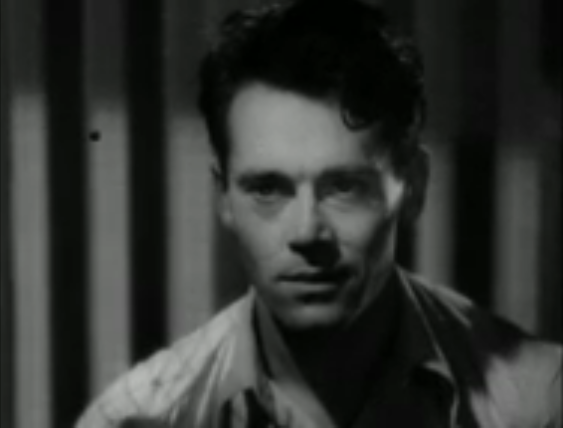
5. Henry Fonda in You Only Live Once - Though he only gets to scratch the surface Fonda is able to tap into a darker side of his onscreen persona to give an effective portrayal of a man destroyed by his desperate situation.

Best Scene: Broken Cup.
4. Edward G. Robinson in Kid Galahad - A limited role yet Robinson excels as usual giving an entertaining yet moving portrayal of a boxing promoter who finds his conscience.

Best Scene: Final Confrontation. 
3. Robert Donat in Knight Without Armour - The underrated Donat as usual offers such a genuine presence that brings some much needed weight to his romantic historical thriller.

Best Scene: Train escape.
2. Ronald Colman in The Prisoner of Zenda - Colman excels as both in his portrayal as the fearful King, and as through his incredibly charming, humorous yet passionate performance as the well meaning doppelganger.

Best Scene: Final Battle. 
1. Jean Gabin in Pepe Le Moko - Good Predictions Anonymous, Luke, Tahmeed, Giuseppe, John Smith and Michael McCarthy. Jean Gabin gives a great performance that realizes the suave style of his flamboyant thief but also gives a moving depiction of the frustrated man pained by his circumstances.

Best Scene: Watching the boat.
Updated Overall Lead
Updated Overall Supporting

Next Year: 1947 Lead (I'll take any supporting suggestions as well)

Tuesday, 28 February 2017

Alternate Best Actor 1937: Henry Fonda in You Only Live Once

Henry Fonda did not receive an Oscar nomination for portraying Eddie Taylor in You Only Live Once.

You Only Live Once is a somewhat effective film, Fritz Lang always seems like he's being a little held back in his American films, about an ex-convict attempting to reform yet falling into a series of unfortunate circumstances.

As with his friend Jimmy Stewart very few of Henry Fonda pre-1939 films receive much mention. The period in the 30's is interesting for both of them as you can see the development towards their onscreen persona that they would be best known for. Fonda, like Stewart, was sometimes cast as the romantic lead often in very simple roles. That is what appears you'll find here in You Only Live Twice. There are hints of another turn, but early on it feels like it may be a fairly straight forward romance film between Fonda's Eddie and his wife Joan (Sylvia Sydney). As one would expect Fonda is charming enough, though his aw shucks routine never was quite as as endearing as old Stewart's. He still makes Eddie likable enough just as his fortunes begin to turn south because of his history as an ex-con.

As the film takes its darker turn, where Eddie is wrongly accused and convicted of murder as well as sentenced to death by the electric chair, Fonda is actually challenged within the role after this point. There is further challenge though in the structure of the film as well though which often gives as much of an emphasis on those around Eddie than Eddie himself. Fonda though actually is quite good even early on in conveying the underlying sense of discontent in Eddie as he is consistently given the short end for his background. He's mostly aw shucks, but he does grant bit of darkness in there alluding to the background as well. When he's actually put in prison Fonda helps to carry the tone away from the earlier lighter style to where it goes, and where it goes is actually fairly surprising. This is not a story about an innocent man being put away and it just focusing on him getting out. In fact it actually feels at least little bit like Straight Time with Eddie's descent basically caused by societies refusal to believe that he can reform.

When Eddie is taken to prison, and basically given a set date for his own death, Fonda's performance reflects the anguish of this. He drops any notion of an aw or shucks in his honest portrayal of the disbelief at his terrible luck, but also even a definite intensity portraying the man's hatred against the lot he's been given. As it seems as though nothing will turn in his favor the film actually depicts Eddie attempting suicide. It is a great scene for Fonda as he so powerfully exudes the despair in Eddie as he begins to fashion his "tool", but also still gives this certain discontent as though Eddie is doing it in part to at least get something his way for once. Eddie is saved though just to be killed which leads to an escape attempt. Again Fonda manages to take the role where it needs to go in depicting the viciousness in Eddie as he lashes out believing that almost everyone has wronged him. Fonda maintains a descent in Eddie even after he escapes with his wife and they go out on a lamb. He importantly never returns any happiness in Eddie even as they seem to have a chance, staying true to the character as kind of a broken man. The film itself could have been better if it gave more time for Fonda to develop this progression, though he does well with the little he has it doesn't quite have the impact it could have. The performance though is strong, while doesn't hit the heights of his later work, it does suggest that same talent.

Monday, 27 February 2017

Alternate Best Actor 1937

And the Nominees Were Not:

Ronald Colman in The Prisoner of Zenda

Robert Donat in Knight Without Armour

Jean Gabin in Pepe Le Moko

Henry Fonda in You Only Live Once

Edward G. Robinson in Kid Galahad

Thursday, 10 March 2016

Alternate Best Actor 1939: Results

5. Henry Fonda in Young Mr. Lincoln - Fonda gives an atypical performance as Lincoln, but an effective one finding the right charisma within an unassuming personality.

Best Scene: Lincoln stops a Lynching.
4. Conrad Veidt in The Spy in Black - Veidt effectively humanizes his character making his German spy far more than just a villain who needs to be stopped.

Best Scene: The ending. 
3. Basil Rathbone in The Hound of Baskervilles - Rathbone earns his place as the most iconic Sherlock Holmes by giving a well rounded portrayal of the character. As he delivers the right command in the role, but also finds a certain humor which never undercuts the gravity of the situation.

Best Scene: Holmes's introduction
2. James Cagney in The Roaring Twenties - As per usual Cagney gives a strong portrait of an intimidating gangster, but also as per usual he ends up being surprisingly moving as well.

Best Scene: Eddie's final confrontation with George. 
1. Charles Laughton in The Hunchback of Notre Dame - Laughton gives a downright brilliant performance capturing the physicality needed for Quasimodo, and the emotional core of the character in heartbreaking detail.

Best Scene: "why was i not made of stone like thee"
Overall Ranking:
  1. Charles Laughton in The Hunchback of Notre Dame
  2. Clark Gable in Gone With The Wind
  3. James Stewart in Mr. Smith Goes to Washington
  4. Laurence Olivier in Wuthering Heights
  5. Robert Donat in Goodbye, Mr. Chips
  6. James Cagney in The Roaring Twenties
  7. Basil Rathbone in The Hound of Baskervilles
  8. Conrad Veidt in The Spy in Black
  9. William Powell in Another Thin Man 
  10. John Wayne in Stagecoach
  11. Cary Grant in Only Angels Have Wings 
  12. Basil Rathbone in The Adventures of Sherlock Holmes
  13. Henry Fonda in Young Mr. Lincoln
  14. Edmond O'Brien in The Hunchback of Notre Dame 
  15. William Holden in Golden Boy
  16. Stan Laurel in The Flying Deuces
  17. Oliver Hardy in The Flying Deuces
  18. Brian Aherne in Juarez
  19. Gary Cooper in Beau Geste
  20. Ray Milland in Beau Geste 
  21. John Clements in The Four Feathers
  22. Melvyn Douglas in Ninotchka
  23. Victor McLaglen in Gunga Din
  24. Nigel Bruce in The Hound of Baskervilles 
  25. Paul Muni in Juarez 
  26. Cary Grant in Gunga Din
  27. George Brent in Dark Victory
  28. Charles Boyer in Love Affair
  29. Henry Fonda in Drums Along the Mohawk
  30. Mickey Rooney in Babes in Arms
  31. Tyrone Power in Jesse James
  32. Robert Kent in Convict's Code
Next Year: 1939 Supporting

Friday, 4 March 2016

Alternate Best Actor 1939: Henry Fonda in Young Mr. Lincoln

Henry Fonda did not receive an Oscar nomination for portraying Abraham Lincoln in Young Mr. Lincoln.

Young Mr. Lincoln is a good film that covers the very early life of Abraham Lincoln, focusing upon his defense of two suspected murderers.

Daniel Day-Lewis's Oscar winning turn as Abraham Lincoln was often noted for his use of a higher pitched, said to be more accurate, voice in his portrayal of Abe Lincoln. That was not the first higher pitch voiced Lincoln to be found, as that's what one will hear in Henry Fonda's performance as Lincoln. Now to be fair it really is basically Fonda's normal voice, which happens to be a great fit, though I don't think the similarities to Day-Lewis's work stop there by any means though. Fonda is made in the film to look more like Lincoln, perhaps slightly overdone in terms of the nose. However Fonda does not just leave the makeup to do the work as he attempts to imitate the man. It's pretty fascinating since unlike imitating someone from modern times Fonda only had paintings and photographs to go off of. Fonda though captures the unique manner of Lincoln found in those sources from his very proper posture, to even the way he sits upon a railing. It never feels like artifice and Fonda manages to make it feel like a natural aspect of the character.

Now this being a biography film of the period means it's not going to be all that hard hitting so to speak. We are given a fairly simple portrait of Abe Lincoln as well an honest guy of course, and his actual biographical portion is pretty short. We only given a glimpse into his relationship with Mary Todd, and his tragic one with Ann Rutledge is shown to be especially short here. To Fonda's credit though he is thoroughly charming in the moments we are given for those possible romances, and manages to make Ann's loss rather moving despite just how swiftly it is handled. The scenes depicting Lincoln out of the public eye are indeed very few though Fonda still succeeds in making a believable depiction of an honest man. Fonda never feels as though he is forcing these qualities and just exudes them as he should. He earns Lincoln's stature, and no not just his height, and makes for a convincing honest Abe. The highlight of his performance though comes in the highlight of the film where he must go about defending two men accused of murder.

In the murder trial, as well as when Lincoln stops a lynch mob the night before, is where the comparisons to Day-Lewis's later work can be freely made. That is again his higher pitched voice is not all there is in terms of his similarities. Fonda goes about carrying himself not as that imposing sort of leader type that say was the way Walter Huston portrayed him in Abraham Lincoln. Fonda gives a nicely relaxed performance, that probably makes his mannerisms also come off as more authentic, as he portrays Lincoln not as man who forces his views or intelligence upon others. Instead Fonda so well conveys the easygoing nature of the man who convinces others to follow his lead almost through a friendly talk, not unlike Day-Lewis's later approach. The attempted lynching scene is absolutely brilliantly played by Fonda as he brings upon a certain self deprecating humor into Lincoln's argument that makes him persuasive in such an unassuming yet wholly effective fashion. Fonda is able to carry a fierce determination in his eyes, but always channels that determination in an understated fashion. The same goes for the trial itself as Fonda rarely even raises his voice so eloquently realizing a true statesman who convinces through a certain goodwill rather than outrage. Fonda suggests a man who allows the person he's trying to persuade choose for himself, he just simply helps the man find the right path. Fonda has that needed magnetism here as one can see the great president he will become even though we never get close to that part of the story here. I would not have minded if the film continued to allow Fonda to depict more of Lincoln's life because his approach here is noteworthy, and I can't help but wonder if he might have influenced Day-Lewis take on the man. It's very strong work from Fonda even within the limitations of the role and the film's story line.

Thursday, 3 March 2016

Alternate Best Actor 1939

And the Nominees Were Not:

Charles Laughton in The Hunchback of Notre Dame

Conrad Veidt in The Spy in Black

Henry Fonda in Young Mr. Lincoln

James Cagney in The Roaring Twenties

Basil Rathbone in The Hound of Baskervilles

Sunday, 16 November 2014

Alternate Best Actor 1946: Results

5. David Niven in A Matter of Life and Death - Niven, despite a strong start, gives an adequate performance but one that is overshadowed both by the supporting players and the film's direction.

Best Scene: Peter's "goodbye".
4. Henry Fonda in My Darling Clementine - The film doesn't really do much with Wyatt Earp as a character but Fonda still manages to gives a solid leading turn befitting the film.

Best Scene: The O.K. Corral
3. Van Heflin in The Strange Love of Martha Ivers - Van Heflin gives a surprisingly charming performance that carefully maneuvers around the film's intensely melodramatic story. 

Best Scene: Sam leaves the house as well as his past.
2. Jean Marais in Beauty and the Beast - He makes for an appropriately jerky villain but as well brings the right humanity and animal into his earnest depiction of the beast.

Best Scene: Just before the transformation.
1. Dana Andrews in The Best Years of Our Lives - Good Prediction RatedRStar, mcofra7, and Luke. Andrews gives a powerful understated portrayal of man repressing his anguish of the war as he faces civilian life once again.

Best Scene: Fred visits an old bomber.
Overall Rank:
  1. James Stewart in It's A Wonderful Life
  2. Charles Boyer in Cluny Brown 
  3. Fredric March in The Best Years of Our Lives
  4. Dana Andrews in The Best Years of Our Lives
  5. Humphrey Bogart in The Big Sleep
  6. Jean Marais in Beauty and the Beast 
  7. Franco Interlenghi in Shoeshine
  8. Dan Duryea in Black Angel 
  9. Boris Karloff in Bedlam 
  10. Michel Simon in Panique   
  11. Van Heflin in The Strange Love of Martha Ivers
  12. Trevor Howard in I See a Dark Stranger 
  13. Louis Jouvet in A Lover's Return 
  14. Paul Muni in Angel on My Shoulder
  15. Cary Grant in Notorious
  16. Burt Lancaster in The Killers
  17. John Mills in Great Expectations 
  18. Ray Milland in Kitty 
  19. Pierre Blanchar in The Pastoral Symphony
  20. Paul Bernard in Panique  
  21. Orson Welles in Tomorrow is Forever 
  22. William Borchert in The Murderers Are Among Us
  23. Henry Fonda in My Darling Clementine
  24. Peter Lorre in Three Strangers  
  25. Yves Montand in Gates of the Night 
  26. Gérard Philipe in L'Idiot 
  27. Edmond O'Brien in The Killers  
  28. Edward G. Robinson in The Stranger
  29. Basil Rathbone in Terror By Night  
  30. David Niven in A Matter of Life and Death
  31. Claude Jarman Jr. in The Yearling 
  32. Carl Radditz in Unter den Brücken
  33. Gustav Knuth in Unter den Brücken
  34. Dana Andrews in Canyon Passage 
  35. John Garfield in Humoresque 
  36. Rinaldo Simordoni in Shoeshine 
  37. Peter Lorre in The Verdict 
  38. Sydney Greenstreet in The Verdict 
  39. Vincent Price in Dragonwyck 
  40. Lew Ayres in The Dark Mirror 
  41. Sydney Greenstreet in Three Strangers 
  42. Orson Welles in The Stranger
  43. Glenn Ford in Gilda
  44. John Garfield in The Postman Always Rings Twice
  45. Dean Stockwell in The Green Years
  46. Alan Ladd in The Blue Dahlia
  47. Tom Drake in The Green Years
  48. Gregory Peck in The Yearling
  49. Bud Abbott in The Time of Their Lives
  50. Lou Costello in The Time of Their Lives
  51. Fred Astaire in Blue Skies 
  52. Bob Hope in The Road to Utopia
  53. Bing Crosby in The Road to Utopia
  54. Joseph Cotten in Duel in the Sun 
  55. Philip Dorn in I've Always Loved You 
  56. Tyrone Power in The Razor's Edge
  57. Cary Grant in Night and Day 
  58. Gregory Peck in Duel in the Sun  
  59. Bing Crosby in Blue Skies 
  60. Larry Parks in The Jolson Story
  61. Rex Harrison in Ann and The King of Siam 
Next Year: 1946 Supporting

Alternate Best Actor 1946: Henry Fonda in My Darling Clementine

Henry Fonda did not receive an Oscar nomination for portraying Wyatt Earp in My Darling Clementine.

My Darling Clementine is a decent enough, although especially inaccurate I mean it seems to almost go out of its way in this regard having Morgan Earp the only surviving brother even though he was the only one who died in Tombstone, telling of Wyatt Earp's time as the Marshall of Tombstone as he faces off against the Clantons.

Henry Fonda plays the famous and often portrayed Wyatt Earp, but My Darling Clementine isn't really trying to represent the historical Earp nor is it really realizing much of its own vision regarding the man. Fonda would go on to portray a rather negative depiction of an Earp like character in Warlock but in this film, as written, Earp is more of just a pretty standard western hero. The film makes brief mention of his earlier days in law enforcement but they are mostly glossed over in favor of him being a fairly typical hero you'd expect in a John Ford western. He comes in with his brothers to Tombstone with cattle, and is just looking to make a new life for himself much like many a standard heroes. This is only continued when he gets wrong by someone leaving him to have to stay in Tombstone to find the culprits again in a pretty standard hero sort of fashion.

Henry Fonda's performance though does work well enough within this extremely limited version of Wyatt Earp in which every part of him is pretty muted as written. The history of the character is only mentioned without giving any more depth to the man, his brothers are non-entities, and he's barely even friends with Doc Holliday (Victor Mature). In fact they are slightly antagonistic to one another before Holliday helps at the end to get revenge. Even the antagonism between the two is pretty simplified to the point of Earp just saying for Holliday not tell people they need to get out of town. Then there is Earp's romance with the titular Clementine which never amounts to anything more than a few longing glances from Earp since she is far more interested in Holliday than him. This is altogether a pretty thin role and really it's only in the depiction of Earp's vengeance for his brothers that the film illustrates much about the character.

The character is actually pretty much left to Fonda himself since Earp's most defining feature throughout the film is to want to keep the peace despite the rowdy nature of almost everyone around him. Fonda certainly brings the needed presence and command for a part such as his, but really what he adds to most is the slightly humorous touches he brings to his character. It isn't that this is even a funny performance exactly but rather Fonda has this certain ease in all the standard western moments that manages to lighten them up a bit. Now he goes the exact opposite when Earp gets his revenge which is rather brief actually, but Fonda certainly brings the needed intensity when it is called upon him. This is hardly the definitive portrayal of Wyatt Earp by any means, but that's always feels like it is the writing's fault not Fonda's. I don't think I've found that definitive performance yet, but on its own Fonda gives a solid enough leading turn in a John Ford western.

Monday, 10 November 2014

Alternate Best Actor 1946

And the Nominees Were Not:

David Niven in A Matter of Life and Death

Jean Marais in Beauty and the Beast

Dana Andrews in The Best Years of Our Lives

Van Heflin in The Strange Love of Martha Ivers

Henry Fonda in My Darling Clementine

Wednesday, 24 July 2013

Alternate Best Actor 1943: Results

5. Claude Rains in The Phantom of the Opera- Rains is held back by his film but he manages to be both rather sympathetic, and effectively evil in this film.

Best Scene: The Phantom's Face is revealed.
4. Henry Fonda in The Ox-Bow Incident- Fonda is overshadowed by other elements in his film, but he is consistently solid and exceptional in one scene.

Best Scene: Gil reads Donald Martin's letter.
3. Charles Laughton in This Land is Mine- Laughton gives a strong performance that makes the transition from cowardice to bravery believable.

Best Scene: Albert watches as his friend is executed.
2. Roger Livesey in The Life and Death of Colonel Blimp- Livesey's performance is one of the finest examples of portraying the progression of a character over time and through experiences.

Best Scene: Candy reunites with Theo.
1. Joseph Cotten in Shadow of a Doubt- Good Prediction Psifonian feel free to name a request. Cotten easily wins this year with his incredible charming and chilling performance as a man with dark secret he wants to hide.

Best Scene: Uncle Charlie tells young Charlie about the true nature of the world.
Overall Rank:
  1. Joseph Cotten in Shadow of A Doubt
  2. Roger Livesey in The Life and Death of Colonel Blimp
  3. Paul Lukas in Watch on the Rhine
  4. Charles Laughton in This Land is Mine
  5. Eddie Bracken in The Miracle of Morgan's Creek
  6. Orson Welles in Jane Eyre
  7. Pierre Fresnay in La Main Du Diable
  8. Pierre Fresnay in Le Corbeau
  9. Joel McCrea in The More the Merrier 
  10. Mickey Rooney in The Human Comedy
  11. Henry Fonda in The Ox-Bow Incident
  12. Ralph Richardson in The Silver Fleet
  13. Claude Rains in Phantom of the Opera
  14. Humphrey Bogart in Sahara 
  15. Robert Donat in The Adventures of Tartu
  16. Franchot Tone in Five Graves to Cairo
  17. Joseph Cotten in Journey Into Fear
  18. James Mason in The Man in Grey
  19. Massimo Girotti in Ossessione
  20. Monty Woolley in Holy Matrimony
  21. Charles Boyer in The Constant Nymph
  22. Don Ameche in Heaven Can Wait 
  23. Hans Albers in Münchhausen
  24. Susumu Fujita in Sanshiro Sugata
  25. Fred MacMurray in Above Suspicion
  26. Frank Morgan in A Stranger in Town
  27. Errol Flynn in Edge of Darkness 
  28. Ralph Morgan in Hitler's Madman
  29. Thorkild Roose in Day of Wrath
  30. Preben Lerdorff Rye in Day of Wrath 
  31. Gary Cooper in For Whom The Bell Tolls
  32. Walter Pidgeon in in Madame Curie 
  33. Stewart Granger in The Man in Grey
  34. Eddie Anderson in Cabin in the Sky
  35. Dana Andrews in The North Star
  36. Farley Granger in The North Star 
  37. Richard Carlson in A Stranger in Town
  38. Alan Curtis in Hitler's Madman
Next Year: 1943 Supporting

Alternate Best Actor 1943: Henry Fonda in The Ox-Bow Incident

Henry Fonda did not receive an Oscar nomination for portraying Gil Carter in The Ox-Bow Incident.

The Ox-Bow Incident is a very powerful film about a reckless posse that catches three men with the intention of lynching as they believe they have killed a local rancher.

Henry Fonda plays one of the men in the posse although he is rather different from most of the men. His character Gil Carter, although originally from the rough dead end town, is now an outsider who only goes along with the posse so that he and his friend (Harry Morgan) are not accused of anything themselves. There isn't anything particularly special about Fonda's performance early on as he just is a fairly standard type of main character who occasionally gets a little agitated by the stupidity of some of the towns' folk around him. It is fairly limited, but to Fonda's credit he does play it exactly as he should.

As the film proceeds the film almost becomes an ensemble piece. Fonda is the lead of the film, but really just barely leading. Fonda though his consistently solid in his portray of Gil, and does well in portraying his character's fairly cynical outlook during the whole process of deliberation on whether or not to lynch the man. Fonda's expression of defeat conveys a lot of almost an acceptance of the terrible deeds of the others, but importantly there are the pivotal moments where Gil does speak up passionately against the wrongs committed by the posse. These are short moments for sure but Fonda gives them the strength they need through his almost trademark righteous passion.

His best scene in the film doesn't come in one of his louder passionate moments but instead a quiet scene as he reads the letter of one of the condemned men to the lynching party. Fonda delivery of this scene is fantastic as he brings the poignancy to the scene in an effortless fashion. It is a great moment as through his performance he brings out the beauty of the words that are filled not with moral outrage but rather a sadness and pity for the terrible deeds committed by the men. That scene makes this a memorable turn by Henry Fonda. Otherwise he mostly serves his character and the film just as he should even though he is mostly overshadowed. The true power of this film belongs to another performance which I will be getting to very soon.

Thursday, 18 July 2013

Alternate Best Actor 1943

And the Nominees Were Not:

Henry Fonda in The Ox-Bow Incident

Roger Livesey in The Life and Death of Colonel Blimp

Joseph Cotten in Shadow of a Doubt

Charles Laughton in This Land is Mine

Claude Rains in Phantom of the Opera

Wednesday, 20 February 2013

Alternate Best Actor 1968: Results

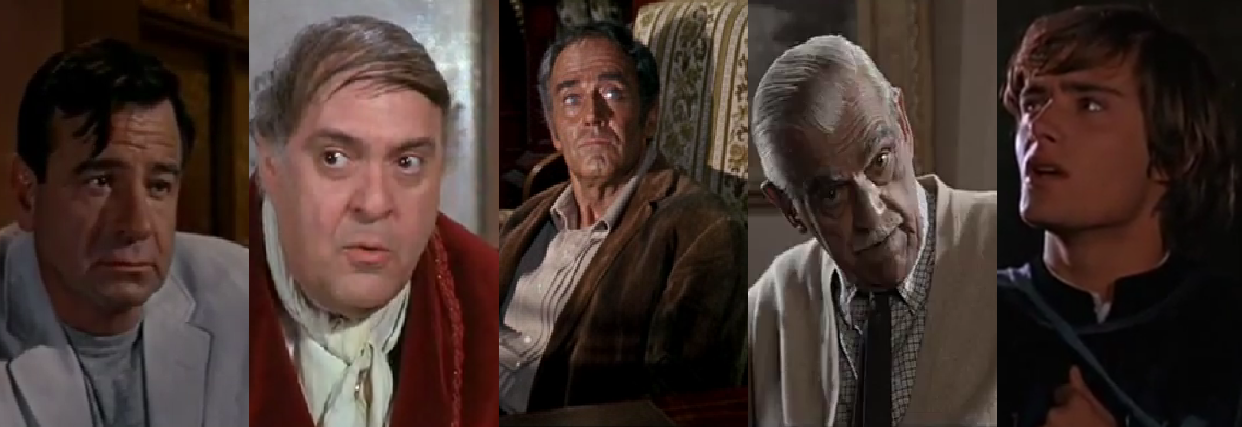
5. Leonard Whiting in Romeo and Juliet- Whiting gives an earnest performance even though he is overshadowed by most of the cast around him.

Best Scene: Romeo sees Juliet for the first time. 
4. Boris Karloff in Targets- Karloff gives an entertaining performance that is a very nice reflection on his entire career.

Best Scene: The old monster stands up to the new one. 
3. Zero Mostel in The Producers- Mostel gives an enjoyable performance that leads his film well being a comedic as well as likable con man.

Best Scene: Max and Leo first meet. 
2. Walter Matthau in The Odd Couple- Matthau gives an entertaining performance which succeeds in creating a memorable dynamic with his co-star Jack Lemmon.

Best Scene: Oscar is finally pushed too far by Felix's behavior.
1. Henry Fonda in Once Upon a Time in The West- Fonda easily wins from this line up, but I am not sure about the entire year yet. As I will probably be watching the Lion in Winter again soon I'll be able to be sure then. Anyway Fonda is at least gives one of the greatest performances of 1968 by turning his usual screen persona into a very memorable and chilling villianous turn that helps makes his film as great as it is.

Best Scene:  Frank and Harmonica's duel.
  1. Burt Lancaster in The Swimmer
  2. Nicol Williamson in The Bofors Gun
  3. Charles Bronson in Once Upon a Time in the West
  4. Peter O'Toole in The Lion in Winter
  5. Jack Albertson in The Subject Was Roses
  6. Tatsuya Nakadai in Kill
  7. Max von Sydow in Shame
  8. Alan Bates in The Fixer
  9. Alan Arkin in The Heart is a Lonely Hunter
  10. David Warner in The Bofors Gun
  11. Walter Matthau in The Odd Couple
  12. Terence Stamp in Toby Dammit
  13. Robert Shaw in The Birthday Party
  14. Toshiro Mifune in Hell in the Pacific 
  15. Nicol Williamson in Inadmissible Evidence
  16. Ossie Davis in The Scalphunters
  17. Anthony Perkins in Pretty Poison
  18. Martin Sheen in The Subject Was Roses  
  19. Lee Marvin in Hell in the Pacific
  20. Burt Lancaster in The Scalphunters
  21. Anthony Quinn in The Shoes of the Fisherman
  22. Max von Sydow in Hour of the Wolf
  23. Boris Karloff in Targets 
  24. Richard Burton in Where Eagles Dare  
  25. Harvey Keitel in Who's That Knocking At My Door
  26. Malcolm McDowell in If....
  27. Peter Ustinov in Blackbeard's Ghost 
  28. Clint Eastwood in Hang Em High
  29. Jean-Pierre Leaud in Stolen Kisses
  30. Jack Lemmon in The Odd Couple
  31. Steve McQueen in Bullitt
  32. Cliff Robertson in Charly 
  33. Sidney Poitier in For Love of Ivy
  34. Jean-Louis Trintignant in The Great Silence
  35. David Hemmings in The Charge of the Light Brigade
  36. Terence Stamp in Teorema 
  37. George Segal in No Way to Treat a Lady 
  38. Jean-Louis Trintignant in The Man Who Lies
  39. Peter Sellers in The Party
  40. Etsushi Takahasi in Kill!
  41. Ron Moody in Oliver!
  42. Hywel Bennett in Twisted Nerve
  43. Duane Jones in Night of the Living Dead  
  44. Fred Astaire in Finian's Rainbow
  45. Rod Steiger in The Sergeant
  46. John Marley in Faces 
  47. Vincent Price in Witchfinder General 
  48. Henry Fonda in The Boston Strangler
  49. Leonard Whiting in Romeo and Juliet
  50. Laurent Terzieff in Woman in Chains
  51. Clint Eastwood in Where Eagles Dare
  52. Frank Sinatra in The Detective
  53. Keir Dullae in 2001: A Space Odyssey
  54. Charlton Heston in Planet of the Apes 
  55. Bernard Fresson in Woman in Chains
  56. Steve McQueen in The Thomas Crown Affair 
  57. Dick van Dyke in Chitty Chitty Bang Bang 
  58. Franco Nero in The Mercenary
  59. Dean Jones in Blackbeard's Ghost 
  60. Omar Sharif in Funny Girl 
  61. Laurence Harvey in A Dandy in Aspic
  62. John Philip Law in The Sergeant
  63. Ian Ogilvy in Witchfinder General
  64. Tim O'Kelly in Targets
  65. William Sylvester in 2001: A Space Odyssey
  66. Rod Steiger in No Way to Treat A Lady
  67. Mark Lester in Oliver!
Next Year: 1968 Supporting 

Sunday, 17 February 2013

Alternate Best Actor 1968: Henry Fonda in Once Upon a Time In The West

Henry Fonda did not receive an Oscar nomination for portraying Frank in Once Upon a Time in The West.

Once Upon A Time In The West is in my opinion the greatest western ever made narrowly defeating Sergio Leone's previous film for that title. Anyway the film tells of a mysterious drifter named Harmonica (Charles Bronson) who with a bandit Cheyenne (Jason Robards) try to protect a widow (Claudia Cardinale) from a ruthless assassin who works for a railroad baron (Gabriele Ferzetti).

Henry Fonda who spent his long career usually playing the noble hero of films participates in one of the most extreme casting against types ever used in a film. Fonda not only plays a villain but he plays one of the lowest committed to film. In his first scene we initially witness three members of a family murdered by a mysterious gunmen leaving only the youngest boy of the family alive who is slowly approached by the men and it slowly pans around to reveal the face of their leader which is the face of Henry Fonda as Frank. Frank after seeing that the boy has heard his name only gives a slight smile before murdering the boy too.

This first scene of Frank is just incredible and leaves an undeniable impression. It of course is absolutely brilliant casting and direction to begin with, but Henry Fonda does more than merely being Henry Fonda. In this first scene which basically only shows his face Fonda changes his blue eyes and seasoned face from the man of warmth and love that we usually know to that of an uncompromising evil. His icy blue eyes are particularly striking here because Fonda shows not even the slightest remorse in them from his actions, and he only adds to this pure immorality by having that frightening smile that ever so slightly forms as he slowly about killing the last of the family he has massacred.

Henry Fonda does not reappear for quite some time and it is a testament to the power of his performance that he is not forgotten. He not only forgotten but through relatively limited screen time he actually makes Frank feel like he is one of the leading characters of the film. He makes his stamp in every one of his scenes no matter how much or how little he is in each one. Fonda is brilliant because of how straight arrowed he is in his approach as Frank. He keeps his voice and even his leading man style to a certain degree as Frank yet with all of the humanity removed. It is a truly compelling approach the way he does not reject his earlier performances really. Fonda instead he brings similar facets to his performance, but as a man without a soul.

The manner that he does everything brings to life the brutality of Frank marvelously. The way he goes about ordering deaths without a second the notice. He has moments that are just classic villain moments. He is excellent when Frank disposes of an informant by the way Frank moves almost like a machine as he does this. The absolute lack of hesitations in his portrayal is perfect for the role. One of my favorite moments of his has to be when we first see Frank after the massacre of the family and the rail road baron says it was not necessary. The casual manner that he sits the way he seems to be enjoying himself, and of course his delivery of the line "People scare better when they're dying" makes Frank an absolutely chilling character.

Of course Fonda does not just stop at being an unforgettable villain as Frank as he easily could have he gives even more texture to the part in a fascinating way. One particularly powerful moment that comes from this is when Frank asks what's Harmonica's name, but Harmonica only answers with the names of men Frank has killed. Fonda's reactions as Frank is brilliant because he again does not show remorse about the names but instead as he hears them it is almost like he is being haunted by the men as bring confronted with his crimes is not something Frank is usual to. Fonda shows it as something Frank barely knows what to do with as he leaves almost a confusion in his face that only adds to what Frank is.

Frank is given the chance to be more than a murderer in the film, and Fonda is given the chance to show Frank as more than just that. What is so special about his turn here is that Fonda's revelation about Frank is being brutal assassin is all he can be. Whether it is trying to be a business man with the rail road baron, or even trying to be romantic with the widow of the man he killed Fonda portrays it as entirely out of his element. Where the killing is something Fonda makes as second nature, but doing something a normal man would do is there is a general discomfort shown by Fonda. It is incredible the way that Fonda makes this absolutely work, and shows that the only thing Frank honestly knows is evil.

This is a performance by Fonda that is amazing in the way he turns everything on its head. He is Henry Fonda but as one of the most despicable possible. The affect of this is outstanding to say the least and he has such a visceral in his performance. Fonda being a traditional leading man usually has that charm that pops off the screen so is incredible to see him twist it to be used in such a manner as it is with Frank. He once again has something that pops of the screen but it is not charm this time. Fonda instead brings across the slick cruelty of Frank so easily. He oozes menace with such ease here that is something to watch. He makes Frank such an imposing villain with such an effortlessness, that is really the epitome of his talent.

Thursday, 14 February 2013

Alternate Best Actor 1968

And the Nominees Were Not:

Walter Matthau in The Odd Couple

Zero Mostel in The Producers

Henry Fonda in Once Upon a Time in The West

Boris Karloff in Targets

Leonard Whiting in Romeo and Juliet

Tuesday, 25 September 2012

Alternate Best Actor 1957: Results

5. Andy Griffith in A Face in the Crowd- Despite an effective beginning to his performance Griffith never quite matches the ambition of his character, even though he does try.

Best Scene: Lonesome Roads is discovered. 
4. Henry Fonda 12 Angry Men- Fonda gives a good performance consistently portraying the steadfast conviction of his part.

Best Scene: His opening disagreement. 
3. Tony Curtis in Sweet Smell of Success- Tony Curtis gives a strong performance that portrays well the abilities of his amoral press agent, and only shows a glint of conscience in the most powerful moments.

Best Scene: Sidney orchestrates Hunsecker's plan. 
2. Toshiro Mifune in Throne of Blood- Toshiro Mifune gives an effectively brutal turn as his version of Macbeth. He holds no bars physically or mentally in his towering performance.

Best Scene: Death by Archers. 
1. Kirk Douglas in Paths of Glory- Douglas gives the second best performance that I have seen this year, and gives one of the very best performances as an almost entirely moral character. Douglas never gives a hint of sanctimony, or falseness, but instead powerfully and honestly portrays the deep concern of his character believably throughout the film.

Best Scene: Colonel Dax turns down his promotion. 
Overall Rank:
  1. Alec Guinness in The Bridge on The River Kwai
  2. Kirk Douglas in Paths of Glory
  3. Toshiro Mifune in Throne of Blood
  4. Robert Mitchum in Heaven Knows, Mr. Allison
  5. Tony Curtis in Sweet Smell of Success
  6. Charles Laughton in Witness for the Prosecution
  7. William Holden in The Bridge on the River Kwai
  8. Marcello Mastroanni in White Nights
  9. Anthony Perkins in Fear Strikes Out
  10. Victor Sjöström in Wild Strawberries
  11. James Stewart in The Spirit of St. Louis
  12. Henry Fonda in The Tin Star
  13. James Cagney in Man of a Thousand Faces
  14. Henry Fonda in 12 Angry Men
  15. Anthony Quinn in Wild Is the Wind
  16. Rod Steiger in Across the Bridge
  17. Grande Otelo in Rio Zona Norte
  18. Van Heflin in 3:10 to Yuma
  19. Anthony Perkins in The Tin Star 
  20. Tatsuya Nakadai in Black River
  21. Sidney Poitier in Edge of the City 
  22. Charlie Chaplin in A King in New York
  23. John Cassavettes in Edge of the City 
  24. Curd Jürgens in The Enemy Below
  25. Michael Redgrave in Time Without Pity
  26. Cary Grant in An Affair to Remember
  27. Laurence Olivier in The Prince and the Showgirl
  28. Robert Mitchum in The Enemy Below
  29. Max von Sydow in The Seventh Seal
  30. Andy Griffith in A Face in the Crowd
  31. Glenn Ford in 3:10 to Yuma
  32. Guru Dutt in Pyaasa
  33. Gregory Peck in Designing Woman
  34. Fumio Watanabe in Black River
  35. Montgomery Clift in Raintree County
  36. Kirk Douglas in Gunfight at the O.K. Corral
  37. Burt Lancaster in Gunfight at the O.K. Corral
  38. Richard Widmark in Time Limit 
  39. Grant Williams in The Incredible Shrinking Man
  40. Don Murray in The Bachelor Party
  41. Dana Andrews in Night of the Demon
  42. Fred Astaire in Funny Face
  43. Gene Kelly in Les Girls
  44. Gary Cooper in Love in the Afternoon 
  45. Ben Gazzara in The Strange One
  46. Marlon Brando in Sayonara
  47. Rock Hudson in A Farewell to Arms 
  48. Hal Stalmaster in Johnny Tremaine
  49. Lee Philips in Peyton Place 
  50. Jeff Morrow in The Giant Claw
  51. Don Murray in A Hatful of Rain
  52. Anthony Franciosa in A Hatful of Rain
Next Year: 2008 Supporting