Showing posts with label Harry Andrews. Show all posts

Wednesday, 15 November 2023

Alternate Best Actor & Best Supporting Actor 1958: John Mills, Harry Andrews & Anthony Quayle in Ice Cold in Alex

John Mills did not receive an Oscar nomination for portraying Captain Anson, nor did Harry Andrews for portraying M.S.M. Pugh, or Anthony Quayle, despite receiving a BAFTA nomination, for portraying Captain van der Poel in Ice Cold in Alex. 

Ice Cold in Alex is an excellent survival film about a small group during WWII trying to get their ambulance back to British lines. 

The success of this film is built in part by its small but wonderful ensemble of our ambulance crew. We begin with our commanding officer in John Mills's Captain Anson, where Mills, who often played the proper British soldier, is very much not the proper British soldier in many ways in this film. Mills wears the war on his face, and as much as the man is still successfully acting as the commanding officer as preps for this next journey into the war, the man's filled with an unquestioned sense of stress with an underlying mental decay within the man. Balancing that out initially is Harry Andrews as his right hand man, Pugh. The last time I covered Andrews was as the personification of the rigid military system in The Hill, and while he's playing a military man, he's far flung from that later performance here. Andrews though is really far flung from any performance I've seen from him, as more often than not he's a hard if not cold man of some ilk. Here Andrews is honestly just wonderful in not just being the right hand man but the best friend of Mill's Anson. As in the prep scenes, Andrews's performance is absolutely pitch perfect in his reactions to the obvious ill state of Anson, and in every moment Andrews acts so much with his eyes in showing the sense of empathy. The man clearly sees the somewhat dire state of his friend, even while still putting on the proper show as his military subordinate by following orders, even with that very specific glance when Anson once again falls upon more alcohol for his chosen "medicine". 

The crew end up picking up two nurses, the ill-fated Denise and the far more proactive Diana (Sylvia Syms). And along the way they quickly see the constant dangers of their trip as they are driving around land mines, in addition to avoiding bombardment and of course just the fact that they're going through a desert. And each man we see takes separate roles in this situation. Mills is perhaps at his most effective as an actor here in presenting a man who is essentially a functional nervous wreck, as he still speaks as a commander, still does the job, but everything on the edge of his performance, whether it be his hectic physical manner or particularly the anxiety within his eyes, denotes a man who is about to collapse at any moment, despite still driving his way through one danger after another. Meanwhile Andrews is the comfort in the film and provides so much warmth here. His initial conversations with Diana are beautifully performed by Andrews as he quietly, but so gently full of heart describes Anson's increasing use of alcohol from the war particularly having been captured. Andrews so naturally expresses Pugh's care in every word, while still showing the man to be the professional soldier, but the professional soldier who absolutely cares for his CO. And more than that the way he informs Diana he speaks every line with this urging for understanding and an attempt to help. There's a modesty even in it, he is brandishing his charity, he just absolutely exudes it as the nature of Pugh. 

The film is given its genius wrinkle with the introduction of a Afrikkaner soldier they find in the desert, Captain van der Poel played by Anthony Quayle. Quayle is an actor I have liked, though this is the type of performance to completely adjust your perspective of his talents, because where other performances of his are often of the British of the stiff upper lip in one way or another, this is an extreme departure from that. The most obvious aspect being his South African accent he is using, but that's not the half of it, or even a quarter of it, though effective within itself. Quayle's whole demeanor here is of a different nature entirely as he's much more just thrusting himself across the screen and making his presence known here. Quayle instantly makes a statement with this boisterousness and even a bit of bawdy manners of the man, who seems almost too happy to be in the middle of this desert and ready to join this group. This group that almost immediately this Captain begins to hector more than a bit. Quayle brings this knowing smile but also speaks up most dominantly in his delivery that is more than a touch dismissive of his compatriots. And Quayle's approach here is so different from so many of his performances, as he transforms entirely as van der Poel, as not only is he not the stiff upper lip, rather he's the guy almost making fun of that whole notion with the way he goes about prodding Captain Anson, and smirks as though the man knows far more than he should at any given point. 

And this is where the film truly takes off to greatness because now we have a tight knit group of characters to bounce off of. And we have an interesting dynamic that develops between the group of Diana trying to figure out each man in her way, then the other three each taking on a different role. Mills successfully does the very difficult thing which is part of the defining quality of his performance is his character's inconsistencies. Being inconsistent is an easy way simply to seem inconsistent in one's performance, however Mills avoids such a pitfall by showing essentially it is a mix between the past of Anson and the present. His performance for example when showing the South African Captain the way around a mind field, there is a conviction in his manner even if there is also a hectic urgency about him. This is in contrast with Quayle's performance where he seems to have pure confidence in his manner towards Mills and basically shows the Captain who seemingly has it all together, even laughing off the British Captain's alcoholism regardless. Mills though earns the moment where the South African Captain makes his first brush with death where he thinks he's stepped on a mine, and there's suddenly the switch so naturally by both performers. As Quayle presents bluntly the intensity of fear on the man's face, meanwhile Mills becomes perhaps the confident man of old as he goes down and reveals the would be mine is nothing but a bean can. However that is all in contrast to when the group comes across a German patrol, where Mills's reaction is powerful in showing really all the PTSD within the man as he in all fear drives to drive away from the German and truly becomes a man petrified in his fear. With Mills being wholly convincing in revealing just what the man has been putting away with drink for this time. Of course this is contrasting suddenly when they stop Quayle showing his Captain taking charge with such ease and manner as he claims to speak German, even passively claiming that the Germans wouldn't have shot at them, which fatally wounded Denise, if Anson hadn't tried to run.

After two close calls with the Germans, where Quayle's character somehow talks them out of capture each time, the film becomes fully a survival tale as the remaining disparate four need to try to make their way through the desert. And again, these performers are great in crafting this dynamic between them. Mills portrays so effectively the arc of the man just barely hanging on at times, and we see the pouring of guilt when he believes he might've cost a life in his panicking as he confides in Diane. His vulnerability is so potent and powerful, while also showing what it is that the man needs to overcome to get his crew back home safely. Andrews is the safety factor of it all, and again I love just how different he is here. He's just this warm bath of sunshine in such a convincing way. You sense in every interaction the care of the man for others. His eyes denote the great emotional intelligence of the man, as empathy just exudes from every moment. I love that even in a scene where he goes to spy on Quayle's character to see what secret the man may be hiding from the others, Andrews even portrays this with more curiosity than complete suspicion. Andrews even delivering the words that accuse the man of being false, Andrews is able to capture it as concern, rather distaste still and always shows his Pugh to really be the best sort of man at every turn in such a convincing way. And then there's Quayle, who gives a performance that is in itself just fascinating to watch in everything he does. Quayle portrays sort of this ideal combination between the man with this disarming pseudo friendly manner that also cuts into the other's confidence at the same time. He seems calm, yet at other moments Quayle denotes a certain fear and suspicion in others as the Captain always insists on going off with his kit, and shovel on his own. 

Where the film is unquestionably a true ensemble within how each actor portrays the survival elements of the story. You feel the heat, you feel the drought, you feel the burden as each actor portrays the weight of the situation on them. And that the exasperation of every set back, but also the glee of every success is powerfully felt within each actor. However no actor more powerfully realizes these survival scenes than Quayle. In particular one scene where they are making repairs on the truck and the South African Captain is under the truck, eventually holding up the truck partially as they try to fix it. The whole sequence is frankly amazing, and really kind of a modern scene in terms of the use of editing and slow motion at times, but also the visceral greatness of Quayle's performance. You feel the tension, you feel his pain, you feel every moment of the danger in his performance. But if that wasn't enough, there's two scenes of the ilk that are specific physical scenes of performance. The second SPOILERS stems from the other trio figuring that he is likely a spy for the Germans, one being his ease of getting them away from the Germans, but also his tendency to go alone with his pack he doesn't let the others see, that is eventually revealed to be a radio where he has been checking in. The trio rather than expose him, instead lead him into a mud trap to force him to lose his radio, though then go about rescuing him from the pit. Quayle again is great in revealing the simple horror of being stuck in the mud pit as he's slowly sinking into it, and struggles to survive as the others do attempt to help him. Again Quayle makes the situation feel entirely real, and is essential to the sequence. As much as the character of the duplicitous Captain should be villainous, thanks to the excellent script and Quayle's performance he's so much more than that, as he becomes one of the people just trying to survive this ordeal. 

Eventually we find the group trying to find one seemingly insurmountable hill to overcome it. And each fills their roles, and each performer does the same. Quayle again is great because where the character's intentions seem often so mysterious where he is straightforward is when we see his conviction in going about helping the others. Andrews again is ever the reliable one as Pugh and even as others get tense, I love the modest affirming qualities of Andrews work. Even when he loses a bit of heart, Andrews projects the sadness more so for concern of the other's well being and so naturally makes Pugh this sincere force for good. Mills on the other hand is all over the place, but in the right way. As he shows kind of a breaking point, that is also the man at perhaps his best, as he shows the man pushing everyone to help getting up being the motivator, but doing it in a way that is near mania in the push. What Mills thought emphasizes though is the lack of fear now, even if definitely having moments of frustration, we see the passionate conviction of the man, the power even as he pushes all the men to keep going. And as a group, you honestly get caught up in every moment of defeat but also success, because of the strength of these performances and how they work off one another. The actors build towards and earn the ending of the film, which is building towards, well an, "ice cold" lager in Alex. And I think this is where most films I would object to the idea of the man who is taken to drink getting the reward of a drink by the end of the film. And I think maybe I would even as written if it were not for Mills's performance. Because Mills takes the moment of reaching the bar, and even before the drink, it is no longer with desperate need, but rather this calm specific satisfaction of a man, quenching his thirst rather than drowning his sorrows. He earns this transition. Speaking of transitions, we have one left bit of business as the three decide to expose Quayle's Captain as a Nazi, but not as a Nazi spy, to avoid a death sentence. And again, earned just in the chemistry you sense between the actors that you understand as a proper unit has been through hell, and in each interaction you sense the warmth between all of them. To the point that Quayle's manner is just as one of them loving the moment of victory together, before they all quietly let him know they're going to expose him, though in the safest way possible for him. Quayle's reaction to this dynamite as he instantly captures the immediate surprise and realization of the man, the calculation, before accepting their choice. Quayle now switched to a German accent, and a changed man, though one would like to think it was more the journey than just revealing his real accent. And Quayle's final moment of thanking the crew and accepting them as more than the enemy is beautifully done because he delivers it so modestly, accentuating the man having now lost his pompous disregard and learned from his experience. Every performance here is terrific in this film, all four, Andrews again being a constant as the always caring right hand man, Quayle being absolutely dynamic and showing off a range I wasn't fully aware of, and Mills giving his very best performance by vividly realizing both the weakness and strength of his character in every moment. 
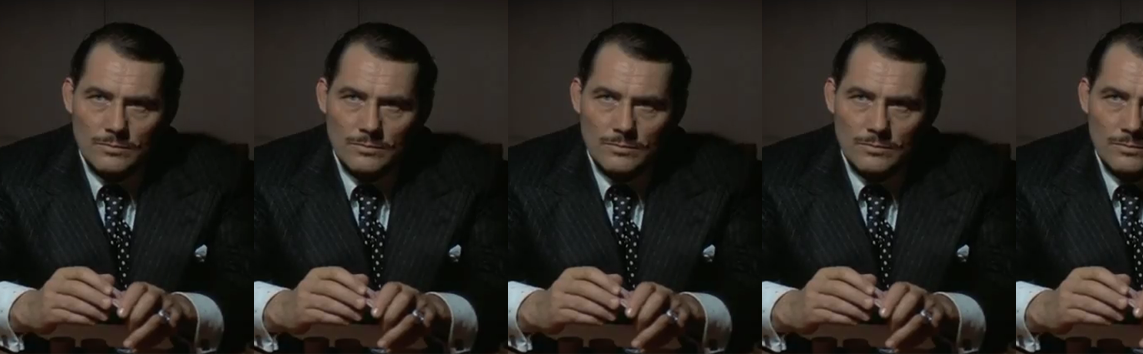
(Andrews)
(Quayle)
(Mills)

Wednesday, 7 January 2015

Alternate Best Supporting Actor 1965: Results

7. Jack Lemmon in The Great Race - I decided not to review Lemmon here for a few reasons. The first being after watching the film I felt he was definitely lead along side Tony Curtis and in no way supporting him. Then I did not really feel it was quite a good enough performance worthy for his own separate lead review. Also no reason to ruin the perfect streak of the previous six performances reviewed. It is amusing to note that the previous collaboration between Lemmon and director Blake Edwards was The Days of Wine Roses so Lemmon went from a harrowing depiction of alcoholism to playing a live action Saturday morning cartoon villain right down to his name of Professor Fate. The film itself I felt was too bloated as you can probably only have so many slapstick gags before they wear a bit thin which is unfortunately the case for this film. Lemmon is quite the energetic presence and his over the top performance is actually fitting for the film. He does his best to sell every gag and his whole portrayal is amusing enough though it can't quite sustain the running time of the film. It's hardly a great performance from Lemmon, but he is indeed the best part of the film. 
6. Ian Bannen in The Hill - Well this was in no way a pleasure to even place the seventh spot in my ranking since I love all of these performances. Bannen merely gives another great performance of one man's own clever ways of survival as military prison guard while never losing his frustrations underneath.

Best Scene: The final confrontation.
5. Ian Hendry in The Hill - Hendry is also great in his uncompromising depiction of his character's sadism. What makes him standout though are the very human weaknesses he also brings to the character particularly in his portrayal of his character's attempt to be the proper military man. 

Best Scene: The final confrontation as well.
4. Oskar Werner in A Spy Who Came In From The Cold - Werner actually does not have too much material but has to make a whole lot of it. Well he does so giving so much life and genuine passion to his character Fiedler that he makes it heartbreaking when it turns out that Fielder has been used all along.

Best Scene: Fiedler realizes he's been had.
3. Toshiro Mifune in Red Beard - The last great performance to be found from the collaboration between Akira Kurosawa and Toshiro Mifune. Mifune takes a rather unorthodox somewhat colder approach with the character of the wise mentor but succeeds wholly in earning the palatable emotions of every scene he is in, and effortlessly becoming a personification of compassion.

Best Scene: Red Beard goes to retrieve the patient from the Brothel.
2. Rod Steiger in Doctor Zhivago - Steiger has a great character and brilliantly realizes his complexity. He's a perfect smiling devil yet Steiger importantly shows that there still a bit of humanity to be found.

Best Scene: Komoravosky tells Zhivago what happened to Pasha.
  1. Harry Andrews in The Hill - Andrews gives an outstanding performance as he carefully differs himself from the other two men playing guards by showing a man utterly devoted to the mindset of the military. Andrews never allows himself to be one note though using every moment to fully realize his character as man who tries to conduct things as a machine. It's hard enough ranking these six but becomes even harder having to consider Tom Courtenay's work in Doctor Zhivago as well, which only improved all the more on re-watch. I really hate to have to leave the Ians out of the top five. Now I do feel I could give any one of these men the win and they would be more than deserving. My choice goes to Courtenay as it's a performance that only gets better the more I think about it, plus if I want to cheat in my reasoning he was also great in King Rat.

Best Scene: Wilson deals with the potential riot.
Overall Rank:
  1. Tom Courtenay in Doctor Zhivago
  2. Harry Andrews in The Hill
  3. Robert Shaw in Battle of the Bulge
  4. Rod Steiger in Doctor Zhivago
  5. Richard Harris in Major Dundee
  6. Toshiro Mifune in Red Beard
  7. Oskar Werner in The Spy Who Came in From The Cold
  8. Ian Hendry in The Hill
  9. Ian Bannen in The Hill
  10. Tsutomu Yamazaki in Red Beard
  11. Ossie Davis in The Hill
  12. Gian Maria Volonté in For A Few Dollars More 
  13. Charlton Heston in The Greatest Story Ever Told
  14. Claude Rains in The Greatest Story Ever Told
  15. Donald Pleasence in The Greatest Story Ever Told
  16. Tom Courtenay in King Rat
  17. Roy Kinnear in The Hill
  18. Cyril Cusack in The Spy Who Came in From the Cold
  19. Michael Redgrave in The Hill 
  20. Junzaburō Ban in A Fugitive From the Past
  21. Tom Courtenay in Operation Crossbow
  22. John Gielgud in Chimes at Midnight
  23. Hans Christian Blech in Battle of the Bulge 
  24. James Mason in Lord Jim
  25. Edward G. Robinson in The Cincinnati Kid
  26. Trevor Howard in Von Ryan's Express
  27. Klaus Kinski in Doctor Zhivago
  28. Noel Coward in Bunny Lake is Missing 
  29. Telly Savalas in Battle of the Bulge
  30. Alec Guinness in Doctor Zhivago
  31. Leo McKern in Help!
  32. Nigel Green in The Ipcress File
  33. Richard Attenborough in The Flight of the Phoenix
  34. Jack Watson in The Hill
  35. Terry Thomas in Those Magnificent Men in Their Flying Machines 
  36. Roy Kinnear in Help! 
  37. Peter van Eyck in The Spy Who Came in From the Cold 
  38. Warren Oates in Major Dundee 
  39. Burgess Meredith in In Harm's Way
  40. Hardy Kruger in The Flight of the Phoenix
  41. Alfred Lynch in The Hill 
  42. Charles Bronson in Battle of the Bulge
  43. Van Heflin in The Greatest Story Ever Told
  44. James Coburn in Major Dundee
  45. Dean Martin in The Sons of Katie Elder
  46. Eijiro Tono in Samurai Assassin
  47. Alberto Sordi in Those Magnificent Men in Their Flying Machines 
  48. Wallace Ford in A Patch of Blue 
  49. Richard Harris in The Heroes of Telemark 
  50. Christopher Lee in in Dr. Terror's House of Horrors
  51. Jose Ferrer in The Greatest Story Ever Told
  52. Michael Hordern in The Spy Who Came in From the Cold 
  53. Anthony Quayle in Operation Crossbow
  54. Ralph Richardson in Doctor Zhivago 
  55. Peter Sellers in What's New Pussycat?
  56. Eli Wallach in Lord Jim
  57. Dirk Bogarde in Darling
  58. Keenan Wynn in The Great Race
  59. Ronald Fraser in The Flight of the Phoenix
  60. Victor Spinetti in Help!
  61. Peter Falk in The Great Race
  62. Sergio Fantoni in Von Ryan's Express
  63. Geoffrey Keen in Doctor Zhivago
  64. Vladimir Mensik in Loves a Blonde
  65. Woody Allen in What's New Pussycat?
  66. Michael Craig in Sandra
  67. Karl Malden in The Cincinnati Kid
  68. Denholm Elliot in King Rat 
  69. Michael Redgrave in The Heroes of Telemark
  70. Robert Morley in Those Magnificent Men in Their Flying Machines
  71. James Donald in King Rat
  72. Ken Takakura in A Fugitive From the Past
  73. David McCallum in The Greatest Story Ever Told 
  74. Peter Finch in The Flight of the Phoenix 
  75. Patrick Cargill in Help!
  76. John Mills in King Rat  
  77. Jean-Claude Brialy in I Knew Her Well
  78. Marino Mase in Fists in the Pocket
  79. Sal Mineo in The Greatest Story Ever Told 
  80. Patrick Wymark in Repulsion
  81. Jack Weston in The Cincinnati Kid 
  82. Joseph Schildkraut in The Greatest Story Ever Told 
  83. Paul Lukas in Lord Jim
  84. Arthur O'Connell in The Great Race
  85. Telly Savalas in The Greatest Story Ever Told
  86. Norman Bird in The Hill 
  87. Ben Johnson in Major Dundee 
  88. Donald Sutherland in Dr. Terror's House of Horrors
  89. Ed Wynn in The Greatest Story Ever Told
  90. Jaime Sanchez in The Pawnbroker 
  91. Klaus Kinski in For A Few Dollars More
  92. Bernard Lee in The Spy Who Came in From the Cold
  93. Derek Jacobi in Othello
  94. Ernest Borgnine in The Flight of the Phoenix
  95. Richard Haydn in The Sound of Music  
  96. Mario Adorf in I Knew Her Well
  97. Williams Daniels in A Thousand Clowns
  98. Mario Brega in For A Few Dollars More
  99. Brandon De Wilde in In Harm's Way
  100. Henry Fonda in Battle of the Bulge
  101. Dennis Hopper in The Sons of Katie Elder
  102. Michael Gough in Dr. Terror's House of Horrors
  103. Desmond Llewelyn in Thunderball 
  104. Jeremy Kemp in Operation Crossbow
  105. Finlay Currie in Bunny Lake is Missing 
  106. Peter Cushing in Dr. Terror's House of Horrors
  107. Laurence Harvey in Darling
  108. Trevor Howard in Operation Crossbow
  109. Robert Ryan in Battle of the Bulge
  110. Guy Doleman in The Ipcress File 
  111. Dana Andrews in Battle of the Bulge 
  112. Jim Hutton in Major Dundee
  113. Kirk Douglas in In Harm's Way
  114. Harry Andrews in The Agony and the Ecstasy
  115. Christopher Plummer in Inside Daisy Clover
  116. Adolfi Celi in Thunderball 
  117. Gene Saks in A Thousand Clowns
  118. James Gregory in The Sons of Katie Elder
  119. Tom Tryon in In Harm's Way 
  120. James Fox in Those Magnificent Men in Their Flying Machines
  121. Bernard Lee in Thunderball
  122. Rip Torn in The Cincinnati Kid  
  123. Hardy Kruger in Lord Jim
  124. Maurice Dallimore in The Collector  
  125. Martin Landau in The Greatest Story Ever Told 
  126. Charles Bronson in The Sandpiper 
  127. Michael Anderson Jr. in Major Dundee
  128. Martin Balsam in A Thousand Clowns
  129. Michael Dunn in Ship of Fools
  130. George Segal in Ship of Fools 
  131. Robert Redford in Inside Daisy Clover
  132. Lee Marvin in Ship of Fools
  133. Ian Bannen in Flight of the Phoenix
  134. Brock Peters in The Pawnbroker
  135. José Ferrer in Ship of Fools
  136. Barry Gordon in A Thousand Clowns
Next Year: 1957 Supporting

Saturday, 3 January 2015

Alternate Best Supporting Actor 1965: Ian Hendry, Ian Bannen and Harry Andrews in The Hill

Ian Hendry did not receive an Oscar nomination for portraying Staff Sergeant Williams in The Hill.

The Hill depicts the entry of five soldiers into a soldier's prison out in the desert during World War II. The men are the discriminated against African (Ossie Davis), the sensitive Stevens (Alfred Lynch), the tough guy McGrath (Jack Watson), the self centered smuggler Bartlett (Roy Kinnear), and the disgraced hero Roberts (Sean Connery). The men put in charge to deal with the new recruits is prison guard Staff Sergeant Williams played Hendry. When Hendry first comes on the scene he seems to be all a bit much. The way he wears his hat, the way he always stands at attention, his strict movements, and constant attempt at being the imposing military type are almost all too obvious. The whole act to a certain extent seems to be put on by Hendry as it does not feel natural at all. This is not a mistake but actually is a stroke of genius in Hendry's performance. This is because Williams is not really a soldier by trade, merely a prison guard, and Hendry portrays a man basically putting on the best show, too much of a show really, so he can make up for that fact.

The one thing that Hendry shows is very natural in Williams though is the brutal treatment of the soldiers, something that no doubt carried over quite well from the way Williams probably treated civilian prisoners. Hendry brings a quiet but very strong sadism in Williams as he purposefully mistreats the soldiers in any way he can think of. Hendry's cap often covers his eyes leaving him to do so much with just his mouth. That little smirk of his when he watches the men suffer is absolutely putrid as Hendry exudes the pleasure Williams takes in harming the men. Hendry shows a complete comfort in this aspect of Williams's "duty". Hendry is particularly effective though in the moments where he sees that most of the men simply won't have his punishment and at times ignore him. The weaknesses of his facade are shown in slight reactions by Hendry as there is almost a fear as he sees that he might not really have it to control the men the way Williams probably did back home. Williams though is not the only prison guard which brings us to....

Ian Bannen who did not receive an Oscar nomination for portraying Staff Sergeant Harris in The Hill.

What was the idea of the official academy lineup no Oskar Werner, a serious case of extreme fraud from Frank Finlay, and they could not even give Tom Courtenay the win to make up for the nominees. But hey they did nominate Ian Bannen but for the wrong movie. He should have been nominated here where he plays Sergeant Harris who is a vastly different individual from Williams. He's already been in the camp for sometime, and also does not quite fit in though for a much different reason. Bannen also portrays the military manner in a way that helps establish Harris's character. Bannen portrays something off about his but not that Harris is faking it but really its just not his manner at all to do it. Bannen has just enough of a walk but does not exactly keep time as he should. He salutes and move as you'd expect but Bannen always brings this casual quality to Harris's movements. Bannen suggests a man also ill suited for the job, but not because he hates the men, rather he does not view them as simply toys that need to be broken down then rebuilt. Bannen presents Harris as a man first and a soldier second.

Bannen's performance is terrific as he plays the good Sergeant but it is never blunt as that. Although he is indeed a good man, Bannen is careful to show that Harris must exist within the limitations of being in the military still so he can't quite yell his discontent right out in the open. Bannen instead, in the earlier scenes of the film anyways, is quite memorable how he plays the scenes where Harris questions Williams's treatment of the men. Bannen brings an excessive jovial quality to Harris as he basically makes his complaints in a joking way. Bannen does not suggest that Harris is not serious about his complaints, but rather shows the method in which Harris has to voice his complaints in order not to face punishment himself. Bannen shows the true extent of Harris's problems with the system. These are quick reactions but Bannen does the very most with them. In a quick moment, when Harris alone, Bannen quickly shows the very real anger that Harris has not only at what's happening but perhaps at his inability to stop it. The man Harris tries to complain to leads us to....

Harry Andrews who did not receive an Oscar nomination, despite winning NBR and being nominated for BAFTA, for portraying Regimental Sergeant Major Wilson in The Hill.

Now Andrews also utilizes his military manner to express his character although he technically is a bit more straight forward in this regard, but just as good at showing who Wilson is. The reason he's more straight forward here because Andrews's mannerisms are that of the perfect soldier. The way he walks and talks carries an absolute authority. Every step seems to have the utmost precision and there never seems to be a moment where Wilson is at a loss while on duty. Andrews makes Wilson the military personified in his physical depiction of him which is an absolute necessity. Wilson is not merely the head of the guards but also in charge of the prison, even though technically there is a commandant above him, but the commandant is far more interested in frequenting a prostitute than actually acting as the head of the prison. Wilson is the one in charge and Andrews importantly gives that command in his performance. It just seems a natural thing as he lords over almost all, but what makes this film great is that Wilson is no way like Williams.

The difference between Williams and Wilson, even though they both try to be as firm as possible, is that Wilson has no sadism in him. Now that does not mean Wilson is an easygoing guy but the way Andrews portrays the strict behavior of Wilson differs vastly from Hendry's performance. Andrews does no express any pleasure ever from breaking down any of the men, and there is a particularly effective scene early on where Wilson releases two of the former prisoners. Both men now seem to be right back where they should be as ideal soldiers. Andrews is terrific in this scene as he looks upon the men with great pride in his accomplishment. Andrews in this scene suggests Wilson's thinking which is that he is there to help the men in his view. He does not want to break them down for enjoyment, like Williams does, but rather because he sees it as a necessity to build them back up again. Andrews is particularly good in the way he portrays the only hatred in Wilson as a sorta put on when merely when he needs to take charge, and it is not that he truly hates the men. 

Not every scene depicts the three men on duty and these very important moments in realizing the nature of each man. Bannen, who is the most calm anyways, loses the least technically speaking as he shows that Harris does not put on too much of an act. Next is Andrews who shows that much of his bluster is only a purposeful method he uses to command. Andrews is quite good by playing these scenes in a far more relaxed fashion, as he manages to convey that Wilson has his whole plan worked out quite well. Hendry is equally interesting as there still a considerable amount of tension he brings to Williams, who spends some of his spare time running up and down the hill of punishment to prove that he can do it even though he is doing it in far less severe of conditions. Hendry though is also great by losing the facade in these scenes completely. Yes Hendry still shows that Williams never can really relax, but that there is no soldier in him whatsoever when he is not on duty. All three actors here to fantastic job of just giving even more depth to their characters, and realizing them to be more than just the prison guards we first meet.

For a little while Hendry gets a stronger focus as the film depicts him trying to break down the five men, but not exactly having an easy time of it. Hendry makes the despicable nature of Williams all too human as Williams sets his strongest sight on Stevens. When he does this Hendry doesn't suggest that its simply because he can, but rather that Williams almost readjusts his aims to Stevens because he sees him as the easiest target to handle. This is because Stevens does not handle it well at all, and there is an especially good scene for Bannen as Harris quietly urges Stevens to find a way to survive. Again Bannen exudes a subtle warmth as Harris tries to tell him this, while not trying to break his position. Stevens soon dies from the treatment though leaving Wilson to try to cover up for Williams, simply because he's one of his men. Andrews is great as he keeps that military manner as he tells the camp's doctor (Michael Redgrave) to consider it an accident, but is particularly effective though as he shows the actual frustration in the man when he warns Williams that death is not the point of the treatment.

The death causes an uproar in the prison and almost a riot as all the prisoners demand an answer to who killed Stevens. This leads to perhaps Andrews's best scene in the film as he goes about handling every man in the prison. Andrews is in absolute command of every second of the scene and portrays him as almost a master of ceremonies at a circus. There is that viciousness needed as he does threaten the men if they continue the course, yet interestingly Andrews at the same time he's actually quite entertaining as he flawlessly delivers Wilson's jokes in order to calm the situation. He has a particularly brilliant back and forth with Bannen in the scene where they lighten the mood as almost a comedic pair. Andrews, and to a slightly lesser extent Bannen, make it believable that they could get the crowd in line with very few threats through their performances. It's a marvelous scene as you fully scene the way that Wilson rules over the prison. Andrews is not just menacing, even if he is certainly that, but there is certain heart that he brings as Wilson seems to be the prisoners' friend even though he is kinda their enemy.

Williams does not seize in his behavior though as he has Roberts beaten due to Roberts wishing to press the issue of Stevens's death. Hendry again reveals the very human side of Williams as he is almost shaking as he brings the beaten Roberts back, as though he has just realized he's probably gone too far. Andrews is again terrific as Wilson, amidst brow beating prisoners, admonishes Williams for once again doing wrong. Andrews proceeds to be amazing once again when he faces off with Roberts. Andrews, although very forceful, stands particularly distraught as he questions a true military man like himself but who has somehow rejected that path. Andrews portrays Wilson as almost ready to cry in one moment simply because the way Wilson's view is being shattered because how could a man just like him hate the military code so much. Bannen, though put somewhat to the side, is never forgotten though through his reactions as he expresses the growing discontent in Harris, and slowly gains the strength to finally stand up to Wilson fully.

This all comes to a head when the issue is raised that Roberts should be treated at a hospital not in a cell. Hendry again keeps Williams as absolute slime as he keeps his reserve trying to keep pushing the envelope to basically trick Wilson into protecting him. Andrews is equally good as he puts on his most forceful act as Wilson tries to push everyone into doing what he wants. Then there is Bannen who brings such a poignancy and power as he reveals Harris's own passion to try to stand firmly against Wilson and Williams. The way Andrews accepts every defeat, as the doctor and Harris won't stand down, is perfect. Andrews expresses it as a man who will not lose face so its just an instance and acts as though his yelling was just because he lost his head in the moment. The sparks might as well fly in the scene as Bannen, Hendry, Andrews, as well as Connery and Redgrave go at it. They are all on top form and they make it a spellbinding scene as it unfolds. There is no reason not to state it, this is one of, if not the, greatest film ensembles of all time. There's Connery's passionate lead performance, as well the very fine work from Ossie Davis, Roy Kinnear, and Michael Redgrave, and even Watson and Lynch are memorable in somewhat simpler roles. Rounding it out all out the Ians and Andrews who each give a complex and compelling portrait of not only what each man represents, but also of who the man is.  

Wednesday, 31 December 2014

Alternate Best Supporting Actor 1965

And the Nominees Were Not:

Toshiro Mifune in Red Beard

Rod Steiger in Doctor Zhivago

Ian Bannen in The Hill

Harry Andrews in The Hill


Ian Hendry in The Hill

Oskar Werner in The Spy Who Came in From the Cold

Jack Lemmon in The Great Race 

For the Prediction Contest the Honor goes to:

Andrews