Showing posts with label John Mills. Show all posts

Wednesday, 15 November 2023

Alternate Best Actor & Best Supporting Actor 1958: John Mills, Harry Andrews & Anthony Quayle in Ice Cold in Alex

John Mills did not receive an Oscar nomination for portraying Captain Anson, nor did Harry Andrews for portraying M.S.M. Pugh, or Anthony Quayle, despite receiving a BAFTA nomination, for portraying Captain van der Poel in Ice Cold in Alex. 

Ice Cold in Alex is an excellent survival film about a small group during WWII trying to get their ambulance back to British lines. 

The success of this film is built in part by its small but wonderful ensemble of our ambulance crew. We begin with our commanding officer in John Mills's Captain Anson, where Mills, who often played the proper British soldier, is very much not the proper British soldier in many ways in this film. Mills wears the war on his face, and as much as the man is still successfully acting as the commanding officer as preps for this next journey into the war, the man's filled with an unquestioned sense of stress with an underlying mental decay within the man. Balancing that out initially is Harry Andrews as his right hand man, Pugh. The last time I covered Andrews was as the personification of the rigid military system in The Hill, and while he's playing a military man, he's far flung from that later performance here. Andrews though is really far flung from any performance I've seen from him, as more often than not he's a hard if not cold man of some ilk. Here Andrews is honestly just wonderful in not just being the right hand man but the best friend of Mill's Anson. As in the prep scenes, Andrews's performance is absolutely pitch perfect in his reactions to the obvious ill state of Anson, and in every moment Andrews acts so much with his eyes in showing the sense of empathy. The man clearly sees the somewhat dire state of his friend, even while still putting on the proper show as his military subordinate by following orders, even with that very specific glance when Anson once again falls upon more alcohol for his chosen "medicine". 

The crew end up picking up two nurses, the ill-fated Denise and the far more proactive Diana (Sylvia Syms). And along the way they quickly see the constant dangers of their trip as they are driving around land mines, in addition to avoiding bombardment and of course just the fact that they're going through a desert. And each man we see takes separate roles in this situation. Mills is perhaps at his most effective as an actor here in presenting a man who is essentially a functional nervous wreck, as he still speaks as a commander, still does the job, but everything on the edge of his performance, whether it be his hectic physical manner or particularly the anxiety within his eyes, denotes a man who is about to collapse at any moment, despite still driving his way through one danger after another. Meanwhile Andrews is the comfort in the film and provides so much warmth here. His initial conversations with Diana are beautifully performed by Andrews as he quietly, but so gently full of heart describes Anson's increasing use of alcohol from the war particularly having been captured. Andrews so naturally expresses Pugh's care in every word, while still showing the man to be the professional soldier, but the professional soldier who absolutely cares for his CO. And more than that the way he informs Diana he speaks every line with this urging for understanding and an attempt to help. There's a modesty even in it, he is brandishing his charity, he just absolutely exudes it as the nature of Pugh. 

The film is given its genius wrinkle with the introduction of a Afrikkaner soldier they find in the desert, Captain van der Poel played by Anthony Quayle. Quayle is an actor I have liked, though this is the type of performance to completely adjust your perspective of his talents, because where other performances of his are often of the British of the stiff upper lip in one way or another, this is an extreme departure from that. The most obvious aspect being his South African accent he is using, but that's not the half of it, or even a quarter of it, though effective within itself. Quayle's whole demeanor here is of a different nature entirely as he's much more just thrusting himself across the screen and making his presence known here. Quayle instantly makes a statement with this boisterousness and even a bit of bawdy manners of the man, who seems almost too happy to be in the middle of this desert and ready to join this group. This group that almost immediately this Captain begins to hector more than a bit. Quayle brings this knowing smile but also speaks up most dominantly in his delivery that is more than a touch dismissive of his compatriots. And Quayle's approach here is so different from so many of his performances, as he transforms entirely as van der Poel, as not only is he not the stiff upper lip, rather he's the guy almost making fun of that whole notion with the way he goes about prodding Captain Anson, and smirks as though the man knows far more than he should at any given point. 

And this is where the film truly takes off to greatness because now we have a tight knit group of characters to bounce off of. And we have an interesting dynamic that develops between the group of Diana trying to figure out each man in her way, then the other three each taking on a different role. Mills successfully does the very difficult thing which is part of the defining quality of his performance is his character's inconsistencies. Being inconsistent is an easy way simply to seem inconsistent in one's performance, however Mills avoids such a pitfall by showing essentially it is a mix between the past of Anson and the present. His performance for example when showing the South African Captain the way around a mind field, there is a conviction in his manner even if there is also a hectic urgency about him. This is in contrast with Quayle's performance where he seems to have pure confidence in his manner towards Mills and basically shows the Captain who seemingly has it all together, even laughing off the British Captain's alcoholism regardless. Mills though earns the moment where the South African Captain makes his first brush with death where he thinks he's stepped on a mine, and there's suddenly the switch so naturally by both performers. As Quayle presents bluntly the intensity of fear on the man's face, meanwhile Mills becomes perhaps the confident man of old as he goes down and reveals the would be mine is nothing but a bean can. However that is all in contrast to when the group comes across a German patrol, where Mills's reaction is powerful in showing really all the PTSD within the man as he in all fear drives to drive away from the German and truly becomes a man petrified in his fear. With Mills being wholly convincing in revealing just what the man has been putting away with drink for this time. Of course this is contrasting suddenly when they stop Quayle showing his Captain taking charge with such ease and manner as he claims to speak German, even passively claiming that the Germans wouldn't have shot at them, which fatally wounded Denise, if Anson hadn't tried to run.

After two close calls with the Germans, where Quayle's character somehow talks them out of capture each time, the film becomes fully a survival tale as the remaining disparate four need to try to make their way through the desert. And again, these performers are great in crafting this dynamic between them. Mills portrays so effectively the arc of the man just barely hanging on at times, and we see the pouring of guilt when he believes he might've cost a life in his panicking as he confides in Diane. His vulnerability is so potent and powerful, while also showing what it is that the man needs to overcome to get his crew back home safely. Andrews is the safety factor of it all, and again I love just how different he is here. He's just this warm bath of sunshine in such a convincing way. You sense in every interaction the care of the man for others. His eyes denote the great emotional intelligence of the man, as empathy just exudes from every moment. I love that even in a scene where he goes to spy on Quayle's character to see what secret the man may be hiding from the others, Andrews even portrays this with more curiosity than complete suspicion. Andrews even delivering the words that accuse the man of being false, Andrews is able to capture it as concern, rather distaste still and always shows his Pugh to really be the best sort of man at every turn in such a convincing way. And then there's Quayle, who gives a performance that is in itself just fascinating to watch in everything he does. Quayle portrays sort of this ideal combination between the man with this disarming pseudo friendly manner that also cuts into the other's confidence at the same time. He seems calm, yet at other moments Quayle denotes a certain fear and suspicion in others as the Captain always insists on going off with his kit, and shovel on his own. 

Where the film is unquestionably a true ensemble within how each actor portrays the survival elements of the story. You feel the heat, you feel the drought, you feel the burden as each actor portrays the weight of the situation on them. And that the exasperation of every set back, but also the glee of every success is powerfully felt within each actor. However no actor more powerfully realizes these survival scenes than Quayle. In particular one scene where they are making repairs on the truck and the South African Captain is under the truck, eventually holding up the truck partially as they try to fix it. The whole sequence is frankly amazing, and really kind of a modern scene in terms of the use of editing and slow motion at times, but also the visceral greatness of Quayle's performance. You feel the tension, you feel his pain, you feel every moment of the danger in his performance. But if that wasn't enough, there's two scenes of the ilk that are specific physical scenes of performance. The second SPOILERS stems from the other trio figuring that he is likely a spy for the Germans, one being his ease of getting them away from the Germans, but also his tendency to go alone with his pack he doesn't let the others see, that is eventually revealed to be a radio where he has been checking in. The trio rather than expose him, instead lead him into a mud trap to force him to lose his radio, though then go about rescuing him from the pit. Quayle again is great in revealing the simple horror of being stuck in the mud pit as he's slowly sinking into it, and struggles to survive as the others do attempt to help him. Again Quayle makes the situation feel entirely real, and is essential to the sequence. As much as the character of the duplicitous Captain should be villainous, thanks to the excellent script and Quayle's performance he's so much more than that, as he becomes one of the people just trying to survive this ordeal. 

Eventually we find the group trying to find one seemingly insurmountable hill to overcome it. And each fills their roles, and each performer does the same. Quayle again is great because where the character's intentions seem often so mysterious where he is straightforward is when we see his conviction in going about helping the others. Andrews again is ever the reliable one as Pugh and even as others get tense, I love the modest affirming qualities of Andrews work. Even when he loses a bit of heart, Andrews projects the sadness more so for concern of the other's well being and so naturally makes Pugh this sincere force for good. Mills on the other hand is all over the place, but in the right way. As he shows kind of a breaking point, that is also the man at perhaps his best, as he shows the man pushing everyone to help getting up being the motivator, but doing it in a way that is near mania in the push. What Mills thought emphasizes though is the lack of fear now, even if definitely having moments of frustration, we see the passionate conviction of the man, the power even as he pushes all the men to keep going. And as a group, you honestly get caught up in every moment of defeat but also success, because of the strength of these performances and how they work off one another. The actors build towards and earn the ending of the film, which is building towards, well an, "ice cold" lager in Alex. And I think this is where most films I would object to the idea of the man who is taken to drink getting the reward of a drink by the end of the film. And I think maybe I would even as written if it were not for Mills's performance. Because Mills takes the moment of reaching the bar, and even before the drink, it is no longer with desperate need, but rather this calm specific satisfaction of a man, quenching his thirst rather than drowning his sorrows. He earns this transition. Speaking of transitions, we have one left bit of business as the three decide to expose Quayle's Captain as a Nazi, but not as a Nazi spy, to avoid a death sentence. And again, earned just in the chemistry you sense between the actors that you understand as a proper unit has been through hell, and in each interaction you sense the warmth between all of them. To the point that Quayle's manner is just as one of them loving the moment of victory together, before they all quietly let him know they're going to expose him, though in the safest way possible for him. Quayle's reaction to this dynamite as he instantly captures the immediate surprise and realization of the man, the calculation, before accepting their choice. Quayle now switched to a German accent, and a changed man, though one would like to think it was more the journey than just revealing his real accent. And Quayle's final moment of thanking the crew and accepting them as more than the enemy is beautifully done because he delivers it so modestly, accentuating the man having now lost his pompous disregard and learned from his experience. Every performance here is terrific in this film, all four, Andrews again being a constant as the always caring right hand man, Quayle being absolutely dynamic and showing off a range I wasn't fully aware of, and Mills giving his very best performance by vividly realizing both the weakness and strength of his character in every moment. 
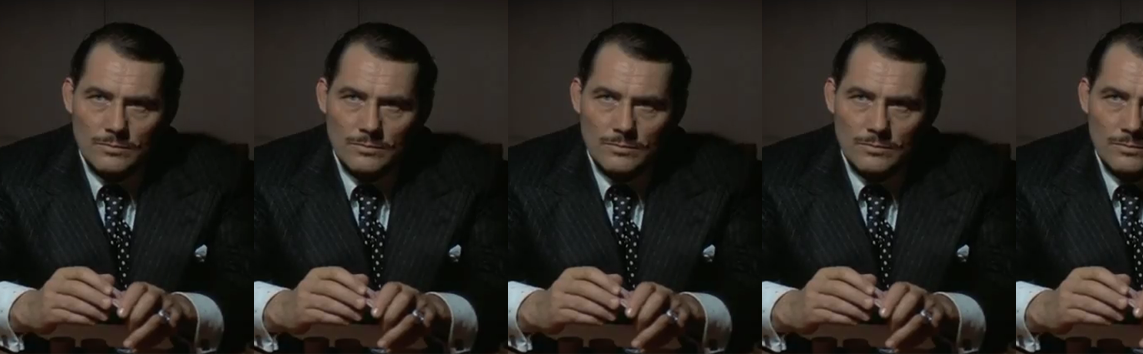
(Andrews)
(Quayle)
(Mills)

Sunday, 30 October 2016

Alternate Best Supporting Actor 1960: Results

5. Martin Stephens in Village of the Damned - Stephens gives an effectively creepy kid performance, though it feels but a warm up for his more impressive work in The Innocents a year later.

Best Scene: The kids tear down the "brick wall"
4. Robert Mitchum in Home From the Hill - Mitchum avoids falling into overblown melodrama by giving an unassuming yet commanding turn that successfully realizes the two conflicting sides of his character.

 Best Scene: The captain tries to win back his wife.
3. John Mills in Tunes of Glory - Mills gives perhaps his best performance, in his tragic portrayal of a soldier being slowly broken down by his own men.

Best Scene: The final party.
2. Peter Sellers in Never Let Go - Sellers more than proves his merit in a wholly dramatic role, through his compelling portrayal of a vicious and desperate criminal.

Best Scene: The final fight.
1. Renato Salvatori in Rocco and his Brothers - Salvatori gives a powerful performance as he realizes the descent of a simple man into a form of madness in chilling detail.

Best Scene: The Murder.
Overall Rank

Next Year: 2005 Lead

Tuesday, 18 October 2016

Alternate Best Supporting Actor 1960: John Mills in Tunes of Glory

John Mills did not receive an Oscar nomination, despite receiving a BAFTA nomination and winning the Volpi Cup, for portraying Lieutenant Colonel Basil Barrow in Tunes of Glory.

John Mills's place in this film has a bit in common with his character in the film. In that as Colonel Basil Barrow, who is taking over command from Major Jock Sinclair (Alec Guinness), he should be the lead of the film and the man in charge. Unfortunately old Jock and Guinness insist on being the center of attention, and poor Colonel Barrow can't even quite make it as a co-lead since all his actions in the end relate to the way they effect Sinclair. That's in no way to dismiss Mills's performance though, as he has quite the challenge and thankless job to fulfill, much like the Barrow as he tries to clean up the rowdy unit he has taken on. I will admit that Mills is an actor, though more than reliable, often is overshadowed by his co-stars. That is technically the point of Barrow in the film as he's suppose to be overshadowed by Jock, but in a weird way Mills isn't actually overshadowed here. In fact he very much plays his part quite cleverly in the restricted margins.

In the early scenes of the film Mills effectively puts up the front of the proper leader who wants to get his regiment into shape, in a normal fashion. Mills does well to actually play into the thinness of this prospect as he does not portray a direct passion, rather he emphasizes just a man who wants things in order as they should be in a professional fashion. This earns the man little respect from most of the men, particularly not Jock who worked his way up to command after starting out as a boy in the regiment. Mills again is good in portraying the internalized exasperation of the man as he conveys the active effort of Barrow to stay on good terms with everyone, while attempting to lay down the law as a proper commander. The problems only continue as Jock's behavior only gets more out of control and the insubordination continues. Mills's performance works wonders as he reveals technically the man's fault as he does not press issues, but also a real earnestness as he shows only a man with the utmost respect for the regiment itself.

In the scene where Barrow reveals his own connection to the regiment, having been part of it the same year Jock was in prison for his usual drunken behavior, Mills reveals such a genuine passion in the man's words as he attempts to explain how important the regiment truly is. Mills is painful to watch, in a good way, in the moment because he has Barrow only reveal the truth as though he is talking to a trusted friend, yet Jock only continues to mock him when he learns Barrow was a POW in the war. Now this aspect of Barrow's past is especially well handled by Mills's performance. Mills never emphasizes in order to wholly reveal what his terrible prison time has done. Instead Mills wears it within Barrow as a man which again is a brilliant approach. Mills in doing so quietly reveals the trauma in his more intimate moments yet the wear the rest of the time seems to paint the man as though he does not quite have the needed confidence for a proper leader. Mills allows us to see the man while at the same time he presents the "coward" to Jock.

Jock forces a direct power struggle by hitting an enlisted man, an action that should lead to court martial but it is up to Barrow to initiate the charges. Again what's great about Mills's work is that he gives us everything while having Barrow only exude an indecisiveness towards the rest of the men. Mills gives us a man conflicted by his belief in the regiment and desire to hold true to the old guard, but again it only appears as weakness at a glance. Eventually Barrow decides to try to make truce with Jock, and again Mills is incredibly moving by bringing such honesty in the warmth he brings as man who only wants best for regiment. Jock claims to agree to support him but such support never materializes. This unfortunately also leads to any potential support to dry up since he did not court martial Jock when he should have. Mills is heartbreaking in the scene as he watches this betrayal, as the men mock his authority right in front of him. Mills wears the terrible anger and despair so effectively, that he makes Barrow's final actions merely seem an inevitability. It is the best performance I have seen by John Mills, as he matches Guinness's work not trying to go against him, but rather by working around him to craft a tragic portrait of soldier broken by his own men.

Sunday, 16 October 2016

Alternate Best Supporting Actor 1960

And the Nominees Were Not:

Peter Sellers in Never Let Go

Robert Mitchum in Home From the Hill

John Mills in Tunes of Glory

Martin Stephens in Village of the Damned

Renato Salvatori in Rocco and His Brothers

Friday, 10 February 2012

Best Supporting Actor 1970: Results

5. Richard S. Catellano in Lovers and Other Strangers- Castellano is good even though his role is needlessly gimmicky at first, and rarely focused upon as a whole.
4. John Marley in Love Story- Marley has few scenes but he makes the most of everyone. It is a moving and warm performance that fulfills its purpose.
3. Chief Dan George in Little Big Man- Chief Dan George gives an appropriately wise, humorous, and dignified performance as the Chief who is all three of those things. He does not do much more than that though.

2. John Mills in Ryan's Daughter- John Mills creates a unique character that also has an emotional pull without seeming unnatural as he easily could have been.

1. Gene Hackman in I Never Sang For My Father- Good Prediction Dinasztie, and RatedRStar. Gene Hackman gives an incredible performance from beginning to end. He completely realizes the terrible struggle, and relationship his character has with his father. It is truly memorable and wonderful work from a great actor.
Deserving Performances:
Karl Malden in Patton
Alec Guinness in Scrooge
Trevor Howard in Ryan's Daughter

Best Supporting Actor 1970: John Mills in Ryan's Daughter

John Mills won his Oscar from his only nomination for portraying Michael in Ryan's Daughter.

Ryan's Daughter is an underrated film about a small Isolated Irish village that details an affair between a British Soldier and one of the local women Rosy.

Ryan's Daughter contains more than one supporting performance of note from the town's domineering Priest played by Trevor Howard, to the titular Ryan,  the father of Rosy portrayed by Leo McLern, and Rosy's faithful and kind husband portrayed by Robert Mitchum. The only man who ended up being nominated though should not have been too much of a surprise I suppose since John Mills has the most Oscary role playing a mentally handicapped man who is considered to be the "village idiot".

This type of role is popular with the Oscars although I can't say they are particular popular with me. Although there are few I do like, many times they can be examples of needless overacting, or frankly just bad acting. The simply truth about these performances in many ways though are you either like them or you don't, there is not really that much middle ground when it comes to these performances, because the actors go out on such a limb, and the actor's whole performance depends just on that limb.

Well I must admit I do like Mills's performance here I can easily see why many wouldn't but I must say what he does in the role works for me. Although perhaps this can be partially attributed to the fact that I have not seen a great deal of Mills besides his Oscar winning role here therefore perhaps that helps him, for me anyways, slip completely into the character of Michael. I have to admit I really do not see him acting the role, like the way many of these performances are he simply is Michael.

I think his mannerisms do work from his almost constant grin, and his look of interest or inquiry. His limp and the way he walks never felt forced, but within Mills's creation of Michael that feels  perfectly natural within his creation. Something that is usually stated although untrue is that Mills' performance is entirely mute, well in fact Michael does make some grunts actually from time to time. These grunts work well with the rest of the performance and again actually do realize Michael very well.

This performance is not only about character creation though as Michael has one very important aspect of his performance which is that he is clearly in love with Rosy even though she finds him revolting. Mills is again good in just giving an earnest performance in this regard showing that Michael loves in a very simple, but a very genuine fashion. He succeeds in making Michael a bit heartbreaking actually because he shows that Michael simply loves her unconditionally, and for her to be simply to be disgusted by him is a tragedy.

It is true that Mills' whole character could be seen as a bit of a contrivance in that even though looked upon as the "village idiot" he is far more descent than the rest of the villagers making the others the real idiots. I actually think Mills makes this work because he keeps his characterization throughout he never makes any concessions, he as well still brings an emotional impact with his performance as well just through his small little scenes showing Michael's love of Rosy. This performance might not be for everyone but for me it absolutely succeeds.

Tuesday, 7 February 2012

Best Supporting Actor 1970

And the Nominees Were:

Gene Hackman in I Never Sang For My Father

Chief Dan George in Little Big Man

John Mills in Ryan's Daughter

John Marley in Love Story

Richard S. Castellano in Lovers and Other Strangers