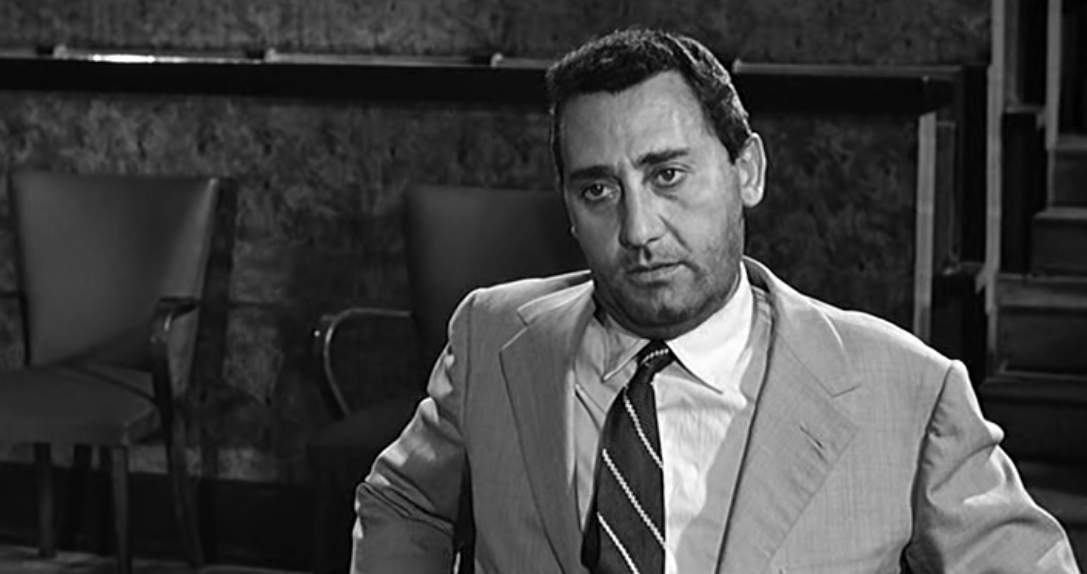
Showing posts with label Alberto Sordi. Show all posts

Saturday, 29 April 2023

Alternate Best Actor 1961: Results

5. Franco Citti in Accattone - A convincing performance as a rough pimp, though I never was fully brought into this performance or character however. 

Best Scene: The ending. 
4. Peter Finch in No Love For Johnnie - Finch gives a good performance even if he never quite made me care about Johnnie (sorry Johnnie me too). 

Best Scene: Visiting his lover at home. 
3. Alberto Sordi in A Difficult Life - Sordi gives a wonderful portrayal of the different sides of a man as he attempts to make through his way through life as he does. 

Best Scene: Final reuniting. 
2. Peter Cushing in Cash on Demand - Cushing gives a convincing portrayal of a man turning around his stubborn ways through unlikely means while also keeping a sense of danger throughout an odd heist. 

Best Scene: Getting "caught". 
1. Tatsuya Nakadai in The Human Condition III: A Soldier's Prayer - Good prediction Shaggy. Nakadai gives one of the most heartbreaking depictions ever given of a man desperately trying to survive while desperately trying to hold onto a modicum of humanity. 

Best Scene: The Prayer. 

Next: 1961 Supporting

Saturday, 1 April 2023

Alternate Best Actor 1961: Alberto Sordi in A Difficult Life

Alberto Sordi did not receive an Oscar nomination for portraying Silvio Magnozzi in A Difficult Life. 

A Difficult Life follows a communist journalist as he moves through life and much political upheaval in Italy starting from the end of World War II. 

This is the third time I'm covering an Alberto Sordi performance, and glad to do so as he has a one-of-a-kind presence onscreen. He's pretty fascinating in his innate presence because he very much looks the part of and has many traits of the comedic leading man. And while that is true, that is but the surface of his talents. It offers though an unlikely presence that also offers a very welcome idiosyncrasy by going through certain stories with such an original character. That is particularly true in this film's case as we follow Silvio in the opening of the film as part of a partisan group attempting to fight the Nazis near the end of World War II. And in these subsequence scenes, we get really what makes Sordi special. Because as this "hero" for us to follow we do get a definite reality upon his expression in the opening, showing a man in an innate state of desperation as he deals with unrelenting oppression, but we quickly see what Sordi can do beyond such overtures. 

His Silvio attempts his escape but soon is captured by a German soldier who intends to execute him. This sequence even is half a serious situation but also a comedic one because the way in which he gets caught is almost a "they're standing right behind me aren't they moment". This reasonably sounds ridiculous or tonally out of place, but it works because Sordi makes it work. Sordi's performance is able to convey desperation but he is also able to as naturally bring this quick instance of levity that makes the maneuver work. Sordi's wonderful because he *does* play into the comedy, but he does it in a way that also feels just so natural. He makes Silvio just naturally funny in a sense and by doing so makes it so for him to be funny in a situation, which just feels right rather than feeling out of place in any way. Sordi is able to not lose either side of the tone, instead blending them beautifully which is what can make a performance ideal given the material simply wouldn't work without Sordi's delivery of it at this moment. 

A defining twist of fate is when Silvio is saved at the last moment by a local woman Elena (Lea Massari) who kills the Nazi to save him and then hides him away. Although the initial encounter is that of mutual survival, which Sordi presents as just a very straightforward graciousness it soon switches to a romantic situation as the two come together as Silvio stays hidden away. The chemistry between Massari and Sordi has an innate richness about it, that isn't exactly simple warmth or love, yet the affection between the two is striking even as it is imperfect. They create the right sense of attraction even as the relationship from the outset is far from perfect. And we see this as soon as Silvio's partisan buddies are nearby he attempts to leave her to join back up. Sordi portrays this moment with a kind of naivety in the manner of just seemingly being a man without responsibilities and their romantic entanglement suddenly meaning less in an instance. Sordi is essential to this because he makes this pigheaded manner somehow not entirely off-putting but continues to have this hapless charm about him even when he is being a completely hapless fool. 

After the war though Silvio wants her back, and in the scene of asking her to marry him you are granted a sense of such sincerity in Sordi's performance. There he brings no sense of manipulation just care and genuine love at this moment. You sense the connection between the two which becomes an essential facet of this film. Because what we see really is not Silvio going through these political upheavals but specifically how he is going through them with his wife. This includes an extended scene where the two join a politically opposing dinner and sit and hear about the political shift. And I love the quiet sense of the pair of the two just in the way they are of a unit, a real duo at this moment, and the two are wonderful together in showing solidarity in this instance. Unfortunately, that doesn't last long as Silvio is arrested for his political activism shortly afterward, missing the birth of his child and even losing his newspaper job. Again powerful is the naturalism that he and Massari strike up in tandem. They just feel real together, in the moments of frustration with a crying child in a cramped apartment, to the joy of seeing their child recover from a serious illness. There is never a disconnect between the bitter and the sweet, the two create this natural flow of to people living life that is just wonderfully realized by both Sordi and Massari. 

I think what you see with Sordi's work, in general, is living in a particular way, which is that life isn't one tone, because this is an entirely convincing performance, even while very funny. There is a great scene for example where Silvio attempts to pass a verbal exam at university. Sordi is able to be very funny as he attempts to glance at the answers, however, in the same moment, his face creates such an easy empathy in the sorrow and frustration as he realizes how out of his depth in the moment. His delivery of Silvio's pleas for understanding is that of genuine passion, but again all in a moment that all feels natural as one. Sordi never loses his step and is impressive just how much he embodies the tone with such ease. Of course, this failure finally leads to a full breakdown of his relationship with Elena, where she leaves due to her dismissiveness towards her desire for stability. Leaving us with the misadventures of Silvio as he attempts to make something with his novel "A Difficult Life". Doing his sort of bumbling through life, finding some success, much failure, and seeing even his family growing up and perhaps even moving on. Sordi's performance is essential, because he is charming, he is funny, even when Silvio's actions are that of a fool, but also just because it all feels wholly honest to the character he has made so tangibly real. This is to the point when his behavior is of a boomerang, he doesn't completely lose you. And again, it is Sordi's ability to play the two sides, because as much as he's a proper jerk when diminishing Elena, his plea of honest care for her feels as sincere. In the end Silvio is a bit of a pathetic fool, but a rather endearing one thanks to Alberto Sordi.

Sunday, 12 March 2023

Alternate Best Actor 1961

 And the Nominees Were Not:

Peter Finch in No Love For Johnnie

Alberto Sordi in A Difficult Life

Tatsuya Nakadai in The Human Condition III: A Soldier's Prayer

Franco Citti in Accattone 

Peter Cushing in Cash on Demand

Friday, 2 August 2019

Alternate Best Actor 1963: Results

10. Peter Breck in Shock Corridor - Breck gives a rather underwhelming performance that fails to grant the needed detail to his character's mental transition and his relationship to the other mental patients.

Best Scene: Asking about the murder.
9. Steve McQueen in Love With a Proper Stranger - McQueen gives an effective alternative performance from him that realizes his hapless failure as romantic, which is a far cry than his typical cool characters.

Best Scene: Seeing the abortionist. 
8. Alberto Sordi in Il Diavolo - Sordi gives an effective sort of observational turn that offers both comedy and a bit of poignancy in his portrayal of a tourist not quite getting what he expects from his travels.

Best Scene: Confession. 
7. Maurice Ronet in The Fire Within - Ronet gives a rather effective portrayal of a festering depression that manifests itself in different forms over the course of a day.

Best Scene: Final party.
6. Michael Redgrave in Uncle Vanya - Redgrave manages to find comedy and the right degree of pathos in his portrayal of a man who hates his existence to the point he can't help but laugh.

Best Scene: Finally breaking.
5. Marcello Mastroianni in The Organizer - Mastroianni gives an effective atypical turn from him in his off-beat portrayal of a passionate activist.

Best Scene: Final speech.
4. Gunnar Björnstrand in Winter Light - Björnstrand gives a distant though striking turn as a man whose crafted an existence through rejection of emotion and thought that would otherwise pain him.

Best Scene: Telling his truth. 
3. Robert Shaw in The Caretaker - Shaw gives a powerful internalized portrayal of a man psychologically broken however still attempting to make a human connection.

Best Scene: His story. 
2. Patrick McGoohan in Dr. Syn, Alias the Scarecrow - McGoohan gives a great turn as every facet of his masked hero, from the menacing "villain" that is the scarecrow, to the affable, if seemingly harmless, parson, and the cunning man beneath each ruse. 

Best Scene: The official trial.
1. Burt Lancaster in The Leopard - Good predictions Robert, Luke, BRAZINTERMA, Charles, Tahmeed, Michael McCarthy, RatedRStar, and Bryan. Lancaster reveals his greater versatility once again in his convincing portrayal of his cunning and charismatic prince's method but also a powerful portrayal of his final melancholy.

Best Scene: Alone during the party. 
Updated Overall

Next Year: 1963 Supporting

Wednesday, 3 July 2019

Alternate Best Actor 1963: Alberto Sordi in Il Diavolo

Alberto Sordi did not receive an Oscar nomination, despite winning a Golden Globe, for portraying Amedeo Ferrettiin in Il Diavolo.

Il Diavolo is an interesting film that follows an Italian merchant through his travels in Sweden.

It is probably fair to say that Alberto Sordi's Golden Globe win for best actor in a musical or comedy, is the most obscure winner in the history of the category. This is to the point that one ought to give that often dubious awards group some credit for recognizing a non-English language performance in a film that was not a major awards touchstone otherwise. They might have been on an Italian kick, with Marcello Mastroianni having won the previous year for Divorce, Italian Style, however that was an Oscar nominated turn as well. I won't diminish the win though as this is rather a different turn to examine from comic actor Alberto Sordi. An actor, I'll admit, I have only a limited perspective of in a few scant, though more than decent turns, in English language films, and his notable devastating turn in An Average Little Man. Of course that turn was one that went to a very dark place, however the nature of this role also has really two sides within it.

Sordi's unique talents so strongly evident in that later performance is evident here as well though in perhaps lower stake circumstances. Our man Amedeo is just indeed an average man as well, but in the circumstances of just a business trip. A trip he foresees more for pleasure despite being a married man, of course. Sordi, even with this intention, brings a such a considerable charm through his affable screen presence. This making Amedeo's endeavor almost have this certain oxymoronic innocence within it. This approach is effective however from his earliest moments of essentially admiring the local women who he comes across early in the film. Sordi brings the utmost earnestness in his energy in every one of his greetings towards these women however he manages to find just the right manner for this. In that he does certainly deliver the requisite lustful quality of Amedeo however he carefully does not over do it to the point of becoming excessively sleazy. He's best instead by being just a bit sleazy however so well realized within Sordi's comic manner that still finds a charm even within that.

Sordi's performance is essential the film beyond his exact journey though in a particular way as he stands as a reactionary lead. This makes enough sense as his communication skills are limited as an Italian in Sweden, however how Sordi reacts to each given situation very much makes both the comedic and dramatic thrust through the film. Although less extreme than in An Average Little Man, Sordi's performance very much functions within both atmospheres to realize Amedeo's journey here. Sordi is very funny in initially keeping that same, lets not beat around the bush here, horny grin across his face with each potential "conquest" he meets. Sordi's equally effective in conveying then the certain disappointment as each opportunity instead opens himself up to a different part of the Swedish culture that isn't sex related. Sordi finds in these moments the right humorous disappointment in his expression in a given moment, but balances that with the right degree of shame all the same. A particularly wonderful scene is as he's met with a carol instead of any sort of tryst, and his eyes convey so well the character's certain dismay though that Sordi so effortless conveys to that quiet appreciation though with a definite embarrassment underlining it all.

Throughout Amedeo's journey he does not discover a sex romp, but instead discovers a perhaps a little strange however still welcoming country with far more to offer him that debauchery. Sordi's performance then becomes one of this interesting discovery of each new situation underlining each with a bit of Amedeo's sort of discovery of each place while also creating a sense of the reflection of it within himself. In the grand finale, of sorts, we get really two sides of Sordi's performance so effectively intertwined once again. This being mostly in a hilarious fashion throughout a sequence of ice car racing where Sordi's reactions are priceless to the insane, rather dangerous, hi-jinks of his female host. When finally though it seems he'll get his initial desire of sex, Sordi derives such a poignancy in his timid way of speaking the truths of a man who has in reality only been honorable to his wife despite his straying thoughts throughout. This is a wonderful turn as Sordi very much delivers on the promise of this goofy tourist looking for all the wrong things in all the wrong ways. His comic reactions are consistently funny throughout the film, but what takes the performance further is creating this honest sense of growth in the character. This in creating a genuine portrait of a man learning more about himself in what is an overarching comedic turn.

Monday, 10 June 2019

Alternate Best Actor 1963

And the Nominees Were Not:

Michael Redgrave in Uncle Vanya

Laurence Olivier in Uncle Vanya

Patrick McGoohan in Dr. Syn, Alias The Scarecrow

Gunnar Björnstrand in Winter Light

Peter Breck in Shock Corridor

Alberto Sordi in Il Diavolo

Predict those five (Redgrave from Vanya for prediction purpose),  these five (Shaw from The Caretake for Prediction Purposes) or both

Robert Shaw in The Caretaker

Donald Pleasence in The Caretaker


Steve McQueen in Love With a Proper Stranger

Burt Lancaster in The Leopard

Maurice Ronet in The Fire Within

Marcello Mastroianni in The Organizer

Monday, 3 November 2014

Alternate Best Actor 1977: Results

5. Jack Nance in Eraserhead - Nance gives fine semi-straight man style of performance from the weirdness of the film but his work never stands beyond that weirdness.

Best Scene: Henry sees the "child's" insides
4. Richard Dreyfuss in Close Encounters of the Third Kind - Dreyfuss was well cast as his average guy manner manages to make his character likable and easy to follow even as he does some questionable things.

Best Scene: Roy sees the mother ship.
3. Harvey Keitel in The Duellists - Keitel completely overcomes his apparent miscasting by giving an effective portrayal of a gentlemanly violent determination.

Best Scene: The final duel.
2. Alberto Sordi in An Average Little Man - Sordi for the first half of the film gives an entertaining comic performance then is extremely effective by subverting that into a disturbing portrait of a man's descent into despair and madness.

Best Scene: Giovanni sees the killer.
1. Art Carney in The Late Show - Good Predictions GM, and RatedRStar. Art Carney gives a great performance as he wonderfully balances the drama and comedy in his portrayal of an aging private detective.

Best Scene:  Ira gets the upper hand on the thug.
Overall Ranking:
  1. Alberto Sordi in An Average Little Man
  2. John Gielgud in Providence
  3. Art Carney in The Late Show
  4. Bruno Ganz in The American Friend
  5. Boris Plotnikov in The Ascent
  6. James Coburn in Cross of Iron
  7. Keith Carradine in The Duellists
  8. John Travolta in Saturday Night Fever
  9. Marcello Mastroianni in A Special Day
  10. Richard Dreyfuss in The Goodbye Girl
  11. Vladimir Gostyukhin in The Ascent
  12. William Devane in Rolling Thunder
  13. Paul Newman in Slap Shot 
  14. Robert Shaw in Black Sunday
  15. Bruce Dern in Black Sunday
  16. Roy Scheider in Sorcerer 
  17. Sanjeev Kumar in The Chess Players
  18. Richard Dreyfuss in Close Encounters of the Third Kind
  19. Richard Burton in Equus
  20. Sam Neill in Sleeping Dogs
  21. Woody Allen in Annie Hall
  22. Kostas Kazakos in Iphigenia
  23. Bruno S. in Stroszek
  24. Jack Lemmon in Airport '77
  25. Gregory Peck in MacArthur
  26. Andrey Myagkov in Office Romance
  27. Fernando Rey in Elisa, Vida Mía
  28. Rutger Hauer in Soldier of Orange
  29. Jerzy Radziwiłowicz in Man of Marble
  30. Richard Chamberlain in The Last Wave
  31. Mark Hamill in Star Wars
  32. Robert Shaw in The Deep
  33. Vyacheslav Tikhonov in White Bim Black Ear
  34. David Carradine in The Serpent's Egg
  35. Jack Nance in Eraserhead
  36. Saverio Marconi in Padre Padrone
  37. Saeed Jaffrey in The Chess Players
  38. Samy Ben Youb in Madame Rosa
  39. George C. Scott in Island in the Streams
  40. Marcel Sabourin in J.A. Martin Photographer
  41. Fernando Rey in That Obscure Object of Desire
  42. Charles Denner in The Man Who Loved Women
  43. Peter Firth in Equus
  44. George Burns in Oh God!
  45. Bob Newhart in The Rescuers
  46. George Segal in Fun With Dick and Jane 
  47. Burt Reynolds in Smokey and the Bandit
  48. Robert De Niro in New York, New York
  49. Roger Moore in The Spy Who Loved Me
  50. Mel Brooks in High Anxiety
  51. Sean Marshall in Pete's Dragon
  52. Michael Palin in Jabberwocky
  53. Nick Nolte in The Deep
  54. Al Pacino in Bobby Deerfield
  55. Len Cariou in A Little Night Music
  56. John Denver in Oh God!
  57. Richard Burton in Exorcist II: The Heretic
  58. Henry Winkler in Heroes
  59. George Lauris in Sasquatch: The Legend of Bigfoot
Next Year: 1977 Supporting

Alternate Best Actor 1977: Alberto Sordi in An Average Little Man

Alberto Sordi did not receive an Oscar nomination for portraying Giovanni Vivaldi in An Average Little Man.

An Average Little Man is an effective film that is a bit like In The Bedroom if the first half was a comedy.

Alberto Sordi plays Giovanni Vivaldi who is the titular man. Sordi is best known as a comedic actor and that is quite obvious in the first half of the film, although that certainly comes into play in a way for the second half as well. Sordi relies on his old fashioned comic chops for the most part in the early scenes as it tells the slightly wacky story of Giovanni who is a government office worker close to retirement. He lives with his loving wife (Shelley Winters) and his somewhat dim witted son who has trained in accounting. It is Giovanni's task in the first half of the film to try to get his son a job at the same office he works by any means his superior suggests. Sordi in these scenes plays the role as the average little man of the title who might be a little off but it is shown at the beginning to be nothing of an actual concern and merely fitting to the overall humorous nature of the first half of the film.

Sordi is fairly broad in these opening scenes as Giovanni goes upon his day to day tasks as well as attempting to get his son a job. Sordi succeeds on one side of this in that he is rather amusing in portraying the particular passion that Giovanni has as he makes his way through life. He's particularly enjoyable in his scenes of Giovanni's mad rush to work which Sordi portrays as a bit of insanity but only in an entertaining sort of way. Sordi takes on a particularly energetic approach to the part of Giovanni, who technically seems to be the average guy in every other way. What Sordi does works though as he makes the first half of the film a rather lively affair as he has just enough fun with the part without wholly compromising the character. Sordi gives a comic performance in this first half but importantly though he does not allow it to be come completely absurd, although he does come to close that.

Sordi does ground the character of Giovanni enough so he does not seem just like a caricature of a screwball comedy, even though he is fairly close to that. Sordi mixes it up enough with his performances as he does provide some grounding when it is needed. Although he plays much of his scenes with the family as a fairly kooky father type of character Sordi importantly does bring some nice warmth to his performance as he interacts with his wife as well as his son. He never emphasizes the point but he makes it just an underlying truth of the matter. Sordi is careful to say stay fairly believable as a man even while he's being rather overtly comical in the early scenes. Sordi carefully calms down always at the right moments to show an important softer side of Giovanni, or just merely to do more reactive comedy, such as when Giovanni joins a Mason lodge.

Of course the film takes a rather sudden jump though when spoiler his son is killed randomly during a bank robbery. Sordi quieter moments earlier pay off once this happens, even though it is still extremely jarring, which it was obviously meant to be, Sordi never loses his standing. Sordi instead very effectively shows that all the humor in Giovanni's life drains out in just a moment of horrible luck and nothing is ever same after this sudden tragedy. Sordi is especially good in the moment of the tragedy, as Giovanni is walking right next to his son when it happens, and Sordi reaction is incredibly heartbreaking as he expresses both the confusion and intense devastation of the moment. Sordi's performance not only completely stays with the sudden tonal shift his performance only helps to accentuate the power of it. It is absolutely striking to see the usually funny Sordi lose all his laughter in an instance.

After that point the film is an extreme change in every way as Giovanni formerly bright future is one of such bleakness made even worse by his wife becoming an invalid due to the shock of her son's death. Sordi is intensely moving in these scenes as he creates such a hollowness about the man now as Giovanni just slowly paces through the life he formerly ran through. One especially affecting moment is when Giovanni sees his son's killer in a police line up. Sordi expresses the memories of the terrible moment flowing back into Giovanni's mind and something strange happens to him. Well Giovanni decides to take the I Saw the Devil route and plans on exacting his own revenge by slowly torturing the young man in his cabin. Sordi once again benefits by taking his moments of insanity shown in the first half and bringing that back now, but without humor making quite dark and disturbing to watch.

Sordi's performance is particularly effective because of the way he turns the wacky father character completely on his head in this section. Instead of being enjoyable in these eccentricities as Sordi was in the first half he instead quite brilliantly shows just how with a slight tweak such behavior can be unnerving instead. Sordi doesn't exactly change his performance completely and that is what makes his performance work so well. It's not a great comic performance in the first half than simply a dramatic one in the second, Sordi rather bridges the two. Sordi still makes him the same likable lead of a comedy but shows what that turns into when a deadly reality added to the mix. Alberto Sordi gives a great performance here by never playing against type, the first half is firmly in type and entertainingly so, but the second half Sordi decides to merely delve deeper into his average little man.

Monday, 27 October 2014

Alternate Best Actor 1977

And the Nominees Were:

Alberto Sordi in An Average Little Man

Jack Nance in Eraserhead

Richard Dreyfuss in Close Encounters of the Third Kind

Art Carney in The Late Show

Harvey Keitel in The Duellists