Showing posts with label 1992 Alternate Best Actor. Show all posts

Wednesday, 17 January 2024

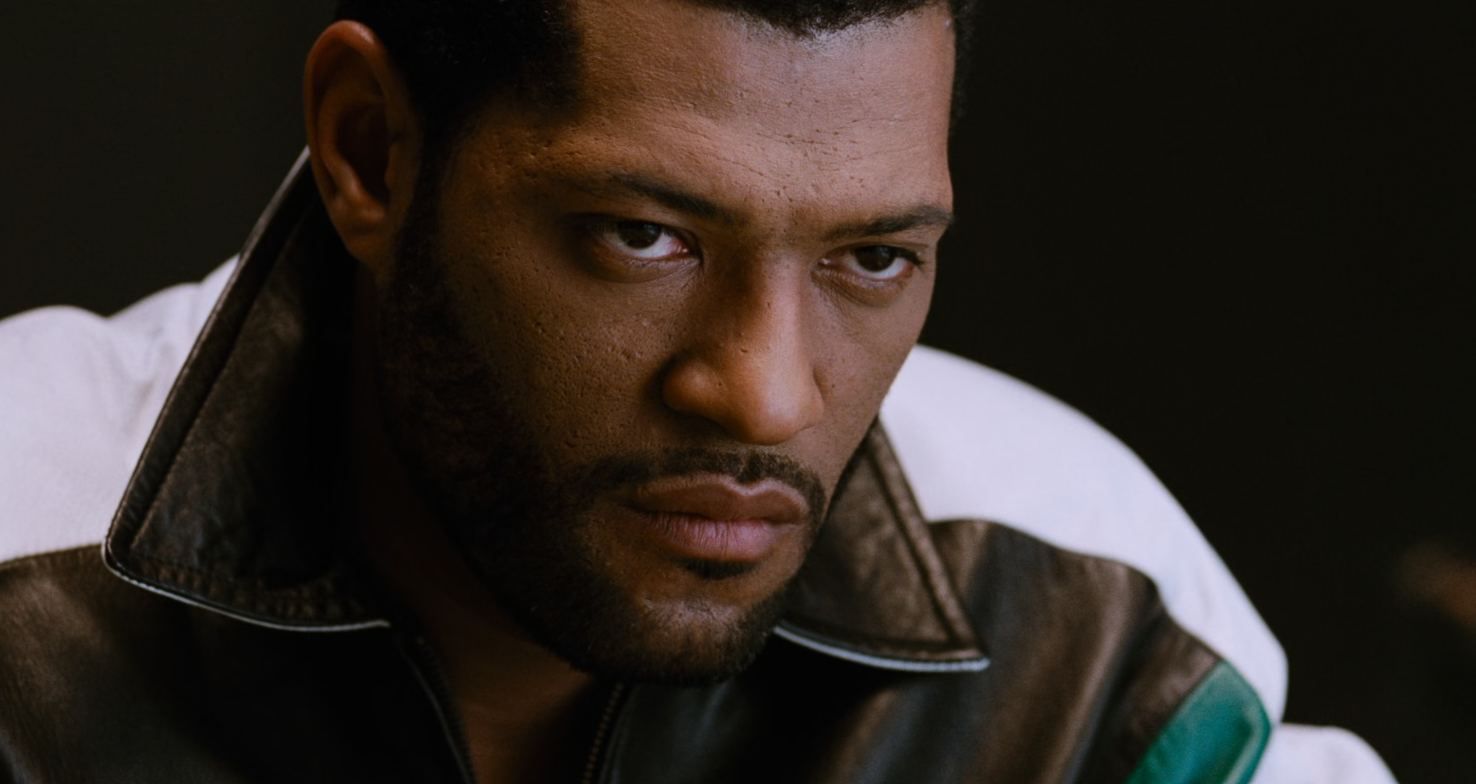
Alternate Best Actor & Best Supporting Actor 1992: Laurence Fishburne & Jeff Goldblum in Deep Cover

Laurence Fishburne did not receive an Oscar nomination, despite being nominated for an Independent Spirit Award, for portraying Russell Stevens Jr. in Deep Cover.

Deep Cover follows a police officer as he tries to take down the drug trade from the inside.

Deep Cover is a film I'd describe as somewhat Samuel Fullerish, from Bill Duke (yes that Bill Duke), in that there's much to admire within its frequently daring approach to its story, while at the same time being a bit rough around the edges. One quality that isn't rough is its lead performance by Laurence Fishburne as the cop tasked with his superior officer (Charles Martin Smith) to infiltrate the drug trade. Fishburne's performance is the focal point of the film wherein we follow him from the officer who walks into the office and handles his superior officer's racist, purposefully prodding, question. Fishburne expresses the state of the man, who we are actually introduced first to as a kid where he sees his liquor store robber father brutally gunned down, as beyond straight laced. There's a control in Fishburne's performance and his manner of a man who has spent years doing exactly what he believes to be the right thing and is following the narrow expected path. We see this is a completely specific posture and his delivery that isn't quite robotic, however it is extremely measured in the aggressively exact nature of how he speaks the words. Fishburne successfully establishes a man rigid to the system of law, a man who has avoided drugs and alcohol his entire life, and who will pursue assignment with a calculated conviction.

We then follow Russell as he goes about trying to find his way into the drug world, by attempting to become a dealer and get entrenched into the world of the higher up dealers. Fishburne's performance is effective in finding a balance between the surface emotion, which just as it speaks to a man rigid in his approach to law enforcement, it is as convincing as a man going about his business of dealing drugs, and the sense of danger and even more so the sense of empathy of the genuine good man beneath the surface of the act. An act that is both one he is showing as a false drug dealer but also actually as a cop as well. There are moments where we see Russell take a moment to observe a child, much like himself, as the victim of a drug addicted parent, or having to face down the accusations of a genuinely passionate fellow cop who wants to keep drugs away from his community and children. Fishburne makes the most of these moments by playing the empathy quietly in his eyes, just as the rest of himself seems to insist upon the outward appearance of the "cool" of a man who seemingly doesn't care about anything other than the money he can make. Fishburne creates the innate conflict in the man apparently who is trying to pretend as though he cares about nothing whatsoever, while being emotionally attached to everything, even beyond the fact that he's a cop, and even more so because he genuinely cares about trying to prevent others from becoming victims of drugs.

Jeff Goldblum did not receive an Oscar nomination, despite being nominated for an Independent Spirit Award, for portraying David Jason in Deep Cover.

Eventually getting arrested, due to being sold out by another low level drug dealer, Russell is rescued in court by a man who had been around the drug scene, but also is a lawyer, played here by Jeff Goldblum. Jeff Goldblum is an actor that falls a bit into the sort of strange group along with John Malkovich, Christopher Walken and Samuel L. Jackson, where at a certain point the majority of his performances became less as different characters and more variations on an expected presence. Like those other performances, this change is typically marked by a singular performance that marks that change, in Goldblum's case that was his iconic work in Jurassic Park, one year after this film, which in a way Deep Cover is one of the last completely pure examples of Jeff Goldblum the actor, rather than the Goldblum. And as much as I can enjoy a "the Goldblum" performance, it is something else to see Goldblum when he's entirely trying to become a part without at all relying on the expectation of a Jeff Goldblum performance. Because Goldblum here isn't seeking to accentuate pauses, to smile seductively, or just be everything that defines Goldblum, here he's something else entirely in depicting a lawyer who decides to take a shortcut in life. And it is striking to see Goldblum, so far from doing his Goldblum, as he comes with his own combination of "cool" and something underneath. As Goldblum is projecting this certain attempted power as he's speaking to this lower drug dealer with a quiet sneer and the air of confidence in the innate swagger Goldblum brings. Like Fishburne, Goldblum's eyes too denote a withdrawn anxiety in presenting his David as filled with anxiety just beneath the surface, showing a man in over his head.

The two fully connect when Russell gets arrested and it is Goldblum's David who gets Russell quickly off his charges. In this scene Goldblum is the man seemingly fully in his powers and in control. Goldblum just exudes the swagger of the classic smarmy lawyer who charmingly chats up everyone and quickly makes a deal that makes everything go away in few while also making David and Russell partners in crime. Fishburne is effective as a balance between him and Goldblum, as we see Russell get deeper into life, it is as the quietly stoic drug dealer, against David who is the extremely ambitious man wanting to make a name for himself in this world. And here's where I think the film is good, though greatness seems in reach though I don't think it quite gets there. David's a fascinating character where he's a lawyer, with a straight-laced family, who spends his night dealing with the international drug trade. And the motivation for this seems to be this sort of fringe insanity behind the man, which Goldblum cultivates a bit behind the lines, such as his rambling about his love of sleeping with African American women with this rotten intensity. Goldblum exposing this mentally ill thrill the man is seeking above all else that pushes towards his seemingly bizarre and risky actions. And an idea, where I wish the film just gave a little more time to the idea, because what is there is captivating, I just wish there was a bit more of it, particularly because Goldblum is incredibly dynamic in alluding to what is there for him.

The film expands and what we get more of is David and Russell rising together, something I almost wish the film had spent time to connect them beyond just a business agreement, but regardless that is what we get and we get the parallel rise for each. A particularly notable one being when Russell is tasked with killing another drug dealer, which will prove himself for David. Fishburne is great in this scene of approaching the killing, which is of a horrible dealer  (also a bit too over the top but I digress) who he saw gun down a kid. Regardless Fishburne's approach to the scene delivers the weight of it as he's frozen in his face as he's broaching crossing the line to something else in terrible, and that sense of conflict, even over the death of horrible man is going on through him. To the point he only kills the man when the man begins to advance on him, and Fishburne in the moment almost seems lost in the killing, and portrays Russell almost in a kind of fugue state. And Fishburne shows this as part of the frustration we see quietly building when being the drug dealer, and effectively delivers the more direct outrage towards his superior when it seems like there is no genuine purpose to his task at times. The only respite seeming a romance with a high priced art dealer, which honestly I'll say is one of the weaker aspects of the film, in part because the film doesn't devote the appropriate time to developing the character. David on the other hand is also changing as the man more willfully getting deeper into the life, as a comes afoul with a more powerful drug broker. A great scene with Goldblum where his cockiness immediately turns to withdrawn worry as the man verbally and physically demeans David. Goldblum is amazing in the scene in showing all that bluster of David get lost and the anxiety in the man expand. Topping that only with the following scene with his wife, where Goldblum plays it almost as a kid bullied by people he thought were his friends, as he's so vulnerable and frustrated in his meek way of saying what he did wrong with so much personal shame.

Following the sequence is where everything goes out of control, where Russell ignores his superior to go through with saving David from a sting, in order to further his entrenchment to get a bigger fish, and David turns on the bigger broker. Fishburne is great in the scene again by providing grounding in showing the man just with conviction trying to get through but showing within that conviction tension of a man who is in a completely insane situation. Goldblum on the other hand is pure insanity, and portrays the whole sequence wonderfully as a man high as kite as he goes about getting his revenge on the other man. Goldblum is great in the way he slowly unravels throughout the sequence showing this greater determination, and insanity over every moment showing the man getting closer to breaking towards pure mania. Goldblum though shows instead of the genuine fear of crossing this line like we saw in Russell, in David Goldblum expresses a sadism in it, as man savouring the choice, loving the choice and getting more than anything a high of the act off the killing as he goes upon it with tremendous glee. And within that we see both men go beyond the pale, Russell because it is the only way to truly get something done and David because he's mad in ambition. Fishburne is terrific in his scene of completely unleashing the exhaustion and somber anger when he learns the highest dealers are politically protected leading to this change. However, I think the switch to the proudly sober David turning to drinking and drugs, is something that doesn't feel entirely explored or completely realized. Fishburne sells the individuals moments, they just don't truly go anywhere unfortunately. And in the last act, which unfortunately is a little rushed for David to as he and Russell are at this extreme, I wish we spent more time with them in this and again maybe explored a bit more in their relationship, even if both actors are delivering with what they do have. Though I will say to its credit the final sequence, where Russell is exposed due to his care for the honest cop who berated him earlier, against David who doesn't care about anything except his success comes clashing, is well played in the contrast. Fishburne being completely open in just the raw grief of trying to help the man and bringing a cathartic sincerity within the man who has had to hide away, comparing that to Goldblum who has become a purely callous psychopath who just casually guns the cop down in order to end the conflict. And this is case of two performances I find much to praise, and I would say contain the raw materials of outstanding work, if the film just gave them a little more room in just a few places. Regardless Fishburne and Goldblum give very strong performances here, the former a proper leading turn that carries us through this emotional journey of deceit, and the latter giving a wonderfully atypical turn that suggests there was perhaps even more for the actor to explore away from his more expected presence.
Wednesday, 23 August 2017

Alternate Best Actor 1992: Results

5. Eric Stoltz in The Waterdance - Stoltz gives an effective performance that offers a rather low key and alternative take to the disabled man story.

Best Scene: Asking Anna to move on.
4. Benoît Poelvoorde in Man Bites Dog - Poelvoord's work does not just fit but also creates the chilling off-beat tone in his strange portrayal of a vicious serial killer.

Best Scene: Heart Attack murder.
3. Russell Crowe in Romper Stomper - Crowe gives a terrific initial indication to his considerable talent through his brutal portrayal of a neo-nazi where he grants emotional nuance to the character yet purposefully never makes him sympathetic while doing so.

Best Scene: Hando finds Davey and Gabrielle.
2. Peter Coyote in Bitter Moon - Coyote embraces yet also provides some needed depth to his lurid material in his terrific realization of a man slowly overwhelmed by bitterness.

Best Scene: Final remorse.
1. Willem Dafoe in Light Sleeper - Dafoe gives a powerful internalized portrayal of his drug dealer, showing the man attempting to find a new life after having already seemingly suffered through the worst.

Best Scene: Street Jumper. 
Update Overall

Next Year: 1992 Supporting

Alternate Best Actor 1992: Eric Stoltz in The Waterdance

Eric Stoltz did not receive an Oscar nomination for portraying Joel Garcia in The Waterdance.

The Waterdance is a surprisingly low key film about a writer dealing with being confined to a wheel chair after breaking his neck.

This film follows Eric Stoltz in the lead role of Joel as he deals with his injury within a hospital ward where he interacts with other men in a similair situation most frequently former biker Bloss (William Forsythe) and braggart Raymond (Wesley Snipes). The film really is almost as much about those two as it is Joel, though we most often see those two in how they way Joel perceives them. Stoltz, whose career unfortunately never really fully recovered from being replaced in Back to the Future, though once again proves himself to be a particularly natural performer. This allows for a kind of a different take on the injured man story line that is fitting to the film's style which again seems to be striving to avoid the usual melodrama associated with these types of stories. Although that is not to say there isn't drama, but the film very much takes it in a calm and controlled fashion. This is partially due to Stoltz's performance which begins with the character in a mental state that is a tad unexpected, although this plays partially into the structure of the film where we open post-injury before we had time to even meet the man before his time in the film.

Stoltz portrays initially a strange euphoria in the character, perhaps relating to initial survival of his injury which one could presume was near death. Stoltz is effective in his portrayal of this though as he shows it to be almost a detached state in some ways. As he speaks not as though he is out of it, but as though his focus is upon his survival rather than his injury. Stoltz does not overplay this making it feel a very natural state of being for the moment, a being of a certain contentment in his existence. This naturally though is a relatively short lived state of a mind, as Stoltz rather naturally portrays the progression to a more earthly understanding of what's real going on around him. Again though Stoltz's portrayal of this switch is very nuanced as he does abruptly losing one the switches, but rather he gradually reveals the other emotions creeping into his work. A notable aspect of this though is how Stoltz works this in whether he is the focus or not. He never wastes his time when a scene is more clearly focused upon Bloss or Raymond rather than Joel. His reactions are always remarkable as Stoltz relates them to Joel's own state of mind.

The main focus of Joel's story comes in his relationship with his married girlfriend Anna (Helen Hunt apparently prepping very early on for The Sessions). Again though unlike say The Men with Marlon Brando, Stoltz and the film takes this very easy though effectively. After that early period of enthusiasm, where it seems as though their is no hesitation in their relationship despite the injury, the problems soon arise. Stoltz though is terrific in revealing these seeds of potential bitterness so internally in his work, in a glance, or a moment. He is infrequently direct in any moment yet Stoltz's work never feels vague in this regard either. He instead portrays exactly the pain Joel's going through but in a distinctly understated fashion. Again his reactions within the other men's stories are key, particularly in the moments where Raymond struggles with his wife, and Stoltz reflects Joel taking the it in which only seems to create his own certain distress. As much as this pain gradually moves in, it also gradually is changed as well in Stoltz's performance. The acceptance of his condition and his difficulty of that is all equally a quiet one. Even in the major scene where he suggests Anna move on from their relationship, Stoltz downplays it yet still manages to be rather affecting in portraying a subtle anguish in this choice.  The film fittingly leaves on a modest note of Joel leaving the hospital to start his life on the outside, not necessarily a perfect man, but a man comfortable with his existence. This is a good performance by Eric Stoltz as he is essential in realizing this distinct approach the film takes to the material, as even in its modesty he creates a poignant portrait of this man's recovery.

Sunday, 20 August 2017

Alternate Best Actor 1992: Russell Crowe in Romper Stomper

Russell Crowe did not receive an Oscar nomination for portraying Hando in Romper Stomper.

Romper Stomper follows a neo-nazi gang who launches their own personal war against a group of Vietnamese Australians.

I have previously covered two other actors having played neo-nazis those being Ryan Gosling in The Believer and Edward Norton in American History X. Both films dealt with treacherous subject matter with both actors taking on the role of such morally reprehensible men. In both instances though there was perhaps a safety net of sorts for the films, for the actors and really for the audience watching the film. In American History X, after the opening sequence we cross cut between Norton playing a full blown neo-nazi, a man seeking redemption and showing remorse for his previous actions. In The Believer we know from the outset that that Ryan Gosling's character is more complicated since we immediately learn of his Jewish heritage and upbringing. There is no such "safety net" for Romper Stomper or Crowe in the role Hando, perhaps that has helped keep this film fairly obscure outside of Australia, and likely it would be even more forgotten if not for Crowe's later career being of such notoriety. There are no truly sympathetic characters within the film, the closest the film comes is one of neo-nazis showing some minor regrets yet not doing anything about it, and the young woman Gabrielle who joins the group, who is broken from years of abuse, yet still participates in the gang's horrible acts.

The film in no way hides the brutality of the group as we open with them beating a few teenagers, we see that the worst of them is their leader played by Crowe. The character of Hando is a wholly despicable sort, and perhaps made all the terrible because he's played by Russell Crowe. Crowe's considerable presence as an actor is wholly evident this early in his career as he does command the screen as Hando. Crowe realizes the charisma of Hando quite effectively, and even though this won't really work on any sensible viewer since we know what he is from the start, Crowe makes it absolutely convincing that Hando would command the men as he does. Crowe carries himself with such swagger as though Hando firmly believes himself to be this leader of men for a greater cause, and is so determined in this that he easily convinces his followers of this as well. When he speaks of his philosophy, which is complete garbage, Crowe though does infuse every word with such a palatable passion that again would be most effective in rallying his men to his demented cause.

Again this film is not easily digested, and part of this is how many scenes it has of Hando and his men being the horrible people they are. Crowe perhaps makes them even harder to watch then they are in conception because of how good he is in the role. Crowe brings such a intensity in every hateful word and act that makes every moment of it utterly chilling to watch. Crowe does not hold back for a moment in making the hate truly so venomous as it seems to exist in every pour. Every part of his performance in his eyes, his physical manner that always carries an aggressiveness, asserts Hando as this hate filled man. There is no goodness underlying the man, or some hidden pain to try to alleviate the motivation some way. He's a hateful man, and that's all there is to it. Crowe does not ever make this seem simplistic though and again this is what makes the film all the more difficult. He's not a cartoon of a neo-nazi, rather Crowe's method of fully embodying the vileness grants it a terrible honesty, the honesty that this man is just a rotten man to his core.

Crowe's portrayal works within technically the one note as he does show that Hando is always defined by his hate at every point. He avoids caricature though by always showing that this evil man is still a man who does these things. Crowe does not try to make us sympathize with Hando in these moments, but rather just shows that Hando has a depth though only in terms that he isn't just a detached personification of cruelty. Crowe shows there is more to him, but that more isn't any better than the man at his most violent. We follow his relationship with Gabrielle. Crowe in these moments shows Hando a little quieter as he romances, well more of has sex with her, yet the nature of the man isn't any different. Crowe still depicts this always as self-centered act, as he speaks only still as things concern himself, and when he randomly lashes out against her it seems to make sure attention is directed back to himself. There is a moment late in the film where Hando finds Davey has slept with Gabrielle. Crowe's great in this scene where he has Hando not lash out, only because he's concerned with his own safety as the police are looking for him. Crowe though in that moment reveals all the desperation of a man with not only his freedom on his late, but also the sense of personal betrayal. It's a terrific moment though as it does not create any sympathy for the man, but it humanizes him just in terms of showing he's human. One needs to remember though this is as the worst of humanity but still humanity. This performance isn't about making a good man, just a horrible one, but still a man. Crowe's performance throughout the film lends nuance and complexity but only in terms of emotions we see in Hando. He's not a complex person in any way, he's Neo-nazi who does what he does because he's a barbaric monster, but since he's a person there is at least some complexity in his emotional state at any given point, Crowe realizes that. Although this isn't an appealing performance in any way, it is a very good one, and an early indication of Crowe's considerable talent.

Monday, 14 August 2017

Alternate Best Actor 1992: Willem Dafoe in Light Sleeper

Willem Dafoe did not receive an Oscar nomination for portraying John LeTour in Light Sleeper.

Light Sleeper, despite some questionable choices by the director, is an often effective thriller though more of a character study about a "high class" drug dealer.

Now I will admit before watching the film I expected a rather different film and performance for that matter with Willem Dafoe playing a drug dealer in a film written and directed by the Taxi Driver's scribe. The name of Light Sleeper even seems to evoke the idea of perhaps a similair insomniac to Travis Bickle slowing going insane in the underbelly of Manhattan. Well that's not the case, the film and Willem Dafoe's performance are far more low key than that. Dafoe here portrays actually a man who is sort of past that phase that probably would have been similair to Travis Bickle. In that we meet his John LeTour after he's no longer a drug addict, and is wanting to escape his life, only staying in it through his by appointment only drug dealing through his supplier Ann (Susan Sarandon) who isn't your typical drug kingpin. John goes on specific assignments to wealthy clients creating a different sort of man of the night. Dafoe's work keeps this in mind and establishes this history of another life in his presentation of who John LeTour is as well when we follow him from one appointment to the next.

Willem Dafoe gives a very quiet performance to the point I will admit to being a bit taken aback by it for a bit as I was watching it. However Dafoe's approach is with purpose. There's a wear in his portrayal of John's demeanor, a wear of the past more even so than his current occupation. When he visits to make some of the deals, there's a certain exasperation not over the act of dealing the drugs entirely, but rather this disengagement with the behavior he once took part in. The idea of the history as a junkie himself is shown in that basically straight resistance to interaction, and even lack of patience with the more aggressive customers. He does not stare them down as just a man who hates, there is a self-loathing within his eyes in these moments, and a forcefulness to be as detached from that as he can. Of course he is technically stuck due to the easy money associated with his life even though this is often a detached life, where again Dafoe portrays that distance. That distance that is not only the suggestion of the past, but also a certain professionalism as the drug dealer.

In his scenes of dealing Dafoe portrays an efficiency and precision in his straight and direct delivery. Dafoe portrays the right awareness as he is not doing it as a junkie anymore, and always carries himself with that certain watchfulness, making his ability to spot when being trailed by an undercover cop convincing. Of course this is not the story of the successful drug dealer, as this isn't the life John wants still. I actually love the scene where we see how this really isn't John, despite his success, in the scene where he confronts the cop. Dafoe begins as the one in charge, seemingly this master of the streets as he prods the badge from the cop. The cop though turns this around pointing out that he's well aware of John's activities which he blackmails him with for information on a murder. Dafoe's terrific as he reveals such a vulnerability and the real guy that John as in the moment, who really isn't any sort of professional criminal. Dafoe crumbles so effectively by losing any confidence, and just revealing the desperation of a man in place he really should never have been in.

We naturally see John trying to escape the life a bit through his old girlfriend, Marianne (Dana Delany), though this is corrupted since they met each other originally as junkies. Now I will admit there is a bit of a problem here because of Delany's performance, who is a better voice actress than actress. This is oddly enough shown here as her line deliveries are very good, but her physical performance is very stilted. Luckily there is Dafoe to pick up the slack. Dafoe is surprisingly affecting in these scenes because he portrays so earnestly. He shows only genuine care in every moment for Marianne and her family. Every moment he depicts only wanting a healthy relationship, and Dafoe finds such a poignancy in the purity of these scenes. This even extend to John purely platonic relationship with Marianne sister Randi (Jane Adams). Those moments I particular love as Dafoe portrays such a palatable warmth realizing John as almost this caring older brother as he offers his support to both sisters as their mother is dying.

Nothing is forgotten easily though for John, as Marianne continues to reject him due to their past, and Dafoe's great in portraying so simply the considerable yet subtle anguish within John as he keeps being kept in his place in the drug world. Of course the drug world is not entirely bleak through his relationship with Sarandon's Ann. The two actually share a splendid chemistry which is basically established just through the way they interact with each other early on. You can sense the attraction and love for one another, in just their silent language towards one another, though they remain employer employee for much of the film. Eventually a tragedy happens that forces all hands in a way, and Dafoe is excellent in the last act of the film. This begins with his two heartbreaking reactions to seeing the tragedy, its initial beginnings, then its end, again Dafoe remains pretty internalized yet so powerfully so. This continues as he seeks a sort of revenge, and again Dafoe stays quiet. He does so effectively though as he conveys just the passion, and pain in this through his eyes. His final act, which is Travis Bickle like in action is not Bickle like in the emotion behind it. Defore portrays not a psychotic reaction, but rather again presents that same earnestness warmth actually in the act of violence. I found this to be a rather wonderful performance by Willem Dafoe, in granting a humane and moving depiction of a drug dealer.

Friday, 11 August 2017

Alternate Best Actor 1992: Peter Coyote in Bitter Moon

Peter Coyote did not receive an Oscar nomination for portraying Oscar Benton in Bitter Moon.

Bitter Moon, if perhaps it was a bit more violent, would seem Roman Polanski making a Brian De Palma erotic thriller as it similarly embraces its trashiness in its story about a man, Hugh Grant, on a cruise being pulled into the story regaled by a crippled man about his relationship with his wife.

Peter Coyote, who somehow I never noticed before sounds just like Henry Fonda, is most often an authority figure character actor not unlike Scott Glenn, or more recently Richard Jenkins. Coyote's role is a strict departure from that as we first meet him as a shady figure, lurching around in his wheelchair all too eager to reveal his long history with his seductive wife Mimi (Emmanuelle Seigner). This film as a trashy erotic thriller again very much embraces the trashiness, and really the success of such a film depends on how entertaining it manages to be within that, as well as if it attempts to perhaps just a bit more than that. Well this film really falls almost entirely upon Coyote's shoulders to make the film work as the hot mess it is, given that Hugh Grant, and Kristin Scott Thomas, are only fairly bland diversions while Seigner seems mostly there to strip nude. That leaves Coyote to make something of it all, and I suppose I would not reviewing him here if he didn't. There is already a bit of fun to be had just from seeing Coyote in such a role, but Coyote plays into the film's style in the right way. He's certainly having fun right from his first devilish glare, as he invites Grant's Nigel to listen to his story, but he allows us on it as well.

Coyote in the present set scenes is pretty great in embracing that style of the film in the fashion to the point of amplifying it. His work matches the nature material as even in Coyote's slimy lecherous manner he seems to embody the film. He's sweaty, he's perhaps unappealing in many ways, yet there is something most intriguing about him. Now much of the film though takes away from the crippled Oscar as he tells Nigel his past with his wife Mimi that left him in this state. We see Oscar as a wannabe writer who meets, and falls for the waitress Mimi. Now in what are a series, of somewhat repetitive scenes that seem often made just to get Polanski's wife in new sex position, Coyote does make something of them. His performance in these scenes actually attempts to derive a bit of substance past being entertaining trash, even if the focus perhaps is most closely upon it. Coyote's performance bothers to find any depth in this as in the early scenes, he's quite good at being perhaps a more typical role for himself as just the ambitious yet romantic writer who finds this most intriguing woman. Coyote finds an earnestness, not overt, as he keeps the overt style away here enough creating a more sensible frankly portrayal of this man as he enters what at first seems an ideal relationship.

Their relationship ends up being anything but ideal though as they seem to try to trump one another as it constantly goes back and forth from seeming genuine affection, to hatred, to any sex act you can name, to intense manipulation. Now Seigner's performance really only has two settings and is more of an idea, really more a fantasy, than a character, but Coyote's work does bother to connect the strands. In his work he has the starting point be that genuine love he seems to hold for her, and on that he only portrays such a genuine intrigue at whatever she may have next for him. In that there is a direct hook he creates, as Coyote shows the way in every interaction how he holds onto her for so long. As it continues though Coyote gradually reveals a greater frustration as an innate growing element in Oscar that only worsen, which he attaches to this attempt to find any thrill with his wife.  Coyote combines both in portraying this tightrope of intensity in his performance of one of such lust and irritation. Every act has some of both in his delivery and whole manner that creates this horrible dynamic that makes the collapse of the relationship merely an inevitability. Of course as soon as it ends, being such a film as this is, Oscar finds himself crippled due to a road accident.

Mimi returns to him, and again Coyote is excellent by showing the cycle as essentially starting again. As he once again portrays such genuine affection, yet that subsides to this time a seeking for a thrill, which Coyote now shows to be unsatisfying as Mimi essentially tortures him. This cycle is given a soft reset as the two finally get married, and go on that cruise that is the framing device. Now what Coyote has down I suppose foremost is deliver the tale in a most entertaining way with his narration being filled with such a vivid texture representative of the lascivious story. He also though brings us to Oscar's current state which is as this bitter man. Coyote again is entertaining but also fascinating in that he again makes sense of the central relationship. Now his work exudes such palatable and striking bitterness in every word, that is compelling in itself.  He again though connects to the idea of this thrill seeking between Oscar and his wife, as now they attempt to ensnare this new couple into their web. Coyote's great as he shows Oscar loving it as the two seem to fall, I have particular affection myself for his devious reaction when Nigel comes across Oscar in what he expects to be Mimi's bed. Both Oscar and Mimi laugh at that man, and there you see the shared joy once again though in a most unusual endeavor. This continues until they succeed in pulling them in and we have one last scene with Coyote. It is a brief scene yet a fantastic one for Coyote, as he grants an understanding to the whole character and relationship. His reaction is swift yet effective as any joy stemming from the bitterness that leads to the misery of others falls from him and Coyote portrays Oscar falling to the initial affection again. This time though it is through a powerful despair at what the two have done and what they have become. Coyote's performance stands as a turn that makes schlock work by being properly enjoyable, but he does go further to add a bit substance perhaps a little nuance to this trash.

Tuesday, 8 August 2017

Alternate Best Actor 1992: Benoît Poelvoorde in Man Bites Dog

Benoît Poelvoorde did not receive an Oscar nomination for portraying Ben in Man Bites Dog.

Man Bites Dog is a faux documentary that goes along with a camera crew as they follow a serial killer go about his life. Benoît Poelvoorde's performance is not one that attempts to find any sort of reality within the idea of the serial killer, this is not Michael Rooker in Henry: Portrait of a Serial Killer. In fact his performance seems more akin to say Jean-Paul Belmondo in Breathless, and not simply due to his appearance and the fact he speaks French. The reason rather is Poelvoorde playing the character named merely Ben seems as though he is in some way above it all, even though that involves killing people, and unlike in Breathless this involves many many people. Poelvoorde's performance is of course this style through that which seems necessary given the tone of the film, that is at least slightly absurd given the concept at its core. Poelvoorde's approach technically matches this in that this must be an almost unrealistic, though then again The Jinx does exist, portrait of a psychotic. As it is about a man willing to go around showing his methods, and just doing his murders from place to place. Fitting to this Poelvoorde has that casual quality of any comfortable documentary subject who is ready just to give the filmmakers some insight into his day to day life. 

Poelvoorde in this approach does end up being extremely chilling even with this random set up that one would imagine would be more of a dark comedy which is only truly so with this film in terms of the contexts that it places our murderer in. Even with that potential comfort this is an unnerving performance to watch since Poelvoorde is so natural in any given scene whether he is randomly beating down a mail man to death, shooting person upon person, committing home invasions, coming up with new tricks of the trade such as killing a heart patient merely through fear. Poelvoorde's performance is consistently unnerving because of how at home he plays the whole thing, and even though he's not creating a normal reality of this serial killer he does realize the reality within the film. That creates this most unpleasant, yet effective realization of the killer as Poelvoorde makes the character so at home with this life of a specific violent crimes. There is never a real wink to comfort us even with the core setup of the black comedy. Poelvoorde makes the man rotten to his core within the film as he plays with the concept and gives it a life, a peculiar one, but one that is most unsettling to witness. 

Although much of the time is spent killing not all of the film is as we do get to see the man's life past his brutal murders. We spend some time as he visits his girlfriend or sees his parents. Now in these scenes Poelvoorde actually gives a consistent performance to the rest of his work, in that he really is not a different man as he presents the same comfort with a normal life then he does going around murdering. His delivery, his approach, establishes that it is very much all the same time him. To the point Poelvoorde does not even portray much concern just a knowing smile when Ben's mother comments that she would prefer that a murderer, not knowing it is Ben, would suffer the most severe punishment. Poelvoorde's work emphasizes a man who loves his life, and portrays not a hint of true empathy just a man above it all in his sinister amorality. Again though the amorality is not something that sets him back, or slow him down. Throughout the film there are little asides on one subject or another for Ben to philosophize on a bit. What Poelvoorde does is remain once again true to the man he has always established which is to show someone who portrays such joy in whatever it is he is doing whether it is just talking or committing one violent murder after another. There is no separation yet this is effectively so. Poelvoorde's work is this specific to the intention of the film which is to be this documentary subject, and Poelvoorde makes Ben a great one. A man you just get to know and learn about with his unique insights and way of life. Those insight and way of life just happen to be terrifying. Poelvoorde's performance realizes the concept in a vivid and oh so horrible way, yet that is the only way for the film.

Thursday, 3 August 2017

Alternate Best Actor 1992

And the Nominees Were Not:

Benoît Poelvoorde in Man Bites Dog

Peter Coyote in Bitter Moon

Russell Crowe in Romper Stomper

Willem Dafoe in Light Sleeper

Eric Stoltz in The Waterdance

Monday, 24 December 2012

Alternate Best Actor 1992: Michael Caine in The Muppet Christmas Carol

Michael Caine did not receive an Oscar nomination for portraying Ebenezer Scrooge in The Muppet Christmas Carol.

The Muppet Christmas Carol is an enjoyable adaptation of the story because although it inserts Muppet style humor it never forgets to give proper respect to the source material.

I break my currently scheduled year to cover something fitting of the day as well explain why Caine is in my top five for the year of 1992 in leading actor. Muppet movies really are not known for their seriousness and a lot of the human actors sometimes wink to the screen a little more than they should. Caine is the true lead of the film, and the Muppets only ever support him. Where usually the humans in these films have at least a certain degree of self awareness that they are surrounded by Muppets Caine plays it deadly serious as if he was portraying the part for the most prestigious adaptation of A Christmas Carol ever made.

Scrooge is a great part for actors, and there is at least one other actor who will find themselves nominated for playing the part in an alternate line up, as he undergoes a transition from greedy miser to a truly generous man. In portraying the cold side of the part many actors botch it like Reginald Owen in the 1938 version who makes it seem like Scrooge has more of an anger management problem more than anything else. Caine though takes the right approach with the part having a great bitterness and chill that perfectly fits his icy surroundings. He makes Scrooge as he walks through the ice and snow seem a perfect fit for it with his heartless expression as he turns to mockers.

Something notable about Caine's performance early in the film as the cold mean Scrooge is how direct he is in the part. He makes the brutality of Scrooge's spirit something just naturally in his blood that requires no effort on his own part. Caine is proper in that he creates it as much more of the history of the man in display and his lack of empathy for anyone is simply part of him. A side note that is quite interesting though is Caine is even humorous in the role without ever breaking the spirit of the role. For example when he throws out a man (well a Muppet) pleading for help, Caine is actually quite hilarious here becuase how humorlessly he does it, by playing the part as if he was not in a Muppet movie he is actually does far more for the film.

A great deal of what goes into playing Scrooge after the initial scenes of bitterness is his reactions to what is shown by the ghosts who appear to make him change his ways. Caine gets less help than many Scrooges as the film is shorter than many, and with a lot less complexity than many other versions as well. Young Scrooge for example just seems to be a jerk already, and there is not change, but this is not a flaw in regards to Caine's performance. Caine is terrific in portraying first the fear in apprehension of seeing the ghosts believably, even though they are Muppets. As Scrooge sees his past simplified, Caine does not simply the emotions internalizing well the feelings of sadness and nostalgia in his eyes beautifully. 

Caine even overcomes the flaws of the film with his honest performance that rejects any notions of falseness. Even with a overwrought musical number about the love lost in Scrooge's life that really does fail to achieve what it is seeking is saved by Caine in his simple moments as he tells the ghost to leave him be, and Caine is quite heartbreaking fully realizing the loss in his expression of grief in a far more able fashion than the whole song tried so hard to do. Caine is moving and effective in portraying the change in Scrooge over being shown his past. He carefully continues to show some stubbornness to the right degree, but eases properly on it to indicate the change is coming in Scrooge.

During the Ghost of Christmas Present scene there is a considerably better musical number about the joys of Christmas and Caine is terrific in the way he is able to portray the growing joy in Scrooge over just 2 minute scene as he moves from reluctance to happiness during the song. Equally effective though is Caine is in the last Ghost that shows a melancholy future. Despite the film talking about the death of a Muppet, and later having Scrooge having to plead for his life in from of giant Muppet Caine never fails to bring the proper weight to the scenes. His impassioned performance absolutely ignores his surroundings and brings out the power of the material wonderfully well.

The final scenes of the final that show Scrooge as a changed man are pretty much handled in a single song sung by Caine. Caine is not a master of song by any measure but he carries the song but more importantly he is able portray through the song the love of life Scrooge now has. It is a great moment in because Caine infuses so much genuine charm and joy into the song that properly establishes Scrooge as a man who has finally found happiness. This is in many ways a rushed depiction of the character, and a lesser actor would most likely have been self aware to the version of Scrooge they are in. Caine ignores any notion that this depiction of the story shall be taken less seriously and gives a moving as well as convincing performance as Ebenezer Scrooge.

Friday, 24 August 2012

Alternate Best Actor 1992: Results

5. Tim Robbins in The Player- Robbins gives a good performance in a somewhat limited role effectively bringing along with him through the great satire that is the Player.
4. Harvey Keitel in Reservoir Dogs- Keitel gives a good performance here portraying both the professionalism as well as the humanity within his career criminal.
3. Gary Oldman in Bram Stoker's Dracula- A mixed bag from Oldman here with his somewhat uninteresting although adequate scenes as the younger looking Dracula, but he has as well extremely entertaining moments as the older looking Dracula. 
2. Jack Lemmon in Glengarry Glen Ross- Lemmon is amazing in the role he is always believable as the salesman past his prime, and completely heartbreaking in his realization of this tragic character.
1. Harvey Keitel in Bad Lieutenant- A difficult year to choose both the winner between Kietel and Lemmon and Eastwood. All three are amazing in their roles, but I will have to settle for one and at the moment Keitel is my choice. Kietel gives an incredible performance here as the titular dirty cop. Keitel portrays him in an effective down to earth fashion showing there is nothing special about this man, leading to an powerful ending where the Lieutenant must face his flaws.
Overall Rank:
  1. Clint Eastwood in Unforgiven
  2. Harvey Keitel in Bad Lieutenant
  3. Stephen Rea in The Crying Game
  4. Jack Lemmon in Glengarry Glen Ross
  5. Robert Downey Jr. in Chaplin
  6. Joe Pesci in My Cousin Vinny
  7. Willem Dafoe in Light Sleeper 
  8. Peter Coyote in Bitter Moon
  9. Joe Pesci in The Public Eye
  10. Michael Caine in The Muppet Christmas Carol 
  11. Russell Crowe in Romper Stomper
  12. Laurence Fishburne in Deep Cover
  13. Daniel Day-Lewis in The Last of the Mohicans
  14. Benoît Poelvoorde in Man Bites Dog
  15. Tony Leung Chiu-Wai in Hardboiled
  16. Chow Yun-Fat in Hardboiled
  17. Gary Oldman in Bram Stoker's Dracula
  18. Jeremy Irons in Damage
  19. Denzel Washington in Malcolm X
  20. Steve Buscemi in In the Soup
  21. Eric Stoltz in The Waterdance 
  22. Tim Robbins in Bob Roberts
  23. Daniel Auteuil in A Heart in Winter
  24. Tom Cruise in A Few Good Men 
  25. Woody Harrelson in White Men Can't Jump
  26. Wesley Snipes in White Men Can't Jump
  27. Tim Roth in Reservoir Dogs
  28. Harvey Keitel in Reservoir Dogs
  29. Gary Sinise in Of Mice and Men 
  30. Anthony Hopkins in Howard's End 
  31. Bill Paxton in One False Move
  32. Tim Robbins in The Player 
  33. Ethan Hawke in A Midnight Clear
  34. Edward James Olmos in American Me
  35. Brendan Fraser in School Ties
  36. John Lithgow in Raising Cain
  37. Al Pacino in Scent of a Woman
  38. Harrison Ford in Patriot Games
  39. John Malkovich in Of Mice and Men 
  40. Campbell Scott in Singles
  41. Bruce Campbell in Army of Darkness
  42. Daniel Pollock in Romper Stomper
  43. Mike Myers in Wayne's World
  44. Charles Grodin in Beethoven 
  45. Robert Redford in Sneakers
  46. Michael Keaton in Batman Returns 
  47. Brad Pitt in A River Runs Through It 
  48. Val Kilmer in Thunderheart
  49. Timothy Balme in Dead Alive 
  50. Michael Douglas in Basic Instinct  
  51. Emilio Estevez in The Mighty Ducks
  52. Danny DeVito in Hoffa 
  53. Bruce Willis in Death Becomes Her
  54. Matt Dillon in Singles
  55. Dennis Haysbert in Love Field 
  56. Gerard Depardieu in 1492 Conquest of Paradise
  57. Tom Cruise in Far and Away   
  58. Chris O'Donnell in Scent of a Woman  
  59. Jack Nicholson in Hoffa 
  60. Rick Moranis in Honey I Blew Up the Kid
  61. Kurt Russell in Captain Ron 
  62. Sean Astin in Encino Man
  63. Martin Short in Captain Ron
  64. Jonathan Brandis in Sidekicks
  65. Scott Weinger in Aladdin 
  66. Brendan Frasier in Encino Man
  67. Rodney Dangerfield in Ladybugs
  68. Luke Perry in Buffy the Vampire Slayer
  69. Craig Sheffer in A River Runs Through It
  70. Nick Nolte in Lorenzo's Oil
  71. Macaulay Culkin in Home Alone 2 
  72. Hugh Grant in Bitter Moon
  73. Billy Crystal in Mr. Saturday Night
Next Year: 1984

Alternate Best Actor 1992: Harvey Keitel in Reservoir Dogs

Harvey Keitel did not receive an Oscar nomination for portraying Larry Dimmick mainly known as Mr. White in Reservoir Dogs.

Reservoir Dogs is about a group of men performing a jewel heist that goes wrong due to an inside man. Reservoir Dogs like most of Quentin Tarantino films I like even though he can be self indulgent with his dialogue at times.

Harvey Kietel is not an actor known for his accents, or emphasis on any sort of mannerisms in his performances. He tends to be a rather straight to the point sort of actor, but that does not mean he can not create a variety of memorable characters. In 1992 he not only gave his absolutely incredible performance as the titular Bad Lieutenant, but as well gave this performance here as one of six criminals who do the heist that goes wrong. Mr. White seems to be one of the more experienced ones as well as one of the more professional.

Keitel is appropriately convincing in the role as the career criminal Mr. White. He portrays him as a clam  headed man who knows exactly how to do what to do with a great deal of ease. Whether it it setting up the plan, spending some time with the other criminals, or killing a couple of police officers in a car moving on him, Kietel portrays it with the same cool method. He makes it obvious that Mr. White is without a doubt a career criminal who has participated in his fair share of jobs, and is able to do them efficiently without every losing his head during the situation when done right. 

Kietel here is careful though in that he does not ever try to make Mr. White into some cold calculating killer or psychopath. Yes Mr. White does kill people in the film, but Kietel does always show this to be about his his survival rather than any sort of sadistic urge. This is the reason why Mr. White takes very little liking to Mr. Blond (Michael Madsen) who goes on a sadistic killing spree during the heist. Keitel is strong in his scenes because he always puts to the forefront that it is not only the lack of professionalism that offends him about Blond's reaction, but it is in fact underneath his moral code which is above murdering bystanders.

What really is the crux of his performance though is Mr. White's friendship with the younger heist member Mr. Orange (Tim Roth). Keitel is good in his scenes before and after the heist. Before he acts quite warmly as a mentor to him, just being once again very professional as he teaches the new man the ropes. Later on though after Mr. Orange is shot in the stomach, Keitel is effective in showing the guilt in Mr. White believing that he let the younger man down. Keitel makes Mr. White's eventual choice to stand by Mr. Orange almost to the end realizing White's warmth as a mentor toward Mr. Orange believably.

Keitel is strong throughout the film even though his role is some limited, as the film does try to spread out the time each character gets to shine, although the amount of time Mr. White and Orange are given would put them in lead. What he does have to work with though Keitel does make the most out of giving a believable portrait of this career criminal. His performance here never is even close to the power of his incredible performance in Bad Lieutenant, but this performance though still stands as a testament to Kietel's considerable strength as an actor.   

Thursday, 23 August 2012

Alternate Best Actor 1992: Jack Lemmon in Glengarry Glen Ross

Jack Lemmon did not receive an Oscar nomination for portraying Shelley "The Machine" Levene in Glengarry Glen Ross.

Glengarry Glen Ross is a terrific film about a group of real estate salesman made by the great script and the ensemble of great actors in top form.

Jack Lemmon portrays Shelley Levene who is a real estate salesman who seems to be now on one long losing streak when it comes to making a single sale. Lemmon is one giant mess in all the right ways with his performance here as Shelley. Lemmon makes Shelley a man represented by his constant desperation. This is not some simple desperation that has come overnight, rather Lemmon is able to convey the history of failing that has befallen Shelley leaving him in this state.

Lemmon is excellent though because he does not show Shelley's desperation to really be a depression. Shelley never stops during the film he is always trying to finally break his losing streak at any times. Lemmon's basis his performance well around the spark of life that still is in Shelley as he tries hard to do anything to alleviate his terrible situation he has fallen into. It would have been easy to make Shelley a far more downer of a man, but Lemmon effectively shows more about Shelley's past by not doing this.

Jack Lemmon is able to bring to life the past of Shelley to life by subtly suggesting his successes were once great. Lemmon never has Shelley really did lose that life in Shelley that shows that he was not always a failure in his job. Lemmon of course does not have this as something that is always apparent in Shelley, as he most certainly is downtrodden but he handles it extremely well by having it an underlying factor throughout. He does have a glint of his strength that he once had.

Interestingly though there are even moments where there is even a pompous quality that Lemmon does bring in with Shelley in just a few moments. He does not overdue do it, and it is only shown in his scenes with Kevin Spacey's Williamson. There is an anger in few times where Shelley tries to basically tell off Williamson by telling him about his former power within their organization. Lemmon is great in these scenes because it is a genuinely portrayed moment of anger in Shelley, anger in that he has fallen so far and can get as much disrespect from his organization. 

A great deal of the performance comes in with his scenes where Shelley is trying to get that one sale that will turn things around for him. Lemmon is excellent in everyone of these scenes. In his earliest ones where he is calling someone over the phone Lemmon shows Shelley's style perfectly being a calm and charismatic salesman pushing forward the sale carefully through simple tricks. Lemmon though off sets this wonderfully though by conveying in his face that there still is that same nervous desperation, even when he is so calm and professional in sales trickery.

Lemmon very best moment might come in one very disheartening scene where Shelley tries to get a sale out a man who clearly does not have the slightest interest in one. Lemmon is wonderful as he brings to life the struggle Shelley has to try to keep going, and trying anything he can do to do to convince this man to buy something from him, even though clearly the man does not have the slightest interest. It is a heartbreaking scene because Lemmon completely brings to life the fact that Shelley is giving everything, everything that he has and knows as a salesman and can't get anything out of the man.

Lemmon though is equally outstanding though in the second half of the film after Shelley has apparently successfully made big sale. Lemmon is amazing here as he really brings about that underlying spark fully out as Shelley becomes his old self again. Lemmon portrays Shelley as completely being rejuvenated the desperation is gone and he is joyous over his success after so long. Lemmon before showed us Shelley always trying to be his old self, but here Lemmon shows us the old salesman. A man completely sure of his self , his prowess and absolutely proud as one can be over his achievement.

His scenes are great here, particularly his reactions with Pacino's Ricky Roma as he describes with the utmost energy his method of selling the property. This continues on to him helping Roma try to finish securing his sale with a jittery man (Jonathan Pryce). Pacino and Lemmon are perfect in their scene together as the two men put on a ruse over the man to try to keep Roma's sale despite the man's reservations over it. They bring to life the abilities of the two men in a highly entertaining fashion after as they play off each other to attempt to keep the man in on the deal. Lemmon again shows us Shelley's old self secure and confidant although maybe too confidant.

Lemmon shows that Shelley not only completely loses his desperation but too much believes himself once again the infallible machine. Lemmon portrays an insistent pride in his accomplishments and abilities that pushes Shelley basically to say too much and go too far that leads him into trouble. Lemmon is just incredible in his final scene as Shelley tries basically one last desperate sale. In this moment when he sees the odds are against him Lemmon effectively portrays that Shelley loses all that pride and confidence before and returns to the same desperation from the beginning. It is a heartbreaking scene as Lemmon shows one last failure in his moving portrait of this tragic man.

Tuesday, 21 August 2012

Alternate Best Actor 1992: Gary Oldman in Bram Stoker's Dracula

Gary Oldman did not receive an Oscar nomination for portraying Count Dracula in Bram Stoker's Dracula.

Bram Stoker's Dracula is certainly a film of style over substance in its wildly over the top depiction of the story of the undead vampire but it is also quite an entertaining film probably because of that reason.

Although one could argue that this film is not being intentionally over the top I would say that would be incorrect when referring to Francis Ford Coppola's direction since for example the circle wipe after Dracula's maniacal laugh was obviously no accident and shows that his style was very purposeful. There is more of problem I suppose by the variations in the performances. There is the insanely dull Keanu Reeves, the mostly ineffective Winona Ryder, the I suppose adequate enough Richard E. Grant, Cary Elwes, and Billy Campbell who still might not know the film they are in quite enough to be all that interesting, but than there is Gary Oldman who knows how to have fun with the material.

Gary Oldman certainly is not the first actor to portray Dracula but he is probably the actor to portray him in the most variations of form of the monster. Oldman really has a different fashion in which he portrays every version. When he is in any of the monster forms Oldman is all only about intensity in his eyes and his voice. There is not a great deal to play with in these scenes as he is covered in head to toe with the various monsters such as the grotesque bat, and the werewolf, but Oldman does his very best given the limitations of the role in these scenes. He is an appropriately threatening villain in these moments, and certainly does not falter here.

Oldman's best scenes though come early in the film as Dracula first appears welcoming his guest Johnathan Harker (Reeves) who is making a real estate business deal for him. Oldman here is especially entertaining as he portrays every inch of the strangeness that is the old man version of Dracula with his bizarre hairstyle and flowing robes. Oldman is best described as deliciously evil in these scenes and Oldman portrays it like he is going to out Dracula every other Dracula. This is especially noticeable when he says the lines best known from Bela Lugosi's portrayal such as "I never drink wine". Oldman seems to put extra emphasis here, but to the point it is enjoyable just by how he says them with so much delight.

Every movement he makes in this early scenes are quite broad from the way he slinks about around Reeves to the way he furiously licks the blood off Harker's razor after he has accidentally cut himself. They are brilliantly over the top though in Oldman's depiction. He furiously devoted to the role but does have a great degree of fun in the roles while avoiding being a threatening and horrible presence as well. Here the villainy is what Oldman emphasizes and he does it with jovial aplomb. His final devilish laugh moment pretty much sums up these scenes for Oldman in which he pushes forward the evil of Dracula to the forefront of his portrayal effectively by just having so much fun with it.

I must say this is not the case of a performance that gets better and better though. His best scenes are when he has his grandmother haircut. When he becomes the younger looking Dracula his performance just does not have the same entertainment to be had which is a shame. This is not to say these scenes are bad though his style just changes greatly, and actually it makes sense enough for him to do this. In his Transylvania scenes it basically is just Dracula at his technical worst just being evil because that he is, in England though he changes a bit in his motivation since he must find his past love apparently reincarnated into Johnathan Harker's fiancee Mina (Winona Ryder).

The love last forever portion of the film I must say is not the particularly interesting part of the film. One major problem is that Ryder and Oldman do not share any chemistry in their scenes, and their love frankly just does not come through in either a subtle fashion and particularly not in a larger than life fashion. Due to this reason these scenes fall flat. I will give Oldman credit for trying his best to make the Count or bit more human in these scenes. When he is trying to woo Mina as a seemingly normal man Oldman tries to put on some charm but unfortuantely he comes off as more of some European gigolo than a man trying to find the love of his life.

I must say really I am a bit torn on this performance, as there is the young half, and the old half, the monsters really do not factor in much. Also his old and young self seem to be in the film almost equally as he vanishes for a great long periods in the third act of the film. Oldman has passion in the youthful scenes to make something meaningful out of them but that never comes to mean very much. On the other hand he is extremely entertaining as the old Dracula and creates very memorable villain in those scenes. This really is a mixed bag which makes sense for the role of the man with so many different forms. I would say though this is most certainly a good performance since his best scenes are amazing and his lesser scenes are still entirely fine.

Monday, 20 August 2012

Alternate Best Actor 1992: Tim Robbins in The Player

Tim Robbins did not receive an Oscar nomination for portraying Griffin Mill in The Player.

The Player is an excellent satire on Hollywood about an executive who murders a writer he believes was sending him death threats.

Tim Robbins portrays the executive who does the murdering and I must say watching this film the very first time I frankly expected a bit more of a sleazy portrayal than the one that Robbins provides. Robbins actually pretty much at first shows Griffin Mill to be pretty much just in the role of the Hollywood executive. Robbins does not really show him to be really evil just a Hollywood executive always thinking about the money involved in the process of course, but really he never is obviously implying that Griffin only cares about that.

Robbins plays Griffin basically how a character actor would portray a studio executive in a different movie. Robbins is in many simple in his approach and the only major difference is that he does convey Griffin's sense of paranoia over the death threats quite well. He doesn't overplay this as they are not driving him crazy but rather they are something just pressing on his mind and making him slightly nervous and Robbins portrays this fairly effectively by still keeping it downplayed.

The Player though I feel is very much a directors and writers films as the actors are just players in the story, and many of them are used for a quick satirical puns, particularly the numerous cameos by various actors. Robbins is many ways is just the figure we follow thorough to enjoy the satire, which does not have a great deal to with his performance. Really what makes The Player the great satire it is is almost in entirely in writing and the direction most of the performance really do just play it straight.

Robbins though is perfectly fine in the role as the executive though, and certainly allows all the satire to occur by not overplaying the part. There is a bit more to his character though in that the film does partially cause him to become in a way more ruthless, but as well as slowly more disheveled over murdering the writer. This though is less overarching than one might think, and it all goes along at natural enough pace as portrayed by Robbins but it also never is really made all that substantial in terms of the film overall.

This is a good performance by Tim Robbins but I can't quite say it is an amazing one. There is not anything wrong at all with his performance, but it never really is a powerhouse tour de force though. The slow decay into being a worse person that Griffin is by the end of the film is well enough handled, but frankly the impact just is not there. At the same time I must say Robbins certainly still fulfills the role as the man we follow through the great satire that is the Player.

Saturday, 18 August 2012

Alternate Best Actor 1992: Harvey Keitel in Bad Lieutenant

Harvey Kietel did not receive an Oscar nomination for portraying the titular character in Bad Lieutenant.

Bad Lieutenant is a character study of a Catholic police Lieutenant who investigates the rape of a nun by two men.

Harvey Kietel was of course not nominated for this role as the bad Lieutenant despite receiving plenty of rave reviews for his performance. Well the most obvious reason for his snub was that his performance was in a NC-17 rated film, which is not a rating you want if you want an Oscar nomination. This is especially true for a man as the academy just does not seem to like men naked, so it is easy to see Kietel get snubbed as he is one actor in particular who does not mind showing everything he's got. The only time Kietel was nominated was his multilayer work in Bugsy, multilayer in clothes not in characterization, I think Michael Fassbender might need to take note of this if he ever wishes to obtain a nomination.

I think what really did not help is the nature of the bad Lieutenant as a character, and the uncompromising fashion in which Kietel portrays him. The bad before the Lieutenant is entirely required for the description of this cop. The Lieutenant is not at all good in his workaday life from the very opening scene where he is checking out an accident. Kietel approaches the role from this early scene without any special style to his performance. He is not like Denzel Washington in Training Day showboating his way through his role as a corrupt cop, instead Kietel is far more effective and realistic through how down to earth he portrays the part. In his scene here with nothing more than a glance Kietel portrays that the Lieutenant is only interested in checking out the deceased female victim of the crime scene, rather than having any concern for the actual crime.

Kietel never tries to portray the part as some cool man of the streets who knows just how to be a dirty cop. No instead Kietel shows there to be nothing special in what the Lieutenant does no matter what it does. When the Lieutenant is taking drugs constantly and very casually throughout the film, there is not a hint of pleasure in Kietel's performance. He rather just is doing it, since for the Lieutenant cynical morality he has no reason not to do it. There is no belief there it seems as Kietel moves from corrupt action to action. He doesn't play it up like an even knowing act of corruption he handles it all so naturally. Due to the fact that Kietel is so blunt in his portrayal it makes the scene have all the more of a punch to them, because it all seems such an average day for the Bad Lieutenant.

Kietel always portrays the Lieutenant as a man not even as even a special corrupt cop, just simply a corrupt cop. An interesting act though Kietel pulls off is that the Lieutenant to some degree pretends to be a whole lot more than he really is. When ever he calls the baseball game in the film with very large and foolish bets that always end up the opposite of the way he plans, Kietel though brings in a certain pompous quality with the Lieutenant. Kietel does not portray this as a pompousness in the way of say John Gielgud would, but in fact shows the Lieutenant trying to be the big man of the streets who can simply just sense things. The fact is he can't though and there is always a weakness shown by Kietel, and he always makes the point that as much as the Lieutenant wants to act like he knows the score, he knows nothing.

The Lieutenant's behavior though can become actually even more severe than his drug taking, money pilfering, prostitution soliciting, particularly in his scene where he forces two women to perform in front of him while he pleasures himself. Kietel in this scene is particularly effective in portraying just how blunt the Lieutenant is in his cruelty. Kietel is especially to the point in this scene in that the Lieutenant is simply going to get what he wants, and he is brutally intense in portraying the Lieutenant's depravity. Kietel does not makes excuses for the Lieutenant here just portraying the Lieutenant as a man constantly looking for quick satisfaction and using his power as a cop to do so.

The Lieutenant as depraved as he is, and as much as he doesn't at times, he does have a very hidden sense of morality that is strongly associated with his background as a Catholic. The crux of the film comes in the nun rape and a very important moments as he looks at the nun after the rape. Throughout the rest he breezed through every horrible act he committed, but here Kietel subtly suggests that this is something that deeply affects him. Although Kietel does portray this as something passing over him it continues as he continues with the case  and listens in to the nun in a confessional who refuses to name the rapists and even says she forgives them. Kietel is absolutely amazing in portraying just how this throws of the Lieutenant's whole cyncial view of the world.

The very end of the film is simply one astonishing scene after another by Kietel as he first tries to convince the Nun the vengeance is a good thing. Kietel is brilliant, as he makes the Lieutenant pained to try to bring the woman to some sort of lower level of human emotion, since he simply cannot face the fact that everything is not as horrendous as he is. This is followed by the Lieutenant breaking down and seeming to see Jesus in the church asking for forgiveness. Even with all of what he has done before Kietel is absolutely heartbreaking as he brings to life just how this revelation in the Lieutenant has shattered him, and forced him to face the fact that he is a bad man. Kietel brings about the man that was always below all the depravity that cannot bear the fact of what he has become.

Soon afterwards though the Lieutenant is able to track down the two rapists, and the following is a truly set of bizarre circumstance. Kietel though is absolutely amazing the Lieutenant is constantly struggling with himself in what to do. He is able to truly convey the confusion in the man that knows that he is the worst. This is not a simple rejection of his past though as the Lieutenant still uses his drugs and still threatens to kill both the men at gun point. The difference though comes in his attitude. Before everything the Lieutenant did he took in basically stride from one moment to the next here though Kietel shows that the Lieutenant is absolutely devoted to the moment. It is simply a stunning scene by Kietel as he brings about the complete emotional breakdown. This is an incredible performance by Harvey Kietel unforgiving in any aspect of his portrayal making this final face down with morality an unforgettable ending to this uncompromising characterization.