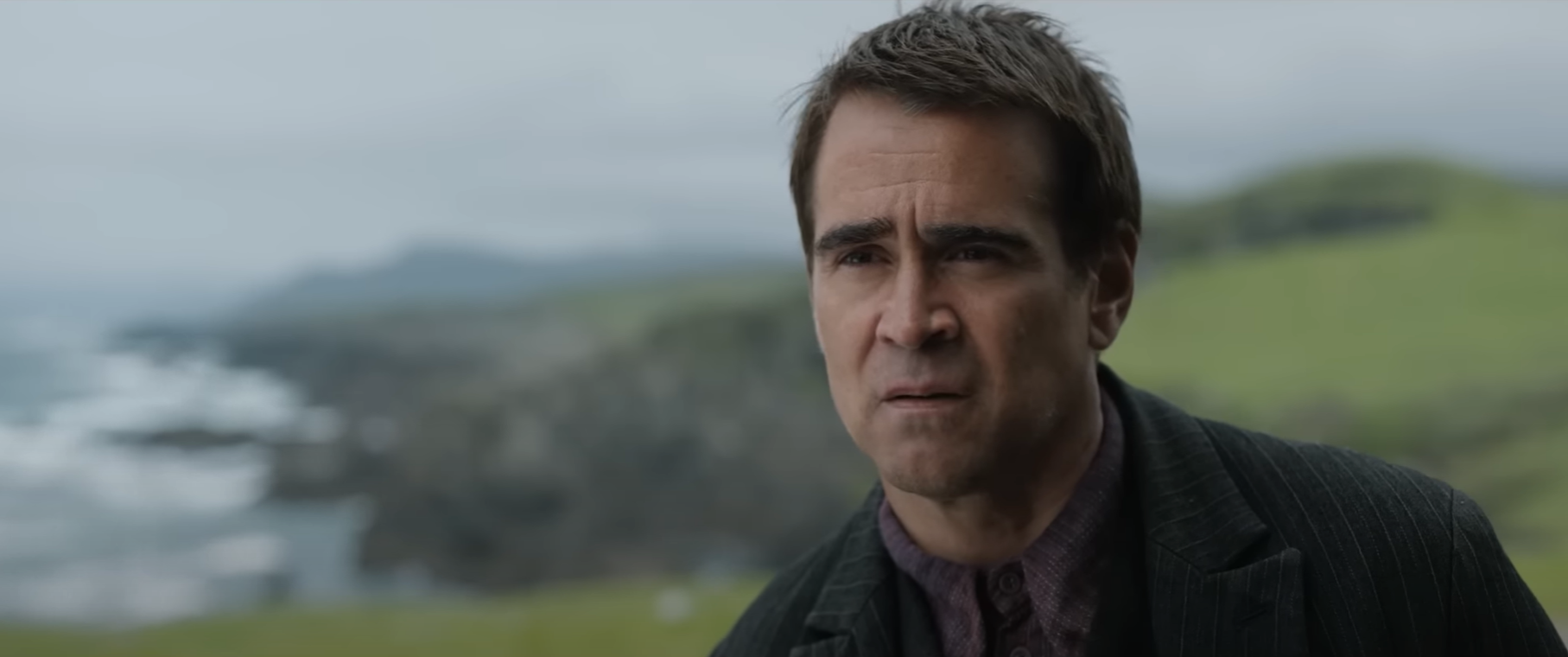
Monday, 6 February 2023

Alternate Best Supporting Actor 2022: Albrecht Schuch in All Quiet on the Western Front

Albrecht Schuch did not receive an Oscar nomination, despite receiving a BAFTA nomination, for portraying Stanislaus "Kat" Katczinsky in All Quiet on the Western Front. 

What I can consistently praise this adaptation for is that it seems to understand the 30 version exists and was excellent, so repeating that version wouldn't really make much sense, offering more of a variation on the idea of the novel than a direct adaptation, apart from a few plot points however even those are presented in a very different way. One such difference is in the case of the character of Stanislaus "Kat" Katczinsky, a veteran in the military, a comparatively older man than the young schoolboys whom we enter the front with. Louis Wolheim and Albrecht Schuch's portrayals of the character are extremely different though the two obviously share some DNA, however, it is an example of a great character having enough life for multiple interpretations. Where Wolheim appears as almost a comforting force as they move towards the trench, as a man who has a great understanding of the situation, as much as one can trying to impart his wisdom on the young men, Schuch appears as we're already in the trench, one of the many men within the dark place. Schuch's delivery of his first line establishes a man with his own very cynical understanding of the place and really the world with his blunt lack of delusions regarding what it is that they are here for. 

In the first war sequence involving the new recruits, Schuch's performance is that of an extremely practical man within the situation. The suggestions to the men on how not to get shot in the night, he delivers in a way you'd say to anyone starting a job of any kind. Schuch brings a blunt reality about the situation, which is excellent in terms of very much embodying the situation, while also creating this certain sense of not quite ambivalence, but a certain "set in the ways" manner of someone who has learned to survive. Schuch's performance manages to combine urgency with that kind of indifference in a certain sense as though he is treating the trench warfare as he would just his current job. Schuch makes the combination feel particularly natural as he shows the men the ropes in moments of just quiet suggestion and moments of more intense demand, such as when they're shelling. In all of it though Schuch presents the reactions of a man who is seeing nothing new at the moment and has to some extent seen it all before. And as we go along in this version Schuch's performance is interesting in that he paints Kat as much less overtly a mentor, though he still shows the men the ropes, and has the perspective of an older man, it is quite a bit different in terms of how that reveals itself through the narrative.  

Kat as we go along is in some ways only the informal leader. Where Wolheim had more so a loving father's energy at times, Schuch plays the part with more of younger Uncle-type energy. He is the "elder" but only by so much. And much of the greatness of this performance is just his exact chemistry with Felix Kammerer as Paul. The two are great together, along with everyone else, though the two of them together are the most potent of the relationships that create this palatable sense of camaraderie between the soldiers. And if you watch the way Schuch goes along with Paul in trying to steal from a local French farmer, who attempts to shoot any trespassers, Schuch brings this mischievous energy however again very much with a bit of aged manner though with the enjoyment of the reckless. Schuch brings enough of this confidence in the method that creates the older man, however, in this instance, the older man shows the younger man how to get into a bit of trouble. And what is notable between the two, and really all, but especially Schuch with Kammerer, is the sense of fun they are having together. There's a real joy in every interaction between the two and they make such a concrete bond between the two men. Schuch in particular brings this sense of warmth in every glance to the men of just a loving uncle in every way he can be. Schuch makes that connection between them just an essential given that is so important in investing in the two men as the film proceeds. 

Schuch's biggest change also realized within the adaptation, is where Kat exists within the world as this man of little note on the outside world, but is capable within the trenches. And unlike the "boys," Kat has lived, as we see when Paul reads a letter from Kat's wife, which includes mention of their deceased son. Schuch's performance in the scene is outstanding because of how much he expresses as he is hearing the words. There is a sense of love for his wife to be sure in his eyes as he hears it. There is the sense of grief that is so palatable, yet also measured within Schuch's work showing someone who has had to live with this grief for some time. There's a bit more though as the letter finishes that speaks towards this sense of the kind of broken connection with it. The way Schuch reacts creates this sense of a particularly complicated emotion that isn't a simple regret or just of a man missing his wife. That is there in his expression but there is something even more to it. We seem to find this when it becomes clear that the war is going to end due to an armistice, and Schuch's reaction is incredible. Because he honestly looks a bit scared at the moment, which one might think is illogical, however, the way Schuch articulates almost entirely just in this reaction is the fear of really the idea of his life outside of the strange "comfort" he has found in the war. A potentially completely absurd however Schuch in the moment suggests the man of no importance he was outside the war against the man, not unlike Red in Shawshank Redemption, who can get things in a desperate situation. 

We get a bit further articulation of that in one of the last discussions he has with Paul, where Schuch is excellent in showing the change a bit in the relationship. Even the maturity as at the moment Schuch moves a bit more to the father trying to push Paul in the right direction, as he speaks with this quiet very believable passion that Paul should continue his studies as he notes with this potent hint of regret noting that he can't even read letters from his wife. Schuch making this natural transition in turn makes it all the more heartbreaking as he and Paul try for one more go at the farmer. As Schuch even in the suggestion delivers it with almost a nostalgic, just one more time for "old time's sake". When this theft goes wrong, though the two manage to escape, the joy the two show in eating eggs together again is so wonderful in just how much natural warmth each actor has at the moment. Their relationship is absolutely convincing and solace as we see the two men who have managed to survive all this carnage for so long. Of course, this ends in tragedy as the farmer's son, fed up with the thefts, shoots Kat, and Schuch's whole performance in this moment is perfect as he looks upon the boy with true confusion and just disbelief that anything could go wrong. To the point, the moment when Kat tries to walk off the wound Schuch is heartbreaking in presenting this not as this great anguish but rather this frustrated disbelief that this is the way it will end for him. Schuch finds the greater tragedy of it by performing it so honestly as someone in the situation can't believe they'd survive a war to be killed by the rifle of a farmer's boy. Schuch delivers a potent and memorable portrait of a man who knows how to survive in an untenable situation, at least as much as anyone in the trenches could.  What it particularly fascinating is Schuch's work is so different from Wolheim's take on the character 90's years before. They're both great, but great in two distinct ways. Proof that just because someone stamped a part with greatness doesn't mean it is finished, as Schuch's work here proves a new perspective can be something truly special. 

Sunday, 5 February 2023

Alternate Best Supporting Actor 2022: Nicholas Hoult in The Menu

Nicholas Hoult did not receive an Oscar nomination for portraying Tyler in The Menu. 

Let's think about a very tall man, a man with an eye for talent, and the ability to appreciate greatness, however, lacks the ability to achieve himself. No, not Adam McKay, though I think "Adam's bullshit" would be a much more accurate name for Don't Look Up, and would like to fashion a version of reality where he tries to explain his satirical brilliance to Stanley Kubrick, however no let's talk about Tyler performed by Nicholas Hoult. Nicholas Hoult, who, probably would not have been the first person I would've named as someone I would've willingly, in fact enthusiastically, reviewed for four separate performances at the outset of this endeavor. However, Hoult once again has proven, that put him in a proper character role, and not as a boring leading character, and you've got something special on your hands. That is the case once again in The Menu, as seemingly one of our entry characters along with his date "Margot" (Anya Taylor-Joy) go on a special course meal in a private island restaurant along with many rich patrons. However, that is not the intention of Tyler as a character, who really is best examined with spoilers in mind, since this performance plays all the better when you know from the outset that Tyler knows that, this special "menu" is planned with the head chef Julian Slowik (Ralph Fiennes) planning a murder-suicide of all guests and his staff by the end of it. 

Hoult's performance is the most comedic performance in the film, which overall is a satire, however, his work doesn't approach really to any real drama. Hoult in the earliest scenes portrays the most fervent passion for food which Hoult presents as this point of fixation and the only point of concern as he speaks on every single thing regarding this interest of his. Hoult's performance conveys this single-minded focus quite hilariously as really a very nerdy overt enthusiasm for everything that is far too much at all times. Just from his wide eyes about everything that he hears about the food, and the sort of dreamy look he gives as he sees the dishes and upon Slowik as the purest of idols for him. Even the way Hoult performs consuming the food speaks to this and he is hilarious by just how much joy and how much he gets out of every bite that he takes. Hoult shows that Tyler is experiencing more than just satisfaction with every bite, every bite has this obsessive quality within his work, speaking towards a certain kind of demented madness that defines the character. Also defines him as just being hilarious as every little aside from Hoult is funny in presenting just how single-minded Tyler is about everything, and just how much he reveres Julian Slowik as a godlike figure to him. Something that Hoult has previous experience with here, however here presented even more humorously in every little glance of his of overt deep fascination with the word of the man, or even the mouthing of the same information as though he is evoking genius. 

As the night becomes all the direr for the guests, Hoult's performance in a way becomes funnier, though, in terms of that, it is really just the context of the situation where Tyler is insane and only cares about the food even though as people are being maimed or killed around him. Hoult's little bits of insertion though are pointed bits of comedy because of the contrast of his work against everyone else who conveys at least some hint of horror to their situation. Hoult's performance is wonderfully oblivious at all times, and really the only time he shows any genuine horror is when Margot expresses her dissatisfaction with the meal. Hoult's petulant frustration and horror, which is so disregarded again is comically cruel as he emphasizes how nothing matters to Tyler except the food and approval from Slowik. We see Tyler try to get as he names aspects of the food such as identifying part of the tea with such enthusiasm, that is hilarious as it comes in otherwise such a tension-filled moment around Tyler. All actions of Tyler are food fixation to the point even when the guests have the chance to escape, we see Tyler only wanting to get back in to have what the female guests were afforded, with Hoult presenting this longing as he sees the food. Eventually, he gets paid attention to as Slowik reveals that Tyler got in with the knowledge of the true nature of the night, initially receiving praise from Slowik, which Hoult's nodding, like a well-trained dog is pure gold, lapping up any praise he gets. Unfortunately, just as when a previous Hoult character idolized someone, things don't go well when he is put to the test, and that happens here as Slowik gives Tyler the chance to make a meal. Hoult's reactions are all pitch perfect as his physical manner becomes nearly petrified and his line deliveries of a man completely lost in this state of extreme anxiety. Hoult's complete fumbling in every moment is the perfection of failure as his face is a man completely overwhelmed. When Slowik tears down not only Tyler's terrible meal, but everything about Tyler, the face of resignation in Hoult is again one more bit of pure comedic gold, as it isn't depression, it is a man whose whole concept of existence has been shattered into this deep pit of sorrow, however, pitched in just the right way to be hilarious in this moment of hopelessness. A delightful performance by Hoult through and through, and just another reminder that the more Hoult we get in oddball supporting roles, the better. 

Saturday, 4 February 2023

Alternate Best Supporting Actor 2022: Eddie Redmayne in The Good Nurse

Eddie Redmayne did not receive an Oscar nomination, despite receiving a BAFTA and SAG nomination, for portraying Charles Cullen in The Good Nurse. 

The Good Nurse follows the investigation into the mysterious death of hospital patients that eventually involves a concerned nurse Amy (Jessica Chastain) and her new coworker. 

So let's talk about Eddie Redmayne a bit, an actor who certainly is idiosyncratic and I can like, however, might be one of the most unpredictable in terms of whatever it is you are going to get from one of his performances. So naturally, I came into this film, about a true story of a serial killer nurse hidden away by uncaring hospital administrations, with a bit of trepidation to see what exactly Redmayne was going to bring. And despite playing a serial killer, for much of the film, this is one of Redmayne's most restrained performances. And I'd say it would've been very easy to overplay this role, as we very early on know he's the killer and the question is how much or how little should one should play the hand of the psychopathy of a man who intentionally poisons patients for the sake of it. And from the opening scene, Redmayne actually plays this idea very much in the margins, and in those margins, he is disturbed by not being an obvious red flag.  

When Chastain's Amy first meets Cullen, Redmayne doesn't show someone who is immediately or obviously concerning. Redmayne mostly shows Cullen to be affable enough if just a bit withdrawn in his way as the new nurse. Oddly enough it features one of Redmayne's most natural-sounding American accents, as it seems attuned well to the character with this kind of very low speaking voice of someone who doesn't exactly demand other's attention. Redmayne's friendly conversations with Chastain even have a decent sort of worker chemistry with one another. Again Redmayne is very natural in just projecting a bit of baggage as he speaks of his own kids and rarely being able to see them, but even that he develops as trying to share it best he can. Even when helping Amy hide her own health issue, to not lose her job, Redmayne's delivery is caring enough as he helps her through it and reassures her. He presents enough of just a normal human's concern, even warmth, and care between the two. Redmayne naturally enough presents Cullen, as a bit sullen but nothing seems more than that. 

Redmayne shows the man who very much is existing within legal society. He doesn't fully hide that there may be something wrong with Cullen, but he in no way makes him an obvious killer. The only scenes early on that grant any sense to Cullen's nature are ones of Cullen looking over his victims, scenes that again I think could've been way overplayed very easily but Redmayne stays very subtle in them. In the opening scene of looking at his victim, there are just little glints of a strange satisfaction on Redmayne's face, nothing so obvious as pure joy, but just some hint of whatever is going on with him. The only history we know is Cullen saw his own mother die in a hospital in a particularly unpleasant way, which Redmayne speaks of with a hushed trauma. It's something that seems to linger but he doesn't even express this in an overt way. The same is true as he cleans the body of his victim, where Redmayne is very quietly disturbing, by just suggesting this sort of strange calm, but almost too calm in the man as it isn't a detached calm, it is almost treating the dead creates the calm. 

What Redmayne uses for much of the film is the context to do the work, and effectively so. When later on you know the truth about Cullen, the creepy factor comes from often that Cullen is so casual despite what he is purposefully doing the whole time. The killer is in him but hardly needs to show himself. Eventually, Cullen is fired, more so for the hospital to be rid of responsibility rather than trying to get him caught, and Amy, who caught onto his killings, is trying to catch him via a wire with the police over lunch. This scene is some brilliant work from Redmayne because, for most of the scene, he's just casually chatting as really a normal person with Chastain and nothing unusual. When Amy steps one step too far, revealing her hand, Redmayne's minor change in expression is absolutely chilling as his eyes start peering and there just is suddenly this loss in any sense of their former relationship, revealing the man that killed so many people. That failure leaves the police to arrest however they need a confession since all the evidence against him is circumstantial. This leads to Redmayne's one big scene, however, in this instance it is big but it works for him. As Redmayne, the whole time in the scene shows the game of Cullen attempting to hide away his psychopathy under interrogation, and his progressively louder and more intense delivery of "I can't" at the request to confess, is striking in itself essentially revealing the real insanity that the man is holding in as there is so much violence in him. However, what I think is actually more chilling is the moment right after where, Redmayne pulls it in, and refashions his face to "normalcy" portraying so effectively a psychopath putting on the show by not acting insane after the outburst. In his final scene, where he confesses fully to Amy, though is more disturbing actually because Redmayne is so quiet in the clarity he delivers every line. The casualness of talking about the death without any real concern, as though it is a list of things he did during the day. The hollowness of the way he says "they didn't stop me", Redmayne is truly unnerving by the blithe indifference of it, as though killing was something he simply did. Eddie Redmayne delivers his best performance here by granting a low key but very potent depiction of evil that thrived from indifference. 

Friday, 3 February 2023

Alternate Best Supporting Actor 2022

 And the Nominees Were Not:

Eddie Redmayne in The Good Nurse

Albrecht Schuch in All Quiet on the Western Front

Paul Dano in The Fabelmans

Nicholas Hoult in The Menu

Mark Rylance in Bones and All

Best Actor 2022: Results

5. Brendan Fraser in The Whale - Fraser is working within the confines of a bad film, however, within those confines, I was largely impressed by the genuine emotion he was able to pull out of the material, finding some empathy in his own work even while the film seemed to have none.

Best Scene: Health check-up.
4. Austin Butler in Elvis - Butler is working within a better film than Fraser, though still flawed in the limitations it puts upon Butler's work. Butler though is consistently impressive in portraying the onstage personas of Elvis through the year that goes beyond simple impersonation and becomes embodiment. Along with also granting humanity to the icon, even if these aspects are slightly limited by the script. 

Best Scene: Seeing Priscilla for the last time. 
3. Paul Mescal in Aftersun - Mescal's nomination made this the best-case scenario for this category, and I am overjoyed he managed to get the nomination over the other better-known actors vying for that fifth spot. Mescal gives an understated but extremely potent portrayal of a man trying to fulfill his role as a dad while going through so much personal turmoil.

Best Scene: Just before "Under Pressure"
2. Bill Nighy in Living - Nighy's performance doesn't quite reach the all-timer status of Takashi Shimura's original performance but the fact that it comes close is quite an achievement on its own. Nighy gives a deeply moving portrayal of a man going from idly wasting away, to finding meaning near his last moments. 

Best Scene: "The Rowan Tree" the second time.
1. Colin Farrell in The Banshees of Inisherin Good predictions Tim, Calvin, Lucas & Aidan. I will first say even while this isn't the greatest lineup of all time, it is a great lineup, and particularly exciting lineup since the academy shirked potentially tired choices for five previously unrecognized actors. No performance was more deserving of this recognition in this five than Colin Farrell's for his pitch-perfect performance that manages to give a completely heartbreaking performance, a completely hilarious performance, and a completely dynamic portrayal of a "nice man's" whole world becoming shattered through one fundamental shift.

Best Scene: Niceness Argument. 

Next: 2022 alternate supporting.

Thursday, 2 February 2023

Best Actor 2022: Brendan Fraser in The Whale

Brendan Fraser won his Oscar from his first Oscar nomination for portraying Charlie in The Whale. 

The Whale is kind of a terrible film about a morbidly obese man trying to right the relationship with his daughter as he nears his death. 

As much as The Whale is a series of misguided ideas from a conceptual level, exacerbated by conflicting direction by the seemingly uncaring yet overwrought approach by Darren Aronofsky, I will say I'm glad the film exists if only to give Brendan Fraser a much-deserved return as a performer. A supremely likable performer on and off-screen, who seems like he has been in a bad patch for some time, and it is hard not to get some joy from his recognition just based on that. But forgetting the quality of the film, as far as I can, and forgetting the personal story of Fraser, let's actually look at the performance itself. The performance itself comes into specific makeup covered work, with a particularly extreme fat suit for the role. Although largely well done in terms of the makeup, the false body looks a touch artificial, it does obviously offer certain restraints within his performance. I will say from the outset what Fraser does well is acting within the fat suit and the makeup where there is no break within it. Although part of it may simply just be the weight of it, however, Fraser uses that to have the movements of a man who is constantly weighed down by himself and is a certain sense trapped within his body. Fraser's movements, but also just the way he carries himself innately bring this to life. His more labored breath and just difficulty of the natural task Fraser makes as just a part of Charlie's being. He does make the makeup just part of his performance and you do accept Fraser as Charlie the weight and all. You don't keep thinking about Fraser being someone surrounded by a fat suit, because Fraser does everything to support this physically within his work. He makes his physical ailments an innate part of his performance and they are connected as one. And that is a success on its own because it would've been very easy to just see a man covered with "stuff", but Fraser makes this all the man that is Charlie. This is to the point that the moment early on of Charlie thinking he is dying, and every ache or pain, is quite visceral and unpleasant in a way that is hard to watch, however in this instance intentional and reasonable for this purpose, because Fraser does embody this state. 

I guess the easiest way to speak of this performance is to examine it in its own terms, which is basically presenting Charlie's final relationships, as his weight has gotten to the point that he is likely to die soon. Should start with the worst first, and I mean THE WORST, of a missionary for some highly specific sect of Christianity (so specific that even as an overly didactic critique of religion, it holds little water since it is so specific), named Thomas (Ty Simpkins). A character who exists only in the mind of a playwright or a screenwriter, because the missionary exists solely exist as a missionary, and since there is no twist about him being a figment of Charlie's imagination, and has no relevance to any notion of reality nor does he work even as some overly symbolic idea. The character exists solely for the sake of revealing other plot/character points since nothing about him logically makes any sense. The character comes in essentially to convert Charlie, which initially starts with Thomas walking in on a masturbating Charlie, who goes into some intense pain asking Thomas to read "the essay" (more on this bit of contrivance later) before he believes he's going to die. This whole setup is more than a little ridiculous in itself, just the whole setup feels false that the missionary would storm in on this moment, in this way, with this result. Fraser though is impressive because he is almost acting his way through it, as difficult as it is. The pain of the attack is delivered honestly, as is his desperate need in the moment of needing to hear the essay, and best really is the rather unfussy delivery of his love for the essay and that he thought he was about to die. That whole notion, which only gets worse as the film goes on, doesn't convince me, but Fraser makes his emotion toward Charlie at the moment feel real, which is the purpose of the performance after all. It doesn't need to make the film work, to work in itself necessarily. I never believe anything about this relationship on either side in terms of the writing with Charlie leading the young man along, and the young man fixating upon Charlie. What I guess is impressive is I didn't think Fraser was ever false no matter how false it all felt on a conceptual level to me. As Fraser presents genuine curiosity in Charlie towards the young man, which is also filled clearly with some complication, as his old boyfriend took his life as related to this precise sect (contrived enough?), but also throws at him all his frustration in what is a contrived scene. However, does Fraser's delivery of this anger feel genuine as the man lashing out from his state finally, yes somehow? 

There is the seemingly minor relationship along the way, which is framed most consistently by Aronofsky's framing of everyone's extreme disgust at Charlie's appearance no matter what, as though they were all looking at the most disfigured thing you could imagine, which is frankly disgusting in the approach we see in the direction here. But having said that the moments of this of Fraser expressing self-loathing in just a singular look, does have some potency within itself and is convincing in itself. There's also the relationship with his class, also disgusted when they see him, but before that, we do get a brief glimpse of the man as the writing professor, which I do like Fraser's very formal delivery of the man's instructions that suggest a great passion for the art of writing, even at this most functional level. There's also his wife (portrayed atypically poorly by Samantha Morton), which I think is a failure of the film more so than of Fraser, though somewhat Morton. I don't sense any proper history really between their two interactions, again partly because Morton is on such an extreme note the whole time. And there's something missing even though Fraser is trying to suggest some kind of warmer history between the two, but it doesn't quite get there despite his best efforts. They seem more vague acquaintances, "but Louis that's IS their history" eh there should be something underlying there, something more, and there just really isn't. But hey I did kind of like his earnest delivery to the pizza guy who wants to know a random customer's name and then spies on him coming out of his house. Again garbage really with how all of it works, but I did think Fraser played the sense of shame of the man seeing him with real emotion, just as he did the reaching out in a bit of connection in the earlier scenes. Doesn't amount to much in my mind in terms of the film but it is something in terms of Fraser's own work. 

But forget all that again because we have his relationship with his daughter (Sadie Sink) which is the primary focus of the film, where he literally bribes her to visit him. The daughter is a terribly written character with the typically capable Sink stuck in a role that is so overly hostile that it comes off as more ridiculous than a convincing depiction of bitterness. Again though credit goes to Fraser for really trying to make it work. There is this complicated sincerity he brings in his offer as he is talking her through very much as the father. When she challenges him, the vulnerability on his face at the struggle in connection feels very much earned on Fraser's end, as you are granted the sense of regret for the years lost mixed in with the hope to try to make up for it. He brings a real warmth in every attempt mixed in with a believable shyness of the man trying as best he can to tiptoe around trying to connect with her, while she comes at him with the same note again and again. Fraser though makes such a guided effort that does very much reveal his side of the relationship at least, creating that juxtaposition between a sense of genuine love and also the pain of disconnect. His scenes of commenting on his daughter, the concern in his voice, and in his expression are of a truly loving father wishing the best, and whatever emotion I did feel in these moments were from Fraser's portrayal that felt very honest. Even within the nonsense. Speaking of nonsense all of this eventually leads to some truly contrived situation where the actions of his daughter lead the missionary kid to reunite with his family...I MEAN SERIOUSLY that is dumb, dumber is Charlie's interpretation that his daughter did it for good, proving the goodness of mankind to him in some way. Give me a break. Anyway, as cynical as I feel about the nonsense this film spouts, Fraser's delivery about the beauty of people in a microcosm is moving, if you attach some better scenario to it, but Fraser's mix of heartbreak yet hope in the line is moving in itself once again. Speaking of nonsense, the film ends with a super dramatic moment of Charlie standing for his daughter as she reads the "most beautiful thing" he has ever read. TWIST, is her old essay, which feels like the modern equivalent of the plastic bag from American Beauty in a filmmaker trying to attach beauty to some real nonsense. Now one can argue, though I think the filmmakers seem to think the essay really is great, that this shows a father's blindness based on just love for his daughter. And again Fraser's performance does sell it as such, his eyes fixed on this need for it, this need to believe and this need to care, that there is a certain localized power to even as I reject every notion the film is making. 

I purposefully saved two elements, the worst and the best of Fraser's performance, because I need to cover the first, to be honest, and I'll leave the latter last because again, I just like Brendan Fraser, seems always like a good dude and I would like him to have the biggest comeback of anyone ever. The former is the binge-eating scenes. Scenes where Fraser presents Charlie downing the food, backed by some despicable score, as though he is a monster feeding, a specimen, a whale not a man. And frankly, I think the whole depiction is disgusting, not because of it being a man struggling with eating but because it is depicted without a hint of empathy or even sympathy. Aronofsky treats Charlie like a creature mock and sadly Fraser plays into this. Now is this probably a bad direction given particularly the empathetic nature of Fraser's overall performance? 100% I'm sure. However all performances are a combination of performer and director, and if a performer gets the plaudits for a great directorial idea, they must also suffer for a poor decision, which is the case here. Leaving that unpleasantness behind, let's talk about the best part, which is Fraser's chemistry with Hong Chau as Liz, his unofficial nurse and the sister of his dead lover. They're great together as the two manage to levitate beyond what is in front of them to deliver something that feels real. They have a sense of history, there is a mutual sense of affection, even affection through connection and just an understanding between the two. To the point, the moment of anger between the two segueing to random humor, to just the deepest sense of warmth, just feels natural. The two speak to one another as long friends which are connected in hardship but also that appreciation for the past. Even when they fight, the two make it less melodramatic, because each has such a strong sense of the two as people and grants an honest sense of frustration in every delivery of the anger. Anger filled with care and frustration, not just anger. Fraser reveals his vulnerability, his shyness with her to his condition but also this understanding in his eyes and appreciation for her concern. He never simplifies that and we feel the palpable sense of the depth of their friendship. To the point, my favorite scene in the film is probably the two just lounging on the couch together and watching TV. Because the two together have such an endearing sense of camaraderie, of two real friends who have an unbreakable connection and in turn just have that casual sense of real care for one another. Going back to see good in people, part of the reason it does have some emotion is the connection in the reaction of Chau against Fraser's delivery. I don't believe that moment as written but I believe in the two at the moment. This might be one of the most frustrating experiences for me because there was potential in this idea, but the execution was so fundamentally flawed in multiple ways. However, even with all that, Fraser did at times move me, even when I was rolling my eyes at the film itself, there was a real truth, a pathos, and particularly a real heart within Fraser's work. It isn't perfect work, because he doesn't quite successfully avoid every failure of the film, but the fact that I just kept constantly thinking "Fraser is not the problem" in almost every scene does mean something. Fraser does find something in his portrait of Charlie, I did believe him, I was moved by him, even though I never believed The Whale. 

Wednesday, 1 February 2023

Best Actor 2022: Colin Farrell in The Banshees of Inisherin

Colin Farrell received his first Oscar nomination for portraying Pádraic Súilleabháin in The Banshees of Inisherin. 

The Banshees of Inisherin is a cinematic joy to me about a man on an isolated Irish island whose best friend unfriends him. 

Colin Farrell returns to leading a Martin McDonagh film, after sitting out his last film and having played largely thankless, though more than decently performed, role of the author's surrogate in Seven Psychopaths. Farrell with this film returns to a substantial leading role with McDonagh since their first and masterful collaboration of In Bruges. The two roles are substantially different, almost comically different, particularly as we open both films. His role of the first-time hitman Ray in that earlier film, really is, for the lack of a better word, a bit of prick angry at needing to stay over in Bruges, and in general, seemingly taking out his somewhat low ire towards the world around him. Contrast that to his portrayal of Pádraic in the opening scene of the film where he is walking around the Island of Inisherin, he might as well be walking through the sky with the ease of his step as he goes about the day. Farrell brimming with just the joy of life and the easiest smile comes upon his face. Farrell establishes Pádraic as a man who loves his life and is loving his life at this moment. Farrell knows establishing Pádraic must be distinctly understood for anything wonderful to come from this tale McDonagh is going to relate. 

I will say the very notion of the character of Pádraic is in many ways unusual for a lead, let alone a performer like Colin Farrell taking upon the part because he is a man of little importance and just initially has no real trouble to speak of. Farrell who earlier in his career often was known for being more confident if not presumed to be the "cool" type, with Pádraic being a far cry from that. Although it is fair to say that Farrell has made clear expansions of his range from his early work, to begin with, this is still a very unique character within his filmography. And you wouldn't think that from just embodying Pádraic from the moment he is onscreen and you just instantly sense a man whose existence is this island, lowkey, and happy to be lowkey in so many ways. When he drops off at his old friend's house Colm (Brendan Gleeson) it is with the most sincere of greetings and his hope for a meeting at the local pub is that of the strictest sincerity. In that little moment Farrell you are granted a sense of the history between the two as just good friends among each other. There's no complication there, just hoping to have a drink with his friend as they've probably done for so many years together up until this point. 

Colm seems to ignore Pádraic whereas Farrell's reaction again is wonderful as he reinforces two ideas one being the long friendship between Pádraic and Colm but also the nature of Pádraic to not take things to heart too quickly. Farrell is supremely likable though in an unusual way in creating this state of the character. He's not Farrell trying to do a more traditional leading man charm offensive, his is a goofy kind of charm he's playing with, and fully commits to this idea because bluntly Farrell simply is Pádraic every moment he's onscreen. That reaction to Colm not speaking through him to his window has such a wonderful purity in Farrell's reaction of confusion. It just barely computes the idea of their friendship. When Pádraic comes home confused about that situation mentioning it to his sister Siobhan (Kerry Condon), Farrell's pondering on whether or not they've been "rowing" is hilarious in the blunt confusion, but also feels so genuine in showing the simple way that Pádraic can't quite get it. Farrell's wonderful though in the way that even in just the simple confusion his body language and facial manner show this to shake the man beyond simple understanding. There's a bit more of a break here that is so perfectly alluded to in Farrell's performance. 

The moment I think is key to much of where this performance goes is where Pádraic sees Colm walking off without him, and Farrell brings a bit more intensity in it, a bit of anger as he remarks on wondering where Colm is going. Farrell plays it through with this vulnerability of betrayal. When he finally confronts Colm about the situation Farrell though is again hilarious in his manner of being so soft in his noting of his glass being near Colm's seat, then even his apology, just in case, is so aggressively sincere as Farrell presents Pádraic as just wanting to clear things up with his friend as soon as possible to get it back to things as they should be. Farrell's outstanding in the moment where Colm finally states his disagreement as simply "not liking" Pádraic no more. Farrell's reaction is fantastic as he honestly is quite heartbreaking because his reaction is that of a fundamental break in his reality and really his comfort as a man. His eyes show such great discomfort and sadness, but also just an inability to really understand how this could happen. His delivery of "You do like me" and "You liked me yesterday", is moving because Farrell speaks it with such disquieting anxiety of the man suddenly having a great loss in his mind that he would've never expected and his whole understanding of the world has been broken. 

Farrell's work here is an incredible bit of just really how much he can get out of the most minor of physical gestures and even just a slight tweak of his eyebrows. As the whole first day, just a bit of the squinting shows so well the constant contemplation and fixation he has on trying to understand Colm's sudden rejection of his friendship. This extends from talking with his sister or when he finds a secondary companion in the emotionally stunted Dominic (Barry Keoghan). Farrell plays their interactions properly as really as a bad kind of attempted friend. In that, he is with enough of a cordiality however not really a proper understanding between the two. Showing that he's still thinking about his best friend unless Dominic asks something inappropriate which only breaks to frustration. Still not really paying attention, leading Dominic rejects their conversation as Pádraic's stays stuck thinking about Colm. And I love the moment of the beginning of the next day of Pádraic seeing that it had been April fools potentially, and the reaction of relief on Farrell's face has such a beautiful simplicity within it, as again as he shows it in Pádraic as more than a return to the happiness of having his friend back, rather a rearrangement of his reality back to something that he is able to understand. 

Unfortunately, that isn't the case, and I'll say there's something quite special in just again that return of jubilation as Pádraic walks down the road to state his "discovery" to Colm, only for his old friend to again be dismissive. In their confrontation at the pub the second time, Farrell really is extraordinary because he really is being very funny, while also bringing so much vulnerability into the scene. That is delivering his semi-false anger as he confronts Colm about "wasting his time" and that he could be doing better things than trying to run after him, which Colm calls him out on. Farrell's reactions are comic gold as he is honestly a bit flustered but still gets out "reading" with the most halfhearted of statements. What is amazing though is Farrell's also very moving in showing that in that there is a very real realization that he wouldn't have had anything better to do, and there's a real sadness and anxiety within the same reaction. Farrell merges both tones within his performance which is simply amazing on his part. Farrell afterward, as Colm tries to explain things more clearly, presents someone who has been through some traumatic situation, because this break is traumatic. Farrell's defense of chatting brings a real blunt passion, which again is funny because he so seriously presents the argument of getting either "pony or donkey shite" right, yet he's also moving because he shows that for a man like Pádraic, it means so much. 

And in this way, what Farrell achieves, other than being very entertaining in the role, is to give meaning to why Pádraic is trying so hard to keep talking to Colm. It isn't just that he's his friend, he's his only real friend and an essential part of what makes his world whole as one. Farrell so clearly illustrates this motivation so effectively and brings us into his unique headspace in a way that is enjoyable, but also oddly relatable. Farrell stands his ground against Colm, which Colm describes bluntly that he will cut off his own fingers than speak to him, and in that there is so much fundamental passion about his work. Pádraic stands up for himself with this insistence of his truth as their friendship is worthwhile, however, with Colm calling him dull, Farrell's expression is that of a man truly pained. What only worsens the situation is as Pádraic hears from others that he's not a "thinker" like Colm and is rather just a "good guy". Farrell's reaction is filled with so much anguish that he manages to convey as though Pádraic is evaluating everything about himself. And in that, we see the way in each scene the man is only looking into his own thoughts and Farrell is marvelous in showing a man falling into this depression from this. I love the moment of Colm helping Pádraic after being beaten by the local bully policeman, Dominic's father because as much as he doesn't want to talk to him he doesn't hate him, Farrell is wholly heartbreaking in the sadness of holding in anything from his friend. The tears are of just not being able to reach out and there is so much pain in it. 

Naturally, after quite a few drinks with him, Pádraic breaks the request and confronts Colm one night in the pub. Again Farrell begins hilariously in his initial attempt to dismiss Colm, who is sitting with Dominic's father, with "three things he hates" and his stumbling failure to come up with the three as a proper joke is hypocritically hilarious. However again there's a real heart in this when Colm dismisses Pádraic to go away again, and Farrell's rage at the situation comes out so potently, and as someone who has been storing this away, unlocked by drink. Rage at Colm, however, more so rage at the entire idea of the situation and distress as he sees Colm as being no longer nice. It isn't all rage though and I love that Farrell shows the way Pádraic sticks to the idea of niceness as though it is something worthwhile. Even with his stumbling, drunken rambling way of speaking the words of recognizing the niceness of his sister and his parents, Farrell shows such real emotion there. There is such sincerity to it, so much passion, so much care, and in it you see how much Pádraic truly cares about his parents and his sister for their kindness. And Farrell is once again heartbreaking as he notes himself as a nice man and his regrets over Colm's potentially having been nice, the distress speaking to so much more than just a lost friendship, but basically, a loss of his whole system of morality and reality. 

And in that we see Farrell presenting a man struggling with himself as much as he's struggling with this friendship because the friendship had so defined his life as his comfort. And here's where I can thankfully finally mention Pádraic as a herder, who goes along down the road with his animals, and Farrell presents a man who truly loves his animals beyond just technically being his livelihood. Farrell though presenting that around his animals there is such sorrow in the man closed off from most though in his physical manner around the animals, particularly his favorite miniature donkey Jenny, which Farrell reveals as one of the purest relationships one has ever seen on screen. Everything Farrell does around her is that of just a direct and real love for his donkey and becomes more and more something that he seems to hold onto as any comfort within the discomfort that now exists within his life. And Farrell reveals a man who now without his life making sense, you see a man who is rather aimless in a certain sense, no longer sure of himself, in his joy, as we had seen in the opening of the film, and turn Pádraic begins to take somewhat drastic actions. 

A brilliant scene for Farrell is essentially Pádraic taking a purposeful change as he gives one of Colm's music students a ride only to lie to the man to get him to leave the island. Farrell's performance is amazing in a very unexpected way and shows the greatness of this performance and how Farrell succeeds in two major ways so naturally. One he is bluntly funny in the delivery of the scene where he speaks every lie of Pádraic in this rather hapless manner of someone who isn't exactly great at improvisation. Farrell delivers every word with ideal timing though in a sort of jumping from one idea to the next in creating a rather ridiculous scenario that tells the poor man that his father died from the same method that his mother had died. Farrell delivers the trickery brilliantly, by doing it so poorly that it is hilarious in his ways. That would be enough for it to be a great scene for Farrell however it is so much more. Farrell shows really the turning of the once nice man, by taking this action of lying for selfish reasons. Farrell though shows that even as Pádraic is not acting nice for once, this is a challenge, his expression is near heartache because as much as Pádraic is going through this action, every ounce of it is going against his being, Farrell shows that it does hurt him, even though he is going through with it. And important to this is the following scene with Dominic, where Farrell shows Pádraic being a bit more open with Dominic as an actual listening friend is still reserved. Farrell expresses so much contemplation of himself until Dominic notes him as stuck in his way, and Farrell shows Pádraic boasting about his "accomplishment" of the deception. Farrell is so haphazard and really pathetic in presenting the man attempting to be mean and fundamentally something he is not. 

And in that sense what we see Pádraic become is a man very mixed up with himself, which as we see as he goes to talk to Colm, after hearing that Colm had found his drunk speech interesting, and comes in to talk to him. Again a very awkward conversation it is, as there is this underlying tension about as much as Farrell brings the bright smile as though everything is back to normal, however even in his smile it isn't quite right and it seems like their relationship isn't at all what it should be, particularly as Colm seems to be mostly looking through Pádraic. We get some hints of their old conversations it would seem as they talk about Colm's name for his musical composition, which Farrell and Gleeson do reveal something a bit more genuine, however, that is surrounded by tensions. Farrell speaking Pádraic's attempt to put all aside, and have a drunk, after also noting about no longer needing to send the student away, all is very forced. Not from Farrell, but rather from Pádraic's failure to bridge the gap. And while that doesn't fix things, Pádraic's situation only is exacerbated as Siobhan announces she's also leaving. Where I did not mention the naturalistic sibling chemistry between the two, however now is the time for it. Condon and Farrell just have the right sort of ease that isn't perfect but it is properly pleasant even as they are different sorts. The weight of the relationship reveals itself when she says she's leaving and Farrell's sadness is of a man who didn't even consider that this would be an option, with their farewell being a painful indication of the man's only greater isolation. 

If that wasn't enough still the relationship with Colm isn't fixed as he removes all fingers from one of his hands as his non-violent method to get Pádraic to stop, which indirectly leads to one more grievance, the death of Jenny from having choked on Colm's finger. And Farrell's reaction to this, after you could so naturally see the comfort between him and the donkey in every other scene, is absolutely devastating. Could seem silly, but it's not silly at all. As Farrell's expression of grief is so potent, and you see only man truly has lost everything he loves so quickly and so painfully. Farrell's way of performing it is with outward pain but also is harrowing in the way he expresses the man internally just writhing in it all. Farrell from this point on is almost this husk of the former bright Pádraic we had seen as he looks over his dead animal companion. And Farrell not only makes you feel for Jenny, but he also makes it so it breaks your heart just as it did poor Pádraic. Farrell presents from there on the full break of the man's reality however he reconstructs by entirely rejecting his niceness. And it is a remarkable achievement as Farrell earns not only turns the joyful "good guy" of Pádraic into a vengeful man, he makes it quite the striking idea as suddenly this man so filled with anger and pathos is still the same man, which in a way is particularly unnerving.  Pádraic's threat to Colm is bone-chilling as we see the man now defined by hate, and he is now so stiff, so built from the ground up by his anguish that he's now gone to the darkness beyond it. And it would seem Pádraic is lost to it all as he sets Colm's house on fire as an act of revenge, leaving the two to meet in the final scene of the film upon a beach. And with that, you also get one more outstanding scene from Farrell with Gleeson, the latter who seems to give probably the purest glimpse of their old friendship while Pádraic is having none of it. It's different now from the literal and metaphorical heat of the moment, Farrell's notable brow is still furrowed, his manner tight with bitterness, his gloomy delivery still accentuating a man who wants to burn the world. But...it is no longer as pure as when he made the threat. Farrell is amazing in how he has these small moments of the old Pádraic throughout the scene. A glint across his face that shows the "niceness" that's still in there somewhere, the little smile he gives Colm's dog, and especially his "anytime" that is fully Pádraic, while also having a bit of a sense of hope as though Pádraic realizing their moment that they might have a chance to make amends after all. This brings me all the way back to Ray from In Bruges. As both films feature a man going through much, and Farrell makes every moment of each man's journey so very potent, so very emotional, so very tangible, and also often very very funny. Where Ray was a man who discovered perhaps some sense of good, Pádraic is the journey of man perhaps losing what good he had. And as idiosyncratic as each story is, Farrell makes both universal by making each moment of it feel so true. And the reason I bring it up is Ray and Pádraic are so different yet both show what Farrell can do when he's at the very top of his game. I could go on and cover every moment of Farrell's work here, and I'll admit I nearly have because I love every moment of this performance. There isn't a moment that fails to bring me a bit of cheer, a bit of pathos, or just a bit of that unique feeling of joy when you see an actor performing, and can't take your eyes off of them while watching, and can't forget it after having seen them.