Thursday, 23 July 2020

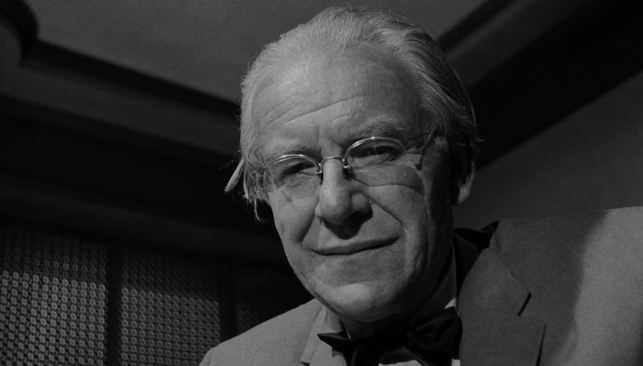
Alternate Best Supporting Actor 1966: Will Geer & Murray Hamilton in Seconds

Will Geer and Murray Hamilton did not receive Oscar nominations for portraying the Old Man and Charlie Evans respectively in Seconds.

I will first say spoilers, and recommend one just sees seconds which is a terrific underrated film. Another film that some how was derided upon release and so many times one can only wonder, what were the critics at the time thinking? One of the great aspects of the film is the ensemble cast filled with memorable character actors. One of the most memorable being Will Geer who typically played kindly down home types, and that appears to be what he might be playing here when the first appears in the film. This as he suddenly appears as our protagonist is going through the procedure to be "reborn" by a mysterious company, that takes aging men and gives them a new body and a new lease on life, supposedly. Geer's initial appearance is talking through the man about his current life. Geer is brilliant in this scene this as he presents himself just as a kindly old man. Upon initial view one might be foolish enough to take him as that. This as Geer speaks with a sweet sprightly way, an endearing smile, and eyes filled with interest for this man he speaks to...when the man is looking at him. You would be foolish enough to believe as Geer tells the man his life currently is basically meaningless, but he delivers it with the most sunny of dispositions. Geer does two things with this in one he makes it entirely convincing that the man would accept being "reborn" and losing his entire life for it, but also the more you pay attention the more quietly unnerving he is. This as he speaks with that wisdom of a country doctor, but basically he is pushing a pessimistic if not nihilistic view regarding the man's existence. I love though in that Geer wields that kindly presence as the Old man's tool to push the man to take his service as though it's a gift, when it may be anything but. This reflected though in the less the man looks at him, the more nefarious the old man's smiles seem, and the less any real warmth one may sense in him.

Murray Hamilton is a character actor I think we should all just take a second to admire a bit. This as you see him pop up in any classic film the man delivers. Whether that be his gambler in The Hustler, Death in his Twilight Zone episode, or his most remembered role as the morally questionable mayor in Jaws, among others. Hamilton is a proper character actor in that he delivers every time to the point one wonders what he could do with a more substantial role. Well this isn't that, his screentime is limited, but it does allow him to explore a bit more of his range. Now that screentime is limited to the point that for his early appearances are in voice only, as he repeatedly calls our protagonist trying to get him to take up the opportunity of being reborn. Hamilton's voice work is great however as he speaks with in part this sort of lurid salesman enthusiasm in part as he tries to convince the man. There is more though just in his voice, an underlying desperation about it as though he is harried to get him to accept the offer. What the desperation from is of course unsaid at first, but Hamilton's voice speaks a man within some constraint. This is only all the more evident later on when he tries to call to encourage the man a bit more, again Hamilton speaks in an evasive yet anxiety filled way. Hamilton speaking as trying to sell the man the idea while also obviously being under an inordinate amount of stress in the "sale". We actually see Hamilton, unknowing that he is the character of Charlie Evans who calls the man over the phone claiming to be his old friend, relatively early on in the film. This as the man stumbles into a room, in the offices of the rebirth company, where many men just seem to be sitting around. This including Hamilton who looks upon his old friend suggesting that he knows this man, though subtly as not to give himself away in those small glances of his.

Now the man's life being reborn isn't particularly successful which takes him back to the company, awaiting a "second" chance at rebirth. In this first he awaits this meeting in that room we earlier saw Charlie, and here we have what is Hamilton's highlighted scene of the film. It's Hamilton's one big scene, and to be sure he does not waste. This right from even the way he identifies his old friend in the moment as his expression is just brimming with this excitement as though he hasn't seen a familiar or friendly face in some time, or at least as familiar as it can get it in his strange circumstances. Hamilton instantly grants the sense of familiarity, and I love everything about his manner that grants the sense of an attempt to really create a sudden camaraderie with his old friend. Hamilton offers even this small moment a lot of depth, making more to Charlie than just being simply there. Hamilton though continues in this creating Charlie as entirely his own man with his own experience. This when asked how long he's been waiting for a second chance at being reborn, with his strained smile against his delivery of "awhile" paints a painful picture of a man seemingly in a hopeless endeavor. Hamilton is most moving though by presenting this sort innate optimism in his portrayal of Charlie, right to explaining why he sponsored his friend for this treatment. This explaining it with scattered unease how he hoped his friend might have had a better chance. When the man explains the waste, Hamilton's reaction says so much as his whole face is tight as though the man is trying to fix himself on some hopeful thought as though he's fighting of a painful depression the whole time. When suddenly Charlie is chosen for his "second chance" Hamilton is absolutely heartbreaking in the sheer jubilation he portrays. This not just happiness, but rather on the edge of a breakdown over the relief as though he has been waiting for it for an eternity. The combination of the bittersweet quality of Hamilton's work creating his own remarkable portrait of man hopelessly awaiting what he believes will be his personal redemption. It is brief work, but it is brilliant work, as Hamilton doesn't waste a second of his onscreen or even off-screen time to not only make the needed impact on the story, but also realize Charlie's story as well. Speaking of not wasting a second of screentime though we have the return of Geer as the Old Man at the end of the film. Initially Geer comes in again with that seeming sincerity as he states his hope the man could've made a go of his rebirth. When he continues to speak though Geer loses sort of the false sentiment and just starts speaking about the way his organization has been going. Geer is downright terrifying as he speaks of profit sharing as it relates to basically of disposing of men. Geer having such an ease in every word of man so comfortable with his truly horrible endeavor. This right as he basically is sentencing a man to death, and Geer inflicts this cold darkness as he speaks to moving his dream forward. I love what basically his final moment, where he reassures the man, just as he's about to be hauled off to be killed, with one more false smile that Geer brilliantly deflects as he loses it to just a cold dismissive glance as he orders his men to carry the man off to his death. Geer's performance crafting a man horrifying and unusual devil. This as a man who with so much ease tempts a man and with that same ease condemns. Both of these performances is fantastic, that take very limited roles in terms of their screentime, and making a lasting impression that makes Seconds all the more memorable of an experience.

Wednesday, 22 July 2020

Alternate Best Supporting Actor 1966: Paul Meurisse in Le Deuxième Souffle

Paul Meurisse did not receive an Oscar nomination for portraying Commissaire Blot in Le Deuxième Souffle.

Le Deuxième Souffle follows an escaped gangster Gu (Lino Ventura) through "one last job" which naturally has complications. It's a very good film, though it is a little too gradually paced for its own good as it occasionally loses its momentum when the editing could easily pick up its pace.

Paul Meurisse plays some seemingly required  element for many a crime story, which is the cop trying to catch the crook. Early on the film you might be mistaken this might be a Heat, style situation where we follow both the cop and the crook at an even keel. This might in part come from the grand impression Paul Meurisse makes as the detective Blot in his first scene. This as he comes in to investigate a hit on a gangster in a crime intertwined restaurant owned by the escaped Gu's lover Manouche (Christine Fabrega). Meurisse has to be said is absolutely brilliant in this scene. This as Blot investigates the crime scene by basically noting all the logical inconsistencies of the likely explanations of everyone at the restaurant to deny anything happened in a typical gangster sort of way. Meurisse is marvelous in his sarcastic delivery yet incisive manner as he goes about each piece of the crime scene to artfully dissect it while mocking the witnesses by already noting will be their excuses for each element. Meurisse is just marvelous in this scene as he is wholly engaging and absolutely entertaining in this sequence. This in as he both shows the cunning of Blot as he breaks down each element, but is also just extremely captivating while doing it. Meurisse in the single scene setting up a fantastic adversary for the crooks we will be following otherwise, this just through that comic yet also exact manner he delivers in this first scene of his.

Meurisse distinguishes effectively this sort of purposeful grandstanding though against the detective who obviously does care about the job he is doing. This as we later see him attempt to interrogate Manouche alone, who is in danger within the life. Meurisse is terrific by projecting a different more intense tone. He still grants an underlying levity about the man, but his eyes reinforce the gravity he is trying to convey to her in an attempt to actually get her to speak. Meurisse excels in creating the sense of Blot's methods as he attempts to make any headway within the criminal world. In one part where he attempts to derive what he wants from another criminal, Meurisse is effective by once against maneuvering the scene a little differently. This still with a slight callous manner suggesting Blot's indifference to the man he is interrogating as a person, however his accentuation is upon the serious nature of the situation in which he speaks. Meurisse creating the sense of Blot's subtle manipulation of the gangster in an attempt to try to get what he wants as this sort of artful dance based on the motivations of whoever he is speaking to. An essential moment in this is when he is doing the same with Manouche's bodyguard/valet, and Meurisse delivers again a more jovial quality in speaking to the man as though he is a friend. This against the moment the man walks away and the spirit drifts from his face showing again the methods of Blot. I honestly wish there had been more of Blot, in part Meurisse excels in being both entertaining while also creating the sense of the ways of his detective, but also in terms of potentially creating more of a dynamic. Instead the Blot scenes are closer to afterthoughts, or would be if Meurisse were less engaging in the part. This I think would've most served though an element later in the film where we get a contrast between Blot and another Commissaire who engages in torture. Meurisse in his moments projecting a smooth operator who succeeds through careful manipulations against the other man who just does it by force. Nonetheless Meurisse makes the most out of this idea in the final scenes of the film where he very quietly stands against them. Meurisse though is great in the scene of trying to get a reporter to take evidence that reveals the torture, this beginning with a subtle clever push exemplified in his expression that slowly morphs to exasperation as he basically has to spell out how to get the evidence to them. Although I do think it is a little unfortunate that the film largely makes Blot mostly there to serve an overly specific function after his first scene, Meurisse excels even within those limitations. This in creating a character who leaves an impression, even if his first scene is his high point, that would be worthy to act as a proper lead in a film that followed Commissaire Blot.

Monday, 20 July 2020

Alternate Best Supporting Actor 1966

And the Nominees Were Not:

John Randolph in Seconds

Will Geer in Seconds

Murray Hamilton in Seconds

Paul Meurisse in Le Deuxième Souffle

Donald Pleasence in Fantastic Voyage

Alternate Best Actor 1966: Results

5. Eddie Axberg in Here Is Your Life - Axberg gives a largely reactionary turn, however it works in creating the right naturalism within his character for his film.

Best Scene: Date.
4. Anatoly Solonitsyn in Andrei Rublev - Although very low key Solonitsyn's often observant turn effectively still realizes his character's quietly striking arc throughout his film.

Best Scene: After the bell rings. 
3. David Warner in Morgan - A Suitable Case for Treatment - Warner effectively gives a wild comic yet intense turn, even if his film doesn't use him all that well.

Best Scene: Trying to assassinate someone.
2. Donald Pleasence in Cul-De-Sac - Pleasence brilliantly captures the suffocating neurosis of his character and its degradation throughout the story.

Best Scene: Final breakdown.
1. Per Oscarsson in Hunger - Oscarsson performance naturally captures the tragic state of his character while doing so with a remarkable levity.

Best Scene: Hunger.
Updated Overall

Next: 1966 Supporting

Alternate Best Actor 1966: David Warner in Morgan - A Suitable Case For Treatment

David Warner did not receive an Oscar nomination, despite being nominated for a BAFTA, for portraying the Morgan Delt in Morgan - A Suitable Case For Treatment.

Morgan - A Suitable Case for treatment fits within the English comedies of the time which typically were particularly chaotic, often to a fault, satires. Here we have a less than okay one about a failed artist dealing with his wife (Vanessa Redgrave)'s affair, sorta

David Warner takes on his first leading role here as the titular character. This being a different performance for him in many ways, as Warner is typically best known for his rather controlled individuals, even when playing evil men, they are more often of the calm and collected sort. David Warner though plays a man who is a suitable case for treatment after all, so it is fair to say that mentally he isn't all there. Warner's performance is pure madness here, that isn't helped by Morgan's situation where his wife is sleeping with his former best friend. What doesn't help matters though is she seems as bonkers as he is, just a little more low key about it, but in turn entirely encourages the madness of Morgan as he attempts to win her back. This is not some traditional endeavor though because Morgan isn't a normal man. Warner's performance is remarkable just in the overall setup of this as he has a ferocity in his energy, as he brings his typical intensity here but externalizes it more. This as he succeeds in creating a less controlled individual where there is a manic quality in his manner, particularly that of the physical. At the same time though he does have that Warner sort of power within his performance that does create the best moments in the film. This being in the manner in which he tries to kill his former best friend, and in these moments Warner is hilarious. This with what is best described as casual intensity Warner brings as he threatens the man while also maintaining a certain courtesy about it.

There are some enjoyable bits just through Warner's off-beat delivering that combines his typical presence though in a more unwieldy sense. Warner though also does offer a touch of depth within his moments with Redgrave. This as much as he still makes Morgan a raving lunatic who seems both pent up with lust and range, there is a minor sense within his expressions a more earnest need or concern for his wife.  This though is randomly interspersed with the eccentricities of the character, that frankly feels a bit over written and under written in the same measure. This as we get that he has some strange ideas of communism, not as a believer of the views but just that he holds himself attached to the figures therein. This really doesn't add up to much other than acting as a fodder for in which Morgan can rave about. Enjoyable ravings in Warner's performance, but not much more than that. We also have his animal obsession than naturally, or maybe not so naturally, eventually leads Morgan to wear a gorilla suit while trying to foil his wife's remarriage. Again Warner is more than up to the task in terms of granting the idea something in his own performance. His physical manner, which often takes upon a simian like  manner, is well drawn, and again creates the madness of Morgan in at least an entertaining way through his own work. Here is the problem with this film, which I guess I probably had a bit less patience for after watching a similarly styled Lord Love a Duck, as it like that film it introduces general ideas but really lets itself be just a chaotic mess with thinking that the mere introduction of an idea is enough. It isn't enough this as the film gets repetitive quickly because it doesn't grow or examine its ideas as bits, and the bits themselves end up losing their oomph after awhile because they don't change. We really don't get to explore Morgan beyond a comic idea, those eccentricities really don't have any real depth to them, and seem almost created as an illusion of depth. This as the film seems to suggest one can satirizes a communist radical by merely having the words, but it doesn't do anything with it of note. This leaves the talented David Warner to effectively create the setup for the character, and even thrive enough within the repetitious nature of the film. It sadly though loses its momentum by never reinventing itself and only getting more indulgent as the film proceeds. I wish the film really let Warner do anything with the part, but it is content in thinking a generalized off-beat weirdness will carry itself. This leaving a film that isn't funny enough to be so surface thin in its satire. Warner is good in showing a different side of his talent as a performer. Although even this is troubled as the film doesn't even filter his performance properly, as Redgrave is in a way underused, and the film fails to create a proper straight man dynamic against Warner. He's just kind of there to try to make scenes work, notable then that he doesn't entirely fail. I just wish the film had either given him better comic setups throughout or actually progressed its story in some insightful way.

Thursday, 16 July 2020

Alternate Best Actor 1966: Per Oscarsson in Hunger

Per Oscarsson did not receive an Oscar nomination, despite winning Cannes and NSFC, for portraying Pontus in Hunger

Hunger depicts a penniless writer wandering the streets of a city.

The nature of the story from the cursory glance suggests that Per Oscarsson's work could be one of that of quiet soul bearing, of a poor man. Well that's not at all the case, in fact if there was a performance I'd compare this to most swiftly would be Charlie Chaplin as the tramp. This is not just as both characters often wander streets in their existence, but rather the entirety of Oscarsson's work carries with it a similar energy. Now this isn't a silent film, nor is this a comedy, Oscarsson's performance though is one where he carries himself in a unique manner that crafts that idea of his Pontus, more than the average homeless man. This is rather Oscarsson's work crafts him as an eccentric within this situation, and in doing so makes this likely a far more captivating experience. This is strongly within Oscarsson's physicality within the role, which is simply wonderful. The way he even walks is with this near directionless. This as though even when he's walking in a straight line, it isn't quite assured fitting for a man who in many ways is aimless, or at least looking for the right path. This is brilliantly built within though his overall demeanor that attempts this type of erudite, as though he is a philosopher within this situation of his. Oscarsson keeping this not quite proper, yet very specifically measured manner. This with his frequent courteous removal of his hat that he uses as essentially a running gag through the frequency, and often questionable use. Oscarsson though presenting within that, even as it is enjoyable, also shows Pontus as in a sort of, well note quite denial, though in part an avoidance of his situation.

Oscarsson's performance I think is essential within the success of the film as without it I think it would be inescapable dourness, however Oscarsson portraying Pontus's methods of trying to exist in the state, adds the right degree of levity, while also informing the audience of his character. This as Oscarsson more than anything, in that energy within his work, presents the fortitude or at the very least the persistence of the man. This as he saunters around the street Oscarsson grants technically the aimlessness of the man at times, but also his desire to try to work things out. This with frequent stops at a pawn shop to try to make a minor bit of money for survival while also attempting to make it as a writer, or perhaps anything else. Oscarsson's movement really does two things. One is he is engaging if not entirely entertaining to watch within these movements. He though does this in a way that succeeds in the second part, which is successfully portray the state of the man as seemingly a fruitless endeavor. Another aspect with this duality is within the way Oscarsson speaks within his performance. Oscarsson is again fantastic in the off-beat yet still genuine way in which he realizes his manner. We are granted the sense of a writer's eccentricity in his moments of pondering to himself, where again he is actively enjoyable in the way he speaks these rambling, while also in these ramblings shows a mind moving towards shambles. Oscarsson making Pontus someone who is enjoyable to be with, while also conveying with it the honest reality of his situation.

Oscarsson carefully plays the moments interacting with others though, again with a sort spry manner in portraying a man as though he is acting as though he is in an entirely fine within his situation. He brings though, even within the kindness, as the film goes on a more hurried delivering, even still with a sense of optimism that crafts the sort of decay of his state. We see this as well in, what again feels a bit Tramp like, is when Pontus romances a wealthier woman in the city, although not all may be as it seems in terms of reality. Oscarsson delivers a charm within his awkwardness. This being in his sly smile, and again a demeanor that is unorthodox in a most engaging way. Again though Oscarsson creates the sense of the presentation against also the struggle the man is going through. There are changes in his expression that alludes to other thoughts as related to his difficulty even as he he speaks the sweet nothings of a proper poet. He never loses the sense of his state, even when he is out of it seemingly within the relationship, even if for a moment. I love that Oscarsson doesn't show this to be a facade as much as coping mechanism. This in portraying that his eagerness isn't false even if technically not entirely true due to the man's struggle.

Even when that potential romantic affair loses itself, due to the limits of the mind, Oscarsson delivers in the moment of a certain rejection the man dealing with it in his particular way, though with a greater sense of his vulnerability. Oscarsson finds honesty within the eccentricity, and manages to grant that levity, while also wholly revealing the soul of the situation. I think what are essential moments within this though are in the titular word of the film. This in Hunger, hunger after all is not something one can really place over on a facade, it is a real, and painful experience. Oscarsson in the moments of his character's struggle, powerfully, and bluntly shows this an aspect in which he cannot talk himself out of the pain essentially. This in a moment where he throws up from eating bad meat, Oscarsson is heartbreaking the moment of just blunt desperation that he portrays in the moment of strict suffering. His words only painted by pain of dealing with yet another hardship. We see the same when he is enjoying a meal again, this in the rush to indulge in the food, we are granted an honesty of his situation. Oscarsson showing in the moments of hunger, that really there's nothing man can do other than accept his situation in the moment. His near final moment of raging at the world, albeit briefly, is so well performed as again the man losing himself into the desperation in this mania, however again Oscarsson presents within a man who is trying so hard to keep it together. This is a brilliant performance by Per Oscarsson. This is as he carries the film in terms of its momentum, but also in crafting such genuine portrait of the man's state. This state of existing both in the present, and while also being lost in his own mind.

Monday, 13 July 2020

Alternate Best Actor 1966: Donald Pleasence in Cul-de-Sac

Donald Pleasence did not receive an Oscar nomination for portraying George in Cul-de-Sac.

Cul-de-sac is a somewhat intriguing riff on the somewhat tried plot of a criminal creating a hostage situation by seeking refuge with some normal people, the normal people here not being all that normal.

After all the man, whom criminal Dickey (Lionel Strander), chooses to hide out at is played by Donald Pleasence. That already suggests this isn't exactly going to be a Desperate Hours situation of an average family man dealing with a violent criminal. We instead have Pleasence, known for the more we'll say extreme individuals, who we first meet as he is frolicking in his bedroom with his young wife Teresa (Françoise Dorléac). Pleasence is brilliantly mad in this sequence as he gets dressed up as a woman with makeup as well as they interact. This as Pleasence captures a rather unique tone within the scene that is a combination of something that while being technically intense towards the idea the character's lust, yet also spells doubt within his sort state within this relationship. This as Pleasence plays both active and passive within the interactions. This as his eyes capture the mania of going along with the act, and at the same time that certain mania alludes to the way he also has a neurotic quality combined within that. Pleasence showing a man in a state of relationship that obviously has some sort of intimacy there, but it is also a detachment all the same within the near insanity of the interaction. This marital "bliss" is short lived within the film though as the two's dalliance is broken up by Strander's Dickey who demands to use their house to hideout with the two being held as basically assumed gun point.

Pleasence's performance then in many ways here is the factor within the film that differentiates itself from most stories of the ilk. This as there is nothing about George that is a man in this situation traditionally as the secret hero or event he obvious coward. Pleasence is terrific in portraying basically this nervous breakdown the man is having in presence over the criminal, although his breakdown isn't seemingly in wholly relation to the criminal. Donald Pleasence granting his performance this near constant unease in the physicality of his work. This as even just in the way Pleasence breaths has a hurried quality, his head constantly taut, and his movements with a messy quality within them. Pleasence granting the sense of George on the verge of this breakdown and his performance portraying a man seemingly filled with worry, far beyond dealing with a violent criminal. In his interactions with the violent criminal Pleasence's portrayal of the so called fear of it is with a broken intensity of a man tip toeing on the edge of some cliff. Pleasence speaking with this near mess of words together his his deliveries this particularly when speaking of his relationship with his wife.  Although he doesn't quite state it directly, Pleasence speaks each word regarding her with this straining anxiety. Pleasence's portrayal is that of a worn mind that seems unable to comprehend his current situation almost given how caught up he is within his own mind.

The only switch though is when guests briefly come over to the house, where they must act as though nothing is out of the ordinary. This though technically is where Pleasence heavily changes his performance towards creating the idea of likely how George usually presents himself to most people. Pleasence's changes though are in the presentation of this George. This as he changes his physical performance to careful movements that are so careful they're a touch stilted. He speaks in ways with a quieter quality, though incisive though as he grants even in this quiet delivery that intensity if more carefully wound. Pleasence showing a man who even here is just barely keeping together within the normal society.  After the guests leave it essentially only leave a final violent confrontation with George to take action against Dickey. It is a remarkable portrayal of a complete mental breakdown in Pleasence's performance. This in the very act of the killing by George is with a demented neurosis. This as he barely even looks upon his target and he presents this act as a moment of sheer insanity. This though is not the end of it as Pleasence's whole performance reveals the mess of George's mind that remains after it all. His work showing the way the neurosis that was ever present fully take over as his he speaks as a man with a most limited grasp on reality. His whole manner becoming detached from all things except the randomness of the ramblings that Pleasence grants the right sense to, the sense being that George has entirely lost his mind in the moment. Although in the end I wish overall the film had maybe a bit more complexity within the scenario itself, there is still much to be found within Pleasence's portrait of man on an edge being pushed off.