Eddie Redmayne won his Oscar from his first Oscar nomination for portraying Stephen Hawking in The Theory of Everything.
The Theory of Everything is an okay though very standard, and excessively respectful telling of the life of theoretical physicist Stephen Hawking.
Eddie Redmayne is not a favorite actor of mine, and he has given at least one downright terrible performance in The Good Shepherd. Even his best work prior to playing Hawking, Les Miserables, still came with a few odd facial reactions to bring his performance down, which I suppose was a trademark of his early performances. Thankfully the odd reactions are gone in his performance as Stephen Hawking, although that might be due to one reason, but I will get to that later on in this review. The film begins with Stephen Hawking working towards his doctoral thesis while beginning a romance with a fellow student Jane (Felicity Jones). Redmayne performance is relatively simple in these scenes. He has a nice enough charm in his performance that is naturally part of his whole somewhat shy and retiring academic type. In addition Redmayne and Jones are good together. They project a natural sweetness in the romance between Stephen and Jane which works quite well in an understated sort of fashion.
Despite being called the Theory of Everything, there is not a great deal of time spent in having Redmayne actually try to portray any sort of genius in Hawking. It is not that Redmayne avoids portraying this or is in anyway inadequate at this, but rather the way the film chooses to present this. There basically is the standard scene of writing on the chalkboard and that's about it. Even the theories when presented are for the most part explained by other characters rather than Hawking. Redmayne is convincing in the little he has to do, but the film asks very little of him in this regard. What the film does focus on is when Stephen Hawking is diagnosed with Amyotrophic lateral sclerosis and told he has only two years to live. Redmayne is very effective in portraying Hawking's initial reaction. He expresses well the way Hawking withdraws into almost nothing into his depression, and is very good as he lashes out expressing Hawking's anger over the lot in life he has been given. Along with his emotional distress though Hawking begins to show the signs of the disease.
The physical and verbal depiction of Hawking's disease easily could have easily lead to some terrible overacting. Well thankfully that is not that case here. Redmayne takes Hawking's speech, before he eventually loses his voice due to surgery, and is very effective in how he slurs his delivery that becomes more intense as well as less comprehensible. Redmayne makes it feel absolutely genuine and does well to never use it to a point in which he over accentuates it. Redmayne is equally good in portraying the loss of his physical abilities as he starts to lose his ability to walk and move freely. Redmayne effectively shows going from a limp, as well as some difficultly in maneuvering normally, to the point of not even being able to keep his body in the right shape. Redmayne does not let being put in the wheelchair finish his performance either. He still shows how it frankly does not stop as he can't sit up, and he even loses his ability to keep his mouth straight, perhaps that spares us the strange reactions. To be fair though every body contortion feels genuine in Redmayne's performance and he most of all is terrific in portraying exactly what the disease does to him over time.
Now portraying Hawking's disability is the highlight of Redmayne's performance. He is good though in portraying early on how Jane's involvement in his life causes him to develop a passion to work and live again. He also importantly never portrays that to be the end of Hawking's depression though as it returns brutally when Hawking loses his ability to speak. There is also one scene where Jane has her future second husband come over to their house, and Redmayne is very effective at first by expressing Hawking's dismay at this development. Of course even this is brushed aside when Hawking just views him as someone there to help. The problem is other than those few things Hawking is not developed into all that much of a character. He has his theories, his wife, and his disability and unfortunately they kind of call it a day. The film refuses to ever portray Hawking in much of a negative light, and leaves him in the end to be a bit too simplistic of a character. This is all the writing though and not at all Redmayne's fault. When there is a chance for depth, Redmayne takes it, there unfortunately are few of them.
For awhile the film even kinda shoves Hawking aside mostly to view how Jane sees him, which sure it gives Jones some time to shine, and keeps Hawking as too much of a constant. The biggest failure in this regard is the depiction of Hawking's relationship with his second wife. They portray her as kinda a problematic usurper, but seem to purposefully avoid putting any blame onto Hawking in these scenes. The film instead just makes it something he just has to do, which is unfortunate because it does kind of go around the fact that Hawking leaves Jane by his own volition. Redmayne is great in the goodbye scene as he is moving in portraying Hawking's emotional breakdown, it's a shame the film was not able to make it mean little more. Almost all of my complaints though are really due to the screenplay not Eddie Redmayne's performance. Redmayne gives a very good performance and there are times that he is exceptional, in fact the overarching way in which he becomes Hawking certainly is that. I would have liked if the film had let him delve a bit more into the man past simply his accomplishments and his disability, nevertheless this is truly fine work by Eddie Redmayne.
Sunday, 25 January 2015
Saturday, 24 January 2015
Best Actor 2014: Benedict Cumberbatch in The Imitation Game
Benedict Cumberbatch received his first Oscar nomination for portraying Alan Turing in The Imitation Game.
The Imitation Game is an enjoyable enough "prestige biopic" telling of Alan Turing's attempt to break the Nazi Enigma code during World War II.
Benedict Cumberbatch seems a fit for the part being one the current first names in British prestige productions, although I have not seen any of his television work, although I did see him in Tinker Tailor Soldier Spy which I feel he's sometimes forgotten in due to that film's remarkable ensemble. I have read that this performance is a variation on his work as Sherlock, but that does not mean a great deal to me since I have not seen Sherlock. I would say it does bare similarities to his work in Tinker Tailor Soldier Spy simply because in both films he plays men working for the British government who must hide the fact that they are homosexuals. The similarities mostly end there because The Imitation Game is a different kind of film than Tinker Tailor Soldier Spy, not really subject matter they are both technically spy thrillers, but in terms of tone and style. Tinker Tailor Soldier Spy in a way embraces the double cross world and presents it in its gruesome and disheartening details, The Imitation Game on the other hand attempts to be inspiring while telling this sort of tale.
Benedict Cumberbatch's performance very much matches of the style of the film in his portrayal of Alan Turing. In the scenes set earliest chronologically, with Cumberbatch in the role, we meet Turing as he joins the top secret code breaking organization. Alan Turing as written in the film seems to have Asperger sydrome, and Cumberbatch's performance goes along fully with this idea. Cumberbatch presents Turing in the early scenes as a man who is somewhat in a world of his own in terms of the way he speaks to other people. Cumberbatch delivers his lines in always a somewhat out synch way as though Turing has difficulty in merely conducting a conversation with another person. In the same way Cumberbatch always positions himself physically in a somewhat awkward fashion. He always seems to face in the wrong direction and not to make the right kind of eye contact. Cumberbatch's method here is quite obvious, but that's not always problem when here that's actually purposeful. Most importantly though Cumberbatch at least is consistent and makes it at least feel natural to what he does with Turing in this section of the film.
A more serious version of Turing story, this is not a comedy but does often keep a lighthearted tone, Cumberbatch's approach might not have worked. His performance though matches the tone the film takes with the character in the war scenes. The thing is Turing's social awkwardness is often used in a very particular way which is perhaps questionable but again it works for the film. Cumberbatch does not close we the audience away from Turing while Turing technically is closed off from the other characters in some way. Cumberbatch instead makes the whole social awkwardness in Turing to be an endearing quality. One of the reasons is Cumberbatch often does give a dead pan sort of comic performance as Turing. Cumberbatch actually has some excellent timing in being quietly humorous such as in the scene where Turing causes a whole fuss over the other men failing to comprehend how exactly to ask him a question about lunch. He also succeeds in making the action involved with the failure of telling a joke to get along with the other men enjoyable all in itself rather than the actual joke.
I suppose one of Cumberbatch's great accomplishments is when we kinda are in his side when he is unemphatic when he dismisses to co-workers when put in charge. One of the reasons being is Cumberbatch is quite great in exuding the necessary genius to play Turing. It's hard to be against Turing's decisions simply because Cumberbatch makes it so Turing is right, even though we don't exactly see this for some time during the film. Cumberbatch though brings the needed earnestness into every one of Turing's speeches about how he's right. Although technically insufferable, he never feels as such because Cumberbatch is always very clever in how he makes Turing likable while being convincing in his portrayal of the genius of the man. When there comes the eventual eureka moment where Turing figures exactly how to break the code utilizing the machine he constructed, Cumberbatch brings the needed passion and sells it to its inspirational fullest. The material is very much constructed in a certain way, and Cumberbatch's performance works well in that specific framework of the film.
Now there are scenes that are out of the film about the exceptional work of one man during tumultuous times. These are the scenes where Turing is being interrogated due to indecency charges after he has been caught engaging in homosexual behavior. These scenes actually seem like a major tonal shift as these actually depict a tragic story of the genius we met before having his life destroyed due the discrimination laws against homosexuals at the time in Britain. Cumberbatch's performance actually is quite different as well in that he rids himself of any of the lighter qualities of the performance, and instead effectively presents Turing as a man haunted by his past. Cumberbatch deserves a great deal of credit that he reflects the differing tones without compromising either portrayal. Cumberbatch is kinda of two different types of films, but he manages to bridge the gap fairly well with his performance. He shifts just enough to still seem plausible as both versions of Turing, and succeeds by suggesting that this darker Turing perhaps resulted from the difficult and sometimes problematic work he had to do during the war.
The film does kinda tip toe around Turing's eventual suicide, but we are given one scene where we see what lead Turing to this. Turing is forced to undergo a chemical castration, and Cumberbatch is terrific in his one scene where he expresses both the physical and mental deterioration of Turing. It may again be a skip around seemingly pivotal moments but Cumberbatch matches the jump with his work. Of course the film challenges him all the more because it basically asks him to still leave Turing on an uplifting note even though the man is obviously going to commit suicide soon. Well Cumberbatch is moving in portraying the emotional devastation in Turing. I will say he does do his very best to bring a glint of hope at the end of the scene, as he shows Turing looks at his past with pride rather than some pity, although I won't say he can fully save the idea of the scene since the real situation make it so the inspirational qualities in the scenes are still a bit forced. The scene is a great example of what Cumberbatch accomplishes into the role which is to give a compelling and convincing portrayal of Turing even as the film makes some questionable choices regarding his character.
The Imitation Game is an enjoyable enough "prestige biopic" telling of Alan Turing's attempt to break the Nazi Enigma code during World War II.
Benedict Cumberbatch seems a fit for the part being one the current first names in British prestige productions, although I have not seen any of his television work, although I did see him in Tinker Tailor Soldier Spy which I feel he's sometimes forgotten in due to that film's remarkable ensemble. I have read that this performance is a variation on his work as Sherlock, but that does not mean a great deal to me since I have not seen Sherlock. I would say it does bare similarities to his work in Tinker Tailor Soldier Spy simply because in both films he plays men working for the British government who must hide the fact that they are homosexuals. The similarities mostly end there because The Imitation Game is a different kind of film than Tinker Tailor Soldier Spy, not really subject matter they are both technically spy thrillers, but in terms of tone and style. Tinker Tailor Soldier Spy in a way embraces the double cross world and presents it in its gruesome and disheartening details, The Imitation Game on the other hand attempts to be inspiring while telling this sort of tale.
Benedict Cumberbatch's performance very much matches of the style of the film in his portrayal of Alan Turing. In the scenes set earliest chronologically, with Cumberbatch in the role, we meet Turing as he joins the top secret code breaking organization. Alan Turing as written in the film seems to have Asperger sydrome, and Cumberbatch's performance goes along fully with this idea. Cumberbatch presents Turing in the early scenes as a man who is somewhat in a world of his own in terms of the way he speaks to other people. Cumberbatch delivers his lines in always a somewhat out synch way as though Turing has difficulty in merely conducting a conversation with another person. In the same way Cumberbatch always positions himself physically in a somewhat awkward fashion. He always seems to face in the wrong direction and not to make the right kind of eye contact. Cumberbatch's method here is quite obvious, but that's not always problem when here that's actually purposeful. Most importantly though Cumberbatch at least is consistent and makes it at least feel natural to what he does with Turing in this section of the film.
A more serious version of Turing story, this is not a comedy but does often keep a lighthearted tone, Cumberbatch's approach might not have worked. His performance though matches the tone the film takes with the character in the war scenes. The thing is Turing's social awkwardness is often used in a very particular way which is perhaps questionable but again it works for the film. Cumberbatch does not close we the audience away from Turing while Turing technically is closed off from the other characters in some way. Cumberbatch instead makes the whole social awkwardness in Turing to be an endearing quality. One of the reasons is Cumberbatch often does give a dead pan sort of comic performance as Turing. Cumberbatch actually has some excellent timing in being quietly humorous such as in the scene where Turing causes a whole fuss over the other men failing to comprehend how exactly to ask him a question about lunch. He also succeeds in making the action involved with the failure of telling a joke to get along with the other men enjoyable all in itself rather than the actual joke.
I suppose one of Cumberbatch's great accomplishments is when we kinda are in his side when he is unemphatic when he dismisses to co-workers when put in charge. One of the reasons being is Cumberbatch is quite great in exuding the necessary genius to play Turing. It's hard to be against Turing's decisions simply because Cumberbatch makes it so Turing is right, even though we don't exactly see this for some time during the film. Cumberbatch though brings the needed earnestness into every one of Turing's speeches about how he's right. Although technically insufferable, he never feels as such because Cumberbatch is always very clever in how he makes Turing likable while being convincing in his portrayal of the genius of the man. When there comes the eventual eureka moment where Turing figures exactly how to break the code utilizing the machine he constructed, Cumberbatch brings the needed passion and sells it to its inspirational fullest. The material is very much constructed in a certain way, and Cumberbatch's performance works well in that specific framework of the film.
Now there are scenes that are out of the film about the exceptional work of one man during tumultuous times. These are the scenes where Turing is being interrogated due to indecency charges after he has been caught engaging in homosexual behavior. These scenes actually seem like a major tonal shift as these actually depict a tragic story of the genius we met before having his life destroyed due the discrimination laws against homosexuals at the time in Britain. Cumberbatch's performance actually is quite different as well in that he rids himself of any of the lighter qualities of the performance, and instead effectively presents Turing as a man haunted by his past. Cumberbatch deserves a great deal of credit that he reflects the differing tones without compromising either portrayal. Cumberbatch is kinda of two different types of films, but he manages to bridge the gap fairly well with his performance. He shifts just enough to still seem plausible as both versions of Turing, and succeeds by suggesting that this darker Turing perhaps resulted from the difficult and sometimes problematic work he had to do during the war.
The film does kinda tip toe around Turing's eventual suicide, but we are given one scene where we see what lead Turing to this. Turing is forced to undergo a chemical castration, and Cumberbatch is terrific in his one scene where he expresses both the physical and mental deterioration of Turing. It may again be a skip around seemingly pivotal moments but Cumberbatch matches the jump with his work. Of course the film challenges him all the more because it basically asks him to still leave Turing on an uplifting note even though the man is obviously going to commit suicide soon. Well Cumberbatch is moving in portraying the emotional devastation in Turing. I will say he does do his very best to bring a glint of hope at the end of the scene, as he shows Turing looks at his past with pride rather than some pity, although I won't say he can fully save the idea of the scene since the real situation make it so the inspirational qualities in the scenes are still a bit forced. The scene is a great example of what Cumberbatch accomplishes into the role which is to give a compelling and convincing portrayal of Turing even as the film makes some questionable choices regarding his character.
Thursday, 22 January 2015
Best Actor 2014: Bradley Cooper in American Sniper
Bradley Cooper received his third Oscar nomination for portraying Chris Kyle in American Sniper.
American Sniper is an uneven film, with a far too many clichés, but not a wholly ineffective telling of the story of Chris Kyle dubbed the most lethal sniper in American history.
Bradley Cooper has received his third consecutive Oscar nomination this time being the first time where it is not from a David O. Russell film, and the first time he plays a real person. After his over acted work in American Hustle Cooper thankfully has dialed it back substantially to play Chris Kyle in this film. In addition to his physical transformation in the part Cooper plays the role with a thick Texan accent. Cooper makes it consistent and naturally sound, but most importantly it contributes greatly into the way he becomes Kyle. Cooper makes the transition seem relatively simple but it is very effective in terms of disappearing into the role of Chris Kyle. Cooper in fact does not have a single scene where he is manic or does his wild eyes routine once. He stays with Kyle as a man who Cooper plays rather well as a somewhat reserved figure. It is interesting because the way Cooper does it is not like someone who purposefully closes them off emotionally, but rather is a man from a specific background where he has learned to behave in a certain way.
In some of the earliest scenes chronologically speaking we are given some particularly standard scenes as Kyle begins his career in the military and starts the courtship of his wife Taya (Sienna Miller). Cooper is good in them though carrying a certain charm as Kyle. He importantly does not overplay this though bringing out a likability that is very much fitting to a guy like Kyle. These scenes are written as particularity standard interactions between future husband and wife and after their wedding it is rather standard husband and wife interactions. Cooper though is good even given the somewhat weak material presented to him. He does his very best to sell everything he has and is at least convincing in creating an honest feeling relationship between Kyle and his wife, even though it is about as standard as one could be. Cooper though does not ever the weak material weigh down his performance. He gives it his all still, and creates well enough the starting point for Kyle's life just before he is about to go to war where he seems to find his true calling.
The war scenes are Cooper's best scenes in the film particularly the scenes where Kyle is proving his skill as a sniper. His very first kill, which is of a young boy and his mother are particularly harrowing. Cooper adds to this through his very convincing portrayal of Kyle's manner as he's sniping. Cooper shows the way his whole self seems to be in on the target as there is such an ferocity he brings into the moment as he makes his mark. Cooper even uses the way he breaths in the scene to suggest how he chooses the split second in which to make the shot. Cooper is great in all of the action scenes as he brings the needed dramatic weight to them through his performance. That first kill of his is an outstanding moment for Cooper as there is no moment where he screams out about having to kill the kid, but Cooper does release just through his slight facial reaction the anguish Kyle goes through in the moment. Cooper is fantastic in that scene because he does completely realize the emotions of the scene without needing to go over it in the film. Cooper internalizes it so well and makes the sniping scenes the best scenes in the film.
The film juxtaposes the scenes at war with particularly simplistic scenes of Kyle at home with his family. Again it goes through some simple motions with his wife showing concern while Kyle still has love towards his wife and children. Cooper again is good and successfully avoids being overwhelmed by when the script lags. Cooper is especially effective in portraying the way the war wears on him and how he expresses the post-traumatic stress disorder that Kyle seems to develop. What Cooper does so well once more is keep it as a guy like Kyle would. Cooper shows Kyle still being very to the point about things and constantly as a man who seems to have it together. There are none of the scenes you might expect in this regard as he has no outbursts, but Cooper still realizes it. Cooper in his physical manner and delivery gradually becomes more tightly wound. He builds the pressure of beneath the surface, revealing it yet never exposing so to speak. Cooper is rather fascinating in the way he does present a man who is slowly decaying yet never once loses it. Cooper knows exactly how to far to go with it and it's a very compelling portrayal of his condition.
Although the film has problems throughout Bradley Cooper's performance is never one of them. He becomes Chris Kyle here. He brings out the best of what there is in the script. Whether it is in the war scenes where Cooper successfully coaxes the needed intensity to make them have an actual visceral impact. Without Cooper's presence these scenes very well might amounted to nothing, but Cooper keeps them from being emotionless through his performance. He is equally important in bringing some emotional poignancy to the home scenes which is very much needed. These scenes certainly can be repetitive but Cooper's work never seems as such. Cooper elevates the material best he can, and even such scenes as the somewhat over done final scene, where everyone seems a bit too sure of Kyle's fate already, Cooper stays convincing. Although I would say a much better film likely could have been made out of the story of Chris Kyle, there also should have been a better film for Bradley Cooper's performance. Even when the film does falter Cooper's performance never does. He carries the film through its rough patches, and gives a consistent and moving portrayal of Chris Kyle.
American Sniper is an uneven film, with a far too many clichés, but not a wholly ineffective telling of the story of Chris Kyle dubbed the most lethal sniper in American history.
Bradley Cooper has received his third consecutive Oscar nomination this time being the first time where it is not from a David O. Russell film, and the first time he plays a real person. After his over acted work in American Hustle Cooper thankfully has dialed it back substantially to play Chris Kyle in this film. In addition to his physical transformation in the part Cooper plays the role with a thick Texan accent. Cooper makes it consistent and naturally sound, but most importantly it contributes greatly into the way he becomes Kyle. Cooper makes the transition seem relatively simple but it is very effective in terms of disappearing into the role of Chris Kyle. Cooper in fact does not have a single scene where he is manic or does his wild eyes routine once. He stays with Kyle as a man who Cooper plays rather well as a somewhat reserved figure. It is interesting because the way Cooper does it is not like someone who purposefully closes them off emotionally, but rather is a man from a specific background where he has learned to behave in a certain way.
In some of the earliest scenes chronologically speaking we are given some particularly standard scenes as Kyle begins his career in the military and starts the courtship of his wife Taya (Sienna Miller). Cooper is good in them though carrying a certain charm as Kyle. He importantly does not overplay this though bringing out a likability that is very much fitting to a guy like Kyle. These scenes are written as particularity standard interactions between future husband and wife and after their wedding it is rather standard husband and wife interactions. Cooper though is good even given the somewhat weak material presented to him. He does his very best to sell everything he has and is at least convincing in creating an honest feeling relationship between Kyle and his wife, even though it is about as standard as one could be. Cooper though does not ever the weak material weigh down his performance. He gives it his all still, and creates well enough the starting point for Kyle's life just before he is about to go to war where he seems to find his true calling.
The war scenes are Cooper's best scenes in the film particularly the scenes where Kyle is proving his skill as a sniper. His very first kill, which is of a young boy and his mother are particularly harrowing. Cooper adds to this through his very convincing portrayal of Kyle's manner as he's sniping. Cooper shows the way his whole self seems to be in on the target as there is such an ferocity he brings into the moment as he makes his mark. Cooper even uses the way he breaths in the scene to suggest how he chooses the split second in which to make the shot. Cooper is great in all of the action scenes as he brings the needed dramatic weight to them through his performance. That first kill of his is an outstanding moment for Cooper as there is no moment where he screams out about having to kill the kid, but Cooper does release just through his slight facial reaction the anguish Kyle goes through in the moment. Cooper is fantastic in that scene because he does completely realize the emotions of the scene without needing to go over it in the film. Cooper internalizes it so well and makes the sniping scenes the best scenes in the film.
The film juxtaposes the scenes at war with particularly simplistic scenes of Kyle at home with his family. Again it goes through some simple motions with his wife showing concern while Kyle still has love towards his wife and children. Cooper again is good and successfully avoids being overwhelmed by when the script lags. Cooper is especially effective in portraying the way the war wears on him and how he expresses the post-traumatic stress disorder that Kyle seems to develop. What Cooper does so well once more is keep it as a guy like Kyle would. Cooper shows Kyle still being very to the point about things and constantly as a man who seems to have it together. There are none of the scenes you might expect in this regard as he has no outbursts, but Cooper still realizes it. Cooper in his physical manner and delivery gradually becomes more tightly wound. He builds the pressure of beneath the surface, revealing it yet never exposing so to speak. Cooper is rather fascinating in the way he does present a man who is slowly decaying yet never once loses it. Cooper knows exactly how to far to go with it and it's a very compelling portrayal of his condition.
Although the film has problems throughout Bradley Cooper's performance is never one of them. He becomes Chris Kyle here. He brings out the best of what there is in the script. Whether it is in the war scenes where Cooper successfully coaxes the needed intensity to make them have an actual visceral impact. Without Cooper's presence these scenes very well might amounted to nothing, but Cooper keeps them from being emotionless through his performance. He is equally important in bringing some emotional poignancy to the home scenes which is very much needed. These scenes certainly can be repetitive but Cooper's work never seems as such. Cooper elevates the material best he can, and even such scenes as the somewhat over done final scene, where everyone seems a bit too sure of Kyle's fate already, Cooper stays convincing. Although I would say a much better film likely could have been made out of the story of Chris Kyle, there also should have been a better film for Bradley Cooper's performance. Even when the film does falter Cooper's performance never does. He carries the film through its rough patches, and gives a consistent and moving portrayal of Chris Kyle.
Wednesday, 21 January 2015
Best Actor 2014: Michael Keaton in Birdman
Michael Keaton received his first Oscar nomination for portraying Riggan Thomson as well as the titular character in Birdman.
Birdman is an excellent film about a former super-hero actor trying get his life back together while putting on a play on Broadway.
Michael Keaton was the first man to play Batman in a "serious" rendition and left after the first two films. He then went on to have not an unsuccessful acting career, but not an especially distinguished one in terms of being either critical darling or as a commercially bankable star. For me personally, I've always found Michael Keaton to be an actor I like, but unfortunately rarely is in films I loved. The back story connections between Riggan and Keaton are just an extra bit of something for all to enjoy, although I don't think should be taken too seriously, but I think the strongest bit is both possibly finding something to make use of their talent. Well Birdman is finally a great film for Michael Keaton, and he is essential part of achieving this greatness. Birdman's first two thirds spend a considerable time with the great ensemble cast of the film and their interactions. Not all the supporting players interact with one another, but Michael Keaton as Riggan interacts with them all. Here is the first part of what Keaton brings to his role, and by first a mean quite a few different things that are all rolled up into one Riggan.
Keaton fulfills many roles as Riggan must fulfill many roles as he tries to put on his play rendition of Raymond Carver's "What We Talk About When We Talk About Love", which we see through Riggan's relationship with every other supporting character in the film. One being with his lawyer/best friend Jake (Zach Galifianakis) who he technically schemes with to handle every problem to ensure that the play is a success. On this side Keaton displays the frustrations of the moment as he tries to brush them all off to Jake. Keaton here suggests more than anything he wants to use Jake just to make things gone as easily as possible, while subtly suggesting just a bit of his madness to him from time to time as though he is one of his few actual confidants. There is far less comfort that Keaton shows with his co-star/girlfriend Laura (Andrea Riseborough). We don't see much of their apparent romance but Keaton and Riseborough create their relationship instantly. Laura clearly wants something more than just an affair shown Riseborough's lusty approach, Keaton is great in bringing a distance from hesitation portraying that Riggan obviously is not sure what to make of his future with her.
The relationship that probably offers the most entertainment value is with Riggan's last minute replacement co-star the insufferable actor Mike Shiner (Edward Norton). Keaton is terrific in portraying the unease in Riggan as he seems to be preparing himself beforehand to face an actor who has a bigger ego than he does. Keaton nicely portrays even maybe a little bit of a type of fear as Riggan first approaches Mike and has to deal with some slight insults based around Riggan's credibility as a true thespian. Keaton does not play as though Riggan's actually afraid, but rather indicates the apprehensive of have to dealing with an actor like Mike. They are both very funny together as Mike basically wants to prove that he's better than Riggan. Keaton is again great because he does not show Riggan wanting Mike to recognize him as superior, but just wants some respect that he believes he deserves. Although he does not mind trading a few insults, Keaton nicely puts an honest earnest quality as he wants Mike to recognize his accomplishments, particularly when he shows Mike the napkin he received from Raymond Carver himself which praised Riggan's performance.
Their best moments together though may be when the two are actually working on the play as Keaton and Norton realize the creative spark between the two of them wonderfully well. They are both good in kinda suggesting two styles between the two with Norton accentuating the confidence of Mike as he performs the script, even offering ideas for re-writes, while Keaton is very good by showing the way Riggan has to perhaps work harder to that point, and has a stronger passion perhaps as he wants the play to succeed so badly. My favorite moment between the two has to be technically their last substantial moment where the two have perhaps their most intense confrontation after Mike has given an interview where he criticized Riggan. Keaton is fantastic in the scene as exudes the rage in Riggan and finally just bluntly puts his distaste towards Mike directly towards him in the way of a fist. His best moment though is how he actually gets one over Mike more effectively when Riggan becomes very emotional, and Keaton is rather moving, as Riggan explains his brutal upbringing by an alcoholic father. Well that is until he reveals that's just an act and basically defeats Mike by beating him at his own game, and Keaton absolutely delivers in the moment.
That's not all though as there is even his relationship between his other female co-star Lesley (Naomi Watts), who hopes the play is her big break. Their interactions are relatively brief but even here Keaton naturally portrays another side of Riggan as the supportive director. There's a nice bit of warmth that Keaton brings as Riggan support here, particularly after one problematic stage performance thanks to Mike. It's almost fatherly something that's not quite there in his actual relationship with his daughter Sam (Emma Stone). Keaton's not cold in the scene that he shares with Stone, but does an express a certain confusion on how even to approach his relationship despite her being his assistant. Keaton does well to express the attempt of Riggan to try to make his relationship with her work as he seems overprotective at times, but carelessly harsh at others. Keaton does well to honestly show that early on Riggan does not know how exactly to approach being a father to her. It is only when Riggan is a bit down himself as Keaton suggests that because Riggan does not have the energy he doesn't bother to frankly try too hard. In these moments Keaton quietly shows the connection because he's not preventing himself from connecting with her.
Perhaps his most poignant relationship though is with his ex-wife Sylvia (Amy Ryan). Keaton and Ryan are just about perfect together as they have such a genuine chemistry with one another. There is an ease and often understanding that underlies their conversations in a way that suggests the two's past and that Sylvia does probably know Riggan better than any one else. The past is in the comfort there is between the two but as well an undercurrent of bitterness. It is not strong but something that still can be felt, an animosity still present no doubt from a hatred that was once quite strong due to Riggan's past behavior. There is though as well the love between the two that is muted, but still very palatable between the two. There's a particularly effective moment late in the film where Sylvia congratulates Riggan on seemingly finally finding success again. There is a beautiful moment of adoration between the two and Keaton and Ryan in that moment seem to express the happiness they once had together. It is amazing how convincing Michael Keaton is in this and every other relationship of the character, and bringing the needed depth to each while naturally working with the different tones involved with each. It's incredible work as he brings the whole ensemble together.
Of course I have not even gotten to Riggan on his own. Well sorta since Riggan does not seem quite alone as he is constantly being reminded of his faults by the voice of his superhero Birdman. The voice incidentally is fairly similar to the voice he used as Batman in the Batman films. The most eloquent way to describe the voice would be to say that's it's rather awesome. I don't mean that's its just cool though, although is the case, but rather it is all by itself an imposing presence within the film. The dark and rich voice that Keaton uses creates the Birdman persona as the voice of something that cannot be ignored. The callousness and cruelty in his delivery though are made properly ambiguous by Keaton. It is hard to say whether or not the Birdman is there to discourage Riggan from his potential or to inspire him greatness. The voice is an ideal representation of whatever it is that is going on in Riggan himself. Is he a man simply going insane due to the stress of his failures, perhaps he really does have telekinetic abilities, or perhaps Birdman is not a sign of insanity but merely the normal voice of his mind. The nature of a voice is a great question that never feels like a cheap trick.
With that we have Keaton direct portrayal of Riggan as a man. There is the exasperation of a man who knows he has made many mistakes and the desperation of man trying to recapture some sort of glory. Keaton is remarkable in his scenes of performing as Riggan. He does not change his accent or his mannerisms, nor does he have to. In his performances Keaton expresses that desire for success and integrity simply through the "honest" delivery of words he respects so dearly. Keaton though just is endlessly compelling in his portrayal of the bundled emotions going through the process of putting on the play and dealing with his personal demons. Keaton reflects every set back and success so incredibly well. Something so notable about this performance is this isn't one necessarily about the big moments, but rather he is just so realizes Riggan as someone to sympathize with throughout it is every second of his performance is something special. The way he can bare his soul yet have a hilarious reaction in the very same scene is a most unusual challenge, but one that Keaton meets without a misstep throughout the entire film.
I would be remiss though not to mention when Riggan gives into the idea of the Birdman. Keaton's performance is essential to the success of this oddity working because it could have easily come off as just pretentious or just something lacking in any substance. Keaton though helps turns it into a piece of cinematic magic with his performance. It can be interpreted still but what Keaton does is outstanding in his creation of Riggan becoming one with Birdman, and again it may be one finally inspiring to be something greater than himself, or maybe finally giving into a madness that is destroying him. No matter what you may believe it is I absolutely love the way Keaton expresses this discovery that may be the unexpected virtue of ignorance or it might not be. This is an absolutely great performance by Michael Keaton. Keaton gathers it all and there would have been so many places for him to fall. Keaton only ever soars (pun definitely not intended) in the role as he amplifies the emotions and even the entertainment value of second of the film in which he appears. Keaton brings us through the otherworldly mind and place of Riggan in a truly wondrous fashion.
Birdman is an excellent film about a former super-hero actor trying get his life back together while putting on a play on Broadway.
Michael Keaton was the first man to play Batman in a "serious" rendition and left after the first two films. He then went on to have not an unsuccessful acting career, but not an especially distinguished one in terms of being either critical darling or as a commercially bankable star. For me personally, I've always found Michael Keaton to be an actor I like, but unfortunately rarely is in films I loved. The back story connections between Riggan and Keaton are just an extra bit of something for all to enjoy, although I don't think should be taken too seriously, but I think the strongest bit is both possibly finding something to make use of their talent. Well Birdman is finally a great film for Michael Keaton, and he is essential part of achieving this greatness. Birdman's first two thirds spend a considerable time with the great ensemble cast of the film and their interactions. Not all the supporting players interact with one another, but Michael Keaton as Riggan interacts with them all. Here is the first part of what Keaton brings to his role, and by first a mean quite a few different things that are all rolled up into one Riggan.
Keaton fulfills many roles as Riggan must fulfill many roles as he tries to put on his play rendition of Raymond Carver's "What We Talk About When We Talk About Love", which we see through Riggan's relationship with every other supporting character in the film. One being with his lawyer/best friend Jake (Zach Galifianakis) who he technically schemes with to handle every problem to ensure that the play is a success. On this side Keaton displays the frustrations of the moment as he tries to brush them all off to Jake. Keaton here suggests more than anything he wants to use Jake just to make things gone as easily as possible, while subtly suggesting just a bit of his madness to him from time to time as though he is one of his few actual confidants. There is far less comfort that Keaton shows with his co-star/girlfriend Laura (Andrea Riseborough). We don't see much of their apparent romance but Keaton and Riseborough create their relationship instantly. Laura clearly wants something more than just an affair shown Riseborough's lusty approach, Keaton is great in bringing a distance from hesitation portraying that Riggan obviously is not sure what to make of his future with her.
The relationship that probably offers the most entertainment value is with Riggan's last minute replacement co-star the insufferable actor Mike Shiner (Edward Norton). Keaton is terrific in portraying the unease in Riggan as he seems to be preparing himself beforehand to face an actor who has a bigger ego than he does. Keaton nicely portrays even maybe a little bit of a type of fear as Riggan first approaches Mike and has to deal with some slight insults based around Riggan's credibility as a true thespian. Keaton does not play as though Riggan's actually afraid, but rather indicates the apprehensive of have to dealing with an actor like Mike. They are both very funny together as Mike basically wants to prove that he's better than Riggan. Keaton is again great because he does not show Riggan wanting Mike to recognize him as superior, but just wants some respect that he believes he deserves. Although he does not mind trading a few insults, Keaton nicely puts an honest earnest quality as he wants Mike to recognize his accomplishments, particularly when he shows Mike the napkin he received from Raymond Carver himself which praised Riggan's performance.
Their best moments together though may be when the two are actually working on the play as Keaton and Norton realize the creative spark between the two of them wonderfully well. They are both good in kinda suggesting two styles between the two with Norton accentuating the confidence of Mike as he performs the script, even offering ideas for re-writes, while Keaton is very good by showing the way Riggan has to perhaps work harder to that point, and has a stronger passion perhaps as he wants the play to succeed so badly. My favorite moment between the two has to be technically their last substantial moment where the two have perhaps their most intense confrontation after Mike has given an interview where he criticized Riggan. Keaton is fantastic in the scene as exudes the rage in Riggan and finally just bluntly puts his distaste towards Mike directly towards him in the way of a fist. His best moment though is how he actually gets one over Mike more effectively when Riggan becomes very emotional, and Keaton is rather moving, as Riggan explains his brutal upbringing by an alcoholic father. Well that is until he reveals that's just an act and basically defeats Mike by beating him at his own game, and Keaton absolutely delivers in the moment.
That's not all though as there is even his relationship between his other female co-star Lesley (Naomi Watts), who hopes the play is her big break. Their interactions are relatively brief but even here Keaton naturally portrays another side of Riggan as the supportive director. There's a nice bit of warmth that Keaton brings as Riggan support here, particularly after one problematic stage performance thanks to Mike. It's almost fatherly something that's not quite there in his actual relationship with his daughter Sam (Emma Stone). Keaton's not cold in the scene that he shares with Stone, but does an express a certain confusion on how even to approach his relationship despite her being his assistant. Keaton does well to express the attempt of Riggan to try to make his relationship with her work as he seems overprotective at times, but carelessly harsh at others. Keaton does well to honestly show that early on Riggan does not know how exactly to approach being a father to her. It is only when Riggan is a bit down himself as Keaton suggests that because Riggan does not have the energy he doesn't bother to frankly try too hard. In these moments Keaton quietly shows the connection because he's not preventing himself from connecting with her.
Perhaps his most poignant relationship though is with his ex-wife Sylvia (Amy Ryan). Keaton and Ryan are just about perfect together as they have such a genuine chemistry with one another. There is an ease and often understanding that underlies their conversations in a way that suggests the two's past and that Sylvia does probably know Riggan better than any one else. The past is in the comfort there is between the two but as well an undercurrent of bitterness. It is not strong but something that still can be felt, an animosity still present no doubt from a hatred that was once quite strong due to Riggan's past behavior. There is though as well the love between the two that is muted, but still very palatable between the two. There's a particularly effective moment late in the film where Sylvia congratulates Riggan on seemingly finally finding success again. There is a beautiful moment of adoration between the two and Keaton and Ryan in that moment seem to express the happiness they once had together. It is amazing how convincing Michael Keaton is in this and every other relationship of the character, and bringing the needed depth to each while naturally working with the different tones involved with each. It's incredible work as he brings the whole ensemble together.
Of course I have not even gotten to Riggan on his own. Well sorta since Riggan does not seem quite alone as he is constantly being reminded of his faults by the voice of his superhero Birdman. The voice incidentally is fairly similar to the voice he used as Batman in the Batman films. The most eloquent way to describe the voice would be to say that's it's rather awesome. I don't mean that's its just cool though, although is the case, but rather it is all by itself an imposing presence within the film. The dark and rich voice that Keaton uses creates the Birdman persona as the voice of something that cannot be ignored. The callousness and cruelty in his delivery though are made properly ambiguous by Keaton. It is hard to say whether or not the Birdman is there to discourage Riggan from his potential or to inspire him greatness. The voice is an ideal representation of whatever it is that is going on in Riggan himself. Is he a man simply going insane due to the stress of his failures, perhaps he really does have telekinetic abilities, or perhaps Birdman is not a sign of insanity but merely the normal voice of his mind. The nature of a voice is a great question that never feels like a cheap trick.
With that we have Keaton direct portrayal of Riggan as a man. There is the exasperation of a man who knows he has made many mistakes and the desperation of man trying to recapture some sort of glory. Keaton is remarkable in his scenes of performing as Riggan. He does not change his accent or his mannerisms, nor does he have to. In his performances Keaton expresses that desire for success and integrity simply through the "honest" delivery of words he respects so dearly. Keaton though just is endlessly compelling in his portrayal of the bundled emotions going through the process of putting on the play and dealing with his personal demons. Keaton reflects every set back and success so incredibly well. Something so notable about this performance is this isn't one necessarily about the big moments, but rather he is just so realizes Riggan as someone to sympathize with throughout it is every second of his performance is something special. The way he can bare his soul yet have a hilarious reaction in the very same scene is a most unusual challenge, but one that Keaton meets without a misstep throughout the entire film.
I would be remiss though not to mention when Riggan gives into the idea of the Birdman. Keaton's performance is essential to the success of this oddity working because it could have easily come off as just pretentious or just something lacking in any substance. Keaton though helps turns it into a piece of cinematic magic with his performance. It can be interpreted still but what Keaton does is outstanding in his creation of Riggan becoming one with Birdman, and again it may be one finally inspiring to be something greater than himself, or maybe finally giving into a madness that is destroying him. No matter what you may believe it is I absolutely love the way Keaton expresses this discovery that may be the unexpected virtue of ignorance or it might not be. This is an absolutely great performance by Michael Keaton. Keaton gathers it all and there would have been so many places for him to fall. Keaton only ever soars (pun definitely not intended) in the role as he amplifies the emotions and even the entertainment value of second of the film in which he appears. Keaton brings us through the otherworldly mind and place of Riggan in a truly wondrous fashion.
Tuesday, 20 January 2015
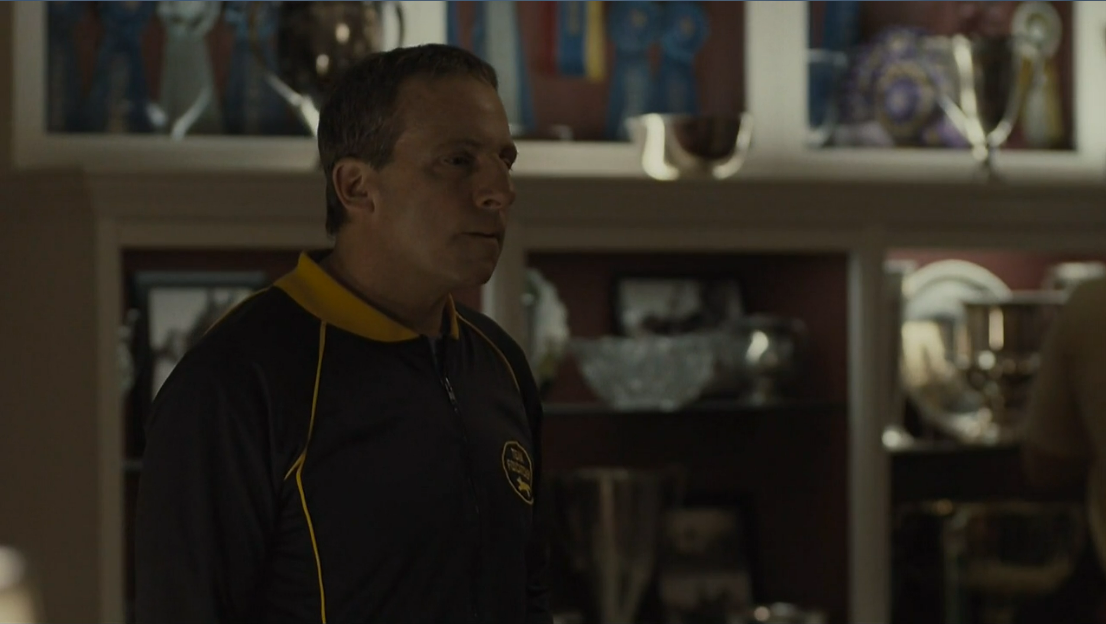
Best Actor 2014: Steve Carell in Foxcatcher
Steve Carell received his first Oscar nomination for portraying John du Pont in Foxcatcher.
Foxcatcher is an effective film about a multimillionaire's relationship with two Olympic Gold medal winning wrestling brothers who he decides to fund.
Comedian Steve Carell actually already played against type early on his prominent film career as a suicidal scholar in Little Miss Sunshine. That I suppose was only lightly against type compared to his performance here as John du Pont. Just for starters Carell is made up with a pale look and plenty of prosthetic in his face to change his appearance considerably. It does not stop there though and Carell gives an extremely mannered performance as John. One particularly noticeable thing is in his vocal delivery where....he....puts....a...breath....between....everything...he...says. This is obviously to sound like the real John du Pont's unique way of speaking, but unfortunately it does sound more like a put on by Carell than something natural to his character. One of the reasons being that Carell accentuates it too much where it was something in John du Pont's manner of speaking, but it was not as overpowering as the way Carell handles it. This is unfortunately not the only element of Carell's performance that does feel a bit "performed".
Carell makes a major misstep from the beginning of his performance, just as he is introducing himself to Mark Schultz (Channing Tatum), which is to play up the creep factor of John du Pont. Carell severely overplays his hand by making du Pont seem quite deranged right from the start. The thing is Carell unfortunately keeps this as a constant not even putting on a front when he's doing something in public or for the promotion of his team Foxcatcher. Carell always keeps that distant stare and off-putting distance in his physical performance. There is never a time where one would not suspect there is something very wrong with John du Pont. I should say I felt this way while watching the film for the first time before I saw any footage of the real John du Pont. After seeing the real footage, Carell's method is even more questionable. There is something off about the real du Pont but it's a subtle quality and for the most part he still seems like you could relax around him. With Carell's du Pont it's questionable that anyone would be comfortable being around the man even if they were getting paid, because it seems like he's already a serial killer.
Steve Carell's performance unfortunately makes it so he really has nowhere to go in terms of making John an increasingly problematic and dangerous man. Carell from the start seems like John is ready to kill something to begin with so there's a distinct lack of build up from him in the third act. The only thing that conveys this really is through the script which gives him less lines as the film progresses making a strong disconnection from the man. It likely would have been far more effective if Carell had gradually shown an increasing decay of John's mental state, but Carell starts as though he is already insane. Even past that though Carell's whole portrayal of the mannerisms does never feel wholly genuine, and seems to much like Carell trying to make John this constantly threatening presence. Frankly the whole physical portrayal Carell gives actually seems more fitting for a straight thriller than what Foxcatcher is. The worst thing about this is that this hangs over the entirety of his performance making it that even in certain scenes that try to focus on a different side of du Pont, the mannerisms still makes Carell's performance a bit off.
Carell therefore must try to convey some other ideas about John du Pont while being very much handicapped by his mannerisms. That is not to say there are not some interesting elements in this performance, but they are harder to see than they should be. Carell does manage to create a somewhat intriguing relationship between John and Mark. At times he gives the gaze of almost a fan boy as he watches an Olympic hero he would probably would like to be. At other times Carell simply plays him as a manipulator, basically fulfilling his role as millionaire, as he constantly instructs Mark, and will suddenly take an exception with him without warning. There are moments though where Carell suggests a little warmth in his performance as John seems to be trying to reach out to Mark merely as a friend. Carell is good in these moments as they are kinda heartbreaking as they seem so halfhearted yet earnest at the same time. He is particularly effective in the scene where John sadly tells Mark about his only friend, as he has such a defeated resignation in his speech, who turns out was merely being paid by his mother to be his friend. These random sides of John shown actually work in alluding to the sort of broken man John is.
What obviously contributes all the more to John's problems is his relationship with his very distant mother (Vanessa Redgrave). Carell again does rather well in the one scene where they speak to one another, where John's mother states her disapproval for wrestling, as there is such a palatable disconnect clearly between mother and son which contrasts especially against the close connection Mark shares with his brother Dave (Mark Ruffalo). Carell has one scene where he is close to being outstanding, he would be if he did not have to keep up that wrong approach to John du Pont, where John is doing a training session with his team as his mother comes in to view what he is doing. Carell's conveys John being devastated quietly internally as he has to watch his mother's disapproving eyes once more, and manages to be rather moving by honestly expressing that all John wants is to be loved by his mother. In doing Carell even does well to suggest what causes him to begin to see Dave as an enemy, and again is effective in portraying the anguish as he sees basically what he desires is right in front of him between Dave and Mark.
Carell's performance here I feel has the potential for greatness as there are several moments where he does create a compelling portrait of John du Pont's mental state. Unfortunately Carell undercuts everything with his obvious sociopath routine that always feels very much acted every second he does it. Carell does not take the wrong approach in portraying John's relationship with the brothers and his mother, but there's always simply the fact that why is he standing like rigid board all the time. It would have been interesting if Carell instead started with hints of John's mental problems and slowly built them to the pivotal moment, which likely would have been more effective, and apparently truer to the real life story. A mannered performance like this easily can work, his co-star Ruffalo technically is equally mannered but Ruffalo's performance not only feels far more natural it also makes more sense for his character, but what Carell does here is weigh down everything else he even tries. I hate to try to wave away this performance because it's not a complete failure, Carell's approach is daring in many ways, but it's just not quite the right approach.
Foxcatcher is an effective film about a multimillionaire's relationship with two Olympic Gold medal winning wrestling brothers who he decides to fund.
Comedian Steve Carell actually already played against type early on his prominent film career as a suicidal scholar in Little Miss Sunshine. That I suppose was only lightly against type compared to his performance here as John du Pont. Just for starters Carell is made up with a pale look and plenty of prosthetic in his face to change his appearance considerably. It does not stop there though and Carell gives an extremely mannered performance as John. One particularly noticeable thing is in his vocal delivery where....he....puts....a...breath....between....everything...he...says. This is obviously to sound like the real John du Pont's unique way of speaking, but unfortunately it does sound more like a put on by Carell than something natural to his character. One of the reasons being that Carell accentuates it too much where it was something in John du Pont's manner of speaking, but it was not as overpowering as the way Carell handles it. This is unfortunately not the only element of Carell's performance that does feel a bit "performed".
Carell makes a major misstep from the beginning of his performance, just as he is introducing himself to Mark Schultz (Channing Tatum), which is to play up the creep factor of John du Pont. Carell severely overplays his hand by making du Pont seem quite deranged right from the start. The thing is Carell unfortunately keeps this as a constant not even putting on a front when he's doing something in public or for the promotion of his team Foxcatcher. Carell always keeps that distant stare and off-putting distance in his physical performance. There is never a time where one would not suspect there is something very wrong with John du Pont. I should say I felt this way while watching the film for the first time before I saw any footage of the real John du Pont. After seeing the real footage, Carell's method is even more questionable. There is something off about the real du Pont but it's a subtle quality and for the most part he still seems like you could relax around him. With Carell's du Pont it's questionable that anyone would be comfortable being around the man even if they were getting paid, because it seems like he's already a serial killer.
Steve Carell's performance unfortunately makes it so he really has nowhere to go in terms of making John an increasingly problematic and dangerous man. Carell from the start seems like John is ready to kill something to begin with so there's a distinct lack of build up from him in the third act. The only thing that conveys this really is through the script which gives him less lines as the film progresses making a strong disconnection from the man. It likely would have been far more effective if Carell had gradually shown an increasing decay of John's mental state, but Carell starts as though he is already insane. Even past that though Carell's whole portrayal of the mannerisms does never feel wholly genuine, and seems to much like Carell trying to make John this constantly threatening presence. Frankly the whole physical portrayal Carell gives actually seems more fitting for a straight thriller than what Foxcatcher is. The worst thing about this is that this hangs over the entirety of his performance making it that even in certain scenes that try to focus on a different side of du Pont, the mannerisms still makes Carell's performance a bit off.
Carell therefore must try to convey some other ideas about John du Pont while being very much handicapped by his mannerisms. That is not to say there are not some interesting elements in this performance, but they are harder to see than they should be. Carell does manage to create a somewhat intriguing relationship between John and Mark. At times he gives the gaze of almost a fan boy as he watches an Olympic hero he would probably would like to be. At other times Carell simply plays him as a manipulator, basically fulfilling his role as millionaire, as he constantly instructs Mark, and will suddenly take an exception with him without warning. There are moments though where Carell suggests a little warmth in his performance as John seems to be trying to reach out to Mark merely as a friend. Carell is good in these moments as they are kinda heartbreaking as they seem so halfhearted yet earnest at the same time. He is particularly effective in the scene where John sadly tells Mark about his only friend, as he has such a defeated resignation in his speech, who turns out was merely being paid by his mother to be his friend. These random sides of John shown actually work in alluding to the sort of broken man John is.
What obviously contributes all the more to John's problems is his relationship with his very distant mother (Vanessa Redgrave). Carell again does rather well in the one scene where they speak to one another, where John's mother states her disapproval for wrestling, as there is such a palatable disconnect clearly between mother and son which contrasts especially against the close connection Mark shares with his brother Dave (Mark Ruffalo). Carell has one scene where he is close to being outstanding, he would be if he did not have to keep up that wrong approach to John du Pont, where John is doing a training session with his team as his mother comes in to view what he is doing. Carell's conveys John being devastated quietly internally as he has to watch his mother's disapproving eyes once more, and manages to be rather moving by honestly expressing that all John wants is to be loved by his mother. In doing Carell even does well to suggest what causes him to begin to see Dave as an enemy, and again is effective in portraying the anguish as he sees basically what he desires is right in front of him between Dave and Mark.
Carell's performance here I feel has the potential for greatness as there are several moments where he does create a compelling portrait of John du Pont's mental state. Unfortunately Carell undercuts everything with his obvious sociopath routine that always feels very much acted every second he does it. Carell does not take the wrong approach in portraying John's relationship with the brothers and his mother, but there's always simply the fact that why is he standing like rigid board all the time. It would have been interesting if Carell instead started with hints of John's mental problems and slowly built them to the pivotal moment, which likely would have been more effective, and apparently truer to the real life story. A mannered performance like this easily can work, his co-star Ruffalo technically is equally mannered but Ruffalo's performance not only feels far more natural it also makes more sense for his character, but what Carell does here is weigh down everything else he even tries. I hate to try to wave away this performance because it's not a complete failure, Carell's approach is daring in many ways, but it's just not quite the right approach.
Best Actor 2014
And the Nominees Are:
Benedict Cumberbatch in The Imitation Game
Eddie Redmayne in The Theory Of Everything
Michael Keaton in Birdman
Bradley Cooper in American Sniper
Steve Carell in Foxcatcher
Benedict Cumberbatch in The Imitation Game
Eddie Redmayne in The Theory Of Everything
Michael Keaton in Birdman
Bradley Cooper in American Sniper
Steve Carell in Foxcatcher
Monday, 19 January 2015
Best Supporting Actor 2014: Results
5. Robert Duvall in The Judge - This might not be Robert Duvall's best performance but it's an excellent example of a great actor elevating sub par material.
Best Scene: The Judge takes the witness stand.
4. Ethan Hawke in Boyhood - Ethan Hawke gives a strong portrayal of the maturation of one man into being a father, and unlike the rest of the cast makes use of the 12 year structure.
Best Scene: Mason Senior gives advice to his son after the graduation party.
3. Mark Ruffalo in Foxcatcher - Ruffalo gives a very effective low key performance as essentially the sense and the sanity of the film.
Best Scene: Dave helps Mark after Mark's breakdown.
2. Edward Norton in Birdman - Norton appropriately gives a very entertaining and believable portrayal of an insufferable but brilliant actor.
Best Scene: Mike Shiner's introduction.
1. J.K. Simmons in Whiplash - Good Prediction Psifonian. J.K. Simmons has a great role playing an enigmatic and tyrannical music instructor, and realizes this greatness through his marvelous performance.
Best Scene: The finale.
Best Scene: The Judge takes the witness stand.
4. Ethan Hawke in Boyhood - Ethan Hawke gives a strong portrayal of the maturation of one man into being a father, and unlike the rest of the cast makes use of the 12 year structure.
Best Scene: Mason Senior gives advice to his son after the graduation party.
3. Mark Ruffalo in Foxcatcher - Ruffalo gives a very effective low key performance as essentially the sense and the sanity of the film.
Best Scene: Dave helps Mark after Mark's breakdown.
2. Edward Norton in Birdman - Norton appropriately gives a very entertaining and believable portrayal of an insufferable but brilliant actor.
Best Scene: Mike Shiner's introduction.
1. J.K. Simmons in Whiplash - Good Prediction Psifonian. J.K. Simmons has a great role playing an enigmatic and tyrannical music instructor, and realizes this greatness through his marvelous performance.
Best Scene: The finale.
Subscribe to:
Posts (Atom)