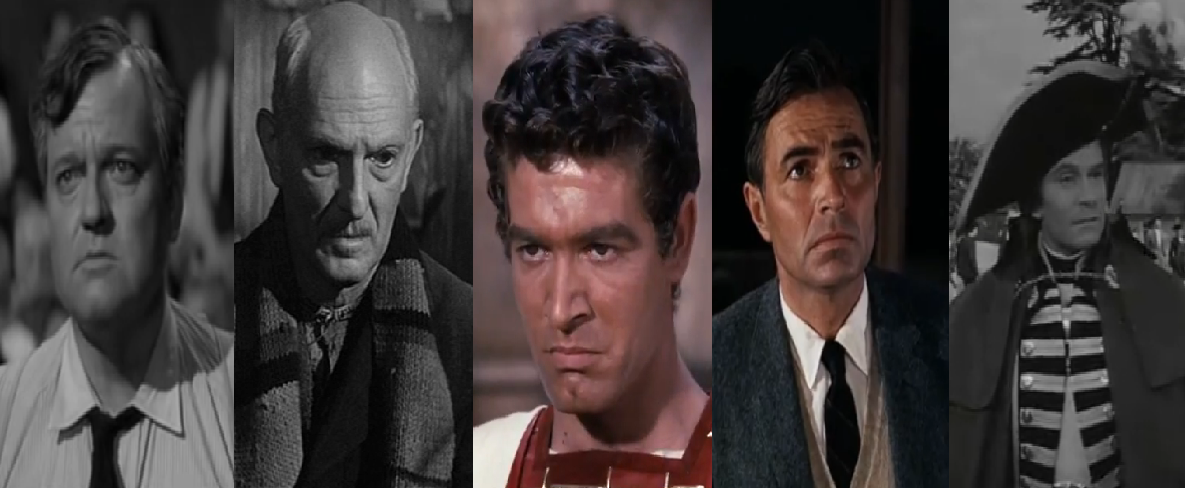
Michael Redgrave did not receive an Oscar nomination for portraying Uncle Vanya nor did Laurence Olivier did not receive an Oscar nomination for portraying Dr. Astrov in Uncle Vanya.
Much like the Stuart Burge directed Othello, also starring Olivier, this film isn't quite just a filming of the play but it is close to it. There is no audience, and it is not just one day they decided to film the play. It is shot on a stage set, but the performances/direction, are attuned towards a general cinematic idea, more so than even in Othello, with edits, closeups, etc. being used by Burge, rather than just flatly filming a play performance. In that context, the film does work quite well as a strong staging of a remarkable play.
Michael Redgrave, who rarely played a happy man, plays the titular role of Uncle Vanya, though not necessarily the central role. He is one man within the estate in which the story is set. The old house of Vanya's sister, who is now deceased but left the house, an old maid daughter Sonya (Joan Plowright), and her husband the professor Serebryakov. The professor's visit being the catalyst in the story as he visits the estate with his new young wife Yelena (Rosemary Harris). Vanya is a role that is as unimportant as it is essential in terms of the state of being that defines Vanya. He is a middle aged man, an intelligent one, essentially without purpose within the rural estate. Redgrave's performance perhaps benefits from the pseudo cinematic form the most as so much of his performance are the moments of focusing on him, even when he turned away from whoever is speaking. Redgrave's initial approach is very much the success of his work entirely in realizing his Uncle Vanya. This is as he makes the man in this nearly comical tragic state of a man having had his life been wasted away, seemingly by circumstance. This is not drudgery to watch, as it could've been, as Redgrave tilts within that certain humorous overarching approach that is a rather fascinating one.
A frequent visitor, and fellow denizen of the provincial, is Dr. Astrov, who in many ways is the other side of the very same coin as Vanya. Astrov being played by the great Olivier, who I will praise to no end at any chance, and this will be no exception in that regard. Astrov's role is the more active of the two, which Olivier takes hold of naturally enough. Olivier leading into a given scene with such charisma as a man, who has just a bit more stature within his profession as doctor, but there is a bit more to it than that. Olivier though from the outset is wonderful to watch here playing the part with such a wonderful zest that makes Astrov stand out as he should, as a man who speaks his mind just a bit more than his fellow visitors and residents. Olivier of course takes hold of this idea splendidly with such rapturous deliveries, fitting to Astrov's natural musing upon the situations around him. Olivier delivers the right sort atypical extroverted bent to the man with a love of nature, and just really a general spirited attitude. Olivier exudes the right type of joy of at least the experience of interaction, which is where his performance intermingles with Redgrave's the most. This is as again, Astrov from a cursory look seem like they might be the opposite, which is the fantastic part of what Redgrave and Olivier do together, as the two are in a very similar situation.
Redgrave was an expert at the discontent of life, giving an all-time great performance depicting that in The Browning Version, in portraying such a natural anxiety. This is the case here as Redgrave in a given scene just exudes this discomfort of one's state being. This as making Vanya a man who can find comfort in his own skin even given the discomfort he has had with his life. Redgrave's work again though is terrific because he does not make it this slog and adheres to the idea of Uncle Vanya, the play, is technically a comedy. This is not to say he exactly gives a comedic performance, but what Redgrave does makes sense of the character through this humorous approach. A darkly humorous approach however as Redgrave plays the part as though Vanya can't help but nearly laugh at the expense of himself at every given situation. Rather than cry, Redgrave is rather powerful in making such a painful smile as he just shakes his head at his existence again and again. There is a real pathos Redgrave finds with this, that he carries as almost Vanya's shield from completely breaking down into despair. This even as he declares his love for the young Yelena, Redgrave is heartbreaking as his delivery is inundated with self-deprecating scoffs and grins. This as Redgrave plays the moment quite effectively as one of self-defeat, knowing his attempt for the younger woman will fail, but tries anyway.
Now the two are of the same coin in that Astrov is very much in the same situation as Vanya. In that neither is happy in their place in life, and feel very much out of place within their setting for their existence. Olivier though shows that Astrov quite simply is not as burdened by this knowledge as Vanya is. He instead delivers the mention of their unfortunate circumstances with a blunt straight forward, "yes this is how it is", of a man whose basically made peace with it. Olivier though underlines this though with portraying the doctor as trying to enjoy what there can be found in his life as much as can be found. One of the ways is even within trolling Vanya a bit, as he basically makes fun of him from time to time, which Olivier portrays as biting though with a definite good nature, as his eyes subvert the words with an affectionate warmth. He conveys an empathy within Vanya's plight as he himself is experiencing it, though the way he can experience is taking those bits of joy, which includes pestering Vanya a bit. Olivier accentuates the different nature of this same existence particularly effectively when he also declares his love to Yelena, unfortunately while she was trying to see if the doctor was interested in the "said to be homely" Sonya. This as Olivier portrays this immediate energetic thrust towards the opportunity, attempting to woo her at the chance of something more, which contrasts effectively against the sabotage of Redgrave as Vanya.
Yelena mostly rejects Astrov as she did Vanya, and I love the bit of smug delight Olivier depicts in Astrov's minor victory he can hold over the bitter Vanya. The Vanya who gets worse before he gets better as the story goes on and Redgrave is great in depicting his own breaking point. This as not from denied opportunities, but rather the loss of even the existence he has when the professor suggests selling their home off. Redgrave's exceptional in the moment by finally making his self-deprecating laughs as unbearable, as they sweep away in his eyes towards an abject madness. This as he finally lashes out without hesitations, towards violent action, which Redgrave makes it natural by creating it as this breaking point where Vanya's humor no longer can save him. This leaving Vanya trying to literally kill the professor but failing in that too, therefore left just to sulk within his home again. Redgrave, though he only has a few lines, is great in his final scene by showing Vanya no longer with even that pained smile on his face. This as he attempts to attempt suicide, at least as an act of an attempt by stealing Astrov's morphine, where Redgrave is remarkable just in realizing the sad state of the man now directly living his depression. This again contrasting against Olivier as Astrov who blithely tells Vanya to give him back his morphine and go kill himself properly by shooting himself. Olivier's approach again effectively delivers a comedic bent to it, though in the moment he carefully still grants a genuine concern in the man's eyes for Vanya. Olivier though shows the alternative path as Astrov still is in the same state of existence, however Olivier exudes still just this sense of the simple joy of the little success he had with Yelena and life, though with its own pathos in his pitch perfect reaction as he sadly turns away from Sonya's romantic hopes before leaving the estate. Both Olivier and Redgrave do justice to their roles by finding an effortless tone that serves the material so well, as creating these barriers of comedy, from the tragedy within.
Showing posts with label Laurence Olivier. Show all posts
Tuesday, 16 July 2019
Friday, 25 September 2015
Alternate Best Actor 1940: Results
5. Michael Redgrave in The Stars Look Down - Redgrave, despite being somewhat limited by his film, gives an effective depiction of a shy man finding courage for a cause.
Best Scene: His last speech.
4. Laurence Olivier in Pride and Prejudice - Although apparently in the minority I find Olivier gives a charming and rather funny portrayal of an excessively proper gentleman.
Best Scene: His failed proposition.
3. Edward G. Robinson in Brother Orchid - Robinson calls upon his more serious gangster performances then cleverly subverts them to give a comic, and surprisingly moving portrayal.
Best Scene: Brother Orchid is denounced.
2. Cary Grant in His Girl Friday - Grant gives a very entertaining performance that creates the properly dominating and manipulative presence of the character while still being quite charming.
Best Scene: The final sequence.
1. James Stewart in The Shop Around the Corner - Good Predictions Michael Patison, Jackiboyz, ruthiehenshallfan99, and RatedRStar. Stewart gives an immensely likable and sympathetic performance that is a great example of his appeal as a leading man.
Best Scene: Alfred confronts Vadas.
Overall Ranking:
Best Scene: His last speech.
4. Laurence Olivier in Pride and Prejudice - Although apparently in the minority I find Olivier gives a charming and rather funny portrayal of an excessively proper gentleman.
Best Scene: His failed proposition.
3. Edward G. Robinson in Brother Orchid - Robinson calls upon his more serious gangster performances then cleverly subverts them to give a comic, and surprisingly moving portrayal.
Best Scene: Brother Orchid is denounced.
2. Cary Grant in His Girl Friday - Grant gives a very entertaining performance that creates the properly dominating and manipulative presence of the character while still being quite charming.
Best Scene: The final sequence.
1. James Stewart in The Shop Around the Corner - Good Predictions Michael Patison, Jackiboyz, ruthiehenshallfan99, and RatedRStar. Stewart gives an immensely likable and sympathetic performance that is a great example of his appeal as a leading man.
Best Scene: Alfred confronts Vadas.
Overall Ranking:
- Laurence Olivier in Rebecca
- Charlie Chaplin in The Great Dictator
- James Stewart in The Shop Around the Corner
- Henry Fonda in The Grapes of Wrath
- Conrad Veidt in Contraband
- Cary Grant in His Girl Friday
- Edward G. Robinson in Brother Orchid
- Laurence Olivier in Pride and Prejudice
- James Stewart in The Mortal Storm
- Michael Redgrave in The Stars Look Down
- Brian Donlevy in The Great McGinty
- W.C. Fields in The Bank Dick
- Joel McCrea in Foreign Correspondent
- Errol Flynn in The Sea Hawk
- Henry Fonda in The Return of Frank James
- Stanley Ridges in Black Friday
- Cary Grant in My Favorite Wife
- Raymond Massey in Abe Lincoln in Illinois
- Boris Karloff in Black Friday
- Cary Grant in The Philadelphia Story
- Tyrone Power in The Mark of Zorro
- Dickie Jones Pinocchio
- James Stewart in The Philadelphia Story
- Charles Laughton in They Knew What They Wanted
- Frank Craven in Our Town
- William Holden in Our Town
- Mickey Rooney in Strike Up The Band
- Gary Cooper in The Westerner
Thursday, 24 September 2015
Alternate Best Actor 1940: Laurence Olivier in Pride and Prejudice
Laurence Olivier did not receive an Oscar nomination for portraying Fitzwilliam Darcy in Pride and Prejudice.
Pride and Prejudice is an enjoyable enough film about the complications that ensue from five sisters without inheritance attempting to find proper suitors.
Having not seen any other versions of the story nor read the book, I'm going into this interpretations with absolutely no idea about the true nature of the story, or perhaps how the tone should be. This as just a film though I felt worked as basically "proper" screwball romantic comedy. A great deal of a reason for this is Laurence Olivier as Mr. Darcy who we meet as one of the targets of the Bennet sisters' mother for a proper suitor for her daughters. Mr. Darcy though is not the sweeping romantic type though, and Olivier actually takes a similair approach to the character that Daniel Day-Lewis would later take with a somewhat similair role in A Room With A View. That being that Olivier goes about portraying Darcy as an excessively proper English Gentleman, particularly in the early scenes where he first meets the Bennets including Elizabeth (Greer Garson). He makes a poor initial impression by making his patrician attitudes known out loud, and Olivier depicts him as a man almost constrained within himself in his tight movements, and the fairly stilted voice he uses as though every words has been rehearsed over and over again beforehand.
Olivier, like Day-Lewis in that later film, does a great service to the film through his work as he makes Darcy quite an amusing presence in the film by making his proper behavior extreme enough that it actually becomes quite comic. The best part about this is that there is nothing that Darcy does that is necessarily funny in itself but Olivier effortlessly brings out through his purposefully overt performance. Although Olivier does technically over do it, so the character is funny rather than just serious and dour as I feel he easily could be, Olivier does not over do it to the point that Darcy is merely a caricature either. Rather Olivier is quite effective in fashioning the barrier necessary for the character, since there must be some transition for Elizabeth. Olivier interestingly is able to help realize this through his own performance as he depicts the surface of the man as almost impenetrable. Olivier does not do this in order to portray Darcy as cold or unfeeling, but rather fashions the reserve fitting for a man who has spent all his life learning to behave in this distinctly proper fashion even though it may not actually be the true nature of Darcy after all.
Although much of his performance is in the role of being a tad overstuffed, and entertainingly so, Olivier is terrific in alluding to the better nature of Darcy quite early on. The moments where she purposefully embarrasses him Olivier quietly depicts Darcy not reacting like a simple pompous fool being surprised, but rather a more complex man being honestly hurt by this treatment. My favorite scene of Olivier's has to be his initial proposition of marriage of Elizabeth that rejects as in the single scene it shows exactly what's so good about Olivier's performance. In his stumbling proposal Olivier is very funny as well as in his needlessly direct responses to Elizabeth when she announces her objections, as he always stays as the proper gentlemen who never should be too emotional. My favorite moment in the scene is as Darcy exits the room, and its only a brief moment though an extremely important one. When Darcy finally turns his head away from Elizabeth's view Olivier shows just how genuinely torn apart emotionally Darcy is by the rejection, and in the moment Olivier is quite moving by revealing the sensitive man he really is. Olivier is able to make Darcy transition from pompous charmless gentleman to the perfect rather charming gentleman a wholly effortless one, by creating the sense that Elizabeth brings this better side out of him. It's not a change exactly, but rather simply having him shed some of his thick shell he learned over the years. It's strong work from Olivier and I doubt I would have liked the film to the same degree if it were not for his performance, as much of the humor of the film comes from him. It's a splendid performance, that might not be his best work from 1940, but that's hardly a problem.
Having not seen any other versions of the story nor read the book, I'm going into this interpretations with absolutely no idea about the true nature of the story, or perhaps how the tone should be. This as just a film though I felt worked as basically "proper" screwball romantic comedy. A great deal of a reason for this is Laurence Olivier as Mr. Darcy who we meet as one of the targets of the Bennet sisters' mother for a proper suitor for her daughters. Mr. Darcy though is not the sweeping romantic type though, and Olivier actually takes a similair approach to the character that Daniel Day-Lewis would later take with a somewhat similair role in A Room With A View. That being that Olivier goes about portraying Darcy as an excessively proper English Gentleman, particularly in the early scenes where he first meets the Bennets including Elizabeth (Greer Garson). He makes a poor initial impression by making his patrician attitudes known out loud, and Olivier depicts him as a man almost constrained within himself in his tight movements, and the fairly stilted voice he uses as though every words has been rehearsed over and over again beforehand.
Olivier, like Day-Lewis in that later film, does a great service to the film through his work as he makes Darcy quite an amusing presence in the film by making his proper behavior extreme enough that it actually becomes quite comic. The best part about this is that there is nothing that Darcy does that is necessarily funny in itself but Olivier effortlessly brings out through his purposefully overt performance. Although Olivier does technically over do it, so the character is funny rather than just serious and dour as I feel he easily could be, Olivier does not over do it to the point that Darcy is merely a caricature either. Rather Olivier is quite effective in fashioning the barrier necessary for the character, since there must be some transition for Elizabeth. Olivier interestingly is able to help realize this through his own performance as he depicts the surface of the man as almost impenetrable. Olivier does not do this in order to portray Darcy as cold or unfeeling, but rather fashions the reserve fitting for a man who has spent all his life learning to behave in this distinctly proper fashion even though it may not actually be the true nature of Darcy after all.
Although much of his performance is in the role of being a tad overstuffed, and entertainingly so, Olivier is terrific in alluding to the better nature of Darcy quite early on. The moments where she purposefully embarrasses him Olivier quietly depicts Darcy not reacting like a simple pompous fool being surprised, but rather a more complex man being honestly hurt by this treatment. My favorite scene of Olivier's has to be his initial proposition of marriage of Elizabeth that rejects as in the single scene it shows exactly what's so good about Olivier's performance. In his stumbling proposal Olivier is very funny as well as in his needlessly direct responses to Elizabeth when she announces her objections, as he always stays as the proper gentlemen who never should be too emotional. My favorite moment in the scene is as Darcy exits the room, and its only a brief moment though an extremely important one. When Darcy finally turns his head away from Elizabeth's view Olivier shows just how genuinely torn apart emotionally Darcy is by the rejection, and in the moment Olivier is quite moving by revealing the sensitive man he really is. Olivier is able to make Darcy transition from pompous charmless gentleman to the perfect rather charming gentleman a wholly effortless one, by creating the sense that Elizabeth brings this better side out of him. It's not a change exactly, but rather simply having him shed some of his thick shell he learned over the years. It's strong work from Olivier and I doubt I would have liked the film to the same degree if it were not for his performance, as much of the humor of the film comes from him. It's a splendid performance, that might not be his best work from 1940, but that's hardly a problem.
Monday, 14 September 2015
Alternate Best Actor 1940
And the Nominees Were Not:
Edward G. Robinson in Brother Orchid
Cary Grant in His Girl Friday
James Stewart in The Shop Around the Corner
Laurence Olivier in Pride and Prejudice
Michael Redgrave in The Stars Look Down
Edward G. Robinson in Brother Orchid
Cary Grant in His Girl Friday
James Stewart in The Shop Around the Corner
Laurence Olivier in Pride and Prejudice
Michael Redgrave in The Stars Look Down
Thursday, 13 August 2015
Alternate Best Supporting Actor 1959: Results
5. Orson Welles in Compulsion - Welles gives a rather understated yet very effective portrayal of his passionate lawyer.
Best Scene: Wilk's final words to the killers.
4. James Mason in North By Northwest - Mason gives a wonderfully suave and effortlessly menacing depiction of a villain with class.
Best Scene: The auction.
3. Laurence Olivier in The Devil's Disciple - Olivier gives one of his most entertaining performance as his humorous and incisive portrayal of a soldier who's a true gentleman above all.
Best Scene: The Trial
2. Stephen Boyd in Ben-Hur - Although Boyd is great at being a smug and despicable villain, he creates a far more memorable portrayal through giving a greater depth to what motivates this man.
Best Scene: Messala after the race.
1. Joseph Schildkraut in The Diary of Anne Frank - I'll admit this is another year where I could easily switch one way or the other between the top two. At the moment though my win goes to Schildkraut's incredible work which so well realizes the warmth and optimism of his character making his final depiction of a broken man truly heartbreaking.
Best Scene: The Ending.
Overall Rank:
Best Scene: Wilk's final words to the killers.
4. James Mason in North By Northwest - Mason gives a wonderfully suave and effortlessly menacing depiction of a villain with class.
Best Scene: The auction.
3. Laurence Olivier in The Devil's Disciple - Olivier gives one of his most entertaining performance as his humorous and incisive portrayal of a soldier who's a true gentleman above all.
Best Scene: The Trial
2. Stephen Boyd in Ben-Hur - Although Boyd is great at being a smug and despicable villain, he creates a far more memorable portrayal through giving a greater depth to what motivates this man.
Best Scene: Messala after the race.
1. Joseph Schildkraut in The Diary of Anne Frank - I'll admit this is another year where I could easily switch one way or the other between the top two. At the moment though my win goes to Schildkraut's incredible work which so well realizes the warmth and optimism of his character making his final depiction of a broken man truly heartbreaking.
Best Scene: The Ending.
Overall Rank:
- Stephen Boyd in Ben-Hur
- Joseph Schildkraut in The Diary of Anne Frank
- George C. Scott in Anatomy of a Murder
- Laurence Olivier in The Devil's Disciple
- James Mason in North By Northwest
- Orson Welles in Compulsion
- Ben Gazzara in Anatomy of a Murder
- Jimmy O'Dea in Darby O'Gill and the Little People
- Martin Landau in North By Northwest
- Peter Sellers in I'm All Right Jack
- Peter Finch in The Nun's Story
- Burl Ives in Our Man in Havana
- Dean Martin in Rio Bravo
- Albert Rémy in The 400 Blows
- Hugh Griffith in Ben-Hur
- Arthur O'Connell in Anatomy of a Murder
- Robert Vaughn in The Young Philadelphians
- Richard Attenborough in I'm All Right Jack
- Kunie Tanaka in The Human Condition II: Road to Eternity
- Lou Jacobi in The Diary of Anne Frank
- Finlay Currie in Ben-Hur
- E.G. Marshall in Compulsion
- Tony Randall in Pillow Talk
- Noel Coward in Our Man in Havana
- Donald Wolfit in Room At the Top
- Andre Morrell in The Hound of the Baskervilles
- So Yamamura in The Human Condition I: No Greater Love
- Ed Wynn in The Diary of Anne Frank
- Anthony Quinn in Warlock
- Jack Hawkins in Ben-Hur
- Ernie Kovacs in Our Man in Havana
- Joe E. Brown in Some Like It Hot
- Christopher Lee in The Hound of the Baskervilles
- Terry-Thomas in I'm All Right Jack
- Murray Hamilton in Anatomy of a Murder
- Arthur O'Connell in Operation Petticoat
- Keiji Sada in The Human Condition II: Road to Eternity
- Sean Connery in Darby O'Gill and the Little People
- Miles Malleson in I'm All Right Jack
- Walter Brennan in Rio Bravo
- Sam Jaffe in Ben-Hur
- John Williams in The Young Philadelphians
- Frank Thring in Ben-Hur
- Kieron Moore in Darby O'Gill and the Little People
- Leo G. Carroll in North By Northwest
- Denis O'Dea in Darby O'Gill and the Little People
- Ward Bond in Rio Bravo
- Dean Martin in Career
- Billy Dee Williams in The Last Angry Man
- Bill Thompson in Sleeping Beauty
- Donald Pleasence in Look Back in Anger
- Ralph Richardson in Our Man in Havana
- Donald Houston in Room At the Top
- Jack MacGowran in Darby O'Gill and the Little People
- Bill Shirley in Sleeping Beauty
- Adam West in The Young Philadelphians
- Harry Andrews in The Devil's Disciple
- Brian Keith in The Young Philadelphians
- Frank Gorshin in Warlock
- Gary Raymond in Look Back in Anger
- Thayer Davis in Journey to the Center of the Earth
- Geoffrey Keen in The Scapegoat
- Orson Bean in Anatomy of a Murder
- Richard Deacon in The Young Philadelphians
- Peter Bull in The Scapegoat
- Nick Adams in Pillow Talk
- Joseph N. Welch in Anatomy of a Murder
- George Raft in Some Like It Hot
- Frank McHugh in Career
- Pat Boone in Journey to the Center of the Earth
- Dick Sargent in Operation Petticoat
- Dan O'Herlihy in Imitation of Life
- Luther Adler in The Last Angry Man
- Dean Jagger in The Nun's Story
- Richard Beymer in The Diary of Anne Frank
- Robert Strauss in 4-D Man
- Douglas Spencer in The Diary of Anne Frank
- Robert Middleton in Career
- John Gavin in The Imitation of Life
- Edgar Stehli in 4-D Man
- Martin Milner in Compulsion
- Ricky Nelson in Rio Bravo
- Peter Ronson in Journey to the Center of the Earth
- Criswell in Plan 9 From Outer Space
- Carl Anthony in Plan 9 From Outer Space
- Paul Marco in Plan 9 From Outer Space
- Tom Keene in Plan 9 From Outer Space
- Tor Johnson in Plan 9 From Outer Space
- Lyle Talbot in Plan 9 From Outer Space
- John Breckinridge in Plan From Outer Space
Sunday, 9 August 2015
Alternate Best Supporting Actor 1959: Laurence Olivier in The Devil's Disciple
Laurence Olivier did not receive an Oscar nomination, despite being nominated for a Bafta, for portraying General John Burgoyne in The Devil's Disciple.
The Devil's Disciple is a bit of a hidden gem about two men a reverend (Burt Lancaster) and a renegade (Kirk Douglas) whose lives are intertwined and changed by the American Revolution. Although I must admit I have a soft spot for films about the American Revolution since there are oddly so few of them.
Although I have listed before that Sleuth is Olivier's showboating performance of just how good he is, but there is yet another one to note. This time in the role of General John Burgoyne a high ranking British General attempting to stop the American Revolution. The only problem is that Burgoyne does not seem to be all that interested in his duties as a General. Burgoyne was actually a dramatist, which seemed to be his true calling opposed to soldiery. This fact does not come up in the film's dialogue ever, but it seems to have been taken into consideration by Olivier's performance. Olivier is terrific because he essentially plays Burgoyne as a playwright who basically treats his current reality as if it were a play. Olivier has it less being that Burgoyne is a General, but instead that he's playing the part of a General as one should. There Olivier brings such a confidence and proper stature to General Johnny as he walks about as a British General should, and speaks with such authority as he quickly delivers his orders as though it was some sort of game. Olivier is great in this early scene as he takes a momentary pause from the game as he is forced to somberly nod just before a suspected rebel is about to be hanged.
The succeeding scenes Olivier is so much fun in depicting the excessively proper style of Burgoyne as attempts to fulfill his duties as General. Olivier always shows Burgoyne's mind to be slightly above it all more than anything. Olivier is terrific in depicting this needlessly indulgent manner of Burgoyne such as when his men demand some random Americans that are in the way get out immediately, despite the forcefulness of his entourage, Olivier presents the most pleasant of hand waves to smooth over the communication. Of course this even is the case in most of his interactions with his men, particularly a far more spirited soldier played by Harry Andrews. One of the best moments depicting this is when his men are being delayed in the forest and his men are frustrated to no end by sniper attacks as well as being forced to constant delays due to trees being purposefully cut to block their passage. Olivier keeps the perfect composure of General Burgoyne as the most aggravated he gets about the attacks is when he must apologize to his lady friend for the disturbance of the tea time. Olivier gives us the most impossibly gentlemanly soldier one can imagine, and it is marvelous.
Now Olivier would go on to win a Bafta as an excessively proper General a decade later for Oh What A Lovely War, but in that case he played a fool, Olivier actually does not play Burgoyne as a fool, which is quite interesting. In fact it is quite the opposite as Olivier suggests that his lax manner in part comes from the General possibly being a little too knowledgeable about the affair to the point that he is rather sure of the results. One of Olivier's best scenes is when Douglas's character is put on trail for being mistaken for Lancaster's character, although it's for a crime that Douglas's character committed. Burgoyne does not handle the proceedings, but rather observes the proceedings offering a few bits of commentary now again. These are usually in the form of the General's rather extreme cynicism that is technically opposed to his goals as a General, but clearly masked through wit to avoid any problems. Olivier is hilarious as he has impeccable timing in each and one of these brilliant lines that he ensures are as biting as possible. I particularly love though how bright and inspiring Olivier's manner is as though Burgoyne is technically laughing at himself a bit due to the conundrum he's found himself in.
Olivier is showboating here at his finest as every time the camera turns to him it's sure to be something special, Olivier simply shows how showboating is done since it fits the part as well as he ensure that we're getting as much enjoyment from watching him as he seems to be having performing the part. One of my favorite moments of his has to be when Douglas's character questions the British who are going to have him hanged simply because its their job, to which Olivier retorts with such sly delicacy that if the man were to see Burgoyne's pays stubs he'd think better of him. Olivier's work is so consistently delightful while wholly delivering the purpose of the character still. Olivier in the end presents him as a man of duty still, but nevertheless a man who's not going to let his own duty fool himself, or stop himself from trying to enjoy his current existence best he can. When Burgoyne is forced to deal with something directly, that being negotiations due to some surprisingly results of a battle, Olivier is excellent in portraying a more incisive figure, who certainly commands a presence while trying to do his best to maintain his army's position. Of course this makes it all the funnier afterwards where Olivier depicts the exasperation rather than disbelief when Burgoyne has realized he's positioned to lose his next battle simply because the British war office did not want to disturb another General's plans. It needs to be said that the part of General Burgoyne is a great one, and Olivier wholly realizes this with his equally great performance. Every juicy line he has he articulates flawlessly and he manages to give one of the most thoroughly entertaining performances of his illustrious career.
The Devil's Disciple is a bit of a hidden gem about two men a reverend (Burt Lancaster) and a renegade (Kirk Douglas) whose lives are intertwined and changed by the American Revolution. Although I must admit I have a soft spot for films about the American Revolution since there are oddly so few of them.
Although I have listed before that Sleuth is Olivier's showboating performance of just how good he is, but there is yet another one to note. This time in the role of General John Burgoyne a high ranking British General attempting to stop the American Revolution. The only problem is that Burgoyne does not seem to be all that interested in his duties as a General. Burgoyne was actually a dramatist, which seemed to be his true calling opposed to soldiery. This fact does not come up in the film's dialogue ever, but it seems to have been taken into consideration by Olivier's performance. Olivier is terrific because he essentially plays Burgoyne as a playwright who basically treats his current reality as if it were a play. Olivier has it less being that Burgoyne is a General, but instead that he's playing the part of a General as one should. There Olivier brings such a confidence and proper stature to General Johnny as he walks about as a British General should, and speaks with such authority as he quickly delivers his orders as though it was some sort of game. Olivier is great in this early scene as he takes a momentary pause from the game as he is forced to somberly nod just before a suspected rebel is about to be hanged.
The succeeding scenes Olivier is so much fun in depicting the excessively proper style of Burgoyne as attempts to fulfill his duties as General. Olivier always shows Burgoyne's mind to be slightly above it all more than anything. Olivier is terrific in depicting this needlessly indulgent manner of Burgoyne such as when his men demand some random Americans that are in the way get out immediately, despite the forcefulness of his entourage, Olivier presents the most pleasant of hand waves to smooth over the communication. Of course this even is the case in most of his interactions with his men, particularly a far more spirited soldier played by Harry Andrews. One of the best moments depicting this is when his men are being delayed in the forest and his men are frustrated to no end by sniper attacks as well as being forced to constant delays due to trees being purposefully cut to block their passage. Olivier keeps the perfect composure of General Burgoyne as the most aggravated he gets about the attacks is when he must apologize to his lady friend for the disturbance of the tea time. Olivier gives us the most impossibly gentlemanly soldier one can imagine, and it is marvelous.
Now Olivier would go on to win a Bafta as an excessively proper General a decade later for Oh What A Lovely War, but in that case he played a fool, Olivier actually does not play Burgoyne as a fool, which is quite interesting. In fact it is quite the opposite as Olivier suggests that his lax manner in part comes from the General possibly being a little too knowledgeable about the affair to the point that he is rather sure of the results. One of Olivier's best scenes is when Douglas's character is put on trail for being mistaken for Lancaster's character, although it's for a crime that Douglas's character committed. Burgoyne does not handle the proceedings, but rather observes the proceedings offering a few bits of commentary now again. These are usually in the form of the General's rather extreme cynicism that is technically opposed to his goals as a General, but clearly masked through wit to avoid any problems. Olivier is hilarious as he has impeccable timing in each and one of these brilliant lines that he ensures are as biting as possible. I particularly love though how bright and inspiring Olivier's manner is as though Burgoyne is technically laughing at himself a bit due to the conundrum he's found himself in.
Olivier is showboating here at his finest as every time the camera turns to him it's sure to be something special, Olivier simply shows how showboating is done since it fits the part as well as he ensure that we're getting as much enjoyment from watching him as he seems to be having performing the part. One of my favorite moments of his has to be when Douglas's character questions the British who are going to have him hanged simply because its their job, to which Olivier retorts with such sly delicacy that if the man were to see Burgoyne's pays stubs he'd think better of him. Olivier's work is so consistently delightful while wholly delivering the purpose of the character still. Olivier in the end presents him as a man of duty still, but nevertheless a man who's not going to let his own duty fool himself, or stop himself from trying to enjoy his current existence best he can. When Burgoyne is forced to deal with something directly, that being negotiations due to some surprisingly results of a battle, Olivier is excellent in portraying a more incisive figure, who certainly commands a presence while trying to do his best to maintain his army's position. Of course this makes it all the funnier afterwards where Olivier depicts the exasperation rather than disbelief when Burgoyne has realized he's positioned to lose his next battle simply because the British war office did not want to disturb another General's plans. It needs to be said that the part of General Burgoyne is a great one, and Olivier wholly realizes this with his equally great performance. Every juicy line he has he articulates flawlessly and he manages to give one of the most thoroughly entertaining performances of his illustrious career.
Monday, 3 August 2015
Alternate Best Supporting Actor 1959
And the Nominees Were Not:
Orson Welles in Compulsion
Joseph Schildkraut in The Diary of Anne Frank
Stephen Boyd in Ben-Hur
James Mason in North By Northwest
Laurence Olivier in The Devil's Disciple
Orson Welles in Compulsion
Joseph Schildkraut in The Diary of Anne Frank
Stephen Boyd in Ben-Hur
James Mason in North By Northwest
Laurence Olivier in The Devil's Disciple
Thursday, 2 April 2015
Alternate Best Supporting Actor 1969: Results
5. Helmut Berger in The Damned - Berger is creepy enough in his role but his presence is oddly muted considering the nature of his role.
Best Scene: His musical number...I guess.
4. Laurence Olivier in Oh! What a Lovely War - Olivier gives an enjoyable performance as a General who may be just a little too English.
Best Scene: Discussing French generals.
3. Gene Hackman in Downhill Racer - Hackman manages to steal the film by realizing depth in a character who easily could have been a non-entity.
Best Scene: Eugene chews out David.
2. Robert Ryan in The Wild Bunch - Robert Ryan gives a very effective performance as he creates sympathy for the traitor.
Best Scene: The end scene.
1. Ernest Borgnine in The Wild Bunch - Good predictions Luke, GetDonaldSutherlandAnOscar, RatedRStar, and JackiBoyz. Ernest Borgnine gives a great performance that is almost made through silent reactions. Everything he does adds at least a little something to the film and his chemistry with William Holden is absolutely incredible.
Best Scene: Pike and Dutch at the campfire.
Overall Rank:
Best Scene: His musical number...I guess.
4. Laurence Olivier in Oh! What a Lovely War - Olivier gives an enjoyable performance as a General who may be just a little too English.
Best Scene: Discussing French generals.
3. Gene Hackman in Downhill Racer - Hackman manages to steal the film by realizing depth in a character who easily could have been a non-entity.
Best Scene: Eugene chews out David.
Best Scene: The end scene.
1. Ernest Borgnine in The Wild Bunch - Good predictions Luke, GetDonaldSutherlandAnOscar, RatedRStar, and JackiBoyz. Ernest Borgnine gives a great performance that is almost made through silent reactions. Everything he does adds at least a little something to the film and his chemistry with William Holden is absolutely incredible.
Best Scene: Pike and Dutch at the campfire.
Overall Rank:
- Ernest Borgnine in The Wild Bunch
- Gig Young in They Shoot Horses, Don't They?
- Robert Ryan in The Wild Bunch
- Jack Nicholson in Easy Rider
- Gene Hackman in Downhill Racer
- Laurence Olivier in Oh! What a Lovely War
- Robert Duvall in True Grit
- Jackson Beck in Take the Money and Run
- Noel Coward in The Italian Job
- Marcel Bozzuffi in Z
- Red Buttons in They Shoot Horses Don't They?
- Joe Melia in Oh! What a Lovely War
- Walter Brennan in Support Your Local Sheriff!
- Edmond O'Brien in The Wild Bunch
- Yves Montand in Z
- Hardy Kruger in The Red Tent
- Bruce Dern in Support Your Local Sheriff!
- Rupert Crosse in The Reivers
- Michael Redgrave in Oh! What a Lovely War
- Sean Connery in The Red Tent
- Jacques Perrin in Z
- Telly Savalas in On Her Majesty's Secret Service
- Helmut Griem in The Damned
- Philippe Noiret in The Assassination Bureau
- Dennis Hopper in True Grit
- Jean-Pierre Cassel in Army of Shadows
- Telly Savalas in The Assassination Bureau
- Bruce Dern in They Shoot Horses Don't They?
- Burgess Meredith in The Reivers
- Ted Cassidy in Butch Cassidy and the Sundance Kid
- Harry Morgan in Support Your Local Sheriff!
- Paul Meurisse in Army of Shadows
- Ben Johnson in The Wild Bunch
- Warren Oates in The Wild Bunch
- Benny Hill in The Italian Job
- Al Lewis in They Shoot Horses Don't They?
- Christian Barbier in Army of Shadows
- Jack MacGowran in Age of Consent
- Bob Balaban in Midnight Cowboy
- Marcel Hillaire in Take the Money and Run
- Desmon Llewelyn in On Her Majesty's Secret Service
- Jeff Corey in True Grit
- Robert Stephens in The Prime if Miss Jean Brodie
- Jack Weston in Cactus Flower
- John McGiver in Midnight Cowboy
- Bernard Lee in On Her Majesty's Secret Service
- Ray Walston in Paint Your Wagon
- Anthony Quayle in Anne of the Thousand Days
- Alan Hewitt in The Computer Wore Tennis Shoes
- Umberto Orsini in The Damned
- Jack Elam in Support Your Local Sheriff!
- William Squire in Anne of the Thousand Days
- Helmut Berger in The Damned
- Michael Constantine in The Reivers
- John Colicos in Anne of the Thousand Days
- Harve Presnell in Paint Your Wagon
- George Baker in On Her Majesty's Secret Service
- William Schallert in The Computer Wore Tennis Shoes
- Michael Hordern in Anne of the Thousand Days
- Michael Redgrave in Goodbye, Mr. Chips
- John Fiedler in True Grit
- Donald F. Muhich Bob & Carol & Ted & Alice
- Gordon Jackson in The Prime of Miss Jean Brodie
- Michael Bryant in Goodbye, Mr. Chips
- Ernesto Gonzalez in Last Summer
- Arnold Stang in Hercules in New York
- Tim McIntire in The Sterile Cuckoo
- Clifton James in The Reivers
- Rick Lenz in Cactus Flower
- Glen Campbell in True Grit
- Ernest Graves in Hercules in New York
Alternate Best Supporting Actor 1969: Laurence Olivier in Oh! What A Lovely War
Laurence Olivier did not receive an Oscar nomination, despite winning BAFTA, for portraying Field Marshall Sir John French in Oh! What A Lovely War.
Oh! What a Lovely War is an interesting sprawling musical depicting World War I though as is usually the case for a Richard Attenborough directed film it never achieves the greatness it seems to be striving for. It has some great moments but never quite forms a cohesive whole with Attenborough once again attempting to rely on famous stars to make up for the film's constantly wandering focus. That worked much more effectively in A Bridge Too Far.
Laurence Olivier is one of these stars although he is given two scenes at his disposal to portray the head of the British forces during the early part of the war. Olivier delivers the best star cameo here, although I suppose it does not quite count since he has two scenes. Anyway though Olivier takes the right approach, given the style of the film which in no way tries to find the humanity in any character, gives an absurdest caricature. Where some of the other cameos are pretty easy to forget as they just do their thing, make no real impact then leave, Olivier actually makes the right choice being a tad overt in his performance. He takes the approach of making John French as extremely British as he possibly can be. With his excessively British accent as well as just the way he almost seems to be a solid plank of a man in the way he so stiffly moves. In fact he even makes sitting seem like a slightly odd thing to do because he must do it in a such a proper way. Olivier even takes the choice to seem as though he is almost always perhaps constipated because of just how rigid of a man he must be at all times.
What Olivier does here might have been a bit much in different circumstances but I've usually found that he's an actor who knows when it's the right time to go big. Well this film is definitely the right time and I feel Olivier's performance best knows how to capture the spirit of the style it seems Attenborough was going for. That being all the historical figures making decisions were to be over the top and out of control, and I would assume then the family torn apart by the war would be shown in a realistic light, well at least that's probably how the film should have been. Well Olivier is at least one actor who seemed to understand this and he gives the best performance in the film because of it. It's also important that Olivier is quite entertaining in his portrayal of the oh so proper British General. He's particularly funny in the moment where he seems as though he's almost going to throw up at the prospect of speaking to the French Generals, or also how it seems to unnerve him to his very core when his eventually successor refers to him casually as Johnny. It's a fun performance, and frankly the film should have had more of him. He's a hoot for his two scenes though even though I do have to admit the best thing to come out of Olivier's association with the film is the speech he gave when accepting his Bafta win.
Oh! What a Lovely War is an interesting sprawling musical depicting World War I though as is usually the case for a Richard Attenborough directed film it never achieves the greatness it seems to be striving for. It has some great moments but never quite forms a cohesive whole with Attenborough once again attempting to rely on famous stars to make up for the film's constantly wandering focus. That worked much more effectively in A Bridge Too Far.
Laurence Olivier is one of these stars although he is given two scenes at his disposal to portray the head of the British forces during the early part of the war. Olivier delivers the best star cameo here, although I suppose it does not quite count since he has two scenes. Anyway though Olivier takes the right approach, given the style of the film which in no way tries to find the humanity in any character, gives an absurdest caricature. Where some of the other cameos are pretty easy to forget as they just do their thing, make no real impact then leave, Olivier actually makes the right choice being a tad overt in his performance. He takes the approach of making John French as extremely British as he possibly can be. With his excessively British accent as well as just the way he almost seems to be a solid plank of a man in the way he so stiffly moves. In fact he even makes sitting seem like a slightly odd thing to do because he must do it in a such a proper way. Olivier even takes the choice to seem as though he is almost always perhaps constipated because of just how rigid of a man he must be at all times.
What Olivier does here might have been a bit much in different circumstances but I've usually found that he's an actor who knows when it's the right time to go big. Well this film is definitely the right time and I feel Olivier's performance best knows how to capture the spirit of the style it seems Attenborough was going for. That being all the historical figures making decisions were to be over the top and out of control, and I would assume then the family torn apart by the war would be shown in a realistic light, well at least that's probably how the film should have been. Well Olivier is at least one actor who seemed to understand this and he gives the best performance in the film because of it. It's also important that Olivier is quite entertaining in his portrayal of the oh so proper British General. He's particularly funny in the moment where he seems as though he's almost going to throw up at the prospect of speaking to the French Generals, or also how it seems to unnerve him to his very core when his eventually successor refers to him casually as Johnny. It's a fun performance, and frankly the film should have had more of him. He's a hoot for his two scenes though even though I do have to admit the best thing to come out of Olivier's association with the film is the speech he gave when accepting his Bafta win.
Saturday, 28 March 2015
Alternate Best Supporting Actor 1969
And the Nominees Were Not:
Gene Hackman in Downhill Racer
Helmut Berger in The Damned
Laurence Olivier in Oh! What a Lovely War
Ernest Borgnine in The Wild Bunch
Robert Ryan in The Wild Bunch
Gene Hackman in Downhill Racer
Helmut Berger in The Damned
Laurence Olivier in Oh! What a Lovely War
Ernest Borgnine in The Wild Bunch
Robert Ryan in The Wild Bunch
Friday, 28 June 2013
Alternate Best Actor 1952: Results
5. James Mason in 5 Fingers- Mason creates an effective villain by emphasizing the cynicism of his character bluntly.
Best Scene: Diello finds out he's been had.
4. Laurence Olivier in Carrie- Olivier gives a strong performance playing a doomed romantic.
Best Scene: Hurstwood confesses his love to Carrie.
3. Michael Denison in The Importance of Being Earnest- Denison gives a hilarious turn that always has brilliant timing and brings the humor out of his material.
Best Scene: His reactions to the final revelations.
2. John Wayne in The Quiet Man- Wayne gives a winning performance that capitalizes on the best of his on screen persona.
Best Scene: Remembering the fatal fight.
1. Takashi Shimura in Ikiru- I should quickly say that I added what I thought was the best scene from each performance simply for fun. This year came down to Wayne and Shimura, although Denison was right behind them as I loved his performance as well. I have to say I hate and love these years as I hate to have to choose to between two performances I like equally but I hate to have to choose. Either way my choice goes to Shimura's powerful performance that is a heartbreaking and inspiring depiction of a dying man.
Best Scenes: "Gondola no Uta" the first and the last time.
Overall Rank:
Best Scene: Diello finds out he's been had.
Best Scene: Hurstwood confesses his love to Carrie.
3. Michael Denison in The Importance of Being Earnest- Denison gives a hilarious turn that always has brilliant timing and brings the humor out of his material.
Best Scene: His reactions to the final revelations.
2. John Wayne in The Quiet Man- Wayne gives a winning performance that capitalizes on the best of his on screen persona.
Best Scene: Remembering the fatal fight.
1. Takashi Shimura in Ikiru- I should quickly say that I added what I thought was the best scene from each performance simply for fun. This year came down to Wayne and Shimura, although Denison was right behind them as I loved his performance as well. I have to say I hate and love these years as I hate to have to choose to between two performances I like equally but I hate to have to choose. Either way my choice goes to Shimura's powerful performance that is a heartbreaking and inspiring depiction of a dying man.
Best Scenes: "Gondola no Uta" the first and the last time.
Overall Rank:
- Takashi Shimura in Ikiru
- John Wayne in The Quiet Man
- Michael Denison in The Importance of Being Earnest
- Laurence Olivier in Carrie
- James Mason in 5 Fingers
- Dirk Bogarde in Hunted
- Charlie Chaplin in Limelight
- Marlon Brando in Viva Zapata!
- Orson Welles in Othello
- James Stewart in Bend of the River
- Gary Cooper in High Noon
- Carlo Battisti in Umberto D.
- Robert Mitchum in The Lusty Men
- Kirk Douglas in The Bad and the Beautiful
- Ray Milland in Thief
- Burt Lancaster in Come Back Little Sheba
- Alec Guinness in The Card
- Jack Palance in Sudden Fear
- Michael Redgrave in The Importance of Being Earnest
- Shin Saburi in The Flavor of Green Tea Over Rice
- Richard Burton in My Cousin Rachel
- Micheal MacLiammoir in Othello
- John Payne in Kansas City Confidential
- Kirk Douglas in The Big Sky
- Charles McGraw in The Narrow Margin
- Gene Evans in Park Row
- Spencer Tracy in Pat and Mike
- Arthur Kennedy in The Lusty Men
- Georges Poujouly in Forbidden Games
- Humphrey Bogart in Deadline USA
- Serge Reggiani in Casque D'or
- Danny Kaye in Hans Christian Anderson
- Stewart Granger in The Prisoner of Zenda
- Jose Ferrer in Moulin Rouge
- Gene Kelly in Singin in The Rain
- Charlton Heston in The Greatest Show on Earth
- Spencer Tracy in Plymouth Adventure
- Nigel Patrick in The Sound Barrier
- Robert Taylor in Ivanhoe
- John Beal in My Six Convicts
- Cornel Wilde in The Greatest Show on Earth
- Gregory Peck in The Snows of Kilimanjaro
- Robert Mitchum in Angel Face
- Bob Hope in The Road to Bali
- Bing Crosby in The Road to Bali
- Dewey Martin in The Big Sky
- John Whiteley in Hunted
Wednesday, 26 June 2013
Alternate Best Actor 1952: Laurence Olivier in Carrie
Laurence Olivier did not receive an Oscar nomination, despite being nominated for a Bafta, for portraying George Hurstwood in Carrie.
Carrie is a decent enough drama about a young woman of the same name (Jennifer Jones) who tries to make her way in the city of Chicago.
Olivier plays the one of the men she encounters in Chicago who manages a high class restaurant that Carrie is meeting a rather unscrupulous man Charles (Eddie Albert) who she is in a relationship with for mostly monetary reasons. Olivier in his first appearances as Hurstwood portrays him a rather unassuming but also rather charming man. In his usual Olivier fashion he has an adjusted accent which is a lowered Americanized voice that Olivier uses that actually is rather well done, and gives Hurstwood a natural warmth. He quickly makes Hurstwood just a likable and amiable face that works quite well in the contrast to Eddie Albert's portrayal of Charlie who always seems to be putting on his charm a little too much.
Hurstwood does not just stay as the nice manager of a restaurant though as he quickly becomes infatuated with Carrie. Olivier plays this quite well and he is a bit of the master of that face of longing. Olivier importantly builds this up quite well and honestly establishes the way Hurstwood's feelings toward her grow. Olivier always makes it rather clear in Hurstwood's glowing expression toward her that slowly build as he spends more time with it. He is very understated in his depiction of Hurstwood's interest in her, but very effective in the subtle fashion that he portrays the growing passion in Hurstwood which slowly becomes more and more pronounced.
Of course there is a reason why Hurstwood stays so understated about the whole thing, and the reason is that he himself is married to a wife who could care less about him. Again Olivier mainly internalizes the emotions within Hurstwood where they are quite evident in him and plays it as burning bitterness as well as a sadness in Hurstwood. Olivier is careful to put this right in his happier moments with Carrie that even when there is an expression of joy in Hurstwood he never forgets his terrible predicament with his own wife either. Olivier shows us a man trapped really in a difficult state of two kinds of repression one of the hate for his wife, and the other for his love of Carrie.
Hurstwood eventually does run right off with Carrie, but things do not improve for the man as he suffers financial difficulty with Carrie as well as his vengeful wife. The rest of Olivier portrayal is that of a man slowly decaying emotionally as the whole world seems to be against him. Olivier is quite moving in this depiction as just about everything goes wrong for the man, and Olivier manages to reflect what this is doing to him. What makes this never repetitive though is that Olivier has short little moments where there is the chance for something better to come from Hurstwood. There still is that genuine love for Carrie, and Olivier powerfully establishes a happiness that slowly fades from him.
I personally will never understand those who think Olivier could not attune himself for film, as this is a perfect example of exactly how well he did understand the medium. There is such a great attention Olivier pays to the close up here and that is where the strength of his performance is found. His characterization is always based on what is going on through the mind of this lonely man and throughout the film he calmly lets us into the man's great pains and his meager joys he has in his life. I would not put this up there with the all time great Olivier performances, but this is a very strong portrayal that made this film worth watching.
Carrie is a decent enough drama about a young woman of the same name (Jennifer Jones) who tries to make her way in the city of Chicago.
Olivier plays the one of the men she encounters in Chicago who manages a high class restaurant that Carrie is meeting a rather unscrupulous man Charles (Eddie Albert) who she is in a relationship with for mostly monetary reasons. Olivier in his first appearances as Hurstwood portrays him a rather unassuming but also rather charming man. In his usual Olivier fashion he has an adjusted accent which is a lowered Americanized voice that Olivier uses that actually is rather well done, and gives Hurstwood a natural warmth. He quickly makes Hurstwood just a likable and amiable face that works quite well in the contrast to Eddie Albert's portrayal of Charlie who always seems to be putting on his charm a little too much.
Hurstwood does not just stay as the nice manager of a restaurant though as he quickly becomes infatuated with Carrie. Olivier plays this quite well and he is a bit of the master of that face of longing. Olivier importantly builds this up quite well and honestly establishes the way Hurstwood's feelings toward her grow. Olivier always makes it rather clear in Hurstwood's glowing expression toward her that slowly build as he spends more time with it. He is very understated in his depiction of Hurstwood's interest in her, but very effective in the subtle fashion that he portrays the growing passion in Hurstwood which slowly becomes more and more pronounced.
Of course there is a reason why Hurstwood stays so understated about the whole thing, and the reason is that he himself is married to a wife who could care less about him. Again Olivier mainly internalizes the emotions within Hurstwood where they are quite evident in him and plays it as burning bitterness as well as a sadness in Hurstwood. Olivier is careful to put this right in his happier moments with Carrie that even when there is an expression of joy in Hurstwood he never forgets his terrible predicament with his own wife either. Olivier shows us a man trapped really in a difficult state of two kinds of repression one of the hate for his wife, and the other for his love of Carrie.
Hurstwood eventually does run right off with Carrie, but things do not improve for the man as he suffers financial difficulty with Carrie as well as his vengeful wife. The rest of Olivier portrayal is that of a man slowly decaying emotionally as the whole world seems to be against him. Olivier is quite moving in this depiction as just about everything goes wrong for the man, and Olivier manages to reflect what this is doing to him. What makes this never repetitive though is that Olivier has short little moments where there is the chance for something better to come from Hurstwood. There still is that genuine love for Carrie, and Olivier powerfully establishes a happiness that slowly fades from him.
I personally will never understand those who think Olivier could not attune himself for film, as this is a perfect example of exactly how well he did understand the medium. There is such a great attention Olivier pays to the close up here and that is where the strength of his performance is found. His characterization is always based on what is going on through the mind of this lonely man and throughout the film he calmly lets us into the man's great pains and his meager joys he has in his life. I would not put this up there with the all time great Olivier performances, but this is a very strong portrayal that made this film worth watching.
Sunday, 23 June 2013
Alternate Best Actor 1952
And the Nominees Were Not:
John Wayne in The Quiet Man
Michael Denison in The Importance of Being Earnest
Takashi Shimura in Ikiru
Laurence Olivier in Carrie
James Mason in 5 Fingers
John Wayne in The Quiet Man
Michael Denison in The Importance of Being Earnest
Takashi Shimura in Ikiru
Laurence Olivier in Carrie
James Mason in 5 Fingers
Thursday, 18 October 2012
Alternate Best Supporting Actor 1960: Results
5. Gene Kelly in Inherit the Wind- Kelly plays with his type once again playing a loud showman, but this time with a deep rooted cynicism.
Best Scene: E.K. Hornbeck's cynicism is questioned by Drummond.
4. Charles Laughton in Spartacus- Laughton gives a nice enjoyable performance that creates a believable portrait of a politician who uses quiet methods of persuasion.
Best Scene: Gracchus shares a meal with Lentulus Batiatus.
3. Fred MacMurray in The Apartment- MacMurray is quite good in role giving a commanding presence that revels to just the right degree in his character immorality.
Best Scene: Sheldrake tries to bribe Baxter one more time.
2. Laurence Olivier in Spartacus- Olivier as usual gives a great performance here as the main villain of the film. He is effectively a tremendous force of evil, but as well still creates a three dimensional character out of the tyrant that is his character.
Best Scene: Crassus tries to understand Varinia's love for Spartacus.
1. Eli Wallach in The Magnificent Seven- This was a very close one for me, and yes I was ready to give Olivier by lead and supporting for this year. Wallach though is equally excellent in his role in the Magnificent Seven, and manages to do basically anything he possibly could with his role. Even with his role being very limited Wallach never makes it feel that way giving an extremely entertaining as well as being appropriately menacing as well.
Best Scene: Calvera's introduction.
Overall Rank:
Best Scene: E.K. Hornbeck's cynicism is questioned by Drummond.
4. Charles Laughton in Spartacus- Laughton gives a nice enjoyable performance that creates a believable portrait of a politician who uses quiet methods of persuasion.
Best Scene: Gracchus shares a meal with Lentulus Batiatus.
3. Fred MacMurray in The Apartment- MacMurray is quite good in role giving a commanding presence that revels to just the right degree in his character immorality.
Best Scene: Sheldrake tries to bribe Baxter one more time.
2. Laurence Olivier in Spartacus- Olivier as usual gives a great performance here as the main villain of the film. He is effectively a tremendous force of evil, but as well still creates a three dimensional character out of the tyrant that is his character.
Best Scene: Crassus tries to understand Varinia's love for Spartacus.
1. Eli Wallach in The Magnificent Seven- This was a very close one for me, and yes I was ready to give Olivier by lead and supporting for this year. Wallach though is equally excellent in his role in the Magnificent Seven, and manages to do basically anything he possibly could with his role. Even with his role being very limited Wallach never makes it feel that way giving an extremely entertaining as well as being appropriately menacing as well.
Best Scene: Calvera's introduction.
Overall Rank:
- Eli Wallach in The Magnificent Seven
- Laurence Olivier in Spartacus
- Peter Sellers in Never Let Go
- Peter Falk in Murder, Inc.
- Peter Ustinov in Spartacus
- John Mills in Tunes of Glory
- Chhabi Biswas in Devi
- Masayuki Mori in When a Woman Ascends the Stairs
- Masayuki Mori in The Bad Sleep Well
- Robert Mitchum in Home From the Hill
- Fred MacMurray in The Apartment
- Shin Saburi in Late Autumn
- Ryuji Kita in Late Autumn
- Nabuo Nakamura in Late Autumn
- Steve McQueen in The Magnificent Seven
- James Coburn in The Magnificent Seven
- Peter Ustinov in The Sundowners
- Roger Livesey in The Entertainer
- Takeshi Kato in The Bad Sleep Well
- Charles Laughton in Spartacus
- Sal Mineo in Exodus
- Tatsuya Nakadai in When a Woman Ascends the Stairs
- Martin Stephens in The Village of the Damned
- James Mason in The Trials of Oscar Wilde
- Ralph Richardson in Oscar Wilde
- Michel Constantin in Le Trou
- Raymound Meunier in Le Trou
- Jean Keraudy in Le Trou
- Philippe Leroy in Le Trou
- Woody Strode in Spartacus
- André Bervil in Le Trou
- Michael Craig in The Angry Silence
- Richard Attenborough in The League of Gentlemen
- Max Cartier in Rocco and His Brothers
- Spiros Focas in Rocco and Brothers
- Tatsuya Mihashi in The Bad Sleep Well
- Alan Bates in The Entertainer
- Enrique Lucero in Macario
- Bryan Forbes in The League of Gentlemen
- Geoffrey Keen in The Angry Silence
- Roger Livesey in The League of Gentlemen
- Jack Nicholson in The Little Shop of Horrors
- Gene Kelly in Inherit the Wind
- Arthur Kennedy in Elmer Gantry
- Nigel Patrick in The League of Gentlemen
- Martin Balsam in Psycho
- Bernard Lee in The Angry Silence
- Daisuke Kato in When a Woman Ascends the Stairs
- Takashi Shimura in The Bad Sleep Well
- Trevor Howard in Sons and Lovers
- Paolo Stoppa in Rocco and his Brothers
- Robert Coote in The League of Gentlemen
- Hume Cronyn in Sunrise at Campobello
- Herbert Lom in Spartacus
- Jack Kruschen in The Apartment
- Norman Bird in The League of Gentlemen
- Maurice Ronet in Purple Noon
- Ray Walston in The Apartment
- John Mills in Swiss Family Robinson
- Ed Wynn in Cinderfella
- Dennis Price in Tunes of Glory
- Michael Gwynn in Village of the Damned
- Harry Morgan in Inherit the Wind
- Brad Dexter in The Magnificent Seven
- David Lewis in The Apartment
- Albert Finney in The Entertainer
- Richard Conte in Ocean's Eleven
- Adam Faith in Never Let Go
- Andre Checchi in Black Sunday
- Laurence Harvey in The Alamo
- Charles Bronson in The Magnificent Seven
- John Neville in Oscar Wilde
- Laurence Naismith in Village of the Damned
- Tony Curtis in Spartacus
- Richard Widmark in The Alamo
- Robert Vaughn in The Magnificent Seven
- Dick York in Inherit the Wind
- John Wayne in The Alamo
- Alan Young in The Time Machine
- Alexandre Rignault in Eyes Without a Face
- Billie Kearns in Purple Noon
- Dennis Weaver in The Gallant Hours
- Miles Malleson in Peeping Tom
- Katamari Fujimara in The Bad Sleep Well
- Ivo Garrani in Black Sunday
- Joseph Wiseman in The Unforgiven
- Cesar Romero in Ocean's Eleven
- Cecil Parker in Swiss family Robinson
- John Fraser in The Trials of Oscar Wilde
- Francois Guerin in Eyes Without A Face
- Nigel Davenport in Peeping Tom
- George Peppard in Home from the Hill
- Albert Salmi in The Unforgiven
- Horst Buchholz in The Magnificent Seven
- Ko Nishimura in The Bad Sleep Well
- Everett Sloane in Home from the Hill
- Charles Bickford in The Unforgiven
- John Dall in Spartacus
- Dean Jagger in Elmer Gantry
- Sammy Davis Jr. in Ocean's Eleven
- Dean Martin in Ocean's Eleven
- Edward Chapman in Oscar Wilde
- Michael Anderson in The Sundowners
- Akim Tamrioff in Ocean's Eleven
- Sessue Hayakawa in Swiss Family Robinson
- Chill Wills in The Alamo
- John Ireland in Spartacus
- John Gavin in Psycho
- John Gavin in Spartacus
- Kevin Corcoran in Swiss Family Robinson
- Paul Lukather in Dinosaurus!
- Claude Akins in Inherit the Wind
- Vladimir Sokoloff in The Magnificent Seven
- Alan Roberts in Dinosaurus!
- The Rest of the Villagers in The Magnificent Seven
Tuesday, 16 October 2012
Alternate Best Supporting Actor 1960: Laurence Olivier in Spartacus
Laurence Olivier did not receive an Oscar nomination although he did receive a globe nomination for portraying Crassus in Spartacus.
Crassus is the main villain of the film a powerful Roman military commander who tries to seize all the power in Rome. He is a powerful man who tries to manipulate all to get the power he desires. Laurence Olivier here takes on the part with a forceful presence. He is very different from Laughton's Gracchus in that Olivier shows that Crasssus is one who directly forces his will on another through his own incredible force of will, something Olivier is simply incredible at doing. In every scene that he is in Olivier leaves not questions to who the commanding presence is, he is always controlling in almost every way as Crassus.
Olivier conveys especially well the pompous superiority in Crassus, that almost never ceases, especially since he is never truly defeated in the film. Even though Crassus repeatedly claims that he is a Roman true and true, and his passion for Rome comes from his own heritage as a patrician, Olivier is keen in showing that really his since of honor is entirely about himself. Olivier is terrific because he tells both a lie and the truth when telling others about his belief in Rome, and his love of his heritage. Olivier appropriately puts the conviction that makes it believable to all others would buy his sentiment, but Olivier brilliantly in his eyes suggests the truth that Crassus only cares of himself.
As a villain Olivier is excellent in portraying the brutal intelligence of Crassus quietly. He is able to create the brilliant strategist that is Crassus in both quiet and louder moments. In the louder moments he is the dominate personality that makes Crassus a true dictator who has absolute sway. In the quieter moments Olivier never fails to still pull you in with a great intensity. In the final battle scene for example Olivier almost barely moves but nevertheless the intelligence, conviction, and even is brutality is all shown in Olivier's pronounced and unwavering expression. He make Crassus simply a force that is not to be reckoned, Olivier actually makes Spartacus's eventual defeat an inevitability.
Now importantly Olivier never plays Crassus as just a one dimensional evil tyrant, he certainly portrays him as an evil tyrant but never a one note one. Olivier does this best in the scenes where he interacts with Spartacus's love interest and later wife Varinia (Jean Simmons). Olivier who so perfectly showed the power of the man in the political arena now just as effectively portrays the weakness of the man in the personal arena. Olivier is astounding as he honestly brings to light the pain in Crassus over his inability to understand how she can love Spartacus and not him. It is a entirely genuine struggle and fear in Crassus that Olivier conveys within Crassus over her inability to love him in that same way.
This is just a brilliant performance from the great Olivier. He only succeeds in the role of Crassus creating a fascinating villain that can't help but be a villain. One of my favorite moments of this performance is when Crassus is trying to woo Varinia, and he threatens his child. Olivier plays it so wonderfully because he doesn't pile on the menace like Crassus is just trying to be evil, no instead he does it entirely casually as if Crassus do to his life as a Roman can't help but be evil. This is a terrific work by Olivier as he masterfully creates Crassus into an overpowering villain, and he never once fails to be the worthy adversary needed for the film, but just as well always succeeds in making Crassus a three dimensional character as well as a villain.
Crassus is the main villain of the film a powerful Roman military commander who tries to seize all the power in Rome. He is a powerful man who tries to manipulate all to get the power he desires. Laurence Olivier here takes on the part with a forceful presence. He is very different from Laughton's Gracchus in that Olivier shows that Crasssus is one who directly forces his will on another through his own incredible force of will, something Olivier is simply incredible at doing. In every scene that he is in Olivier leaves not questions to who the commanding presence is, he is always controlling in almost every way as Crassus.
Olivier conveys especially well the pompous superiority in Crassus, that almost never ceases, especially since he is never truly defeated in the film. Even though Crassus repeatedly claims that he is a Roman true and true, and his passion for Rome comes from his own heritage as a patrician, Olivier is keen in showing that really his since of honor is entirely about himself. Olivier is terrific because he tells both a lie and the truth when telling others about his belief in Rome, and his love of his heritage. Olivier appropriately puts the conviction that makes it believable to all others would buy his sentiment, but Olivier brilliantly in his eyes suggests the truth that Crassus only cares of himself.
As a villain Olivier is excellent in portraying the brutal intelligence of Crassus quietly. He is able to create the brilliant strategist that is Crassus in both quiet and louder moments. In the louder moments he is the dominate personality that makes Crassus a true dictator who has absolute sway. In the quieter moments Olivier never fails to still pull you in with a great intensity. In the final battle scene for example Olivier almost barely moves but nevertheless the intelligence, conviction, and even is brutality is all shown in Olivier's pronounced and unwavering expression. He make Crassus simply a force that is not to be reckoned, Olivier actually makes Spartacus's eventual defeat an inevitability.
Now importantly Olivier never plays Crassus as just a one dimensional evil tyrant, he certainly portrays him as an evil tyrant but never a one note one. Olivier does this best in the scenes where he interacts with Spartacus's love interest and later wife Varinia (Jean Simmons). Olivier who so perfectly showed the power of the man in the political arena now just as effectively portrays the weakness of the man in the personal arena. Olivier is astounding as he honestly brings to light the pain in Crassus over his inability to understand how she can love Spartacus and not him. It is a entirely genuine struggle and fear in Crassus that Olivier conveys within Crassus over her inability to love him in that same way.
This is just a brilliant performance from the great Olivier. He only succeeds in the role of Crassus creating a fascinating villain that can't help but be a villain. One of my favorite moments of this performance is when Crassus is trying to woo Varinia, and he threatens his child. Olivier plays it so wonderfully because he doesn't pile on the menace like Crassus is just trying to be evil, no instead he does it entirely casually as if Crassus do to his life as a Roman can't help but be evil. This is a terrific work by Olivier as he masterfully creates Crassus into an overpowering villain, and he never once fails to be the worthy adversary needed for the film, but just as well always succeeds in making Crassus a three dimensional character as well as a villain.
Wednesday, 10 October 2012
Alternate Best Supporting Actor 1960
And the Nominees Were Not:
Fred MacMurray in The Apartment
Eli Wallach in The Magnificent Seven
Charles Laughton in Spartacus
Laurence Olivier in Spartacus
Gene Kelly in Inherit The Wind
Fred MacMurray in The Apartment
Eli Wallach in The Magnificent Seven
Charles Laughton in Spartacus
Laurence Olivier in Spartacus
Gene Kelly in Inherit The Wind
Friday, 26 August 2011
Best Actor 1978: Results
5. Warren Beatty in Heaven Can Wait- Beatty does not give the most complicated performance in this film, but it is a properly charming, romantic, and sometimes funny performance.
4. Laurence Olivier in The Boys From Brazil- Olivier is in an odd film, and in some ways follow suit with his performance, but still he gives a entertaining performance as well as one with some power when it is required for the part.
3. Gary Busey in The Buddy Holly Story- Gary Busey gives an effective performance as Buddy Holly. He brings the appropriate life to his character, without ever forcing a needless impersonation, instead appropriately personifying the character particularly in his scenes where he is performing Holly's songs.
2. Jon Voight in Coming Home- Voight's performance is a strong one throughout the film showing a slow change over time of his character who slowly finds ways to deal with the pain he has suffered. It is in many ways a low key performance, that realistically portrays the troubles of his character.
1. Robert De Niro in The Deer Hunter- Although I think Voight's work is quite strong, for me De Niro stands out as the best of the year with the incredible challenge he in portraying the rather withdrawn character he must portray. De Niro realistically portrays this introverted characterization in subtle fashion, that never fails to bring out the power of any scene in the film that requires it. De Niro simply is great throughout and is absolutely amazing in so many moments such as the Russian Roulette scenes.
4. Laurence Olivier in The Boys From Brazil- Olivier is in an odd film, and in some ways follow suit with his performance, but still he gives a entertaining performance as well as one with some power when it is required for the part.
3. Gary Busey in The Buddy Holly Story- Gary Busey gives an effective performance as Buddy Holly. He brings the appropriate life to his character, without ever forcing a needless impersonation, instead appropriately personifying the character particularly in his scenes where he is performing Holly's songs.
2. Jon Voight in Coming Home- Voight's performance is a strong one throughout the film showing a slow change over time of his character who slowly finds ways to deal with the pain he has suffered. It is in many ways a low key performance, that realistically portrays the troubles of his character.
1. Robert De Niro in The Deer Hunter- Although I think Voight's work is quite strong, for me De Niro stands out as the best of the year with the incredible challenge he in portraying the rather withdrawn character he must portray. De Niro realistically portrays this introverted characterization in subtle fashion, that never fails to bring out the power of any scene in the film that requires it. De Niro simply is great throughout and is absolutely amazing in so many moments such as the Russian Roulette scenes.
Labels:
1978,
Best Actor,
Gary Busey,
Jon Voight,
Laurence Olivier,
Robert De Niro,
Warren Beatty
Subscribe to:
Posts (Atom)