Showing posts with label 2015 Alternate Best Actor. Show all posts

Wednesday, 10 January 2024

Alternate Best Actor 2015: Leland Orser in Faults

 Leland Orser did not receive an Oscar nomination for portraying Ansel Roth in Faults. 

Faults follows a down on his luck "expert" of cults being tasked to deprogram a young woman Claire (Mary Elizabeth Winstead) by her parents. 

Leland Orser is another reliable character actor, however a character actor who tends to fulfill a certain kind of role. Which is if you need someone who seems like they're on the furthest edges and have in fact already fallen off Orser is typically the man for the job. Faults then offers a unique opportunity for Orser to take a leading role, though technically a leading role within his wheelhouse. We open the film as such as we see Ansel Roth eating at a hotel restaurant, where he has twice used a voucher to get a free meal. Orser already is completely dialed into this certain state of the man as he insists upon his right to his meal. There's already that intensity within his work that denotes a man who certainly has been through much, and has this sort of shakiness in his voice that shows even as he's trying to confidently make his case, he is not particularly convincing as such. Orser's innately discombobulated presence takes this a bit further as he brings to life a distinct dark comedy in the manner of Ansel as he first attempts to argue about it with his breaking delivery, but there's really great low key physical comedy in his manner of quickly eating the last bit of his meal before it can be taken away, followed by attempting to continue his meal by eating ketchup. Orser's physical timing is ideal in just bringing such a severe petulance in the act, before he is ushered out. 

Ansel though is here slightly notably as an author of a famous book about the nature of cults and basically being an expert on cult deprogramming. But despite this Orser oozes with a pathetic state as his eyes are just filled with an exasperated anxiety as he struggles even to argue about getting his hotel room for another night and just tries to complain about his poster advertising his speaking engagement being knocked over with kind of a squeaking near whisper. Orser doesn't portray this as some new state that Ansel is in, rather Ansel has been in this state for a long desperate time. We see him in his speaking engagement where Orser brings just a hint more of confidence, not much more but rather enough of the sign of maybe some professional at some time presenting now the bare minimum effort. Although even that limited effort leads him to be attacked by the family member of a woman he deprogrammed that eventually committed suicide. Where Orser's delivery of the explanation is a wonderfully portrayed miserable deflection of explaining how it was still better that he did what he did even though she died. Orser's seething in this overflowing anxiety in trying to explain as basically a long prepared, yet still quite underwhelming, excuse for what he has done. 

The plot kicks in when the parents of a woman in a cult come to Ansel with a request for him to help them in this challenging task. Orser's performance is a magnificent ballet of inadequate awkwardness as he almost instantly tries to exploit any money from them. Including his requirement that they pay him for his new, unpopular book, where Orser does a juggling of words to find the price with just brilliant nervous energy that is funny, while also showing just how desperate the man is to make even just a little bit of money. When he discusses the case, mostly for the meal they promised him, Orser again presents just a little bit more confidence, not a lot but just a little as he runs down what he'll need, although his accentuation of a "lot of money" instantly shows how it is entirely all that Ansel is fixated on when it comes to the opportunity. That and again the free meal, where Orser again brings some dark comedy in the way he both slides the bill over to the parents, and speaks his thank you for the meal as the most weak willed of demands rather than of any genuine appreciation for what they've done to him. Orser sets up effortlessly this extreme state of the money who is insecure about everything, has some very specific background where he had some success, but now only in need for whatever will sustain him for a bit more time. 

And as he arranges for the kidnapping of Claire, Orser's performance does shift again naturally to the man in operation mode. He's again hardly some man exuding confidence, but what he does show is just that much more beyond even the speaking arrangement as he goes about something he has done before. Suddenly as he is giving out orders to his hired thugs, tasked with moving Claire into his deprogramming hotel room, there is finally a little more to him, not a lot but a little. Orser's particularly good in the moment where he's instructing Claire to follow his orders, lest the men "who aren't here friends" shall hurt her even though he won't. And in the moment you do get a glimpse of someone who has had some command of his methods, even if in a most limited amount. And such facades quickly fade as he begins with the actual start of the deprogramming where Orser is one man show of constantly switching between attempted forced upon confidence against the most extreme anxiety. Orser's is how the film thrives because of the way he approaches every moment there is a particular almost hard to specify energy in him making this act particularly unpredictable as he attempts, and frequently, fails to go through the steps with Claire in his so-called process. His moments of trying to put on this empathy and care in breaking her of her believes, while instantly shattering in his whole manner to be the man so filled with fear whenever she comes back with unexpected force, or when her father starts demanding strange orders like telling Claire that she looks pretty after she puts on tightly fitting clothes from when she was a teenager. 

Eventually this leads to the main reveal of the film which spoilers this in fact an elaborate ruse where Claire is in fact a cult leader, her parents are fake and just members of the cult, and the whole setup is to in fact indoctrinate Ansel into the cult. So what happens is a strange dance of control when Claire begins to turn the table on Ansel, first by the technique of confusing him in the beginning before becoming more overtly dominant after some time. This is the instance that may flop entirely if not for Orser because so much relies on his performance to convincingly show us a deprogrammer getting programmed.  And Orser is convincing as such by really building up the man defined by insecurities and that being exploited eventually. His performance portrays so effectively this desire for comfort within the nervousness, the insanity nearly things are spiraling out of control, so when Claire begins to comfort him, by basically offering specific controls for him, Orser earns it by showing the way Ansel as been looking for this for so much time. The particular moment of the transition is just outstanding work from Orser, because you see just how it is at this apex of the man approaching his nervous breakdown that is pulling him in every other direction. The emotional need was so incredibly severe and painful. The nervousness finally seems to find some genuine ease of his normally hectic state when she begins to manipulate him, and Orser being wholly convincing in portraying this fundamental shift. A shift that should be potentially ridiculous but one that Orser earns through how he builds to it, while also just in the moment the way he refocuses the intensity into his work, the way he looks at Winstead with this fascination and really sudden different kind of loving intensity. There's a bizarre kind of warmth in the moment that is great because it becomes extremely creepy, while also being convincing that the man is finding some sort of second life, in basically becoming a drone. And when she begins to order him, rather than the unfocused man without purpose, Orser is powerful in portraying this sudden eerie conviction in the man as he only follows orders and does exactly what she says. Orser's whole performance really is the key to the film, because so much is really focused on his carrying of the energy, in those moments of purposefully awkward dark comedy, the emotional desperation that leads us to believable see the de-converter become the converted. 

Tuesday, 27 July 2021

Alternate Best Actor 2015: Results

5. Ulrik Munther in The Here After - Much of Munther's performance is limited with purpose, however perhaps he limits it too much failing to find the right nuance in his minimalism. That note though isn't poorly portrayed and he does deliver his final outburst well.
 
Best Scene: Breakdown. 
4. Géza Röhrig in The Son of Saul - Limited by the approach of the film, though he does have some striking moments in his performance in his reaction. What there is though seems somewhat limited by the film's approach. 

Best Scene: Opening.
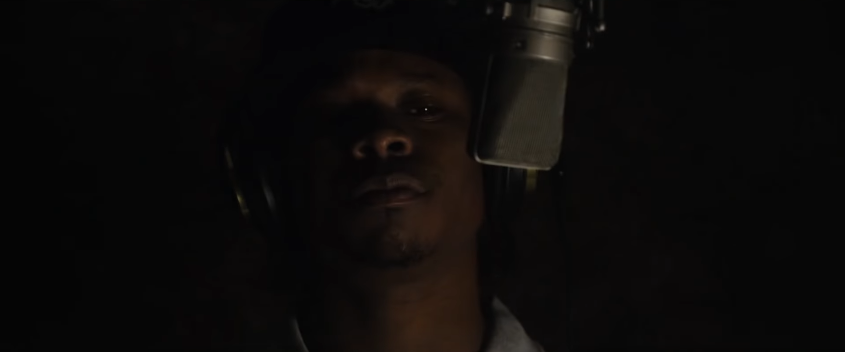
3. Jason Mitchell in Straight Outta Compton - Mitchell delivers a properly intense and charismatic turn that realizes both the gangster and musician in his character.
 
Best Scene: Learning about his diagnosis. 
2. Christopher Plummer in Remember - Plummer is in somewhat shoddy film, however he fills his gimmicky journey with a genuinely moving humanity. 

Best Scene: Finding himself on the train.
1. Paul Dano in Love & Mercy -  Dano gives a wonderful performance that vividly realizes both the creative energy and troubled mental state of his character.

Best Scene: Creating the album. 

 
Next: Will do a few re-watches and a couple more watches before moving on, but won't be doing supporting. So next will actually be:

1964 Lead

Alternate Best Actor 2015: Ulrik Munther in The Here After

Ulrik Munther did not receive an Oscar nomination for portraying as John in The Here After.
 
The Here After follows a teenager as he tries to return to his life after jail time, however he faces difficulty with his community being less than forgiving for his crime.

The film takes a detached observational approach. This is emphasized all the more by the depiction of Munther's character of John who for much of the film has no speaking lines whatsoever. This basically being a silent performance, and the character even being set to a particular tone. This as Munther carries a similar expression for most early scenes no matter what is going on around him. This with his family trying to move on with the elephant in the room being his crime, which Munther in a way realizes by just showing the character with a kind of sense of trying to be part of life, while also in no way enjoying it exactly. This as Munther manages to show someone who isn't seething with regret, but also is in a state of having committed a crime, though with time away from it. It is a very specific tone but he does realize it in a way that makes sense of the way he initially seems to take an attack from the mother of his victim with an almost passive reaction. Munther consistently shows someone trying to exist in a way while not enjoying what his victim will never again. He creates this kind of purgatory of manner of an emotional detachment of someone who can only move on in a way by not really interacting with life beyond a cursory point. 

Of course the film is a little repetitious because of this, though Munther's limited note of his performance does make sense, it doesn't always make the most compelling film that just trudges along as we see him trudge along in this state. This even with everyone treating him as an elephant in a room that is either treated as something to ignore, to try to understand, or just to violently accost. This is the state for the majority of the film, though as the reactions to him become more violent Munther's performance does portray the wear on John though he does not break still. He leads though towards basically a tipping point which comes in the climax of the film where John confronts the mother of his ex-girlfriend he killed in a fit of rage. This scene essentially makes sense of his entire performance, while also basically gives us the blanks we needed to fill in the rest of the film. This as the unleashing of emotion, where he basically prompts the woman to kill him if she feels the need to, Munther effectively shows all the grief, regret, heartbreak and pain all in a singular moment. He powerfully does not hold back in showing the severity of all that John's been holding in up until this point. This leaving just a festering pool of painful emotion that shows the logic of why he was such a specific repressed state the rest of the time. Munther's work effectively being everything the rest of his performance wasn't in this scene. Showing John completely without repression after showing such a severely repressed sort the rest of the time. I ponder if there was perhaps more could've been done in the other scenes, as he seems set, and there isn't the minimalist nuance in his early scenes that creates a truly great performance of the ilk. This as there is more one can do within limits that Munther does in the early scenes, and still maintain that idea, while still making a moment of outburst remarkable still. Of course this is me comparing Munther's work to all time great turns as repressed men, where I can't put that performance on such a pedestal, but that doesn't make this a bad performance. It is a good performance, though a greater one actually likely would've helped the film a bit, which is perhaps a little too clinical overall. 

Wednesday, 21 July 2021

Alternate Best Actor 2015: Christopher Plummer in Remember

Christopher Plummer did not receive an Oscar nomination for portraying Zev Guttman in Remember. 

Remember, that follows an old man suffering from dementia on a mission to kill a Nazi war criminal, I think is largely undermined by its own contrivances. 

That is a bit of a shame however as it has a strong cast, with three actors giving among their final performances in the great Martin Landau, Bruno Ganz and of course Christopher Plummer in the lead role. These performances really lend greater credibility to the film that itself runs too much more so as an exploitation piece than a genuine examination of dementia or the holocaust. Thankfully the performances are there particularly Christopher Plummer. Plummer's performance takes the material very seriously and puts as much effort into the role as if the film was a great one, like say The Father, which does evidently put most similar films to shame. Plummer's performance though is terrific in creating the state of his Zev Guttman an older German man living alone at a nursing home after the passing of his wife. This as he creates a sense of a kind of undercurrent of a malaise of the man trying always to figure out where he is and what he is doing. There is in his performance this moment of calibration essentially that effectively portrays man figuring out what's going on in any given situation. Plummer creating this state vividly of the man who is actively trying to stabilize himself and make sense of his situation, which becomes built around a letter written by his seeming friend, and fellow holocaust survivor Max Rosenbaum (Landau) who sends him on his mission. 

The film then becomes really these kind of curious set pieces as Zev goes about his task and each situation presents him some new challenge whether it be one of the potential suspects of the war criminal, who goes by the name of Rudy Kurlander yet the real one is in fact an Auschwitz commandant by the name of Otto Wallisch. This really breaks the film into two types of scenes, one being the procedure of dealing with his dementia, and the other being the scenes of potential revenge seeking. The dealing with dementia scenes work so well just by how honest Plummer feels in every moment of them. This as Plummer finds in these moments the man being lost and basically finding himself through interacting with others. He's particularly moving by showing the progress of finding himself through these moments. Whether they are the man being completely lost to finding his path just through someone showing him what he needs. There are also the more personal moments where we see Zev as he seems more emotionally despondent. Plummer is great in these moments in creating the immediate sense of urgency as Zev asks for his wife and wonders about those around him. The immediate sense of anxiety is so deeply felt in his delivery, yet what is even more remarkable is the way he conveys Zev calming himself. This moment of kind of a sad realization that those he are looking for are not living, and it is just his memory getting the better of him. 

The other scenes are set up into 4 different scenes of confrontation. The first being with a former German soldier, but not the S.S. officer he was looking for. Plummer projects the approach he will in this scene with this sort of steely eyed determination combined with a certain sloppiness as the man still finding bearings. Plummer makes this seemingly odd combination natural in his manner as he shows the man managing to find his path by fixing upon this singular goal. A goal that he presents with a kind of singular manner when promoting the threat. Each time there is almost a rehearsed quality to it with Zev, this even speaking towards the death of his family, there is almost overly purpose about it. Again this as this point of creating an exact method the man takes to hone himself towards this goal, but also seems like something more. We see this further with the second man, a fellow holocaust victim who reveals himself having been imprisoned for being homosexual. Plummer's performance reveals this kind of generalized kind of sorrow in the man's expression of his family's death even in reaction to this man. It is a real sorrow of some kind however there is this degree of ambiguity in Plummer's performance due to this lack of specificity. The third man though challenges the man seemingly more as he meets the son of the next man, the man having died, however his son being a Neo-Nazi who mistakes Zev as a friend of his father's. 

This man's overt antisemitism throws Zev off however Plummer is incredible in creating this unique state of the fear and anxiety within the situation. This as he speaks towards his Jewishness it still with the man discovering this thought and revealing it as something he needs to hold onto more than anything, even when there isn't a certain specificity. This leading to the final sequence of the film where he comes upon the final man, (Jürgen Prochnow). Plummer is amazing in this scene just from his manner with Prochnow which has initially this innate affability and even camaraderie within their interaction. It is practically instinctual in Plummer work, though just is as the man embraces Plummer revealing himself to being a Nazi commandant but not THE Nazi commandant that Plummer is looking for. Plummer's reaction of disgust to his embrace as he reveals this is with again a kind of conducted disgust of a man who has been implanted a kind of reaction. This of course leading to the film's twist ending SPOILERS that Plummer's Zev was the Nazi commandant all along. This being a twist that I'm sure the screenwriter was very proud of to define the film, though I think makes it all feel a bit trite in overall conception because of it. With the ending being more intended as a "gotcha!" than a genuine resolution to these characters. 
 
Having written all that though, within Plummer's own performance at least he makes it work. This in part to having actually built to it by showing that sort of rehearsed quality intentional to the man who had been conditioned basically to repeat the same lines and believe the same reaction without further depth than that. Plummer leads towards the twist while never undermining his performance. This in creating a man who is largely built upon created memories, however in that there is something genuinely haunted. Plummer playing that ambiguity well throughout, to say whether it alludes to a survivor's guilt or the guilt of a killer. This while also delivering the power within his work in the moment of the realization. This as Plummer becomes the reality sense of distress and despair in the moment. This as contrived as it feels as written, Plummer makes the emotion both honest and potent within his performance. This sense of sudden onset of guilt in the realization is just an astonishing instance in his work, and crafts something special within his own work, even though I don't think the revelation still functions on its own. This speaks to the strength of Plummer's work here overall that I think often deals with repetitive scenes. Again the scenes are either those confrontations or being helped by a random stranger or employee do some, rinse and repeat. What makes the scenes distinct is Christopher Plummer's performance. This in both crafting something natural out of an artificial contrivance, but also just the deftness in every other moment. Every little interaction we get, particularly those with the couple children Zev comes across, are so beautifully acted by Plummer. This as he finds such a genuine poignancy in these little interactions of an old man just trying to find himself, while constantly being lost. Even while the material is not, this is a great performance by Christopher Plummer. Even when the intentions of the film are anything but honesty and truth, Plummer finds them within his quietly powerful and often haunting work.

Thursday, 15 July 2021

Alternate Best Actor 2015: Tom Hardy in Mad Max: Fury Road

Tom Hardy did not receive an Oscar nomination for portraying "Mad" Max Rockatansky in Mad Max: Fury Road.

Mad Max: Fury Road is the greatest action film ever made. 
 
The success of Mad Max: Fury Road can be perhaps most immediately described through its streamlined and visually stunning approach to action. That is but an element though that is part of its greatness, however the whole of the greatness in a way comes from all the seemingly more minor elements around that action, which makes the meaning of the action all the greater. This in the richly designed world of the apocalypse with all the different strange characters making up the world, all whom seem to have their own story even if we only get a glimpse of them. The writing of the work in itself is underrated, yes the plot is simple, and effectively simple I'd say, however the world is complex, the development of the themes is remarkable, and the actual dialogue I'd argue is iconic already. As much as performances aren't the first thing one thinks of with an action film, they can be essential in distinguishing a good one from a great one, and in Mad Max you have a myriad of impressive performances within the supporting cast, again even with some you only get a glimpse of, but the main three performances within the film are Nicholas Hoult's Nux that has the most dynamic character arc of the film as the henchmen turned hero, Charlize Theron as Furiosa as the driven action heroine of the piece, and of course Mad Max himself, though the latter perhaps received the least amount of kudos throughout the film's much lauded run. 

Tom Hardy I'd actually say does not really fill the shoes of Mel Gibon as Mad Max, because the character really isn't the same in terms of role, Gibson's I'd say was more overtly sarcastic and cynical, where with Hardy's we get this embodiment of a singular survivor in a sense. What does match, despite some poor commentary upon the time of the release, is the role of Max in the series who while is the "lead" of the film doesn't lead the film. Just like in Road Warrior and Thunderdome, Max essentially wanders into someone else's story and basically sees what he can do. Hardy's performance in this sense then becomes a bit of a performance that isn't ever really on his own, yet in a way is within his own experience in a way, offering a particular challenge then in Hardy's often silent performance. Tom Hardy though is an actor with a tremendous presence, as for example a few later he would show in Dunkirk where he somehow held the screen despite being a set of eyes and infrequently used voice. Mad Max though is a greater example of this in his use of expression that is all his own, and essential to the film in a way that I don't think gets enough credit. This as his portrayal of Max both is filled with character while being one of the greatest audience surrogates of all time. This as this is not Max's story really, but Max is how we see this story each step of the way. 

We open the film and just from the opening do we get a sense of Hardy's Max instantly, and he is instantly captivating as well. This just as he's attempting to run from the war boy henchmen of the ultimate bad-guy Immortan Joe (Hugh Keays-Byrne). Hardy manages to portray a definite doggedness in his forceful manner in the opening chase. There is more though as sense of near mania in his eyes, though a specific kind of haunted mania. This as Max is haunted by his past failures that we see as hallucinations, and Hardy matches those images with his own performance. His face is that of a man with all sorts of deaths he has seen, and his mania is that of a man whose past is a constant sort of a particular kind of sorrow. That sorrow though again something Hardy depicts so pitch perfectly though in that it just seems to fuel the innate madness of the man. When the chase begins, activated by Furiosa running off with Immortan's brides leading the villain to lead all his men to capture them once again. We then get basically this brilliant tapestries of action scenes, each though that are a phase in Max's development conveyed almost entirely through Hardy's silent performance. Meanwhile though Hardy also needs to make Max consistently a captivating feature in these actions scenes while technically just being one part of them. 

I think it is so easy to ignore what Hardy is doing here, which is a major disservice to his work which on its own is a major service to the film. This as there is so much, for the lack of a better word, character in everything that he does, and he just adds that much more color to the film by the virtue of his existence. Now Hardy is good, he has that presence, he has all that, and maybe that would be enough for a good action movie, but this is a great action movie, and Hardy delivers a great action performance. Watch any second of Hardy's performance here he is actually doing something interesting that conveys not only what Max is going through in a given scene but also who Max is. Take the extended initial chase. Hardy, as Max is literally used as a blood bag for Nux, conveys just this tight near disbelief of his terrible state, and just a kind of anger at the insanity of his plight. There is still a sense of the fight and we get that as soon as he's released, and the glint of a dogged survival when his shackles are briefly removed is just brilliant work from Hardy. Hardy never just in a scene, as he's so consistently dynamic in his reactions. This as the scene continues and Hardy takes us through every thought of Max as he's attached to the kamikaze henchmen in Nux. This with a particular highlight being Hardy's face of a perfectly hilarious "you gotta be kidding me" when Nux asks Max to "witness him", that being Nux using his own car, which Max is attached to, as a suicide bomb to kill Furiosa. 

After barely surviving that we follow this with a series of consistent scenes where we see Max meet up with Furiosa and the wives, who he'll treat as an obstacle at first, again as Hardy portrays a man just looking for his own survival at first. Here's where we get masterful physical work by Hardy, that is that of a great silent comedian basically though here as the action hero. Take two scenes in particular, one where he confronts the wives to try to steal their supplies, and every motion and movement, and little sound effect is perfection by Hardy. This as we know everything that Max is saying without saying a single thing. We get the same thing when he hitches a ride with the group, after initially fighting with them, and he collects all the guns in their truck fortress. Hardy's performance again is that of silent brilliance as it is such a simple scene of just gathering things, but there is so much fun, and character in the method in which he does it. This in his ways his eyes dart around, the way he snaps and asks for the gun, again Hardy entirely conveys what Max wants, his belief in the moment as just survivor ensuring his own safety, while doing it in kind of a covertly entertaining way. Hardy is fantastic in the same way in the action scenes by being entirely within the action scenes in terms of creating their stakes, yet doing so with that slightly off-kilter manner of his that gives Max a particularly unique flavor as a hero for the film. 
 
What we also get is Hardy's work in the action scenes that crafting the arc of Max going from a man only interested in running from any danger to ensure his own survival to wanting to turn around to face that danger through seeing a chance for those around him. Hardy does this by being so dynamic in every scene. This as initially his actions are personal and reactions of concern for oneself. In each successive scene though we get a greater sense of compassion and care in these scenes. There is a greater ease in Hardy's manner that appears, and slowly a real sense of concern for the others around him and not just himself. The emotional element here is entirely earned by this silence as Hardy is just so pitch perfect in every moment of just creating this man slowly caring again. We also get this through his scant few lines, where Hardy's delivery is particularly unique. This as in much of the film Hardy speaks very quietly, almost as a man who is speaking to himself and no one else, this befitting a man who hasn't spoken to anyone else for years. Hardy's quiet little rumblings say much about Max, and each little delivery of his is memorable in this approach, particularly adore his way of saying "that's bait" which just immediate illustrates a clear understanding of a knowledgeable survivor as he notes a naked woman "alone" is a little too obvious. The most important delivery though is his final moment directly with a potentially dying Furiosa, where the whole scene Hardy's shows the absolute sincere urgency of a man saving someone who truly deeply wants to help. The finale of this being his simple delivery of "my name is Max". Hardy's delivery of this is again greatness in delivering his character, as he first says it internally one more time though now almost this realization of himself again, and a recognition of his humanity. This before turning to say it externally to everyone around him and fully becoming a man connecting with others rather just trying to escape them. This is a great performance by Tom Hardy that is one of the essential features to the film's success. Although it is easy to take his work for granted, that is part of his greatness. Hardy's not fussy within the film, instead he's just part of every moment, creating his own unique take on the iconic character, that naturally realizes an arc, while doing this so smoothly you barely notice, but his presence always adds that certain something to every scene he is in. This extra bit of character that isn't just a someone to follow through the story, but rather  someone to amplify every bit of it.

Friday, 9 July 2021

Alternate Best Actor 2015: Jason Mitchell in Straight Outta Compton

Jason Mitchell did not receive an Oscar nomination for portraying Eric "Eazy-E" Wright in Straight Outta Compton. 

Straight Outta Compton is a good biopic that follows the forming and fallout of the hip hop group N.W.A. 

Jason Mitchell plays the leading member of the group Eric Eazy-E, who I think has the most complex role in part because the man died before the production of the film, while also having nothing to do with the production of the film unlike Dr. Dre and Ice Cube, who were both producers of the film, played by Corey Hawkins and O'Shea Jackson Jr. (Ice Cube's real life son) in the film. Now that isn't to dismiss Hawkins or Jackson who both deliver strong performances that deliver the right charisma representative of their real life counterparts. Jackson is particularly impressive in evoking his old man's style and personality even beyond the ideal casting of himself. They are both good in presenting these versions of the men, which I wouldn't say are quite idealized but obviously the amount of negativity the filmmakers could display around them was limited to some degree. Eric Eazy-E on the other-hand was technically fair game, and in turn we get a particularly dynamic character as brought to life by Jason Mitchell. Mitchell carries himself in his first scene, where we see Eric working as a drug dealer, with, for the lack of a better word, the remarkable kind of swagger. This with just exuding a kind of confidence that is particularly notable, as his stature doesn't in itself create this, but he manages to carry himself with a dominating quality nonetheless. 

Mitchell's performance captures the right intensity in presence but also really the right id that defines the man's manner even away from his criminal activities and with the forming of the group. Mitchell carries himself with a consistent kind of energy and style within conveying that style of Eric. This as even when he is questioned about his lifestyle it is just with a smile of acceptance towards what he does. There is no reservation there, but in a certain sense Mitchell creates the sense of power of the man's personality because of that lack of hesitation. This same spirit though we see more productively in action as he becomes the front man for the group. Mitchell, as does Jackson and to certain extent Hawkins, bring a magnetic stage presence. What is particularly strong about their work is that they manage to extend it beyond just what we see of them off the stage. It is rather basically there most striking qualities amplified. With Mitchell, he owns every song, and every moment on stage with that swagger now used for a less dangerous purpose, or at least somewhat less dangerous purpose. This creating the right kind of "front man" power to his presence of someone seemingly wholly in charge of himself and most everyone around him. This naturally even creating the sense of Eric's ego growing, which the film naturally accentuates as a divide between him and his friends, amplified by their manager Jerry Heller (Paul Giamatti) who quickly plays favorites once they get big. 
 
I think the film actually works largely best in the early scenes of the rise of the group, particularly through through that magnetism in their stage performances, and the sense of camaraderie found in the chemistry between Mitchell, Jackson and Hawkins. It gets a little less engaging as it gets to the infighting caused by essentially their agents and other studio heads. Mitchell though to his credit doesn't go overboard in portraying the moments of intense ego in Eric as he feuds with the rest of the guy. It is rather well conveyed as the same type of dismissive bravado that we saw when he went face to face with a potentially violent fellow drug dealer. This making an essential later scene where he buries the hatchet with Ice Cube work. This as we just are granted that sense of camaraderie between the actors again, making it a short but poignant scene. Speaking of short but poignant, Eric finds himself diagnosed with AIDS and a short time to live. These scenes I think are just a touch rushed due to needing to cover all the characters' reactions, making the time devoted to Eric in this limited. Having said that, Mitchell is great in the scene of the diagnosis in just conveying the immediate heartbreak and disbelief over the situation. It's a powerful scene and makes Eric 'untimely death appropriately tragic even in its relative brevity. The few scenes Mitchell has within this context are pointed in showing just the immediate onset of grief as time is basically stolen from him without mercy. It is a remarkable end to what is otherwise a consistently strong and confident turn that brings to life every aspect explored within the film about Eric Eazy-E.

Saturday, 3 July 2021

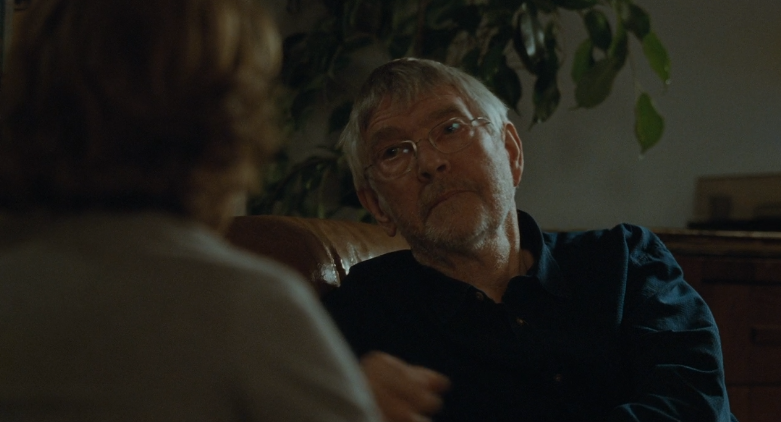
Alternate Best Actor 2015: Tom Courtenay in 45 Years

Tom Courtenay did not receive an Oscar nomination, despite winning the Silver Bear, for portraying Geoff Mercer in 45 Years. 

45 Years focuses on the upheaval, due to an unlikely discovery, that besets a long married couple just before their 45th wedding anniversary. 45 Years is a film actually where I believe its virtues illustrates its flaws. This as the film too often will shy away from the central relationship to focus upon repetitive scenes of supposed contemplation of our female lead, who despite the primary character is oddly simplistic at times. It is an often frustration with me with certain independent cinema where silence is not golden, silence is earned, and should not be overused. 45 Years is an example where quite frankly it often feels like filler. 
 
Although these flaws exist, they hardly weigh down Tom Courtenay, as he pretty much denotes when it is the film is working because it means we will be watching the couple share the screen. Courtenay's character though is intentionally the more distant of the two though it is his Geoff with the most immediate revelation, we witness the film through the perspective of his wife Kate (Charlotte Rampling), essentially trying to understand his reaction to the discovery. Courtenay therefore actually is presented with a difficult challenge in conveying Geoff's reaction to the discovery, while also not exactly being the focus of the film. Thankfully this is Tom Courtenay we are speaking of, an actor, despite his periods of absences from film, never seemed to lose any of his ability to work his magic on the screen. Courtenay honestly being perhaps the least talked about, but in my view the most talented of the British crop of the 60's, and it is a bit of a gift to see him in a substantial role, even if restricted in a certain sense. Courtenay though always has been an actor who actively pulls you into his performances, this as he isn't someone with a typical leading man style presence, rather Courtenay makes his characters so vibrant and real, he pulls you in nonetheless. 

That quality of Courtenay's is ideal for Geoff who the film treats sometimes almost as a pseudo mcguffin for Kate to reflect about. Courtenay though does so much with this from the outset. This as we first meet them as Kate is prepping for their 45th wedding anniversary with a degree of calm eagerness, while Courtenay portrays a man whose head is miles away. His eyes themselves speak towards contemplation not of the present but of the past this as he speaks of his Katya, his old girlfriend who died in an hiking accident that left her frozen in the ice. The new discovery being that her body has been found, preserved, within the ice. Courtenay's speaks of this news with a very quiet anxiety though mixed with certain nostalgia, particularly every time he says "My Katya" Courtenay emphasizes a kind of tenderness that is specific only to a love of his. Courtenay's eyes though portray a man focused on this idea with a fixation upon. This even in his little asides to his actual wife that are more doddering of just the old married couple, however when it comes to Katya, like insisting he go retrieve the body himself, there is this way Courtenay buries this kind of urgency in his delivery. This as he speaks with a technical duplicity of the man trying to act as though the news isn't overly meaningful, while it is clearly everything to him. 

Upon re-watching the film, there is a greatness within Courtenay's work in that he actually manages to be distant seemingly towards Rampling, while actually his performance more so subtly creates the sense of Geoff dealing with the relationship still. This as Geoff speaks more towards the incident, revealing that he and Katya claimed to be married to get around (with the possibility that they really were married), Courtenay again speaks as this news should be nothing. His body language speaks towards a greater concern, particularly as he reveals they had a wedding ring even, and a great touch is Courtenay rubbing the area where he likely wore it. Recounting the whole story, or seemingly the whole story, Courtenay balances his delivery again. This between accentuating the little asides as though he is sharing something as a concerned husband trying to connect with his wife, while Courtenay though still runs through the story in an interesting way. This as Courtenay suggests within his own work that Geoff himself is unsure how he wholly feels about what had happened. There is the point that it was not pleasant, but what exactly he lost within it is more so even a mystery within his own work due to what it is where his life went. Courtenay avoids being vague, as I think was very possible in the part, by finding the right nuance within Geoff's own reflection. 

I have a feeling the film actually wanted Geoff to be more of a mystery given the limitations of his dialogue, again to more so leave us within Kate's perspective of wondering about Geoff, a mean a good chunk of Rampling's screentime is devoted to pensive looks at Courtenay. This is even to the point that often times there are scenes where Courtenay is off to the side, or the other side of a rarely given reaction shot. Courtenay even when literally absent from the frame though stays present. This as he successfully does share the tender moments with Rampling that suggest their 45 year long marriage, even while that weight upon the man remains a constant. A notably great actor given that Courtenay can convey the moments of connection, and distance, even when it is just his voice, or mostly the back of his head. Courtenay though never wastes an ounce of himself really. This keeping the conflict alive within even in a dinner scene where it is mostly not Courtenay in frame. His positioning of self, and the way he hangs his head, tightens his shoulders still accentuates the man's uneasy state. Courtenay manages to convert this though of more a crisis of his age, this again in a scene where he's almost blurred in car ride as he speaks to a former commie friend now a money obsessed banker. Courtenay again is compelling in his frustrations aren't just of some reaction to a hypocrite, as there is the intensity of man painfully analyzing where it is that the years have taken him. 

Watching the film again I could only be impressed by the complexity in Courtenay's work despite again the writing leaving the potential for an entirely vague presence within the film. Courtenay's work though refuses to be a device and crafts instead his own man, and really his own scenario throughout the film. This as it isn't a man who suddenly is in love with his old love, rather Courtenay expresses the difficult state of a man contemplating his age, which is represented by the woman he lost so long ago, yet retains what she looked like at one time. This as when Courtenay blares "It's not about Katya" about him wanting to retrieve her body, it is true in Courtenay's work. This as the anger is against his wife who he suddenly doesn't care about, it is rather the frustration of where the time has gone. Now take this just as my theory, however I think this is in a way proven by the ending of the film, their actually anniversary dinner, which I've heard some as some point for interpretation. Courtenay's deft performance though I think properly denies this, as he expresses Geoff in the moment of loving life and company at the party. Courtenay does not perform this as put on, this as he plays every moment with a free expression of joy and without the weight of that earlier contemplation. His final speech is brilliantly performed by Courtenay is that he isn't creating a mystery, but rather complexity. This as his speech combines a sense of the man still living through his aging basically, but also genuine expressing his love for his wife. Courtenay shows that there is a lot going on his mind, but the moment of the breakdown is wholly honest in a man appreciating what he does have. The intention of the film by Andrew Haigh appears to be to make it this kind of a question, while Courtenay's performance seems to reject any such nonsense instead focusing on, what should've been the whole film, that being these two people in their twilight years. Courtenay gives a great performance, not as a gimmicky enigma, but a powerful portrait of a man bluntly coming to terms with the passing of time after it is so vividly forced upon him.

Monday, 28 June 2021

Alternate Best Actor 2015: Paul Dano and John Cusack in Love & Mercy

Paul Dano did not receive an Oscar nomination, despite being nominated for a Golden Globe, for portraying young Brian Wilson and John Cusack did not receive an Oscar nomination for portraying old Brian Wilson in Love & Mercy. 

Love & Mercy is an effective biopic that follows Brian Wilson during two different tumultuous times in his life. 
 

Watching the film again only reaffirmed my affection for this film, particularly for its off-beat choice in its biopic design. This as the two sides of the man are not segmented into the up and comer, and the old man reflecting, it is something very different here in terms of the way the two timelines play off one another. A reason for this is the central casting of John Cusack and Paul Dano, who are two very different actors, who don't necessarily look all that much like each other and don't look that much like Brian Wilson either. I love this decision actually, one being it separates the design of the film as truly two stories, with two men, as the one man in very different places in life, this accepting of this separation all the easier due to the two actors playing the part. One being John Cusack, a well known actor, and even better known in terms of his type as that charming yet not quiet fully confident type. All that's thrown out here in Cusack probably giving one of his least John Cusack style performances. This as we see in the introduction to old Brian as he is looking for a car with a warm saleswoman Melinda (Elizabeth Banks), while being loomed over by Brian's "bodyguard". Cusack's performance is that of a guy who has been through some kind of hell, and really his only communication now is through almost a kind of whisper. What I love about what Cusack is doing is as affected as his speech is here, that speaks towards Brian's state after years of substance abuse "cured" by psychological abuse, is how genuine he feels in his attitude of this beaten though kind spirit in Brian. It's there as he speaks to why his shoes are off, why he has his bodyguard and even in his brother's death. Cusack brings this meek but wonderful sense of a man trying to reach out in the smallest of ways. 

This seemingly broken man though was supposedly in his prime as we find the young Brian played by Paul Dano, an actor who is one of the more interesting performer in his age group if in part from his willingness to basically just go for it. Dano in his second scene shows a very different Brian, but a Brian who is going through another kind of hell. And again I love the separation it creates by us seeing this man who is on his way towards the other man, but has far to go. This as we see in his breakdown upon a plane, Dano's performance delivers its own anguish but this is raw and extremely painful. Dano effectively going into the full throws of the anxiety of the moment. A moment though as we follow Brian in a very different setting, and I'll just bluntly say that Dano is brilliant here. This in creating a very different idiosyncratic man from Cusack, that feels similar in his particular style of not one's traditional notions of "normal", however here it will strike one a bit differently. Dano captures this very particular state that you can either accept as a man an eccentric genius or a man on the verge of a breakdown...while it's really both. Dano though is great in the enthusiasm he speaks, as he convinces the rest of the band to let him stop touring and just write, is wholly genuine and you see that spark of inspiration in his eyes that is so palatable. At the same time the sort of need within that spark Dano makes almost too intense, however in that built up intensity there is a sense of the man's pain that he himself doesn't know what to make of. 

The film jumps back and forth between the times at will, quite artfully I'd say, each one though showing a different side of Brian though each in a way getting to who he is. Cusack, I suppose fittingly, has the romantic side, though this is no John Cusack romcom performance. There still is something wholly charming and sweet about him here in his lovely chemistry with Elizabeth Banks, who is also wonderful. This as Cusack plays almost the moments between them initially as these little moments of happiness and of a guy just connecting best he can. This as his posture is so defeated as a man, and just is there practically like a beaten animal as he is watched over by his "doctor" Eugene Landy (Paul Giamatti). Cusack's brief moments are so beautifully modest though in the brief indications of tenderness towards her, and gives the sense of a man just so timidly attempting to be happy with something while still being wholly fearful of what is around him. Dano also depicts a man in love though with his young Brian it is being in love with music. Something I love about Love and Mercy, that most musical biopics fail miserably in, is showing the creative process and really the sense of working for true inspiration. This as Dano expresses this value in this act so richly in every moment of creativity. There is an essential moment of performance against the reaction of Brian's father. Dano is heartbreaking in portraying Brian's attempt to describe the song for his father, this as he brings so much excitement in trying describe it, while also showing such a need for approval in his pitch. This making Brian's father's cruel tone all the more painful, as Dano expresses just how much this type of disregard for his art cuts so deep.
 
 Of course not every moment is thankfully always traumatic and my absolute favorite scenes of the film, is when we see Brian exploring his music in a recording session. Dano is fantastic in the scene because of just how alive he is in the sequence. This as his eyes bring that real sense of drive in every moment of examining each instrument, event piece of his song, they are piercing in showing a man striving for a kind of perfection. He balances that though with the sheer sense of fun he brings to playing around with the different musicians and explaining his ideas. Dano shows a man in this moment living his best life in the creative process that is a combination of drive, but also just love of the process. Honestly I could've watched a whole film of just Dano playing around in the studio as he brings so much life to it. The closest comparison I can make is Tom Hulce as Mozart in Amadeus, where both actors are able to make the creative process not some intangible thing, but rather wholly vivid in terms of the sense of the particular rhythm for it, however also through finding the joy in it. What Dano does with this though in a way though is make it in itself something borderline. This as Dano's expression dances between one of sheer jubilation and also nearly a demented state. This as Dano emphasizing how much of just one's man kind of personal will placing himself into this act, and crafting the state of a man who is both intends to make something truly great, while also personally falling apart. 

Where there is the unmistakable connection between both performances is that Brian in a way is a man unto himself in terms of personality. This as even his way of dealing with the world is wholly different from the average person, and in each phase though Cusack and Dano depict this a little disparately. Dano's work is more expressive in this regard as his very energy in a given scene is something special in itself. This as just as he moves around, or even just as he can't quite sit in a seat. The way he looks around and interacts with his space, Dano creates a sense of the man in a way seemingly deciphering the world in his own unusual fashion. He never looks or responds quite the expected way, but entirely does so in the way that feels true to his Brian. Now Cusack is far more subdued within the portrayal of this trait, though it is still evident in his performance. Fittingly though it is of a man who has had much of his life stripped out of him. That specific energy though is still found, even so modestly, in his moments of interaction with Banks, particularly a moment of expressing his love for her via a brief song, that is completely idiosyncratic in a romantic gesture, which Cusack in turn portrays in a wholly idiosyncratic way. Cusack seemingly almost lost in the words, not quite listless though, as there is a purity of the tenderness within it all of again, the man who simply has his own way of interacting within the world. 

The film follows then really on the descent of Brian towards his darkest chapter with Dano while we see the man returning to a semblance of normality through his relationship with Melinda. Cusack's work is one that is built upon that chemistry with Banks that really succeeds. This just in Banks bringing such an abundance of warmth, against Cusack';s moving portrayal of the slow return towards any sense of a mutual affection with anyone. Their final scene I found absolutely heartwarming as it earns the moment of the man returning to himself and showing it to Melinda, and Cusack does this just by being a little more outgoing, still Brian, but now with finally a comfort and pride in himself. Dano on the other-hand powerfully depicts the man falling towards a painful time. This in the moments of overt horror as Brian suffers from horrific audio hallucinations, which Dano grants the right visceral intensity to show just how crippling these are. In this though Dano depicts a man already on edge for a multitude of reasons falling apart all the more. Dano's terrific in showing the different pulls within the man that are essentially tearing him apart, from his strained relationship with his father, his struggles with his artistic endeavors, drugs and just seemingly losing his connection with reality. Dano's performance vividly conveys each factor. This as there is the physical distress, but there is also the emotional. Emotional both of the man just trying to get his vision out there and often facing dismissal, and that of a defeated son looking and failing to see genuine love from his jealous father. And in this we see the connection between Cusack and Dano. This as Dano's descent gives up to Cusack's quiet rise. This of a man taking all of the world in and suffering for it, against a man closed off from all of it, suffering all the same. The two almost wholly separately creating their own portrait of Brian Wilson however mutually making captivating depictions of one soul.
(For Cusack)

(For Dano)

Friday, 25 June 2021

Alternate Best Actor 2015: Géza Röhrig in Son of Saul

Géza Röhrig did not receive an Oscar nomination for portraying Saul Ausländer in Son of Saul.
 
Son of Saul follows a concentration camp prisoner, who works cleaning the gas chamber, attempting to properly grant a funeral to one of its victims.

The film itself takes a literal forced perspective similar to the film Keane. This as much of the film is a reverse first person POV, though the film occasionally "cheats' the concept by showing more. Much of the film is either the face of the back of our protagonist with the rest of the narrow frame typically out of focus. Röhrig's performance therefore is an unusual challenge given his physical expression is so specific, while also being contained by the nature of the film given that his Saul is obviously attempting to survive his conditions, therefore is muted by nature. This is as we see from the opening of the film where we follow Saul as he walks aside an entry of new prisoners, and following them to their murder soon afterwards. Röhrig's expression in this sequence is almost fixed. This sort of state of his eyes almost like statue in the specificity of the man committing to his duties with this specific kind of detachment. Röhrig is effective in this expression both suggests the mundane nature of this to the man at this point, yet still conveys the horror of the experience nonetheless. This even in the way his face wavers so little suggests it almost be molded into place by pain. 

The amount of dialogue Saul has is almost as limited as his early expressions, this being a man of few words within his place, and even Röhrig's delivery again emphasizes the man's state of being a prisoner of mind as well as body. This as every word that comes is as a kind weak defeated whisper befitting a man where death is a threat and presence at all times. Röhrig's performance as the film goes on then becomes more so defined by subtle changes within that original fixed state. His performance becomes this wavering then of that as he goes through a sort of change in seeing the boy die that reminds him of his son. Röhrig's performance creates this hint of life upon Saul's brow as though there is something that has realized itself after being dormant in the state of petrified terror for so long. From here on his performance then is of having moments of a more human reaction in his endeavor for his "son's" burial. This as he seeks out a rabbit to perform the funeral. There is a bit more force in the man suddenly, a quiet sense of determination that just barely glints from his expression. He isn't quite powerful within that conviction but there is some sense of life to him as limited as that might be. This in turn seemingly making the horrors more realized again though as the man now more closely reacts them. 

This as we see Saul witness his attempt in turn gets his potential Rabbi killed, the horror of the moment being openly expressed if still withdrawn all the same. When facing more direct threat from the Nazi captors there is this shift in Röhrig's performance to this extreme passive note. The way he looks down and seems to diminish the slightest sense of a threat in order to avoid summary execution. The state similar to that of the beaten dog just cowering to avoid any further punishment, punishment that he has likely endured without mercy for some time. Röhrig's work maintain this kind of specific gradual emotive state. His performance works in crafting this state's variation that always remains limited, yet is justified within the limitation. He grants the sense of the man's state, the sense of the horror of his place, and the minor change through the scenario. This until the finale where we get a classic director's key change, as Saul smiles in a key moment, and I should be heartbroken, but I wasn't. Now I have to admit at this point the film came off as a strangely clinical exercise for me, despite the obvious power of the subject matter. The reason why, I can't immediately speak to. Perhaps it is the reverse POV, which perhaps is just slightly too narrowed, or perhaps it is the titular conceit, that sadly never was raised from that through the film itself, for me. Although this film has been praised as a masterpiece, I can only speak to my own experience of watching the film, which was filled with some clinical admiration, but far less emotional admiration. Is Röhrig to blame? I mean did feel far more invested in Damian Lewis's portrayal in Keane, that uses similar film-making techniques, and actually has a similar conceit. I don't quite think so, as Röhrig's work is all logical, and I think it is more so the film that oddly left me cold. Prepare for "Louis Bingo" as Röhrig's performance for me falls into the "Director's film" leading turn, that serves that vision, and is justified within that vision, even if that vision left me personally dispassionate. 

Wednesday, 23 June 2021

Alternate Best Actor 2015

And the Nominees Were Not:

Ulrik Munther in The Here After
 
Géza Röhrig in Son of Saul
 
Paul Dano in Love & Mercy
 
Jason Mitchell in Straight Outta Compton
 
Christopher Plummer in Remember 
And reviews of:
 
Tom Courtenay in 45 Years
 
Tom Hardy in Mad Max: Fury Road 
 
But who knows who might show up...

Monday, 22 February 2016

Alternate Best Actor 2015: Results

10. Johnny Depp in Black Mass - Depp returns to form here for an effectively brutal depiction of a vicious mobster.

Best Scene: Whitey tries to explain why he wasn't a rat.
9. Ben Mendelsohn in Mississippi Grind - Ben Mendelsohn gives an endearing and moving depiction of a gambler with his work being particularly well amplified by his amazing chemistry with his co-star Ryan Reynolds.

Best Scene: Gerry plays a piano.
8. Michael B. Jordan in Creed - Jordan gives a great portrayal of a man with the passion to find his own path though with the frustrations of a son trying to overcome the shadow of his father.

Best Scene: "I wasn't a mistake"
7. Jason Segel in The End of the Tour - Segel gives a fascinating portrait of David Foster Wallace capturing his personal idiosyncrasies along with his personal philosophy, intelligence, and vulnerabilities.

Best Scene: Lipsky asks Wallace about his depression.
6. Michael Fassbender in Macbeth - Michael Fassbender offers a unique and powerful alternative interpretation of the tragic Scot, as man slowly destroyed by madness from his post traumatic stress.

Best Scene: Macbeth learns of the fate of his wife.
5. Ben Foster in The Program - Foster brings the right out of control vanity and ego to his Lance Armstrong, but still offers just enough sympathy for the man.

Best Scene: Lance says he'll clean up the sport himself. 
4. Jason Bateman in The Gift - Jason Bateman offers one of the most realistic depictions of a bully you'll find in a film, but goes further to still instill this sort of man with a very real humanity.

Best Scene: The final gift.
3. Ian McKellen in Mr. Holmes - McKellen offers not only his own effective approach to the well worn character, but also goes deeper to realize the personal difficulties of being such a man in heartbreaking detail.

Best Scene: Mr. Holmes and Ann.
2. Tom Hardy in Legend - Tom Hardy gives two great performances, one appropriately outrageous and entertaining as deranged mad man, and the other appropriately charming and moving as a potentially good man who allows himself to fall down the same path as his brother.

Best Scene: The Krays come to blows. 
1. Jacob Tremblay in Room - Good predictions Luke and Anonymous. This year came down to several performances for me, and it's a great year, despite what perhaps the lead actor nominations might allow one to believe. My choice, the choice that I'm picking, yes right exactly now must be chosen, yes the choice. Well obviously I already chose, but this one was particularly difficult as there was not a single performance that just stood out to me, not in a bad way mind you, but rather I had to choose simply through work that I equally loved. Anyway my choice is the youngest of all the nominees yet his work is no less captivating. Tremblay's work is unassuming yet tremendous, as he carries his film so eloquently depicting a quiet yet so powerful depiction of a boy's tumultuous journey to discover the world.

Best Scene: Preparing to leave the room. 
Overall Rank:
  1. Ian McKellen in Mr. Holmes
  2. Paul Dano in Love & Mercy
  3. Jacob Tremblay in Room
  4. Tom Hardy in Legend
  5. Tom Courtenay in 45 Years
  6. Jason Bateman in The Gift
  7. Christopher Plummer in Remember 
  8. Leland Orser in Faults
  9. Ben Foster in The Program 
  10. Tom Hardy in Mad Max: Fury Road
  11. Michael Fassbender in Macbeth
  12. Jason Segel in The End of the Tour
  13. Leonardo DiCaprio in The Revenant
  14. Michael B. Jordan in Creed 
  15. Kurt Russell in Bone Tomahawk
  16. John Cusack in Love & Mercy 
  17. Christopher Abbott in James White
  18. Abraham Attah in Beasts of No Nation
  19. Tom Hanks in Bridge of Spies 
  20. Viggo Mortensen in Far From Men 
  21. Nikolaj Coster-Waldau in A Second Chance
  22. Tobey Maguire in Pawn Sacrifice 
  23. Ben Mendelsohn in Mississippi Grind
  24. Ryan Reynolds in Mississippi Grind 
  25. Andrew Garfield in 99 Homes 
  26. Ralph Fiennes in A Bigger Splash
  27. Adam Driver in Hungry Hearts
  28. John Boyega in Star Wars: The Force Awakens 
  29. Patrick Wilson in Bone Tomahawk
  30. Joel Edgerton in Black Mass 
  31. Jesse Eisenberg in The End of the Tour
  32. Johnny Depp in Black Mass
  33. Jason Mitchell in Straight Outta Compton
  34. Domhnall Gleeson in Ex Machina
  35. Michael Fassbender in Steve Jobs
  36. Song Kang-ho in The Throne
  37. Rolf Holger Lassgård in A Man Called Ove
  38. Antonythasan Jesuthasan in Dheepan
  39. Colin Farrell in The Lobster 
  40. Al Pacino in Danny Collins
  41. Jason Clarke in Everest  
  42. O'Shea Jackson Jr. in Straight Outta Compton
  43. Matt Damon in The Martian  
  44. Corey Hawkins in Straight Outta Compton
  45. Reda Kateb in Far From Men
  46. Mathias Schoenaerts in A Bigger Splash
  47. Sharlto Copley in Chappie 
  48. Frederick Lau in Victoria
  49. Vincent Lindon in The Measure of a Man 
  50. Antonio Bolívar in Embrace of the Serpent
  51. Nilbio Torres in Embrace of the Serpent
  52. Géza Röhrig in Son of Saul
  53. Daniel Craig in Spectre
  54. Bryan Cranston in Trumbo
  55. Michael Fassbender in Slow West
  56. Tom Cruise in Mission Impossible: Rogue Nation 
  57. Kevin Bacon in Cop Car
  58. Pilou Asbæk in A War
  59. Ulrik Munther in The Here After
  60. Mathias Schoenaerts in A Little Chaos
  61. Tom Hardy in Child 44
  62. Chang Chen in The Assassin
  63. Buddy Duress in Heaven Knows What
  64. Tom Hiddleston in Crimson Peak
  65. Colin Firth in Kingsman: The Secret Service 
  66. Armie Hammer in The Man From U.N.C.L.E.
  67. Henry Cavill in The Man From U.N.C.L.E.
  68. Paul Rudd in Ant-Man
  69. Robert De Niro in The Intern 
  70. Vin Diesel in Furious 7
  71. Liam Neeson in Run All Night
  72. Richard Madden in Cinderella
  73. Taron Egerton in Kingsman: The Secret Service 
  74. Joseph Gordon-Levitt in The Walk 
  75. Alex Jennings in The Lady in the Van
  76. James Freedson-Jackson in Cop Car
  77. Hays Wellford in Cop Car
  78. Jake Gyllenhaal in Southpaw
  79. Bill Hader in Trainwreck
  80. Noah Schnapp in The Peanuts Movie
  81. Sean Penn in The Gunman
  82. Kodi Smit-McPhee in Slow West
  83. David Thewlis in Anomalisa
  84. Chris Pratt in Jurassic World 
  85. Joaquin Phoenix in Irrational Man
  86. Michael Caine in Youth 
  87. Chris Hemsworth in The Heart of the Sea
  88. Will Smith in Concussion
  89. Dev Patel in Chappie 
  90. Ryan Reynolds in Woman in Gold
  91. Yoo Ah-in in The Throne
  92. Nick Cannon in Chi-Raq
  93. Channing Tatum in Jupiter Ascending 
  94. Mark Ruffalo in Infinitely Polar Bear 
  95. Asa Butterfield in 10,000 Saints
  96. Eddie Redmayne in The Danish Girl
Next Year: 1962 Supporting

Sunday, 21 February 2016

Alternate Best Actor 2015: Michael Fassbender in Macbeth

Michael Fassbender did not receive an Oscar nomination for portraying the titular character of Macbeth.

This in an interesting adaptation of the Scottish play taking a particularly stylistic approach to the material, although arguably to the point of excess.

Michael Fassbender's ignored performance of 2015 is in the often played role of Macbeth. Macbeth despite being a well worn character the way he's drawn in the play actually allows much interpretation to Macbeth, Lady Macbeth is really the more direct character in a way. This film offers a different motivation to begin with through the addition of Macbeth and his wife (Marion Cotillard) having lost their son before the beginning of the story. Fassbender in turn does not portray Macbeth as the standard sort of hero who simply stumbles upon the misfortune of the corruption offered by the witches. The initial battle where Macbeth finds his glory Fassbender portrays Macbeth as already deeply troubled and obviously depressed by his loss. There is a considerable dread that Fassbender exudes as a man who is not there for the glory of battle, but merely for duty. In Fassbender's haggard gaze there are the eyes of one who has seen many battles, and this next battle is yet another terrible ordeal for him. Fassbender is striking in portraying the anguish of Macbeth as he sees his fellow soldiers fall, and the loss of lives seem to weigh down his very being. When Macbeth meets the witches this is not a normal soldier stumbling on a cursed prophecy, but rather Fassbender shows a man who has already been deeply scared by life.

Fassbender offers an intriguing interpretation of the character as the King, Duncan, comes to his home, and the potential to fulfill the prophecy to become King becomes quite evident. Lady Macbeth only encourages the idea and Fassbender and Cotillard are very effective together. This is not the case of Lady Macbeth seducing her husband in order to claim the throne, but rather the speaking of the crown seems almost as some odd mutual solace between the two. When they discuss the plan there is a tenderness the two realizes yet it is not that of lust. Fassbender and Cotillard instead seem to suggest the two as almost utilizing the prophecy as some way to overcome their personal grief. Fassbender is rather fascinating in that he plays Macbeth as in a post traumatic daze, and as a man who is almost in a dream as he goes about his murderous plot. Fassbender in a way makes even the delivering of Macbeth's soliloquy of contemplating the murder particularly convincing, not just because Fassbender does certainly excel with Shakespeare's words, but he also portrays it as the insanity of  man who speaks to himself. The murder itself Fassbender depicts in a very detached way as he kills the King. Again though it works in giving an sense of Macbeth's state of mind as he barely seems to be able to comprehend the reality of what he has done. 

The plan of course works and Macbeth becomes King, but nothing seems successful about this endeavor. There is nothing but a hollow the stare as the two have apparently fulfilled their "dream". As he looks over his court Fassbender shows no joy, satisfaction, or even guilt about his place on the throne. Fassbender keeps Macbeth still as a man who haunted by the horrors he's seen, and the murder in fact has only worsened his state. Fassbender is quite powerful though as he portrays only a growing mental decay in Macbeth as he attempts to stay as King. As Macbeth goes upon allowing even more murders in order to stay as King which includes the slaughter of a family, as well as the murder of his best friend, Fassbender still keeps a detachment to the proceedings. It is true to the way he establishes the character, and succeeds in being rather chilling by showing only a poisonous madness growing from his original daze. Fassbender shows Macbeth as man trying to find some sort of relief for this, yet through every heinous act he only suggests a further degradation of the man's already fragile state. The madness only begets madness, and one should commend Fassbender for some how furthering the deterioration of the man, when he already began the film with the man rotting from the inside.

No matter what Macbeth does though he in no way finds any sort of comfort from his position. This in fact leads Lady Macbeth to eventually commit suicide. The finding of the dead Lady Macbeth is a tremendous scene for Fassbender as he begins the scene with that same daze that compelled him through the rest of his slow demise. When he seems to see that she indeed cannot rise Fassbender is rather heartbreaking in portraying Macbeth as finally having a moment of realization of what he has done. In the scene the guilt of his actions seems to appear as Fassbender poignantly delivers this moment of clarity as Macbeth for once seems to realize what he has done. Fassbender manages to make something truly moving from this by presenting it as Macbeth also seeing that he has gone too far to turn back now. This portion of the story is more traditionally when Macbeth becomes his most diabolical and becomes the villain for Macduff (Sean Harris) to defeat. Fassbender does not do this and in fact makes Macbeth possibly at his most sympathetic since before the initial murder. At this point of the story the armies of Duncan's sons are formed and are coming to retake the throne, and this is usually when Macbeth becomes filled with an egotistical pride believing himself invisible due to a final prophecy from the witches.

Macbeth though still must take the field of battle, this is usually shown through ego, but Fassbender presents an alternative reason. Fassbender instead portrays a somber acceptance of his fate, and that he must merely continue on the path to hell that he has set for himself. Now I could see how one could be disappointed by this, as often times Macbeth's downfall is where the real fireworks from the performance seem to come from. Macbeth's downfall is downplayed by Fassbender very much opposed to the usual approach to the character, yet I find it to be no less compelling. Fassbender stays true to his interpretation of Macbeth by showing him basically going through the motions of the battle. His final fight with Macduff is particularly different. Macbeth's famous line of boast that he cannot be killed by a man who is woman born, is not delivered with the usual confidence. Fassbender instead states it with sorrow as a man whose pained by his very existence, but continues since as far as he knows there's no other way out except suicide for him. The pivotal moment when Macbeth learns that Macduff can kill him, I found Fassbender surprisingly affecting by having the reaction less of a surprise, but rather that of man who finally understands that there is perhaps a way for him to end his suffering. This is an atypical take on Macbeth, and I can even see how it could leave some disappointed. I for one for this to be an outstanding performance as it offers a captivating and unique approach to a character where that is quite difficult to say the least.